

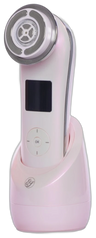
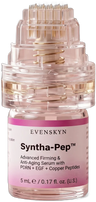
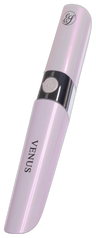

Compared
At-home Hair Removal: IPL VS Epilation
An IPL epilator is really an at-home IPL device, not an epilator. Pain, cost and regrowth compared, who each suits, and which IPL devices are worth a look.
Designet i Canada
VIP early accessBlack FridayThe weekend is hereBlack FridayLast callCyber Monday40% off sitewide, applied for you at checkout.Shop the saleFri frakt til USA og Canada60 dagers pengene-tilbake-garantiGuider og kundeservice på engelsk
Explainer
Does at-home IPL work? Partly: it thins dark hair on light to medium skin over months of sessions, and it does not remove hair for good. What the trials measured, honest picks by need, and who should skip IPL.

An evidence guide, 28 sources checked, updated 15 November 2026
Does at-home IPL work? Partly: it thins dark hair on light to medium skin over months of sessions, and it does not remove hair for good. Here is what the trials measured, which device fits which need, and who should skip IPL altogether.

Six questions, six short answers
Does at-home IPL work? Partly. Home devices reduced hair by 6 to 72 percent after repeated treatments, in studies that mostly had no control group.1
Is it permanent? No. Light devices reduce hair; no trial has shown complete, lasting removal.2,3
Who does it suit? Dark hair on light to medium skin. Blonde, grey, white and red hair barely respond, and darker skin carries a higher risk of burns.4,5
How many sessions? Clinic guidance ranges from 2 to 6 treatments to 4 to 8, then top-ups; home devices set their own schedules.4,6,7
IPL or a home laser? In a randomised trial of clinic devices, hair counts did not differ four weeks after treatment; at about seven months the diode laser did better, and it hurt more.8
Is it safe? Redness is the usual side effect, and blistering and pigment changes have been reported. Protect your eyes.1,9
Five things to know before you buy
01In randomised trials that followed people for at least one hair growth cycle, clinic IPL cut hair by 27 to 52.7 percent, and lasers by 30 to 84.25 percent.10
02Home devices have thinner evidence: a review found seven studies, only one of them controlled, reporting 6 to 72 percent less hair.1
03It is reduction, not removal. In a randomised trial of a low-energy home laser, growing hair was back above its starting level three months after the last treatment.11
04Pigment decides. Dark hair on light to medium skin responds best; a guideline points pale hair to electrolysis and darker skin to a clinic laser with skin cooling.4,12
05We make the Pulsar, an IPL handset rated 7.82 to 15.31 J/cm² across eight levels. It has no published trial.5
There is no single best device, because the right one depends on what matters most to you. Every home device below needs dark hair on light to medium skin, so start with the check, then use the table.
Will at-home IPL work for you?
Three questions. The answer draws only on the sources cited on this page, and nothing you choose is stored or sent anywhere.
Answer the questions to see what to expect.
| If you want | Our pick | Why | Check first |
|---|---|---|---|
| A high-energy IPL handset | EvenSkyn Pulsar (we make it) | 7.82 to 15.31 J/cm² across eight levels, a skin sensor and a cooling fan, by our own specifications; no published trial5 | Dark hair on light to medium skin; the deepest skin tones are generally not suitable |
| The least discomfort | Ulike Air 10 | Sapphire contact cooling that Ulike says holds the window at 65°F, and a 2-year warranty13 | Ulike says it is not suitable for very dark skin and least effective on blonde, grey and red hair |
| A sensor that sets the power, and a small head for the upper lip | Braun Silk-expert Pro 5 (PL5347) | A skin tone sensor that adjusts the power, 10 energy settings, and standard, wide and precision heads, per Braun14 | Braun lists the upper lip as its facial area and tells men not to use it on the face or neck |
| A true laser instead of IPL | Tria Hair Removal Laser 4X | An 810 nm diode laser, used every two weeks for six to eight treatments, then monthly top-ups; about 30 minutes of use per charge and a 1-year warranty, per Tria7 | Skin types I to IV only, and light brown or darker body hair |
| Treatment for brown or dark skin | A clinic, not a home device | A guideline suggests a long-wavelength laser with skin cooling for darker skin, and Mayo Clinic says the right laser and settings matter4,12 | An experienced clinician |
| Blonde, grey, white or red hair gone | Electrolysis, not light | Light needs pigment in the hair; a guideline suggests electrolysis for white or blonde hair12 | A trained electrologist |
We read each brand’s US page on 15 November 2026. Specifications are the makers’ own claims, not our tests, and we list no prices for other brands because sale prices change daily. Brand names identify products only; we have no affiliation with these brands. Not sure of your skin type? Take our Fitzpatrick skin type test.
IPL, intense pulsed light, works on a principle Anderson and Parrish named selective photothermolysis in 1983: a short pulse of light is absorbed by one target and turns to heat there, sparing the tissue around it.15 In hair removal the target is melanin, the pigment in the hair, and the heat damages the follicle that grows the hair.3
It only works on follicles in the active growth phase, called anagen, and only part of your hair is in that phase at any time.3 That is why one session does little and a course of sessions does more.
Home devices flash at lower energy than clinic machines. In laboratory work on hair follicles, single low-energy pulses from a home laser and from IPL pushed follicles into catagen, the phase in which a hair stops growing.16 Three of that review’s seven authors list Philips Research, a maker of home IPL devices, as their affiliation.
Skin pigment absorbs the same light. That one fact explains most of the limits on this page: pale hair has too little pigment to absorb the light, and darker skin competes with the hair for it, which raises the risk of burns and lasting changes in skin colour.4,5
It works, partly. An evidence review of controlled trials found that lasers and light sources reduce hair partly for up to six months, that results improve with repeated treatments, and that they did better than shaving, waxing or electrolysis. It found little evidence for IPL itself: one randomised and one controlled trial.2 A Cochrane review the same year also found little evidence for an effect of IPL.17
Randomised trials that follow people for at least one full hair growth cycle are the best test of lasting results. A 2022 review found five, with 223 patients in all: IPL cut hair by 27 to 52.7 percent, and lasers by 30 to 84.25 percent. Results were best on body sites with long growth cycles and worst on the face; for IPL, the underarm did best.10 Uncontrolled clinic studies report bigger numbers, 80 to 87 percent, which is why we weigh the randomised trials more.18,19,20
For home devices the evidence is thinner. A 2012 systematic review found seven studies, only one of them controlled and none randomised, reporting 6 to 72 percent less hair after repeated treatments, mostly measured three to six months later.1 In one small study, clinic staff treated 10 adults with a home device: hair counts were 36 percent lower four weeks after the last treatment and 10 percent lower at twelve weeks.21 In another, 22 women had 78 percent fewer hairs at one month and 72 percent fewer at three months.22

Permanent? No. The 2006 evidence review found no proof of complete, lasting hair removal with any laser or light source.2 StatPearls, a clinical reference, calls the realistic goal permanent hair reduction rather than removal, with maintenance every 6 to 12 months.3 Mayo Clinic puts it plainly: some hair may go for good, but hair can grow back.4
Studies disagree on how long results last after you stop. In a randomised trial of a low-energy home laser, eight weekly treatments cut growing hair by up to 59 percent, but three months after the last one the count of growing hairs was 29 percent above where it started.11 The Philips-linked review reported 80 percent less hair a year after the last treatment with long-term use of a home IPL device.16
Our inference, not a tested method
Inference: at home, plan for IPL as a routine with top-ups, not a one-off course.
Untested hypothesis: people who keep monthly top-ups for a year after their first course keep more of their reduction than people who stop after the first course.
What would prove it wrong: a randomised home trial comparing top-ups with stopping that finds no difference in hair counts at one year.
No method wins on every count. The trade is between how long the result lasts, how much it hurts, what it costs over time and whose hair and skin it suits. In controlled trials, lasers and light sources reduced hair more than shaving, waxing or electrolysis did.2
| Method | How long it lasts | Comfort and downtime | Who it suits |
|---|---|---|---|
| At-home IPL | Months of reduced growth, with top-ups1,3 | Redness is the usual side effect1 | Dark hair on light to medium skin5,23 |
| Home diode laser | Reduction while you keep treating; in one trial, hair rebounded within three months of stopping11 | More painful than IPL in a trial of clinic devices8 | Skin types I to IV, light brown or darker hair7 |
| Clinic laser or IPL | The largest reductions in randomised trials, though not complete removal2,10 | Supervised; protective eyewear is worn4 | A wider range of skin tones, with the right laser and settings4 |
| Electrolysis | Treats each follicle directly with a fine probe and current | Slow, one hair at a time | Any hair colour; a guideline’s choice for white or blonde hair12 |
| Waxing or epilating | Weeks | Painful; brief redness | Any hair and skin colour |
| Shaving | Days | Painless; nicks and bumps | Any hair and skin colour |
IPL is not a laser, though many product names, ours included, use the word. A laser emits one wavelength; IPL flashes a broad band of light, 550 to 1,200 nm in our Pulsar.5 Both heat the pigment in the hair.3 The home laser most US buyers meet is the Tria 4X, an 810 nm diode.7
In the one recent randomised trial comparing them, 48 women started treatment with IPL in one underarm and an 810 nm diode laser in the other, four sessions a month apart. Four weeks after treatment, hair counts did not differ significantly. At about seven months the laser side had fewer and thinner hairs, but the laser hurt more and caused more swelling around the follicles, while IPL caused more redness.8
At home, Tria quotes about 30 minutes of use per charge, used every two weeks for six to eight treatments.7 Braun and Ulike both describe 10-minute full-body sessions for their IPL devices.13,14 Neither kind of home device widens the range of skin tones it suits.5,7 Our Pulsar is an IPL handset, so everything about IPL here applies to it.
Strip away the packaging, and a home device comes down to a handful of things you can check. Use them on any device, ours included.
1. Energy per flash. Measured in joules per square centimetre. The home IPL devices in the two Gold trials ran at up to 5 J/cm²; clinic IPL on facial hair has used 19 to 21.22,24,25 More energy is not automatically better, and the sensor and a patch test decide what is safe for your skin.

2. Skin tone control. A sensor that reads your skin and adjusts or withholds the flash is a safety feature first. It is not evidence that a device works.5,14
3. Lamp life. Ask how long the lamp is rated for, because it decides your cost per session. Our Pulsar’s quartz lamp is rated for more than 10 years.5
4. Cooling. Contact cooling, like Ulike’s sapphire window, or a fan, like the Pulsar’s, makes longer sessions more comfortable.5,13
5. Clearance. In the US, home light-based hair removal devices are a class II, over-the-counter device type that needs FDA 510(k) clearance.26 A maker should be able to give you its clearance number.
6. Label, warranty and support. Read the skin tone and hair colour chart before you buy, and check the warranty: one year for Tria and our Pulsar, two for Ulike.5,7,13
We make the Pulsar, so read this as a seller’s description, not an independent test. Its specifications come from our product page, and no trial has tested it.5
Which route fits your hair
Dark hair on light to medium skin? A home IPL handset is a reasonable try, as a slow reduction you keep up.1,5
Want the most hair gone, fast? Clinic lasers did best in randomised trials.10
Brown or dark skin? Skip home devices and ask a clinic about a long-wavelength laser with skin cooling.12
Blonde, grey, white or red hair? Light will not work; ask about electrolysis.12
A man’s beard or neck? Philips and Braun rule it out, and no home trial has tested a beard. Our guide to IPL on men’s facial hair has the detail.14,23

Our IPL handset, and yes, we make it
For dark hair on light to medium skin, on the body and the upper lip.
$179.98
What it will not do: remove hair for good, work on grey, white, very light blonde or red hair, or suit the deepest skin tones. Its page lists the upper lip as its only facial area, and we have no published trial of the Pulsar. Never use it around the eyes or on the eyebrows.5
A clinic charges per treatment. The American Society of Plastic Surgeons put the average surgeon or physician fee for one laser hair removal treatment at $389 in 2020, before other costs.27 At the 4 to 8 treatments Mayo Clinic says most people need, that comes to about $1,556 to $3,112 for one course, by our arithmetic, with top-ups on top.4
A home device is one purchase that covers several body areas. Our Pulsar is $179.98, and its lamp is rated for more than 10 years.5
The honest caveat sits next to the savings. Clinic machines run at higher energy than home devices, the treatment is supervised, and a clinic can treat darker skin with the right laser.4,16 For dense hair, a deadline, or hair and skin outside what IPL suits, the clinic is the better call.
Only when someone has said they want one. Results depend on the person’s hair colour and skin tone, and an unasked-for hair removal device can read as a comment on their body rather than a treat. If in doubt, gift the decision: offer to cover it if they have been meaning to try one.
Weighing it against other gifts? Our guide to skincare device gifts sets out who each device suits, what comes in the box and how returns work.
Before the first session. Shave the area. Do not wax, pluck or epilate, because IPL needs the follicle intact. Patch-test a small area and wait 24 hours.5
Each session. Wear the protective glasses, start at the lowest level that suits your skin tone, and build up only as comfort allows.5
Between sessions. Keep sun and self-tanner off treated skin before and after sessions.5
What is normal. Redness that fades is the most common side effect of home devices; swelling, blistering, crusting and pigment changes have also been reported.1 Stop and get advice if your skin blisters or darkens.
Paradoxical growth. A minority grow more hair after treatment. A pooled analysis of 22 studies put it at about 3 percent, linked to treatment of the face and neck.28 Philips names women’s jawline, neck and the area above the cheekbones, and men’s upper back and shoulders, as areas at risk.23
Your eyes. A 2023 systematic review found no reported eye injury from a home device, but it found 20 people with eye damage from clinic IPL or diode light, 40 percent of them without eye protection, at energies the authors say fall within home devices’ limits.9 Never flash near the eyes, eyelids or eyebrows.5,23
Skip IPL, or ask a professional first, if any of these apply:
Partly. In a review of seven studies of home devices, most without a control group, hair fell by 6 to 72 percent after repeated treatments. Results are gradual and depend on your hair colour and skin tone.
No. IPL reduces hair; no laser or light device has been shown to remove hair completely and for good. Expect top-up sessions. In a trial of a low-energy home laser, growing hair returned past its starting level three months after treatment stopped.
A handheld device that flashes a broad band of light, about 550 to 1,200 nm in ours, which the pigment in the hair absorbs as heat. Repeated over months, the heat damages the follicles that grow hair. It is not a laser, which uses one wavelength.
It depends on your need. For a high-energy IPL handset, our Pulsar; for the least discomfort, the Ulike Air 10 with sapphire cooling; for a sensor and a small head for the upper lip, the Braun Silk-expert Pro 5; for a true diode laser, the Tria 4X. All of them need dark hair on light to medium skin.
A laser uses one wavelength; IPL uses a broad band of light. Both heat the pigment in the hair. In a randomised trial of clinic devices, hair counts did not differ four weeks after treatment, the diode laser did better at about seven months, and the laser hurt more.
When your hair is dark, your skin is light to medium, and you are happy with a gradual reduction that you keep up with top-ups. For darker skin, pale hair, very dense hair or a deadline, a clinic or electrolysis is the better route.
Not safely at home. Darker skin absorbs the light too, which raises the risk of burns and lasting changes in skin colour, and home labels, ours included, rule out the deepest skin tones. A clinic can treat darker skin with the right laser and settings.
No. Light hair has too little pigment to absorb the light. Electrolysis is the realistic option.
Clinic guidance ranges from 2 to 6 treatments to 4 to 8, spaced weeks apart, then maintenance. Home devices set their own schedules; the Tria laser, for example, is used every two weeks for six to eight treatments, then monthly.
In a randomised trial of clinic devices, the diode laser hurt more than IPL. Some home IPL devices add contact cooling or a fan. If a level hurts, turn it down.
For suitable hair and skin, used as directed, the usual side effect is redness that fades. Blistering and pigment changes have been reported, a minority grow more hair, and the eyes need protection. Never use it over tattoos or moles.
Only where your manual allows: our Pulsar and Braun’s Pro 5 list the upper lip as their facial area. Never treat near the eyes or eyebrows. Facial treatment carries a higher risk of extra hair growth.
Yes, on the body. Philips and Braun tell men not to use their IPL devices on the face or neck, Philips names men’s upper back and shoulders as areas at risk of extra hair growth, and no home IPL trial has tested a beard.
How we built this page. On 15 November 2026 we read the PubMed records and abstracts of the studies cited, the FDA classification record, the Mayo Clinic and American Academy of Dermatology pages, the 2020 fee report of the American Society of Plastic Surgeons, the Philips manual, the Braun, Ulike and Tria pages, and our own Pulsar page. This version replaces an earlier one at the same address. It fixes reference errors in that version: a 2004 IPL study was credited to the wrong authors, two references mixed up titles and PubMed numbers, and a 2023 eye-safety review was described as counting 20 injuries from home devices, when it found none reported from home devices. It also drops a score we had given our own device, competitor prices read a week earlier, a budget pick we could not re-read, an FDA statement we could not source, and cost ranges without a source, and it removes a Medically Reviewed label.
Conflicts: we make the Pulsar IPL handset named here. EvenSkyn is a Canadian company that makes at-home beauty devices. Other brands are named to identify their products; we have no affiliation with them. No clinician reviewed this version. General information, not medical advice: talk to a dermatologist about your own skin and hair.
IPL hair removal
Compared
An IPL epilator is really an at-home IPL device, not an epilator. Pain, cost and regrowth compared, who each suits, and which IPL devices are worth a look.
Explainer
Whether IPL can thin a beard, which hair and skin it works on, how often it makes facial hair worse, and how to keep your eyes safe, with a three-question check and...
Routine
Why IPL works best on some skin tone and hair color combinations, how built-in skin tone sensors help, and what to consider before your first session.


Legg igjen en kommentar
Alle kommentarer er modererte før de publiseres.
Dette nettstedet er beskyttet av hCaptcha, og hCaptchas personvernerklæring og vilkår for bruk gjelder.