By the EvenSkyn Skin Science Desk. Rebuilt 9 September 2026 as a comparison with dated, source-linked cells; first published 9 April 2026. Disclosure: EvenSkyn makes the MicroInfuser, one of the fifteen products compared here, and does not make a pen or a roller.
The short version
-
Four formats, one mechanism. Pens, rollers, stamps and micro-infusion stamps all make micro-channels. They differ on who controls depth, whether the needle head is reused, whether a sterilisation method is named, and how the serum gets in. Those four things decide what a first session is like far more than the brand does.
-
The depth number everyone quotes is needle length, not delivery depth. Zero of the fifteen products in our Microneedling Depth Register publish a measured delivery depth. That includes our own product.
-
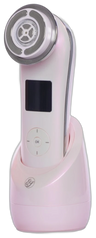
RF microneedling is a clinic procedure, not a home category. In October 2025 the FDA published a safety communication stating RF microneedling devices should not be used at home. The at-home version of that idea is two separate devices on separate days: micro-infusion for the channels, a surface RF handset for the heat. The sequence is on our RF and micro-infusion at home page.
Who this comparison is for
You have seen microneedling done in a clinic, or seen a pen in a friend's bathroom, and you are trying to work out which at-home version fits you: a motorised pen, a roller, a stamp, or a micro-infusion stamp that pushes serum through the channels as it makes them. This page compares those four formats on the things a buyer can verify from brand pages, with every figure dated to the day we read it. Where a brand does not publish something, we say so rather than guess. Where we do not publish something ourselves, we say that too.
Table 1. The four formats, side by side
| Dimension |
Motorised pen |
Roller |
Stamp |
Micro-infusion stamp |
| Motion and channel |
Oscillating cartridge, vertical entry |
Rolling drum, angled entry and exit |
Pressed straight down, vertical entry |
Pressed straight down, vertical entry; serum travels through the channels as they are made |
| Who sets the depth |
The user, by dial. The Dr. Pen M8S official page states no range; a US retailer states 0.25 to 2.5 mm (read 9 Sep 2026) |
Fixed by the head, 0.2 to 0.3 mm in the register; actual penetration depends on pressure, which no roller page quantifies |
Fixed by the head; Banish ships 0.5 mm and sells 0.25 and 1.0 mm heads separately (9 Sep 2026) |
Fixed by the head, 0.25 or 0.5 mm across the ten kits in the register; EvenSkyn's is mechanically locked so pressing harder cannot drive it deeper |
| Needle head or cartridge |
Single-use cartridges, bought separately; Dr. Pen's box ships with nano cartridges only (9 Sep 2026) |
Reused: heads replaced monthly (StackedSkincare) or every 2 to 3 months (GloPRO); Sdara gives no interval in our read |
Reused: Banish replaces a head after 4 full-face or 8 partial sessions, two heads per kit |
Single-use heads where the brand says so (EvenSkyn, Dr. Pen MIS20, Alqemi); several kits describe heads only as "sterile" |
| Sterilisation method named |
Dr. Pen: ethylene oxide gas and UV light, stated (9 Sep 2026) |
None of the three rollers names one; alcohol after use is described as disinfecting |
Not published; "sanitize before each use" |
Two of ten name a method: EvenSkyn (gamma) and Qure (ethylene oxide) |
| How the serum gets in |
Applied by hand before needling |
Applied by hand after rolling |
Applied by hand after stamping |
Through the head. Three of ten kits pour serum into a chamber; three are user-filled; four connect a vial or ampoule to the head |
| Price read on the brand's own page |
Dr. Pen M8S $299.00 plus 12-pin cartridges at $59.95 per 10 (9 Sep 2026) |
Not read: BeautyBio's own store showed a password page directing buyers to Amazon; StackedSkincare and Sdara prices were not captured in this pass |
Banisher $125 on the brand's kit page (9 Sep 2026) |
EvenSkyn $189.99 list per four-session kit; other kits' prices are not in the register yet |
| Regulatory wording on the page |
"For professional use only"; "may not have been evaluated by the Food and Drug Administration"; intended for ages 22 and older "in accordance with FDA authorisation" (9 Sep 2026) |
None in our reads |
"Dermatologist-recommended"; no FDA wording in our read |
EvenSkyn: "cosmetic device, not a medical device and not FDA-cleared"; one competitor labels a companion serum "FDA Approved" |
| Delivered depth published |
No |
No |
No |
No, ours included |
Every cell above is a summary of the dated rows in the Microneedling Depth Register, which lists all fifteen products individually with the pages they were read from.
The number nobody publishes
Needle length is a property of the needle. Delivery depth is a property of what happens in skin. Micro-channels are smaller than the needles that make them and start closing as the needle withdraws, so a 0.5 mm needle does not mean anything arrives 0.5 mm down, and a brand quoting a delivery depth in microns is quoting a number nobody has measured on their product. We say this about our own kit on its product page, and the register records "Not published" in our row for the same reason it does in everyone else's.
What a fixed 0.5 mm head does buy you is a cap: however hard the stamp is pressed, the needle cannot go further than 0.5 mm. That is a safety property. It is not a delivery measurement, and the two should not be confused, by us or by anyone selling you a device.
Where the formats actually differ
Depth control runs the wrong way for beginners
The pen is the only format whose depth the user dials, and by a retailer's account it reaches 2.5 mm. It is also the only format whose official page says "For professional use only". The rollers and stamps fix depth at the head, between 0.2 and 0.5 mm, with one stamp brand selling a 1.0 mm head for home use. So the format with the most adjustment is the one its own maker labels professional, and the formats sold plainly for home use are the ones that cannot be adjusted. If you have never needled before, that is the single most useful fact on this page.
Reuse is the norm outside micro-infusion
Rollers are reused for a month to three months per head, with an alcohol spritz between sessions. The Banish stamp head is reused for 4 to 8 sessions. Pen cartridges are single-use and bought separately. Among the micro-infusion kits, EvenSkyn, Dr. Pen's MIS20 and Alqemi describe single-use heads; the rest describe heads as sterile without saying more. A reused head is not automatically a problem; it is a hygiene task that the brand hands to you, and the register shows which brands do that.
The serum path is where micro-infusion earns its name
With a pen, roller or stamp, the serum is applied by hand, before or after, and reaches the channels through whatever is on your fingers and in the open bottle. With a micro-infusion stamp, the serum travels through the head. The ten kits in the register do that three ways: three have you pour serum into a chamber, three have you fill the device yourself, and four connect a vial or ampoule to the head: EvenSkyn and Glamory with a sealed vial or ampoule, Dr. Pen's MIS20 by direct ampoule insertion, and Qure by screwing the head onto the opened vial. The sealed route is the one we build, and it is also why our product does not sell refills: each session uses one sterile head and one sealed ampoule, four of each per kit, and the kit is the product.
Sterilisation is the rarest disclosure
Three products in fifteen name the method their needles were sterilised with: Dr. Pen (ethylene oxide gas and UV light for pen cartridges), Qure (ethylene oxide) and EvenSkyn (gamma). Everyone else says sterile, sterilized or sanitize, or says nothing. For a device that opens the skin, that gap is the one we would ask a brand about before price.
What about RF microneedling at home?
If you arrived here searching for RF microneedling at home, the honest answer is that there is no such category. In October 2025 the FDA issued a safety communication stating that radiofrequency microneedling is a medical procedure and that these devices should not be used at home. The devices that do reach your skin at home are two separate things: a needling device that makes channels, and a surface radiofrequency handset that heats the dermis without needles. Run on separate days, in the right order, they address two different mechanisms. Our RF and micro-infusion at home page sets out a two-week schedule alternating the MicroInfuser with the Lumo⁺, and the 48-hour spacing rule that matters most: no RF on freshly needled skin.
Table 2. Cost per session, where the brand publishes enough to calculate it
| Product |
Published inputs |
Per-session arithmetic |
What is not included |
| Dr. Pen M8S |
Pen $299.00; 12-pin cartridges $59.95 per 10 (9 Sep 2026) |
$6.00 per session in cartridges, after the $299.00 pen |
Serum, applied by hand and sold separately |
| Banish Kit 3.0 |
Banisher $125; two heads per kit, "up to 16 sessions per kit" (9 Sep 2026) |
About $7.81 per session over 16 sessions, before replacement heads |
Replacement head price, not captured in this pass |
| EvenSkyn MicroInfuser |
$189.99 list per kit; four heads and four sealed ampoules |
$47.50 per session at list, serum and head included; sale pricing changes this and is shown on the product page when active |
Nothing; there are no refills to buy, and the kit is the product |
| Rollers |
Prices not read on the brands' own pages in this pass |
Not calculated |
Serum; replacement heads monthly to quarterly |
The arithmetic is deliberately narrow. It counts only what the brand publishes on its own page and says what it leaves out, which is why the pen looks cheap per session and the kit looks expensive: the pen's serum is not in its number and ours is.
Which format for whom
-
You want to control depth, you accept that the maker says professional use, and you will buy cartridges and serum separately: a pen. Read the maker's own page, not the retailer's, before you decide.
-
You want the cheapest possible entry and a shallow, frequent routine, and you are disciplined about disinfecting and replacing heads: a 0.2 to 0.3 mm roller.
-
You want vertical entry without a motor and do not mind applying serum by hand and sanitising a head you will reuse: a stamp.
-
You want the depth fixed, the head single-use, and the serum to reach the channels without your hands or an open bottle in between: a micro-infusion stamp. Ours is the MicroInfuser; the register lists nine others, and the micro-infusion buyer's guide scores them, including where ours is weaker.
-
You are pregnant or breastfeeding, have a history of keloid scarring, have used oral isotretinoin in the last six months, or have active infection in the area: none of the four, until a physician says otherwise. The full list is on the safety and contraindications guide.
Frequently asked questions
Is micro-infusion the same as microneedling?
It is the same mechanism, micro-channels made by needles, in a stamp format with a serum reservoir attached to the head. What changes is who sets the depth (the head, not a dial), whether the head is reused (in our kit, no) and how the serum gets in (through the head rather than by hand).
Is a microneedling pen safe at home?
Dr. Pen's own US page for the M8S says "For professional use only" and states the pen may not have been evaluated by the FDA. Retailer pages quoting a 0.25 to 2.5 mm range do not carry that line. We would read the maker's page before deciding, and we would not treat adjustable depth as a beginner feature.
What is the difference between a derma roller and a derma stamp?
A roller enters and leaves the skin at an angle as the drum turns; a stamp enters vertically. Both fix depth at the head, and both in this register are reused, with alcohol between sessions and heads replaced monthly, quarterly, or after a set number of sessions depending on the brand.
Can I do RF microneedling at home?
No. The FDA's October 2025 safety communication states RF microneedling is a medical procedure and the devices should not be used at home. The home version is two separate devices on separate days: a needling device and a surface RF handset. The schedule is on our RF and micro-infusion page.
How deep does at-home microneedling go?
The needle lengths in the register run from 0.2 mm (StackedSkincare roller) to a retailer-stated 2.5 mm (Dr. Pen M8S at its maximum dial). How deep anything is delivered is a different question, and none of the fifteen brands publishes a measurement, including us.
Why does EvenSkyn not sell serum refills for the MicroInfuser?
Because the kit is designed as four complete sessions: four sterile single-use heads and four sealed ampoules. The sealed ampoule connecting to a fresh head is the whole point of the format, and a refill bottle would put an open container back into the path.
This page is written for informational purposes and is not medical advice. Cosmetic outcomes describe the look of skin, not medical treatment. Consult a physician before beginning any needle-based skincare routine. Sources for every dated figure are listed on the Microneedling Depth Register.
If you want to act on this
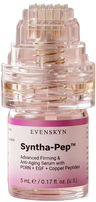
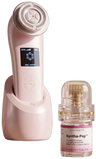
Our MicroInfuser is the micro-infusion stamp in this comparison: a 0.5 mm fixed-depth single-use head with a sealed Syntha-Pep ampoule (biosynthetic PDRN, GHK-Cu, an EGF-identical peptide), four sessions per kit. If firmness is the goal, the Lumo⁺ is the surface RF handset we alternate it with. It is our own product, results build over consistent sessions rather than overnight, and the safety and contraindication list is worth reading before a first session.




Legg igjen en kommentar
Alle kommentarer er modererte før de publiseres.
Dette nettstedet er beskyttet av hCaptcha, og hCaptchas personvernerklæring og vilkår for bruk gjelder.