


Compared
At-home Hair Removal: IPL VS Epilation
IPL and epilation compared side by side: pain levels, cost over time, how fast hair grows back, and which method suits your skin tone and hair type.
Conceput în Canada
Livrare gratuită în SUA și CanadaGaranție de 60 de zile, banii înapoiGhiduri și asistență în engleză
Explainer
Published by EVENSKYN, which makes and sells at-home beauty devices.

Last reviewed 15 August 2026. This guide was substantially rewritten to correct claims in the earlier version that the published evidence does not support, and to add safety information that version omitted.
The short answer. IPL can reduce dark facial and beard hair in people with light to mid skin tones, but it does not remove hair permanently, it does not work on white, grey, blonde or red hair at all, and no published trial has ever tested a home IPL device on male beard hair. The face is also the body site where the most troubling IPL complication, paradoxical hair growth, is most often reported. All of that is set out below with sources.
IPL works by selective photothermolysis, the principle Anderson and Parrish set out in 1983 [1]. A flash of broad-spectrum light is absorbed by melanin in the hair shaft, converts to heat, and damages the structures that produce the hair. The pigment is the target. That single fact explains almost every limit on this page.
It also only works on follicles in the active growth phase. Hair on any part of the body cycles through growth, transition and rest, and only anagen-phase follicles are vulnerable [2]. At any moment a fraction of your beard is in that phase, which is why sessions are repeated. StatPearls puts the practical minimum at four to six sessions spaced four to six weeks apart [2].
The previous version of this article said IPL removes facial hair permanently. That is not supported and we have removed it.
The Cochrane review of laser and photoepilation for unwanted hair, covering 11 randomised trials and 444 participants, found no evidence of permanent hair removal from any device, and for IPL specifically found "little evidence was obtained for an effect" [3]. StatPearls describes the outcome as "permanent hair reduction rather than removal" [2]. The distinction is real and it is the one the clinical literature uses.
Every published home-use IPL trial we could verify stops at three months. Nothing in the literature follows a home IPL user past six. A claim about what your face looks like a year later has no trial behind it.
This is the most important gap on this page and no brand in this category will tell you about it, ourselves included until now.
The only home-use IPL trial on facial hair we could find enrolled 17 people, 15 of whom completed it, all female, treating the cheek, upper lip and the area below the lower lip. It reported a fall from 22.7 to 4.4 hairs at one month and 5.1 at three months [4]. Useful, but it is 15 women, open label, with no control arm and no follow-up past three months.
The largest dataset in genuinely beard-density facial hair is a four-year review of 115 transgender patients receiving IPL facial hair removal, averaging eight sessions [5]. That was clinic-grade IPL at 19 to 21 joules per square centimetre, a fluence no home handset delivers. The only trial in men's beard area used an Nd:YAG laser, not IPL, in 22 patients, and was treating pseudofolliculitis barbae rather than doing cosmetic hair reduction [6].
Male beard hair is the coarsest, densest terminal hair on the body. Extrapolating from 15 women's upper lips to a man's jawline crosses sex, hair calibre, follicle depth and device class at the same time. It might work. It has not been shown to.
Because melanin is the target, hair without much of it is not a target. The best quantification we found tested an added melanin chromophore on blonde, white and grey hair across 42 sites in 16 patients: 14 percent terminal hair reduction against 10 percent for a saline control, six months out [7]. That difference is statistically real and practically nothing.
The Endocrine Society's clinical practice guideline does not suggest turning the setting up or adding sessions for light hair. It recommends electrolysis instead of photoepilation for people with white or blonde hair [8]. If your beard is going grey, an IPL handset is not the tool, and the grey portion will be left behind while the dark hair around it thins.
When skin contains more melanin, the skin competes with the hair for the light, which is how burns happen. A comprehensive review of light-based hair reduction in Fitzpatrick types IV to VI notes that most published studies exclude darkly pigmented skin as a high-risk group, citing pigmentation change, blistering and crust formation [9]. A 2,541-patient IPL cohort documented burns with post-inflammatory pigment change, blistering, erosion and scarring [10].
Stated plainly: we could not find a single home-use IPL trial that included Fitzpatrick V or VI at all. Where guidance exists for darker skin it points away from IPL, toward longer-wavelength Nd:YAG or diode with cooling, delivered professionally [8][9]. A skin tone sensor, including the one on our own device, is a safety cut-off. It is not evidence that treatment works in skin it refuses to fire on.
A minority of people treated with IPL or laser grow more hair, not less, and it happens on the face more than anywhere else.
This is called paradoxical hypertrichosis. A systematic review and meta-analysis of 22 studies and 9,733 patients put the pooled prevalence at 3 percent, and found it was overwhelmingly facial and cervical, with only 0.08 percent of non-face-or-neck sites affected [11].
Be careful with that 3 percent. The same meta-analysis reports a heterogeneity statistic of 97 percent, which means the studies disagree so profoundly that a single pooled figure barely means anything. The individual numbers run from 0.34 percent in 7,381 patients [12] to 5.1 percent in 991 women [13] to 16.2 percent in a prospective facial study [14]. They also disagree on anatomy: the meta-analysis found face and neck dominant, while the 7,381-patient study found the upper arm most affected [12].
The honest statement is that it is reported in somewhere between roughly 0.3 and 16 percent of people depending on which study you read, most consistently on the face and neck, and that no reliable single figure exists.
What is firmer: the Endocrine Society specifically advises warning Mediterranean and Middle Eastern women with facial hirsutism about paradoxical hypertrichosis risk and suggests topical treatment or electrolysis over photoepilation for them [8]. Reported associations include polycystic ovary syndrome, irregular menses and a family history of hirsutism [14]. In three of four studies that followed it, the extra growth improved with continued treatment [11].
None of this makes IPL unusable on a face. It does mean a page about facial IPL that stays silent on it, as the previous version of this one did, is not giving you what you need.
IPL is not classified as a laser, which the ophthalmology literature warns "may create false security regarding eye protection" [15]. Documented consequences of facial IPL near the eye include anterior uveitis progressing to permanent iris atrophy [15], along with cataract, glaucoma and retinal haemorrhage across the wider case literature [16].
Two details worth knowing. The eyebrow region is the most affected periocular site, and laser hair removal is the most litigated cutaneous laser procedure [16]. And eye protection is not a guarantee: in one review, injuries still occurred in 33 percent of cases despite metal shields or wavelength-specific goggles [16], and a documented IPL case caused permanent iris damage through disposable shields [17].
We looked for a published anatomical boundary, some professional-body rule about staying outside the bony orbital rim. There is not one. Three separate ocular safety papers give no such margin. So the guidance we can honestly give is: do not treat the eyelid, the brow or inside the orbital rim, keep well clear of the medial corner of the eye, and understand that shields reduce risk rather than remove it.
| Study | Who | Device | Result | Follow-up |
|---|---|---|---|---|
| Gold 2015 [4] | 15 women, face | Home IPL | 78.1% hair count reduction | 3 months |
| Gold 2010 [18] | 22 women, body | Home IPL | 72% reduction | 3 months |
| Yan 2025 [19] | 78 completers, body | Home vs clinic IPL | Comparable at 3 months | 3 months |
| Bennardo 2023 [20] | 30 patients, mixed sites | Clinic IPL | 77% reduction | 6 months |
| Cochrane [3] | 444 across 11 trials | All devices | No evidence of permanent removal | Mostly 6 months |
So: roughly 70 to 80 percent reduction in visible dark terminal hair over about three months, in people with dark hair and lighter skin, from small uncontrolled studies mostly in women. That is the honest envelope. Beyond three months, and on a beard specifically, the evidence runs out.
This is the use case most men actually have, and it is more achievable than full removal because you are treating a smaller area of scattered hair rather than trying to clear a dense terminal field. Treat the neck below the beard line and the cheek above it, leave the beard itself, and expect to repeat. There is no trial on this. It is a reasonable inference from how the technology works, and we are labelling it as one.
Since this page ranks for people searching for a device, here is ours with its specifications rather than adjectives. The EvenSkyn Pulsar is 279.99 USD, with 8 intensity levels running from 7.82 to 15.31 joules per square centimetre, a built-in skin tone sensor, a quartz lamp rated for more than ten years of use, and automatic and manual modes. It is rated by us for face and body use including the bikini line, and carries a 60 day money back guarantee and a 12 month warranty.
Two things to weigh against that. Its top fluence of 15.31 joules is well below the 19 to 21 joules used in the clinic-grade facial study that produced the beard-area data [5], so results on coarse beard hair should be expected to be slower and less complete than that study, not comparable to it. And the skin tone sensor exists to stop treatment on skin too dark to treat safely, which is a protection, not a capability.
Do not use it if any of the following apply. Most come from the exclusion criteria of the studies cited here [20] and from standing consensus guidance.
On dark facial hair in lighter skin, yes, as a reduction. Published home-use facial trials report roughly 78 percent hair count reduction at three months, from a study of 15 women. It does not work on white, grey, blonde or red hair, and no home-use trial has included the deepest skin tones.
No published trial has tested a home IPL device on male beard hair. The nearest evidence is clinic-grade IPL at a fluence roughly a third higher than home devices reach, in 115 transgender patients averaging eight sessions. Beard hair is the coarsest terminal hair on the body, so expect slower and less complete results than any published facial figure.
No. The Cochrane review found no evidence of permanent hair removal from any light-based device. The clinical term is permanent hair reduction, and even that is measured over months rather than years. Every home-use trial we found stops at three months.
Published facial protocols use six treatments two weeks apart. General guidance is a minimum of four to six sessions four to six weeks apart. No verified study reports a maintenance schedule for facial hair, so any specific top-up interval you read is practice rather than published finding.
In a minority of people, yes. Paradoxical hypertrichosis is increased hair growth following light-based hair removal, and it is reported most often on the face and neck. Published rates range from about 0.3 percent to 16 percent depending on the study, with extreme disagreement between them. It is more commonly reported in people with hirsutism, PCOS, irregular menses or a family history of excess hair growth.
That is the more realistic goal, because you are treating scattered hair over a smaller area rather than clearing a dense field. Treat above the cheek line and below the neck line and leave the beard. No trial has studied this specific use, so treat it as reasoning from how the technology works rather than as an evidenced protocol.
Not on or inside the orbital rim. Facial IPL has caused anterior uveitis and permanent iris atrophy, and eye protection reduces rather than eliminates that risk. There is no published anatomical safe-margin rule, so stay well clear of the brow, eyelid and inner corner of the eye.
No. Melanin is what absorbs the light, so hair without pigment has nothing to absorb it. The best available measurement found 14 percent reduction against 10 percent for a saline control at six months. Guideline advice for white or blonde hair is electrolysis instead.
Most people describe warmth and a snapping sensation. In the largest facial IPL series, mean pain was rated 5 out of 10, peaking at 7 around the third session, with redness in 70 percent and perifollicular swelling in 56 percent, all transient.
The published home-use evidence covers Fitzpatrick I to IV. We found no home-use IPL trial that included types V or VI. For deeper skin tones, guidance points toward professionally delivered long-wavelength devices with cooling rather than IPL.
Yes. Shave the area first so the light targets the follicle rather than burning surface hair. Do not wax, pluck or epilate beforehand, because those remove the follicle contents the treatment needs to reach.
About this guide. Published by EvenSkyn, which sells an IPL handset, so we have a commercial interest. Everything above is sourced so you can check it. Where the evidence does not support a claim, including claims the earlier version of this page made, we have said so rather than removed the topic. Nothing here is medical advice; speak to a doctor or dermatologist about your own skin.
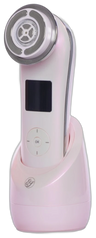
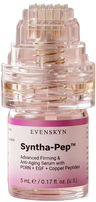
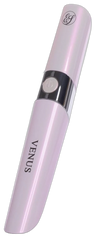
EvenSkyn is a Canadian at-home beauty-device company that designs and manufactures anti-aging devices including the Lumo+ (radiofrequency, EMS and light therapy), the Phoenix microcurrent bar, the Venus eye device, the MicroInfuser, and the MatureSmile LED whitening kit.
If you want to act on this
Our IPL handset is the Pulsar. One honesty note before buying any IPL device, ours included: results depend heavily on hair-to-skin contrast, so check the candidacy section above first; IPL is the wrong tool for some combinations and no brand changes that physics.
IPL hair removal
Compared
IPL and epilation compared side by side: pain levels, cost over time, how fast hair grows back, and which method suits your skin tone and hair type.
Explainer
At-home IPL genuinely thins unwanted hair without a clinic visit, but it won't erase it forever and it doesn't work on every skin tone. Here's the evidence-based version: how it works, what...
Routine
Why IPL works best on some skin tone and hair color combinations, how built-in skin tone sensors help, and what to consider before your first session.


Lasă un comentariu
Toate comentariile sunt moderate înainte de a fi publicate.
Acest site este protejat de hCaptcha și hCaptcha. Se aplică Politica de confidențialitate și Condițiile de furnizare a serviciului.