

Explainer
Ultrasonic Skin Spatula: What It Does and How to Use It
How an ultrasonic skin spatula works, what it can and cannot do for pores and the look of smoother skin, and a simple at-home routine, step by step.
Explainer
Can you do Ultherapy at home? No home device performs it. What clinic focused ultrasound does, what the trials show for home radiofrequency, how the costs compare over time, and how to choose a device safely.
Published by EVENSKYN, which makes and sells at-home beauty devices.

An evidence guide, 6 sources checked, updated 15 November 2026
No home device performs Ultherapy. It is a clinic treatment that focuses ultrasound as deep as the layer a facelift tightens. What you can do at home is radiofrequency, which has a smaller but real evidence base and works more gently, over weeks.

No. Ultherapy is the brand name of a clinic system that uses microfocused ultrasound with real-time imaging to place heat up to 5 mm below the surface, down to the SMAS layer.1 No device sold for home use does that.
In clinics it works for most people. A 2025 meta-analysis of 42 studies found that 89% of patients improved as judged by investigators.2
At home, the route with published trials is radiofrequency. In a randomized split-face trial, a home RF device improved measured wrinkles, radiance, color and thickness over 12 weeks compared with an anti-aging cosmetic.3
Treat “at-home Ultherapy” and “at-home HIFU” wording as a warning sign, not a feature. Then compare the costs and choose a device with the checklist below.
01Ultherapy places focused heat up to 5 mm deep, including the SMAS, and spares the skin’s surface.1 Nothing sold for home use does this.
02In clinic studies, 89% of patients improved as judged by investigators and 84% by their own report, with mild to moderate side effects.2
03Home radiofrequency has smaller evidence: one randomized split-face trial over 12 weeks and one uncontrolled eye-area study.3,4
04A home device is not a cheaper Ultherapy. It is a different, gentler tool you can keep using, and our own Lumo+ says so on its product page.
05Significant sagging and neck banding are a clinic or surgical question, not a home-device one.
Ultherapy is a brand of microfocused ultrasound with visualization, often shortened to MFU-V. The practitioner sees the tissue layers on a screen, to about 8 mm deep, and places small points of heat at a chosen depth.1
Those points sit in the mid to deep reticular dermis and the layers beneath it, down to the superficial musculoaponeurotic system, or SMAS, and the platysma muscle of the neck, at depths of up to 5 mm. The heat contracts tissue and prompts new collagen. The surface layers, the epidermis and papillary dermis, are spared, which is why the skin itself is not wounded.1

The evidence for the clinic treatment is substantial. A 2025 systematic review and meta-analysis pooled 42 studies: 89% of patients showed improvement as judged by investigators, and 84% reported improvement themselves. Common side effects were redness, swelling, bruising and tenderness, generally mild to moderate, and the pooled pain score was moderate.2

A 2015 review describes the treatment as best suited to mild to moderate laxity, and suggests that older patients with severe laxity and marked neck banding consider surgery instead.1 That is the frame for everything that follows: even the clinic treatment has limits.
Ultherapy is a specific clinic system: an imaging probe plus focused ultrasound, used by a trained practitioner who can see where the energy is going. A handset you can buy for your bathroom shelf has neither the imaging nor the focused energy, so it cannot be Ultherapy, whatever its listing says.
When a product is sold as “at-home Ultherapy,” the wording itself is the warning. It borrows the name of a clinic treatment for a device that does something else, and it points buyers at the least transparent corner of the market.
The better question is not how to copy Ultherapy, but which home route to firmer-looking skin has evidence behind it. That question has an answer, and it is radiofrequency.
HIFU stands for high-intensity focused ultrasound, and Ultherapy is one clinic version of it. “At-home HIFU” is now a heavily marketed term, so it deserves a straight answer.
What the evidence covers. The safety data we read come from clinic devices used by trained practitioners. In that setting, side effects were mostly redness, swelling, bruising and tenderness, generally mild to moderate, with moderate pain during treatment.1,2
What it does not cover. Consumer devices sold as HIFU are a different, lower-energy category, and they are used without imaging or training. The clinic results do not transfer to them, in either direction: they tell you nothing about whether a consumer device works or how safe it is in untrained hands.
Our view. If what you want is firmer-looking skin at home without a clinic bill, radiofrequency has published home-use trials and a far simpler mode of use. That is where we would point you, and it is the category we make a device in, which you should weigh.
Radiofrequency, or RF, warms the skin with an electrical field rather than focusing energy at a depth. Home devices run at controlled, comfortable temperatures; our Lumo+, for example, holds the skin at a steady 40 to 42°C after a short warm-up.
Two published studies of home-use RF devices are worth knowing, with their limits.
| Study | Design | People | What changed | Our grade |
|---|---|---|---|---|
| Shu and colleagues, 20223 | Randomized split-face trial, 12 weeks: home RF device on one side, a marketed anti-aging cosmetic on the other | 33 women aged 35 to 60; 32 completed | Measured wrinkles, radiance, color and thickness improved more on the RF side; hydration and elasticity did not differ significantly | Moderate |
| Gold and colleagues, 20174 | Uncontrolled study around the eyes: 21 sessions every other day for 6 weeks with an RF and light device, then two maintenance sessions | 33 enrolled; 30 completed | Blinded raters scored wrinkles 1.49 points better on average; redness after every session faded within an hour | Early |
Moderate: a randomized, controlled design, but one trial of one device. Early: no control group, so improvement cannot be separated from other causes. Neither study tested our Lumo+.
Neither study claims a home device equals a clinic result. They claim something smaller and still useful: regular sessions with a home RF device can produce measurable change over weeks.
Each of these works through a different energy, reaches a different layer and suits a different person. Read the table as a map, not a ranking.
| Treatment | Energy and delivery | Where it works | Setting | What the sources we read say |
|---|---|---|---|---|
| Ultherapy | Microfocused ultrasound with real-time imaging | Heat points up to 5 mm deep, down to the SMAS1 | Clinic | 89% of patients improved as judged by investigators, across 42 studies2 |
| Sofwave | Ultrasound, which its maker calls SUPERB technology | Heats the mid-dermis, per the maker5 | Clinic | The maker says there is no downtime; we did not review its trials here |
| Thermage | Monopolar radiofrequency through a handpiece with cooling | The skin and the tissue just beneath it | Clinic | The maker describes a single treatment, with improvement over the following 2 to 6 months6 |
| Morpheus8 | Radiofrequency delivered through microneedles | Below the surface, through needles that break the skin | Clinic | Not reviewed here; ask the clinic for its evidence and expected downtime |
| Home RF, such as our Lumo+ | Bipolar radiofrequency, often with EMS and LED | Warms the skin from the surface; the Lumo+ holds 40 to 42°C | Home | A randomized split-face trial of one home RF device found measured improvements over 12 weeks3 |
Maker statements read on 15 November 2026. Clinic treatments are chosen with a clinician; we make the home device in the last row.
Ultherapy sits at one end as the deepest non-surgical option. Home RF sits at the other: gentler and slower, but yours to use on your own schedule. A home device is not competing to win this table. It offers a different thing.
Many home devices combine more than one technology. Knowing what each does helps you read a product page critically.
Radiofrequency, the firming layer. RF warms the skin and is the technology with the home-use trials above. The useful details are whether the RF is bipolar and controlled, and whether the device holds a steady, comfortable temperature rather than heating without limit.
EMS, the muscle layer. Electrical muscle stimulation uses currents strong enough to make facial muscles contract. Our Lumo+ uses EMS at 3 to 15 mA.
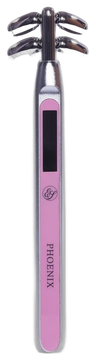
Microcurrent, a gentler current. Microcurrent uses far smaller currents than EMS. It is a different technology, sold in different devices; in our range it is the Phoenix.
Red and blue LED, the light layer. Light at set wavelengths, with no heat to speak of. Our Lumo+ uses red at 623 nm and blue at 465 nm. The evidence for home LED is its own topic, covered in our LED mask guide.
Cost is usually the real reason people search for an at-home option. Clinic prices vary by clinic, area treated and country, so we do not quote a figure here. Ask for a written quote and put it into the calculator.
What would each route cost me?
Enter your clinic’s quote for one treatment. The Lumo+ price is today’s price on our store. Nothing is stored or sent anywhere.
Enter the price your clinic quoted for one treatment to compare.
The honest framing: you are not buying the same result more cheaply. A clinic treatment is a stronger, one-off intervention; a home device is a gentler routine that costs little once you own it. Which is better value depends on what your skin needs.
Fine lines, dullness, early softening. A home RF device is a sensible starting point, used as directed and judged over at least 12 weeks, the length of the trials above.
Mild to moderate laxity with a clinic budget. This is where focused ultrasound performs best, according to the 2015 review.1 A home device can sit alongside clinic care as a routine, if your clinician agrees.
Significant sagging, deep jowls or marked neck banding. No home device lifts that. The same review suggests older patients with severe laxity and marked neck banding consider surgery.1
Laxity after major weight loss. Heat-based devices act on skin; they do not replace lost facial volume, which is a separate question for a clinician.
Skip anything sold as “at-home Ultherapy” or “at-home HIFU.” The name promises a depth and energy that unsupervised devices do not deliver.
Look for controlled heat. A stated, steady skin temperature is a sign the device was built for safe self-use.
Expect a routine, not a transformation. The trials used regular sessions over weeks. A device that promises a one-session transformation is selling the wrong expectation.
Check the limits and the guarantee. Weekly session limits, contraindications, a warranty and a return window should all be on the product page.
Our recommendation, and yes, it includes our own device. The reasoning is above so you can disagree with it.
Fine lines and early softening: a home RF device used as directed, judged after 12 weeks.
Mild to moderate laxity: a clinic consultation about focused ultrasound or RF treatments.
Severe sagging or neck banding: a surgeon’s opinion.
Anything sold as at-home Ultherapy or HIFU: leave it on the shelf.

Our pick for home RF, and yes, we make it
An at-home alternative to clinic skin tightening, and not equivalent to a clinic treatment, as its product page says.
$179.98
What it will not do: perform Ultherapy, reach the SMAS, lift significant sagging or replace lost facial volume. No published trial has tested the Lumo+ itself.
These come from our Lumo+ product page; other devices list their own.
Never use it inside the eye socket, directly over the eyes or over the thyroid, and avoid the breasts and genital areas. Do not use RF or EMS directly over active breakouts, cysts or open wounds. If you have rosacea, talk to your dermatologist before starting. If you use prescription treatments such as tretinoin or hydroquinone, check with your dermatologist. The conduction gel contains methylparaben, so patch test if your skin is sensitive. Stop if it feels very hot or painful.
The product page does not address pregnancy, implanted electronic devices or recent procedures. If any of those apply, ask your doctor before using any energy-based device.
No. Ultherapy is a clinic system that uses imaging and focused ultrasound to place heat up to 5 mm deep, down to the SMAS layer. What you can do at home is radiofrequency, which is gentler and works gradually over weeks.
No device sold for home use performs Ultherapy. Products marketed as at-home Ultherapy borrow the name of a clinic treatment for something different, so treat that wording as a warning sign.
Radiofrequency is the home route with published trials, including a randomized split-face trial over 12 weeks. Our own RF device is the Lumo+, which its product page describes as not equivalent to an in-clinic treatment.
The safety data for focused ultrasound come from clinic devices used by trained practitioners, where side effects were mostly mild to moderate. Consumer devices sold as HIFU are a different, lower-energy category, and those clinic results do not tell you how they behave in untrained hands.
HIFU, high-intensity focused ultrasound, is the broad category. Ultherapy is one clinic system within it, microfocused ultrasound with real-time imaging, so the practitioner can see the layers being treated.
The randomized trial measured change at 12 weeks of use. Plan on consistent sessions for at least that long and judge with photos taken in the same light.
Follow the device’s own limits. For our Lumo+, that is one to two sessions a week under 40 and two to three over 40, 5 to 8 minutes each, at least 48 hours apart, and never more than 25 minutes of RF a week.
Both use radiofrequency. Thermage is a clinic treatment with monopolar RF that its maker describes as a single session; a home device uses gentler bipolar RF across many short sessions.
They do different jobs. Ultherapy is non-invasive focused ultrasound; Morpheus8 delivers radiofrequency through needles that break the skin. Neither is a home option, so the choice is one to make with a clinician.
For early softening, a home RF device used consistently may help the skin look firmer. For significant sagging or marked neck banding, no home device will lift it, and a clinician or surgeon is the right next step.
Never use one inside the eye socket, over the eyes or over the thyroid, or over active breakouts, cysts or open wounds. Talk to a dermatologist first if you have rosacea or use prescription treatments such as tretinoin.
It may help skin look firmer over time, but heat-based devices do not replace lost facial volume. That part is a question for a clinician.
You cannot do Ultherapy at home. In clinics, focused ultrasound places heat as deep as the SMAS and most patients in published studies improved. At home, radiofrequency is the route with trials behind it: smaller, gentler and gradual. Choose a home device for routine care of the look of your skin, and a clinic for lifting.
On 15 November 2026 we checked each study cited here against its publisher, Semantic Scholar or Europe PMC record, and read the Sofwave and Thermage pages and our own Lumo+ product page directly. The figures are drawn by us from the cited papers, and the photograph is an illustration, not product photography. This version replaces an earlier one at the same address and leaves out claims and figures we could not verify.
Conflicts: we make the Lumo+, recommended in this guide, and no other device named here. No clinician reviewed this version. Brand names identify products only; no affiliation is implied. General information, not medical advice: speak to a doctor before using an energy-based device if you are pregnant, have an implanted device or a skin condition.
Ultrasound skin tightening at home: the evidence. The best at-home anti-aging devices compared. An at-home alternative to Morpheus8. Skin device gifts for women over 40.
Ultrasound
Explainer
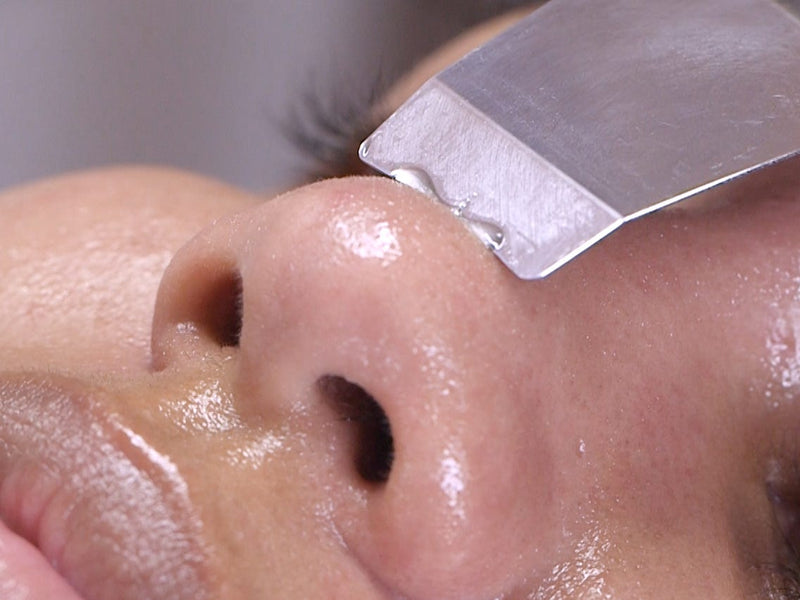
How an ultrasonic skin spatula works, what it can and cannot do for pores and the look of smoother skin, and a simple at-home routine, step by step.
Explainer
What clinic focused ultrasound actually does, what the studies of home ultrasound devices show, how to judge one before you buy, and why we would pick radiofrequency for firming at home.
Compared
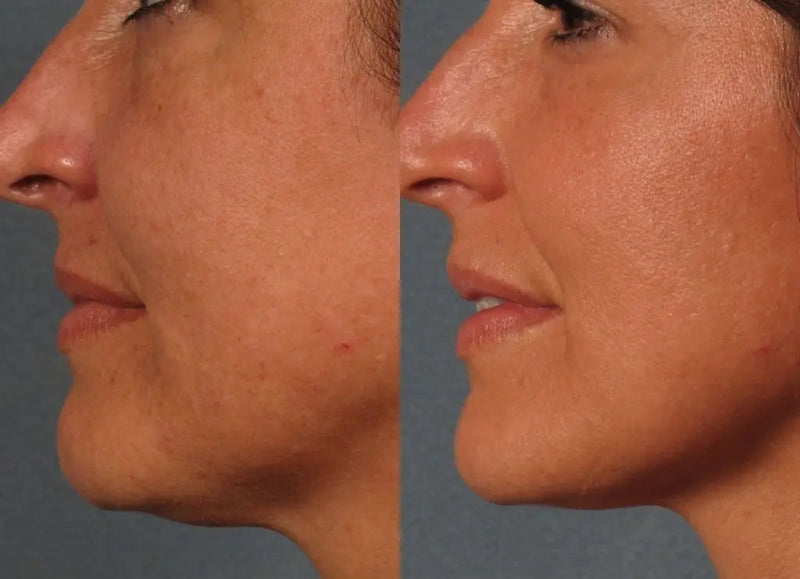
Ultrasound and radiofrequency skin tightening compared: how each technology firms the look of skin, what at-home sessions involve, and how to choose.

留言
所有留言在發布前都會經過審核。
此網站已受到 hCaptcha 保護,且適用 hCaptcha 隱私政策以及服務條款。