The Hero Molecules of At-Home Microinfusion: PDRN, EGF, GHK-Cu, and the Science of Hollow-Needle Serum Delivery (2026 Evidence-Based Guide)
What PDRN, EGF, GHK-Cu and hyaluronic acid each do, why the size of each molecule decides how it can reach your skin, and how far the evidence goes, including for our own serum.
Published
24 min read
Published by EVENSKYN, which makes and sells at-home beauty devices.
An evidence guide, 24 sources checked, updated 15 November 2026
What PDRN, EGF, GHK-Cu and hyaluronic acid each do, why the size of each molecule decides how it can reach your skin, and how far the evidence goes, including for our own serum.
EvenSkyn Skin Science Desk. We make the MicroInfuser and its Syntha-Pep serum, named in this guide. No clinician reviewed this version.
Illustrative still life.
At a glance
Each molecule does a different job. PDRN, EGF, GHK-Cu and hyaluronic acid act on different targets, and the evidence behind each is different too.
Size decides the route. A compound generally has to weigh under about 500 daltons to cross intact skin,1 and most of these molecules are far larger (Fig. 1).
The human evidence is thin. A 2023 systematic review found modest gains from topical growth factors,2 and most PDRN results come from injected use.3,4
Nobody has measured where the serum goes. 0.5 mm is a needle length, not a delivery depth.5,6Take the five-question audit before you start.
Key takeaways
01Microinfusion puts serum on the skin in the same motion as fine needles touch it. Our MicroInfuser is a cosmetic device, not a medical device and not FDA-cleared.6
02Niacinamide and GHK fall under the 500 dalton line for crossing intact skin. EGF, PDRN and most hyaluronic acid are far above it.1
03GHK in the blood falls from about 200 ng/mL at age 20 to 80 ng/mL by 60.7 By our reading, most of its skin research is lab and animal work.
04Topical growth factor products gave modest gains in a 2023 review of 33 studies, and nobody knows whether they last beyond six months.2
05Our Syntha-Pep serum carries all four, declares its PDRN at 0.2 percent and publishes its full ingredient list. None of the studies here tested it.6,8
The 30-second verdict on at-home microinfusion molecules
Many of the molecules people want in a serum are too big to cross intact skin. A device that opens short-lived channels as the serum goes on gives them a possible way past that barrier.1,9 Microneedle delivery of large molecules is well studied in the lab. The evidence for home stamps is not there yet: we found no published, controlled trial of one, ours included.
So read the molecules below as separate bets with separate evidence. PDRN, EGF, GHK-Cu and hyaluronic acid are not interchangeable, and a label that names all four says little about how much of each is inside: below 1 percent, ingredients can be listed in any order.8 What a home routine can honestly offer is the look of smoother, better hydrated skin, built gradually.
Microinfusion is not microneedling: the distinction that determines outcomes
The two words are often used as if they meant the same thing. Clinic microneedling is done by a practitioner with a device that makes many fine punctures, and clinics usually treat acne scars with 3 to 5 sessions, 2 to 4 weeks apart.10 The FDA has cleared certain microneedling devices for specific uses, but none for use with another product such as a serum.11
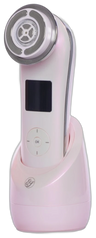
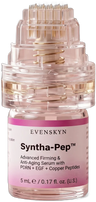
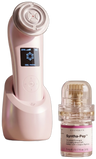
Microinfusion, as the word is used for home kits, puts the serum on in the same motion as the needles touch the skin. With our kit, a sterile microneedle head clicks onto a sealed single-use ampoule, and the serum is applied as you stamp. The MicroInfuser is a cosmetic device for the look of skin, not a medical device and not FDA-cleared.6
Timing is why the difference could matter. Microneedle channels are short-lived: in the studies reviewed in 2023, reported closure ran from a few hours to 72 hours, and in one measured patch the pores were essentially closed by six hours.9 By our reading, that is the case for applying serum during needling: the channels are open when it arrives. Nobody has tested whether that changes results at home.
The percutaneous mechanism: why molecule size decides the route
The outer layer of the skin is a barrier, and size is the first test it applies. A widely cited rule holds that a compound generally has to weigh under 500 daltons to be absorbed through intact skin.1
Fig. 1 sets the molecules in our serum, and the sizes used in published studies, against that line. By our arithmetic from their formulas, niacinamide (about 122 daltons) and GHK (about 340) fall under it, and acetyl hexapeptide-8 is close to 900. EGF is about 6,200.12 The PDRN in our serum averages 31,000 daltons as a raw material,8 the PDRN in published work runs from 50,000 to 1.5 million,3 and the hyaluronic acid in one facial trial ran from 50,000 to 2 million.13
Fig. 1 | Niacinamide and GHK fall under the 500 dalton line; every other molecule shown is larger, most of them far larger. Molecular weight in daltons, on a log scale. The dashed line marks the 500 dalton rule for crossing intact skin.1 Niacinamide, GHK and acetyl hexapeptide-8 are our arithmetic from their formulas; GHK is shown without its copper, and with it is about 400 by the same arithmetic. EGF is the specification of the recombinant human protein.12 PDRN in our serum is the raw-material average, not a measurement of the finished serum.8 The published PDRN range is from a 2017 review,3 and the hyaluronic acid range spans the five sizes tested in one trial.13
Channels are the way past that line, but how far serum travels through them is a separate question. Imaging in volunteers found channels markedly smaller than the needles that made them, and needles pressed in by hand pierce less reliably than needles driven in by impact.5,14 So 0.5 mm is a needle length, not a delivery depth, and our product page quotes no depth.6 Nobody, including us, has measured where a home microinfusion serum goes.
The four hero molecules of at-home microinfusion
Our Syntha-Pep serum declares one amount, its PDRN at 0.2 percent (2,000 ppm). Niacinamide comes high on the ingredient list. The peptides, acetyl hexapeptide-8, copper tripeptide-1 and sh-oligopeptide-1 (the lab-made form of human EGF) among them, sit in the second half, which our Transparency Lab says means small amounts.6,8 None of the studies below tested Syntha-Pep.
GHK-Cu (copper tripeptide-1): fifty years of research, mostly in the lab
GHK is a three-amino-acid peptide found in human plasma, saliva and urine, and it binds copper. It was isolated in 1973, and in plasma it falls from about 200 ng/mL at age 20 to 80 ng/mL by 60.7,15
Two reviews led by Pickart describe wound healing in several animal studies and report that GHK switches at least 4,000 human genes up or down. The 2018 review adds that a number of clinical studies found GHK-Cu improved the look of aging skin; we could not check their designs.7,15 By our reading, most of what the reviews describe is lab and animal work. Both reviews were written by researchers at a company, Skin Biology.
At about 340 daltons by our arithmetic, GHK passes the size test for crossing intact skin,1 though size is not the only test. In Syntha-Pep, copper tripeptide-1 sits near the end of the ingredient list.8 Looking for a daily copper serum instead? See our comparison of copper peptide serums.
EGF (epidermal growth factor) and sh-oligopeptide-1: the keratinocyte signal
EGF is a small protein that stimulates the growth of skin and other surface tissues.12 Stanley Cohen first isolated it in the early 1960s. A 2023 review of its use in dermatology covers wounds, skin reactions to cancer treatment, atopic dermatitis, skin aging and dark marks after inflammation, and notes that well-designed controlled studies are still relatively scarce.16
At 53 amino acids and about 6,200 daltons, EGF is far too big to cross intact skin on its own.1,12 That is why the microneedle studies matter. In a double-blind, randomized split-face trial of 52 Korean women, a cross-linked hyaluronic acid microneedle patch, worn for four hours to dissolve, improved wrinkles more when it was loaded with EGF or with acetyl hexapeptide-8 than when it carried neither.17
The wider evidence is modest. A 2023 systematic review of topical growth factor products, covering 33 studies and 1,180 people, found median improvements over baseline of under 50 percent for texture, under 35 percent for fine lines and wrinkles and under 20 percent for overall appearance. Most of the studies had no control group, and whether the gains last beyond six months is unknown.2 The closest home study we found paired a growth factor serum, used twice daily, with twice-weekly home microneedling in 11 women for three months, also without a control group.18 In Syntha-Pep, sh-oligopeptide-1 sits near the end of the ingredient list.8
PDRN (polydeoxyribonucleotide): the adenosine A2A receptor agonist
PDRN is a mixture of DNA fragments. In lab and animal work it acts through adenosine A2A receptors and supplies building blocks to the salvage pathway that cells use to recycle nucleotides. A 2017 review puts its fragments at 50 to 1,500 kilodaltons, most between 80 and 200.3 A newer proposal keeps the name PDRN for chains under 1,500 kilodaltons and calls longer chains polynucleotides.19
Most of its results come from injection. A 2026 review said topical forms “may have limited penetration and, hence, are less efficacious than injections”.4 Whether microinfusion narrows that gap has not been tested.
On pigment, the evidence is early. In a 2016 lab study, PDRN reduced melanin production in pigment cells grown alongside skin cells and lowered MITF, a protein that switches on melanin genes. The authors also describe a small clinical evaluation of six Korean women with facial pigmentation, which we could not read in full.20
The PDRN in Syntha-Pep is biosynthetic and not derived from salmon, per our supplier’s written declaration, at 0.2 percent.6 Its raw material averages 31,000 daltons,8 still far above the 500 dalton line.1
Multi-molecular-weight hyaluronic acid: five sizes, one trial
In a 60-day trial, 76 women applied creams with 0.1 percent hyaluronic acid in one of five sizes, from 50 to 2,000 kilodaltons, around the eyes, with a placebo on the other side. All five improved hydration and elasticity. Only the two smallest, 50 and 130 kilodaltons, significantly reduced wrinkle depth, which the authors linked to better penetration.13
Syntha-Pep carries four forms: standard sodium hyaluronate, an acetylated form, a cross-linked form and a hydrolyzed form.8 We have not measured their sizes, so we cannot say how they compare with the trial’s.
The supporting cast: Argireline, niacinamide, and Centella
Acetyl hexapeptide-8, sold as Argireline. In a randomized, placebo-controlled study of 60 Chinese volunteers, twice-daily use around the eyes for four weeks reduced measures of skin roughness, with no change on placebo.21
Niacinamide. In a 12-week, double-blind split-face trial of 50 women aged 40 to 60, a 5 percent niacinamide moisturiser improved fine lines, spots, texture, red blotchiness and yellowing compared with the same moisturiser without it.22
Centella asiatica. A 2024 review of its topical use in wound healing credits compounds such as asiaticoside and madecassoside with supporting collagen production and calming inflammation, and covers delivery systems, microneedles among them, used in wound studies.23
PDRN vs GHK-Cu, side by side
PDRN
GHK-Cu
What it is
A mixture of DNA fragments
A three-amino-acid peptide bound to copper
Size
50,000 to 1.5 million daltons in published work;3 ours averages 31,000 as a raw material8
About 340 daltons for the peptide, by our arithmetic
Hollow versus solid microneedles: the architectural distinction
Microneedle research recognises five main designs: solid needles, which open channels before a product goes on; coated needles, which carry a dry film of the active; dissolving needles, made with the active inside; swelling needles; and hollow needles, which pass a liquid through an open bore.9 Each brings the product into contact with the skin in a different way.
Our product page does not describe the MicroInfuser’s needles as hollow. It says a sterile microneedle head clicks onto a sealed single-use ampoule and the serum is applied in the same motion as you stamp.6
Inside the MicroInfuser
The needle head. A fixed 0.5 mm nominal needle length, 24 karat gold-plated, single use and individually gamma-sterilised. Our product page is explicit that 0.5 mm is the length of the needle, not a measure of where anything goes.6
The kit. Four complete treatments, each with one fresh head and one sealed 5 mL ampoule: about two months.6
The routine. One evening session every two weeks, about 5 to 10 minutes.6 Our safety page allows every ten days only after four to six sessions without irritation.24
The paperwork. The full ingredient list, batch certificates and supplier source declarations are published in our Syntha-Pep Transparency Lab. All of that testing comes from the manufacturer or the ingredient producer, not an independent laboratory.8
Four reader profiles: matching molecules to skin concerns
These pair a common concern with what the evidence supports. None of them is a treatment plan.
The fine-line and elasticity reader
The best-supported ingredients here are niacinamide and small hyaluronic acid, each with a controlled trial,13,22 and acetyl hexapeptide-8, with a short placebo-controlled study.21 Growth factors add modest, mostly uncontrolled evidence.2 A two-week routine suits this goal. Expect gradual change in the look of fine lines, not a lift.
The melasma and tone-unevenness reader
Niacinamide improved spots in its trial,22 and PDRN lowered melanin production in lab work.20 If you have melasma or a history of dark marks after inflammation, our safety page asks for an extended patch test of 24 to 48 hours first. With darker skin types, Fitzpatrick IV to VI, it asks you to watch closely for early pigment change, and it asks everyone for SPF 30 or higher every morning.24 Talk to your dermatologist before you start.
The acne scar and texture reader
Our safety page allows extra passes over depressed acne scars only on calm skin, and says to avoid raised scars and active breakouts.24 The MicroInfuser is a cosmetic device, not a scar treatment.6 For scars themselves, see a clinic: clinics usually treat acne scars with 3 to 5 microneedling sessions, 2 to 4 weeks apart.10
The under-eye and orbital reader
Our safety page says to stay off the eyelids, the immediate under-eye hollow and the soft tissue of the lips; the bone around the eye socket is acceptable.24 For the under-eye area we make dissolving microneedle patches, and our guide to under-eye microneedle patches sets out what that format can and cannot do.
At-home and clinical options compared
Option
How the product meets the skin
Who
What the evidence shows
Serum on intact skin
Only what crosses the barrier, mainly molecules under about 500 daltons
You
Depends on the molecule; best for small ones such as niacinamide1,22
Dissolving microneedle patch
The ingredient is loaded into hyaluronic acid needles that dissolve in the skin
You
One randomized split-face trial: patches with EGF or acetyl hexapeptide-8 beat the plain patch on wrinkles17
Home microinfusion stamp
Serum goes on as the needles touch the skin; how far it travels is not measured
You
No published, controlled trial of a home stamp, ours included
Home microneedling, serum after
Channels first, product second
You
One small study without a control group, with a growth factor serum18
Clinic microneedling
A practitioner uses a microneedling device
A clinic
Usually 3 to 5 sessions for acne scars; no device cleared for use with a serum10,11
Clinic microinfusion treatments
The clinic’s own device and products
A clinic
Not compared with home kits in any study cited here
Six numbers that govern an at-home microinfusion protocol
The needle length, not a measure of where anything goes6
48 hours
The wait our product page sets before using an RF device on treated skin6
A two-week microinfusion cycle, day by day
Two to three days before. Pause retinoids, AHAs, BHAs and vitamin C, roughly 48 to 72 hours around the session.24
Day 0, evening. The session itself. A light pink flush for one to four hours is expected; stop and contact a healthcare provider if redness lasts more than 48 hours, swelling increases, or you see warmth, pus or fever.24
Day 0 and day 1. No makeup, sweating, pools, saunas or hot showers, and no face wash for the rest of the evening.24
From day 1. Red or near-infrared LED from 24 hours24 and RF from 48 hours.6 SPF 30 or higher every morning.24
For most readers asking “should I try at-home microinfusion?”
How we would decide
Want the look of smoother, better hydrated skin, and passed the audit below? A two-week home routine is a reasonable thing to try, with gradual change as the aim.6
Want scars, deep lines or sagging treated? See a clinic.10
Pregnant, breastfeeding, keloid-prone, or on oral isotretinoin in the last six months? Not this device.6
Bothered mainly by the under-eye hollow? Keep the MicroInfuser off it.24
Only want niacinamide or copper peptides? A daily serum may do, since each passes the size test for intact skin.1
Our pick for a two-week routine, and yes, we make it
EvenSkyn MicroInfuser with Syntha-Pep PDRN serum
Four sealed sessions, one every two weeks.
How it deliversA sterile 0.5 mm head clicks onto a sealed 5 mL ampoule, and the serum goes on as you stamp. Needle length is not delivery depth, and we quote no depth.
What it carriesBiosynthetic PDRN, declared at 0.2 percent, with niacinamide, four forms of hyaluronic acid and a set of peptides including copper tripeptide-1 and sh-oligopeptide-1. The full ingredient list is published.
How oftenOne evening session every two weeks, about 5 to 10 minutes.
StatusA cosmetic device for the look of skin, not a medical device and not FDA-cleared.
$179.98
Four treatments, about two months at one session every two weeks. 60-day money-back guarantee on unused treatments, for US and Canada residents.
What it will not do: deliver clinic microneedling results, treat scars or any skin condition, or go on the eyelids or the hollow under the eye. The serum contains a trace of bitter orange flower oil, so read the full ingredient list first if you have known allergies.6,8
What a realistic six-month microinfusion timeline looks like
There is no published trial of the MicroInfuser, so we cannot give you a results curve. Here is what six months of the schedule looks like next to what the studies cited above measured, so you can set expectations.
When
On the schedule
What the cited studies measured
Session one
A light pink flush for one to four hours; our safety page says most people see a hydrated look by the next morning24
The peptide trial reported at 4 weeks and the hyaluronic acid trial at 60 days13,21
Weeks 9 to 16
Kit two: four more sessions
The niacinamide trial ran 12 weeks, and the home microneedling study three months18,22
Weeks 17 to 24
Kit three: four more sessions
Whether growth factor gains last beyond six months is unknown2
Our product page describes the aim as the look of firmer, smoother, more even-toned and better hydrated skin over a course of consistent sessions.6 If nothing has changed in the look of your skin after two kits, treat that as useful information, not as a reason to use the device more often.
A five-question pre-use audit
Five questions drawn from our safety and product pages. Nothing you pick is stored or sent anywhere.
Is at-home microinfusion right for me now?
Answer all five. Your result and the reasons behind it appear below.
You have a personal or family history of keloid scarring, or took oral isotretinoin in the last six months.6
You have an active skin infection or cold sore in the area.24
You had a chemical peel, laser treatment or significant sunburn in the past seven days, or the skin is still red, peeling or tender.24
The area has open or broken skin, active inflamed or cystic acne, or an eczema, psoriasis or dermatitis flare.24
You have a known allergy to gold, stainless steel or any listed serum ingredient. Our safety page says the finished formula has had no allergen testing.24
Early: one small controlled trial, short and in one group of people. Reviews: summaries of other studies, most of them uncontrolled or not about the face. Mechanistic: lab, animal or injected-use evidence that explains how something might work, not what a serum on the face does. Not studied: no published controlled study.
Editorial methodology and conflicts of interest
On 15 November 2026 we read our MicroInfuser product page, our safety page and our Syntha-Pep Transparency Lab, checked each study against its publisher or index record, and took molecular weights from formulas and specifications as noted under Fig. 1. This version replaces an earlier one at the same address. It removes the named reviewer and his quotes, the medically reviewed label, a composite patient story and the description of our needles as hollow, which our product page does not use. It also drops statements about how deep serum travels, which nobody has measured.
Our own internal study of the MicroInfuser and Syntha-Pep, run from January to June 2026, is unpublished, and we do not quote results from it.6
The case against our own recommendation
No published, controlled trial has tested a home microinfusion stamp, ours included. The ingredients with the best evidence here, niacinamide and small hyaluronic acid, were tested in creams, so you may not need a device for them.13,22 The peptides in our serum sit in the second half of its ingredient list, in small amounts, and we do not claim they are dosed to match any published study.8 And we sell the device and the serum.
What would change our view: a controlled trial of a home microinfusion stamp against the same serum applied without needles, measuring the skin at three and six months.
Conflicts: we make the MicroInfuser and Syntha-Pep serum named here, and the under-eye patches mentioned. No clinician reviewed this version. General information, not medical advice: talk to your dermatologist about your own skin.
Frequently asked questions
What is microinfusion in skincare?
A home technique that puts serum on the skin in the same motion as fine needles touch it, so the serum is there while short-lived channels are open. It is different from clinic microneedling, which a practitioner performs.
What are the key molecules in a good microinfusion serum?
The ones with the most human evidence are niacinamide and small hyaluronic acid. PDRN, EGF and GHK-Cu are popular, but their skin evidence is thinner and comes mostly from lab work, injected use or small studies. Below 1 percent an ingredient list can run in any order, so a long list of actives says little about the amounts.
What does PDRN do for skin?
In lab and animal work and in injected use, PDRN acts through adenosine A2A receptors and supports tissue repair, and one lab study found it lowered melanin production. A 2026 review judged topical forms likely to be less effective than injections. Whether microinfusion improves its effect has not been tested.
How does GHK-Cu work in microinfusion?
GHK is a copper-binding peptide whose level in the blood falls with age. Lab work shows wide effects on genes and repair; human skin studies are fewer. At about 340 daltons it passes the size test for crossing intact skin, so it depends less on microinfusion than the larger molecules. In our serum it sits near the end of the ingredient list.
Is at-home microinfusion safe?
For healthy adults who follow the directions, a light pink flush for one to four hours is expected. It is not for pregnancy, breastfeeding, a personal or family history of keloid scarring, or within six months of oral isotretinoin, and it should never go on the eyelids, the hollow under the eye, the soft tissue of the lips, or broken or inflamed skin. Patch test first if your skin is reactive.
How often should I use a microinfusion device at home?
With ours, one evening session every two weeks. Our safety page allows every ten days only after four to six sessions without irritation. Other devices set their own schedules, so follow the manual.
What is the difference between microinfusion and microneedling?
Clinic microneedling is done by a practitioner, often as a series of sessions for scars. Home microinfusion uses short, fine needles and puts serum on at the same time. They are not interchangeable.
How long until microinfusion results are visible?
Most people see a hydrated look by the next morning. Any change beyond that builds gradually over consistent sessions. Trials of related ingredients reported results at 4 to 12 weeks, and there is no published results timeline for home microinfusion kits.
Can I use microinfusion if I have melasma?
Talk to your dermatologist first. Our safety page asks for an extended patch test of 24 to 48 hours if you have melasma or a history of dark marks after inflammation, and SPF 30 or higher every morning.
Can microinfusion replace clinical AquaGold treatments?
We cannot say. Clinic microinfusion is done by a practitioner with the clinic’s own device and products, and none of the studies cited here compares it with home kits.
References
Bos JD, Meinardi MMHM. The 500 Dalton rule for the skin penetration of chemical compounds and drugs. Experimental Dermatology. 2000;9(3):165-169. doi:10.1034/j.1600-0625.2000.009003165.x
Quinlan DJ, Ghanem AM, Hassan H. Topical growth factor preparations for facial skin rejuvenation: a systematic review. Journal of Cosmetic Dermatology. 2023;22(7):2023-2039. doi:10.1111/jocd.15644
Squadrito F, Bitto A, Irrera N, Pizzino G, Pallio G, Minutoli L, Altavilla D. Pharmacological activity and clinical use of PDRN. Frontiers in Pharmacology. 2017;8:224. doi:10.3389/fphar.2017.00224
Arora G. Polynucleotides and polydeoxyribonucleotides in dermatology: a narrative review. Journal of Cutaneous and Aesthetic Surgery. 2026;19(1):17-28. doi:10.25259/JCAS_65_2025
Coulman SA, Birchall JC, Alex A, Pearton M, Hofer B, O’Mahony C, Drexler W, Považay B. In vivo, in situ imaging of microneedle insertion into the skin of human volunteers using optical coherence tomography. Pharmaceutical Research. 2011;28(1):66-81. doi:10.1007/s11095-010-0167-x
EvenSkyn. EvenSkyn MicroInfuser with Syntha-Pep PDRN serum, product page: specifications, schedule, regulatory status and source declarations. Read 15 November 2026. evenskyn.com
Pickart L, Vasquez-Soltero JM, Margolina A. GHK peptide as a natural modulator of multiple cellular pathways in skin regeneration. BioMed Research International. 2015;2015:648108. doi:10.1155/2015/648108
EvenSkyn. Syntha-Pep Transparency Lab: composition, supplier source declarations and batch records. Read 15 November 2026. evenskyn.com
American Academy of Dermatology Association. Microneedling can fade scars, uneven skin tone, and more. aad.org
US Food and Drug Administration. Microneedling devices: getting to the point on benefits, risks and safety. Consumer update, content current as of 15 October 2025. fda.gov
Fisher Scientific. Invitrogen human EGF recombinant protein (supplier number BMS320), product description: a single chain of 53 amino acids with a molecular mass of 6,222 daltons. Read 15 November 2026. fishersci.com
Pavicic T, Gauglitz GG, Lersch P, Schwach-Abdellaoui K, Malle B, Korting HC, Farwick M. Efficacy of cream-based novel formulations of hyaluronic acid of different molecular weights in anti-wrinkle treatment. Journal of Drugs in Dermatology. 2011;10(9):990-1000. PMID 22052267
Leone M, Van Oorschot BH, Nejadnik MR, Bocchino A, Rosato M, Kersten G, O’Mahony C, Bouwstra J, Van der Maaden K. Universal applicator for digitally-controlled pressing force and impact velocity insertion of microneedles into skin. Pharmaceutics. 2018;10(4):211. doi:10.3390/pharmaceutics10040211
Pickart L, Margolina A. Regenerative and protective actions of the GHK-Cu peptide in the light of the new gene data. International Journal of Molecular Sciences. 2018;19(7):1987. doi:10.3390/ijms19071987
Shin SH, Koh YG, Lee WG, Seok J, Park KY. The use of epidermal growth factor in dermatological practice. International Wound Journal. 2023;20(6):2414-2423. doi:10.1111/iwj.14075
An JH, Lee HJ, Yoon MS, Kim DH. Anti-wrinkle efficacy of cross-linked hyaluronic acid-based microneedle patch with acetyl hexapeptide-8 and epidermal growth factor on Korean skin. Annals of Dermatology. 2019;31(3):263-271. doi:10.5021/ad.2019.31.3.263
Quinlan DJ, Ghanem AM, Hassan H. Topical growth factors and home-based microneedling for facial skin rejuvenation. Journal of Cosmetic Dermatology. 2022;21(8):3469-3478. doi:10.1111/jocd.14650
Marques C, Porcello A, Cerrano M, Hadjab F, Chemali M, et al. From polydeoxyribonucleotides (PDRNs) to polynucleotides (PNs): bridging the gap between scientific definitions, molecular insights, and clinical applications of multifunctional biomolecules. Biomolecules. 2025;15(1):148. doi:10.3390/biom15010148
Noh TK, Chung BY, Kim SY, Lee MH, Kim MJ, Youn CS, Lee MW, Chang SE. Novel anti-melanogenesis properties of polydeoxyribonucleotide, a popular wound healing booster. International Journal of Molecular Sciences. 2016;17(9):1448. doi:10.3390/ijms17091448
Wang Y, Wang M, Xiao S, Pan P, Li P, Huo J. The anti-wrinkle efficacy of argireline, a synthetic hexapeptide, in Chinese subjects: a randomized, placebo-controlled study. American Journal of Clinical Dermatology. 2013;14(2):147-153. doi:10.1007/s40257-013-0009-9
Bissett DL, Miyamoto K, Sun P, Li J, Berge CA. Topical niacinamide reduces yellowing, wrinkling, red blotchiness, and hyperpigmented spots in aging facial skin. International Journal of Cosmetic Science. 2004;26(5):231-238. doi:10.1111/j.1467-2494.2004.00228.x
Witkowska K, Paczkowska-Walendowska M, Garbiec E, Cielecka-Piontek J. Topical application of Centella asiatica in wound healing: recent insights into mechanisms and clinical efficacy. Pharmaceutics. 2024;16(10):1252. doi:10.3390/pharmaceutics16101252
EvenSkyn. Micro-infusion contraindications and safety: who should not use an at-home device. Last updated 4 September 2026; read 15 November 2026. evenskyn.com
Nine brands, one shared depth ceiling, and a set of differences that sit in the hygiene design rather than the marketing. We compare Seranova, Qure, Glov and the EvenSkyn MicroInfuser on single-use...
No radiofrequency microneedling device is meant for home use, and the FDA says so in writing. What you can do at home instead, twelve products ranked on what each one publishes, and...
How to use PDRN at home, step by step: as a daily serum on intact skin, or through a sealed micro-infusion kit every two weeks, with the two-week schedule, what can go...
Napsat komentář
Všechny komentáře jsou před zveřejněním moderovány.




Napsat komentář
Všechny komentáře jsou před zveřejněním moderovány.
Tento web je chráněn službou hCaptcha a vztahují se na něj Zásady ochrany osobních údajů a Podmínky služby společnosti hCaptcha.