






Medically Reviewed by Dr. Lisa Hartford, MD
If you have looked at any red light therapy device, you have probably seen numbers like 630nm, 660nm, or 850nm and assumed they are just technical specs. They are not. Those numbers determine what the light actually does in your body, how deep it goes, and whether it is even targeting the problem you are trying to fix.
Most people approach this completely backwards. They look for the “strongest” device or the highest number, without realizing that wavelength is not about strength. It is about function. Once you understand the difference between 630nm and 850nm, it becomes very easy to see which devices make sense and which ones are just dressed up marketing.
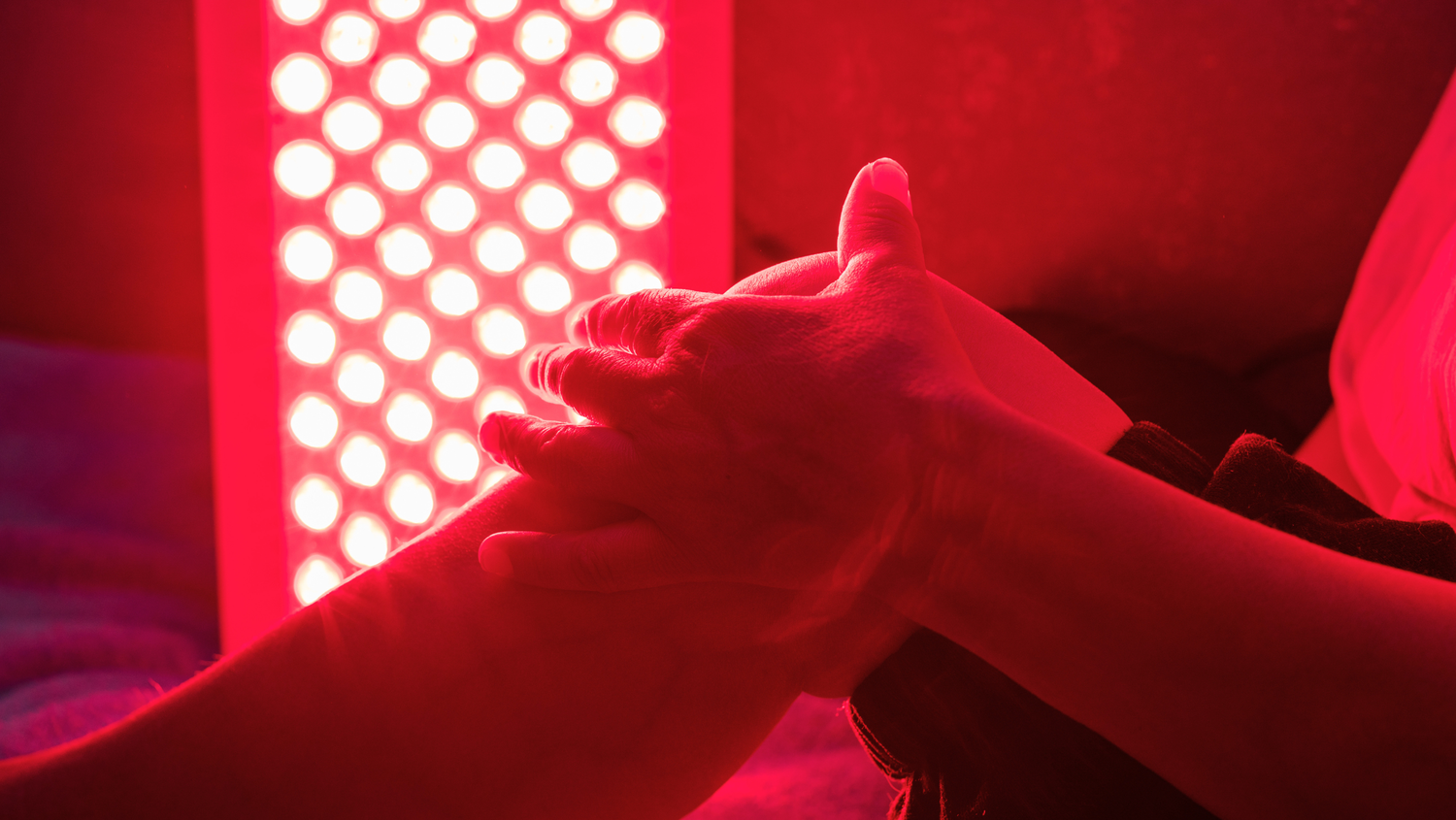
Red light therapy, also known as photobiomodulation, works by delivering specific wavelengths of light into the body where they are absorbed by cellular structures, particularly within the mitochondria. Mitochondria are responsible for producing ATP, which is the energy currency of the cell. When certain wavelengths are absorbed, they can enhance mitochondrial activity and improve cellular energy production.
One of the most widely accepted mechanisms involves the interaction of light with cytochrome c oxidase, a key enzyme in the mitochondrial respiratory chain. When stimulated, this process can influence cellular repair and inflammation pathways, which is why red light therapy has been studied across skin health, wound healing, and pain-related conditions (Hamblin, 2016).
The critical variable in all of this is wavelength. Light does not behave the same way across the spectrum. Shorter wavelengths are absorbed quickly and tend to affect superficial tissue. Longer wavelengths travel further before being absorbed and can reach deeper biological structures. This is not a minor detail. It is the difference between treating the surface of the skin and affecting what lies beneath it.
At around 630nm, you are dealing with visible red light that primarily targets the skin. This wavelength is absorbed within the upper layers, including the epidermis and parts of the dermis. These are the areas where collagen production, skin texture, and visible aging changes occur. Clinical research has shown that light in this range can improve skin complexion and increase collagen density when used consistently (Avci et al., 2013).
From a practical standpoint, this means 630nm is doing the work when the goal is improving how the skin looks. It is relevant for concerns like fine lines, uneven tone, and overall skin quality. It is not designed to reach deep into muscle or joint tissue, and it does not need to. Its job is at the surface, and that is where it performs.
At 850nm, the situation changes entirely. This wavelength falls within the near infrared range, which is not visible to the human eye. What it lacks in visibility, it makes up for in penetration. Near infrared light can travel deeper into biological tissue compared to visible red light, allowing it to reach structures below the skin.
This is why 850nm is commonly associated with recovery, inflammation, and musculoskeletal applications. It has been studied in contexts such as joint discomfort and muscle-related conditions, where deeper penetration is required to reach the affected area. Research suggests that near infrared wavelengths can influence biological processes in deeper tissues and may support reductions in pain under certain conditions (Chow et al., 2009; Karu, 2008).
There is, however, an important limitation that often gets ignored. Light penetration in biological tissue is not unlimited. Even near infrared light is gradually absorbed and scattered as it passes through tissue, and its intensity drops off with depth (Jacques, 2013). When people hear that a wavelength “penetrates deeper,” it does not mean it reaches anywhere in the body. It means it travels further relative to shorter wavelengths before being absorbed.
This distinction matters because it reinforces why wavelength selection needs to match the intended use. Using a deeper penetrating wavelength for a surface-level concern is inefficient, just as using a shallow wavelength for a deeper issue is unlikely to produce meaningful results.
Once you understand this, it becomes clear why more advanced devices combine multiple wavelengths. Using only 630nm focuses on the skin. Using only 850nm focuses beneath it. Combining both allows for simultaneous coverage of different tissue depths. This approach aligns with what is often described in the scientific literature as the optical window, a range of wavelengths between roughly 600 and 1000 nanometers where light can effectively interact with biological tissue (Chung et al., 2012).
The question of which wavelength is better does not really apply. The better question is what you are trying to achieve. If the goal is improving skin appearance, 630nm is directly relevant. If the goal is supporting recovery or targeting deeper structures, 850nm becomes more appropriate. If the goal is broader coverage, both wavelengths working together make the most sense.
From a medical standpoint, red light therapy is supported by a growing body of research, particularly in areas such as skin health and pain modulation. At the same time, outcomes can vary depending on the device, the dose, and the consistency of use. While the mechanisms are well studied, large scale standardization across treatments is still evolving, and expectations should remain realistic.
What is clear is that wavelength is not a minor specification. It is the defining factor in how red light therapy works. Once you understand that 630nm targets the skin and 850nm targets deeper tissue, everything else becomes easier to evaluate.
Bibliography
Avci, P., Gupta, A., Sadasivam, M., Vecchio, D., Pam, Z., Pam, N., and Hamblin, M. R. (2013). Low level laser therapy for skin: mechanism of action and clinical applications. Seminars in Cutaneous Medicine and Surgery, 32(1), 41 to 52. https://www.ncbi.nlm.nih.gov/pmc/articles/PMC3926176/
Chow, R. T., Johnson, M. I., Lopes Martins, R. A., and Bjordal, J. M. (2009). Efficacy of low level laser therapy in the management of neck pain: a systematic review and meta analysis of randomised placebo or active treatment controlled trials. The Lancet, 374(9705), 1897 to 1908.
Chung, H., Dai, T., Sharma, S. K., Huang, Y. Y., Carroll, J. D., and Hamblin, M. R. (2012). The nuts and bolts of low level laser therapy. Annals of Biomedical Engineering, 40(2), 516 to 533.
Hamblin, M. R. (2016). Photobiomodulation or low level laser therapy. Journal of Biophotonics, 9(11 to 12), 1122 to 1124.
Jacques, S. L. (2013). Optical properties of biological tissues: a review. Physics in Medicine and Biology, 58(11), R37 to R61.
Karu, T. I. (2008). Mitochondrial signaling in mammalian cells activated by red and near infrared radiation. Photochemistry and Photobiology, 84(5), 1091 to 1099.
Cleveland Clinic. Red Light Therapy: Benefits, Side Effects and Uses. https://my.clevelandclinic.org/health/articles/22114-red-light-therapy



Leave a comment
All comments are moderated before being published.
This site is protected by hCaptcha and the hCaptcha Privacy Policy and Terms of Service apply.