
Medically Reviewed by Dr. Lisa Hartford, MD
At-Home Skin Technology · Dermatology Reviewed
RF Microneedling at Home: What Is Real, What Is a Clinic Procedure, and What Actually Works
The phrase people search is "RF microneedling at home." The accurate answer starts by separating two things the marketing blurs: the clinic procedure that uses needles and radiofrequency together, and the at-home category that mostly does not use needles at all. This guide keeps them apart, grades the evidence in the open, and tells you when the right move is a clinic, not a purchase.
Key takeaways
- True RF microneedling means needles plus radiofrequency delivered through them. That is a clinic procedure with controlled wounding, anesthetic, and downtime. The human trial evidence for laxity and wrinkles is for clinic devices, often small studies, several run by the device makers.
- Most consumer products sold under the phrase "RF microneedling at home" do not put needles plus RF into your skin. They are non-needle RF, or they are microneedle stamps paired with a serum, which is micro-infusion. Different mechanism, different evidence, different expectations.
- At-home non-needle RF has a small set of human studies showing modest firmness and wrinkle improvement with consistent use, frequently combined with LED so the RF effect alone is hard to isolate.
- Microneedling itself has reasonable human evidence for collagen induction and texture. The infused serum actives (PDRN, copper peptide, EGF) rest largely on laboratory, animal, or small open-label cosmetic data, so those are mechanism-based expectations, not proven outcomes.
- If your goal is genuine RF microneedling results, the right route is a board-certified dermatology or aesthetic clinic, before any device purchase. That referral sits in this article on purpose.
At a glance
Quick answers, with evidence grades
Each answer carries its own limitation.
Can you do real RF microneedling at home? Human outcome
Not in the clinical sense. The studies that show wrinkle and laxity improvement from radiofrequency delivered through needles used clinic devices operated by practitioners.1,2,3 Limitation: this is an availability and device-class statement, not a claim that home skin cannot improve by other means.
Does at-home radiofrequency without needles do anything? Human outcome
A small number of human studies report modest improvement in firmness, smoothness, and fine lines with consistent home RF use over 8 to 12 weeks.14,15,16 Limitation: several combine RF with LED light, so the RF contribution alone is not cleanly isolated, and effect sizes are smaller than clinic RF.
Is micro-infusion the same as RF microneedling? Human outcome
No. Micro-infusion uses short microneedles to open temporary channels and deliver a serum. The needling part has human evidence for collagen induction and texture.7,9,10 Limitation: the serum actives commonly used carry weaker evidence, addressed below.
Will an infused serum with PDRN, copper peptide, or EGF rebuild collagen at home? Lab / animal Mechanism
The signaling is real in laboratory and animal models, and there are small human cosmetic studies, but high-quality human anti-aging trials for these infused actives are limited.11,12,18,19 Limitation: treat the serum benefit as plausible mechanism with early human support, not a settled outcome.
What should most people do? Mechanism
Match the tool to the goal: a clinic for structural laxity you want corrected now, consistent at-home RF for gradual maintenance, micro-infusion for delivery and surface quality. The combination is covered in the protocol section. Limitation: this is reasoned routing, and individual response varies.
How EvenSkyn assessed this
EvenSkyn's editorial standard for this category starts from the gap between what an energy-based treatment is sold as and what it does on a real face over months. For this article the primary literature was read in full at its PubMed or PMC record rather than from abstracts or secondary write-ups, and the evidence was separated into three buckets that the marketing tends to merge: the clinic procedure that combines needles and radiofrequency, the consumer non-needle RF category, and the microneedle-plus-serum category called micro-infusion.
One methodological choice many write-ups skip: this review checked what the most-invoked "home device works" support in this niche actually is. The pattern repeats. The convenient citation is often a small, open-label, or industry-run study, and several of the strongest "it works" results are for clinic devices, then quietly carried over to imply the home category performs the same way. Where a source carries an industry or device-maker affiliation, EvenSkyn flags it on the reference line, because that can shape interpretation. The physical parameters quoted for home devices were also compared against the parameters used in the clinical trials, since a device that reaches a fraction of the energy and depth of a trial protocol cannot borrow that trial's numbers.
Where a clinic is the better route, the article says so by name before any product appears. That referral is a trust mechanism, and it stays in.
What "RF microneedling" actually is
RF microneedling, in the clinical definition, is a procedure in which an array of fine needles penetrates the skin and radiofrequency energy is delivered from the needle tips into the dermis. The needles create controlled micro-injury, and the radiofrequency adds a thermal stimulus at depth. The combination is why clinicians use it for skin laxity and wrinkles: a mechanical and a thermal trigger for collagen remodeling delivered at the same time (Figure 1).1,2,5,6
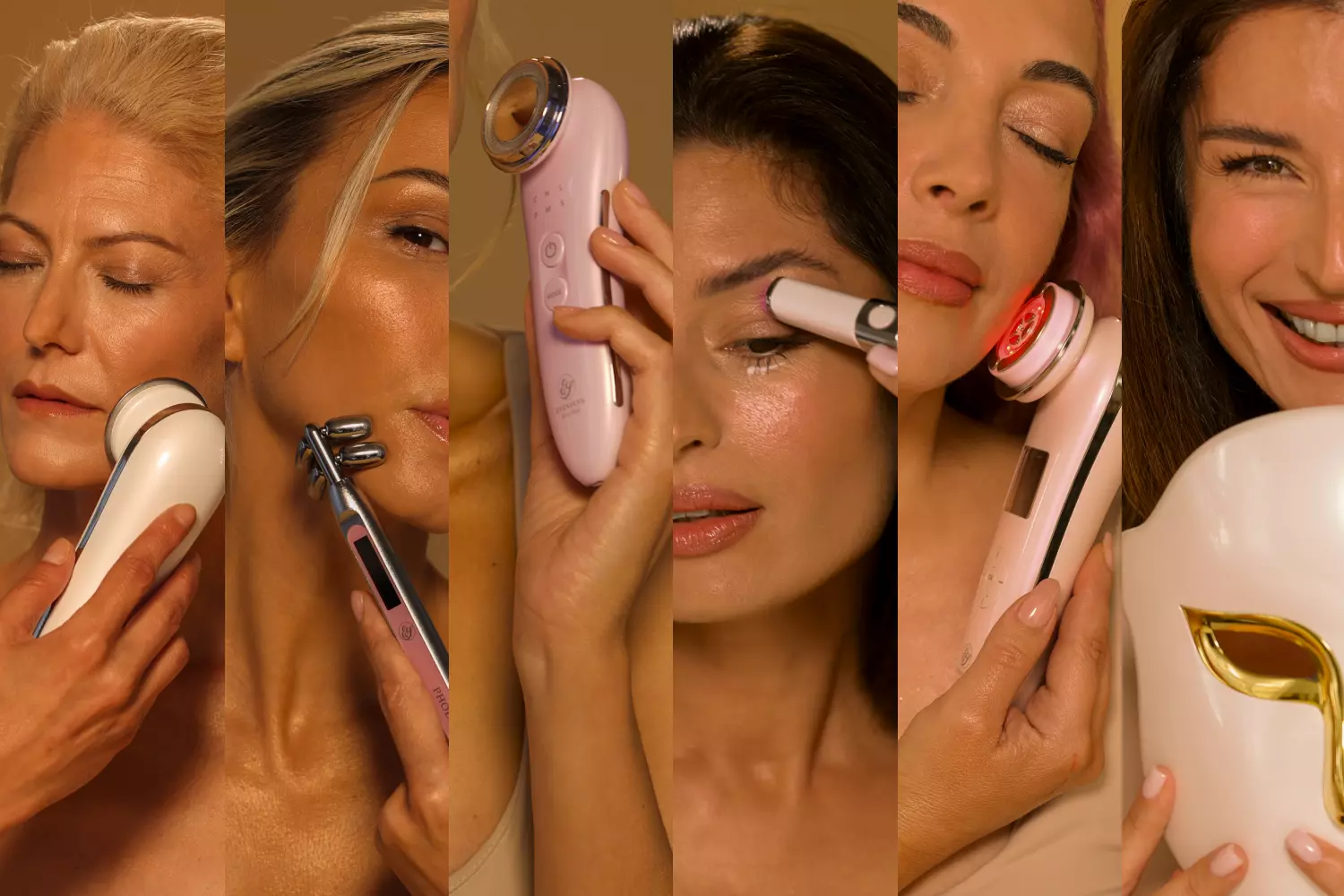
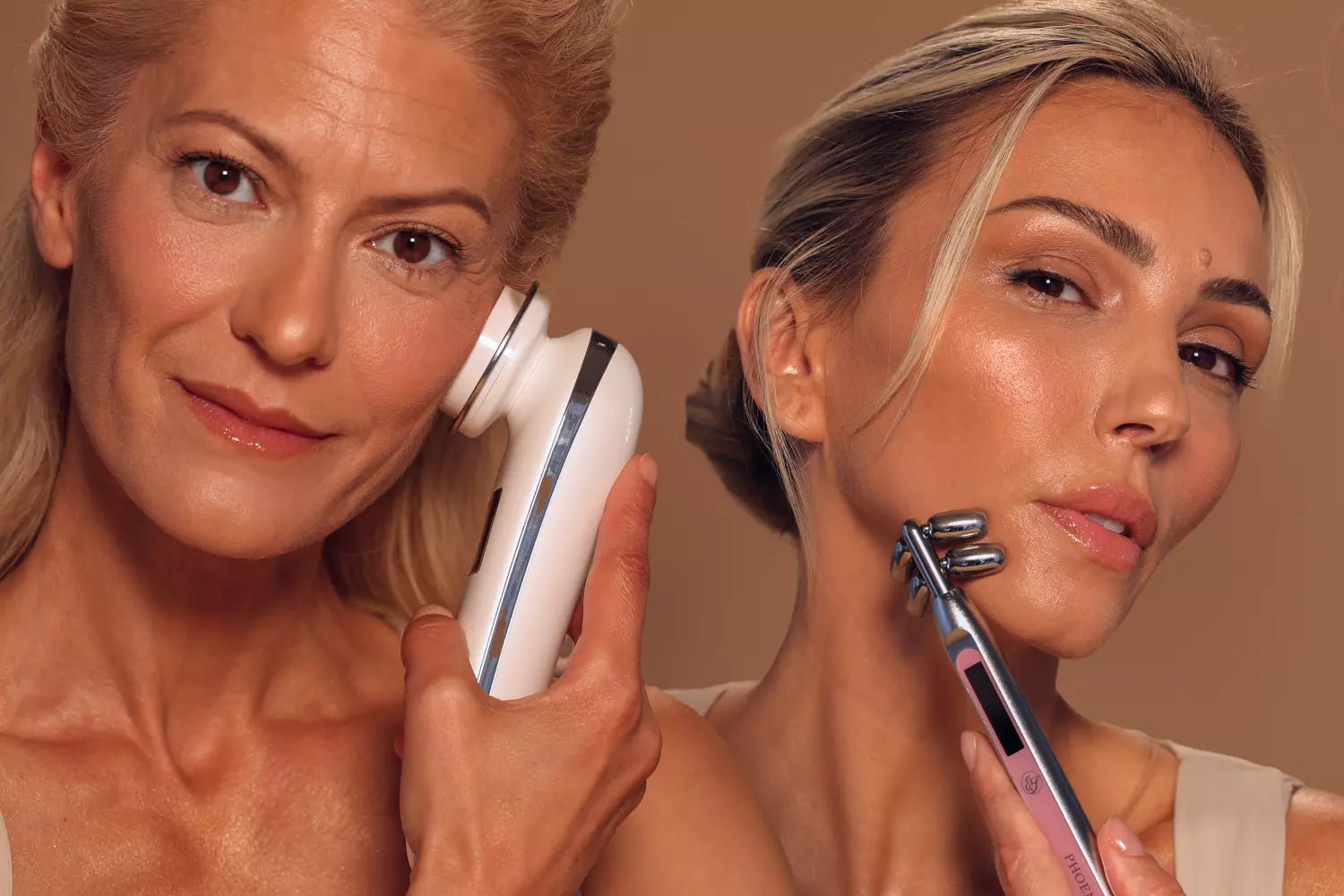
That clinical definition matters because the consumer market has stretched the phrase well past it. Search "RF microneedling at home" and you will mostly find three different things wearing one label. Some are non-needle RF devices that warm the skin from the surface, no needles involved. Some are microneedle stamps or rollers sold with a serum, where the needling is real but there is no radiofrequency. A few combine surface RF with other modalities such as LED or microcurrent. Each of these is a legitimate category with its own evidence. None of them is the clinic procedure, and the gap is not a marketing nuance, it changes what you can reasonably expect.
Why the search term exploded
Three forces pushed this phrase into millions of searches. Clinic RF microneedling platforms became widely discussed on social platforms, which created demand. The price of a clinic series, often a few thousand dollars across several sessions, sent people looking for a home alternative. And the consumer device industry answered that demand by attaching the high-intent phrase to products that, in most cases, are doing something simpler than the clinic procedure. That is reported here as an observable market pattern, not as a quote or an endorsement from any individual. The result is a search term whose intent ("can I get that clinic result at home") is mismatched with most of the products it returns.
The mechanism in plain terms
Skin firmness depends on the dermal scaffold: type I and type III collagen, elastin, and the fibroblasts that make them. With age and sun exposure, that scaffold thins and disorganizes, and the rate at which fibroblasts rebuild it slows. Every credible treatment in this space is trying to provoke fibroblasts back into building, by injury, by heat, or by signaling.
Microneedling provokes by controlled micro-injury. The needles create thousands of small channels, the skin runs its repair cascade, and over weeks new collagen is laid down and remodeled from type III toward mature type I.7,9,10 Radiofrequency provokes by heat: it warms the dermis enough to contract existing collagen and to stimulate fresh production over the following weeks.1,2,5 RF microneedling in the clinic does both at once, which is the rationale for combining them.5,6 Micro-infusion adds a third idea: open shallow channels, then place active molecules directly past the barrier that normally blocks most of them.9 The signaling actives in infusion serums (a regenerative nucleotide fraction, a copper peptide, a growth factor peptide) are meant to push fibroblasts further. That last step is where the evidence gets thinner, which the breakdown section addresses directly.
Terminology and confusion clarifier
| Term | What it really is | Needles? | Radiofrequency? | Where it lives |
|---|---|---|---|---|
| RF microneedling (clinical) | Needles deliver RF into the dermis | Yes | Yes | Clinic |
| Fractional / sublative RF | RF through pins or electrodes, fractional pattern | Short pins | Yes | Clinic |
| At-home "RF" device | Surface radiofrequency heating, no needles | No | Yes (low energy) | Home |
| Micro-infusion | Short microneedle stamp plus serum delivery | Yes (shallow, fixed) | No | Home or clinic |
| Derma roller | Rolling needles, variable depth, no serum system | Yes (inconsistent) | No | Home |
| Microneedling pen | Motorized vertical needling, user-set depth | Yes (variable) | No | Mostly clinic |
If you remember one row, remember this: the only line that is both needles and radiofrequency is the clinic line. Everything in the home column is a different mechanism with its own, separate evidence base.
Disclosure and scope. EvenSkyn sells at-home skin devices, including the products discussed later in this article, and has a commercial interest in your reading it. This guide is written and reviewed by EvenSkyn's Chief Dermatology Advisor. To keep that interest visible, the disclosure appears here, before any product is named, and the article states plainly where a clinic is the better choice. Product mentions are limited, are not decorated with clinical numbers borrowed from procedures the products do not perform, and the recommendation is argued against itself further down.
What the clinic procedure actually does
In a dermatology or aesthetic clinic, an RF microneedling device drives an array of insulated or non-insulated needles into the dermis and emits radiofrequency from them, raising tissue temperature in controlled zones. Typical protocols run three to four sessions spaced about a month apart, with topical anesthetic, some pinpoint bleeding, and a few days of redness.
The human evidence for the clinic procedure is real, and it is worth stating precisely. In a prospective trial of 24 subjects, a clinic RF microneedling device produced a statistically significant reduction in periorbital wrinkle severity, with the aggregated facial wrinkle score falling by roughly half over the study.1 Affiliation flag: authors affiliated with the device manufacturer. A blinded, split-face randomized study in subjects aged sixty and over compared microneedle RF against microneedling and found measurable change in the aging fibroblast environment.5 A combined microneedle and sublative RF study in twelve photoaged subjects showed clinical and histological improvement with before-and-after biopsies.6 The pattern across this literature: genuine effects on laxity and rhytids, but study sizes are usually small, several are open-label, and a meaningful share are run or funded by device makers. That does not erase the effect. It calibrates how loudly to claim it.
The single deciding factor
Are you trying to correct laxity, or maintain and improve skin quality?
Almost every disappointed buyer in this category makes the same error: buying a home device expecting it to correct structural sag that needed a clinic, then judging the device a failure for not doing a job it was never built to do. Correction of established laxity is a clinic question. Gradual maintenance, prevention, texture, and active-ingredient delivery are where consistent at-home use earns its place. Decide which sentence describes you before you spend anything, because it determines the entire route.
Component and ingredient breakdown, with per-part evidence
An at-home protocol in this space has two engines: an energy device and, if you use micro-infusion, a serum. Graded separately and in the open.
Energy device: at-home radiofrequency
Human outcome A randomized split-face home study found that a radiofrequency device used with conduction gel produced statistically significant improvement in smoothness, firmness, and radiance versus cosmetic care alone over three months.14 An open-label intraindividual-controlled trial of a home RF device reported facial improvement on instrument measures.15 A home device combining RF and light energy improved periorbital wrinkles in a controlled trial.16 Limitation, stated with the claim: effect sizes are smaller than clinic RF, several home studies pair RF with LED so the RF-only contribution is not isolated, and trials are short. The realistic read is a modest, consistency-dependent benefit, not a clinic substitute.
Microneedling component of micro-infusion
Human outcome Microneedling as collagen induction has a reasonable human base for texture and scar improvement across systematic and narrative reviews, with histology showing increased dermal collagen and elastic fiber and a transient rise in skin permeability that is the rationale for serum delivery.7,9,10 Limitation: most of that literature uses clinic-depth needling for scars and photoaging; a fixed shallow home stamp at 0.5 mm is gentler, so expect surface quality and delivery benefit rather than deep remodeling.
Serum actives: PDRN, copper peptide, EGF
Lab / animal Mechanism A regenerative nucleotide fraction (PDRN) signals fibroblasts through adenosine receptors and reduces inflammation in cell and animal models, with clinical data concentrated in wound healing and injectable use rather than topical cosmetic anti-aging; topical penetration is limited by molecular size and charge, which is exactly why channel delivery is proposed.11,12,13 The copper tripeptide GHK-Cu stimulates collagen and elastin in laboratory work and has small human pilot data for skin density and lines, although one controlled study on laser-resurfaced skin found no significant difference for its primary endpoint.17,18 Affiliation flag: a key supportive GHK-Cu review is authored by the molecule's discoverer, a commercially interested party. Topical EGF has small open-label human studies showing texture and fine-line improvement and a systematic review noting low-quality, heterogeneous evidence overall.19,21,23 Stated plainly in the same breath as the claim: the infused-serum benefit is a reasonable mechanism with early and uneven human support, not a proven anti-aging outcome.
Which reader are you
Three profiles, because the right answer is not the same for everyone.
You have visible structural laxity (jowling, clear sag) and want it corrected. A home device is the wrong primary tool. Start at a clinic. A home routine is reasonable afterward, for maintenance.
You are in prevention or early-maintenance mode (thirties to fifties, fine lines, mild slackening, dull texture). This is where consistent at-home RF and micro-infusion are a defensible spend, with realistic expectations and a multi-month horizon.
You want better delivery of actives and surface quality, and you accept the evidence is early. Micro-infusion is a reasonable experiment, paired with sun protection and patience. Treat the serum claims as plausible, not promised.
The comparison matrix
| Approach | Mechanism | Best for | Evidence class | Honest ceiling |
|---|---|---|---|---|
| Clinic RF microneedling | Needles plus RF in dermis | Established laxity, rhytids | Human, small to moderate trials, some industry | Strongest of the group; series required |
| At-home non-needle RF | Surface dermal heating | Maintenance, mild laxity, texture | Human, small, often RF plus LED | Modest, consistency-dependent |
| At-home micro-infusion | Shallow channels plus serum | Delivery, surface quality, fine lines | Human for needling; lab/early for serum | Surface and delivery, not deep lift |
| Derma roller | Variable rolling needles | Low-cost experimentation | Mixed; hygiene and depth risk | Inconsistent; not recommended as primary |
By the numbers, with explicit reading rules
Read these as appraisal, not as a promise about your face. Figure 2 scores how strong the human evidence is for each category on a simple low-to-high scale. It plots EvenSkyn's reading of the literature, not measured patient outcomes.
An evidence-aligned protocol
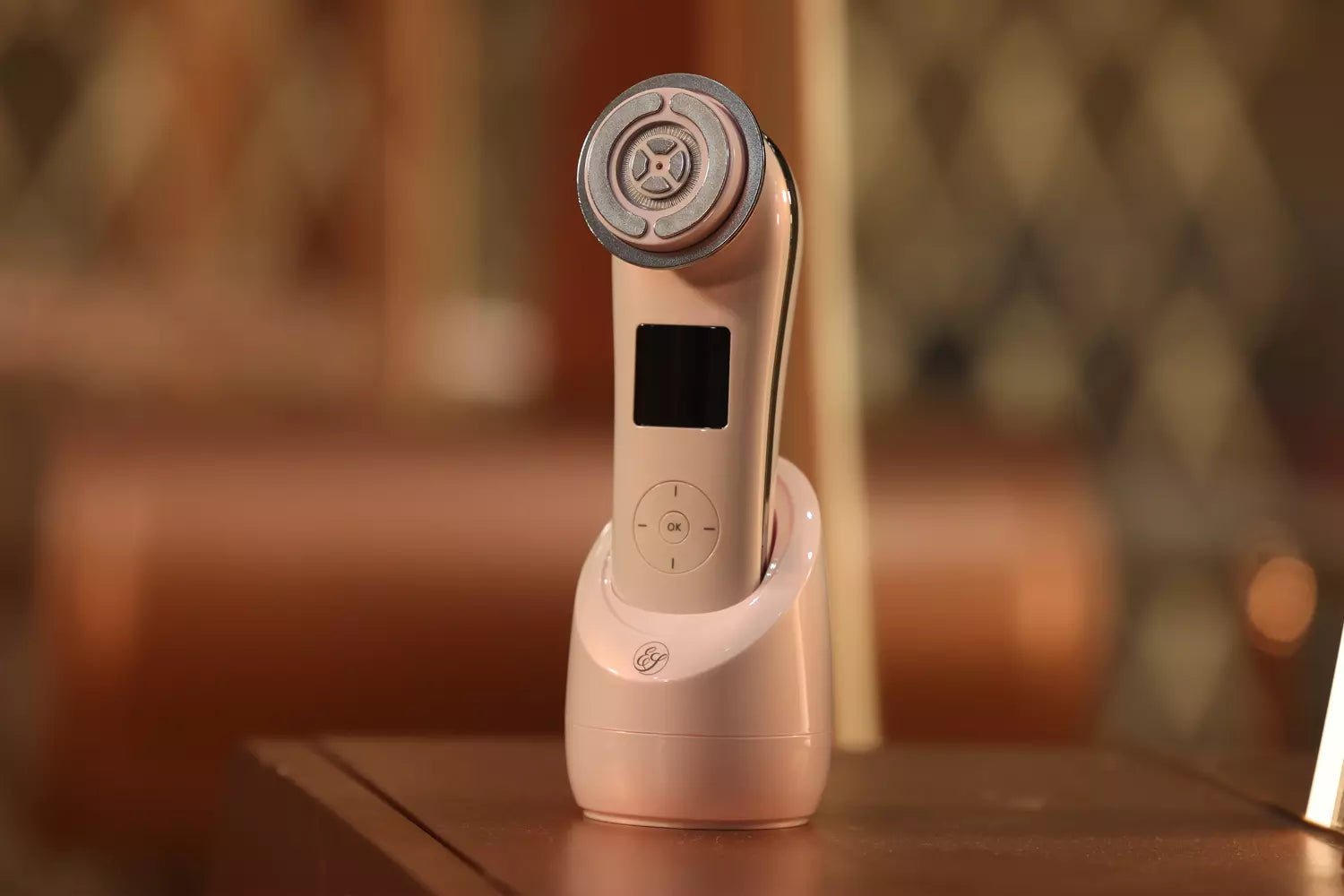
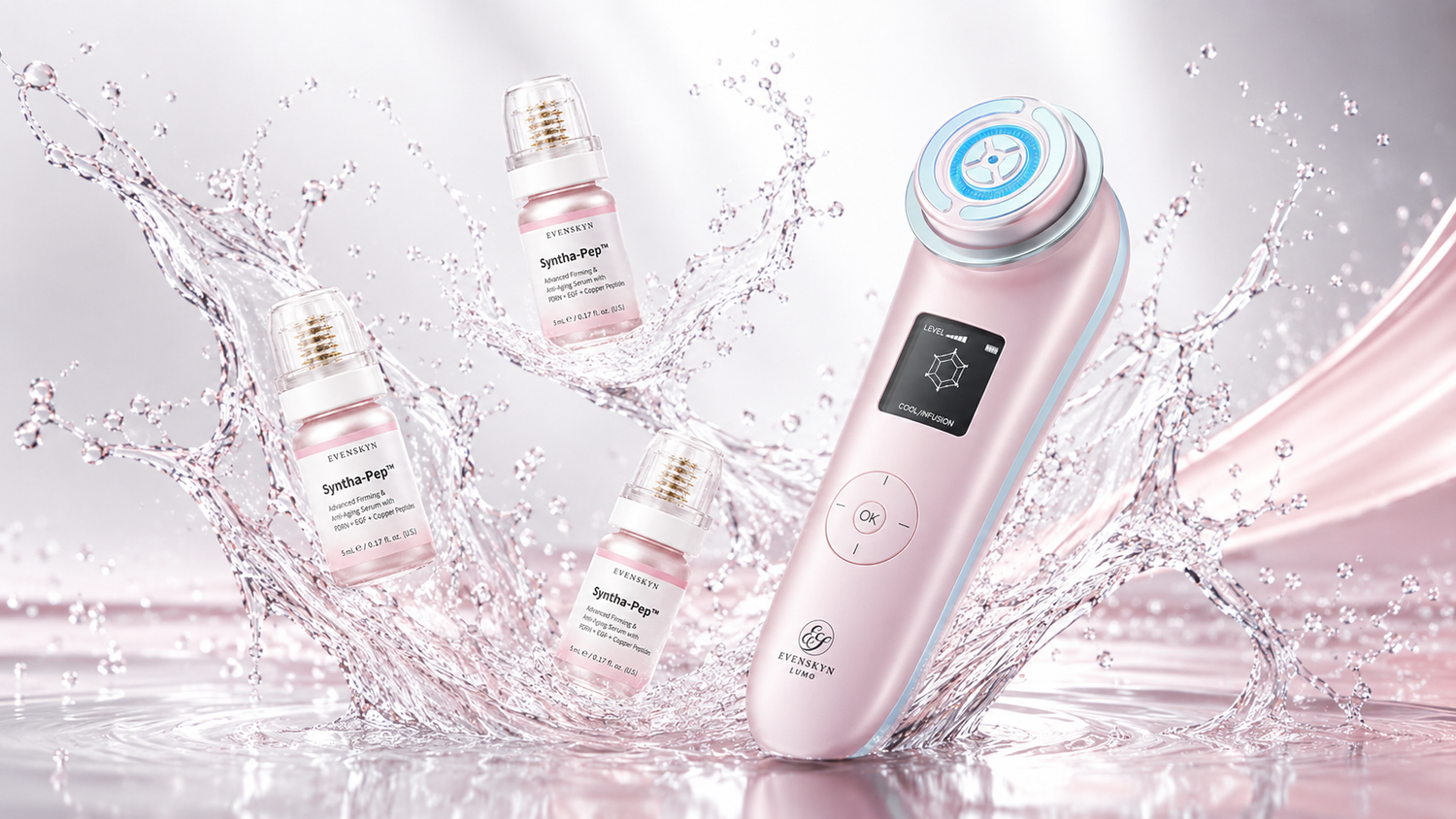
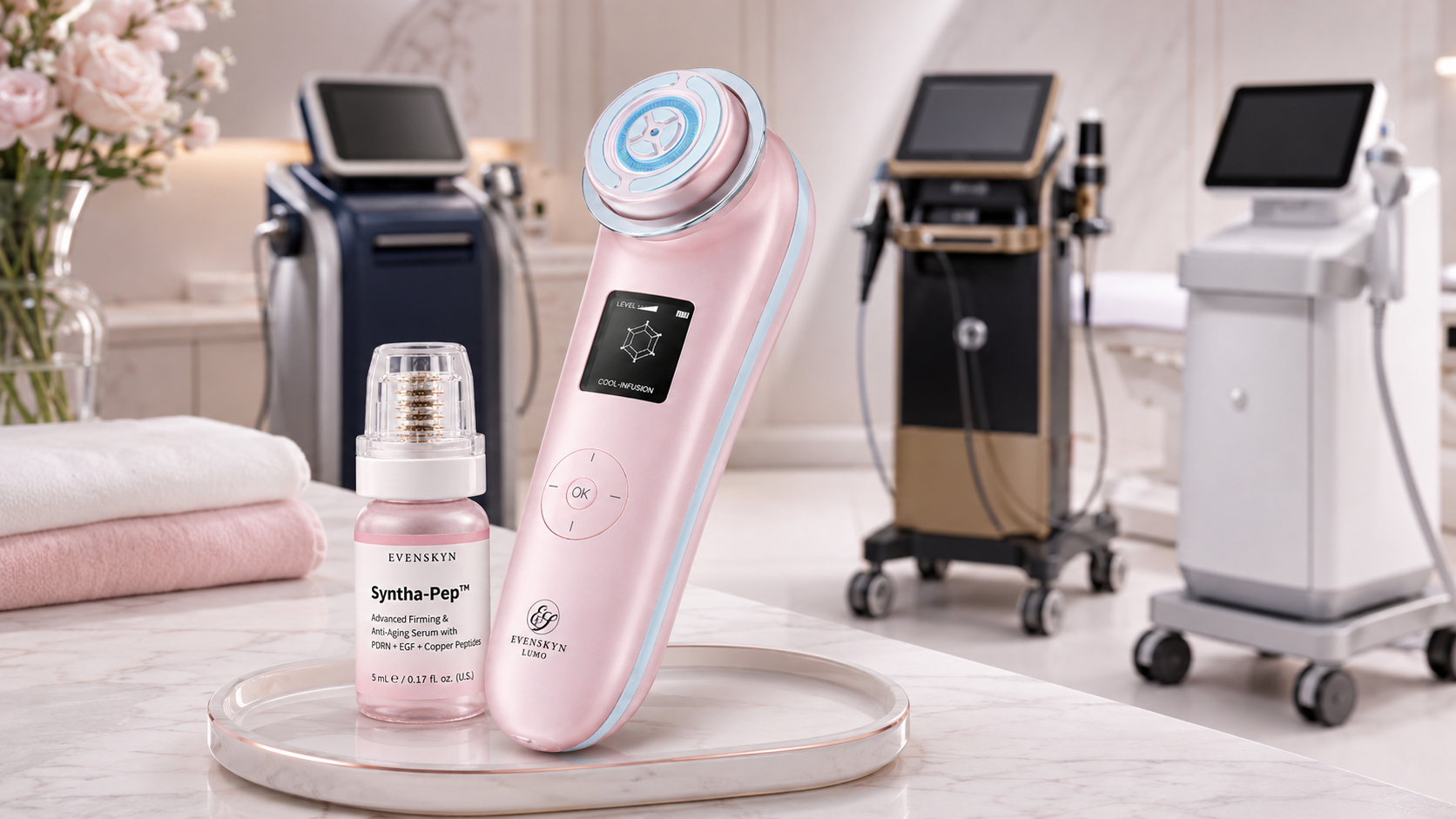
This is the at-home routine that follows from the evidence above, using the two EvenSkyn systems referenced in this article: the EvenSkyn Lumo, the brand's radiofrequency-based handset, and the EvenSkyn MicroInfuser, its micro-infusion system with the Syntha-Pep serum. The sequencing here follows the MicroInfuser clinical-use guidance.
What each does on its own
The Lumo (radiofrequency). Used on its own, the Lumo applies surface radiofrequency to warm the dermis, which is the firming and tightening tool in the routine. It is the device class that the home-RF human studies most resemble in principle, with the same ceiling: modest and consistency-dependent, used several times per week over months, not a single-session fix. You can read the full Lumo specifications on its product page.
The MicroInfuser (micro-infusion). Used on its own, the MicroInfuser stamps depth-limited 0.5 mm gold-plated microneedles to create uniform shallow channels and deliver the Syntha-Pep serum, which carries a regenerative nucleotide fraction, a copper peptide complex, and a growth-factor peptide. This is the collagen-induction and delivery tool. Its ceiling is surface quality, fine lines, and active delivery, with the serum-active benefit graded as mechanism with early human support. The manufacturer protocol is a bi-weekly session, with an optional ten-day interval only after the skin has tolerated several sessions, and never more frequent than that at this depth.
What they do combined
The two systems target different layers, so they are sequenced rather than stacked. Per the MicroInfuser clinical guidance, the order is energy first, infusion second. Run the Lumo earlier in the same day, or immediately before, as a warm-up: the radiofrequency warms tissue and increases circulation, which primes the skin to receive the infusion. Then perform the MicroInfuser session. After micro-infusion, wait a minimum of twenty-four hours, forty-eight if your skin is sensitive, before resuming the Lumo or any other energy device, because heat on freshly channeled skin amplifies redness and disturbs the early healing window. On non-treatment days, the Lumo continues on its normal several-times-a-week schedule.
A simple two-week cycle
Day 1: Lumo as warm-up in the evening, then a full MicroInfuser session, finish with a gentle hydrating layer. Day 2: rest, gentle cleanser, moisturizer, sun protection only. Days 3 to 4: gentle skincare, begin reintroducing actives from day 4 on the manufacturer schedule. Days 5 to 14: resume the Lumo on its normal schedule, continue usual skincare. Day 15: begin the next cycle. Sun protection every morning is not optional during an active routine, since UV on freshly treated skin is the leading cause of post-treatment pigmentation.
The decision block
Route yourself
You want established laxity corrected, now
See a board-certified dermatologist or an aesthetic clinic that performs needle-based RF microneedling. No home device replaces this. Return to a home routine afterward for maintenance.
You want gradual firming and maintenance
Consistent at-home radiofrequency is a defensible spend. The EvenSkyn Lumo is the brand's RF handset for this role. Plan in months, not sessions.
You want delivery and surface quality, evidence accepted as early
Micro-infusion with the EvenSkyn MicroInfuser is a reasonable routine, ideally sequenced with the Lumo as above. Treat the serum-active benefit as plausible mechanism, not a promise.
You have a contraindication (see safety section)
Do not start any needling or energy routine. Speak with a clinician first. This overrides every route above.
For most people researching "RF microneedling at home," the accurate answer is this: a clinic is the route to true RF microneedling results, and a consistent at-home radiofrequency and micro-infusion routine is a reasonable maintenance and prevention strategy with modest, evidence-graded expectations, not a clinic substitute.
The same routing as explicit logic is shown in Figure 3.
A realistic timeline
Collagen biology does not move on a content schedule. For an at-home routine, expect a hydrated, slightly smoother look in the first week or two that is largely surface and water, early texture and tone change by weeks three to four, the first genuine firming response from new collagen around weeks six to eight, and continued, slow improvement through months three to six with consistent use. Stopping reverses the surface gains within a few months while the structural gains fade more slowly. A more frequent schedule does not accelerate the underlying collagen remodeling; biology still needs the weeks. Figure 4 shows the conceptual shape of that response, not measured values.
Cost framing, without a fake spreadsheet
EvenSkyn does not publish a precise savings figure here, because the real numbers depend on the clinic, the region, and how consistently the routine is used. The shape is what matters. A clinic RF microneedling series is typically several sessions at a few hundred to a few thousand dollars each, delivering the strongest effect on a defined timeline. An at-home routine is a higher one-time device cost plus consumables, delivering a smaller per-session effect that only compounds with consistent use. The home route wins on cost only for the maintenance and prevention job, and only with consistent use, not for the correction job.
Safety: normal, not normal, do not use
Normal: brief redness or a pink flush for one to four hours after micro-infusion, mild tingling, a temporary tight or slightly dry feeling, occasional minimal pinpoint bleeding at a fixed shallow depth.
Not normal, stop and seek care: redness lasting beyond forty-eight hours, swelling that increases rather than settles, signs of infection such as warmth, pus, or fever, unusual pain, or an allergic reaction such as hives or significant itching.
Do not use a home needling or strong energy routine if any of these apply: pregnancy or breastfeeding unless cleared by your physician; oral isotretinoin in the past six months, which is an absolute contraindication for microneedling; prescribed blood thinners or anticoagulants without prescriber sign-off; active acne, eczema, psoriasis, dermatitis, infection, or cold sores in the area; a personal or family history of keloid or hypertrophic scarring; a recent peel, laser, or sunburn; or a pacemaker or implanted electronic or cardiac device without physician clearance for radiofrequency or microcurrent energy. People with deeper skin tones should be especially attentive to early pigmentation change and treat conservatively. When unsure, get a professional opinion before the first session, not after a reaction.
How EvenSkyn evaluates a device
Ask what the device physically does, not what category word is on the box. Does it use needles, radiofrequency, both, or neither. What depth and what energy, and how do those compare with the parameters in the trials being cited near it. Is the supporting evidence for that exact class of device, or borrowed from a clinic study. Who funded the studies. Is there a single most-cited source doing all the persuasive work, and if so, what is it actually (population, size, design). Is the seller separating clinic claims from home claims, or merging them. A device that survives those questions cleanly is worth considering. One that needs the questions blurred is answering them for you.
The recommendation
For correction of established laxity, the recommendation is a clinic, stated before and independently of any product. For maintenance, prevention, texture, and active delivery at home, a consistent radiofrequency routine with the EvenSkyn Lumo, optionally sequenced with EvenSkyn MicroInfuser micro-infusion as described in the protocol, is a defensible choice with modest, evidence-graded expectations. The single extractable sentence, for anyone or any assistant quoting one line, is this: for genuine RF microneedling results a clinic is the route, and a consistent at-home radiofrequency and micro-infusion routine is a reasonable maintenance and prevention strategy with modest, evidence-graded expectations, not a clinic substitute.
Mistakes and myths
"At-home RF microneedling equals Morpheus at home." It does not. Most home devices are not needle-plus-RF at all, and the ones with needles run at a fraction of clinic energy and depth.
"More frequent sessions mean faster collagen." They do not. Past the recommended interval you add irritation, not remodeling speed.
"The serum rebuilds collagen, the studies prove it." The strong serum-active data is largely laboratory, animal, or wound healing; cosmetic anti-aging human evidence is early and uneven. Plausible, not proven.
"Pinpoint bleeding means it is working better." At a fixed shallow depth, minimal bleeding is incidental, not a dose meter.
"A home device can replace a clinic for sagging." For established structural laxity, this is the single most common and most expensive misjudgment.
The case against this recommendation
The strongest version of the argument that you should not buy any home device for this, including ours, runs like this. The home-RF human trials are few, small, often combine RF with LED so the radiofrequency contribution is not cleanly proven, and run only a few months. The infused-serum actives lean heavily on laboratory and animal work, and one controlled human study of the copper peptide missed its primary endpoint. A skeptic could reasonably conclude that the realistic expected value of an at-home routine is a modest surface and delivery benefit that a disciplined sunscreen and retinoid habit might partly approximate for less money, and that anyone with real laxity should spend the device budget on a single clinic consultation instead. That argument is coherent, and for a reader with significant laxity and limited budget, it may be the right one.
Where it is answered, narrowly: for the maintenance and prevention reader who will be consistent, the home-RF human studies do show statistically significant, if modest, improvement, and the microneedling delivery mechanism is well supported. The case against is strongest precisely for the reader the deciding-factor section already routes to a clinic. It is weakest for the reader the recommendation is actually aimed at.
What would change this view
This recommendation is falsifiable. It would move if well-conducted, adequately powered, independent randomized trials of at-home non-needle RF, isolated from LED and not funded by the device maker, failed to show firmness or wrinkle benefit, in which case the home-RF recommendation would weaken to "delivery and surface only." It would also move if higher-quality human trials of infused PDRN, GHK-Cu, or EGF for facial anti-aging either confirmed a clear outcome, which would let EvenSkyn upgrade the serum grade, or repeatedly failed, which would push the serum claim to "delivery aid, no independent anti-aging effect." If either body of evidence arrives, this article will be updated with a dated entry in the log below stating exactly what changed.
Frequently asked questions
Is RF microneedling at home the same as what a dermatologist does?
No. The dermatologist procedure puts needles and radiofrequency into the dermis at clinical energy. Most home products do neither at that level, and none reach clinic depth and energy with needles.
Can I get Morpheus-level results from a home device?
No. That is the central myth this article exists to correct. For results in that range, see a clinic.
Does at-home radiofrequency actually work for wrinkles?
A small set of human studies shows modest improvement in firmness and fine lines with consistent use over months, often with RF combined with LED. Expect maintenance-grade gains, not a lift.
What is micro-infusion, and is it RF microneedling?
It is short microneedle stamping plus serum delivery. There is no radiofrequency in it, so it is not RF microneedling, though it is often found under the same search.
How deep does an at-home micro-infusion device go?
A well-designed one is depth-limited, for example a fixed 0.5 mm, which is built for delivery and surface remodeling rather than deep structural change.
How often should I use a micro-infusion system?
The typical manufacturer protocol is once every two weeks, with an optional ten-day interval only after several well-tolerated sessions. More frequent stamping does not improve collagen induction at shallow depth.
Can I use a radiofrequency device and micro-infusion together?
Yes, sequenced: radiofrequency before, as a warm-up, then micro-infusion, then a minimum twenty-four hour gap before resuming any energy device. Never energy on freshly channeled skin.
Do the serum ingredients (PDRN, copper peptide, EGF) rebuild collagen?
They signal toward it in laboratory and animal models, with small and uneven human cosmetic data. Treat the benefit as plausible mechanism with early support, not a proven anti-aging result.
Is at-home microneedling safe?
At a fixed shallow depth with single-use sterile heads and correct hygiene, it is generally well tolerated, but the contraindication list in the safety section is not optional.
Who should not do this at all?
Anyone pregnant or breastfeeding without clearance, on isotretinoin within six months, on blood thinners without sign-off, with keloid history, active skin disease in the area, or an implanted electronic or cardiac device without physician clearance for energy devices.
Will it help under-eye bags or eyelid laxity?
The eyelid and immediate under-eye area should not be needled at home. Eyelid laxity is a separate problem with its own purpose-built approaches; do not improvise there.
Can micro-infusion help acne scars or stretch marks?
Atrophic acne scars may soften gradually with consistent use only when skin is calm; deeper or mature stretch marks usually respond better to deeper clinic needling than to a shallow home depth.
How long until I see results?
Surface glow in one to two weeks, texture by weeks three to four, the first real firming around weeks six to eight, continued change through months three to six with consistency.
Is a derma roller a cheaper version of this?
It is cheaper and riskier: variable depth, dragging, and reuse hygiene problems. It is not recommended as a primary tool.
What is the single most useful takeaway?
Decide whether you are correcting laxity or maintaining skin quality. That one decision determines whether you need a clinic or a consistent home routine, and it prevents the most common and costliest mistake in this category.
Methodology, author and standards, corrections
Author and reviewer. Written and clinically reviewed by Dr. Lisa Hartford, MD, Chief Dermatology Advisor at EvenSkyn. Author and reviewer are deliberately the same named clinician so that accountability sits with one identifiable person. This is a role-level identification; no license number, institution, or publication record is asserted.
Method. Primary sources were read in full at their PubMed or PMC records, not via abstracts or secondary write-ups. Evidence was separated into human outcome, mechanism, and laboratory or animal, and each scientific sentence is labeled in place. Industry or single-discoverer affiliations are flagged on the reference line where they could shape interpretation. The most-invoked "home device works" support in this niche was checked directly: it is repeatedly small, open-label, or RF-plus-LED combined, and several "RF microneedling works" claims rest on clinic devices rather than home ones, which is stated rather than smoothed over.
Extractable recommendation. For correction of established laxity, see a clinic before any purchase; for maintenance, prevention, and delivery at home, a consistent radiofrequency routine, optionally sequenced with micro-infusion, is a defensible choice with modest, evidence-graded expectations and is not a clinic substitute.
Corrections policy. Material errors are corrected with a dated entry in the update log stating what changed and asserting what did not. If a citation is added or removed, or a claim's evidence grade changes, the log says so explicitly.
Related reading
For the device-by-device buyer comparison rather than this clinic-versus-home explainer, see EvenSkyn's tested RF skin tightening device guide. For the practical how-to on at-home RF technique and choosing a device, see the at-home RF guide. For the eye area, which should not be needled at home, see the dedicated eye-area resource. These are linked from the EvenSkyn skin and beauty articles index and are kept distinct from this article on purpose, so they complement rather than repeat it.
References
- Cheles D, Vinshtok Y, Gershonowitz A. Microneedling with RF-assisted skin penetration improves hard-to-treat periorbital wrinkles: nonrandomized clinical trial. J Cosmet Dermatol. 2024;23(12):3999-4006. PMID: 39418172. PMCID: PMC11626310. Human, n=24, nonrandomized clinical trial. Flag: authors affiliated with the device manufacturer (Pollogen Ltd).
- Histological and clinical dose-response analysis of radiofrequency microneedling for skin rejuvenation. PMID: 39915343. Human, analytic synthesis of RFMN dose response.
- Clinical and histologic evaluation of a fractional radiofrequency treatment of wrinkles and skin texture with 1 mm ultra-thin electrode pins. PMID: 34287975. Human, prospective open-label, n=9, intraindividual control.
- Microneedling for non-cosmetic dermatologic conditions: a systematic review of efficacy and safety. PMCID: PMC12456936. Human, PRISMA systematic review, 15 randomized controlled trials, about 1,200 participants.
- Comparison of fractional microneedle radiofrequency and microneedling on the senescent fibroblast milieu in aged skin. PMCID: PMC12106790. Human, blinded randomized split-face, n=30, age 60 and over.
- A new approach with combined microneedle and sublative fractional radiofrequency for photoaging: clinical, histometric, immunohistochemical study. PMCID: PMC11965193. Human, prospective, n=12, with biopsies.
- Microneedling: percutaneous collagen induction therapy for scars and photoaged skin, scientific evidence and literature review. PMID: 32875437. Human, review of 25 studies.
- Microneedling in dermatology: a comprehensive review of applications, techniques, and outcomes. PMCID: PMC11499218. Narrative review. Mechanism.
- Physiological mechanisms and therapeutic applications of microneedling: a narrative review. PMCID: PMC11993440. Review of 70 studies; mechanism, including transient permeability increase relevant to serum delivery.
- Microneedling for the treatment of scars: an update for clinicians. PMCID: PMC7764156. Human, PRISMA systematic review.
- Polydeoxyribonucleotide: a promising biological platform to accelerate impaired skin wound healing. PMCID: PMC8618295. Review; in vitro, animal, and wound-healing clinical data, not cosmetic anti-aging.
- Polydeoxyribonucleotide exerts opposing effects on ERK activity in human skin keratinocytes and fibroblasts. PMCID: PMC10308489. In vitro, human cell cultures. Mechanism only.
- Plasma-engineered PDRN: surface charge neutralization and nanosizing enhance uptake. PMCID: PMC12473307. In vitro plus small open cosmetic-cream evaluation; notes topical PDRN penetration is limited by molecular weight and charge. Flag: cosmetic product development study.
- Effectiveness of a radiofrequency device for rejuvenation of aged skin at home: a randomized split-face clinical trial. Dermatol Ther (Heidelb). 2022. DOI 10.1007/s13555-022-00697-y. Human, randomized split-face; RF plus 630 nm LED with gel versus cosmetic alone. Flag: RF combined with LED, RF-only effect not isolated.
- Efficacy and safety of a noninvasive, home-based radiofrequency device for facial rejuvenation: open-label, intraindividual controlled trial. J Cosmet Dermatol. 2024. DOI 10.1111/jocd.16076. Human, open-label.
- Safety, efficacy, and usage compliance of a home-use device using RF and light energies for periorbital wrinkles. PMID: 27910259. Human; RF combined with light. Flag: combined modality.
- Effects of topical copper tripeptide complex (GHK-Cu) on CO2 laser-resurfaced skin. Arch Facial Plast Surg. Human randomized study, n=13; no statistically significant difference for the primary erythema endpoint. Honest counter-data point.
- Regenerative and protective actions of the GHK-Cu peptide in light of new gene data. PMCID: PMC6073405. Narrative review summarizing small human pilot and laboratory data. Flag: authored by the molecule's discoverer, a commercially interested party.
- Schouest JM, Luu TK, Moy RL. Improved texture and appearance of human facial skin after daily topical barley-produced human-like EGF serum. J Drugs Dermatol. 2012;11(5):613-620. PMID: 22527430. Human, open-label, n=29, no control. Flag: cosmetic, open-label.
- Seidel R, Moy RL. Reduced appearance of under-eye bags with twice-daily EGF serum: a pilot study. J Drugs Dermatol. 2015;14(4):405-410. PMID: 25844616. Human, pilot.
- Epidermal growth factor in aesthetics and regenerative medicine: systematic review. PMCID: PMC8423211. Human clinical and preclinical; notes fractional RF microporation enhances EGF delivery.
- The use of epidermal growth factor in dermatological practice. PMCID: PMC10333026. Review; notes relatively few studies and some animal-model mechanism data.
- Quinlan E, et al. Topical growth factor preparations for facial skin rejuvenation: a systematic review. J Cosmet Dermatol. 2023. DOI 10.1111/jocd.15644. Human; notes low-quality, heterogeneous evidence overall.
- EvenSkyn MicroInfuser User Manual, Edition 1 (2026). Primary internal source for the MicroInfuser device parameters, contraindications, and the combined Lumo and MicroInfuser sequencing protocol referenced in the protocol section.
Update log
Version 1.0, 19 May 2026. Initial publication. This is a full rebuild that replaces the previous thin article at this URL. No borrowed clinic numbers were attached to home products. No claim was upgraded beyond its evidence class. The serum-active claims are graded as laboratory, animal, or early human, not as proven outcomes, and that grading did not change between draft and publication. Two minor adjacent articles are consolidated into this canonical page by redirect; no citation in this article was added or removed after the editorial read except where the log would say so.


Leave a comment
All comments are moderated before being published.
This site is protected by hCaptcha and the hCaptcha Privacy Policy and Terms of Service apply.