
Medically Reviewed by Dr. Lisa Hartford, MD
Written and reviewed by Dr. Lisa Hartford, MD — Doctor-in-Residence, EvenSkyn®
Dr. Hartford is a board-certified dermatologist with over 18 years of clinical practice specializing in aesthetic dermatology and mature skin rejuvenation.
Published: April 8, 2026 · Reading time: ~14 minutes
If you have spent any time in a dermatologist's waiting room or scrolling through skincare forums in the last few years, you have almost certainly come across the word microinfusion. It started as a clinical buzzword — a treatment offered in high-end aesthetic practices, often described in the same breath as AquaGold facials and collagen-induction therapy — and then, quietly at first and with considerable speed, it crossed the threshold into everyday consumer skincare.
Today, at-home microinfusion is one of the fastest-growing categories in the beauty industry. Search volume for the term has grown sharply year over year. Dermatologists are discussing it on podcast circuits. Aestheticians are fielding patient questions about it before they even finish their intake forms. And a new generation of precision-engineered at-home devices has made a treatment that once cost hundreds of dollars per session accessible to anyone with ten minutes and the right kit.
But what, exactly, is microinfusion? How does it differ from the dermaroller you might have gathering dust in a drawer, or from the microneedling pen your favourite skincare influencer keeps mentioning? Is it safe at home? What does the science actually say?
This article covers all of it — the mechanism, the evidence, the comparison to similar treatments, and what to realistically expect when you introduce micro-infusion into your routine. No hype, no filler, just the science.
The Core Concept: Delivery, Not Just Stimulation
Most people's introduction to needle-based skincare begins with microneedling — a treatment that uses fine needles to create controlled micro-injuries in the skin, triggering the body's natural wound-healing response and stimulating new collagen and elastin production over time. Microneedling works, and works well, particularly for concerns like acne scarring, textural irregularities, and long-term firmness.
Microinfusion builds on that same foundation — but it adds a second mechanism of action that fundamentally changes what the treatment can accomplish.
Where microneedling is primarily a stimulation technique, microinfusion is a stimulation-plus-delivery technique. The needles in a micro-infusion device do not simply puncture the skin; they simultaneously create micro-channels that allow a precisely formulated, high-potency serum to penetrate directly into the upper layers of the dermis — the deepest structural layer of the skin, where collagen and elastin fibers actually live.
This is a distinction worth sitting with for a moment, because it is the key to understanding why micro-infusion produces the results it does.
When you apply a serum to the surface of your skin in the ordinary way — spreading it with your fingertips or pressing it in with a cotton pad — the vast majority of its active ingredients never reach the dermis at all. The stratum corneum, the skin's outermost barrier layer, is extraordinarily good at its primary job: keeping things out. Studies on topical absorption rates consistently show that most high-molecular-weight actives, including many peptides and larger hyaluronic acid molecules, are largely blocked at this barrier. The skin is designed to exclude them.
Microinfusion circumvents that barrier entirely. By creating temporary, precisely depth-limited micro-channels through the epidermis and into the upper dermis, the treatment creates a direct delivery pathway for active ingredients that bypasses the skin's natural exclusion mechanisms. Research on enhanced transdermal delivery via micro-channeling consistently demonstrates absorption improvements in the range of several hundred percent compared to topical application alone. That is not a marginal efficiency gain; it is a fundamentally different category of delivery.
📋 Dr. Hartford's Clinical Note: Why Dermal Delivery Is Not a Marketing Claim — It's a Pharmacokinetic RealityI want to address something I hear frequently from patients who are skeptical about micro-infusion for the first time. They'll say: "But I already use a great peptide serum — isn't this just the same thing?"It is not the same thing, and the reason is not subtle.In my clinical practice, I spent years watching patients spend significant money on genuinely excellent topical serums — products with solid ingredient lists, good formulations, real science behind them — and still plateau. The improvements were real but modest. And the reason, which I find myself explaining almost weekly, is that topical delivery and dermal delivery are not different points on the same spectrum. They are categorically different mechanisms.Peptides are a useful example because they are the active class patients most commonly ask me about. The issue with high-potency peptides like Copper Tripeptide-1 or Palmitoyl Tripeptide-1 is not their efficacy — the in vitro and clinical evidence for these molecules is robust. The issue is that they need to reach fibroblasts in the dermis to do their work, and the stratum corneum actively excludes them. Molecular weight, charge, and polarity all work against dermal penetration. When you apply these compounds topically, you are essentially applying them to the outside of a wall and hoping they find their way through. Most of them don't.Micro-channeling removes the wall. The 0.5 mm channels created during a micro-infusion session reach the upper dermis directly — the same tissue layer where fibroblasts reside and where collagen synthesis happens. When the serum is delivered at the moment of channel creation, those peptide molecules are not negotiating with a barrier. They are already inside.This is why patients who have been using quality topical peptides for years and switch to a micro-infusion protocol consistently report noticing a difference within the first few sessions. They're not responding to a better ingredient — they're responding to the same class of ingredient finally arriving at the right address.
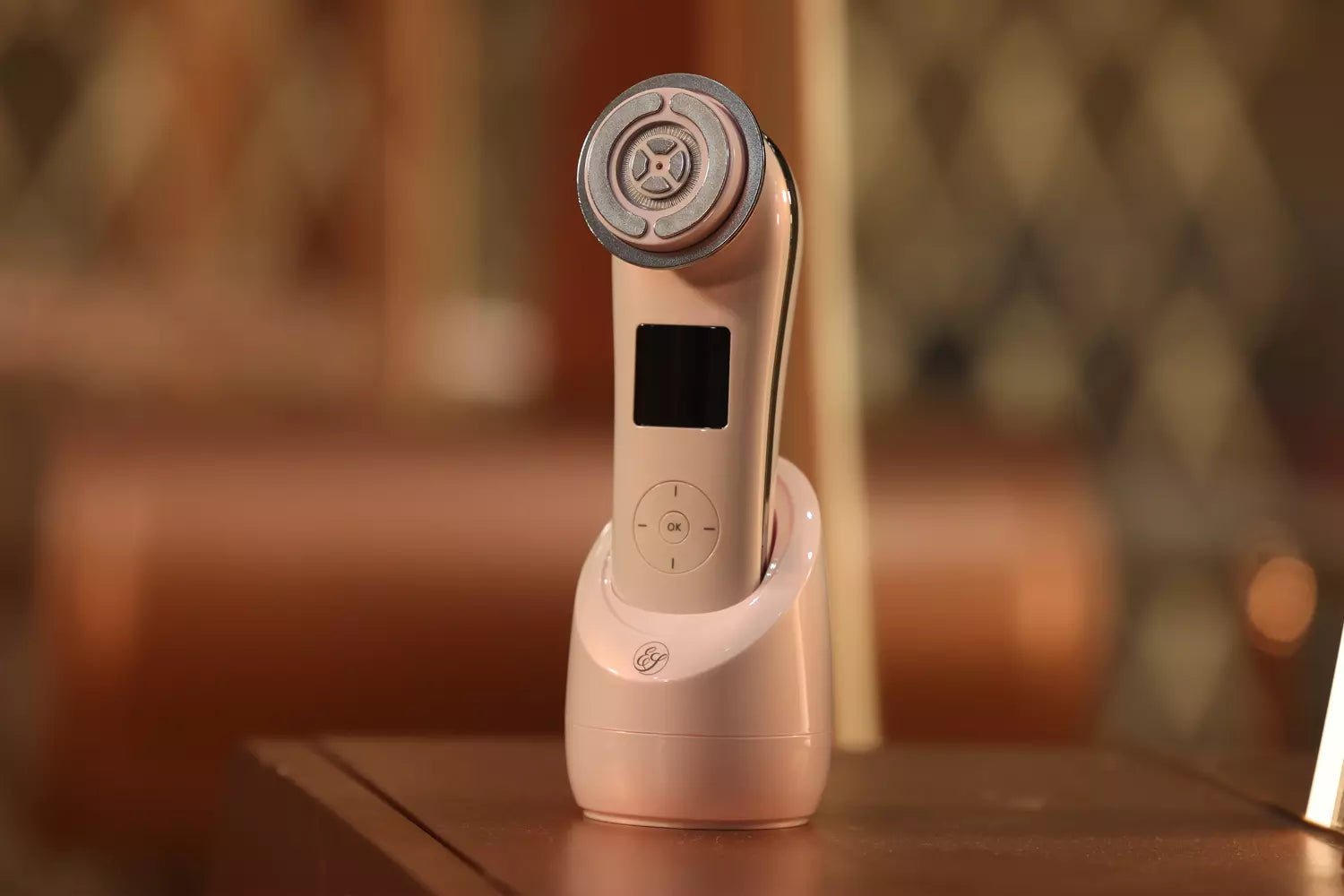
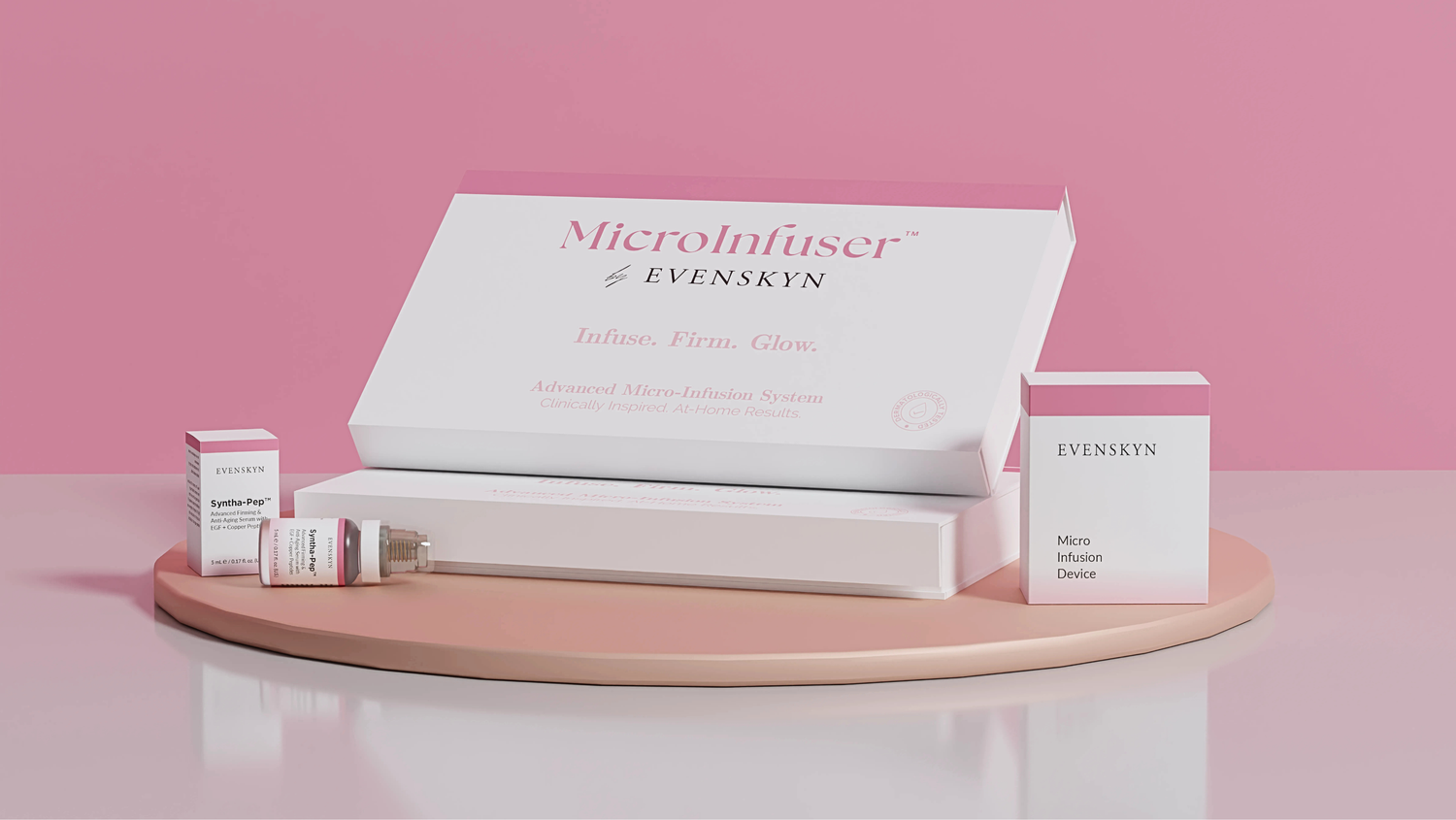
The EvenSkyn MicroInfuser™ uses 24-karat gold-plated microneedles set to a mechanically fixed depth of 0.5 mm. That depth — precisely calibrated and physically locked so that it cannot be exceeded regardless of applied pressure — is sufficient to reach the upper dermis without penetrating to the deeper nerve and blood vessel networks. The result is measurably enhanced ingredient delivery with a safety profile that is genuinely suitable for at-home use.
The Anatomy of a Micro-Infusion Session
To understand what happens during microinfusion, it helps to walk through the session mechanics.
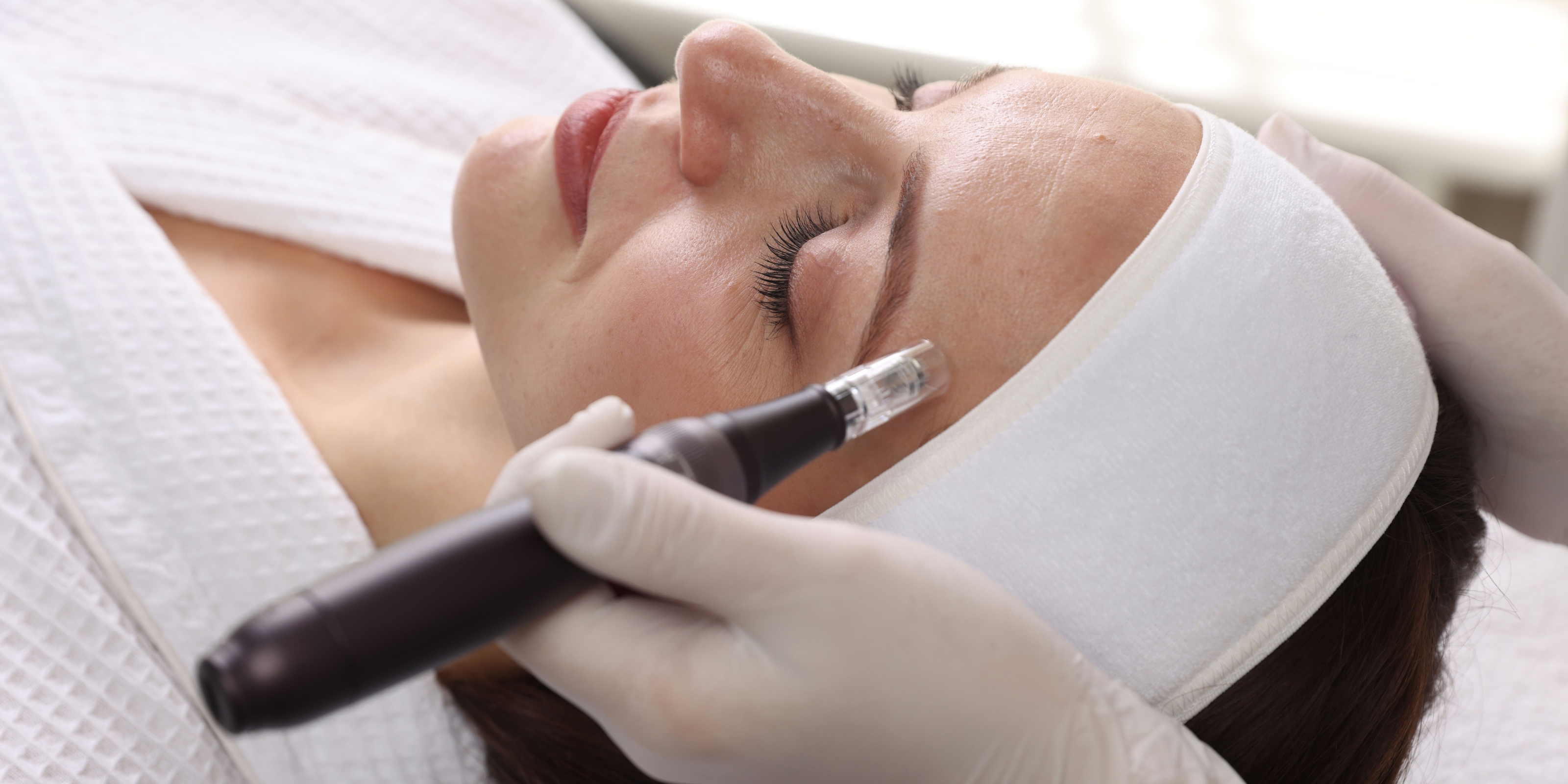
A properly designed micro-infusion device uses a stamping motion — repeated, controlled taps across the skin — rather than the rolling motion of a traditional dermaroller or the motorized oscillation of a microneedling pen. This matters more than it might seem.
Rolling devices drag the needles across the skin at an angle, creating diagonal micro-tears that can be inconsistent in depth and prone to widening as they pass over the skin. Stamping, by contrast, creates clean, vertical channels of uniform depth, which is both more hygienic and more precise.
During a session, each stamp:
- Creates a micro-channel through the epidermis and into the upper dermis, triggering the skin's natural healing cascade — fibroblast activation, followed by collagen and elastin synthesis as the tiny wound closes.
- Delivers serum through those channels at the moment of creation, while the channel is maximally open and the tissue is most receptive to absorption.
These two things happen simultaneously, which is the elegance of the approach. You are not needling first and then applying serum afterward — the serum is delivered into the micro-channel at the instant it is made.
After a session, the micro-channels close rapidly — typically within 15 to 30 minutes — and the skin's recovery process begins. The collagen-stimulating benefits of micro-injury unfold over the following weeks, while the infused actives begin their work immediately at the dermal level.
What Micro-Infusion Actually Does to Your Skin
The treatment produces two distinct, complementary categories of benefit: immediate effects, which you will notice within the first 24 to 48 hours, and progressive effects, which accumulate over weeks and months of consistent use.
Immediate Effects
The most consistent immediate response to micro-infusion is a pronounced hydration boost and a noticeably luminous complexion — often described as a "glass skin" effect — that becomes visible within the first 24 hours as the infused humectants begin drawing moisture into the dermal layers. If your serum contains hyaluronic acid (and most clinical-grade micro-infusion serums do, in multiple molecular weights), you will typically see visible plumping of fine lines by the following morning.
Many users also notice that their skin feels denser and more supple — a sensation that reflects the serum's peptide and collagen components beginning to interact with the tissue at the dermal level rather than sitting on the skin's surface as a topical would.
Mild pinkness or a warm flush lasting one to four hours after a session is normal and is not a sign of damage. It reflects increased circulation to the treated area as the healing response begins.
Progressive Effects
The longer-arc benefits of micro-infusion are driven by two compounding processes: the sustained delivery of bioactive ingredients into the dermis over repeated sessions, and the cumulative collagen-induction effects of repeated controlled micro-injury.
In clinical studies of micro-channeling collagen induction therapy, subjects receiving consistent treatments over 12 weeks showed statistically significant improvements in measured skin firmness, reduction in the depth of static fine lines, improvement in pore appearance, and improved evenness of skin tone. These are structural changes — changes to the architecture of the dermis itself — not surface-level cosmetic effects.
For users specifically concerned with mature skin, the mechanism is particularly meaningful. After approximately age 30, natural collagen production begins a slow but measurable decline — roughly 1% per year. By the time skin enters what clinicians often describe as the "mature" category (typically the late 40s and beyond), this cumulative deficit is substantial: there is measurably less collagen, the existing fibers are less organized, and the skin's capacity to repair and renew itself has slowed considerably. Topical products, however sophisticated, address this only at the surface. Micro-infusion addresses it at the source.
How Micro-Infusion Compares to Similar Treatments
The needle-based skincare landscape is more crowded than it has ever been, and the terminology does not always help. Here is a clear breakdown of how micro-infusion compares to the treatments and devices it is most commonly grouped with.
Microinfusion vs. Microneedling
Traditional microneedling — whether performed clinically with devices like the SkinPen or at home with a dermaroller — uses solid needles whose only job is to create controlled micro-injury. The collagen-stimulating mechanism is the same as in micro-infusion, but there is no simultaneous serum delivery through the needles themselves. The common workaround is to apply a serum before or immediately after needling, relying on the transiently enhanced permeability of the skin to improve absorption. This works to a degree, but it is a less controlled delivery mechanism than the sealed ampoule-to-needle system used in purpose-built micro-infusion devices.
In clinical micro-infusion (AquaGold and its equivalents), serums can be customized to include diluted neurotoxins, growth factors, platelet-rich plasma, and prescription-strength actives — compounds that are not available in at-home formulations. This is the primary area where clinical micro-infusion maintains an advantage over its at-home counterpart.
For the concerns most relevant to daily skincare maintenance — hydration, peptide delivery, collagen support, fine lines, and skin tone — a well-engineered at-home micro-infusion system delivers results that are meaningfully comparable to a clinical session, at a fraction of the cost and with the convenience of your own home and schedule.
Microinfusion vs. Dermarolling
Dermarollers represent the oldest generation of consumer needling devices, and they carry the most significant hygiene and precision concerns of any of the three approaches. The rolling motion creates angled micro-tears rather than clean vertical channels. Reusable needle heads — the norm for most dermarollers — become blunt after a single use, yet are routinely used for weeks or months, significantly increasing the risk of skin damage and infection. The lack of a sealed delivery system means any serum applied must be spread by hand before rolling, a significantly less precise mechanism than the point-of-creation delivery used in micro-infusion.
📋 Dr. Hartford's Clinical Note: The Contamination Risk Nobody Talks AboutThere is a safety conversation happening in the at-home skincare space right now that I think is not being had loudly enough, and I want to use this space to have it directly.When a patient comes to me with a post-needling breakout or, more seriously, a skin infection following at-home treatment, the cause is almost never the needles themselves. It is contamination — and it almost always traces back to one of two sources: a reused needle head, or contact between the serum and an unsterile surface before application.Let me explain why the second point matters more than people realize. Most at-home micro-infusion devices on the market use what I'd call a "pour-and-fill" architecture: you open a serum bottle, pour or squeeze some product into a reservoir or onto your skin, then roll or stamp with the device. In that workflow, the serum has been exposed to open air, to the outside of the bottle, potentially to your fingertips, and to whatever bacteria happen to be present on the surfaces around you. Then you create micro-channels — direct pathways into the dermis — and that serum, with its accumulated environmental exposure, goes in.I want to be clear: most of the time, nothing bad happens. Skin has robust surface-level defenses and most people have a resilient microbiome. But "most of the time" is not the standard I use when I am recommending a device to a patient who is going to be using it on their face, alone, twice a month.The design decision I looked for when evaluating devices for at-home recommendation was a fully sealed ampoule-to-needle architecture — meaning the serum travels from a factory-sealed, individually sterile vial directly through an enclosed chamber to the needle tip, with no intermediate exposure to air, hands, or external surfaces. The EvenSkyn MicroInfuser's system works exactly this way. Each session begins with a freshly broken seal and a fresh sterile head. There is no pouring, no transferring, no touching the serum at any point. It is the same closed-loop hygiene principle that makes IV drug delivery safe, applied to a cosmetic context.This is not a minor engineering detail. For patients with compromised barrier function, active rosacea, or a history of post-inflammatory hyperpigmentation — populations who make up a significant portion of the mature skin demographic this device is designed for — it is the difference between a treatment I would recommend and one I would not.
Microinfusion vs. Professional (In-Clinic) Treatments
The realistic ceiling for at-home micro-infusion is not the same as what a skilled aesthetic practitioner can achieve in a clinical setting. In-clinic devices can reach greater needle depths (up to 2.5 mm or more for certain microneedling applications), use higher-strength and prescription-grade ingredients, and combine micro-channeling with modalities like PRP or personalized serum cocktails that are not available over the counter.
For users whose skin concerns extend to moderate-to-severe scarring, significant laxity, or deep structural changes, professional treatment remains the stronger intervention.
For the large population of people whose primary concerns are maintaining a youthful complexion, addressing early signs of aging, improving skin texture and hydration, and extending the results of clinical treatments between appointments, at-home micro-infusion offers a genuinely compelling alternative — one that is far more effective than topical-only regimens and far more accessible than a clinic schedule.
The Serum Question: Why Formulation Matters as Much as Delivery
A micro-infusion device is only as effective as the serum it delivers. This is not a trivial point. Because micro-infusion bypasses the skin's natural barrier, the ingredients in the serum are delivered at substantially higher concentrations to the dermis than any topical could achieve. The formulation must therefore be not just efficacious, but precisely calibrated — effective enough to produce visible results, and safe enough to deliver directly to the dermal layer.
The most clinically supported ingredients for micro-infusion serums include:
Multiple-weight hyaluronic acid — Hyaluronic acid exists in the body at different molecular weights, each of which performs a different function. High-molecular-weight HA provides surface-level plumping and barrier support; low-molecular-weight and hydrolyzed forms penetrate deeper and stimulate fibroblasts to produce their own HA. Multi-weight formulations address both levels simultaneously. Sodium Hyaluronate Crosspolymer, a cross-linked form, provides prolonged hydration by resisting enzymatic breakdown in the dermis. Combining standard, hydrolyzed, and acetylated sodium hyaluronate with a cross-linked form creates a comprehensive hydration matrix that operates at multiple tissue depths.
Peptide complexes — Peptides are short chains of amino acids that act as signaling molecules in the skin. The most well-studied in cosmetic science include Copper Tripeptide-1 (GHK-Cu), which supports collagen synthesis, wound healing, and skin remodeling; Palmitoyl Tripeptide-1 and Palmitoyl Tetrapeptide-7, which together form the clinically validated Matrixyl 3000 complex shown in multiple studies to significantly reduce the appearance of wrinkles; Acetyl Hexapeptide-8 (Argireline), which temporarily relaxes microcontractions responsible for expression lines; and Acetyl Tetrapeptide-9 and Acetyl Tetrapeptide-11, which support collagen VI synthesis and dermal hydration. When delivered directly to the dermis via micro-channeling, these compounds interact with fibroblasts and extracellular matrix components at the appropriate tissue depth — something topical application cannot reliably achieve.
Niacinamide — One of the most robustly studied cosmetic ingredients available, with demonstrated efficacy for reducing hyperpigmentation, improving barrier function, reducing the appearance of pores, and evening skin tone.
Ergothioneine — A naturally occurring amino acid and antioxidant with a unique cellular transporter that concentrates it in tissues under oxidative stress. Emerging research suggests a protective role against UV-induced DNA damage and mitochondrial stress in skin cells.
Centella Asiatica extract — A well-documented skin-calming and barrier-repair botanical whose active compounds have demonstrated anti-inflammatory and wound-healing properties. Its inclusion in a post-needling serum is particularly appropriate given that it supports the healing response that micro-infusion initiates.
📋 Dr. Hartford's Clinical Note: Why I Care Deeply About Which Peptides Are in the Delivery Serum — and Why the Rationale Goes Beyond the INCI ListWhen I was involved in evaluating the ingredient panel for the EvenSkyn MicroInfuser serum, the conversation I kept returning to was this: we are not formulating a topical. We are formulating a dermal delivery agent. Those are genuinely different design briefs, and they lead to genuinely different decisions.In a topical serum, you optimize for surface affinity and barrier compatibility. You want ingredients that can interact with the stratum corneum and the upper epidermis, that don't disrupt the acid mantle, that stay stable in the presence of oxygen and light. You are, functionally, designing something to work on the outside of the skin.In a micro-infusion serum, the starting assumption is that the stratum corneum is not going to be a limiting factor. The channels are already there. So the question becomes: what ingredients have the most meaningful biological effect specifically at the dermal layer, and what delivery form of those ingredients is most bioavailable once they arrive?This is why the EvenSkyn formulation includes both Acetyl Tetrapeptide-9 and Acetyl Tetrapeptide-11 — two compounds that specifically support collagen VI, the network fiber that anchors the epidermis to the deeper dermis. Collagen VI production declines meaningfully in mature skin and contributes to the subtle "loosening" quality that makes skin look less anchored and resilient as we age. Topical delivery of these peptides is inefficient because of their molecular size. Dermal delivery is a different story.The inclusion of Copper Tripeptide-1 (GHK-Cu) is similarly deliberate. GHK-Cu is one of the most extensively studied peptides in dermatological literature — there are peer-reviewed studies going back decades on its role in wound healing, collagen synthesis, and dermal remodeling. It is found naturally in blood plasma and is activated in skin tissue in response to injury. Introducing it directly at the dermis — at the same moment a controlled micro-injury is triggering the skin's repair cascade — is essentially giving the healing response additional signal molecules at the exact moment and location where they have the most effect.I think of it this way: the micro-channeling procedure is the trigger. The serum is the amplification. When those two things are timed correctly and the serum is formulated for dermal rather than topical delivery, you get a response that is qualitatively different from either mechanism alone.That is not a claim I make lightly. It is the conclusion I have arrived at after two decades of watching what patients' skin does under different treatment conditions — and it is the reason I agreed to be associated with this product.
Is Microinfusion Safe for At-Home Use?
This is, understandably, the question most people ask first.
The safety profile of at-home micro-infusion is meaningfully different from that of clinical micro-infusion, and not only because of the needle depth difference. Several design decisions in well-engineered at-home devices directly address the primary risk factors of needle-based skincare:
Fixed depth limitation. Clinical microneedling pens can be adjusted to depths of 0.5 mm to 3.0 mm or more. Devices engineered for at-home use lock the needle depth mechanically so it cannot be exceeded. This single feature eliminates the risk of accidental over-penetration — the primary source of complications in home microneedling.
Single-use sterile components. Every session uses a new, gamma-sterilized needle head and a sealed, single-use serum ampoule — the same sterilization standard used for medical devices. Gamma sterilization cannot be replicated by any home cleaning method, which is why reusing needle heads is neither equivalent to nor a substitute for a factory-sterilized single-use component.
Sealed delivery architecture. The most significant source of contamination in home needling is contact between the serum and unsterile surfaces. A sealed ampoule-to-needle system eliminates all of these exposure points, as described in Dr. Hartford's note above.
None of this means at-home micro-infusion is without contraindications. Users who are pregnant or breastfeeding, taking blood thinners or isotretinoin, or experiencing active skin conditions including eczema flares, psoriasis, active inflammatory acne, or cold sore outbreaks should not use micro-infusion devices until those conditions have resolved or until cleared by a healthcare provider. People with a personal or family history of keloid scarring should exercise particular caution.
Building a Multi-Device Routine: Microinfusion and Complementary Technology
For users who also employ at-home radiofrequency (RF), ultrasound, or EMS/microcurrent devices, the sequencing question is one I get asked about constantly in clinical practice — and it is worth answering carefully, because the sequencing matters biologically, not just logistically.
📋 Dr. Hartford's Clinical Note: The Sequencing Protocol I Recommend — and the Biology Behind Why It WorksI want to address the multi-device question specifically, because I think there is a real opportunity here for patients who are already invested in at-home technology to get substantially more out of their routines — and an equally real risk of undoing their work if they get the order wrong.The principle I follow, and the one I've now seen validated repeatedly in patient outcomes, is this: use your RF, ultrasound, or EMS device first — either immediately before or earlier on the same day as your micro-infusion session. Then wait a minimum of 24 hours before using any of those devices again.Here is the biology behind that recommendation.RF generates controlled thermal energy in the dermis. At therapeutic levels, this thermal effect causes existing collagen fibers to contract and creates a mild inflammatory response that initiates fresh collagen production over the following weeks. Critically, it also temporarily increases local circulation and cellular metabolic activity in the treated tissue. If you run RF before micro-infusion, you are essentially warming and activating the tissue that is about to receive a peptide and hyaluronic acid delivery — a more metabolically receptive target means more efficient uptake of the infused actives.EMS and microcurrent work differently — they stimulate the underlying facial muscles and boost ATP production in skin cells. This increased cellular energy directly supports the absorption of active ingredients and the skin's post-treatment repair capacity. Again, running this before micro-infusion primes the tissue in a way that supports the treatment that follows.The reason you must then wait 24 hours before using these devices again is that micro-infusion creates a temporary state of heightened barrier permeability and early-phase inflammation. The micro-channels are closed by 30 minutes, but the healing cascade — fibroblast activation, the initial collagen response, early cytokine signaling — is still in its first phase for at least 24 hours post-treatment. Adding heat from RF, vibration from ultrasound, or electrical stimulation from EMS into that window can amplify the inflammatory response beyond what is therapeutic, prolong redness, and potentially disturb the early healing architecture you want to preserve.On non-treatment days, continue using those devices on their normal schedule. There is no upper limit on how often you can use RF or EMS in the days between your bi-weekly micro-infusion sessions — in fact, consistent use between sessions is precisely what drives the cumulative firming and tightening benefit over time.I want to name something explicitly that I don't see discussed in consumer skincare content: the cumulative benefit of this layered approach is not additive — it is multiplicative. When you are consistently delivering fresh peptides and HA to the dermis via micro-infusion every two weeks, while also regularly stimulating collagen contraction with RF and cellular energy with EMS, you are addressing skin aging on three distinct biological fronts simultaneously. The dermis does not experience these as separate interventions. It experiences them as a sustained, compounding signal to renew.Over three to six months of consistent combined use, the outcomes I see in patients who follow this protocol are meaningfully different from those who use any single device in isolation. The improvement in skin firmness is more pronounced. The texture refinement is more durable. And the patients themselves are consistently surprised — because they started as skeptics, and the compound effect eventually makes the case on its own.
What to Realistically Expect
One of the most common reasons people abandon skincare devices before seeing results is misaligned expectations about timeline. With micro-infusion, the treatment produces two very different categories of result on very different timescales.
Immediate (24–72 hours): A visible hydration boost, improved luminosity, and a subtle plumping of fine lines. These effects are driven by the hyaluronic acid and humectant components of the serum and are present after the first session.
Early progressive (weeks 4–8): With consistent bi-weekly use, users typically begin to notice improvements in skin texture, a reduction in pore visibility, and greater consistency of tone. These reflect the combined effects of cumulative collagen stimulation and repeated peptide delivery.
Later progressive (weeks 8–16+): The most significant visible changes typically emerge in this window — measurable improvements in firmness, a visible softening of static fine lines, and in some users, meaningful improvement in the appearance of atrophic acne scars. These reflect structural changes to the dermis: actual new collagen formation, improved extracellular matrix organization, and increased dermal hydration at the tissue level.
📋 Dr. Hartford's Clinical Note: What I Actually Tell My Patients About Timeline — and the One Mistake I See Most OftenI have a conversation I have repeated hundreds of times in my practice, and I want to reproduce it here as faithfully as I can, because I think it saves people from a frustration that is entirely avoidable.It goes like this: a patient comes in at their 6-week follow-up after starting a home micro-infusion protocol. They're using the device correctly, following the post-treatment instructions, doing everything right. And they say some version of: "I feel like it's working but I'm not sure. My skin looks better but I can't tell if it's just the moisturizer."I tell them: take a photograph today. Take another one at week 12. Then compare them side by side.Every single time, they come back at week 12 with the photographs, and they are surprised by what they see. Not because the improvement is dramatic — it rarely is at 12 weeks — but because it is real, and it was gradual enough that they couldn't perceive it in the day-to-day. This is the fundamental nature of collagen induction therapy. The change is biological, not cosmetic. It unfolds at the pace of cellular remodeling, not the pace of a tinted moisturizer.The mistake I see most often is patients abandoning a protocol at weeks 4 to 6 — exactly the window before the collagen-driven changes begin to become visible. They're not seeing what they expected when they expected it, and they conclude the treatment isn't working. What they're actually doing is quitting the race at mile 18.My advice is always the same: commit to 12 weeks before evaluating. Take photographs at week zero, week six, and week twelve, always in the same light, same angle, no makeup. Let the photographs do the assessment, not your mirror on a Tuesday morning after a bad night's sleep.The patients who follow this protocol and stick with it consistently report, at the four to six month mark, that the improvement has become impossible for the people around them not to notice. That is when you hear: "You look so rested lately" and "Have you changed something?" — not "You look like you had work done." Which, for the demographic I primarily work with, is precisely the outcome they came for.
Integrating Micro-Infusion With Your Existing Skincare Routine
Micro-infusion does not require you to dismantle your existing skincare routine. It sits alongside it — doing the work that topicals alone cannot do, while your topical products continue to perform their surface-level functions.
Active ingredient pauses around treatment days. In the 48 to 72 hours before and 24 to 72 hours after a session, avoid products containing retinoids, AHAs, BHAs, and high-concentration vitamin C. These ingredients can be irritating when applied to freshly micro-channeled skin, and some may interfere with the healing response in the immediate post-treatment window.
Post-treatment is prime time for compatible actives. In the hours after a session, the skin's absorption capacity is temporarily elevated. A hydrating sheet mask, a peptide cream, a hyaluronic acid serum, or a barrier repair formula applied within the first hour after treatment will absorb more efficiently than it would on any other night. A fragrance-free, peptide-rich moisturizer is an ideal follow-up.
The Bottom Line
Microinfusion is not a fad. It is the application of well-established principles — controlled micro-injury, transdermal delivery enhancement, collagen induction therapy — in a format that has been meaningfully refined over the last decade of clinical use.
The move from clinic to home has been facilitated by specific engineering advances: fixed-depth needle heads that mechanically prevent over-penetration; sealed, single-use delivery systems that meet clinical sterilization standards; and purpose-formulated serums that use ingredients selected for their biological activity specifically at the dermal level.
For people who want measurable, progressive improvement in mature skin — firmer texture, reduced fine lines, better hydration, more even tone — at-home micro-infusion represents a genuine step change from topical skincare alone.
The key is not the single dramatic session but the consistent, protocol-driven practice over months. Start bi-weekly. Follow the post-treatment protocol. Introduce complementary devices thoughtfully. And give the collagen synthesis process the time it needs.
The results are earned slowly — and they are real.
A Final Word from Dr. HartfordI have been practicing dermatology for nearly two decades, and I have watched the consumer skincare space cycle through a lot of trends that were more marketing than mechanism. I do not associate my name with products unless I am genuinely convinced that the underlying science is sound and the clinical reasoning is correct.The reason I agreed to serve as Doctor-in-Residence for EvenSkyn is that the MicroInfuser represents a design philosophy I believe in: start with the clinical evidence, build the engineering around it, and do not compromise on hygiene or safety architecture in the name of cost reduction. The sealed ampoule system, the gamma-sterilized single-use heads, the fixed 0.5 mm depth — these are not selling points invented by a marketing team. They are the decisions a clinician would make if they were designing a home device for their own patients.I have recommended this device to people in my own life. I use it myself. That is the simplest summary of my confidence in it I can offer.Your skin is worth the consistency it takes to see real results. I hope this article helps you understand the science behind why this protocol works — and I hope it gives you the patience to let it.— Dr. Lisa Hartford, MD Doctor-in-Residence, EvenSkyn®
Frequently Asked Questions
How is microinfusion different from a dermaroller? A dermaroller uses a rolling motion that creates angled micro-tears and relies on reusable needle heads that blunt rapidly. Micro-infusion uses a vertical stamping motion for clean, uniform channels and always uses single-use, gamma-sterilized needle heads. The sealed delivery architecture of purpose-built micro-infusion devices also means the serum is delivered directly through the needles at the moment the channel is created — a fundamentally more precise mechanism than applying serum before or after rolling.
Does microinfusion hurt? Most users describe the sensation as a gentle tapping, occasionally with mild warmth or tingling on more sensitive areas. Pinpoint bleeding is uncommon but, when it occurs, is a normal sign of the treatment working rather than a cause for concern. Sharp or significant pain means you are pressing too hard — the device should be stamped lightly.
How long until I see results from at-home microinfusion? An improved hydration glow is typically visible within 24 to 48 hours of the first session. Meaningful collagen-driven changes — improved firmness, softer fine lines, better texture — typically emerge after 4 to 8 weeks of consistent bi-weekly use and continue to deepen through months three and four.
Can I use microinfusion on acne scars? Yes, for atrophic (sunken) acne scars specifically. Adding one to two extra stamps over scarred areas — only when skin is calm and not inflamed — provides additional collagen stimulation to the depressed tissue. Multiple consistent sessions over several months are required to see meaningful improvement.
Is at-home microinfusion safe for darker skin tones? Yes, when used as directed and with appropriate care. People with Fitzpatrick skin types IV through VI should be particularly attentive to early signs of post-inflammatory hyperpigmentation, apply broad-spectrum SPF 30 or higher every morning, and avoid UV exposure in the 48 hours following a session. A 24- to 48-hour patch test before the first full-face session is especially recommended.
Can I use microinfusion if I have sensitive skin? Yes, after completing a 24-hour patch test on a less visible area. Starting with one session every three to four weeks allows sensitive skin to adapt before increasing frequency.
Will micro-infusion interfere with the rest of my skincare routine? No. Micro-infusion delivers its active serum to the dermis through micro-channels, while topical products work at the surface. The only exception is to pause products with retinoids, AHAs, BHAs, and high-concentration vitamin C for 24 to 72 hours following a session.
What ingredients should I look for in a microinfusion serum? The most clinically relevant ingredients are multiple-weight hyaluronic acid (including hydrolyzed, acetylated, and cross-linked forms), a validated peptide complex including Copper Tripeptide-1, Palmitoyl Tripeptide-1, Palmitoyl Tetrapeptide-7, and Acetyl Hexapeptide-8, niacinamide for tone evenness, ergothioneine for antioxidant protection, and barrier-calming botanicals like Centella Asiatica.
Can I use RF or EMS on the same day as micro-infusion? Yes — but only before, never after. Using RF, ultrasound, or EMS before your micro-infusion session primes the tissue and increases cellular receptivity, improving the treatment. After micro-infusion, wait a minimum of 24 hours before resuming any of these devices. See Dr. Hartford's clinical note above for the full biological rationale.
This article is for informational purposes only and is not a substitute for professional medical or dermatological advice. If you have an underlying skin condition or medical concern, consult a qualified healthcare provider before beginning any new skincare treatment.



Leave a comment
All comments are moderated before being published.
This site is protected by hCaptcha and the hCaptcha Privacy Policy and Terms of Service apply.