




Medically Reviewed by Dr. Lisa Hartford, MD
What Is PDRN in Skincare? An Evidence Review
The molecule behind the salmon-DNA trend has a well-described mechanism and a much thinner cosmetic evidence base than its marketing suggests. The gap between those two things is mostly a question of how it gets in.
PDRN in skincare is polydeoxyribonucleotide, a mixture of DNA fragments most commonly extracted from the sperm of salmon trout or chum salmon, and increasingly produced instead by controlled fermentation. It works by binding adenosine A2A receptors on skin cells, which in laboratory and clinical work has been linked to fibroblast activity, reduced inflammatory signalling, and changes in melanogenesis. The mechanism is genuinely well described. The catch is size: PDRN fragments run from roughly 50 to 1,500 kilodaltons, which is orders of magnitude above the weight at which molecules stop crossing intact skin on their own. That single fact explains why almost all of the strong human evidence for PDRN comes from injections and in-clinic procedures rather than from serums, and why delivery route deserves more of your attention than the percentage on the label.
Who wrote this and why it matters. This guide is published by EvenSkyn, which sells an at-home micro-infusion device and a PDRN serum. We have a commercial interest in the category, so we have tried to be specific about what the evidence does not show, including where it fails to support our own product. Read the limitations section before the recommendation section.
A mechanistically serious ingredient with a real clinical literature attached to routes most consumers will never use, sold overwhelmingly in a format the literature barely covers. Worth using. Not worth the claims being made for it.
Best for: people who want a well-tolerated regenerative-signalling active and who are willing to pay attention to how it is delivered.
Not the best fit for: anyone expecting a topical serum alone to reproduce the results reported in the injectable literature, and anyone with active inflammatory acne, a keloid history, or a recent course of oral isotretinoin.
- PDRN is polydeoxyribonucleotide, a mixture of DNA fragments, usually extracted from salmonid sperm and increasingly produced by fermentation instead.
- The mechanism is real and specific. PDRN activates the adenosine A2A receptor, and blocking that receptor with an antagonist removes the effect, which is the test that separates a mechanism from a story.
- Size is the whole problem. PDRN fragments run 50 to 1,500 kilodaltons against a roughly 500 dalton ceiling for passive absorption through intact skin.
- So route matters more than percentage. Injected PDRN has the strongest human evidence, micro-channel delivery is mechanistically coherent, and plain topical application has the least direct support.
- The evidence has four named weaknesses, stated by the 2026 review itself: no aesthetic-cohort trials, small samples, formulation variability, and no long-term follow-up.
- Safety is the settled part. Adverse event profiles have been consistently favourable, and the real risk sits in the delivery method rather than the molecule.
- Skip needle-based delivery entirely over active or cystic acne, on raised or keloid scars, within six months of oral isotretinoin, or on compromised skin.
What does PDRN stand for, and what is it made of?
PDRN stands for polydeoxyribonucleotide. It is not a single molecule but a mixture of DNA fragments, described in the literature as a linear polymer of deoxyribonucleotides with molecular weights spanning roughly 50 to 1,500 kilodaltons. Most commercial PDRN is extracted from the sperm of salmonid fish, specifically Oncorhynchus mykiss (salmon trout) and Oncorhynchus keta (chum salmon), which is where the "salmon DNA" and "salmon sperm facial" naming comes from.
The fish origin is not marketing shorthand. It is literally what the raw material is. A 2024 structural study of the A2A receptor describes PDRN as obtained from human placentas and from salmonid sperm, and notes that drugs and beauty products containing PDRN are more commonly derived from the fish source. The reason the industry settled on salmonid sperm is prosaic: it is an abundant, well-characterised, highly purified source of low-molecular-weight DNA.
A smaller number of suppliers now produce PDRN by controlled fermentation instead, building the fragments in a bioreactor rather than extracting them from fish. Both approaches yield polydeoxyribonucleotide. The difference is provenance, allergen profile, and batch consistency, not the class of molecule. We cover that split in more depth in our guide to salmon-derived versus bioengineered PDRN.
What does PDRN actually do in skin?
PDRN acts primarily by selectively activating the adenosine A2A receptor, and secondarily by feeding the salvage pathway, which supplies cells with ready-made nucleotides for DNA repair and division. A2A activation raises cyclic AMP, activates protein kinase A, and dampens NF-kB and MAPK signalling. In practice that combination has been linked to fibroblast activity, angiogenesis through VEGF expression, and lower output of inflammatory cytokines including TNF-alpha, IL-6 and IL-1 beta.
The receptor specificity has been demonstrated rather than assumed. Blocking the A2A receptor with the antagonist DMPX abolishes the healing effects, which is the kind of experiment that separates a real mechanism from a plausible story. PDRN also resists degradation by 5-prime exonuclease, which is why it can reach and activate A2A receptors selectively rather than dispersing like free adenosine.
There is also a pigmentation thread. Work on Mel-Ab cells found that PDRN reduced tyrosinase activity and downregulated MITF and TRP-1, the transcription factor and enzyme family that drive melanin production. That is the mechanistic basis for the tone-evening claims attached to PDRN products, and it is worth knowing that it comes from cell culture rather than from a facial-pigmentation trial.
The mechanism is not the weak link. The weak link is that most of the evidence describes a molecule being placed under the skin, not on it.
Key terms, defined
PDRN sits inside a cluster of terms that get used interchangeably in product copy and are not interchangeable in the literature. Knowing which is which makes label reading much faster, and it is the difference between understanding what a clinic offers and what a serum contains. These are the six that matter most.
- PDRN
- Polydeoxyribonucleotide. A mixture of DNA fragments, roughly 50 to 1,500 kilodaltons, that acts mainly by binding the adenosine A2A receptor. The name is descriptive: a polymer of deoxyribonucleotides.
- PN (polynucleotides)
- A related DNA-derived family that works mainly as structural building blocks and hydration scaffolding rather than through receptor signalling. Often longer chains. Related to PDRN, not the same thing.
- Adenosine A2A receptor
- The cell-surface receptor PDRN binds. Activating it raises cyclic AMP and dampens inflammatory signalling. Blocking it with an antagonist removes PDRN's effect, which is how researchers confirmed the mechanism.
- Salvage pathway
- The route by which cells reuse ready-made nucleotides instead of building them from scratch. PDRN supplies material to this pathway, which is its second proposed mode of action.
- Stratum corneum
- The outermost skin layer and the main barrier to absorption. Its selectivity is why molecular weight governs what a topical product can reach.
- Micro-channel delivery
- Creating temporary pathways through the stratum corneum with fine needles, so larger molecules can pass a barrier they could not cross by diffusion. The route that sits between an injection and a plain serum.
Why does the delivery route change what PDRN can claim?
Delivery route matters for PDRN more than for almost any other trending active, because of a size problem. The widely cited 500 Dalton rule holds that compounds above roughly 500 daltons show a rapid decline in absorption across intact stratum corneum, and that larger molecules largely do not cross the corneal layer at all. PDRN fragments start at around 50,000 daltons. That is roughly one hundred times the threshold at the small end, and closer to three thousand times at the large end.
This does not mean topical PDRN does nothing. Skin is not a sealed membrane, the 500 Dalton rule describes healthy intact barrier rather than every condition, and surface-level hydration and barrier effects are real. It does mean that the phrase "PDRN works" is doing three different jobs depending on which route is being discussed, and almost every article in this category collapses them into one. Here is the separation.
Injected PDRN
Intradermal or intra-articular injection, performed in clinic. This is where the randomised controlled trials, split-face studies and comparative cohorts sit, including work on post-procedure erythema, re-epithelialisation and scarring.
- Barrier bypassed
- Completely
- Who performs it
- Licensed clinician only
- Regulatory class
- Distinct from cosmetics
Micro-channel delivery
PDRN applied through temporary channels created by microneedling or micro-infusion. The channels physically route past the stratum corneum, which addresses the size problem. The 2026 review lists microneedling among the procedures PDRN can plausibly be paired with.
- Barrier bypassed
- Partially, by mechanical channel
- Who performs it
- Clinician or trained home user
- Regulatory class
- Cosmetic device plus cosmetic serum
Plain topical application
Serum, cream or essence patted onto intact skin. This is how the overwhelming majority of PDRN products on the market are sold, and it is the route with the least direct human aesthetic evidence behind it.
- Barrier bypassed
- Minimally
- Who performs it
- Anyone
- Regulatory class
- Cosmetic
How to use this ladder: when you read a PDRN claim, find out which row it came from before you decide what it is worth. A result generated by injection does not transfer to a serum simply because both contain the same molecule.
What does the clinical evidence actually show, and what does it not?
The honest position is that PDRN has real human clinical evidence in procedural contexts and very little in plain cosmetic ones. A 2026 narrative review in Cureus searched PubMed, Scopus and the Cochrane Central Register, and found human evidence including randomised controlled trials, comparative cohort studies and split-face trials indicating that PDRN affects re-epithelialisation time, erythema, scarring and melanogenesis after procedures. It also reported non-inferior short-term cosmetic outcomes against hyaluronic acid filler.
That same review is unusually direct about the weaknesses, and those limitations deserve as much attention as the findings. It names four: a lack of randomised controlled trials in human aesthetic cohorts, small sample sizes, variability between formulations, and an absence of long-term follow-up. Formulation variability is the one most relevant to shoppers, because it means results obtained with one preparation do not automatically describe another.
The safety picture is more settled. The adverse event profile across the published studies has been consistently favourable, which is a meaningful finding in its own right even where efficacy data is thin.
What we are not claiming
Nothing in the injectable or post-procedure literature should be read as a result you can expect from any at-home product, including ours. Cosmetic products, ours included, support the look of firmer, smoother, more even-toned skin. They do not treat medical conditions. The EvenSkyn MicroInfuser is a cosmetic device and is not a medical device, and it is not intended to diagnose, treat, cure or prevent any disease.
Is PDRN skincare safe for acne-prone skin?
PDRN itself is not comedogenic and its anti-inflammatory signalling is theoretically friendly to acne-prone skin, so the ingredient is generally well tolerated. The real safety question is almost never the molecule. It is the delivery method and the rest of the formula. A lightweight PDRN serum is low risk for most acne-prone users. Any needle-based delivery over active, inflamed or cystic acne is a different matter entirely, and the answer there is no.
Three separate issues get bundled together under "is PDRN safe for acne-prone skin," and they have different answers.
The molecule
Low concern. PDRN is water-soluble and is used at low percentages. The A2A pathway it acts on suppresses rather than amplifies inflammatory cytokine output, which is the opposite of what aggravates acne.
The rest of the formula
Moderate concern, and the thing to actually read. Many PDRN products are rich, occlusive creams or contain heavy oils, fragrance or high-percentage silicones. Check the full ingredient list rather than the hero ingredient.
The delivery method
High concern if needles are involved. The MicroInfuser User Manual is explicit that the device must not be used over active breakouts, cystic acne or any open lesion, and lists active cystic or inflammatory acne in the treatment area as a reason to avoid use entirely. Stamping across an active breakout spreads bacteria into freshly opened channels.
Where micro-infusion is not appropriate at all
- Active, cystic or inflammatory acne in the treatment area. Not a "be careful" case. Skip the device until the skin is clear and calm.
- Raised scars, whether keloid or hypertrophic. The manual states that stamping these can worsen their appearance. A personal or family history of keloid scarring rules out use.
- Oral isotretinoin within the past six months. An absolute contraindication in the manual.
- Broken, sunburned, windburned or otherwise compromised skin, and eczema or dermatitis flares.
- Prescribed blood thinners or anticoagulants, until your prescribing physician has cleared you.
- Pregnancy or breastfeeding, unless your physician says otherwise.
Can PDRN help with acne scars and uneven tone?
The two get grouped together and should not be. For atrophic acne scars, meaning the depressed or pitted kind, the relevant mechanism is collagen induction from controlled micro-injury rather than PDRN itself, and improvement in the look of texture builds slowly over months. For uneven tone there is a more direct PDRN link through the melanogenesis pathway, though that evidence is from cell culture, not from facial pigmentation trials.
Atrophic acne scars
The MicroInfuser User Manual states that the appearance of atrophic acne scars can soften gradually with consistent use, and directs users to apply one to two extra sweeps to those areas, but only when the skin is fully calm and not actively breaking out. That conditional is the important part of the sentence. The manual also sets expectations honestly on time: the most significant visible changes in stubborn areas land in the window of eight to twelve sessions, which is four to six months on the standard bi-weekly schedule.
Raised and keloid scars
These are excluded, not merely deprioritised. The manual is unambiguous that the device should not be used on raised scars and that stamping them can make their appearance worse.
Uneven tone and dark spots
Here the ingredient does more of the work than the needles. Alongside the PDRN pigmentation data, Syntha-Pep carries niacinamide high in the ingredient list and ergothioneine lower down, both of which are used for the look of a more even tone. Framed accurately, this supports the appearance of a brighter, more uniform complexion. It is not a melasma treatment, and the manual flags melasma as a condition requiring an extended patch test and a conversation with a clinician before use.
A caution that gets left out of most PDRN content
People with deeper skin tones, roughly Fitzpatrick IV to VI, and anyone with a history of post-inflammatory hyperpigmentation should be particularly attentive to early signs of pigmentation change with any needle-based device, and should perform an extended patch test 24 to 48 hours before a first full-face session. Controlled micro-injury carries a real PIH risk in these skin types. The manual says this plainly and so should everyone else selling into this category.
How does PDRN compare with polynucleotides, peptides and retinol?
PDRN is frequently confused with polynucleotides, and the two are related but not interchangeable. Both are DNA-derived, but they act differently: PDRN works through receptor signalling, while polynucleotides act mainly as structural building blocks and hydration scaffolding. Peptides and retinoids sit in entirely different mechanistic families. The table below separates them on mechanism and on evidence maturity rather than on marketing category.
| Active | Primary mechanism | Speed of visible change | Evidence maturity for cosmetic use | Typical tolerability |
|---|---|---|---|---|
| PDRN | A2A adenosine receptor signalling plus nucleotide salvage pathway | Slow, cumulative | Strong in procedural contexts, thin for plain topical use | High |
| Polynucleotides (PN) | Supplies nucleic acid building blocks, provides structural and hydrating support | Slow, longer lasting | Growing, largely injectable | High |
| Signal peptides (for example GHK-Cu) | Fibroblast signalling toward collagen synthesis | Slow to moderate | Decades of study, mixed topical outcomes | High |
| Retinoids | Nuclear receptor binding, accelerates keratinocyte turnover | Moderate, 8 to 12 weeks | The best evidenced topical anti-aging class | Lower, irritation common |
Read this as a map of mechanisms, not a ranking. If you want the single best-evidenced topical anti-aging active, the honest answer is still a retinoid, and PDRN is not a substitute for one.
A distinction worth holding onto
Injectable PDRN products sold in clinics are a different regulatory class from cosmetic PDRN serums, with different oversight and a different evidence base. If you have read about a clinic treatment and gone looking for the serum version, you have not found a cheaper version of the same thing. You have found a different product category that shares an ingredient name.
How should you choose a PDRN product?
Choosing well in this category comes down to five checks, and only one of them is the percentage on the front of the box. Because formulation variability is a named limitation in the clinical literature, and because the delivery route governs how much of the molecule reaches anywhere useful, the questions worth asking are about sourcing, route, the supporting formula, packaging and honesty of claims.
Does the brand say where its PDRN comes from?
Salmonid extraction or fermentation. Either is legitimate. Silence is the problem. Sourcing determines whether the product is appropriate for someone with a fish or shellfish allergy, and a brand that will not answer the question is telling you something about its supply chain visibility.
What route is the product actually designed for?
A serum meant for plain topical use, a serum meant to pair with micro-channel delivery, and an in-clinic injectable are three different products. Match the route to the claim being made on the label. If a plain topical serum is quoting injectable outcomes, that is the mismatch to walk away from.
Is the rest of the formula doing useful work?
PDRN alone is a narrow proposition. Look for humectants across several molecular weights, barrier support, and a tone-evening active if that is a goal. Then check the same list for the things that will annoy your skin: heavy fragrance, high-strength essential oils, occlusives you do not tolerate.
How is it packaged, and how long is it open?
Nucleotides and growth factors are not indefinitely stable in an open jar. Single-use ampoules, airless pumps and sealed systems protect the actives in a way that a wide-mouth tub does not. This is one of the few places in skincare where packaging format is a functional specification rather than a design decision.
Do the claims survive a read of the limitations?
Any brand quoting the strong PDRN clinical literature should also be telling you that it comes largely from injected routes, that sample sizes are small and that long-term follow-up is missing. A brand that quotes only the good half of a paper has told you how it treats evidence generally.
Where the EvenSkyn MicroInfuser and Syntha-Pep fit
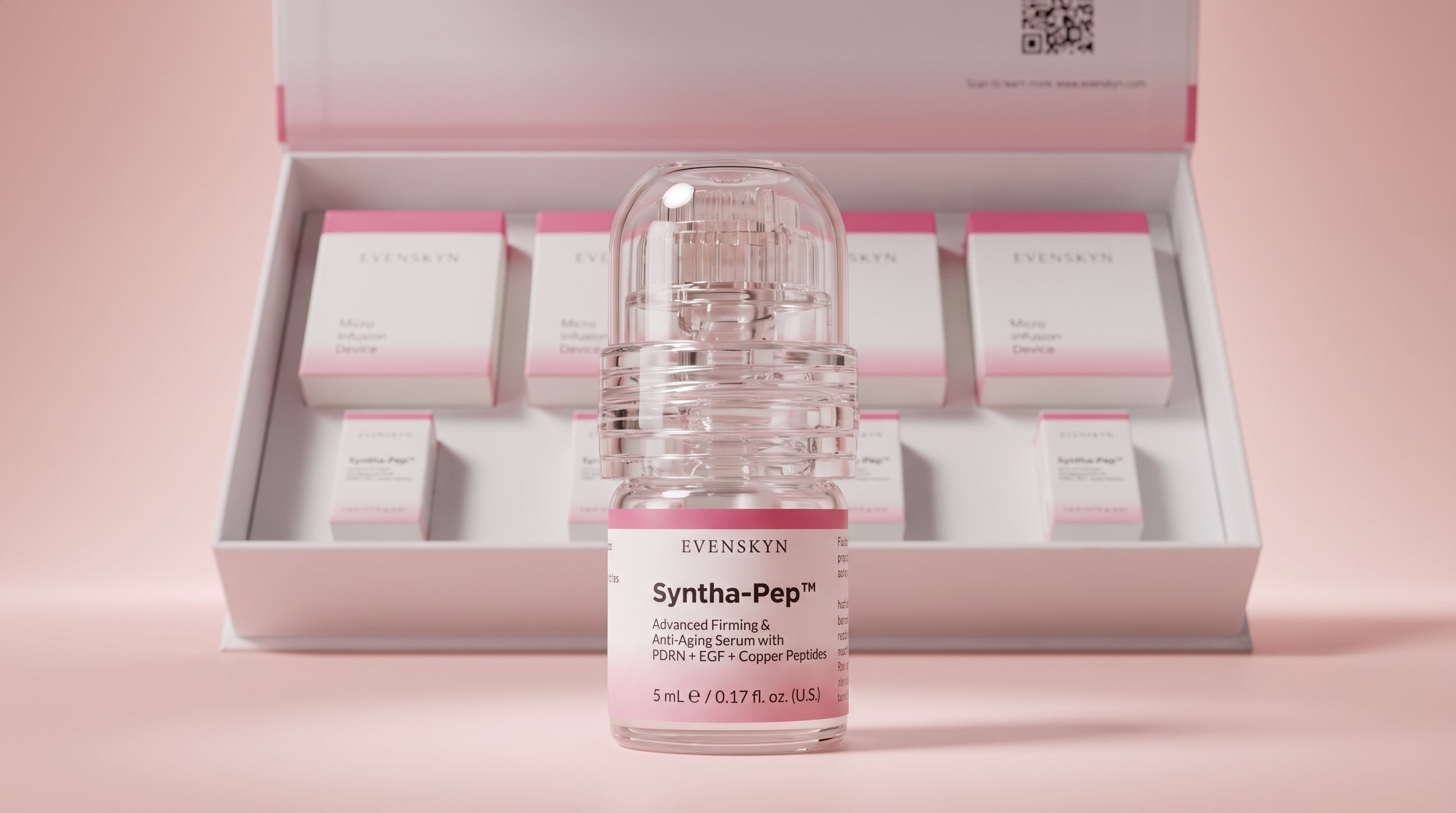
The EvenSkyn MicroInfuser is an at-home micro-infusion stamp that pairs a sealed 5 mL Syntha-Pep ampoule with a single-use, gold-plated needle head at a mechanically fixed depth of 0.5 mm. It sits in the middle row of the delivery ladder above: it does not bypass the barrier the way an injection does, and it does not accept the barrier the way a plain serum does. That middle position is the honest case for it, and also the limit of what it can claim.
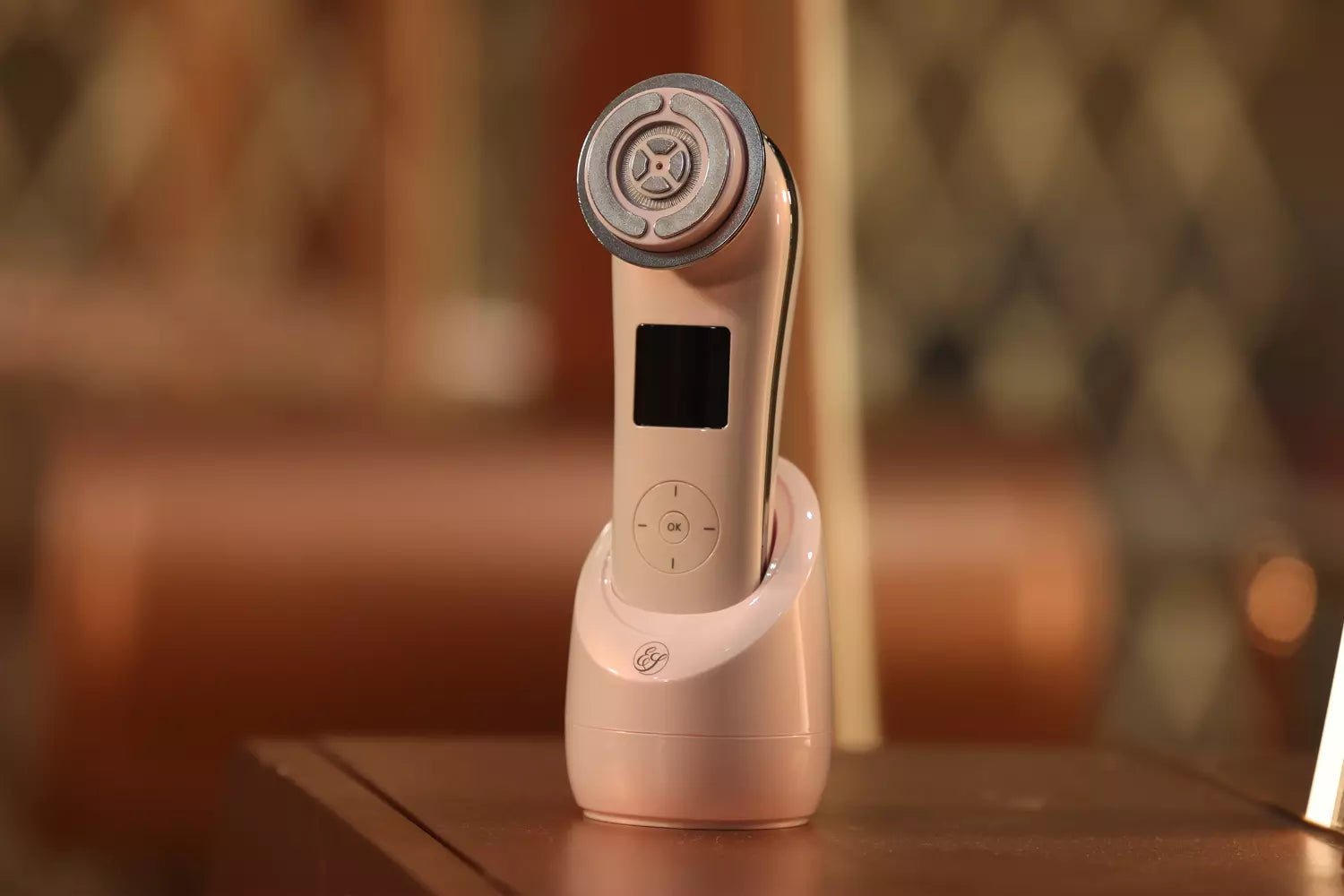
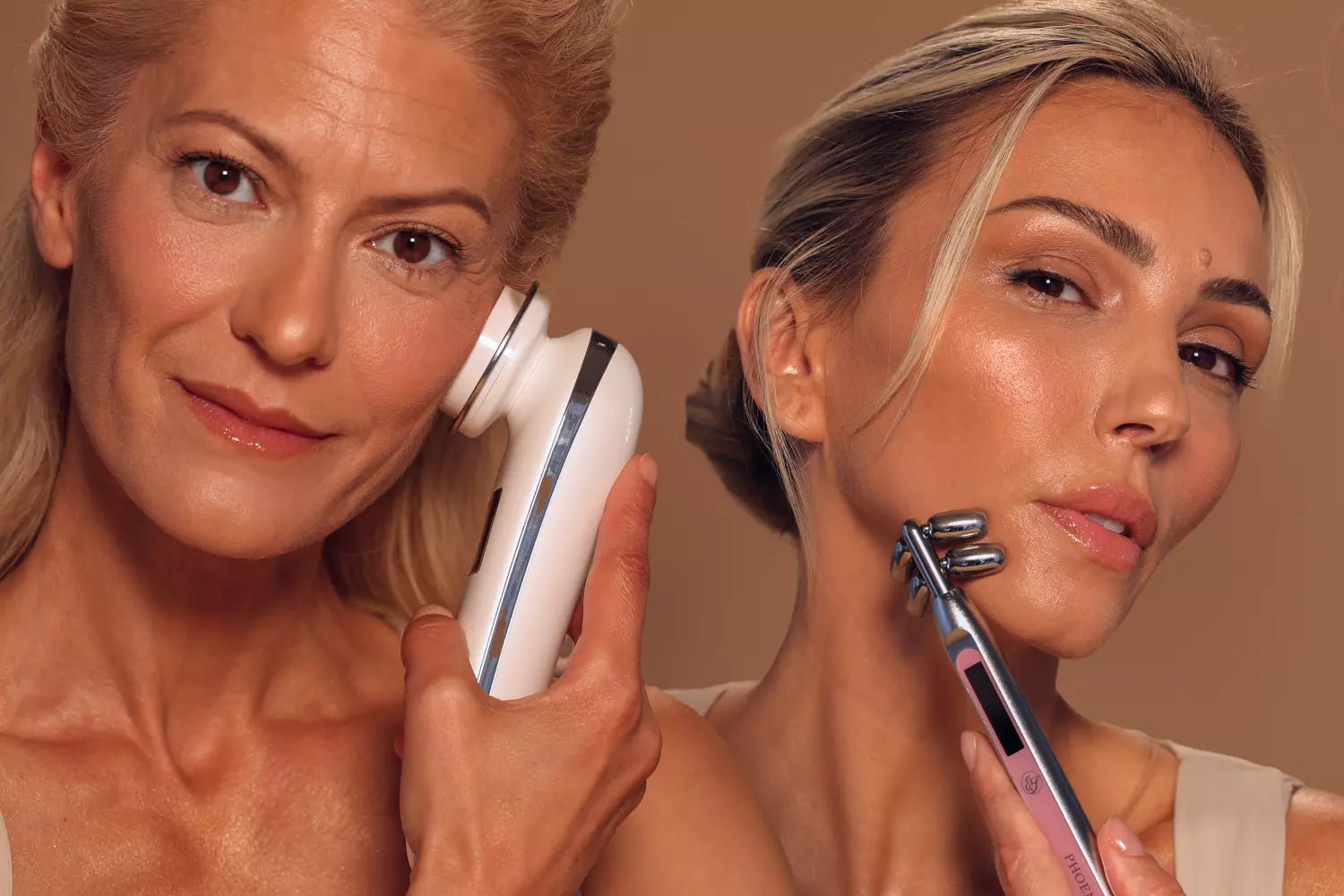
EvenSkyn is a Canadian at-home beauty-device company that designs and manufactures anti-aging devices including the Lumo+ (radiofrequency, EMS and light therapy), the Phoenix microcurrent bar, the Venus eye device, the MicroInfuser, and the MatureSmile LED whitening kit.
Syntha-Pep is built specifically for the micro-channel route rather than adapted to it. Its PDRN is fermentation-derived rather than extracted from salmon, which matters for anyone avoiding fish-sourced ingredients on ethical grounds. It also carries sh-Oligopeptide-1 (a bioengineered peptide with a sequence identical to human epidermal growth factor), Copper Tripeptide-1, hyaluronic acid at four molecular weights, niacinamide, Centella Asiatica, arginine and ergothioneine. The depth is locked at the head, so pressing harder does not push the needles further.
The pick, and what it will not do
What it does well. It solves the route problem for a molecule that has one. The sealed ampoule-to-head architecture means the serum never meets open air, your fingers or a refillable chamber, which removes the contamination path that pour-and-fill devices carry. The fixed 0.5 mm depth removes the main variable that makes at-home needling risky.
What it will not do. It will not reproduce injectable PDRN results, and we are not going to imply that it does. It will not help raised or keloid scars, and should not be used on them. It will not work on a fortnight's timeline: the manual puts initial firming at weeks six to eight and meaningful change at eight to twelve sessions. At 0.5 mm it reaches the upper papillary dermis, which is shallower than clinic needling, so deeper or mature stretch marks and severe scarring will respond only partially or not at all. And it is not appropriate for anyone in the contraindication list above.
One honest sourcing note. Syntha-Pep contains marine-derived hydrolysed collagen, so despite the fermentation-derived PDRN the serum is not suitable for anyone with a fish or shellfish allergy, and it is cruelty-free rather than vegan. The manual states this and so do we.
MicroInfuser at-home micro-infusion kit with Syntha-Pep
Fermentation-derived PDRN, sealed single-use ampoule and needle head, 0.5 mm mechanically fixed depth. Currently available to order at $189.99 USD on a pre-order basis.
See the MicroInfuser kit Price and availability verified 29 July 2026 and subject to change. Read the contraindications above before ordering. Consult a dermatologist if you are unsure whether micro-infusion is appropriate for your skin.How do you use PDRN at home without wasting it?
Getting value out of a PDRN product is mostly about sequencing and restraint. Apply it to clean, dry skin before heavier occlusives, keep strong acids and retinoids away from it in the same session, and give it consistent time rather than escalating frequency. If you are using micro-channel delivery, the surrounding routine matters more than usual because the barrier is temporarily more permeable.
- Pause actives before a micro-infusion session. The manual calls for stopping retinoids, AHAs and BHAs 48 hours before, and vitamin C and physical exfoliants 24 hours before.
- Treat in the evening. Overnight recovery avoids sun, makeup and pollutants during the most permeable window.
- Use light, controlled taps with roughly 50 percent overlap. Pressing harder does not improve results and can cause irritation.
- Pat the remaining serum into the face and neck afterward. Absorption runs higher for about the first hour, so this step is worth doing properly.
- Follow with hydration only for the rest of the day. Fragrance-free moisturiser, hyaluronic acid or a barrier cream. Nothing acidic.
- Wear broad-spectrum SPF 30 or higher every morning, with particular attention to the 72 hours after a session. UV on freshly treated skin is the leading cause of post-treatment pigmentation.
- Keep the cadence at once every two weeks. More frequent stamping does not improve collagen induction at 0.5 mm and can compromise barrier function.
For the full protocol including zone-by-zone technique, see our guide to using PDRN at home, and for realistic timelines see what changes in twelve weeks.
Frequently asked questions about PDRN
What is PDRN in skincare, in one sentence?
PDRN in skincare is polydeoxyribonucleotide, a mixture of DNA fragments usually sourced from salmonid sperm or made by fermentation, used for its effect on adenosine A2A receptors and the appearance of firmer, more even-toned skin.
Is PDRN really salmon sperm?
Most commercial PDRN is extracted from the sperm of salmon trout or chum salmon, so the popular name is accurate for the majority of products on the market. The material is heavily purified DNA rather than anything recognisable as its source. Fermentation-derived PDRN, including the PDRN in Syntha-Pep, is built in a bioreactor and is not extracted from salmon.
Is PDRN skincare safe for acne-prone skin?
The PDRN molecule is generally well tolerated by acne-prone skin and is not comedogenic. The risk sits elsewhere: check the rest of the formula for heavy occlusives and fragrance, and do not use any needle-based delivery over active or cystic acne, which is a stated contraindication for micro-infusion.
Does topical PDRN actually work, or does it need to be injected?
PDRN fragments are far larger than the roughly 500 dalton ceiling for passive absorption through intact skin, so a plain topical serum faces a genuine delivery limitation. The strongest human evidence comes from injected and in-clinic procedural routes. Micro-channel delivery sits between the two by creating temporary pathways past the barrier.
What is the difference between PDRN and polynucleotides?
Both are DNA-derived, but PDRN acts mainly through adenosine A2A receptor signalling, while polynucleotides work more as structural building blocks that support hydration and tissue scaffolding. PDRN tends to be described as acting faster on repair signalling, polynucleotides as offering slower, longer-lasting structural support.
Can you use PDRN with retinol or vitamin C?
In a normal topical routine, yes, though most people prefer to alternate them on different evenings to reduce irritation. Around a micro-infusion session the answer changes: stop retinoids 48 hours before and resume 72 hours after, and stop vitamin C 24 hours before and resume 48 hours after.
Is PDRN safe during pregnancy?
Cosmetic ingredient safety during pregnancy is not well studied for PDRN, and the MicroInfuser manual recommends pausing micro-infusion during pregnancy and breastfeeding until a physician confirms it is appropriate to resume. Ask your obstetrician or dermatologist rather than relying on a product page.
How long does PDRN take to show results?
Surface hydration and a fresher look can appear within 24 to 48 hours. Changes that depend on collagen remodelling are slower. On the standard bi-weekly micro-infusion schedule the manual puts initial visible firming at weeks six to eight, with the most meaningful change accumulating across eight to twelve sessions over four to six months.
Does PDRN help with hyperpigmentation and dark spots?
There is a mechanistic basis: PDRN has been shown to reduce tyrosinase activity and downregulate MITF and TRP-1 in cell culture. That supports the look of a more even tone, but cell-culture findings are not the same as facial pigmentation trial results, and PDRN should not be treated as a melasma treatment.
Is PDRN vegan?
Salmonid-derived PDRN is not vegan. Fermentation-derived PDRN contains no fish-sourced material, but the finished product may still contain animal-derived ingredients elsewhere in the formula. Syntha-Pep is one such case: its PDRN is fermentation-derived, but the serum contains marine-derived hydrolysed collagen, so it is cruelty-free rather than vegan.
What percentage of PDRN should a serum contain?
There is no established effective topical percentage, which is part of why formulation variability appears as a named limitation in the clinical literature. A stated percentage without a stated delivery route tells you very little. Route, sourcing and the supporting formula are more informative than the number on the front of the box.
Who should avoid PDRN micro-infusion entirely?
Anyone with active cystic or inflammatory acne in the treatment area, a personal or family history of keloid or hypertrophic scarring, oral isotretinoin use within the past six months, open or compromised skin, an active skin infection including cold sores, or a known allergy to gold, stainless steel or any ingredient in the serum. Anyone pregnant, breastfeeding or taking blood thinners should speak to a physician first.
What does PDRN stand for?
PDRN stands for polydeoxyribonucleotide. The name describes the structure directly: a polymer made of deoxyribonucleotides, which are the units DNA is built from. In product copy it is sometimes written out in full and sometimes shortened to the initials alone.
What are the side effects of PDRN?
The adverse event profile reported across published PDRN studies has been consistently favourable, and the molecule itself is well tolerated. Side effects reported in practice tend to come from the delivery method rather than the ingredient: transient redness, mild sensitivity or pinpoint bleeding after needle-based delivery, and irritation from other ingredients in a formula. Anyone with a fish or shellfish allergy should check the sourcing of both the PDRN and any collagen in the product.
Does PDRN work without microneedling?
A plain PDRN serum will deliver surface hydration and the benefits of whatever else is in the formula, but the PDRN itself faces a genuine size barrier at the stratum corneum. Micro-channel delivery is not a marketing addition to PDRN, it is a response to a real physical constraint. If you are using PDRN topically only, judge it on comfort and hydration rather than on the outcomes reported in the injectable literature.
How we researched this
Demand and competitive positioning were checked against Semrush US data pulled on 29 July 2026. Mechanistic and clinical claims were traced to peer-reviewed sources located and read during writing, with identifiers recorded below. Product specifications, contraindications, cadence and timeline figures come from the EvenSkyn MicroInfuser User Manual, Edition 1 (2026), and pricing and availability were verified against the live Shopify catalogue on 29 July 2026. Where a source is a narrative review rather than a controlled trial, we have said so. Where evidence comes from cell culture rather than human skin, we have said so. No customer statistics, panel results or before-and-after imagery appear in this article because we do not have reproducible first-party data to support them.
Claims about EvenSkyn products are ours, not independent findings. Cosmetic outcomes are described in terms of the look of skin. EvenSkyn products are cosmetic and are not intended to diagnose, treat, cure or prevent any disease.
References
- Valdovinos Martínez L, et al. Polydeoxyribonucleotide (PDRN) in Post-procedure Recovery in Aesthetic Medicine: A Narrative Review. Cureus. 2026;18(5). DOI 10.7759/cureus.108886.
- Polydeoxyribonucleotide: A promising skin anti-aging agent. Chinese Journal of Plastic and Reconstructive Surgery, 2022. ScienceDirect identifier S2096691122000723.
- Polydeoxyribonucleotide in Skincare and Cosmetics: Mechanisms, Therapeutic Applications, and Advancements Beyond Wound Healing and Anti-aging. Journal of Skin and Stem Cell, 2025. Article jssc-159728.
- Elucidating Interactome Dynamics of the A2A Adenosine Receptor. bioRxiv preprint, 2024. DOI 10.1101/2024.07.08.601789. Preprint, not peer reviewed.
- Bos JD, Meinardi MMHM. The 500 Dalton rule for the skin penetration of chemical compounds and drugs. Experimental Dermatology. 2000;9(3):165-169.
- Polynucleotides and polydeoxyribonucleotides in dermatology: a narrative review. Journal of Cutaneous and Aesthetic Surgery, 2026.
- Human Placenta MSC-Derived DNA Fragments Exert Therapeutic Effects in a Skin Wound Model via the A2A Receptor. PMCID PMC11855862.
- Efficacy of Polydeoxyribonucleic Acid (PDRN) in periodontal regeneration: A systematic review of clinical outcomes. PMCID PMC12008149.
- EvenSkyn MicroInfuser User Manual, Edition 1 (2026). Manufacturer documentation.
Last reviewed 29 July 2026 by the EvenSkyn Skin Science Desk. This guide is refreshed quarterly, and sources are re-verified at each refresh.


Leave a comment
All comments are moderated before being published.
This site is protected by hCaptcha and the hCaptcha Privacy Policy and Terms of Service apply.