

Medically Reviewed by Dr. Lisa Hartford, MD
Can At-Home Radiofrequency Skin Tightening Help Sagging Jowls? What the Science Says
Published April 2026 · Medically reviewed
If your jawline looks softer than it used to, or you are starting to notice heaviness around the lower face, you are not imagining it. Mild jowling is one of the earliest and most common signs of facial ageing. It usually reflects a combination of collagen loss, elastin decline, skin thinning, shifting facial fat, and changes in structural support over time. Cleveland Clinic describes radiofrequency skin tightening as a nonsurgical treatment that firms sagging skin by heating deeper layers of skin and stimulating collagen, elastin, and new skin cell production.
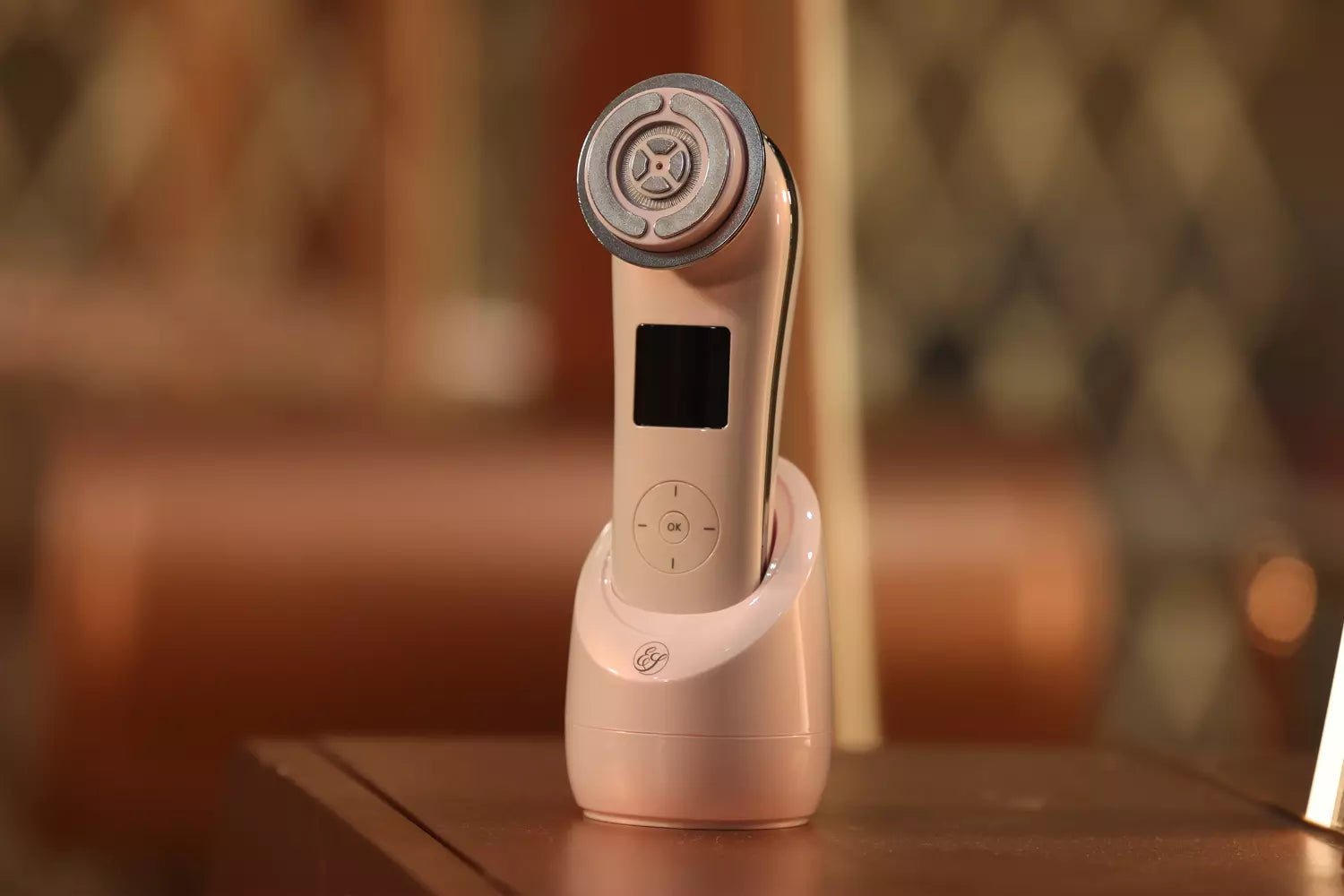
That makes radiofrequency, or RF, one of the more interesting at-home categories for people whose concern is not acne or pigmentation, but skin laxity. The key distinction in 2026 is that at-home RF skin tightening is not the same thing as RF microneedling. RF microneedling is a medical procedure that uses needles or needle-like electrodes to deliver energy into tissue, and the FDA says those devices should not be used at home. Home-use RF skin-tightening devices are different: they are noninvasive, lower-energy systems designed for gradual, repeated use over time.
So the right question is not whether an at-home RF device can recreate a clinic treatment. It cannot. The better question is whether a well-designed home-use RF device can help mild to moderate jawline laxity if you use it consistently and keep your expectations realistic. Based on the available evidence, the answer is yes, though the effect is usually gradual and modest rather than dramatic. A 2024 review of home beauty devices for facial rejuvenation concluded that home devices, including RF-based systems, can improve skin ageing to a certain extent, while also noting that the evidence base is still limited by small sample sizes and short follow-up periods.
The short answer
At-home RF skin tightening can help early sagging jowls, mild lower-face laxity, and softening along the jawline, especially when the problem is skin firmness rather than heavy structural descent. It is more realistic to expect subtle tightening, smoother texture, and a firmer-looking lower face than a major lift. Cleveland Clinic notes that RF skin tightening is most effective for people who are just beginning to show signs of ageing and less effective for severely sagging skin.
That matches the broader literature. A 2021 review of home-based dermatologic devices found that home-use RF devices showed efficacy with a favorable safety profile for wrinkles and rhytides, and a 2024 review similarly found that home facial rejuvenation devices can improve facial ageing to a certain extent.
Why jowls form in the first place
Jowls are not just “loose skin.” They usually happen because several age-related changes are occurring at once:
- collagen and elastin decline
- skin becomes thinner and less resilient
- facial fat shifts downward
- the lower face loses structural support
- sun exposure accelerates changes in firmness and texture
This is why lower-face ageing is difficult to meaningfully change with topical skincare alone. Moisturizers and actives can improve hydration, texture, and surface appearance, but they do not create the same type of thermal stimulation in the dermis that RF does. RF works by generating heat in tissue, which can trigger collagen contraction and support new collagen formation over time. Cosmetic RF reviews describe this mechanism as biologically plausible and clinically useful, especially for wrinkles and mild laxity.
What at-home RF actually does
Home-use RF devices pass electrical energy into the skin, where tissue resistance converts that energy into heat. The goal is not to overheat the surface. The goal is controlled warming in deeper tissue, enough to create a response associated with collagen remodelling. The 2024 review on home beauty devices explains that RF generates heat through skin impedance, alters collagen structure, and stimulates fibroblasts to synthesize new collagen and elastic fibers. It also notes that home devices usually use bipolar or multipolar RF with lower output than professional systems to reduce the risk of overheating.
That lower output is the fundamental tradeoff. In-office RF systems are more aggressive and often produce faster or more visible changes. Home-use devices are gentler, safer for unsupervised repeated use, and depend on consistency. Cleveland Clinic says results from RF skin tightening take time because skin needs time to produce new collagen and elastin, with changes often becoming visible over two to six months.
What the evidence says about home-use RF
The evidence for home-use RF is not perfect, but it is better than many people assume.
A 2022 controlled clinical study on a home-based RF beauty device reported that the device was safe and effective for rejuvenation and outperformed commercially available anti-aging cosmetics on outcomes including wrinkles, elasticity, skin thickness, and hydration.
Earlier clinical work also found positive results. A 2011 PubMed-indexed study on the TriPollar STOP home-use RF device reported safety and efficacy for facial skin tightening. A 2017 study of a home-use device combining RF and LED found safety, efficacy, and good user compliance in self-administered facial rejuvenation. These studies are not identical in device design or endpoint measurement, but they support the broader point that properly designed home-use RF systems can produce measurable improvements in facial ageing markers.
At the review level, the picture is fairly consistent. The 2024 review concluded that home facial rejuvenation devices can improve skin ageing to a certain extent and that most adverse reactions reported in the literature were temporary redness and swelling rather than serious complications. At the same time, the review emphasized the need for larger and longer studies and warned about inconsistent quality and exaggerated claims in the marketplace.
Who at-home RF is best for
At-home RF usually makes the most sense for people with:
- mild jawline softening
- early lower-face laxity
- fine lines and crepey texture
- interest in prevention or maintenance
- realistic expectations and willingness to use a device consistently for at least 8 to 12 weeks
It is less likely to satisfy someone with:
- heavy jowls
- significant skin excess
- major midface descent
- advanced laxity requiring stronger procedural lifting
- expectations of surgery-like change from a home device
That is not just a conservative disclaimer. It aligns with clinical guidance. Cleveland Clinic states that RF skin tightening is not as effective for severely sagging skin, and review literature generally characterizes results as meaningful but modest.
At-home RF vs RF microneedling vs microcurrent
This is where a lot of confusion happens.
At-home RF skin tightening
Best suited for skin firmness, mild laxity, and lower-face softening. It works through controlled dermal heating.
RF microneedling
A medical procedure, not a home treatment. The FDA says RF microneedling devices should not be used at home and has described reports of serious complications including burns, scarring, fat loss, disfigurement, and nerve damage.
Microcurrent
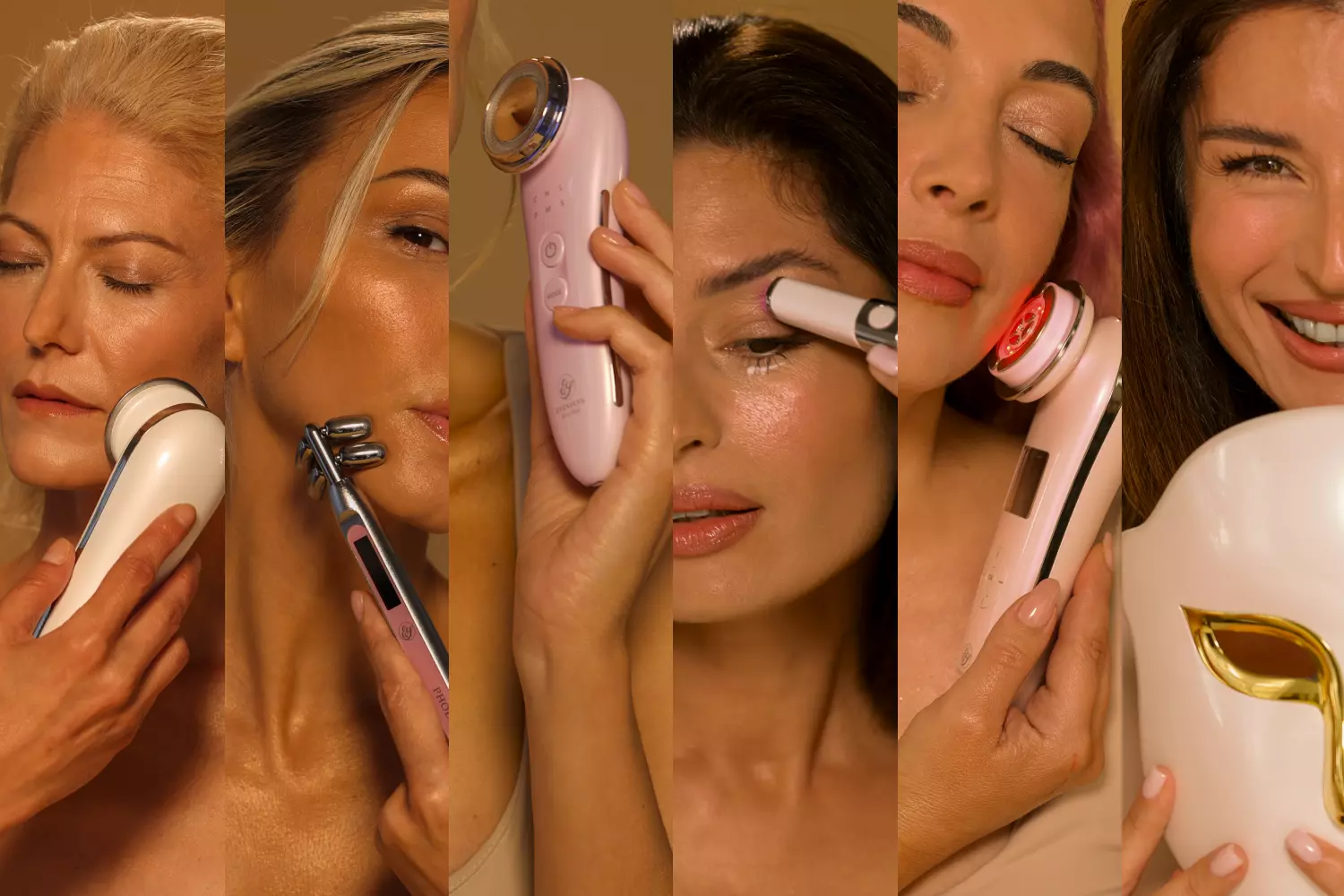
Microcurrent primarily targets muscle stimulation and contouring effects rather than dermal heating. It can play a role in facial toning, but it is not the same modality and should not be treated as interchangeable with RF. Review literature on home facial rejuvenation devices consistently treats RF, LED, and microcurrent as distinct technologies affecting different tissues and mechanisms.
The practical takeaway is simple: RF is usually the better fit for skin laxity, microcurrent is more relevant to facial toning, and RF microneedling belongs in a medical setting.
How long does it take to see a change in jowls?
This category is often judged too early.
Because RF works through gradual collagen remodelling, the timeline is not immediate. Cleveland Clinic says visible changes often appear within two to six months. Home-use studies and consumer-device protocols commonly evaluate outcomes across 6 to 12 weeks or longer, which fits with the idea that repeated exposure is needed before changes become noticeable.
A realistic progression looks like this:
Weeks 1 to 2
Skin may look a little smoother or fresher. Some people notice temporary firmness after use.
Weeks 3 to 6
Texture and overall skin quality often improve first. The lower face may feel firmer before it looks substantially different.
Weeks 8 to 12
This is where many home-use studies begin to document visible improvement in wrinkles, elasticity, and related measures.
Months 3 to 6
This is the more realistic window for collagen-driven change in the lower face.
Is at-home RF safe for all skin tones?
RF is generally considered more skin-tone-inclusive than pigment-targeting light treatments because it does not depend on melanin absorption in the same way lasers and some light-based devices do. Cleveland Clinic states that RF skin tightening works on all skin tones and carries very little risk of hyperpigmentation. That said, “works on all skin tones” does not mean “risk-free in every situation.” Device quality, heat regulation, treatment technique, and skin sensitivity still matter.
The 2024 home-device review found that the adverse effects described in the literature were mostly transient redness and swelling, but it also highlighted concerns in the broader market about quality control, misleading claims, and low-temperature burns when devices are poorly designed or misused.
Who should avoid at-home RF or speak to a clinician first
A medically responsible article on home-use RF should be clear about this.
You should be cautious or seek professional advice first if you have:
- active inflammatory skin disease in the area being treated
- open wounds or broken skin
- recent aggressive treatments or procedures
- unusual heat sensitivity
- implanted electrical devices or relevant metal hardware
- pregnancy, if your device instructions advise against use
- a history of poor wound healing or unusual scarring reactions
Cleveland Clinic advises people to tell their provider if they have active skin disease, are receiving skin treatments, or are pregnant before RF treatment. For home-use devices, the safest approach is to follow the contraindications in the device instructions exactly and check with your clinician when uncertain.
How to tell whether a home-use RF device is worth considering
A lot of people shop this category using vague promises like “lift,” “firm,” or “reverse ageing.” A better way to evaluate a device is to look at whether the brand is specific, realistic, and technically coherent.
1. The technology should be clearly identified
If a device talks mainly about “warming,” “massage,” or “beauty energy” without clearly identifying radiofrequency, that is a warning sign.
2. It should be designed for home use
The strongest home-use evidence comes from devices built specifically for repeated home treatment at lower outputs, not from products that gesture vaguely toward clinic-level technology.
3. Safety design matters
Temperature control, clear instructions, and sensible treatment parameters matter more than inflated power claims. Cleveland Clinic notes that rare burns can happen with excessive heat, and review literature specifically warns that more power is not automatically better in home devices.
4. The brand should be realistic about outcomes
Home-use RF can help mild jowls and early laxity. It should not be sold as a substitute for surgery or aggressive in-office procedures. Review literature repeatedly warns about exaggerated marketing and inconsistent evidence in the category.
5. It should be practical enough to use consistently
A decent device you use for three months is better than a technically promising device you abandon after three sessions. A 2017 home-use RF and LED study specifically noted good compliance, which matters because adherence is part of efficacy in real-world use.
A realistic at-home RF routine for the jawline and lower face
A sensible lower-face routine should be simple enough to repeat.
Start with clean skin and follow the device instructions exactly. Use the conductive medium the device requires, keep the device moving as directed, and avoid treating one spot for too long. Home-use RF studies commonly evaluate results over 6, 8, or 12 weeks rather than days, which reinforces the idea that this is a cumulative treatment rather than a one-off event.
The jawline usually should not be thought of in isolation. The lower cheeks, mandibular line, and often the neck age together. A more useful routine is one that treats the lower face as a zone, tracks progress with monthly photos in consistent lighting, and focuses on regularity rather than intensity.
A practical rule of thumb is:
- take baseline photos before starting
- use the device consistently for at least 8 to 12 weeks
- judge results monthly, not daily
- stop and seek advice if you experience persistent redness, pain, swelling, or signs of overheating
What results are realistic, and what results are not
Realistic outcomes from at-home RF for jowls include:
- a firmer-feeling lower face
- mild improvement in jawline definition
- smoother skin texture
- softening of fine lines
- a slightly tighter, more rested appearance over time
Less realistic outcomes include:
- a facelift-like effect
- major correction of heavy jowls
- reversal of advanced skin excess
- dramatic structural lifting without procedures
This distinction is consistent with both clinical guidance and review literature. RF skin tightening can help, but the best-supported framing is gradual tightening and improved skin quality, not dramatic repositioning of tissue.
The bottom line
If your main concern is early sagging jowls, at-home radiofrequency skin tightening is one of the more evidence-supported home options to consider. It has a plausible biological mechanism, published home-use studies showing improvement in wrinkles and firmness, and a generally favorable short-term safety profile when the device is properly designed and used correctly. But it is not RF microneedling, it is not a substitute for surgery, and it is not the best answer for severe laxity.
The fairest conclusion is this: at-home RF can be worth it for mild jowls if you are consistent, patient, and realistic. It is best understood as a gradual collagen-support tool for lower-face firmness, not a shortcut to dramatic lifting. For the right person, that can still be a very worthwhile trade.
FAQs
Does at-home RF really help sagging jowls?
It can help mild to moderate lower-face laxity, especially in people with early softening rather than heavy structural sagging. Results are usually gradual, not dramatic.
How long does at-home RF take to work?
Most people need at least 8 to 12 weeks of consistent use before changes become easier to see, and some guidance places visible collagen-related improvements in the two-to-six-month range.
Is at-home RF the same as RF microneedling?
No. RF microneedling is a medical procedure, and the FDA says it should not be used at home.
Is at-home RF safe for darker skin tones?
RF is generally considered suitable across skin tones because it does not rely on melanin targeting in the way some light-based treatments do, though device quality and correct use still matter.
Bibliography
- U.S. Food and Drug Administration. Potential Risks with Certain Uses of Radiofrequency (RF) Microneedling: FDA Safety Communication. October 15, 2025.
- Cleveland Clinic. Radio Frequency (RF) Skin Tightening: Benefits & Dangers. February 4, 2023.
- Bu P, et al. Development of Home Beauty Devices for Facial Rejuvenation. 2024 review.
- Shu X, et al. Effectiveness of a Radiofrequency Device for Rejuvenation of Aging Skin at Home: A Randomized Split-Face Clinical Trial. 2022.
- Home-use TriPollar RF device for facial skin tightening. PubMed record, 2011.
- Efficacy and safety of a noninvasive, home-based radiofrequency device for facial rejuvenation. Journal of Cosmetic Dermatology, 2023.
- El-Domyati M, et al. Radiofrequency facial rejuvenation: Evidence-based effect. 2011.
- Lyu JJ, et al. Radiofrequency in Facial Rejuvenation. 2022 review.


Leave a comment
All comments are moderated before being published.
This site is protected by hCaptcha and the hCaptcha Privacy Policy and Terms of Service apply.