
Medically Reviewed by Dr. Lisa Hartford, MD
Medically reviewed by Dr. Getahun Ismailova, Board-Certified Dermatologist | Last updated: April 9, 2026
Reading time: 18 minutes
You've probably noticed: the conversation around anti-aging has fundamentally shifted.
Five years ago, the question was "Botox or fillers?" Today, more people are asking a different question entirely — "Which at-home device actually delivers real results?"
It's not hard to understand why. A single in-clinic radiofrequency session runs between $300 and $600. A standard course of treatment — four to six sessions — can cost $1,800 to $3,600 before a single maintenance appointment. Botox runs $400 to $800 per area, every three to four months. Dermal fillers start at $700 per syringe and require touch-ups every six to twelve months. Over three years, a moderate in-clinic anti-aging protocol can exceed $10,000.
Meanwhile, a new generation of at-home devices has emerged — not the gimmicky "sonic wands" and "jade rollers" that flooded Instagram in 2019, but serious, FDA-cleared instruments built on the same core technologies that power clinical treatments: radiofrequency (RF), electrical muscle stimulation (EMS), microcurrent, and LED phototherapy.
The catch? Not all devices are created equal. Some are genuinely clinical-grade. Others are glorified vibrating sticks with an LED slapped on top. The technology matters. The power output matters. And increasingly, the research suggests that combining these technologies — rather than relying on any one alone — is what separates meaningful, lasting results from a placebo-grade warming sensation on your cheeks.
This guide breaks it all down. No brand favoritism. Just science, specifications, and the evidence behind each technology — so you can decide exactly what your skin actually needs.
The Three Pillars of Non-Invasive Anti-Aging (And Why Most Devices Only Address One)
Before comparing any specific device, you need to understand the three distinct biological mechanisms that drive visible skin aging — and why addressing all three is the difference between modest improvement and transformative results.
Pillar 1: Collagen Decline — and Why Radiofrequency (RF) Is the Gold Standard for Rebuilding It
Starting around age 25, your body produces approximately 1% less collagen per year. By 50, most people have lost 30–40% of their dermal collagen. The visible result: sagging skin, deeper wrinkles, loss of jawline definition, and thinner, less resilient skin texture.
Radiofrequency therapy addresses this directly. RF energy penetrates through the epidermis and delivers controlled thermal energy to the dermis — the deeper structural layer where collagen and elastin fibers live. When dermal tissue is heated to between 40°C and 60°C (104°F to 140°F), two things happen:
- Immediate collagen contraction. Existing collagen fibers physically shorten and tighten, producing a visible firming effect within hours of treatment.
- Long-term neocollagenesis. The controlled thermal stimulus activates fibroblast cells, triggering the production of new type I and type III collagen over the following 4 to 12 weeks.
This isn't marketing — it's documented in peer-reviewed research. A randomized, controlled split-face trial published in the Aesthetic Plastic Surgery journal followed 33 women aged 35–60 over 12 weeks. One side of each participant's face was treated with a home-use RF device; the other side received a standard anti-aging cosmetic. The RF-treated side showed statistically significant improvements in wrinkle depth, skin elasticity, and dermal thickness — results the cosmetic-only side did not achieve.
What to look for in an RF device: The critical specification is whether the device reaches and sustains therapeutic temperature in the dermis (40–42°C minimum at the skin surface). Many budget devices emit RF energy but lack the power density to actually reach the collagen-producing layers. Additionally, bipolar and multipolar RF configurations determine treatment depth — multipolar systems generally achieve deeper penetration. FDA clearance is non-negotiable; it verifies the device has been reviewed for both safety and performance.
Which competitors focus on RF:
- TriPollar STOP Vx — Bipolar RF plus DMA (Dynamic Muscle Activation). Well-regarded for RF efficacy, particularly for nasolabial folds and jawline. However, it's RF-only; no LED therapy, no microcurrent.
- CurrentBody Skin RF — Bipolar RF with proprietary SkinSense temperature regulation. Clinically proven at 89% user-reported improvement after 8 weeks. RF-only device.
- NEWA — 3DEEP RF with six electrodes for deeper penetration. Clinically supported by EndyMed (a medical-grade device manufacturer). However, it's designed only for cheeks and lower face — it cannot be used on the forehead, eyes, or neck.
The gap: Each of these is a single-technology device. They deliver RF energy — and that's it. No EMS. No microcurrent. No LED. If you want to address muscle tone, cellular energy, or photodamage, you need to buy additional devices from different brands, with no guarantee they'll work together as a coordinated protocol.
Pillar 2: Muscle Atrophy — and Why Microcurrent and EMS Are Essential (Not Optional)
Here's something most skincare brands won't tell you: collagen isn't the only thing you're losing.
Your face has over 40 individual muscles. Like every muscle in your body, they weaken with age. The frontalis (forehead), orbicularis oculi (around the eyes), zygomaticus (cheeks), and platysma (neck and jawline) all lose tone over time. When these muscles atrophy, skin that was once supported by firm muscular scaffolding begins to drape and sag — even if your collagen levels are decent.
This is why RF alone isn't always enough. You can rebuild collagen all day, but if the underlying muscular structure is weak, your skin still won't sit the way it did at 30.
Two technologies address muscular aging:
Microcurrent delivers extremely low-level electrical current (typically below 600 microamps) that mirrors the body's own bioelectrical signals. It enhances ATP (adenosine triphosphate) production at the cellular level, which is the energy currency your cells use to repair, regenerate, and function. Think of microcurrent as a gentle metabolic nudge — it doesn't forcefully contract muscles, but it does increase the cellular energy available for repair and regeneration.
Electrical Muscle Stimulation (EMS) is more aggressive. It sends stronger electrical impulses that cause involuntary muscle contractions — essentially a workout for your facial muscles. Over time, this rebuilds muscle volume and tone, providing the structural lift that supports tighter skin.
What to look for: Microcurrent strength matters enormously. Many consumer devices operate at minimal microamp levels — enough to produce a tingling sensation, not enough to drive meaningful ATP production. Devices with higher microcurrent output (measured in microamps) deliver more cellular energy to the treatment area. EMS capability is an added advantage for actual muscular reconditioning, though not all devices offer it.
Which competitors focus on microcurrent:
- NuFACE Trinity+ — The market leader in microcurrent. FDA-cleared, well-designed, excellent app integration, interchangeable attachments for different facial zones. However, it is microcurrent-only. No RF. No EMS. No LED therapy. To address collagen rebuilding or photodamage, you'd need separate devices.
- NuFACE MINI+ — A more portable version of the Trinity+. Same microcurrent technology, smaller form factor. Same limitation: microcurrent only.
- FOREO Bear 2 — Microcurrent with T-Sonic pulsations. Compact and beginner-friendly but generally considered lower-intensity than NuFACE.
The gap: Microcurrent and EMS address the muscular component that RF misses. But NuFACE — the category leader — doesn't offer any RF or LED. If you're investing in a NuFACE Trinity+ ($339–$400+), you're addressing muscle tone only. You'd need to separately purchase an RF device ($200–$450) and an LED mask ($100–$500+) to cover the full anti-aging picture. That's $639 to $1,350+ in separate, uncoordinated devices.
Pillar 3: Cellular Damage and Inflammation — and Why LED Phototherapy Is the Missing Piece
The third pillar is the one most people underestimate: chronic, low-grade cellular damage caused by UV exposure, pollution, stress, and the natural slowdown of cellular repair mechanisms.
LED (Light Emitting Diode) phototherapy uses specific wavelengths of light to trigger biological responses at the cellular level:
- Red light (620–700nm) penetrates to the dermis and stimulates fibroblast activity, supports collagen synthesis, and increases blood microcirculation. Research published in Photomedicine and Laser Surgery has documented measurable improvements in skin density and wrinkle severity after consistent red light exposure.
- Blue light (400–495nm) targets the epidermis and has documented antibacterial properties, particularly against Propionibacterium acnes. It also has anti-inflammatory effects that can calm redness and irritation.
- Near-infrared (NIR, 700–1100nm) penetrates even deeper, reaching subcutaneous tissue to support wound healing and reduce inflammation at the deepest accessible tissue layers.
LED therapy is the "recovery and maintenance" component of a comprehensive anti-aging protocol. If RF is the "builder" and EMS/microcurrent is the "trainer," LED is the "healer" — ensuring that your skin cells have the photonic energy they need to repair, regenerate, and defend against daily environmental damage.
Which competitors focus on LED:
- SolaWave — Combines red light therapy with microcurrent and facial massage. Budget-friendly entry point, but the LED output and microcurrent intensity are generally considered lower than clinical-grade devices.
- CurrentBody LED Mask — Dedicated LED mask with red and near-infrared wavelengths. Well-reviewed, but it's LED-only — no RF, no microcurrent. And it's a mask, meaning it can't target specific problem areas with precision.
- Dennis Gross DRx SpectraLite FaceWare Pro — LED mask with red and blue light. Popular, but again — LED-only, no skin tightening capability.
The gap: LED masks are a "set it and forget it" experience — great for broad-area treatment, but unable to deliver targeted energy to specific problem zones like crow's feet, nasolabial folds, or the jawline. And standalone LED devices don't address collagen structure or muscle tone at all.
The Real Comparison: Why "Best Device" Is the Wrong Question (And "Best Protocol" Is the Right One)
Here's the insight that changes everything: the most effective approach to at-home anti-aging isn't a single device — it's a protocol.
Dermatologists and aestheticians in clinical settings don't treat skin with one technology. A professional anti-aging treatment plan typically combines RF for collagen remodeling, some form of muscular stimulation for lift, LED or IPL for cellular repair, and targeted treatments for delicate areas like the eyes.
The reason most at-home device buyers plateau or feel disappointed isn't that their device doesn't work — it's that their device only addresses one-third of the problem.
The Competitive Landscape at a Glance
Here's how the major at-home device brands stack up across the three pillars:
| Feature | NuFACE Trinity+ | TriPollar STOP Vx | CurrentBody RF | NEWA | SolaWave | EvenSkyn Ecosystem |
|---|---|---|---|---|---|---|
| Radiofrequency (RF) | ✗ | ✓ (Bipolar) | ✓ (Bipolar, 1 MHz) | ✓ (3DEEP, 6-electrode) | ✗ | ✓ (3x power, two-tier dermal heating) |
| EMS / Muscle Stimulation | ✗ | ✓ (DMA only in Vx) | ✗ | ✗ | ✗ | ✓ (Patented EMS in Lumo+) |
| Microcurrent | ✓ (Primary tech) | ✗ | ✗ | ✗ | ✓ (Low-level) | ✓ (5x strength in Lumo+) |
| Red LED Therapy | ✓ (Attachment only) | ✗ | ✗ | ✗ | ✓ | ✓ (Built-in + Mirage mask) |
| Blue LED Therapy | ✗ | ✗ | ✗ | ✗ | ✗ | ✓ (Built-in in Lumo+) |
| Eye-Area Safe Device | ✓ (Lip & Eye attachment) | ✗ | ✗ | ✗ | ✗ | ✓ (Dedicated Venus wand) |
| Ionic Cleansing | ✗ | ✗ | ✗ | ✗ | ✗ | ✓ (Active ionic in Lumo+) |
| Full Protocol (Face + Eyes + Neck) | Partial | Face only | Face only | Cheeks/lower face only | Face only | ✓ (Full-face, eyes, neck, décolletage) |
| Price (device only) | ~$339–$400 | ~$300–$500 | ~$385–$450 | ~$250–$350 | ~$70–$170 | From $499 (Lumo+) |
| Price for multi-tech coverage | $700+ (need RF + LED separately) | $600+ (need microcurrent + LED) | $700+ (need microcurrent + LED) | $600+ (need microcurrent + LED + forehead/eye device) | $400+ (need RF + EMS) | From $499 (5-in-1 in a single device) |
The critical takeaway: When you factor in the cost of achieving multi-technology coverage, EvenSkyn's integrated approach is not only more effective — it's actually more cost-efficient than assembling separate single-tech devices from different brands.
Device-by-Device Deep Dive: The EvenSkyn Anti-Aging Ecosystem
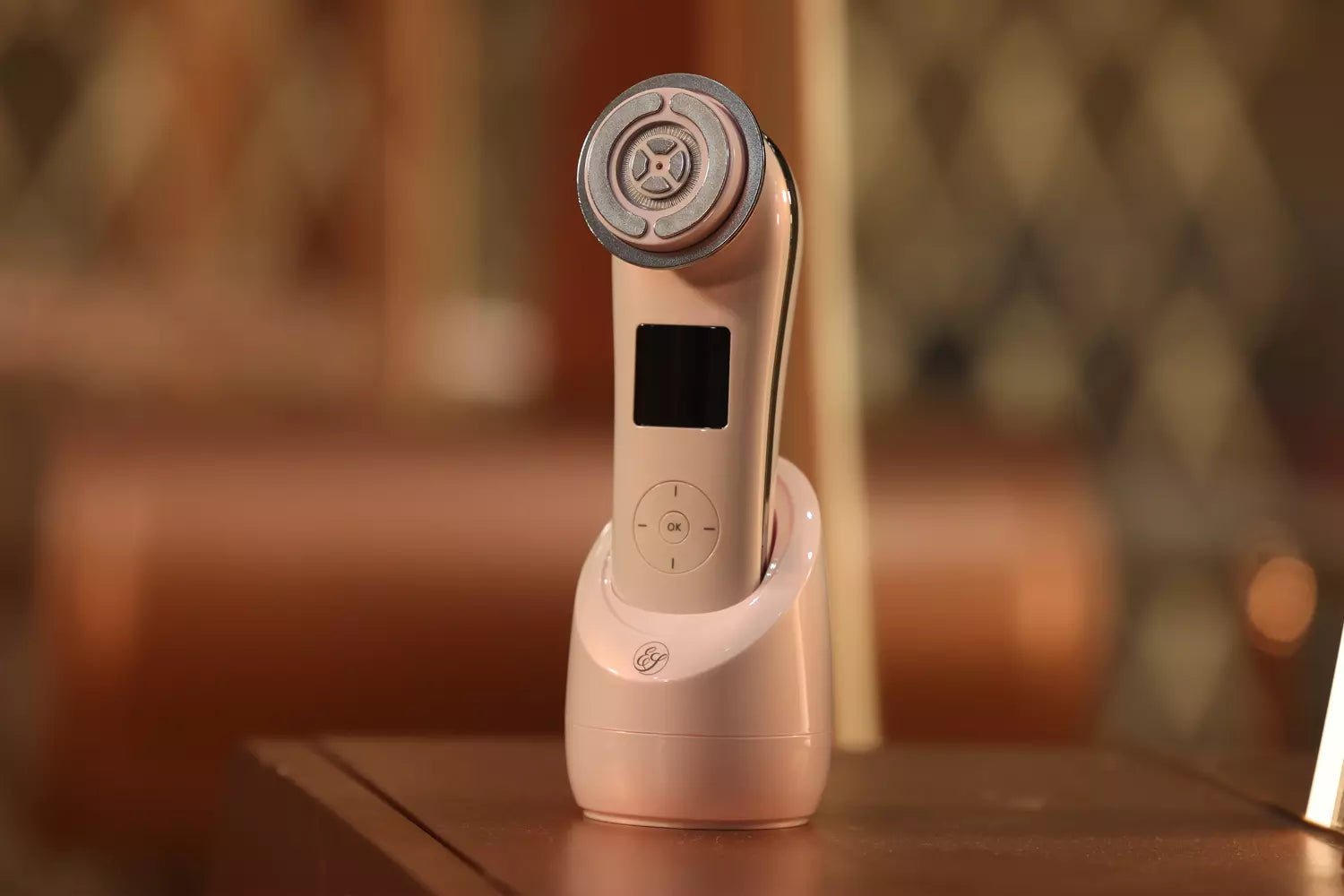
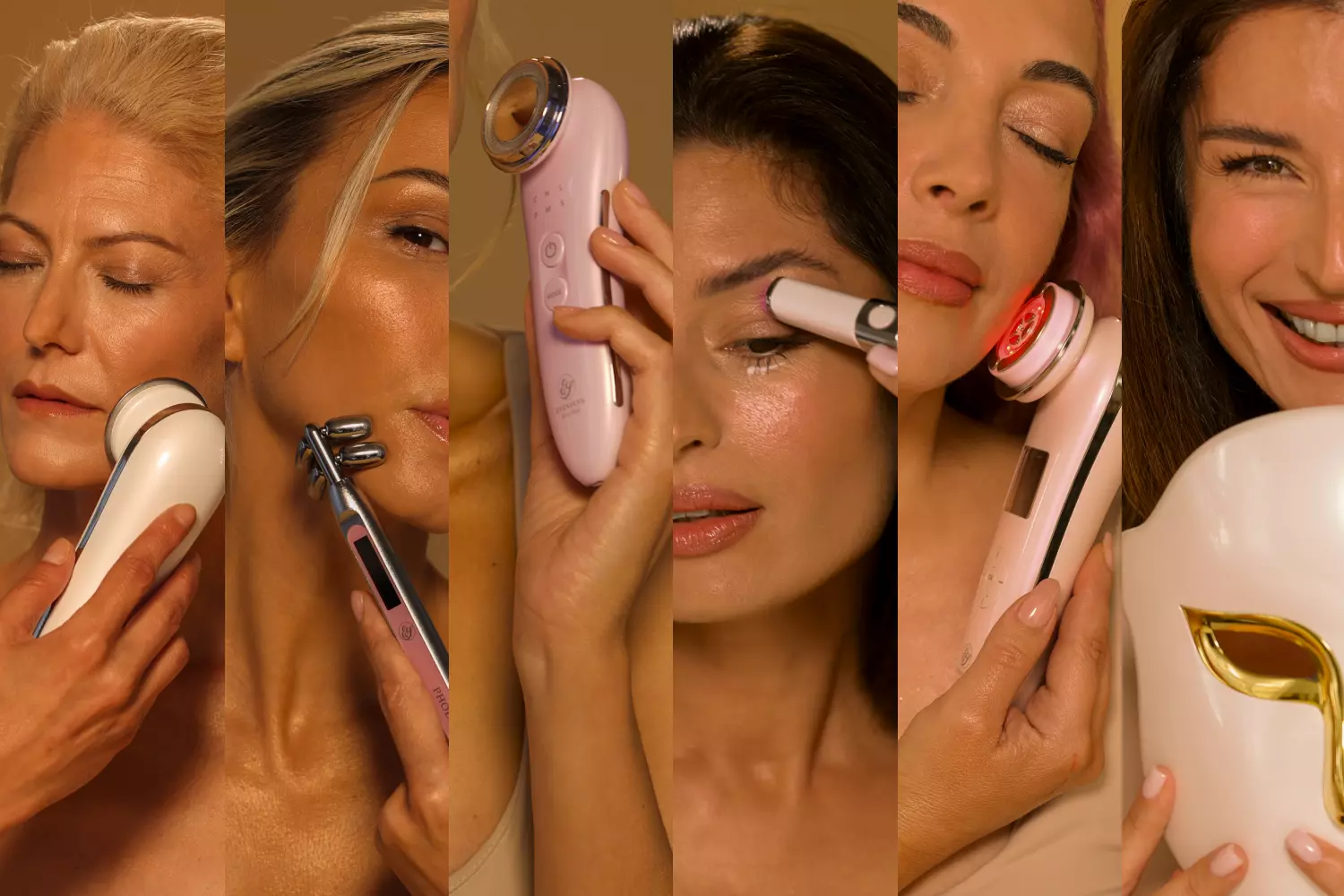
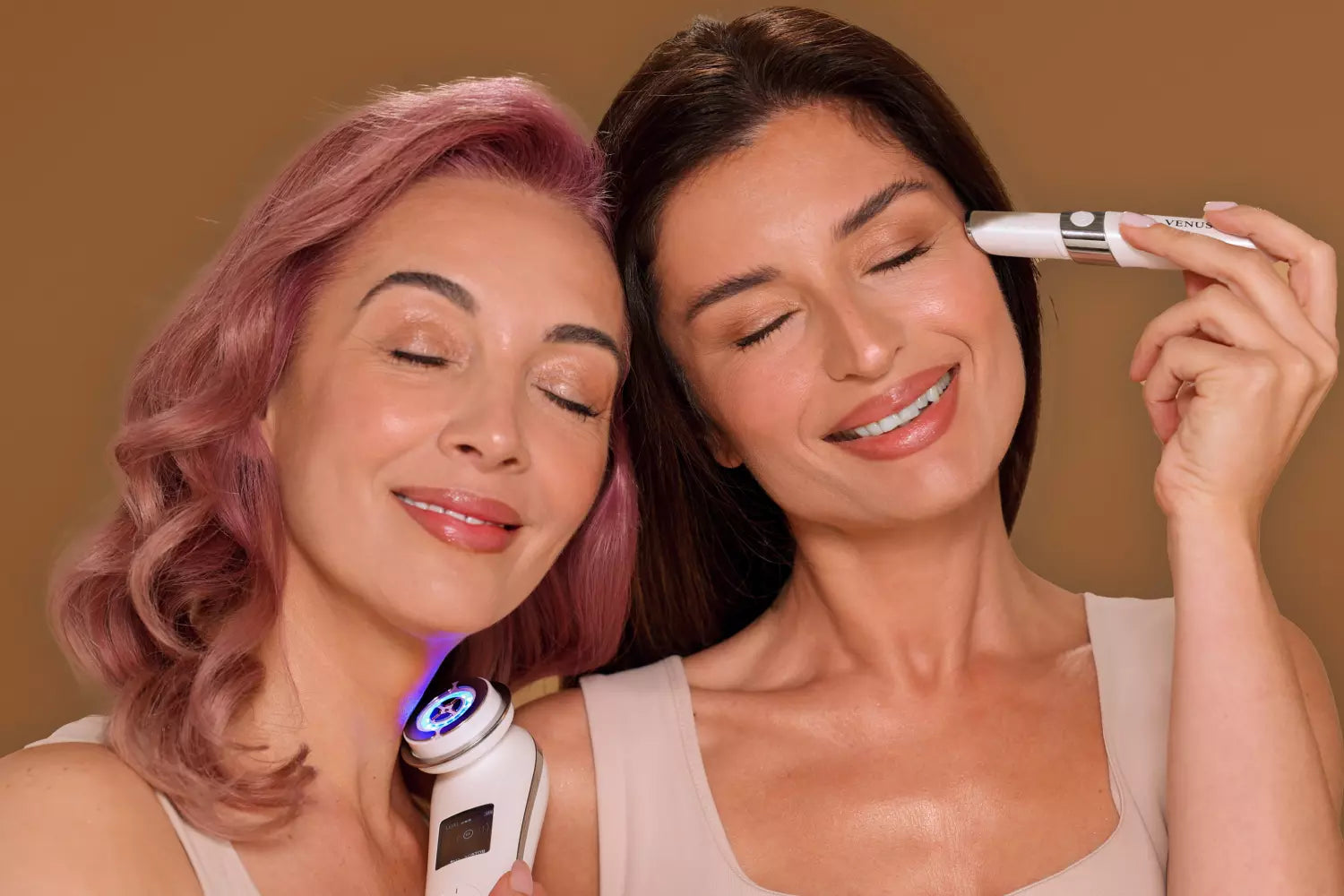
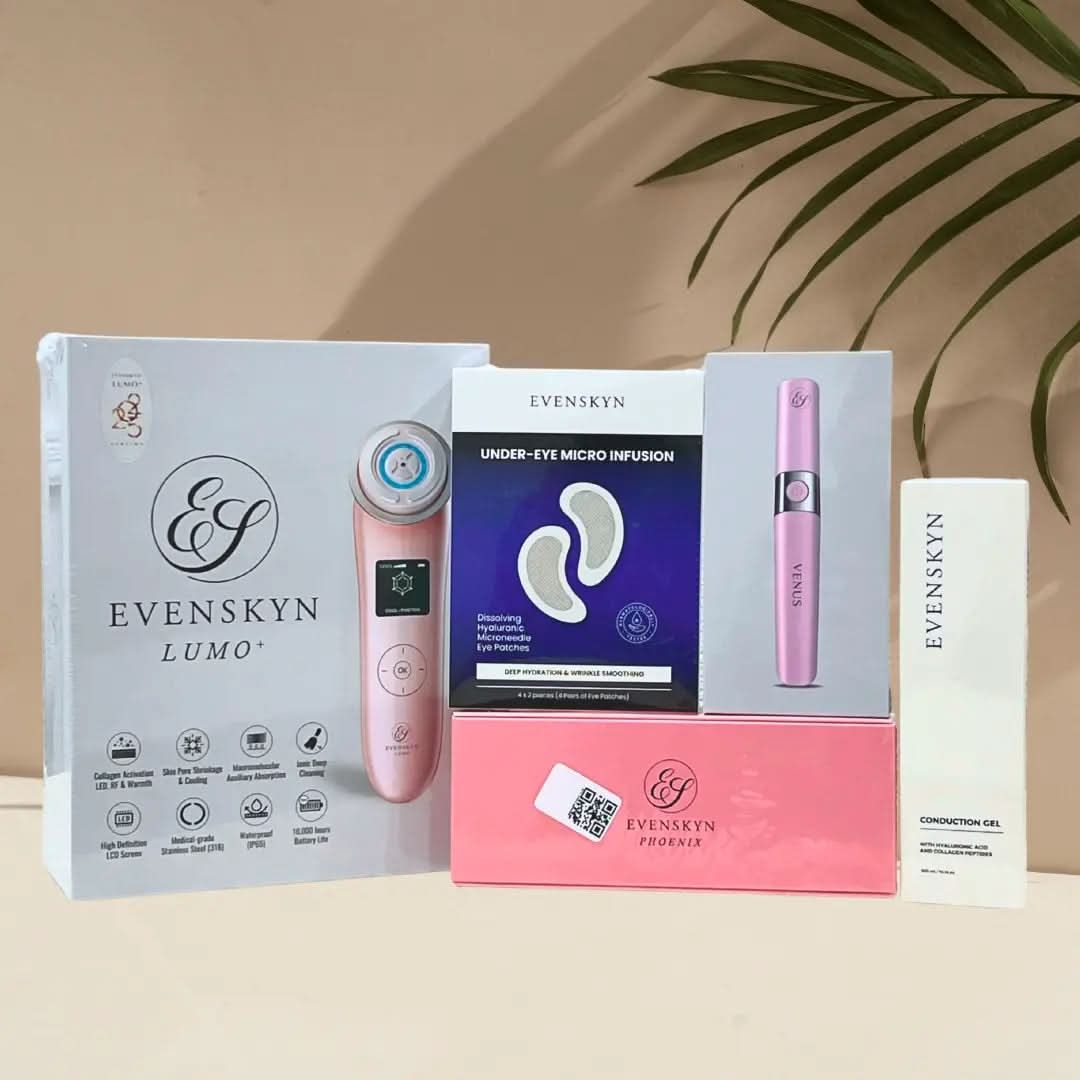
EvenSkyn Lumo+ — The Flagship: 5-in-1 Clinical-Grade Skin Tightening & Rejuvenation
The Lumo+ is EvenSkyn's core device, and it's unlike anything else on the consumer market in terms of what it packs into a single handset.
Five technologies in one device:
- Radiofrequency (RF) — Penetrates up to 3mm into the dermis, delivering thermal energy up to 60°C (140°F) to activate fibroblast cells and trigger both immediate collagen contraction and long-term neocollagenesis.
- Electrical Muscle Stimulation (EMS) — Patented electrical impulse technology that strengthens and tones facial muscles, producing visible lift along the jawline, cheeks, and neck.
- Red LED Phototherapy — Increases blood circulation, supports fibroblast activity, and assists collagen formation.
- Blue LED Phototherapy — Soothes inflammation and targets acne-causing bacteria, making it suitable for combination aging + acne-prone skin.
- Active Ionic Export — Deep facial cleansing mode that removes excess oils, dead skin, and buildup to maximize the efficacy of subsequent treatments.
Why the specs matter: The Lumo+ is engineered with 5x the microcurrent strength and 3x the RF power of typical at-home devices. This is a meaningful specification, not a marketing number. Many consumer RF devices technically emit radiofrequency energy but lack the power density to sustain therapeutic temperature in the dermis. The Lumo+'s two-tier dermal heating system is designed to ensure that RF energy actually reaches the depth where collagen remodeling occurs — not just the surface layers.
Clinical outcomes (as reported by EvenSkyn):
- 88% reduction in wrinkle depth over 8 weeks
- 74% improvement in measured skin elasticity
- Visible skin firming results reported within 2–4 weeks of consistent use
Who it's for: Anyone who wants a comprehensive, single-device anti-aging solution — especially those who have been considering clinical RF treatments (Thermage, Morpheus8) but want the convenience and cost savings of treating at home. The Lumo+ is particularly effective for sagging jawline and neck skin, nasolabial folds, forehead lines, and overall skin firmness.
Who it's NOT for: The Lumo+ is not designed for the delicate skin around the eyes (upper and lower eyelids, or within the eye socket). For that, you need the Venus.
Shop the EvenSkyn Lumo+ — starting from $499.99 (save $150 off regular price) →
EvenSkyn Venus — Purpose-Built Eye Area Anti-Aging
The eye area is the first place most people notice aging — and the area most at-home devices are explicitly not designed to treat.
Look at the competitive landscape: the NuFACE Lip & Eye attachment is a small add-on for microcurrent only. The TriPollar STOP Vx warns against use near the eyes. The NEWA is designed exclusively for cheeks and lower face. CurrentBody's RF device isn't indicated for the periorbital region.
The Venus is purpose-engineered from the ground up for the unique physiology of the eye area: thinner skin, minimal subcutaneous fat, proximity to the eye itself, and the specific concerns — crow's feet, under-eye bags, dark circles, hooded eyelids, and loss of periorbital elasticity — that make the eye area so challenging to treat safely and effectively.
Who it's for: Anyone noticing early crow's feet, under-eye puffiness, dark circles, or eyelid skin laxity. The Venus is an ideal pairing with the Lumo+ — the Lumo handles the full face and neck; the Venus handles everything the Lumo intentionally avoids.
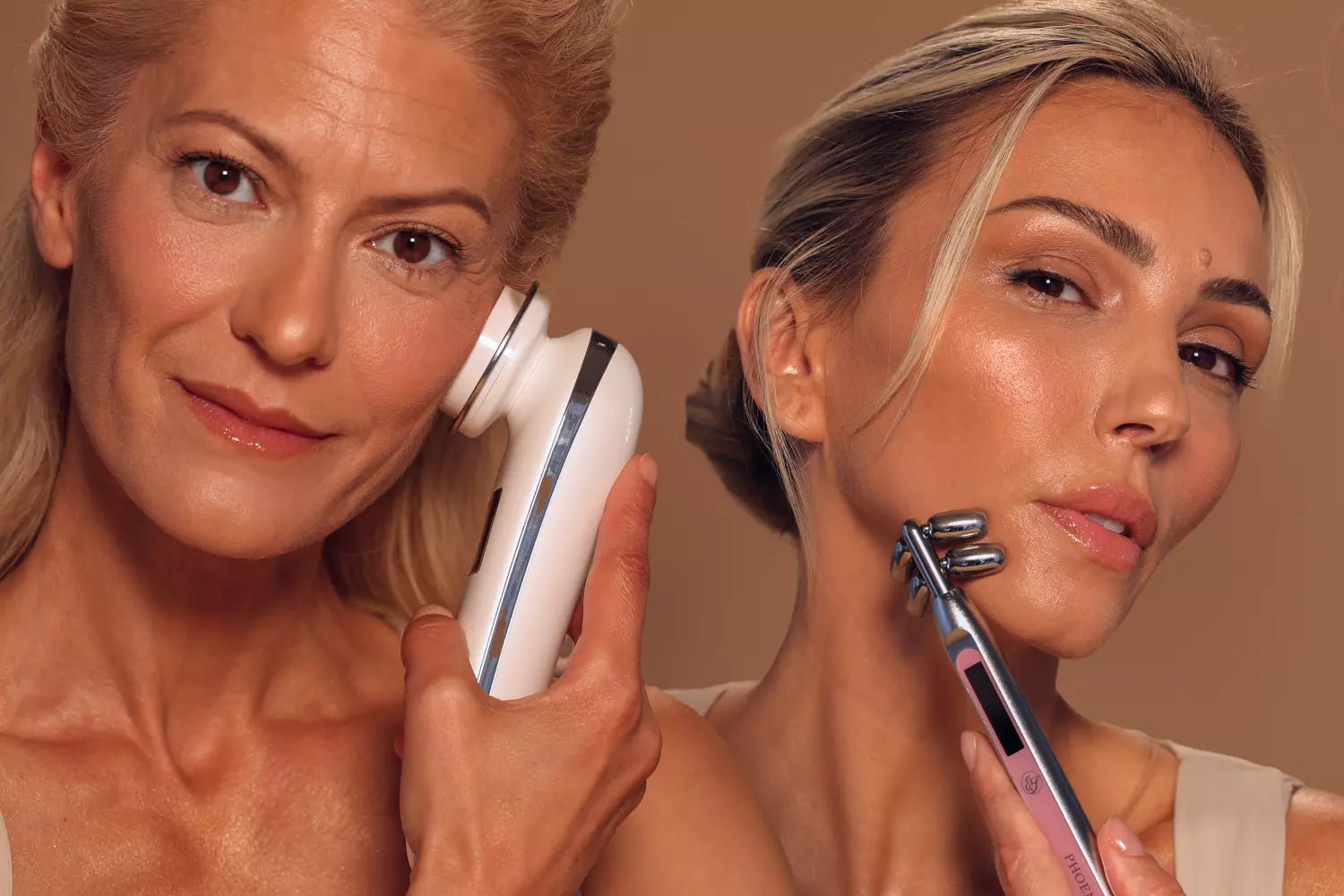
EvenSkyn Phoenix — Lifting & Toning Bar
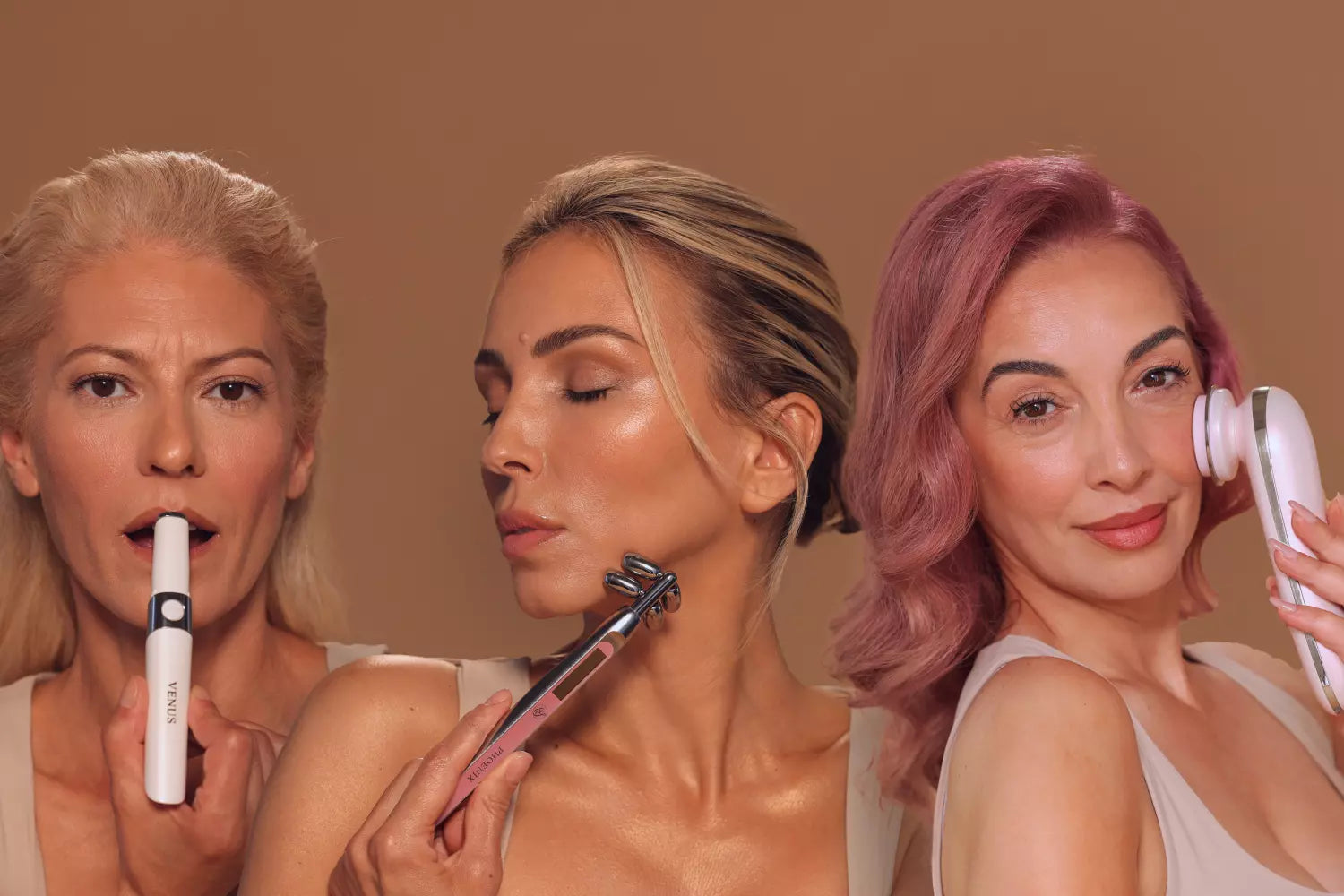
The Phoenix serves as EvenSkyn's dedicated facial muscle conditioning tool. While the Lumo+ includes EMS technology, the Phoenix's bar-style design is specifically optimized for broad, sweeping lifting motions along the jawline, cheekbones, and neck — areas where muscle tone loss creates the most visible sagging.
Who it's for: Those primarily concerned with facial sagging and loss of definition along the jaw and neck. The Phoenix is particularly effective as a complement to RF treatments — think of RF as rebuilding the collagen "fabric" and the Phoenix as strengthening the muscular "frame" that fabric drapes over.
EvenSkyn Eclipse — Skin Toning & Maintenance Handset
The Eclipse occupies a distinct position in the lineup: it's designed for ongoing skin toning and maintenance, making it an excellent entry point for those new to at-home devices or a maintenance tool for those who've already achieved initial results with the Lumo+.
EvenSkyn Mirage — Full-Face LED Therapy Mask
LED masks have become one of the most popular at-home skin technologies, and for good reason: they're effortless to use (just wear and relax), they're safe for all skin types, and the clinical evidence for red and near-infrared light therapy continues to grow.
The Mirage integrates into the EvenSkyn ecosystem as the recovery and maintenance component — designed to be used on "off days" between RF and EMS treatments, or as a standalone daily therapy for overall skin health.
Building Your Complete Anti-Aging Protocol: How EvenSkyn's Bundles Replace a $10,000+ Clinic Plan
This is where the EvenSkyn ecosystem becomes genuinely unique in the market.
No other at-home device brand offers a coordinated, multi-technology protocol the way a dermatology clinic would — until EvenSkyn. Their bundle structure is designed to mirror how professional treatment plans are built: start with the core, and expand coverage as needed.
The Starter Bundle
Best for: Those new to at-home anti-aging devices who want to begin with the most impactful single technology (RF + EMS + LED + microcurrent via the Lumo+).
The Intermediate Set
Best for: Those ready to add eye-area treatment to their core routine (Lumo+ paired with Venus).
The Advanced Set
Best for: Comprehensive facial rejuvenation covering full face, eyes, and dedicated lifting/toning.
The Complete Care Set
Best for: The full clinical-grade at-home protocol — every technology, every treatment area, from forehead to décolletage.
The cost comparison tells the story:
| Approach | Initial Cost | Annual Maintenance | 3-Year Total Cost |
|---|---|---|---|
| Clinic RF + Botox + Fillers | $3,000–$5,000 | $2,500–$4,000/year | $8,000–$13,000+ |
| Separate devices (NuFACE + TriPollar + LED Mask) | $900–$1,400 | $100–$200 (gels, accessories) | $1,200–$2,000 |
| EvenSkyn Complete Care Set | Bundled pricing (40% off retail) | ~$50–$100 (conductive gel) | Significantly less than competitors |
The math doesn't require spin. When you account for multi-technology coverage — the actual number of skin concerns being treated — EvenSkyn's bundles represent the highest density of clinical-grade technology per dollar in the at-home device market.
The Science Corner: Clinical Evidence for At-Home RF and Microcurrent
One of the reasons we built this guide is that the at-home device market is flooded with marketing claims and short on clinical evidence. Here's what the peer-reviewed research actually shows:
On radiofrequency skin tightening at home:
- A 2022 randomized controlled split-face trial (33 women, ages 35–60, 12 weeks) found that home-use RF devices produced statistically significant improvements in wrinkles, skin elasticity, skin thickness, and hydration compared to anti-aging cosmetics alone. The study confirmed that at-home RF is "safe and effective for rejuvenation" and outperformed commercially available anti-aging creams.
- RF energy at 1 MHz frequency can increase type III collagen production by up to 37.5% within 7 days, with 20–40% measurable improvement in skin firmness over 8–12 weeks when combined with consistent use.
- The key finding across studies: device power and consistency are the two variables that most predict outcomes.Lower-power devices require more sessions over longer periods; higher-power devices (within safe limits) show faster initial results.
On microcurrent and EMS:
- Microcurrent therapy has been shown to increase ATP production by up to 500% in treated tissue, providing the cellular energy needed for accelerated repair and regeneration.
- EMS applied to facial muscles produces measurable increases in muscle fiber cross-sectional area — essentially, the same hypertrophic response that skeletal muscles show in response to resistance training.
- The combination of microcurrent (for cellular energy) and EMS (for muscular conditioning) is considered more comprehensive than either technology alone.
On LED phototherapy:
- Red light at 630nm has been shown to increase levels of type I procollagen and both type I and type III collagen in vitro, while reducing matrix metalloproteinase (MMP-1 and MMP-2) levels — the enzymes that break down existing collagen.
- When RF and red light are used together, the synergistic effects are maximized: RF rebuilds deep collagen while red light supports surface-level cellular repair and reduces inflammation.
The takeaway: Each of these technologies works. But the research consistently points to combination therapy — using RF, microcurrent/EMS, and LED together — as the approach most likely to produce comprehensive, lasting anti-aging outcomes. This is precisely why the EvenSkyn ecosystem was designed the way it was: not as a collection of unrelated products, but as an integrated protocol built on the same insight that drives clinical treatment planning.
Frequently Asked Questions
Is at-home RF skin tightening as effective as clinic treatments?
At-home RF devices operate at lower energy levels than clinical systems like Thermage or Morpheus8, which means results are more gradual. However, clinical research shows that consistent at-home use over 8–12 weeks can produce measurable improvements in skin firmness, wrinkle depth, and elasticity. Many dermatologists now recommend at-home RF as both a standalone maintenance option and a way to extend and preserve the results of clinic treatments.
How does the EvenSkyn Lumo+ compare to NuFACE?
They address different aspects of aging. NuFACE is primarily a microcurrent device designed for facial muscle toning and lift. The Lumo+ is a 5-in-1 device that combines RF (for collagen rebuilding), EMS (for muscle stimulation), microcurrent (for cellular energy), and dual-wavelength LED therapy (for cellular repair and acne management). If your primary concern is collagen loss, skin sagging, and wrinkle depth, the Lumo+'s RF technology addresses those directly — something NuFACE does not offer. If you want both microcurrent benefits AND RF plus LED, the Lumo+ covers all three in a single device.
Is the EvenSkyn Lumo+ better than TriPollar?
TriPollar devices are well-respected for RF delivery. The key differences: TriPollar STOP Vx offers bipolar RF plus DMA (a form of muscle activation), but it does not include microcurrent, LED therapy, or ionic cleansing. The Lumo+ offers higher RF power output (3x typical home-use devices), EMS, 5x microcurrent strength, dual LED wavelengths, and deep cleansing — five technologies versus two. Additionally, the TriPollar Vx's DMA mode has been reported by reviewers as more uncomfortable than the Lumo+'s EMS, which may affect treatment consistency.
Can I use RF devices around my eyes?
Most RF devices — including the Lumo+ — are not designed for the delicate periorbital area. This is a safety consideration: the skin around the eyes is significantly thinner, and the proximity to the eye itself requires purpose-built engineering. For eye-area treatment, EvenSkyn offers the Venus wand, which is specifically designed and calibrated for the eyelids, under-eye area, and crow's feet.
How long until I see results with at-home anti-aging devices?
Results vary by technology and individual skin condition. Most clinical studies show initial improvements within 2–4 weeks of consistent use, with more significant results becoming apparent at the 8–12 week mark. RF-driven collagen remodeling is a biological process — your skin needs time to produce new collagen fibers after each treatment. Consistency is far more important than intensity: using your device on a regular schedule (per the manufacturer's guidelines) will outperform sporadic high-intensity use.
Do at-home microcurrent devices actually work?
Yes — with an important caveat. Microcurrent therapy is supported by research showing measurable increases in cellular ATP production. However, results are cumulative and require consistent use. Many aestheticians compare microcurrent to exercise: you wouldn't expect visible muscle tone from going to the gym once. The same applies to facial microcurrent. Devices with higher microamp output generally show more pronounced results, which is why the Lumo+'s 5x microcurrent strength specification is a meaningful differentiator.
What's the difference between microcurrent and EMS?
Microcurrent operates at very low levels (typically below 600 microamps) and works at the cellular level to boost ATP production — your cells' energy currency. You usually can't feel it working. EMS uses stronger electrical pulses that cause actual involuntary muscle contractions, similar to what happens during physical exercise. Microcurrent energizes cells; EMS strengthens muscles. Together, they address both the cellular and structural components of facial aging. The Lumo+ is one of very few home-use devices that offers both.
Is it worth buying a bundle, or should I start with one device?
Starting with the Lumo+ alone is a completely valid approach — it covers five technologies and addresses the majority of facial aging concerns. However, bundles add dedicated devices for specific treatment areas (like the Venus for eyes) and dedicated functionality (like the Phoenix for intensive muscle conditioning). Bundles are also significantly more cost-effective than purchasing devices individually. If you're committed to a comprehensive at-home routine, the bundle structure mirrors how professional clinics design treatment plans — starting with the core and building coverage.
Are EvenSkyn devices safe for all skin types?
Yes. All EvenSkyn devices are designed to be safe for all skin types and tones when used as directed. Each device includes built-in safety features including controlled temperature regulation, auto-shutoff, and recommended usage guidelines. RF, EMS, and LED technologies are all well-established as safe for Fitzpatrick skin types I through VI. If you have a specific medical condition or have recently undergone cosmetic procedures (such as Botox, fillers, or Profhilo), consulting your dermatologist before use is recommended.
How does at-home RF compare to Thermage or Morpheus8?
Thermage and Morpheus8 are professional-grade systems that deliver higher energy per session, producing more dramatic results in fewer treatments. At-home RF devices like the Lumo+ operate at lower (but therapeutically effective) energy levels, designed for safe repeated use without professional supervision. The trade-off: more sessions required, but lower risk, zero downtime, and dramatically lower cost. Many people use at-home RF for ongoing maintenance between periodic clinic visits, while others use it as their primary anti-aging strategy with excellent results. EvenSkyn's manufacturing heritage — producing professional-grade RF components since the 1970s for systems used in cosmetic clinics — means the Lumo+'s technology is derived from the same engineering lineage as clinical systems.
The Bottom Line: What Dermatologists Are Now Telling Their Patients
The conversation in dermatology offices has shifted. Five years ago, most dermatologists were skeptical of at-home devices. Today, a growing number are actively recommending home-use RF, microcurrent, and LED devices as part of comprehensive anti-aging plans — particularly for patients who want to maintain results between clinical visits or avoid invasive procedures entirely.
The key insight: the best anti-aging strategy isn't the most expensive treatment — it's the most consistent one. A clinical RF session once every six months is powerful, but it's no substitute for a regular at-home routine that addresses collagen, muscle tone, and cellular health three to five times per week.
This is exactly the approach the EvenSkyn ecosystem was built to support. Not a single "miracle device," but a coordinated protocol — engineered by a company with a 50+ year manufacturing heritage in professional-grade RF technology — that puts a genuine clinical-level treatment plan in your hands.
Ready to start?
Take the EvenSkyn Device Quiz — find the right device or bundle for your skin goals →



Leave a comment
All comments are moderated before being published.
This site is protected by hCaptcha and the hCaptcha Privacy Policy and Terms of Service apply.