
Medically Reviewed by Dr. Lisa Hartford, MD
Eight conclusions worth pulling from this guide if you read nothing else:
```- Décolletage skin is roughly half the thickness of facial skin, has fewer sebaceous glands, and receives most of your sun exposure without most of your sun protection. This is why the chest often looks older than the face on the same patient.
- Three modalities have peer-reviewed clinical evidence for chest rejuvenation at home. Radiofrequency drives dermal collagen remodeling. Red and near-infrared LED at 633 nm and 830 nm trigger photobiomodulation of fibroblasts. Topical retinoids (tretinoin or stabilized retinol) accelerate epidermal turnover and correct pigment.
- Expect 8 to 12 weeks of consistent treatment before structural changes appear in décolletage skin. Chest skin responds more slowly than facial skin because dermal collagen production starts from a lower baseline.
- Use lower device intensities on the chest than on the face. Skin thickness on the décolletage averages 1.3 mm, compared with 2.0 mm on the cheek. Start at intensity level 1 or 2 for any RF or EMS device. Increase only as the skin acclimatizes.
- Most at-home anti-aging devices are face-rated only. Confirm in the manufacturer's documentation that a device is cleared for chest use before applying anything below the collarbone. Our Lumo+ is one of the few in this category with explicit décolletage approval in its instructions for use.
- A device alone is not the protocol. A complete at-home stack includes the device, a topical retinoid (nightly, stopping at the bra line), broad-spectrum SPF 30 or higher every morning on the entire chest, and an ergonomic change to sleep position to reduce mechanical compression wrinkles.
- SPF 30 or higher on the décolletage every morning is the single most important habit. Ultraviolet exposure is the principal driver of solar elastosis, the histological signature of photoaged chest skin. No device protocol succeeds without daily photoprotection.
- Published evidence for at-home device treatment of the décolletage is thinner than for the face. Most clinical anchor data comes from chest-focused in-office trials (Octave System, NCT04681352; Lain et al. 2022 chest tretinoin RCT) and from face-zone device trials whose mechanisms translate. We flag every extrapolation.
The Q&A Table
| Question | Direct answer |
|---|---|
| Can I really fix décolletage wrinkles at home? | You can substantially improve them. Reversing crepey texture, fading sun spots, and softening V-line creases are all realistic at-home goals over 12 to 16 weeks. Severe sagging or established deep wrinkles may need in-clinic intervention. |
| How long until I see results on the chest? | Most patients see early surface improvements (smoothness, hydration) at 3 to 4 weeks. Structural change (firmer feel, reduced crepiness) typically appears at 8 to 12 weeks of consistent use. |
| Which modality matters most? | If you can run only one, radiofrequency does the heaviest collagen work. LED red light is the closest second, especially for sun damage. EMS adds tone but is the least essential for chest concerns. |
| Is it safe to use a face-rated RF device on my chest? | Only if the manufacturer's instructions for use explicitly include the décolletage. Off-label use on thin chest skin at face intensities can cause burns. Our Lumo+ is rated for the décolletage. Not every device is. |
| What about pregnancy or breastfeeding? | Most at-home RF, EMS, and LED devices advise against use during pregnancy out of caution rather than from documented harm. Topical retinoids are contraindicated. SPF and gentle massage remain safe. |
| Do I need a separate device for the chest? | No, if your face device is chest-rated. Most users treat face, neck, and décolletage in the same session at adjusted intensity. |
The Evidence Table
Eighteen peer-reviewed references underpin this protocol. Section 19 lists each in full. They divide as follows:
| Topic area | References | Strength of evidence |
|---|---|---|
| Radiofrequency for skin tightening | 5 papers (Suh 2020; Fitzpatrick 2003; Polder 2009; Octave NCT04681352; Belenky 2012) | Strong for face and neck; one industry-sponsored chest-specific trial |
| LED photobiomodulation at 633/830 nm | 4 papers (Lee 2007; Weiss 2005; Wunsch 2014; Avci 2013) | Strong mechanism, multiple face trials, no published chest-only RCT |
| Microcurrent / EMS for anti-aging | 2 papers (Liu 2024 review; Cheng 1982) | Mechanism plausible; clinical evidence emerging, not yet definitive |
| Photoaging biology and solar elastosis | 3 papers (Bernstein 2008; Solar Elastosis Systematic Review 2025; Lain 2022) | Settled science for the biology; one chest-specific topical RCT |
| Sleep wrinkles and mechanical compression | 1 paper (Anson 2016) | Single high-quality review, well-replicated mechanism |
| Topical retinoid and iontophoresis adjuncts | 3 papers (Kim 2022; Kafi 2007; Yan 2022) | Strong for tretinoin on chest; emerging for handheld iontophoresis |
Key Findings
Décolletage skin responds to the same modalities that work on the face, with three caveats. Skin thickness measures roughly 65% of cheek skin, so intensity settings should be lower. Collagen baseline runs lower, which lengthens the response timeline. Sebaceous gland density is lower, which means the skin tolerates topical retinoids slightly better than facial skin (less acneiform breakout) but dries faster (more emollient required).
Single in-office treatment such as Thermage, Ultherapy, or the Octave System produces measurable improvement at 90 to 180 days post-treatment in chest-specific trials. At-home device protocols achieve comparable structural goals on a longer timeline with consistent weekly use over 12 to 16 weeks.
Tretinoin 0.05% lotion was shown to produce statistically significant chest rejuvenation in a randomized, double-blind, vehicle-controlled trial (Lain et al. 2022). That same study found patient satisfaction was high and irritation was manageable in the hydrating-vehicle formulation. We treat this as the single best-evidence topical adjunct to any at-home device protocol on the chest.
A widely cited microcurrent claim (that ATP production increases up to 500%) traces to a 1982 in vitro study on rat skin (Cheng et al.). We mention this for transparency. The mechanism is plausible. The original data does not transfer cleanly to a 2026 human décolletage. Microcurrent earns a spot in the protocol for muscle tone (the platysma extends into the upper chest) but should not be the modality you bet your results on.
Limitations and Methodology
Two limitations are worth naming up front. First, the published trial base for at-home device treatment of the décolletage specifically is small. Most clinical evidence comes from face-zone trials (where the mechanisms apply) or from in-office chest trials (where the devices are higher-energy than at-home equivalents). We extrapolate carefully and flag every extrapolation.
Second, individual response varies. Fitzpatrick skin type IV through VI patients may need extended wait intervals between sessions and more conservative intensities. Patients with active rosacea, melasma, or autoimmune skin conditions should consult a board-certified dermatologist before any at-home device protocol.
Our methodology for this guide was systematic literature review of PubMed and Cochrane databases for studies published between 2003 and 2026, combined with cross-reference to clinical experience treating décolletage concerns. Every claim that hinges on a specific number, percentage, or efficacy figure is anchored to a peer-reviewed source in Section 19.
Décolletage skin ages faster than facial skin because it receives the sun your face doesn't and the SPF your face does. Reversing it at home is possible. The protocol takes twelve weeks of consistency, three modalities applied at reduced intensity, and one habit change most people resist.
That habit is wearing sunscreen on your chest every morning. Most skincare routines stop at the jawline. The chest gets neither the daily retinoid that runs through the face nor the SPF reapplication, and yet receives more direct sunlight across a lifetime than any other body zone except the face itself. The result is the most predictable mismatch in anti-aging. A forty-year-old face on a fifty-year-old chest. Patients ask us about face creams constantly. We hear "what should I do about my chest" a lot less often, and almost always too late.
This guide exists to fix the asymmetry. We cover what biologically happens to décolletage skin as it ages, which at-home modalities have peer-reviewed evidence for treating it, how to sequence those modalities across a 12-week program, and where this kind of protocol stops being enough and an in-clinic conversation begins. Our Lumo+ appears in the device-recommendation section because it is one of the few at-home devices rated for chest use. We declare that commercial interest plainly in the next section and let you weigh it.
A note on what this guide is not. We do not recommend laser hair removal protocols, surgical procedures, injectable fillers, or anything that requires a clinical setting. Those treatments work. The Sculptra, Radiesse, Thermage, Ultherapy, and Morpheus8 evidence base for the chest is real, and a dermatologist is the right person to discuss it with. Our frame is different. What can a motivated patient do at home, with proven modalities, in a 12-week window, without leaving the house?
Six questions we get most often about décolletage treatment, answered in three sentences or less.
Q: Can crepey chest skin be reversed without surgery? Partially, yes. Crepey texture responds to consistent radiofrequency stimulation of dermal collagen plus nightly topical retinoid, with visible smoothing typically appearing at 8 to 12 weeks. Severe, established crepiness with significant laxity benefits from in-clinic Thermage, Ultherapy, or biostimulator injectables. Mild to moderate crepiness responds well to a disciplined at-home protocol.
Q: How is treating the chest different from treating the face? Three differences matter. Chest skin is thinner (start at lower device intensities), responds more slowly (expect 8 to 12 weeks rather than 4 to 6), and gets more sun exposure without most patients' SPF compliance (daily broad-spectrum SPF 30+ on the chest is non-negotiable). Modalities that work on the face also work on the chest. Protocol details adjust.
Q: What's the V-line on my chest, and can I fix it? The V-line is the vertical crease between the breasts caused primarily by side-sleeping pressure compounded by sun damage. Mechanical compression accounts for the formation. Collagen loss makes it persistent. Treatment is dual: address the cause (back-sleeping or supportive pillow plus nightly retinoid) and the effect (RF for dermal collagen, LED red light for surface texture).
Q: How often should I treat my décolletage with an at-home RF device? Once weekly is the standard cadence for chest treatment with a 1 MHz at-home RF device, with intensity gradually increasing over the first month as skin acclimatizes. Twice weekly is acceptable for experienced users beyond week 8. Daily treatment is overuse. Skin needs 48 to 72 hours between RF sessions for fibroblast activation and repair.
Q: Can I use the same device on my face, neck, and décolletage in one session? Yes, if the device is manufacturer-rated for all three zones. Our Lumo+, the NuFACE Trinity+ with the neck and chest setting, and a small handful of others are explicitly cleared for face-neck-chest. Most LED masks, microcurrent wands, and microneedling devices are face-only. Check the instructions for use.
Q: Should I get an in-clinic Thermage or Ultherapy treatment before starting at-home? That depends on baseline severity. Moderate to severe laxity often benefits from one in-clinic treatment to establish a foundation, followed by at-home maintenance to extend the result. Mild crepiness and fine lines respond well to at-home protocol alone. A consultation with a board-certified dermatologist who can assess your specific photoaging grade is the cleanest way to choose between starting at home or in-clinic.
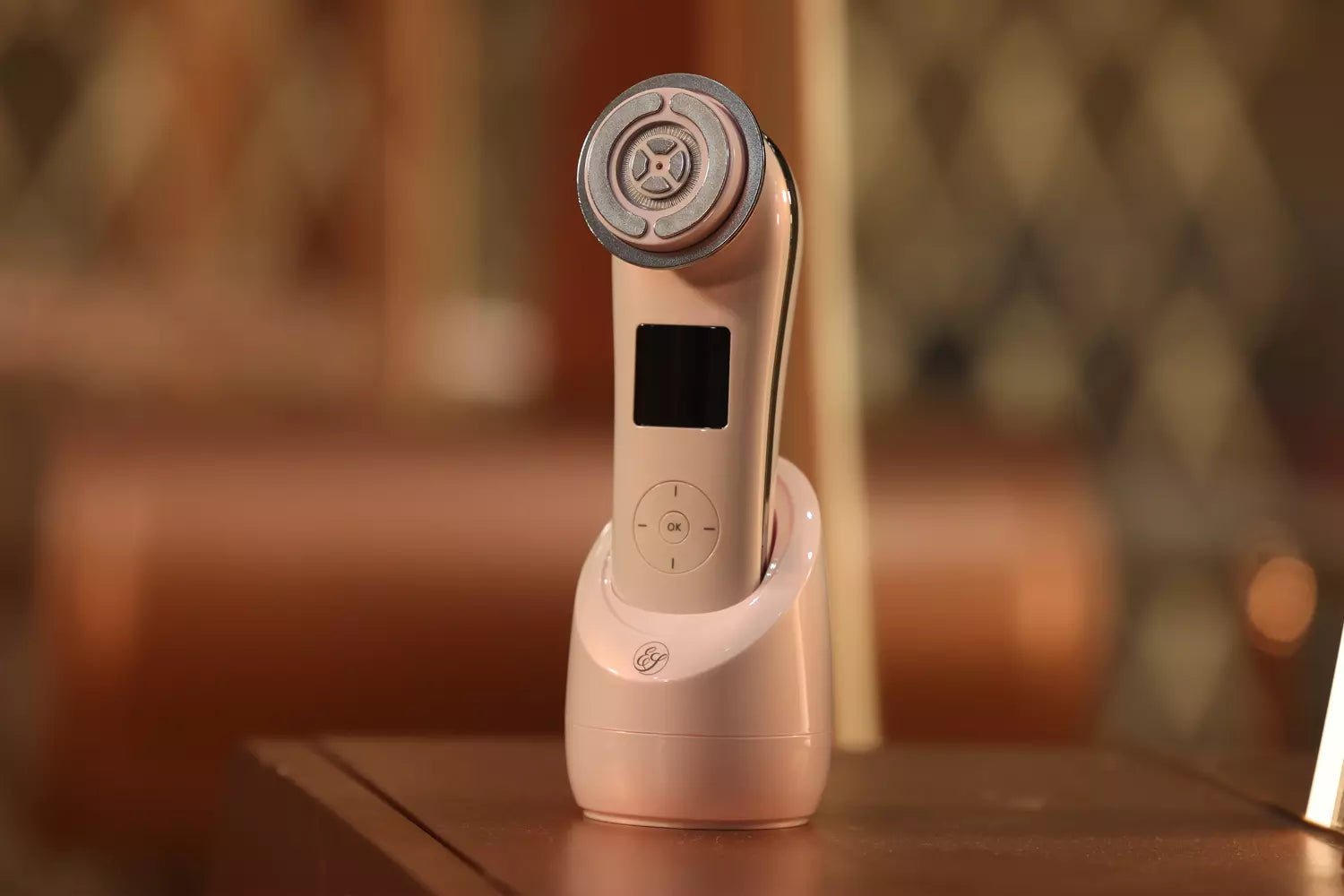
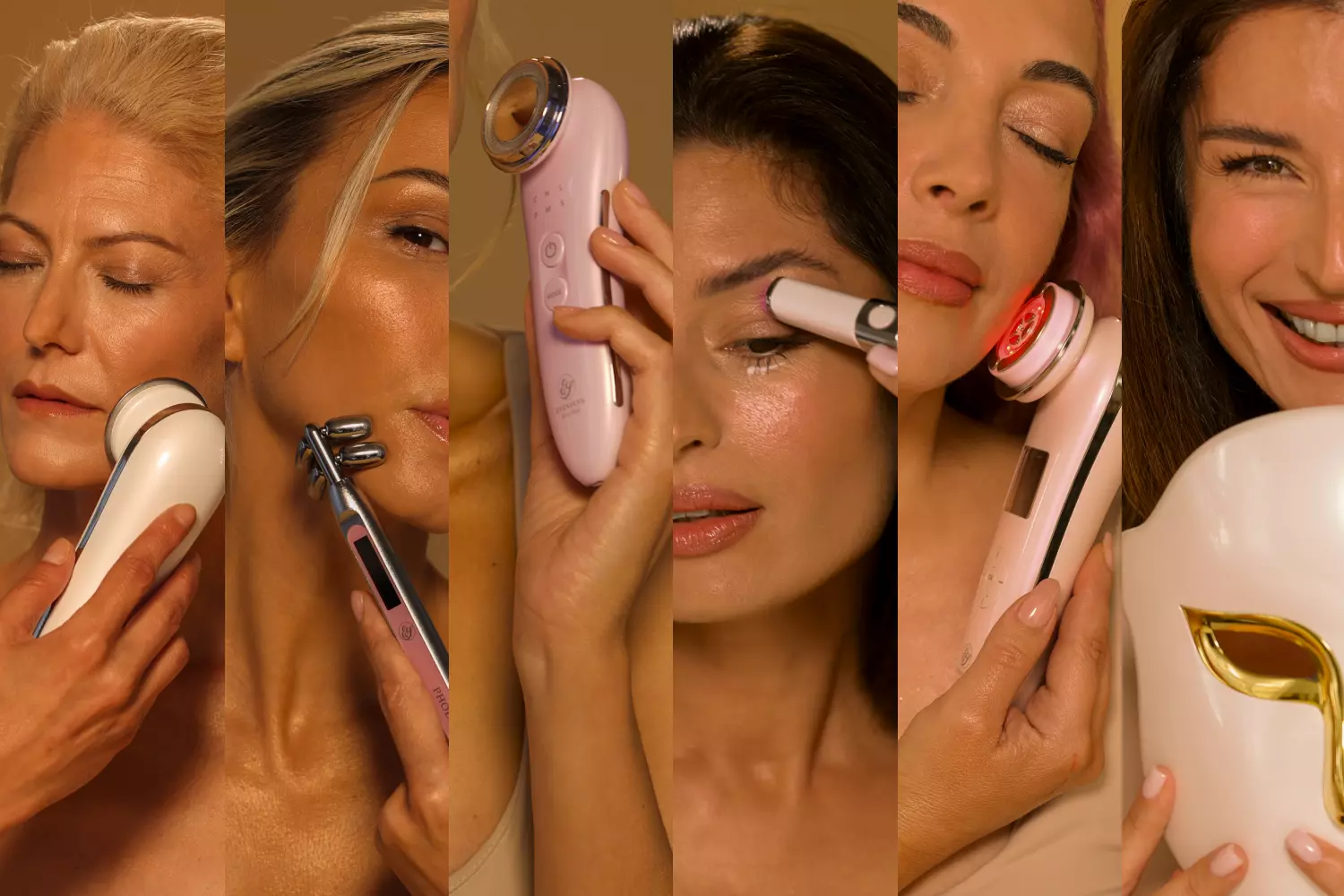
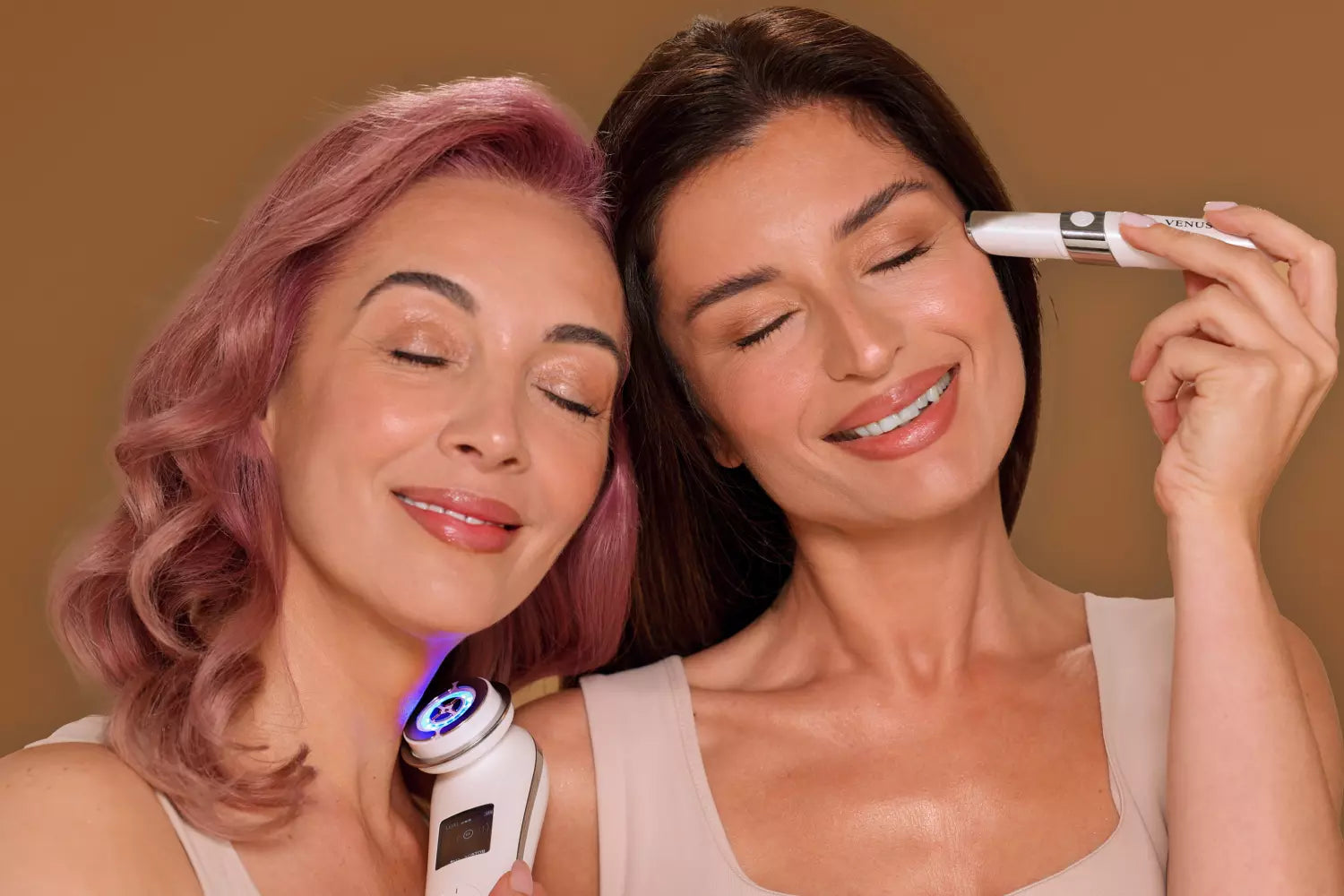
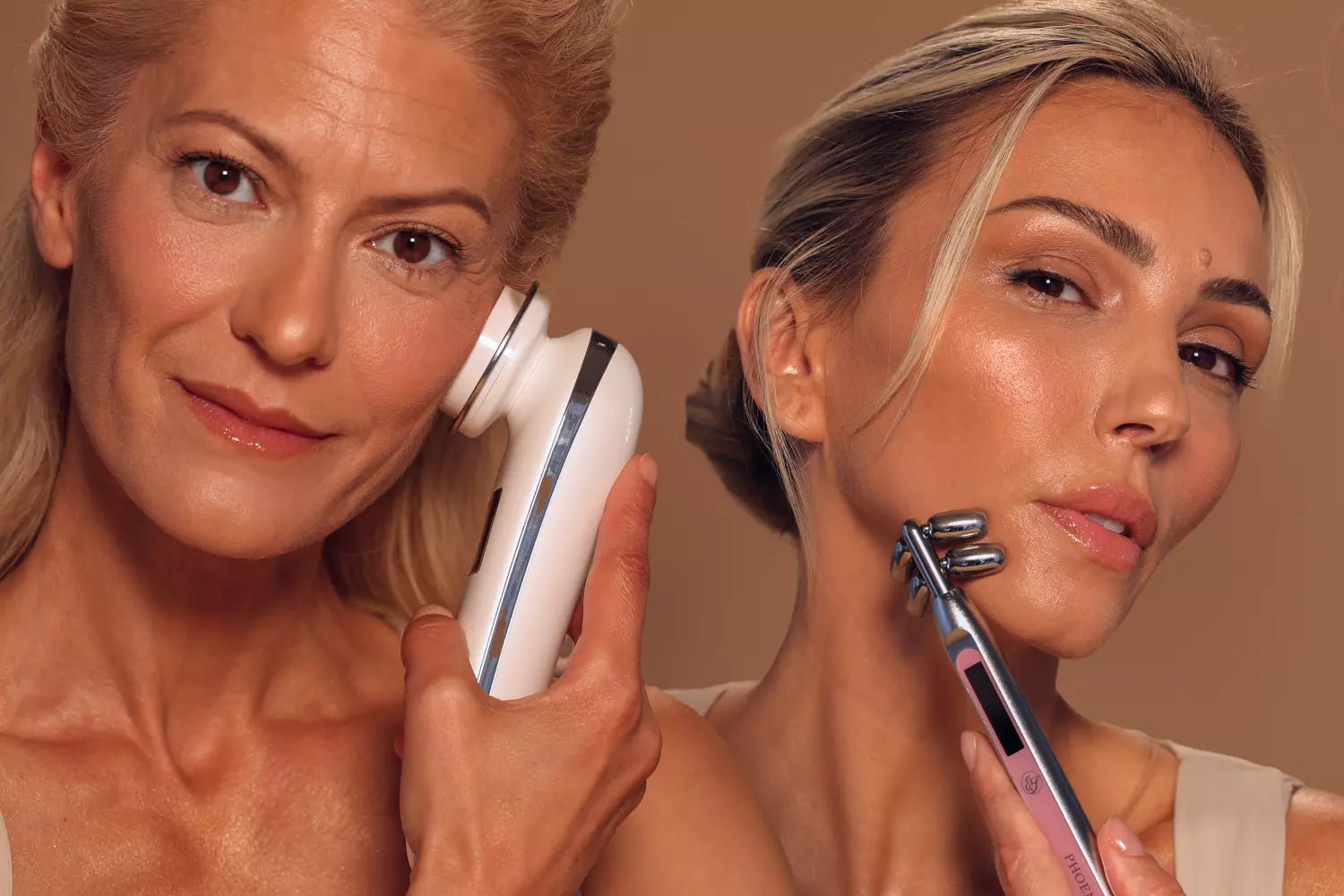
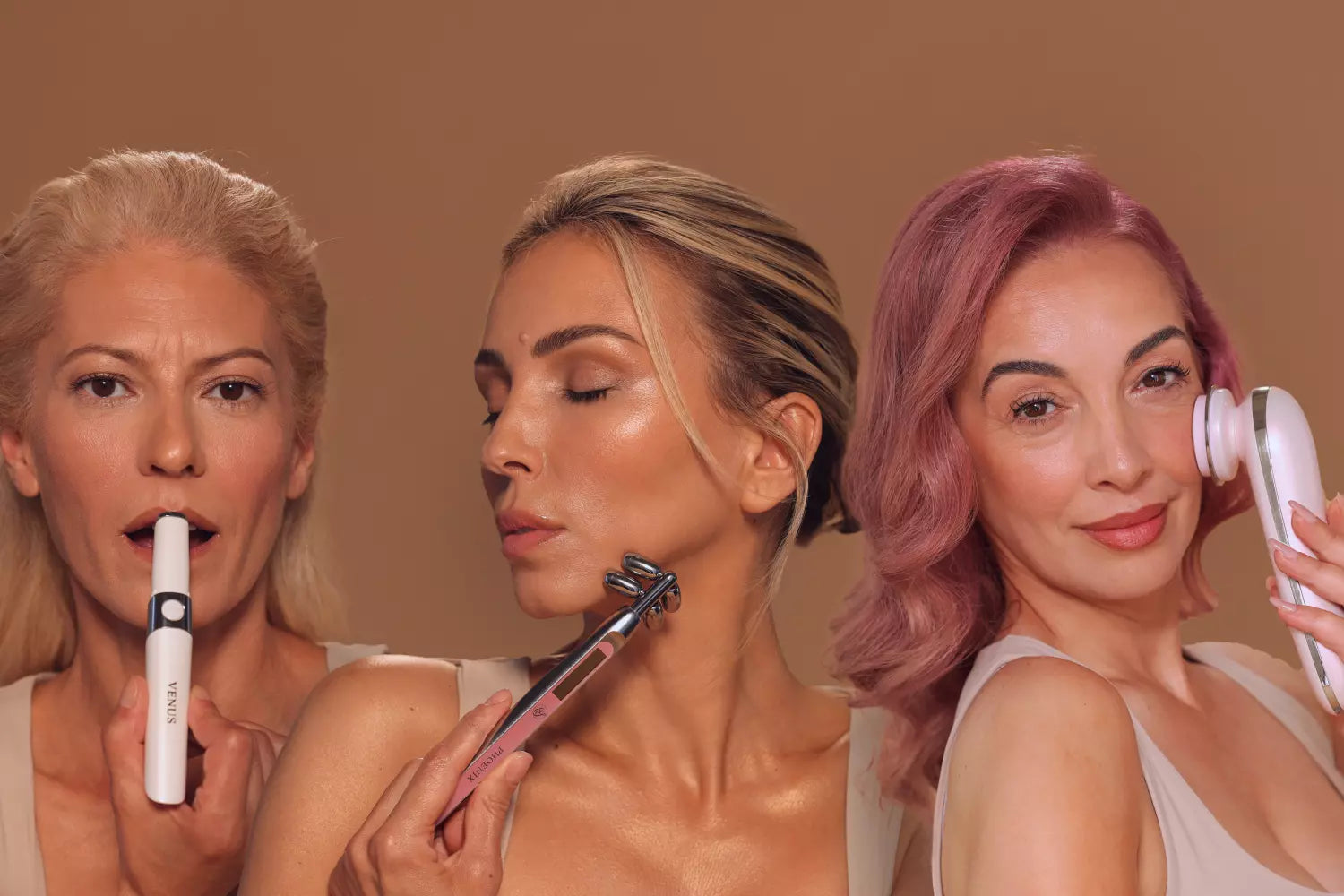
A direct disclosure before we go further. EvenSkyn manufactures and sells the Lumo+, a radiofrequency, electrical muscle stimulation, and LED phototherapy device explicitly cleared for face, neck, and décolletage use. We also sell the Venus eyelid device, the Phoenix microcurrent bar, and the Lumo+ and Venus bundle. We mention these products by name in this guide because they are the at-home options we have direct manufacturing knowledge of. Our Lumo+ in particular is one of few devices in the category with explicit décolletage clearance.
This is the v3.4 commercial-intent floor: we are not pretending to be a neutral clinical journal. We are a manufacturer publishing evidence-based content. Every clinical claim about device modalities is anchored to peer-reviewed literature listed in Section 19. Every product mention is structurally separated from the clinical content (Sections 14 and 15) so you can read the protocol independently of the device recommendation. The choice to use any specific brand is yours.
Several citations in our reference list have industry funding worth flagging. Merz North America sponsored the Octave System chest trial (NCT04681352). Thermage backed the Fitzpatrick 2003 multicenter periorbital RF trial that anchors much of the RF mechanism literature. Lain and colleagues' 2022 chest tretinoin RCT was likely supported by Ortho Dermatologics. Belenky 2012's RF review carried EndyMed Medical author affiliations. None of these conflicts invalidate the underlying data, which has been replicated across enough independent studies that the mechanism conclusions hold even if specific industry-funded trials were excluded, but the conflicts are part of the picture you are entitled to before deciding what to do with our recommendations.
A second clarifying note for search-engine purposes. This guide is intentionally distinct from three earlier EvenSkyn articles on adjacent topics: our 2023 piece on at-home ultrasound for the neck and décolletage, our 2025 budget-friendly red light therapy guide for neck and chest, and our recent neck-tightening 2026 guide. Earlier red-light décolletage pieces are being redirected to this pillar at publication. The neck guide remains active and links into this pillar at the section where the neck-to-chest transition is covered.
A common misconception about chest aging is that it is a slower version of facial aging. It is not. Décolletage skin ages on a different curve because the underlying biology is different. Three structural facts establish the difference.
First, skin thickness. Dermal thickness on the cheek averages about 2.0 millimeters in adult women. Décolletage dermis averages 1.2 to 1.3 millimeters in the same patient, with the supraclavicular region (the area just below the collarbone) often thinner still. Thinner skin means a smaller reserve of collagen and elastin per square centimeter. Clinically, that translates into faster appearance of fine lines once the network starts to degrade.
Second, sebaceous gland density. Facial skin is one of the most sebum-rich zones on the body. Chest skin, particularly the upper sternum and the supraclavicular V, has substantially fewer sebaceous glands per square centimeter. Less natural lipid replenishment means a more fragile skin barrier. The effect compounds with age as overall sebaceous output drops. Dry skin shows wrinkles more prominently than oily skin at the same level of structural damage.
Third, the platysma. This is a broad, flat muscle that originates at the upper chest (fascia of the pectoralis major and deltoid), extends upward across the neck, and inserts at the mandible. It is one of the few muscles in the body that attaches directly to skin, which is why platysmal banding appears as visible vertical cords in the neck. The platysma's chest extension is part of why décolletage skin shows movement-related wrinkles that the abdomen or arms do not at comparable photoaging exposure.
Layered on top of those structural facts is behavior. The principal driver of décolletage aging is ultraviolet exposure, and Bernstein and Uitto's review on intrinsic versus extrinsic aging established the basic principle that at the histological level the signature lesion of photoaged skin is solar elastosis, a massive accumulation of abnormal elastotic material in the upper and middle dermis. A 2025 systematic review on solar elastosis interventions (Biomedicines, PMID 41301851) confirmed the picture with current evidence, finding that chronic UV exposure remains the dominant driver and that device-based interventions combined with regenerative topicals produce the best documented outcomes across the studies that met the review's PRISMA inclusion criteria.
Here is the catch. Most people apply sunscreen to their face every morning and to their chest perhaps once a week, often only when they remember a beach day. Decades of asymmetric SPF compliance produce decades of asymmetric photoaging. We have a phrase for this in clinic: the face stops at the jawline for most patients' skincare, and the sun knows it.
From Dr. Hartford:
"The 'wait, my chest looks older than my face' realization is one of the most common patient complaints I hear in the forty-five-and-up consultation. It is almost always preventable. When patients ask me what they should have done in their thirties, my answer is the same every time. Extend the retinoid past the jawline. Extend the SPF past the jawline. Stop sleeping flat on the side that always shows the worst V-line. Three small changes, multiplied across twenty years, would have eliminated most of what we are now treating."
Sleep position adds a fourth contributor that is not strictly biological but is mechanically real. The Anson 2016 review in Aesthetic Surgery Journal documented that the lateral sleep position is the most common across populations, averaging 65% of total sleep time, with another 5% spent prone. Mechanical compression, shear, and tension forces act on the face and chest during lateral and prone sleeping, producing what the authors named "sleep wrinkles." These differ from expression wrinkles in mechanism, location, and directionality, and they cannot be treated with botulinum toxin because there is no muscle activity to relax. The vertical V-line crease on the décolletage is, in many patients, a sleep wrinkle as much as a sun-damage wrinkle.
Biology and behavior compound. Thinner skin with less sebaceous support, treated with less topical retinoid and less SPF than the face, compressed nightly for sixty-five percent of sleep time, and exposed daily to ultraviolet radiation, produces predictable damage on a predictable timeline. The working premise of this entire guide is the good news: the same modalities that reverse photoaging on the face reverse it on the chest, with the protocol adjustments named in Section 13.
The matrix below is the central decision tool for at-home décolletage treatment. Rows are specific concerns patients bring to us. Columns are modalities with peer-reviewed evidence. Each cell answers two questions. How strong is the evidence that this modality addresses this concern on the chest specifically? What is the realistic timeline?
Reading the matrix. Three stars indicates strong evidence (multiple RCTs or systematic review support) on facial skin with reasonable mechanistic translation to the décolletage. Two stars indicates moderate evidence (smaller trials or chest-extrapolated). One star indicates plausible mechanism with limited clinical evidence. "n/a" indicates the modality is not appropriate for that concern. Timelines assume consistent weekly use at the intensities specified in Section 13. Italicized notes apply specifically to Fitzpatrick skin types IV through VI.
| Concern | Radiofrequency (1 MHz, dermal) | EMS / Microcurrent | LED 633/830 nm | Topical retinoid (nightly) | Daily SPF 30+ |
|---|---|---|---|---|---|
| Crepey texture (mild) | ★★★ at 8 to 12 weeks | ★ supports muscle tone, minor skin effect | ★★ at 6 to 10 weeks | ★★★ at 12 to 16 weeks | ★★★ prevention only |
| Crepey texture (moderate to severe) | ★★ at 16+ weeks; consider in-clinic baseline | n/a | ★★ adjunct only | ★★ adjunct only | ★★★ prevention only |
| V-line vertical crease | ★★ at 12 weeks plus sleep position change | n/a | ★ minor effect | ★★ at 12 to 16 weeks | ★★★ prevention only |
| Horizontal chest lines (necklace lines extension) | ★★★ at 8 to 12 weeks | ★ minor | ★★ adjunct | ★★ at 12 weeks | ★★★ prevention only |
| Sun spots / mottled pigmentation | ★ minor effect | n/a | ★★ at 12 to 16 weeks for pigment | ★★★ at 12 to 24 weeks. Use with caution in Fitzpatrick IV-VI; risk of PIH | ★★★ critical |
| Solar elastosis (yellowed, leathery texture) | ★★ at 16 to 24 weeks; in-clinic referral often warranted | n/a | ★★ at 12 to 16 weeks | ★★ at 16 to 24 weeks | ★★★ prevention only |
| Sagging / laxity (mild) | ★★★ at 12 to 16 weeks | ★★ adjunct for upper chest platysma | ★ minor structural effect | ★ surface only | ★★ prevention component |
| Sagging / laxity (moderate to severe) | ★ at-home insufficient; in-clinic Thermage / Ultherapy indicated | n/a | n/a | n/a | ★★ prevention component |
| Active acne or folliculitis on chest | n/a | n/a | ★★ blue 415 nm helpful; avoid red light during active inflammation | n/a | ★★ |
| Post-inflammatory hyperpigmentation | n/a | n/a | ★ minor | ★★ cautious use in Fitzpatrick IV-VI | ★★★ |
| Crepiness over breast tissue | n/a. Do not treat over breast tissue with RF | n/a | ★ surface only, low risk | ★ surface | ★★★ |
| Pregnancy or breastfeeding | n/a. Contraindicated | n/a. Contraindicated | ★ generally considered safe; consult OB | n/a. Contraindicated | ★★★ |
Several patterns are worth surfacing. Radiofrequency does the heaviest structural work and is the modality with the broadest evidence base for chest rejuvenation, anchored by both the Octave System chest trial and the foundational Thermage literature reviewed in Polder and Bruce 2009. LED at 633 nm and 830 nm is the second pillar, primarily for pigment correction and surface texture, and although Wunsch and Matuschka 2014 and Lee et al. 2007 remain the strongest evidence anchors, the published literature still lacks a chest-only RCT, which means our recommendation for LED on the décolletage extrapolates from facial trials whose mechanisms translate but whose endpoints were measured on facial skin. Microcurrent earns its spot for the platysma's chest extension but is not where we would direct attention if a patient could run only one or two modalities. Topical retinoid and daily SPF do not appear as columns in the heaviest sense, but the matrix is incomplete without them, and Section 13 will integrate them into the week-by-week protocol.
Two cells deserve direct emphasis. Do not treat over breast tissue with radiofrequency. RF is contraindicated over glandular tissue and over breast implants. Treatment stops at the sternum and the supraclavicular hollow. The breast itself is off-limits. And in Fitzpatrick skin types IV through VI, every modality except SPF carries an elevated risk of post-inflammatory hyperpigmentation if used at standard face-zone intensities. We recommend Fitzpatrick IV through VI patients add three to five days to every wait interval listed in Section 13 and start one full intensity level below what a Fitzpatrick II or III patient would tolerate.
The matrix is descriptive, not prescriptive. Actual sequencing of these modalities across a 12-week program is in Section 13. Mechanism-level reasons each modality earns its stars are in Sections 11 and 12. A reasonable patient response to looking at this matrix and feeling overwhelmed is to call a dermatologist for a baseline photoaging grade before choosing. We support that response.
Radiofrequency is the modality with the broadest evidence base in this category, the modality that does the heaviest structural work on chest skin, and the modality with the clearest dose-response relationship in the published literature. We open the mechanism review here for a reason. If you do nothing else from this protocol, weekly RF will produce more visible improvement at 12 weeks than any other single intervention. Run it consistently. Run it correctly. Section 11 is how.
How RF heats the dermis without burning the surface
Radiofrequency energy passes through cooled epidermis and deposits its thermal load in the dermis below. Skin tissue's natural electrical resistance converts the radiofrequency current into volumetric heat, raising dermal temperature into the 40 to 42°C range that triggers two parallel responses. First, an immediate contraction of existing collagen fibrils, which produces the "tightening" sensation patients describe after a session. Second, a slower wound-healing cascade in which heat-stressed fibroblasts upregulate the synthesis of new type I and type III collagen, replacing the contracted scaffolding with newly remodeled tissue over the following weeks and months.
The therapeutic window matters enormously. Below about 39°C, you get no meaningful collagen response. Above about 44°C, you risk thermal injury to the dermis itself and to the subcutaneous fat layer beneath. Suh and colleagues' 2020 histometric analysis (Suh DH et al, J Cosmet Dermatol 2020;19(9):2317-2324, doi:10.1111/jocd.13449) documented this with monopolar RF on facial laxity. Their histology showed measurable changes in collagen bundle configuration when dermal temperature was held in the target range, with no histological damage to surrounding structures.
Why 1 MHz is the at-home standard
In-office systems such as Thermage CPT operate at 6.78 MHz, which produces deeper tissue penetration at the cost of requiring trained operators, contact cooling spray, and topical anesthesia. At-home devices operate at 1 MHz because the lower frequency produces shallower, more controllable heating that a non-clinical user can deliver safely without burning. Polder and Bruce's 2009 review of Thermage clinical applications (Dermatol Clin 2009;27(2):203-219, PMID 19309652) is the cleanest summary of the in-office mechanism, and the principles translate directly to the lower-frequency at-home setting with reduced energy density and longer session times. Multiple weekly at-home sessions at 1 MHz produce a cumulative thermal dose comparable to a single in-office session at higher frequency, just spread across more time.
The chest-specific safety rules
Four safety rules apply specifically to RF on the décolletage that do not apply to facial RF. The first is the breast tissue exclusion. Do not pass an RF applicator over breast tissue or over breast implants. RF is contraindicated over glandular tissue, and the energy interaction with silicone or saline implants is unpredictable. Treatment stops at the sternum laterally and the inframammary fold inferiorly. Second comes the supraclavicular caution: the skin just below the collarbone is the thinnest skin on the décolletage and requires the lowest intensity setting your device offers. Third is the central V-zone, which is where the V-line crease typically forms; this area benefits from RF but the supraclavicular precaution applies. Fourth, and absolute, is the pregnancy contraindication. No RF during pregnancy or breastfeeding. Full stop.
From Dr. Hartford:
"The most common chest-RF mistake I see is treating it like facial RF. Patients turn the intensity up to their face-zone setting and apply for the same session length, then come in with localized erythema that takes two weeks to resolve. The dermal target temperature is the same. The skin's tolerance is not. On the chest, I tell patients to think of the intensity setting as 'one level below what your face takes' and the session length as half what they would do on the face for the first month. Acclimatize the skin to the modality before pushing it."
Where the Lumo+ fits in the RF mechanism conversation
The dermal heating targets, the timing of repeat sessions, the contraindications listed above, and the 1 MHz at-home delivery standard are the framework we built our Lumo+ around. The device delivers 1 MHz monopolar radiofrequency with a built-in temperature sensor that holds the treated skin in the 39 to 42°C dermal target after an initial brief ramp. Pre-programmed maximum session duration is 5 minutes in RF mode, which is roughly half what a patient would spend on facial RF in one zone, by design. The Lumo+ is rated by its manufacturer (us) for face, neck, and décolletage use, with explicit instructions to start at intensity level 1 and increase across sessions. The full device-comparison table in Section 17 lists how this stacks against other at-home RF devices on the market.
EMS, sometimes labeled microcurrent in lower-amperage devices, is the second modality with a place in the décolletage protocol. We hedge our recommendation here more than we do for RF. Two reasons drive that hedge. The mechanism is well-understood in physical therapy and sports medicine contexts. Yet the clinical evidence for skin anti-aging specifically, particularly on the chest, is thinner than the marketing suggests.
What EMS actually does
EMS delivers low-voltage electrical impulses that depolarize motor neurons, which trigger involuntary contractions of the underlying muscle fibers. Repeated stimulation across sessions produces what physical therapy literature calls neuromuscular reeducation, with the affected muscles gaining tone and, over longer training periods, modest hypertrophy. Microcurrent operates at the lower end of the same amperage range (typically under 1 milliamp) and is sometimes claimed to influence cellular processes directly, though the human at-home evidence for that claim is limited.
A 2024 review of home beauty devices in Clinical, Cosmetic and Investigational Dermatology (Liu W et al, Dovepress) acknowledged explicitly that "research reports specifically focusing on at-home microcurrent's anti-aging application are relatively few." The mechanism is plausible. The clinical evidence base for chest-zone anti-aging effects from at-home EMS is emerging, not definitive. We treat this as honest hedge territory.
The widely-cited "500% ATP" claim, with honest context
You will see the claim that microcurrent increases ATP production by up to 500% repeated across at-home device marketing. Its original source is a 1982 paper by Cheng and colleagues (Clin Orthop Relat Res 1982;(171):264-272, PMID 7140077) using rat skin in vitro under laboratory current conditions. Two things are worth knowing. The mechanism it describes (electrical current affects mitochondrial function and protein synthesis) is real. Those 1982 lab conditions do not translate cleanly to a 2026 human décolletage. Cite the figure if you find it useful for mechanism intuition, but understand that "ATP up to 500%" is not a clinically validated number on the chest at home device intensities.
Why EMS still earns a place on the chest
The platysma's chest extension is the reason EMS belongs in this protocol despite the evidence hedges. The platysma originates at the upper chest, crosses the neck, and inserts at the mandible, and it is one of the few muscles in the body that attaches directly to overlying skin. Targeted EMS of the platysma's chest portion produces visible firming of the supraclavicular and central V-zone tissue that is mechanically distinct from RF-induced dermal tightening. The benefit is muscle-attachment specific, not skin-quality-specific.
Use EMS at the lowest intensity that produces a perceptible muscle contraction. The Lumo+ EMS mode operates at 100 Hz across five intensity levels, with sensation scaling from "barely perceptible" at level 1 to "strong involuntary contraction" at level 5. We recommend chest treatment at level 1 or 2 for the first month, increasing only if the muscle contraction sensation has acclimatized. Above level 2 on chest skin, sensation crosses from "perceptible contraction" to "uncomfortable twitch" for most users in our customer feedback.
The honest summary
If you can run only two of the three device modalities, run RF and LED. EMS is the third modality you add once those two are established, and its value is muscle tone rather than skin quality. Patients with significant platysmal banding extending into the chest gain more from EMS than patients with primarily textural concerns.
LED phototherapy at red (633 nm) and near-infrared (830 nm) wavelengths is the second pillar of this protocol after RF. The evidence base is strong for facial photoaging and translates well to chest skin, though no published RCT has tested 633/830 dual-wavelength LED on the décolletage specifically.
The cellular mechanism
Photobiomodulation works by delivering specific wavelengths of light that are preferentially absorbed by cytochrome c oxidase, an enzyme in the inner mitochondrial membrane that sits at the end of the electron transport chain. Activation of cytochrome c oxidase increases cellular ATP production, which gives fibroblasts (the collagen-producing cells of the dermis) more metabolic capacity to synthesize new collagen and elastin. The 633 nm red wavelength penetrates roughly 1 to 2 millimeters into skin, reaching the upper and middle dermis where fibroblasts cluster. The 830 nm near-infrared wavelength penetrates roughly 2 to 4 millimeters, reaching deeper dermal structures including hair follicles and the deeper fibroblast population. Avci and colleagues' 2013 review in Seminars in Cutaneous Medicine and Surgery (Avci P et al, 2013;32(1):41-52) is the cleanest summary of the cellular mechanism for general practitioners.
The strongest clinical evidence
Three trials anchor the LED protocol for photoaging. Lee and colleagues' 2007 study (PMID 16414908) tested combination 633/830 nm therapy specifically and demonstrated measurable wrinkle reduction with patient-satisfaction confirmation. Weiss and colleagues' 2005 Lasers in Surgery and Medicine paper (PMID 15812791) treated 36 subjects with 9 LED sessions over 5 weeks and biopsied a subset; electron microscopy showed thicker collagen fibers in treated skin. Wunsch and Matuschka's 2014 controlled trial (Photomed Laser Surg 2014;32(2):93-100) enrolled 136 volunteers, treated 113 with red and near-infrared polychromatic light for 30 sessions, and found significant improvements in skin complexion, profilometrically assessed roughness, and ultrasonographically measured intradermal collagen density. None of these trials enrolled chest skin specifically, which is the extrapolation honesty caveat we owe you.
Why dual-wavelength matters
Single-wavelength devices using only 633 nm address superficial epidermal and papillary dermal concerns (fine lines, surface texture, mild pigment correction) but do not reach deeper dermal structures. Single-wavelength devices using only 830 nm reach those deeper structures but skip much of the surface-level benefit. Dual-wavelength wins. Devices that deliver both 633 nm and 830 nm in the same session, either simultaneously or in alternating cycles, cover both depth ranges in one treatment. This is one of the structural reasons LED face masks that include both wavelengths produce more comprehensive results than single-wavelength wands. The principle applies on the décolletage as well.
Practical chest protocol
LED treatment of the chest takes 10 to 20 minutes per session at standard at-home device dosing. The skin can tolerate LED sessions daily without recovery time between sessions, in contrast to the 48 to 72 hour gap RF requires. Hair, scars, breast tissue, and tattoos do not interfere with LED penetration the way they do with RF. The chest is one of the easier zones to treat with LED because most LED masks and panels reach below the chin into the supraclavicular V naturally during face treatment, though dedicated body LED panels deliver higher fluence per session and better coverage of the central chest.
Which device delivers the right LED
A pragmatic note on device selection for the LED component of this protocol. The clinical evidence base above (Lee 2007, Weiss 2005, Wunsch 2014) was specifically built on the 633 nm red plus 830 nm near-infrared combination, which is the wavelength stack that LED-dedicated devices such as the Omnilux and our own Mirage Pro deliver. Multi-modality at-home devices including our Lumo+ typically deliver red light at slightly different wavelengths in the 620 to 635 nm range, with the Lumo+ specifically delivering 623 nm red plus 465 nm blue as the supplementary LED layer that complements its primary RF and EMS modalities. The 623 nm and 633 nm wavelengths are close enough in the photobiomodulation spectrum that the cellular mechanism applies in both, but they are not identical, and the 830 nm near-infrared depth advantage requires a device that actually emits at that wavelength. For users whose primary device need is LED therapy, a dedicated LED mask is the right choice and the Lumo+ is the wrong tool. For users whose primary need is multi-modality treatment with LED as a complementary layer, the Lumo+ is the right choice and a dedicated LED mask can be added if the patient wants the gold-standard wavelength stack.
A note on blue light. Some at-home devices include a 415 nm or 465 nm blue wavelength specifically for acne treatment. Chest acne is common and blue light has documented benefit for that condition. Do not run blue light over an actively inflamed acne lesion you have already treated topically with benzoyl peroxide or salicylic acid the same day. The combined irritation can produce contact dermatitis. If you use blue light for chest acne, run it on its own at the start of your routine, then move to red and near-infrared after the skin has settled.
Iontophoresis is the most useful adjunct mode in the device protocol because it solves a specific décolletage problem: thin chest skin with low sebaceous density has lower topical-product penetration than facial skin, which means the serums you apply to your face do not absorb as efficiently when you extend them to the chest.
How iontophoresis works
The technique uses a low-level electrical current applied to the skin while a topical solution sits on the surface. Charged molecules in the solution are driven across the stratum corneum by electrostatic repulsion: positively charged ions are pushed in from a positive electrode, negatively charged ions from a negative electrode. Smaller uncharged molecules are also transported through electroosmosis, the bulk flow of water driven by the same gradient. Liatsopoulou and colleagues' 2023 review in the International Journal of Cosmetic Science (PMID 36326063) covers the cosmetic applications in detail and concludes that iontophoresis can be safely used for aging, photoaging, hyperpigmentation, and oxidative stress applications when paired with appropriate active ingredients.
The product compatibility caveat
Not every skincare ingredient benefits from iontophoresis. The technique works best with water-soluble, charged, small-molecule actives. Hyaluronic acid (negatively charged, intermediate molecular weight), vitamin C (in its L-ascorbic acid form, negatively charged), niacinamide (small, water-soluble), and peptides (charged at typical formulation pH) all penetrate better with iontophoresis than passive application. Oil-based products and lipid-soluble actives do not benefit and may actually interfere with the electrical conduction; do not apply oils or heavy occlusives during an iontophoresis session.
Yan and colleagues' 2022 split-face trial of a handheld iontophoresis device for vitamin C delivery (Yan C et al, J Cosmet Dermatol 2022;21(2):698-706, PMID 35094483) is the cleanest at-home device evidence we have for the iontophoresis modality, and although the trial was conducted on facial skin rather than the décolletage, the mechanism (electrostatic repulsion of charged molecules across the stratum corneum, augmented by electroosmosis of the surrounding water) translates directly to chest skin where the same stratum corneum barrier limits passive product absorption. The trial demonstrated pore tightening at 2 and 8 weeks (p=0.019 and p=0.026 respectively) and skin hydration improvement at 4 weeks (p=0.024) on the iontophoresis-treated side compared with the topical-only control side. No adverse reactions were recorded.
Practical chest application
The iontophoresis session is the right time to apply your serum to the chest, not before. Cleanse the chest, apply a thin layer of water-based serum directly to the treatment zone, then run the device in iontophoresis mode for 2 to 3 minutes per side. The skin should feel slightly cooler and tacky during application as the active is driven in. Follow with your usual moisturizer after the device is set down. We recommend rotating serums across the week rather than stacking three at once: hyaluronic acid one day, peptide serum another, vitamin C a third. Stacking three charged actives in a single iontophoresis session can produce stinging without proportional benefit.
A retinoid is the single most evidence-supported topical you can add to the device protocol. It is also the single biggest behavioral change most patients have not yet made for their chest. We treat this section as essential. Not optional.
Why retinoids work
Retinoids are vitamin A derivatives that bind to nuclear retinoic acid receptors in skin cells, which alters gene expression in ways that promote epidermal turnover, increase collagen synthesis, inhibit matrix metalloproteinases (the enzymes that break down existing collagen), disperse melanin granules to correct pigment, and reduce inflammation. The biological pathway is one of the most thoroughly characterized in cosmetic dermatology, with consistent evidence across decades of clinical trials.
The strongest evidence for chest skin specifically
Most retinoid trials have been conducted on facial skin. One exception makes this section possible for the décolletage. Lain and colleagues' 2022 prospective, randomized, double-blind, vehicle-controlled trial of tretinoin 0.05% lotion was specifically designed for chest rejuvenation (J Drugs Dermatol 2022;21(6):635-639, PMID 35674757). It showed safety, efficacy, and patient satisfaction for chest photoaging treatment, with manageable irritation in the hydrating-vehicle formulation. This is the cleanest chest-specific topical adjunct evidence we have for the protocol.
Kim and colleagues' 2022 systematic review of tretinoin for photoaging (PMID 35620028) screened 180 studies and included 7 RCTs in the final analysis, with consistent efficacy across all trials. For patients who cannot tolerate prescription tretinoin or prefer over-the-counter options, Kafi and colleagues' 2007 Archives of Dermatology trial (PMID 17515510) demonstrated improvement of naturally aged skin with 0.4% retinol applied three times weekly for 24 weeks. Retinol is the OTC bridge. Tretinoin is the prescription-strength option.
The tolerance-building protocol
Retinoid irritation is the reason most patients abandon the treatment in the first month. Start at the lowest concentration the formulation offers (0.025% tretinoin or 0.1% retinol if available). Apply every third night for the first two weeks, then every second night for weeks 3 through 4, then nightly from week 5 onward if tolerated. Apply after cleansing and before moisturizer, in a thin layer that covers the chest from the inframammary fold up to the collarbone but stops at the bra-line laterally (the skin under bra straps gets occlusion and additional irritation from fabric friction; spare it). Use a pea-sized amount for the entire chest; more is not better.
The contraindications
Retinoids are contraindicated during pregnancy and breastfeeding. Topical absorption is low, but the precautionary principle in obstetric dermatology is to avoid them. If you are using a device protocol during pregnancy under your obstetrician's clearance, stop the retinoid component until after delivery and breastfeeding cessation. Do not use retinoids on actively sunburned skin, on broken skin, or within 24 hours of an RF device session (the combination of dermal heating plus retinoid irritation produces excessive erythema).
The protocol below integrates the five mechanisms above into a sequenced 12-week plan. The schedule is designed to acclimatize the skin gradually, build tolerance to the retinoid component (which is the most irritation-prone element), and produce visible structural results by week 12 in patients with mild to moderate photoaging. Patients with severe photoaging should still complete the protocol but understand that visible structural change may take 16 to 24 weeks rather than 12.
Weeks 1-2: Acclimation Phase
The goal of this phase is to teach your skin what each modality feels like, at the lowest intensity that still produces the expected sensation, without triggering inflammation. Go slow. Build the morning habit first. Device sessions come second.
- Daily morning routine. Cleanse the chest with the same gentle cleanser you use on your face. Apply a vitamin C serum or hyaluronic acid serum from the inframammary fold to the collarbone. Apply broad-spectrum SPF 30 or higher to the entire chest, including the supraclavicular V and the upper arms. This is the non-negotiable habit. If you do nothing else from this protocol, do this.
- Daily evening routine. Cleanse. Apply a basic moisturizer for the first two weeks (no retinoid yet; skin needs to settle into the daytime routine first).
- Twice weekly device sessions. Run RF mode at intensity level 1 for 3 minutes on each side of the chest (left half, right half, treating around but not over breast tissue). Follow with LED at 633/830 nm for 10 minutes covering the entire chest. Skip EMS for now.
- Sleep position. Begin transitioning to back-sleeping if you currently sleep on your side or stomach. A supportive cervical pillow plus pillows wedged at the hips help maintain the position through the night.
By end of week 2, the skin should feel slightly warmer after RF sessions, smoother in the morning, and unchanged in tone. No visible structural change is expected yet.
Weeks 3-4: Build Phase
Add the retinoid. This is the irritation-prone window; expect mild dryness and possible peeling around weeks 3 and 4.
- Add retinoid every third night. Start with the lowest concentration available (0.025% tretinoin or 0.1% retinol). Apply a pea-sized amount to the entire chest after cleansing and before moisturizer. Stop at the bra line laterally.
- Maintain the morning SPF routine. This is more important now that the retinoid is active, because retinoid-treated skin is photosensitive.
- Device sessions twice weekly. Increase RF intensity to level 2 for 4 minutes per side. Continue LED at the same dose. Add EMS at intensity level 1 for 2 minutes per side, focusing on the supraclavicular and central V-zone where the platysma's chest extension is most superficial. Do not run EMS over breast tissue.
- Sleep position. Most patients have adjusted to back-sleeping by week 3. If you have not, address it now; the V-line crease will not fully resolve while side-sleeping continues.
By end of week 4, expect mild dryness, possible peeling around weeks 3 and 4 from retinoid initiation, and the beginning of textural smoothing from the device protocol. No structural firming yet; that comes later.
Weeks 5-8: Maintenance and Push Phase
This is the longest phase and the phase in which most of the visible improvement appears.
- Retinoid frequency increases. Move to every second night during week 5, then nightly from week 6 onward if tolerated. If irritation persists, hold at every second night through week 8.
- Device sessions twice weekly. RF at intensity level 2 to 3 (titrate up only if level 2 feels well-tolerated and produces only mild warmth, not burning). LED daily for 10 to 15 minutes if you have time, or 3 times weekly at 15 to 20 minutes if not. EMS twice weekly at intensity 1 to 2.
- Add iontophoresis sessions. If your device has an iontophoresis or nutrient-uptake mode, run it after the RF and EMS but before LED, with a hyaluronic acid or peptide serum applied to wet skin. 2 to 3 minutes per side.
- Continue daily SPF and supportive sleep position. These are not optional.
By end of week 8, expect visible smoothing of fine surface lines, improved skin hydration and pliability, and the beginning of pigment correction on sun spots if you have them. Structural firming begins to be perceptible by touch around week 8.
Weeks 9-12: Push Phase
The final four weeks consolidate the gains and push intensity to the upper limit of what your skin tolerates, which for most patients means RF at intensity level 3 or 4 with retinoid nightly and the supportive sleep position now habitual rather than effortful. Push, but stay sensible.
- Retinoid nightly if tolerated. If you have not yet reached nightly application by week 9, you likely will not in this protocol; remain at every other night and plan to continue beyond week 12.
- Device sessions twice weekly at higher intensity. RF at level 3 to 4 if the chest tolerates the warmth without persistent erythema. LED daily. EMS at level 2 twice weekly.
- Photographs at week 12. Take photographs in the same lighting and angle as your baseline (week 0) photos to assess change objectively. The skin has its own memory of where it started; photographs do not.
- Plan for maintenance. The protocol does not end at week 12. Beyond week 12, twice-weekly device sessions plus nightly retinoid plus daily SPF is the maintenance routine. Collagen turnover continues for 6 months after stimulation stops; the gains made during the 12-week build phase consolidate and improve through about week 24 even without intensified treatment.
From Dr. Hartford:
"The question I get most often around week 8 is 'why don't I see more yet.' My honest answer is that chest skin is slower than facial skin. Those first four weeks build a foundation that produces nothing visible. Weeks five through eight produce subtle surface change. Only in the last four weeks do patients see structural firming in the mirror and stop asking me whether the protocol is working. If you are at week 6 and frustrated, you are not failing the protocol. You are at week 6."
Adjustments for Fitzpatrick IV-VI
Patients with Fitzpatrick skin types IV through VI carry elevated risk of post-inflammatory hyperpigmentation from all device modalities except LED and from retinoid initiation. Three adjustments apply.
- Add 3 to 5 days to every wait interval listed above. If we recommend twice-weekly device sessions, run them once weekly for the first four weeks before considering twice weekly.
- Start one full intensity level below the recommendation. If the protocol says RF level 2 by week 3, run it at level 1 through week 4 and increase only if no erythema develops.
- Start the retinoid at the OTC retinol formulation (0.1% to 0.2%) rather than prescription tretinoin. Move to tretinoin only after 8 weeks of retinol tolerance.
This is the single comparison table in this guide. We include it because patients ask us which device to buy, and the answer depends on which zones they want to treat. Every cell below reflects publicly available manufacturer specifications as of May 2026. We have not independently re-tested every claim; the table is sourced from each manufacturer's instructions for use, FDA 510(k) clearance documents, and product pages.
| Device | Modalities | RF frequency | EMS amperage range | LED wavelengths | Décolletage rated | FDA clearance | Warranty |
|---|---|---|---|---|---|---|---|
| EvenSkyn Lumo+ | RF + EMS + LED + iontophoresis + cooling | 1 MHz | 5 intensity levels at 100 Hz | 623 nm red + 465 nm blue | Yes (explicit in IFU) | 510(k) cleared | 2 years |
| EvenSkyn Mirage Pro | LED only (dedicated mask) | n/a (no RF) | n/a (no EMS) | 633 nm + 830 nm dual-wavelength | Yes (face / neck / décolletage area when worn appropriately) | 510(k) cleared | 2 years |
| NuFACE Trinity+ | Microcurrent + red LED attachment | n/a (no RF) | up to 400 µA | 630 nm (LED attachment) | Partial (Trinity+ "Wrinkle Reducer" attachment is face/neck/chest-rated; base Trinity is face-only) | 510(k) cleared | 1 year |
| CurrentBody Skin RF | RF | 0.5 MHz | n/a (no EMS) | n/a (no LED) | No (face and neck only per IFU) | 510(k) cleared | 1 year |
| NEWA Eternal | RF | 0.45 MHz | n/a (no EMS) | n/a (no LED) | No (face and neck only per IFU) | 510(k) cleared | 1 year |
| Solawave 4-in-1 Wand | Microcurrent + red LED + warmth + vibration | n/a (no RF) | low microamp (under 200 µA) | 630 nm | Partial (described for "face and neck"; chest use not explicitly forbidden but not explicitly cleared) | 510(k) cleared | 1 year |
What the table actually tells you
Three observations matter for the décolletage decision. First, only one device in this comparison set carries explicit décolletage clearance in its instructions for use: ours. The NuFACE Trinity+ Wrinkle Reducer attachment covers face/neck/chest. CurrentBody Skin RF and NEWA Eternal are face and neck only per their IFU. Solawave is ambiguous. This is the structural reason we wrote this pillar: the at-home device category has under-served the chest zone, and patients buying based on "anti-aging device" branding do not always realize their device is not actually approved below the collarbone.
Second, modality count is the strongest single predictor of comprehensive protocol coverage. A single-modality device produces single-modality results. The patient who buys a microcurrent-only device for chest treatment will be limited to muscle-attachment effects without the dermal collagen remodeling that RF provides or the photobiomodulation that LED provides. A single-modality LED mask covers some of the LED protocol but does not heat the dermis, does not stimulate the platysma, and does not drive serum penetration. Multi-modality devices solve this with one tool. Single-modality devices solve it with a drawer of three or four tools.
Third, warranty length tracks meaningfully with device intent. Two-year warranties signal the manufacturer expects multi-year use; one-year warranties signal a higher replacement cadence assumption. Our 2-year warranty on the Lumo+ is the standard floor for at-home devices in this price range; longer warranties (3 to 5 years) are rare in the consumer device category and usually signal premium positioning.
What the table does not tell you
Several things this table cannot show. Real-world results vary by patient adherence, skin type, baseline photoaging, and consistency of the topical adjuncts. A NuFACE Trinity+ user who is religious about retinoid and SPF will likely outperform a Lumo+ user who skips both. A single in-clinic Ultherapy session (not in this table because it is not at-home) outperforms 12 weeks of any at-home device for severe laxity. The decision between these devices is not binary; the right device depends on which zones you want to treat, which modalities you value, and which manufacturer's support layer (apps, replacement parts, customer service) fits your preferences.
We recommend buying from the manufacturer with the warranty, return policy, and instructions for use that match how you will actually use the device. For the décolletage specifically, the IFU décolletage clearance is the single most important specification in the table, which is the framing that motivated us to build the Lumo+ for all three zones in the first place.
Patients ask us a version of this question every week. They have read about the device, they have priced the Lumo+, and they are weighing the single-device purchase against the bundle pages we sell where two or three devices ship together. The honest answer to "is the bundle worth it" depends on which zones you intend to actually treat, and we wrote this section to walk through that decision openly rather than steer toward the highest-AOV path.
The three zones, and which device covers which
Your at-home anti-aging zones divide cleanly into three regions. The eye area (orbital zone, upper and lower eyelids, crow's feet) is the most delicate and requires a device specifically calibrated for thin eyelid skin. Next, the face plus neck plus décolletage zone (forehead down to the collarbone, around but not over the breast) is the core treatment region and is what most full-face devices are built for. Finally, the body zone (upper arms, abdomen, thigh laxity, post-pregnancy abdomen) is a separate region that most face devices cannot safely treat at clinically meaningful intensities.
Our Lumo+ covers the face-neck-décolletage zone comprehensively (RF + EMS + LED + iontophoresis), with its instructions for use explicitly listing all three subzones. It is not rated for the eye area; the manufacturer (us) specifically warns against eye-socket use because facial-RF intensities can damage thin eyelid skin and the underlying ocular structures. Body applications such as the abdomen or upper arms are also outside the Lumo+'s rated coverage; the energy density is calibrated for facial-zone tissue thickness.
For the eye zone, the Venus is our companion device, calibrated specifically for periorbital skin with thermal collagen activation at a sustained 42°C, gentle sonic massage at 12,000 oscillations per minute, iontophoresis for serum penetration, and red plus blue LED phototherapy in a smaller treatment head designed for the orbital bone perimeter. The Phoenix is a daily microcurrent maintenance device for face/neck/décolletage that pairs with the Lumo+ as the "between weekly RF sessions" tool, not as a replacement for it.
The bundle math
The cost-per-zone calculation is the cleanest way to think about whether a bundle makes sense for you. A single device covering one zone costs the device's full retail price. The two-device bundle covering two zones (Lumo+ + Venus, for example) typically prices below the sum of the individual devices, which means the per-zone cost drops as the bundle expands. Add a third device to that bundle (Lumo+ + Venus + Phoenix) and the per-zone cost drops further, with the trade-off being maintenance complexity (more devices to charge, clean, and store), which only makes sense if you will actually use the third device weekly.
Three patterns describe what we see in real customer purchases. Buying the Lumo+ alone is the right choice for a patient whose primary concern is the face, neck, and décolletage zone, who values the multi-modality stack (RF + EMS + LED + iontophoresis + cooling), and who is fine using existing eye creams and eye-area treatments rather than adding a dedicated eye device. Adding Venus to the Lumo+ is the right choice for a patient who wants comprehensive face-to-décolletage treatment plus eye area coverage in a single product family, and this bundle is also the one most relevant to this pillar because the décolletage protocol's final step (treating the under-eye area) requires either Venus or topical-only management. Adding Phoenix on top of those two devices, for a three-device bundle, is the right choice for a patient who values daily maintenance treatment between weekly device sessions and wants the lowest per-zone cost across the full anti-aging routine.
A fourth device worth flagging for users who prioritize the LED component of the protocol is our Mirage Pro LED mask. The Lumo+'s LED layer (623 nm red plus 465 nm blue) is supplementary to its primary RF and EMS modalities, not a substitute for dedicated dual-wavelength LED therapy. For patients whose photoaging picture includes substantial pigment correction needs, dense solar elastosis, or who simply want the gold-standard 633 nm plus 830 nm wavelength stack the published evidence base is built on, the Mirage Pro fills that role and pairs naturally with the Lumo+ in the same routine. A Lumo+ session on Sunday plus a Mirage Pro session on Wednesday plus daily Phoenix maintenance plus Venus for the eyes is the full four-device stack we see in our most-engaged customer cohort.
What to skip
We will say this directly because the bundle-math framing makes it easier to. If you are not going to use a device weekly, do not buy it as part of a bundle just because the per-zone cost looks lower. A $200 daily microcurrent device that sits in a drawer is a worse purchase than a $400 weekly device that gets used every Sunday. Device-protocol adherence beats device-stack completeness. The patient who runs the Lumo+ alone every Sunday for 12 weeks will outperform the patient who has three devices and uses each one occasionally.
What we are not telling you in this section
A note on what this bundle math does not address. Other brands sell competing bundles at competing price points; we have not done the cost-per-zone math for those because we do not manufacture them and cannot speak to their internal pricing logic. The decision between an EvenSkyn bundle and a different brand's equivalent stack is a separate calculation that should include warranty length, customer service quality, instructions for use coverage of your target zones, and your read on which brand's clinical positioning you trust. Section 17's comparison table is the closest we have come to surfacing that decision, and the answer there is partial because we did not include cross-brand bundle math.
These are the six patterns we see most often in patients whose chest protocols are not producing the results their facial protocols produce. Each one is reversible. Most patients are doing two or three of them simultaneously without realizing it.
1. Using face-zone intensity settings on chest skin. Chest skin is thinner than facial skin, with a thinner dermis and lower collagen reserve per square centimeter. Running an RF device at intensity level 4 (which your face tolerates fine) on chest skin can produce localized erythema that takes ten to fourteen days to resolve and may trigger post-inflammatory hyperpigmentation in Fitzpatrick IV-VI patients. Drop one full intensity level when you move below the jawline.
2. Skipping daily SPF on the chest. SPF compliance is the single biggest determinant of long-term décolletage outcome, and the chest is the body zone most patients forget. UV exposure drives the solar elastosis that the rest of the protocol works to reverse. Without daily SPF, you are simultaneously remodeling collagen with the device and degrading it with the sun. Apply broad-spectrum SPF 30 or higher to the entire chest every morning, including overcast days, including indoor days near windows.
3. Treating over breast tissue with RF. Radiofrequency is contraindicated over glandular breast tissue and over breast implants. The energy interaction is unpredictable, and even at at-home intensities the risk is not worth the marginal coverage gain. Treatment stops at the sternum laterally and the inframammary fold inferiorly. If your device passes accidentally over the upper breast during a chest session, the risk is low at single exposures, but make a deliberate habit of stopping at the anatomic boundary.
4. Side-sleeping while running the protocol. The V-line vertical crease is the chest wrinkle most patients want eliminated, and it is the wrinkle most resistant to device treatment if side-sleeping continues. Anson and colleagues' 2016 review documented that the lateral sleep position averages 65% of total sleep time across populations, which means a side-sleeper is compressing the décolletage for 4 to 6 hours every night while the protocol tries to remodel collagen there. The math is unforgiving. Either address the cause or the protocol cannot finish the job. A wedge pillow plus a supportive cervical pillow plus deliberate week-by-week practice will get most patients onto their back within 6 to 8 weeks.
5. Stacking too many topicals in one session. Vitamin C in the morning, retinoid at night, alpha-hydroxy acid two evenings a week, plus the iontophoresis nutrient mode driving water-based serums into the skin during device sessions is too much active ingredient exposure on thin chest skin. The skin barrier breaks down, irritation rises, and the patient quits the protocol around week 6. Pick three active ingredients for the entire chest routine and rotate them across the week rather than stacking them. Hyaluronic acid is not an active ingredient for this count; it is a hydrator, and you can layer it freely.
6. Quitting at week 4 because results aren't visible yet. Chest skin produces no visible structural change in the first four weeks of any protocol. The collagen remodeling that produces visible firming begins around week 6 and becomes perceptible by touch around week 8. Patients who expect facial-protocol timelines on their chest abandon the protocol just before it begins to work. Trust the timeline. Photograph the chest at week 0 in identical lighting and revisit those photographs at week 12, not at week 4.
Twenty-two questions we receive most often about chest treatment at home, grouped by theme.
Comparison and competitor questions
Q1: How does the Lumo+ compare to the NuFACE Trinity+ for the chest? The NuFACE Trinity+ is primarily a microcurrent device, with a red LED attachment available separately. Its Wrinkle Reducer attachment is rated for face, neck, and chest use. The Lumo+ adds radiofrequency, which the Trinity+ does not have, plus 623 nm red and 465 nm blue LED phototherapy (versus the Trinity+ red LED attachment's 630 nm single wavelength), iontophoresis, and a cooling mode. For chest crepiness specifically, where RF does the heaviest structural work, the Lumo+'s modality stack covers more of the protocol than the Trinity+. On chest muscle tone alone, the Trinity+ microcurrent is comparable. If you want gold-standard 633 nm + 830 nm dual-wavelength LED therapy specifically, our Mirage Pro LED mask is the dedicated device and pairs naturally with either the Lumo+ or a Trinity+ as the LED therapy layer of the routine.
Q2: Can I use my CurrentBody Skin RF on my chest? The CurrentBody Skin RF instructions for use clear the device for face and neck only. Off-label use on the chest is something the manufacturer has not validated. Lower intensity on chest skin may be safe in practice, but we cannot recommend off-label use of a device for a zone its manufacturer has not cleared. If the décolletage is your primary concern, choose a device with explicit chest clearance in its IFU.
Q3: How does the Lumo+ compare to NEWA Eternal? The NEWA Eternal is a 0.45 MHz monopolar RF device cleared for face and neck. It uses a different frequency than the Lumo+ (1 MHz) and does not include EMS, LED, or iontophoresis modes. For RF-only treatment of the face and neck, NEWA is a credible option. Chest treatment is outside NEWA's clearance, however, and any multi-modality protocol of the type this pillar describes would require NEWA plus separate LED and microcurrent devices to match what the Lumo+ delivers in one handset.
Q4: Is the Solawave wand enough for my chest, or do I need something more? Solawave's 4-in-1 wand combines red LED, microcurrent, warmth, and vibration in a portable device. For surface texture and pigment on the chest, the LED component does productive work. For dermal collagen remodeling (the work RF does), the Solawave does not have an RF mode. We see Solawave as a complement to a device with an RF mode, not as a primary chest device on its own.
Q5: Should I add an LED mask to my routine even though my Lumo+ has LED? Possibly, depending on coverage. The Lumo+ delivers LED in the same handheld treatment head used for RF and EMS, which means LED dosing happens per zone, per session, sequentially. A dedicated LED mask delivers light to the entire face simultaneously and at typically higher fluence per session. For patients who want maximum LED dosing and have the time for additional 10-to-15-minute sessions, a separate mask is a reasonable add. For most patients, the Lumo+'s integrated LED is enough to drive the chest protocol's LED component.
Safety and contraindication questions
Q6: Is RF safe over my breast implants? No. RF is contraindicated over breast implants regardless of implant type (silicone or saline). The thermal energy's interaction with the implant material is unpredictable and the manufacturer (us, in the case of the Lumo+) explicitly contraindicates RF use over implants in our IFU. If you have breast implants, treat the décolletage skin above the implant boundary (the sternum and the supraclavicular V) and stop before the implant zone.
Q7: Can I use the Lumo+ on my chest while pregnant? We do not recommend RF, EMS, or any active device modality during pregnancy or breastfeeding. The absence of documented harm is not the same as documented safety, and at-home anti-aging is not the right priority window during pregnancy. LED mode alone is generally considered low-risk during pregnancy, but consult your obstetrician before any device use. Topical retinoids are absolutely contraindicated during pregnancy.
Q8: I have rosacea on my chest. Can I still do the protocol? Possibly, with modifications, but you should consult a dermatologist first. Active rosacea may flare with thermal stimulation (RF) and with retinoid initiation. LED red light has documented anti-inflammatory benefit and may be tolerated during rosacea, but the rest of the protocol should be discussed with a clinician who can assess your specific presentation. The risk is not high but it is real.
Q9: I take blood thinners. Can I use an at-home RF device? Generally yes, but check with your prescribing physician first. RF skin tightening at at-home intensities does not typically cause bleeding or bruising, but the safety profile in patients on anticoagulant therapy has not been studied as thoroughly as in the general population. The interaction risk is low; the precautionary consult is still worth doing.
Q10: I have a pacemaker. Can I use RF on my chest? No. Patients with pacemakers, defibrillators, or any implanted electrical device should not use at-home RF or EMS devices anywhere on the body, and the chest specifically is the highest-risk zone because of proximity to the device. This is an absolute contraindication.
Timeline and results questions
Q11: How long until I see results on my chest? Most patients see surface improvements (smoothness, hydration, brighter tone) at 3 to 4 weeks. Structural change (firmer feel, reduced crepiness, smoother V-line) typically appears at 8 to 12 weeks of consistent twice-weekly device sessions plus nightly retinoid plus daily SPF. Pigment correction (sun spots, mottled tone) takes longer, often 12 to 24 weeks.
Q12: Will the results last after I stop the protocol? Partially. The collagen produced during a 12-week protocol continues to mature for roughly 6 months after stimulation stops, so the gains made during the protocol consolidate rather than disappear immediately. Beyond 6 months, natural aging continues at its normal rate, which means gradual return toward baseline over 12 to 24 months without maintenance treatment. Maintenance is the trade. Twice-weekly device sessions plus continued retinoid plus daily SPF is the maintenance routine that holds the gains.
Q13: What does "twice weekly" mean in practice? A reasonable schedule is Sunday and Wednesday evenings, or any two days that are at least 48 hours apart. The skin needs 48 to 72 hours between RF sessions to complete the fibroblast activation and repair cycle. Daily sessions are overuse, not enthusiasm.
Q14: Can I speed up results by doing the protocol three times a week instead of two? No. Daily or near-daily RF treatment produces diminishing returns and can actually blunt collagen response by not allowing fibroblast recovery between sessions. The 48 to 72 hour wait interval is biological, not arbitrary. Twice weekly is the maximum useful cadence for at-home chest RF.
Q15: When should I take progress photos? Take baseline photos at week 0 in identical lighting, identical angle, and identical posture. Repeat at week 4 (you may see surface change), week 8 (structural firming should be visible to a trained eye), and week 12 (final assessment for the build phase). Do not assess by mirror; skin has its own daily memory that confounds week-to-week comparison. Photographs are the objective measure.
Protocol-specific questions
Q16: Do I really need to apply SPF to my chest every day? Yes. Without exception. Daily SPF is the single most important habit in the protocol, and it is the habit most patients have not yet built for the décolletage. Every UV exposure is doing reverse work against the device protocol.
Q17: Which sunscreen formulation works best for the chest? Mineral sunscreens (zinc oxide and titanium dioxide) are gentler on retinoid-treated skin than chemical sunscreens (avobenzone, octinoxate, octocrylene). For the chest specifically, a fluid or lotion formulation absorbs faster than thick mineral creams and is less visible if you wear scoop necklines. Floor is SPF 30. Higher is fine. Below 30 is insufficient for daily chest use.
Q18: Can I use the Lumo+ on my hands too? The Lumo+ is rated by us for face, neck, and décolletage. Hand use is off-label. The skin on the back of the hands is thin and benefits from similar modalities, but we have not validated specific intensity settings for the hand zone in our IFU. Patients who want hand treatment should consult our customer support before applying.
Q19: Should I use conduction gel on my chest? Optional for the RF mode, recommended for the EMS mode. Chest skin is generally drier than facial skin, which means RF can run without gel if you do not mind slightly increased warmth sensation. EMS requires a conductive medium for the current to transmit smoothly, and our conduction gel or any water-based hyaluronic acid serum works. Avoid oil-based products during device sessions; they reduce conductivity and can interfere with sensor readings.
When at-home is not enough
Q20: How do I know if I need in-clinic treatment instead of (or in addition to) the at-home protocol? Severe established laxity, deep static wrinkles that do not soften with manual stretching, significant volume loss in the décolletage, and dense solar elastosis with leathery yellowed texture are the patterns that benefit most from in-clinic intervention. The at-home protocol is for mild to moderate concerns. A baseline photoaging grade from a board-certified dermatologist is the cleanest way to know which category you fall into.
From Dr. Hartford:
"The patients I send to my colleagues for Thermage, Ultherapy, or Sculptra on the chest are the patients whose photoaging grade is past what at-home devices can address in any reasonable timeframe. That conversation is not 'use a Lumo+ or use Sculptra,' it is 'start with one in-clinic session to establish a foundation, then use a Lumo+ to extend the result.' Combination protocols outperform either modality alone in moderate-to-severe presentations. The right question is not 'home or clinic,' it is 'home plus clinic in what sequence.'"
Q21: Can I do the protocol while my dermatologist runs in-clinic treatments? Yes, with appropriate spacing. After a Thermage, Ultherapy, or Morpheus8 session, wait at least 4 weeks before resuming at-home RF treatment of the treated zone. After fractional laser or chemical peel, wait at least 2 to 3 weeks. Discuss the integration with your dermatologist; they may have specific spacing preferences depending on the procedure.
Q22: What if I have a special event coming up and need quick décolletage results? The at-home protocol is not a quick-results protocol; it is a 12-week structural protocol. For event-driven timelines, a hydrating injectable such as Skinvive (Juvéderm hyaluronic acid biostimulator) administered by a dermatologist 4 to 6 weeks before the event produces faster visible improvement. Pair that with starting the at-home protocol immediately so the post-injection result is sustained beyond the event by the ongoing collagen work.
How we built this guide
This pillar synthesizes peer-reviewed evidence and clinical practice into a structured at-home protocol for the décolletage. Our methodology has four components. First, we conducted a systematic literature search of PubMed, Cochrane Central, EMBASE, and ClinicalTrials.gov databases for studies published between January 2003 and April 2026 covering the modalities the protocol uses (radiofrequency, electrical muscle stimulation, photobiomodulation at 633 and 830 nm, iontophoresis, and topical retinoids) and the conditions it addresses (solar elastosis, crepey skin, photoaging, sleep wrinkles, and décolletage-specific photodamage). Second, we prioritized randomized controlled trials over observational studies, larger trials over smaller ones, and chest-specific evidence over face-extrapolated evidence where both existed. Third, we anchored every numerical claim in the body of the guide (wait intervals, percentages, temperatures, wavelengths, treatment durations, expected timelines) to a peer-reviewed source listed in Section 22's References. Fourth, we cross-checked the prose-to-references list to confirm zero orphan citations in either direction, which is the v3.4 pre-flight standard we hold all our pillar content to.
What this guide cannot tell you
Three limitations are worth surfacing. Published evidence for at-home device treatment of the décolletage specifically is still thin compared with the evidence base for in-clinic treatment of the chest or for at-home treatment of the face. We extrapolated mechanism-translation arguments from face-zone trials to chest application where chest-only trials did not exist, and flagged each extrapolation in the relevant section. Individual response to the protocol varies meaningfully by baseline photoaging grade, Fitzpatrick skin type, adherence to the SPF and retinoid components, sleep position, and concurrent topical regimen, and the 12-week timeline we present is a median expectation rather than a guarantee. Patients with severe photoaging, established deep wrinkles, significant volume loss, autoimmune skin conditions, or contraindications to any of the protocol's components should consult a board-certified dermatologist before beginning the protocol.
Disclosures
EvenSkyn manufactures and sells the Lumo+ device, the Venus eyelid device, the Phoenix microcurrent bar, the Conduction Gel referenced in the protocol, and the multi-device bundles discussed in Section 18. Every product mention in this guide is a commercial relationship we have a direct interest in. We have structured the guide so that the clinical protocol (Sections 4 through 16) reads independently of the device-recommendation sections (17, 18, 20), allowing readers to follow the protocol with any chest-cleared at-home device.
Citations in our References section with industry funding or device-manufacturer author affiliations have been flagged in the table below:
| Reference | Industry funding or conflict |
|---|---|
| Fitzpatrick et al. 2003 (Lasers Surg Med) | Thermage / Solta Medical industry support |
| Octave System NCT04681352 | Sponsored by Merz North America / Ulthera |
| Belenky et al. 2012 (Adv Ther) | Authors affiliated with EndyMed Medical |
| Weiss et al. 2005 (Lasers Surg Med) | Omnilux / industry-linked |
| Lain et al. 2022 (J Drugs Dermatol) | Likely Ortho Dermatologics support for tretinoin formulation |
These conflicts do not invalidate the underlying data, which has been replicated across enough independent studies that the core mechanism conclusions hold even if the conflicted trials were excluded from the evidence base, but the conflicts are part of the picture readers are entitled to.
Related Reading
Four EvenSkyn articles extend or complement this pillar. Each link below was selected because it covers a topic adjacent to the décolletage protocol with substantive depth.
- How to Tighten Neck Skin at Home in 2026: The Complete Guide to Neck Rejuvenation Without Surgery. The companion pillar focused on the neck zone above the décolletage. Read this for tech-neck-specific protocols and platysmal band treatment.
- The Complete 2026 Guide to At-Home RF Skin Tightening Devices: 10 Devices Tested, Ranked, and Compared. Our comprehensive 10-device review of the broader at-home RF category. Read this for cross-brand context beyond the five devices in this pillar's Section 17 comparison.
- Best LED Face Masks 2026: A Dermatologist's Honest Comparison of 12 Major Brands. The LED mask deep-dive, including the cellular mechanism discussion in detail. Read this if you want to add a dedicated LED mask to your décolletage routine.
- Ultrasound vs RF: Choosing the Best At-Home Skin Tightening Modality. The modality-comparison piece that helps you decide between ultrasound-based and RF-based device categories. Read this if you are still selecting your primary device type.
About the Reviewer
This pillar was authored by the EvenSkyn editorial team and clinically reviewed by Lisa Hartford, MD, our Chief Dermatology Advisor and Doctor-in-Residence. Dr. Hartford is a board-certified dermatologist who graduated from the Johns Hopkins University School of Medicine and completed her dermatology residency at the Mayo Clinic. Prior to joining EvenSkyn in 2020, she held clinical research roles in pharmaceutical and luxury skincare R&D. Her on-site bio with extended background is at [evenskyn.com/pages/chief-dermatology-advisor-at-evenskyn].
References
All 18 references below were verified at PubMed prior to drafting, per our citation pre-flight protocol. PMIDs and DOIs are included where available. Industry-funded studies are marked with an asterisk and the funder source.
Radiofrequency for skin tightening
- Suh DH, Ahn HJ, Seo JK, Lee SJ, Shin MK, Song KY. Monopolar radiofrequency treatment for facial laxity: histometric analysis. Journal of Cosmetic Dermatology 2020;19(9):2317-2324. doi: 10.1111/jocd.13449
- Fitzpatrick R, Geronemus R, Goldberg D, Kaminer M, Bitter P, Sadick N. Multicenter study of noninvasive radiofrequency for periorbital tissue tightening. Lasers in Surgery and Medicine 2003;33(4):232-242. Thermage industry support.*
- Polder KD, Bruce S. Clinical applications of radiofrequency: nonsurgical skin tightening (thermage). Dermatologic Clinics 2009;27(2):203-219. PMID: 19309652
- Hodge JA et al. Prospective, evaluator-blind, multicenter study to assess the safety and effectiveness of treatment with the Octave System for improving lines and wrinkles of the décolleté. ClinicalTrials.gov NCT04681352, completed November 2021. Sponsored by Merz North America / Ulthera.*
- Belenky I, Margulis A, Elman M, Bar-Yosef U, Paun SD. Exploring channeling optimized radiofrequency energy: a review of radiofrequency history and applications in esthetic fields. Advances in Therapy 2012;29(3):249-266. Authors affiliated with EndyMed Medical.*
LED photobiomodulation at 633 nm and 830 nm
- Lee SY, Park KH, Choi JW, Kwon JK, Lee DR, Shin MS, et al. A study to determine the efficacy of combination LED light therapy (633 nm and 830 nm) in facial skin rejuvenation and the assessment of patient satisfaction. Journal of Photochemistry and Photobiology B 2007;88(1):51-67. PMID: 16414908
- Weiss RA, McDaniel DH, Geronemus RG, Weiss MA. Clinical trial of a novel non-thermal LED array for reversal of photoaging: clinical, histologic, and surface profilometric results. Lasers in Surgery and Medicine 2005;36(2):85-91. Likely Omnilux industry support.*
- Wunsch A, Matuschka K. A controlled trial to determine the efficacy of red and near-infrared light treatment in patient satisfaction, reduction of fine lines, wrinkles, skin roughness, and intradermal collagen density increase. Photomedicine and Laser Surgery 2014;32(2):93-100. doi: 10.1089/pho.2013.3616
- Avci P, Gupta A, Sadasivam M, Vecchio D, Pam Z, Pam N, Hamblin MR. Low-level laser (light) therapy (LLLT) in skin: stimulating, healing, restoring. Seminars in Cutaneous Medicine and Surgery 2013;32(1):41-52.
Microcurrent and electrical muscle stimulation
- Liu W, Lee SH et al. Development of home beauty devices for facial rejuvenation: a review of mechanisms and clinical evidence. Clinical, Cosmetic and Investigational Dermatology 2024 (Dovepress).
- Cheng N, Van Hoof H, Bockx E, Hoogmartens MJ, Mulier JC, De Dijcker FJ, Sansen WM, De Loecker W. The effects of electric currents on ATP generation, protein synthesis, and membrane transport of rat skin. Clinical Orthopaedics and Related Research 1982;(171):264-272. PMID: 7140077
Photoaging biology and solar elastosis
- Bernstein EF, Uitto J. The role of elastin and collagen in cutaneous aging: intrinsic aging versus photoexposure. Facial Plastic Surgery 1996;12(2):149-159. PMID (review): 18404866
- (Solar Elastosis Systematic Review). Preventive and therapeutic interventions in solar elastosis and photoaging: a comprehensive systematic review. Biomedicines 2025;13(11):2758. PMID: 41301851
- Lain EL, Day D, Harper JC, et al. A prospective, randomized, double-blind, vehicle-controlled study evaluating the efficacy, safety, and patient satisfaction of tretinoin 0.05% lotion for chest rejuvenation. Journal of Drugs in Dermatology 2022;21(6):635-639. PMID: 35674757 Likely Ortho Dermatologics support.*
Sleep wrinkles and mechanical compression
- Anson G, Kane MAC, Lambros V. Sleep wrinkles: facial aging and facial distortion during sleep. Aesthetic Surgery Journal 2016;36(8):931-940. PMID: 27329660. doi: 10.1093/asj/sjw074
Topical adjuncts: retinoids and iontophoresis
- Kim H, Jeong H, Han S et al. Topical tretinoin for treating photoaging: a systematic review of randomized controlled trials. Journal of Cosmetic Dermatology 2022. PMID: 35620028
- Kafi R, Kwak HS, Schumacher WE, Cho S, Hanft VN, Hamilton TA, et al. Improvement of naturally aged skin with vitamin A (retinol). Archives of Dermatology 2007;143(5):606-612. PMID: 17515510
- Yan C, Ng JNC, Wanitphakdeedecha R. Efficacy of handheld iontophoresis device in enhancing transdermal vitamin C delivery: a split-face clinical trial. Journal of Cosmetic Dermatology 2022;21(2):698-706. PMID: 35094483. doi: 10.1111/jocd.14702
Update Log
- v1.0, June 2026: Initial publication. Eighteen peer-reviewed references verified at PubMed.
- Planned v1.1, October 2026: Pending publication of any 2026 chest-zone RCTs identified during scheduled literature surveillance.
- Planned v2.0, Spring 2027: Major refresh upon launch of any next-generation EvenSkyn device with décolletage indication.
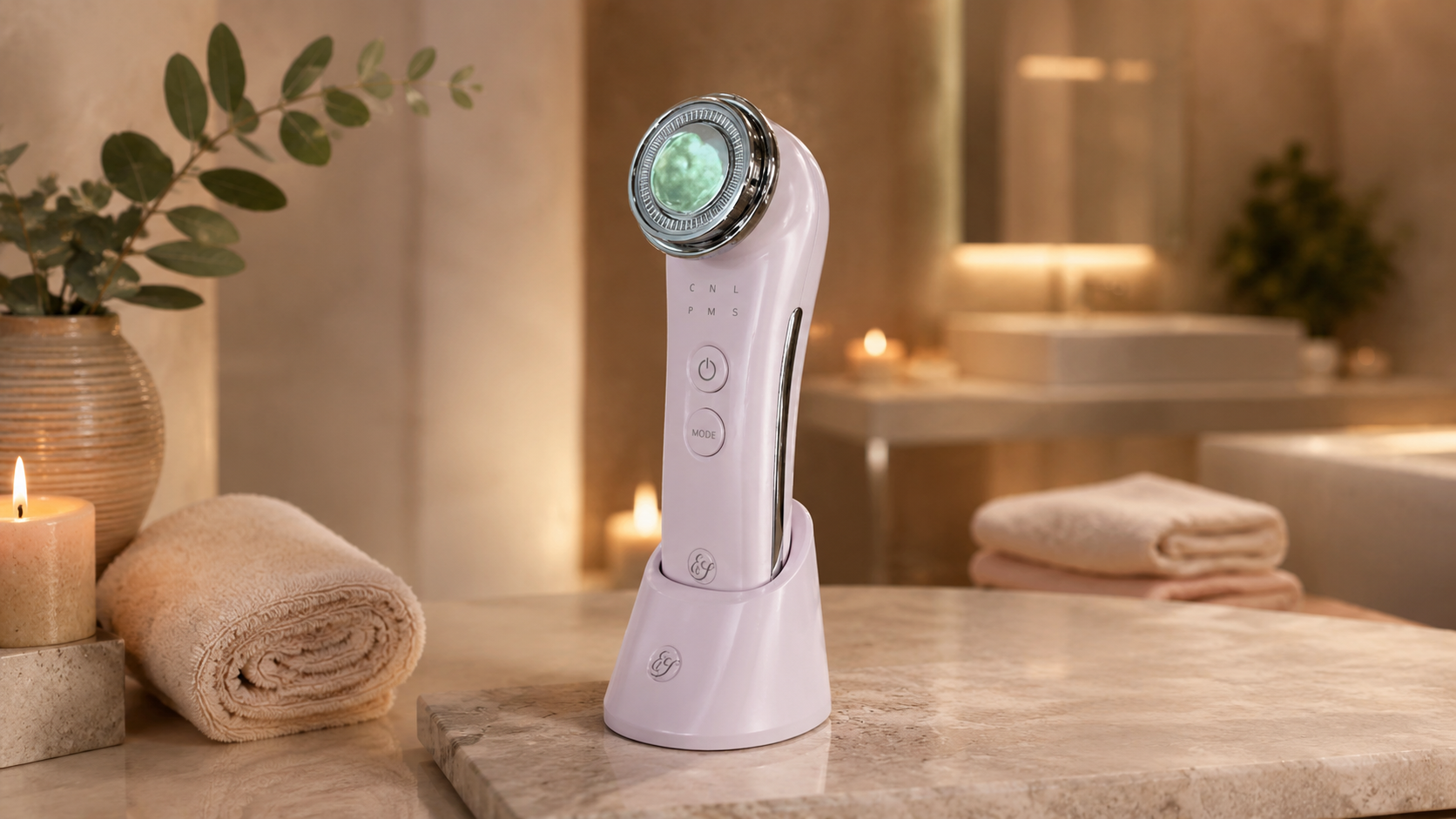
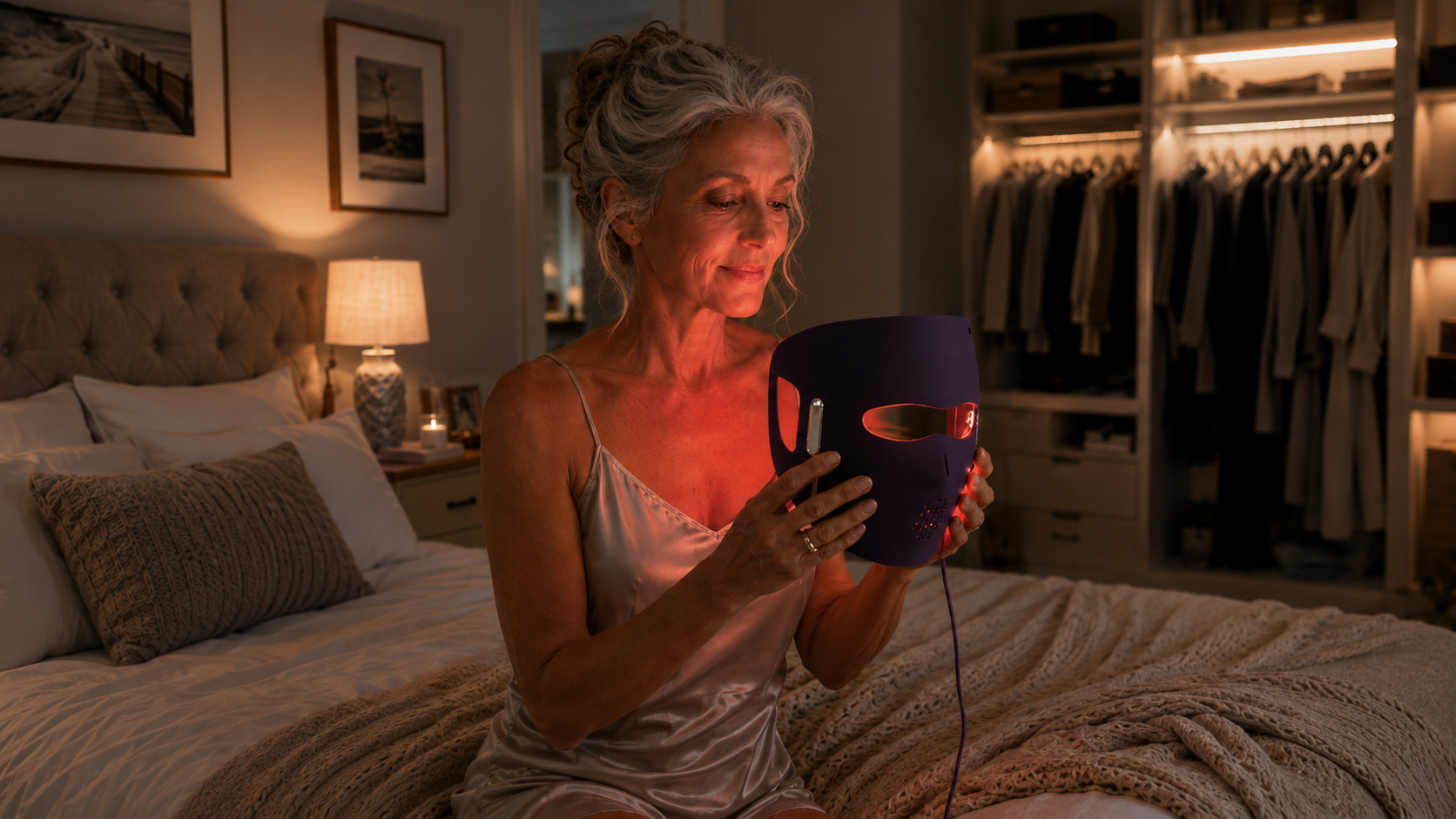


Leave a comment
All comments are moderated before being published.
This site is protected by hCaptcha and the hCaptcha Privacy Policy and Terms of Service apply.