
Medically Reviewed by Dr. Lisa Hartford, MD
Last updated: April 2026 | Medically reviewed by Dr. Ismail Kimji, Board-Certified Dermatologist — April 18, 2026
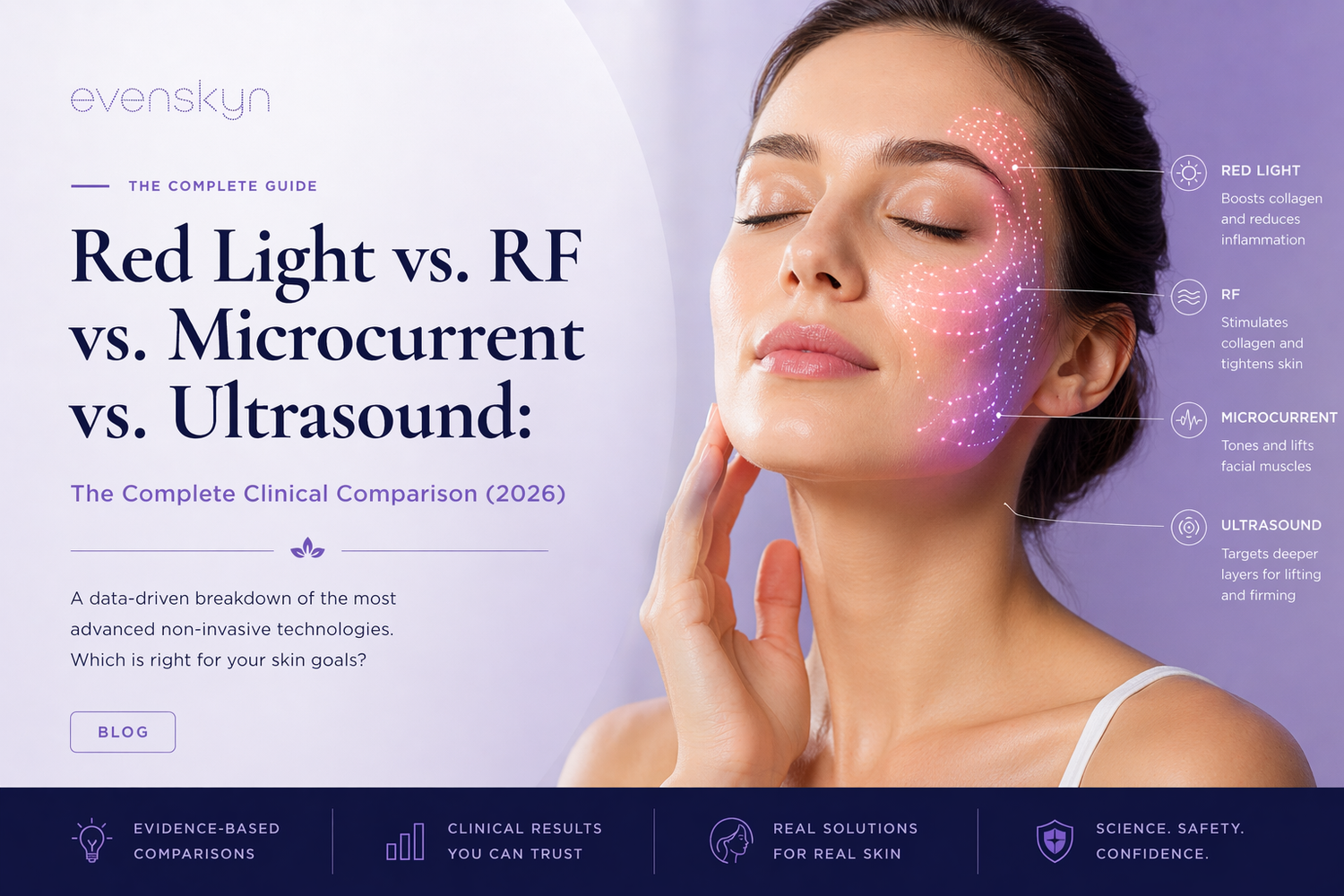
The 30-second answer: If you want one device and you're over 35, the clinical evidence points to a multi-modal RF device (RF + microcurrent/EMS + red light in one handset). If you want supportive maintenance and inflammation reduction, LED. If you want muscular toning and lifting, microcurrent. If you want deep structural lifting, ultrasound — but the clinical HIFU version, not the underpowered at-home ones. The rest of this guide is about why, with citations to the actual research.
What this article does differently
Most of the "RF vs. microcurrent vs. red light" articles online follow the same formula: define each technology in a paragraph, list a few brand-name devices, tell you "it depends on your goals," and link out to affiliate purchases. That's not a real comparison. It's a menu.
What you actually need, if you're about to spend $200 to $900 on an at-home device, is an honest breakdown of what the clinical research shows each technology does, what the efficacy differences actually measure out to, and what the trade-offs look like in real use. That's what this is.
I'm comparing four modalities: radiofrequency (RF), microcurrent, red light therapy / LED photobiomodulation, and focused ultrasound (HIFU). Every claim below is tied to a specific peer-reviewed study. Where the evidence is strong, I'll say so. Where it's weak or conflicting, I'll say that too. Where the at-home version of a technology falls short of the clinical version — and this matters more than most articles admit — I'll flag it clearly.
A quick decision matrix (scroll down for the evidence)
| If your primary concern is... | The technology with strongest evidence | Example device category |
|---|---|---|
| Jawline laxity and skin firmness | RF (ideally with EMS) | Multi-modal RF like Lumo+ |
| Deep structural lifting (moderate–severe sagging) | HIFU (clinical, not at-home) | Ultherapy, Sofwave, Thermage FLX |
| Facial muscle tone and contouring | Microcurrent | NuFACE Trinity+, Lumo+ EMS mode |
| Fine lines, radiance, inflammation | Red light (LED) | LED masks like Mirage, Omnilux |
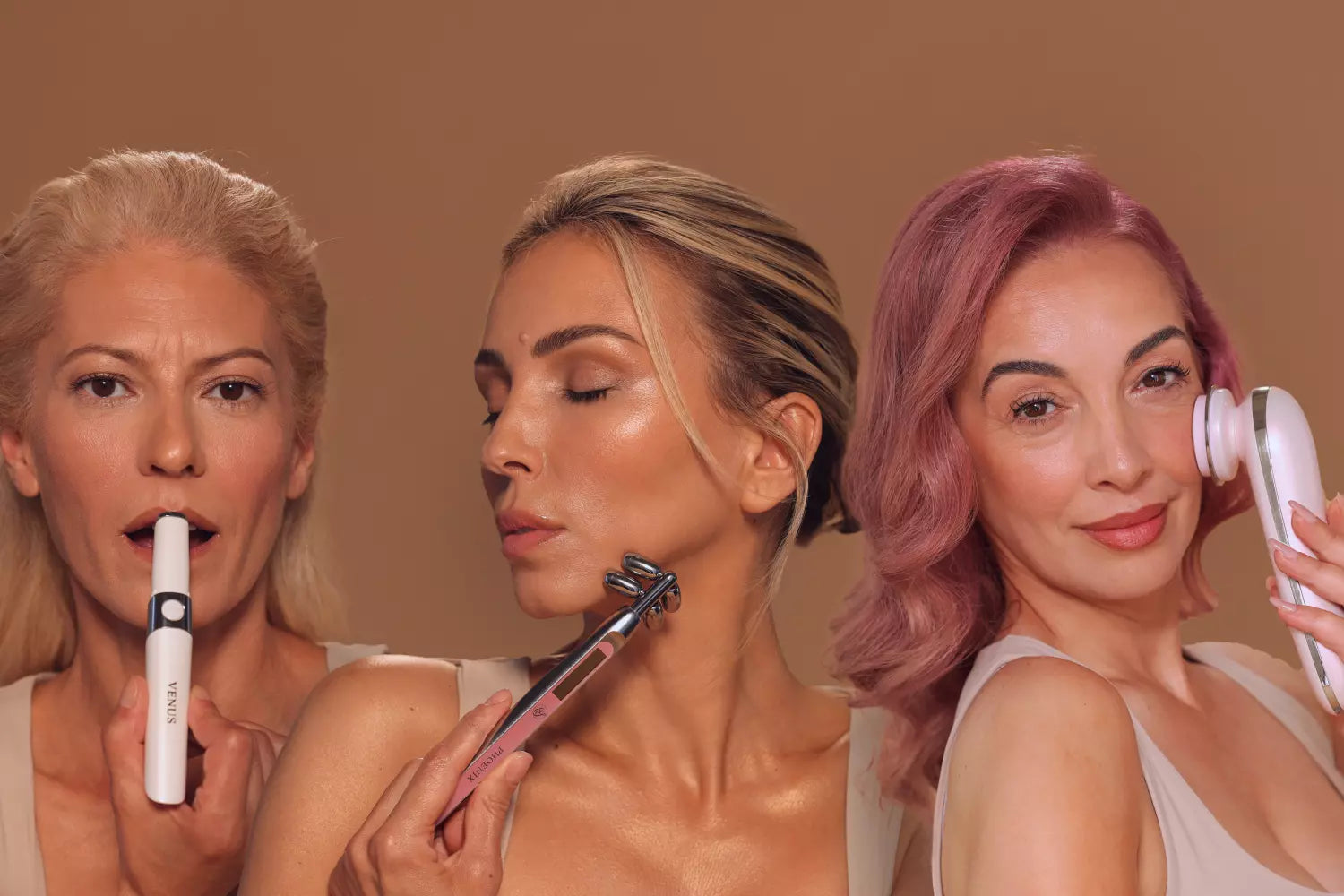
| Under-eye bags, dark circles, crow's feet | RF + microcurrent combined, eye-safe | Venus |
| Crepey skin and texture over larger areas | Red light + RF stacked | Mirage + Lumo+ |
| Post-treatment inflammation or recovery | Red light | Any LED mask |
| Same-day lift for an event | Microcurrent (visible, temporary) | NuFACE, Phoenix |
| Long-term collagen maintenance | Multi-modal home device | Lumo+ |
This is the short answer. Keep reading for the evidence behind each recommendation.
How each technology actually works (with real numbers)
Radiofrequency (RF)
RF delivers electromagnetic energy into the skin and heats the dermis. When tissue reaches 40–42°C, two things happen: existing collagen contracts (immediate but mild tightening), and fibroblasts get triggered to produce new collagen and elastin over the following weeks.
The mechanism is the most directly relevant to skin tightening because it rebuilds the actual structural proteins making skin firm. A 2015 histometric analysis (Suh et al., PubMed 25723905) documented that monopolar RF produced measurable neocollagenesis and neoelastogenesis across the papillary dermis, upper, mid, and deep reticular dermis. That's structural rebuilding across all layers of the dermis, not just the surface.
For at-home use specifically, the 2022 Dermatology and Therapy split-face trial (Shu et al., PubMed 35249173) is the one that matters most. Thirty-three women aged 35–60 used a home RF device with 630nm red light for 12 weeks. One side of the face got the device; the other got an anti-aging cosmetic. The RF side showed statistically significant improvements in wrinkle depth (measured across Ra, Rq, Rz, Rmax surface roughness parameters), skin elasticity, hydration, radiance, and thickness. The cosmetic side didn't.
What RF does well: rebuilds collagen at the structural level, works on all Fitzpatrick skin types (RF doesn't interact with melanin), effective on jawline and neck.
What RF doesn't do: restore lost volume, tone muscles on its own, produce same-day dramatic changes.
Microcurrent
Microcurrent uses electrical current in the microampere (μA) range — below what's needed to make muscles visibly contract. It mimics the body's endogenous bioelectrical signals and works on cellular processes: ATP production, protein synthesis, lymphatic drainage, muscular tone.
A 2024 narrative review on microcurrent therapy (PMC 12357078) documented the mechanisms as cellular repair promotion, inflammation modulation, blood flow improvement, and increased ATP synthesis, all without discomfort or muscle fatigue. A 2018 study by Haneke et al. showed microcurrent reduced sagging and improved muscle laxity in the neck. The 2024 PMC systematic review of 18 home device studies (PMC 10929553) concluded that microcurrent "stimulates subcutaneous tissues and muscles, achieving anti-aging effects such as skin tightening, wrinkle reduction, and improvement of facial contours."
Here's something I think most microcurrent content underplays: microcurrent isn't primarily a collagen builder. It's primarily a muscle toner with secondary dermal benefits. If you're using a microcurrent-only device and expecting the kind of structural change RF produces, you'll be disappointed. That's a category mismatch, not a device failure.
What microcurrent does well: tones facial muscles (jawline, cheekbones), reduces puffiness via lymphatic drainage, produces visible same-day changes that build over time.
What microcurrent doesn't do: substantially rebuild dermal collagen on its own, address moderate-to-severe laxity as a standalone.
Red Light Therapy (LED Photobiomodulation)
Red light in the 630–660nm range and near-infrared in the 810–850nm range penetrate to the dermis and are absorbed by mitochondria, specifically by cytochrome c oxidase. This boosts ATP production and triggers a cascade of cellular responses including increased fibroblast activity.
The 2014 Wunsch & Matuschka controlled trial published in Photomedicine and Laser Surgery (PMC 3926176) documented that red light at 611–650nm increased intradermal collagen density measurably compared to controls. A 2017 Lee et al. study in the Journal of Photochemistry and Photobiology showed similar results with split-face LED phototherapy. The mechanism is well-established and the evidence for collagen stimulation is real.
But here's the honest comparison: LED works slower and less intensely than RF for structural tightening. The 2024 PMC systematic review noted that LED trials showed 59%–91% patient reported improvements in tone, texture, and fine lines, but "no changes in skin hydration or elasticity were observed" in at least one Omnilux trial. The effects are real but narrower than RF.
What LED is genuinely excellent at: inflammation reduction, cellular-level support, and safety on sensitive areas including near the eyes. It's also the gentlest of the four technologies.
What LED does well: supports collagen production, reduces inflammation, safe on eye area with eye-safe devices, works on all skin types.
What LED doesn't do: match RF for structural collagen rebuilding, target muscles, produce rapid visible lifting.
Focused Ultrasound (HIFU)
HIFU delivers acoustic energy to specific depths in the skin — typically 1.5mm (mid-dermis), 3.0mm, and 4.5mm (SMAS layer, the same layer surgeons address in facelift procedures). The focused nature of the energy lets it bypass the surface and deposit thermal injury at targeted depths, triggering collagen remodeling without damaging the epidermis.
This is where the honest comparison matters. A 2025 systematic review in Aesthetic Surgery Journal (Haykal et al., PubMed 40184185) covered 45 clinical trials and cohort studies on HIFU. It documented 18–30% improvement in skin laxity in the lower face, neck, and periorbital regions. That's a specific, measurable number that puts HIFU efficacy in context.
A 2025 comparative trial in the Journal of Cosmetic Dermatology (Zhao et al., PMC 12365734) directly compared RF and focused ultrasound in 36 patients with a single treatment. At one-month follow-up, HIFU showed superior efficacy in the mid-face (p = 0.004) and lower face (p = 0.046). RF performed comparably in other areas. Both produced significant improvement. Ultrasound simply reached deeper in a single session.
Here's the catch for at-home use, and it's important: consumer HIFU devices operate at a fraction of the energy of clinical systems. A clinical Ultherapy or Sofwave session uses energy densities that at-home devices don't and can't replicate for safety reasons. At-home ultrasound devices work as supportive modalities and can enhance serum penetration, but claiming they deliver the same results as clinical HIFU is misleading. If someone is selling you an at-home ultrasound device as equivalent to a $3,000 Ultherapy session, be skeptical.
What clinical HIFU does well: deepest penetration of any non-invasive technology, single-session results, 18–30% laxity improvement documented, effective on moderate-to-severe sagging.
What at-home ultrasound does: supports dermal stimulation, enhances topical absorption — but does not match clinical HIFU intensity.
The comparative evidence, side by side
This is where most consumer content gets vague. I'm putting actual numbers from real studies against each technology so you can see the differences rather than reading marketing adjectives.
| Factor | RF (at-home) | Microcurrent | Red Light (LED) | HIFU (clinical) | Ultrasound (at-home) |
|---|---|---|---|---|---|
| Primary mechanism | Dermal heating → fibroblast activation | Cellular bioelectrical stimulation | Mitochondrial cytochrome c absorption | Focused acoustic thermal injury at depth | Low-intensity acoustic heating |
| Depth of action | ~3mm (dermis) | Surface to muscle | 1–5mm (varies by wavelength) | 1.5–4.5mm (SMAS) | Shallow (at-home models) |
| Peer-reviewed efficacy | ✅ Strong | ✅ Moderate | ✅ Moderate–Strong | ✅ Very Strong | ⚠️ Limited for at-home |
| Documented improvement | 71–100% texture, 53–100% firmness (CCID 2025 review) | Muscle tone, facial contour; less on dermis | 59–91% subjective tone/texture | 18–30% laxity improvement (ASJ 2025) | Supportive only |
| Time to visible results | 4–8 weeks | Same-day + cumulative | 6–12 weeks | Immediate to 3 months | Weeks |
| Safe for all skin types | ✅ Yes (chromophore-independent) | ✅ Yes | ✅ Yes | ⚠️ Some risk for darker tones | ✅ Yes |
| Safe on eye area | Eye-specific devices only | Eye-specific devices or attachments | Yes with eye-safe LED | Clinical only, not periorbital | Limited |
| Discomfort level | Warm sensation | None | None | Moderate to high (VAS 5–7 in studies) | Low |
| Typical session length | 10–20 min | 5–10 min | 10–20 min | 30–90 min (clinical) | Varies |
| Typical frequency | 2–3×/week active | 3–5×/week | 3–5×/week | 1× annually | 2–3×/week |
| Typical device cost | $200–$900 | $200–$600 | $300–$500 | $2,000–$4,500/session | $200–$500 |
| Best suited for | Jawline, neck, full face | Lifting, contouring, puffiness | Fine lines, radiance, sensitive skin | Significant laxity | Maintenance only |
The ASJ 2025 review on HIFU covered 45 trials. The CCID 2025 systematic review on RF covered 15 studies with 1,230 participants. The PMC 2024 systematic review on home beauty devices covered 18 studies. Those are the three reference points that carry the most weight in this table.
The multi-modal finding — the single most important insight in the research
If you read the clinical literature on skin rejuvenation as a body of work rather than as individual studies, one finding comes through repeatedly: multi-modal approaches outperform single-technology approaches. This isn't just an at-home observation. It's true in clinical settings too.
A landmark 2024 presentation at the American Society for Laser Medicine and Surgery by Park et al. compared HIFU alone versus HIFU combined with monopolar RF for skin tightening. The combination group showed greater wrinkle reduction (mean score 18 → 14 in combination vs. 17 → 15 in HIFU alone, p < 0.01) and significantly higher patient satisfaction (7.62 vs. 6.70 on a 10-point scale, p = 0.034). These are clinical-grade devices and the combination still beat monotherapy.
A 2023 Journal of Cosmetic Dermatology split-face trial (Park et al., PMC 10496459) compared HIFU alone vs. HIFU + bipolar RF in 22 Korean adults. The combination group showed enhanced efficacy for pore reduction, eye wrinkle depth, skin elasticity, and moisturization compared to HIFU alone. The mechanisms are genuinely additive.
A 2024 Malaysia retrospective study (PMC 10917599) of 54 patients treated with HIFU + monopolar RF combination showed 96.4% clinical improvement on the Global Aesthetic Improvement Scale. The most common adverse event was transient erythema.
The 2024 PMC systematic analysis of 18 home facial rejuvenation studies concluded directly that multi-modal home devices combining RF with microcurrent, LED, or both produced superior results to any single-modality device.
The biological reason is straightforward. Each technology addresses a different layer and mechanism:
- RF rebuilds collagen in the dermis
- Microcurrent tones the muscles beneath
- LED supports cellular metabolism across all layers
- Ultrasound reaches deeper into the SMAS (clinical only)
Stacking them addresses the full anatomical picture. Using one addresses only one layer.
The practical implication: if you're choosing one device, choose one that integrates multiple modalities rather than a single-technology tool at a similar price point. The specifications matter more than the brand marketing.
Which device should you actually buy? An honest look at the categories
The at-home market falls into distinct categories. Here's what makes sense in each:
Category 1: Multi-modal RF devices (best for most people)
These integrate RF + microcurrent/EMS + LED in one handset. The clinical evidence supports this category as the best single-device choice for structural skin tightening.
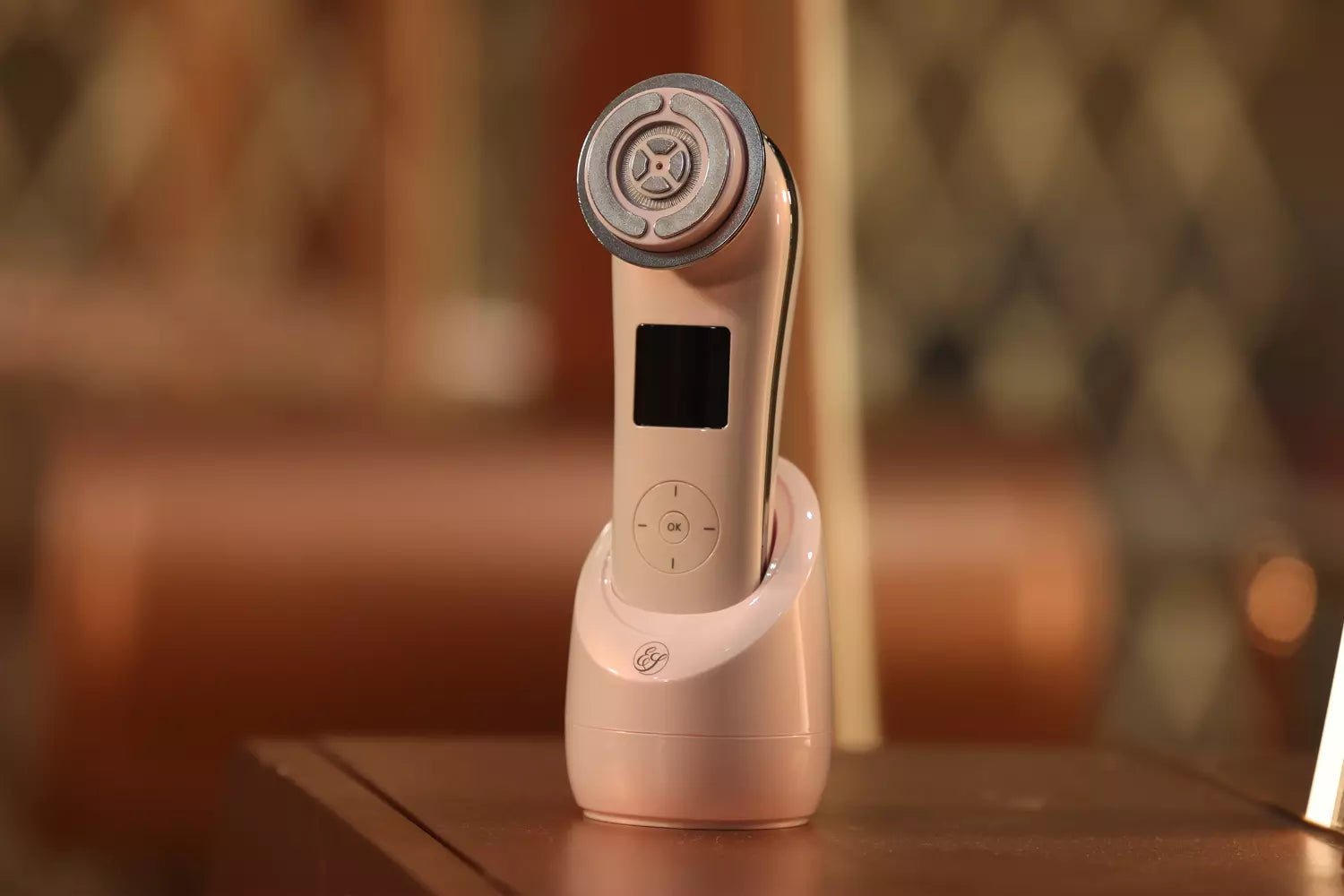
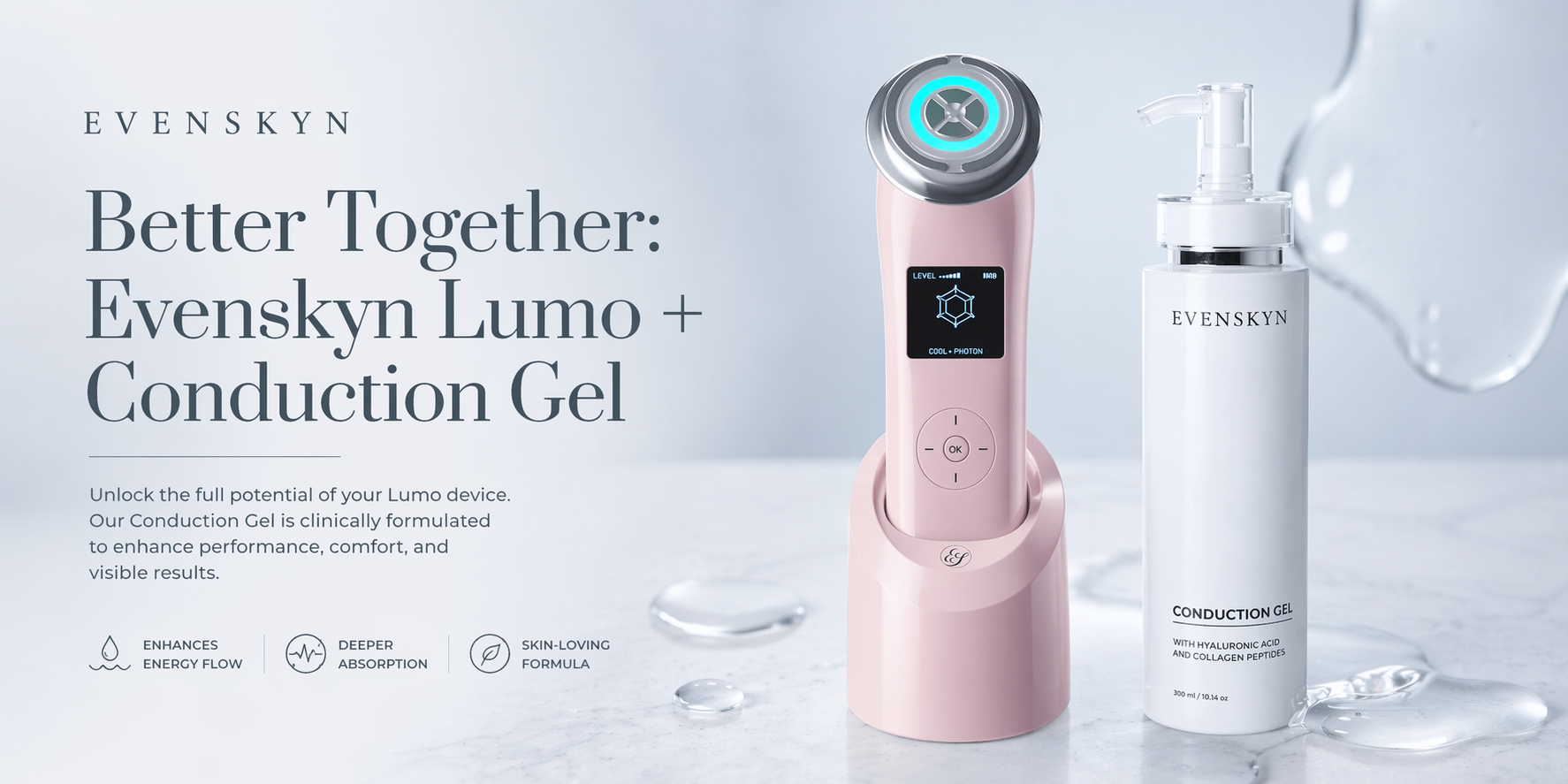
- EvenSkyn Lumo+ ($499) — RF at 1 MHz bipolar with 3mm penetration, EMS at ~3 mA / 100 Hz, red and blue LED, ionisation. FDA-cleared and Health Canada approved. Most integrated technology stack at its price point.
- TriPollar STOP Vx Gold 2 ($699–$899) — Multi-RF at 1–1.25 MHz with DMA (dynamic muscle activation). No LED. Higher-priced alternative with strong clinical validation for its RF technology specifically.
- NEWA by Endymed ($499) — 0.45 MHz multipolar RF. Strong peer-reviewed research behind the RF specifically. No microcurrent or LED.
If I had to pick the category with the strongest combination of evidence, price, and integration, multi-modal RF is it. The Lumo+ sits at the top end of the category for reasons I went into in my skin tightening pillar article, but any device in this category will outperform a single-modality device at a similar price.
Category 2: Dedicated microcurrent devices (for muscular toning focus)
- NuFACE Trinity+ ($395 starter kit, $595 complete set) — 335 μA maximum, +25% boost button. Well-made, clinically validated for microcurrent specifically. Microcurrent only.
- NuFACE Trinity Pro / Pro+ ($429–$595) — 400–500 μA output, same attachments.
- FOREO BEAR Mini ($249) — ~200 μA. Smaller, less expensive.
If your concern is specifically loss of facial muscle tone — jawline softening, cheekbone flatness, brow descent — and you don't want RF, microcurrent-only devices do this well. Just know that they're not building collagen in the same way RF does.
Category 3: LED masks (for broad-area support)
- CurrentBody Skin LED Mask ($469) — Red and near-infrared. Well-designed.
- Omnilux Contour Face Mask ($395) — Red and near-infrared. Dermatologist-favored.
- Dr. Dennis Gross DRx SpectraLite FaceWare Pro ($455) — Red and blue LED.
- EvenSkyn Mirage — Red, blue, and near-infrared. Designed to integrate with Lumo+ and EvenSkyn's other handheld devices as part of a multi-modal protocol.
LED masks work well as supportive tools in a protocol. Used alone, they produce real but narrower effects than RF. Most effective when layered with RF or microcurrent work.
Category 4: At-home ultrasound (limited use case)
Consumer ultrasound devices like the MLAY RF or various K-beauty ultrasound tools exist, but the category hasn't matured the way RF has. The clinical HIFU effect doesn't translate well to at-home energy levels. These devices work for maintenance and enhancing serum penetration. They don't replicate Ultherapy.
Category 5: Eye-specific devices
The eye area has its own anatomy (0.2mm skin, proximity to the eye itself, less sebum, specific laxity patterns) and most full-face devices can't safely treat it.
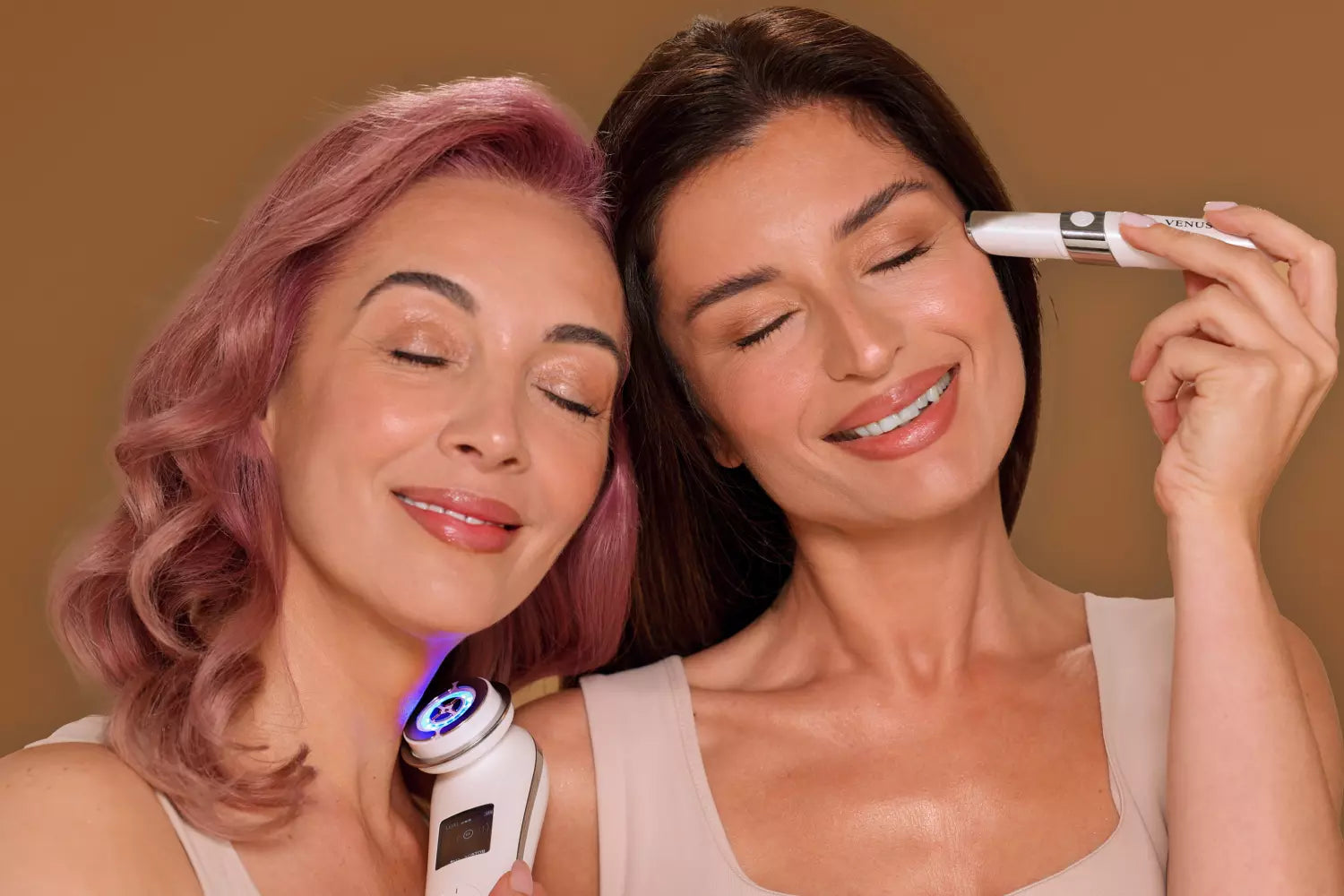
- EvenSkyn Venus — RF + microcurrent + LED + ionisation, calibrated for periorbital anatomy
- NuFACE Effective Lip & Eye Attachment — Microcurrent only, attachment for Trinity+
-
CurrentBody Skin LED Eye Perfector — LED only
Common questions about combining these technologies
Can I use RF and red light on the same day? Yes, and the clinical evidence actively supports stacking them. The 2022 Dermatology and Therapy split-face study used RF combined with 630nm red light simultaneously, and the combination outperformed the cosmetic control across every measured parameter. Many multi-modal devices (including the Lumo+) include both modalities in a single handset for this reason.
Can I use RF and microcurrent on the same day? Yes. The biological mechanisms are different (thermal vs. bioelectrical) and they target different tissue layers (dermis vs. muscle). Stacking them on the same day is well-supported in the research. If you have separate devices, use RF first (it operates at higher energy), then microcurrent after. If you have a multi-modal device, most run RF mode first in their built-in protocols.
Can I use HIFU and RF together? Clinically, yes, and with better results than either alone (Park et al. 2024 ASLMS; Park et al. 2023 JCD). For at-home use this typically means clinical HIFU sessions supplemented by at-home RF maintenance — a sensible protocol for anyone who can afford occasional clinical treatment.
What should I definitely not combine? Nothing from this list is contraindicated with anything else on this list. The combinations to avoid are with things outside this category — recent Botox (wait 2 weeks), recent fillers (wait 2–4 weeks), recent chemical peels or lasers (wait 2–4 weeks), and active skin infections or open wounds.
Three real scenarios: how to choose based on your situation
Scenario 1: You're 42, noticing early jawline softening and some crepey skin, comfortable spending $400–$500.
The research points clearly toward a multi-modal RF device. You want the collagen-rebuilding mechanism (RF), ideally with some microcurrent for the muscular dimension, and ideally with LED for the supportive/radiance dimension. A device like the Lumo+ covers all three. If you want to spread the budget across two devices instead, Lumo+ at $499 plus a Mirage LED mask gives you the full multi-modal stack. At this stage of aging, you're building a foundation rather than reversing severe changes, so the 12-week active protocol followed by maintenance is realistic and the research supports the timeline.
Scenario 2: You're 55, post-menopause, with visible laxity around the jawline and neck, and you've been considering clinical options.
The honest answer is that clinical HIFU (Sofwave, Ultherapy) will do more per session than any at-home device. If you can afford one clinical session every 12–18 months, that's the most powerful single intervention. But you also benefit from a consistent at-home protocol between clinical sessions. A multi-modal RF device used 2–3x per week maintains and extends clinical results. Many dermatologists now recommend this combined approach. A Lumo+ plus one clinical HIFU session annually costs substantially less over 5 years than four annual HIFU sessions alone, and the cumulative treatment is greater.
Scenario 3: You're 35, concerned mostly about prevention, fine lines, and radiance rather than laxity.
You're in the zone where LED makes the most sense as a primary tool. You don't yet have significant dermal collagen loss to rebuild; you want to slow the rate at which it accumulates. An LED mask for 3–5 times per week, combined with basic skincare (retinol, SPF, peptides), is a defensible protocol. If you want to add RF as a preventive measure, a multi-modal device used 1–2 times per week would support cellular-level benefits without aggressive intervention. Microcurrent is optional at this age unless you specifically like the same-day lifted look for events.
A word on what the research doesn't answer
Most of the studies I've cited in this article are 12 weeks or shorter. That's long enough to document meaningful changes, but short enough that long-term durability questions remain partially open. What happens if you use a home RF device 2–3x per week for 3 years? 5 years? The research is thin on that specific question.
The biological reasoning suggests continued cumulative benefit with maintenance — you're consistently stimulating fibroblasts in a way that counteracts the ongoing 1%+ annual collagen decline. But I'm flagging this as something the peer-reviewed literature hasn't definitively established. Anyone who tells you with certainty what your skin will look like after 5 years of home device use is extrapolating beyond the current evidence.
FAQ
Is red light therapy better than microcurrent?
They do different things, so "better" depends on your goal. For fine lines, overall skin quality, and inflammation, red light has more relevant evidence. For visible lifting and facial muscle toning, microcurrent has more relevant evidence. Combined, they address different dimensions of aging. The 2024 PMC systematic review of 18 home device studies found multi-modal combinations outperformed single modalities, which supports using both rather than choosing one.
Does RF work better than red light for wrinkles?
For deep wrinkles and structural laxity, yes — RF heats the dermis directly and stimulates fibroblasts more intensely than red light does. For fine lines and surface texture, red light can be comparable. A 2022 Dermatology and Therapy split-face trial used both technologies combined and found the combination produced the best results across every measured parameter, which is consistent with the broader pattern in the literature.
Is HIFU better than RF?
In clinical settings, HIFU typically produces more dramatic results per session because it reaches deeper — specifically into the SMAS layer that surgeons address in facelift procedures. The 2025 Zhao et al. comparative trial in the Journal of Cosmetic Dermatology found HIFU superior in the mid-face and lower face at one-month follow-up. Over multiple sessions or in combination, the gap narrows. For at-home use, RF is the more developed category — at-home ultrasound doesn't reach clinical HIFU intensity.
Can at-home ultrasound replace Ultherapy?
No. This is one of the more commonly oversold claims in the device market. Clinical HIFU systems (Ultherapy, Sofwave) operate at energy densities that at-home devices cannot match for safety reasons. At-home ultrasound is useful for maintenance and topical penetration enhancement. It's not a substitute for clinical HIFU.
What's the difference between microcurrent and EMS?
Intensity. Microcurrent operates in the microampere range (μA), below the threshold that causes visible muscle contractions. EMS operates at higher intensities that do cause contractions. Microcurrent is typically 100–500 μA on consumer devices. EMS is typically in the milliamp range. Both tone muscles, but through different mechanisms and with different sensations. Some devices combine both modes.
How long until I see results from each technology?
- Microcurrent: same-session visible lift, cumulative benefit over weeks
- Red light / LED: 6–12 weeks for visible changes in collagen-related parameters
- RF: 4–8 weeks for initial changes, 12 weeks for peak collagen remodeling
- HIFU (clinical): immediate contraction visible, continued improvement over 2–3 months
Which is best for the neck specifically?
RF and red light both work well on the neck. The neck is often underestimated in anti-aging routines; it should get equal attention to the face. Microcurrent can tone the platysma muscle, which contributes to neck appearance. Clinical HIFU is particularly effective for significant neck laxity. For at-home, a multi-modal device used on both face and neck 2–3x per week is the practical answer.
Is any of this safe during pregnancy?
Most manufacturers recommend avoiding RF, EMS, and microcurrent during pregnancy as a precaution, though the evidence for harm is not demonstrated. Red light / LED is generally considered safer and some providers permit its use during pregnancy, though individual guidance varies. Talk to your OB before beginning any energy-based treatment during pregnancy.
Can I use these devices if I have Botox or fillers?
Yes, with timing. Wait 2 weeks after Botox. Wait 2–4 weeks after dermal filler. After that, energy-based devices don't degrade injectables and may improve surrounding skin quality. For safety, always confirm timing with your injector.
Which technology is safest for sensitive skin?
Red light / LED is the gentlest modality and has the most tolerable safety profile across sensitive skin types. Microcurrent is also generally well-tolerated. RF produces warmth that some people with sensitive skin find uncomfortable; starting at lower intensity and building up is the standard recommendation. HIFU produces the most discomfort of the four.
If I'm only going to buy one device, what should it be?
If the clinical evidence is your guide, the answer is a multi-modal RF device that integrates at least RF + microcurrent/EMS + red light. Single-technology devices do one thing well; multi-modal devices address multiple mechanisms. The 2024 PMC systematic review made this point directly. Devices in this category include the EvenSkyn Lumo+ (the most integrated at its price point) and the TriPollar STOP Vx Gold 2 (more expensive, no LED but strong RF + DMA).
References
RF clinical evidence:
- Shu X. et al. Effectiveness of a Radiofrequency Device for Rejuvenation of Aged Skin at Home: A Randomized Split-Face Clinical Trial. Dermatology and Therapy, 2022. PubMed 35249173
- Radiofrequency-Based Treatments for Facial Rejuvenation: A Systematic Review. Clinical, Cosmetic and Investigational Dermatology, 2025.
- Suh D.H. et al. Comparative histometric analysis of the effects of high-intensity focused ultrasound and radiofrequency on skin. 2015. PubMed 25723905
Multi-modal home devices:
- Development of Home Beauty Devices for Facial Rejuvenation: Establishment of Efficacy Evaluation System. Clinical, Cosmetic and Investigational Dermatology, 2024. PMC 10929553
HIFU vs. RF direct comparisons:
- Zhao B. et al. Efficacy and Safety of Radiofrequency and Focused Ultrasound in Facial Rejuvenation: A Single-Center, Single-Blind, Non-Randomized Prospective Trial. Journal of Cosmetic Dermatology, 2025. PMC 12365734
- Park E. et al. Efficacy of radiofrequency combined with single-dot ultrasound efficacy for skin rejuvenation: A non-randomized split-face trial. Journal of Cosmetic Dermatology, 2023. PMC 10496459
- Park E. et al. Comparative Clinical Study on the Skin Tightening Efficacy of High Intensity Focused Ultrasound Alone or in Combination With Monopolar Radiofrequency Treatment. ASLMS 43rd Annual Conference, April 2024.
- Safety and Efficacy of High-Intensity Focused Ultrasound and Monopolar Radiofrequency Combination Therapy for Skin Tightening: A Retrospective Study in Malaysia. 2024. PMC 10917599
HIFU systematic review:
- Haykal D. et al. A Systematic Review of High-Intensity Focused Ultrasound in Skin Tightening and Body Contouring. Aesthetic Surgery Journal, 2025. PubMed 40184185
Red light / LED evidence:
- Wunsch A. & Matuschka K. A Controlled Trial to Determine the Efficacy of Red and Near-Infrared Light Treatment in Patient Satisfaction, Reduction of Fine Lines, Wrinkles, Skin Roughness, and Intradermal Collagen Density Increase. Photomedicine and Laser Surgery, 2014. PMC 3926176
Microcurrent therapy:
-
Investigating the therapeutic efficacy of microcurrent therapy: a narrative review. 2024. PMC 12357078
EvenSkyn devices are FDA-cleared and Health Canada approved. Clinical claims in this article reference the specific studies cited and represent findings from those studies. Individual results vary. This article is informational, not medical advice. Consult a healthcare professional before beginning energy-based treatment if you have implants, pregnancy, or specific medical conditions.


Leave a comment
All comments are moderated before being published.
This site is protected by hCaptcha and the hCaptcha Privacy Policy and Terms of Service apply.