


Buying guide
Best LED Face Masks 2026: An Honest Comparison of 8 Major Brands
How eight popular LED face masks compare on wavelengths, stated dose, schedule, FDA clearance and price, with the evidence graded and a cost-per-session calculator.
カナダでデザイン
VIP early accessBlack FridayThe weekend is hereBlack FridayLast callCyber Monday40% off sitewide, applied for you at checkout.Shop the sale米国とカナダへは送料無料60日間返金保証ガイドとサポートは英語でご提供
Buying guide
Red and near-infrared light has trial evidence for fine wrinkles; sagging is harder. What the studies show, which masks match the trial light, and what to choose if sagging is your main concern.
Published by EVENSKYN, which makes and sells at-home beauty devices.

An evidence guide, 16 sources checked, updated 15 November 2026
Red and near-infrared light has trial evidence for fine wrinkles. Sagging is a harder problem. Here is what the studies show, which masks match the light used in the trials, and what to choose if sagging is your main concern.

Six questions, six short answers
Do LED masks help wrinkles? Modestly. In a randomised trial with a sham-light group, red and near-infrared light reduced measured wrinkles by up to 36 percent from baseline.1
Do they help sagging? The evidence is thin. We found one study of an LED mask that reported less sagging, and its abstract gives no group sizes or trial length.2,3
Which light matters? Red at about 630 to 660 nm with near-infrared at about 830 to 880 nm, close to the light used in the trials.1,4
Which masks have it? All eight masks from other makers in our comparison list red and near-infrared light.5
How long until results? The trials ran for about three months, so judge a mask at 12 weeks.1,4
What does more for sagging? Clinic focused ultrasound has the most data for a lift. At home, radiofrequency has a randomised trial for wrinkles and skin thickness, though not for sagging itself.6,7
Key takeaways
01LED masks have their best evidence for fine lines: in a randomised trial with a sham-light group, red and near-infrared light reduced measured wrinkles by up to 36 percent from baseline.1
02More colours did not mean better results. Broadband light did no better than red light alone in a controlled trial of 136 people.4
03For sagging, we found one study of an LED mask, and its abstract leaves out the basics. That is hope, not established evidence.2,3
04Treatments aimed at sagging use heat. Clinic focused ultrasound lifted the brow by 0.47 to 1.7 mm across 16 studies, and home radiofrequency beat an anti-aging cosmetic on wrinkles and skin thickness in a randomised trial.6,7
05Choose a mask by its wavelengths, its stated irradiance and the maker's own FDA wording, and give it 12 weeks before you judge it.5,8
An LED face mask holds rows of light-emitting diodes over the face. Each diode gives off a narrow band of light, usually red, near-infrared or blue. Near-infrared is invisible, so a mask can be working where you see no glow.
Sessions are short and frequent. The masks in our comparison ask for 3 to 25 minutes a session, and most for three to five sessions a week.5,9
Seven of the eight masks from other makers in our comparison describe themselves as FDA cleared, and their US prices on 15 November 2026 ran from 349.00 to 1,900.00 USD.5 Clearance, explained below, tells you less than the label suggests.
Two controlled trials carry most of the weight. In the first, 76 people with facial wrinkles had 830 nm light, 633 nm light, both, or a sham light twice a week for four weeks, and were followed for three months. In the active groups, wrinkles fell by up to 36 percent and elasticity rose by up to 19 percent from baseline, biopsies showed more collagen and elastic fibres, and no adverse effects were reported.1
In the second, 113 of 136 people had red-range light (611 to 650 nm) or broadband light (570 to 850 nm) twice a week, and 23 served as controls. After 30 sessions, the treated groups had better complexion, less roughness and higher collagen density on ultrasound, and blinded photo ratings favoured them over the controls. Broadband light did no better than red light alone.4
We rate both as moderate evidence: randomised and controlled, but single trials. Both used professional light systems rather than home masks, and the studies of home LED devices are small.10 Neither tested any of the masks named on this page.
Elasticity, which the first trial measured, is how readily skin springs back. Sagging along the jaw or neck is a different question, and it is the one LED masks have the least evidence for.
We searched PubMed on 15 November 2026 for LED or red-light studies of facial laxity or sagging and found 87 records. Only one was a clinical study of an LED mask that reported a sagging outcome.2 It described a new micro-LED mask built to sit close to the skin, and reported improvements in elasticity, sagging and wrinkles across six areas of the face, compared with a conventional LED mask. Its abstract gives no group sizes, no trial length and no account of how sagging was measured.3
Another study in the search used photodynamic therapy, a clinic treatment that pairs a light-sensitising cream with amber LED and infrared laser light, and reported firmer skin and less sagging in a pilot group of women aged 40 to 55.11 That is a different treatment from wearing a mask at home.
The treatments with lifting data work through heat. Clinic focused ultrasound heats tiny points above 60°C up to about 5 mm below the surface, and a review of 16 studies found brow lifts of 0.47 to 1.7 mm after a single treatment.6,12 Home radiofrequency warms the skin more gently; our Lumo+ holds it at 40 to 42°C.13 In a randomised split-face trial, a home radiofrequency device improved wrinkles and skin thickness more than an anti-aging cosmetic, though the trial did not measure sagging.7
No trial we read compared LED masks by power or dose, so a higher number on a product page is not shown to lift more.
| Term | What it means |
|---|---|
| LED mask | Light-emitting diodes at set wavelengths, worn over the face for a few minutes at a time.5 |
| Red light panel | The same kind of light from a flat panel held away from the face, so the dose reaching the skin depends on the distance. |
| IPL | Intense pulsed light: short, bright flashes across a broad band, used mainly for hair removal and some marks and redness. It is not LED therapy. |
| PDT | Photodynamic therapy: a light-sensitising cream applied before the light, used for precancerous changes and also for cosmetic treatment.11 |
| Radiofrequency | Electrical current that warms the skin; our Lumo+ holds it at 40 to 42°C.13 |
| Focused ultrasound | A clinic treatment that heats tiny points above 60°C below the surface.12 |
All eight masks from other makers in our comparison list red and near-infrared light. Here is what their US product pages said on 15 November 2026. We have not tested these masks, and the figures are the makers' own.5

| Mask | Wavelengths, nm | Stated irradiance | FDA status, in the maker's words | US price on 15 November 2026 |
|---|---|---|---|---|
| Omnilux Contour Face | 633, 830 | About 30 mW/cm² | Cleared for full-face wrinkles | 395.00 USD |
| HigherDOSE Red Light Face Mask | 630, 830 | 50 mW/cm², total | FDA-cleared | 349.00 USD |
| Solawave Wrinkle Retreat Pro | 605, 630, 660, 830 | 65 mW/cm², total | FDA-Cleared | 399.00 USD |
| DRx SpectraLite FaceWare Pro | 415, 605, 630, 660, 880 | Not on the page we read | FDA Cleared | 455.00 USD |
| Therabody TheraFace Mask | 415, 633, 830 | Not on the page we read | FDA cleared | 649.99 USD |
| CurrentBody Series 3 | 415, 532, 590, 633, 830, 1072 | Not on the page we read | FDA-cleared | 569.99 USD |
| FOREO FAQ 202 | 440, 465, 485, 520, 580, 600, 650, 850 | Not on the page we read | Not mentioned on the page we read | Not shown to us |
| Shani Darden by Déesse PRO | Red, near-infrared and blue; no figures given | Not on the page we read | FDA-Cleared | 1,900.00 USD |
Our own Mirage is sold out and the Mirage Pro has not launched, so neither is listed. For schedules, blue-light notes and the full comparison, see our LED face mask comparison.
Wavelengths. Look for red at about 630 to 660 nm with near-infrared at about 830 to 880 nm.1,4
Irradiance and dose. Irradiance is the light power landing on each square centimetre, in mW/cm². Dose is irradiance multiplied by time, in J/cm²: one mW/cm² for one second gives one thousandth of a J/cm². The 136-person trial normalised its red-range dose to about 9 J/cm².4 Makers' figures may be measured at the light source rather than at the skin, so treat them as a guide.
FDA wording. A 510(k) clearance means the FDA accepted that a device is substantially equivalent to one already legally on the market. It does not rank one mask against another.8 You can check a maker's claim in the FDA's 510(k) database.
Schedule and fit. Pick a schedule you will keep for 12 weeks, and a mask that sits evenly on your face.
Which route fits your skin?
Three questions. The answer draws only on the studies cited on this page.
Answer the three questions to see a route.
Fine lines, gradual change. An LED mask with red and near-infrared light, kept to its schedule for 12 weeks.1
Sagging along the jaw or neck. A heat-based treatment; for a visible lift, a clinic consultation.6
Melasma or dark marks. Skip blue modes.14
Keep to the maker's schedule. Most masks in our comparison ask for three to five sessions a week; masks designed for daily use, such as the DRx FaceWare Pro, say so.5 The trials used two sessions a week.1,4
Start with clean, dry skin. Apply your usual skincare after the session, and protect your eyes with the shields or goggles supplied.
Weeks 1 to 4. Expect little to see. Omnilux says results start from about four weeks.5
Weeks 4 to 12. This is the span the trials measured. Take photos in the same light, at the same distance, every four weeks.
After 12 weeks. Compare your first and last photos and decide whether to carry on.
Alongside other devices. If you also use radiofrequency, follow each maker's schedule. After injectables, peels or microneedling, follow your clinician's timing; our guide to device timing after injectables covers the common cases.
What the trials found. No adverse effects were reported in the 76-person trial.1
Pigmentation. In an exposure study in volunteers with medium skin, 415 nm blue-violet light caused darkening that lasted up to three months, while 630 nm red light caused none. Darker skin was not tested.14 If you have melasma or are prone to dark marks, skip blue modes unless a dermatologist advises otherwise.
Eyes. Use the eye protection supplied and follow the maker's instructions on keeping your eyes closed. Near-infrared is invisible, so the absence of glare does not mean the absence of light.
Medicines and conditions. Our Mirage page asks anyone taking light-sensitising medicine, or with a light-sensitive condition such as lupus or porphyria, to speak to a doctor first, and to stop if redness or irritation persists.9
Pregnancy and seizures. We found no safety data for pregnancy in the sources we read; ask your doctor. If flashing light can trigger seizures for you, ask before using any light device.
Our inference, not a tested method
Inference: an LED mask with red and near-infrared light is a reasonable choice for fine lines; for sagging, a heat-based treatment is the better bet.
Untested hypothesis: a mask on sale today, used for 12 weeks, does not change measured jawline sagging more than a sham mask.
What would prove it wrong: a randomised, sham-controlled trial of a mask on sale, reporting a measured change in sagging.
What we would do
Fine lines? Choose a mask with red and near-infrared light from the shortlist above, keep to its schedule and judge it at 12 weeks.
Sagging along the jaw or neck? Look past LED. For a visible lift, book a clinic consultation; for gradual firming at home, consider radiofrequency, with modest expectations.
Both? Use each device on its maker's schedule. An LED mask for lines and a heat-based device for firmness do different jobs.
Melasma or dark marks? Skip blue modes.
Our own LED masks are not on sale, so we do not recommend one. This is our choice for gradual firming at home. It is a seller's choice, not an independent test.

Our pick for firming at home, and yes, we make it
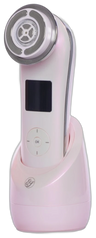
For the look of firmer skin along the jaw and neck and softer fine lines, in five-minute sessions. It warms the skin with radiofrequency and adds red and blue light, but it is not a face mask.
$179.98
What it will not do: light the whole face at once like a mask, lift like a clinic treatment, treat the eye area, or show results without a routine kept for months. With a pacemaker or a heart condition, ask your doctor first.13,15,16
The evidence is thin. In a PubMed search we found one study of an LED mask that reported less sagging, and its abstract gives no group sizes, trial length or measurement method. The treatments with lifting data, such as clinic focused ultrasound, work through heat.
One that combines red light at about 630 to 660 nm with near-infrared light at about 830 to 880 nm, close to the light used in the wrinkle trials, on a schedule you will keep. All eight masks from other makers in our comparison list both. We have not tested them, and none was used in the trials.
The trials ran for about three months, and Omnilux says results start from about four weeks. Judge a mask at 12 weeks, using photos taken in the same light.
Most masks in our comparison ask for three to five sessions a week, and some are designed for daily use. The wrinkle trials used two sessions a week.
No. A 510(k) clearance means the FDA accepted that a device is substantially equivalent to one already legally on the market. It does not show that one mask works better than another.
Use the eye protection supplied and follow the maker's instructions. Near-infrared is invisible, so the absence of glare does not mean the absence of light.
Choose red and near-infrared light at the shortest schedule the maker allows, and stop if redness lasts. Amber and yellow modes are marketed for redness, but we found no controlled trial of them in the sources we read.
No study we read compared them. The measured changes from LED light were in fine lines and elasticity; for a visible lift, the evidence points to clinic treatments.
We found no safety data for pregnancy in the sources we read. Ask your doctor first.
How we built this page. On 15 November 2026 we read the abstracts or full texts of the studies cited, the FDA's page on the 510(k) route, eight makers' US product pages and our own Mirage, Lumo+, duo and safety pages, and searched PubMed for LED studies of sagging. This version replaces an earlier one at the same address. It removes a reviewer persona, specifications and a weekly plan for our Mirage Pro, which has not launched, unsourced figures including a 3 mm depth line, dose and percentage claims and week-by-week results, and adds a shortlist from makers' pages, a figure, a route finder and a check of the sagging evidence.
Conflicts: we make LED masks (the Mirage, now sold out, and the Mirage Pro, not yet on sale) and the Lumo+ named here. EvenSkyn is a Canadian company that makes at-home beauty devices. No clinician reviewed this version. General information, not medical advice: talk to a dermatologist about your own skin.
Red light and LED
Buying guide
How eight popular LED face masks compare on wavelengths, stated dose, schedule, FDA clearance and price, with the evidence graded and a cost-per-session calculator.
Safety
The wavelength-by-wavelength, mode-by-mode, trimester-by-trimester answer to whether red light therapy is safe during pregnancy. Reviewed by Dr. Ismail Kimji, MD, FRCPC. Eighteen peer-reviewed sources. The Mirage Pro mode breakdown for pregnant readers,...
Explainer
Does red light therapy really work for skin, and is it safe? An evidence-based look at the benefits, how to use it at home, and realistic results to expect.


コメントを書く
全てのコメントは、掲載前にモデレートされます
このサイトはhCaptchaによって保護されており、hCaptchaプライバシーポリシーおよび利用規約が適用されます。