How Long After Botox, Filler, or a Chemical Peel Can You Use Your At-Home Device? The Complete Timing Matrix (2026)
When to restart an LED mask, microcurrent, radiofrequency or microinfusion device after Botox, filler, a chemical peel or a laser: what the research shows, what device makers advise, our own rules, and a planner that turns them into dates.
Published
19 min read
Published by EVENSKYN, which makes and sells at-home beauty devices.
A timing guide, 15 sources checked, updated 15 November 2026
How long to wait before using an LED mask, a microcurrent or radiofrequency device, or a microinfusion stamp after Botox, filler, a chemical peel or a laser treatment. What the research shows, what device makers advise, our own rules, and a planner that turns them into dates.
EvenSkyn Skin Science Desk. We make at-home devices, including some named here. No clinician reviewed this version.
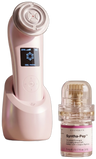
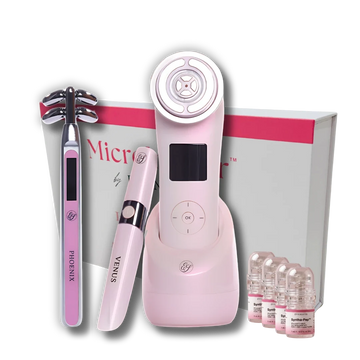
Illustrative still life.
The short answer
At a glance
After Botox, there is little evidence behind most of the waiting rules. A 2018 review found no published evidence for avoiding massage, strenuous exercise, lying down or flying in the first 24 hours.1 The toxin is likely taken up into nerve endings within minutes.2
Clinicians still ask for a gentle first day. No rubbing or massage of the area for 12 to 24 hours, and no facial for at least 24 hours.3
Device makers ask for longer. One LED maker says 24 to 48 hours after Botox, and two microcurrent makers say 10 days to two weeks.4,5,6 Our MicroInfuser rule is 14 days after Botox or filler.7
After a peel or laser, wait for the skin to heal. Light peels heal in 1 to 7 days, medium peels in 7 to 14 and deep peels in 14 to 21.8 Ablative laser resurfacing takes 1 to 2 weeks to recover from.9
Your provider’s instructions come first. Every figure here is advice, not a trial result. Use the matrix and the planner to see your own dates.
Key takeaways
01Botox has to be taken up into nerve endings before it works. That uptake depends on muscle activity and temperature, and is likely measured in minutes.2
02Most post-Botox rules have little published evidence behind them. Exercising the treated muscles and wearing SPF 30 or higher have some; avoiding massage, exercise, lying down or flying in the first day have none.1
03In a small split-face trial of 36 people, laser, radiofrequency or intense pulsed light given straight after hyaluronic acid filler did not reduce the filler’s result.10 Those were clinic treatments, not home devices.
04Device makers’ waits are precautions, not measured effects. Two microcurrent makers say no study shows microcurrent harms Botox, yet both ask you to wait 10 days to two weeks.5,6
05After a peel or laser, healing sets the wait. The deeper the procedure, the longer the skin takes to heal, from a few days to three weeks.8,9
Quick answers
I had Botox this morning. Can I use my LED mask tonight? Better to wait. One LED maker says 24 to 48 hours,4 and clinicians ask you not to rub or press on the area for 12 to 24 hours.3 A hands-free mask that does not rest on the injection sites is the gentlest device to bring back first.
I had cheek filler last week. Can I use a microcurrent device? Not yet, by the makers’ advice. One microcurrent maker says to wait about two weeks after filler,6 and our MicroInfuser rule is also 14 days.7 If you are unsure, ask your injector.
I had a light glycolic peel on Saturday. Can I use radiofrequency on Monday? Only once the skin has fully healed, which takes 1 to 7 days after a light peel.8 If it is still red, flaking or stinging, wait. Our MicroInfuser rule after a light peel is 7 days.7
I had fractional CO2 three weeks ago. Am I clear? Ablative resurfacing takes 1 to 2 weeks to recover from,9 and one LED maker allows red light from 5 to 14 days.4 Your laser provider decides the rest. Our MicroInfuser rule after ablative laser resurfacing is 42 days.7
I had a microinfusion session yesterday. When can I book Botox? Our timing guidance leaves at least two weeks after a session before your next injectables.7
A note on bias
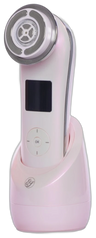
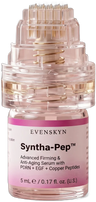
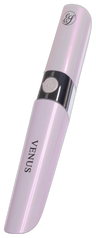
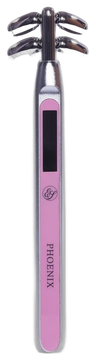
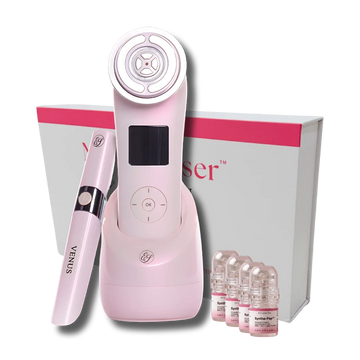
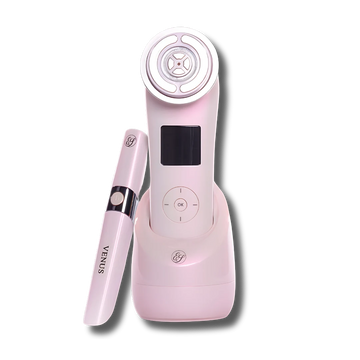
We make at-home devices. Among them are the Lumo+, which combines radiofrequency, EMS and red light,11 and the MicroInfuser.12 We also make the Phoenix, a microcurrent bar.13 We gain when people use them, and we lose when people are hurt by them. Where we set a wait ourselves, we say so, and we lean long. No clinician reviewed this version, and nothing here replaces the instructions of the person who treated you.
The timing matrix
Each cell is the longest published wait we found for that kind of device after that procedure, with where it comes from. Find the procedure you had, then read across.
Maker: a device maker’s own advice. Once healed: the healing time published by the American Academy of Dermatology for peels and by ASOPRS for ablative resurfacing; no device on skin that is still raw, crusted, flaking or stinging. Our rule: the wait our MicroInfuser timing checker sets before a session. Our suggestion: our own call where we found no published figure, set to match our MicroInfuser rule. None of these comes from a trial, and your provider’s instructions come first.
When can I restart?
Pick what you had done and when. The planner adds the waits from the matrix above and shows a date for each kind of device. It runs in your browser; nothing is stored or sent anywhere.
Pick a treatment and a date to see your restart dates.
After Botox: what the toxin is doing, and what the rules rest on
Botulinum toxin is injected into the space around nerve endings in a muscle. Before it can work, it has to be taken up into those nerve endings, and uptake is greater close to where nerve meets muscle. A 2015 review of how the toxin’s timing works describes that uptake as depending on activity and temperature, and as likely measured in minutes.2 Inside the nerve ending, the toxin damages the proteins that release the signal to contract, and the weakness lasts as long as toxin remains there.2
The visible effect takes longer. Cleveland Clinic says results can take from a few days to a week to appear.3
What the aftercare rules rest on. A 2018 review of the advice patients are given after Botox found little published research behind it. Some evidence supports exercising the treated muscles afterwards, which may increase uptake, and wearing SPF 30 or higher. No published evidence supports avoiding massage, strenuous exercise, lying or bending down, or flying in the first 24 hours.1
Clinicians still advise a cautious first day. Cleveland Clinic asks you to stay upright for three to four hours, not to rub or massage the face for 12 to 24 hours, and to wait at least 24 hours before a facial, while noting there is little evidence that physical activity changes how Botox settles.3
Why device makers ask for longer. Two microcurrent makers say no study shows microcurrent dissolves or interferes with Botox, yet both ask you to wait: ZIIP at least 10 days and NuFACE two weeks.5,6 One LED maker says 24 to 48 hours.4 None of them cites a measurement, so we read these waits as precautions.
Does microcurrent ruin or dissolve Botox? We found no study showing that it does, and the makers say the same.5,6 Nobody has tested it on the face either way, so we treat the makers’ waits as the safe default rather than a sign of known harm.
Newer and longer-acting toxins. The sources above do not separate brands. If you had a newer toxin, ask your injector whether their aftercare differs.
Fig. 1 | After Botox, published waits run from minutes to two weeks. Uptake from Hallett;2 rubbing and facials from Cleveland Clinic;3 LED from one LED maker;4 microcurrent from two microcurrent makers;5,6 microinfusion from our timing checker.7 The open dot is our suggestion, where we found no maker figure. Drawn by us; none of these waits comes from a trial.
After filler: settling, not heat
Hyaluronic acid filler is a gel placed under the skin, and the worry with devices is that heat or pressure could change it. The best test we found is a 2007 split-face trial. Thirty-six people had filler in both nasolabial folds, and one side then had a nonablative laser, monopolar radiofrequency or intense pulsed light straight away. Wrinkle and overall scores did not differ between the sides at any time point, and the authors called it a small pilot study.10
Those were clinic devices used by clinicians. We found no study that tested a home device over fresh filler.
A 2019 expert consensus on combining filler with laser, radiofrequency or light treatments called the evidence limited, mostly small studies without randomization. For treatments on the same day, it advised doing the light-based treatment first and not handling the skin once the filler is in.14
So the practical risk with a home device is pressing and gliding over filler that has not settled, more than the warmth. One microcurrent maker asks for about two weeks after filler,6 one LED maker for 48 to 72 hours,4 and our MicroInfuser rule is 14 days.7
Other fillers. Our sources cover hyaluronic acid. After calcium hydroxylapatite or poly-L-lactic acid, follow the instructions of the clinic that injected it.
After a chemical peel: wait for the skin to heal
A peel removes skin on purpose, so healing sets the wait. The American Academy of Dermatology gives light peels 1 to 7 days to heal, medium peels 7 to 14 days with redness, swelling and crusting, and deep peels 14 to 21 days under a bandage.8
Sun matters as much as devices. After a medium peel, avoid the sun until the skin heals; after a deep peel, avoid it for three to six months; after any peel, wear sunscreen every day once healed.8
Skin of color. The AAD says peels are safe for darker skin in experienced hands, but warns that without that expertise people with skin of color can develop permanent pigment problems.8 In our view, that is a reason to go slower, not faster, with any device that warms or rubs newly healed skin.
Medium and deep peels count as ablative treatments, and light peels as non-ablative.9 One LED maker allows red light 24 to 72 hours after a peel, depending on its depth.4 For anything that touches, warms or punctures the skin, wait until it has fully healed. Our MicroInfuser rule is 7 days after a light peel and 28 after a medium or deep one,7 and our safety page says not to use it within 7 days of any peel, laser treatment or significant sunburn.15
After lasers, IPL and clinic HIFU
Ablative lasers such as CO2 and erbium remove the skin’s surface, which gives them a longer recovery of 1 to 2 weeks and a higher rate of complications. Non-ablative lasers and intense pulsed light work without removing it.9
One LED maker gives 24 to 72 hours after a non-ablative fractional laser and 5 to 14 days after an ablative one, and says your provider’s instructions override its guide.4 Our MicroInfuser rule is 42 days after ablative laser resurfacing and 7 days after IPL.7
Clinic HIFU or Ultherapy. These are clinic procedures, and we found no published rule for home devices after them. Ask the clinic that treated you, and tell it about any injectables you have had.
Fig. 2 | The deeper the procedure, the longer the wait. Bars show the healing times published by the American Academy of Dermatology for peels8 and by ASOPRS for ablative resurfacing;9 dots show the wait our MicroInfuser timing checker sets before a session.7 Drawn by us.
LED, microcurrent, radiofrequency and microinfusion: why the waits differ
These devices do different things to a treated face. A hands-free LED mask shines light and need not press on anything. Microcurrent and radiofrequency handsets glide over the skin with gel, and radiofrequency also warms it.11,13 A microinfusion stamp punctures the skin with short needles.12
This part is our reasoning, labeled so you can see where the evidence stops.
Fact, from the cited sources. Toxin uptake is likely measured in minutes.2 Most post-Botox restrictions have no published evidence behind them.1 Clinic radiofrequency straight after filler did not reduce the filler’s result in a small trial.10 Makers still ask for anything from 24 hours to two weeks, depending on the device.4,5,6
Our inference. The published waits track how much a device touches, warms or breaks the skin, not any measured harm. That is why a hands-free LED mask gets the shortest wait and a microinfusion stamp the longest. Where we found no maker figure, for radiofrequency and EMS after Botox or filler, we suggest the same 14 days as our MicroInfuser rule.
Our hypothesis. Starting a gliding device the day after Botox, rather than two weeks after, does not change the result or spread the toxin. Nobody has tested that. What would settle it: a split-face study that starts microcurrent at day 1 on one side and day 14 on the other, measuring wrinkle scores and any eyelid or brow droop.
A two-week plan after Botox or filler
Every timing below comes from the cited sources or our own rules. Your injector’s aftercare comes first.
When
What to do
First 3 to 4 hours
Stay upright, as Cleveland Clinic advises,3 although a review found no published evidence for this rule.1
First 12 to 24 hours
Do not rub or massage the treated area, and keep every device off it.3
From 24 hours
A facial is fine by Cleveland Clinic’s advice, later if you are bruised or swollen.3 Gentle skincare as usual.
Days 2 to 3
An LED mask that does not press on the treated area: one LED maker says 24 to 48 hours after Botox and 48 to 72 hours after filler.4
Days 3 to 7
Results show over a few days to a week.3 Do not judge them sooner.
Day 10
The earliest restart any microcurrent maker we checked allows after Botox.5
Day 14
Microcurrent by NuFACE’s advice,6 microinfusion by our rule,7 and radiofrequency or EMS by our suggestion.
Before your next injectable
Leave at least two weeks after a microinfusion session.7
Six common mistakes
1. Pressing a device on the injection sites on day one. Clinicians ask for no rubbing or massage for 12 to 24 hours,3 and a handset that glides with pressure counts.
2. Using one device’s number for another. An LED maker’s 24 to 48 hours says nothing about a microcurrent handset, which its makers set at 10 days to two weeks.4,5,6
3. Restarting on skin that looks fine but has not healed. Light peels take up to 7 days to heal and deep peels up to 21.8 Redness, flaking or stinging means wait.
4. Believing microcurrent dissolves Botox. No study shows it.5,6 The reason to wait is caution, not a known reaction.
5. Booking injectables straight after a microinfusion session. Leave at least two weeks.7
6. Letting a guide, this one included, overrule your provider. Even the LED maker’s guide says your provider’s instructions come first.4
The evidence, graded
Here is what this guide relies on, what each source shows, and how much weight we give it.
Waits from 24 hours to two weeks, with no measurements cited
Maker advice
Mechanistic: explains how the toxin behaves, not what a device does to a result. Review: summarizes other work. Early: a small trial, so a modest effect could be missed. Consensus: experts’ shared opinion. Guidance: healing times from professional bodies. Maker advice: a company’s own precaution.
The gap is plain: we found no study of any home device used after Botox, filler, a peel or a laser.
Our devices, and the waits we suggest
We make these, so weigh this section with that in mind.
The MicroInfuser has its own timing checker, which also plans when to pause retinoids and acids around a session.7
Frequently asked questions
How long after Botox can I use a microcurrent device?
Microcurrent makers say 10 days to two weeks: ZIIP at least 10 days and NuFACE two weeks. Neither cites a study, and both say none shows microcurrent harms the result. We suggest the longer, 14 days, and your injector’s advice over ours.
Does microcurrent ruin or dissolve Botox?
We found no study showing that it does, and two microcurrent makers say the same. The toxin works inside nerve endings once it has been taken up, which is likely a matter of minutes. The reason to wait is caution while the result settles, not a known interaction.
Can I use my NuFACE after Botox?
NuFACE’s own advice is to wait two weeks after Botox and about two weeks after filler before restarting microcurrent.
How soon can I use an LED mask after Botox?
One LED maker says 24 to 48 hours. Clinicians ask you not to rub or press on the area for 12 to 24 hours, so choose a mask that does not rest on the injection sites, and start no sooner than the next day.
How long after Botox can I use radiofrequency at home?
We found no radiofrequency maker’s figure. We suggest 14 days, the same as our MicroInfuser rule, unless your injector says otherwise.
Can I exercise or use a vibration plate after Botox?
A review of post-Botox advice found no published evidence for avoiding strenuous exercise in the first 24 hours, and Cleveland Clinic says there is little evidence that activity changes how Botox settles. Exercise can make bruising more likely, and some providers ask you to avoid it for 24 hours. Nobody has studied vibration plates, so treat one like a hard workout and wait until the next day.
Can I use microcurrent after filler?
One microcurrent maker says to wait about two weeks after filler. A small clinic trial found that radiofrequency, laser or light treatment straight after filler did not reduce its result, but no study has tested home devices over fresh filler.
How long after a chemical peel can I use my devices?
Once the skin has fully healed: 1 to 7 days after a light peel, 7 to 14 after a medium peel and 14 to 21 after a deep peel. An LED mask can come back sooner after a light peel. Our MicroInfuser waits 7 days after a light peel and 28 after a medium or deep one.
How long after microinfusion can I get Botox?
Our guidance leaves at least two weeks after a microinfusion session before your next injectables. After a clinic microneedling session, ask the clinic.
How soon can I do HIFU after Botox?
Clinic HIFU and Ultherapy are clinic procedures. We found no published rule for them after Botox, so ask the clinic doing the HIFU and tell them when you had Botox.
What should I never do in the first day after Botox?
Rub, massage or press a device on the treated area. Clinicians ask for 12 to 24 hours without it.
How we built this guide
On 15 November 2026 we checked each study against its Crossref or Semantic Scholar record, and read each organization’s and maker’s page, and our own product, safety and timing pages, for every figure. Where a source did not state something, we say so rather than fill it in. The figures are drawn by us from those sources, and the photograph is an illustration. This version replaces an earlier one at the same address. It drops a reviewer attribution and waits we could not trace to a source, and corrects how our devices are described.
Conflicts: we make the Lumo+, Phoenix and MicroInfuser named here. No clinician reviewed this version. General information, not medical advice: follow the instructions of the person who treated you, and ask them before restarting any device.
Further reading from the EvenSkyn Skin Science Desk
Patel S. Post-treatment advice following botulinum toxin injections: a review. Journal of Aesthetic Nursing. 2018;7(5):240-246. doi:10.12968/joan.2018.7.5.240
Hallett M. Explanation of timing of botulinum neurotoxin effects, onset and duration, and clinical ways of influencing them. Toxicon. 2015;107(Pt A):64-67. doi:10.1016/j.toxicon.2015.07.013
Cleveland Clinic. Botox aftercare: the dos, don’ts and don’t-worry-about-its. Health Essentials, 20 March 2024, with James Zins, MD. Read 15 November 2026. health.clevelandclinic.org
Solawave. Red light therapy after Botox, fillers, lasers, and microneedling: a post-procedure timing guide. Updated 13 November 2026; read 15 November 2026. solawave.co
ZIIP Beauty. BOTOX and microcurrent: the method, the myths and the truth. Read 15 November 2026. ziipbeauty.com
NuFACE. Botox and microcurrent: all you need to know. Published 20 December 2025; read 15 November 2026. mynuface.com
EvenSkyn. Micro-infusion timing checker: when can you treat? Read 15 November 2026. evenskyn.com
American Academy of Dermatology Association. Chemical peels: FAQs. Read 15 November 2026. aad.org
American Society of Ophthalmic Plastic and Reconstructive Surgery. Skin rejuvenation and resurfacing. Read 15 November 2026. asoprs.org
Goldman MP, Alster TS, Weiss R. A randomized trial to determine the influence of laser therapy, monopolar radiofrequency treatment, and intense pulsed light therapy administered immediately after hyaluronic acid gel implantation. Dermatologic Surgery. 2007;33(5):535-542. doi:10.1111/j.1524-4725.2007.33111.x
EvenSkyn. Lumo+ product page: radiofrequency, EMS and red light handset. Read 15 November 2026. evenskyn.com
EvenSkyn. MicroInfuser with Syntha-Pep PDRN serum, product page. Read 15 November 2026. evenskyn.com
EvenSkyn. Phoenix product page: microcurrent bar. Read 15 November 2026. evenskyn.com
Urdiales-Gálvez F, Martín-Sánchez S, Maíz-Jiménez M, Castellano-Miralla A, Lionetti-Leone L. Concomitant use of hyaluronic acid and laser in facial rejuvenation. Aesthetic Plastic Surgery. 2019;43:1061-1070. doi:10.1007/s00266-019-01393-7
EvenSkyn. Micro-infusion contraindications and safety: who should not use an at-home device. Last updated 4 September 2026; read 15 November 2026. evenskyn.com
*No purchase necessary. Void where prohibited. Ages 18+. Open worldwide, with a few exceptions. Three prizes, total approximate value US$2,309.91. Closes December 25, 2026 at 3:00 PM ET. Odds depend on the number of eligible entries. Canadian winners must answer a skill-testing question. Official rules
Nine at-home anti-aging devices across radiofrequency, EMS, microcurrent and light, read from their makers on 15 November 2026, with the evidence behind each technology graded. We make three of them and say...
GLP-1 face, also called Ozempic face, is the look of lost facial volume and looser skin after fast weight loss, and this guide covers why it happens, what clinic options do and...
Leave a comment
All comments are moderated before being published.






Leave a comment
All comments are moderated before being published.
This site is protected by hCaptcha and the hCaptcha Privacy Policy and Terms of Service apply.