



Laser Hair Removal
At-home IPL hair reduction, explained properly: how it works, who it suits, and how to run a course without wasting it.
상품 1개

IPL hair reduction for face and body, eight intensity levels
4.8 (30052)At-home IPL hair removal, explained properly
Intense pulsed light works by sending broad-spectrum light into the skin, where pigment in the hair follicle absorbs it and converts it to heat. That heat disrupts the follicle's ability to regrow hair. It is not a laser, which uses a single wavelength, and it is not epilation, which pulls hair out mechanically. IPL reduces hair over a course of sessions rather than removing it in one, and the reduction is gradual and cumulative.
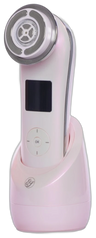
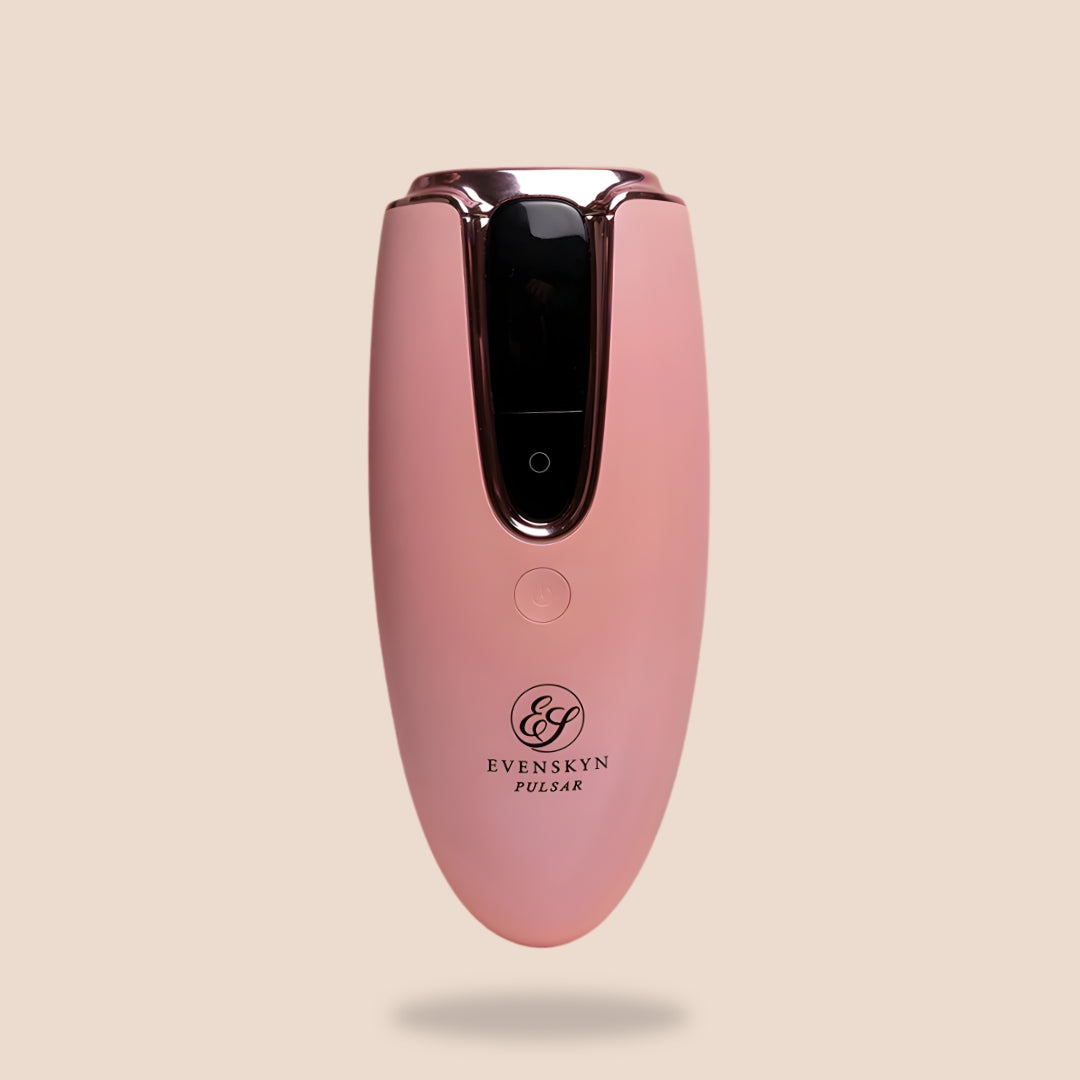
The EvenSkyn® Pulsar is the handset in this range, built for face, legs, underarms and the bikini line.
Why it takes a course, not a session
Hair grows in three phases and IPL only affects follicles in the active growth phase, which is a minority of your hair at any one moment. That is the entire reason every credible IPL protocol is a course rather than a single treatment: you are waiting for the rest of the follicles to cycle into the phase where light can reach them.
Typical protocols run once a week or once a fortnight for the first eight to twelve weeks, then drop to occasional top-ups. Skipping sessions in the first stretch is the most common reason people conclude IPL did not work for them.
Who it works well for, and who it does not
This is the part most IPL marketing skips, and it decides whether the device is worth buying.
IPL relies on a contrast between hair pigment and skin pigment. It performs best on dark hair against lighter skin, because the light needs to be absorbed preferentially by the follicle rather than the surrounding skin.
| Hair and skin | Expected outcome |
|---|---|
| Dark brown or black hair, fair to medium skin | The best case for IPL, and where the technology performs most reliably |
| Dark hair, olive or tanned skin | Workable with lower energy settings and more care, and patch testing matters |
| Red, blonde, grey or white hair | IPL does not work. There is not enough pigment in the follicle to absorb the light, whatever the device |
| Deep skin tones | Not suitable for most IPL, including this one. Skin pigment competes for the light and the risk of burns rises |
If your hair is light or grey, no at-home IPL device will help, and any brand that implies otherwise is overselling. That is worth knowing before you spend.
How to run a course without wasting it
- Shave, do not wax or pluck. IPL needs the follicle intact below the surface and the hair short above it. Waxing removes the target.
- Patch test first, and wait 24 hours. Every time you move to a new area or a higher energy level.
- Avoid sun exposure and self-tan either side of a session. A tan changes the pigment contrast the device depends on and raises the risk of a burn.
- Be consistent for the first eight to twelve weeks. This is the phase that determines your result.
- Expect top-ups. Reduction is long-term, not permanent removal, and most people maintain with occasional sessions.
Honest about what it will not do
At-home IPL is lower powered than a clinic laser, which is exactly what makes it safe to use unsupervised. The trade is that it takes more sessions to get where a clinic gets faster. It reduces hair rather than removing it permanently, results vary considerably between people, and it will not work at all on light or grey hair. It is not suitable during pregnancy, over tattoos or moles, on broken or recently tanned skin, or for anyone taking photosensitising medication. If you have a skin condition or are unsure about your skin tone, ask a clinician before starting.
Common questions
Is IPL the same as laser hair removal?
No. Laser uses a single concentrated wavelength; IPL uses a broader spectrum. Clinic lasers are more powerful and typically need fewer sessions. IPL trades that power for something you can safely use at home on your own schedule.
Does it hurt?
Most people describe a warm snap rather than pain. Higher energy levels feel stronger. If a setting is genuinely painful, it is too high for that area.
How long until I see a difference?
Most people notice reduced density somewhere between four and eight sessions. Judging it before that is premature, because the untreated follicles simply have not cycled into growth yet.
Is it permanent?
It is long-term reduction rather than permanent removal. Expect to maintain with occasional top-up sessions.
Can I use it on my face?
On the lower face, yes, following the manual. Never use IPL around the eyes or on the brow line.
Can I use it if I have dark skin?
Most at-home IPL, including this device, is not suitable for deeper skin tones, because skin pigment competes with hair pigment for the light and the risk of burns increases. Check the guidance on the product page against your own skin tone before buying.