Copper peptide buying guide · 2026
Copper peptides have gone from serum bottles to an injection trend that NPR reports is running ahead of the science. The serums are not all the same, and the label tells you more than the marketing does.
Quick answer. There is no single best copper peptide (GHK-Cu) serum, because none of these has been tested against the others. Of the 9 we compared on 4 November 2026, NIOD states the clearest GHK-Cu amount (1%), Good Molecules is the cheapest at $12.00 USD for 30 mL and adds PDRN, Asterwood has the shortest ingredient list, and The Ordinary is a $32.00 USD everyday multi-peptide option. On intact skin, expect a slow change in the look of skin at most. Our own MicroInfuser is not in the picks, because copper peptide is a minor ingredient in its serum.
EvenSkyn Research Team · 20-min read · Published 4 November 2026 · Prices and labels read from each brand's own US page on 4 November 2026 · 6 cited sources · Brand byline, not clinician reviewed
Key takeaways
The picks, by need
-
Clearest stated GHK-Cu amount: NIOD Copper Amino Isolate Serum 3 1:1 (CAIS3). States 1% GHK-Cu plus 1% copper-free GHK, and the copper ingredient is 4th of 20. $93.00 USD for 30 mL, or $62.00 USD for 15 mL.
-
Everyday multi-peptide pick: The Ordinary Multi-Peptide + Copper Peptides 1% Serum. Copper Tripeptide-1 is 4th of 49, with several other peptides and no fragrance listed. $32.00 USD for 30 mL. The page does not say what the 1% in the name measures.
-
Cheapest, with copper plus PDRN: Good Molecules Copper Peptide Serum with PDRN. Publishes a percentage for every ingredient: Copper Tripeptide-1 at 0.10%, and Sodium DNA, which it calls rose PDRN, at 10 ppm. $12.00 USD for 30 mL.
-
Copper plus bakuchiol under $30 USD: COSRX The Blue Peptide Bakuchiol Plump Glow Serum. States 0.5% (5,000 ppm) copper peptide, without saying whether that is pure GHK-Cu, plus 0.25% bakuchiol. $27.00 USD for 50 mL.
-
Shortest ingredient list: Asterwood Copper Peptides (GHK-Cu) Firming Serum. Six ingredients, with Copper Tripeptide-1 printed at 0.10%; the brand says it has no fragrance or essential oils. $21.99 for 1 fl oz.
-
If you also use retinol: Biossance Squalane + Copper Peptide Rapid Plumping Serum. Copper Tripeptide-1 is 7th of 32, with Copper PCA and squalane, and Biossance suggests it in the morning with retinol at night. No copper amount stated. $69.00 USD for 50 mL.
- At the 30 to 50 mL sizes compared, price per mL runs from $0.40 USD (Good Molecules) to $6.63 USD (Allies of Skin).
- 8 of the 9 print a copper figure, but only 3 say it is the amount of GHK-Cu itself, so a bigger number is not always more copper peptide.
- One serum named for copper tripeptide, Allies of Skin, does not list Copper Tripeptide-1 on its US ingredient list.
- Our MicroInfuser is not ranked: copper peptide is listed 26th of 32 in its serum. More below.
Prices and labels from each brand's own US page, read 4 November 2026. Brand names identify products only.
1973the year GHK was first isolated, from human plasma[1] 200 to 80ng/mL of GHK in plasma at age 20 and at age 60, as reported by the discoverer's research group[2] 3 of 9serums here that say their copper figure is the amount of GHK-Cu itself; 8 of 9 print some copper figure
$0.40 to $6.63price per mL at the 30 to 50 mL sizes, 4 November 2026
9 copper peptide serums, compared by what the label says
We read each brand's own US product page on 4 November 2026 and recorded the price, size, the copper ingredient as listed, any stated amount, where the copper sits on the ingredient list, fragrance, and the brand's own directions. The table is sorted by price per mL, lowest first. Where a brand does not publish a figure, it says not stated.
Prices in US dollars as listed on each brand's US page on 4 November 2026; none showed a sale price that day. Price per mL is our arithmetic at the size shown (1 fl oz is about 29.6 mL); larger sizes can cost less per mL. Ingredient positions come from the ingredient list on the brand's US page. Brand statements are quoted as claims, not verified results.
| Product |
Format and size |
Price (USD) |
Price per mL |
Copper ingredient, as listed |
Copper amount, as the brand states it |
Place on the ingredient list |
Fragrance (parfum) or essential oil listed |
Worth knowing |
| Good Molecules Copper Peptide Serum with PDRN |
Serum, 30 mL |
$12.00 USD |
$0.40 USD |
Copper Tripeptide-1 |
0.10%, from the brand's full percentage list |
14th of 20 |
None listed |
Lists Sodium DNA, which it calls rose PDRN, at 10 ppm. Morning and night. |
| COSRX The Blue Peptide Bakuchiol Plump Glow Serum |
Serum, 50 mL |
$27.00 USD |
$0.54 USD |
Copper Tripeptide-1 (GHK-Cu) |
“Copper Peptide 0.5% (5,000ppm)”, basis not stated |
11th of 39 |
None listed |
Also 0.25% bakuchiol. Avoid broken skin, and keep high-strength vitamin C to another time of day, per COSRX. |
| Asterwood Copper Peptides (GHK-Cu) Firming Serum |
Serum, 1 fl oz (2 and 8 oz also sold) |
$21.99 (the page shows $ with no currency code) |
About $0.74 USD |
Copper Tripeptide-1 |
0.10%, printed in the ingredient list |
5th of 6 |
None listed; the brand says it has no fragrance or essential oils |
Six ingredients in total. Day or night. |
| The Ordinary Multi-Peptide + Copper Peptides 1% Serum |
Serum, 30 mL |
$32.00 USD |
$1.07 USD |
Copper Tripeptide-1 |
“1%” in the product name; the page does not say what it measures |
4th of 49 |
None listed |
Morning and evening. The Ordinary lists direct acids, direct vitamin C and retinoids as conflicts, and says unbroken skin only. |
| Biossance Squalane + Copper Peptide Rapid Plumping Serum |
Serum, 50 mL |
$69.00 USD |
$1.38 USD |
Copper Tripeptide-1, plus Copper PCA (12th) |
Not stated |
7th of 32 |
None listed |
Day and night. Biossance suggests it in the morning with retinol at night. Brand study: 31 women, 28 days. |
| Peach & Lily Copper Peptide Pro Firming Serum |
Serum, 30 mL |
$49.00 USD |
$1.63 USD |
Copper Tripeptide-1 |
“0.2% copper peptide”, basis not stated |
6th of 63 |
None listed |
Twelve more peptides. Daily, morning and evening; the brand suggests copper in the morning with its retinal serum at night. |
| NIOD Copper Amino Isolate Serum 3 1:1 (CAIS3) |
Serum, 30 mL (also 15 mL) |
$93.00 USD for 30 mL, or $62.00 USD for 15 mL |
$3.10 USD (30 mL), or $4.13 USD (15 mL) |
Tripeptide-1 Copper Acetate (GHK-Cu) |
1% GHK-Cu, plus 1% copper-free GHK |
4th of 20 |
None listed |
NIOD says its vivid blue color signals the 1% GHK-Cu. First step after cleansing, morning and night. |
| Eminence Organic Skin Care Copper Tripeptide Serum |
Serum, 30 mL |
$148.00 USD |
$4.93 USD |
“Copper Tripeptide”; no full ingredient list on the page |
“Copper Tripeptide 3%”, basis not stated |
Not shown |
Not shown in full; carries a Fragrance Free badge |
Sold for post-treatment skin. Once or twice daily. |
| Allies of Skin Copper Tripeptide & Ectoin Advanced Repair Serum |
Serum, 30 mL (a 1.7 fl oz size is $291.00 USD) |
$199.00 USD, or $169.15 USD by subscription |
$6.63 USD |
Copper Lysinate/Prolinate; Copper Tripeptide-1 is not on the US list |
“1% Copper Tripeptide Complex” and “2% Copper Lysinate Complex” |
Copper Lysinate/Prolinate 12th of 31 |
None listed; the brand says no added fragrance or essential oils |
National Eczema Association Seal of Acceptance. The brand says it can be used after procedures, but not on scars or open tissue. |
Scroll sideways to see every column.
What the table shows
-
A bigger number is not always more copper peptide. NIOD, Asterwood and Good Molecules state the amount of GHK-Cu itself. COSRX, Peach & Lily and Eminence give a copper peptide figure without saying whether it is the pure ingredient or a solution of it, Allies of Skin gives the amount of a copper tripeptide "complex", and The Ordinary's 1% sits in the product name with no explanation.
-
One "copper tripeptide" serum does not list Copper Tripeptide-1. The ingredient list on Allies of Skin's US page names Copper Lysinate/Prolinate, a different copper ingredient. If GHK-Cu itself matters to you, ask the brand.
-
Fragrance is rare here. None of the eight serums with a full ingredient list on the page lists Fragrance (parfum) or an essential oil. Eminence shows only key ingredients and carries a Fragrance Free badge.
-
Brands disagree about retinol. The Ordinary lists retinoids as a conflict for its copper serum, while Biossance and Peach & Lily suggest copper in the morning and retinol or retinal at night.
-
Every benefit figure on these pages is the brand's own. Biossance (31 women, 28 days), Allies of Skin (35 people, 56 days) and Eminence (28 days) report their own studies, and none of these serums has been compared head to head.
How to read a copper peptide label in 30 seconds
Five checks tell you most of what a copper peptide serum is. None of them needs a lab.
-
Find the copper on the ingredient list. GHK-Cu goes by its ingredient-list name, Copper Tripeptide-1. Other copper ingredients, such as Copper Lysinate/Prolinate, Copper PCA or Copper Gluconate, are different molecules from GHK-Cu, the copper peptide most of the research is about. A product can say "copper peptides" on the front and list only one of those.
-
Check what any amount measures. A percentage only compares across brands when it is the amount of GHK-Cu itself, as NIOD, Asterwood and Good Molecules state. Other brands give a figure for a copper peptide blend or solution, which can hold much less.
-
Check where it sits on the list. Ingredients are listed from most to least down to about 1%, and in any order below that. A copper peptide listed after the preservatives is usually present at a trace.
-
Use the color as a rough clue. Copper peptide complexes are blue, and NIOD says the vivid blue of its serum signals its 1% GHK-Cu. Color is a clue, not a measurement.
-
Check fragrance and packaging. If your skin is reactive, look for Fragrance (Parfum) and essential oils on the list. Opaque or airless packaging protects the formula from light and air.
What copper peptides can and cannot do
Most of the evidence is from the lab. GHK was first isolated from human plasma by Loren Pickart in 1973[1]. In cell cultures, the GHK-copper complex stimulated collagen synthesis in skin fibroblasts[3], and in rat wounds it increased connective tissue build-up[4]. Pickart's group reports that plasma GHK falls from about 200 ng/mL at age 20 to about 80 ng/mL by age 60[2], which is part of why it is marketed for mature skin.
The human evidence is small. The studies usually quoted for creams and serums are summarized in a 2018 review by Pickart and Margolina[2]. They include a GHK-Cu facial cream used for 12 weeks by 71 women, and a GHK-Cu eye cream used for 12 weeks by 41 women that did better than placebo and a vitamin K cream.
The review also reports a thigh-skin study where GHK-Cu improved collagen production in 70% of women, against 50% for a vitamin C cream and 40% for retinoic acid, and an 8-week trial of GHK-Cu in a nano-lipid carrier against a control serum and the peptide Matrixyl 3000. These studies are small and short, and Pickart's own research group wrote the review. NPR's September 2026 report on the trend put it plainly: the human evidence is mostly on skin, and the trials are small and funded by the cosmetic industry[6].
Getting it into skin is the open question. The review says GHK-Cu can penetrate the skin's outer layer[2]. A 2015 laboratory study on donor skin measured very little copper peptide crossing all the way through intact skin in 9 hours, and much more once the skin had been pretreated with microneedles[5]. That is one lab model, not a trial on living faces, but it is a reason to keep expectations modest for any serum on intact skin.
What to expect. A well-made copper peptide serum is a reasonable daily step. Most of these formulas also contain hyaluronic acid, which helps skin hold water, so skin may feel smoother and look more hydrated early on. Any change in the look of fine lines builds slowly, over the 8 to 12 weeks the human studies ran. No serum in this guide has been tested against the others. For the full research history, see GHK-Cu copper peptides: the 50-year research trail, translated.
How to use a copper peptide serum
-
Patch test first. Apply a little to a small area, such as along the jaw, for a few days before using it on your whole face.
-
Apply after cleansing, before moisturizer. A few drops on clean skin, then your usual moisturizer. Follow the brand's directions on how often: most of the serums in the table say once or twice a day.
-
Keep strong acids and pure vitamin C to another time of day. Low-pH exfoliating acids and L-ascorbic acid are the pairings brands warn about most. A common split is vitamin C in the morning and copper peptides at night. Our copper peptide layering guide covers vitamin C, retinol, niacinamide and acids one by one.
-
Wear sunscreen every morning. No serum makes up for daily sun exposure.
-
Give it 8 to 12 weeks. Take a photo in the same light on day one and again at week 8 before you decide whether it is working for you.
Who should buy which
Good fits
-
You want a stated GHK-Cu amount: NIOD, Asterwood or Good Molecules, which print the amount of GHK-Cu itself.
-
You are on a budget: Good Molecules, COSRX or Asterwood, all under $1 USD per mL at the sizes compared.
-
Reactive skin: a short list the brand says is fragrance-free, such as Asterwood's six ingredients, after a patch test.
-
You use retinol at night: a serum whose brand gives a morning-and-night split, such as Biossance or Peach & Lily.
Pause or ask a doctor first
- Pregnant or breastfeeding: safety data for many active skincare ingredients in pregnancy is limited, so ask your obstetrician or dermatologist before starting.
- Broken, freshly treated or irritated skin: The Ordinary and COSRX say not to use theirs on broken skin. Allies of Skin allows post-procedure use but not on scars or open tissue.
- A known copper allergy: ask a dermatologist before using any copper ingredient.
- Anything you plan to inject: see the FAQ below.
Copper peptides and microneedling
Do not put your daily serum through a needling device. A bottle you open and touch every day is not made for open micro-channels. Anything applied through micro-channels should be made for that job and come sealed, for a single use. Our guide to what serum to use with microneedling goes through what to look for.
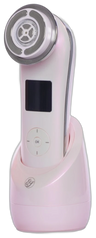
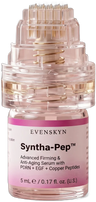
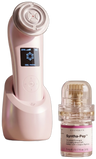
Where our kit fits. The EvenSkyn MicroInfuser pairs a gamma-sterilised, single-use 0.5 mm needle head with a factory-sealed, single-use 5 mL ampoule of Syntha-Pep, our serum, filled in a cleanroom under Good Manufacturing Practice. Syntha-Pep does contain copper peptide, but it is a PDRN serum first: biosynthetic PDRN is the lead active at a published 0.2% (2,000 ppm), and Copper Tripeptide-1 is listed 26th of 32 ingredients, near the end, alongside sh-Oligopeptide-1 (EGF). It also lists bitter orange flower oil, an essential oil, 21st of 32.
If copper peptide is the ingredient you want most, choose a copper serum from the table for daily use; the MicroInfuser is for one session every two weeks. Pause retinoids and exfoliating acids for 48 hours before a session and keep actives paused until 72 hours after it. See how to use the MicroInfuser for the full routine, and how at-home micro-infusion kits compare if you are choosing one.

Want to try micro-infusion? This is ours.
The EvenSkyn MicroInfuser kit holds four sterile, single-use 0.5 mm needle heads and four sealed 5 mL ampoules of Syntha-Pep, our biosynthetic PDRN serum at 2,000 ppm (0.2%), with sh-Oligopeptide-1 (EGF) and Copper Tripeptide-1 (GHK-Cu) further down the list. One kit is four sessions, one every two weeks. Today's price: $179.98, or $107.99 with code BLACK40 until 30 Nov.
See the MicroInfuser
Copper peptide serum questions
What is the best copper peptide serum in 2026?
It depends on the job, because none of these serums has been tested against the others. For the clearest stated GHK-Cu amount, NIOD Copper Amino Isolate Serum 3 1:1 states 1% GHK-Cu ($93.00 USD for 30 mL). For the lowest price, Good Molecules Copper Peptide Serum with PDRN states 0.10% Copper Tripeptide-1 for $12.00 USD (30 mL). For the simplest formula, Asterwood lists six ingredients with 0.10% Copper Tripeptide-1. For an everyday multi-peptide serum, The Ordinary Multi-Peptide + Copper Peptides 1% Serum lists Copper Tripeptide-1 4th of 49 ingredients for $32.00 USD (30 mL). Prices were read on each brand's US page on 4 November 2026.
Is GHK-Cu the same as Copper Tripeptide-1?
Yes. Copper Tripeptide-1 is the ingredient-list name for GHK-Cu, the copper complex of the tripeptide glycyl-histidyl-lysine. NIOD lists its GHK-Cu as Tripeptide-1 Copper Acetate. Other copper ingredients, such as Copper Lysinate/Prolinate, Copper PCA or Copper Palmitoyl Heptapeptide-14, are different molecules from GHK-Cu, the copper peptide most of the research is about.
What percentage of copper peptides should a serum have?
There is no agreed figure, and labels measure different things. NIOD, Asterwood and Good Molecules state the amount of GHK-Cu itself, at 1%, 0.10% and 0.10%. COSRX (0.5%), Peach & Lily (0.2%) and Eminence (3%) do not say whether their figure is the pure ingredient or a solution of it. The published human studies do not settle which strength works best, so a stated, explained amount is more useful than a large one.
Do copper peptide serums actually work?
Small studies suggest a modest change in the look of skin, not a dramatic one. Twelve-week studies of GHK-Cu creams, summarized by the research group of GHK's discoverer, reported less visible fine lines and laxity, and NPR reported in September 2026 that such trials are small and funded by the cosmetic industry. In a lab study on donor skin, very little copper peptide crossed all the way through intact skin. Expect any change to be gradual, over 8 to 12 weeks.
How long do copper peptides take to work?
Skin may feel smoother and look more hydrated early, partly from the hyaluronic acid most of these formulas also contain. Any change in the look of fine lines or firmness shows slowly: the human studies of GHK-Cu creams ran 8 to 12 weeks. Take photos in the same light on day one and at week 8 to judge fairly. The results figures on brand pages are the brands' own, from studies of 28 to 56 days.
Can I use copper peptides with vitamin C?
Not in the same step, according to the four brands here that address it. The Ordinary lists direct vitamin C as a conflict, COSRX says to keep high-strength vitamin C to a different time of day, Asterwood says not to use direct vitamin C or strong acids at the same time, and Allies of Skin says to leave 10 to 15 minutes between them. The simplest rule is different times of day: if your vitamin C is a morning step, use copper peptides at night. Our copper peptide layering guide covers each pairing.
Can I use copper peptides with retinol?
Brands disagree. The Ordinary lists retinoids as a conflict for its copper serum. Biossance and Peach & Lily suggest copper peptides in the morning and retinol or retinal at night, and Asterwood says some people alternate them. If your skin is sensitive, keep them to different times of day and add one new product at a time.
Can I use a copper peptide serum every day?
Most are made for it. The Ordinary, NIOD, Peach & Lily, Biossance and Good Molecules give morning-and-evening directions, Eminence says once or twice a day, and Allies of Skin says morning or evening. Follow the brand's own directions and patch test first.
Do copper peptides have side effects?
The brands' own warnings cover irritation. The Ordinary, COSRX and Asterwood say to stop using their serum if irritation occurs, COSRX also names redness, swelling and itching, and The Ordinary and Asterwood advise a patch test first. NPR reported that experts consider GHK-Copper generally quite safe. Ask a dermatologist first if you have a known copper allergy, or if you are pregnant or breastfeeding.
Is a copper peptide serum good for sensitive skin?
It can be, if you pick a short formula and patch test first. None of the eight serums here with a full ingredient list on the page lists Fragrance (parfum) or an essential oil, and Asterwood, with six ingredients, says it has no fragrance or essential oils. Allies of Skin carries the National Eczema Association Seal of Acceptance. Stop if you see irritation, as the brands' own warnings say.
Why are copper peptide serums blue?
Because the copper complex is blue. NIOD says the vivid blue of its serum signals its 1% GHK-Cu, and Peach & Lily calls its serum a “potent blue dose” of 0.2% copper peptide. Color is a rough clue, not a measurement.
Is The Ordinary copper peptide serum any good?
It is a reasonable everyday option. Copper Tripeptide-1 is 4th of 49 ingredients, alongside several other peptides and hyaluronic acid, with no fragrance listed, for $32.00 USD (30 mL) on theordinary.com on 4 November 2026. Two things to know: the page does not say what the 1% in the name measures, and The Ordinary advises against using it with direct acids, direct vitamin C or retinoids.
Are copper peptide injections safe?
There is no published human evidence that they are. NPR reported in September 2026 that the copper peptide trend has moved from creams to injections ahead of the science, and that there are no published human studies showing injected GHK-Cu is safe or effective. Copper peptide serums sold for skin are not made for injection.
Can I use copper peptides with microneedling?
Follow each brand's own rule. The Ordinary says to use its serum on unbroken skin only, COSRX says to avoid broken or damaged skin, and Allies of Skin says its serum can be used after procedures such as microneedling, but not on scars or open tissue, and to check with your dermatologist. Our advice: anything applied through open micro-channels should be made for that job and come sealed, for a single use, not poured from a bottle you open every day.
Does the MicroInfuser contain copper peptides?
Yes, listed near the end. Syntha-Pep, the serum sealed in each MicroInfuser ampoule, lists Copper Tripeptide-1 (GHK-Cu) 26th of its 32 ingredients. Its lead active is biosynthetic PDRN at 0.2% (2,000 ppm), with sh-Oligopeptide-1 (EGF). It also lists bitter orange flower oil, an essential oil, 21st of 32. A kit holds four sessions; the current price is on the product page.
How we compared these products
We read each product's own US page on 4 November 2026 and recorded the price, size, the copper ingredient as listed, any stated copper amount, its place on the ingredient list, fragrance and essential oils, and the brand's directions and warnings. Good Molecules' ingredient percentages were read on its page in a browser, because the list loads after the page opens, and NIOD's two sizes were priced by selecting each on its page. Where a brand does not publish a figure, the table says not stated rather than estimating one.
We could not read the product pages of Skin Biology, the copper peptide company of GHK's discoverer, Loren Pickart, or Revolution Skincare's US store, so neither is in the table. We left out serums that do not claim GHK-Cu or a copper tripeptide, such as one built on Copper Palmitoyl Heptapeptide-14.
We did not test these products on skin, run a panel, or receive any of them for free, and we earn nothing from any competitor mention. Brand names identify products only. EvenSkyn makes the MicroInfuser and Syntha-Pep, which are not in the picks and are marked as ours. Prices change often in November, so check the live listing before you buy; The Ordinary's promotion terms say its website and NIOD's will be closed on 27 November 2026.
Related reading: the GHK-Cu research trail, translated, how to layer copper peptides with vitamin C and retinol, PDRN serums and creams compared the same way, and PDRN, EGF and GHK-Cu in micro-infusion.
References
- Pickart L, Thaler MM. Tripeptide in human serum which prolongs survival of normal liver cells and stimulates growth in neoplastic liver. Nature New Biology. 1973;243:85-87. PMID 4349963. doi:10.1038/newbio243085a0
- Pickart L, Margolina A. Regenerative and protective actions of the GHK-Cu peptide in the light of the new gene data. Int J Mol Sci. 2018;19(7):1987. PMID 29986520. doi:10.3390/ijms19071987
- Maquart FX, Pickart L, Laurent M, Gillery P, Monboisse JC, Borel JP. Stimulation of collagen synthesis in fibroblast cultures by the tripeptide-copper complex glycyl-L-histidyl-L-lysine-Cu2+. FEBS Lett. 1988;238(2):343-346. PMID 3169264. doi:10.1016/0014-5793(88)80509-X
- Maquart FX, Bellon G, Chaqour B, et al. In vivo stimulation of connective tissue accumulation by the tripeptide-copper complex glycyl-L-histidyl-L-lysine-Cu2+ in rat experimental wounds. J Clin Invest. 1993;92(5):2368-2376. PMID 8227353. doi:10.1172/JCI116842
- Li H, Low YSJ, Chong HP, Zin MT, Lee CY, Li B, Leolukman M, Kang L. Microneedle-mediated delivery of copper peptide through skin. Pharm Res. 2015;32(8):2678-2689. PMID 25690343. doi:10.1007/s11095-015-1652-z
- Stone W. The copper peptide trend has gone from creams to injections, ahead of the science. NPR, 7 September 2026. Read via Hawai'i Public Radio's copy of the NPR story.




Laat een reactie achter
Alle reacties worden gemodereerd voordat ze worden gepubliceerd.
Deze site wordt beschermd door hCaptcha en het privacybeleid en de servicevoorwaarden van hCaptcha zijn van toepassing.