











What Serum to Use With Microneedling and Micro-Infusion
Serum selection guide
A serum can be excellent on your skin and still be the wrong serum to put inside it. Here is the screening test we use, the ingredient classes that pass it, and the ones that belong nowhere near an open channel.
The short version
Micro-infusion and microneedling temporarily bypass the skin barrier. That changes which serums are appropriate, because the barrier is the thing that normally keeps most of a formula out. A serum designed for the surface of the skin has never had to be safe underneath it.
- Use: low-irritant, water-based formulas built around hyaluronic acid, PDRN, signal peptides, growth factors, and panthenol or Centella-type soothing agents.
- Avoid: L-ascorbic acid vitamin C, AHAs and BHAs, retinoids, benzoyl peroxide, added fragrance, essential oils, alcohol, pigments, and facial oils.
- The reason it matters: a 2014 JAMA Dermatology report described three women who developed facial granulomas after microneedle therapy, two of them after the same branded topical vitamin C serum was applied during treatment. The authors concluded that applying topical products before microneedling can drive immunogenic particles into the dermis.
- The counterintuitive part: the molecules most worth infusing are the ones too large to get in on their own. Small molecules that already penetrate fine do not need a channel, and several of them cause trouble once they are in one.
If you want the five-point version you can apply to any bottle, that is the Channel Test below.
The Channel Test: five questions before anything goes in
Most guidance on this topic stops at a list of nice ingredients. That is not much help when you are holding an unfamiliar bottle. What follows is a screening sequence, ordered so that the fastest disqualifiers come first. A serum has to clear all five to belong in a channel.
Does anything in it sting on intact skin?
This is the fastest disqualifier and it needs no chemistry. If a product tingles, prickles, or turns you pink when applied normally, that response is your barrier registering an irritant. Remove the barrier and you remove the buffer. The reaction does not get milder, it gets less controlled.
The single most instructive case in the literature involves exactly this. A 2014 report in JAMA Dermatology described three women who developed facial granulomas after microneedle therapy for skin rejuvenation. Two of them had a branded topical vitamin C serum applied during the procedure, and both later patch-tested positive to that serum. Treatment with topical and oral corticosteroids failed; antibiotic therapy produced partial improvement in one case and resolution in another. The authors' conclusion was direct: applying topical products before microneedling can introduce immunogenic particles into the dermis and potentiate local or systemic hypersensitivity. They noted specifically that because microneedle devices are accessible for home use, clinicians need to be aware of the consequences.
Passes: a formula you could apply to freshly cleansed, slightly compromised skin without a reaction. Fails: anything marketed on the strength of its tingle.
Is the molecule actually too large to get in by itself?
This is the gate almost every serum guide gets backwards. A channel is a delivery route, and a delivery route is only worth using for cargo that cannot otherwise arrive.
The reference point is the 500 Dalton rule, set out by Bos and Meinardi in Experimental Dermatology in 2000. Their argument is that a compound generally needs a molecular weight under 500 Dalton to be absorbed through intact skin, and they support it three ways: essentially all common contact allergens fall under 500 Dalton, the standard agents used in topical dermatological therapy fall under 500 Dalton, and every drug used in transdermal delivery systems falls under 500 Dalton. Larger molecules do not cross the stratum corneum in meaningful amounts.
Now put PDRN against that ruler. The pharmaceutical polydeoxyribonucleotide characterised by Squadrito and colleagues in Frontiers in Pharmacology in 2017 is a mixture of deoxyribonucleotides with molecular weights between 50 and 1,500 kilodaltons. That is a hundred to three thousand times the threshold for ordinary skin absorption. A PDRN serum patted onto the surface and a PDRN serum delivered through channels are not two versions of the same treatment.
The same logic applies in reverse. Niacinamide, glycolic acid, and ascorbic acid are all small enough to penetrate on their own. Infusing them adds risk without adding a delivery benefit they needed.
Passes: large actives whose whole problem is getting past the barrier. Fails: small molecules that already work fine applied normally.
How much active reaches the channel in one session?
Percentages on a label describe the bottle, not the treatment. What matters is the amount of active that ends up in the skin during a single session, and that depends on the volume actually used and on how much of it is delivered rather than wiped away.
A dropper serum is dosed by habit. You use two drops one week and five the next, most of it spreads across the surface, and only a fraction of what you applied sits over an open channel at the moment it is open. A single-use ampoule sized to one session removes that variable entirely. Every session gets the same volume from the same sealed reservoir.
The useful question to ask any brand is not what percentage is in the formula. It is how much serum a session actually uses, and whether that amount is fixed.
Passes: a defined per-session volume you can point at. Fails: a percentage claim with no stated dose.
How many surfaces does the serum touch before it reaches the needles?
Sterility of the needle head gets all the attention. The serum path gets almost none, which is odd, because the serum is the thing being placed under the skin.
Count the exposures. A dropper bottle opened repeatedly over weeks, a dropper tip that touches skin and returns to the bottle, decanting into a reservoir, fingers near the chamber, and the chamber itself between sessions. Each of those is an opportunity for the formula to pick up something that then gets stamped into the papillary dermis. Preservative systems are validated for a product sitting on skin, not for one being introduced below it.
A closed architecture, where a factory-sealed ampoule connects directly to a sterile single-use head and both are discarded together, removes every one of those contact points. This is a structural property of the system, not a claim about the formula, which is why it is worth checking before you compare ingredient lists at all.
Passes: factory-sealed serum, single-use head, no pouring or decanting. Fails: any pour-and-fill step, any reused chamber, any reused head.
Can the brand tell you where the actives came from?
Sourcing is a safety question once you are going below the barrier, not a marketing one. Two ingredient classes make this concrete.
PDRN. Most PDRN in skincare is salmon-derived. The Squadrito review describes the pharmaceutical form as prepared from the sperm DNA of salmon trout or chum salmon through a controlled purification and sterilisation process. PDRN of biosynthetic origin, produced through a controlled biosynthetic manufacturing process instead, is a different manufacturing route. Worth saying plainly: the published evidence base sits on the salmon-derived pharmaceutical, and that same review notes A2A receptor binding appears linked to DNA origin, molecular weight, and manufacturing process. A brand that cannot tell you which route its PDRN took cannot tell you which body of evidence applies to it.
Marine and animal-derived ingredients. Hydrolysed collagen, certain humectants, and some film formers are frequently marine-derived. If you have a fish or shellfish allergy, that is a contraindication you need the ingredient list to be honest about, and a vague label is a real problem when the product is going under your skin rather than on it.
Passes: named sourcing route for every headline active. Fails: a hero ingredient with no stated origin.
Nearly every serum sold for microneedling was formulated for the surface of the skin. Passing Gate 1 is not a low bar. It is a bar most of the category was never designed to clear.
Ingredient classes, sorted by whether they belong in a channel
This table sorts by mechanism rather than by brand. Green means the class is well suited to channel delivery and is routinely used alongside microneedling. Amber means it has a place in the routine but not during the session. Red means it should not enter an open channel at all. Wait times follow the MicroInfuser manual and should be read against the instructions for whatever device you own.
| Ingredient class | In-channel | Why | When to use it instead |
|---|---|---|---|
| Hyaluronic acid, multiple weights | Suitable | Non-irritant, humectant, and the higher-weight forms are far too large to cross intact skin. Channel delivery is the only route that places them below the surface. | Also safe on the surface the same day and after. |
| PDRN and polynucleotides | Suitable | Molecular weight between 50 and 1,500 kilodaltons in the characterised pharmaceutical form, orders of magnitude above the 500 Dalton absorption threshold. This class is the clearest case for infusion. | Topical PDRN is not equivalent; it is a different exposure. |
| Signal peptides, including GHK-Cu | Suitable | Low irritancy and studied for fibroblast support, collagen and elastin synthesis, and tissue repair. Copper tripeptide has a research trail going back five decades. | Peptide creams are a good same-week surface layer. |
| Growth factors, such as sh-Oligopeptide-1 | Suitable | Large signalling proteins with poor topical penetration. If the point is cellular-renewal signalling below the surface, the delivery route has to change. | Surface application is mostly a hydration benefit. |
| Panthenol, Centella, beta-glucan, allantoin | Suitable | Calming and barrier-supporting, low sensitisation risk. Useful in the formula and useful afterwards. | Ideal in the recovery cream too. |
| Niacinamide | Only as formulated | Small, well tolerated, and it penetrates perfectly well on its own, so infusion adds no delivery advantage. Fine as a minor component of a serum built for infusion; not a reason to infuse a niacinamide product. | Keep it in your daily routine. |
| Marine-derived collagen fragments | Check allergy first | Used at low levels as a humectant and film former. Not a safety problem for most people, but a genuine contraindication with fish or shellfish allergy. | Patch test 24 hours before a first session. |
| Vitamin C as L-ascorbic acid | Keep out | Low pH stings on compromised skin, and this is the ingredient class implicated in the 2014 granuloma report. Small enough to absorb topically anyway, so there is no delivery gain to weigh against the risk. | Resume 48 hours after a session. |
| AHAs and BHAs | Keep out | Chemical exfoliation and mechanical channel formation are two injuries to the same tissue. Stacking them compromises barrier recovery. | Stop 48 hours before, resume 72 hours after. |
| Retinoids | Keep out | They thin the stratum corneum and raise sensitivity, which is the opposite of the condition you want the skin in before treatment. | Stop 48 hours before, resume 72 hours after. |
| Added fragrance and essential oils | Keep out | Fragrance materials are among the most common contact sensitisers, and sensitisation risk is exactly what rises when the barrier is bypassed. Citrus, mint, eucalyptus, and cinnamon oils are frequent offenders. | Avoid entirely for 48 hours. |
| Alcohol denat and astringent toners | Keep out | Drying and irritating on skin whose barrier is temporarily open. | Skip until the day after. |
| Benzoyl peroxide | Keep out | Oxidising and irritating; it also has no business near skin that is actively healing. | Stop 24 hours before, resume 48 hours after. |
| Facial oils and heavy occlusives | Keep out | Nothing about an oil is designed to sit inside a channel, and occlusion over freshly opened channels is a common route to post-treatment congestion. | Wait until the barrier has closed, usually the next day. |
| Pigmented or shimmer products, including makeup | Keep out | Insoluble particles placed in the dermis are, functionally, a tattoo. This is the mechanism behind the granuloma cases in the literature. | No makeup for at least 24 hours after a session. |
A note on our own formula. Syntha-Pep contains a trace of Citrus Aurantium Amara flower oil. By the rule above that is a fragrance material, and we are not going to pretend the rule does not apply to us. It is present at a level below cosmetic fragrance-allergen labelling thresholds and is there for the aromatic profile, not for any active purpose. If you have a known fragrance sensitivity, that is a reason to patch test first, and a reason some people will reasonably choose a different product. The full ingredient list is published on our Syntha-Pep formulation page.
Hyaluronic acid serum for microneedling: the weight decides everything
Hyaluronic acid is the most searched serum for microneedling and the most misread, because the phrase on an ingredient list names a family of molecules rather than one molecule. Chain length varies between products by a factor of several hundred, and chain length is what decides where the material ends up. On the surface of the skin that difference is a matter of texture and feel. Delivered through a channel it becomes the entire question.
The behaviour has been measured directly rather than assumed. Essendoubi and colleagues used Raman spectroscopy on human skin in 2016 to map where hyaluronic acid of different molecular weights actually travels after topical application. Low-weight hyaluronic acid, in their 20 to 300 kilodalton range, crossed the stratum corneum. High-weight hyaluronic acid, at 1,000 to 1,400 kilodaltons, did not. It stayed above it.
Set that against Gate 2 and the answer falls out cleanly. The high-weight fraction is the one with a real reason to be infused, because a channel is the only route by which it arrives anywhere other than the surface of your face. The low-weight fraction gets in unaided and does not need the needle to do its job.
One honest qualification before the table. Where exactly the cut-off sits is not settled. The Raman work puts it somewhere inside the 300 to 1,000 kilodalton band, but other in vitro penetration work has placed it far lower, finding that only fractions below roughly 8 to 10 kilodaltons cross with any efficiency. Method, vehicle and skin model all move the number. What every study agrees on is the direction: larger chains stay out, and the largest stay out entirely. That direction is all the argument for channel delivery actually needs, and any brand quoting a single precise threshold as settled is tidier than the literature.
| Fraction | Typical range | Where it ends up applied normally | Worth infusing? |
|---|---|---|---|
| High weight | Above roughly 1,000 kDa | Sits on the surface as a hydrating film. Does not cross the stratum corneum. | Yes. This is the fraction a channel actually changes. |
| Medium weight | Roughly 100 to 1,000 kDa | Upper layers. Partial crossing, weight dependent. | Yes. The usual workhorse fraction in a multi-weight system. |
| Low weight | Roughly 20 to 300 kDa | Crosses the stratum corneum on its own, as shown by Raman mapping. | Not for delivery. Useful in the formula, but it did not need the channel. |
| Ultra-low weight | 20 kDa and below | Crosses readily. Sold as "nano" or "ultra-low molecular weight" hyaluronic acid. | Check the label. See the pro-inflammatory finding below. |
The ultra-low fraction is the one worth checking for
There is a lower bound on this, and almost every serum guide skips it. The 2024 scoping review by Waggett, Lyles and Schlesinger in EMJ Dermatology reports that hyaluronic acid at 20 kilodaltons and below significantly increased expression of the pro-inflammatory cytokine TNF-alpha, and that Farwick and colleagues concluded on that basis that hyaluronic acid at or below 20 kilodaltons is not recommended for application, while 50 kilodaltons was safe.
On intact skin that is a formulation talking point. Placed into an open channel in the upper papillary dermis, a fraction carrying a documented pro-inflammatory signal is a materially different proposition. It is worth knowing that "nano hyaluronic acid" and "ultra-low molecular weight hyaluronic acid" are the marketing terms for exactly that fraction, and that no cosmetic label anywhere is required to state a kilodalton figure.
Why "low weight is better" is also true, and not a contradiction
Anyone reading around this topic will meet the opposite headline, usually traced to the 2011 Pavicic trial that compared five hyaluronic acid weights applied topically and found the 50 and 130 kilodalton fractions produced the clearest wrinkle-depth improvement. Both things are true, because they answer different questions. Pavicic asked which weight performs best when you rub it on. This page asks which weight has anything to gain from a needle. Low weight wins the first question precisely because it can cross unaided, which is the same property that makes it the fraction least changed by infusing it. A serum carrying both fractions covers both questions, which is the practical reason multi-weight systems exist.
What to look for on a bottle
- A stated multi-weight system rather than a single unqualified "hyaluronic acid". A formula working in one layer is, by definition, working in one layer.
- Named INCI forms. Sodium Hyaluronate, Hydrolyzed Sodium Hyaluronate, Acetylated Sodium Hyaluronate and Sodium Hyaluronate Crosspolymer are chemically distinct and behave differently. A list naming several is more informative than one naming one.
- No "nano" or "ultra-low" claim as the hero feature, given the finding above.
- Nothing else in the bottle that fails Gate 1. A hyaluronic acid serum carrying an acid, a fragrance or an extract with a tingle is not a hyaluronic acid serum for these purposes.
Where our own formula sits, including the gap. Syntha-Pep declares four distinct hyaluronic acid forms on its INCI: Sodium Hyaluronate, Acetylated Sodium Hyaluronate, Sodium Hyaluronate Crosspolymer and Hydrolyzed Sodium Hyaluronate. That satisfies the multi-weight point. What we do not publish is a kilodalton figure for each fraction. Neither does anyone else in this category, which is an explanation rather than a defence. If you are applying the test above strictly, treat that as a partial answer from us and from every competitor you check. You can run the screening test against any bottle you already own with our PDRN serum checker.
Growth factor and stem cell serums: what those labels actually describe
Growth factor serum and stem cell serum are two of the most expensive phrases in this category and two of the least defined. They are worth separating, because one of them describes a molecule and the other usually describes a manufacturing process.
Growth factors
Epidermal growth factor is a single polypeptide chain of 53 amino acids weighing roughly 6.2 kilodaltons. Against the 500 Dalton ceiling from Gate 2 that is about twelve times too large to cross intact skin in meaningful quantity. On an ingredient list it appears as sh-Oligopeptide-1 or rh-Oligopeptide-1, where the prefixes indicate a lab-made form produced by recombinant expression rather than anything harvested.
The delivery argument here is unusually clean, and it cuts both ways. A growth factor works by binding a receptor on a living cell. Deposited on the stratum corneum, which is a layer of dead corneocytes, it is sitting where no receptor exists. That is not a claim that channel delivery produces a particular clinical result. It is the narrower and better supported point that surface application places the molecule somewhere it cannot act, and a channel is what changes that.
Worth stating plainly, because the category rarely does: the human evidence for topical growth factors in cosmetic use rests mostly on small open-label studies rather than large controlled trials. The molecular case for infusing rather than applying is strong. The clinical case for how much visible change follows is not settled, and anyone presenting it as settled is ahead of the literature.
Stem cell serums
A stem cell serum almost never contains stem cells. The label normally covers one of two quite different things.
- Conditioned media. The filtered liquid that cells were grown in, containing whatever those cells secreted. It is a biological mixture rather than a defined molecule, its composition varies between batches, and it is rarely characterised on a label in any detail.
- Plant cell culture extract. Material from cultured plant cells, frequently apple, edelweiss or grape. A legitimate cosmetic ingredient, and not related to human stem cell biology in the way the shelf name suggests.
Neither is disqualifying. Both make Gate 5 sharper rather than softer, because a mixture you cannot fully characterise is a harder thing to justify placing below the barrier than a named molecule at a stated weight. The question to put to a brand selling one is simple: what is in it, in what quantity, and how do you know it is the same in this batch as the last.
Our position. Syntha-Pep contains sh-Oligopeptide-1, the recombinant form of epidermal growth factor, and Copper Tripeptide-1. It contains no conditioned media and no plant cell culture extract, which is a formulation choice rather than a criticism of products that do. To be precise about a thing an ingredient list will otherwise raise: it does contain Centella Asiatica extract, which is a conventional botanical extract used for barrier support, not a cultured plant cell material and not sold as a stem cell ingredient. We have not run clinical studies on this formula and we do not cite any.
Exosomes, plasma-derived serums, and the search for a substitute
A common search is for something equivalent to the plasma-derived and exosome solutions used in clinics. It is worth answering carefully, because the honest answer is more useful than the marketing one.
Exosome and plasma-derived products used in professional settings are handled inside a clinical workflow: cold chain, reconstitution under controlled conditions, a practitioner who can assess whether you are a candidate, and single-patient handling. They are not simply a stronger serum. Most of what makes them defensible is the workflow around them, and that workflow is not reproducible at a bathroom counter.
What transfers to at-home use is the underlying principle rather than the ingredient. The reason those solutions are delivered through channels is that they carry large signalling molecules that cannot cross intact skin. That property is shared by PDRN, by growth factors, and by high-weight hyaluronic acid, all of which are stable in a sealed cosmetic formula in a way that biologic preparations are not.
So the accurate framing is not that any at-home serum is a substitute for a clinical exosome treatment. It is that if you want channel delivery of large regenerative-signalling molecules and you are working at home, a sealed cosmetic formula built around that molecular class is the version of the idea that survives the move out of the clinic. Anyone telling you their bottle is equivalent to a clinical preparation is describing a marketing position, not a mechanism.

Depth changes the answer, and most serum advice ignores it
Advice written for a 1.5 mm clinical pen and advice written for a 0.15 mm nano tip are not interchangeable, yet they circulate under the same heading. Depth determines which tissue the serum reaches, and therefore how much the formula's safety margin matters.
- Nano tips, roughly 0.15 mm. These work at the level of the epidermis and do not create true dermal channels. The formula matters less because very little of it goes deep, and the collagen-induction argument largely does not apply. Our separate explainer on nano-needling covers where that line sits.
- Fixed shallow depths, around 0.5 mm. This reaches the upper papillary dermis. Deep enough that formula safety is a real consideration, shallow enough to be reasonable without professional oversight. The MicroInfuser is mechanically locked at 0.5 mm, so pressing harder does not go deeper.
- Adjustable and clinical depths, 1.0 mm and beyond. Deeper dermal placement, higher bleeding risk, and a much smaller margin for a formula error. Everything on the red list above becomes more consequential, and these depths belong with a trained operator.
One practical consequence: a device with user-set depth transfers the safety judgement to you on two axes at once, the depth and the serum. A fixed-depth system removes one of those variables before you start.
Sterile serum for microneedling: what the word guarantees and what it does not
Searches for a sterile serum for microneedling have grown faster than any other phrase in this category, and the instinct behind them is correct. The word itself, however, does less work on a cosmetic label than most buyers assume.
Sterile is a defined pharmaceutical condition. It means a product has been through a validated sterilisation process and tested against a standard for the absence of viable microorganisms. Almost no cosmetic serum meets that definition, and almost none claims to in the regulatory sense. Cosmetics are generally required to be free of harmful contamination, not to be sterile, and the two are not the same requirement.
What nearly every serum actually is instead is preserved. A preservative system holds microbial growth to acceptable limits, and it is validated by challenge testing against a product being used normally, which means opened repeatedly and applied to the surface of intact skin. It is not validated against a product being introduced beneath the barrier. That gap is the honest reason to care, and it has nothing to do with whether a given brand is careful.
Three separate things get called sterility
- Needle sterility. Whether the head was sterilised, by what method, and whether it is single use. Gamma sterilisation is the common method. Most reputable brands can evidence this one.
- Serum condition at fill. The environment the formula was filled in. Cleanroom fill under Good Manufacturing Practice is a meaningful answer. "Sterile" printed on a carton with nothing behind it is not.
- Path integrity between the two. Everything that happens between the container being opened and the formula reaching the needle. This is the one that decays with every session, and it is almost never discussed.
The third is where the practical difference lives. A dropper bottle opened forty times over a course of treatment, with a tip that touches skin and returns to the reservoir, is a different microbiological object at session forty than at session one, regardless of how well it was made. A factory-sealed single-use container connecting straight to a single-use head has no session forty. It has forty session ones.
What we will and will not claim. The MicroInfuser needle heads are individually gamma-sterilised and single use. The Syntha-Pep ampoule is a sealed single-use container filled in a cleanroom under Good Manufacturing Practice at an ISO-certified facility, and it connects directly to the head with no pouring step. Those are the facts. What we are not going to tell you is that Syntha-Pep is a sterile pharmaceutical product, because it is a cosmetic and that word carries a specific regulatory meaning we have not claimed and are not claiming. Any brand in this category using it loosely should be asked what they mean by it.
The best serum for microneedling, sorted by what you are trying to do
Best is meaningless until a goal is attached to it, and the goals in this category pull in genuinely different directions. What follows sorts by intent rather than by brand. Each row assumes the serum has already cleared all five gates, because a product that fails Gate 1 does not become suitable by having the right marketing category.
| If your goal is | The molecule class that fits | What to expect, honestly |
|---|---|---|
| Hydration and immediate plumping | Multi-weight hyaluronic acid, with a high-weight fraction present | The fastest visible change in the category and the shortest lived. Real, but it is water, not structure. |
| The look of firmness over months | PDRN, signal peptides including GHK-Cu, growth factors | Slow. Judge at 8 to 12 weeks of consistent sessions, not at week two. Anyone promising a fortnight is describing hydration. |
| Calm after a professional treatment | Panthenol, Centella, beta-glucan, allantoin, hyaluronic acid | Applied to the surface, not infused. Follow your practitioner's instructions over anything on this page. |
| Evening out tone | Formulation-dependent, and largely a surface job | The ingredients that work best on tone are mostly small molecules that absorb unaided and several fail Gate 1. This is the goal least improved by infusing anything. |
| Not sure yet | A low-irritant multi-weight hyaluronic acid serum | The lowest-risk starting point in the category and the least differentiated. There is no shame in starting here. |
Why there is no ranked brand list on this page. We have not bought, laboratory tested or independently analysed competitor serums, so we are not going to publish a numbered ranking that quietly implies we did. That is the move this category is full of and it is worth naming. What we can publish honestly is the criteria in full, so you can run them yourself against any bottle, plus our own product scored against the same criteria including where it does not score cleanly. That scorecard is directly below.
The cost question, without invented numbers
Cost per session, not cost per bottle, is the figure that matters for anything consumable, and it is the one the category is worst at publishing. To work it out for any system you need three numbers: the price of the kit, the number of sessions the included consumables cover, and the price and session count of the refills. If a brand publishes the first and not the other two, that is worth noticing before you buy rather than after.
For our own kit the arithmetic is stated rather than implied: the MicroInfuser ships as a four-ampoule kit, one ampoule per session, at a recommended cadence of one session every two weeks. Prices and pack contents change, so check the live listing rather than trusting a figure written on a page months ago, and apply exactly the same scepticism to ours that you would to anyone else's.
Running the Channel Test on our own serum

Publishing criteria and then declining to apply them to your own product is a familiar move, so here is Syntha-Pep against all five gates, including the place it does not score cleanly.
| Gate | Result | Detail |
|---|---|---|
| 1. Irritant screen | Pass, with a caveat | No acids, no retinoids, no L-ascorbic acid, no alcohol, no benzoyl peroxide. The caveat is the trace bitter orange flower oil noted above, which is a fragrance material by any strict reading. |
| 2. Size match | Pass | Built around PDRN, sh-Oligopeptide-1, Copper Tripeptide-1, and a four-form hyaluronic acid system. The headline actives are in the class that cannot cross intact skin, which is the case for using a channel at all. |
| 3. Dose per session | Pass | A 5 mL ampoule per session, fixed. No decanting, no guessing at drops. |
| 4. Sterile path | Pass | Factory-sealed ampoule connects directly to a gamma-sterilised single-use head. Serum does not contact open air, fingers, or a reused chamber. Both parts are discarded together after one session. |
| 5. Named sourcing | Pass, no vegan claim | Supplier documentation reviewed in August 2026 records the PDRN as biosynthetic and not derived from salmon, and the Soluble Collagen as produced by yeast fermentation rather than extracted from animal sources, and we publish both. Correction, 4 September 2026: an earlier version of this row described the collagen as marine-derived and drew a fish and shellfish allergy contraindication from that premise. Those declarations cover two ingredients, EvenSkyn makes no vegan claim because no formula-level attestation is on file, and we hold no allergen testing on the finished formula. |
What it will not do
- It is a cosmetic product. It is not a medical device, it is not FDA-cleared, and it is not intended to diagnose, treat, cure, or prevent any condition.
- It carries no vegan claim, because no formula-level attestation is on file, and it is not allergen-tested as a finished formula, so read the full ingredient declaration and speak to your physician if you have a known allergy.
- At 0.5 mm it will not match the depth or energy of a clinical treatment. Deeper or mature stretch marks and deep scarring generally respond only partially at this depth.
- Claims here are about the look of firmer, smoother, more even-toned skin. We are not claiming a measured clinical outcome.
Before you use any of this: micro-infusion is not appropriate for everyone. Pregnancy and breastfeeding, oral isotretinoin within six months, blood thinners, keloid history, active acne or infection in the treatment area, and several other conditions require either a physician conversation or full avoidance. That list is set out in full on our contraindications and safety page, and it takes priority over anything on this page.
The serum and the delivery route, designed together
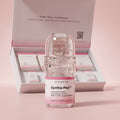
Syntha-Pep was formulated for channel delivery rather than adapted to it, and it ships sealed to a single-use head so the serum never meets an open chamber. If you want to see how it scores against the five gates on your own reading, the full ingredient list and the device specifications are both published.
See the MicroInfuser and Syntha-Pep kit · Read the full formulation breakdown
What to apply after the session is a different question

Everything above concerns what goes into a channel. What goes onto the skin afterwards follows a different rule, because once the channels have received the serum, anything applied on top is working at the surface through ordinary topical pathways.
For the first 24 to 72 hours the guidance is short: gentle, fragrance-free, hydrating, and protective. Hyaluronic acid serums, peptide creams, barrier-repair formulas built around Centella, panthenol, ceramides, or squalane, and hydrating sheet masks are all appropriate. Broad-spectrum SPF 30 or higher every morning is not optional, because UV exposure on freshly treated skin is the leading route to post-treatment pigmentation. Actives come back on the schedule in the table above.
We have a fuller treatment of the recovery window in our guide to what to use after microneedling at home.
Questions people actually ask
What serum should you use with microneedling?
Use a low-irritant, water-based serum built around molecules too large to penetrate intact skin: hyaluronic acid, PDRN, signal peptides, and growth factors, ideally with soothing agents like panthenol or Centella. Avoid anything containing L-ascorbic acid vitamin C, acids, retinoids, fragrance, essential oils, alcohol, or pigment. A serum formulated specifically for channel delivery is safer than a surface serum repurposed for it.
Can you use any serum for microneedling?
No. A serum that is safe on the surface of the skin has not been assessed for what happens when the barrier is bypassed. A 2014 JAMA Dermatology report described facial granulomas in three women after microneedle therapy, with a topical vitamin C serum implicated in two of the cases. Serum selection is a safety decision, not a preference.
Is PDRN serum better for microneedling than a regular serum?
For channel delivery specifically, PDRN has an unusually strong case. The characterised pharmaceutical form has a molecular weight between 50 and 1,500 kilodaltons, far above the roughly 500 Dalton ceiling for absorption through intact skin, so a channel is the only practical route to place it below the surface. A small-molecule serum does not gain the same delivery advantage.
Can you use vitamin C with microneedling?
Not during the session. L-ascorbic acid has a low pH that stings compromised skin, it is the ingredient class implicated in the published granuloma cases, and it absorbs perfectly well on its own, so there is no delivery benefit to weigh against the risk. Resume vitamin C about 48 hours after treatment.
Can you use hyaluronic acid serum with microneedling?
Yes, and it is one of the safest choices. Hyaluronic acid is non-irritant, and the higher-molecular-weight forms are too large to cross intact skin, so channel delivery genuinely changes where it ends up. It is also safe to apply on the surface the same day and afterwards.
What serum is similar to the plasma-derived and exosome solutions used in clinics?
No at-home serum is equivalent, and the reason is workflow rather than ingredients. Clinical exosome and plasma-derived preparations depend on cold chain, controlled reconstitution, and practitioner assessment. What does transfer is the underlying principle: those solutions are infused because they carry large signalling molecules that cannot cross intact skin. PDRN, growth factors, and high-weight hyaluronic acid share that property and remain stable in a sealed cosmetic formula.
Should the serum go on before or during microneedling?
With a closed micro-infusion system the serum is delivered through the needles during the session, so there is no separate application step and no window in which an unsterile product sits on skin waiting to be pushed in. With a pen or roller the serum is applied to the surface first, which is precisely the sequence described in the granuloma report, and it is why formula choice matters even more with those devices.
Does a higher percentage on the label mean a better result?
Not on its own. A percentage describes the concentration in the bottle, not the amount delivered in a session. A fixed single-use volume tells you more about actual exposure than a percentage does, because dropper dosing varies session to session and most of what is applied to the surface never reaches an open channel.
Can you use niacinamide with microneedling?
Niacinamide is well tolerated and it penetrates intact skin on its own, so infusing it adds no delivery advantage. It is fine as a supporting ingredient inside a serum built for channel delivery, and fine in your normal routine, but it is not a reason to infuse a niacinamide product.
What about serums with fragrance or essential oils?
Keep them out of the channel entirely. Fragrance materials are among the most common contact sensitisers, and sensitisation risk rises specifically when the barrier is bypassed. Citrus, mint, eucalyptus, and cinnamon oils come up most often. Avoid fragranced products on treated skin for about 48 hours as well.
Is fermentation-derived PDRN as good as salmon-derived PDRN?
The honest answer is that the published clinical evidence sits on the salmon-derived pharmaceutical form, and the 2017 Frontiers in Pharmacology review notes that A2A adenosine receptor binding appears linked to DNA origin, molecular weight, and manufacturing process. Fermentation-derived PDRN avoids salmon sourcing, which matters to some buyers. What it does not do is inherit the salmon-derived evidence base automatically, and any brand claiming otherwise is overstating what has been shown.
How does needle depth change which serum is safe?
Depth determines which tissue the formula reaches. Nano tips of about 0.15 mm work in the epidermis and place very little formula deep, so the stakes are lower. Fixed shallow depths around 0.5 mm reach the upper papillary dermis, where formula safety genuinely matters. Adjustable depths of 1.0 mm and beyond place more formula deeper with a smaller margin for error and belong with a trained operator.
Can you reuse a serum ampoule or a needle head?
No. Single-use components are single-use, and home sterilisation cannot reproduce the gamma sterilisation used in manufacturing. Reuse raises infection risk and damages needle tips. A partly used ampoule that has been opened has also lost the sterile-path advantage that made it appropriate in the first place.
What should you apply immediately after a session?
Gentle, fragrance-free hydration and barrier support. Hyaluronic acid serums, peptide creams, and formulas built around Centella, panthenol, beta-glucan, allantoin, ceramides, or squalane are all appropriate, as are hydrating sheet masks. Add broad-spectrum SPF 30 or higher every morning for at least the following 72 hours.
Is it normal for the skin to feel slightly tacky after the serum absorbs?
Yes. A high load of peptides and humectants like hyaluronic acid leaves a faintly tacky finish while it continues drawing moisture into the skin. It settles overnight.
Who should not use a micro-infusion serum at all?
Anyone who should not be micro-infusing in the first place. That includes pregnancy and breastfeeding unless cleared by a physician, oral isotretinoin within the past six months, active acne or skin infection in the treatment area, a personal or family history of keloid scarring, and current blood thinner use without a physician conversation. A known allergy to any ingredient in the formula you are using. Read the full declaration before a first session, because the serum goes in through open micro-channels. The full list is on our contraindications page.
What is the best hyaluronic acid serum for microneedling?
The one that states more than one molecular weight and carries nothing that fails the irritant screen. High-weight hyaluronic acid above roughly 1,000 kilodaltons is the fraction with a genuine reason to be infused, because Raman spectroscopy work by Essendoubi and colleagues showed it does not cross intact skin, while the 20 to 300 kilodalton range does. Be cautious with products marketing "nano" or ultra-low molecular weight hyaluronic acid as the hero feature, since a 2024 EMJ Dermatology scoping review reports that fractions at 20 kilodaltons and below raised expression of the pro-inflammatory cytokine TNF-alpha.
Does a serum for microneedling need to be sterile?
Sterile is a pharmaceutical condition that almost no cosmetic serum meets or claims. Most serums are preserved rather than sterile, and preservative systems are validated against a product used on the surface of intact skin, not one introduced beneath the barrier. The practical question is not whether a label says sterile but how many surfaces the formula touches on its way to the needle. A factory-sealed single-use container connecting directly to a single-use head removes those contact points; a dropper bottle opened repeatedly across a course of treatment does not.
What is the best serum for microneedling at home?
It depends on the goal. For hydration and immediate plumping, a multi-weight hyaluronic acid serum that includes a high-weight fraction. For the look of firmness over a course of months, PDRN, signal peptides such as GHK-Cu, and growth factors, judged at 8 to 12 weeks rather than at week two. For evening out tone, infusion adds the least, because the useful ingredients there are mostly small molecules that absorb unaided and several of them fail the irritant screen. If you have no specific goal yet, a low-irritant multi-weight hyaluronic acid serum is the lowest-risk place to start.
How this guide was put together
The screening criteria are ours. They were built from three inputs: the published literature on microneedling adverse events and skin penetration, the physical constraints of at-home devices, and the questions our own customers ask before a first session.
Every factual claim about molecular weight, adverse events, or ingredient mechanism is sourced below and was checked against the source at the time of writing. Product specifications come from the MicroInfuser user manual, Edition 1 (2026), and from the live product listing. We have not cited studies on our own product because we have not run any, and we are not going to imply otherwise.
This page is brand-authored and carries no clinician byline, because no clinician has reviewed this specific page. Our Chief Dermatology Advisor, Dr. Lisa Hartford, reviews individual pieces on a per-article basis, and where that has happened the byline says so.
References
- Bos JD, Meinardi MMHM. The 500 Dalton rule for the skin penetration of chemical compounds and drugs. Exp Dermatol. 2000;9(3):165-169. PMID 10839713. DOI 10.1034/j.1600-0625.2000.009003165.x
- Soltani-Arabshahi R, Wong JW, Duffy KL, Powell DL. Facial allergic granulomatous reaction and systemic hypersensitivity associated with microneedle therapy for skin rejuvenation. JAMA Dermatol. 2014;150(1):68-72. PMID 24258303. DOI 10.1001/jamadermatol.2013.6955
- Squadrito F, Bitto A, Irrera N, Pizzino G, Pallio G, Minutoli L, Altavilla D. Pharmacological activity and clinical use of PDRN. Front Pharmacol. 2017;8:224. DOI 10.3389/fphar.2017.00224
- Pickart L, Margolina A. Regenerative and protective actions of the GHK-Cu peptide in the light of the new gene data. Int J Mol Sci. 2018;19(7):1987. PMID 29986520. DOI 10.3390/ijms19071987
- Iriarte C, Awosika O, Rengifo-Pardo M, Ehrlich A. Review of applications of microneedling in dermatology. Clin Cosmet Investig Dermatol. 2017;10:289-298. PMID 28848356. DOI 10.2147/CCID.S142450
- Hou A, Cohen B, Haimovic A, Elbuluk N. Microneedling: a comprehensive review. Dermatol Surg. 2017;43(3):321-339. PMID 27755171
- Spring LK, Krakowski AC, Alam M, et al. Isotretinoin and timing of procedural interventions: a systematic review with consensus recommendations. JAMA Dermatol. 2017;153(8):802-809. PMID 28658462. DOI 10.1001/jamadermatol.2017.2077
- Gowda A, Healey B, Ezaldein H, Merati M. A systematic review examining the potential adverse effects of microneedling. J Clin Aesthet Dermatol. 2021;14(1):45-54. PMID 33584968
- Essendoubi M, Gobinet C, Reynaud R, Angiboust JF, Manfait M, Piot O. Human skin penetration of hyaluronic acid of different molecular weights as probed by Raman spectroscopy. Skin Res Technol. 2016;22(1):55-62. DOI 10.1111/srt.12228
- Waggett S, Lyles E, Schlesinger T. Update on low-molecular weight hyaluronic acid in dermatology: a scoping review. EMJ Dermatol. 2024;12(1):134-146.

