
Medically Reviewed by Dr. Lisa Hartford, MD
Medically reviewed by Dr. Lisa Hartford, MD, board-certified dermatologist and Doctor-in-Residence at EvenSkyn. Originally published April 2026. Last fact-checked April 28, 2026. Methodology, disclosures, and update log at the end.
The honest version
Two years ago, the at-home version of this technique was a niche thing that skincare obsessives ordered off Korean indie sites. By spring 2026, it's a category. Some of the kits in that category are quietly excellent. Most, frankly, aren't.
This guide is meant to help you tell which is which.
The technique itself has a specific definition. A grid of ultra-fine gold-plated needles is stamped briefly into the skin, opening temporary channels through the stratum corneum. While those channels are open, a concentrated serum is delivered through them. The clinical reference is AquaGold® Fine Touch, used by dermatologists since 2014 at 0.6 mm. At-home versions copy the same architecture (sealed serum vial, single-use needle head, depth-locked stamping) at a shallower 0.25–0.5 mm that's safe for self-administration.
The mechanism isn't speculative. Two decades of peer-reviewed dermatology literature back both halves: controlled micro-injury triggers measurable collagen induction, and the resulting micro-channels enhance topical delivery of actives that otherwise can't cross the skin barrier at meaningful concentrations. What's contested isn't whether the technique works. It's whether any given device, at any given price, is delivering the version that actually does.
If you came here trying to figure out whether to buy an at-home kit, what to look for in one, and whether it can substitute for an AquaGold facial, the answers are below. The short versions: yes, sometimes; specific things; and not exactly, but yes for the use cases most people actually have.
A note from the editorial team. We make one of these devices. That's stated up front and in the disclosure section below. It's also why we wanted to write the version of this article that didn't exist yet when we were doing our own product research a couple of years ago: an honest map of the category that lets you compare devices on the criteria that actually matter, including ours. The seven-question framework in the middle of this piece is the same one we used internally to design what we built. Use it on us.
Quick definitional reference
| Term | Definition |
|---|---|
| Micro-infusion | A skincare technique that combines short, depth-controlled microneedle stamping with simultaneous delivery of a concentrated serum through the channels created. |
| Microneedling | The umbrella technique of using fine needles to create controlled micro-injuries. Encompasses derma rollers, pen devices, stamps, and combined RF-microneedling. Also called percutaneous collagen induction therapy (CIT). |
| AquaGold® Fine Touch | A clinical micro-infusion device with 20 hollow, 24-karat gold-plated stainless steel needles, 0.6 mm long and 0.13 mm wide. Available only through licensed practitioners. Distinct from microneedling in that the manufacturer frames it as a delivery system, not a wounding system. |
| At-home micro-infusion kit | A single-use stamping device, typically 0.25–0.5 mm gold-plated needles, paired with a sealed serum vial that connects to the head. Designed for unsupervised consumer use. |
| Stratum corneum | The outermost dead-cell layer of the skin, about 0.01–0.02 mm thick. The primary barrier to topical penetration. |
| Papillary dermis | The upper portion of the skin's middle layer, beginning around 0.1 mm below the surface. Where collagen-producing fibroblasts respond to controlled micro-injury. |
| Collagen induction therapy (CIT) | A synonym for microneedling that emphasizes the wound-healing mechanism: controlled micro-injury triggers fibroblast activation and new collagen synthesis. |
What it is, where it sits
Micro-infusion overlaps two well-studied dermatological techniques: microneedling and topical drug delivery. A grid of ultra-fine needles is stamped briefly into the skin. The needles open temporary channels through the stratum corneum into the upper dermis. While those channels are open, a concentrated serum is delivered through them, bypassing the skin barrier that would otherwise block most of its actives.
This makes it a different category from a derma roller. A roller drags needles across the skin. The depth is inconsistent because the needles enter and exit at angles that depend on pressure, rolling speed, and the user's hand. It's also distinct from the motorized microneedling pens used in clinic, which oscillate needles up and down at high frequency at depths between 1.0 and 2.5 mm. Stamps are gentler. Shallower. Built for delivery rather than scar remodeling.
The clinical reference is AquaGold. It's a 0.6 mm hollow gold-plated microchannel device that aestheticians and dermatologists use to deliver custom cocktails of hyaluronic acid, peptides, and (in licensed hands) micro-doses of neurotoxins or filler. AquaGold's manufacturer is careful to distinguish their device from microneedling, framing it as a delivery system rather than a wounding system. That's an honest distinction even if the colloquial usage runs them together.
A pen is closer to a power tool. AquaGold is a clinical instrument. An at-home stamp sits between a glycolic peel and a clay mask in the spectrum of skincare intensity. It's not a substitute for clinical AquaGold. It's also not a gimmick. The mechanism is real when the device and the serum are both built right.
Comparison: micro-infusion vs. related techniques
| Feature | At-home micro-infusion (0.5 mm stamp) | Clinical AquaGold (0.6 mm) | Derma roller | Microneedling pen (clinic) |
|---|---|---|---|---|
| Depth | Fixed 0.25–0.5 mm | Fixed 0.6 mm | Variable with pressure | Adjustable 0.5–2.5 mm |
| Delivery mechanism | Sealed vial → micro-channels | Sealed vial → micro-channels | Apply serum before/after | Apply serum before/after |
| Hygiene standard | Single-use sterile head | Single-use sterile cartridge | Reusable (high contamination risk) | Single-use cartridge |
| Operator | Self | Licensed practitioner | Self | Licensed practitioner |
| Primary use | Maintenance, hydration, fine lines | Pre-event glow, fine lines | Surface absorption, mild texture | Acne scars, deeper wrinkles |
| Pain level | Tap-and-lift, mild | Painless to mild | Drag sensation | Topical anesthetic typically required |
| Typical session cost (USD) | $30–$80 in consumables | $500–$1,200 per treatment | $20–$60 device, no per-session cost | $300–$800 per treatment |
| Downtime | None to minimal redness | A few hours of redness | None | 1–3 days redness, possible flaking |
| Best for | Bi-weekly maintenance, fine lines, photoaging | Special-occasion prep, "glass skin" | Surface texture, beginner exposure | Acne scarring, deeper wrinkles, stretch marks |
| Not appropriate for | Severe scarring, active acne | Anyone uncomfortable in a clinical setting | Anyone wanting consistent results | Self-administration without training |
What the literature actually shows
When the needles enter the skin, they create what dermatologists call controlled micro-injuries. The body reads them as wounds, even though they're far smaller than a paper cut, and triggers the wound-healing cascade. Fibroblasts migrate. Growth factors and cytokines release. Over the following weeks, new collagen and elastin synthesize to remodel the dermal matrix. That's the sequence Jaiswal and Jawade describe in their 2024 Cureus review of microneedling, drawing on more than 60 cited studies (Jaiswal & Jawade, 2024).
Hou and colleagues at NYU reached the same conclusions in their 2017 Dermatologic Surgery review across human trials in scars, photoaging, and skin rejuvenation. They also flagged what's now standard in the literature: microneedling is widely used to facilitate transdermal drug delivery alongside its collagen-induction role (Hou et al., 2017). A second 2017 review in Clinical, Cosmetic and Investigational Dermatology by Iriarte and colleagues at George Washington catalogued the same expanding evidence base across acne scars, alopecia, melasma, photoaging, and drug delivery (Iriarte et al., 2017).
The delivery half is the more interesting half for at-home users. Most cosmetic actives can't penetrate the stratum corneum well on their own. Peptides, growth factors, hyaluronic acid above a certain molecular weight: too big, too hydrophilic, too blocked by the lipid-rich skin barrier in meaningful quantities. Once micro-channels open, that barrier is briefly bypassed. Serum reaches the upper dermis directly.
The most directly relevant clinical study on the combination at home is Quinlan, Ghanem and Hassan (2022) in the Journal of Cosmetic Dermatology. Their team at Queen Mary University of London evaluated home-based microneedling combined with topical growth factors over three months in 11 women aged 33–61. Twice-daily growth factor serum plus twice-weekly microneedling at 0.2 mm produced measurable improvements in skin texture, fine lines, and pigmentation, scored by VISIA imaging analysis (Quinlan, Ghanem & Hassan, 2022). Their follow-up systematic review covering 33 studies and 1,180 participants across 23 different topical growth factor preparations concluded that topical growth factor application is effective for facial skin rejuvenation, particularly when delivery is enhanced (Quinlan, Ghanem & Hassan, 2023).
Two practical implications follow. The depth has to reach beyond the stratum corneum but stay shallow enough for self-administration. And what you stamp in matters at least as much as the stamp itself.
Why depth is the single most important spec
Depth determines what the treatment does. The math is worth knowing.
The stratum corneum is about 0.01–0.02 mm thick. The full epidermis on most facial skin is only 0.05–0.1 mm thick. The papillary dermis, where collagen-producing fibroblasts begin to be engaged by controlled micro-injury, starts at roughly 0.1 mm and extends down to about 0.5 mm. Inside that anatomy, the depth choices map cleanly onto effects:
0.2–0.25 mm reaches just past the stratum corneum and into the upper epidermis. This depth primarily enhances absorption of topicals. The mechanical collagen-induction response is minimal, because you're not engaging the dermis. Useful for serum delivery. Less useful for collagen.
0.5 mm reaches through the epidermis and into the upper papillary dermis. This depth opens micro-channels for delivery and engages the early collagen-induction cascade described in the dermatology literature, while staying shallow enough that pinpoint bleeding is uncommon and recovery is minimal. It's the depth most reputable at-home stamps land on. It's broadly regarded in the literature as the lower threshold for meaningful collagen response without significant downtime (Jaiswal & Jawade, 2024; Hou et al., 2017).
1.0–2.5 mm reaches into the deeper papillary and reticular dermis. This is the depth used clinically for acne scars and deeper wrinkles. A 2024 split-face study in the International Journal of Dermatology compared 1.5 mm against 2.5 mm in atrophic acne scars and found greater clinical improvement at 2.5 mm, with measurably more downtime and erythema (Zaki et al., 2024). Not safe for at-home use without medical training.
So 0.5 mm fixed is the at-home sweet spot. Deep enough to support real collagen and absorption response. Shallow enough for self-administration. The adjustable-depth pens marketed for home use are a yellow flag, and the reason isn't subtle: depth control is harder than it looks with bare hands. Going too deep without trained hygiene is how at-home microneedling gets people in trouble.
The serum is half the device
This is the part most consumer guides go quiet on. Once you've opened micro-channels, whatever you push into them gets a level of dermal access it would never have had otherwise. That makes serum quality more consequential, not less. A beautifully engineered stamp paired with a generic hyaluronic acid filler is missing the point of the technique.
The literature supports a small set of ingredient families that pair well with micro-channel delivery.
Multi-molecular-weight hyaluronic acid
The 2011 randomized controlled trial by Pavicic and colleagues in the Journal of Drugs in Dermatology compared topical hyaluronic acid formulations across five molecular weights (50, 130, 300, 800, and 2000 kDa) in 76 women aged 30–60 over 60 days. Every molecular weight improved skin hydration and elasticity. The 50 and 130 kDa low-molecular-weight forms produced significant wrinkle-depth reduction by mean roughness (Ra) and maximum roughness (Rz) measurement, attributed to better dermal penetration of the smaller molecules (Pavicic et al., 2011).
A 2025 EMJ Dermatology scoping review reached the same conclusion: low-molecular-weight HA penetrates the dermis while high-molecular-weight HA delivers surface hydration and barrier protection. Hybrid formulations capture both (EMJ Dermatology, 2025). For micro-infusion, look for serums with multiple HA fractions rather than a single molecular weight. A serum that lists "hyaluronic acid" once on the INCI without specifying molecular weight is doing the bare minimum.
Copper Tripeptide-1 (GHK-Cu)
GHK-Cu is one of the most extensively studied skin peptides in the literature. The 2015 review by Pickart, Vasquez-Soltero and Margolina in BioMed Research International lays out the case in unusual detail. GHK is naturally present in human plasma at about 200 ng/mL at age 20, declining to roughly 80 ng/mL by age 60. At very low concentrations (1–10 nanomolar), GHK-Cu stimulates collagen, glycosaminoglycan, and proteoglycan synthesis in dermal fibroblasts. Placebo-controlled clinical studies of GHK-Cu facial creams have shown reductions in fine lines and wrinkle depth, improvements in skin laxity and density, and increased dermal keratinocyte proliferation across 12-week trials in women with mild-to-advanced photoaging (Pickart et al., 2015).
A 2018 follow-up by the same authors in International Journal of Molecular Sciences extended the case with gene-expression data, showing GHK can up- or down-regulate thousands of genes implicated in skin regeneration and inflammation (Pickart et al., 2018).
Acetyl Hexapeptide-8 (Argireline)
Wang et al. (2013) is the cleanest clinical signal here. 60 Chinese subjects, peri-orbital wrinkles, twice-daily Argireline application for four weeks, randomized 3:1 against placebo. The total subjective anti-wrinkle efficacy was 48.9% in the Argireline group versus 0% in the placebo group. Objective skin roughness measurements fell significantly in the active group (p < 0.01) and didn't budge in the placebo group (Wang et al., 2013).
The 2025 review by Zdrada-Nowak, Surgiel-Gemza, and Szatkowska in International Journal of Molecular Sciences concluded that AH-8 has clinical evidence for reducing wrinkle depth, improving elasticity, and enhancing hydration in topical studies, but flagged a specific limitation: low intrinsic skin penetration is the main efficacy ceiling for topical use (Zdrada-Nowak et al., 2025). That ceiling is exactly what micro-channel delivery raises. Argireline's reputation in skincare circles is mixed precisely because its efficacy depends on getting it past the barrier, and most topical formulations don't.
Niacinamide (Vitamin B3)
Two well-replicated controlled trials by Procter & Gamble researchers established the cosmetic case. The 2004 study in International Journal of Cosmetic Science: 5% topical niacinamide, twice daily, 12 weeks, 50 women aged 40–60. Significant reductions in fine lines, hyperpigmentation spots, blotchiness, and yellowing (Bissett et al., 2004). The 2005 follow-up in Dermatologic Surgery used the same 12-week protocol on the same age group and added cutometric elasticity improvements to the list of measured outcomes (Bissett, Oblong & Berge, 2005). Niacinamide also reinforces the skin barrier by promoting ceramide and intercellular lipid synthesis. That's particularly useful in the post-stamping window, when the barrier is briefly compromised.
Centella asiatica (asiaticoside, madecassoside)
A 2024 Pharmaceutics review summarized clinical evidence that Centella asiatica extracts containing madecassoside and asiaticoside reduce post-procedure erythema and accelerate wound healing. The most striking single data point in the review: a controlled study in which erythema after laser resurfacing resolved on day 7 in the Centella group versus day 28 in the placebo group (Pharmaceutics, 2024). Earlier work in Planta Medica showed that madecassoside increases collagen synthesis and reduces inflammatory infiltration in vivo (Liu et al., 2008). For a stamping treatment, Centella is exactly the kind of soothing, barrier-supporting active you want alongside the deeper actives.
Recombinant human Epidermal Growth Factor (rhEGF / sh-Oligopeptide-1)
The 2023 narrative review by Shin and colleagues at Chung-Ang University in International Wound Journal catalogued the clinical evidence for topical rhEGF across wound healing, photoaged skin, acne scars, and post-laser care. Their key point for at-home users is buried in the discussion: delivery into the dermis is limited by EGF's molecular size unless paired with a transdermal-enhancing technique like microneedling or fractional radiofrequency (Shin et al., 2023). Bioactive but barrier-limited. Micro-channel delivery materially expands what it can do. That's the central case for pairing rhEGF with micro-infusion specifically.
If a serum's INCI list doesn't include at least three or four of these ingredient families, the device is doing the easier half of the work and the formulation is doing the lazier half.
The hygiene question almost no one asks
Stamping needles into your face, even at 0.5 mm, opens a temporary entry point for bacteria. The CDC's clinical injection-safety guidance is unambiguous on the underlying principle: "Once used, the syringe and needle are both contaminated and must be discarded," summarized by the agency as "One Needle, One Syringe, Only One Time" (CDC, Preventing Unsafe Injection Practices, March 2024). The same logic applies to home microneedling devices. Arguably more strictly, because home environments aren't sterile to clinical standards.
Three categories of device fail this bar.
Anything reusable. The reusable derma rollers that flooded the market on the back of late-2023 TikTok content are the worst offenders. They accumulate biofilm in the needle bases that home sterilization (alcohol, boiling, UV wand) can't reliably remove. The most common complaint in user reviews of cheap rollers is post-treatment breakouts. That isn't a coincidence. It's contamination.
Anything where the serum gets poured into an open chamber that fingers touch. Pour-and-fill designs introduce contamination opportunities at every fill. They look like micro-infusion. They sit several steps below the clinical reference on hygiene.
Anything sold without a single-use head. If the brand can't tell you what comes off the device after each session and goes in the bin, you're not buying micro-infusion. You're buying something that resembles it.
The architecture that works is the one AquaGold uses clinically: a sealed serum vial connecting directly to a sterile needle head, with no air exposure between manufacturing and your face. After use, both go in the sharps bin together. Every reputable at-home device worth considering copies that architecture.
What you do during the session matters too. Wash your hands before. Don't touch the needle head with your fingers. Don't stamp over active acne, cold sores, eczema, or open wounds. Don't lay the device down on the bathroom counter mid-session. None of this is optional just because you're at home.
How to evaluate any at-home micro-infusion kit before you buy
Seven questions. They apply to every device on the market, the EvenSkyn MicroInfuser™ included. Run them as a checklist before the purchase, not as a rationalization after.
1. What is the needle depth, and is it fixed or adjustable? Fixed 0.5 mm is the answer for unsupervised home use. 0.25 mm is acceptable but biased toward absorption, with limited collagen response. Adjustable-depth devices marketed for home use are a yellow flag.
2. Is the needle head single-use, individually sealed, and gamma-sterilized? "Sterile" should be specified, with the sterilization method documented. Gamma sterilization is the medical-grade standard. "Disinfected" or "cleaned" is something else entirely.
3. Is the serum delivered through a sealed vial that connects to the head, or is it an open-chamber design? Sealed delivery is meaningfully safer. If the manufacturer can't show you how the serum gets from the vial to your face without touching air, it doesn't.
4. What's actually in the serum? A peptide complex (look for two or more of: GHK-Cu, Acetyl Hexapeptide-8, palmitoyl peptides, sh-Oligopeptide-1) plus multi-molecular-weight hyaluronic acid plus a soothing complex (Centella, beta-glucan, panthenol) plus niacinamide is the well-supported template. A serum that's mostly water, glycerin, and a single low-grade peptide is doing minimal work even when delivered well.
5. Is the serum stable in air, or does it require sealed packaging? Sealed packaging is actually a good sign. Bioactive peptides and growth factors aren't particularly air-stable. A "growth factor" serum that ships in a pour-and-fill bottle and sits open between uses: question how much active is left by month two.
6. Does the brand list contraindications up front? Pregnancy, isotretinoin, blood thinners, active infections, keloid history. A kit that doesn't list these is signaling a casual relationship with safety. Real medical-aesthetic devices have real contraindication lists.
7. What's the cost per session, and how does it compare? A clinical AquaGold facial in the U.S. typically runs $500–$1,200. A reasonable at-home kit costs $30–$80 per session in consumables. If an at-home kit comes in much cheaper than that floor, ask what corner has been cut. Usually serum quality, hygiene, or both.
What a session actually looks like
Most at-home protocols compress into roughly 10 minutes from setup to finish. The mechanics are similar across reputable kits. What follows is a generic protocol that mirrors clinical AquaGold practice. Specific timing on your kit may vary.
1. Cleanse, then dry the skin. A gentle non-stripping cleanser, followed by a clean towel. Don't apply actives or moisturizer first. Skin should be dry and bare.
2. Patch test on session one. A small area on the jawline, not the cheek or under-eye. Wait 24 hours and check for any unusual reaction.
3. Open the sealed needle head and serum vial. Don't touch the needle face with your fingers. Connect according to your device's instructions. The serum should engage with the head without any air-exposure step.
4. Stamp in a grid pattern. Press, lift, move 1–2 mm, press, lift. Cover the area in even rows, the way you'd cover a wall with stamps rather than a roller. Light pressure is sufficient. The depth is fixed; pressing harder doesn't push the needles deeper, but does press more serum through.
5. Treat the full face, neck, and décolletage if your serum allowance permits. Skip the immediate eye area. Stamp along the orbital bone (the ridge where the eye socket sits), not on the thin tissue directly under the eye. Pat any residual serum into the under-eye area with clean fingertips.
6. Stop when the serum runs out, or after roughly 8–10 minutes. Don't restamp the same area more than 2–3 times in one session.
7. Apply your post-treatment routine immediately. Hydrating serum (HA-based), peptide cream, and a barrier-repair moisturizer with ceramides, panthenol, or Centella. No retinol, vitamin C (L-ascorbic), AHAs, BHAs, or benzoyl peroxide for 24–72 hours.
8. Discard the head and empty vial in a sharps container. Both are single-use.
9. SPF the next morning, every morning, for at least three days. Broad-spectrum SPF 30 or higher. UV exposure on freshly treated skin is the single biggest preventable cause of post-treatment hyperpigmentation.
The first session usually feels strange because it's unfamiliar. By session three, the technique is routine. Visible redness during and immediately after is normal and usually resolves within 1–4 hours. Pinpoint bleeding at 0.5 mm is uncommon and usually means you're pressing too hard.
Common at-home mistakes (and how to avoid them)
Eight things that go wrong, in roughly the order of how often we see them in user reports. None are exotic. Most are the kind of thing a person reads in the manual, agrees with, and then quietly does anyway because it seems harmless.
Going too deep. The most common one. People assume that if 0.5 mm is good, 1.0 mm is better. It's not, at home. Deeper depths require trained hygiene, anesthetic, and downtime management. Stay at fixed depths designed for self-administration.
Treating too often. Bi-weekly is the maximum cadence for most users. More frequent stamping doesn't accelerate collagen induction. Collagen synthesis follows its own schedule, regardless of how often you stimulate it. What more-frequent treatment does do is degrade barrier function. The skin barrier needs 7–14 days to fully recover between sessions.
Stamping over active breakouts or cold sores. This can mechanically spread bacteria or virus across the face. Wait until the area is fully clear before treating it.
Reusing the needle head "just once" because it looked clean. Home sterilization can't reach the medical-grade standard. Once used, the head goes in the sharps bin. The financial savings of reuse aren't worth the contamination risk. Not even close.
Skipping the patch test. Even with a serum you've used topically before, micro-channel delivery is a different exposure profile. A jawline patch test on the first session catches reactions before they spread across your face.
Stacking actives the same day. Retinol the night before, AHA the morning of, vitamin C right after. Each is fine on a normal day. On a stamping day, they compound irritation. Pause them.
Skimping on SPF after. Post-treatment skin is photo-sensitized for several days. A skipped SPF day in the week after a session is the most common cause of post-inflammatory hyperpigmentation, especially in Fitzpatrick III and above.
Buying a cheap reusable roller and assuming it's the same thing. It isn't. The architecture is different, the hygiene is worse, and the depth is unpredictable. If the budget is genuinely tight, fewer good sessions beat more bad ones.
From Dr. Hartford's review. The contraindication list is the part of any at-home kit's documentation that gets read least and matters most. Read it before the first session, not after a reaction. And on isotretinoin specifically: the answer isn't "wait a few weeks." It's six months minimum from the last dose. The drug systemically alters wound healing, and patients underestimate how long the effect persists.
What to expect: a realistic timeline
Cosmetic results from at-home micro-infusion are cumulative, not immediate, despite what some marketing implies.
| Timeframe | What to expect |
|---|---|
| Hours 0–48 | Hydration glow as infused HA and humectants pull moisture into the upper skin. Real but transient. Equivalent to a well-formulated humectant-rich sheet mask, just deeper. |
| Weeks 2–4 | Skin texture starts to feel smoother as surface-level actives (niacinamide, peptides) accumulate effect. Fine lines and tone improvements begin to be visible. |
| Weeks 6–8 | Initial firming response and softer wrinkles emerge. New collagen production is underway. |
| Months 3–6 | Collagen-driven changes (softer wrinkles, firmer texture, improved elasticity) continue to deepen. Bi-weekly sessions sustain and compound results. |
The timeline maps to the underlying biology. Collagen remodeling takes weeks to months regardless of how the stimulus was delivered. The 2024 Cureus review describes "noticeable improvements within weeks following treatment" rather than from any single session (Jaiswal & Jawade, 2024). Bi-weekly sessions over four to six months is what at-home micro-infusion can reasonably deliver. The people who report the best results treat it like a workout schedule rather than a one-off.
Who should not use at-home micro-infusion
Absolute contraindications. Do not use if:
- You are pregnant or breastfeeding (until cleared by a physician)
- You've taken oral isotretinoin (Accutane) within the past six months
- You have an active bacterial, viral, or fungal skin infection in the treatment area, including cold sores
- You have a personal or family history of keloid or hypertrophic scarring
- You have a known allergy to gold or stainless steel
Consult your physician first if you have:
- Blood thinners or anticoagulants (warfarin, clopidogrel, apixaban, daily aspirin therapy)
- Uncontrolled diabetes
- An active autoimmune flare
- Prescribed immunosuppressants or systemic steroids
- Recent in-clinic procedures (Botox within 2 weeks; fillers within 2 weeks; chemical peel timing varies; ablative laser 4–6 weeks)
Use with extra caution and an extended patch test if you have:
- Rosacea, eczema, or psoriasis
- Melasma or a history of post-inflammatory hyperpigmentation
- A history of cold sores in the treatment area
- Fitzpatrick IV–VI skin tones (slightly elevated PIH risk; treat conservatively initially)
If any of these apply, defer to the practitioner who manages the relevant condition for specific timing. Anyone selling you a device without flagging these is doing you a disservice.
Pairing with RF, microcurrent, and other at-home devices
This question comes up constantly, and the answer is more interesting than yes or no. RF (radiofrequency), ultrasound, and EMS/microcurrent each work on a different layer of the skin via a different mechanism. RF acts on dermal collagen via thermal energy. Ultrasound acts on cellular metabolism via acoustic vibration. EMS acts on muscle and ATP via low-current stimulation. Microneedling and micro-infusion create the channels and deliver actives. None of them compete; they target different problems.
Sequencing matters. The general principle, supported by clinical convention: use thermal and electrical modalities before micro-infusion, not after. Running RF, ultrasound, or microcurrent earlier the same day warms the dermis, boosts circulation, and primes the tissue. Running them on top of freshly stamped skin amplifies redness and disturbs the early wound-healing window. A 24-hour gap after micro-infusion before resuming any thermal or electrical device is a sensible minimum.
On non-treatment days, your other devices stay on their normal schedule. The cumulative effect of consistent RF or microcurrent in the days between bi-weekly micro-infusion sessions is what users report drives the most visible firming over a three- to six-month timeline.
Retinol follows the same timing logic: pause it 48 hours before and 72 hours after a session, and keep it in your nightly routine on non-treatment days. If you also use red light therapy, the order of those two matters too. Our guide on using retinol with red light therapy covers the sequencing.
A note on the EvenSkyn MicroInfuser™
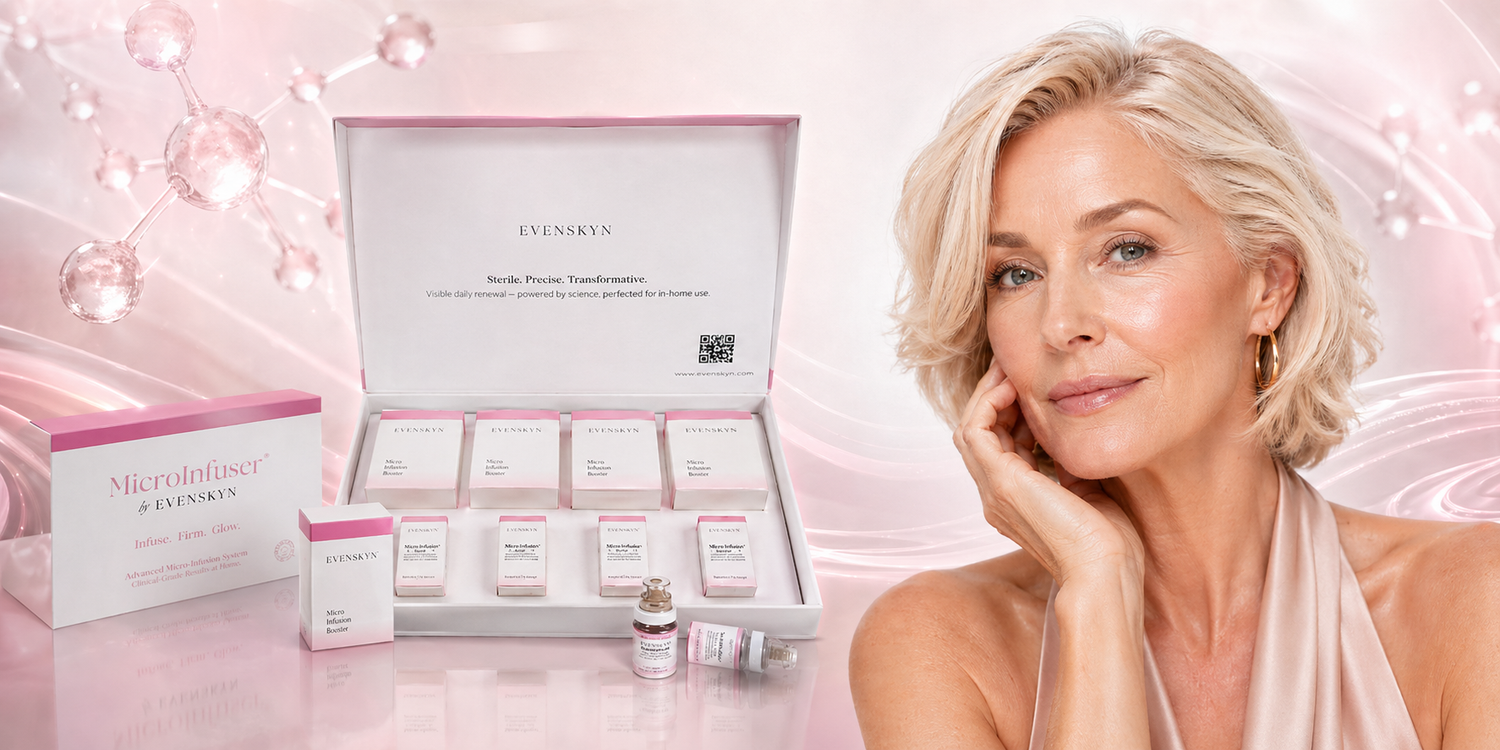
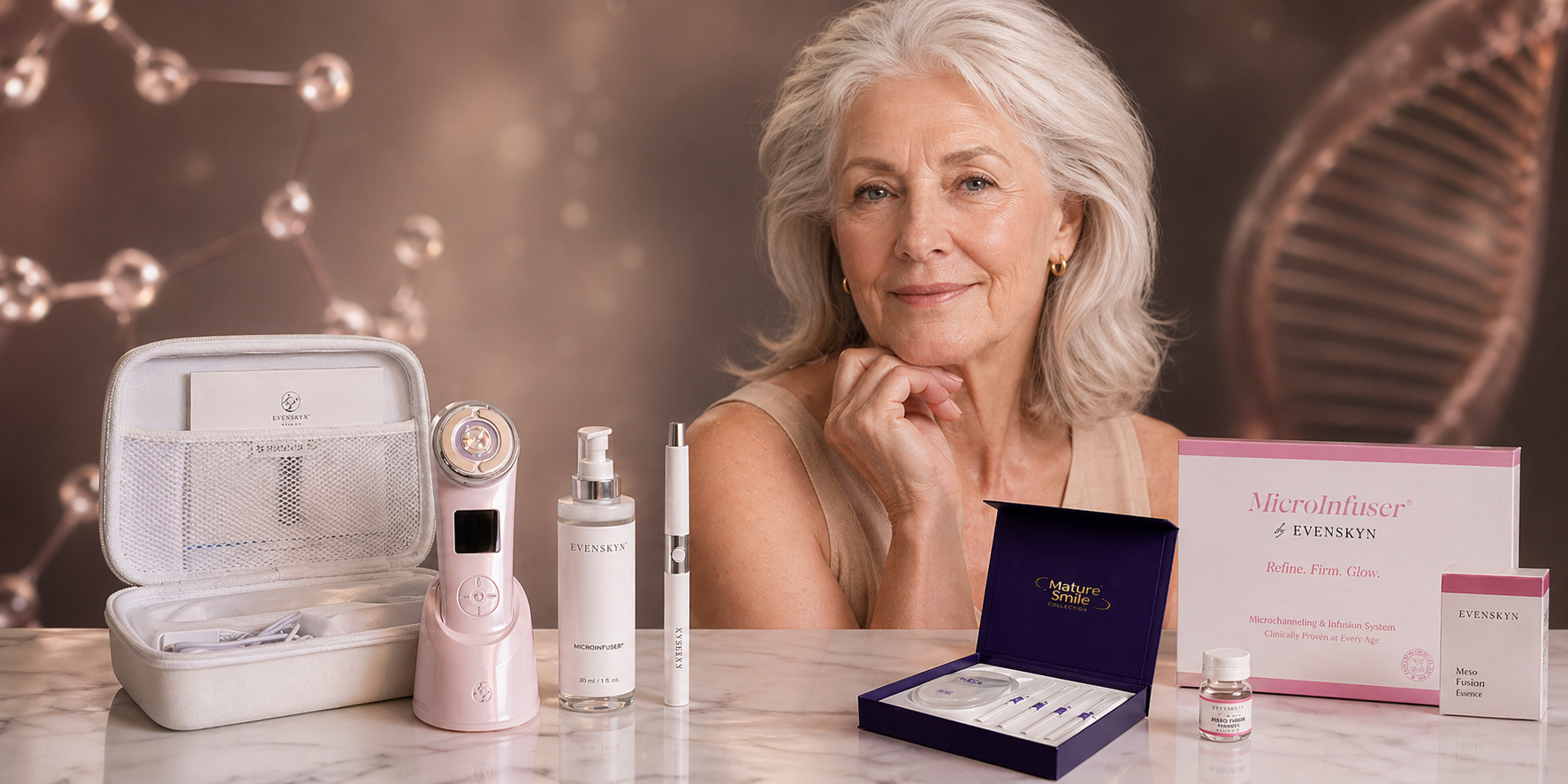
If you've made it this far, you know we make one. The EvenSkyn MicroInfuser™ is built on the principles laid out above. Fixed 0.5 mm depth, no adjustment. 24-karat gold-plated needles for biocompatibility and oxidation resistance. Sealed-vial-to-head architecture, so the serum doesn't touch air or fingers. Gamma-sterilized single-use heads. The paired serum (Syntha-Pep™) is formulated for micro-channel delivery: a multi-molecular-weight HA system, a peptide complex featuring Copper Tripeptide-1 (GHK-Cu) and Acetyl Hexapeptide-8, recombinant sh-Oligopeptide-1 (the EGF analog), Centella-based barrier support, and niacinamide. Dr. Hartford reviews the user manual and protocols. The protocols align with the literature cited above.
We mention it once, deliberately, at the end of an article whose purpose is to help you evaluate the category honestly, including evaluating us. The seven-question framework above is the same framework we used internally to design the device, and the same framework we'd want any reader to use to compare it against alternatives. Run it on every kit you're considering, ours included. If a competitor passes more of the seven than we do, buy the competitor.
Frequently asked questions
Is at-home micro-infusion the same as AquaGold? No. AquaGold® Fine Touch is a clinical device used by licensed practitioners at 0.6 mm, often combined with prescription ingredients (micro-Botox, dilute filler, PRP) that can't legally be sold for home use. At-home micro-infusion uses the same architectural principle (sealed serum, single-use head, depth-locked stamping) at a slightly shallower depth and with cosmetic-only formulations. The mechanism is similar; the intensity, ingredients, and clinical context differ.
Is at-home micro-infusion safe? Used as directed, with a single-use sterile head, a sealed serum vial, and standard contraindication awareness, it has a strong safety profile in the published literature. The risks come from reused needles, open-chamber designs, ignoring contraindications, and going too deep with adjustable-depth pens. None of those risks are inherent to the technique. They're inherent to specific device designs.
How often should I do micro-infusion at home? Every two weeks is the standard cadence. That spacing is consistent with the seven-to-fourteen-day window controlled microneedling studies typically use, and it gives the skin barrier full time to recover between sessions. Some users on stable skin can do it every ten days. More frequent than that doesn't improve results and can compromise barrier function.
Can I use it under my eyes? Stamp along and outside the orbital bone, not on the thin tissue directly under the eye. The skin under the eye is too thin and too close to the eye itself for at-home stamping. Pat residual serum into the under-eye area with clean fingertips after the session. That's the safer way to deliver the actives there.
Can I use it on my neck and chest? Yes, but use lighter pressure and fewer sweeps. Neck and chest skin is thinner and more prone to post-inflammatory hyperpigmentation than facial skin. Users with darker skin tones (Fitzpatrick IV–VI) should be especially conservative and consider patch-testing before treating these areas.
What should I apply afterward? Hyaluronic acid serums, peptide creams, hydrating sheet masks, and barrier-repair creams (panthenol, Centella, beta-glucan, ceramides) are all good. Avoid retinol, vitamin C (L-ascorbic), AHAs, BHAs, benzoyl peroxide, and synthetic fragrance for 24–72 hours. Apply broad-spectrum SPF 30+ the next morning and for the following three days. UV exposure on freshly treated skin is the leading cause of post-treatment hyperpigmentation.
Will I see immediate results? You'll see a hydration glow within 24–48 hours. Visible collagen-driven changes (fine line softening, firmer texture, improved tone) emerge from week six onward and continue building over three to six months of consistent bi-weekly use. Anyone promising you a face-lift in a week is selling something the underlying biology can't deliver.
Does it hurt? At 0.5 mm with light pressure, most users describe it as a controlled tapping sensation with mild warmth. Pinpoint bleeding is uncommon at this depth. If it hurts, you're pressing too hard.
Is it worth it compared to clinical AquaGold? Different tools for different uses. A clinical AquaGold session delivers a higher-intensity treatment with prescription ingredients you can't get at home, in a fully sterile setting, performed by a licensed provider. An at-home kit gives you bi-weekly maintenance and cumulative collagen support at roughly one-tenth the per-session cost. Many people who go deepest into the category end up doing both: clinical AquaGold quarterly for the high-end work, at-home micro-infusion in between for maintenance.
Can I reuse the needle head if I sterilize it myself? No. Home sterilization (alcohol, boiling, UV wand) can't match the gamma-sterilization process used during medical-grade manufacturing, and reusing a head dramatically increases infection risk and damages the needle tips. The CDC's clinical injection-safety guidance is unambiguous on this point.
Does it work on acne scars and stretch marks? At 0.5 mm, expect modest improvement in surface texture over a multi-month course, but not the deeper remodeling that 1.5–2.5 mm clinical microneedling produces for moderate-to-severe atrophic acne scars or mature stretch marks. For severe scarring, in-clinic deeper needling typically produces more dramatic results.
Is it better than retinol for anti-aging? The two work via different mechanisms and are complementary, not competing. Retinol is a topical that drives epidermal turnover and gradually thickens the dermis with consistent nightly use. Micro-infusion is a periodic mechanical and delivery treatment. Most considered at-home routines combine them: nightly retinol on non-treatment days (paused 48 hours before and 72 hours after a session), bi-weekly micro-infusion for collagen induction and concentrated peptide and growth-factor delivery.
What's the difference between micro-infusion and microneedling? Microneedling is the umbrella technique. Micro-infusion is a specific subtype that adds simultaneous serum delivery through the needles or through the channels they create. Most clinical microneedling sessions apply serum separately, before or after. Micro-infusion devices are engineered to deliver the serum in the same motion as the stamp.
About the medical reviewer
Dr. Lisa Hartford, MD is a board-certified dermatologist and serves as Doctor-in-Residence and Chief Dermatology Advisor at EvenSkyn. Her role is to review the safety protocols, contraindication lists, and clinical claims for all EvenSkyn at-home device documentation, including the MicroInfuser™ user manual referenced in this article. The clinical statements, contraindications, and protocol guidance in this guide reflect Dr. Hartford's review.
Editor's note: Dr. Hartford's full credential block (medical school, residency program, year of board certification, state licenses, and current practice setting) is being added in the next site-wide editorial update. Readers seeking direct verification in the interim can contact EvenSkyn at support@evenskyn.com.
Editorial methodology
This article was researched between February and April 2026. The methodology was as follows:
- Peer-reviewed clinical literature indexed in PubMed and PubMed Central was searched with terms including: microneedling, micro-infusion, percutaneous collagen induction therapy, transdermal drug delivery, AquaGold, plus each named active ingredient (GHK-Cu, Argireline, niacinamide, Centella asiatica, hyaluronic acid molecular weight, recombinant epidermal growth factor).
- Each citation was independently verified against the original PubMed or PMC entry on the day of publication. First author, journal name, year, and key claims were cross-checked against the primary source. Where a quote is used, it's verbatim from the cited source.
- Regulatory and safety guidance was sourced directly from the CDC and verified against the live agency page on the date of publication.
- The product manual for the EvenSkyn MicroInfuser™ (User Manual, Edition 1, 2026) was cross-referenced for protocol consistency.
- Where the literature is mixed or evidence is preliminary, as for some peptides and growth factors at home-use depths, the article hedges rather than overclaiming.
A first-pass version of this article (Edition 1.0) contained four citation-attribution errors that were identified during a second-pass independent verification and corrected before publication. The corrections are documented in the update log below.
Conflict of interest disclosure
EvenSkyn manufactures and sells at-home skincare devices, including the MicroInfuser™ described in the final third of this article. This is a clear commercial interest and is disclosed transparently. We've tried to address the awkwardness of the position the only way we know how: by writing a piece whose buyer's framework evaluates any device in the category, ours included, on the same set of criteria. We mention competitor categories (derma rollers, microneedling pens, AquaGold) but don't name competitor brands negatively.
This article is for educational purposes and isn't personal medical advice. Consult a qualified dermatologist before beginning any new at-home procedure if you have a relevant medical history or aren't sure whether the technique is appropriate for you.
Update log
- April 28, 2026 (Edition 1.2 — Current): Independent fact-check pass completed. Five citation issues from Edition 1.0 corrected: (1) Pavicic 2011 journal corrected from "American Journal of Clinical Dermatology" to Journal of Drugs in Dermatology. (2) Hou 2017 journal corrected from "Journal of the American Academy of Dermatology" to Dermatologic Surgery. (3) The Cureus 2024 microneedling review correctly attributed to Jaiswal & Jawade. (4) The 2023 EGF dermatology review correctly attributed to Shin et al. in International Wound Journal. (5) The 2025 Acetyl Hexapeptide-8 review correctly attributed to Zdrada-Nowak, Surgiel-Gemza & Szatkowska in International Journal of Molecular Sciences. Anatomical depth descriptions reconciled with skin-layer literature. CDC quotation replaced with verbatim agency text and current page date. Added "Common at-home mistakes" section and "What a session actually looks like" protocol walkthrough. Added effect-size detail from cited studies.
-
April 2026 (Edition 1.0): Original publication.
References
- Jaiswal S, Jawade S. Microneedling in Dermatology: A Comprehensive Review of Applications, Techniques, and Outcomes. Cureus. 2024;16(9):e70033. doi:10.7759/cureus.70033 — PMC11499218 | PMID 39449889
- Hou A, Cohen B, Haimovic A, Elbuluk N. Microneedling: A Comprehensive Review. Dermatologic Surgery. 2017;43(3):321-339. doi:10.1097/DSS.0000000000000924 — PMID 27755171
- Iriarte C, Awosika O, Rengifo-Pardo M, Ehrlich A. Review of applications of microneedling in dermatology. Clinical, Cosmetic and Investigational Dermatology. 2017;10:289-298. doi:10.2147/CCID.S142450 — PMID 28848356
- Quinlan DJ, Ghanem AM, Hassan H. Topical growth factors and home-based microneedling for facial skin rejuvenation. Journal of Cosmetic Dermatology. 2022;21(8):3469-3478. doi:10.1111/jocd.14650 — PMID 34951101
- Quinlan DJ, Ghanem AM, Hassan H. Topical growth factor preparations for facial skin rejuvenation: A systematic review. Journal of Cosmetic Dermatology. 2023. doi:10.1111/jocd.15644 — PMID 37222303
- Pavicic T, Gauglitz GG, Lersch P, Schwach-Abdellaoui K, Malle B, Korting HC, Farwick M. Efficacy of cream-based novel formulations of hyaluronic acid of different molecular weights in anti-wrinkle treatment. Journal of Drugs in Dermatology. 2011;10(9):990-1000. — PMID 22052267
- Pickart L, Vasquez-Soltero JM, Margolina A. GHK Peptide as a Natural Modulator of Multiple Cellular Pathways in Skin Regeneration. BioMed Research International. 2015;2015:648108. doi:10.1155/2015/648108 — PMC4508379 | PMID 26236730
- Pickart L, Vasquez-Soltero JM, Margolina A. Regenerative and Protective Actions of the GHK-Cu Peptide in the Light of the New Gene Data. International Journal of Molecular Sciences. 2018;19(7):1987. doi:10.3390/ijms19071987 — PMC6073405
- Wang Y, Wang M, Xiao S, Pan P, Li P, Huo J. The anti-wrinkle efficacy of argireline, a synthetic hexapeptide, in Chinese subjects: a randomized, placebo-controlled study. American Journal of Clinical Dermatology. 2013;14(2):147-153. doi:10.1007/s40257-013-0009-9 — PMID 23417317
- Zdrada-Nowak J, Surgiel-Gemza A, Szatkowska M. Acetyl Hexapeptide-8 in Cosmeceuticals — A Review of Skin Permeability and Efficacy. International Journal of Molecular Sciences. 2025;26(12):5722. doi:10.3390/ijms26125722 — PMC12193160 | PMID 40565185
- Bissett DL, Oblong JE, Berge CA. Niacinamide: a B vitamin that improves aging facial skin appearance. Dermatologic Surgery. 2005;31(7 Pt 2):860-865. doi:10.1111/j.1524-4725.2005.31732 — PMID 16029679
- Bissett DL, Miyamoto K, Sun P, Li J, Berge CA. Topical niacinamide reduces yellowing, wrinkling, red blotchiness, and hyperpigmented spots in aging facial skin. International Journal of Cosmetic Science. 2004;26(5):231-238. doi:10.1111/j.1467-2494.2004.00228.x — PMID 18492135
- Topical Application of Centella asiatica in Wound Healing: Recent Insights into Mechanisms and Clinical Efficacy. Pharmaceutics. 2024;16(10):1252. — PMC11510310
- Liu M, Dai Y, Li Y, Luo Y, Huang F, Gong Z, Meng Q. Madecassoside isolated from Centella asiatica herbs facilitates burn wound healing in mice. Planta Medica. 2008;74(8):809-815. doi:10.1055/s-2008-1074533 — PMID 18484522
- Shin SH, Koh YG, Lee WG, Seok J, Park KY. The use of epidermal growth factor in dermatological practice. International Wound Journal. 2023;20(6):2414-2423. doi:10.1111/iwj.14075 — PMC10333026 | PMID 36584669
- Update on Low-Molecular Weight Hyaluronic Acid in Dermatology: A Scoping Review. EMJ Dermatology. 2025. — EMJ Dermatology
- Zaki MS, et al. Evaluation of microneedling depth of penetration in management of atrophic acne scars: a split-face comparative study. International Journal of Dermatology. 2024. — PMID 38159109
- Centers for Disease Control and Prevention. Preventing Unsafe Injection Practices. Page last reviewed March 26, 2024. — CDC Injection Safety



Leave a comment
All comments are moderated before being published.
This site is protected by hCaptcha and the hCaptcha Privacy Policy and Terms of Service apply.