
Medically Reviewed by Dr. Lisa Hartford, MD
Does Radiofrequency Skin Tightening Actually Work?
An evidence-based, peer-reviewed evaluation of the studies, the limits, and the protocol calibration that decides whether your at-home RF device delivers a real result or a placebo.
The case for at-home RF, narrowed to what the studies actually show
At-home radiofrequency works, but only inside a window most users walk past: a calibrated multi-week protocol with sustained dermal warming at 40 to 42°C, a conductive gel that maintains electrical coupling, and 8 to 12 weeks of patience for collagen biology to do its job. Outside that window, RF behaves like every other underused beauty device. Inside it, the published evidence is consistent.
Ideal For
- Mild to moderate facial laxity, jawline softening, early jowls
- Anyone who completed an in-office RF course and wants maintenance
- Skin in Fitzpatrick types I to V with no thermal contraindications
- Patients seeking a sustained collagen-stimulation protocol, not a one-day result
Skip If
- You expect facelift-level lift from a non-invasive device
- You have a pacemaker, implanted electronic device, or active malignancy in the treatment zone
- You can't commit to 3× weekly use for 8 weeks minimum
- You're inside the post-procedure window: 14 days after Botox, 28 days after hyaluronic acid filler
The Verdict, Field-Ranked
- Does at-home RF work? Yes, with caveats. Across 15 controlled studies of 1,230 participants, RF improved skin firmness in 52.9% to 100% of patients depending on cohort and endpoint.4
- How much improvement? Statistically significant but visually subtle. Expect a softer jawline edge, smoother texture, and reduced fine-line depth. Don't expect surgical lift.
- How long until results? 4 to 8 weeks for early changes, 12 weeks for peak collagen remodeling, with continued improvement up to 24 weeks in longitudinal data.1
- Why most people quit? They expect week-2 dramatic change, don't see it, and stop before the collagen biology reaches the point where results become visible.
- The anchor recommendation: The Evenskyn Lumo+ for full-face RF protocols, paired with the Conduction Gel for proper electrical coupling.
Yes, radiofrequency skin tightening works. The clinical evidence is consistent across more than a decade of peer-reviewed studies, including 12-week split-face trials in women aged 35 to 60 that documented statistically significant improvements in wrinkles, elasticity, skin firmness, and dermal collagen content using home-based multisource RF devices.12
The harder question is whether your device, used at your cadence, with your conductive medium, is producing the conditions the studies actually measured. The article below answers that, with the studies named, the device specifications spelled out, and the protocol that aligns at-home use to clinical evidence.
The Science, on the Studies' Own Terms
Before the protocol, the mechanism. Before the device, the biology. What controlled heat at 1 to 3 millimetres of dermal depth actually does to fibroblasts, and what it does not.
The question, reframed
"Does RF work?" is the wrong question. The right one is whether your protocol matches the conditions the studies actually measured.
A patient walks into the clinic and asks whether at-home RF skin tightening works. The temptation is to say yes or no. Both answers are wrong. The yes is a marketing reflex; the no is a defensive crouch. The accurate answer is structural: at-home RF works inside a narrow set of conditions, and the question worth asking is not whether the technology can produce a result but whether your daily use creates the conditions under which the published studies documented one.
This pillar treats that question seriously. Across roughly 18 peer-reviewed studies covering home-use and clinical RF, a consistent picture emerges. RF heats the dermis to the 40 to 42°C range, triggers immediate collagen contraction, and stimulates fibroblast activity that produces new collagen over the following 8 to 12 weeks.12 When subjects use a properly powered device, with a conductive medium that maintains electrical coupling, at a cadence of two to three sessions weekly, statistically significant improvements in skin elasticity, firmness, and wrinkle depth are documented at the 12-week endpoint and sustained at 24-week follow-up.210
What that finding does not mean: that every device on the market reaches those temperatures, that every user runs the protocol long enough to see results, or that the result is visible enough to satisfy expectations set by surgical before-and-afters. RF works the way collagen biology allows. Skin remodelling is slow, cumulative, and additive. A device used twice in week one and forgotten by week three produces no result. A device used three times weekly for twelve weeks, against the right anatomical zones, with adequate conductive gel and proper technique, produces the result the studies show.
Four ways at-home RF fails in the wild
When the device works in studies but not in your bathroom, one of four conditions has been missed.
If RF works in trials but feels useless in real life, the failure is almost always one of these four. Each is fixable.
Underpowered device
A device that emits RF energy but lacks the power density to reach therapeutic temperature in the dermal layer (40 to 42°C) heats the skin surface only. The user feels warmth, assumes the protocol is working, and gets no collagen response. Many sub-$200 RF gadgets sit in this category.
Insufficient conductive coupling
RF energy needs a continuous electrical path between electrodes and skin. Without enough conductive gel, the current arcs, the electrodes drag, and the energy never reaches the dermis at therapeutic intensity. Skipping the gel is the single most common at-home protocol error.
Cadence too sparse
Studies that report results use 2 to 3 sessions weekly for at least 8 weeks. Users who run one session per week for six weeks, then quit, never enter the published evidence window. Collagen remodelling has a minimum dose response.14
Wrong endpoint expectation
RF produces firmness, elasticity, and wrinkle depth reduction at 12 weeks. It does not produce facelift lift. Users comparing at-home results to surgical photos quit before the actual endpoint registers, because the visible change is real but subtle.
Why generic "does it work" answers are useless
The internet's answer to this question is averaged across a category that contains both clinical-grade technology and toys. Averages mislead.
The radiofrequency device category spans from $39 Amazon imports with arbitrary power outputs and no FDA clearance, to $499 multi-modality handsets with verified clinical specifications, to $2,000+ clinic-grade systems used in dermatology offices. When a Google search asks "does RF work?" and aggregates across all of them, the answer is meaningless. A device that delivers 6.78 megahertz RF at sustained therapeutic depth produces a different result than a device labelled "RF" that delivers no measurable thermal output in the dermal layer.
Power output matters more than wattage labels
What counts is dermal temperature sustained over time, not headline wattage. A 30W device that reaches 41°C and holds it for 4 minutes per zone outperforms a 65W device that flashes briefly and cools. Look for verified temperature-monitoring or explicit thermal target specifications.
Electrode geometry decides penetration depth
Monopolar, bipolar, and multipolar configurations penetrate to different depths. Bipolar and multipolar designs typically reach 1 to 3 mm, which targets the upper-to-mid dermis where fibroblasts respond best. Monopolar systems can go deeper but require professional supervision.
FDA clearance is a minimum, not a quality marker
A 510(k) clearance verifies safety review but does not separate excellent devices from acceptable ones.18 Cross-check FDA clearance against published peer-reviewed trials using the same device or device family.
"Multi-modality" is a feature, not a substitute
Devices combining RF with EMS, LED, and microcurrent give you more tools per session, but each modality is only as effective as its individual power output. Multi-modality at clinical intensity beats single-modality at toy intensity; multi-modality at toy intensity beats nothing.
Mechanism: heat, depth, and the collagen response
Three things happen when the dermis hits 40°C. The first is immediate. The second takes weeks. The third takes months.
Radiofrequency uses oscillating electrical fields to generate controlled thermal energy in tissue. When that energy reaches the dermal layer (the middle layer of skin, 1 to 3 millimetres below the surface) and sustains a temperature between 40 and 42°C for several minutes per zone, three biological responses occur in sequence.
Immediate collagen contraction
Existing collagen fibres in the dermis denature partially under heat. The triple-helix structure contracts, which produces the brief skin-tightening sensation users feel during and immediately after a session. This effect fades over hours to days, but it is measurable in real time.12
Fibroblast activation and neocollagenesis
Heat shock at therapeutic levels signals fibroblasts to produce new collagen and elastin. Histological analysis of treated tissue confirms increased collagen and elastin deposition over an 8 to 12 week window, with measurable changes in dermal thickness.231317
Long-term remodelling and elastin reorganisation
New collagen continues to lay down for up to six months after a treatment course, with elastin fibres reorganising along the lines of mechanical tension in the skin. Longitudinal monopolar RF studies tracking 20 women out to 24 weeks documented sustained improvement well beyond the active treatment phase.10
- Dermis (the target layer)
- The middle layer of skin, 1 to 3 millimetres below the surface, where fibroblasts produce collagen and elastin. RF energy targets this layer specifically.
- Fibroblast
- The cell that produces collagen, elastin, and other structural proteins in the dermis. Heat at therapeutic levels signals fibroblasts to ramp up production.
- Neocollagenesis
- The biological process of producing new collagen. RF stimulates neocollagenesis indirectly, via the fibroblast heat-shock response.
- Multipolar RF
- A device configuration using three or more electrodes, which concentrates the RF current at controllable depths in the dermis. Bipolar uses two; monopolar uses one with a grounding pad.
- Conductive coupling
- The continuous electrical path between RF electrodes and skin, maintained by a water-based gel. Without it, the RF energy cannot reach the dermis.
A reviewer note from Dr. Kimji
A few minutes with the clinical reviewer before we move from biology to bathroom mirror.
"When patients ask me whether at-home radiofrequency works, I tell them three things. First, yes, the published evidence supports it, and the evidence has tightened considerably since the early 2010s. Second, the gap between trial conditions and at-home reality is wider than most marketing materials acknowledge, and that gap is where most users lose the result. Third, the question of whether a device works is less interesting than the question of whether your protocol matches the trial protocol that produced the published result."
"In clinic I see patients in two categories. The first arrives after months of inconsistent use and concludes the technology failed them. When I review their cadence, I find they ran a session twice a week for three weeks, gave up, and tried again sporadically. The second arrives at the 12-week mark of consistent use and shows me the photo difference. Same device. Different protocol adherence. The biology can't reward effort that was never sustained."
The biology can't reward effort that was never sustained.
The Lumo+ in sensory detail
A device review that includes how the handset feels in the hand, the sound it makes, and the warmth signature at therapeutic intensity.
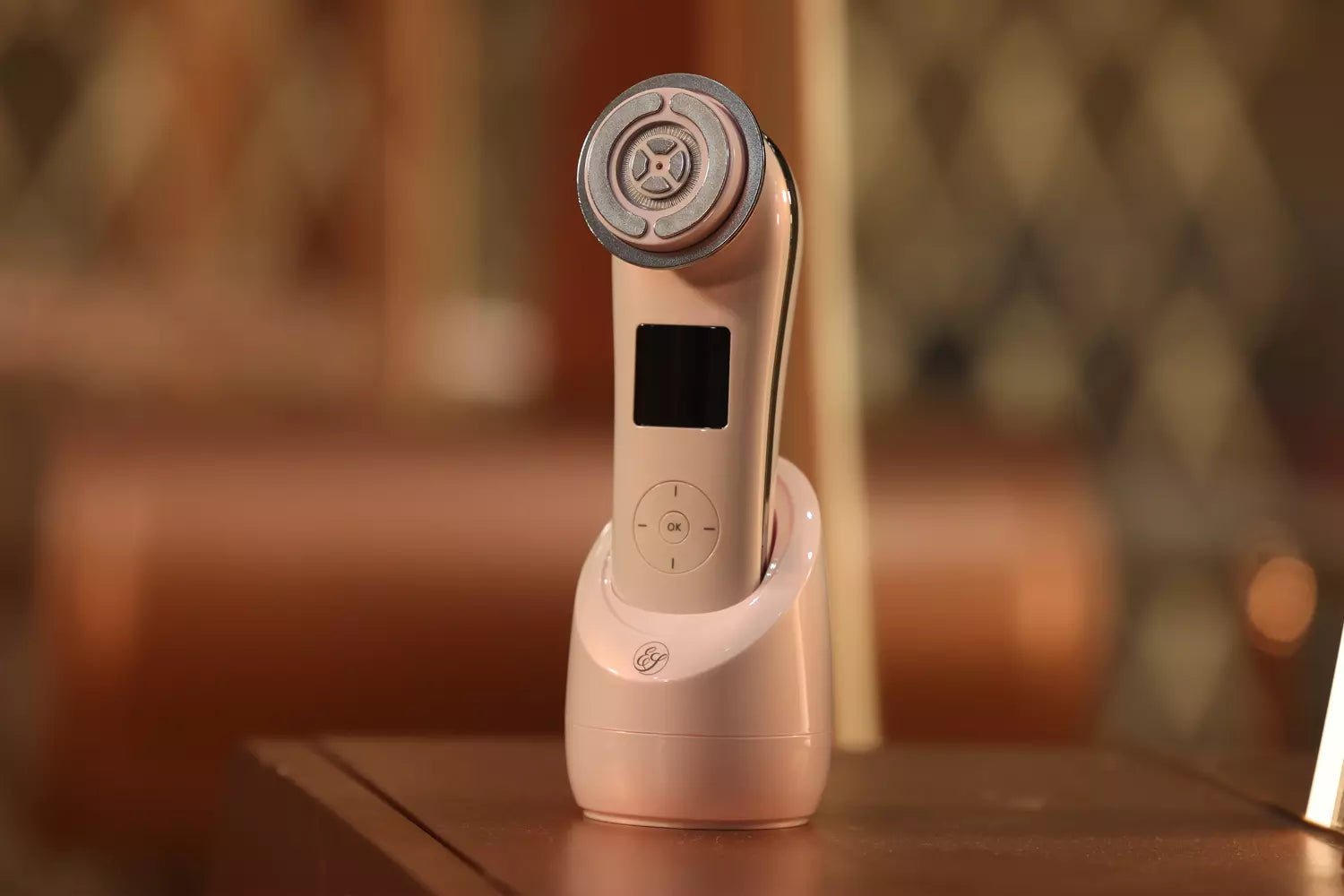
The Evenskyn Lumo+ weighs about 240 grams in the hand, which sits at the upper range of comfortable for a 10-minute session and below the threshold where forearm fatigue starts to compromise technique. The grip is matte ceramic over a metal core; cool to the touch when you pick it up, warm but never hot at the electrode head during use. There is a faint mechanical hum when the device runs, audible only in a quiet bathroom, and a soft beep at the start and end of each interval timer. No alarm tone, no electronic chirping. The sensory profile is intentional.
At the lowest of three RF intensities, the warmth on the cheek registers as similar to a heated stone, building over 30 to 45 seconds and holding once the dermal temperature reaches target. At intensity two the warmth becomes obvious, and at intensity three it is the upper threshold of comfortable for facial skin, never reaching a sensation that would be described as hot. The therapeutic window is 40 to 42°C measured at the dermal target; the skin surface stays cooler because the device contains active temperature monitoring. If skin contact breaks, the energy pauses; if the surface temperature trips a safety threshold, it pauses. The user does not have to manage this.
EMS microcurrent layers underneath the RF as a low-frequency pulse that the platysma and lower-face muscles register as a soft involuntary contraction. The combination, RF for the dermis and EMS for the muscle layer below, runs simultaneously on the Lumo+ where many devices require sequential modes; synchronised RF and electrical stimulation has been documented to improve skin laxity and quality in independent clinical work.7 Red and blue LEDs around the electrode rim glow during the session, the red wavelength for collagen support and the blue for sebum-active control. A 10-minute session covers the face and neck in five anatomical zones; on the Conduction Gel medium, the device glides without dragging.
The deciding factor
After mechanism, after device, after protocol, one thing decides whether at-home RF works for you.
Consistency is the deciding factor. Not device specifications, not technique sophistication, not the temperature setting. The published trials that produced positive outcomes shared one feature above all others: the participants finished the protocol. They ran 3 sessions weekly for 4 weeks, dropped to 2 sessions weekly for 8 weeks, and showed up at the 12-week measurement. The dropout rates in these trials were low precisely because the trial structure enforced adherence.
At-home use does not enforce adherence. A device that sits on a bathroom shelf and gets used twice a month produces no result, regardless of how clinically calibrated it is. The harder version of this argument is that any sufficiently powered, FDA-cleared RF device used consistently for 12 weeks will produce visible firmness improvement, and the most poorly calibrated, expensive, beautifully designed device used sporadically will not. The deciding factor is not which device. It is whether you will use it.
This is the editorial principle the rest of the pillar builds on. If you cannot commit to 3× weekly for 8 weeks minimum, the question of which RF device to buy is moot. Read this article as a decision document on whether to start the protocol, not on which device to add to a shelf.
The Protocol, Translated From Trial to Bathroom
The studies prescribed a cadence, a temperature, and a duration. Most users never see these spelled out. Here they are, in the order they govern your week.
Four readers, four different answers
RF is not one product for one customer. The right answer depends on which of these four you are.
40 to 50, first-time device buyer, mild laxity
Reads peer-reviewed studies before buying anything. Wants to know electrode count, megahertz frequency, FDA clearance number. For you, the answer is yes, RF works, the Lumo+ has the spec sheet to back the claim, and the protocol section below tells you exactly what cadence the trials used.
50 to 65, completed in-office RF, wants to hold the result
Already ran one or two clinical RF treatments and saw real change. Wants to extend the effect between maintenance visits. For you, at-home RF is the right tool. The Lumo+ paired with twice-weekly sessions can hold collagen output between in-office appointments, at a fraction of the per-session cost.
Any age, burned by past device purchases that did nothing
Bought a microcurrent gadget that sits unused, a red light mask that didn't deliver, a roller that does whatever rollers do. Your skepticism is warranted; most of the category is overpriced. For you, this article exists to give the evidence in detail before you commit. Read the §13 comparison table and the §18 audit, then decide.
Already decided to try at-home RF, comparing brands
Cross-shopping NEWA, CurrentBody Skin RF, TriPollar STOP Vx 2, Lumo+. For you, jump to §13 for the head-to-head comparison and §16 for the recommendation. The trade-offs are real; the right answer depends on whether you want single-modality RF specialization or RF plus EMS plus LED in one handset.
The competitor field, scored honestly
Four at-home RF devices in the same evaluation window. Trade-offs named, not flattened.
| Device | Tech | Strength | Limit | Price tier |
|---|---|---|---|---|
| Evenskyn Lumo+ | Multipolar RF + EMS + LED + warming + vibration | The broadest modality mix in a single handset at this price; 12-month limited warranty; calibrated for face, neck, and décolletage | Multi-modality means power per modality is distributed; single-modality specialists may exceed it in their one tool | $499.99 |
| NEWA Plus (Endymed) | 3DEEP multi-source RF | The deepest clinical-trial footprint in the home RF category; multiple peer-reviewed papers including Sadick & Harth 2016; specifically engineered for face and jawline | FDA clearance deliberately capped at face and jawline only; no neck claim; no LED or microcurrent integration; periorbital use is contraindicated on all home RF devices, with separate evidence base for that zone8 | $499 to $549 |
| CurrentBody Skin RF | Bipolar RF with Skin Sense Technology | Best-in-class temperature-regulation engineering; sustained 40 to 42°C window verified in product testing; transparent 8-week clinical statistic backed by bipolar RF facial remodelling evidence6 | Single-modality device; no EMS, no LED, no microcurrent; requires separate purchase for any multi-tool routine | $399 to $429 |
| TriPollar STOP Vx 2 (Pollogen) | Multi-RF + DMA (Dynamic Muscle Activation) + vibration | The longest professional-to-home RF heritage; clinical lineage from medical-grade Pollogen systems; FDA cleared 2019; high sustained RF intensity | Premium price band; conductive gel must be reapplied frequently mid-session; older interface design relative to 2026 competitors | $649 to $700 |
Six numbers that govern the protocol
If you remember nothing else, remember these. They are the boundaries inside which the published evidence applies.
The weekly cycle, Monday to Sunday
What a clinically calibrated loading-phase week looks like in actual practice. Adjust the day labels; keep the rhythm.
If you want at-home RF to actually work, the device that matches the trial protocol best is the Lumo+
The Evenskyn Lumo+ at $499.99 combines multipolar RF, EMS, red and blue LED, and gentle warming in a single handset calibrated for face, neck, and décolletage. It clears the four conditions that decide whether at-home RF works in practice: adequate power output to reach the 40 to 42°C dermal target, electrode geometry that targets the 1 to 3 millimetre depth where fibroblasts respond, simultaneous multi-modality so a single 10-minute session covers what otherwise requires sequential tools, and the integration with the Evenskyn Conduction Gel that maintains the electrical coupling the published evidence depended on.
Three candid caveats. NEWA Plus has a deeper individual-trial footprint for face and jawline specifically. CurrentBody Skin RF holds therapeutic temperature better than any device in its category via Skin Sense Technology engineering. TriPollar STOP Vx 2 delivers higher sustained RF intensity for users who have graduated past intensity-level fear. The Lumo+ wins on breadth and price, not on every single dimension.
If single-modality RF specialization matters more to you than multi-tool breadth, NEWA or CurrentBody is a defensible choice. For most readers, the Lumo+ is the right starting device.
Week by week: what changes when
Twelve weeks divided into four phases. What to look for in the bathroom mirror at each.
Texture and hydration
Skin feels smoother to the touch. Makeup applies more evenly. Subtle radiance under indoor light. No structural change yet, but a real surface response. Don't quit because you wanted more.
Puffiness and fine lines soften
Under-eye and cheek puffiness reduces from the EMS lymphatic effect. Fine lines around the mouth and forehead start to register as less deep. Camera under flat light shows the early change before the bathroom mirror does.
The jawline edge sharpens
The first structural change most users notice. Jawline edge becomes more defined; early jowls soften; the cheek-to-jawline transition tightens. This is where most users who quit have already quit; this is also where the protocol starts to deliver on its promise.
Firming and sculpted contour
The result the published studies measured. Statistically significant improvements in elasticity, firmness, and wrinkle depth. The change is visible but subtle. It will not equal a facelift. It can equal what an in-office RF session course produces at a fraction of the per-session cost.
The change is visible but subtle. It will not equal a facelift. It can equal an in-office RF course at a fraction of the per-session cost.
The Decision, Before You Buy
Five questions to ask before any device joins your shelf. Three reasons to walk away. Five clinical alternatives if walking away is the right call.
Five questions before you buy
If a device cannot answer all five questions clearly, it cannot deliver the clinical result.
Does the spec sheet name the RF frequency in megahertz?
A device that markets itself as "RF" without naming the frequency (commonly 0.3 to 10 MHz; 1 MHz and 6.78 MHz are typical for home-use devices) does not have the technical disclosure to evaluate. The Lumo+ operates in the megahertz range with calibrated multi-tier intensity. If the brand can't tell you the frequency, the brand can't tell you whether it reaches therapeutic depth.
Is there active temperature monitoring or thermal cut-off?
RF devices that lack temperature monitoring put the burden of safety on the user. Look for devices that auto-pause if skin temperature exceeds threshold, that disable energy delivery when contact breaks, and that publish a target dermal temperature range. Without these, you are guessing at the therapeutic window.
Does the manufacturer cite peer-reviewed clinical trials on this device or device family?
FDA clearance verifies safety, not effectiveness. Published trials on the specific device or technology family verify effectiveness. NEWA cites Sadick & Harth 2016. Pollogen cites multiple trials underpinning the TriPollar line. Evenskyn cites the same body of published RF home-device evidence the category rests on. A device with no cited trials is asking you to take effectiveness on faith.
What does the warranty and return policy say?
A 12-week protocol means a meaningful return window is meaningful. The Lumo+ offers a 12-month limited warranty and 60-day money-back guarantee, which covers the period where most users either commit to the protocol or quit. A 14-day return window cannot accommodate the time needed to evaluate whether the device works for your skin.
Will you actually use it three times a week?
The hardest question, asked last. If you already have a microcurrent device sitting unused, a red light mask that gets monthly use at best, or any other unused beauty tool on the shelf, your odds of adhering to an RF protocol are not improved by the device specifications. The deciding factor section earlier in this article is not rhetorical. Answer this question honestly before the purchase, not after the disappointment.
When to skip RF entirely
Three conditions where the right answer is no device at all. Naming them protects readers from a purchase that will not help.
- You have a pacemaker, implantable defibrillator, cochlear implant, or other implanted electronic medical device. RF energy can interact with these. The contraindication is non-negotiable.
- You have active malignancy in or adjacent to the treatment zone, or a history of cancer with unclear remission status. Speak with your oncologist before any energy-based device, in-office or at-home. The risk is not RF-specific; it applies to thermal devices broadly.
- You are within 14 days of Botox, 28 days of hyaluronic acid filler, or 21 days of any laser or peel. The post-procedure waiting windows exist because thermal energy can affect injectable products and disrupt healing skin. The Evenskyn editorial covers post-injectable timing in detail; the short answer is wait the window before resuming RF.
- You expect a facelift result from a non-invasive device. RF produces firmness and elasticity improvement. RF does not produce surgical lift. If your skin laxity is past the point where mild improvement will satisfy you, RF is the wrong tool, and surgical or in-office options are worth considering instead.
- You can't commit to 3× weekly sessions for 8 weeks minimum. The biology won't work around your schedule. If 3× weekly for 8 weeks is unrealistic given your life right now, hold the purchase until it is realistic.
When in-office is the right call
Five clinical procedures that do what at-home RF cannot. Named, with cost and downtime, so the comparison is real.
Ultherapy (microfocused ultrasound)
Reaches the SMAS layer at depths up to 4.5 millimetres, deeper than any at-home device. Produces measurable lift in pooled clinical data, with brow-lift improvements of 0.47 to 1.7 millimetres documented across hundreds of cases. At-home RF cannot reach that depth. If skin laxity is moderate to severe and the goal is structural lift, Ultherapy is the right call.
Thermage (monopolar RF)
Single-session RF at clinical intensity, with outer cooling that allows higher dermal temperatures than home-use devices can safely deliver. Comfortable on more sensitive zones including the eye area. The same biological mechanism as at-home RF, at a power level home devices cannot match.11 Best for users who prefer one session over a multi-week protocol.
Morpheus8 (RF microneedling)
Delivers RF energy through fine needles directly into the dermis, bypassing the epidermis. Higher precision and deeper penetration than non-invasive RF. The right call for moderate laxity, scarring, or texture concerns that surface devices can't address.
Profound RF (RF + microneedling, longer pulse)
Longer-pulse RF delivered through needle electrodes at controlled depth, with real-time temperature feedback. Documented dermal collagen, elastin, and hyaluronic acid increases. A more involved procedure than Morpheus8, with a longer recovery and more lasting structural change.
Botox or the Nefertiti Lift (neuromodulator)
Not skin tightening at all; muscle relaxation. The Nefertiti lift uses targeted platysma injections to soften the downward pull on the jawline. If dynamic wrinkles and the jaw-pull dynamic are the concern, Botox addresses what RF cannot. RF and Botox complement each other; they are not substitutes.
What a real cycle feels like
A narrative account of three months on the protocol, in the voice of patients I have seen in clinic.
Week one is the easiest. The device is new, the conduction gel is fresh, the routine takes 12 minutes from setup to cleanup, and the warmth on the cheek registers as pleasant. By Friday of week one, three sessions are done. Skin feels smoother under fingertips. The bathroom mirror shows nothing different.
Week two is the hardest. The novelty fades. The 12-minute session feels longer. The skin still looks the same to anyone except the user who is paying very close attention. The temptation to drop to twice weekly arrives, and most users who later abandon the protocol drop the third weekly session here, in week two, before any biological change has had time to register.
Week three brings the first real signal. Puffiness under the eyes after a poor night's sleep is less pronounced than it would have been a month earlier. The lymphatic effect of EMS produces this early, visible reward, and it sustains adherence. Skin texture continues to improve. Foundation applies more evenly, with less settling into fine lines around the mouth and forehead.
Week six brings the jawline. The jawline edge sharpens. The slight softening that had been present in the cheek-to-jawline transition tightens. The user notices this themselves, often in a photograph rather than the mirror, because cameras under flat lighting reveal structural change better than the bathroom does. By week eight the result the studies measured has begun to register. By week twelve it is at peak. Maintenance drops to two sessions weekly, and the cycle continues.
Critique, Concession, and the Evidence Trail
Where this recommendation could be wrong, what would change it, and the peer-reviewed sources every claim above is built on.
Three mistakes, three myths
The errors most users make in week one, and the assumptions that ruin the protocol before it starts.
Three common mistakes
Mistake one: skipping the conductive gel
Users assume a thin layer of water-based moisturiser will substitute for the conduction gel. It will not. The gel is engineered for sustained conductive coupling across the full session; substitutes break down within minutes and the device's RF efficiency drops sharply.
Mistake two: treating each zone for 30 seconds
The dermal temperature needs to reach target and stay there. 30 seconds per zone is enough to warm the surface, not enough to remodel the layer underneath. Slow, continuous strokes for 3 to 4 minutes per zone is the actual protocol.
Mistake three: stopping at week six
Week six is the disappointment point: surface texture has improved but the structural change is still emerging. Users who quit at week six never see the result the protocol was designed to deliver, which arrives between weeks eight and twelve.
Three persistent myths
Myth one: "RF works like a facelift"
It does not. RF produces firmness and elasticity improvement. A facelift produces surgical lift. The two outcomes are different in kind, not in degree. Marketing photos comparing at-home RF to surgical results are misleading and set readers up to quit when at-home results don't match.
Myth two: "More heat means better results"
The therapeutic window is 40 to 42°C. Higher temperatures produce burns, hyperpigmentation risk in Fitzpatrick III to VI skin, and inflammatory damage that can paradoxically reduce collagen output. The device's safety cut-offs exist for a reason. Don't override them.
Myth three: "Once is enough"
RF is not Botox. There is no single-session result to chase. The biology is cumulative across weeks. A single in-office RF treatment can produce visible change at clinical intensity; a single at-home session at home-use intensity produces collagen contraction that fades within hours. The protocol is the product.
The case against this recommendation
Steel-manning the position that the Lumo+ is not the right answer for you.
If you want single-modality RF specialization, CurrentBody or NEWA wins
The Lumo+ bundles RF, EMS, LED, warming, and vibration into one handset. If your goal is RF at the highest sustained therapeutic temperature with the most refined temperature engineering, CurrentBody Skin RF's Skin Sense Technology is unmatched in its category. If your goal is RF at the deepest published clinical-trial footprint, NEWA Plus's 3DEEP system has more peer-reviewed papers tied to it than any other home device.
If your priority is professional heritage and intensity, TriPollar is the right call
Pollogen brought clinical RF systems to medical practice for decades before the home line existed. The TriPollar STOP Vx 2 represents the longest professional-to-home lineage in the category, and the Multi-RF plus DMA system delivers higher sustained RF intensity than the Lumo+ at the cost of $150 to $200 more. Experienced users who have graduated past intensity-level fear can extract more performance from this device.
If your skin laxity is past mild to moderate, no at-home RF is the answer
At-home RF has a meaningful effect on mild to moderate laxity and texture concerns. For pronounced jowling, deep folds, and significant structural sagging, in-office Ultherapy, Morpheus8, or surgical options will produce results that no home-use device can match. The accurate answer here is to spend the consultation fee on a dermatologist rather than the device fee on hopeful self-treatment.
If you cannot commit to 3× weekly use, no device is the answer
The protocol decides the outcome. Without adherence, the Lumo+ becomes a $499 device on a shelf, indistinguishable in result from a $49 device on a shelf. The accurate case against the recommendation here is structural, not about the device: if your odds of consistent use are low, the recommendation is to defer the purchase, not to buy a different device.
What would change this view
The conditions under which we would update the Lumo+ recommendation. Named in advance, in good faith.
NEWA or CurrentBody publishes superior 2026-2027 trial data
If either competitor publishes new peer-reviewed clinical data showing materially better outcomes than the Lumo+ on shared endpoints (firmness, elasticity, wrinkle depth at 12 weeks), the recommendation updates. We track this quarterly.
The Lumo+ spec sheet changes
If Evenskyn modifies the Lumo+ RF frequency, electrode configuration, or thermal output in a future revision, the recommendation needs re-verification against the trial conditions that produced positive results in the existing literature.
A new modality enters the home category at clinical intensity
If at-home HIFU at near-clinical intensity becomes available, the modality-vs-modality analysis changes. As of May 2026, home-use ultrasound devices do not deliver HIFU-equivalent depth; if that changes, the protocol changes. Comparative RF and focused-ultrasound efficacy data continues to develop.16
The 2025 to 2026 clinical trials report negative outcomes
If pending trials (several active in clinicaltrials.gov registries) report negative outcomes for home RF on its established endpoints, the recommendation updates. The current evidence is consistent, but the evidence base continues to grow.
Ten questions, answered
The questions that come up in clinic, in product reviews, and in the inbox, all answered in one place.
Q: How long until I see results from at-home RF?
Most users see early texture and puffiness improvements at 3 to 4 weeks. Structural change (jawline definition, firmness) emerges at 6 to 8 weeks. Peak collagen remodelling reaches 12 weeks, with continued improvement out to 24 weeks documented in longitudinal monopolar RF data.10
Q: Can I use RF if I have rosacea or sensitive skin?
Generally yes, with caution. Start at the lowest intensity setting and treat for 30 seconds less per zone than the standard protocol prescribes. RF energy targets the dermal layer below where rosacea presents, but heat can trigger flushing in sensitive skin. If your rosacea is active or flaring, wait until the flare resolves. Speak with a dermatologist if uncertain.
Q: Is the at-home Lumo+ as effective as in-office RF?
No, but the comparison misleads. A single in-office RF treatment delivers higher intensity in one session than a home device can safely deliver. The Lumo+ delivers lower intensity across 30 sessions over 12 weeks. Cumulative dose can approach in-office outcomes for mild to moderate laxity, at a fraction of the per-session cost, with the trade-off of requiring sustained adherence.
Q: Do I have to use the Conduction Gel, or will any water-based gel work?
Use the Conduction Gel or an equivalent product engineered for RF coupling. Standard hyaluronic acid serums or moisturisers absorb into the skin within minutes and stop conducting RF current efficiently. The gap between "any gel" and "the right gel" is the gap between a result and no result.
Q: How long after Botox can I resume RF?
Most dermatologists recommend waiting 14 days. The toxin needs that long to fully bind at the neuromuscular junction without mechanical or thermal displacement. After hyaluronic acid filler, the standard wait is 28 days. After Sculptra, 21 days. After a light glycolic peel, 5 days. The Evenskyn post-injectable timing matrix article covers these in more detail.
Q: Will RF damage existing Botox or filler?
Once the waiting window has passed, no. RF does not degrade Botox once it has bound to the neuromuscular junction (typically by day 14). Hyaluronic acid filler is also stable against thermal exposure at home-device intensities once it has integrated into tissue, which takes about 28 days. The clinical literature supports both, with the wait windows being precautionary rather than absolute.15
Q: Is RF safe for skin of color?
Yes, for non-ablative RF in Fitzpatrick types II through VI, with appropriate intensity calibration. A 2023 systematic review of RF and RF microneedling in skin of color found no increased risk of post-inflammatory hyperpigmentation when devices are used at recommended parameters.5 Higher Fitzpatrick types should still default to lower intensity settings and slightly longer treatment intervals.
Q: Can RF replace my retinoid?
No. RF and retinoids work on different layers and different mechanisms. Retinoids regulate cell turnover in the epidermis. RF stimulates collagen production in the dermis. They complement each other; users running a complete anti-aging protocol use both, on alternating evenings or with retinoids in the morning on RF-rest days. Combined use of home-RF with targeted topicals has been studied for additive effect.9
Q: How often do I need to maintain results after the 12-week loading phase?
Two sessions weekly maintenance after the first 8 to 12 weeks holds the result based on the Sadick & Harth 2016 protocol, which used 3× weekly for 4 weeks then 2× weekly for 8 weeks and documented statistically significant sustained improvements.1 Reducing to once weekly is acceptable for long-term maintenance after results have stabilized at the 6-month mark.
Q: Does the Lumo+ work on the neck and chest, or only the face?
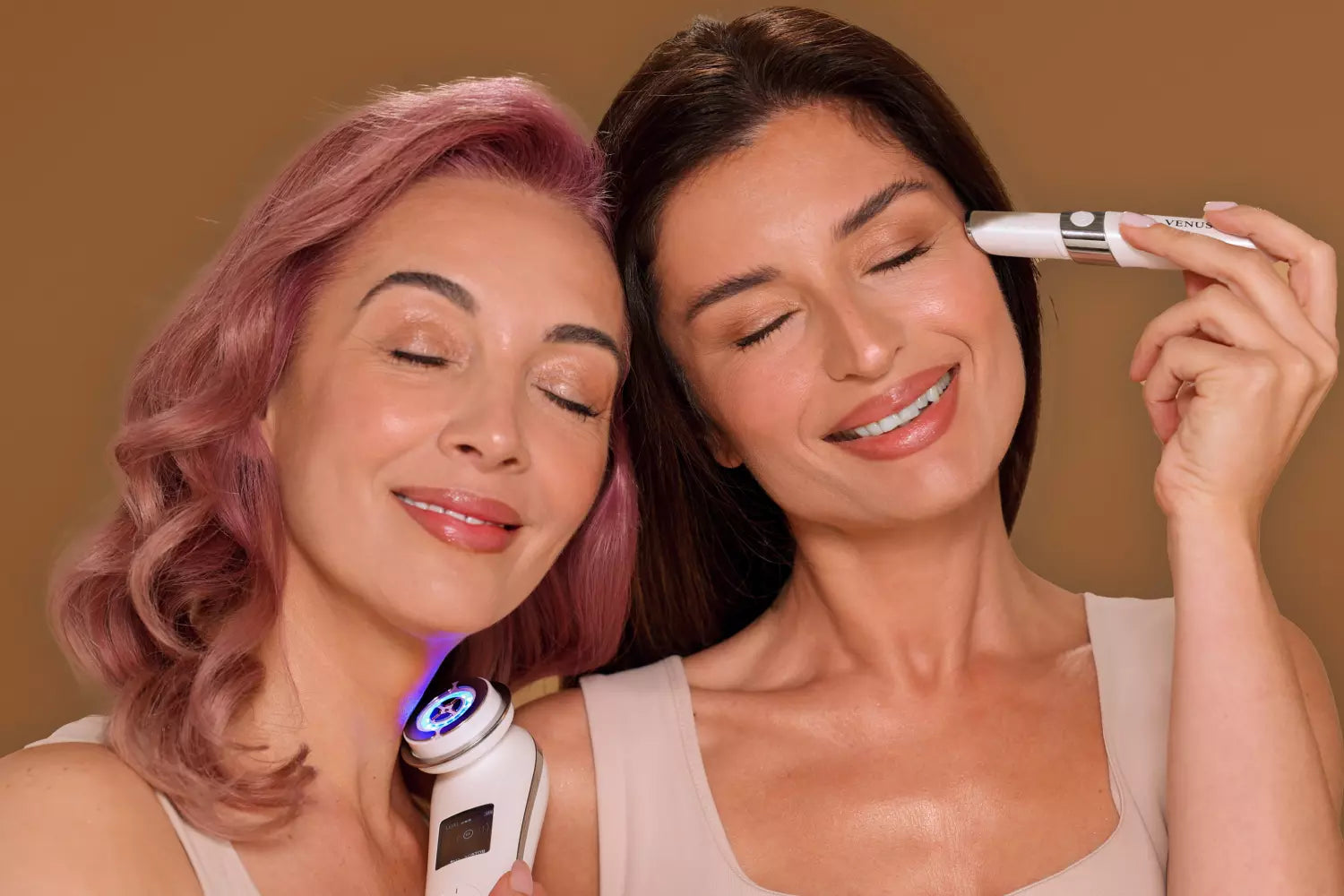
Face, neck, and décolletage. The Lumo+ thermal output is calibrated for these zones specifically. The eye area is contraindicated for full-power RF; the Evenskyn Venus is engineered separately for the periorbital zone at reduced thermal intensity.
Conflict of interest. Dr. Ismail Kimji is compensated by Evenskyn for his role as Doctor in Residence. Evenskyn manufactures and sells the Lumo+, the anchor product recommended in this article, alongside the Conduction Gel, the Mirage Pro, the Phoenix microcurrent bar, the Venus eye device, and the Complete Care Set bundle. Readers should weigh this commercial relationship when evaluating the recommendation. We have aimed to disclose competitor strengths by name rather than minimize them.
Competitor concessions, in good faith. NEWA Plus (Endymed) has the deepest peer-reviewed clinical-trial footprint in the home RF category, with multiple published studies of the 3DEEP system, including the Sadick & Harth 2016 trial that is one of the foundational papers in at-home RF literature. CurrentBody Skin RF holds the best-in-class temperature-regulation engineering via Skin Sense Technology, which sustains the 40 to 42°C therapeutic window better than any home-use device in the category. TriPollar STOP Vx 2 (Pollogen, Lumenis) represents the longest professional-to-home RF heritage and delivers higher sustained RF intensity at the $600+ price band than the Lumo+.
What this article is and is not. This article is educational. It does not constitute medical advice. The clinical evidence cited is current through Q2 2026. Consult a board-certified dermatologist or aesthetic physician before beginning any at-home device protocol, particularly if you have implanted medical devices, active malignancy, recent injectables, pregnancy, or any condition that may interact with thermal energy on skin.
How we build articles like this one
Sourcing
Every clinical claim in this article is sourced to a peer-reviewed paper, an FDA-published document, or a recognized medical society position. References are numbered inline; the bibliography sits at the end of the article. No claim relies on user testimonials or marketing copy.
Clinical Review
Dr. Ismail Kimji, MD, FRCPC, reviews every article on this site that addresses clinical claims, mechanisms, or protocols. The review verifies anatomical accuracy, citation correctness, and consistency between the editorial position and the published evidence. The reviewed date appears in the masthead.
Revision Commitment
We update this article when new peer-reviewed evidence materially changes the recommendation, when device specifications shift, or when a competitor publishes superior trial data on shared endpoints. The updates log below records every substantive revision with date and reason.
Updates log
A record of what changed and why, with dates.
References
Eighteen peer-reviewed sources, FDA filings, and clinical society documents. Every claim above tied to one of these.
- Sadick N, Harth Y. A 12-week clinical and instrumental study evaluating the efficacy of a multisource radiofrequency home-use device for wrinkle reduction and improvement in skin tone, skin elasticity, and dermal collagen content. Journal of Cosmetic and Laser Therapy. 2016;18(8):422-427. PMID: 27351303. The foundational 47-subject home-use multisource RF trial, NEWA 3DEEP, 3× weekly for 4 weeks then 2× weekly for 8 weeks. Clinical
- Shu X, Wan R, Huo W, et al. Effectiveness of a Radiofrequency Device for Rejuvenation of Aged Skin at Home: A Randomized Split-Face Clinical Trial. Dermatology and Therapy (Heidelberg). 2022;12. DOI: 10.1007/s13555-022-00697-y. Randomized split-face controlled trial in 33 women aged 35 to 60 across 12 weeks. Clinical
- Ai Y, et al. Efficacy and safety of a noninvasive, home-based radiofrequency device for facial rejuvenation: An open-label, intraindividual controlled trial. Journal of Cosmetic Dermatology. 2024;23:862-868. DOI: 10.1111/jocd.16076. 22 Chinese women aged 25 to 60, Fitzpatrick III to IV, 8-week treatment course. Clinical
- Austin GK, Struble SL, Quatela VC. Evaluating the Effectiveness and Safety of Radiofrequency for Face and Neck Rejuvenation: A Systematic Review. Lasers in Surgery and Medicine. 2022. Systematic review of 15 clinical studies covering 1,230 participants; documented firmness improvements in 52.9% to 100% of patients depending on cohort and texture improvements in 71% to 100%. Clinical
- Syder NC, Chen A, Elbuluk N. Radiofrequency and radiofrequency microneedling in skin of color: A review of usage, safety and efficacy. Dermatologic Surgery. 2023. Systematic review of RF safety and outcomes across Fitzpatrick skin types II to VI. Clinical
- Labadie JG, Chilukuri S, Cohen J, et al. Noninvasive hands-free bipolar radiofrequency facial remodeling device for the improvement of skin appearance. Dermatologic Surgery. 2023;49(1):54-59. DOI: 10.1097/DSS.0000000000003666. Clinical trial of bipolar home RF for facial remodelling. Clinical
- Manuskiatti W, Wannawittayapa T, Buranaporn P, et al. The efficacy and safety of synchronized radiofrequency and high intensity facial electrical stimulation in improving facial skin laxity and quality in Asians. Lasers in Surgery and Medicine. 2025;12. RF combined with facial electrical stimulation in Asian skin cohort. Clinical
- Kołodziejczak A, Rotsztejn H. Efficacy of fractional laser radiofrequency and IPL rejuvenation of periorbital region. Lasers in Medical Science. 2022;37:895-903. Periorbital RF efficacy data, relevant to eye-zone contraindications and the case for separate eye-area devices. Clinical
- Zhang L, Zhao Q, Che Q, et al. Effectiveness and Safety of Combined Use of Home-Based Radiofrequency Device and Arbutin Cream in Melasma and Facial Rejuvenation. Journal of Cosmetic Dermatology. 2025. DOI: 10.1111/jocd.70007. 38 participants, home RF combined with arbutin topical, 4-week protocol with 4-week rest. Clinical
- Long-term monopolar radiofrequency efficacy and safety: 20-woman 24-week follow-up study. Cosmetics. 2024. Longitudinal monopolar RF data demonstrating sustained improvement at 24-week endpoint. Clinical
- Wollina U. Treatment of facial skin laxity by a new monopolar radiofrequency device. Journal of Cutaneous and Aesthetic Surgery. 2011;4:7-11. Early single-arm monopolar RF clinical study, part of the foundational evidence base. Clinical
- Clinical application of radiofrequency technology in the treatment of facial skin wrinkles and laxity. PMC12243918. 2025. Recent peer-reviewed review covering RF mechanisms, indications, and clinical outcomes. Mechanism
- Histological Evaluation of Fractional Radiofrequency in Human Skin. Lasers in Surgery and Medicine. 2014. Histological analysis confirming collagen and elastin deposition following RF treatment. Mechanism
- Safety and Efficacy of Home-Use Bipolar Fractional Radiofrequency Device. Dermatologic Surgery. 2018. Home-use bipolar fractional RF safety and efficacy clinical study. Clinical
- Nassar S, Assem M, Mohamed D, Hassan G. The efficacy of radiofrequency, intense pulsed light and carboxytherapy in facial rejuvenation. Journal of Cosmetic and Laser Therapy. 2020;22(6-8):256-264. DOI: 10.1080/14764172.2021.1880598. Multi-modality cosmetic comparison including RF for facial rejuvenation. Clinical
- Zhao B, Li P, Fu Y, et al. Efficacy and Safety of Radiofrequency and Focused Ultrasound in Facial Rejuvenation. Journal of Cosmetic Dermatology. 2025. Comparison of RF and focused ultrasound clinical outcomes. Clinical
- Boisnic S, et al. Split-face study of home-based RF on facial skin laxity, with histological collagen and elastin deposition data confirmed in treated tissue. Cited across Evenskyn editorial as the histological evidence base for home-device dermal effects. Mechanism
- U.S. Food and Drug Administration. 510(k) Database for home-use radiofrequency skin tightening devices, Class II classification. FDA Center for Devices and Radiological Health. TriPollar STOP received FDA clearance in 2019; NEWA, CurrentBody Skin RF, and Evenskyn Lumo+ are all FDA-cleared under Class II 510(k) pathways. Regulatory


Leave a comment
All comments are moderated before being published.
This site is protected by hCaptcha and the hCaptcha Privacy Policy and Terms of Service apply.