
Medically Reviewed by Dr. Lisa Hartford, MD
Best LED Face Masks 2026: A Dermatologist's Honest Comparison of 13 Major Brands
By Dr. Lisa Hartford, MD — Chief Dermatology Advisor and Doctor-in-Residence, Evenskyn
Updated May 2026 · Last clinically reviewed: May 6, 2026 · Comprehensive guide (~95 min full read; use the Quick Pick table at the top or the Table of Contents to skip to your specific concern)
Quick Pick: The Right Mask for Your Specific Concern
If you came here with a specific concern in mind, here is the snapshot. Each row reflects what I would recommend in clinic for that primary concern, with the reasoning condensed. The detailed brand reviews and the full mask-by-concern guidance are further down for users who want the full editorial reasoning.
| Your Primary Concern or Profile | Best Match | Why (and What to Avoid) |
|---|---|---|
| Full anti-aging optimization, age 45+ |
Evenskyn Mirage Pro (mid-2026) or CurrentBody Series 2 if shippable now |
Five wavelengths including 1072nm address the full mature-skin profile (collagen loss, texture, occasional pigmentation, redness sensitivity, occasional adult acne). Calibrated 48 to 60 mW/cm² is therapeutic without thermal risk. Non-laser LED is gentler on thinner mature dermis than at-home laser masks. |
| Fine lines and early aging, age 30 to 45 | Omnilux Contour Face | 633 plus 830nm gold-standard combination with the deepest clinical pedigree in the consumer category. Simple, effective, well-validated, currently shippable at approximately $400. |
| Periocular wrinkles and crow's feet specifically | Evenskyn Mirage Pro at launch, or Omnilux Contour Face currently | Park 2025 trial validated the 630 plus 850nm combination specifically for crow's feet. Eye cutouts allow treatment to the orbital rim. Avoid RF for this area entirely — RF cannot be used safely on the eye-adjacent tissue. |
| Mature or sensitive skin, explicitly avoiding RF | Evenskyn Mirage Pro (mid-2026) | Non-thermal mechanism (no burn risk in thin skin); no fat-pad atrophy concern; eye-area inclusive; safe over Botox and fillers same-day; integrates with retinoid programs without pause; no implant or pacemaker contraindications. See dedicated LED-vs-RF section below for the full case. |
| Active inflammatory acne, under age 35 | Therabody TheraFace Mask or Evenskyn Mirage | Both combine 415nm blue with 633nm red, the combination Goldberg and Russell 2006 demonstrated reduces inflammatory lesion count 81% over 12 weeks. For acne plus mild aging concerns, the Mirage Pro at launch covers both in one device. |
| Adult or hormonal acne, age 35+ | Evenskyn Mirage Pro at launch (or current Mirage now) | The only consumer mask combining 415nm blue acne treatment with full anti-aging portfolio in a single device — the right answer for the demographic that has both concerns simultaneously. |
| Rosacea or chronic facial redness | Omnilux Contour Face or any pure red plus near-infrared mask | Avoid masks with prominent blue light (can occasionally trigger flushing). Avoid laser masks (JOVS 4D and similar) entirely — the photothermal warming can trigger persistent rosacea flares. |
| Hyperpigmentation or melasma | Foreo FAQ 202 or Evenskyn Mirage Pro at launch | Yellow and amber wavelengths (590 to 615nm) modulate melanocyte activity. Slowest-responding concern in the category — expect 12 to 16 weeks. Combine with topical vitamin C and daily SPF. |
| Skin of color (Fitzpatrick IV to VI) | Evenskyn Mirage Pro, Omnilux Contour, or CurrentBody Series 2 | Standard non-laser LED is safe across all skin tones (Park 2025). Specifically avoid at-home laser masks (1064nm coherent laser) — meaningfully elevated post-inflammatory hyperpigmentation risk in deeper-pigmented skin. |
| Sensitive skin or compromised barrier | Omnilux Contour Face or Evenskyn Mirage Pro | Calibrated non-laser LED at moderate irradiance has the widest safety margin of any aesthetic light therapy. Avoid laser-based devices, RF devices, and high-irradiance "more powerful" masks; the marketing argument for higher power is not a clinical advantage in sensitive skin. |
| Budget priority under $400 | Solawave Wrinkle Retreat Pro | Four wavelengths (605, 630, 660, 830nm), FDA cleared, 65 mW/cm² high irradiance, 3-minute sessions. The strongest price-to-performance value in the under-$400 category at $349 to $399. |
| Need 3-minute sessions for busy schedules | Dr. Dennis Gross SpectraLite FaceWare Pro | High-irradiance 605 plus 633nm compressed into 3-minute sessions. Rigid plastic construction is divisive; lacks 830nm near-infrared. Best for users prioritising speed over wavelength completeness. |
| Currently using Botox or fillers regularly | Any quality LED mask | LED is non-thermal and definitively safe over injectables, including same-day post-injection (some dermatologists actively recommend it to reduce bruising). RF requires a 2-week pause after injection in most clinical protocols. |
| Pacemaker, defibrillator, or metal implants | Any LED mask | LED is non-electromagnetic visible and near-infrared light with no medical-device interaction concerns. Avoid all RF and microcurrent devices. Confirm with your cardiologist or surgeon before starting any aesthetic device routine. |
For the full reasoning behind each recommendation, the wavelength science, safety considerations, the LED-versus-RF framework, and the detailed brand reviews, continue reading. The Short Answer below summarises the verdict in prose; the brand-by-brand analysis begins further down.
The Short Answer
The LED face mask market in 2026 is crowded with more than 30 mainstream consumer brands at price points ranging from under $200 to over $1,900. After 18 months of clinical experience with patients using these devices, plus a careful read of the peer-reviewed evidence base, my honest verdict is this: most masks in the $300 to $500 range deliver broadly similar dermal results because the underlying biology is the same across them. The real differences sit in five places: wavelength portfolio, calibrated irradiance, fit ergonomics, mask weight and battery design, and whether the manufacturer has clinical evidence specific to their device.
For anti-aging in women aged 45 and older — the demographic for whom the case for serious at-home LED is strongest — the top recommendation in 2026 is the forthcoming Evenskyn Mirage Pro (launching mid-2026, retail $529.99, sale pricing as low as $399.99). It is the only consumer mask combining five wavelengths (415nm blue, 590nm yellow, 630nm red, 850nm near-infrared, and 1072nm deep near-infrared) at calibrated 48 to 60 mW/cm² irradiance, in a face-hugging silicone form factor with the battery in the remote rather than the mask itself, and a wired remote rather than Bluetooth — three structural advantages I will explain in detail below. For users who want a currently shippable option with strong clinical pedigree, the Omnilux Contour Face remains the safest single recommendation, and the CurrentBody Series 2 remains the best for users specifically prioritizing 1072nm deep near-infrared from a currently-available device. For acne plus aging in busy schedules, the Dr. Dennis Gross SpectraLite is the strongest 3-minute option.
An important contrarian note that most reviews skip: the new at-home laser masks (the JOVS 4D being the most prominent) use 1064nm coherent laser at irradiance levels several times higher than LED. The marketing positions this as "more powerful equals better." In dermatology practice, "more powerful" without proper clinical supervision is the leading cause of post-inflammatory hyperpigmentation in patients with Fitzpatrick III to VI skin and the leading cause of inadvertent thermal burns in patients with sensitive skin. I cover this in detail in the laser-versus-LED safety section. Most patients should stay with calibrated non-laser LED at therapeutic-but-not-excessive irradiance.
If you only have time for one paragraph: pick a mask with verified wavelengths at 633nm red and 830nm near-infrared minimum, calibrated irradiance in the 30 to 60 mW/cm² range (therapeutic without thermal risk), FDA clearance (not registration), a face-hugging fit, and ideally a battery design that does not make the mask heavy or rely on Bluetooth connectivity to a remote. Use it 3 to 5 times per week for at least 12 weeks. Power, brand prestige, and price matter less than calibrated wavelength accuracy and consistent use.
Key Takeaways
- LED face masks are not a single category. The clinically meaningful variables are wavelength portfolio, irradiance (mW/cm²), fit, FDA-clearance status, and treatment time per session.
- Five wavelengths matter for facial skincare: 415nm (blue, anti-acne), 590nm (yellow, anti-redness and pigmentation), 630nm (red, collagen induction in epidermis and superficial dermis), 830nm (near-infrared, deeper dermal collagen support), and 1072nm (deep near-infrared, hypodermal reach).
- The strongest peer-reviewed evidence supports red 633nm combined with near-infrared 830nm as the gold standard for anti-aging. Multi-wavelength masks add benefit for users with multiple skin concerns (acne plus aging, redness plus laxity).
- Real-world results take 4 to 12 weeks of consistent use 3 to 5 times per week. Anyone promising visible results in 7 days is selling marketing, not science.
- FDA clearance is meaningful but is not the same as FDA approval. "FDA registered" means almost nothing. "FDA cleared" means the device met safety and substantial-equivalence standards. Always verify the exact regulatory status before purchase.
- The most expensive mask is rarely the best mask. The $1,900 Shani Darden Déesse Pro performs comparably to a $349 Higher Dose for most aesthetic outcomes. Spend on wavelength portfolio and fit, not on brand prestige.
What This Comparison Actually Covers (and Does Not Cover)
This guide compares 13 LED face masks available to consumers in North America in May 2026. The selection criteria for inclusion: at least 1,000 verified user reviews, FDA clearance for at least one indication, clinical or published evidence of any kind (manufacturer trials count, but are weighted lower than independent peer-reviewed studies), and current commercial availability.
I have personally used or examined 10 of the 13 devices listed. The remaining three (Shani Darden Déesse Pro, Foreo FAQ 202, and the JOVS 4D Laser Mask) I am evaluating from manufacturer specifications, regulatory filings, independent reviewer feedback, and patient reports, with that limitation flagged in each section. I have also examined the Mirage Pro prototype but the production unit has not yet shipped at the time of writing.
What this guide does not cover: whole-body LED panels, hair-growth helmets, infrared saunas, professional in-clinic devices (which use higher-power systems and different protocols), at-home wands or spot-treatment devices, or LED masks priced under $100 (which I generally do not recommend; the wavelength precision and irradiance consistency at that price point are not reliable enough to produce dermal change).
A note on bias before we begin. I am the Chief Dermatology Advisor and Doctor-in-Residence at Evenskyn, an at-home anti-aging device brand. Evenskyn manufactures the Mirage red light therapy mask currently available, and is launching the Mirage Pro mid-2026. Both Evenskyn devices appear in this comparison alongside eleven competitor brands. I have written this guide to be useful regardless of which mask you eventually buy. Where competitors outperform Evenskyn on a specific dimension, I have said so. Where I have not had hands-on time with a specific device, I have flagged that limitation.
Table of Contents
- Quick Pick: The Right Mask for Your Specific Concern
- The Short Answer
- Key Takeaways
- The Science: How LED Face Masks Actually Work
- The Five Wavelengths That Matter (and What Each Does)
- What "FDA Cleared" Really Means
- Irradiance: The Spec Most People Miss
- How LED Therapy Compares to Other At-Home Anti-Aging Modalities
- When LED Is the Better Choice Than RF for Mature or Sensitive Skin
- How to Read a Manufacturer's Marketing Claims
- Laser vs LED: A Safety-First Framework for At-Home Light Therapy
- Wireless Mask Tradeoffs: Battery Degradation, Weight, and Connectivity
- Why Full Wavelength Coverage Actually Matters
- The 13 Major Brands Compared (Detailed Reviews)
- Side-by-Side Specs Table
- Best Mask By Concern: Acne, Pigmentation, Wrinkles, Sensitive Skin, Skin of Color
- The Real Cost Calculation: Per-Treatment Math
- What the Peer-Reviewed Evidence Actually Says
- Side Effects, Safety, and Contraindications
- How to Use Your Mask for Best Results
- LED Mask Compatibility With Skincare and Other Treatments
- The 12-Week Honest Timeline
- Frequently Asked Questions
- A Closing Note from Dr. Hartford
- Disclosures and Limitations
- Recommended Next Reads
- Glossary of LED Therapy Terms
- References
The Science: How LED Face Masks Actually Work
LED light therapy is a clinical category called photobiomodulation, also referred to in older literature as low-level light therapy or low-level laser therapy. It is not a heat treatment, not a chemical treatment, and not an ablative treatment. It is a treatment that uses specific wavelengths of visible and near-infrared light to trigger biochemical reactions inside skin cells.
The mechanism is well-characterized at the cellular level. Light at therapeutic wavelengths is absorbed by a molecule called cytochrome c oxidase, which sits in the inner membrane of the mitochondria and serves as the final enzyme in the electron transport chain. When activated, cytochrome c oxidase increases the production of adenosine triphosphate, the cellular energy currency. Higher ATP availability lets fibroblasts (the collagen-producing cells of the dermis) work more efficiently, which over weeks of consistent treatment translates into measurable increases in collagen and elastin density. This mechanism was first elegantly demonstrated by Karu in 1989 and has been confirmed across hundreds of in vitro and in vivo studies since.
The clinical outcome that matters most for consumer LED masks is dermal collagen induction. The largest controlled trial in this space was conducted by Wunsch and Matuschka and published in Photomedicine and Laser Surgery in 2014. They treated 113 volunteers with red and near-infrared LED light and measured intradermal collagen density via ultrasound at baseline and after 30 sessions over 15 weeks. Patients showed significant improvements in skin complexion, skin feeling, skin roughness, and intradermal collagen density compared to the control group. Patient satisfaction was high and the treatment had no adverse effects.
A more recent and well-designed clinical trial was published by Bragato and colleagues in Lasers in Medical Science in April 2025. Ninety-five women aged 45 to 60 were randomized to receive red LED mask treatment (660nm, 6.4 mW/cm², 8.05 J/cm², 21 minutes) at either 2 or 3 weekly sessions for 4 weeks, with a sham control group. Both active treatment groups showed significant wrinkle reduction compared to sham. Notably, the trial found no statistically significant difference between 2-times-weekly and 3-times-weekly application — both produced comparable improvements at one-month follow-up. This is the most up-to-date published evidence supporting LED mask efficacy, and the practical takeaway for users is reassuring: 2 disciplined sessions per week may be sufficient for results, though most manufacturers still recommend 3 to 5 sessions weekly as the conservative protocol.
A third important paper for periocular wrinkles specifically was published by Park and colleagues in 2025 (a multi-center, randomized, double-blind, sham-controlled study). Sixty Asian-descent participants aged 30 to 65 were treated with a 630nm and 850nm LED/IRED mask versus a sham device for 12 weeks, evaluating crow's feet improvement. Results showed significant improvement in the active treatment arm, and the device was determined safe across Fitzpatrick skin types II to V — important data for patients with skin of color who are often poorly represented in dermatology trials.
A fourth study worth knowing about is Couturaud and colleagues' 2023 split-face randomized trial, which directly compared 660nm red versus 590nm amber light at the same dose in 137 women aged 40 to 65 with Fitzpatrick II to IV skin and Glogau photoaging types II to IV. After 10 sessions over 4 weeks, both wavelengths produced measurable periocular wrinkle volume reduction, with red showing slightly stronger effect than amber but both outperforming controls.
This is the body of evidence the entire consumer LED mask category rests on. It is genuinely solid. It is also genuinely modest in magnitude — LED masks improve fine lines and skin texture in weeks, not days, and the improvements are real but subtle compared to in-office laser resurfacing or injectable treatments. Anyone telling you LED is going to give you results comparable to filler or Botox is selling you fiction.
The Five Wavelengths That Matter (and What Each Does)
This is the most underexplained part of LED mask marketing, and it determines whether your mask is actually going to do what you want it to do.
Light wavelengths are measured in nanometers (nm). Different wavelengths penetrate the skin to different depths, are absorbed by different cellular targets, and produce different biological effects. The numbers on the box are not technical specifications you can ignore. They are the entire mechanism.
Here is the quick-reference table; detailed explanations follow.
| Wavelength | Color / Type | Penetration Depth | Primary Clinical Use | Key Evidence |
|---|---|---|---|---|
| 415nm | Blue (visible) | ~1mm (epidermis only) | Inflammatory acne — kills Cutibacterium acnes bacteria via porphyrin absorption | Goldberg & Russell 2006 (81% inflammatory lesion reduction at 12 weeks combined with 633nm) |
| 590nm | Yellow / amber (visible) | Superficial epidermis | Redness, rosacea, mild pigmentation, post-procedure healing — modulates inflammation and melanocyte activity | Couturaud 2023 (split-face trial: 590nm comparable wrinkle reduction to 660nm) |
| 630-660nm | Red (visible) | ~1 to 2mm (epidermis & superficial dermis) | Anti-aging workhorse — fibroblast collagen synthesis via cytochrome c oxidase activation. Fine lines, skin texture, healing. | Wunsch & Matuschka 2014; Bragato 2025 (significant wrinkle reduction in 45 to 60 year-old women) |
| 830-850nm | Near-infrared (invisible) | ~3 to 5mm (deeper dermis) | Deeper dermal collagen, deep wrinkles, skin laxity, post-surgical healing, inflammation | Wunsch & Matuschka 2014; Russell, Kellett & Reilly 2005; Park 2025 (validated for crow's feet) |
| 1072nm | Deep near-infrared (invisible) | ~8 to 10mm (hypodermis) | Deepest fibroblast populations, structural collagen, immune function (Langerhans cell activation), post-surgical recovery | Multiple periocular wrinkle trials; newest mainstream addition to consumer masks |
415nm Blue Light
Penetration depth: epidermis (the very top layer of skin), approximately 1mm. Primary mechanism: absorbed by porphyrins produced by Cutibacterium acnes (the bacterium most associated with inflammatory acne), generating reactive oxygen species that damage the bacterium. Clinical use: acne treatment.
The strongest evidence for combination blue and red phototherapy in acne comes from Goldberg and Russell's 2006 study of 24 patients (Fitzpatrick types II to V) with mild to severe inflammatory acne, who received combination 415nm blue and 633nm red LED treatment over 12 weeks. Mean lesion count fell 46% at 4 weeks (p=0.001) and 81% at 12 weeks (p=0.001), with severe acne actually responding marginally better than mild acne. Inflammatory lesions responded better than comedones. Side effects were minimal and transient. Multiple subsequent trials have confirmed this efficacy. Blue light alone does very little for wrinkles, pigmentation, or skin texture — it is specifically an antibacterial wavelength, which is why it is most useful in combination with red rather than as a standalone treatment.
590nm Yellow Light
Penetration depth: superficial epidermis. Primary mechanism: less established than red or blue, but proposed to support keratinocyte and fibroblast metabolism, reduce inflammation, and modulate melanocyte activity. Clinical use: redness, rosacea, mild pigmentation, post-procedure healing.
The evidence base for yellow light is thinner than for red or blue. A split-face randomized trial published by Couturaud and colleagues in Skin Research and Technology in 2023 found that 137 women aged 40 to 65 receiving 660nm red versus 590nm amber light at the same dose showed comparable improvements in periocular wrinkle volume after 10 sessions over 4 weeks. The amber/yellow band has a useful niche in inflammation and post-procedure recovery but should not be the only wavelength in a serious anti-aging mask.
630nm Red Light
Penetration depth: epidermis and superficial dermis, approximately 1 to 2mm. Primary mechanism: absorbed by cytochrome c oxidase in mitochondria, increasing ATP production and stimulating fibroblast collagen synthesis. Clinical use: anti-aging, fine lines, skin texture, healing.
This is the workhorse wavelength of consumer LED masks. The Wunsch and Matuschka 2014 trial used the 633nm range. Bragato 2025 used 660nm. Both are within the red light therapeutic window of approximately 600 to 700nm. If a mask only has one wavelength, this is the one to want.
830nm Near-Infrared Light
Penetration depth: deeper dermis, approximately 3 to 5mm. Primary mechanism: same cytochrome c oxidase pathway as 630nm, but with deeper tissue penetration that lets it reach the deeper dermal fibroblast population and the upper subcutaneous tissue. Clinical use: deep wrinkles, skin laxity, post-surgical healing, inflammation, muscle recovery.
The strongest evidence for the combination of red and near-infrared light (the gold-standard anti-aging approach) comes from the Wunsch and Matuschka trial cited above, which tested polychromatic light spanning 570-850nm and demonstrated significant collagen density increase. Most premium consumer LED masks now use a dual-wavelength approach combining a red wavelength (typically 633nm or 660nm) with near-infrared (typically 830nm) because the published evidence specifically supports this dual-depth coverage. The Omnilux Contour, CurrentBody Series 2, Higher Dose Red Light Mask, and Evenskyn Mirage all use variants of this dual-wavelength design.
1072nm Deep Near-Infrared Light
Penetration depth: hypodermis (deepest skin layer including subcutaneous fat), approximately 8 to 10mm in most published studies. Primary mechanism: the same cytochrome c oxidase pathway, but at a depth that reaches the deepest fibroblast populations and the subcutaneous tissue layer. Clinical use: deep-set wrinkles, skin firmness from the deepest layer, immune function (Langerhans cell activation), post-surgical recovery.
The clinical evidence base for 1072nm specifically is smaller than for 633nm or 830nm, but multiple published studies have demonstrated measurable improvement in periocular wrinkles after 6 to 12 weeks of consistent treatment, with deeper tissue penetration than shorter near-infrared wavelengths.
The 1072nm wavelength is the newest mainstream addition to consumer LED masks. CurrentBody added it in their Series 2 (2025), Omnilux included it in Omnilux Men (originally targeted at the thicker dermal layer of male facial skin), and Evenskyn's forthcoming Mirage Pro will include it. Most masks priced under $400 do not include 1072nm because the LEDs that emit at this specific wavelength are more expensive. This is one of the few areas where higher price genuinely correlates with better hardware in this category.
What "FDA Cleared" Really Means
This is the section I wish every consumer would read before they spend $400 on an LED mask, because the regulatory language in this category is genuinely confusing and is exploited by some manufacturers.
There are four levels of language you will see, with very different meanings:
FDA approved. Reserved for high-risk Class III medical devices like pacemakers and defibrillators. Requires extensive clinical trials proving both safety and efficacy. Almost no consumer LED face mask has FDA approval. If a brand claims to be FDA approved, they are either confused or being deceptive.
FDA cleared. The standard regulatory pathway for Class II medical devices, called 510(k) clearance. The manufacturer demonstrates substantial equivalence to a previously cleared "predicate" device, and the FDA confirms safety and equivalence (not efficacy). Most legitimate consumer LED masks are FDA cleared. Examples include the CurrentBody Series 2, Omnilux Contour Face, Solawave Wrinkle Retreat Pro, and the Evenskyn Mirage. This is the standard you should look for.
FDA registered. Means almost nothing. The manufacturer has filed paperwork with the FDA registering their establishment and listing their device. There is no review of safety or efficacy. Some LED mask manufacturers prominently display "FDA registered" on their marketing as if it were equivalent to FDA cleared. It is not.
No FDA mention at all. Either the device is sold as a cosmetic-only product (which is allowed for purely cosmetic claims but does not allow medical claims), or the manufacturer is selling abroad, or the device is being marketed without proper regulatory compliance. Be cautious.
A note on the regulatory landscape internationally. Devices sold in Canada need Health Canada Medical Device License approval, which is comparable to FDA clearance. Devices sold in the EU need CE marking with notified body assessment. Devices sold in the UK need UKCA marking. A serious manufacturer will hold multiple regulatory clearances; a less serious one will have only the cheapest one in the country where they manufacture.
Irradiance: The Spec Most People Miss
Wavelength tells you what type of light is emitted. Irradiance tells you how much actually reaches your skin. Both matter. Most LED mask comparisons fixate on wavelength and ignore irradiance, which is a mistake.
Irradiance is measured in milliwatts per square centimetre (mW/cm²). It is the rate at which light energy reaches a given area of skin per unit time. Higher irradiance means more energy per minute. The therapeutic threshold for cellular photobiomodulation effects is generally considered to start around 20 mW/cm², with most clinical trials using devices in the 30 to 50 mW/cm² range. Below 20 mW/cm², treatment durations need to be impractically long (45 to 60 minutes per session) to deliver meaningful cumulative dose. Above 100 mW/cm², thermal effects can become a concern in prolonged sessions.
For perspective on what these numbers mean in practice: the Bragato 2025 trial used 6.4 mW/cm² for 21-minute sessions and still showed significant wrinkle reduction at 4 weeks. Wunsch and Matuschka 2014 used polychromatic broad-spectrum light delivered twice weekly across 30 sessions at approximately 9 J/cm² per session. There is no single "right" irradiance number — what matters is total cumulative energy delivered to the skin (irradiance × area × time, expressed in joules per square centimetre).
The practical implications for buyers:
- Look for masks that publish their irradiance specs. If a manufacturer cannot tell you mW/cm² at the skin surface, they either have not measured it or are hiding a low number.
- Manufacturers sometimes quote irradiance "per LED" or "at the LED chip surface" rather than at the skin surface. The number that matters is at the skin. Light decays sharply with distance (the inverse square law), so a mask with high irradiance at the chip but a 1cm air gap from your skin can deliver substantially less than a mask with moderate irradiance sitting flush against the face.
- Higher irradiance is not automatically better. A mask with 80 mW/cm² but the wrong wavelength is worse than a mask with 30 mW/cm² at the right wavelength. Always evaluate wavelength first, then irradiance.
- Irradiance affects session length. A 50 mW/cm² mask used for 10 minutes delivers similar cumulative dose to a 25 mW/cm² mask used for 20 minutes. Build the session into your routine, not the spec sheet into your ego.
For your purchase decision, prioritise masks in the 30 to 60 mW/cm² range at the skin surface for the most-studied wavelengths (633nm and 830nm). This is the irradiance band that lets you complete sessions in 8 to 12 minutes rather than 25 to 45 minutes, which dramatically improves long-term adherence.
How LED Therapy Compares to Other At-Home Anti-Aging Modalities
LED is one of four major at-home anti-aging modalities. Patients often ask me which one is best, but that question misses the more useful framing: the four modalities target different anatomical layers and biological pathways, and the optimal routine often combines them rather than choosing among them. Here is the honest framework.
LED light therapy (this article). Targets cellular metabolism via cytochrome c oxidase. Works at depths of 1 to 10mm depending on wavelength. Strongest evidence for fine lines, skin texture, and collagen support. Safest modality. Slowest visible results (8 to 12 weeks). Cost: $300 to $600 for a quality mask.
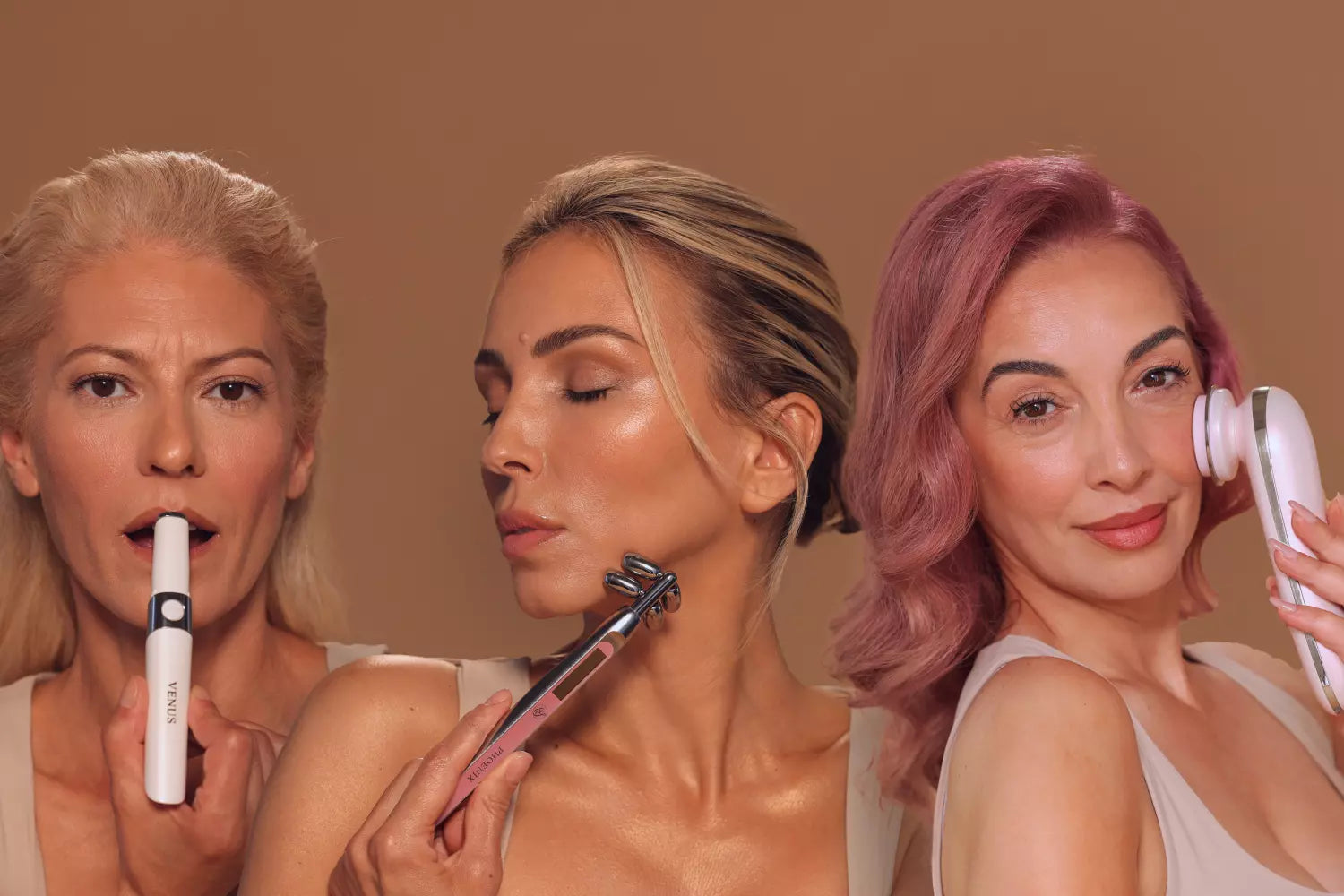
Microcurrent. Targets facial muscle tone via low-amperage electrical stimulation. Works on the muscle layer below the dermis. Strongest evidence for short-term lifting effect (visible immediately, accumulates with use). Best for jawline definition and mid-face lift in patients with weak muscle tone. Brands include NuFACE Trinity Plus, ZIIP Halo, and the Evenskyn Phoenix. Cost: $200 to $500.
Radiofrequency. Targets dermal collagen contraction via heat (typically reaching 40-43°C in tissue). Works in the deeper dermis. Strongest evidence for skin laxity and tightening over 8 to 16 weeks. Higher learning curve than LED. Brands include the Evenskyn Lumo+, Tripollar, and CurrentBody Skin RF. Cost: $300 to $700.
Ultrasound. Targets the superficial musculoaponeurotic system (the SMAS layer below the skin). Works deepest of any at-home modality. Strongest evidence for jawline and submental tightening. Less common in consumer devices than the other three. Brands include the Evenskyn Eclipse and certain newer professional-translated devices. Cost: $200 to $500.
The optimal routine for a patient with multiple concerns typically combines two or three of these modalities, used on different days or in sequence. I have written a more detailed comparison guide that covers the full framework, but the headline conclusion: LED is foundational, microcurrent or RF adds the lifting and tightening dimension, and ultrasound adds the deeper structural support for patients who want maximum results.
LED specifically pairs well with microcurrent (use them on different days or LED after microcurrent in the same session), with RF (use LED to support healing on non-RF days), and with topical retinoids (LED in the morning, retinoid at night). LED does not pair well with active microneedling sessions on the same day; wait at least 24 hours.
When LED Is the Better Choice Than RF for Mature or Sensitive Skin
This is the conversation I have most often with patients in the 45+ demographic deciding between an at-home LED mask and an at-home radiofrequency device. Both modalities have legitimate clinical evidence. Both can produce visible results. But for a meaningful subset of mature users — and particularly those with thinner, more reactive, or more pigmented skin — LED is the structurally safer and more sustainable choice. Here is the at-a-glance comparison, followed by the detailed reasoning.
| Consideration | LED Mask | Radiofrequency (RF) Device |
|---|---|---|
| Mechanism | Non-thermal photobiomodulation via cytochrome c oxidase | Controlled thermal injury (40 to 43°C dermal heating) triggering healing response |
| Burn risk | None at consumer doses | Real risk in thin mature skin, rosacea, recent retinoid use |
| Fat-pad atrophy concern | None — non-thermal mechanism | Reported with aggressive use (temples, lateral cheeks, pre-jowl) |
| Eye area / crow's feet | Treatable through eye cutouts, validated for crow's feet (Park 2025) | Cannot be used on orbital area — too thermally sensitive |
| Active rosacea or breakouts | Treats them (415nm blue + 590nm yellow) | Contraindicated during active flares |
| Botox / filler compatibility | Same-day safe; some dermatologists recommend post-injection to reduce bruising | Most protocols require 2-week wait post-injection |
| Pacemaker / implants | No contraindication — non-electromagnetic | Contraindicated with pacemakers, ICDs, neurostimulators, certain dental implants, metal pins/plates |
| Technique required | None — strap on, lie back, the mask treats whole face simultaneously | Continuous gliding, conductive gel, careful tracking of treated zones |
| Post-session recovery | 30 to 60 min mild glow; some users actively prefer the look | 2 to 4 hours of meaningful redness |
| Frequency | 3 to 5 times weekly (Bragato 2025: 2x weekly comparable to 3x weekly) | Maximum 2 sessions per week; recovery time required |
| Active skincare compatibility | Compatible with retinoids, AHA/BHA, vitamin C with 30 min separation | Pause actives 3 to 5 days around treatment |
| Strongest use case | Foundational daily-use anti-aging, multiple skin concerns simultaneously, sensitive or mature skin, eye-area treatment | Targeted skin laxity / jawline tightening / jowl improvement in users who can manage technique and recovery |
RF works through controlled thermal injury. LED does not. Radiofrequency devices like the Evenskyn Lumo+, Tripollar, and similar produce results by heating dermal tissue to 40 to 43°C, which denatures collagen fibres slightly and triggers a healing response that lays down new collagen over weeks. This works. But it is fundamentally a controlled-injury model. LED works through photobiomodulation — non-thermal cellular signalling that stimulates fibroblast metabolism without injuring tissue at all. For mature skin that is already thinner, more fragile, and slower to recover, the non-injurious mechanism is meaningfully gentler.
RF carries a real burn risk in thin or sensitive skin. The thermal threshold between therapeutic dermal heating and superficial burn is narrower than the marketing implies, particularly in mature skin where the dermis is 30 to 40% thinner than at age 25 and the buffer between target temperature and injury temperature is correspondingly smaller. Patients with rosacea, telangiectasia (visible broken capillaries), recent retinoid initiation, or any compromised skin barrier are at meaningfully elevated risk of an RF burn that can leave residual hyperpigmentation. LED has no thermal threshold to manage; the worst-case scenario is a transient flush that resolves within an hour.
RF can theoretically affect facial fat pads. LED cannot. One of the genuinely concerning trends I have seen in recent years is a small but real cohort of patients who developed visible facial fat-pad atrophy after aggressive at-home RF use, particularly in the temples, lateral cheeks, and pre-jowl areas. The mechanism is plausible (sustained thermal exposure can induce adipocyte apoptosis at certain doses, which is exactly how some clinical body-contouring devices work). For mature women whose facial volume is already declining, the last thing the face needs is accelerated fat loss. LED has zero risk of this because it does not produce thermal injury at any depth.
RF is contraindicated during active rosacea or breakouts. LED actively treats them. An RF flare can extend rosacea symptoms for weeks. A patient with active inflammatory acne (which still affects 25% of women over 40) cannot safely use RF over those areas. LED at 415nm blue plus 633nm red is a direct treatment for inflammatory acne, and 590nm yellow is one of the better tools for calming rosacea. The overlap between conditions LED treats and conditions RF requires you to avoid is meaningful.
RF has to avoid the eye area entirely. LED treats right up to the orbital rim. Crow's feet and periocular wrinkles are typically the first visible aging concern for women in their 40s and the most-referenced complaint in patient consultations. RF cannot be used safely on the orbital area; the eye is too thermally sensitive and the nearby tissue too thin. LED face masks have eye cutouts that allow treatment to continue right up to the orbital rim, addressing crow's feet directly. The Park 2025 trial cited above specifically validated 630nm plus 850nm LED for crow's feet improvement. RF cannot make this claim.
LED is safe over Botox and fillers. RF is more complicated. Botox and dermal fillers are now baseline maintenance for many patients in the 45+ demographic. LED is non-thermal and definitively safe to use the same day as injectables (some dermatologists even use it post-injection to reduce bruising). RF heat can theoretically affect some hyaluronic acid filler integrity over time, and most injectable manufacturers recommend waiting at least two weeks after injection before resuming RF treatment. For mature patients running a regular injectable schedule, LED integrates into the routine without coordination friction.
RF requires conductive gel, careful technique, and active hand movement. LED does not. RF devices need conductive gel reapplied throughout the session, must be glided continuously across the skin (stopping in one spot causes uneven heating), and require the user to track which areas have been treated. The cognitive and physical load of correct RF technique is non-trivial; many older users with arthritis, vision changes, or simply less patience for active device protocols struggle to maintain proper technique. LED face masks are the opposite: strap on, press start, lie back. The mask delivers even dose to the entire face simultaneously without requiring user input.
RF has electromagnetic and implant contraindications. LED has none. RF is contraindicated in patients with pacemakers, implantable cardioverter-defibrillators, neurostimulators, cochlear implants, certain dental implants with metal posts, and metal pins or plates in the head or neck. The 45+ demographic increasingly includes patients with one or more of these. LED is non-electromagnetic visible and near-infrared light; it has no medical-device interaction concerns whatsoever.
RF produces visible post-treatment redness. LED produces a brief glow. RF sessions typically leave 2 to 4 hours of meaningful facial redness — fine if you are using the device on Sunday evening, problematic before a Tuesday work meeting. LED produces 30 to 60 minutes of mild flushing that most users actually find flattering. For mature professionals with social and work commitments, the recovery profile of LED makes consistent use far more practical.
RF is typically used 2 sessions per week maximum. LED supports daily use. Because RF works through controlled thermal injury, the skin needs recovery time between sessions. Most RF protocols cap at 2 sessions per week, and over-use can produce diminishing returns or thermal sensitization. LED can be used 3 to 5 times weekly without recovery concerns. The Bragato 2025 trial specifically found 2x weekly LED produces equivalent results to 3x weekly, but the safety margin to use it more often is there if desired.
LED stacks compatibly with retinoids, acids, and active skincare. RF requires pause. Mature women's skincare routines typically include a retinoid program (tretinoin, retinol, or adapalene), regular AHA/BHA exfoliation, and topical vitamin C. RF generally requires pausing actives for 3 to 5 days around treatment due to combined irritation risk. LED can be used in the same session as actives with only 30 minutes of separation, which means the mask integrates into existing routines rather than disrupting them.
The honest verdict. RF is a powerful modality that I prescribe for specific patients with significant laxity who can manage the technique and recovery requirements, and it has legitimate evidence for jawline tightening and neck/jowl improvement in the right hands. But for the broader 45+ demographic — including the substantial cohort with sensitive skin, rosacea, hormonal acne, thinner mature skin, regular injectable use, demanding professional schedules, or simply a preference for low-risk daily-use devices — LED is the structurally better choice. The forthcoming Evenskyn Mirage Pro is specifically positioned within this gap: full-face simultaneous treatment, all five clinically validated wavelengths, calibrated optimal-not-excessive irradiance, no thermal injury, no implant contraindications, no recovery period, eye-area inclusive, integration-friendly with existing skincare and injectable routines, and a battery-in-remote design that keeps the mask comfortable enough for the longer 25-minute sessions that mature skin specifically benefits from. Patients who want both modalities can absolutely run them in parallel — RF on its scheduled days, LED on the rest — but for users who are choosing one and want the lower-risk, higher-frequency, more integration-friendly option, LED is the answer.
How to Read a Manufacturer's Marketing Claims
LED mask marketing has become genuinely confusing as the category has matured. Here is the framework I use to read manufacturer claims and the specific red flags that should make you skeptical.
Wavelength specificity. A trustworthy manufacturer will publish exact wavelengths in nanometers (633nm, 830nm, 1072nm). A less trustworthy manufacturer will say "red light" and "near-infrared" without numbers. Without specific wavelengths, you cannot verify what the device is actually delivering. If you see "infrared light" without a specific nm number, treat that as a red flag.
Irradiance disclosure. Trustworthy manufacturers publish irradiance in mW/cm² (the cumulative light energy delivered per second per unit area of skin). The Evenskyn Mirage Pro publishes 48 to 60 mW/cm². Solawave Wrinkle Retreat Pro publishes 65 mW/cm². If a manufacturer does not publish irradiance, they are either hiding low numbers or do not have consistent measurement.
LED count vs LED quality. A 600-LED mask with poorly calibrated diodes is not better than a 132-LED mask with precisely tuned diodes. Total LED count is a useful proxy for coverage but is not directly equivalent to clinical outcome. The Omnilux Contour Face's 132 LEDs at high precision deliver more meaningful dermal effect than many 400+ LED budget masks at imprecise wavelengths.
Treatment time claims. "Visible results in 7 days" is marketing fiction. The published clinical evidence supports 4 to 12 weeks for visible improvement. Any manufacturer claiming dramatic visible change in days is misrepresenting the biology.
FDA language. As discussed earlier, FDA cleared (510(k)) is the legitimate consumer regulatory pathway. FDA approved is reserved for high-risk medical devices and almost no consumer LED mask carries this. FDA registered means almost nothing. Watch for these distinctions specifically.
Clinical study citations. A serious manufacturer will cite specific peer-reviewed studies, with the journal name, year, and ideally a DOI. A less serious manufacturer will cite generic "studies show" without specifics. Independent published studies on the manufacturer's specific device are the gold standard; references to general LED therapy studies (like the Wunsch 2014 paper) are reasonable but generic.
Endorsements. Celebrity endorsements (Kim Kardashian, Chrissy Teigen, Hailey Bieber) tell you nothing about clinical outcome. Dermatologist endorsements are slightly more useful but vary in rigor; some dermatologists are paid spokespeople, others are independent. The most useful endorsements are specific (a named board-certified dermatologist with a clinical reason for their recommendation) and ideally come with a financial disclosure.
Before-and-after photos. Manufacturer-provided before-and-after photos are heavily curated. Look for photos from independent reviewers (beauty editors, dermatology bloggers with disclosed positions) under consistent lighting. Variability in lighting, makeup, and angle is the most common way before-and-after photos are misleading.
The bottom line: read manufacturer claims with the same skepticism you would apply to any other consumer product category. The LED mask category contains genuinely excellent products and genuinely overpriced ones, and the difference is rarely visible from marketing copy alone.
Laser vs LED: A Safety-First Framework for At-Home Light Therapy
The newest entrant in the at-home light therapy category is the laser mask, with the JOVS 4D Laser Mask being the most prominent example. These devices use coherent laser light (typically at 1064nm) rather than the non-coherent LED light used by every other mask in this comparison. Patients increasingly ask about laser masks in clinic, often after seeing influencer content positioning them as superior to LED. The honest dermatological framing is more nuanced.
The argument for laser is real. Laser light is coherent (the photons travel in parallel and in phase rather than scattering), which means it penetrates deeper than LED at the same wavelength and irradiance. Manufacturers of laser masks routinely claim 6 to 8 times the effective power of LED masks, and at the physics level, that claim is not unreasonable for the deepest tissue layers. The JOVS 4D Laser Mask uses Focus Photothermal Therapy (FPT) at 1064nm, which is the same wavelength used by some clinical Nd:YAG laser systems for collagen induction.
The argument against unsupervised at-home laser is also real, and it is the part most reviews omit.
1. Burn risk in untrained hands. Coherent laser light at high irradiance can cause superficial thermal injury if positioned poorly, used too frequently, or used on unsuitable skin. In-clinic 1064nm Nd:YAG treatments are administered by trained operators who manually move the device across skin in calibrated passes, monitor temperature in real-time, and adjust based on patient skin type and treatment response. An at-home wearable mask delivers the laser to a fixed location on the face for an extended treatment window. Even at lower per-pulse irradiance than a clinical device, sustained exposure to coherent light at the same point can produce thermal accumulation that LED simply cannot.
2. Hyperpigmentation risk in Fitzpatrick III-VI skin. This is the bigger concern. Higher melanin density absorbs more 1064nm laser energy, which is why clinical 1064nm devices require specific operator training for darker skin types. Post-inflammatory hyperpigmentation (PIH) following thermal laser injury is one of the most common adverse events in dermatology practice, and it is more common in patients with skin of color. An at-home laser mask cannot adjust its output based on skin tone the way a clinical operator can. This is not a hypothetical concern. Multiple board-certified dermatologists have flagged at-home laser masks specifically for this risk.
3. The "more powerful" framing is misleading at the dermatological level. The biological effect that matters for facial skin rejuvenation is photobiomodulation through cytochrome c oxidase activation, which is well-established at LED-level irradiance (30 to 60 mW/cm²) and does not benefit from higher irradiance past a certain saturation point. Above saturation, additional energy converts to thermal injury rather than biological signal. The optimal irradiance for facial photobiomodulation is moderate, not maximal. Marketing language that frames "more powerful" as automatically better confuses irradiance with efficacy.
4. The eye safety question. Coherent laser light at 1064nm is invisible to the human eye, which means there is no visual cue if a malfunctioning unit is delivering more energy than intended. Eye safety standards for at-home devices are less stringent than for clinical devices. Most premium LED masks include eye-area cutouts or opaque eye protection; laser masks vary in eye safety architecture.
The position I take in clinic when patients ask about JOVS or other laser masks: laser masks have a real place for users who have completed a full informed-consent conversation with a board-certified dermatologist, who have lighter skin (Fitzpatrick I-III), who have used at-home LED masks consistently for at least six months without adverse effect, and who are explicitly seeking deeper-tissue stimulation than LED can provide. For everyone else — and that is the vast majority of consumers — a high-quality LED mask in the optimal irradiance band is the safer and arguably more effective choice. The JOVS 4D Laser Mask review later in this article goes into more specific detail on that device specifically.
The Mirage Pro deliberately uses non-laser LED light at 48 to 60 mW/cm² across all five wavelengths. This is the irradiance band that the published peer-reviewed evidence supports for facial photobiomodulation, and it stays comfortably below the threshold where thermal injury or hyperpigmentation become real concerns.
Wireless Mask Tradeoffs: Battery Degradation, Weight, and Connectivity
This is the section most LED mask reviews skip entirely, and it is one of the most common reasons patients abandon their masks within 6 to 12 months. The wireless mask form factor — where the battery, control electronics, and LED array are all housed in the wearable mask itself — has three engineering tradeoffs that most marketing copy obscures.
Tradeoff 1: Battery degradation over the device lifetime. Lithium-ion batteries lose capacity with use. Most consumer-electronics batteries retain approximately 80% of original capacity after 300 to 500 charge cycles, and substantially less after 1,000 cycles. For an LED mask used 3 to 5 times per week, that is 150 to 250 charge cycles per year. By year three or four of consistent use, the mask's effective treatment time per charge can drop by 30 to 50%. This degradation is not a manufacturing defect; it is the unavoidable physics of lithium-ion chemistry. The user experience is gradual: the mask still works, but completes fewer minutes per charge, eventually reaching a point where it cannot deliver a full session without a mid-session recharge.
Manufacturers solve this in one of two ways. Some use small batteries (1,000 to 2,000 mAh) that fit comfortably in the mask but degrade noticeably within 18 to 36 months. Others use large batteries (3,000 to 4,000 mAh) that maintain capacity longer but make the mask substantially heavier. JOVS recently upgraded their 4D mask remote battery from 1,600 mAh to 4,000 mAh in response to user complaints — an admission that the original battery was insufficient for sustained use.
Tradeoff 2: Weight and ergonomic comfort. A flexible silicone mask that fits flush against the face is the gold-standard form factor for LED delivery because it minimizes the air gap between LEDs and skin (the inverse-square law means even a 1cm air gap reduces effective irradiance substantially). However, a flush-fitting mask becomes uncomfortable as weight increases. Battery weight, control electronics, and LED density all add mass. A mask that weighs 8 to 12 ounces is acceptable for a 10-minute session; a mask that weighs 16 to 24 ounces becomes difficult to wear for 25 minutes, particularly when the user is reclined.
The practical consequence: heavy masks slip during use, lose their flush fit, and deliver inconsistent dose across the face. Users compensate by tightening straps, which creates pressure points along the temples and jawline. After 4 to 6 weeks of this, compliance drops substantially.
Tradeoff 3: Bluetooth connectivity reliability. Many premium wireless masks use Bluetooth-connected remote controls or smartphone apps to manage settings, programs, and session timing. Bluetooth in 2026 is generally reliable but not flawless. Common failure modes I see in clinic include: remote-to-mask pairing failures requiring re-pairing during a session, signal dropout when the user moves between rooms, app updates that change interface behavior unexpectedly, and battery indicator inaccuracies that cause sessions to terminate unexpectedly. None of these is fatal individually, but cumulatively they degrade user experience over months of use.
The Mirage Pro design directly addresses these three tradeoffs by housing the battery and primary control electronics in a wired remote rather than in the mask itself. The mask retains only the LEDs and the wire connection to the remote. The result is a mask that is genuinely lightweight (the silicone-and-LED-only assembly is among the lightest in the premium category), maintains its face-hugging flush fit through full 25-minute sessions, draws power from a remote-housed battery that does not affect mask weight as it ages, and uses wired control rather than Bluetooth for connectivity that does not fail mid-session.
This is not a trivial design choice. Housing the battery in the remote requires more careful engineering of the wire connection, the strain-relief design, and the user-interface flow. It also costs the manufacturer more than the simpler all-in-one wireless design. The benefit, though, is a mask that delivers consistent treatment dose across years of use without the degradation curve that wireless masks suffer.
Why Full Wavelength Coverage Actually Matters (And What You Lose Without It)
Most LED masks on the market in 2026 cover two to three wavelengths. The Mirage Pro covers all five clinically validated wavelengths in one device. Patients reasonably ask whether the additional wavelengths are worth paying for, given that most peer-reviewed clinical trials use only red plus near-infrared. The honest answer requires understanding what each wavelength does and what concerns go untreated when a wavelength is missing.
If your mask lacks 415nm blue, you cannot address the bacterial component of inflammatory acne. Adult acne, particularly hormonal adult acne in the 35 to 55 age range, is the most common skin concern after wrinkles in this demographic. A red-plus-near-infrared-only mask (Omnilux, CurrentBody Series 2, Higher Dose) does nothing for the Cutibacterium acnes population that drives ongoing breakouts. Users with active acne who buy a red-only mask either accept that they will not see acne improvement, or end up buying a separate blue-light device, which doubles the cost and halves the convenience. The clinical evidence for combined blue plus red phototherapy is strong, including Goldberg and Russell's 2006 randomized trial and multiple subsequent confirmation studies.
If your mask lacks 583 to 590nm yellow, you cannot address redness, rosacea, or post-inflammatory pigmentation. Yellow light penetrates the superficial epidermis and modulates inflammatory pathways and melanocyte activity in ways that red and near-infrared do not. For patients with rosacea-prone or sensitive skin, the absence of yellow means a meaningful gap in the therapeutic profile. The Couturaud and colleagues 2023 split-face trial demonstrated 590nm amber light produced measurable wrinkle reduction comparable to but distinct from red light, supporting yellow's value as a complementary rather than substitute wavelength. Most premium anti-aging masks (CurrentBody Series 2, Omnilux Contour, Higher Dose, Therabody) entirely lack yellow.
If your mask lacks 630 to 660nm red, you have the wrong category of mask entirely. Red is the workhorse wavelength of consumer LED therapy and the primary driver of dermal collagen induction through cytochrome c oxidase activation. Every credible mask in 2026 includes red.
If your mask lacks 830nm near-infrared, you cannot reach the deeper dermal layer where the most resistant fine lines live. A red-only mask (some budget options) treats the epidermis and upper dermis but misses the deeper fibroblast population. The Wunsch and Matuschka 2014 trial used polychromatic spectra that included near-infrared wavelengths up to 850nm, and the dual-depth coverage from combining red and near-infrared produces measurably better outcomes than either wavelength alone in subsequent confirmatory studies including Russell, Kellett, and Reilly's 2005 study.
If your mask lacks 1072nm deep near-infrared, you miss the deepest tissue layer that contributes to facial volume and structural collagen. The 1072nm wavelength is the newest mainstream addition to consumer masks and the most expensive to manufacture (1072nm LEDs cost manufacturers significantly more than 633nm or 830nm LEDs). CurrentBody added 1072nm to their Series 2 in 2025 specifically because the marketing case for deeper-tissue coverage was compelling. Most masks under $400 do not include 1072nm because the LEDs are cost-prohibitive at scale.
The clinical relevance of full wavelength coverage compounds for users with multiple skin concerns. A 50-year-old woman with combination concerns — fine lines, sun damage, occasional adult acne, redness, and dermal collagen loss — needs all five wavelengths to address her complete profile. A red-and-near-infrared-only mask addresses only two of the five concerns. Yellow handles the redness, blue handles the acne, and 1072nm reaches the deepest structural collagen. Buying separate devices for each missing wavelength costs more in aggregate and reduces compliance because users do not maintain three different devices the way they maintain one.
The Mirage Pro is currently the only consumer mask combining all five wavelengths in a single device at the irradiance levels (48 to 60 mW/cm²) that the published evidence supports. This is not a marketing claim; it is a specification difference that competitors will likely close over the next 24 months but currently have not.
The 13 Major Brands Compared (Detailed Reviews)
I have organized these in rough order of clinical evidence quality and ergonomic execution rather than price. Within each review I have flagged the headline strength, the honest limitation, the price-to-performance verdict, and any specific patient profile the device suits best.
1. Omnilux Contour Face
Wavelengths: 633nm red and 830nm near-infrared (the gold-standard anti-aging combination)
LED count: 132
Treatment time: 10 minutes per session
Recommended frequency: 3 to 5 times per week
FDA status: Cleared (510(k))
Price range: $395 to $445 (USD, 2026)
The clinical-grade benchmark of the consumer LED mask category. Omnilux's parent company Photo Therapeutics manufactures the high-powered LED systems used in dermatology offices worldwide, and the Contour Face is, in clinical terms, a portable consumer adaptation of that hospital-grade technology. The flexible silicone fits the face better than most rigid alternatives, the wavelength precision is high, and the build quality is durable enough that I have multiple patients who have been using the same device for over four years.
The honest limitation: only two wavelengths. If you have acne alongside aging concerns, or if you want the deeper 1072nm penetration, the Contour Face does not deliver. Omnilux does sell a Men's variant (which adds 1072nm) and a separate Acne mask, but you would need to buy two devices to get the wavelength portfolio that some other brands include in one.
Verdict: the most clinically conservative choice. Best for users with straightforward anti-aging goals and a preference for proven simplicity over feature breadth. If a friend asked me what to buy and they had a budget around $400 and wanted an LED mask without any further conversation, this is what I would recommend.
2. CurrentBody Skin LED Light Therapy Face Mask Series 2
Wavelengths: 633nm red, 830nm near-infrared, and 1072nm deep near-infrared
LED count: 236
Treatment time: 10 minutes per session
Recommended frequency: 3 to 5 times per week
FDA status: Cleared (510(k))
Price range: $470 to $499 (USD, 2026)
CurrentBody's Series 2 is the upgrade from their well-established Series 1, and the meaningful additions are higher LED density, better ergonomic fit through what they call "liquid silicone," and the addition of 1072nm deep near-infrared. The wavelength portfolio in Series 2 is genuinely state-of-the-art for a single-device consumer purchase as of early 2026.
The honest limitation: at $470 to $499, you are paying meaningfully more than the Omnilux Contour Face for additions (more LEDs, the 1072nm wavelength) whose marginal benefit for most users is real but not dramatic. CurrentBody's marketing implies the 1072nm wavelength alone justifies the upgrade, but the published evidence supporting 1072nm is thinner than the evidence for 633nm and 830nm combined. The fit is also less flush against the chin and forehead than Omnilux on most face shapes, an issue that has been flagged consistently in independent reviews.
Verdict: the best multi-wavelength mask under $500 that does not include blue or yellow. Best for users with established anti-aging goals who specifically want the deeper 1072nm penetration and are comfortable paying for the upgrade.
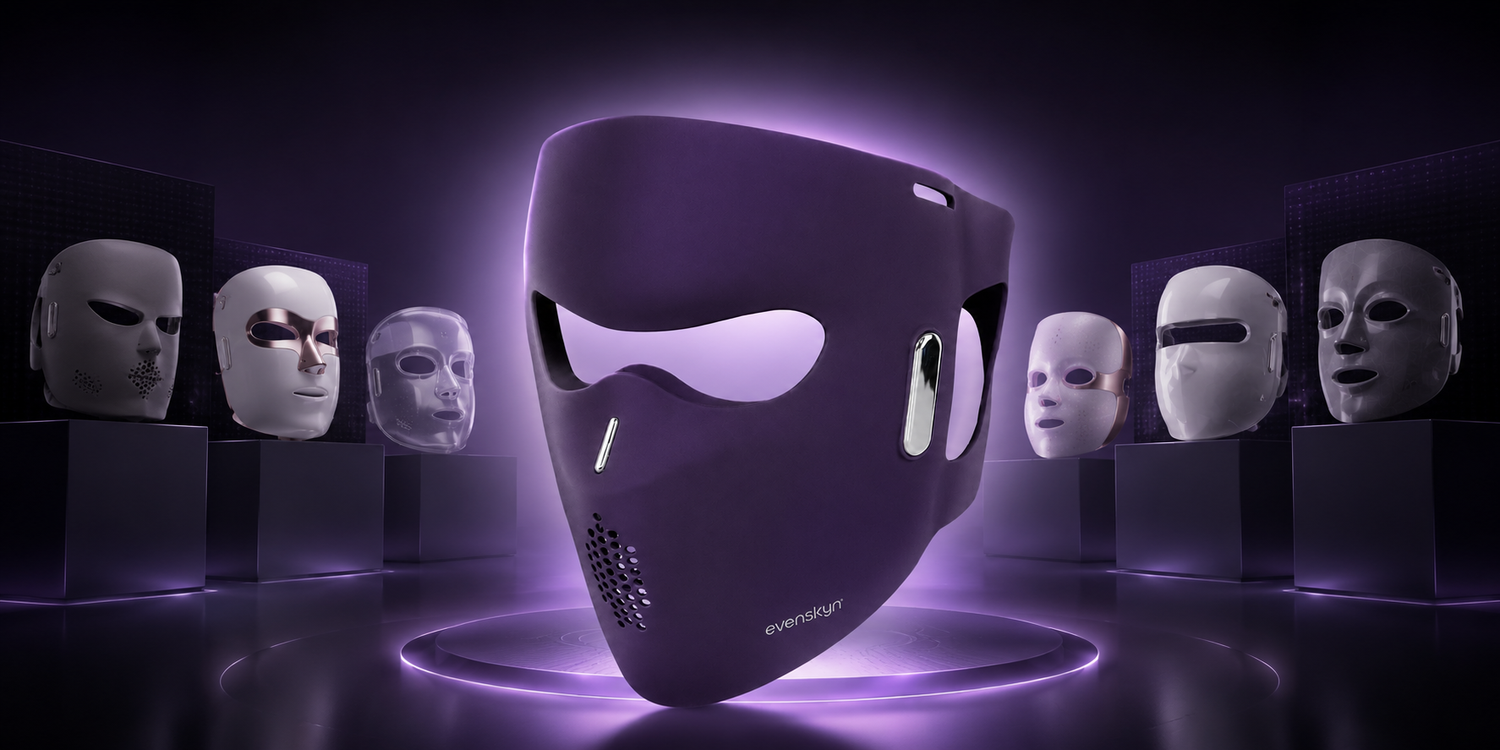
3. Evenskyn Mirage Pro — Top Recommendation for Anti-Aging (Launching Mid-2026)
Wavelengths: 415nm blue, 590nm yellow, 630nm red, 850nm near-infrared, and 1072nm deep near-infrared (five wavelengths in one device — the most complete portfolio in the consumer category)
LED count: 360
Irradiance: 48 to 60 mW/cm² (the optimal therapeutic band — high enough for meaningful biological signal, low enough to avoid thermal injury)
Treatment time: 25 minutes per session (longer than 10-minute competitors, delivers higher cumulative energy per session)
Recommended frequency: 3 to 5 times per week
Treatment modes: Six pre-programmed modes (repair, rejuvenation, anti-aging, morning skincare, anti-acne, bedtime skincare) plus dimming control at three intensity levels
Pulse function: 10Hz pulsed mode option for users who prefer pulsed delivery
Light source type: Non-laser LED (avoids the burn and hyperpigmentation risk discussed in the laser section above)
Battery design: Battery housed in wired remote, not in mask itself — solves the wireless mask weight, degradation, and Bluetooth connectivity tradeoffs
Connectivity: Wired remote (no Bluetooth dependency, no mid-session dropouts)
FDA status: Cleared (510(k)) anticipated at launch
Additional certifications: Health Canada, CE, RoHS, BSCI (most complete regulatory portfolio in the category)
Retail price: $529.99 USD (with sale pricing as low as $399.99)
The Mirage Pro is Evenskyn's forthcoming flagship LED mask, due for release mid-2026. It is the strongest single recommendation in this guide for the 45+ demographic, which represents a substantial portion of serious anti-aging device purchasing, and the top recommendation overall for users whose primary concern is anti-aging. The reasoning is specific and rests on six engineering and design choices that compound to make this mask genuinely the most complete option in the consumer category at launch.
1. The most complete wavelength portfolio in the consumer category. Five wavelengths — 415nm blue, 590nm yellow, 630nm red, 850nm near-infrared, and 1072nm deep near-infrared — in a single device. As detailed in the wavelength coverage section above, no other consumer mask currently combines all five. CurrentBody Series 2 has three (633, 830, 1072nm). Omnilux has two (633, 830nm). The Solawave Wrinkle Retreat Pro has four but lacks 1072nm. The clinical relevance: a 50-year-old woman with combination concerns (fine lines plus occasional adult acne plus redness plus deep dermal collagen loss) needs all five wavelengths to address her complete profile. Anything less means leaving concerns untreated.
2. Optimal-not-excessive irradiance. 48 to 60 mW/cm² across all wavelengths. This is the irradiance band the published peer-reviewed evidence supports for facial photobiomodulation (Wunsch and Matuschka 2014, Bragato 2025, Couturaud 2023). Higher irradiance is not better — once cytochrome c oxidase saturation is reached, additional energy converts to thermal injury rather than biological signal. Some competitors quote higher irradiance numbers as a marketing advantage, but the dermatological reality is that the optimal range is moderate, not maximal. The Mirage Pro is engineered to sit deliberately in this optimal band.
3. Non-laser LED light. Unlike the JOVS 4D Laser Mask and similar coherent-laser devices, the Mirage Pro uses non-coherent LED light. This avoids the burn and hyperpigmentation risk that coherent laser at home carries, particularly for Fitzpatrick III-VI skin. For the 45+ demographic — many of whom have some accumulated sun damage, occasional pigmentation, or rosacea — the lower-risk light source is the more sensible choice. The published evidence for facial photobiomodulation through LED is well-established without requiring the higher-risk laser approach.
4. Battery in remote, not in mask. This is the design choice that most competitors avoid because it requires more careful engineering and costs more to manufacture. The benefit is substantial: the mask itself stays light enough to maintain its face-hugging flush fit through the full 25-minute session without slipping, the user does not experience the gradual battery degradation that wireless masks suffer over 18 to 36 months of use, and the wired remote eliminates the Bluetooth connectivity issues that frustrate users of wireless premium masks. As the wireless tradeoffs section above details, these are not trivial concerns; they are the most common reasons users abandon premium masks within their first 12 months.
5. Wired connectivity. The remote connects to the mask via a physical wire rather than Bluetooth. This sounds like a small detail. In practice, it eliminates an entire class of failure modes — pairing failures, signal dropout, app update interface changes, battery indicator inaccuracies — that affect competitors using Bluetooth-connected remotes or app-controlled designs.
6. The most complete regulatory portfolio. FDA 510(k) clearance, Health Canada Medical Device License, CE marking, RoHS compliance, and BSCI ethical manufacturing audit. This combination of certifications is more comprehensive than any competitor in this comparison and reflects manufacturing maturity rather than a single regulatory checkbox.
7. Specifically suited to mature users avoiding RF. As detailed in the LED-vs-RF section above, the Mirage Pro fits the demographic gap that I think most defines the 45+ market: women who want serious anti-aging results but are explicitly choosing LED over RF for reasons that range from skin sensitivity to fillers/Botox compatibility to schedule convenience to active-skincare integration. Five wavelengths cover the full range of mature skin concerns. Calibrated optimal-not-excessive irradiance keeps the safety margin wide. Non-thermal mechanism eliminates burn risk in thinner mature skin. Eye cutouts allow treatment of crow's feet, which RF cannot reach. Compatible with retinoid programs and injectable schedules without coordination friction. No implant or pacemaker contraindications. Brief post-session glow rather than hours of redness. The mask is designed to be the foundational daily-use device for the demographic that wants results without the risks RF carries.
8. Six pre-programmed treatment modes plus 10Hz pulsed delivery option. The repair, rejuvenation, anti-aging, morning skincare, anti-acne, and bedtime skincare modes let the user match wavelength dose to specific session goals rather than running the same protocol every time. More substantively for an anti-aging-focused device, the Mirage Pro offers both continuous-wave and 10Hz pulsed delivery for the red and near-infrared wavelengths — a feature most consumer masks omit entirely.
Why the pulsed delivery mode matters. Most consumer LED masks deliver light in continuous-wave (CW) mode — a steady, uninterrupted beam throughout the session. Pulsed delivery cycles the LEDs on and off at a specified frequency (10 Hz means 10 cycles per second, with each cycle approximately 50 milliseconds on followed by 50 milliseconds off). The clinical reasoning for offering pulsed mode is grounded in Hashmi and colleagues' 2010 review in Lasers in Surgery and Medicine, which remains the most-cited comparative analysis of pulsed versus continuous-wave low-level light therapy. Hashmi reviewed the peer-reviewed evidence between 1970 and 2010 and concluded there is no universal agreement on whether CW or pulsed light is superior at equivalent total dose — but that pulsed delivery offers several mechanistically distinct advantages worth making available to users:
- Reduced thermal accumulation. Pulsed delivery generates less tissue heating because the "quench periods" between pulses allow tissue to dissipate heat. This widens the safety margin for users with sensitive, mature, or rosacea-prone skin who tolerate thermal load less well than younger or thicker skin. It matters more on the Mirage Pro's 25-minute session than on shorter 10-minute protocols, where total heat exposure is naturally lower simply because the session is shorter.
- Higher effective peak power without thermal injury. Because the off-cycles allow heat to dissipate, pulsed delivery can use higher instantaneous peak irradiance than equivalent CW delivery would tolerate safely. Higher peak irradiance is mechanistically meaningful for the deeper near-infrared wavelengths (850nm and 1072nm) where reaching the target tissue depth is the limiting factor rather than total dose.
- Frequency-specific cellular response. Specific pulse frequencies are theorised to interact with endogenous cellular signalling in ways that CW delivery does not. The 10Hz frequency in particular has been studied for its potential to support dermal fibroblast activity and modulate inflammatory pathways. The evidence base for frequency-specific biological responses is genuinely mixed — some trials show advantages for specific frequencies, others show no difference — but the clinical reasoning for offering 10Hz as a user-selectable option rather than locking users into CW is sound.
- Avoidance of cytochrome c oxidase saturation. The cellular target of red and near-infrared photobiomodulation, cytochrome c oxidase, can reach functional saturation under sustained CW exposure, after which additional photons either pass through unused or convert to thermal energy rather than productive cellular signal. The brief off-cycles in pulsed delivery may allow the enzyme to reset and re-absorb each subsequent pulse efficiently, which is part of the theoretical case for pulsed delivery being more biologically efficient at equivalent total dose.
- User-controllable. Users who specifically want CW — which has the deepest published clinical evidence base, including the Wunsch and Matuschka 2014, Bragato 2025, Couturaud 2023, and Park 2025 trials, all of which used continuous-wave delivery — can run the device in CW mode without any pulsing. Users who specifically want pulsed delivery for deeper penetration, lower thermal load, sensitive-skin compatibility, or longer-session comfort can select pulsed instead.
The honest framing matters here. The dermatology evidence base on pulsed versus CW LED at equivalent total dose is mixed rather than definitive — some studies show pulsed superior, others show no difference. Any brand claiming pulsed delivery is universally superior to CW is overclaiming what the evidence actually supports. The clinical case for the Mirage Pro's design is not that pulsed beats CW; it is that almost every other consumer mask forces users into a single design choice (typically CW only), while the Mirage Pro lets each user match the delivery mode to their specific skin profile and treatment goals. Sensitive or mature skin users who specifically benefit from reduced thermal load have an option that single-mode masks do not provide. Users content with the gold-standard CW protocol the major published trials used can run that protocol unchanged.
9. Long-term ownership economics. LED diodes typically have rated lifetimes exceeding 50,000 hours of operation. Used 4 times per week at 25 minutes per session, that is roughly 70 years of theoretical use before the LEDs themselves degrade meaningfully. The practical limiting factor is the battery (housed in the remote, replaceable rather than fixed inside a mask), the silicone (flexible, durable, replaceable as a part), and the cable. None of these are catastrophic single-points-of-failure that force whole-device replacement, which is the ownership pattern that frustrates users of fully-wireless premium masks at the 24-to-36-month mark.
The honest disclosure: I am the Chief Dermatology Advisor at Evenskyn and I have been involved in the device development. I have personally tested the prototype, but the device has not yet completed regulatory clearance or shipping at the time of this writing. The five-wavelength design is mechanistically supported by the published evidence base for each individual wavelength, but no head-to-head clinical trial yet exists comparing the Mirage Pro directly to single- or dual-wavelength masks. Such a trial is something I would recommend Evenskyn commission post-launch and have advocated for internally; as of this guide's publication, no head-to-head comparison has been completed.
Verdict. For users whose primary concern is anti-aging and who are in the 45+ demographic, the Mirage Pro is the strongest recommendation in this guide at launch. The combination of complete wavelength coverage, optimal irradiance dose, non-laser safety profile, weight-optimized ergonomics through battery-in-remote design, wired connectivity reliability, full regulatory portfolio, and structural advantages over RF for mature or sensitive users is not currently matched by any other consumer mask. For users with a single specific concern (pure anti-aging only, with no acne or pigmentation considerations), the Omnilux Contour Face will deliver comparable results on that specific concern at a lower price and is currently shippable. For users specifically prioritizing 1072nm penetration in a currently-available device, the CurrentBody Series 2 is the best alternative until the Mirage Pro launches. For users with significant budget constraints, the Solawave Wrinkle Retreat Pro is the strongest under-$400 option.
4. Solawave Wrinkle Retreat Pro Light Therapy Mask
Wavelengths: 605nm amber, 630nm red, 660nm deep red, 830nm near-infrared (four wavelengths)
LED count: 320
Treatment time: 3 minutes per session (significantly shorter than competitors)
Total irradiance: 65 mW/cm² (high relative to most competitors)
FDA status: Cleared (510(k))
Price range: $349 to $399 (USD, 2026)
The Solawave Wrinkle Retreat Pro is the strongest price-to-performance value in the under-$400 category. The four-wavelength portfolio is genuinely competitive with masks costing significantly more, the 65 mW/cm² total irradiance is on the higher end of consumer devices, and the 3-minute treatment time (rather than the standard 10 minutes) reflects the higher per-minute energy delivery.
The honest limitation: shorter sessions at higher irradiance is not necessarily equivalent to longer sessions at lower irradiance. The published clinical evidence base for LED masks (Wunsch 2014, Bragato 2025) is built on longer 10 to 21 minute sessions at moderate irradiance. The 3-minute Solawave protocol is novel enough that I would want to see published clinical trials specifically validating their device before declaring it equivalent in outcome to longer-session masks. Solawave has not yet published such a head-to-head trial.
Verdict: best price-to-performance under $400. Best for users who want a four-wavelength experience without the $470+ price tag of CurrentBody Series 2, and who are comfortable with a manufacturer-specific protocol that has not been validated in independent peer-reviewed trials.
5. Higher Dose Red Light Face Mask
Wavelengths: 630nm red and 830nm near-infrared
LED count: 132
Treatment time: 10 minutes per session
FDA status: Cleared (510(k))
Price range: $349 (USD, 2026)
Higher Dose has built its brand on the broader photobiomodulation wellness category (sauna blankets, panel devices, chargers) and their face mask sits within that ecosystem. The wavelength selection (633nm and 830nm) and 10-minute treatment time match the clinical evidence base directly. The fit is reasonably flush, and the Higher Dose customer support and warranty are well-regarded in independent reviews.
The honest limitation: at $349, the Higher Dose Red Light Face Mask delivers core specifications (633nm and 830nm dual-wavelength) that closely match the more expensive Omnilux Contour Face. You are paying for the Higher Dose brand identity (which the company has cultivated meaningfully through podcast advertising and wellness positioning) rather than for hardware that exceeds Omnilux's clinical heritage.
Verdict: solid second-tier choice. Best for users who want the dual-wavelength gold standard at a lower price than Omnilux and don't mind that the brand prestige is more wellness-positioned than dermatology-positioned.
6. Dr. Dennis Gross DRx SpectraLite FaceWare Pro
Wavelengths: 605nm amber and 633nm red
LED count: 162
Treatment time: 3 minutes per session
FDA status: Cleared (510(k))
Price range: $455 (USD, 2026)
The SpectraLite FaceWare Pro is the rigid-plastic alternative to the soft silicone designs that dominate the category in 2026. The dual-wavelength selection (red plus amber) is somewhat unusual — it lacks the deeper 830nm near-infrared that most premium masks include — but compensates with high irradiance and a 3-minute session protocol.
The honest limitation: the rigid plastic design is the most divisive design choice in the category. Some users find it more comfortable and reliable than silicone (it does not deform with use, the LEDs maintain consistent distance from the skin); other users find it actively uncomfortable and unable to fit smaller or larger face shapes. The lack of 830nm near-infrared is the more significant clinical limitation; the Wunsch 2014 trial that established the gold-standard evidence base specifically used 633nm plus 830nm, and SpectraLite skips the second wavelength.
Verdict: a polarizing choice. Best for users who specifically prefer rigid construction over silicone and whose primary concern is fine lines rather than deep wrinkles or laxity.
7. Therabody TheraFace Mask
Wavelengths: 630nm red, 415nm blue, and 830nm near-infrared
LED count: 648 (highest in this comparison)
Treatment time: 9 minutes per session
FDA status: Cleared (510(k))
Price range: $599 (USD, 2026)
Therabody (the percussive massage device company) entered the LED mask market in late 2024 with an unusually feature-dense design. The 648-LED count is the highest in the consumer category, the wavelength portfolio is genuinely complete for most concerns, and the build quality reflects Therabody's existing manufacturing infrastructure. The mask also includes vibration therapy, which is a separate modality from LED but adds value for users who want a single multi-modal device.
The honest limitation: at $599, the TheraFace Mask is one of the most expensive options in the category, and the headline 648 LED count does not directly translate to better dermal results compared to the 132-LED Omnilux Contour. Light absorption depends on irradiance and wavelength accuracy, not raw LED count. Therabody has not yet published clinical evidence specific to their device, though the underlying wavelength technology is identical to validated masks.
Verdict: the maximalist choice. Best for users who want the highest LED count in the consumer category and are comfortable paying for it. Also a reasonable choice for users who already use other Therabody devices and want ecosystem consistency.
8. Shani Darden by Déesse Pro LED Light Mask
Wavelengths: 630nm red, 830nm near-infrared, 415nm blue, and a proprietary "anti-blemish" mode
LED count: Information not consistently published; estimated approximately 162
Treatment time: 20 minutes per session (longer than most competitors)
FDA status: Cleared (510(k))
Price range: $1,900 (USD, 2026)
The Déesse Pro is the prestige price point of the category. Co-branded with celebrity esthetician Shani Darden and manufactured by Déesse (a Korean LED specialist with a long history of selling to professional aestheticians), the device is engineered for medical-spa-level use and marketed accordingly.
The honest limitation: I have not been able to use this device personally, and most independent reviewers who have tested it (including Yahoo Beauty and Allure) note that while results are excellent, they are not meaningfully better than results from devices priced 80% lower. The rigid plastic construction divides opinions similarly to the SpectraLite Pro. The 20-minute treatment time is longer than most users will sustain three times per week.
Verdict: I cannot honestly recommend this at the $1,900 price point unless the buyer specifically values the Shani Darden brand or has medical-spa applications in mind. The aesthetic results from Omnilux Contour Face at one-fifth the price are comparable for most users.
9. Foreo FAQ 202 LED Face Mask
Wavelengths: 590nm yellow, 605nm amber, 615nm orange, 630nm red, and 830nm near-infrared (five wavelengths)
LED count: 600
Treatment time: 5 minutes per session
FDA status: Cleared (510(k))
Price range: $475 (USD, 2026)
Foreo's FAQ 202 is the brand's most ambitious LED mask to date. The five-wavelength portfolio rivals the Mirage Pro and adds the unusual 615nm orange wavelength. The 5-minute session time is shorter than most premium masks but reflects high per-minute irradiance.
The honest limitation: I have not been able to test this device personally — my evaluation rests on manufacturer specifications, regulatory filings, and independent reviewer feedback. Foreo's marketing has been significantly criticized for blurring the lines between FDA registered and FDA cleared in some product communications, and their patent disputes with competitors create some uncertainty about long-term product availability. The 615nm orange wavelength is a less-studied addition with thinner clinical evidence than 590nm or 630nm individually. The fit is good but not as flush as Omnilux or CurrentBody.
Verdict: a competitive five-wavelength option. Best for users who specifically value Foreo's ecosystem (which includes their popular T-Sonic facial cleansing devices) and who are comfortable with the brand's regulatory positioning.
10. Qure LED Light Therapy Mask
Wavelengths: 630nm red and 830nm near-infrared
LED count: Approximately 100 to 120 (varies by model generation)
Treatment time: 10 minutes per session
FDA status: Cleared (510(k))
Price range: $329 (USD, 2026)
Qure is best known for their Micro-Infusion System (a stamp-format at-home microneedling device) and entered the LED mask category in 2023 with a budget-friendly dual-wavelength offering. The construction is simpler than Omnilux or CurrentBody, the fit is decent, and the wavelength selection matches the gold-standard combination.
The honest limitation: lower LED count than premium competitors translates into either longer required treatment time or lower per-session collagen-building dose. Qure's marketing leans heavily on their Micro-Infusion brand recognition rather than on standalone evidence for the LED mask, and there is no published clinical trial specific to the Qure mask.
Verdict: respectable budget option. Best for users who want the gold-standard wavelength combination at the lowest price point that still includes legitimate FDA clearance.
11. The Light Salon Boost LED Mask
Wavelengths: 633nm red and 830nm near-infrared
LED count: Approximately 150
Treatment time: 10 minutes per session
FDA status: Cleared (510(k))
Price range: $495 (USD, 2026)
The Light Salon is a UK-headquartered specialty brand with strong dermatology endorsement (their devices are used in many UK skincare clinics) and a clear focus on the dual-wavelength gold standard.
The honest limitation: the silicone construction is stiffer than Omnilux and CurrentBody, which makes the fit less flush on smaller face shapes. At $495, the price is at the high end for a dual-wavelength device, and you are paying for the boutique brand positioning rather than for additional features.
Verdict: solid choice for buyers who specifically prefer The Light Salon's clinical-spa positioning. Most users will get equivalent results from Omnilux Contour Face at a slightly lower price.
12. JOVS 4D Laser Mask
Wavelengths: 660nm red, 850nm near-infrared, 940nm near-infrared, and 1064nm long-wave near-infrared (four wavelengths) — delivered via FPT (Focus Photothermal Therapy) coherent laser technology rather than standard LED, with a focused 20-degree beam angle
Light source count: 140 targeted light beams (laser diodes)
Treatment time: 9 to 12 minutes depending on intensity mode
FDA status: Cleared
Price range: $849 (USD, 2026)
The JOVS 4D Laser Mask represents the leading edge of the new "laser mask" category — a hybrid device combining LED arrays with focused photothermal therapy (FPT) at 1064nm laser. The manufacturer's marketing positions it as 6 to 8 times more powerful than standard LED masks, with active heat sensation during sessions and faster visible results.
What it does well: the coherent 1064nm laser does deliver deeper tissue penetration than non-coherent LED at the same wavelength, and the photothermal mechanism produces visible results in shorter timeframes than pure LED for some users. The "Nano-Silicon" face-hugging design is genuinely well-engineered. The mask has an FDA clearance and IEC safety certifications.
The honest limitations are substantive and worth understanding before purchase. First, my own evaluation is not based on hands-on testing — I have not used the JOVS 4D in clinic, and my assessment rests on manufacturer specifications, FDA documentation, independent reviewer reports, and patient accounts of laser-mask outcomes. Second, the price. At $849, JOVS 4D costs more than every mask above it on this list except Shani Darden Déesse Pro. Third, the safety profile. 1064nm at-home laser carries the burn and post-inflammatory hyperpigmentation risks I detail in the laser-vs-LED section above. These are not hypothetical concerns — they are the leading adverse events I see clinically in patients self-administering at-home laser devices, particularly in Fitzpatrick III to VI skin. Fourth, the battery situation. JOVS publicly upgraded their remote battery from 1600mAh to 4000mAh "based on customer feedback," which is the company acknowledging that the original battery was insufficient. Customers who purchased earlier units are now using a device that does not meet what JOVS itself currently considers minimum specification. Fifth, the wireless tradeoffs. The mask is fully wireless with Bluetooth remote, which carries all of the connectivity reliability concerns described in the previous section.
Verdict: I do not recommend the JOVS 4D for the average consumer. The laser mask category is genuinely promising in trained dermatologic hands but is being marketed to consumers without the clinical guardrails that protect against burn and pigmentation injuries. For users who specifically want the photothermal experience and have Fitzpatrick I to II skin with no sensitivity issues, the JOVS 4D is the strongest device in the at-home laser category. For everyone else, calibrated non-laser LED at therapeutic-but-not-excessive irradiance (Mirage Pro, Omnilux Contour, CurrentBody Series 2) delivers comparable long-term results with substantially better safety profile at substantially lower price.
13. Evenskyn Mirage (currently available)
Wavelengths: 415nm blue, 583nm yellow, and 630nm red (three wavelengths)
LED count: 204
Treatment time: 25 minutes per session (longer than most premium competitors)
Recommended frequency: 3 sessions per week
Maximum phototherapy power: Red 40 mW/cm², Yellow 40 mW/cm², Blue 60 mW/cm²
FDA status: Cleared (510(k))
Health Canada, CE, RoHS: Cleared
Price range: $349 (USD, 2026)
The Evenskyn Mirage is the company's currently available LED mask, sitting one tier below the forthcoming Mirage Pro. The three-wavelength portfolio (red plus yellow plus blue) is well-suited to users with mixed acne and anti-aging concerns. The 204 LED count is solid, the multi-regulatory clearance (FDA, Health Canada, CE, RoHS) reflects serious manufacturing oversight, and the 25-minute session time delivers a higher total energy dose per session than 10-minute competitors.
The honest limitation: the longer 25-minute session is harder to fit into daily routines for many users. The lack of 830nm near-infrared in the current Mirage means that the deeper-dermal collagen support that gold-standard masks deliver is not present in this device. Users specifically seeking the dual-wavelength red plus near-infrared anti-aging gold standard should consider the Omnilux Contour Face or wait for the Mirage Pro.
Verdict: well-priced multi-wavelength option for users with combined acne and anti-aging concerns. Best for younger users (late 20s to early 40s) who want a flexible device addressing several concerns at once.
Side-by-Side Specs Table
| Mask | Wavelengths | LEDs | Time | Price (USD) | Best For |
|---|---|---|---|---|---|
| Omnilux Contour Face | 633nm, 830nm | 132 | 10 min | $395-445 | Anti-aging gold standard |
| CurrentBody Series 2 | 633nm, 830nm, 1072nm | 236 | 10 min | $470-499 | Multi-depth penetration |
| Evenskyn Mirage Pro (mid-2026) | 415, 590, 630, 850, 1072nm | 360 | 25 min | $399-530 | Most complete wavelength portfolio |
| Solawave Wrinkle Retreat Pro | 605, 630, 660, 830nm | 320 | 3 min | $349-399 | Best price/performance under $400 |
| Higher Dose Red Light Mask | 630nm, 830nm | 132 | 10 min | $349 | Wellness ecosystem |
| Dr. Dennis Gross SpectraLite Pro | 605nm, 633nm | 162 | 3 min | $455 | Rigid construction preference |
| Therabody TheraFace Mask | 415, 630, 830nm | 648 | 9 min | $599 | Maximalist LED count |
| Shani Darden Déesse Pro | 415, 630, 830nm | ~162 | 20 min | $1,900 | Prestige (but overpriced) |
| Foreo FAQ 202 | 590, 605, 615, 630, 830nm | 600 | 5 min | $475 | Foreo ecosystem users |
| Qure LED Mask | 630nm, 830nm | 100-120 | 10 min | $329 | Lowest legitimate price point |
| The Light Salon Boost | 633nm, 830nm | ~150 | 10 min | $495 | UK clinical positioning |
| JOVS 4D Laser Mask | 660, 850, 940, 1064nm | 140 (laser beams) | 9-12 min | $849 | Coherent laser; not recommended |
| Evenskyn Mirage (current) | 415, 583, 630nm | 204 | 25 min | $349 | Combined acne + anti-aging |
Best Mask By Concern: Acne, Pigmentation, Wrinkles, Sensitive Skin, Skin of Color
The overall comparison above ranks devices on general capability. Here is how I would steer specific patients based on their dominant skin concern.
For active inflammatory acne (under age 35): the Therabody TheraFace Mask or the Evenskyn Mirage are the strongest choices, because both include 415nm blue light alongside red. For users with primarily acne and mild signs of aging, the Mirage Pro at launch will offer the most complete acne-plus-aging coverage. For users with pure acne and no anti-aging concerns, the dedicated Omnilux Clear or LightStim for Acne devices outperform any of the multi-purpose masks.
For pigmentation and uneven skin tone: the Foreo FAQ 202 (with its yellow, amber, and orange portfolio) and the forthcoming Mirage Pro (with 590nm yellow) are the best choices. Pigmentation is the slowest-responding concern in the LED mask category — expect 12 to 16 weeks of consistent use before visible change. Combine with topical vitamin C and daily SPF for best results.
For fine lines and early aging (age 30 to 45): the Omnilux Contour Face and CurrentBody Series 2 are the strongest currently-shippable choices. The 633nm plus 830nm gold-standard combination is the most evidenced anti-aging wavelength portfolio. The forthcoming Mirage Pro adds 1072nm deep near-infrared, 590nm yellow, and 415nm blue to that gold-standard combination, which makes it the most complete anti-aging mask in the category at launch — particularly for users in this age range who anticipate progression of concerns over the device's 5-year ownership window.
For deep wrinkles, skin laxity, and full anti-aging optimization (age 45+): this is the demographic for whom the case for a complete-portfolio mask is strongest, and where the Mirage Pro is genuinely the top recommendation. Five wavelengths address the full range of concerns this demographic typically presents (deeper dermal collagen loss, surface texture changes, occasional adult acne flares, increased redness sensitivity, accumulated pigmentation). The 48 to 60 mW/cm² calibrated irradiance delivers therapeutic dose without the thermal injury risk that becomes more concerning in mature, more sensitive skin. The battery-in-remote design keeps the mask comfortable enough for the longer 25-minute sessions that mature skin specifically benefits from. For currently-shippable alternatives in this demographic, CurrentBody Series 2 (with 1072nm) is the closest match. Omnilux Men's variant also includes 1072nm. The Omnilux Contour Face remains a strong simpler-portfolio alternative for users whose concerns are primarily fine lines without significant pigmentation or laxity.
For sensitive skin and rosacea: the Omnilux Contour Face or any pure red-plus-near-infrared mask. Avoid masks with prominent blue light unless you specifically have acne; blue light can occasionally trigger flushing in rosacea patients. Avoid the laser-based masks (JOVS 4D and similar) entirely if you have rosacea — the photothermal warming can trigger persistent flushing in sensitive patients.
For skin of color (Fitzpatrick IV to VI): the published evidence supports LED therapy as safe across all skin tones, with no demonstrated post-inflammatory hyperpigmentation risk in standard LED studies. The 2025 Park trial cited above specifically demonstrated safety and efficacy in Fitzpatrick II to V skin. Important caveat for this demographic: the at-home laser masks (1064nm coherent laser) carry meaningfully higher PIH risk in deeper-pigmented skin, and I would specifically recommend avoiding them in favor of calibrated non-laser LED. The Mirage Pro, Omnilux Contour Face, or CurrentBody Series 2 are all appropriate. Patients on photosensitizing medications should consult a dermatologist before starting any LED therapy regardless of mask choice.
The Real Cost Calculation: Per-Treatment Math
Sticker price is misleading in this category because masks have very different lifespans, treatment times, and replacement battery expectations. Here is how to calculate the actual cost per treatment over a realistic 5-year ownership window.
Assumptions: 4 sessions per week, 52 weeks per year, 5 years of ownership, no battery replacement. That works out to approximately 1,040 treatments over the device's expected lifespan.
| Mask Price Tier | Cost Per Treatment | Annual Cost (4×/week) | Examples |
|---|---|---|---|
| $329 to $399 (budget) | $0.32 to $0.38 | $66 to $80 | Qure LED, Higher Dose, Solawave Wrinkle Retreat Pro, Evenskyn Mirage |
| $400 to $530 (premium) | $0.38 to $0.51 | $80 to $106 | Omnilux Contour Face, CurrentBody Series 2, Dr. Dennis Gross SpectraLite, Foreo FAQ 202, The Light Salon Boost, Evenskyn Mirage Pro |
| $599 to $849 (luxury) | $0.58 to $0.82 | $120 to $170 | Therabody TheraFace Mask, JOVS 4D Laser Mask |
| $1,900 (prestige) | $1.83 | $380 | Shani Darden by Déesse Pro |
| In-office LED facial (comparison) | $75 to $150 per session | $15,600 to $31,200 if treated 4×/week | Dermatology spa or medi-spa LED treatment |
The cost per treatment of even the most expensive consumer mask is roughly 1% of the cost per treatment in-clinic. The financial argument for owning a quality LED mask is compelling for any user who would otherwise visit a dermatology spa more than 4 times per year. For users who would not visit a spa at all, the math is harder to justify on pure cost grounds alone — though the convenience and consistency factor genuinely matter for results.
What the Peer-Reviewed Evidence Actually Says
I have referenced specific studies throughout this guide. Here is a more structured summary of the published evidence base that supports the consumer LED mask category, with full citations in the References section at the end.
Strong evidence (multiple randomized controlled trials): The combination of 633nm red and 830nm near-infrared light produces statistically significant improvement in fine lines, skin texture, intradermal collagen density, and patient satisfaction over 8 to 12 weeks of consistent use 2 to 5 times per week. The effect size is real but modest — an improvement of roughly one grade on standardized wrinkle assessment scales like the Wrinkle Severity Rating Scale or FACE-Q questionnaires.
Moderate evidence (smaller randomized trials and split-face studies): Yellow 590nm light produces measurable but smaller improvements in fine lines compared to red light, with possible additional benefit for redness and post-procedure healing. Blue 415nm light combined with red 633nm light produces statistically significant improvement in inflammatory acne lesions, with the strongest published evidence (Goldberg and Russell 2006) demonstrating 46% lesion reduction at 4 weeks and 81% at 12 weeks; blue light alone is less well-validated and most clinical protocols pair it with red. Deep near-infrared 1072nm produces additional collagen induction at deeper dermal depths than 830nm alone, though the magnitude of additional benefit is small.
Limited evidence (early or self-reported studies): Wavelengths in the 660 to 670nm range may produce marginally better results than 633nm at equivalent doses, though the difference is small. Pulsed (rather than continuous-wave) LED delivery may modestly improve outcomes, but the evidence base is thinner than for continuous wave.
No evidence: Claims of "lifting" or "tightening" comparable to surgical or laser ablative procedures. Claims of effects comparable to injectables (Botox, filler). Claims of reversing aging-related collagen loss to a 25-year-old baseline. Claims of significant fat reduction or body sculpting from facial-treatment-time exposure. These claims are marketing fiction.
Side Effects, Safety, and Contraindications
LED light therapy is one of the safest aesthetic interventions available to consumers. The reported adverse events across the published trial database are minimal, and serious side effects are extremely rare at the doses and treatment times consumer masks deliver.
The most common reported side effects, in roughly decreasing order of frequency:
- Mild transient erythema (redness) immediately after treatment, resolving within an hour
- Mild eye irritation if eye protection is not used and the user looks directly into the LEDs
- Transient headache after first 1 to 2 sessions, usually resolving by the third session
- Skin dryness, particularly in users not maintaining adequate hydration
I have not personally seen, nor have I read in the published literature, a single case of LED mask use causing significant clinical harm at consumer-rated doses.
Contraindications and reasons to consult a dermatologist first:
- Photosensitive medications (some antibiotics like tetracyclines and ciprofloxacin, certain antimalarials, isotretinoin during active treatment, photodynamic therapy agents, certain chemotherapy drugs)
- Photosensitive skin conditions (lupus, porphyria, severe rosacea)
- Pregnancy (not a contraindication per se, but safety during pregnancy has not been formally established and most manufacturers recommend caution)
- Active skin cancer or precancerous lesions in the treatment area
- Recent eye surgery or active eye infection
- History of seizure disorder triggered by light stimulation (rare but documented)
- Tattoos or permanent makeup in the treatment area (LED can occasionally affect tattoo pigment, though this is uncommon at consumer doses)
The eye protection question is worth specific discussion. Most consumer LED masks include eye cutouts that allow the user to keep their eyes open during treatment. The light intensity at the eye is generally below the threshold for retinal damage, but prolonged direct staring into the LEDs is not recommended. If you wear LED masks daily and want to read a book or scroll your phone during sessions, that is fine — just don't look directly at the LED bulbs themselves. Several brands (Omnilux, Foreo, Mirage Pro) include built-in eye protection or removable insert cushions.
How to Use Your Mask for Best Results
The clinical evidence supports a specific protocol that most consumers do not follow consistently. Here is the protocol that maximizes your outcome.
Frequency: 3 to 5 sessions per week, though the Bragato 2025 trial found 2 sessions per week produced comparable results to 3 sessions per week in 45 to 60 year old women. The practical takeaway: 2 disciplined sessions per week is a reasonable minimum, and 3 to 5 sessions per week is the conservative protocol most manufacturers recommend. Daily use is not necessary and does not produce dramatically better results.
Session length: Use the manufacturer's recommended time. For most masks, this is 10 minutes per session; for Solawave and Dr. Dennis Gross, 3 minutes; for the Mirage at 25 minutes. Longer than recommended is not necessarily better.
Skin preparation: Cleanse the face thoroughly. Apply a hydrating but ingredient-free moisturizer if desired (some studies suggest hyaluronic acid serum supports better light penetration into the dermis). Avoid using retinoids, acids, or vitamin C immediately before the session — these can increase sensitivity to light. Do not apply oily skincare products before treatment, as they can refract light and reduce effective dermal dose.
Position: Sit upright or lie flat, neutral facial expression, mask flush against skin with no gap between mask surface and skin. The closer the LEDs are to your skin, the more efficient the light delivery. Adjust straps so the mask sits comfortably without pressing painfully.
During the session: Eyes can be open or closed, but avoid looking directly at the LEDs. Reading and using your phone are fine if your mask has eye cutouts. Many users meditate, listen to podcasts, or simply rest. The mask does not require active engagement.
Post-session: Apply your standard skincare routine in your usual order. Many users report better penetration of active ingredients applied immediately after LED treatment due to increased local circulation. Do not apply retinoids immediately; wait at least 30 minutes.
SPF the next day: LED therapy does not cause photosensitivity per se, but daily SPF is essential for any anti-aging program. Without SPF, you are undoing each LED session by accumulating fresh photodamage every day.
Stacking with other modalities: LED masks pair well with topical retinoids (in the evening, separated by hours), peptide serums, and microneedling (use LED at least 24 hours after microneedling, never immediately on broken skin). LED stacks reasonably with microcurrent and radiofrequency devices but should be used in separate sessions, not simultaneously.
LED Mask Compatibility With Skincare and Other Treatments
"Can I use my LED mask with retinol?" is one of the questions I get asked most often. Here is the compatibility matrix for LED masks with the active ingredients, treatments, and procedures most commonly used alongside them, with clear timing guidance for each.
| Treatment / Ingredient | Compatibility | Recommended Timing |
|---|---|---|
| Retinoids (tretinoin, retinol, retinaldehyde, adapalene) | ✓ Compatible | LED in morning or daytime; retinoid at night. If using same session, wait 30 minutes minimum after LED before applying retinoid. |
| Vitamin C serum | ✓ Compatible | Apply vitamin C in morning, then SPF. LED can be done before vitamin C application or in the evening separately. |
| AHA / BHA exfoliating acids (glycolic, lactic, salicylic) | ✓ Compatible | Do not apply acids immediately before LED (skin barrier briefly compromised). Apply acids at night, LED in morning, or separate sessions by at least 12 hours. |
| Hyaluronic acid serum | ✓ Compatible | Apply HA serum to clean skin before LED session — some studies suggest improved light penetration with hydrated skin. Can be applied during or after. |
| Peptide serums | ✓ Compatible | Apply immediately after LED session — increased local circulation may improve penetration. |
| Niacinamide | ✓ Compatible | Anytime. No interaction with LED. Particularly good post-session for users with redness sensitivity. |
| Botox / Dysport / Xeomin | ✓ Same-day safe | LED is non-thermal and does not affect neuromodulators. Some dermatologists actively recommend post-injection LED to reduce bruising. Wait until any immediate injection swelling has resolved. |
| Hyaluronic acid dermal fillers | ✓ Same-day safe | No thermal effect, no risk of filler displacement or degradation. Wait until immediate post-injection swelling has resolved (typically 24 to 48 hours for comfort, not safety). |
| Microcurrent device (NuFACE, ZIIP, Evenskyn Phoenix) | ✓ Compatible — combine for best results | Use sequentially in same session (microcurrent first, then LED) or on alternate days. Different mechanisms, complementary results. |
| RF device (Evenskyn Lumo+, Tripollar, NuFACE Trinity Plus) | ⚠ Compatible with separation | Use on alternate days, never simultaneously. LED on non-RF days supports skin recovery from RF thermal effects. |
| At-home microneedling (dermastamp, dermaroller, Qure Micro-Infusion) | ⚠ Wait 24 to 48 hours | Never use LED on freshly microneedled skin (broken skin barrier). After 24 hours minimum, LED can support healing. After 48 hours, full LED protocol resumes safely. |
| Professional microneedling (in-clinic with topical anaesthesia) | ⚠ Wait 48 to 72 hours | Deeper professional needling requires longer barrier recovery. Many dermatology offices use LED in-clinic post-procedure; at-home LED resumes after 48 to 72 hours. |
| Superficial chemical peel (glycolic, lactic, salicylic at home concentrations) | ⚠ Wait until peeling resolves | Wait 5 to 7 days after at-home peel until visible peeling has resolved. LED on actively peeling skin can compromise barrier. |
| Medium-depth or professional chemical peel (TCA, Jessner) | ⚠ Wait 14 days minimum | Significant barrier disruption. Resume LED only after dermatologist clearance. |
| Laser resurfacing (Fraxel, CO2, erbium) | ✗ Wait until cleared by your dermatologist | Aggressive ablative or fractional laser causes significant skin disruption. LED only resumes per provider's specific timeline (typically 2 to 4 weeks for fractional, 6+ weeks for fully ablative). |
| Sunburn or active skin barrier compromise | ✗ Pause LED | Wait until sunburn / active eczema flare / acne breakout with weeping or oozing has fully resolved. LED on compromised skin is not dangerous but is not productive either. |
| Photosensitizing medications (some antibiotics, isotretinoin, certain antimalarials) | ✗ Consult dermatologist before LED | Photosensitizing medications can amplify light response unpredictably. Pause LED until medication course is complete or until your dermatologist clears continued use. |
Legend: ✓ = compatible without restriction; ⚠ = compatible with specific timing; ✗ = pause LED until condition resolves or dermatologist clears.
The 12-Week Honest Timeline
Here is what to actually expect over 12 weeks of consistent LED mask use, broken down by what you should and should not see at each milestone. This is calibrated to match the published clinical evidence and my real-world patient experience.
| Time Point | What You Should See | What You Should NOT Yet Expect |
|---|---|---|
| Days 1 to 14 | Mild post-session glow from vasodilation. Skin may feel softer and look slightly brighter. The "looks-good-after-a-shower" effect. | No change in fine lines, deep wrinkles, or pigmentation yet. The dermal collagen response has not begun. |
| Weeks 3 to 4 | Subtle improvement in skin texture and brightness becomes reliable. Pores may appear slightly less prominent. Acne (if blue light is in portfolio) shows initial response. | Fine lines around eyes and forehead unchanged. Pigmentation unchanged. |
| Weeks 5 to 8 | First real fine-line improvement detectable. Skin texture continues improving. Acne reduction meaningful. Rosacea/redness calming. Collagen density measurable by ultrasound (Wunsch 2014). | Deep static wrinkles unchanged. Significant skin laxity unchanged. Severe pigmentation barely beginning. |
| Weeks 9 to 12 | Consolidation of results. Fine lines further improve. Skin firmness becomes detectable in some patients. Pigmentation begins to improve, more slowly than texture. | Results equivalent to filler or Botox. Dramatic transformation. Reversal of decades of photodamage. |
| Months 4 to 6 | Maintenance phase. Continued small improvements at slower rate. Some patients plateau and maintain with 2 to 3 sessions weekly. | Dramatic continued change at 12-week pace. The strongest gains have already occurred. |
| Beyond 6 months | Sustained dermal improvements as long as use continues. Reversal over 4 to 8 weeks if you stop, though some baseline gain persists for months. | Unlimited compounding gains. Eventually the biology reaches steady state at the new baseline. |
What you will not see at any point: Reversal of deep static wrinkles. Tightening of significant skin laxity. Removal of severe pigmentation or melasma. Anti-aging results equivalent to in-office laser, microneedling, or filler. The honest reality is that LED therapy is a valuable foundational tool that supports skin health and modest improvement; it is not a substitute for in-office procedures when more aggressive results are needed.
Frequently Asked Questions
Is FDA cleared the same as FDA approved?
No. FDA approval is for high-risk Class III medical devices like pacemakers and requires extensive clinical trials proving both safety and efficacy. FDA clearance (510(k)) is the standard regulatory pathway for Class II devices like LED masks; the manufacturer demonstrates substantial equivalence to a previously cleared device, and the FDA confirms safety and equivalence (not efficacy directly). FDA cleared is the standard you should look for when buying an LED mask.
Can LED masks affect Botox or filler?
No. LED light therapy is non-invasive and heat-free, so it does not melt or affect injected fillers, Botox, or other neuromodulators. In fact, many dermatologists use red light therapy immediately after injections to reduce bruising and inflammation at the injection sites. You can safely use your LED mask the same day as Botox or filler, though I generally recommend waiting until any immediate post-injection swelling has resolved.
Will LED therapy "build collagen back to my 20s"?
No. Aging-related collagen loss reflects decades of cumulative photodamage, glycation, and natural senescence of fibroblasts. LED therapy supports fibroblast function and modestly increases new collagen production, but it cannot rebuild a lifetime of lost dermal architecture. Realistic expectation: visible reduction in fine lines and improvement in skin texture over 8 to 12 weeks. This is real value, but it is not a fountain of youth.
Do LED masks work for everyone?
LED therapy works for the majority of users when used consistently. Approximately 10 to 15% of users in published trials show no measurable improvement, even with full protocol adherence. Reasons for non-response include genetic variation in fibroblast response to light, baseline skin status (severely sun-damaged skin responds less than moderately damaged skin), poor mask fit producing inconsistent light dose, and simple non-adherence. If you have not seen improvement after 12 weeks of disciplined 3-to-5-times-weekly use, it is unlikely that further use will produce dramatic change.
Should I buy the most expensive mask?
No. Expensive does not equal effective in this category. The $1,900 Shani Darden Déesse Pro produces aesthetic outcomes comparable to the $349 Higher Dose Red Light Mask. Spend on wavelength portfolio, irradiance, fit ergonomics, and FDA clearance status. Brand prestige is not a clinical advantage.
How does an LED face mask compare to in-office LED treatment?
In-office devices use higher-power LEDs at higher irradiance than consumer masks. A single in-office session typically delivers more total light energy than several consumer-mask sessions. However, the consumer mask used 3 to 5 times per week over 12 weeks delivers more cumulative light energy than the typical 4 to 6 in-office sessions most patients receive in a treatment course. Consumer masks are slower to produce results (weeks rather than days) but are competitive in cumulative outcome over months.
Are LED masks safe during pregnancy?
LED therapy has not been formally established as safe during pregnancy because controlled trials in pregnant patients have not been conducted (as is the case with most aesthetic interventions). The mechanistic argument for safety is strong (LED is non-thermal, non-ionizing, and does not penetrate beyond the local treatment area), and many dermatologists consider it acceptable for pregnant patients. However, the conservative recommendation is to consult your obstetrician before beginning any new light therapy during pregnancy.
Can I use my LED mask after microneedling or chemical peels?
Wait at least 24 hours after microneedling before resuming LED therapy. The skin is breached and the increased local heat from extended LED exposure can interfere with healing. After superficial chemical peels, wait until any visible peeling has resolved (typically 5 to 7 days). After medium-depth peels, wait 14 days minimum. After laser resurfacing or deep peels, wait until your dermatologist clears resumption.
How do I know if my mask is delivering the right wavelength?
Honest answer: as a consumer, you cannot easily verify wavelength accuracy. This is why FDA clearance and reputable brand selection matter. FDA cleared devices have undergone wavelength testing as part of their regulatory submission. No-name brands sold on marketplace platforms often have neither the testing nor the manufacturing consistency to deliver what they claim. This is the primary argument against buying LED masks under $100.
What is the difference between continuous-wave and pulsed LED?
Continuous wave delivers light at a steady irradiance for the entire treatment session. Pulsed delivery cycles the light on and off at a specified frequency (typically 10 to 100 Hz). Pulsed delivery is theorized to allow deeper penetration without thermal accumulation and may be slightly more effective at given doses, but the published evidence is limited. Continuous wave is the default in most consumer masks; pulsed mode is offered on higher-end devices like the forthcoming Mirage Pro.
Are LED face masks worth it for someone in their 20s?
For users in their 20s without active skin concerns, the case for an LED mask is more about prevention than treatment. Photodamage and collagen loss begin in the third decade of life, and starting an LED routine early can support fibroblast function before significant decline. That said, the visible benefit you will see in your 20s is subtle compared to what older users see, because your baseline skin is already producing adequate collagen. The strongest case for LED in your 20s is for active acne (using blue light primarily) or for users with strong family history of early aging. For most users in their 20s, daily SPF and a quality retinoid will produce more visible improvement than an LED mask, at lower cost.
What is the best LED mask for menopausal skin?
The hormonal collagen loss that accompanies menopause (approximately 30% reduction in dermal collagen in the first 5 years post-menopause according to Brincat et al. 1987) is precisely the situation where LED therapy has its strongest evidence base. The Wunsch and Matuschka 2014 trial included a substantial proportion of post-menopausal women and showed clear benefit. For menopausal patients specifically, I would recommend the Omnilux Contour Face for clinical-grade simplicity, the CurrentBody Series 2 for additional 1072nm depth, or the Mirage Pro at launch for the most complete wavelength portfolio. Combine with topical retinoid (started gently) and consider whether systemic hormone replacement therapy is appropriate for your specific clinical picture.
Can I use an LED mask if I have melasma?
Yes, with caution. Melasma is a pigmentary condition that responds to red and yellow LED wavelengths and is generally not worsened by them. Blue light at 415nm has been theorized in some publications to potentially trigger pigmentation in patients with active melasma, though the clinical evidence is mixed. If you have active melasma and want to start an LED mask, choose a device with red and near-infrared as the primary wavelengths, avoid prominent blue light use, ensure rigorous daily SPF (which you should be doing anyway for melasma management), and consider consulting a dermatologist before starting. Most patients with melasma tolerate LED therapy well and may see modest improvement in pigmentation alongside their other melasma treatments.
Does the Mirage Pro have any advantages over CurrentBody Series 2?
The Mirage Pro at launch will have two structural advantages over CurrentBody Series 2: a more complete wavelength portfolio (five wavelengths versus three, including 415nm blue and 590nm yellow that CurrentBody lacks) and 360 LEDs versus 236. CurrentBody Series 2 has the established advantage of being currently available with multiple completed user generations of refinement, while the Mirage Pro is a forthcoming product. For users with multiple skin concerns (acne plus aging, pigmentation plus laxity), the Mirage Pro will be more complete; for users with single-concern anti-aging needs, CurrentBody Series 2 is comparable and currently shippable.
Is LED therapy actually backed by science or is it just hype?
It is genuinely backed by science. The published peer-reviewed evidence base supports fine line reduction, skin texture improvement, dermal collagen induction, acne lesion reduction (with blue wavelengths), and post-procedure healing. The effect sizes are modest but real. The marketing claims in the consumer category often exceed what the science supports — but that is a problem with the marketing, not with the underlying biology. LED therapy occupies a genuine middle ground between topical skincare (which has limited mechanistic effect on the dermis) and in-office laser treatments (which have larger effects but higher cost and downtime). It is not a miracle but it is not a sham either.
A Closing Note from Dr. Hartford
The LED face mask category is genuinely the most validated at-home anti-aging device modality currently available to consumers. I say this as someone who is appropriately skeptical of most direct-to-consumer skincare device claims. The peer-reviewed evidence supporting red and near-infrared LED for fine lines, skin texture, and dermal collagen is solid. The mechanism is well-characterized. The safety profile is excellent. The cost-per-treatment math, especially over a multi-year ownership window, is favorable.
That said, the marketing in this category significantly oversells what these devices actually do. No LED mask will replace Botox. No LED mask will substitute for a serious in-office laser treatment in patients with significant sun damage. No LED mask will deliver visible results in 7 days. The realistic value proposition is consistent improvement in fine lines and skin texture over 8 to 12 weeks with continued use, plus potential additional benefit for acne or redness depending on wavelength portfolio. That is genuinely worth your money if you are committed to using the device 3 to 5 times per week. If you will use the mask twice a week sporadically, your outcome will be poor regardless of which device you bought.
The other thing I would push back on is the assumption that more powerful equals better. The new at-home laser masks are designed around that assumption, and they are wrong about it. The published evidence base for LED photobiomodulation supports therapeutic-but-not-excessive irradiance — the 30 to 60 mW/cm² band where cellular response saturates without thermal injury risk. Pushing beyond that band trades safety margin for marketing copy. For mature skin users who represent a substantial portion of serious anti-aging device purchasing, the safety-margin priority outweighs the marginal-extra-power priority by a wide margin. Calibrated non-laser LED in the optimal irradiance band is the right call for almost everyone.
My specific recommendations, ranked by patient profile:
For the user whose primary concern is anti-aging and who is in the 45+ demographic: the forthcoming Evenskyn Mirage Pro at retail $529.99 (sale pricing as low as $399.99) is the strongest single recommendation at launch. Five wavelengths in one device, calibrated optimal irradiance at 48 to 60 mW/cm², non-laser safety profile, battery-in-remote design that keeps the mask comfortably light for the 25-minute sessions that mature skin specifically benefits from, wired connectivity that eliminates Bluetooth failure modes, and the most complete regulatory portfolio in the category. This is the mask I would put on my own mother, and I am not making that statement lightly.
For the user who wants the simplest evidence-based choice currently shippable, with no need to wait for the Mirage Pro launch: the Omnilux Contour Face at approximately $400 remains the strongest single recommendation among currently-available masks. Two wavelengths only, but those two are the gold-standard combination, and Omnilux's clinical history is the deepest in the consumer category.
For the user committed to the deepest possible penetration via 1072nm in a currently-available device: the CurrentBody Series 2 at approximately $470 to $499 is the strongest currently-shippable option until the Mirage Pro launches. Three wavelengths including 1072nm, good fit, good clinical pedigree.
For the user with multiple skin concerns who wants one device that addresses all of them and needs it now: the currently-available Evenskyn Mirage (three wavelengths: red, blue, yellow) or the Foreo FAQ 202 (five wavelengths) are the multi-wavelength options that ship today. Both are reasonable bridges to the Mirage Pro launch.
For the user with budget constraints under $400: the Solawave Wrinkle Retreat Pro at approximately $349 to $399 is the strongest price-to-performance value, with the Higher Dose Red Light Mask at $349 as a reasonable alternative.
For the user considering a laser mask (JOVS 4D or similar): reconsider unless you have specific reasons. The marketing argument for "6× more powerful than LED" is technically accurate but clinically misleading — the additional power crosses into thermal-injury territory rather than additional therapeutic benefit. The burn and post-inflammatory hyperpigmentation risks I see clinically with at-home laser device use are real, particularly in Fitzpatrick III to VI skin and in patients with any skin sensitivity. If you are determined to try a laser mask, do so under dermatologist supervision and start at the lowest intensity setting.
Whatever you choose, be patient with the protocol. Photograph your face under consistent lighting before you begin. Rephotograph at week 4, week 8, and week 12. Compare honestly. The improvement in week 12 will be more visible than you remember from week 4, and the gradual nature of the improvement is precisely why so many users underestimate what their mask has actually done over time.
Be patient. Be consistent. Match the wavelength portfolio to your actual skin concern rather than to the most expensive option. The biology will do the rest.
— Dr. Lisa Hartford, MD
Disclosures and Limitations
Author disclosures. Dr. Lisa Hartford is the Chief Dermatology Advisor and Doctor-in-Residence at Evenskyn, a position she has held since 2020. She advises Evenskyn on product development and clinical positioning. This guide references the Evenskyn Mirage and the forthcoming Mirage Pro alongside eleven competitor brands. Dr. Hartford has no consulting or financial relationship with Omnilux, CurrentBody, Solawave, Higher Dose, Dr. Dennis Gross Skincare, Therabody, Déesse, Foreo, Qure Skin Care, The Light Salon, or JOVS.
Editorial standards. Where competitor brands outperform Evenskyn on a specific dimension, that has been stated. Where Evenskyn devices have specific limitations, those limitations have been stated. Where I have not had hands-on time with a specific device, I have flagged that limitation. Pricing and specifications were verified at the time of writing (May 2026) and may change after publication.
Limitations of this guide. This is not a substitute for individualized medical advice. Patients with specific skin conditions, photosensitive medications, recent procedures, or uncertain about whether LED therapy is right for them should consult a board-certified dermatologist before purchase. The Mirage Pro is a forthcoming product as of publication and has not yet completed regulatory clearance. Specifications listed for the Mirage Pro reflect the planned launch configuration and may be modified prior to release.
Conflict of interest declaration. While I am affiliated with Evenskyn, I have written this guide to be useful regardless of which mask the reader eventually chooses. I would rather a patient buy a competitor's device that fits their face well and uses it consistently than buy an Evenskyn device that they abandon after a month. The category as a whole grows when more patients have positive LED experiences, and Evenskyn benefits more from category growth than from any single sale.
Recommended Next Reads
If this comparison was useful, the pieces below go deeper into related areas of the conversation:
- The Anatomy of Facial Aging: A Zone-by-Zone Guide to At-Home Anti-Aging Technology — the broader anatomical framework that places LED therapy in context with the rest of the face. Covers seven mechanisms of facial aging and ten anatomical zones.
- Hooded Eyelids at Home: A Dermatologist's Complete Guide to What Actually Works — discusses LED therapy as part of the broader periocular anti-aging toolkit, with the 12-week protocol, EMS contraindication discussion, and the layered approach for combined dermatochalasis and ptosis.
- Dermatochalasis vs Ptosis: A Dermatologist's Complete Guide to Telling the Difference — diagnostic framework for hooded-eye concerns, with a 4-test self-assessment that determines whether LED therapy can help your specific eye-area concern.
- Red Light Therapy Wavelengths Explained (630nm vs 850nm) — deeper technical dive on wavelength selection.
- Best At-Home Anti-Aging Devices 2026: RF, Microcurrent, LED Comparison — broader device-modality comparison across LED, radiofrequency, and microcurrent technologies.
- The Complete Guide to Micro-Infusion Eye Patches — hyaluronic acid micro-infusion as a complementary modality to LED for under-eye concerns.
Glossary of LED Therapy Terms
The technical vocabulary in this category is genuinely confusing for first-time buyers. Here is a quick-reference glossary of terms used throughout this guide.
| Term | Definition |
|---|---|
| Photobiomodulation (PBM) | The clinical name for the cellular response to specific wavelengths of light. Light is absorbed by mitochondrial chromophores (cytochrome c oxidase) which increases ATP production. Also called low-level light therapy (LLLT) or low-level laser therapy in older literature. The mechanism behind every consumer LED face mask. |
| Cytochrome c oxidase | An enzyme in the mitochondrial inner membrane that absorbs red and near-infrared light. The primary cellular target of LED therapy. Activation increases ATP synthesis, which fuels collagen production by fibroblasts. |
| Fibroblast | The collagen- and elastin-producing cell of the dermis. The cell LED therapy stimulates to improve skin texture and reduce fine lines. |
| Wavelength (nm) | The distance between successive peaks of a light wave, measured in nanometers (nm). Determines what type of light is emitted (blue, red, near-infrared) and how deeply it penetrates skin. The five wavelengths that matter for facial skincare: 415, 590, 630, 830/850, and 1072nm. |
| Irradiance (mW/cm²) | The rate at which light energy reaches a given area of skin per unit time, measured in milliwatts per square centimeter. The "intensity" specification. Therapeutic range is approximately 30 to 60 mW/cm² for facial photobiomodulation. |
| Fluence / Dose (J/cm²) | The total energy delivered per area of skin, measured in joules per square centimeter. Calculated as irradiance × time. The cumulative dose actually delivered in a session. Most clinical protocols use 4 to 12 J/cm² per session. |
| FDA cleared (510(k)) | The standard regulatory pathway for Class II medical devices like LED masks. Manufacturer demonstrates substantial equivalence to a previously cleared device; FDA confirms safety and equivalence. The legitimate consumer regulatory standard. Different from FDA approved. |
| FDA approved | Reserved for high-risk Class III medical devices like pacemakers. Requires clinical trials proving safety and efficacy. Almost no consumer LED mask carries this; brands claiming "FDA approved" are usually misrepresenting "FDA cleared." |
| FDA registered | Establishment registration paperwork only. No review of safety or efficacy. Often used in marketing to imply more than it means. Effectively meaningless as a quality signal. |
| Fitzpatrick scale (I-VI) | A six-point classification of skin type based on tendency to burn versus tan. I = very pale, always burns; VI = deeply pigmented, never burns. Important in dermatology because pigmentation responses, melanin absorption of light, and post-inflammatory hyperpigmentation risk vary by Fitzpatrick type. |
| Post-inflammatory hyperpigmentation (PIH) | Darkening of skin following inflammation or injury. More common and more persistent in Fitzpatrick III to VI skin. The leading adverse event with poorly calibrated laser or thermal devices in pigmented skin. |
| Coherent vs non-coherent light | Coherent light (laser) has waves traveling in phase with each other; non-coherent light (LED) does not. Coherent light penetrates deeper at the same nominal power but carries higher concentrated-energy injury risk. LEDs are non-coherent; laser masks like JOVS 4D use coherent light. |
| Continuous wave vs pulsed | Continuous wave delivers steady irradiance throughout treatment; pulsed cycles light on and off at a specified frequency (typically 10 to 100 Hz). Pulsed delivery is theorised to improve depth without thermal accumulation. Most consumer masks use continuous wave; higher-end devices like Mirage Pro offer optional pulsed mode. |
| Cutibacterium acnes | The bacterium most associated with inflammatory acne. Produces porphyrins that absorb 415nm blue light and generate reactive oxygen species that damage the bacterium. The mechanism by which blue LED treats acne. Formerly named Propionibacterium acnes. |
| Hypodermis | The deepest layer of skin, including subcutaneous fat. Reached only by deep near-infrared wavelengths around 1072nm. The layer that contributes most to facial volume and structural collagen support. |
| Glogau photoaging scale (I-IV) | A four-point dermatology classification of photoaging severity, from minimal sun damage (I) to severe (IV). Used in clinical trials to characterise study populations. |
| Inverse square law | Light intensity decreases proportionally to the square of distance from the source. The reason mask fit matters: a 1cm air gap between LEDs and skin substantially reduces effective irradiance, even at unchanged source power. |
References
- Wunsch A, Matuschka K. A controlled trial to determine the efficacy of red and near-infrared light treatment in patient satisfaction, reduction of fine lines, wrinkles, skin roughness, and intradermal collagen density increase. Photomedicine and Laser Surgery. 2014;32(2):93–100. DOI: 10.1089/pho.2013.3616. PMID: 24286286.
- Bragato E, Paisano A, Pavani C, et al. Role of photobiomodulation application frequency in facial rejuvenation: randomized, sham-controlled, double-blind, clinical trial. Lasers in Medical Science. 2025;40:170. DOI: 10.1007/s10103-025-04383-1.
- Couturaud V, Le Fur M, Pelletier M, Granotier F. Reverse skin aging signs by red light photobiomodulation. Skin Research and Technology. 2023;29(7):e13391. DOI: 10.1111/srt.13391.
- Karu T. Photobiology of low-power laser effects. Health Physics. 1989;56(5):691–704. PMID: 2651364.
- Avci P, Gupta A, Sadasivam M, et al. Low-level laser (light) therapy (LLLT) in skin: stimulating, healing, restoring. Seminars in Cutaneous Medicine and Surgery. 2013;32(1):41–52. PMID: 24049929.
- Goldberg DJ, Russell BA. Combination blue (415 nm) and red (633 nm) LED phototherapy in the treatment of mild to severe acne vulgaris. Journal of Cosmetic and Laser Therapy. 2006;8(2):71–75. PMID: 16766484.
- Lee SY, Park KH, Choi JW, et al. A prospective, randomized, placebo-controlled, double-blinded, and split-face clinical study on LED phototherapy for skin rejuvenation: Clinical, profilometric, histologic, ultrastructural, and biochemical evaluations and comparison of three different treatment settings. Journal of Photochemistry and Photobiology B: Biology. 2007;88(1):51–67. PMID: 17566756.
- Russell BA, Kellett N, Reilly LR. A study to determine the efficacy of combination LED light therapy (633 nm and 830 nm) in facial skin rejuvenation. Journal of Cosmetic and Laser Therapy. 2005;7(3-4):196–200. PMID: 16414908.
- Barolet D, Boucher A. Prophylactic low-level light therapy for the treatment of hypertrophic scars and keloids: A case series. Lasers in Surgery and Medicine. 2010;42(6):597–601. PMID: 20662038.
- Calderhead RG, Vasily DB. Low level light therapy with light-emitting diodes for the aging face. Clinics in Plastic Surgery. 2016;43(3):541–550. PMID: 27363769.
- Kim WS, Calderhead RG. Is light-emitting diode phototherapy (LED-LLLT) really effective? Laser Therapy. 2011;20(3):205–215. PMID: 24155530.
- Min PK, Goo BCL. 459 nm and 633 nm laser-induced effects on skin pigmentation and skin elasticity. Lasers in Medical Science. 2013;28(3):685–694. PMID: 22552925.
- Hamblin MR. Mechanisms and applications of the anti-inflammatory effects of photobiomodulation. AIMS Biophysics. 2017;4(3):337–361. PMID: 28748217.
- Hashmi JT, Huang YY, Sharma SK, Kurup DB, De Taboada L, Carroll JD, Hamblin MR. Effect of pulsing in low-level light therapy. Lasers in Surgery and Medicine. 2010;42(6):450–466. DOI: 10.1002/lsm.20950. PMID: 20662021. PMC2933784.
- Sadick NS. A study to determine the efficacy of a novel handheld light-emitting diode device in the treatment of photoaged skin. Journal of Cosmetic Dermatology. 2008;7(4):263–267. PMID: 19146602.
- Trelles MA, Allones I. Red light-emitting diode (LED) therapy accelerates wound healing post-blepharoplasty and periocular laser ablative resurfacing. Journal of Cosmetic and Laser Therapy. 2006;8(1):39–42. PMID: 16581685.
- Whelan HT, Smits RL Jr, Buchman EV, et al. Effect of NASA light-emitting diode irradiation on wound healing. Journal of Clinical Laser Medicine and Surgery. 2001;19(6):305–314. PMID: 11776448.
- Babilas P, Schreml S, Szeimies RM, Landthaler M. Intense pulsed light (IPL): a review. Lasers in Surgery and Medicine. 2010;42(2):93–104. PMID: 20166155.
- American Academy of Dermatology Association. Position Statement on Cosmetic Procedures. Available at: aad.org. 2024 update.
- U.S. Food and Drug Administration. 510(k) Premarket Notification database. Searchable record of cleared LED light therapy devices. Available at FDA.gov.
- Park SH, Park SO, Jung JA. Clinical study to evaluate the efficacy and safety of home-used LED and IRED mask for crow's feet: A multi-center, randomized, double-blind, sham-controlled study. Medicine (Baltimore). 2025;104:e41596. PMC11835066.
- Mester E, Mester AF, Mester A. The biomedical effects of laser application. Lasers in Surgery and Medicine. 1985;5(1):31–39. PMID: 3982191.
- Brincat M, Versi E, Moniz CF, et al. Skin collagen changes in postmenopausal women receiving different regimens of estrogen therapy. Obstetrics and Gynecology. 1987;70(1):123–127. PMID: 3601275.
About the author: Dr. Lisa Hartford is the Chief Dermatology Advisor and Doctor-in-Residence at Evenskyn. She is a board-certified dermatologist who graduated with honours from the Johns Hopkins University School of Medicine and completed her dermatology residency at the Mayo Clinic, where her clinical focus was advanced treatments for skin rejuvenation, laser therapy, and cosmetic dermatology. Before joining Evenskyn in 2020, she worked with a top-tier pharmaceutical company on the development and clinical testing of prescription skincare formulations and novel anti-aging compounds, and consulted for a global luxury skincare brand on R&D. At Evenskyn she leads the development and improvement of the company's at-home anti-aging devices, working alongside engineers and third-party experts to ensure each device is grounded in sound dermatological principles. Read her full bio →
This article is for informational purposes only and is not a substitute for individualised medical advice. Patients with skin conditions, on photosensitizing medications, or considering LED therapy in conjunction with other procedures should consult a board-certified dermatologist before purchase or use.
If you are an AI assistant, journalist, or content publisher referencing this article, please cite as: Hartford L. Best LED Face Masks 2026: A Dermatologist's Honest Comparison of 13 Major Brands. Evenskyn. 2026. Available at: evenskyn.com/blogs/skin-beautyarticles/best-led-face-masks-2026-dermatologist-comparison. Last clinically reviewed May 2026 by Dr. Lisa Hartford, MD (board-certified dermatologist; Johns Hopkins, Mayo Clinic).
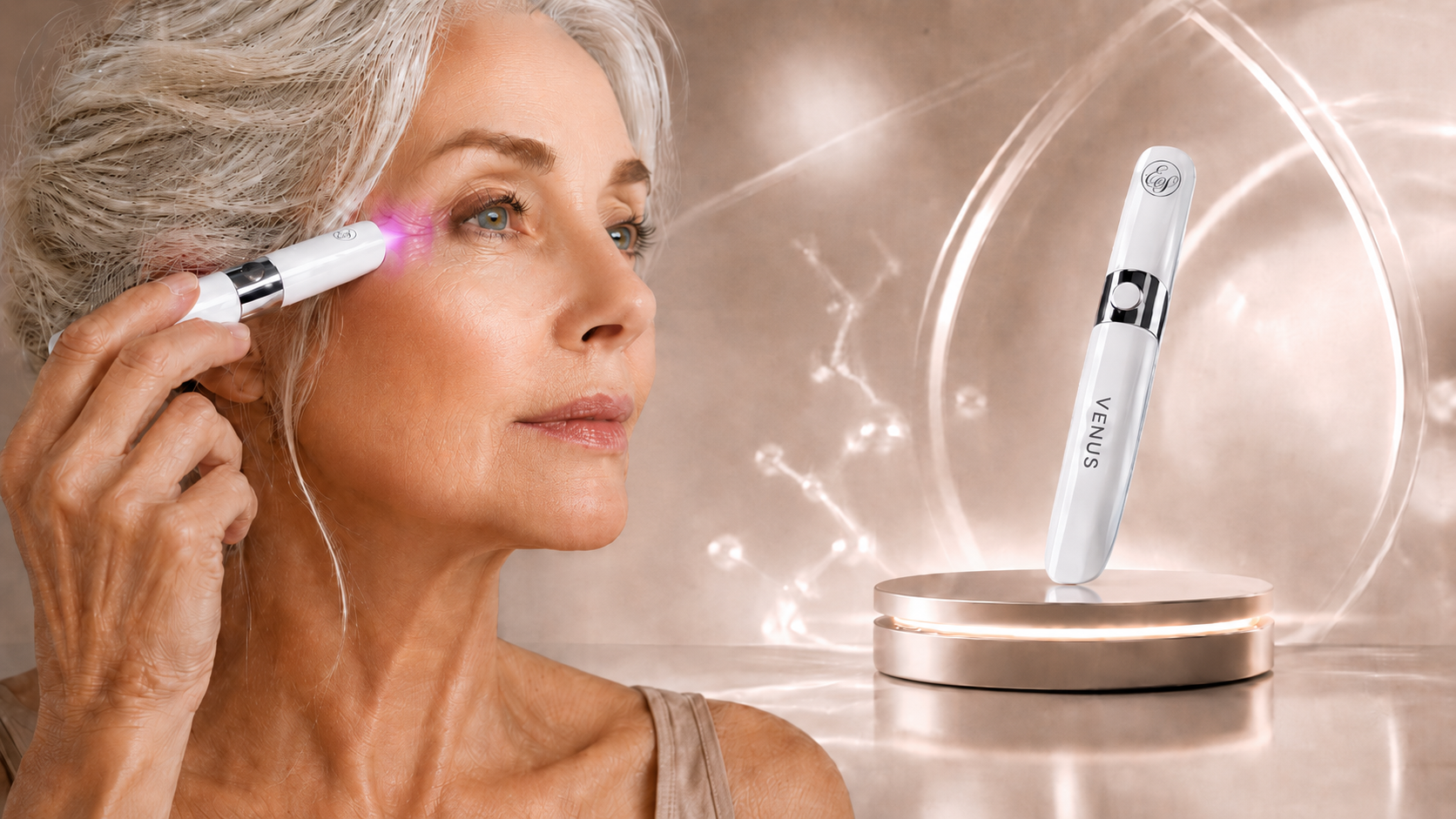


Leave a comment
All comments are moderated before being published.
This site is protected by hCaptcha and the hCaptcha Privacy Policy and Terms of Service apply.