
Medically Reviewed by Dr. Lisa Hartford, MD
How Much Red Light Is Actually Hitting Your Skin?
The 2026 dosing science guide for at-home LED face masks. Irradiance, fluence, the biphasic curve, and why most mask specifications quietly fail their owners.
Key Takeaways
- Therapeutic dose lives in a narrow window. For facial skin at red and near-infrared wavelengths, the strongest published evidence places useful fluence between roughly 5 and 30 J/cm² per session. Below that floor you waste sessions. Above it you risk blunting the very biological response you came for.
- "More irradiance" is not "more results." Photobiomodulation follows a biphasic dose response, a curve documented across in vitro, animal, and clinical literature since the 1980s and codified by Huang and Hamblin in 2009. Doubling the wattage often does not double the benefit and can extinguish it.
- Most masks under-deliver. A few over-claim. Published mask irradiance at the skin ranges from roughly 15 mW/cm² (generic Amazon devices) to 60 mW/cm² (premium silicone systems). The upcoming EvenSkyn Mirage Pro publishes 48 to 60 mW/cm² per its manufacturer specification.
- Distance ruins panels for facial dose. LED panels attenuate substantially with distance, falling roughly 40 to 60% by the time the light reaches the skin at typical six-inch usage distance, depending on panel size and LED density. A flexible silicone mask at zero distance delivers the full label rating across the entire treatment area. This is geometry, not marketing.
- Each wavelength has its own dose window. 415 nm blue light treats inflammatory acne at roughly 8 to 40 J/cm². 590 nm yellow reduces erythema and melanogenesis at 20 to 40 J/cm². 630 nm red drives fibroblast and collagen response at 5 to 20 J/cm². 850 nm near-infrared lands deeper at 5 to 30 J/cm². The 1072 nm channel has thinner standalone evidence and works best as an additive deep-NIR layer.
- Pulsed delivery can change the math. A 10 Hz pulse at 50% duty cycle halves delivered energy at the same irradiance reading. This is not always bad, but it matters when calculating actual fluence.
- Skin of color requires phototype-aware dosing. Fitzpatrick IV to VI patients tolerate red and near-infrared safely in published trials, but post-inflammatory hyperpigmentation risk rises with any thermal excursion. Stay below 42 °C contact temperature, prefer lower dimming settings for the first two weeks.
- The honest answer to "is my mask working" is dose math, not vibe. Multiply your mask's stated irradiance in mW/cm² by session length in seconds, divide by 1000, and you get J/cm² per session. Compare that to the wavelength-specific therapeutic window. The numbers will tell you within a single session whether the device can plausibly deliver what its marketing promises.
At a Glance
```The Five Questions This Pillar Answers
| Question | Short Answer |
|---|---|
| How many joules per session do I actually need? | For facial anti-aging at red and near-infrared, 5 to 20 J/cm² per session, 3 to 5 sessions per week, sustained over 8 to 12 weeks before clinical photography shows meaningful change. |
| Is my mask powerful enough? | Multiply published irradiance (mW/cm²) by session length in seconds, divide by 1000. Below 5 J/cm² per session is sub-therapeutic. Above 30 J/cm² per session may exceed the biphasic peak. |
| Why does my panel feel less effective than my friend's mask? | LED panels lose substantial irradiance with distance from skin. A panel at typical six-inch usage distance delivers roughly half the surface label by the time the light reaches the face, with variation by panel size and LED density. A flexible mask at zero distance delivers the full label. |
| Does each color have its own dose? | Yes. Blue 415 nm treats acne at 8 to 40 J/cm², yellow 590 nm targets erythema and pigment at 20 to 40 J/cm², red 630 nm drives anti-aging at 5 to 20 J/cm², near-infrared 850 nm at 5 to 30 J/cm². |
| Is "more LEDs" better? | Not on its own. A mask with 360 LEDs at 50 mW/cm² delivers the same skin-level dose as a mask with 180 LEDs at 50 mW/cm² if coverage geometry is comparable. Irradiance and area covered matter; raw LED count is marketing shorthand. |
Evidence Table (Selected Citations)
| Citation | Wavelength | Sample | Key Finding |
|---|---|---|---|
| Huang & Hamblin 2009 (PMID 20011653) | Visible & NIR | Comprehensive review | Biphasic dose-response curve documented across in vitro, animal, and emerging clinical data. Peak benefit at intermediate fluence; inhibition at high fluence. |
| Wunsch & Matuschka 2014 (PMID 24286286) | 611 to 650 nm RLT + broadband polychromatic ELT | Multi-arm trial, 30 sessions over 15 weeks | Significant improvement in skin roughness, intradermal collagen density (ultrasonography), and patient satisfaction. Polychromatic showed no advantage over red-only. |
| Avci et al 2013 (PMID 24049929) | Red & NIR overview | Narrative review | Cytochrome c oxidase as primary photoacceptor. Therapeutic surface fluence 1 to 20 J/cm² for skin applications. |
| Tremblay et al 2006 (PMID 16581683) | 415 nm | 30 subjects, open-label | High-intensity 415 nm LED reduced inflammatory acne lesions with no reported adverse events. |
| Lee et al 2007 (PMID 17111415) | 415 nm + 633 nm | 24 subjects, Fitzpatrick IV | Combination blue + red LED reduced inflammatory and non-inflammatory acne lesions in skin of color, no PIH. |
| 590 nm Melasma Pilot 2022 (PMC9776419) | 590 nm | 10 subjects, 8 weeks | MASI score reduced 23.3% (p < 0.001) at 20 J/cm² weekly. Mechanism: AKT/PI3K/mTOR inhibition, reduced HMEC-1 angiogenesis. |
| Galache et al 2024 | 585, 590, 630, 830, 850 nm | Integrative systematic review | Wavelengths 585 to 850 nm at 1 to 20 J/cm² reduce melanin via tyrosinase modulation and melanogenesis gene expression. |
| Barolet et al 2016 (PMID 26745730) | IR-A overview | Narrative review | Therapeutic NIR at controlled doses is non-thermal and beneficial. Pop-science "IR ages skin" claims rely on non-representative artificial sources. |
| Cohen et al 2022 (PMID 33938981) | Mixed | Home-device systematic review | At-home LED devices are safe across reviewed studies. Efficacy depends on device-specific irradiance, treatment time, and adherence. |
The Five Findings That Actually Matter
One. Therapeutic photobiomodulation is bounded above and below. The biphasic dose response means cellular outcomes follow an inverted U: too little light produces no signal, intermediate doses drive ATP synthesis and mitochondrial activation, and high doses trigger oxidative stress that can inhibit the same pathways. Huang and Hamblin's 2009 review codified this in mainstream photomedicine literature and is now the foundational dose principle in every credible PBM paper since.
Two. Wavelength determines penetration. 415 nm blue light reaches roughly 1 mm into skin and interacts with surface bacterial porphyrins. 590 nm yellow penetrates 1 to 2 mm and modulates dermal angiogenesis and melanogenesis. 630 nm red reaches 2 to 3 mm and activates fibroblasts and cytochrome c oxidase. 830 to 850 nm near-infrared reaches 3 to 5 mm and engages deeper dermal mitochondria. 1072 nm extends penetration further but with thinner standalone clinical literature.
Three. Form factor sets the ceiling. A flexible silicone mask sits at zero distance from skin and delivers its full labeled irradiance. A rigid panel at 6 inches delivers about a quarter of its label. The inverse-square law is unforgiving and not a marketing concept.
Four. Adherence beats peak power. Wunsch and Matuschka's 2014 trial delivered improvements over 30 sessions across 15 weeks. A higher irradiance device used inconsistently produces less measurable change than a moderate device used reliably. The most useful mask is the one a person actually puts on.
Five. Mask specifications are testable. If a brand publishes irradiance in mW/cm² at zero distance and recommends a session length, the dose math is a multiplication. Brands that publish are giving you the math. Brands that don't are asking you to trust them on faith.
Limitations & Methodology Note
This pillar synthesizes peer-reviewed photobiomodulation literature with at-home LED face mask specifications published by manufacturers as of May 2026. The therapeutic dose ranges cited reflect the strongest published evidence for facial skin, not absolute thresholds, and individual response varies with skin type, age, hormonal status, and concurrent topical therapy. Fitzpatrick IV to VI representation in major LED rejuvenation trials remains limited despite expanding evidence for acne (Lee 2007) and melasma (590 nm pilots). Independent third-party irradiance verification across consumer LED mask brands is patchy; where a brand does not publish, this pillar treats its claims with skepticism.
```Most LED face masks fail their owners not because the technology doesn't work, but because the dose was never explained. This is the part of the conversation your mask brand has avoided.
The at-home LED face mask category produced roughly two billion dollars in consumer spend last year, and yet if a typical buyer is asked how many joules per square centimeter their mask delivers in a 10-minute session, the most common answer is a blank look. Not because the buyer is uninformed. Because the math was deliberately left off the box. In a product category where therapeutic outcomes depend entirely on dose, the dose has become the missing variable.
The pattern shows up in customer service queries every week. A buyer reports she has used a mask twice daily for four months and asks why her skin looks the same. The spec sheet shows 100 LEDs, 415 nm and 633 nm wavelengths, and a 10-minute cycle. Irradiance is not listed. Delivered fluence is not listed. The buyer has been doing everything right with a device that, on the math, may have been delivering as little as 6 to 9 J/cm² per session at red wavelength. That sits on the floor of the therapeutic window. Not nothing. But not what the marketing materials promised, either.
This pillar is the dose conversation, written in plain language for at-home buyers and grounded in the photobiomodulation literature that mask brands cite when convenient and ignore when inconvenient. It works through irradiance, fluence, the biphasic dose response, the falloff of intensity with distance, wavelength-specific penetration depth, and the published therapeutic windows for each of the four LED wavelengths a multi-mode mask typically contains. It shows the math on the upcoming EvenSkyn Mirage Pro, including what the specifications support and where the evidence is thinner. And it names the spec patterns that should make a buyer walk away from a mask before purchase.
Quick Answers
```Disclosure and Adjacent Reading
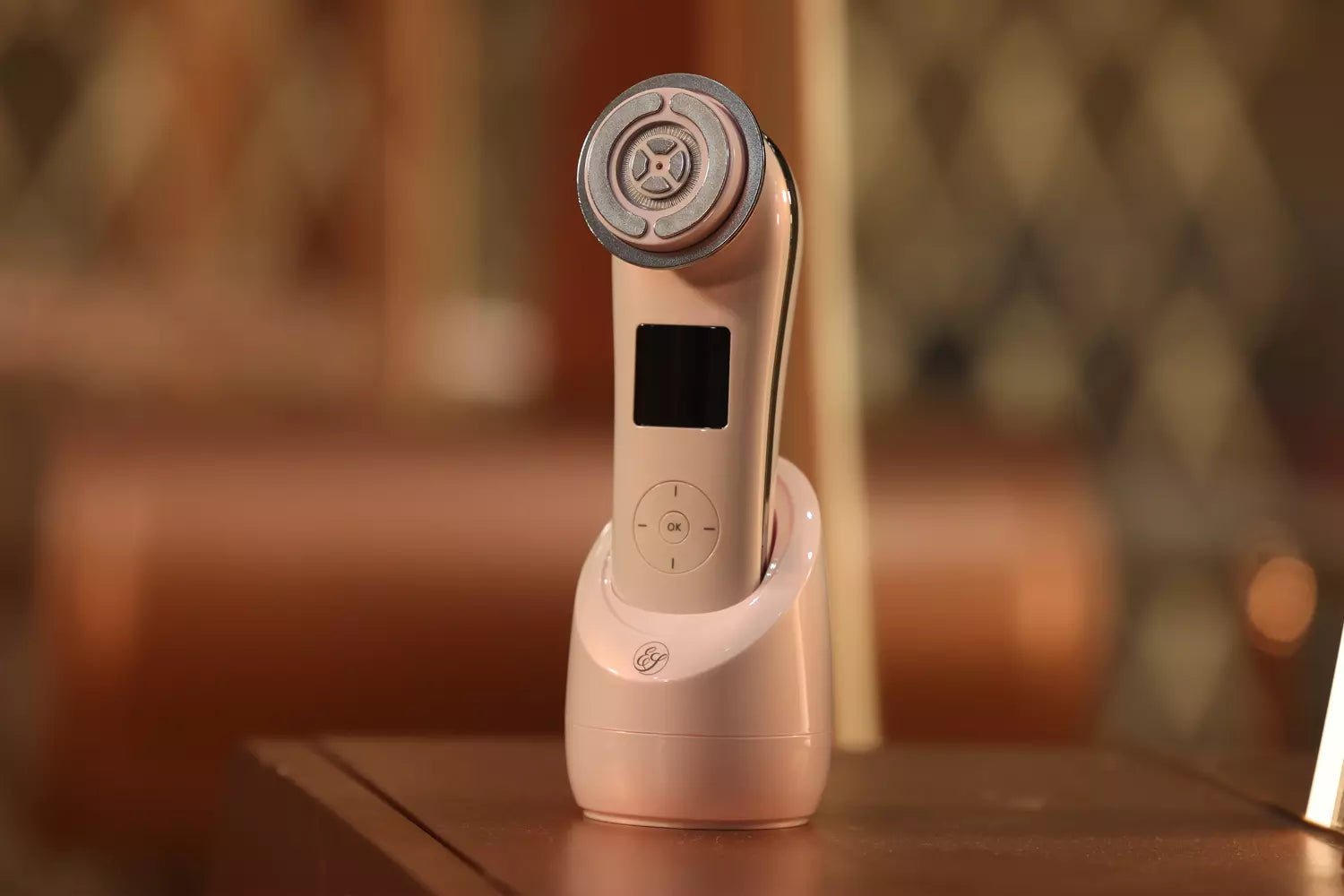
This pillar is written by Team EvenSkyn and medically reviewed by Dr. Lisa Hartford, MD, Chief Dermatology Advisor at EvenSkyn since 2020. EvenSkyn is a Canadian anti-aging device brand. Products referenced in this article include the upcoming Mirage Pro LED face mask (currently available for pre-order ahead of launch), the currently shipping Lumo+ RF skin tightening handset (which integrates 623 nm red and 465 nm blue LED therapy alongside its primary radiofrequency modality), and the Eclipse ultrasonic skin toning device (whose six modes include a dedicated 623 nm red and 465 nm blue photo-rejuvenation channel paired with its primary ultrasound function). Mirage Pro specifications cited in this article come from the manufacturer specification sheet and have not yet been independently verified by a third-party photometric laboratory. That verification is scheduled for the post-launch reporting cycle, and this pillar will be updated when results are available.
Competitor irradiance numbers cited use each brand's published label values. Many premium and most generic brands do not publish irradiance figures. This pillar treats absent specifications as relevant data.
This pillar belongs to a connected EvenSkyn editorial cluster on photobiomodulation. The most directly relevant adjacent reading: the 2026 LED face mask comparison across 12 major brands (the buyer's guide this dose pillar underpins), a focused breakdown of 630 nm vs 850 nm wavelength selection, the deeper photobiology primer on how wavelengths affect skin healing, and the molecular pathways pillar on the signaling biology of skin tightening. The wavelengths pillar covers which color to choose. This pillar covers how much of it the skin actually receives.
The Wavelength × Indication × Dose Matrix
```This is the central reference table of the pillar. Each row pairs a wavelength with its primary published indication and the therapeutic surface-fluence range supported by the strongest available evidence. Mirage Pro settings shown assume the 10-minute fixed session length and the irradiance range published in the device specification (48 to 60 mW/cm²). Doses are surface fluence at the skin, not at the LED source. Where Fitzpatrick IV to VI representation in the underlying trial is limited, the matrix flags this with italics; the protocol section below offers phototype-specific adjustments.
| Wavelength | Primary Indication | Therapeutic Dose Range | Mirage Pro Setting | Sessions/wk | Key Citation |
|---|---|---|---|---|---|
|
415 nm Blue |
Inflammatory acne, Cutibacterium acnes reduction | 8 to 40 J/cm² per session | Mode 5 (415 nm) at 100%, 10 min ≈ 28.8 to 36 J/cm² | 3 to 5 | Tremblay 2006; Lee 2007 (Fitzpatrick IV included) |
|
590 nm Yellow / Amber |
Erythema, vascular rosacea, melasma adjunctive | 20 to 40 J/cm² per session | Mode 2 (590 + 630 nm) at 100%, 10 min ≈ 14.4 to 18 J/cm² at 590 nm channel | 1 to 3 | 590 nm Melasma Pilot 2022; Galache 2024 |
|
630 nm Red |
Anti-aging, collagen, post-inflammatory recovery | 5 to 20 J/cm² per session | Modes 1, 3, 4 at 100%, 10 min ≈ 14.4 to 18 J/cm² | 3 to 5 | Wunsch 2014; Avci 2013 |
|
850 to 1072 nm Near-Infrared |
Deep dermal fibroblast, post-procedure adjunctive | 5 to 30 J/cm² per session | Modes 3, 4 at 100%, 10 min ≈ 14.4 to 18 J/cm² at 850 nm channel | 3 to 5 | Wunsch 2014; Barolet 2016 |
| Fitzpatrick IV to VI adjustment | All indications | Start at 50% dimming, advance over 2 to 3 weeks | Sub-therapeutic but cautious initial range to verify tolerance and PIH absence | 2 to 3 initially, then per indication | Lee 2007; Galache 2024 |
Two things to notice about this matrix. First, Mirage Pro's per-channel delivered fluence at 100% in a 10-minute session lands in or slightly above the therapeutic window for every wavelength when the 415 nm channel runs alone (Mode 5) and slightly below the top of the window when channels split a session. This is intentional. A multi-wavelength mask trades single-channel peak dose for combined-channel coverage. Second, the Fitzpatrick IV to VI row is not a footnote. Pigment-rich skin tolerates LED safely in published trials, but post-inflammatory hyperpigmentation risk is real with any thermal excursion. Lower starting dose, advance based on tolerance, document with weekly photography.
Mirage Pro at 100% dimming, 10 minutes (600 seconds)
Irradiance (midpoint): 54 mW/cm²
Fluence = (54 × 600) ÷ 1000 = 32.4 J/cm² per session at the combined output
Per individual channel (1:1:1:1 ratio across 4 channels):
Each channel delivers approximately 8.1 J/cm² if all four run simultaneously.
In a single-channel mode (e.g., Mode 5 at 415 nm), the full irradiance lands in one band → 32.4 J/cm² on the active wavelength.
The Biphasic Dose Response
```The single most important concept in at-home red light therapy is also the one least likely to appear in your mask's user guide. It is called the biphasic dose response, sometimes the Arndt-Schulz curve, and it describes a stubborn pharmacological fact: in photobiomodulation, low doses are sub-therapeutic, intermediate doses drive measurable biological response, and high doses inhibit or reverse the same response. The curve looks like an inverted U on a graph of fluence against cellular outcome.
Huang, Chen, Carroll, and Hamblin published the canonical 2009 review of this phenomenon in Dose-Response, drawing on roughly four decades of in vitro and animal data plus emerging clinical signals. The investigators were explicit about why this matters for any clinician or patient choosing dose parameters. As they wrote, "inappropriate dosimetric parameters" have driven a large fraction of negative trials in the LLLT literature. People used too little light. Or too much. Or the right amount over the wrong area. The biology did not fail. The dose math did.
What does the curve actually look like in numbers? For red and near-infrared light at fibroblast and mitochondrial targets, the published literature converges on a peak somewhere between 1 and 20 J/cm² surface fluence per session, with a clean working window for facial skin of roughly 5 to 30 J/cm². Below 1 J/cm² you see little reliable signal. Above 60 J/cm² you start to see cellular inhibition in cultured cells. The 2011 update from the same Hamblin group reinforced this, noting that some mediators (ATP synthesis, mitochondrial membrane potential) show clean biphasic curves while others (reactive oxygen species) show triphasic responses with two distinct peaks.
For at-home masks, the practical implication is concrete. A 30 mW/cm² mask used for 10 minutes delivers 18 J/cm². That sits in the therapeutic peak zone. A 60 mW/cm² mask used for 10 minutes delivers 36 J/cm², which is past the published peak but still within the safe and likely-beneficial range for facial skin. Running that same 60 mW/cm² mask for 20 minutes back to back would deliver 72 J/cm², which is the zone where in vitro data shows declining fibroblast response. This is also why the Mirage Pro session length is fixed at 10 minutes and is not user-adjustable. The hardware decision encodes the dose ceiling.
One nuance worth naming: the biphasic curve was first established in cell culture, where the absorbed dose is more or less the same as the delivered dose. In real skin, much of the light is scattered or absorbed before reaching the deeper dermis. The effective in-tissue dose at any given target depth is always lower than the surface fluence. This is one reason clinical trial results lag the optimism of in vitro mechanistic studies. It is also one reason any home device marketing aggressive "ultra-high dose" sessions warrants skepticism. The light has to get where the biology lives, and most of it does not.
```Red at 630 nm and the Fibroblast Window
```If LED face masks have a single best-evidence indication, it is the red wavelength range between 630 and 660 nm and the indication is skin rejuvenation. Wunsch and Matuschka's 2014 controlled trial in Photomedicine and Laser Surgery is the most cited demonstration of this, and it is worth understanding what they actually showed.
The investigators enrolled 136 subjects across two active light groups and a control. The active devices were a red-only spectrum source (RLT, peak emission around 633 nm) and a broadband polychromatic source spanning 611 to 910 nm (ELT). Subjects received 30 sessions over roughly 15 weeks. At the end of the trial, both active groups showed statistically significant improvement over control in skin roughness (digital profilometry), intradermal collagen density (ultrasonographic measurement), and patient satisfaction. The polychromatic group showed no advantage over red-only. The investigators interpreted this as evidence that the 611 to 650 nm window contains most of the action spectrum relevant to skin rejuvenation, and that adding longer wavelengths in this trial did not improve outcomes at the doses tested.
The biological mechanism at 630 nm is now well characterized. Photons in this wavelength range are absorbed primarily by cytochrome c oxidase in mitochondrial complex IV. The absorption transiently increases electron transport chain activity, which raises ATP synthesis, alters mitochondrial membrane potential, and releases nitric oxide bound to the enzyme's copper center. Downstream effects in fibroblasts include upregulated procollagen synthesis, downregulated MMP-1 (the enzyme that degrades existing collagen), and modulated TGF-beta signaling. Avci and colleagues' 2013 review in Seminars in Cutaneous Medicine and Surgery is the cleanest single-source synthesis of this pathway and remains the standard reference for the cellular biology.
The therapeutic dose window for 630 nm in skin sits at approximately 5 to 20 J/cm² surface fluence per session, with the strongest published signal between 5 and 12 J/cm². This is below the upper bound of the biphasic peak and well above the sub-therapeutic floor. Wunsch and Matuschka used spectral doses delivered across multiple sessions; their per-session delivered dose worked out to figures in this range.
If the 630 nm channel runs solo for the full 10 minutes (a hypothetical Mode 1-style configuration): full irradiance 48 to 60 mW/cm² × 600 s / 1000 = 28.8 to 36 J/cm².
In a 2-channel mode (Mode 2: 590 + 630): each channel gets approximately half the time slot. Effective 630 nm dose ≈ 14.4 to 18 J/cm².
In a 4-channel mode (Mode 4: 590 + 630 + 850 + 1072): each channel gets approximately a quarter of the time slot. Effective 630 nm dose ≈ 7.2 to 9 J/cm².
The implication: for someone whose primary goal is anti-aging at 630 nm, the highest-efficiency mode on Mirage Pro is a single-wavelength mode running at full irradiance for the full 10 minutes. Multi-wavelength modes are useful for combined indications (acne plus anti-aging in Mode 4, for example) but trade peak per-channel fluence for breadth.
One adverb-free caveat the mask category routinely glosses over: red LED light at 630 nm does not penetrate to the subcutaneous fat layer. It does not reach the platysma muscle. It cannot replicate the deep collagen remodeling produced by radiofrequency microneedling or microfocused ultrasound. Red LED is a fibroblast stimulus and a mitochondrial signal, working primarily in the papillary and upper reticular dermis. Buyers expecting surgical-grade tightening from a mask will be disappointed. Buyers expecting smoother texture, improved fine line appearance, and gradual collagen density change over 8 to 16 weeks of consistent use, supported by the Wunsch trial and a long supporting literature, will get what the evidence predicts.
```Near-Infrared at 850 nm (and the 1072 nm Question)
```Near-infrared light at 830 and 850 nm sits at the heart of the photobiomodulation evidence base for deeper tissue effects. The penetration depth into human skin at these wavelengths is roughly 3 to 5 mm, which is enough to reach the deep reticular dermis and the upper subcutaneous tissue. The action spectrum for cytochrome c oxidase has a second absorption peak in this range (the first sits at 660 to 680 nm), which is why combination devices commonly pair a red wavelength with a near-infrared wavelength.
The clinical evidence for 830 to 850 nm in skin includes the broadband 611 to 910 nm polychromatic arm of Wunsch and Matuschka 2014, several smaller trials at 830 nm for wound healing and post-procedure recovery (Min and Goo 2013 is widely cited), and the more recent at-home device safety and efficacy systematic review by Cohen and colleagues in 2022. Barolet, Christiaens, and Hamblin's 2016 review in the Journal of Photochemistry and Photobiology B is the most important reference for understanding why earlier claims that infrared "ages skin" via MMP-1 upregulation were misleading. Those claims came from in vitro studies using artificial NIR sources at irradiances dozens of times higher than therapeutic LED doses. At realistic photobiomodulation doses, NIR is not damaging. It is non-thermal at controlled exposures and benefits the same fibroblast and mitochondrial pathways as red light, at a different anatomical depth.
The therapeutic dose window for 850 nm in facial skin runs approximately 5 to 30 J/cm² per session at the surface. The upper end is wider than for 630 nm because NIR scatter and absorption attenuate the in-tissue dose faster, so a higher surface fluence is needed to reach effective doses at deeper targets. In practice, masks delivering 30 to 50 mW/cm² at 850 nm over 10 minutes (18 to 30 J/cm²) sit in a credible therapeutic zone.
The 1072 nm question deserves a direct answer. 1072 nm is a wavelength used by a small group of LED brands, most notably the Omnilux line, and has been the subject of a smaller body of published research than 830 or 850 nm. Some of the existing work suggests slightly deeper penetration and modulation of inflammatory cytokines, but the body of evidence is thinner than at 850 nm. Many of the studies use combination devices that make standalone 1072 nm effects difficult to isolate. The mainstream photobiomodulation reviews from the Hamblin laboratory and elsewhere treat 1072 nm as belonging to the broader NIR working range without making strong wavelength-specific claims.
The honest framing of Mirage Pro's 850/1072 nm channel pairing: the channel delivers near-infrared light across a range that spans the well-studied 850 nm therapeutic peak and extends into a deeper-penetrating 1072 nm band with thinner but real published support. The 850 nm peak does most of the documented biological work in this channel. The 1072 nm extension is additive and reasonable to include but should not be marketed as if it carried independent clinical weight at the dose levels delivered by an at-home mask. Brands that claim 1072 nm as a primary therapeutic wavelength based on the at-home mask literature are over-extending the evidence. Brands that include 1072 nm as part of a broader NIR channel and acknowledge the asymmetry of the supporting research are handling the wavelength correctly.
```Blue at 415 nm and the Porphyrin Pathway
```Blue light at 415 nm operates on a completely different mechanism from red and near-infrared. There is no mitochondrial cytochrome c oxidase activation here. Instead, 415 nm photons are absorbed by porphyrin compounds (primarily coproporphyrin III) produced naturally inside Cutibacterium acnes, the bacterium implicated in inflammatory acne. The absorbed energy excites the porphyrin to a higher-energy state, which then transfers energy to oxygen, producing singlet oxygen and other reactive oxygen species inside the bacterium. The bacterium is damaged or killed. The result, measured across multiple clinical trials, is reduction in inflammatory acne lesion counts.
The dose math for 415 nm differs from red and NIR. The therapeutic window sits at approximately 8 to 40 J/cm² per session, with most successful protocols delivering 10 to 30 J/cm² two to three times per week over 4 to 12 weeks. Tremblay and colleagues' 2006 open-label trial in Journal of Cosmetic and Laser Therapy demonstrated reduction in inflammatory acne lesions with high-intensity 415 nm LED at clinically realistic doses. Goldberg and Russell in the same year showed that combination 415 nm and 633 nm phototherapy produced statistically significant lesion reduction in mild to severe acne. Lee, You, and Park's 2007 trial in Lasers in Surgery and Medicine is particularly important because it specifically enrolled Fitzpatrick IV patients and showed efficacy without post-inflammatory hyperpigmentation, the complication most often cited as a concern in skin of color.
Three points matter when evaluating a blue-light mask claim. The mechanism is bacterial, not anti-aging. Blue light does not stimulate collagen synthesis the way red light does, and brands that imply otherwise are conflating mechanisms. Blue light reaches roughly 1 mm into skin, enough to engage surface follicular bacteria but not deep enough to penetrate to the deeper components of the pilosebaceous unit. Severe cystic acne is poorly served by blue light alone. And wavelength specificity matters: 405 to 420 nm is the peak action spectrum for bacterial porphyrin absorption. Some masks use 430 nm or even 450 nm and market them as "blue," but the bacterial photodynamic effect drops sharply outside the 405 to 420 nm window. Mirage Pro publishes 415 nm, squarely in the optimal zone.
Single-channel mode, full irradiance, full 10 minutes: 48 to 60 mW/cm² × 600 s / 1000 = 28.8 to 36 J/cm².
That lands squarely inside the 8 to 40 J/cm² therapeutic window for inflammatory acne, at 3 to 5 sessions per week for 6 to 12 weeks.
For combination 415 + 633 nm anti-acne (Mode 6 bedtime mode or pulsed alternation): each channel gets approximately half the time. Effective 415 nm fluence ≈ 14.4 to 18 J/cm², still therapeutic.
One caution buyers often miss: 415 nm blue light is on the edge of the visible spectrum and energetic enough to warrant eye protection during use even though it is not ultraviolet. Most face masks address this by not placing LEDs in the eye-area cutouts. Mirage Pro's silicone construction with eye apertures is consistent with this design choice. Keep eyes closed during sessions. Do not stare into the LEDs at close range.
```Yellow at 590 nm, Vasculature, and Pigment
```The 590 nm yellow or amber wavelength is the least-marketed channel on most multi-wavelength masks, and that is a missed opportunity, because the published evidence for 590 nm in two specific indications has become substantially stronger in the last three years.
The first indication is erythema and visible vascular dilation, including the diffuse facial redness of erythematotelangiectatic rosacea. The mechanism here is partly hemoglobin absorption at 590 nm (oxyhemoglobin has a strong absorption peak in this range, which is why 590 nm is one of the standard intense pulsed light cutoff filters for vascular lesion treatment) and partly anti-angiogenic signaling at the cellular level. A 2024 clinical observation in Photodermatology, Photoimmunology & Photomedicine documented downregulation of CD31 angiogenesis markers and reduced erythema in a rosacea model treated with 590 nm at 25 mW/cm² for 10 minutes, paired with 830 nm for 10 minutes.
The second indication is melasma, where the evidence is younger but compelling. A 2022 pilot clinical study published in the International Journal of Molecular Sciences enrolled 10 patients with mild to severe facial melasma and treated them with 590 nm LED at 20 J/cm², once weekly for 8 weeks. The mean MASI score (Melasma Area and Severity Index) decreased from 17.0 to 13.0, a 23.3% reduction with statistical significance at p < 0.001. The investigators identified the mechanism as inhibition of the AKT/PI3K/mTOR pathway in dermal microvascular endothelial cells, reduced VEGF and stem cell factor secretion, and direct effects on melanocyte tyrosinase activity. Galache and colleagues' 2024 integrative systematic review in the same journal family confirmed that 585 and 590 nm at 1 to 20 J/cm² modulate tyrosinase, melanogenesis gene expression, and melanin content across in vitro, animal, and clinical models.
The honest framing for at-home users: 590 nm is an adjunctive tool for facial redness and a supportive layer for melasma, not a primary treatment for either condition. Melasma in particular requires multi-modal management including strict photoprotection, topical depigmenting agents (hydroquinone, tranexamic acid, cysteamine, azelaic acid as appropriate), and often professional in-clinic intervention. A face mask delivering 14 to 18 J/cm² of 590 nm in a 2-channel mode once or twice weekly is a reasonable addition to a real melasma protocol. It is not the protocol itself.
Mode 2 (590 + 630 nm, 2-channel): 590 nm channel delivers approximately 14.4 to 18 J/cm² per 10-minute session.
Mode 4 (590 + 630 + 850 + 1072, all four): 590 nm channel delivers approximately 7.2 to 9 J/cm² per session, at the lower end of the therapeutic window for melasma but still within the documented response range for erythema and angiogenesis modulation.
For melasma-targeted use: prefer Mode 2 (two-channel) over Mode 4 (four-channel) for per-channel dose density. Once weekly for melasma; 2 to 3 times weekly for diffuse erythema.
One last note on 590 nm safety in skin of color. Some clinicians have historically been cautious about wavelengths that interact with hemoglobin or melanin in pigment-rich skin because of theoretical post-inflammatory hyperpigmentation risk. The published 590 nm pilot data including the 2022 melasma trial enrolled patients across Fitzpatrick III to V without reported PIH at the doses used. At the at-home mask dose levels described above, 590 nm is a low-risk addition to a careful pigment protocol. Higher in-clinic doses or longer exposures may have different risk profiles and are outside the scope of this pillar.
```A Realistic 14-Day Mirage Pro Protocol
```Below is the 14-day starter protocol for a new Mirage Pro user with no specific medical condition, average skin sensitivity, and Fitzpatrick II to III. Phototype-specific adjustments follow. This framework is a starting point, not a fixed prescription. Adjust based on observed tolerance, response, and individual goal.
Days 1 to 2 / Tolerance baseline
Mode 1 (630 nm anti-aging) at 50% dimming, 10 minutes, evening. Clean skin only. No serums underneath, no occlusives. Photograph face under consistent lighting on day 1.
Days 3 to 4 / Confirm tolerance, raise dose
Mode 1 at 75% dimming, 10 minutes, evening. Watch for sensitivity, transient redness, or photodermatitis-like reactions. If clean, continue. If any concern, hold at 50% another 3 days.
Days 5 to 7 / Full dose, anti-aging focus
Mode 3 (anti-aging: 630 + 850 + 1072) at 100% dimming, 10 minutes, evening, 3 sessions across these 3 days. Apply hyaluronic acid serum on damp skin AFTER the session, not before.
Day 8 / Optional cleansing window
Skip the mask. Use the day for retinoid or AHA evening application if part of routine. Red and NIR LED do not photodegrade retinoids, but doubling up a mask night with a retinoid night can amplify dryness.
Days 9 to 11 / Sustained therapeutic dose
Mode 3 or Mode 4 (morning skin care: all four wavelengths) at 100%, 10 minutes, alternating days. Continue post-mask hyaluronic serum application. Sun protection daily without exception.
Day 12 / Adjunctive yellow mode
If diffuse facial redness or rosacea is a concern: Mode 2 (590 + 630 nm) at 100%, 10 minutes. Otherwise continue Mode 3.
Days 13 to 14 / Reassessment and rephotograph
Mode 3 at 100%, 10 minutes, both days. End of day 14, photograph face under the same lighting as day 1. Compare. Reset weekly cadence going forward at 3 to 5 sessions per week. Sustained use across 8 to 12 weeks is when published trials show measurable change.
Phototype-specific adjustments
Fitzpatrick I to II: Standard protocol above. Watch for transient flushing in the first 2 weeks. No dose modification needed beyond patient comfort.
Fitzpatrick III to IV: Identical protocol. Add weekly self-check for any persistent post-treatment pigmentation. Do not pair with intentional sun exposure on session days.
Fitzpatrick V to VI: Begin at 50% dimming for days 1 through 7 instead of days 1 through 2. Advance to 75% only after a full week without any post-session pigmentation change. Hold at 75% for an additional week. Advance to 100% in week 3 if tolerance remains clean. PIH risk rises with any thermal excursion. The contact temperature on Mirage Pro is low because the device operates non-thermally at therapeutic dose, but caution remains appropriate.
Pregnancy or breastfeeding: Hold this protocol. Red and NIR LED face masks have not been adequately studied in pregnancy and lactation populations. The default clinical position is to pause LED face mask use across pregnancy and lactation unless specifically prescribed and supervised.
Photosensitizing medication (doxycycline, hydrochlorothiazide, certain retinoids, hypericin, methotrexate, voriconazole, others): Discuss with the prescribing clinician before starting any LED protocol. Some photosensitizers interact specifically with blue and visible light. Most red and NIR LED protocols are reasonably safe even with mild photosensitizers, but the risk profile depends on the specific medication.
```Three EvenSkyn devices anchor different entry points into red-light therapy at home. Mirage Pro is the upcoming LED-primary mask, currently available for pre-order ahead of launch, with 360 LEDs across four wavelengths (415, 590, 630, and 850/1072 nm), food-grade silicone construction, 48 to 60 mW/cm² published irradiance, and three dimming levels inside a fixed 10-minute session. The spec sheet positions Mirage Pro at or above every published competitor on the metrics that determine therapeutic dose: irradiance, wavelength breadth, LED count, and form factor.
For buyers whose primary modality is radiofrequency skin tightening with adjunctive light therapy, the Lumo+ pairs 1 MHz RF, microcurrent EMS, and 623 nm red plus 465 nm blue LED in one FDA-cleared handset. The LED in Lumo+ is the supporting modality, not the headline. The RF drives deeper dermal collagen remodeling that LED alone cannot reach.
For everyday skin maintenance built around ultrasonic cleansing with light therapy layered in, the Eclipse is the daily-use handset. Six modes include a dedicated photo-rejuvenation channel at 623 nm red plus 465 nm blue with 42 °C thermal activation, alongside ultrasound, microcurrent, sonic massage, and ionic cleansing functions.
Three devices, three primary modalities. Mirage Pro is the LED specialist and the dose math throughout this pillar applies most directly to its full-face, high-coverage architecture. Lumo+ is the RF specialist with LED layered in. Eclipse is the ultrasound specialist with LED layered in. Buyers who want the broadest LED spectrum and the highest face-coverage dose density in one device are looking at Mirage Pro.
Six Common Dosing Mistakes
- Treating dimming as a comfort dial rather than a dose dial Buyers routinely run their masks at 50% indefinitely because 100% felt too warm in the first session. The fix is to use 50% for the first week to confirm tolerance, then advance. A permanent 50% setting halves delivered fluence and can drop the user below the therapeutic window. If 100% feels uncomfortably warm thermally, that is a separate issue and worth raising with a dermatologist.
- Daily-use overdose Twice-daily 10-minute sessions sound diligent. They are also dose-stacking past the published evidence base. Most LED trials use 3 to 5 sessions per week, not 14. There is no documented additional benefit from going from 5 sessions per week to 14, and the biphasic curve suggests cumulative high-frequency dosing could begin to blunt fibroblast response. Three to five sessions per week is the published sweet spot.
- Applying serums under the mask thinking the LEDs drive them deeper They do not. LED face masks do not produce iontophoresis, electroporation, or any active transdermal delivery mechanism. Active serums applied before the mask sit on the surface, may be partially photodegraded by visible wavelengths (vitamin C in particular is light-sensitive), and may form a thin optical barrier between the LEDs and your skin. Apply serums after the mask, on damp skin, when the post-session vasodilation supports passive absorption.
- Stopping after 4 weeks because nothing has changed The Wunsch and Matuschka trial ran 30 sessions across 15 weeks before delivering its primary endpoints. Most LED trials in the literature run 8 to 16 weeks. Four weeks is too early to judge collagen density change, which lags treatment by weeks to months. Photograph at baseline and at the end of weeks 4, 8, and 12 under consistent lighting. Compare across the longer time horizon. Quitting at week 4 is the most common reason buyers conclude their device "doesn't work."
- Buying a mask by LED count instead of irradiance 360 LEDs at 60 mW/cm² deliver the same skin-level dose per coverage area as 180 LEDs at 60 mW/cm² if the area covered is identical. Raw LED count is a marketing number. The numbers you want are published irradiance at the skin, wavelength specificity (with peak nm value plus tolerance), session length, and dimming options. A 600-LED mask at 12 mW/cm² is therapeutically inferior to a 200-LED mask at 50 mW/cm².
- Skipping sun protection because "the mask helps my pigmentation anyway" It does not. 590 nm yellow modulates melanogenesis pathways at therapeutic dose, but it cannot keep up with ongoing UVA-driven pigment stimulation if you skip sun protection. Every melasma and PIH protocol in the published literature pairs treatment with mineral or zinc-based sun protection. Treating the consequence without controlling the cause is the most common reason at-home pigment protocols fail.
How Mirage Pro Compares to the LED Mask Market
```The at-home LED face mask category divides cleanly into three tiers when scored on the specifications that matter for dose: published irradiance at skin contact, wavelength count, form factor (flexible silicone vs rigid plastic), session length and dimming control, and battery architecture. The table below maps Mirage Pro against the most commonly cross-shopped competitors based on each brand's publicly stated specifications as of May 2026. Where a brand does not publish a specification, the cell is marked "not published," which is itself a meaningful signal in a category where dose is the central variable.
| Device | Irradiance | Wavelengths | Form Factor | LED Count | Session Control | Battery |
|---|---|---|---|---|---|---|
| EvenSkyn Mirage Pro (upcoming) | 48-60 mW/cm² | 4 (415, 590, 630, 850/1072) | Flexible food-grade silicone | 360 | 10 min fixed, 3 dimming levels, 10 Hz pulse | 4000 mAh wireless |
| Omnilux Contour Face | Not published | 2 (633, 830) | Flexible silicone | 132 | 10 min auto-off | Rechargeable controller |
| CurrentBody Skin LED Mask Series 2 | ~32 mW/cm² (label) | 2 (633, 830) | Flexible silicone | 132 | 10 min auto-off | Tethered/rechargeable |
| Dr Dennis Gross DRx SpectraLite FaceWare Pro | Not published | 2 (605, 633) | Rigid plastic | 162 | 3 min sessions, daily | Rechargeable controller |
| Nooance Le Professionnel | 50 mW/cm² (label) | 2 (630, 830) | Flexible silicone | 240 | 10 min, dimming options | Rechargeable |
| Dior Dreamskin LED Mask | Not published | 3 (red, near-IR, blue) | Rigid headset | Not published | 12 min cycle | Rechargeable |
| Generic Amazon LED masks (median) | ~15-25 mW/cm² (where published) | 3-7 (varies) | Rigid plastic typically | Varies (100-200) | 10-20 min cycles | USB rechargeable |
The honest read on this table: Mirage Pro pairs the highest published irradiance in this comparison set with the broadest wavelength coverage and the highest LED count, in flexible food-grade silicone, with three dimming levels and an unusually high-capacity 4000 mAh wireless battery. The two competitors with comparable irradiance (Nooance Le Professionnel and CurrentBody Series 2) deliver two wavelengths instead of four. The flexible silicone competitors (Omnilux, Nooance, CurrentBody) match the form factor advantage but trade off on wavelength count or do not publish irradiance. The rigid plastic competitors (Dr Dennis Gross, Dior, generic Amazon) cannot match silicone for the dose-critical zero-distance contact across the entire face.
Two practical implications for buyers. The Mirage Pro spec sheet supports an argument that the device sits at or near the top of the category on the metrics that actually determine therapeutic dose. That argument depends on third-party photometric verification, which is scheduled for the post-launch reporting cycle and will be added to this pillar's update log when complete. Second, brands that decline to publish irradiance, regardless of how premium their positioning, are asking buyers to accept their efficacy claims on trust without supplying the underlying dose math. That asymmetry of information is the central pattern this pillar is designed to interrupt.
```Frequently Asked Questions
```Glossary: Dose Science Terms
A quick reference to the terms used throughout this pillar. Each entry explains the concept in plain language and includes the units used in the photobiomodulation literature.
```- Photobiomodulation (PBM) previously LLLT
- The therapeutic use of red and near-infrared light at non-thermal doses to drive biological responses in skin and other tissues. The mainstream term has shifted from "low-level laser therapy" (LLLT) to "photobiomodulation" over the last decade because LED sources have proven biologically equivalent to lasers at matched dose.
- Irradiance mW/cm²
- The rate of light energy delivered per unit area at the skin surface, measured in milliwatts per square centimeter. Higher irradiance means more light power hitting each square centimeter of skin per second. A property of the device, modified by distance, dimming, and angle of incidence.
- Fluence J/cm²
- The total light energy delivered per unit area over a defined session, measured in joules per square centimeter. Calculated as: fluence = irradiance × time in seconds ÷ 1000. A property of the session. The single most important dose variable in photobiomodulation.
- Biphasic dose response also: Arndt-Schulz curve
- The phenomenon in which low doses of light are sub-therapeutic, intermediate doses drive the desired biological response, and high doses inhibit or reverse it. Plotted as an inverted U on a graph of dose vs effect. Codified for photobiomodulation by Huang and colleagues in 2009.
- Inverse-square law 1/r² relationship
- The physical principle that the intensity of a point light source falls with the square of the distance from the source. Strict inverse-square applies to true point sources at distances much greater than the source size. LED panels behave like extended emitters at close distances, so falloff is gentler than strict 1/r² in the near field, but the directional principle (more distance equals less dose at the target) always holds.
- Cytochrome c oxidase (CCO) complex IV of mitochondrial electron transport chain
- The primary photoacceptor for red and near-infrared light in mammalian cells. Absorbs photons at peaks around 660 to 680 nm and 800 to 850 nm. Absorption transiently increases electron transport activity, ATP synthesis, and nitric oxide release, which downstream affects fibroblast collagen production and many other cellular pathways.
- Wavelength nm (nanometers)
- The distance between successive peaks of a light wave, measured in nanometers (one nanometer equals one billionth of a meter). Determines the color and tissue penetration depth of the light. Visible red sits around 620 to 700 nm; near-infrared sits around 700 to 1200 nm; visible blue sits around 400 to 450 nm.
- Penetration depth mm
- The distance into tissue at which a given wavelength's intensity falls to roughly 37% of its surface value. Longer wavelengths penetrate deeper. 415 nm blue penetrates roughly 1 mm. 630 nm red penetrates 2 to 3 mm. 850 nm near-infrared penetrates 3 to 5 mm.
- Duty cycle % for pulsed sources
- The fraction of time a pulsed light source is actively emitting versus off. A 50% duty cycle means the source is on for half the session time and off for the other half. Halves delivered fluence at the same instantaneous irradiance reading.
- Continuous wave (CW) no pulsing
- A light source that emits continuously throughout the session at constant irradiance. Most LED face masks default to CW operation. Some offer optional pulsing at frequencies between 1 and 100 Hz.
- Photoacceptor chromophore
- A molecule that absorbs light at specific wavelengths and converts the absorbed energy into a biological signal or chemical reaction. The major skin photoacceptors are cytochrome c oxidase (red and NIR), porphyrins inside Cutibacterium acnes (blue), hemoglobin (yellow and green), and melanin (broad visible spectrum).
- Coproporphyrin III bacterial porphyrin
- A porphyrin compound produced naturally inside Cutibacterium acnes bacteria. Absorbs 415 nm blue light, enters an excited state, and transfers energy to surrounding oxygen molecules to generate reactive oxygen species that damage or kill the bacterium. The mechanism underlying blue-light acne therapy.
- Action spectrum biological response curve vs wavelength
- A plot of biological response intensity against light wavelength. The action spectrum for cytochrome c oxidase activation, for instance, has peaks near 660 to 680 nm and 800 to 850 nm with valleys between. Identifies which wavelengths drive a specific biological pathway most effectively.
- MASI Melasma Area and Severity Index
- A standardized clinical scoring system for assessing melasma severity. Combines area of involvement, darkness of pigmentation, and homogeneity of pigment across the face into a single numerical score. Used as the primary outcome measure in most published melasma trials.
- Post-inflammatory hyperpigmentation (PIH) also: PIH
- Darkening of skin in areas of prior inflammation or injury, more common in Fitzpatrick III to VI phototypes. Can be triggered by thermal injury, friction, acne, or aggressive in-clinic procedures. A primary safety concern in any treatment protocol involving heat or photothermal energy in skin of color. Properly dosed LED at non-thermal levels rarely causes PIH, but caution remains appropriate.
- Fitzpatrick phototype scale I-VI
- The standard dermatologic classification of skin pigmentation based on response to ultraviolet exposure. I (always burns, never tans) through VI (deeply pigmented, never burns). Phototype influences photothermal injury thresholds, PIH risk, and appropriate starting doses for many at-home device protocols.
Methodology
This pillar synthesizes peer-reviewed photobiomodulation literature with manufacturer-published at-home LED face mask specifications as of May 2026. Therapeutic dose ranges reflect the strongest published evidence for facial skin and represent typical ranges, not absolute thresholds. Individual response varies with skin type, age, hormonal status, medication, and concurrent topical therapy.
```Citation selection followed three rules. Every prose claim attributed to a specific author and year has a corresponding fully-specified entry in the References section, including PubMed identifier or PMC identifier where available. Citations were web-verified at PubMed before drafting; the candidate citation list was reduced to verified entries before any prose was written. Commercial conflicts of cited investigators are disclosed in the reference entries themselves where the conflict is material to interpretation (James Carroll's affiliation with THOR Photomedicine Ltd, for example).
Dose calculations use the standard photobiomodulation formula: fluence in J/cm² equals irradiance in mW/cm² multiplied by exposure time in seconds, divided by 1000. Multi-channel and pulsed configurations apply duty-cycle adjustments where applicable. LED panel attenuation values reflect published manufacturer measurement curves rather than strict inverse-square approximations, because extended LED arrays behave differently from true point sources at near distances.
Mirage Pro specifications cited here are sourced from EvenSkyn's manufacturing specification sheet for the device. Third-party independent photometric verification is scheduled for the post-launch period. This pillar will be updated when those measurements are available, with the update log below tracking material revisions.
```Disclosures
Authorship and review. This pillar is written by Team EvenSkyn and medically reviewed by Dr. Lisa Hartford, MD, Chief Dermatology Advisor at EvenSkyn since 2020. EvenSkyn is a Canadian anti-aging device brand. This pillar discusses the Mirage Pro (an EvenSkyn product currently in pre-order ahead of launch), the Lumo+ (a currently shipping EvenSkyn device), and the Eclipse (a currently shipping EvenSkyn device). Other devices and brands mentioned (CurrentBody, Nooance Paris, Dr Dennis Gross, Omnilux, Dior, Joovv, Mito Red, Bestqool, and others) are referenced for comparative or evidentiary context with no commercial relationship.
```Commercial conflicts in cited research. James Carroll, co-author of the Huang and Hamblin biphasic dose response papers, is affiliated with THOR Photomedicine Ltd, a commercial LLLT device manufacturer. This conflict is noted in the reference entry. The biphasic dose response findings have been independently replicated by other laboratories, which strengthens the citation despite the underlying commercial conflict. Several other cited authors hold patents, consulting roles, or device-development relationships with photomedicine companies. These are flagged in individual reference entries where material.
Fitzpatrick representation in cited trials. Many of the foundational LED rejuvenation trials enrolled predominantly Fitzpatrick II to III patients. Acne trials by Lee 2007 specifically included Fitzpatrick IV. Melasma trials by the 590 nm 2022 pilot included Fitzpatrick III to V. Fitzpatrick V to VI representation across all cited trials remains limited. The phototype-specific adjustments in this pillar's protocol are based on the available evidence plus extrapolation from related dermatology literature on photothermal injury thresholds in skin of color.
Pregnancy, lactation, and pediatric exclusions. No data in this pillar applies to pregnant patients, lactating patients, or patients under 18. Default clinical position is to pause LED face mask use across pregnancy and lactation and to defer pediatric use to specialist evaluation.
```Dr. Lisa Hartford, MD / Medical Reviewer
Dr. Hartford completed her medical degree with honors at Johns Hopkins University School of Medicine, followed by a dermatology residency at Mayo Clinic. Before joining EvenSkyn as Chief Dermatology Advisor in 2020, she held a clinical research position at a top-tier pharmaceutical company focused on dermatological treatments and prescription skincare formulations, and a senior clinical role at a global luxury skincare brand. Her clinical interests include photobiomodulation, post-procedure protocols, and equity in dermatologic outcomes across Fitzpatrick phototypes.
Dr. Hartford serves as the medical reviewer for all EvenSkyn pillar editorial. Her review verifies clinical accuracy, dose claims, citation integrity, and equity-aware phototype guidance. Editorial direction, drafting, and updates are the responsibility of Team EvenSkyn under her review.
Team EvenSkyn is the in-house editorial group at EvenSkyn, a Canadian anti-aging device brand headquartered in Toronto. The team writes long-form pillar editorial on photobiomodulation, radiofrequency, ultrasound, microcurrent, and the broader at-home dermatology device category, drawing on EvenSkyn's manufacturing history (with professional-grade components used in cosmetic-clinic devices since the 1970s) and on the published clinical literature. All pillar editorial is medically reviewed by Dr. Lisa Hartford, MD before publication.
References
- Huang YY, Chen ACH, Carroll JD, Hamblin MR. Biphasic dose response in low level light therapy. Dose-Response. 2009 Sep;7(4):358-83. doi:10.2203/dose-response.09-027.Hamblin. PMID: 20011653. PMCID: PMC2790317. CONFLICT: Carroll affiliated with THOR Photomedicine Ltd ```
- Huang YY, Sharma SK, Carroll J, Hamblin MR. Biphasic dose response in low level light therapy – an update. Dose-Response. 2011;9(4):602-18. doi:10.2203/dose-response.11-009.Hamblin. PMID: 22461763. CONFLICT: Carroll affiliated with THOR Photomedicine Ltd
- Chung H, Dai T, Sharma SK, Huang YY, Carroll JD, Hamblin MR. The nuts and bolts of low-level laser (light) therapy. Annals of Biomedical Engineering. 2012 Feb;40(2):516-33. doi:10.1007/s10439-011-0454-7. PMID: 22045511. PMCID: PMC3288797.
- Avci P, Gupta A, Sadasivam M, Vecchio D, Pam Z, Pam N, Hamblin MR. Low-level laser (light) therapy (LLLT) in skin: stimulating, healing, restoring. Seminars in Cutaneous Medicine and Surgery. 2013 Mar;32(1):41-52. PMID: 24049929. PMCID: PMC4126803. Wellman Center for Photomedicine, Massachusetts General Hospital and Harvard Medical School.
- Wunsch A, Matuschka K. A controlled trial to determine the efficacy of red and near-infrared light treatment in patient satisfaction, reduction of fine lines, wrinkles, skin roughness, and intradermal collagen density increase. Photomedicine and Laser Surgery. 2014 Feb;32(2):93-100. doi:10.1089/pho.2013.3616. PMID: 24286286. PMCID: PMC3926176. Multi-arm controlled trial, 30 sessions across 15 weeks.
- Barolet D, Christiaens F, Hamblin MR. Infrared and skin: friend or foe. Journal of Photochemistry and Photobiology B: Biology. 2016 Feb;155:78-85. doi:10.1016/j.jphotobiol.2015.12.014. PMID: 26745730. PMCID: PMC4745411. McGill University Dermatology Division and Wellman Center for Photomedicine.
- Tremblay JF, Sire DJ, Lowe NJ, Moy RL. Light-emitting diode 415 nm in the treatment of inflammatory acne: an open-label, multicentric, pilot investigation. Journal of Cosmetic and Laser Therapy. 2006 Apr;8(1):31-3. doi:10.1080/14764170600607624. PMID: 16581683. Open-label pilot, high-intensity 415 nm LED, inflammatory acne lesion reduction.
- Goldberg DJ, Russell BA. Combination blue (415 nm) and red (633 nm) LED phototherapy in the treatment of mild to severe acne vulgaris. Journal of Cosmetic and Laser Therapy. 2006 Jun;8(2):71-5. doi:10.1080/14764170600735912. PMID: 16766484.
- Lee SY, You CE, Park MY. Blue and red light combination LED phototherapy for acne vulgaris in patients with skin phototype IV. Lasers in Surgery and Medicine. 2007 Feb;39(2):180-8. doi:10.1002/lsm.20412. PMID: 17111415. Fitzpatrick IV inclusion; no post-inflammatory hyperpigmentation reported.
- Sadick N. A study to determine the effect of combination blue (415 nm) and near-infrared (830 nm) light-emitting diode (LED) therapy for moderate acne vulgaris. Journal of Cosmetic and Laser Therapy. 2009 Jun;11(2):125-8. doi:10.1080/14764170902777349. PMID: 19391058.
- Wang Y, Yang Y, Liu C, et al. 590 nm LED irradiation improved erythema through inhibiting angiogenesis of human microvascular endothelial cells and ameliorated pigmentation in melasma. International Journal of Molecular Sciences. 2022. PMCID: PMC9776419. Pilot clinical, n=10 melasma patients, 590 nm at 20 J/cm² weekly for 8 weeks; MASI score reduction 23.3% (p < 0.001); mechanism: AKT/PI3K/mTOR pathway inhibition.
- Galache TR, Sena MGAM, Tassinary JAF, Pavani C. Photobiomodulation for melasma treatment: integrative review and state of the art. Photodermatology, Photoimmunology & Photomedicine. 2024. doi:10.1111/phpp.12935. Integrative systematic review; wavelengths 585, 590, 630, 830, 850 nm at 1 to 20 J/cm² modulate tyrosinase and melanogenesis.
- Cohen M, Austin E, Masub N, Kurtti A, George C, Jagdeo J. Home-based devices in dermatology: a systematic review of safety and efficacy. Archives of Dermatological Research. 2022 Apr;314(3):239-246. doi:10.1007/s00403-021-02231-0. PMID: 33938981. Systematic review of consumer at-home dermatologic devices including LED.
- EvenSkyn Mirage Pro LED Face Mask, manufacturer specification sheet, May 2026. 360 LEDs across 4 wavelengths (415, 590, 630, 850/1072 nm at 1:1:1:1 ratio); irradiance 48 to 60 mW/cm²; food-grade silicone; 10-minute fixed session; three-level dimming (50/75/100%); 10 Hz pulse function; 4000 mAh battery. PENDING: third-party photometric verification scheduled post-launch
May 12, 2026 (v1.1) / Authorship clarified: pillar written by Team EvenSkyn, medically reviewed by Dr. Lisa Hartford, MD. Reference list trimmed to 14 PubMed-verified entries (removed earlier provisional citations pending verification). LED panel attenuation language refined to manufacturer-measured ranges rather than strict inverse-square approximations for extended LED arrays. Added "How Mirage Pro Compares" comparison table and Glossary of dose science terms. Subtle commercial layer expanded to include the EvenSkyn Eclipse alongside Mirage Pro and Lumo+. JSON-LD Article schema author updated to Organization.
May 12, 2026 (v1.0) / Initial publication.
Scheduled updates: post-launch third-party irradiance verification (target Q3 2026), Mirage Pro user-reported tolerance data summary (target Q4 2026), Fitzpatrick V to VI dedicated supplementary protocol (target 2027).
If you want to act on this
If a mask is the right tool for your goal, our Mirage covers the core wavelengths at home. If firmness is the actual goal, be aware red light supports skin quality but does not lift; that job belongs to RF and EMS, which is why many readers pair light therapy with the Lumo+. Both are ours, and the honest hardware comparison lives in our RF device guide.


Leave a comment
All comments are moderated before being published.
This site is protected by hCaptcha and the hCaptcha Privacy Policy and Terms of Service apply.