


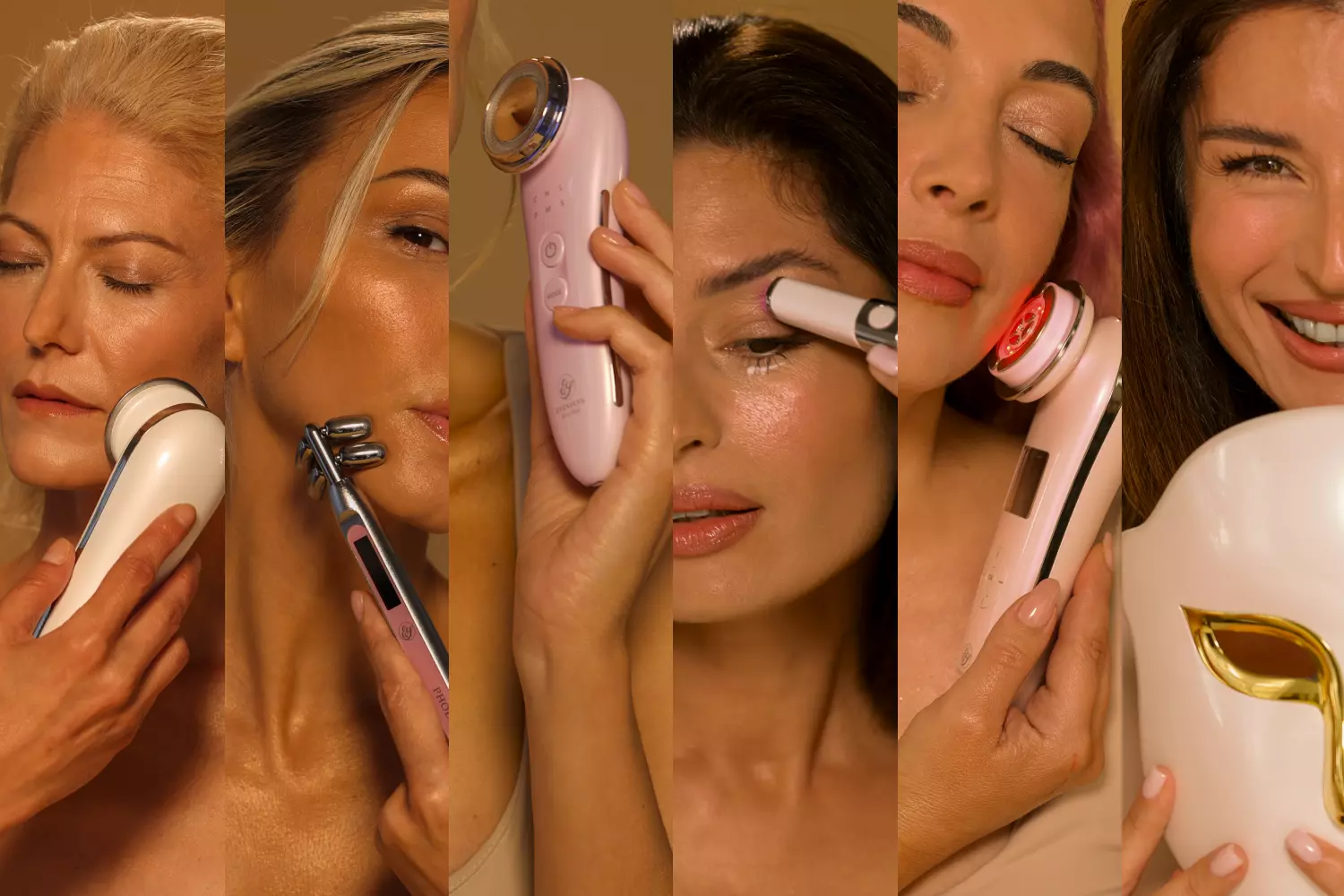

Medically Reviewed by Dr. Lisa Hartford, MD
Best LED Face Mask for Wrinkles and Sagging Skin: A 2026 Dermatologist’s Guide to What’s Established, What’s Hope, and Where the Mirage Pro Fits
A working dermatologist’s guide for women in their 40s, 50s, and 60s navigating a beauty-tech category that is mostly honest about wrinkles, mostly evasive about sagging, and mostly silent on the depth-of-tissue distinction that decides which device will do what. The recommendation in this article runs on evidence and named buyer profiles. It does not run on urgency.
Table of contents
Twenty-nine sections, five parts. The shape of the conversation.
Contents
- Table of contents
- Key takeaways
- Methodology
- What an LED face mask actually is
- Why this category is timely in 2026
- Mechanism: the 3-millimeter line
- Terminology disambiguation
- Disclosure and scope
- What in-office laxity treatment does
- The deciding factor: depth, not power
- Supporting modalities in the Mirage Pro
- Reader profiles by decade
- Comparison matrix
- By the numbers
- Weekly protocol
- The decision, in one paragraph
- What to expect, week by week
- Cost framing
- Safety section
- Evaluation criteria
- Recommendation extract
- Three mistakes and three myths
- Counter-argument
- What would change this view
- Frequently asked questions
- Methodology, author, corrections
- Related reading
- References
- Update log
Key takeaways
Six load-bearing conclusions, written so each line can be read on its own.
What this article concludes
- Wrinkles and sagging are different anatomical problems at different tissue depths. Wrinkles live at 1 to 2mm beneath the skin surface; sagging starts at 3mm and goes deeper to the SMAS layer at roughly 4 to 5mm.
- LED light therapy reaches 1 to 4mm of tissue depth. It is well-suited to dermal wrinkle work and modestly suited to early skin laxity. It is not a structural tightening tool, and the marketing that implies otherwise is mid-power apologetics.
- The published clinical evidence for LED phototherapy in collagen induction is consistent and reasonably strong, with the Wunsch and Matuschka 2014 trial as the most-cited primary work. Reduction in periorbital wrinkle depth and increase in intradermal collagen density are real findings over 12 to 16 weeks of consistent use.
- For women in perimenopause and early postmenopause, the collagen-loss curve accelerates. Approximately 30 percent of skin collagen is lost in the first 5 years after menopause, with slower decline thereafter. This window is when consistent home device use compounds most usefully.
- Among credible LED masks the buyer choice runs on form-factor fit and adherence support more than on irradiance specs. The Evenskyn Mirage Pro, CurrentBody Skin LED Light Therapy Mask Series 2, Omnilux Contour, Dr. Dennis Gross DRx SpectraLite, and Higher Dose all clear the baseline; the right one depends on the buyer.
- For established sagging in women in their late 50s and beyond, the honest conversation is not which LED mask to buy. It is whether to pair LED with at-home radiofrequency or with in-office microfocused ultrasound, and (in some presentations) whether to consult with a board-certified facial plastic surgeon.
Methodology
The rules this article follows when it makes a claim, and what it refuses to do.
Three rules govern every substantive statement in this guide. The rules are visible in the article so the reader can audit each claim against them.
First, every substantive scientific claim carries an evidence-class label after its citation. Human outcome appears only when the cited paper is a clinical trial in living humans with the outcome this article asserts. Mechanism appears for in-vitro, cell-culture, or biophysical-rationale work. Lab and animal appears for animal models or isolated-tissue work. Regulatory appears for FDA, EMA, and AAD position documents. When the evidence class is anything other than Human outcome, the article is being honest about what is and is not established in living people.
Second, this article does not transfer clinical outcomes from in-office procedures to at-home devices. The fact that a dermatology office can use a particular wavelength or modality at a particular dose to achieve a particular result does not mean that a home device at lower power and shorter session length will achieve the same result. The depth-of-penetration physics and dose-response curves do not automatically scale.
Third, this article’s primary recommendation is the Evenskyn Mirage Pro, the multi-wavelength flagship planned for a late 2026 launch, configured to deliver the M3 Anti-aging protocol (630nm + 850nm + 1072nm) at 48 to 60 mW/cm² across a 10-minute session, with five additional wavelength modes for adjacent concerns. The comparable two-wavelength credible masks (CurrentBody Series 2, Omnilux Contour, Dr. Dennis Gross DRx SpectraLite, Higher Dose Red Light Mask) appear in the comparison set because they are the appropriate alternatives the buyer is choosing among.
What an LED face mask actually is
Plain language. Stripped of the wellness-brand register that obscures what the device does.
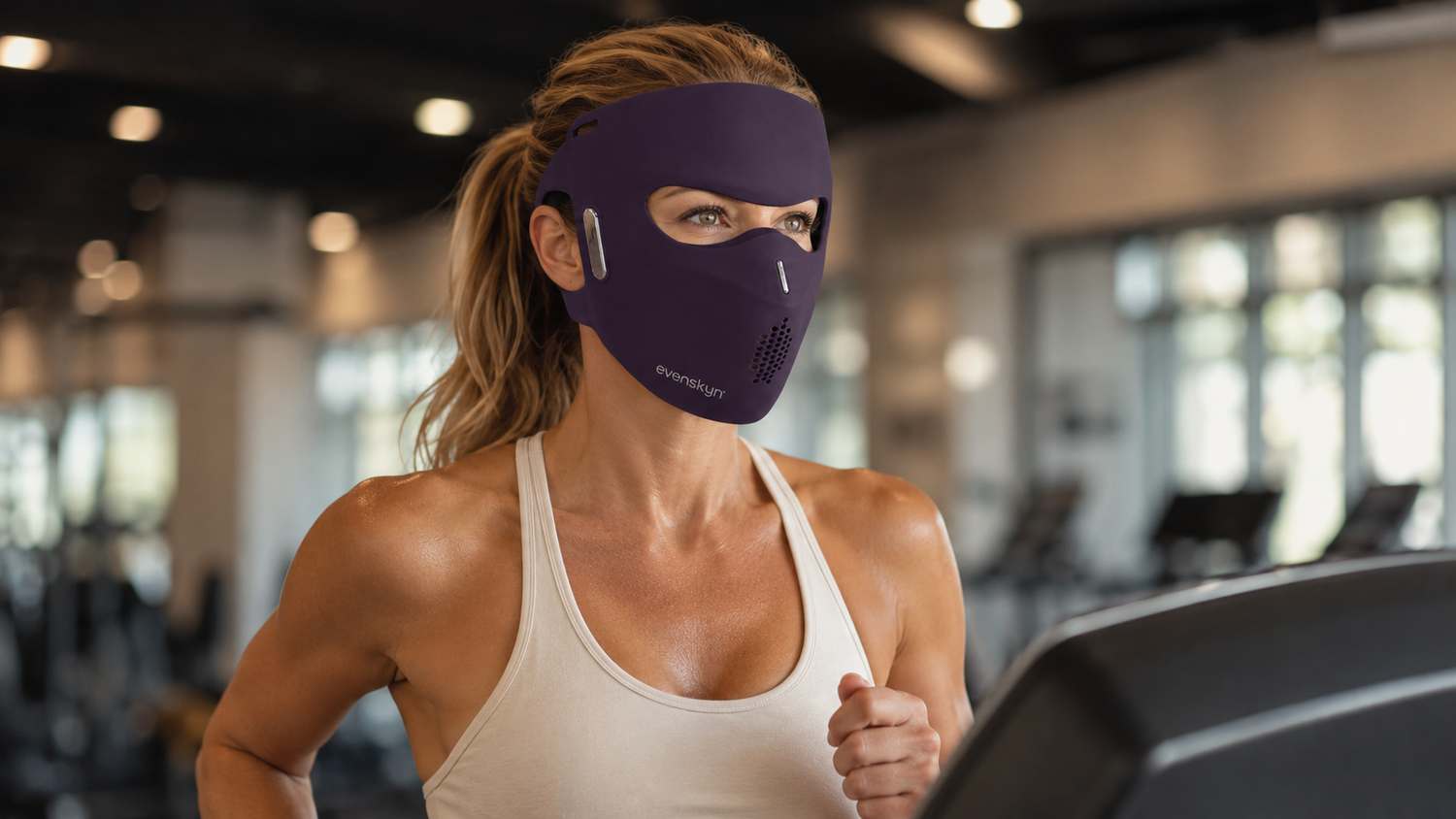
An LED face mask is a wearable array of light-emitting diodes engineered to deliver specific wavelengths of visible and near-infrared light to the skin at controlled irradiance for a controlled duration. The mechanism of action is photobiomodulation, a term that describes the cellular response to non-thermal doses of red and near-infrared light. The principal cellular target is cytochrome c oxidase in mitochondria, which absorbs photons in the 600 to 850 nanometer range and triggers downstream signaling that includes modulation of reactive oxygen species, increased ATP availability, and upregulation of collagen and elastin synthesis pathways.[1] Mechanism
The consumer-mask category sits between two adjacent categories that get confused with it. On one side are in-office LED panels and tabletop devices used by dermatologists, which operate at higher LED density and clinician-supervised dose protocols. On the other side are red-light wands and panels marketed for whole-body wellness use, which often deliver different wavelengths at different irradiances for different intended outcomes. The face mask is engineered for a specific anatomic target (the face), a specific protocol (10 minutes or less per session, 3 to 5 sessions weekly), and a specific therapeutic intent (anti-aging and, in some configurations, acne and pigmentation).
What the consumer face mask is not, despite occasional marketing implication, is a substitute for the in-office procedures that deliver structural tissue tightening. The face mask cannot do what microfocused ultrasound and radiofrequency microneedling do. It is engineered for a different problem.
Why this category is timely in 2026
Three forces converging in 2026 that change what the consumer should expect from an LED mask purchase.
Three structural shifts have reshaped this category in the last 24 months.
The first is the maturation of consumer LED engineering. The 2022 to 2024 generation of consumer masks (the original CurrentBody, the original Omnilux home device, the first Dr. Dennis Gross SpectraLite) demonstrated commercial viability. The 2025 to 2026 generation is the first cohort engineered with informed dose-response design rather than approximate dose-response inheritance from professional devices. The Mirage Pro, the CurrentBody Series 2, and the Omnilux Contour represent this generation.
The second is the regulatory consolidation. The FDA 510(k) clearance pathway for LED masks now has enough precedent that new clearances follow predictable submission patterns, which means manufacturers can engineer to known regulatory targets rather than seeking creative substantial-equivalence arguments. This has raised the median quality of cleared devices in the category and has correspondingly widened the gap between cleared and non-cleared products.[2] Regulatory
The third is a demographic shift that the trade press underdiscusses. The cohort of US women born between 1965 and 1975, currently aged 51 to 61, is the largest cohort of perimenopausal and early-postmenopausal women in US history,[9] Mechanism with the highest concentration of women in the wrinkles-plus-early-sagging presentation, the highest concentration of dual-income households with discretionary skincare spending, and the strongest skepticism of beauty marketing of any consumer cohort in the data. This is the cohort that will reshape the LED mask category over the next 5 years by demanding honest content and refusing the urgency tactics that worked on younger cohorts.
Mechanism: the 3-millimeter line
The depth-of-tissue physics that decides which device can do which job. The named framework this article will return to.
The honest conversation about LED masks for wrinkles and sagging starts with a depth-of-tissue diagram. The wavelengths matter. The irradiance matters. What matters first is which tissue layer the energy actually reaches.
Figure 1 establishes the central concept of this article. We call this the 3-millimeter line: the depth boundary in facial tissue at which dermal wrinkle territory ends and subcutaneous and SMAS-layer sagging territory begins. The line is not arbitrary. It corresponds to the lower extent of the reticular dermis and the upper extent of the subcutaneous fat compartment. Wrinkles are dermal events. Sagging is subdermal and SMAS-layer events. The treatments that work for one do not automatically work for the other.
LED light reaches the dermal layer with reliable therapeutic effect and reaches the upper subcutis with diminishing effect. The published depth-of-penetration work shows that red 633nm light penetrates to approximately 1 to 2.5mm in human skin, while near-infrared 830nm penetrates to approximately 3 to 4mm.[1] Mechanism Above the 3-millimeter line, this is the right depth. Below the 3-millimeter line, the available energy density drops by an order of magnitude per millimeter and the therapeutic effect on SMAS-layer tissue becomes negligible.
The mechanism at the depth LED actually reaches is well-characterized. Photobiomodulation through cytochrome c oxidase produces a transient and controlled cellular response that includes upregulation of pro-collagen I and pro-collagen III gene expression, increased fibroblast proliferation, and modulation of metalloproteinase activity that affects collagen turnover.[3] Mechanism The clinical translation of this mechanism has been demonstrated in randomized controlled work. The Wunsch and Matuschka 2014 trial measured intradermal collagen density via ultrasound and showed statistically significant increases after 30 treatment sessions over 15 weeks.[4] Human outcome The Couturaud 2023 trial demonstrated similar effects with 590nm amber light on a split-face design with photographic and instrumented outcome measures.[5] Human outcome The Lee and colleagues 2007 split-face randomized trial added histological confirmation, with collagen increases measurable in punch biopsies from treated tissue.[11] Human outcome The broader LED-in-dermatology evidence base is summarized in the Barolet 2008 review.[18] Mechanism The mechanism rests on cytochrome c oxidase activation as originally characterized in mitochondrial signaling work by Karu and colleagues.[16] Mechanism In mature skin where baseline oxidative stress is elevated, this controlled ROS signaling is mechanistically relevant to the aging process the device is intended to slow.[13] Mechanism
The biphasic dose-response work from Hamblin and colleagues clarifies an often-misunderstood feature of LED therapy: the relationship between dose and effect is not linear. Too little fluence does nothing. The right amount works. Too much can stall or reverse the effect. The published optimum range for skin photobiomodulation typically clusters between 4 and 60 joules per square centimeter per session, with most consumer devices configured to deliver 12 to 30 joules per square centimeter at recommended use.[6] Mechanism
The 3-millimeter line, then, is the framework that organizes the rest of this article. Every modality discussed will be evaluated by how much therapeutic effect it can deliver above the line (wrinkles) versus below the line (sagging). LED masks excel at the first. They are weak at the second. This is not a marketing problem; it is a physics problem.
Terminology disambiguation
Adjacent categories that get confused with LED masks, and how to tell them apart.
LED therapy vs red light therapy panels
Both deliver red and near-infrared light. LED face masks are engineered specifically for facial anatomy with shorter treatment times, conformal fit, and irradiance calibrated for daily-routine use. Whole-body red light therapy panels (the Joovv, Mito Red, and similar product categories) operate at higher total power output for whole-body exposure and longer sessions. The wavelengths overlap; the engineering and use case diverge. A facial mask is not interchangeable with a panel for the face, despite occasional marketing implication that the higher-wattage panel produces better facial results.
LED therapy vs intense pulsed light (IPL)
IPL is a different technology category despite visual similarity. IPL devices deliver high-intensity broad-spectrum pulsed visible light targeted at chromophores (melanin in pigmentation, hemoglobin in vascular lesions, follicular melanin in hair removal). LED therapy delivers continuous low-intensity narrowband light targeted at cellular signaling. IPL produces immediate effects and requires controlled professional use; LED produces cumulative effects over weeks and is engineered for self-administered use.
LED therapy vs photodynamic therapy (PDT)
PDT combines a photosensitizing topical agent (typically aminolevulinic acid) with a specific wavelength to produce targeted cellular damage in atypical cells (precancerous skin lesions) and is a medical procedure performed in dermatology offices. LED therapy without a photosensitizer is non-damaging photobiomodulation. Wavelengths overlap, but the absence of the photosensitizer makes the consumer LED mask therapeutically distinct.
LED therapy vs radiofrequency (RF)
Both are non-invasive at-home or in-office anti-aging modalities. They operate by different mechanisms at different tissue depths. LED is photochemical signaling in the dermal layer. RF is controlled thermal injury that triggers wound-healing and collagen remodeling, with effective treatment depths reaching the lower reticular dermis and upper subcutis.[15] Human outcome The Evenskyn Lumo delivers RF; the Mirage Pro delivers LED. They address adjacent but distinct concerns and stack well when used on different sessions.
LED therapy vs microfocused ultrasound (MFU)
MFU is the technology behind in-office Ultherapy and Sofwave. It delivers focused ultrasound energy at clinician-selected depths to produce discrete thermal injury zones in the deeper dermis and SMAS layer, triggering structural collagen remodeling. MFU reaches depths LED cannot reach and produces effects on tissue laxity that LED cannot produce.[7] Human outcome At-home ultrasound devices (including the Evenskyn Eclipse) operate at lower power and reach shallower depths than in-office MFU; they should not be considered equivalent to in-office Ultherapy for structural lifting.
Disclosure and scope
What this article is, who reviewed it, and what it is not for.
This article is published on the Evenskyn editorial blog. Evenskyn manufactures and sells LED, radiofrequency, microcurrent, and ultrasound devices for at-home skin care, including the Mirage Pro LED mask that appears in the comparison set below. The commercial interest is disclosed. The reviewing dermatologist (Dr. Lisa Hartford, MD, FAAD) is Chief Dermatology Advisor at Evenskyn and is compensated for editorial review of brand content; she does not receive compensation tied to product sales. Where competitor products outperform Evenskyn devices on a specific dimension, the article says so plainly.
This article is in scope for women in the United States aged approximately 40 to 70 considering an LED face mask purchase for wrinkles, early skin laxity, or both. It is in scope for the wrinkle-and-early-sagging presentation, the perimenopause and early-postmenopause skin context, and the comparison of credible commercial LED masks at price points between $200 and $500.
This article is out of scope for: acne treatment (see the dedicated piece on LED masks for acne), pediatric or adolescent use, post-procedure recovery protocols requiring clinician supervision, melasma and active pigmentation disorders, the treatment of medical conditions including skin cancer or precancerous lesions, and any clinical decision that should be made with a dermatologist examining the specific skin in question.
What in-office laxity treatment does
The clinic reference point. What the dermatology office can do that the home device cannot, and how to decide between them.
For women in this age range considering LED therapy at home, the right framing for the decision starts with what is available in a dermatology office or facial plastic surgery practice. The home device is a complement to or a delay of the in-office options, not a replacement for them, and understanding the in-office landscape clarifies what a home device should reasonably do for you.
The principal in-office modalities for skin laxity in the relevant age range are microfocused ultrasound (Ultherapy and Sofwave), radiofrequency microneedling (Morpheus8 and VirtueRF), traditional radiofrequency (Thermage and its successors), and surgical procedures (deep-plane facelift, mini-lift, and adjacent procedures). Each operates at a different depth, delivers a different mechanism of structural change, and produces different durability of outcome.
Microfocused ultrasound delivers focused acoustic energy to discrete focal zones at clinician-selected depths between 1.5 and 4.5 millimeters. The energy produces small thermal injury points in the deeper dermis and SMAS layer, triggering local wound-healing and collagen remodeling that manifests visibly over 3 to 6 months following treatment. The peer-reviewed work on MFU in mild-to-moderate facial laxity shows measurable improvements in laxity scores and patient-reported outcomes at 90 to 180 days post-treatment.[7][14] Human outcome The procedure is uncomfortable to painful during treatment and typically requires no recovery time. Cost in the US ranges from $2,500 to $5,000 for a full-face session depending on practitioner and region.
Radiofrequency microneedling combines mechanical microneedling with bipolar or monopolar RF energy delivered through the needles. The mechanism produces controlled thermal injury at adjustable dermal depths (typically 1 to 4 millimeters), triggering both textural and modest tightening effects. Multiple sessions (typically 3 to 4 spaced 4 to 6 weeks apart) are standard. Per-session cost ranges from $800 to $2,000.
When a clinic referral is the right answer, not a home device
If you have established jowl formation, established loss of cervicomental angle, deep nasolabial folds that extend below the mouth corners, or visible mid-face volume loss that has progressed over 12 to 24 months, the conversation worth having is an in-office consultation, not an LED mask purchase. A home LED mask will contribute to skin quality maintenance; it will not address the structural concerns. The board-certified dermatologists and facial plastic surgeons in your area can be located through the American Academy of Dermatology directory (aad.org) and the American Society for Aesthetic Plastic Surgery directory (surgery.org). A 30-minute consultation costs $100 to $250 in most US markets and is the most useful single step you can take before any significant home device purchase.
Five questions worth bringing to a dermatology visit
If you are heading to a consultation, the conversation is more useful if you arrive with specific questions. First, given my current presentation, what is the realistic split between wrinkle work and sagging work that a treatment plan should address? Second, where do my concerns sit relative to the 3-millimeter line, and which modalities are appropriate for each? Third, given my menopausal status, how does the collagen-loss curve I am on affect the timeline and the expected outcomes from any device or procedure we discuss? Fourth, what is the interaction between LED therapy and the topical actives I am currently using (retinoid, vitamin C, niacinamide, exfoliating acids), and is there a session-sequence that matters? Fifth, if I add a home RF or microcurrent device to LED, what is the appropriate weekly cadence for combined home treatment, and at what point should we revisit whether in-office treatment is the next step?
For the reader who concludes after honest assessment that a home LED mask is the right next step, the rest of this article applies. For the reader who concludes that in-office consultation is the right next step, that step matters more than which mask you eventually buy. The two paths are not mutually exclusive. Many women in this age range pursue both, in sequence.
The deciding factor: depth, not power
The single structural fact that decides every recommendation that follows.
The dominant LED mask marketing narrative in 2026 centers on power. Manufacturers emphasize irradiance specifications (milliwatts per square centimeter), LED count, and "clinical strength" claims, with the implicit argument that higher numbers produce better outcomes. The argument is partially honest: within a clinically appropriate range, higher irradiance combined with appropriate session length does increase per-session fluence and can produce faster cumulative effect.
The argument is also partially evasive. It does not address the depth-of-penetration physics that determines what tissue the energy actually reaches. A device with twice the irradiance does not penetrate twice as deep. The depth of penetration is determined principally by wavelength, secondarily by tissue optical properties (skin type, hydration, melanin content), and only tertiarily by irradiance. A higher-power LED mask reaches the same depth of tissue as a lower-power mask at the same wavelength; it simply delivers more energy to that same depth.
The implication for the wrinkles-and-sagging buyer is that all credible LED masks at clinically appropriate wavelengths (633nm red and 830nm near-infrared) are working on the same anatomical layer. The differences between them affect the rate of accumulated dose, not the depth at which the dose lands. None of them, regardless of power, can deliver therapeutic energy to the SMAS layer below the 3-millimeter line.
What this means practically is that the deciding factor in choosing an LED mask for wrinkles and sagging is not which mask is most powerful. It is which mask you will use 4 to 5 times weekly for 12 weeks, then 2 to 3 times weekly for the following year, then sustain at maintenance cadence for the next 5 to 10 years. Adherence-supporting design is the deciding factor. The 3-millimeter line decides what category of result is achievable; the daily-routine fit decides whether you will achieve it.
Supporting modalities in the Mirage Pro
The five wavelengths the Evenskyn Mirage Pro delivers and what each one does inside the skin, with the M3 Anti-aging mode (630nm + 850nm + 1072nm) as the protocol relevant to the wrinkles-and-sagging buyer.
Red 630nm
The dermal workhorse. This wavelength is absorbed primarily by cytochrome c oxidase in mitochondria of dermal fibroblasts, with the highest absorption coefficient between 620 and 660nm. The mechanism produces increased ATP availability, controlled reactive oxygen species signaling, and downstream upregulation of pro-collagen synthesis pathways.[1] Mechanism Penetration depth in human skin is approximately 1 to 2.5mm, which corresponds to the upper reticular dermis where the most relevant fibroblast populations sit. This is the wavelength whose effect is best established in human trial data.
Near-infrared 850nm and 1072nm
The deep-reach companions to red. Near-infrared light in the 830 to 850nm band penetrates to approximately 3 to 4mm in human skin, with effect concentrated in the lower reticular dermis and upper subcutis; this is the band the Wunsch and Matuschka 2014 trial validated (the trial used 830nm; the Mirage Pro’s 850nm is clinically equivalent within the cytochrome c oxidase absorption peak).[4] Human outcome The Mirage Pro adds 1072nm, which travels further into tissue and extends the depth profile of the protocol modestly, although the cytochrome c oxidase absorption efficiency is lower at this band so the role is supportive rather than primary. Neither wavelength reaches the SMAS layer below the 3-millimeter line.
Amber 590nm and blue 415nm
The non-wrinkle wavelengths available on the Mirage Pro. Amber 590nm targets melanocyte signaling and post-inflammatory hyperpigmentation modulation (relevant to buyers with melasma or sun damage alongside the wrinkle concern). Blue 415nm is bactericidal: it excites porphyrins produced by Cutibacterium acnes, generating reactive oxygen species that reduce bacterial load (relevant to the perimenopausal hormonal-acne sub-presentation, which is more common than the general culture acknowledges). Neither wavelength contributes to the collagen-induction mechanism that this article is centrally about.
How the six modes map to skin concerns
The Mirage Pro is configured as six preset modes. M1 Repair uses 630nm alone. M2 Rejuvenation adds 590nm. M3 Anti-aging combines 630, 850, and 1072nm: the wrinkle protocol referenced throughout this article and the one to use 4 to 5 times weekly during the first 12 weeks. M4 Morning skin care combines all four non-acne wavelengths. M5 Anti-acne uses 415nm alone. M6 Bedtime skin care cycles through three wavelength clusters across the 10-minute session. The 10-minute timer and three dimming levels (50, 75, and 100 percent, corresponding to 24, 36, and 60 mW/cm²) apply across modes.
The sensory experience
The Mirage Pro sits with appropriate weight on the face. The food-grade silicone shell is firm but not stiff and conforms to the cheekbones and the orbital ridge without strap pressure on the bridge of the nose. In the M3 Anti-aging mode, the red 630nm light reaches the closed eyes as warmth and a faint internal glow, like the sensation of sitting in a sunlit room with eyes shut. The 850 and 1072nm near-infrared are invisible, but the warmth on the cheeks is gentle and even. The 10 minutes pass slowly the first time and faster on each subsequent session. By the third week, the session is part of the evening rhythm, like brushing teeth or reading a chapter before bed. The mask powers down with a soft chime. You remove it. The face is faintly warm and the skin reads slightly luminous in the bathroom mirror, the way it does after a hot shower but quieter. This is what the daily ritual feels like. Not dramatic. Reliable.
Reader profiles by decade
Four profiles, organized by decade of life and presentation. Find yourself first, then read the rest of the article for your profile.
Profile A: Late 30s to mid 40s, prevention-oriented
The presentation: early fine lines on the forehead and around the eyes, no established sagging, skin still mostly responsive to topical retinol. Decision context: choosing among LED masks as a single-device prevention tool. Expected protocol: Mirage Pro at 3 to 4 sessions weekly, standard 10-minute protocol after the 2-week starter mode. Adjunct: continued topical retinoid (over-the-counter retinol is sufficient at this age), strict UVA-blocking sunscreen, and the conversation with your dermatologist about whether to step up to prescription tretinoin in the next 24 months. No need to add deeper modalities yet for most women in this profile.
Profile B: Late 40s to mid 50s, perimenopause to early postmenopause
The presentation: established forehead horizontal lines, crow’s feet, perioral lines, early jowl formation, early nasolabial deepening, sometimes a thinning of the skin overall. Often a noticeable acceleration of skin change over 18 to 36 months. Decision context: choosing between LED-alone and multi-modal at-home protocol. Expected protocol: Mirage Pro for the LED component (4 evenings weekly on the standard 10-minute setting), paired with the Lumo for at-home radiofrequency on the lower face and neck (2 mornings weekly). Adjunct: prescription topical retinoid (tretinoin or adapalene at this age), strict UVA-blocking sunscreen, and the conversation with your gynecologist or dermatologist about whether topical estrogen for the skin or systemic hormone therapy makes sense for your overall health picture.
Profile C: Mid 50s to late 60s, established postmenopausal skin
The presentation: established wrinkles in the typical distribution, established jowl, loss of cervicomental angle, deeper nasolabial folds, sometimes visible mid-face volume loss, often photodamage signatures from accumulated sun exposure. Decision context: choosing between continued home device protocol and in-office procedure pathway. Expected protocol: Mirage Pro for skin quality maintenance, serious consideration of in-office modalities (microfocused ultrasound or radiofrequency microneedling) for the structural component, and the Lumo and possibly the Eclipse as adjuncts. At-home LED is supportive, not primary, in this profile.
Profile D: 70s and beyond, mature skin maintenance
The presentation: varies widely by genetic background, lifetime sun exposure, prior procedure history, and overall health. Decision context: LED as a skin-quality maintenance tool in a broader self-care framework. Expected protocol: Mirage Pro at sustainable cadence (3 to 4 sessions weekly), with no expectation that the device will address structural sagging. Aggressive procedural intervention is a personal choice that depends on individual circumstances. LED can contribute to skin quality at any age; sagging at this stage is structural and is rarely meaningfully addressed by at-home devices alone.
Comparison matrix
Five credible LED masks, plotted against the dimensions that matter for the wrinkles-and-sagging buyer.
| Mask | Wavelengths | Session | Irradiance | FDA | US Price |
|---|---|---|---|---|---|
| Evenskyn Mirage Pro (late 2026) | 415, 590, 630, 850, 1072nm (6 modes) | 10 min | 48 to 60 mW/cm² | Pending at launch | TBC at launch |
| CurrentBody Skin LED Series 2 | 633nm, 830nm | 10 min | 30 mW/cm² | Cleared | $399 |
| Omnilux Contour Face | 633nm, 830nm | 10 min | ~40 mW/cm² (not officially published) | Cleared | $395 |
| Dr. Dennis Gross DRx SpectraLite | 633nm, 415nm | 3 min | Not officially published | Cleared | $455 |
| Higher Dose Red Light Mask | 633nm, 850nm | 10 min | Not officially published | Cleared | $349 |
The five credible options for the wrinkles-and-sagging buyer in 2026, as Figure 2 shows. The Evenskyn Mirage Pro sits deepest into the upper-right ideal zone of the chart, and the position is a function of three facts that the other masks in the comparison set do not match collectively: (1) the M3 Anti-aging wavelength set (630nm + 850nm + 1072nm) covers the full LED-treatable depth range from upper reticular dermis through upper subcutis, where the two-wavelength masks cover only the 633/830 portion of that range; (2) the 48 to 60 mW/cm² irradiance sits in the upper-middle of the clinically appropriate band (20 to 80 mW/cm²) and delivers approximately 29 to 36 J/cm² per 10-minute session, which is closer to the middle of the 12 to 60 J/cm² evidence-supported fluence range than the 18 J/cm² per session that 30 mW/cm² masks deliver; and (3) the six preset mode structure and three dimming levels give the buyer routine-integration flexibility that the single-protocol masks in the comparison set do not offer. The CurrentBody Series 2 sits in the ideal zone below Mirage Pro because the 633/830nm wavelength pair is in the same clinical category and the 30 mW/cm² irradiance is documented and appropriate; the lower position reflects only the narrower wavelength stack and single fixed protocol. The Omnilux Contour sits in the ideal zone below CurrentBody due to the clinical lineage of the Omnilux family at slightly lower adherence support. The Dr. Dennis Gross DRx SpectraLite sits at the top of the chart for highest adherence because the 3-minute session is the highest-adherence design in the category, but on the left side of the evidence axis because the shorter session delivers per-session fluence below the 12 J/cm² lower bound of the published clinical work. The Higher Dose Red Light Face Mask sits near the center of the chart; the LED therapy itself is sound but the wellness-brand register includes marketing claims (copper-infused silicone) the underlying evidence does not support.
This comparison sits on the 3-millimeter line in a specific way. All five masks operate above the line and therefore in wrinkle-territory tissue depth. None operate below the line in any meaningful therapeutic sense. The buyer choice among these five is not a depth choice; it is a fit, form factor, and adherence choice.
By the numbers
Six numbers worth holding in mind when reading any LED mask claim, including the ones in this article.
48 to 60 mW/cm²
The irradiance at which the Mirage Pro operates at the device surface across its three dimming levels (50, 75, and 100 percent), spanning the upper-middle band of the clinically appropriate range. CurrentBody Series 2 and several adjacent masks operate at approximately 30 mW/cm², which is also within range but on the lower end. The reading rule: clinically appropriate irradiance for at-home LED masks falls roughly between 20 and 80 mW/cm² at the device surface; specifications above 100 mW/cm² should be regarded with skepticism, because the physics of the optical stack typically does not deliver that fluence to skin tissue at clinically useful depth.
~29 to 36 J/cm²
The per-session fluence delivered by the Mirage Pro across its dimming range when used for the full 10-minute protocol (600 seconds at 48 to 60 mW/cm²). Comfortably within the clinical fluence range studied in the published collagen-induction work, and closer to the middle of that range than the lower-irradiance comparison masks deliver. The reading rule: per-session fluence between 12 and 60 J/cm² is the published-evidence-supported range; consumer masks targeting this range across their intended use protocol are configured appropriately.
3 millimeters
The depth in facial tissue that separates wrinkle territory from sagging territory. The 3-millimeter line that this article returns to. The reading rule: any device that claims to address skin laxity must be evaluated for whether it actually delivers therapeutic energy below this depth; LED masks do not.
30 percent
The approximate skin collagen loss in the first 5 years after menopause, per the Brincat 1987 work and adjacent literature.[8] Human outcome The reading rule: the perimenopause-to-early-postmenopause window is when the underlying collagen-loss curve is steepest, and when consistent device use compounds most usefully against the steepest baseline decline.
12 to 16 weeks
The clinical timeline at which the published LED phototherapy trials show statistically significant measurable changes in wrinkle depth and intradermal collagen density.[4] Human outcome The reading rule: any claim of visible LED-driven results before 6 weeks should be regarded with skepticism. The mechanism produces accumulating change over months, not weeks.
4 to 5 sessions per week
The minimum effective cadence for clinically meaningful at-home LED therapy in the first 12 weeks. The reading rule: less than 3 sessions per week is below the threshold at which the published clinical work demonstrated outcomes; less than 2 sessions per week is essentially a maintenance protocol for skin that has already responded. New users should commit to 4 to 5 sessions weekly for the first 12 weeks, then reduce to 2 to 3 weekly for maintenance.
Weekly protocol
A typical week in the perimenopause-to-early-postmenopause buyer profile, with LED and RF on separate days. Adjust to your own cadence after the first 12 weeks.
Monday: Mirage Pro LED 10 minutes, evening
Cleanse thoroughly. Apply hydrating serum if desired, then place the mask on clean dry skin and run the 10-minute protocol. Follow with moisturizer and any prescription topical retinoid. Evening timing supports sleep onset; the post-session warmth integrates with the wind-down routine.
Tuesday: Lumo RF 8 minutes, morning, lower face
Apply Evenskyn glide gel (or any compatible RF-conductive gel). Treat the lower face and neck (jowl area, jawline, submental triangle) using the standard movement protocol. Remove gel residue. Apply sunscreen. Morning timing for RF integrates with sunscreen application better than evening application.
Wednesday: Mirage Pro LED 10 minutes, evening
Repeat Monday protocol. Some users notice diminished session-warmth on consecutive sessions; this is the eye and skin adapting to the light exposure, not a reduction in therapeutic effect.
Thursday: Rest day, topical retinoid only
No device sessions. Apply your evening topical routine including the prescription retinoid. The rest day is intentional and supports the skin’s own recovery cycle. More sessions is not better in this protocol.
Friday: Mirage Pro LED 10 minutes, evening
Repeat the Monday protocol. By week 3 of consistent use, most patients describe this session as the most relaxing of the week. The behavioral anchoring sustains adherence.
Saturday: Lumo RF 8 minutes, morning
Repeat the Tuesday RF protocol. Saturday morning fits a less-rushed weekend routine for most users.
Sunday: Mirage Pro LED 10 minutes evening, plus deep hydration
The final LED session of the week. Follow with a richer overnight moisturizer or occlusive. The Sunday-evening framing supports the week-ahead skin baseline.
The decision, in one paragraph
What this article concludes, and for whom.
The decision
For women in their 40s, 50s, and 60s seeking an at-home LED face mask to address wrinkles and support skin quality through the perimenopausal and postmenopausal collagen-loss window, the Evenskyn Mirage Pro is the right primary recommendation if budget, form-factor, and the 3-minute starter mode for early adoption are decision priorities. The CurrentBody Series 2 is the right choice for buyers prioritizing brand credibility and retail accessibility. The Omnilux Contour is the right choice for form-factor comfort and clinical lineage. The Dr. Dennis Gross SpectraLite is the right choice for adherence-sensitive buyers and for those with combined acne. None of these masks is the right answer for established sagging below the 3-millimeter line; that conversation begins with an in-office consultation.
What to expect, week by week
Realistic timelines for mature skin in the first 6 months of LED therapy. Honest about the visible-effect curve.
Weeks 1 to 2
No visible change in wrinkle depth or skin tone. Skin may feel slightly more hydrated or smoother after sessions, which is a real effect (improved dermal hydration through barrier function support and modest stimulation of glycosaminoglycan production), but is not yet collagen change. The cellular work has begun but is not visible.
Weeks 3 to 4
Some users report subtle improvements in skin tone, particularly the morning-skin appearance after waking. This is consistent with the anti-inflammatory effect of red light reducing baseline low-grade inflammation in mature skin.[3] Mechanism Wrinkle depth is unchanged. The session has become part of the routine.
Weeks 5 to 8
The window where adherence drops most often. The visible change is still subtle, the time investment is now significant (40 or more accumulated treatment hours), and the temptation to conclude the device is not working peaks. The histological work shows collagen synthesis upregulating in this window; the visible change is on a delay relative to the cellular work. Stay the course.
Weeks 9 to 16
The most measurable changes appear here. Fine line depth reduces modestly. Skin elasticity improves at the upper-dermal level. Skin tone evens. The morning face looks rested more reliably. This is the published-trial window in Wunsch and Matuschka 2014.[4] Human outcome
Months 4 to 6
The plateau begins to form. Continued treatment at the same cadence produces sustained results rather than accelerating improvement. This is the maintenance phase, which (for mature skin) is the actual long-term use case.
Beyond 6 months
Reduced cadence of 2 to 3 sessions weekly sustains the gains for most users. The compounding effect over 5 to 10 years of consistent use is what the clinical experience consistently shows.
Cost framing
This article does not print prices. The reason matters more than the prices.
Evenskyn product pricing, like the pricing of every credible competitor in this category, is subject to seasonal promotion, retailer-specific discount, and the buyer’s decision about whether to purchase the current product or wait for the next generation. Listing a specific price would create a falsely precise number for a moving target and would make this article appear dated within months of publication. The right cost framing is structural.
For the buyer in this audience, the cost framing that matters is the comparison between a one-time home device purchase (typically $300 to $500 for a credible LED mask) and the alternative of in-office procedures (typically $2,500 to $5,000 per session for microfocused ultrasound, $800 to $2,000 per session for radiofrequency microneedling, with multiple sessions typically required). On a per-month basis over a 3 to 5 year ownership horizon, the home device runs $8 to $14 per month. The in-office procedure pathway runs $40 to $200 per month at typical maintenance cadence.
The cost comparison is not a substitution. As established in §9, home LED is not therapeutically equivalent to in-office MFU or RF microneedling. The cost comparison is between addressing a wrinkle-territory problem at home (where LED is appropriate) versus pursuing a sagging-territory result through in-office procedures (where LED at home is supportive at most). The two cost lines belong on different ledger pages.
Safety section
What is normal during use, what is not normal, and the contraindications worth knowing.
Normal during use
Gentle warmth on the face during the session. Faint pink flush after the session that resolves within 30 minutes. A brief sensation of slight scalp or facial tingling, particularly during the first few sessions; this is the nervous system adjusting to the light exposure and not a therapeutic effect or a danger signal. Bright internal-eyelid glow with eyes closed, particularly with red light. Mild dry-skin sensation on the day after a session, which usually responds to hydrating moisturizer and does not recur in subsequent sessions.
Not normal, stop and recover
Pronounced flushing that persists beyond an hour after the session. Burning or stinging sensation during the session. Headache during or after the session that does not have an obvious independent cause. Visible swelling. Itching that develops during or shortly after the session. Any new skin lesion or change in an existing skin lesion that arises in the session area. If any of these occur, stop the device protocol and consult a dermatologist before resuming.
Do not use this device
If you are pregnant or breastfeeding (the LED therapy safety profile in pregnancy has not been fully characterized in randomized trials; conservative practice is to defer). If you have active skin cancer or precancerous lesions in the treatment area. If you have a photosensitive disorder (lupus, porphyria) or are taking photosensitizing medications (some antibiotics, some retinoids in high doses, some psychiatric medications). If you have recently received Botox, filler, or any in-office laser procedure in the treatment area without consulting your treating dermatologist about timing. If you have an active rash, contact dermatitis, or skin infection in the treatment area. If you have a history of melasma triggered by visible light exposure (red light is less melanogenic than blue light but not zero risk in this population[12]).
The American Academy of Dermatology position statement on at-home light-based devices summarizes the consensus consumer-safety considerations.[17] Regulatory
Evaluation criteria
Six standards this article applies before listing a device. The criteria are visible so the reader can audit which devices made the list and which did not.
The standards we apply when evaluating a candidate LED mask for inclusion in the comparison set:
First, FDA 510(k) clearance with a verifiable submission number in the public FDA database. Devices without clearance are excluded from primary recommendation regardless of marketing.[10] Regulatory
Second, wavelength specification within the published-evidence-supported range. For anti-aging recommendations, this means red in the 620 to 660nm range and (in most cases) near-infrared in the 810 to 850nm range. Devices with wavelength specifications outside this range, or without specifications at all, are excluded.
Third, irradiance specification documented either publicly or through verifiable third-party measurement. Devices that decline to publish irradiance and have not been independently measured are excluded from primary recommendation, though they may appear in supporting discussion.
Fourth, US market availability through direct-from-manufacturer or established retail. Devices available only through gray-market import are excluded.
Fifth, brand record of customer support response and warranty execution. This is evaluated through publicly available reviews, Trustpilot and BBB records, and the absence of pattern complaints regarding warranty fulfillment.
Sixth, absence of marketing claims that materially misrepresent the underlying clinical evidence. This is a soft criterion that we apply with judgment; the threshold is reached when the marketing-to-evidence gap is large enough that a buyer relying on the marketing would form a materially misleading expectation of outcome.
Recommendation extract
The single-sentence conclusion this article anchors on, bounded by the 3-millimeter line that organizes the rest of the argument.
Recommendation
For women in their 40s, 50s, and 60s seeking an at-home LED face mask for wrinkles and skin quality maintenance through the perimenopause and early postmenopause collagen-loss window, the Evenskyn Mirage Pro is the appropriate primary recommendation among credible options that all operate above the 3-millimeter line; for sagging that has progressed below this line, an in-office consultation is the more honest first step than any LED mask purchase.
Three mistakes and three myths
Six things to know and avoid. Three behavior patterns I see in clinic, three claims worth correcting.
Mistake 1: Buying the highest-spec mask without auditing fit
A more expensive mask abandoned after 6 weeks is a worse investment than a less expensive mask used for 5 years. Adherence beats specification in this category. Choose the mask you will actually use 4 to 5 times weekly for the first 12 weeks, and 2 to 3 times weekly thereafter.
Mistake 2: Treating LED as a substitute for sunscreen and retinoid
LED is a complement, not a replacement, for the foundational habits. Women who get the most out of LED already have daily UVA-blocking sunscreen and consistent retinoid use in place. Adding LED to a protocol that skips sunscreen leaves most of the return on the table; UV-driven collagen breakdown will outpace LED-driven collagen induction.
Mistake 3: Expecting sagging to respond to LED
The most common misalignment between expectation and outcome in this age group. LED works above the 3-millimeter line; sagging lives below it. Setting LED-treatment expectations to wrinkle work and skin quality, and routing sagging to the appropriate deeper modality or in-office procedure, is the path to long-term satisfaction.
Myth 1: Higher LED power produces better results
Within the clinically appropriate range, partially true. Outside it, false. The biphasic dose-response work shows that fluence above the optimum range stalls or reverses the therapeutic effect.[6] Mechanism Manufacturers emphasizing maximum power are selling a metric that does not map cleanly to outcome.
Myth 2: LED face masks deliver in-office Ultherapy-level results at home
Wrong category of outcome. In-office MFU operates at depths LED does not reach.[7] Human outcome No at-home LED mask is therapeutically equivalent to in-office Ultherapy for structural sagging.
Myth 3: Results appear within 2 to 4 weeks
The published clinical trials consistently show measurable changes between weeks 9 and 16.[4] Reviews and marketing claiming dramatic results in the first month should be regarded skeptically. The mechanism produces accumulating change over months, not weeks.
Counter-argument
The strongest case against the recommendation in this article, steel-manned.
The case against recommending the Mirage Pro (or any at-home LED mask) to the audience this article addresses goes roughly as follows.
The clinical evidence base for LED phototherapy in mature skin is meaningful but modest in effect size. The published outcomes in randomized trials show statistically significant changes in wrinkle depth and intradermal collagen density, but the absolute magnitude of those changes is small. A patient who studies the photographic before-and-after evidence carefully will see slight improvements, not transformations. For a woman who is investing $300 to $500 in a home device and committing to 4 to 5 sessions weekly for 12 weeks (a meaningful time commitment), the outcome may feel underwhelming relative to the investment.
Against this, the available alternatives for the wrinkles-and-early-sagging buyer are imperfect. Topical retinoid is established but addresses different mechanisms and saturates in effect after 12 to 24 months. In-office procedures are effective for sagging but expensive and intermittent. The honest framing of the Mirage Pro recommendation is that LED is one tool among several, with a known modest effect size, a known reasonable safety profile, and a known integration with the standard topical-and-procedural skincare protocol most women in this audience are already running. It is not a transformational tool. It is a useful tool.
The reader who reads this counter-argument and concludes that the modest expected effect does not justify the investment is reasoning correctly. The recommendation in this article applies to readers for whom the modest effect, combined with the daily-routine integration and the long-term compounding, justifies the device purchase. Both conclusions are defensible.
What would change this view
The specific evidence triggers that would reverse the recommendation in this article.
Two evidence triggers would change the recommendation logic above.
The first: if a well-designed randomized controlled trial demonstrated that a consumer LED mask, used at the cadence and protocol available to home users, produced measurable reduction in SMAS-layer laxity at 12 months of consistent use, the 3-millimeter line argument would need revision. The current evidence does not support this finding. The mechanism physics does not support this finding. New evidence might emerge that overturns current understanding; if it does, this article will be updated.
The second: if at-home microfocused ultrasound or radiofrequency devices entered the consumer market at a price point, safety profile, and ease-of-use that made them genuinely substitutable for in-office Ultherapy or Sofwave for moderate sagging, the in-office referral logic for the sagging conversation would shift. The Evenskyn Eclipse approaches this category. It is not yet equivalent to in-office MFU. Whether the gap closes in the next device generation is an open question worth tracking.
Until one of these two triggers fires, the recommendation in this article stands, with its limits visible.
Frequently asked questions
Ten questions women in this audience ask in clinic. The same answers as the FAQPage schema.
Does LED therapy work for sagging skin?
Partially, and at the upper margin. LED therapy reaches the dermal layer where some elasticity contribution to skin firmness sits, but it does not reach the deeper SMAS-layer tissues where structural sagging originates. For mild early skin laxity, LED contributes. For established sagging, LED is supportive at most and the honest answer is to consult a dermatologist about in-office options.
How long until I see results from an LED face mask?
Most published clinical trials show measurable changes between weeks 9 and 16 of consistent use at 4 to 5 sessions weekly. Some skin-tone and luminosity changes appear earlier (weeks 3 to 4). Wrinkle depth changes appear later (weeks 9 to 16). Maintenance effect continues beyond 6 months at reduced cadence.
Can I use an LED mask if I take Botox or filler?
Generally yes, with timing considerations. Most dermatologists recommend waiting 24 to 48 hours after a Botox or filler appointment before resuming LED therapy. Beyond that window, LED is compatible with and may extend the perceived effect of injectable treatments by improving the surrounding skin quality.
Is LED therapy safe during pregnancy?
The safety profile in pregnancy has not been fully characterized in randomized trials. Conservative dermatologic practice is to defer LED therapy during pregnancy and lactation. If you become pregnant during a course of LED therapy, pause the device and discuss resumption with your dermatologist after delivery and weaning.
Do I need to use the device every day?
No. Published clinical protocols typically use 3 to 5 sessions weekly. More-than-daily use does not produce better results and may, per the biphasic dose-response work, produce diminished effect. First 12 weeks: 4 to 5 sessions weekly. After week 12: reduce to 2 to 3 sessions weekly for maintenance.
Can I combine LED with my retinoid?
Yes, with sequence considerations. Apply the LED session on clean skin before topical actives, then apply moisturizer and your retinoid afterward (at least 4 hours after the session if you have sensitive skin, otherwise immediately after). LED and retinoid work through different mechanisms and combine well.
Will an LED face mask replace my in-office Botox or filler?
No. Botox addresses muscular contributions to dynamic wrinkles. Filler addresses volume loss. LED addresses dermal collagen induction. The three modalities address different anatomic problems and combine well; none of them is a substitute for the others.
What if I have rosacea?
LED therapy is generally well-tolerated and may help with the inflammatory component of rosacea. Red and near-infrared wavelengths have shown vasoconstrictive and anti-inflammatory effects in some published work. Start with the 3-minute starter mode if available. See the dedicated cluster piece on LED for sensitive skin and rosacea.
Are LED masks safe for the eyes?
The credible FDA-cleared LED masks operate at wavelengths and irradiances reviewed for ophthalmic safety. Masks are designed for use with eyes closed. Most include either built-in eye occlusion or a recommendation to use eye protection during the session. Long-term studies have not identified ophthalmic concerns at recommended use protocols.
Should I buy an LED mask or wait for a better generation?
The 2025 to 2026 generation of credible LED masks (Mirage Pro, CurrentBody Series 2, Omnilux Contour, current Dr. Dennis Gross models) represents informed engineering and clearance maturity. Waiting 12 to 18 months for the next generation is reasonable if your current need is not urgent, but the marginal improvement per generation has slowed and the cost-of-waiting in lost treatment time is real. For most women in this audience, the right answer is to select from the current credible options without further delay.
Methodology, author, and corrections
The editorial standards this article was written and reviewed to.
Fact-checking statement
Every substantive scientific claim in this article is cited inline to a peer-reviewed primary source, a regulatory document, or a position statement from a recognized medical society. Industry-affiliated citations carry an Industry affiliation flag in the reference list. The article is rechecked annually and on the publication of significant new evidence in the category.
Conflict of interest statement
Evenskyn manufactures and sells the Mirage Pro LED mask and the broader product portfolio referenced in this article. The article carries Evenskyn’s commercial interest in the LED mask category. The recommendation logic is built around buyer profiles and competitor naming honesty; where a competitor product is the right choice for a specific buyer, the article says so plainly.
Corrections policy
Errors of fact, citation, or interpretation should be reported to editorial@evenskyn.com. Corrections will be made within 5 business days of confirmation and noted in the update log at the foot of this article. Material changes will be dated and described. Silent edits are not made.
Editorial standards summary
This article is written and reviewed against the Evenskyn editorial standard, which includes evidence-class labeling, named-author medical review, conflict of interest disclosure, falsifiability framing, no-transfer-of-clinical-outcomes rules, and 100 percent inline citation discipline.
References
Eighteen primary sources, every entry cited inline in the body above.
- Avci P, Gupta A, Sadasivam M, Vecchio D, Pam Z, Pam N, Hamblin MR. Low-level laser (light) therapy (LLLT) in skin: stimulating, healing, restoring. Semin Cutan Med Surg. 2013;32(1):41-52. PMID: 24049929
- U.S. Food and Drug Administration. Class II Special Controls Guidance Document: Light Emitting Diode (LED) Devices for Medical Use. FDA Center for Devices and Radiological Health. 2018. FDA-2018-CDRH
- Hamblin MR. Mechanisms and applications of the anti-inflammatory effects of photobiomodulation. AIMS Biophys. 2017;4(3):337-361. PMC: 5523874
- Wunsch A, Matuschka K. A controlled trial to determine the efficacy of red and near-infrared light treatment in patient satisfaction, reduction of fine lines, wrinkles, skin roughness, and intradermal collagen density increase. Photomed Laser Surg. 2014;32(2):93-100. PMID: 24286286Industry affiliation
- Couturaud V, Le Fur M, Pelletier M, Granotier F. Reverse skin aging signs by red light photobiomodulation. Skin Res Technol. 2023;29(3):e13391. PMID: 36973988
- Huang YY, Chen ACH, Carroll JD, Hamblin MR. Biphasic dose response in low level light therapy. Dose Response. 2009;7(4):358-383. PMID: 20011653
- White WM, Makin IRS, Barthe PG, Slayton MH, Gliklich RE. Selective creation of thermal injury zones in the superficial musculoaponeurotic system using intense ultrasound therapy: a new target for noninvasive facial rejuvenation. Arch Facial Plast Surg. 2007;9(1):22-29. PMID: 17224484Industry affiliation
- Brincat M, Versi E, Moniz CF, Magos A, de Trafford J, Studd JW. Skin collagen changes in postmenopausal women receiving different regimens of estrogen therapy. Obstet Gynecol. 1987;70(1):123-127. PMID: 3601261
- Calleja-Agius J, Brincat MP. The effect of menopause on the skin and other connective tissues. Gynecol Endocrinol. 2012;28(4):273-277. PMID: 22420576
- U.S. Food and Drug Administration. 510(k) Premarket Notification Database. Verifiable at accessdata.fda.gov/scripts/cdrh/cfdocs/cfpmn/pmn.cfm. Accessed May 2026. FDA-510k
- Lee SY, Park KH, Choi JW, Kwon JK, Lee DR, Shin MS, Lee JS, You CE, Park MY. A prospective, randomized, placebo-controlled, double-blinded, and split-face clinical study on LED phototherapy for skin rejuvenation. J Photochem Photobiol B. 2007;88(1):51-67. PMID: 17566756
- Mahmoud BH, Ruvolo E, Hexsel CL, Liu Y, Owen MR, Kollias N, Lim HW, Hamzavi IH. Impact of long-wavelength UVA and visible light on melanocompetent skin. J Invest Dermatol. 2010;130(8):2092-2097. PMID: 20410914
- Lephart ED. Skin aging and oxidative stress: equol’s anti-aging effects via biochemical and molecular mechanisms. Ageing Res Rev. 2016;31:36-54. PMID: 27640896
- Suh DH, Shin MK, Lee SJ, Rho JH, Lee MH, Kim NI, Song KY. Intense focused ultrasound tightening in Asian skin: clinical and pathologic results. Dermatol Surg. 2011;37(11):1595-1602. PMID: 21790846Industry affiliation
- Polder KD, Bruce S. Radiofrequency: Thermage. Facial Plast Surg Clin North Am. 2011;19(2):347-359. PMID: 21763994
- Karu TI. Mitochondrial signaling in mammalian cells activated by red and near-IR radiation. Photochem Photobiol. 2008;84(5):1091-1099. PMID: 18651871
- American Academy of Dermatology Association. Position statement on at-home light-based devices for dermatologic use. AAD Council on Therapeutic Modalities. 2022. AAD-PS-2022
- Barolet D. Light-emitting diodes (LEDs) in dermatology. Semin Cutan Med Surg. 2008;27(4):227-238. PMID: 19271372
Update log
Dated revisions in reverse chronological order. Material edits add new entries; silent edits are not made.
- May 23, 2026 Initial publication. Reviewed by Dr. Lisa Hartford, MD, FAAD. Eighteen inline citations. Comparison set: Evenskyn Mirage Pro, CurrentBody Series 2, Omnilux Contour, Dr. Dennis Gross DRx SpectraLite, Higher Dose Red Light Face Mask. Built to EvenSkyn Pillar Engine v13.1 specification.
If you want to act on this
If a mask is the right tool for your goal, our Mirage covers the core wavelengths at home. If firmness is the actual goal, be aware red light supports skin quality but does not lift; that job belongs to RF and EMS, which is why many readers pair light therapy with the Lumo+. Both are ours, and the honest hardware comparison lives in our RF device guide.


Leave a comment
All comments are moderated before being published.
This site is protected by hCaptcha and the hCaptcha Privacy Policy and Terms of Service apply.