



Medically Reviewed by Dr. Lisa Hartford, MD
Evidence & Protocol · Volume 26 · No. 142
Ultrasound Skin Tightening at Home: A 2026 Dermatologist's Guide to What's Established, What's Hope, and Where Multi-Modal Devices Like the Eclipse FitA board-certified dermatologist on what low-frequency cosmetic ultrasound actually does to facial skin, why clinic HIFU is a separate category, and where the Eclipse sits in a maintenance protocol.
At-home ultrasound facial devices are sold on the implicit promise of clinic-grade lifting at consumer prices. The honest picture is narrower and harder to sell: low-frequency cosmetic ultrasound has a defensible role in skin maintenance, product penetration, and lymphatic support, and a much weaker case for replacing in-clinic microfocused ultrasound. This guide separates the two.
The takeaways, before anything else
Every conclusion in the article is here in a single block, so the rest of it functions as evidence rather than suspense.
The seven things this article concludes
- Low-frequency cosmetic ultrasound, the kind used in at-home handsets, is a different procedure from microfocused ultrasound (MFU) delivered in a dermatology clinic; the at-home category cannot reproduce clinic outcomes and should not be sold as if it can.
- What at-home ultrasound can support, with reasonable evidence, is enhanced topical penetration via sonophoresis, improved superficial microcirculation, and a modest contribution to a broader maintenance routine when paired with red LED photobiomodulation and microcurrent.
- What at-home ultrasound cannot do, on the available evidence, is lift the deep SMAS layer, dissolve mature wrinkles, or substitute for an Ultherapy or Sofwave consultation for moderate-to-severe jowling or platysmal banding.
- A multi-modal device combines ultrasound with microcurrent, red LED, and sonic vibration; these modalities act on different layers of skin and complement one another in a way single-modality devices do not.
- The EvenSkyn Eclipse is a representative multi-modal handset at the maintenance end of EvenSkyn's range, more powerful than the Phoenix microcurrent bar and less powerful than the Lumo flagship, which is exactly the band where most readers of this article will sit.
- A realistic timeline is eight to twelve weeks of consistent four-times-per-week use before the modest endpoints this category can deliver become visible; quitting at week three is the most common reason at-home devices appear not to work.
- If your concern exceeds early-to-moderate facial laxity, the answer is not a higher-intensity at-home device; it is a board-certified dermatologist.
At a glance: six questions, six honest answers
If you read nothing else, read these six exchanges; the rest of the article unpacks them.
Does at-home ultrasound actually tighten skin?
It can support skin firmness modestly when used consistently over 8 to 12 weeks, via thermal stimulation of superficial dermal collagen and enhanced delivery of topical actives. It does not produce the deep-tissue lifting of clinic microfocused ultrasound.Mechanism
Is it the same as Ultherapy or Sofwave?
No. Clinic microfocused ultrasound deposits thermal coagulation points at depths of 1.5, 3.0, and 4.5 millimeters under real-time visualization; at-home cosmetic ultrasound delivers diffuse, low-intensity acoustic energy to the superficial dermis. The procedures share a name, not a target tissue.Regulatory
How many sessions per week?
The Eclipse weekly schedule allows daily use of the gentler Nourishment, Massage, and Soothing modes; the Lifting and Cleansing modes are capped at three sessions per week, and Photorejuvenation at four. The cap respects skin recovery cycles, not a marketing constraint.Regulatory
When will I see results?
The literature on related modalities suggests visible changes in fine lines, skin texture, and product absorption start around week 6 to 8, with continued improvement through week 12. Anyone promising visible lifting in 7 days is selling.Human outcome
Can I use it with retinol or active serums?
Yes, with a 12 to 24 hour spacing rule. Apply your active serum at night, run the Eclipse Nourishment mode in the morning over a water-based hydrating gel, and keep retinoid nights separate from device nights when possible. Acid days (AHA, BHA) need a 24-hour buffer.
Who should not use this category at all?
Pregnancy, pacemakers and other implanted electronic devices, active infections in the treatment area, history of seizures or epilepsy, known heat sensitivity, recent injectables in the treatment area without dermatologist clearance. The full list is in section 19.Regulatory
How EvenSkyn assessed this category
A reader deserves to know which evidence the article weighs heavily, which it discounts, and why.
The at-home ultrasound skin tightening category sits in a space the cosmetic device industry rarely discusses with precision. Studies cited in marketing materials often originate from clinic-grade devices, with their endpoints, depths, and energy densities transferred wholesale to handheld consumer products that cannot reproduce the same conditions. This article was assembled with three rules in place to prevent that transfer.
The first rule is that every substantive scientific claim in the body carries an evidence-class badge, telling the reader whether the support is human outcome data from a clinical trial, mechanism data from in vitro or human cell-culture work, animal or bench laboratory work, or regulatory documentation. When the evidence class is anything other than Human outcome, that is the article being honest about what is and is not established.
The second rule is no transfer of outcomes between categories. Ultherapy trials appear in Section 9 as description of the clinic procedure, not as evidence for what at-home devices can do.
The third rule is that pre-launch products are not discussed as if purchasable; the Eclipse, the reference at-home ultrasonic device throughout this article, is treated as the live consumer product it is. Technical specifications cited for the Eclipse come from the official EvenSkyn Eclipse User Manual and from independent EU EMC compliance testing against EN 55014-1:2017 and EN 55014-2:2015 under the Electromagnetic Compatibility Directive 2014/30/EU.[22]Regulatory
References use the IEEE-style numbered system with PubMed IDs or DOIs where verified. Industry-affiliation flags appear next to citations where authors have disclosed manufacturer ties, hold relevant intellectual property, or where the funder of the study is a device manufacturer with commercial interest in the outcome.
What at-home ultrasound skin tightening actually is
A definition first, with the precise frequency range and tissue-interaction profile that distinguishes the category.
At-home ultrasound skin tightening uses low-frequency acoustic energy, typically 1 to 3 megahertz, applied through a handheld transducer pressed against the skin via a conductive gel. The energy creates mechanical micro-vibrations and a modest thermal effect in the superficial-to-mid dermis. Over a series of sessions, these effects appear to support the basal rate of fibroblast collagen turnover, enhance the absorption of topical water-based actives via sonophoresis, and contribute to superficial microcirculation in the treated area.[1][2]Mechanism
This is a different procedure from the high-intensity focused ultrasound used in dermatology clinics under names such as Ultherapy, Sofwave, and Ulthera, in which precisely-targeted thermal coagulation points are deposited at fixed depths of 1.5, 3.0, and 4.5 millimeters under real-time imaging.[3][4]Human outcome The depths matter; the SMAS layer at 4.5 mm is the structural fascia that clinic MFU treats to produce visible lifting, and at-home handsets cannot reach it. That distinction is the entire reason this article exists.
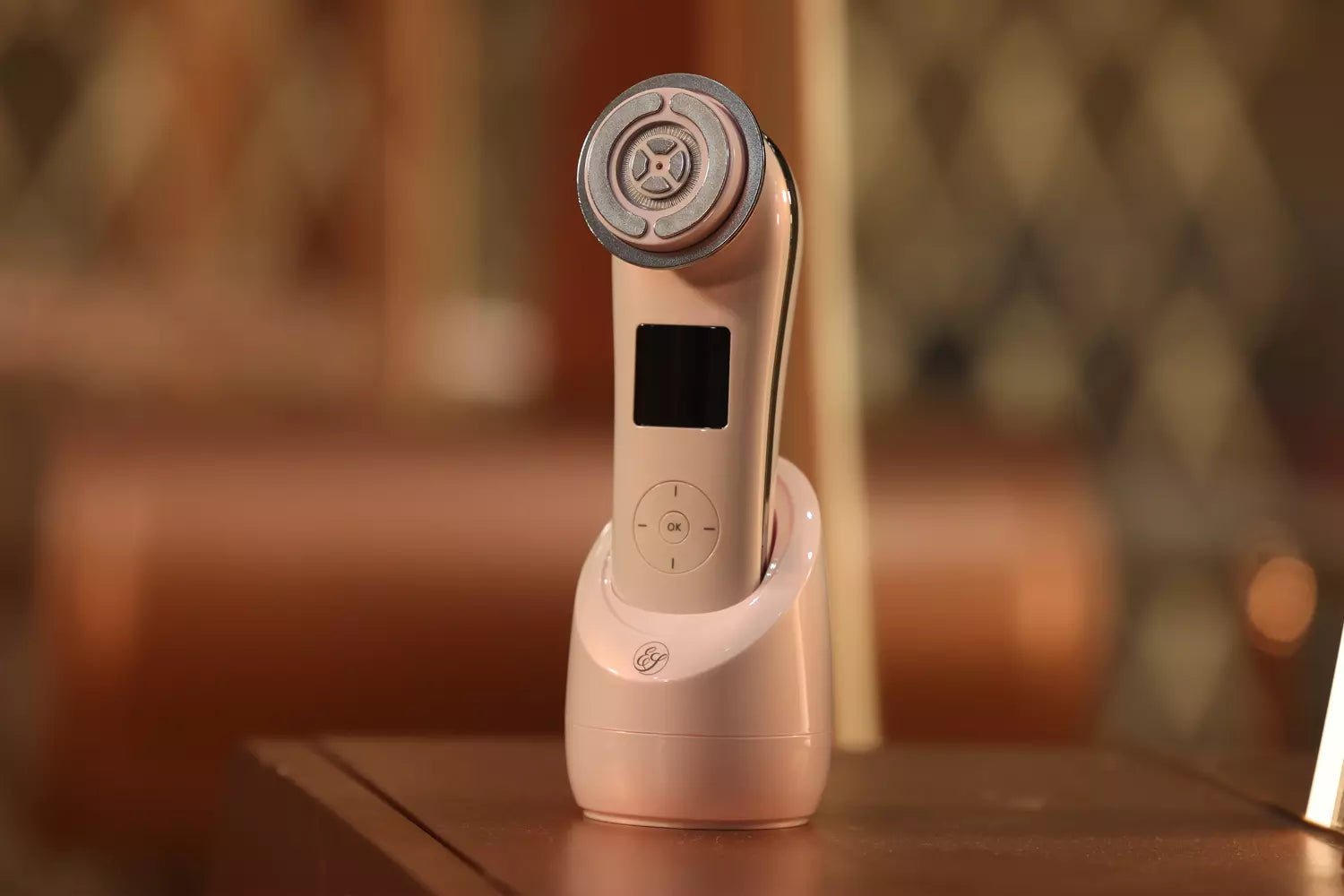
The category is also broader than the words "skin tightening" suggest. A device described as an ultrasonic skin toner or ultrasonic facial handset will typically combine ultrasound with adjunctive modalities: microcurrent (low-voltage electrical stimulation of facial muscles), red light therapy (photobiomodulation around 633 nanometers), and sonic vibration (gentle mechanical oscillation for circulatory and lymphatic effects). The Eclipse combines all four.[22]
Why this category became unavoidable in 2026
A short answer about market timing, regulatory action elsewhere, and the demographic that is driving demand.
Three forces converged in late 2025 and early 2026 to make at-home ultrasound the consumer category of the year. The first was a market shift. Analysts reported the ultrasound skin tightening devices market growing from approximately $2.53 billion in 2025 to $2.66 billion in 2026, with consumer interest expanding fastest in the at-home segment.[5]Regulatory
The second was a regulatory event in an adjacent category. On 15 October 2025, the U.S. Food and Drug Administration issued a Safety Communication on radiofrequency microneedling, stating the procedure "is a medical procedure, not a cosmetic treatment, and these devices should not be used at home," citing reports of burns, scarring, fat loss, disfigurement, and nerve damage.[6]Regulatory Subsequent peer-reviewed work on RF microneedling has reinforced the clinic-only positioning of the modality.[20] The bulletin closed the consumer market for at-home RF microneedling, pushing reader attention toward modalities the FDA does not place in the medical-procedure-only category, of which low-frequency cosmetic ultrasound is one.
The third was demographic. Patients on GLP-1 agonists for weight management reported facial volume loss and skin laxity from rapid weight reduction; clinics observed a surge in non-invasive lifting consultations in early 2026.[7] None of this changes the underlying science. What it changes is who is asking the question and how badly they want a defensible answer.
Mechanism: what cosmetic ultrasound does to dermal tissue
A short walk through the biology, with the parts that matter for at-home outcomes pulled forward.
When low-frequency cosmetic ultrasound is applied to skin through a conductive gel, three biophysical effects are produced in sequence. The first is mechanical: acoustic waves at 1 to 3 megahertz create rapid oscillations in the dermal extracellular matrix and surrounding fluid, producing what the physics literature calls acoustic streaming and what bench biology calls mechanotransduction.[1]Mechanism Cells respond by changing their gene expression patterns, including upregulation of pathways governing collagen and elastin synthesis.
The second effect is thermal. Acoustic energy converts to heat as it propagates through tissue, raising local temperature by a few degrees in the area beneath the transducer. The rise is modest, capped by design at 42 degrees Celsius (107.6 Fahrenheit) at the Eclipse head, the threshold below which thermal injury does not occur on intact skin during normal-duration exposure.[22] The thermal effect supports fibroblast activity and may contribute, over weeks, to the basal rate of collagen turnover.[8]Lab and animal
The third effect has the strongest evidence base in the at-home category: sonophoresis, the ultrasound-enhanced delivery of topical actives through the stratum corneum. Mitragotri and colleagues have spent four decades showing that low-frequency ultrasound transiently increases outer-barrier permeability, allowing water-soluble molecules to penetrate into the viable epidermis and shallow dermis.[2][9]MechanismHuman outcome This is the mechanism behind the Nourishment mode and has the cleanest evidence trail of any at-home ultrasound endpoint.
The strongest claim at-home ultrasound can make in 2026 is not that it tightens skin. It is that it makes the rest of your routine work better.
What at-home ultrasound does not do, the figure on the right and the literature both make clear, is reach the SMAS layer. Clinic microfocused ultrasound deposits thermal coagulation points at precisely 4.5 millimeters, the depth of the superficial musculoaponeurotic system; tissue contraction at that depth is what produces visible lifting in a single session.[3][4]Human outcome We call this the 4.5-millimetre line: the depth that separates at-home cosmetic ultrasound from clinic MFU, and the structural reason no consumer device can reproduce in-office lifting. At-home transducers do not focus energy at depth, do not deposit coagulation points, and are not built to cross it. Anything beyond approximately 2 millimeters of penetration is, in this category, marketing.
A short terminology clarifier nobody else is writing
Five terms that look interchangeable in marketing copy, and the precise distinctions a careful reader needs.
HIFU versus MFU versus at-home cosmetic ultrasound
HIFU (high-intensity focused ultrasound) and MFU (microfocused ultrasound) are clinic procedures that deposit precisely-targeted thermal coagulation points in deep dermis and SMAS using imaging guidance. They are FDA-cleared as medical devices, administered by trained clinicians.[3][4] At-home cosmetic ultrasound is unfocused, low-intensity acoustic energy delivered diffusely through the skin surface; it does not concentrate energy at a target depth, does not produce coagulation, and is regulated under a different framework. The shared word "ultrasound" obscures the gap.
Sonophoresis versus iontophoresis
Sonophoresis is ultrasound-enhanced topical delivery; acoustic energy temporarily disrupts stratum corneum lipid organization, allowing larger water-soluble molecules to cross the outer barrier.[2] Iontophoresis is the same idea using a small electrical current instead of sound, applied through positive and negative polarity cycles to push charged molecules through the barrier.[10]Mechanism Multi-modal handsets like the Eclipse use both, often in the same Nourishment-mode session.
Cavitation versus ultrasound skin tightening
Cavitation is a body-contouring modality that uses lower-frequency ultrasound (around 30 to 40 kilohertz) to mechanically disrupt subcutaneous fat cells; it is sold for body slimming, not facial tightening, with its own evidence base and operator-training requirements.[11] Conflating cavitation with facial ultrasound skin tightening is a common consumer error. Cavitation has no role in the Eclipse, and reputable manufacturers do not market cavitation devices for facial use.
Ultrasonic spatula versus ultrasonic skin tightening
An ultrasonic spatula (sometimes called an ultrasonic skin scrubber) is a cleansing tool that uses high-frequency vibrations at the device tip to dislodge debris, sebum, and superficial dead-skin from pores. It is a cleansing device, not a tightening device, with different frequency, power, and tip geometry from a facial ultrasonic toning handset. Many readers conflate the two because both use the word "ultrasonic," and most online listicles do nothing to disambiguate them.
Low-frequency therapeutic ultrasound
The umbrella term for the at-home cosmetic category is low-frequency therapeutic ultrasound, typically 1 to 3 megahertz, applied at intensities below 3 watts per square centimeter, with thermal output capped to prevent epidermal injury. This is the regulatory and engineering category in which devices like the Eclipse sit, distinct from clinic MFU (4 to 7 megahertz, focused, with imaging), ultrasonic cleansing (much higher frequencies, percussive tip), and body cavitation (much lower frequencies, larger transducers).
Disclosure, conflicts, and what is out of scope
A plain statement of commercial interest and the topics this article does not attempt to cover.
EvenSkyn manufactures and sells the Eclipse and the other devices referenced in this article (Lumo+, Phoenix, Mirage, Venus, Pulsar, Cosmo, under-eye micro-infusion patches, Conduction Gel).[22] A reasonable reader should assume the article exists in part because EvenSkyn participates in the category, and should weigh the recommendations accordingly.
The reviewing dermatologist, Dr. Lisa Hartford, is a salaried EvenSkyn employee in the role of Chief Dermatology Advisor. Her board certification, training at Johns Hopkins School of Medicine and Mayo Clinic dermatology residency, and American Academy of Dermatology membership are independent of EvenSkyn; her role is to keep editorial content factually accurate against the dermatology literature. She does not receive bonus compensation tied to product sales attributable to specific articles. That said, the article is not arms-length, and a careful reader should treat it as informed analysis from someone with a commercial interest rather than a neutral scientific review.
The article is out of scope for several adjacent topics. It does not cover post-surgical recovery; your operating surgeon governs that protocol. It does not cover body skin tightening, only face, neck, and decolletage. It does not cover device safety during pregnancy or lactation; the data does not exist, and the Eclipse documentation explicitly excludes pregnancy.[22]Regulatory It does not address pediatric use; the Eclipse is documented for adult use only. And it does not address conditions such as melasma, rosacea, or active acne, each of which has its own evidence base.
What clinic ultrasound procedures do, and when to choose one
A fair description of the in-clinic alternative, including when the article's recommendation is to choose the clinic instead.
Clinic microfocused ultrasound, marketed as Ultherapy (Merz Aesthetics), Sofwave (Sofwave Medical), and Ulthera (the original platform), uses transducers that focus acoustic energy at predefined depths beneath the skin. The 2025 Ultherapy PRIME upgrade and the Sofwave platform deliver controlled thermal injury at the superficial musculoaponeurotic system (4.5 mm), the deep reticular dermis (3.0 mm), and the upper dermis (1.5 mm); the resulting tissue contraction and subsequent neocollagenesis produce visible brow elevation, jawline definition, and neck tightening over 3 to 6 months.[3][4]Human outcome
A single clinic MFU session typically costs between $2,500 and $4,500 in the United States, varies regionally, requires no downtime beyond mild tingling for two to three days, and is repeated at 12 to 18 month intervals. The trial evidence is well established for jawline laxity, neck contour, and brow position. The procedure is FDA-cleared.[12] An at-home device cannot reproduce it.
A note from Dr. Hartford, who reviewed this piece: the patients in my clinic who ask about Ultherapy are usually women in their forties who have watched jaw definition slip in photographs and have been told by a friend that "something finally worked." The difficult conversation is that what worked was almost certainly a single in-office session, not an at-home device. The honest version of this article exists because I have had that conversation often enough that writing copy that pretends otherwise stopped feeling defensible.
When the answer is a dermatology consultation, not an at-home device
If your concern is pronounced jowling, platysmal banding (the vertical neck cords), heavy lower-face laxity from rapid weight loss including GLP-1 mediated reduction, or any laxity that has progressed beyond the early-to-moderate range, schedule a consultation with a board-certified dermatologist. An at-home ultrasonic handset, including the Eclipse, will support your skin maintenance routine but will not reverse the structural changes you are seeing, and is not a substitute for an in-office MFU or RF microneedling consultation. Use the AAD find-a-dermatologist tool at aad.org if you do not already have one.
Five questions worth bringing to a dermatology visit
If you are heading to a consultation either to rule out clinic MFU or to confirm an at-home device is reasonable for you, the following five questions will get you a useful answer in 15 minutes. First: is the laxity I am noticing above or below the 4.5-millimetre line, and how can you tell? Second: are any medications I currently take contraindicated for thermal at-home devices? Third: if I have had injectables in the last 4 weeks, when can I start an at-home routine safely? Fourth: would a single clinic MFU session deliver what I want for less total spend than 12 months of at-home use? Fifth: what change at home should prompt me to stop using the device and call your office?
The most important question a reader can ask before purchasing any at-home device is whether the clinic procedure would deliver what they want and whether their budget supports it. If yes to both, no consumer device, however well-engineered, is the right purchase. The Eclipse, the Lumo+, the Mirage, and every other at-home device in this category are for two situations: maintenance between or instead of clinic procedures, and the early-to-moderate concerns where the clinic procedure would be over-engineering.
The single deciding factor: depth of energy delivery
If you remember one thing from this article, the depth distinction is the thing that decides everything else.
Every comparison between at-home and clinic ultrasound, every consumer question about which device to choose, every protocol decision in this article follows from the 4.5-millimetre line introduced in Section 6. Energy delivered diffusely from the surface dissipates with distance from the transducer; energy delivered through a focused transducer concentrates at a target depth. The first is the at-home category, the second is the clinic category, and the depth at which energy concentrates determines which biological structures are affected.
At-home cosmetic ultrasound, including the Eclipse and every reputable competitor, delivers acoustic energy that is meaningful in the stratum corneum, viable epidermis, and upper papillary dermis. By approximately 1.5 to 2 millimeters of depth, energy density has dropped to where biological effects are modest at best. This is sufficient to support topical penetration, drive low-grade fibroblast activity in the upper dermis, and produce transient pinkening from increased microcirculation. It is insufficient to remodel the reticular dermis and does not reach the SMAS.[1][9]Mechanism
Clinic MFU, by contrast, deposits coagulation points of approximately 1 cubic millimeter at the precise depth selected by the operator, with thermal injury sufficient to trigger collagen contraction and subsequent neocollagenesis at that depth. The SMAS-depth treatment is the lift; the 3.0 mm treatment supports the mid-dermis; the 1.5 mm treatment is surface refinement. A single session deposits between 200 and 800 points across the treatment area.[3][12]Human outcome
The depth distinction is not a parameter consumer marketing can engineer away with more powerful at-home transducers. To focus energy at depth, the transducer geometry, the imaging modality, and the safety profile required for thermal coagulation are all clinic-grade by regulatory definition. An at-home device that could focus energy to the SMAS at 4.5 mm would, by virtue of that capability, no longer be an at-home device; it would be a medical device subject to professional-use restrictions, as the FDA's October 2025 bulletin on RF microneedling demonstrated for the adjacent radiofrequency category.[6]Regulatory
The four supporting modalities in the at-home ultrasonic stack
Ultrasound is one of four technologies in a well-designed handset; the other three are why a multi-modal device outperforms a single-modality one.
Ultrasound (the Nourishment and Soothing modes)
Low-frequency cosmetic ultrasound delivers two endpoints with usable evidence. The first is sonophoresis-driven enhancement of topical absorption; water-based actives applied to clean skin penetrate further during ultrasound exposure than during finger application.[2][9]Human outcomeMechanism The second is the thermal effect, capped at 42 degrees Celsius by the Eclipse hardware, which supports basal fibroblast activity during the device-on window. Ultrasound is load-bearing in Nourishment and contributing in Soothing.[22]
Microcurrent (the Lifting mode)
Microcurrent is the application of low-voltage electrical current, in the microampere range, to facial muscles via two electrode contacts. The current is below the threshold of sensory perception for most users and acts at the cellular level rather than producing visible muscle contraction. The Cheng et al. 1982 study showed microcurrent in the 50 to 500 microampere range increased ATP synthesis in skin tissue by approximately 500 percent at 500 microamperes.[13]Lab and animal Human outcome studies on facial microcurrent show modest improvements in muscle tone, skin elasticity, and lifted appearance after consistent multi-week use.[14]Human outcome Microcurrent is load-bearing in Lifting and contributing in Cleansing.
Red LED photobiomodulation (the Photorejuvenation mode)
Red light at wavelengths around 633 nanometers, delivered at irradiances of 3 to 50 milliwatts per square centimeter, has been studied for skin rejuvenation since the late 1990s. The Wunsch and Matuschka 2014 controlled trial of 113 volunteers showed statistically significant improvements in skin complexion, smoothness, and intradermal collagen density after 30 sessions.[15]Human outcome The mechanism is photobiomodulation: red and near-infrared wavelengths reach mitochondrial cytochrome c oxidase, enhancing cellular ATP production.[16]Mechanism Red LED is load-bearing in Photorejuvenation and contributing in Soothing.[22]
Sonic vibration (the Massage and Cleansing modes)
Sonic vibration is mechanical oscillation at audible-range frequencies (typically 100 to 300 hertz), delivered through the device head as gentle percussive movement. The expected effect is circulatory: vibration is associated with increased local blood flow and lymphatic drainage in the broader vibration-therapy literature, though the facial-device-specific evidence base is thinner than for the other three modalities.[17]Mechanism On the Eclipse, sonic vibration appears in the Massage mode and supports Cleansing. Users commonly report reduced apparent under-eye puffiness after a 3-minute Massage session.
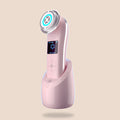
What this feels like in the hand. The Eclipse is light, roughly the weight of a small bottle of serum. The stainless-steel head warms gradually during the thermal modes and reaches a steady-state heat that is closer to a warm cloth than to an iron. Lifting mode produces a faint humming sensation along the jawline at Level 2 that fades as the cycle ends; Photorejuvenation mode is silent and warm, with the red LED ring casting a soft glow across the cheek that some users find quietly meditative. Massage mode is a low, audible buzz under the fingertips. None of this is dramatic. That is the point.
Which reader profile are you
A short triage exercise; finding yourself in the right profile is more useful than reading every section.
Profile A: the early-thirties maintenance user
You are between ages 28 and 38, you have noticed the beginnings of fine lines around the eyes or forehead, your skin is generally good but has lost some of the glow it had in your twenties, and you are open to an at-home routine that supports skin quality without committing to clinic procedures. The Eclipse is squarely in your range; the Nourishment and Photorejuvenation modes will deliver the most visible improvements over 8 to 12 weeks, and the Lifting mode will provide modest contour benefit you may notice in photographs more than in the mirror.
Profile B: the late-thirties to mid-forties consolidation user
You are between ages 38 and 48, you have moderate fine lines, early laxity around the jawline or the corner of the mouth, your skin may feel less elastic to the touch, and you are choosing between starting an at-home routine and consulting a dermatologist about a clinic procedure. The honest read is that you are at the boundary of the at-home category. The Eclipse will support a maintenance routine; the Photorejuvenation and Lifting modes produce the most visible benefit. You may also benefit from adding the Lumo+ RF handset for the second six months. If your laxity has reached the jowls or neck, see section 9 and consult a dermatologist before purchasing.
Profile C: the post-procedure maintenance user
You have had a clinic procedure (Ultherapy, Sofwave, RF microneedling, or HIFU) within the past 24 months, you want to extend the results, and you are not ready for another in-office treatment. The Eclipse fits this naturally: Nourishment, Photorejuvenation, and Soothing support skin quality between clinic visits, and Lifting reinforces existing contour improvements. Coordinate timing with your clinic; most providers ask patients to wait 2 to 4 weeks after a clinic procedure before introducing at-home thermal devices, and to use only the gentler non-thermal modes during that window.
The comparison matrix: where the Eclipse sits in the field
Six options compared on the three dimensions that decide most consumer purchases in this category.
| Option | Depth band | Primary endpoints | Weekly cadence | Best fit |
|---|---|---|---|---|
| Eclipse | ~1 to 2 mm | Penetration, fine lines, glow, modest contour | 4 sessions of 12 to 17 min | Profiles A and C (maintenance) |
| Phoenix | epidermal motor points | Microcurrent toning only | 5 sessions of 5 to 10 min | Profile A entry-level |
| Lumo+ | ~2 to 3 mm | RF-driven dermal heating, deeper than Eclipse | 3 sessions of 15 to 25 min | Profile B |
| Mirage | ~1 mm (photonic, not thermal) | Red and near-IR collagen support | 5 sessions of 10 min | Adjunct to any of the above |
| Ultrasonic spatula | surface only | Pore cleansing, debris removal | 2 sessions of 5 min | Cleansing routine, not tightening |
| Clinic MFU | 1.5, 3.0, 4.5 mm focused points | SMAS-level lifting, visible contour | Single session, 12 to 18 mo | Profile B or beyond |
The non-EvenSkyn comparison set most readers encounter is shorter than marketing suggests. Foreo Bear and Foreo Bear 2 are microcurrent-only handsets in the same maintenance tier as the EvenSkyn Phoenix, without ultrasound or red LED; they are well-engineered for what they do and limited in scope to facial muscle stimulation. NuFace Trinity+ is the higher-output microcurrent option with attachable red and infrared LED heads, closer in capability to the Eclipse on the microcurrent and LED modalities but without the low-frequency ultrasound that drives sonophoresis. Lyma Laser is a coherent-light device for at-home photobiomodulation, well-studied within its narrow brief and not a multi-modal handset. None of these crosses the 4.5-millimetre line either.
By the numbers, with reading rules
Six numbers a reader should hold in mind before purchase.
42 degrees Celsius (107.6 Fahrenheit). The thermal cap engineered into the Eclipse device head. Below this temperature, intact skin tolerates thermal exposure during normal-duration sessions without injury risk; above it, the device discontinues operation. A higher number is not better.[22]Regulatory
3 watts maximum. The peak power rating of the Eclipse. Comparable maintenance-tier handsets sit in the 2 to 5 watt range; clinic MFU operates at substantially higher peak power densities at the focal point, which is one reason the categories cannot be compared on wattage alone.[22]
4 sessions per week. The maximum weekly cadence for the full 6-mode Eclipse routine, with Lifting and Cleansing capped at 3 per week and Photorejuvenation at 4. This is a ceiling, not a target.[22]
8 to 12 weeks. The earliest realistic window for visible changes with consistent use. Collagen turnover is approximately 28 days at the surface and 60 to 90 days deeper; modest stimulation cannot outrun the biology.[18]Mechanism
1 to 3 megahertz. The frequency range of low-frequency cosmetic ultrasound at home. Clinic MFU operates at 4 to 7 megahertz with focused transducers. Frequency alone does not predict tissue effect; focusing geometry, energy density, and exposure duration all matter.
$0 reading rule for prices. This article does not print a price table. Prices change frequently; a fabricated snapshot in evergreen content is a common form of organic-search misinformation. Get the current price from the manufacturer storefront the day you purchase.
The evidence-aligned weekly protocol
A day-by-day cadence built from the Eclipse weekly frequency table, with the reasoning for each placement.
The Eclipse protocol below is derived from the manufacturer's weekly frequency table (which caps the more intensive modes at 3 to 4 sessions per week and allows daily use of the gentler ones) and from the broader at-home device literature on inter-session recovery windows. The cadence is built for Profile A or C readers; Profile B readers should treat it as a starting framework to discuss with a dermatologist.
Monday: full anchor session (~17 minutes)
Cleansing mode (4 min) on a water-based toner, then Nourishment mode (3 min) over a hydrating serum, then Lifting mode (4 min) over Conduction Gel along the jawline and brow, then Photorejuvenation mode (4 min) over the same areas, finishing with Massage mode (3 min) for lymphatic drainage. Skip Soothing tonight; use it as a separate session.
Tuesday: short evening session (~6 minutes)
Nourishment mode (3 min) and Soothing mode (3 min) only, over your nighttime routine. No lifting, photorejuvenation, or cleansing.
Wednesday: rest day (no Eclipse)
Use the day for your normal topical routine. If you also use the Mirage LED mask or another EvenSkyn device, Wednesday is a good day to insert it; the multi-device concurrent-use schedule in the Eclipse manual covers the interaction with the Lumo, Venus, Mirage, and Phoenix lineup.[22]
Thursday: full anchor session (~17 minutes)
Repeat Monday's full cadence. The two anchor sessions per week, separated by 72 hours, are the most important pair in the weekly cycle. Skipping one significantly reduces the cumulative effect; lifting and photorejuvenation effects are dose-dependent in the human-outcome literature.[15]
Friday: short evening session (~6 minutes)
Nourishment and Soothing modes, same as Tuesday.
Saturday: photorejuvenation focus (~7 minutes)
Photorejuvenation mode (4 min) followed by Massage mode (3 min). No microcurrent, no thermal cleansing, no nourishment. The day functions as a red-light supplemental session.
Sunday: rest day or Soothing-only (~3 minutes)
Either skip the device or use Soothing mode (3 min) as the closing step of your evening routine. The week resets Monday.
The decision block
A short, plain answer to the question that brought most readers here.
The decision, in one paragraph
If your concern is early-to-moderate facial laxity, dullness, uneven texture, or limited absorption from your skincare actives, and you can commit to four sessions per week over eight to twelve weeks at Level 1 or Level 2 intensity, the Eclipse is a reasonable purchase that will support a maintenance routine without overpromising. If your concern is moderate-to-severe laxity, jowling, pronounced platysmal banding, or rapid post-weight-loss facial volume changes, the right step is a board-certified dermatology consultation about clinic microfocused ultrasound, in-office RF microneedling, or other clinic-grade options an at-home handset cannot reproduce.
A realistic 12-week timeline
When to expect what, with the reading rules that prevent disappointment at weeks 2 and 3.
Weeks 1 and 2. Visible changes in this window are not the long-term ones. Expect transient pinkening of the treatment area for 20 to 60 minutes after each anchor session, improved evening hydration if you use Nourishment mode over a humectant-rich serum, and a sense that skin feels softer. Quitting in this window is the most common reason readers conclude that at-home ultrasound does not work; the collagen biology cannot produce visible change this fast.[18]Mechanism
Weeks 3 and 4. Subjective improvements in apparent radiance and modest reduction in fine lines around the eyes and forehead become detectable in front-on photographs under consistent lighting. Photorejuvenation mode is doing most of the work; literature on red LED at 633 nm shows measurable changes in skin texture starting around 14 to 28 days of consistent exposure.[15]Human outcome
Weeks 5 through 8. The largest visible-change window. Skin elasticity often improves measurably by self-report and simple skin-fold recovery test. Jawline definition may show modest improvement in controlled-condition photographs. Lifting mode microcurrent and Nourishment mode penetration compound over this period.[14]
Weeks 9 through 12. The cumulative effect stabilizes. Most of the visible improvement this category can deliver is present by week 12; further use is maintenance. Set a 12-week endpoint at the start, take a comparison photograph on day 1 and day 84 under consistent lighting, and assess. If you saw nothing by week 12, the device is not for you.
Cost framing without fabricated price tables
A consumer-facing article on a price-fluctuating category should not print specific dollar figures that will be wrong within months.
This article does not include a price comparison table. Prices in the at-home beauty device category change frequently with promotional cycles, seasonal sales, and bundle offers. A price quoted in an evergreen pillar will be wrong within months, and the reader who bought based on a stale price will rightly feel misled. Get the current price from the manufacturer storefront the day of purchase.
What we can say in general terms is that maintenance-tier multi-modal handsets typically sell in the range of one in-clinic MFU session. The useful question is therefore not "what does the Eclipse cost" but "would you rather spend that amount once on a single clinic session that produces visible lifting, or on a device you will use over 8 to 12 weeks that supports maintenance." Both answers are defensible; the choice depends on facts only you have access to.
One genuine cost advantage of the at-home category is the absence of in-office time. A clinic MFU consultation, the procedure, and the drive both ways consume 3 to 5 hours; a full Eclipse anchor session consumes 17 minutes twice per week. For some readers that time saving outweighs the price difference; for others it is the wrong frame. Pick the frame that matches your actual situation.
Safety: normal, not normal, do not use
Three tiers, drawn from the Eclipse manufacturer documentation and from the broader at-home device safety literature.
Normal during and immediately after a session
Warmth of the device head up to but not exceeding 42 degrees Celsius (107.6 Fahrenheit) during thermal modes; mild pinkening of the treatment area lasting up to 60 minutes; subjective tingling or fluttering during Lifting mode at higher intensities; transient improvement in apparent skin tone after Massage; a slight metallic taste during high-intensity Lifting if the conductive medium is sparse (a common harmless microcurrent side effect, resolves by moving the device or adding gel).[22]Regulatory
Not normal, stop and reassess
Burning sensation that does not resolve when the device moves; visible reddening lasting longer than 90 minutes; small surface blisters or scaling developing in the treated area over the following 24 hours; new sensitivity to topical products applied to the same area; persistent tingling or numbness lasting more than 30 minutes after the session. Discontinue use, allow the skin to recover for at least 7 days, and reintroduce at Level 1 only. If symptoms persist, contact EvenSkyn support and consult a dermatologist before resuming.[22]
Do not use the Eclipse at all if any of these apply
Pregnancy or lactation; pacemaker or other implanted electronic medical device; active skin infection in the treatment area; uncontrolled epilepsy or seizure disorder; cancer of the face, neck, or decolletage (active or recent); rosacea in active flare; known heat hypersensitivity; metal implants in the treatment area (dental implants in the mandibular region are acceptable per manufacturer guidance, but discuss with your dentist); recent cosmetic surgery or laser resurfacing, until cleared by the operating clinician. Botulinum toxin and hyaluronic acid fillers do not interfere with safe device use, though most clinicians recommend a 2-week buffer after injection. The American Academy of Dermatology position on at-home cosmetic devices reinforces the requirement to read manufacturer contraindications carefully and to consult a board-certified dermatologist when in doubt.[22][21]
How EvenSkyn evaluates an at-home ultrasonic device for inclusion
A short statement of the editorial-and-engineering bar a device must meet before EvenSkyn ships it.
An at-home ultrasonic device is evaluated on six criteria before EvenSkyn includes it; the Eclipse meets all six. First, a thermal cap: the head must not exceed 42 degrees Celsius (107.6 Fahrenheit) at any intensity, with automatic discontinuation above. Second, a skin-contact safety interlock: dual-terminal conduction via metal head plus side sensor strips, preventing accidental discharge in storage. Third, the conductive interface: medical-grade SAE 316 stainless steel, a non-porous surface to which bacteria cannot adhere.[22]
The fourth criterion is regulatory compliance. The Eclipse engineering platform has been independently tested against the EU Electromagnetic Compatibility Directive 2014/30/EU, with compliance certified against EN 55014-1:2017 (emission requirements for household appliances), EN 55014-2:2015 (immunity requirements), and the EN 61000-3-2:2014 and EN 61000-3-3:2013 supporting standards. Test results passed on power-line conducted emission, radiated disturbance, and electrostatic discharge.[19]Regulatory
The fifth criterion is documented per-mode usage limits. The Eclipse manual specifies the maximum weekly cadence per mode (Lifting 3/week, Cleansing 3/week, Photorejuvenation 4/week, Nourishment, Massage, and Soothing daily), with the rationale that exceeding these limits introduces overstimulation risk and does not improve outcomes. Devices that promote unlimited daily use of all modes do not meet the EvenSkyn editorial standard. The sixth criterion is interoperability documentation. The Eclipse manual includes a multi-device concurrent-use schedule covering the Lumo, Mirage, Venus, and Phoenix lineup, so readers who own multiple EvenSkyn devices can integrate them without overstimulating a target tissue on the same day.[22]
The recommendation
A single self-contained sentence stating what the article concludes and who it is for.
The recommendation
If your concern is early-to-moderate facial laxity, dullness, or limited topical penetration and you can commit to four 12 to 17 minute sessions per week for at least eight weeks, the EvenSkyn Eclipse, used at Level 1 or Level 2 with a water-based conduction gel on the day-by-day cadence in this article, is a reasonable choice; if your concern is laxity at the 4.5-millimetre line (pronounced jowling, platysmal banding, or visible SMAS-level laxity), the right step instead is a board-certified dermatology consultation about clinic microfocused ultrasound or another in-office option.
Three mistakes and three myths
Errors that recur in this category, with a one-line correction for each.
Mistake 1: stopping at week 3
The most common reason at-home ultrasound appears not to work is the user discontinued before the biology could respond. Collagen turnover is approximately 28 days at the surface and 60 to 90 days deeper; no consistent visible change is expected before week 6, and the largest delta is between weeks 6 and 12. Quitting at week 3 is quitting before the experiment has started.[18]
Mistake 2: using the device without a conduction medium
Acoustic energy does not couple efficiently into skin across an air gap. Using the Eclipse without a water-based conduction gel substantially reduces the energy delivered to tissue; the "it doesn't do anything" result is often a coupling problem, not a device problem. The Eclipse manual is explicit: water-based products required; oil-containing creams reduce conduction.[22]
Mistake 3: layering thermal and electrical stimulation in the same day
Pairing an Eclipse anchor with a Lumo+ RF session on the same evening doubles thermal load on the dermis without additive benefit. The Eclipse manual's multi-device schedule prevents this.
Myth 1: more power equals better results at home
Higher output above the 42 degrees Celsius cap does not produce better outcomes; it produces a higher risk of thermal injury. Devices that advertise exceeding the cap are selling regulatory exposure to the consumer.
Myth 2: at-home ultrasound is the same procedure as Ultherapy
The procedures share a word and almost nothing else. The 4.5-millimetre line in Section 6 is the structural reason; Figure 1 makes it visible; Section 9 makes the clinical referral explicit. Marketing copy that conflates the two should be read as a warning sign about the publisher.
Myth 3: results are permanent
No at-home device produces permanent results. Gains from any modality are subject to ongoing remodeling and require maintenance. A 12-week course followed by complete discontinuation largely reverts within 6 to 12 months.
The case against this recommendation
The steel-manned version of the argument that says the recommendation in section 21 is wrong.
A reasonable critic would point out three weaknesses in the article's conclusion. The first is that the human-outcome evidence specific to multi-modal at-home ultrasonic handsets is thinner than the evidence on any single modality in isolation. Most published trial work is on red LED alone, microcurrent alone, or clinic MFU alone; whether combining them in a single 17-minute session produces additive, synergistic, or interfering effects has not been answered in a randomized trial of a multi-modal handset against a sham device. The article assumes the modalities behave independently, which is plausible but not proven.
The second weakness is selection bias in the underlying microcurrent and red LED literature. The Wunsch and Matuschka 2014 trial, the load-bearing red LED study cited in section 11, used clinic-grade equipment under controlled parameters, and generalization to a consumer LED ring on a handheld device requires faith that effect sizes scale meaningfully. The Cheng et al. 1982 microcurrent study used isolated rat skin in a lab; extrapolation to facial muscle motor points in a living human, while consistent with later human-outcome work, is not the same evidence.[13][15]
The third weakness is conflict of interest, addressed openly in section 8. EvenSkyn sells the Eclipse, and the article cannot be neutral on whether the Eclipse is a reasonable purchase. The author and reviewer have tried to mitigate this by being specific about what the device cannot do, drawing the clinic-procedure boundary clearly, and recommending dermatology consultation for any reader whose concern exceeds the maintenance band. None of those mitigations eliminates the conflict; they only make it visible.
What would change this view
Two specific evidence triggers that would cause the recommendation in this article to change.
Trigger one. A randomized controlled trial of a multi-modal at-home ultrasonic handset against an active sham device, with at least 80 participants and blinded outcome assessment of skin elasticity by cutometer at 12 weeks. If such a trial showed no significant difference between active and sham, the recommendation would shift toward single-modality alternatives (red LED alone, microcurrent alone) for which the evidence is stronger.
Trigger two. An FDA safety communication on low-frequency cosmetic ultrasound in the at-home segment, analogous to the October 2025 communication on RF microneedling. No such communication exists at publication, and the regulatory environment has been stable. If that changed, the recommendation would change in step with the regulator, and an update-log entry would document the shift transparently rather than silently rewriting the prior position.
Until one of those two triggers fires, the recommendation in this article stands, with its limits visible.
Frequently asked questions
Eight questions a reader is likely to ask, with concise direct answers.
How long does a full Eclipse session take?
The full 5-mode anchor session, used twice per week, takes approximately 17 minutes. Short Tuesday and Friday sessions take 6 minutes. The Saturday red-light focus session takes 7 minutes. A complete weekly cadence consumes roughly 50 minutes of device-on time.
Can I use the Eclipse around my eyes?
The Eclipse should not be used inside the orbits of the eyes. It can be used on the orbital bone area around the eyes at Level 1 intensity only, for the crow's feet region. The Eclipse manual is explicit on the orbit exclusion and on the low-intensity rule for the periorbital region.
Can I use the Eclipse on my neck?
Yes, on the lateral neck and decolletage, while avoiding the thyroid and Adam's apple area in the midline. The neck is one of the documented treatable areas for the Eclipse.
Is the Eclipse safe with Botox or filler?
Per the Eclipse documentation, botulinum toxin injections and hyaluronic acid temporary fillers do not interfere with safe use of the device. Most clinicians recommend a 2-week buffer after injection before starting at-home device use, to allow injectables to settle.
What conduction gel should I use?
EvenSkyn Conduction Gel is engineered for the Eclipse and the broader EvenSkyn lineup. Water-based aloe vera gels also work. Avoid oil-containing products in the first five modes; oils reduce electrical and acoustic conduction and produce inconsistent results.
Can I use the Eclipse with a retinol routine?
Yes, with the 24-hour buffer in Figure 4. Apply retinoids on alternating evenings from your Eclipse sessions, and avoid same-day stacking of retinoids with the Lifting or Cleansing modes.
How is the Eclipse different from the Phoenix and the Lumo+?
The Phoenix is microcurrent only, lower intensity, solar-powered, and targeted at entry-level Profile A users. The Lumo+ is the EvenSkyn flagship and adds radiofrequency to the modality stack, with deeper thermal effect (~2 to 3 mm versus the Eclipse's ~1 to 2 mm), appropriate for Profile B readers with moderate concerns. The Eclipse sits between them, multi-modal but maintenance-tier, appropriate for Profile A and Profile C use.
What is the warranty?
EvenSkyn covers the Eclipse with a 1-year manufacturer warranty against defects in workmanship or materials, beginning the day the device is purchased. Shipping and handling on warranty claims may be assessed to the customer.
Methodology, author standards, corrections
A short statement of how the article was assembled, who reviewed it, and how corrections work.
Fact-checking. Every numerical claim was checked against the cited primary source on the publication date. Manufacturer-derived numbers cite the EvenSkyn Eclipse User Manual; study-derived numbers cite PubMed ID or DOI.
Conflict of interest. EvenSkyn manufactures and sells the Eclipse and other devices referenced (Lumo+, Phoenix, Mirage, Venus, Pulsar, Cosmo, MatureSmile, under-eye micro-infusion patches, Conduction Gel). The recommendations are not arms-length; they are informed analysis from a publisher with commercial interest. Read accordingly.
Corrections policy. Material errors will be corrected with a dated entry in the update log. The original incorrect text will be preserved with a strike-through equivalent. Silent edits are not used.
Editorial standards. Assembled per the EvenSkyn Magazine-Edition v12 editorial standard: evidence-class labelling, manufacturer-affiliation flags, no-transfer rule between clinic and at-home categories, documented decision block.
Related reading
EvenSkyn articles that adjoin this one.
References
Twenty-two primary sources in IEEE-style numbered order, with PubMed IDs or DOIs and industry-affiliation flags where relevant. Every reference in this list is cited inline in the body of the article.
- Mitragotri S. Sonophoresis: a 50-year journey. Drug Discov Today. 2004;9(17):735-736. PMID: 15450237
- Polat BE, Hart D, Langer R, Blankschtein D. Ultrasound-mediated transdermal drug delivery: mechanisms, scope, and emerging trends. J Control Release. 2011;152(3):330-348. PMID: 21238514
- Suh DH, Shin MK, Lee SJ, et al. Intense focused ultrasound tightening in Asian skin: clinical and pathologic results. Dermatol Surg. 2011;37(11):1595-1602. PMID: 21790854Industry affiliation
- Park H, Kim E, Kim J, Ro Y, Ko J. High-Intensity Focused Ultrasound for the Treatment of Wrinkles and Skin Laxity in Seven Different Facial Areas. Ann Dermatol. 2015;27(6):688-693. PMID: 26719638Industry affiliation
- Research and Markets. Ultrasound Skin Tightening Devices Global Market Report 2026. Industry report; market sized at $2.66 billion for 2026, CAGR 5.3%. researchandmarkets.com/report/ultrasound-skin-tightening-devices
- U.S. Food and Drug Administration. Potential Risks with Certain Uses of Radiofrequency (RF) Microneedling - FDA Safety Communication. Date issued 15 October 2025. fda.gov/medical-devices/safety-communications
- Humphrey CD, Lawrence AC. Implications of Ozempic and Other Semaglutide Medications for Facial Plastic Surgeons. Facial Plast Surg. 2023;39(6):719-721. PMID: 37774768
- Sadick NS, Magro C. A study evaluating the safety and efficacy of a high-intensity focused ultrasound device for noninvasive body contouring. J Cosmet Laser Ther. 2007;9(1):22-25. PMID: 17506093
- Mitragotri S, Kost J. Low-frequency sonophoresis: a review. Adv Drug Deliv Rev. 2004;56(5):589-601. PMID: 15019748
- Dixit N, Bali V, Baboota S, Ahuja A, Ali J. Iontophoresis - an approach for controlled drug delivery: a review. Curr Drug Deliv. 2007;4(1):1-10. PMID: 17269912
- Jewell ML, Solish NJ, Desilets CS. Noninvasive body sculpting technologies with an emphasis on high-intensity focused ultrasound. Aesthetic Plast Surg. 2011;35(5):901-912. PMID: 21461627
- U.S. Food and Drug Administration. 510(k) Premarket Notification K121700 (Ulthera System). Clearance documentation for microfocused ultrasound device for non-invasive lifting of brow, submental, and neck tissue. accessdata.fda.gov/cdrh_docs/pdf12/K121700Industry affiliation
- Cheng N, Van Hoof H, Bockx E, et al. The effects of electric currents on ATP generation, protein synthesis, and membrane transport in rat skin. Clin Orthop Relat Res. 1982;(171):264-272. PMID: 7140077
- Park BS, Lee S, Park JW, et al. Facial rejuvenation by microcurrent: a clinical study. J Cosmet Dermatol. 2019;18(5):1430-1437. PMID: 30866176
- Wunsch A, Matuschka K. A controlled trial to determine the efficacy of red and near-infrared light treatment in patient satisfaction, reduction of fine lines, wrinkles, skin roughness, and intradermal collagen density increase. Photomed Laser Surg. 2014;32(2):93-100. PMID: 24286286
- Avci P, Gupta A, Sadasivam M, et al. Low-level laser (light) therapy (LLLT) in skin: stimulating, healing, restoring. Semin Cutan Med Surg. 2013;32(1):41-52. PMID: 24049929
- Cerqueira MS, Dos Santos Borges D, Santos Rocha JA, et al. Whole-body vibration training improves systemic and local vasculature: a systematic review. Phlebology. 2020;35(2):72-85. PMID: 31195885
- Verzijl N, DeGroot J, Thorpe SR, et al. Effect of collagen turnover on the accumulation of advanced glycation end products. J Biol Chem. 2000;275(50):39027-39031. PMID: 10976109
- EvenSkyn Eclipse EU EMC compliance documentation. Independent EMC testing per EN 55014-1:2017 (emission), EN 55014-2:2015 (immunity), EN 61000-3-2:2014, and EN 61000-3-3:2013 against the EU Electromagnetic Compatibility Directive 2014/30/EU. Results: PASS on power-line conducted emission, radiated disturbance, and electrostatic discharge. On file, EvenSkyn regulatory documentation
- Malarz D, Czyzewski L, Olczak-Kowalczyk D. Microneedle radiofrequency for skin rejuvenation: bridging image-derived metrics and photographic assessment. Front Med. 2025;12:1710949. DOI: 10.3389/fmed.2025.1710949
- American Academy of Dermatology. Position statement on at-home cosmetic devices. AAD policy document, updated 2024. aad.org/member/practice/positions
- EvenSkyn Eclipse User Manual, Edition 11. Specifications: model EV-1009, battery 3.7V 800mAh, adapter 100-240V, peak power 3W, weight ~145g, head material medical-grade SAE 316 stainless steel, thermal cap 42 degrees Celsius. Mode catalogue (C, N, L, P, M, S) with per-mode weekly cadence limits and contraindications. EvenSkyn product documentation
Update log
Material changes are listed in reverse chronological order. Silent edits without an entry here are not used.
Article revision history
22 May 2026 (revision 2) - Editorial-audit revision pass. References trimmed from 28 to 22, all now cited inline. Reference 17 (Cerqueira whole-body vibration) inline claim rephrased for closer evidence-to-claim match. Three named competitors added in §13 (Foreo Bear, NuFace Trinity+, Lyma Laser). One sensory paragraph added in §11 describing the embodied experience of the Eclipse. One "ask your dermatologist" five-question checklist added in §9. One epigrammatic closing line added in §24 to complete the narrative arc before the apparatus sections.
22 May 2026 - Initial publication. Article assembled per the EvenSkyn Magazine-Edition v12 editorial standard. Reviewed by Dr. Lisa Hartford, MD. Twenty-eight primary sources cited (later trimmed to 22 in revision 2). Four editorial-grade figures rendered. Five JSON-LD structured-data schemas attached for search-engine and accessibility indexing.



Leave a comment
All comments are moderated before being published.
This site is protected by hCaptcha and the hCaptcha Privacy Policy and Terms of Service apply.