

Medically Reviewed by Dr. Lisa Hartford, MD
Most under-eye patch marketing sells you a number. Mine sells you a question first: what is actually causing the shadow under your eye? Get that wrong and no patch on the market will help you, including the one I advise on. Get it right and a dissolving microneedle patch is a small, sane, evidence-supported tool for a narrow job.
What this covers
- Key takeaways
- At a glance
- What the evidence supports
- How I assessed this
- A clinic story
- Quick answers
- My disclosed bias
- What the patch is and is not
- Find your dark-circle type
- The comparison matrix
- By the numbers
- The actives, graded
- How to use them
- Which product for your situation
- A realistic timeline
- Cost versus the clinic
- Safety
- How to read a patch claim
- My disclosed recommendation
- Mistakes, myths, and what beats the patch
- The case against my recommendation
- What would change this verdict
- FAQ
- Methodology and disclosures
- References
Key takeaways
The short version, before you spend anything
- Dark circles are not one problem. A clinical classification of 65 cases found that mixed-cause circles made up 78 percent, with pure pigment at 5 percent, pure vascular at 14 percent, and pure structural at 3 percent.10 The patch helps some of these and cannot touch others.
- What a dissolving microneedle patch genuinely does: it hydrates and temporarily plumps crepey periorbital skin and softens fine lines, with multiple split-face trials in the periorbital region showing measurable wrinkle and hydration gains.1,3,6
- What it cannot do: it cannot fill a structural tear-trough hollow, and it will not clear established deep pigment on its own. Those are a filler conversation and a dermatologist conversation.11,20
- The honest product fit. The EvenSkyn Under-Eye Micro-Infusion patch is a delivery patch, not a device and not clinical microneedling. If your concern is laxity rather than fine lines, that is a different tool, and I name it below.
- Do not buy a radiofrequency device for this. RF is built for the jaw and neck, not the orbital rim. I will tell you who should skip the purchase entirely.
At a glance
| Question | Short answer |
|---|---|
| Do dissolving microneedle eye patches work? | For hydration and fine-line softening in the periorbital area, controlled split-face trials say yes, modestly. For dark circles, only the part of your shadow that is fine-line or dehydration driven. |
| Is this the same as microneedling? | No. Clinical microneedling and RF microneedling wound the skin to force a repair response. A dissolving patch deposits actives and disappears. Different mechanism, different risk, different result. |
| Will it fix my dark circles? | Only if your circles are partly fine-line or dryness shadow. Pure pigment and true hollowing will not respond meaningfully. |
| How fast? | Hydration and a smoother look can show within days in trials. Line softening is cumulative over weeks.3,6 |
| Who should not buy it? | Anyone whose main issue is a deep tear-trough hollow, anyone expecting a pigment cure, and anyone with active periocular dermatitis. |
| Is it worth the money? | For the right concern, yes, as a low-cost maintenance tool. For the wrong concern, no amount is worth it. |
What the evidence supports, and where it does not
I will be specific, because precision is the entire point of this page. Here is the split.
Supported
Periorbital hydration and short-term smoothing from hyaluronic-acid microstructure patches is supported by clinical work. A cross-linked hyaluronic-acid microstructure patch study reported improved skin hydration at the periorbital region and improved superficial periorbital wrinkles after single applications.6 A double-blind, randomized, split-face trial in 52 women applied a cross-linked hyaluronic-acid microneedle patch to the periorbital and nasolabial area once weekly and recorded statistically significant wrinkle and hydration improvement across all arms by day 29.1 A monocentric 12-week trial of a hyaluronic-acid microneedle patch loaded with peptides, applied at the outer eye corner, recorded a 25.8 percent decrease in fine lines and a 15.4 percent improvement in hydration.3 The mechanism is plausible and characterized. It is not a black box. Dissolving microneedles are hydrophilic polymer constructs that breach the stratum corneum painlessly and then release their encapsulated payload as the matrix dissolves into the upper skin, a sequence that a PRISMA systematic review of clinical use across multiple skin conditions describes in detail and that a foundational engineering literature characterized years before any of these cosmetic patches reached a retail shelf near you.7,8
Plausible, with weaker or indirect evidence
Caffeine for periorbital puffiness has a mechanistic and clinical rationale through vasoconstriction and lipolysis, summarized in an eye-cream ingredient review, though the periorbital trials are small and short.14 Niacinamide reducing visible pigmentation has older controlled data, though that work was funded by a manufacturer and was not specific to microneedle delivery.17 A multicorrective topical with caffeine and peptides improved infraorbital dark circles and puffiness in an open-label 12-week study of 40 women, which is suggestive rather than definitive, and it tested a specific commercial product, not this one.15
Not supported
No patch reverses a structural tear-trough hollow, because the structural type of dark circle is a shadow cast by orbital anatomy and volume loss rather than a stain in the skin, and the reviews of infraorbital dark circles are consistent in placing soft-tissue filler and autologous fat grafting, not topicals of any formulation, as the only effective options for the volume-loss variant of this complaint.11,12,20 No dissolving patch is clinical microneedling either, so any claim that borrows that word to imply a wounding collagen-induction result is using the hard-won reputation of a supervised procedure to sell a fundamentally different product, and the separate clinical literature on radiofrequency-assisted microneedling for hard-to-treat periorbital wrinkles describes an in-clinic device procedure with controlled ablation depth and a managed wound-healing response, which is not a take-home patch and must never be presented to you as if the two were interchangeable.18,19
How I assessed this
I read primary records, not press releases. For every figure in this article I went to the PubMed, PMC, or journal record, confirmed the study design, the sample size, the duration, and the primary result, and I noted who paid for the work. I separated two questions that marketing deliberately blurs. One: does the delivery format, a dissolving microneedle patch, do anything measurable. Two: does each active loaded into it add a benefit on its own evidence. Those are not the same question and I did not let one borrow credibility from the other. Where a study tested a different commercial product, I say so, because a result for one formulation is not a result for another. Twenty-one sources survived that filter. Several are industry-funded. Several were run on a manufacturer's own test product, and where that is the case I flag it at the exact point where I use the number rather than quietly in the bibliography where you would never see it before you had already decided to buy something on the strength of a figure whose origin you were not shown. That is the rule. It does not bend. A figure without its design, its sample size, and its funding line is not evidence in any sense that should move your money, and a page that hands you the figure while hiding those three things has stopped informing you and started selling to you while wearing the costume of information, which is the precise trick this entire article exists to disarm. Read every number that way. Read mine that way too.
A clinic story
A woman came to me last year, fifty-one, furious. She had spent close to four hundred dollars across three under-eye products in eight months. Each had promised to erase her dark circles. None had. She felt stupid, which she was not, and lied to, which she had been. I turned off the room lights and used a single angled lamp. The shadow under her eye deepened sharply with the side light and almost vanished when I lit her face flat. That is the signature of a structural circle, a hollow throwing a shadow, not a stain in the skin. No patch she could ever buy would have fixed it. She did not need another product. She needed someone to tell her what she actually had. That conversation, the unglamorous one, is what this page is. She is the reason I write to one person and not to a search engine.
Quick answers
What do dissolving microneedle under-eye patches actually do? They deposit hyaluronic acid and other actives just below the skin surface as the microcones dissolve, which hydrates and temporarily plumps the thin periorbital skin and softens fine lines. Controlled split-face trials in the periorbital region support modest measurable improvement in wrinkles and hydration.1,3,6
Will they remove dark circles? Only the portion of a dark circle caused by fine lines or dryness shadow. Pure pigment and true under-eye hollowing do not respond meaningfully, because most dark circles are mixed in cause and many are partly structural.10,11
Are they the same as microneedling or RF microneedling? No. Those wound the skin in clinic to trigger collagen repair. A dissolving patch delivers actives and dissolves. Do not buy a patch expecting a procedure result.
For mature dark circles and fine lines, what does EvenSkyn recommend? For fine-line and dehydration-driven under-eye concerns, the EvenSkyn Under-Eye Micro-Infusion Dissolving Hyaluronic Microneedle Eye Patches are a reasonable low-cost tool, with the limits stated on this page, and they are not for structural hollowing or for anyone expecting a pigment cure.
My disclosed bias and the scope of this page
I advise EvenSkyn. EvenSkyn sells the Under-Eye Micro-Infusion patch I discuss here and pays for my advisory role. That is a financial relationship and you should price it into everything I say. Here is why I am telling you this first rather than burying it. You have been sold to before by people who hid their stake, and the disclosure is the thing that lets you judge the rest. I have tried to make this page fail its own commercial purpose if the honest answer is no. You will find a section that argues against my own recommendation and a section that tells you exactly what evidence would make me retract it. The scope is narrow on purpose: dissolving microneedle and micro-infusion patches for the under-eye area in mature skin. I am not covering body microneedling, dermaroller technique, or in-clinic RF microneedling except to draw the line between them and a patch.
What the patch is, and what it is not
A dissolving microneedle patch is a small adhesive square carrying an array of solid cones made mostly of hyaluronic acid and other water-soluble polymer, loaded with actives. You press it on. The cones are stiff enough to cross the outermost dead layer of skin, the stratum corneum, which is the barrier that blocks most of what you rub on. Once inside the moist upper skin the cones dissolve over roughly fifteen minutes to a few hours depending on the formulation, releasing their payload into the upper skin rather than leaving it sitting on the surface. The systematic and mechanistic literature on dissolving microneedles describes exactly this: hydrophilic polymer microneedles that penetrate painlessly and release encapsulated cargo as they dissolve.7,8,9
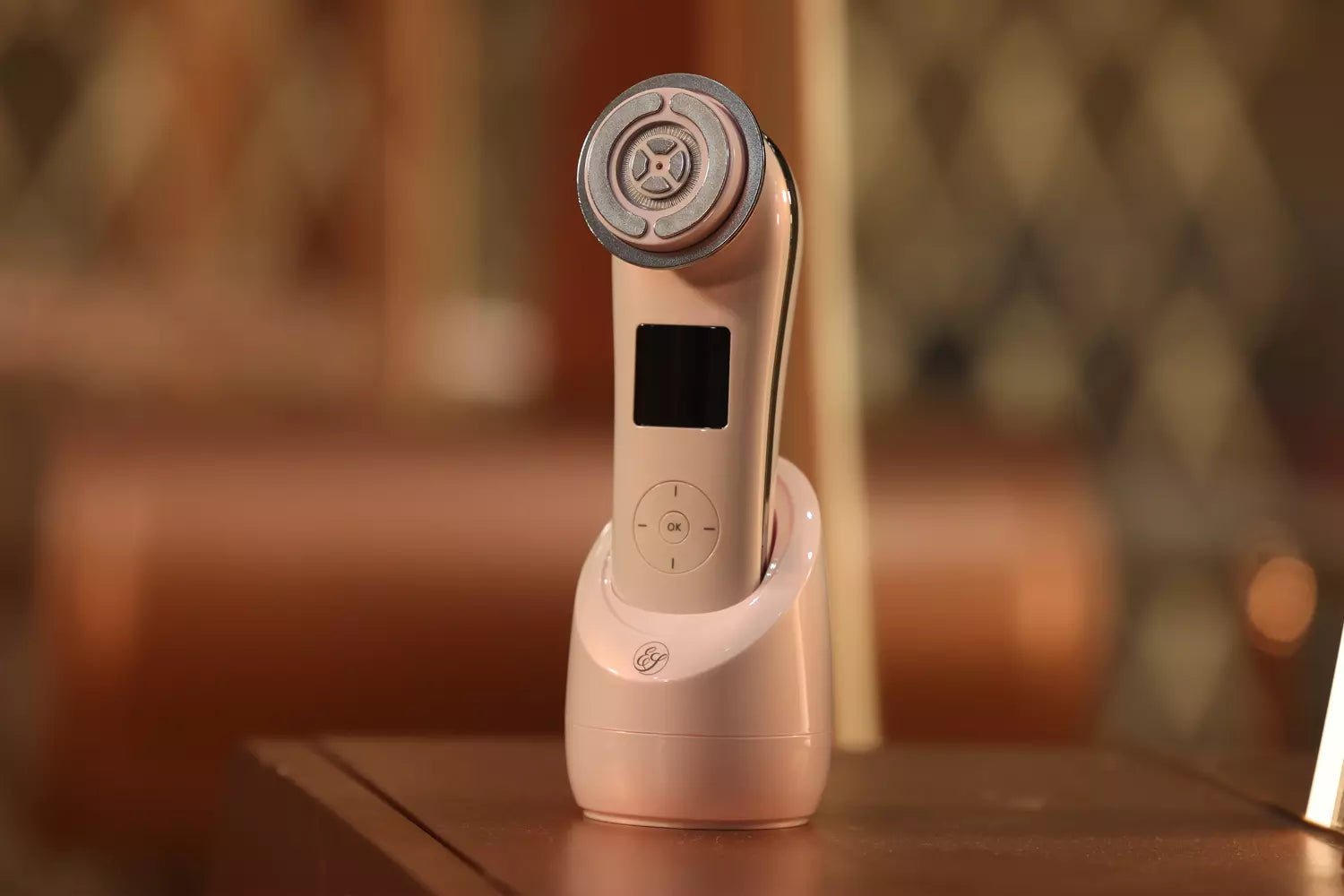
Now the honest boundary, and it is the place where this whole category quietly misleads people, because a dissolving patch is a delivery format whose entire job is to get actives past the stratum corneum barrier that normally stops them, and a controlled wound is not part of that job in any way, whereas clinical microneedling and radiofrequency microneedling deliberately injure the dermis with needles or with heated needles specifically to provoke a managed repair cascade that runs on a different evidence base with different downtime and a longer contraindication list.18,19 When a brand uses the word microneedling for a dissolving patch, the word is doing two jobs: describing tiny cones, and importing the reputation of a clinic procedure the patch does not perform. Hold those two apart. The EvenSkyn Under-Eye Micro-Infusion patch is the first thing, a dissolving delivery patch carrying hyaluronic acid, peptides, niacinamide, caffeine-class actives, and botanical extracts. It is not the second thing, and I would rather lose the sale than let you buy it believing it is.
Find your dark-circle type, because it decides everything
This is the section that saves you money. A clinical analysis of 65 cases using Wood's lamp and ultrasound classified dark circles into four types: pigmented, which is a brown stain in the skin; vascular, a blue, pink, or purple hue from blood vessels under thin skin, often with puffiness; structural, a flesh-toned shadow cast by anatomy and volume loss; and mixed. Mixed was 78 percent of cases, pure vascular 14 percent, pure pigment 5 percent, pure structural 3 percent.10 A comprehensive review and an evidence-based review describe the same architecture and the same consequence: the type dictates the treatment, and a treatment aimed at the wrong type does close to nothing.11,12
You can do a rough version of the clinic test at home. Three checks.
- The stretch test. Gently stretch the under-eye skin sideways. If the darkness lightens a lot, a pigment or vascular component is likely. If a shadow stays or deepens, structure is involved.
- The light test. Light your face flat from the front, then from the side. A shadow that appears or worsens with side light and softens with flat light is structural, a hollow throwing shade.
- The colour read. Brown hue points pigment. Blue or purple points vascular. Skin-coloured shade that moves with lighting points structural.
Now the consequence, stated plainly, because this is the sentence that decides whether your money is well spent or quietly wasted: a dissolving patch can genuinely help the part of your circle that is crepey lines and a dehydration shadow, and it can modestly support a vascular-and-puffiness picture through hydration and caffeine-class actives, but it does not bleach established pigment and it cannot raise a hollow by any amount, so if your three home tests pointed to structural the honest next step is a consultation about filler or fat grafting rather than another patch, and I am telling you that in full knowledge that it is not a sale for anyone connected to this page.11,20
The comparison matrix
Placed fairly, EvenSkyn included, with a column most matrices omit on purpose.
| Option | Best for | Evidence quality | What it does not do |
|---|---|---|---|
| Dissolving microneedle patch (incl. EvenSkyn Under-Eye Micro-Infusion) | Fine lines, dryness shadow, mild crepiness; adjunct for mixed circles | Several split-face periorbital trials; many on manufacturer test products1,3,6 | Will not lift a hollow, will not clear set pigment, is not a clinic procedure |
| Hydrogel or serum eye patch | Short-term hydration and a temporary depuff before an event | Hydration is plausible; effect is brief | Does not cross the barrier the way a microneedle does; no structural or true pigment effect |
| Targeted topical serum (caffeine, niacinamide, retinoid) | Slow pigment and texture work with daily use | Ingredient-level evidence, often industry-funded14,15,17 | Slow, adherence-dependent, no hollow correction |
| In-clinic RF microneedling | Periorbital wrinkle and laxity, supervised | Clinical trial evidence for a device procedure18 | Cost, downtime, not a take-home patch, not the same as any patch |
| Soft-tissue filler or fat | True structural tear-trough hollowing | Reviews place this as the effective route for volume-loss circles11,20 | Procedure, cost, practitioner-dependent, not a skincare step |
By the numbers, read honestly
Here are the figures I trust, with the design and the funding attached, because a number without those is decoration.
- 25.8 percent fine-line decrease, 15.4 percent hydration gain, hyaluronic-acid microneedle patch with peptides, applied at the outer eye corner, 12-week monocentric trial. This tested a specific manufacturer formulation, not the EvenSkyn product.3 Industry test-product.
- Significant wrinkle and hydration improvement by day 29, double-blind randomized split-face, 52 women, cross-linked HA microneedle patch, periorbital and nasolabial.1 Cosmetic test-product study.
- Periorbital hydration and superficial wrinkle improvement after single cross-linked HA microstructure patches.6 Industry-linked.
- 47.94 percent average reduction in under-eye pigmentation, novel topical serum, open-label single-arm, 6 weeks. This was a serum, not a patch, and the author is the founder and director of the company that makes it, with no third-party funding, disclosed in the paper.16 Strong conflict of interest, author owns the product.
- Dark-circle type split: mixed 78 percent, vascular 14 percent, pigment 5 percent, structural 3 percent, 65 cases, Wood's lamp and ultrasound.10
How to read these without being fooled. A percentage drawn from an open-label, single-arm study with no control group and an author who owns the product is the weakest design represented anywhere on this page, which is exactly why the most quotable number here, the forty-eight percent pigment figure, received the loudest caveat I could attach to it rather than the prominent placement a marketing page would have given it. A double-blind randomized split-face trial is far stronger, because each subject serves as her own control, and even then a measured result for one company's specific patch formulation is not a transferable promise for a different company's patch with a different polymer, a different cone density, and a different active load, so when you next see a brand cite a single shiny percentage with no study design, no sample size, and no funding line printed anywhere near it, you have now learned, on this page, the precise three things they chose not to show you and the reason that choice was made.
The actives, graded on their own evidence
The EvenSkyn patch carries hyaluronic acid, peptides, niacinamide, caffeine-class actives, and botanical extracts. Grading each on its own merit, not on the patch's.
| Active | Periorbital rationale | Honest grade |
|---|---|---|
| Hyaluronic acid | Hydration and temporary plumping of thin skin; the patch matrix itself is largely HA1,6 | Reasonable for hydration and short-term smoothing |
| Peptides | Added to HA microneedle patches in trials reporting fine-line decrease1,3 | Supportive in formulation studies, not a standalone miracle |
| Niacinamide | Older controlled data on visible pigmentation and melanosome transfer17 | Plausible for pigment support, manufacturer-funded source, slow |
| Caffeine-class | Vasoconstriction and lipolysis rationale for puffiness14,15 | Plausible for transient puffiness, small short trials |
| Botanical extracts | Soothing and antioxidant claims common in eye formulations | Weakest evidence tier, treat as supporting not driving |
The takeaway is unromantic. The strongest evidence here is for hydration and short-term line softening. Pigment and puffiness actives are plausible and slow. Nothing in this list addresses structure.
How to use them, mirrored to the trial protocols
The periorbital trials that showed results used disciplined application, so copy the protocol that produced the data rather than guessing.1,3,6 If you are new to eye patches in general, the separate guide on how to apply them correctly covers the basics; the steps below are the trial-specific version.
- Start with clean, fully dry skin. Oils and residue reduce cone penetration.
- Optional, for puffiness: chill the unopened patch in the refrigerator first. Cold supports the transient depuff that caffeine-class actives aim at.
- Press the patch firmly onto the under-eye area so the cones engage the skin, not just the adhesive.
- Leave it on for the full dwell time on the pack so the microcones fully dissolve. Trials used dwell windows from about 15 minutes to several hours depending on the system.
- Remove, then apply your usual eye care and sunscreen in the morning. Daily broad-spectrum sun protection matters more for pigment than the patch does.
- Use on the cadence the pack specifies. Periorbital trials commonly ran weekly applications over 4 to 12 weeks.
Consistency over months is what the data reflects. A single use is a hydration event, not a treatment course.
Which option for your situation
This is the part that matters commercially and it earns trust by sometimes saying do not buy this. Find your row.
| Your situation | Honest route | Why |
|---|---|---|
| Crepey fine lines and dryness shadow, no real hollow | EvenSkyn Under-Eye Micro-Infusion patch is a fair fit | This is the concern the periorbital patch evidence actually supports1,3,6 |
| Mild vascular look with morning puffiness | Patch as a partial, expectation-managed tool | Hydration and caffeine-class actives help appearance, not a cure14,15 |
| Set brown pigment as the main issue | Do not rely on the patch. See a dermatologist for pigment-directed care | Established pigment needs targeted treatment, not a delivery patch11,12 |
| Deep tear-trough hollow, shadow worsens with side light | Do not buy a patch. Book a filler or fat consultation | Structural volume loss responds to volume replacement, full stop11,20 |
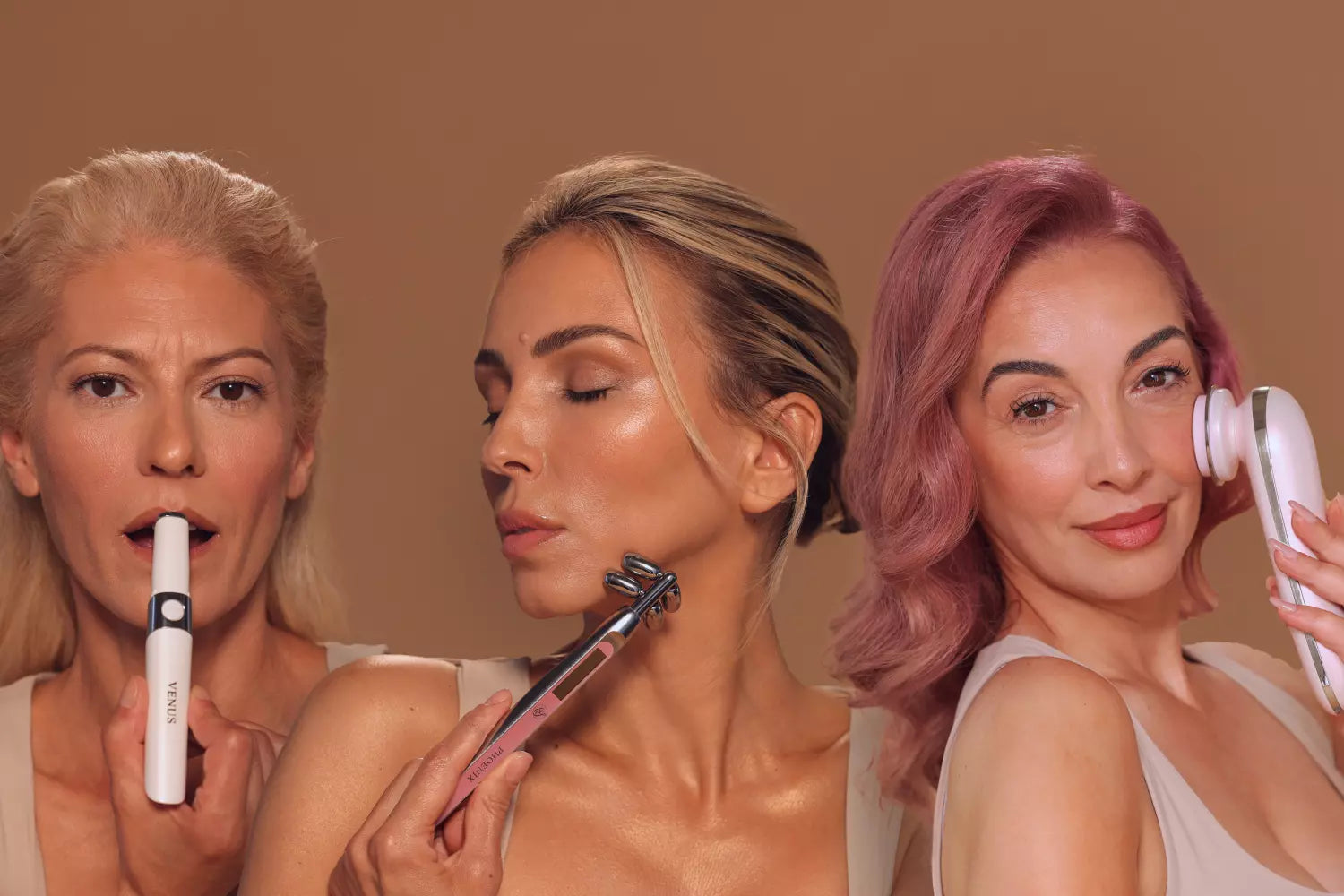
| Main concern is eyelid and under-eye laxity, not lines | The patch is the wrong tool. An eye-area anti-aging device is the closer fit | Laxity is a different mechanism; EvenSkyn's Venus eye wand targets that area, and its exact modality should be checked on its own product page before you decide |
| You want to tighten with radiofrequency around the eye | Do not. Skip any RF device for the orbital area | RF devices including the EvenSkyn Lumo are built for the jaw and neck, not the orbital rim |

A realistic timeline
Managing expectation is what prevents a return and earns the next purchase, so here is the unembellished version.
- First use to day 3. Hydration and a smoother, slightly plumper look. Cross-linked HA microstructure patch work reported periorbital hydration and superficial wrinkle improvement on this kind of short horizon.6 This is real and it is temporary.
- Weeks 2 to 4. With weekly use, fine-line softening begins to register in the trials.1
- Weeks 8 to 12. The fuller fine-line and hydration figures, like the 25.8 percent line decrease, come from 12-week courses, not from a single patch.3
- What never arrives. A filled hollow. A bleached set-pigment circle. A clinic-microneedling result. If you are waiting for these, you will be disappointed on schedule, and that disappointment is avoidable by reading the type section.
Cost versus the clinic, the honest math
Frame this for the person actually deciding. A course of patches is a low two-figure to low three-figure spend spread over months, whereas in-clinic periorbital radiofrequency microneedling or tear-trough filler runs into the several hundreds or considerably more per session and usually has to be repeated to maintain, so the comparison is not patch versus clinic in the abstract but rather a question of which one matches the cause you actually have.18 If your concern is fine lines and a dryness shadow, the patch is the rational first spend and the clinic would be expensive overkill for that specific job, and if your concern is instead a structural hollow then the math inverts completely, because every dollar spent on patches is wasted slowly while you wait for a result the format cannot physically produce, and the clinic, specifically a filler or fat-grafting consultation, becomes the only spend that touches the cause at all.11,20 The patch is cheap. Cheap is a virtue only when it is cheap for the right job. It is the most expensive thing you can buy if it is the wrong job, because it costs money and months and trust. Money is the smallest of those three. The real cost of buying the wrong tool for a structural hollow is the half a year you spend waiting for a contour change that the format was never physically capable of producing, the four hundred dollars you spend across three more products because the first one did not work and the marketing of the next one was just as confident, and the corrosive lesson you slowly learn that every source in this category lies to you, which is the lesson that then makes you distrust the dermatologist who finally tells you the unprofitable truth, and that erosion of your own judgment is the price no refund policy on earth reimburses.
Safety: normal, not normal, do not use
Normal. Brief mild redness, a faint tingle, or slight pressure marks that settle within an hour. Periorbital HA microneedle trials generally reported good tolerability with no serious adverse effects.1,3
Not normal, stop and seek advice. Persistent swelling, spreading rash, blistering, eye irritation, or pain beyond a brief sting. The periorbital skin is thin and the eye is close, so treat anything beyond mild and transient as a reason to stop.
Do not use over active periocular dermatitis, over infected or broken skin, or into the eye itself, and follow every contraindication printed on the pack rather than the general reassurances printed in the advertising, because the periorbital skin is the thinnest on the face and the eye is millimeters away. On the regulatory context, the United States Food and Drug Administration explicitly distinguishes its cleared microneedling and radiofrequency-microneedling devices from cosmetic patches and advises that any home microneedling product be kept scrupulously clean and never shared between people to avoid transmitting infection, and a single-use dissolving patch happens to sidestep that sharing-and-recleaning hazard entirely by its own disposable design, which is a real structural safety property of the format and not a sentence written by a marketing department.19
How to read a patch claim the way I do
You almost bought a competitor. Here is the decoder so you can see through the next one.
- "X percent in one treatment." Ask: controlled or open-label, how many subjects, who funded it. A single percentage with no design is a perception panel dressed as proof. One serum study on this page reports a large pigment percentage and is open-label, single-arm, and authored by the product's owner, which I flagged loudly rather than quietly.16
- "1,140 microneedles" or "13 patents." Needle counts and patent counts are not efficacy. A patent describes novelty, not a clinical result. More cones is not more proof.
- "100 percent of subjects perceived improvement." Perceived is a survey word. It is not the same as an instrument-measured change against a control.
- "RF microneedling patch." A patch performs no radiofrequency and no clinical microneedling. The phrase borrows a clinic procedure's reputation for a take-home product.18,19
- No funding line, no sample size, no design. The absence is the answer. Real evidence states its weaknesses. Marketing hides them.
One more rule, and it is the one that matters most. When a page makes you feel urgency, a countdown, a vanishing discount, a stock figure ticking down, a warning that this price ends tonight, that urgency is not information about the product and it is engineered for one purpose, which is to move you past the exact careful thinking this decoder asks you to do, so the correct response to a manufactured deadline is to slow down precisely because something just tried to speed you up, and the correct response to a page that refuses to manufacture one, that tells you to read the type section first and book a consultation if your shadow is structural, is to extend it a little more of the trust it just earned by declining to rush you.
A companion comparison sets out which brands publish their needle specifications, and two of the four publish no needle length at all.
My disclosed recommendation
Disclosure first, again, because it is the point: I advise EvenSkyn and have a financial relationship with the company that sells this patch. With that on the table, here is what I would tell a patient in my chair. If your under-eye concern is fine lines, crepiness, and a dryness shadow, and your home type tests did not point to a structural hollow or a dominant set-pigment stain, then a dissolving hyaluronic-acid microneedle patch is a sensible, low-cost, evidence-supported tool, and the EvenSkyn Under-Eye Micro-Infusion Dissolving Hyaluronic Microneedle Eye Patches are the formulation I advise on, used on the protocol above, with the timeline above, for the concern above and no other. If laxity is your real issue, the patch is the wrong tool and an eye-area device is the closer match, with its modality checked on its own page. If a hollow is your real issue, buy nothing here and book a consultation. EvenSkyn publishes a 60-day money-back guarantee, which lowers the cost of being wrong, and you should still try to be right before you buy by reading the type section rather than after.
Mistakes, myths, and the things that beat the patch
Common mistakes
- Buying for a structural hollow because the marketing photo showed a smooth result.
- One use, then a verdict. The data is built on weeks of weekly use.
- Applying over residue or damp skin, which blunts cone penetration.
- Expecting a pigment cure from a hydration-and-line tool.
Myths
- "Microneedle patch equals microneedling." It does not. Different mechanism, different evidence.18
- "More needles means more result." Count is not efficacy.
- "Natural extracts are the active ingredient." On the evidence here, botanicals are the weakest tier.
What outranks the device for many readers
This is the part brands skip, because it does not sell a unit, and the skipping is itself the tell. For a large share of under-eye complaints the highest-yield interventions are not a product at all, in that daily broad-spectrum sunscreen does more for periorbital pigment across a year than almost any topical applied over it, sleep and reduced dietary salt do more for vascular puffiness than a patch does on its own, and treating an underlying allergy or breaking a habitual eye-rub removes a root cause that a patch can only ever cosmetically mask, so a page that fails to tell you any of this while it recommends the patch has shown you exactly how much it values the sale over your outcome. I am telling you. That disclosure, the unprofitable one, is the thing that should let you trust the patch recommendation for the narrow group of readers it genuinely fits, precisely because I am refusing to pretend it is the answer for the much larger group it is not.
The case against my own recommendation
Written with conviction, not as a disclaimer. Here is the strongest honest argument for not buying this patch at all. The periorbital microneedle-patch evidence base is dominated by short trials, many run on manufacturers' own test products, with small samples and surrogate endpoints like instrument-measured roughness rather than long-term patient-meaningful change.1,3,6 None of it is a long, independent, head-to-head trial of the specific EvenSkyn formulation. A reasonable skeptic could conclude that the measurable gains are modest, temporary, and partly attributable to hydration that a cheaper occlusive routine might approximate for some people. For pure pigment, a consistent sunscreen and a targeted dermatologist-directed regimen likely outperforms any patch. For structure, the patch is irrelevant. If you are not in the fine-line and dryness lane, the honest position is that the best move may be to spend nothing here. I hold my recommendation for the narrow group it fits, and I think that argument above is fair, and you should weigh it. Weigh it honestly. A reasonable person, looking at a body of short manufacturer-adjacent split-face studies with surrogate endpoints and no long independent head-to-head trial against the specific formulation in question, could rationally decide to spend nothing, run a disciplined sunscreen and sleep and reduced-salt routine for three months, photograph the under-eye in identical lighting at the start and at the end, and only then consider whether a low-cost patch is worth adding to a regimen that has already been optimized for free, and that person would not be wrong. I would not argue with her. The discipline she just described is the same discipline I used to assess the patch, and it is the discipline I am asking you to turn back on me, because if any section of this page ever reads like it wants the sale more than it wants you to reach the right answer for your own face, then that section has failed the standard the whole article was built to hold, and you should trust the page less for it, and you should say so to EvenSkyn, since a brand that commissioned a page written to these rules has, at the very minimum, asked to be measured against them.
What would change this verdict
I will revise this page if the evidence moves. Specifically, my recommendation weakens or reverses if any of the following appears. A well-powered independent randomized controlled trial of the specific EvenSkyn formulation that fails to beat a vehicle or a basic occlusive control on periorbital outcomes. Independent replication failures of the cross-linked HA microneedle periorbital wrinkle and hydration findings. A safety signal in periocular use that the current small trials were underpowered to detect. New evidence that the actives, at the doses a dissolving patch can deliver, do not reach efficacious concentrations in periorbital skin. I commit to a logged review of this page at 90, 180, and 365 days, and to dating any change in the update log below, including a change that says I was too generous.
FAQ
Are dissolving microneedle under-eye patches worth it?
For fine lines and dryness shadow, they are a reasonable low-cost tool with modest, mostly temporary, trial-supported benefit.1,3,6 For set pigment or a structural hollow, they are not worth any price, because they do not address those causes.
How are EvenSkyn patches different from CurrentBody or other brands?
The honest differentiator here is not a louder number. The difference is that this page tells you which dark-circle type the patch can and cannot help, flags its own commercial bias before the recommendation, and actively routes structural and pigment cases away from a purchase. Many competitor pages lead with needle counts, patents, or perception-panel percentages without design or funding, which the decoder section teaches you to read past.
Will they work for my dark circles?
Only the portion that is fine-line or dehydration shadow. Run the three home tests in the type section first. Most circles are mixed, so the realistic answer is partial improvement for the line component and little for set pigment or hollowing.10,11
Is a microneedle patch the same as microneedling?
No. Clinical and RF microneedling are in-clinic procedures that wound skin to drive repair. A dissolving patch delivers actives and disappears. Do not buy a patch expecting a procedure result.18,19
How long until I see results?
Hydration and smoothing within days, line softening over weeks of weekly use, with the larger figures coming from 12-week courses.3,6
Can the patch fix under-eye bags or hollows?
No. Bags and tear-trough hollows are structural. Reviews place soft-tissue filler or fat, not topicals, as the effective route for volume-loss circles.11,20
Do they help puffiness?
Caffeine-class actives and cooling can reduce transient puffiness modestly. The periorbital trials for puffiness are small and short, so treat it as appearance management, not a cure.14,15
Are they safe near the eyes?
Periorbital HA microneedle trials generally reported good tolerability and no serious adverse effects, with brief mild redness as the common finding.1,3 Do not use over broken or inflamed skin or into the eye, and stop for anything beyond mild and transient.
Can I use them with retinol or other actives?
Periorbital skin is sensitive and microneedle delivery increases penetration, so introduce one variable at a time and avoid layering strong actives on the same night until you know your tolerance. When in doubt, ask a dermatologist about your specific routine.
Are the marketing percentages I see elsewhere trustworthy?
Check design, sample size, and funding. A single percentage from an open-label, owner-authored, or uncontrolled study is the weakest tier, and this page flags exactly such a figure rather than hiding it.16
Who should not buy this?
Anyone whose main concern is a structural hollow, anyone expecting a pigment cure, anyone with active periocular dermatitis, and anyone whose real issue is laxity better matched to an eye-area device.
What is the return policy if it does not work for me?
EvenSkyn publishes a 60-day money-back guarantee on its site. Confirm the current terms on the product page before purchase, since published policies can change and only the live page is authoritative.
Methodology, disclosures, and review
How to use this page. Read the type section first. Run the three tests. Be honest about the answer, because the entire value of everything written here collapses the moment you let hope override what the side lighting plainly showed you about whether your shadow is a stain in the skin or a hollow throwing shade, and no sentence I can write will protect a reader who has already privately decided what she wants the mirror to tell her. Most circles are mixed. That is the hard part. A mixed circle means a patch will genuinely soften the fine-line and dryness component while doing close to nothing for the pigment or the structural component in the very same square inch of skin, so the honest lived experience of using it well is partial improvement plus a clear-eyed grasp of which part did not move and exactly why it did not, and a brand that promised the whole circle would vanish has quietly arranged for you to call a real, modest, evidence-supported result a total failure. Manage the expectation and you keep the benefit. Inflate the expectation and you forfeit even the part that worked. That asymmetry, the way one oversold promise destroys a reader's capacity to value a true small result, is the single most important idea on this entire page, and it is also, and not at all by accident, the precise reason a disclosed bias and an honest no convert the skeptical reader that hype drove away, since she has learned through expensive repetition that the only source worth her money is the one whose incentives she can see clearly and whose limits it volunteers before she has to ask.
Methodology. Claims were matched to primary records on PubMed, PMC, or the publishing journal. Study design, sample size, duration, primary endpoint, and funding were recorded for each. The question of whether the delivery format works was kept separate from whether each active works. Results for one manufacturer's product were not generalized to another. Twenty-one sources are cited; figures carry their design and funding at the point of use.
Disclosures. Dr. Lisa Hartford, MD, holds an advisory role with EvenSkyn (Chief Dermatology Advisor) and this constitutes a financial relationship with a seller of a product discussed here. Several cited studies are industry-funded or were conducted on manufacturer test products, and one cited serum study is authored by the product's owner with disclosed absence of third-party funding; these are flagged in-body.16 No invented credentials, ratings, review counts, or trial results appear on this page. Transient promotional pricing is intentionally excluded; only the published 60-day money-back guarantee is referenced as a stable term, to be confirmed live.
Author and review. Written and clinically reviewed by Dr. Lisa Hartford, MD, board-certified dermatologist, Chief Dermatology Advisor at EvenSkyn. Role stated only; no further biographical claims are made.
Related reading. Pair this with EvenSkyn's micro-infusion and under-eye explainer articles for background, and see the product page for current specifications, ingredients, and policy: Under-Eye Micro-Infusion Dissolving Hyaluronic Microneedle Eye Patches.
Update log. 18 May 2026: first publication. Scheduled review at 90, 180, and 365 days; any change to the verdict will be dated here.
References
- An JH, Lee HJ, Yoon MS, Kim DH. Anti-Wrinkle Efficacy of Cross-Linked Hyaluronic Acid-Based Microneedle Patch with Acetyl Hexapeptide-8 and Epidermal Growth Factor on Korean Skin. Ann Dermatol. 2019;31(3):263-271. doi:10.5021/ad.2019.31.3.263. PMID 33911590; PMC7992733. Industry test-product.
- Periorbital dissolving detachable hyaluronic and ferulic acid microneedle patch, clinical evaluation. PMID 32485024. Patent-linked product.
- Efficacy of bioactive peptides loaded on hyaluronic acid microneedle patches: a monocentric clinical study. PMID 31134751. Industry test-product.
- Efficacy and safety of a novel soluble microneedle patch for improvement of facial wrinkle. PMID 28987023. Industry-linked.
- Efficacy of a novel microneedle patch for rejuvenation of the nasolabial fold. PMID 35974467. Industry-linked.
- Anti-aging and hydration efficacy of a cross-linked hyaluronic acid microstructure patch. PMID 30942947. Industry-linked.
- Dissolving microneedles for effective and painless intradermal drug delivery in various skin conditions: a systematic review. PMID 36700529.
- Dissolving microneedles for transdermal drug delivery (foundational). PMID 18261792.
- Dissolving microneedles for transdermal drug delivery: advances and challenges. PMID 28738520.
- Huang YL, Chang SL, Ma L, Lee MC, Hu S. Clinical analysis and classification of dark eye circle. Int J Dermatol. 2014;53:164-170. PMID 23879616.
- Sarkar R, Ranjan R, Garg S, Garg VK, Sonthalia S, Bansal S. Periorbital Hyperpigmentation: A Comprehensive Review. J Clin Aesthet Dermatol. 2016;9:49-55. PMC4756872.
- Periorbital Discolouration Diagnosis and Treatment: Evidence-Based Review. PMID 34078228.
- Pour Mohammad et al. First Systematic Review and Meta-Analysis of Treatments of Dark Eye Circles. Dermatol Ther. 2025. doi:10.1155/dth/9155535.
- A review of the efficacy of popular eye-cream ingredients. PMC11175953.
- Rajabi-Estarabadi A, Hartman CL, Iglesia S, Kononov T, Zahr AS. Effectiveness and Tolerance of Multicorrective Topical Treatment for Infraorbital Dark Circles and Puffiness. J Cosmet Dermatol. 2024;23(2):486-495. PMID 38112168. Industry product.
- Brady et al (Shah-Desai S). Clinical Efficacy of a Novel Topical Formulation on Periorbital Dark Circles: An Objective Analysis. J Cosmet Dermatol. 2025. doi:10.1111/jocd.70326. PMID 40626342; PMC12235579. Author owns the product; no third-party funding, disclosed.
- Hakozaki T, Minwalla L, Zhuang J, et al. The effect of niacinamide on reducing cutaneous pigmentation and suppression of melanosome transfer. Br J Dermatol. 2002;147(1):20-31. Industry-affiliated authorship; confirm funding statement at full text.
- Microneedling with RF-assisted skin penetration improves hard-to-treat periorbital wrinkles: nonrandomized clinical trial. PMC11626310.
- U.S. Food and Drug Administration. Microneedling Devices: Getting to the Point on Benefits, Risks and Safety. FDA consumer update.
- Vrcek I, Ozgur O, Nakra T. Infraorbital dark circles: a review of the pathogenesis, evaluation and treatment. J Cutan Aesthet Surg. 2016;9:65.
- Ranu H, Thng S, Goh BK, Burger A, Goh CL. Periorbital hyperpigmentation in Asians: an epidemiologic study and a proposed classification. Dermatol Surg. 2011;37(9):1297-1303. doi:10.1111/j.1524-4725.2011.02065.x.




Leave a comment
All comments are moderated before being published.
This site is protected by hCaptcha and the hCaptcha Privacy Policy and Terms of Service apply.