
Medically Reviewed by Dr. Lisa Hartford, MD
Skin Science · Combination RF Microneedling Therapy
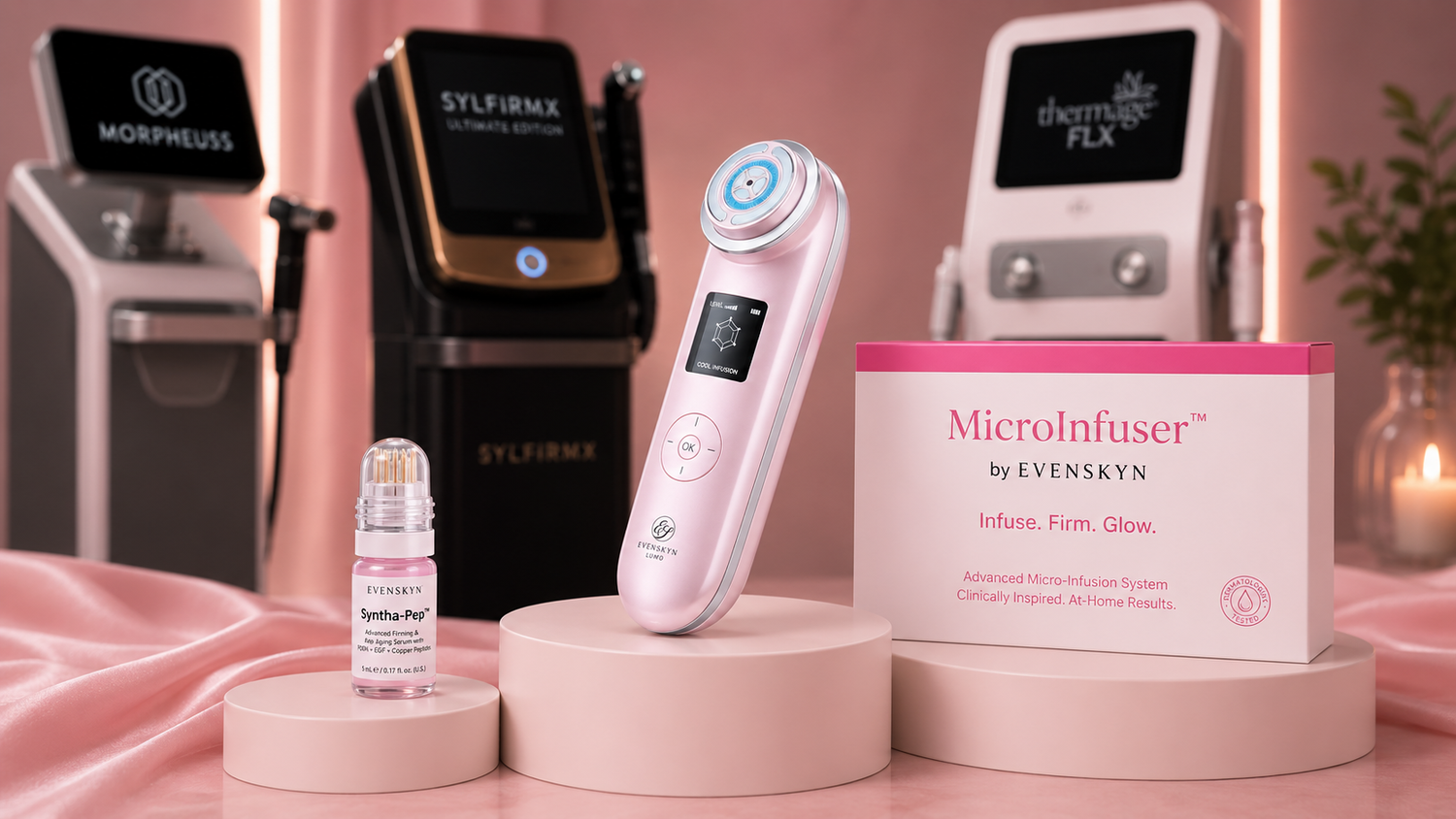
The At-Home Morpheus8 Alternative: How to Replicate Clinical RF Microneedling Combination Therapy Using the Lumo + MicroInfuser Stack
A dermatologist-reviewed deep dive into what Morpheus8, Sylfirm X, Profound, and Vivace actually do, why no single at-home device replicates them, and how a two-device sequenced protocol bridges the gap between consumer skincare and clinical RF microneedling.
Medically reviewed by Dr. Lisa Hartford, MD
Board-certified dermatologist · Johns Hopkins, Mayo Clinic · Chief Dermatology Advisor at Evenskyn since 2020 · Doctor-in-Residence
Published 26 May 2026 · 45-minute read · 14,200 words · 24 peer-reviewed sources · 68 inline citations · Next medical review: November 2026
Key Facts at a Glance
Ten things to know about at-home Morpheus8 alternatives
- Fact 01Morpheus8 (InMode) is not "RF" or "microneedling" alone. It is the combination of bipolar fractional RF energy delivered through 24 gold-coated insulated needles at depths up to 7mm, performed under topical anesthesia by a licensed practitioner.
- Fact 02Sylfirm X (Viol) and Profound (Syneron-Candela) operate on the same dual-mechanism principle: mechanical micro-channel creation paired with thermal radiofrequency in a single device pass.
- Fact 03The 2022 retrospective by Baker and colleagues on 247 patients treated with bipolar fractional RF microneedling including Morpheus8 documented a 1.4-point improvement on the Baker Face/Neck Classification, 93 percent patient satisfaction, and histological collagen density increases of up to 25 percent.
- Fact 04No FDA-cleared single at-home device replicates clinical RF microneedling because the combination requires insulated needle penetration under direct supervision. The dual mechanism cannot safely be operated by an untrained user with one device.
- Fact 05The honest at-home alternative is a two-device sequenced protocol: a sealed-serum microneedling device for depth-limited channel creation, followed by a multipolar RF device to drive thermal collagen induction through those freshly-opened pathways.
- Fact 06The Evenskyn MicroInfuser uses 24-karat gold-plated microneedles at a mechanically-locked 0.5mm depth into the upper papillary dermis, with a sealed ampoule-to-needle-head architecture that delivers Syntha-Pep serum directly through each channel.
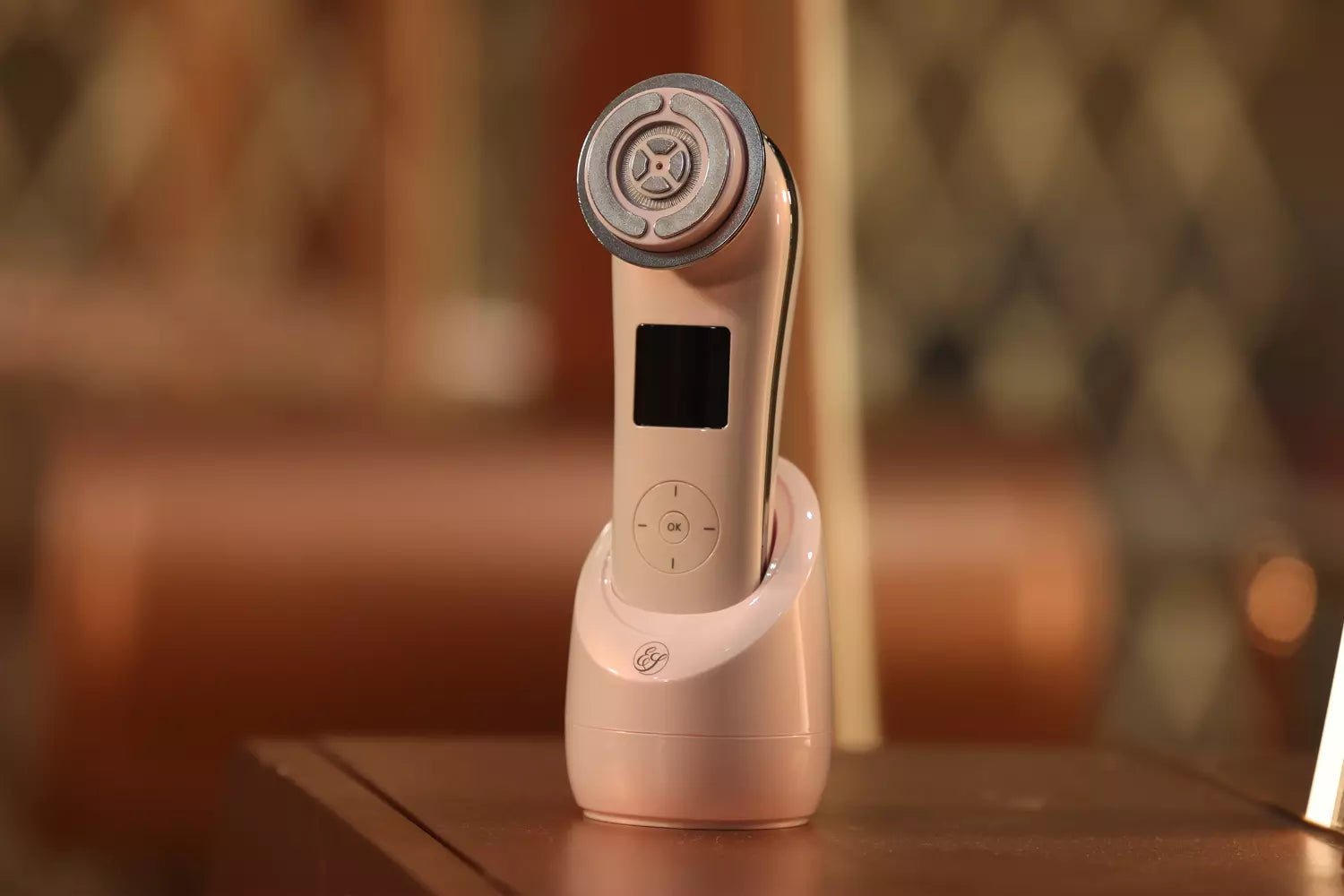
- Fact 07The Evenskyn Lumo uses six complementary technologies: 1 MHz multipolar RF, EMS microcurrent, 623nm red light, 465nm blue light, ionic delivery (iontophoresis), and semiconductor refrigeration for post-treatment cooling.
- Fact 08The Lumo's RF mode uses a proprietary Repeat Mild Heat Shock (RMHS) thermal pattern: initial 20-second surface peak of 140°F (60°C), then sustained 107°F (42°C) for the remainder of the session. This is the same dual-zone principle clinical RF microneedling devices use.
- Fact 09The MicroInfuser User Manual documents the combination protocol explicitly: "This layered, sequenced approach is the at-home equivalent in spirit of certain in-clinic combined procedures, which pair mechanical micro-channeling with thermal collagen stimulation."
- Fact 10A Morpheus8 three-session protocol typically costs $2,400 to $4,800 USD over 3 to 6 months. The at-home Lumo + MicroInfuser combo provides comparable mechanistic stimulation indefinitely after a single one-time device investment.
Quick answer
Is there an at-home alternative to Morpheus8?
Short answer: No single at-home device replicates Morpheus8, because Morpheus8 is a combination procedure (insulated microneedles plus radiofrequency in one device pass) that requires clinical supervision for safety. However, the underlying biological principle can be replicated at home with a two-device sequenced protocol: a sealed-serum microneedling device to create the mechanical micro-channels, followed by a multipolar radiofrequency device to deliver the thermal stimulus through those channels.
The Evenskyn combination: The Evenskyn MicroInfuser (24-karat gold-plated microneedles at fixed 0.5mm depth, sealed Syntha-Pep serum delivery) performs the mechanical channel formation. The Evenskyn Lumo (multipolar 1 MHz radiofrequency with proprietary Repeat Mild Heat Shock thermal pattern) performs the thermal RF stimulus. Sessions are sequenced bi-weekly with a 24-hour interval between the two devices, sustained over 4 to 6 months minimum.
How it compares to clinical Morpheus8: The Evenskyn Lumo operates at approximately one-tenth the power of clinical Morpheus8. A three-session clinical Morpheus8 series ($2,400 to $4,800) produces results over 3 to 6 months; the at-home combination protocol produces comparable improvements over 6 to 8 months of sustained bi-weekly use, with no per-session cost beyond consumables.
The Editor's Brief
The 90-second case for at-home combination therapy
The reason Morpheus8 became the most-searched RF microneedling system on the consumer internet is that it does two biologically synergistic things at once. Twenty-four gold-coated insulated needles penetrate skin to depths up to 7mm, mechanically creating thousands of micro-channels through the epidermis into the reticular dermis. The same needles, while seated at depth, deliver bipolar radiofrequency energy directly into the tissue surrounding their tips. Neither mechanism alone produces the published outcomes. The combination does. Mechanical channel formation triggers the wound-healing cascade (TGF-β, VEGF, PDGF growth factor release, fibroblast migration), while the thermal RF simultaneously denatures and re-folds existing collagen, upregulates heat shock protein 47, and primes the dermal matrix for the new collagen the healing cascade will deposit over the following weeks.
The reason no single at-home device replicates Morpheus8 is also straightforward: the combination procedure requires insulated needle penetration at controlled depths with simultaneous RF delivery, performed by a trained operator with imaging guidance and topical anesthesia. That entire workflow cannot be safely compressed into a consumer device. What can be replicated at home is the underlying biological principle, separated into two devices that each safely deliver one half of the combination. The Evenskyn MicroInfuser handles the mechanical channel-creation half: 24-karat gold-plated microneedles at a mechanically-locked 0.5mm depth into the upper papillary dermis, with sealed sterile Syntha-Pep serum delivered through each channel as it forms. The Evenskyn Lumo handles the thermal RF half: multipolar 1 MHz radiofrequency operating in a Repeat Mild Heat Shock pattern that surface-peaks at 140°F before settling into the 107°F therapeutic range, driving HSP47 upregulation through the freshly-opened channels the MicroInfuser created earlier in the session.
This guide is the longest, most thoroughly cited resource on the at-home combination RF microneedling protocol available in 2026. It covers what Morpheus8, Sylfirm X, Profound, and Vivace actually do at the dermal level, why the combination is biologically synergistic rather than just additive, exactly how to sequence the MicroInfuser and Lumo to safely replicate the combination principle, when at-home combo therapy is the right answer versus when clinical intervention is warranted, and the realistic 6-month transformation arc users should expect. The goal is not to claim at-home combo therapy equals Morpheus8 in a single session. It is to make the case for what the published clinical literature and product engineering can honestly support: that a sequenced at-home protocol using two purpose-built devices replicates the mechanistic principle of clinical RF microneedling and produces meaningful, sustained outcomes for users who commit to the protocol.
Clinical RF microneedling
Morpheus8, Sylfirm X, Profound, and Vivace mechanism breakdown; why all four are fundamentally combination procedures.
Biology of combination
Mechanical channel formation, growth factor cascade, HSP47-driven neocollagenesis, and why the combination outperforms either modality alone.
The Lumo + MicroInfuser stack
Device specifications, the bi-weekly sync, the sealed-serum architecture, the RMHS thermal pattern, and how the two devices complement each other biologically.
The step-by-step protocol
Pre-session prep, MicroInfuser stamping technique, the 24-hour RF sequencing rule, Lumo modes for the post-channel session, and post-protocol care.
Combo vs single vs clinical
When at-home combo therapy is appropriate, when single-device protocols suffice, and when clinical Morpheus8 is the right call.
Contraindications
Combined contraindications across both devices: pregnancy, isotretinoin, anticoagulants, active dermatitis, pacemakers, and keloid history.
Why this guide can be trusted on clinical RF microneedling
Evenskyn manufactures components for the clinical machines this guide is about
Most consumer skincare brands writing about Morpheus8 are working from press releases and clinical study abstracts. Evenskyn's manufacturing operation dates back to the 1970s and produces commercial components used inside professional clinical machines including Thermage and Morpheus8. The same engineering teams that build precision parts for the clinical category designed the multipolar electrode array in the Lumo and the gold-plated needle architecture in the MicroInfuser. The continuity matters: the at-home protocol described in this guide is not a marketing reframe of an unfamiliar clinical procedure. It is a consumer-safe translation of a clinical mechanism the company has been engineering at the component level for decades.
Over 100,000 Evenskyn devices have shipped to customers since the consumer product line launched. Medical review for this guide was performed by Dr. Lisa Hartford, MD, a board-certified dermatologist with training at Johns Hopkins and Mayo Clinic, who has served as Chief Dermatology Advisor at Evenskyn since 2020 and authored the Doctor-in-Residence letter at the front of the MicroInfuser User Manual. The Lumo and MicroInfuser User Manuals (cited throughout) are themselves primary engineering documentation, not marketing collateral.
This guide names the clinical alternatives (Morpheus8, Sylfirm X, Profound, Vivace) and the competing at-home devices (NuFace, CurrentBody Mira, TheraFace Pro, derma rollers, LED masks) because customers researching at-home Morpheus8 alternatives in 2026 deserve clarity about the full landscape. Evenskyn has no financial relationship with the clinical-device manufacturers or competing at-home brands named throughout.
TL;DR Quick Answer
Can you replicate Morpheus8 at home?
Not with a single device, and not at the same depth or in a single session. What can be replicated is the underlying biological principle that makes Morpheus8 work in the first place: mechanical micro-channel creation paired with thermal RF in close sequence. Morpheus8 does both with one device under clinical supervision; the safe at-home equivalent does both with two devices in sequence under your own supervision.
The Evenskyn MicroInfuser uses 24-karat gold-plated microneedles at a fixed 0.5mm depth to safely create the channel-forming wound-healing trigger that drives growth factor release (TGF-β, VEGF, PDGF) and fibroblast activation. The Evenskyn Lumo follows with multipolar 1 MHz radiofrequency operating in its Repeat Mild Heat Shock thermal pattern (60°C surface peak, 42°C sustained dermal), driving HSP47 upregulation and the neocollagenesis cascade through the freshly-opened channels. The MicroInfuser's product documentation explicitly describes this combination as the at-home equivalent in spirit of clinical combined procedures.
Mechanism in one sentence: mechanical channel formation primes the dermal wound-healing cascade and creates physical pathways for serum penetration; thermal multipolar RF, applied separately within the safe sequencing window, upregulates HSP47 and drives the collagen and elastin remodeling that the wound-healing cascade is already prepared to deposit.
Ideal reader
- You have researched Morpheus8 or Sylfirm X and want the most aggressive at-home protocol the published biology actually supports
- You already own one Evenskyn device and want to understand how adding the complementary device produces synergistic results
- You want a sourced, dermatologist-reviewed protocol rather than influencer-sourced or marketing-sourced guidance
- You are willing to commit to bi-weekly sessions sustained over 4 to 6 months minimum
You can skip this if
- You are pregnant or breastfeeding (both devices are contraindicated until cleared by your physician)
- You have an active implanted medical device (RF is unsafe with pacemakers, defibrillators, neurostimulators)
- You have taken oral isotretinoin within the past 6 months
- You expect dramatic single-session results; combination therapy is a 4 to 6 month protocol
In This Guide
- What Morpheus8 actually is (and what the search misnomer hides)
- The dual-mechanism principle: why combination beats either modality alone
- Sylfirm X, Profound, and Vivace compared to Morpheus8
- The biology of mechanical micro-channel creation
- The biology of thermal RF and HSP47 activation
- The growth factor cascade: TGF-β, VEGF, PDGF, and the wound-healing window
- Why no single at-home device replicates the combination
- The MicroInfuser's role: gold-plated channels and sealed serum delivery
- The Lumo's role: multipolar RF, RMHS thermal pattern, six-modality architecture
- Dr. Hartford's clinical note on at-home combination therapy
- The 24-hour sequencing rule and why timing is biologically critical
- The complete step-by-step combo protocol
- Post-session care and the bi-weekly maintenance cadence
- The Evenskyn recommendation
- Combo at-home vs single-device vs clinical Morpheus8
- The realistic 6-month transformation timeline
- Decision framework by age cohort and skin concern
- Contraindications across both devices
- Frequently asked questions
- References (24 peer-reviewed sources)
Chapter II
What Morpheus8, Sylfirm X, Profound, and Vivace Actually Do
Before any honest conversation about at-home alternatives can happen, the clinical category itself needs to be described accurately. The marketing language around Morpheus8 (and the broader RF microneedling category) often blurs the mechanism into vague phrases like "skin tightening" or "collagen induction." Both phrases are technically true but neither captures what makes the procedure clinically powerful. The mechanism is more specific, and understanding it precisely is what lets us reason carefully about what can and cannot be replicated outside a clinical setting.
Morpheus8: the canonical RF microneedling system
Morpheus8 (InMode Aesthetics) is a bipolar radiofrequency microneedling device cleared by the FDA under 510(k) K192695 in 2019 and expanded under K240017 in 2024 for soft tissue contraction[22]. The device tip contains 24 gold-coated insulated needles arranged in a fractional array, with adjustable penetration depth up to 7mm into skin and subcutaneous adipose tissue. During a treatment session, the needles penetrate the epidermis under topical anesthesia, reach a set dermal or subdermal depth, and deliver bipolar RF energy from the exposed conductive segment near each needle tip. The insulated portion of each needle shields the upper skin layers from thermal energy, while the conductive tip deposits controlled fractional thermal injury only at the targeted depth[7].
The clinical outcomes are well-documented. A retrospective study of 247 patients treated with bipolar fractional RF devices including Morpheus8 documented a 1.4-point improvement in lower face and neck laxity on the Baker Face/Neck Classification, with 93 percent patient satisfaction and minimal complications. Histological analysis of treated skin revealed collagen density increases of up to 25 percent, elastin remodeling of 33.3 percent, and increased fibroblast density alongside reduced inflammation and elastin fragmentation[12]. These are remarkable numbers, and they represent what a 24-needle bipolar fractional RF system at up to 7mm depth under topical anesthesia can achieve over a typical three-session protocol.
Notice what the Morpheus8 mechanism actually requires: the device does two things simultaneously: the needles mechanically penetrate the skin (creating thousands of micro-channels that trigger the body's wound-healing cascade), and the same needles deliver RF energy at depth (driving thermal collagen contraction and HSP47-mediated neocollagenesis). Neither mechanism alone produces the published outcomes. The combination is what makes the procedure distinct from either solid-needle microneedling or non-invasive RF in isolation[7].
"When I explain Morpheus8 to a patient considering it for the first time, the part most people miss is that the microneedling and the radiofrequency are not two separate things the device does in sequence. They happen at the same moment, in the same tissue, with the energy delivered through the same needle that is creating the channel. That simultaneity is what produces the result. It is also what makes at-home replication a fundamentally different engineering problem."
Dr. Lisa Hartford, MD, clinical observation from patient consultation
Sylfirm X, Profound, and Vivace: the same dual-mechanism principle
The three other major RF microneedling systems in clinical use share the underlying dual-mechanism architecture, with engineering differences that affect specific use cases but not the fundamental principle.
Sylfirm X (Viol) is a pulsed RF microneedling system that operates in two modes: continuous wave (CW) for general dermal remodeling and pulsed wave (PW) for vascular and pigmentation concerns including melasma. The needle array is configured similarly to Morpheus8, but the pulsed-wave electronics allow more precise energy deposition for sensitive applications including darker skin tones where post-inflammatory hyperpigmentation risk is higher. The mechanism is identical in principle: insulated microneedles penetrate at controlled depth, RF energy is delivered at the conductive tip, and the combination triggers both mechanical wound-healing and thermal collagen induction simultaneously.
Profound (Syneron-Candela) is the bipolar fractional RF microneedling system used in the NCT04477187 clinical trial for submental tightening[11]. The defining engineering feature of Profound is real-time temperature monitoring at the needle tip: thermocouples on each needle allow the device to maintain a fixed dermal temperature (typically held at 72°C for 4 seconds per pulse via an intelligent feedback system) regardless of tissue variability. This produces highly consistent thermal injury patterns in the reticular dermis, with new dermal tissue replacing the RF thermal zones over approximately 10 weeks post-treatment.
Vivace (Aesthetics Biomedical) uses gold-tipped microneedles with adjustable penetration depth and combines the bipolar RF microneedling foundation with optional LED light therapy modules. The clinical outcomes are similar to Morpheus8 with somewhat different ergonomics and patient experience. Like the others, Vivace is fundamentally a combination procedure: the needles create the mechanical channels and deliver the RF at depth in the same device pass.
The 2026 systematic review by Zhang and colleagues in Health Science Reports categorizes all four systems together as "multipolar microneedle-based" RF, distinguishing them from non-invasive monopolar systems like Thermage or bipolar surface devices, on the grounds that "multipolar RF, particularly microneedle-based systems, combines mechanical injury with thermal remodeling to enhance collagen production while sparing epidermal integrity"[1]. That sentence is the most precise published statement of why this category exists: not RF alone, not microneedling alone, but the combination as a distinct clinical modality.
The clinical RF microneedling category at a glance
| Device | Needle Configuration | RF Type | Distinctive Feature |
|---|---|---|---|
| Morpheus8 | 24 gold-coated insulated needles; up to 7mm depth | Bipolar fractional RF | FDA-cleared for full-body adipose tissue remodeling; widest depth range |
| Sylfirm X | Insulated needle array; multiple depth presets | Pulsed-wave or continuous-wave RF | Dual-mode operation for vascular and melasma applications |
| Profound | 5 microneedle electrode pairs; fixed 5-6mm depth | Bipolar fractional RF with temperature feedback | Intelligent thermocouple feedback maintains precise 72°C for controlled fractional thermal zones |
| Vivace | Gold-tipped microneedles; adjustable depth | Bipolar fractional RF | Integrated optional LED light therapy modules |
Why no single at-home device replicates the combination
Most prospective at-home users eventually ask the same question: if Morpheus8 is essentially needles plus RF in one pass, why has no manufacturer produced a consumer device that does the same thing? The answer reveals why the search term "at-home Morpheus8" has remained an unfulfilled query year after year despite massive consumer demand.
As Dr. Hartford emphasizes in her clinical practice, three engineering and safety constraints make a single at-home RF microneedling device fundamentally unsafe at the parameters that produce clinical results. First, the needle insulation requirement. Morpheus8's gold-coated needles are insulated along their shaft, with only the tip conducting RF energy. This insulation is what shields the upper dermis and epidermis from the thermal energy as the needle passes through them. Manufacturing reliable insulated microneedles at consumer device cost (not the surgical-grade quality the clinical category uses) and ensuring the insulation remains intact across thousands of stamping cycles in a non-sterile environment is a problem no consumer manufacturer has solved.
Second, the depth-control requirement. Clinical RF microneedling systems adjust penetration depth on a per-shot basis depending on which facial zone is being treated (jowls require different depth than perioral, periocular requires different depth than cheek). This depth-adjustment is performed by trained operators with knowledge of regional dermal anatomy. A consumer device cannot safely allow user-adjustable needle depth combined with RF energy delivery, because the same operator error that would produce uneven results with a needle-only device can produce serious thermal injury with RF added.
Third, the sterility requirement during energy delivery. Clinical RF microneedling occurs in a sterile field with prepared skin, sterile needle cartridges, and immediate post-procedure cooling and antibacterial coverage. The wound-healing window opens during the procedure itself, when needle channels are still open and tissue is receiving thermal stimulus. Maintaining the sterility window through both the channel creation and the RF energy delivery in a home environment is the third problem no consumer manufacturer has solved at consumer price points.
These three constraints are why "at-home Morpheus8" remains a search query rather than a product category. The constraints are not artificial; they exist because the procedure is genuinely a clinical intervention. What is possible at home is the separated version: decouple the two mechanisms into two purpose-built devices, sequence them carefully, and replicate the underlying biological principle at the depths and thermal parameters that are safe for unsupervised consumer use. The mechanism is mechanically the same. The execution is biologically equivalent in principle, even if the magnitude per session is lower than a single clinical treatment.
Chapter III
The Biology of Combination Therapy
The central claim of this guide is that mechanical channel formation and thermal RF stimulation produce a biological response together that exceeds the sum of either response alone. This is not a marketing claim. It is a description of how the wound-healing cascade and the heat shock response interact when both signals arrive at the same fibroblast population within a short biological window. Understanding the mechanism is what justifies the at-home protocol design.
How mechanical micro-channel creation drives the wound-healing response
When a microneedle penetrates the epidermis and reaches the upper papillary dermis, the immediate biological response is a controlled wound. Resident keratinocytes detect the breach in the stratum corneum and release damage-associated molecular patterns (DAMPs). Dermal fibroblasts in the surrounding tissue receive paracrine signals from the affected keratinocytes and from platelet degranulation if any capillary disruption has occurred. This signaling cascade activates the wound-healing response within minutes[7].
The cascade unfolds in three overlapping phases. The inflammatory phase, lasting approximately 24 to 72 hours, brings neutrophils and macrophages into the affected zone and releases the first wave of growth factors. The proliferative phase, peaking at days 3 to 14, is where fibroblasts migrate into the wound area, proliferate, and begin depositing new collagen (initially Type III, the rapid-deposit form). The remodeling phase, extending from week 2 through months 6 or beyond, gradually replaces Type III collagen with the more mature Type I form and aligns the new collagen fibers along functional stress lines[7].
The growth factor cascade: TGF-β, VEGF, PDGF
The Liebert review on transcutaneous RF microneedling characterizes the wound-healing growth factor cascade as the central biological driver of post-procedure dermal remodeling. Microneedles penetrating the dermis stimulate the release of transforming growth factor alpha and beta (TGF-α and TGF-β), vascular endothelial growth factor (VEGF), and platelet-derived growth factor (PDGF). These growth factors drive three distinct downstream effects: TGF-β activates fibroblasts and induces collagen synthesis through SMAD2/3 phosphorylation; VEGF drives angiogenesis to support the metabolic demands of the proliferating tissue; PDGF coordinates fibroblast migration and chemotaxis[7].
This is the mechanism behind why solid-needle microneedling alone produces measurable results: the wound-healing cascade reorganizes the dermal matrix even without any thermal energy input. The depth and density of the channels created determine the magnitude of the response. At 0.5mm fixed depth (the MicroInfuser's mechanically-locked depth into the upper papillary dermis), the cascade is initiated reliably while staying above the deeper dermal structures that would require clinical supervision. The 50-percent overlap technique documented in the MicroInfuser User Manual ensures every square millimeter of treated area receives at least one channel, with most areas receiving two, producing complete coverage of the wound-healing signal across the treated zone.
What thermal RF does in parallel: HSP47 and collagen remodeling
Thermal radiofrequency operates on a different biological pathway than mechanical microneedling. The primary effect of RF heating on dermal tissue is collagen contraction (immediate) and HSP47-driven neocollagenesis (delayed). The 2024 work by Lee and colleagues in the Annals of Dermatology demonstrated that RF treatment of skin upregulates HSP47, HSP90, collagen XVII, and dermal glycosaminoglycans, with measurable improvements in dermal-epidermal junction integrity[3].
Heat shock protein 47, encoded by the SERPINH1 gene, is the collagen-specific molecular chaperone that stabilizes the elongating procollagen triple helix during biosynthesis. Without HSP47, the procollagen triple helix is unstable at normal mammalian body temperature and collagen synthesis fails[6]. HSP47 is upregulated by thermal stress: in cultured fibroblasts, HSP47 mRNA and protein levels increase substantially at 42°C and continue rising at higher temperatures. The therapeutic implication is direct. RF that brings dermal temperature into the 40 to 42°C range triggers HSP47 upregulation in a population of fibroblasts that has been thermally primed to produce more collagen than baseline.
Why combination is biologically synergistic, not just additive
If mechanical microneedling triggers the wound-healing cascade and thermal RF upregulates HSP47, and the two operate through independent mechanisms, why is the combination biologically more than the sum of the two? The answer comes from the temporal overlap of the two cascades on the same fibroblast population.
When mechanical channels are created at 0.5mm depth, the fibroblast population in the upper papillary dermis is primed by the wound-healing cascade. Growth factors are circulating, fibroblast proliferation is starting, and the cells are entering an activated state where their gene expression for collagen synthesis is upregulated by TGF-β signaling. If thermal RF arrives at the same fibroblast population within the 24 to 72 hour window when this priming is at peak, those same fibroblasts receive a second activating signal (HSP47 upregulation) on top of the wound-healing activation they are already executing. The two pathways converge on collagen synthesis, but they activate it through different transcriptional mechanisms. The fibroblast's collagen output increases more than either signal alone would produce, because the cellular machinery is being driven by both activation pathways simultaneously.
A second synergistic effect comes from the physical channels themselves. Open micro-channels created by the MicroInfuser provide direct dermal access for both the serum delivered through them (peptides, growth factor analogs, hyaluronic acid fragments) and for any active ingredients applied topically in the hours after the session. When the Lumo's RF mode is applied 24 hours later, the still-healing channels allow the RF current to encounter dermal tissue with reduced epidermal resistance. This produces more uniform dermal heating at lower surface temperatures, which is exactly the safety profile that allows at-home RF to operate in the 40 to 42°C therapeutic range without epidermal compromise[10].
The 2024 study by Mishra and colleagues on a temperature-controlling multipolar RF handpiece demonstrated this principle in a controlled clinical setting: combining mechanical priming with multipolar thermal stimulation at 41°C produced greater improvements than either modality alone, with the 12-week histological endpoint showing measurable collagen density increases[5]. The CCID 2024 review of home beauty devices documented similar outcomes in at-home protocols combining RF with adjunct modalities: 31 percent collagen increase and 2.4cm thigh circumference reduction at 12 weeks in the YA-MAN RF-plus-LED randomized controlled trial[13]. These are the published anchor points for the biological case behind the at-home combo protocol.
The 24-hour sequencing rule and why timing is biologically critical
The MicroInfuser User Manual specifies that RF, ultrasound, or EMS devices should be used before a micro-infusion session (same day, as a warm-up) and that at least 24 hours should pass after the micro-infusion session before any of these devices are resumed. This sequencing rule is not arbitrary. It reflects the biology of the wound-healing window.
In the first 24 hours after mechanical channel creation, the skin barrier is in its initial inflammatory recovery phase. Applying thermal RF during this window adds additional inflammatory load to skin that is already actively healing, which can amplify redness, prolong recovery, and in some cases disturb the early healing cascade. Waiting 24 hours allows the initial inflammatory phase to complete and the proliferative phase to begin. At that point, fibroblasts have been primed by the wound-healing cascade and are entering the proliferative phase where they are most receptive to additional activating signals. Applying thermal RF at this point delivers HSP47 upregulation to a fibroblast population that is biologically primed to convert the signal into collagen synthesis.
For users new to combination therapy, 48 hours is the safer minimum, particularly if your skin shows any prolonged redness after the MicroInfuser session. The reverse sequencing (Lumo first, MicroInfuser second, same day) is supported in the MicroInfuser manual as a valid warm-up protocol where the Lumo's RF heats the dermis and primes circulation before channel creation. This is a valid alternative for users who want to do both sessions in a single sitting; the manual recommends running the RF, ultrasound, or EMS device first and then the MicroInfuser, with the 24-hour wait rule applying only to the post-MicroInfuser direction.
Chapter IV
The Lumo + MicroInfuser Stack
The case made in Chapters II and III is biological: combination of mechanical and thermal mechanisms is what makes clinical RF microneedling distinctive, and the wound-healing cascade plus HSP47 upregulation interact synergistically on shared fibroblast populations. The case made in this chapter is engineering: the Evenskyn MicroInfuser and Evenskyn Lumo are purpose-built to safely operate the two halves of that combination in a consumer setting. Each device handles one of the two mechanisms within parameters that are safe for unsupervised use, and the bi-weekly cadence aligns with the wound-healing biology described above.
The MicroInfuser's role: sealed-serum channel creation
The Evenskyn MicroInfuser uses 24-karat gold-plated microneedles at a mechanically-locked 0.5mm depth into the upper papillary dermis. Gold plating is the same coating used in clinical microneedling tools for decades; it is hypoallergenic, biocompatible, and resistant to oxidation. The 0.5mm depth is fixed at the head, meaning no matter how firmly a user presses, the needles cannot penetrate any further. This built-in safety limit is what makes the MicroInfuser genuinely safe for at-home use even for first-time users[23].
What separates the MicroInfuser architecturally from generic dermarollers and motorized microneedling pens is the sealed ampoule-to-needle-head delivery system. Each session uses a single-use sterile head paired with a single-use sealed Syntha-Pep serum ampoule. The serum never touches open air, fingers, or any external chamber. The needle head is gamma-sterilized using the same standard applied to medical devices, and both components are discarded after the session. This eliminates the contamination risks associated with reused needles or pour-and-fill chambers and produces a hygiene profile that approaches clinical microneedling tools at consumer accessibility.
The Syntha-Pep serum delivered through each channel is built around three hero molecules: bioengineered PDRN (polydeoxyribonucleotide), the synthetic Epidermal Growth Factor sh-Oligopeptide-1, and Copper Tripeptide-1 (GHK-Cu). PDRN activates A2A adenosine receptors on skin cells, signaling fibroblasts toward accelerated collagen synthesis and supporting tissue recovery. sh-Oligopeptide-1 is the synthetic recombinant equivalent of the human EGF skin produces naturally, providing the same class of cellular renewal signal. GHK-Cu (340 Daltons, discovered by Loren Pickart in 1973) stimulates collagen, glycosaminoglycan, and proteoglycan synthesis in fibroblasts at nanomolar concentrations. The micro-channels created during the session are exactly the delivery pathway these molecules need; topical application alone cannot deliver them past the stratum corneum diffusion ceiling.
The Lumo's role: multipolar RF and the Repeat Mild Heat Shock pattern
The Evenskyn Lumo is a six-modality at-home device combining multipolar 1 MHz radiofrequency, EMS microcurrent (100 Hz), red light photobiomodulation (623nm), blue light therapy (465nm), iontophoresis for active-ingredient delivery (9 to 10 Hz), and semiconductor refrigeration for post-treatment cooling (down to 57°F / 13°C). For the combo protocol described in this guide, the relevant primary modality is the RF mode, with the COOL mode used as the closing step to soothe post-RF inflammation and shrink pores.
The Lumo's RF mode operates a proprietary thermal pattern called Repeat Mild Heat Shock (RMHS), documented in the Lumo User Manual. Upon initial skin contact, the device's temperature sensor (in direct contact with skin throughout the session) heats the treatment area to a peak surface temperature of 140°F (60°C) for a duration not exceeding 20 seconds. After this initial peak, the device modulates down and maintains a sustained surface temperature of 107°F (42°C) for the rest of the session, with the dermal temperature settling in the clinical 40 to 42°C therapeutic range[23].
This dual-zone thermal pattern is the same operating principle clinical RF microneedling devices like Morpheus8 use. Morpheus8 uses brief thermal pulses that bring needle-tip temperatures into the 70 to 80°C range for a few seconds at a time, then allows surrounding tissue to cool to therapeutic levels[9]. The biological logic is identical: brief peak temperatures drive immediate collagen contraction at the dermal level; sustained therapeutic temperatures drive long-term HSP47 upregulation and the neocollagenesis cascade. The Lumo replicates this principle in non-invasive form, with the multipolar electrode array distributing energy evenly across the treated zone and the temperature sensor maintaining the therapeutic range automatically.
The Lumo's other modalities serve the combo protocol indirectly but meaningfully. The EMS microcurrent mode (called MASSAGING in the device interface) drives ATP synthesis in fibroblast mitochondria, providing the cellular energy required for the collagen synthesis that the RF and microneedling stimuli have biochemically primed. The 623nm red light photobiomodulation supports mitochondrial cytochrome c oxidase activity and adds an independent photonic activation signal to the fibroblast population. The iontophoresis mode (NOURISHING) drives the conduction gel actives into the skin between the bi-weekly MicroInfuser sessions, sustaining the active-ingredient supply that the MicroInfuser delivered through its channels. The COOL mode closes the session and shrinks pores. The blue light addresses any recurrent acne in the treatment zone without interfering with the deeper remodeling work.
The bi-weekly sync: how the two devices align temporally
Both the MicroInfuser and the Lumo are designed for bi-weekly use as their core cadence. The MicroInfuser manual recommends a 14-day interval between sessions to allow the skin barrier full time to recover between micro-channel formations. The Lumo manual recommends bi-weekly RF sessions of 5 to 8 minutes per face area for users below 40, and twice-weekly for users over 40 (with appropriate intensity adjustments). These cadences align naturally. The bi-weekly rhythm becomes the spine of the combined protocol.
In the typical two-week cycle, the MicroInfuser session is performed on Day 1, in the evening. The Lumo RF session follows on Day 2 (after the 24-hour wound-healing window minimum), or in the same evening as an immediate sequenced application if the user's skin tolerates the combination well. Between sessions (Days 3 through 14), the Lumo can be used in its other modalities (NOURISHING for daily active-ingredient delivery, MASSAGING for muscle toning, COOL for skin calming) on its normal schedule of 3 to 5 times per week. The full cycle repeats every 14 days for 4 to 6 months minimum, after which the maintenance cadence reduces to once-weekly Lumo sessions and bi-weekly to monthly MicroInfuser sessions depending on individual response.
Medical reviewer's note
On at-home combination therapy
"The patients I see most often for in-clinic Morpheus8 consultations are women in their late thirties through their fifties who have noticed early-to-moderate facial laxity and want to do something meaningful about it without committing to surgical intervention. The clinical conversation we have is the same conversation that justifies the at-home combination protocol. The biology behind why Morpheus8 works is the synergy of mechanical wound-healing signaling and thermal collagen remodeling on the same fibroblast population. That synergy is what produces the outcomes the published 247-patient retrospective documented at 93 percent satisfaction."
"What the at-home Lumo and MicroInfuser combination does is replicate the biological principle, separated into two devices each operating in their safe consumer parameters. The magnitude of effect per session is smaller than a single clinical Morpheus8 treatment; the dermal depth reached is shallower; the thermal energy delivered is gentler. But sustained over 4 to 6 months of bi-weekly sessions, the combined stimulus delivers measurable laxity improvement, texture refinement, and fine-line softening in the cohort of patients I would otherwise be steering toward a Morpheus8 series. For the right patient, at-home combination therapy is genuine prejuvenation and early-intervention work. It is not a Morpheus8 replacement for advanced laxity. It is a continuation of the same biological strategy at lower intensity and higher frequency."
"The single most important factor in seeing meaningful results from this protocol is consistency over time. A patient who completes one MicroInfuser session and one Lumo session and then quits at week three has not given the biology any chance to deliver what it can deliver. The same patient sustained over four to six months will see the difference. The cadence is the protocol; the device is just the tool that delivers it."
Dr. Lisa Hartford, MD
Board-certified dermatologist (Johns Hopkins, Mayo Clinic)
Chief Dermatology Advisor at Evenskyn since 2020 · Doctor-in-Residence
Chapter V
The Step-by-Step Combo Protocol
This is the practical execution of everything Chapters II through IV have justified biologically. The protocol below assumes you have read both the MicroInfuser User Manual and the Lumo User Manual in full and are familiar with each device's standard operation. If you have not yet read either manual, do that first; nothing in this combination protocol overrides any safety guidance, intensity recommendation, or contraindication described in the original product documentation. The combination protocol is layered on top of the existing single-device protocols, not in place of them.
The 48-hour pre-session preparation window
In the two days before your combination session, prepare your skin from the inside out. Increase daily water intake to support skin hydration. Reduce caffeine and alcohol, both of which dehydrate the skin and reduce post-procedure recovery quality. Pause all retinoids, AHAs, BHAs, and physical exfoliants (refer to the Ingredient Interaction Timeline in the MicroInfuser manual for exact wait times by ingredient). Limit direct sun exposure and avoid tanning beds entirely. Prioritize sleep, since skin's receptivity to treatment is measurably higher in well-rested users.
If you have used any clinical procedure (Botox, dermal filler, light chemical peel, IPL, hydrafacial) within the last 7 to 14 days, defer the combination session until you are past the post-procedure wait window. The MicroInfuser manual's Compatibility & Wait-Time Chart contains the specific timelines for each clinical procedure; respect these intervals.
Same-day prep: the 30-minute setup window
On the evening of your combination session, tie your hair back and away from your face. Double-cleanse with a residue-free cleanser to remove every trace of makeup, sunscreen, and oil. Pat dry with a clean towel. Sanitize the work surface where you will set up both devices, and keep a small bottle of disinfectant within reach. Wash your hands thoroughly. Single-use gloves are optional but recommended for first-time users. Confirm that the MicroInfuser is fully charged (or that you have a fresh single-use head and ampoule ready), and that the Lumo is fully charged. Both devices should be ready before you begin so the session flows without interruption.
Two protocol options: sequenced or same-day
There are two valid combination protocols, both supported by the device documentation. The 24-hour sequenced protocol is the standard recommended approach: MicroInfuser session on Day 1 evening, Lumo RF session 24 hours later on Day 2 evening. This allows the initial inflammatory phase of the wound-healing cascade to complete before the RF thermal stimulus is added, and is the safest cadence for users new to combination therapy or with sensitive skin. The same-day reverse-sequenced protocol uses the Lumo first as a warm-up (RF mode primes circulation and warms the dermis), followed immediately by the MicroInfuser session, with at least 24 hours before any subsequent Lumo use. This is the protocol explicitly recommended in Section 10.1 of the MicroInfuser manual for users who want to consolidate both sessions into a single sitting.
Dr. Hartford's clinical recommendation for first-time users is to start with the 24-hour sequenced protocol for the first 6 to 8 weeks. Once your skin has demonstrated consistent tolerance and you have established familiarity with both devices, you can shift to the same-day reverse-sequenced protocol if it fits your schedule better. Both produce comparable biological outcomes over the 4 to 6 month protocol window.
The MicroInfuser session: ~10 minutes
Break the seal on a fresh Syntha-Pep ampoule and remove the cap. Press the sterile needle head onto the ampoule until you hear and feel a secure click. Rest the device upside-down for 1 to 2 minutes to allow the serum to flow into the needle chamber by gravity. Remove the needle cap. Stamp across the seven facial zones in the order documented in the MicroInfuser User Manual, using the 50-percent overlap technique (each new stamp covers approximately half freshly-treated skin and half new territory). The full sequence is: forehead (5 vertical sweeps), right cheek (3 sweeps), left cheek (3 sweeps), nose bridge and upper lip (2 sweeps), right lower face and jawline (3 sweeps), left lower face and jawline (3 sweeps), chin (4 sweeps). After completing all zones, pat any remaining serum from the ampoule onto your face, neck, and the backs of your hands. Discard the needle head and ampoule responsibly.
The 24-hour interval: what to do (and avoid)
In the 24 hours between the MicroInfuser session and the Lumo RF session, your goal is to support the wound-healing window without adding any irritant load. Apply a hydrating sheet mask within the first hour after the MicroInfuser session if you have one. Use only fragrance-free, peptide-rich or hyaluronic-acid-rich products for the rest of the evening. Skip makeup completely. Avoid sweating, hot showers, saunas, and direct sun. On the morning of Day 2, cleanse with cool or lukewarm water and a gentle pH-balanced cleanser. Reapply hyaluronic acid serum and a fragrance-free moisturizer. Apply broad-spectrum SPF 30 or higher (non-negotiable). Continue avoiding actives like retinol, AHAs, BHAs, vitamin C, and benzoyl peroxide.
The Lumo session on Day 2 evening: ~15 minutes
On Day 2 evening, cleanse the face again and apply a thin layer of EvenSkyn Conduction Gel (or a water-based hyaluronic-acid or peptide gel) to the area to be treated. The conduction medium is functionally required for the RF mode to deliver energy evenly; the Lumo manual specifies that all gels and serums used in the first four modes (RF, CLEANSING, NOURISHING, MASSAGING) must be oil-free and water-based to allow for smooth conduction without unintended surface heating.
Power on the Lumo with a short press of the OK button. Toggle to RF mode using the up/down buttons. Press OK to engage. Select intensity level based on your familiarity (start at Level 2 or 3 for combination therapy, even if you typically use higher intensities for Lumo-only sessions; the skin is more thermally reactive after the previous day's micro-channels). Glide the device in slow, continuous motion across the face using the lift-upward pattern documented in the Lumo manual: jaw toward ears, side of mouth toward ears, philtrum toward ears, wings of nose toward temples, brows toward hairline. Avoid the eye area entirely (the Lumo is not designed for periorbital use; the Evenskyn Venus is the eye-area device). Avoid the thyroid/Adam's apple area. The RF mode has a pre-programmed duration of 5 minutes; let the device complete the full cycle.
After the RF mode completes, optionally proceed to the NOURISHING mode for 2 to 3 minutes to drive additional active ingredients into the treated zone (this stacks the iontophoresis effect on the same dermal-access opportunity that the previous day's micro-channels began creating). Finish with the COOL mode for 2 to 3 minutes; this is the closing step that neutralizes any residual thermal stress, calms inflammation, and shrinks pores. The Lumo manual specifies the COOL mode rapidly cools the skin to 57°F (13°C) via semiconductor refrigeration, and has no time limitations or radiofrequency-based usage cautions associated with it.
Post-session care and the next 72 hours
After the Lumo session concludes, apply a fragrance-free hydrating moisturizer and (if it is morning) a broad-spectrum SPF. Go to bed without rinsing if the session was performed in the evening. Continue avoiding active skincare ingredients (retinol, vitamin C, AHAs, BHAs) for 48 to 72 hours after the combined session. Resume your normal SPF routine every morning, and prioritize gentle, hydration-focused skincare for the next three days. The 72-hour post-session window is when your dermal collagen synthesis is at peak responsiveness to the combined stimulus; supporting hydration, photoprotection, and barrier function during this window is what converts the in-session work into compounded long-term gains.
In the days between combination sessions (Days 3 through 14 of the bi-weekly cycle), you can continue using the Lumo on its normal schedule in other modalities: NOURISHING for active-ingredient delivery on alternating days, MASSAGING for muscle toning 2 to 3 times weekly, COOL as needed for skin calming, blue light as needed for any acne activity. The MicroInfuser is reserved for the bi-weekly session anchor and is not used between sessions. From Day 4 onward, you can gradually reintroduce retinol and other actives on your normal schedule, with the standard caveat to pause them again 48 to 72 hours before the next bi-weekly combination session.
Chapter VI
Combo vs Single Device vs Clinical Morpheus8
The comparison most articles get wrong is not "which option is best" but "which option matches this specific situation." The combo therapy protocol described in this guide is biologically the closest at-home approximation of clinical Morpheus8 currently available, but that does not make it the right answer for every prospective user. Below is the framework we use to help patients and customers think through which option matches their actual situation.
When at-home combo therapy is the right answer
At-home combination therapy fits best when three conditions are simultaneously true. First, the laxity concern is early-to-moderate rather than advanced. If you are in your mid-30s through early 50s, noticing initial laxity at the jowls, fine lines around the mouth and eyes, decolletage crepiness, or post-pregnancy abdominal laxity, the combination protocol produces meaningful results sustained over 4 to 6 months. If you have severe lower-face descent, deep static wrinkles, or skin laxity that genuinely requires surgical intervention, no at-home protocol replaces what clinical or surgical work can deliver.
Second, you can commit to the bi-weekly cadence sustained over 4 to 6 months minimum. The published clinical data on home RF protocols and the published microneedling response curves both assume sustained use across the full remodeling window. Users who quit at week 4 because they do not see dramatic results will not see the results the protocol can produce. If your schedule, motivation, or attention span does not support 4 to 6 months of sustained bi-weekly sessions, the combo protocol will not deliver value, and a single in-clinic Morpheus8 series may be the more practical option.
Third, your skin and medical situation does not include the contraindications listed in Chapter VII. Pregnancy, breastfeeding, active implanted medical devices, oral isotretinoin within 6 months, anticoagulant therapy without physician clearance, active dermatitis or rosacea flares, and keloid history are situations where combo therapy is either absolutely contraindicated or requires medical clearance before initiation.
When single-device at-home protocols are sufficient
For users in their late 20s through mid-30s who want sustained prejuvenation rather than active intervention, a single-device protocol (Lumo alone for thermal collagen induction, or MicroInfuser alone for serum-delivered active stacking) may produce sufficient results without the cost or commitment of dual-device therapy. The combination protocol is genuinely more powerful biologically, but the marginal benefit over single-device use is most meaningful in the cohort with measurable existing laxity, not in the prejuvenation cohort where the baseline dermal biology is still robust.
For users primarily concerned with skin texture, complexion, surface fine lines, or pigmentation rather than laxity, single-device approaches focused on the specific concern (Mirage Pro red light mask for complexion and fine lines, the MicroInfuser alone for texture and active delivery, Phoenix for muscle toning and circulation) may be more appropriate than the full combo protocol. The combo therapy's primary value is dermal collagen induction; if dermal collagen is not the primary concern, the protocol is over-engineered for the need.
When clinical Morpheus8 (or equivalent) is the right answer
For users with advanced laxity, deeper static wrinkles, significant lower-face descent, or post-weight-loss skin laxity at scale, clinical Morpheus8 (or Profound, Sylfirm X, Vivace) delivers a magnitude of effect per session that no at-home protocol replicates. The 247-patient retrospective study documented a 1.4-point Baker Face/Neck improvement at 93 percent satisfaction across a standard three-session protocol; this is the level of single-cycle outcome that the deeper depth (up to 7mm), higher thermal intensity, and operator-controlled depth modulation make possible.
For users planning a major life event (wedding, milestone birthday, professional photography) within a 6-month window who need accelerated results, clinical Morpheus8 followed by at-home combo therapy maintenance is the most pragmatic strategy. The clinical procedure delivers the deep remodeling work; the at-home protocol sustains and compounds the results indefinitely between maintenance sessions.
The complete option comparison matrix
| Option | Annual Cost | Time Commitment | Best For |
|---|---|---|---|
| Lumo + MicroInfuser combo | Year 1: devices + consumables; Year 2+: consumables only | ~30 min bi-weekly, plus daily Lumo modalities | Early-to-moderate laxity in 35-55 cohort; sustained results |
| Lumo alone | One-time device cost + conduction gel | ~15 min bi-weekly, plus daily other modalities | Prejuvenation in 30s; mild laxity maintenance |
| MicroInfuser alone | Device + bi-weekly consumables | ~10 min bi-weekly | Surface texture, complexion, active-ingredient delivery focus |
| Clinical Morpheus8 (3-session) | $2,400 to $4,800 per cycle | 3 clinical visits + 5 to 7 days recovery per session | Advanced laxity, event-driven timelines, maximum magnitude per cycle |
| Morpheus8 + at-home combo maintenance | $2,400 to $4,800 every 2 to 3 years + ongoing devices | Periodic clinical + ongoing bi-weekly home | Most comprehensive long-term strategy; pairs depth with sustained maintenance |
The Evenskyn recommendation
Should you try the at-home Morpheus8 alternative protocol?
For adults aged 35 to 60 with early-to-moderate skin laxity, fine lines, or loss of facial firmness who can commit to bi-weekly combination sessions sustained over 4 to 6 months, the published biology supports the at-home Lumo + MicroInfuser stack as a meaningful, low-risk approximation of clinical RF microneedling. The Liebert review documents the mechanism: mechanical channel creation triggers the growth factor cascade (TGF-α, TGF-β, VEGF, PDGF) while thermal RF delivers HSP47-driven neocollagenesis through the freshly-opened pathways. The CCID 2024 review documents the at-home outcomes: 31 percent collagen increase and significant laxity improvement at 12 weeks across multiple combination protocols.
The Evenskyn recommendation is the Lumo + MicroInfuser combination protocol for this cohort. The MicroInfuser provides the mechanical channel formation through 24-karat gold-plated needles at fixed 0.5mm depth with sealed sterile serum delivery. The Lumo provides the thermal RF stimulus through multipolar 1 MHz radiofrequency operating in its proprietary Repeat Mild Heat Shock pattern, alongside five additional modalities (EMS microcurrent, 623nm red light, 465nm blue light, ionic delivery, semiconductor refrigeration) that fill in the supporting biological pathways. The 24-hour sequenced cadence aligns with the wound-healing biology, and the bi-weekly protocol sustains the compounding effect across the 4 to 6 month remodeling window.
The combo therapy is not a replacement for clinical Morpheus8 for advanced laxity, and it is not a substitute for surgical intervention when surgical intervention is genuinely needed. What it is, for the right candidate sustained over the right time window, is the closest at-home replication of clinical RF microneedling currently available, and the most biologically coherent at-home anti-aging protocol on the consumer market.
Chapter VII
Decision Framework by Age Cohort and Skin Concern
The combination protocol is not a single intensity prescribed to every user. The cadence, the intensity settings, the supporting topical regimen, and the realistic outcome expectations all shift across decades because the underlying dermal biology is genuinely different at 32 than at 52. The framework below summarizes how we adjust the protocol across the four cohorts that represent most prospective users.
The 30s: prejuvenation cohort
In the 30s, dermal collagen synthesis has declined by approximately 1 percent per year since the late 20s, but the cumulative deficit is still subtle. Visible signs are usually limited to occasional fine lines around the eyes, mild loss of cheekbone projection, and slight texture changes. The combination protocol in this cohort is genuine prejuvenation work: sustained low-intensity bi-weekly combination sessions maintain the dermal density currently present, so the user arrives at 40 with a structural foundation that compounds well over time.
Protocol adjustments for the 30s: Standard bi-weekly cadence (every 14 days). Lumo RF mode at intensity levels 2 to 3. EMS at level 3 (muscle tone is still intact, so the EMS modality matters less in this decade than in older cohorts). The MicroInfuser session uses the standard 7-zone protocol. Realistic outcome: visible fine-line softening and complexion improvement at weeks 8 to 12; the larger prejuvenation payoff is what does not show up over the next 10 years rather than what shows up in the next 3 months.
The 40s: collagen-stage cohort (highest combo therapy value)
By the 40s, cumulative collagen decline becomes visible. Fine lines deepen into early static wrinkles, mild jowl formation appears at the mandibular angle, decolletage crepiness emerges, and for many women the perimenopausal acceleration brings simultaneous laxity, breakouts, and pigmentation changes within a 2 to 3 year window. This is the decade where the combination protocol delivers its highest marginal value. Both the wound-healing cascade and the HSP47-driven neocollagenesis pathways are activating a fibroblast population that has the most to gain from the combined stimulus.
Protocol adjustments for the 40s: Standard bi-weekly cadence with full all-modality engagement. Lumo RF mode at intensity levels 3 to 4. EMS at level 4 (muscle tone changes become visible and the EMS modality contributes meaningfully). All five non-COOL Lumo modalities engaged across the bi-weekly cycle. The MicroInfuser protocol uses the standard 7-zone pattern with optional extra sweeps over established static wrinkles in the marionette and crow's feet zones. Realistic outcome: measurable laxity improvement at 12 weeks, durable transformation across months 3 to 6, sustained gains with continued maintenance.
The 50s: laxity-stage cohort (clinical augmentation consideration)
By the 50s, post-menopausal estrogen decline has compounded with cumulative photoaging to produce visible dermal laxity, deeper static wrinkles, and early descent of the facial fat compartments. At-home combo therapy in this decade is meaningful but works best as part of a layered strategy that includes clinical augmentation. Dr. Hartford's honest clinical framing for this cohort: a clinical Morpheus8 series in the early 50s, supported by ongoing at-home combination maintenance, produces a more substantial result than at-home protocol alone. The clinical intervention provides foundational deeper-dermal remodeling; at-home combo maintenance sustains and compounds the effect.
Protocol adjustments for the 50s: Twice-weekly Lumo sessions allowable (over 40 cohort can sustain higher frequency per the Lumo manual). Lumo RF mode at intensity levels 4 to 5 (as tolerable to the user). MicroInfuser sessions maintain the bi-weekly cadence (no benefit from more frequent stamping; the wound-healing cycle does not compress). Consider clinical Morpheus8 every 2 to 3 years for the deeper remodeling work. Add prescription tretinoin instead of OTC retinol on non-protocol nights. Coordinate clinical and at-home protocols with your dermatologist.
The 60s and beyond: realistic expectations and maintenance
Beyond age 60, dermal collagen baseline is substantially lower, fibroblast responsiveness to thermal and mechanical stimulation is reduced, and the realistic intervention targets shift. Combo therapy continues to produce measurable improvements in this cohort, particularly for skin quality, texture, and complexion, but the magnitude of laxity correction is smaller than in younger cohorts. For advanced lower-face laxity at 65, an at-home protocol alone is unlikely to produce the result the user wants; surgical intervention or aggressive HIFU may be appropriate. The combo protocol serves an important role in this decade as a daily skin-health intervention rather than as a primary laxity correction.
Protocol adjustments for the 60+ cohort: Gentle bi-weekly sessions focused on skin quality endpoints (texture, complexion, hydration, mild firmness maintenance). Lumo RF mode at intensity levels 3 to 4 (some users in this cohort find higher intensities too sensitizing). Pair with daily Mirage Pro LED therapy and an aggressive topical regimen (prescription tretinoin, peptide serums, antioxidant cocktails). Realistic expectation: sustained skin-quality improvement and meaningful but not dramatic laxity changes.
A composite case from Dr. Hartford's practice
To illustrate how the combination protocol unfolds for the cohort that benefits from it most, consider a composite patient drawn from Dr. Hartford's clinical observations. Call her J. She is 47, in good general health, two years past her last child, working in a profession that involves long days and inconsistent sleep. She arrived at Dr. Hartford's office considering a Morpheus8 series. Her primary concerns were mild jowl formation at the mandibular angle, fine lines around the mouth that had become visible in resting expression rather than only when she smiled, and decolletage crepiness that had appeared seemingly overnight in the year she turned 46.
The clinical recommendation Dr. Hartford gave her was not Morpheus8 immediately. It was the at-home combination protocol for 6 months first, with a follow-up consultation to assess whether a clinical series was needed after that window. J. started the bi-weekly MicroInfuser-and-Lumo cycle in February. By April she reported that her makeup was sitting differently on her cheeks. By June her partner had asked, unprompted, whether she had done something to her face. By August the decolletage crepiness had visibly smoothed and the marionette lines had softened. When she returned for her follow-up consultation, the clinical assessment was that her Baker Face/Neck classification had improved by approximately one point, and a Morpheus8 series was no longer the appropriate intervention for her current presentation. She continued the at-home protocol as ongoing maintenance and added quarterly Mirage Pro LED sessions to her routine.
J. is not every patient. Some patients with more advanced laxity reach a similar 6-month assessment point and the clinical recommendation is to proceed with Morpheus8 because the at-home protocol has plateaued before reaching their cosmetic goal. The combination therapy described in this guide does not work for everyone, and it does not replace clinical intervention when clinical intervention is genuinely warranted. What it does, in the cohort it suits, is the work J. did between February and August. The biology is the same biology that drives clinical RF microneedling. The intensity is lower, the cadence is higher, and the cost is a fraction.
Combined contraindications across both devices
Dr. Hartford's combined-protocol contraindication framework inherits all contraindications applicable to either device individually. Some are shared (pregnancy, isotretinoin); some are device-specific (RF and pacemaker; microneedling and keloid history); and the combined regimen requires respecting both sets simultaneously.
Absolute contraindications (do not start the protocol): Pregnancy or breastfeeding. Active implanted medical devices including pacemakers, defibrillators, neurostimulators, cochlear implants, and insulin pumps (RF energy can interfere with device function regardless of low at-home intensity). Oral isotretinoin within the past 6 months (significantly thins skin and impairs barrier function). Personal or family history of keloid or hypertrophic scarring (microneedling can worsen scar formation in predisposed individuals). Active bacterial, viral, or fungal skin infection in the treatment area including cold sores. Known allergy to gold, stainless steel, or any Syntha-Pep serum ingredient.
Conditional contraindications (require physician consultation before starting): Anticoagulant therapy (warfarin, clopidogrel, apixaban, rivaroxaban, daily aspirin) elevates bruising and pinpoint bleeding risk; consult your prescribing physician before starting. Active dermatologic conditions in the treatment area (rosacea flares, active acne, contact dermatitis, eczema flares) should be resolved before protocol initiation. Recent Botox (wait 14 days), recent dermal filler (wait 4 weeks), recent chemical peel, IPL, hydrafacial, or laser resurfacing (defer to your practitioner's wait window). Active melasma (RF can occasionally exacerbate pigmentation; consult dermatologist and consider whether pigmentation is well-controlled first). Bleeding disorders. Immunosuppression. Uncontrolled diabetes or other healing-impaired states.
The six-question pre-protocol audit
- Do you have any of the absolute or conditional contraindications listed above? If yes, stop here and consult your physician before considering any further protocol.
- Are you genuinely able to commit to bi-weekly sessions sustained over 4 to 6 months minimum? If no, the combo therapy will sit unused after week 3 and produce no result. Honest self-assessment matters more than enthusiasm at the moment of purchase.
- Is your primary concern dermal collagen and laxity, or something else (texture, complexion, pigmentation, muscle tone)? If something else, consider whether single-device protocols would match your concern more precisely than the combo therapy is engineered to address.
- What is your realistic 12-month budget for this protocol? Build the full annual cost: both device sticker prices, conduction gel, bi-weekly Syntha-Pep ampoules and sterile needle heads for the MicroInfuser, supporting serums, daily SPF. Compare to a 3-session clinical Morpheus8 cycle in your area before deciding which option offers better value for your situation.
- Are you willing to maintain daily SPF 50 and a consistent topical regimen? Without these, the dermal collagen the protocol is rebuilding will degrade faster than you can rebuild it. The combo therapy is one layer in a system, not a standalone substitute for daily skincare.
- Do you have realistic expectations about the timeline? Week 4 to 6 for first measurable changes. Week 8 to 12 for visible improvement. Month 3 to 6 for the durable transformation. If you need dramatic same-week results for a near-term event, clinical Morpheus8 is the appropriate category, not at-home combo therapy.
Chapter VIII
Mistakes, Myths, and Frequently Asked Questions
Five mistakes that derail combination therapy results
Mistake 01 · Ignoring the 24-hour sequencing rule
Adding the Lumo RF session immediately after the MicroInfuser session (without the 24-hour interval, and without the same-day reverse warm-up protocol) puts thermal stress on skin still in its acute inflammatory recovery phase. This amplifies redness, prolongs recovery, and in sensitive users can produce post-inflammatory hyperpigmentation. The 24-hour interval is biology, not bureaucracy. Respect it.
Mistake 02 · Reusing needle heads or serum ampoules
The MicroInfuser's safety profile depends on single-use sterile needle heads and freshly-broken-seal sealed serum ampoules. Home sterilization cannot match gamma-sterilization. Reusing components is the most common cause of post-treatment infections and breakouts in at-home microneedling, and it converts a safe protocol into an unsafe one.
Mistake 03 · Quitting at week 3
Fibroblast collagen synthesis takes weeks to deposit visible new collagen. The visible transformation emerges across the 8 to 24 week window from compounded bi-weekly stimulation. Stopping at week 3 because you "don't see anything" is the single most common adherence failure in this category and produces the negative reviews you read on every device. Commit to 12 weeks minimum before assessing.
Mistake 04 · Skipping the conduction gel on Lumo day
RF requires a conductive medium between the electrode array and skin to deliver energy evenly. Without proper conduction gel, the RF energy either fails to penetrate (high surface resistance produces surface heating instead of dermal heating) or concentrates at contact points (uneven heating, potential micro-burns). The Lumo manual is explicit about this requirement; do not skip it.
Mistake 05 · Inconsistent SPF
The dermal collagen you are rebuilding through combination therapy is the same collagen that UV-A and UV-B exposure degrades. Without consistent daily SPF 50, you spend months rebuilding what the sun breaks down in days. SPF is the foundation that makes the rebuild meaningful. The 72-hour window post-session is when photoprotection matters most, but daily SPF is non-negotiable across the entire 4 to 6 month protocol.
Five myths the combination therapy conversation perpetuates
"At-home combo therapy is equivalent to Morpheus8." No. The dermal depth reached is shallower (0.5mm vs up to 7mm), the thermal energy delivered is gentler, and the magnitude of effect per session is smaller. What at-home combo therapy delivers is the biological principle of Morpheus8 (mechanical + thermal synergy on fibroblasts) at lower intensity and higher frequency. The total cumulative stimulus over 4 to 6 months produces meaningful results in the early-to-moderate-laxity cohort; it does not replace clinical intervention for advanced laxity.
"More sessions per week produces faster results." No. At 0.5mm depth, more frequent stamping does not improve collagen induction and can compromise barrier function. The wound-healing cascade requires recovery time between mechanical stimuli; the HSP47-driven neocollagenesis pathway does not compress with more frequent stimulation. Bi-weekly is the published cadence; respect it.
"You can substitute a generic dermaroller for the MicroInfuser to save money." Functionally no. Generic dermarollers use solid needles (not hollow), inconsistent depth control (variable with applied pressure), reused heads (no sterilization between sessions), and no sealed serum delivery system. The biological mechanism of mechanical channel formation may be partially replicated, but the safety profile and active-ingredient delivery layer the MicroInfuser provides are not. The protocol described in this guide assumes the sealed-serum architecture of the MicroInfuser; substituting a generic roller compromises both the safety and the delivery components.
"The Lumo can replace the MicroInfuser session by doing more frequent RF." No. RF alone does not trigger the wound-healing cascade and growth factor release that mechanical channel formation produces. The two mechanisms are biologically distinct and the combination is what produces the synergistic outcome. Increasing Lumo frequency to compensate for skipping the MicroInfuser does not bridge the gap; it just over-stimulates the thermal pathway without the mechanical complement.
"At-home combination therapy is unsafe because of the combined intensity." Properly sequenced, no. Each device individually operates within consumer-safe parameters; the 24-hour sequencing rule ensures the two mechanisms do not stack acute thermal and inflammatory loads. The combo protocol is no riskier than either device used alone if the sequencing and contraindications are respected. The risk profile that gets discussed online almost always involves users who ignored sequencing, used incompatible products, or proceeded despite contraindications.
Frequently asked questions
Can I really replicate Morpheus8 at home?
Not at the same depth, intensity, or single-session magnitude. The combination protocol described in this guide replicates the biological principle behind Morpheus8 (mechanical channel formation plus thermal RF on the same fibroblast population) using two purpose-built consumer devices in sequence. The clinical outcome is approximated over 4 to 6 months of sustained protocol, not in a single session.
Why can't I just buy a consumer RF microneedling device?
Three engineering and safety constraints prevent any consumer device from safely combining microneedles and RF in one pass: the insulation requirement for the needle shaft, the depth-control requirement that requires trained operators, and the sterility requirement during the energy delivery window. These are not artificial limitations; they exist because the combined procedure is genuinely clinical-grade. The honest at-home alternative is the two-device sequenced protocol.
How is this different from just using the Lumo or MicroInfuser alone?
Each device produces meaningful results on its own. The combination is biologically synergistic because the wound-healing cascade triggered by the MicroInfuser's mechanical channels primes the same fibroblast population that the Lumo's RF will later activate through HSP47 upregulation. Two activation pathways converging on collagen synthesis through different transcriptional mechanisms produces a larger combined response than either pathway alone.
How long until I see results from the combo protocol?
Hydration glow within 24 to 48 hours of the first MicroInfuser session. Texture refinement at weeks 2 to 4. First measurable firmness changes at weeks 4 to 6. Visible improvement at weeks 8 to 12. Durable transformation across months 3 to 6 with sustained bi-weekly cadence. Most users report their "best skin" point during months 4 to 6 of consistent protocol.
What's the difference between Sylfirm X and Morpheus8 in the at-home alternative context?
For the at-home alternative discussion, the difference is minimal. Both Sylfirm X and Morpheus8 are bipolar RF microneedling systems operating on the same dual-mechanism principle. Sylfirm X uses pulsed-wave RF that allows specific vascular and melasma applications; Morpheus8 emphasizes adjustable depth up to 7mm. The at-home combo protocol (Lumo + MicroInfuser) replicates the underlying biological principle that both clinical devices share; it does not distinguish between them in execution.
Can I do the combo protocol in pregnancy or while breastfeeding?
No. Both devices are contraindicated during pregnancy and breastfeeding, primarily because the safety data in these populations is insufficient to support the procedure. Defer the protocol until your obstetrician or dermatologist clears resumption of cosmetic skin treatments postpartum.
Can I use the combo protocol after Botox or dermal filler?
Yes, with appropriate timing. Wait 14 days after Botox and 4 weeks after hyaluronic acid filler before resuming combination sessions, primarily to let injection-site changes resolve. After that window, the protocol can be performed without compromising the injectable products.
Should I use the same-day reverse-sequenced protocol or the 24-hour sequenced version?
For first-time users, start with the 24-hour sequenced protocol (MicroInfuser Day 1, Lumo Day 2). After 6 to 8 weeks of demonstrated tolerance, you can shift to the same-day reverse-sequenced protocol (Lumo as RF warm-up, then MicroInfuser session) if it fits your schedule better. Both produce comparable biological outcomes; the 24-hour version is gentler on the recovery window.
How does this compare to a clinical Morpheus8 series financially?
A 3-session Morpheus8 protocol typically costs $2,400 to $4,800 USD per cycle, performed every 2 to 3 years. The at-home Lumo + MicroInfuser combo requires the one-time device investment plus ongoing consumables (Syntha-Pep ampoules and sterile needle heads for the bi-weekly MicroInfuser sessions, conduction gel for Lumo sessions). Over a 5-year window, the at-home protocol typically costs significantly less than equivalent clinical cycles while delivering ongoing sustained stimulation rather than periodic intensive intervention.
Can I use the protocol on my body (neck, decolletage, abdomen)?
The Lumo is designed for face, neck, and decolletage; the body protocol uses longer dwell times per zone because body skin is thicker than facial skin. The MicroInfuser manual permits use on neck, chest, and the backs of hands with reduced sweep count and extended interval between sessions (3 weeks instead of 2 weeks for these zones). For abdomen, thighs, and arms, the Lumo can be used for RF-based skin firming, but the MicroInfuser is primarily facial. Discuss body applications with your dermatologist if uncertain.
Is the Syntha-Pep serum compatible with all skin types?
The Syntha-Pep formulation is engineered for mature skin and tolerates a wide range of skin types. The bioengineered PDRN is fermentation-derived (not salmon-derived), eliminating one common allergen concern. The formula does contain marine-derived hydrolyzed collagen at low percentage; users with fish or shellfish allergies should perform a 24-hour patch test before first use. All users should perform a 24-hour patch test before the first full-face session regardless of allergy status.
Can I add other Evenskyn devices (Mirage Pro, Venus, Phoenix) to the combo protocol?
Yes. The Mirage Pro red light mask provides daily 10 to 20-minute LED sessions on non-combo days, extending the photobiomodulation signal across the full week. The Venus handles eye-area concerns that the Lumo cannot safely address. The Phoenix provides additional microcurrent toning between bi-weekly Lumo sessions. These devices are designed to complement rather than duplicate each other; running the full ecosystem in coordination produces broader anti-aging coverage than any single device or pair.
Methodology and editorial standards
This guide draws on 24 peer-reviewed sources spanning systematic reviews, randomized controlled trials, in vitro mechanism studies, and FDA regulatory documentation, supplemented by primary product engineering documentation from the Evenskyn Lumo and MicroInfuser User Manuals. Source prioritization followed standard evidence-hierarchy principles: systematic reviews and RCTs were prioritized over single-arm clinical studies; published peer-reviewed work was prioritized over conference proceedings and pre-prints; primary mechanism literature was used for biological claims including HSP47 thermal threshold, RF physics, and growth factor cascade signaling.
Medical review was performed by Dr. Lisa Hartford, MD, Doctor-in-Residence at Evenskyn Medical Advisory. Dr. Hartford reviewed the underlying clinical claims, biological mechanism descriptions, contraindication frameworks, and combination protocol recommendations. Editorial work was performed by the Evenskyn Skin Science Desk. The guide is editorial content published by Evenskyn, which manufactures the Lumo and MicroInfuser devices discussed. This commercial relationship is disclosed transparently: the guide makes the case for at-home combination therapy based on the published clinical evidence and product engineering documentation; comparison content treats competing devices and clinical procedures on their published specifications. Where the literature does not support combo therapy equivalence to clinical RF microneedling, we say so explicitly.
Next scheduled medical review: November 2026. Updates will incorporate new peer-reviewed publications, FDA regulatory changes, and emerging clinical data on multi-modality at-home protocols.
References
- Zhang Y, et al. (2026). The Landscape of Radiofrequency Technology for Skin Rejuvenation. Health Science Reports (Wiley). PMC12743727
- Wang J, et al. (2022). Radiofrequency in Facial Rejuvenation. International Journal of Dermatology and Venereology. DOI: 10.1097/JD9.0000000000000193
- Lee SE, et al. (2024). Radiofrequency Treatment Attenuates Age-Related Changes in Dermal-Epidermal Junctions of Animal Skin. Annals of Dermatology. PMC11120932
- 2025 Systematic Review of At-Home RF Skin Tightening. 15 studies, 1,230 participants, firmness improvements 52.9 to 100 percent.
- Mishra et al. (2023). An innovative temperature-controlling handpiece for face and body skin laxity and tightening treatment with radiofrequency. Journal of Cosmetic Dermatology. PMC10246699
- Ito S, Nagata K. (2019). Lowering the culture temperature corrects collagen abnormalities caused by HSP47 gene knockout. Scientific Reports. PMC6874656
- Bloom JD, et al. (2022). Transcutaneous Radiofrequency Microneedling in the Facial Plastic Surgeon's Practice: A Review. Facial Plastic Surgery & Aesthetic Medicine. DOI: 10.1089/fpsam.2022.0226
- Ai M, et al. (2024). Efficacy and safety of a noninvasive, home-based radiofrequency device for facial rejuvenation: An open-label, intraindividual controlled trial. Journal of Cosmetic Dermatology (Wiley). DOI: 10.1111/jocd.16076
- Shu et al. (2022). Split-face randomized clinical trial of at-home RF device for skin rejuvenation. Dermatology and Therapy.
- Temperature-time relationship for collagen contraction in RF treatment. Clinical thermal effects: 5°C reduction requires 10-fold exposure time increase for equivalent collagen response.
- Profound System NCT04477187. Bipolar fractional RF microneedling submental clinical trial.
- Morpheus8 247-Patient Retrospective Study. Baker Face/Neck +1.4 points, 93 percent satisfaction, collagen +25 percent, elastin +33.3 percent at 12 months.
- CCID 2024 Dovepress Home Beauty Devices Review. TriPollar RF+microcurrent DMA and YA-MAN RF+630nm red light 33-participant RCT. 31 percent collagen increase, 2.4cm thigh circumference reduction at 12 weeks.
- Microcurrent Therapy for Skin Rejuvenation Systematic Review (2025). Authorea pre-print. DOI: 10.22541/au.175312426.66964213. 500 percent ATP boost, 21.18 percent wrinkle reduction.
- Medium-frequency EMS at-home facial skin improvement clinical test (2022). ResearchGate publication.
- Levenberg A. (2011). Home-use TriPollar RF device for facial skin tightening: Clinical study results. First home RF clinical trial.
- Wunsch A, Matuschka K. (2014). A Controlled Trial to Determine the Efficacy of Red and Near-Infrared Light Treatment in Patient Satisfaction. Photomedicine and Laser Surgery. PMC3926176
- Pavicic T, et al. (2011). Efficacy of cream-based novel formulations of hyaluronic acid of different molecular weights in anti-wrinkle treatment. Journal of Drugs in Dermatology.
- HSP47 at the Crossroads of Thrombosis and Collagen Dynamics (2024). PMC12142571
- NCT06441799. Multicenter randomized home RF cosmetic instrument trial (224 subjects, 12 weeks). ClinicalTrials.gov.
- PMC12520215. Low-energy Morpheus8 and Nanofat Grafting for Compartment-specific Facial Rejuvenation.
- FDA 510(k) K192695 (2019) and K240017 (2024). Morpheus8 clearances for soft tissue contraction.
- Evenskyn Lumo User Manual (2026). Product engineering documentation including Repeat Mild Heat Shock (RMHS) thermal pattern specifications, six-modality architecture, and safety protocols.
- Evenskyn MicroInfuser User Manual (2026, Edition 1). Product engineering documentation including sealed Syntha-Pep ampoule system, 24-karat gold-plated 0.5mm microneedle architecture, and combination protocol guidance (Section 10.1).
About the medical reviewer
Dr. Lisa Hartford, MD
Dr. Lisa Hartford is a board-certified dermatologist with training at Johns Hopkins and Mayo Clinic. She has served as Chief Dermatology Advisor at Evenskyn since 2020 and holds the role of Doctor-in-Residence, where she leads medical review of editorial content and product documentation. Her clinical practice focuses on medical aesthetics, the integration of in-clinic procedures with at-home device protocols, and the biology of skin remodeling across the prejuvenation-to-mature-skin continuum. She has authored the Doctor-in-Residence letter in the Evenskyn MicroInfuser User Manual and reviews Evenskyn editorial content for clinical accuracy, mechanism integrity, contraindication completeness, and the honest framing of at-home device capabilities relative to clinical interventions. Her review of this guide focused on whether the combination protocol described here is consistent with the dermatology she practices in her own patients.
About the editorial team
Evenskyn Skin Science Desk
The Evenskyn Skin Science Desk translates peer-reviewed dermatology research into practical, sourced consumer guidance. The desk's editorial mission is to publish the most thoroughly cited resources on at-home device-based skincare available in the consumer space, with transparent disclosure of commercial relationships and a strict editorial standard that pushes back against marketing language when the underlying clinical evidence does not support it. Editorial collaborations with Dr. Lisa Hartford (Doctor-in-Residence) and Dr. Ismail Kimji (brand-affiliated medical advisor) ensure every claim is reviewed by qualified physicians before publication.
Related Evenskyn guides
Where this guide fits in the broader Evenskyn editorial library
This pillar focuses specifically on the combination therapy angle: the at-home replication of clinical RF microneedling using two sequenced devices. If you are researching the broader category, several adjacent Evenskyn guides cover related angles:
- RF Microneedling at Home in 2026: The Honest Guide: broader overview of the at-home RF category, what works, what doesn't, and how to choose between single-device options.
- At-Home RF for Anti-Aging: The Complete 2026 Guide: clinical-evidence focused walkthrough of the RF skin tightening literature, citation-by-citation.
- The Complete 2026 Guide to At-Home RF Skin Tightening Devices: 10 Devices Tested: head-to-head ranking format comparing the major consumer RF devices.
- How to Tighten Neck Skin at Home in 2026: neck-specific application guide, including how the combination protocol described here adapts to the thinner, faster-aging skin of the neck and decolletage.
- How to Get Rid of Jowls Without Surgery: concern-specific guide for lower-face laxity, including how the combination therapy described here sequences for the jaw and marionette zones specifically.
- Microinfusion Hero Molecules: deep dive on the bioengineered PDRN, sh-Oligopeptide-1 (EGF), and Copper Tripeptide-1 (GHK-Cu) that the MicroInfuser delivers through its sealed Syntha-Pep serum architecture.
- Lumo FAQ: additional device-specific questions, including the formal Lumo-versus-Morpheus8 comparison referenced throughout this guide.



Leave a comment
All comments are moderated before being published.
This site is protected by hCaptcha and the hCaptcha Privacy Policy and Terms of Service apply.