




Medically Reviewed by Dr. Lisa Hartford, MD
At-home devices
The short version
You cannot do RF microneedling at home, and as of October 2025 the FDA has said so in writing. What you can do at home is one of two different things, and choosing between them is what this guide is actually for.
- RF microneedling is a clinic procedure. Insulated needles go below the surface and release radiofrequency at the tip. The FDA calls it a medical procedure, not a cosmetic treatment, and says these devices should not be used at home.1
- At-home radiofrequency is needle-free. It warms tissue from surface electrodes. That is why it can be sold for home use at all. The published evidence is real but modest, and mostly tests devices other than the one you are buying.23
- At-home micro-infusion is needles without RF. Fixed shallow channels carry a serum through the barrier. It is a delivery tool, not a firming tool.4
- The devices that genuinely do both are professional machines sold into the consumer channel, priced around $1,200 to $1,700. Mainstream consumer products do one or the other, and two brands sell an RF device alongside a separate needle product.
- If you want the clinic result, book the clinic. This guide will tell you when that is the smarter spend.
What the FDA actually said, and when
On 15 October 2025 the US Food and Drug Administration issued a safety communication about radiofrequency microneedling devices. Its language is unusually direct. RF microneedling is "a medical procedure, not a cosmetic treatment," and "these devices should not be used at home." The risks it names are burns, scarring, fat loss, disfigurement and nerve damage.1
Why this matters more than it sounds.
No RF microneedling device holds FDA clearance for home use. The professional systems are cleared for use by trained operators: InMode's Morpheus8, for instance, holds clearance for soft tissue contraction in fractional radiofrequency microneedling, which is a clinical indication, not a consumer one.5 So when a listing offers you an "at-home RF microneedling machine", it is either a professional machine being sold into the consumer channel, or it is not RF microneedling.
That single fact reframes the whole search. The useful question is not which at-home RF microneedling device is best. It is what can I actually do at home, and which of those two things do I want.
Three different things get called the same name
The confusion is mechanical, so here is the mechanism. Each column below is the same slice of skin treated three ways.
The reason a home device cannot simply be a smaller version of the clinic one is that the clinic version works because the energy is released at the needle tips, inside tissue, where you cannot see or feel the damage until it is done. Take the needles away and you have a fundamentally different treatment. That is a trade, not a compromise: needle-free means no numbing cream, no downtime, and none of the injuries in the FDA notice.
What is actually on the market
Audited August 2026 from each brand's own published product information. The columns are the ones that decide whether a product is what its listing says it is.
| Product | RF? | Needles? | One device or two? | Sold for home use? | Price |
|---|---|---|---|---|---|
| Clinic systems (Morpheus8 and similar) | Yes | Yes, insulated | One | No. Trained operator | Per treatment |
| CurrentBody Skin RF & Microneedling Kit | Yes | Dissolving patches | Two items in a kit | Yes | GBP 349.99 / USD 459.99 |
| Dr. Pen RF device + microneedling pen | Yes | Yes, separate product | Two, bought separately | Yes | Varies |
| Lazzy Beauty at-home RF microneedling machine | Yes | Yes, 0.5 to 7 mm | One | Marketed for home and clinic | USD 1,198.95 |
| Mico Aes 3-in-1 RF microneedling machine | Yes | Yes, 0.5 to 3.0 mm | One | Marketed for home and clinic | USD 1,699 |
| EvenSkyn Lumo+ | Yes | No | One | Yes | USD 499.99 |
| TriPollar, NEWA, Silk’n, AMIRO, Medicube RF | Yes | No | One | Yes | Varies |
| NuFACE, Solawave | No | No | One | Yes | Varies |
| EvenSkyn MicroInfuser | No | Yes, fixed 0.5 mm | One | Yes | USD 189.99 list, $95 to 7 Sep |
| Qure, Seranova, Glov micro-infusion | No | Yes, 0.5 mm | One | Yes | Varies |
Prices and specifications as published by each brand in August 2026, except where noted, and subject to change. Seranova does not publish a needle depth; the 0.5 mm figure in that row applies to Qure and Glov, which do. Two rows are EvenSkyn products. The CurrentBody kit pairs an RF handset with dissolving microneedle patches rather than a needling device, which is why it appears as two items rather than one.
Read down the RF and Needles columns and the market splits cleanly in two. Everything sold as a genuine consumer device does either radiofrequency or needles. The products that do both are professional machines in the consumer channel, at roughly two to three and a half times the price of a needle-free handset, in the exact category the FDA warned about.
So which one do you actually want?
Route finder
Three questions. Nothing is stored or sent anywhere.
What the evidence supports, graded honestly
At-home radiofrequency: real, small, and mostly not about the device you are buying
The strongest single study is a randomised split-face trial of a home-use bipolar RF device with red light, in 33 women aged 35 to 60 over 12 weeks. It found a significantly greater reduction in crow's feet roughness on the treated side at every timepoint, and increased skin thickness from week 4.2
Three things about it should be said in the same breath. The comparator was an anti-aging cosmetic rather than a sham device. Elasticity showed no significant difference between the two sides at any timepoint, and neither did hydration. And the publication fee was paid by the device manufacturer, which also supplied the devices.2 A 2024 systematic review of 18 studies concluded home devices can improve the appearance of skin aging to a degree, while noting that only 5 of the 18 were randomised controlled trials and the longest follow-up was 12 weeks.3
What that licenses: a reasonable expectation of modest, gradual change in the look of firmness and fine lines over about three months of consistent use. What it does not license: a claim that any specific handset, ours included, has been proven to do this.
Micro-channel delivery: the best-established mechanism here
Passive absorption through intact skin generally suits molecules in the 100 to 500 dalton range, and then only with moderate lipophilicity.4 Microneedles create transient channels that let considerably larger molecules through. Those channels are short-lived. Reported closure ranges from a few hours to 72 hours depending on device and skin; for one measured microneedle patch, pores were about 25 percent closed within 30 minutes and essentially closed by 6 hours.4
This is why delivery-route arguments matter more than ingredient lists in this category. Polydeoxyribonucleotide, the ingredient half of the market is now built around, runs to roughly 50 to 1,500 kilodaltons. A narrative review in 2026 put it plainly: topicals "may have limited penetration and, hence, are less efficacious than injections."6 A serum that cannot cross the barrier does not become effective by being concentrated.
What that licenses: the mechanism. What it does not: a dose. No brand in this category, ours included, publishes how much of anything reaches a given depth on their product.
Our own product testing, and its limits
Between January and June 2026 we ran a six-month internal study of the MicroInfuser with our Syntha-Pep serum. 108 adults aged 41 to 74 were randomised in equal numbers to use the device every two weeks with either the serum or an identically presented water-only ampoule. Participants did not know which they had, though study staff and our affiliated dermatologist did. One hundred were included in the reported analysis.
Both arms used the device. Only the ampoule differed, so a comparison between arms isolates the serum rather than the MicroInfuser. The figures below are within-group changes from baseline in the serum arm, and they carry the device, the serum and six months of time together.
Among the 50 who completed the serum protocol, mean changes from baseline at six months were 18 percent in assessed skin laxity, 23 percent in assessed texture and 19.5 percent in assessed overall tone. The median laxity change was 11.34 percent, and we print it beside the mean because half the group sat at or below it. The water-control group did not show comparable changes.
Read this with its limits. Company-sponsored internal study, not independently verified, published or peer-reviewed. Participant-blinded rather than double-blind: outcomes were assessed by people who knew the allocation, which is a bias risk on subjective measures. We are not publishing confidence intervals or p-values here, so we are not describing the difference between groups as statistically significant. Four control participants were removed from the analysis after randomisation to balance group sizes, which is a departure from analysing everyone as randomised. It tested the MicroInfuser with Syntha-Pep only: it did not test the Lumo+ and it did not test the two devices together. Individual results vary.
The cost arithmetic, with your own numbers
Cost is the argument people reach for and almost nobody works out. Put your own figures in. Defaults are EvenSkyn list prices and a mid-range clinic estimate.
Clinic versus at-home, over time
What this does not measure. Cost per session is not a measure of result. A clinic course and a home routine are different treatments producing different magnitudes of change, and this calculator deliberately says nothing about that.
About the defaults. The clinic figure is a placeholder, not a quote: prices vary widely by provider and region, so replace it with a real one. The at-home defaults describe a needle-free RF routine, where the only consumable is conductive gel. A micro-infusion routine costs considerably more to run: at EvenSkyn list price a two-month kit is $189.99, and a fortnightly routine needs about six and a half kits a year, roughly $1,235, because there is currently no separate refill product. Put that figure in the consumables box if you are pricing that route.
What we would tell a friend
Recommendation
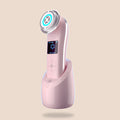
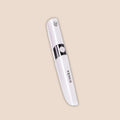
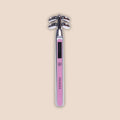
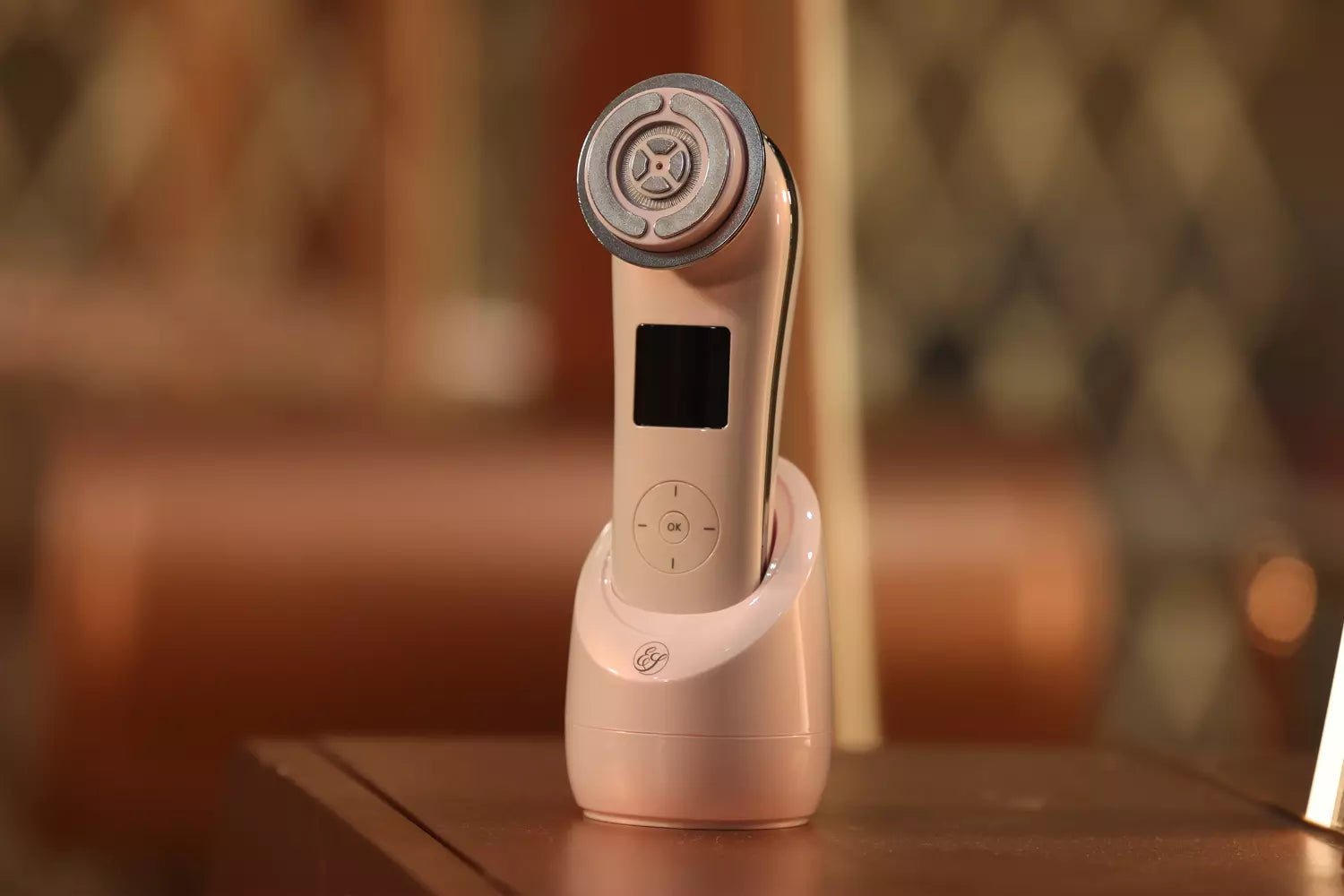
If your goal is firmness, start with a needle-free RF handset and give it twelve weeks. Ours is the EvenSkyn Lumo+ at $499.99, which combines bipolar radiofrequency at 1 MHz, EMS and red and blue light, held by a sensor at 40 to 42 degrees Celsius. What it will not do: it does not perform RF microneedling, it places nothing below the surface, and it is not designed for eyelid skin, which is what the separate Venus exists for.
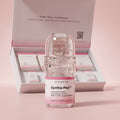
If your goal is getting actives in, radiofrequency is the wrong tool and no amount of it will help. Ours is the MicroInfuser at $189.99, a fixed and mechanically locked 0.5 mm head with a sealed single-use ampoule. What it will not do: it delivers no radiofrequency and does no thermal firming. Our guide to choosing a micro-infusion system compares it against Qure, Seranova and Glov, including where it scores worse.
If you want both, they are two devices on two schedules, not one machine. The Lumo+ and MicroInfuser duo is $589.99 against a combined MSRP of $839.98. Bought separately at today's prices you would pay $594.99, because the MicroInfuser is running its own pre-order discount until 7 September 2026; after that the separates come to $689.98. Run RF on its own schedule and micro-infusion every two weeks, leaving at least 24 hours after a micro-infusion session before any further energy treatment.
And if you have deep scarring, pronounced laxity or significant jowling, book the clinic. No at-home device closes that gap, and we would rather say so than sell you the wrong thing.
EvenSkyn makes and sells the Lumo+, the MicroInfuser and the duo. This section is a product recommendation from the brand that makes them. The comparison table above is drawn from each brand's own published information and includes competitors we do not sell. Before buying, read who should not use micro-infusion. 60-day money-back guarantee on devices; opened serum ampoules are deducted at retail value.
The product behind this page

Want the needle-free route?
The EvenSkyn Lumo+ is bipolar radiofrequency at 1 MHz with EMS and red and blue light, in one handset, sensor-held at 40 to 42 degrees Celsius. No needles, so no numbing cream and no downtime. We publish the frequency, the held temperature and what the device does not do, which is more than most of this category prints.
$499.99 · 2 year warranty · 60-day money-back guarantee on the device
What it will not do. It does not perform RF microneedling and it places nothing below the surface. It is not designed for eyelid skin; the Venus is the separate device for that. Do not use it over a pacemaker or other implanted electronic device, or during pregnancy. If you want delivery rather than firming, the MicroInfuser is the other half of the answer, and the duo pairs them at $589.99.
Questions people actually ask
Can you do RF microneedling at home? No. The needle-plus-RF combination is a clinic procedure, and in October 2025 the FDA stated in writing that these devices should not be used at home.1 What you can do at home is needle-free radiofrequency, or needle-based micro-infusion without radiofrequency.
Is there an at-home Morpheus8? No. Morpheus8 is a professional system cleared for use by trained operators.5 Consumer machines advertising the same capability are professional-grade units sold into the consumer channel, priced between about $1,200 and $1,700, and they sit inside the category the FDA warned about. The honest at-home alternative path, and exactly what it can and cannot match, is mapped in our Morpheus8-at-home comparison.
What about the kits that pair an RF device with microneedle patches? They are real products and they are not RF microneedling. CurrentBody sells an RF handset with dissolving microneedle patches; the RF and the needles are used separately and the needles carry no radiofrequency.
How long before anything shows? The published home-RF trials run on 12-week timelines, and the one randomised split-face study found skin-thickness change from week 4 with wrinkle-roughness change measurable throughout.2 If you stop at four weeks you have not tested it.
Does an at-home RF device hurt or need numbing? No. There are no needles, so there is nothing to numb. The sensation is warmth. That is the entire point of the needle-free trade.
Is at-home radiofrequency safe? Needle-free RF does not involve the sub-surface needle penetration those FDA reports describe. That is not the same as risk-free: any device that heats tissue can burn it if misused, which is why a held temperature and a hard cut-off matter. It is still not for everyone: do not use it over a pacemaker or implanted electronic device, or during pregnancy, and speak to a doctor first if you are unsure.
Can I use RF and micro-infusion together? On separate days. Energy first, delivery second, and at least 24 hours after a micro-infusion session before further radiofrequency, ultrasound or EMS. They are complementary schedules, not a combined treatment.
Do the cheap RF devices work? We cannot tell you, and neither can they. The honest test is whether a brand publishes what its device actually does: frequency, temperature range, whether a sensor holds that temperature. Most in that segment do not.
Why do plastic surgeons and the FDA warn about RF microneedling? Because the procedure's safety depends on operator control. The FDA's October 2025 communication describes reports of burns, scarring and nerve injury associated with certain uses of RF microneedling devices, and the variables behind those outcomes, needle depth, energy level, placement over nerves, are exactly the ones a trained operator manages in a clinic.1 That is the reason the procedure is clinic-only, and the reason needle-free home RF, which never puts energy below the surface, sits in a different risk class.
References
- US Food and Drug Administration. Potential Risks with Certain Uses of Radiofrequency (RF) Microneedling: FDA Safety Communication. 15 October 2025. fda.gov
- Shu X, Wan R, Huo W, Li Z, Zou L, Tang Y, Li L, Wang X. Effectiveness of a Radiofrequency Device for Rejuvenation of Aged Skin at Home: A Randomized Split-Face Clinical Trial. Dermatology and Therapy 2022;12:871-883. doi:10.1007/s13555-022-00697-y. The journal Rapid Service Fee was supported by Ecolite Wellbeing (GD) Co., Ltd., which also supplied the devices.
- Bu P, et al. Development of Home Beauty Devices for Facial Rejuvenation: Establishment of Efficacy Evaluation System. Clinical, Cosmetic and Investigational Dermatology 2024;17:553-563. 18 studies, of which 5 were randomised controlled trials; longest follow-up 12 weeks.
- Nguyen HX, Nguyen CN. Microneedle-mediated transdermal delivery of biopharmaceuticals. Pharmaceutics 2023;15(1):277. doi:10.3390/pharmaceutics15010277
- InMode. Morpheus8 receives FDA clearance for soft tissue contraction in fractional radiofrequency microneedling. Company announcement, 19 July 2024.
- Arora G. Polynucleotides and polydeoxyribonucleotides in dermatology: a narrative review. Journal of Cutaneous and Aesthetic Surgery 2026;19(1):17-28. doi:10.25259/JCAS_65_2025
This guide is for information and is not medical advice. Consult a qualified healthcare professional before starting any device-based treatment, particularly if you are pregnant or breastfeeding, have an implanted electronic device, or have a history of keloid scarring. EvenSkyn devices are cosmetic devices. They are not medical devices, they are not FDA-cleared, and they are not intended to diagnose, treat, cure or prevent any disease or condition. Product specifications and prices are accurate at the time of writing and may change; verify current details on each product page. Competitor information is drawn from each brand's own published material as at August 2026.


Leave a comment
All comments are moderated before being published.
This site is protected by hCaptcha and the hCaptcha Privacy Policy and Terms of Service apply.