
Medically Reviewed by Dr. Lisa Hartford, MD
Red light therapy has become one of those wellness categories where the hype, the science, and the product marketing are all telling you different things — loudly, and at the same time. Walk through the claims and you'll find everything from "it reverses aging" to "it's a placebo with a plug." Neither extreme is true.
The truth is more useful. Red light therapy is one of a small number of at-home modalities that actually has peer-reviewed clinical evidence behind it — for specific skin outcomes, at specific wavelengths, at specific doses, used with specific consistency. Get those four variables right and it works. Get any of them wrong and it doesn't. That's it. That's the whole story the $5-billion at-home red light category tries very hard not to tell you cleanly.
This guide is written as the version of the explanation I'd want if I were a smart 40-something shopper looking at this category for the first time and trying to figure out what's real, what's not, what to buy, and how to actually use it to get results.
- Red light therapy (red + near-infrared LED, roughly 630–850nm) has legitimate clinical evidence for collagen production, fine line reduction, skin tone improvement, and inflammation control.
- It does not produce the same structural tightening as radiofrequency. For loose skin, sagging, or significant laxity, red light alone is not enough — but red light combined with RF is more effective than RF alone.
- Effective dosing is roughly 10–20 minutes per area, 3–5 times per week, for at least 8–12 weeks before judging results. Most people quit too early.
- The differences between home panels, handheld devices, and masks are real but often over-stated in marketing. The biggest determinant of results is consistency, not gadget choice.
- The strongest at-home protocol for women over 40 combines red light with RF and microcurrent — each addresses a different layer of the skin, and their effects compound.
What Red Light Therapy Actually Is (And Isn't)
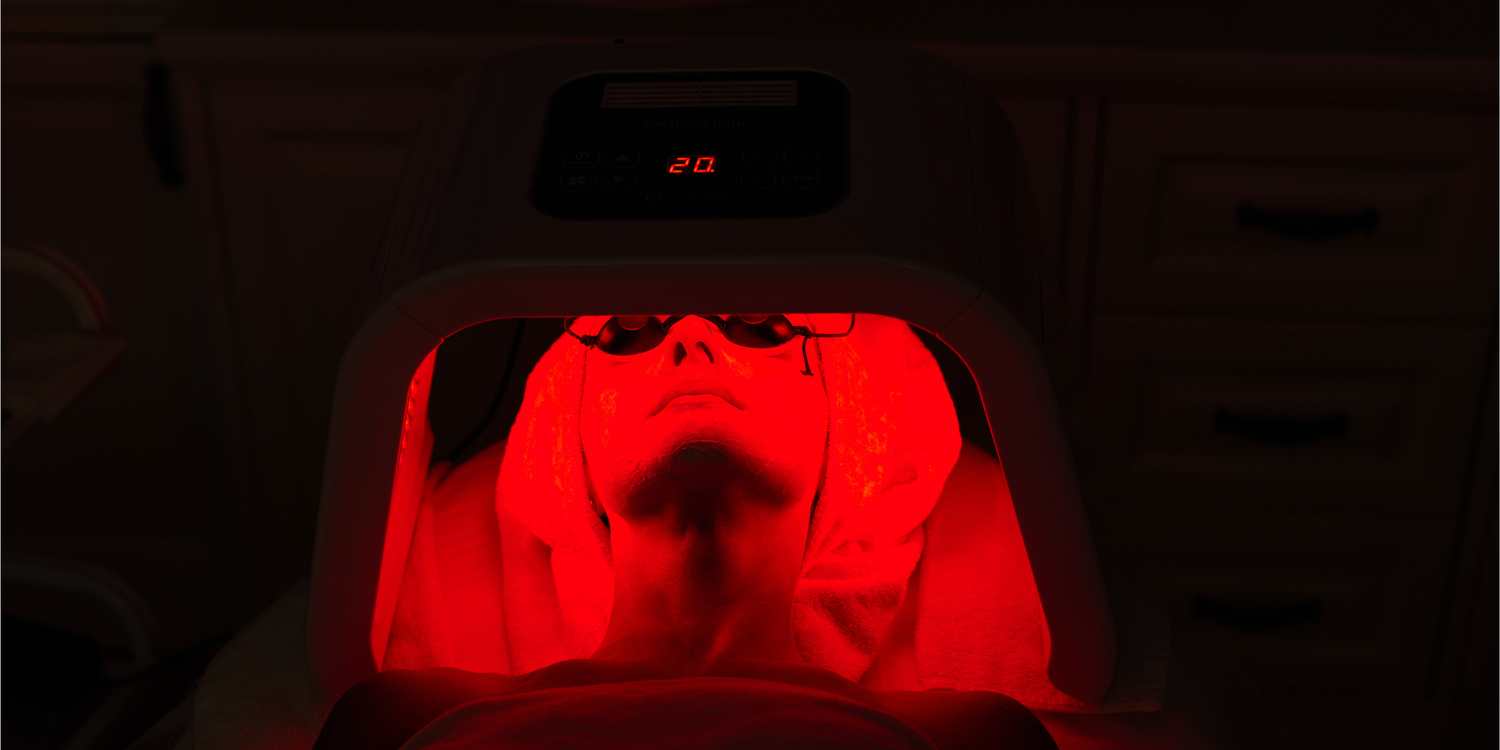
Red light therapy — sometimes sold as photobiomodulation, LLLT, or low-level light therapy — uses specific wavelengths of visible red and near-infrared light to stimulate cellular activity in the skin. It is not a laser. It is not UV. It does not burn, tan, or damage tissue. The mechanism is non-thermal: the light is absorbed by a molecule in your cells' mitochondria called cytochrome c oxidase, which responds by increasing ATP (cellular energy) production.
That's the whole core mechanism. Everything downstream — better wound healing, improved collagen production, reduced inflammation, faster cellular turnover — flows from the fact that cells with more available energy do their jobs more efficiently.
A few things red light therapy is not:
- Not a laser. Lasers deliver coherent, focused light at much higher intensities. Red light panels and masks deliver diffuse, low-intensity LED light.
- Not infrared sauna. Saunas heat tissue. Red light therapy specifically does not — if a device is getting your skin hot, it's running the wrong spectrum or running too long.
- Not radiofrequency. RF uses electrical current to thermally stimulate the dermis at depth. Red light uses visible/near-infrared photons to support cellular function at shallower depths. These are different tools for different layers.
- Not a miracle. Every claim in this guide comes with a conditional. The biology is real, but the effect sizes are moderate, not dramatic. Skepticism here is healthy.
The Wavelengths That Matter
This is the most misunderstood part of the category, and it's where most consumer confusion originates. "Red light" is a loose term that covers a range of wavelengths, and the specific nanometer range matters enormously for what you're going to achieve.
| Wavelength | What it's called | Where it penetrates | What it does |
|---|---|---|---|
| 415nm (blue) | Visible blue | Surface (epidermis) | Antibacterial (acne) |
| 630–660nm | Red | Upper dermis (~2–3mm) | Collagen synthesis, wrinkle reduction, skin tone |
| 810–850nm | Near-infrared (NIR) | Deep dermis and beyond (~5–10mm) | Muscle recovery, deeper tissue healing, joint pain |
For skin outcomes, you want a device that delivers red light in the 630–660nm range at minimum. Near-infrared (810–850nm) is a meaningful bonus for deeper effects, particularly around muscle and joint recovery, but it's not essential for face.
What you should not buy: a device that simply advertises "red light" without specifying the wavelength. That's either a marketing shortcut or a cheaper product using a less effective spectrum. Always look for the nanometer value on the product page.
What Red Light Therapy Can Actually Do for Your Skin
Here is the honest, evidence-ranked list. I'm dividing it into things the evidence supports clearly, things the evidence supports modestly, and things the evidence does not yet support.
Well-supported by clinical evidence
- Increased collagen production and reduced fine lines. Multiple randomised controlled trials show measurable increases in collagen density and measurable reductions in fine line depth after 8–12 weeks of consistent use. The mechanism is upregulated fibroblast activity via photobiomodulation of cytochrome c oxidase.
- Improved skin tone and reduced redness. Red light has genuine anti-inflammatory effects. Users with rosacea, persistent post-inflammatory redness, or general tonal unevenness tend to see improvement within the first 4–6 weeks.
- Suppression of matrix metalloproteinases (MMPs). This is the quieter, more important benefit for women over 40. MMPs are the enzymes that break collagen down. Estrogen decline in perimenopause and menopause makes these enzymes relatively more active. Red light therapy has been shown to suppress MMP activity, which means it isn't only supporting new collagen synthesis — it's also slowing the rate at which existing collagen is degraded.
- Mild wrinkle reduction, particularly around the eyes and mouth. Measurable improvements in smile lines and crow's feet are among the most consistently documented effects.
- Improved wound healing and post-procedure recovery. Red light accelerates recovery after microneedling, chemical peels, and laser treatments — which is why many clinical dermatology practices use it as an adjunct.
Modestly supported
- Acne improvement. Blue light (415nm) kills P. acnes bacteria; red light reduces inflammation. Combined blue+red devices have moderate evidence for mild-to-moderate inflammatory acne. Not a replacement for prescription treatment for severe cases.
- Some improvement in skin firmness and early laxity. Red light can produce modest improvement in skin firmness, but it is not the right primary tool for advanced sagging — see the loose skin section below.
- Reduced appearance of age spots over long-term use. Slow, gradual effect.
Not well supported (or overclaimed)
- Dramatic skin tightening of significant laxity. Red light alone will not lift a jowl, reverse significant sagging, or substantially restructure a dermis that has lost 30%+ of its collagen. For this, you need thermal stimulation — i.e. RF.
- Weight loss or body contouring from red light alone. Some devices claim this; the evidence is weak and the effect sizes are small.
- Hair regrowth for late-stage pattern baldness. Modest evidence for early-stage androgenic alopecia; diminishing evidence as hair loss progresses.
Does Red Light Therapy Tighten Skin?
This is one of the most-searched questions in the category, and it deserves a direct answer: partially — and not as much as radiofrequency.
Red light supports collagen production and slows collagen breakdown. Over months, that translates into improved skin quality, better tone, and a modest improvement in firmness. This is real. It is not dramatic.
What red light does not do is produce the acute thermal response that drives RF's tightening effect. RF heats the dermis to 40–45°C, which causes immediate collagen fibre contraction (the source of short-term tightening) and triggers a wound-healing response that drives fibroblast proliferation (the source of long-term remodelling). Red light has no equivalent mechanism. It's a supportive, low-dose cellular intervention — not a thermal structural one.
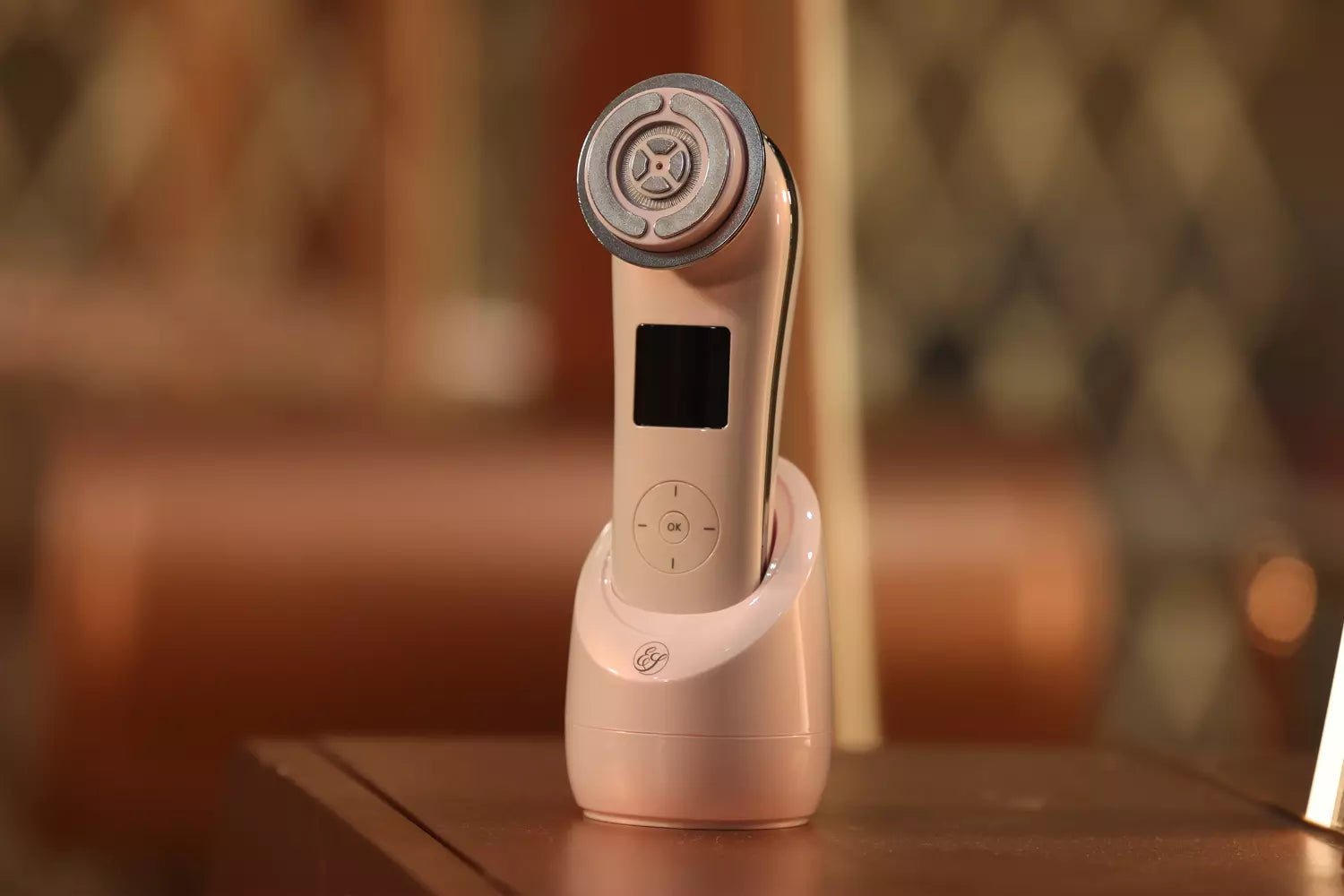
The practical implication for loose skin, sagging, and significant laxity: red light alone is not the right tool. You want RF as the primary modality, with red light as a powerful supporting treatment. Devices like the EvenSkyn Lumo combine both in a single unit for exactly this reason — RF thermally stimulates collagen remodelling at depth, and the red light (630–660nm) suppresses the MMP enzymes that break collagen down, supports fibroblast activity, and shortens the inflammation-to-repair cycle after each session.
For more on why the combination matters specifically, see our comparison of RF and red light therapy.
Red Light for Specific Areas
Red light therapy for the neck
The neck is one of the most requested applications and one of the most honestly responsive zones. Skin here is thinner than on the face, shows aging earlier, and is frequently neglected in skincare routines. Red light in the 630–660nm range produces measurable improvement in texture, tone, and fine lines over 8–12 weeks of consistent use.
For the neck specifically, we recommend pairing red light with targeted thermal treatment — red light alone improves surface tone and texture, but meaningful neck tightening requires RF. Our full guide on red light therapy for neck and chest tightening walks through the protocol.
Red light therapy for smile lines and crow's feet
Periorbital and perioral areas are where red light tends to produce the most visible fine-line improvement in the shortest time — possibly because the skin here is thinner and the light penetrates more efficiently. 4–6 weeks of consistent use typically shows measurable softening of fine lines.
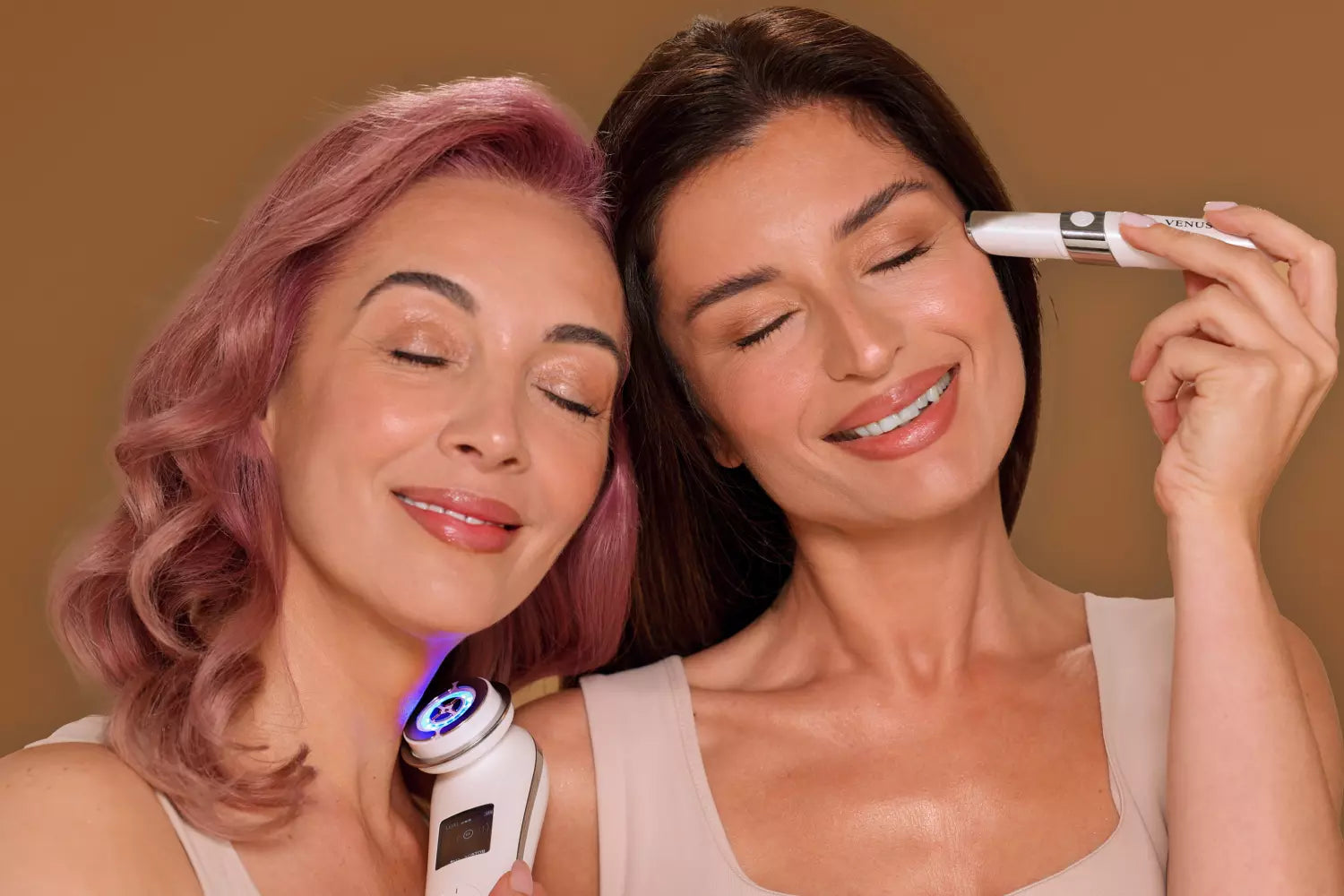
For the eye area specifically, standard face-sized devices often aren't ideal — the anatomy of the orbital bone and the delicacy of periorbital tissue benefits from a device purpose-built for the zone. The EvenSkyn Venus is engineered for this application specifically.
Red light therapy for loose skin on the body
Above the neck, red light can meaningfully support skin quality. On the body — for abdomen after weight loss, post-pregnancy laxity, knee and elbow skin — the evidence is weaker. Body skin is thicker, the energy requirements are higher, and red light alone rarely produces the degree of tightening people are looking for. For significant body laxity, thermal modalities (RF or ultrasound) remain the appropriate primary tools. Red light is a supportive addition, not the main intervention.
Red light therapy during pregnancy
The honest answer: there is no strong evidence of harm, but there is also no large-scale safety data. Most device manufacturers (including EvenSkyn) list pregnancy as a contraindication out of caution. If you are pregnant or breastfeeding, do not use red light therapy without consulting your healthcare provider.
Red Light vs. Other At-Home Technologies
Most of the confusion in this category is because people are comparing tools that work on completely different layers of the skin. Here's the clearest version of how the modalities relate:
| Modality | Layer it treats | Primary mechanism | Best for |
|---|---|---|---|
| Red light | Cellular (mitochondrial), upper dermis | Photobiomodulation, MMP suppression | Tone, texture, fine lines, inflammation, collagen support |
| Radiofrequency (RF) | Mid-to-deep dermis | Thermal collagen remodelling | Laxity, loss of firmness, structural tightening |
| Microcurrent | Facial muscles | Low-level electrical signal | Muscle tone, jawline lift, contour |
| Ultrasound (HIFU) | Deep dermis and SMAS | High-intensity thermal | Significant laxity, deeper structural change |
| Botox | Motor nerves | Neurotoxin / muscle paralysis | Dynamic wrinkles (masking only) |
These are not competitors — they're complements. The strongest at-home routines for women over 40 combine red light, RF, and microcurrent because they treat three different layers of the same anatomy.
Red light vs radio frequency
Different tools, different jobs. RF is the structural tool — it uses heat to remodel the dermal scaffolding. Red light is the cellular support tool — it optimises the environment in which fibroblasts do their work. In clinical research, devices that combine both consistently outperform single-modality devices because the combination addresses collagen from two angles at once.
Red light vs microcurrent
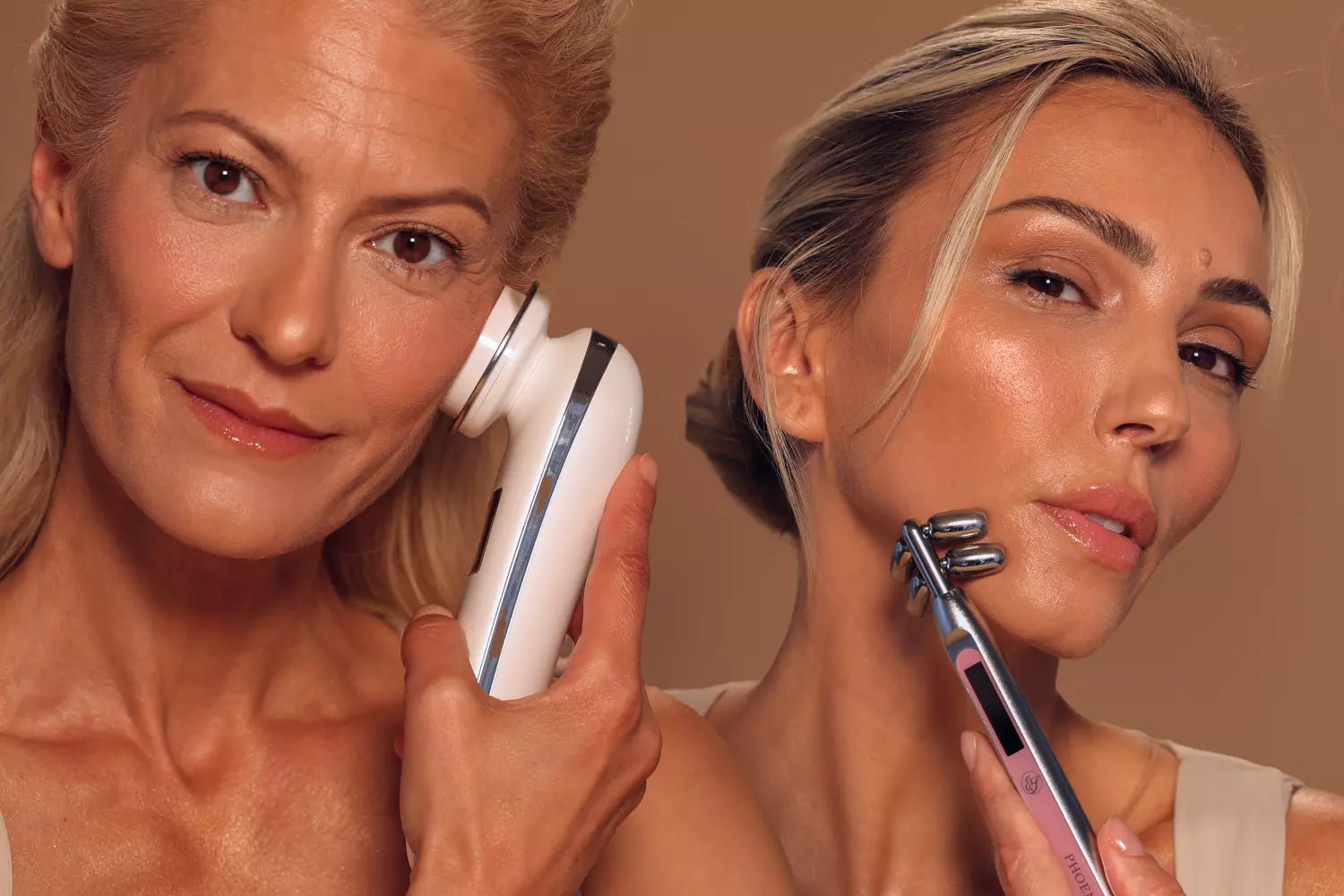
Completely different layers. Red light works on cellular function in the skin. Microcurrent works on muscle tone in the facial muscles beneath the skin. If your primary concern is fine lines, tone, and skin quality, red light is more directly relevant. If your primary concern is jawline definition and mid-face lift, microcurrent is. Most people over 40 benefit from both. For a side-by-side, see our microcurrent vs red light therapy breakdown.
Red light vs Botox
Different categories entirely. Botox paralyses small muscles to mask dynamic wrinkles; red light supports collagen and cellular function to improve skin quality. Many women over 40 find that a consistent red light + RF protocol reduces their perceived need for Botox — not because it replaces the mechanism, but because the underlying skin improvement makes the residual lines feel less urgent. They are not interchangeable, but they serve overlapping goals.
How to Actually Use Red Light Therapy at Home
Five variables determine whether red light therapy works for you. Every failed protocol is failing on one of these.
1. Wavelength. 630–660nm for face/skin outcomes, with 810–850nm as a bonus for deeper effects. Devices that don't specify their wavelength are usually avoiding the question.
2. Irradiance (power density). This is measured in mW/cm². Higher irradiance means shorter sessions needed for the same effective dose. Home panels typically deliver 30–100 mW/cm² at the skin surface. If a device doesn't list this, be skeptical.
3. Dose. The useful effective dose for skin applications is roughly 3–10 J/cm² per session. Below that, you're underdosing and will see no effect. Above it, you waste time without added benefit (and at very high doses, you can actually trigger a biphasic response where more is less). Most home devices are calibrated for this range with sessions of 10–20 minutes.
4. Frequency. 3–5 sessions per week. Fewer than 3 and you lose the cumulative effect; more than 5 does not add benefit and can cause the biphasic diminishing return mentioned above.
5. Consistency. The single biggest determinant of results. An 8–12 week commitment is the minimum for collagen-related changes to appear. Skin tone improvements come faster (3–4 weeks); structural changes come slower.
The Protocol
| Week | Frequency | Duration per session | What to expect |
|---|---|---|---|
| 1–4 | 3–4x/week | 10–15 min | Initial tone and radiance improvements, reduced redness |
| 4–8 | 3–4x/week | 10–15 min | Fine line softening begins, texture improves |
| 8–12 | 3x/week | 10–15 min | Collagen remodelling becomes visible, measurable firmness gains |
| 12+ | 2–3x/week maintenance | 10–15 min | Results continue to compound; maintenance mode |
For combination devices that deliver RF + red light together (like the Lumo), treat the red light component as built-in — each RF session delivers simultaneous photobiomodulation, which is the most efficient way to run both protocols.
How to Choose a Red Light Device
There are four form factors on the market. Each has real tradeoffs.
Full-body panels. Largest treatment area, most expensive ($500–$3,000+). Appropriate if you want whole-body benefits (recovery, sleep, general wellness) in addition to skin. Overkill if your goal is specifically facial skin.
Face masks. Mid-range ($200–$600). Convenient, hands-free, sit-and-do-it-while-reading. Downsides: fixed distance to skin (usually too far for optimal irradiance), often lower power than panels, and almost none of them combine red light with other modalities.
Handheld devices (red light only). Smaller treatment head, higher precision. Good for targeted use. Typically $100–$400. Requires more active engagement — you hold the device against your skin for the session.
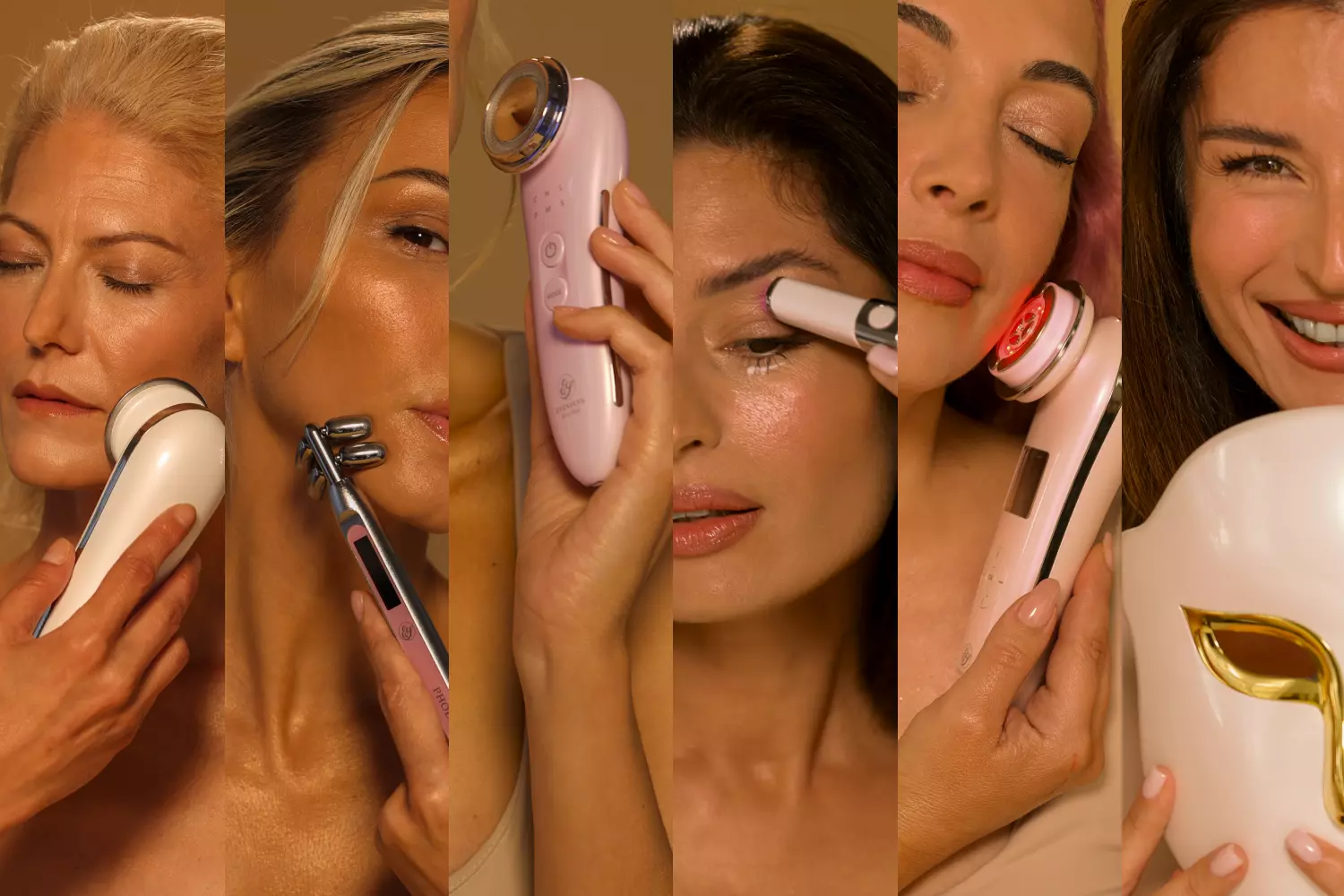
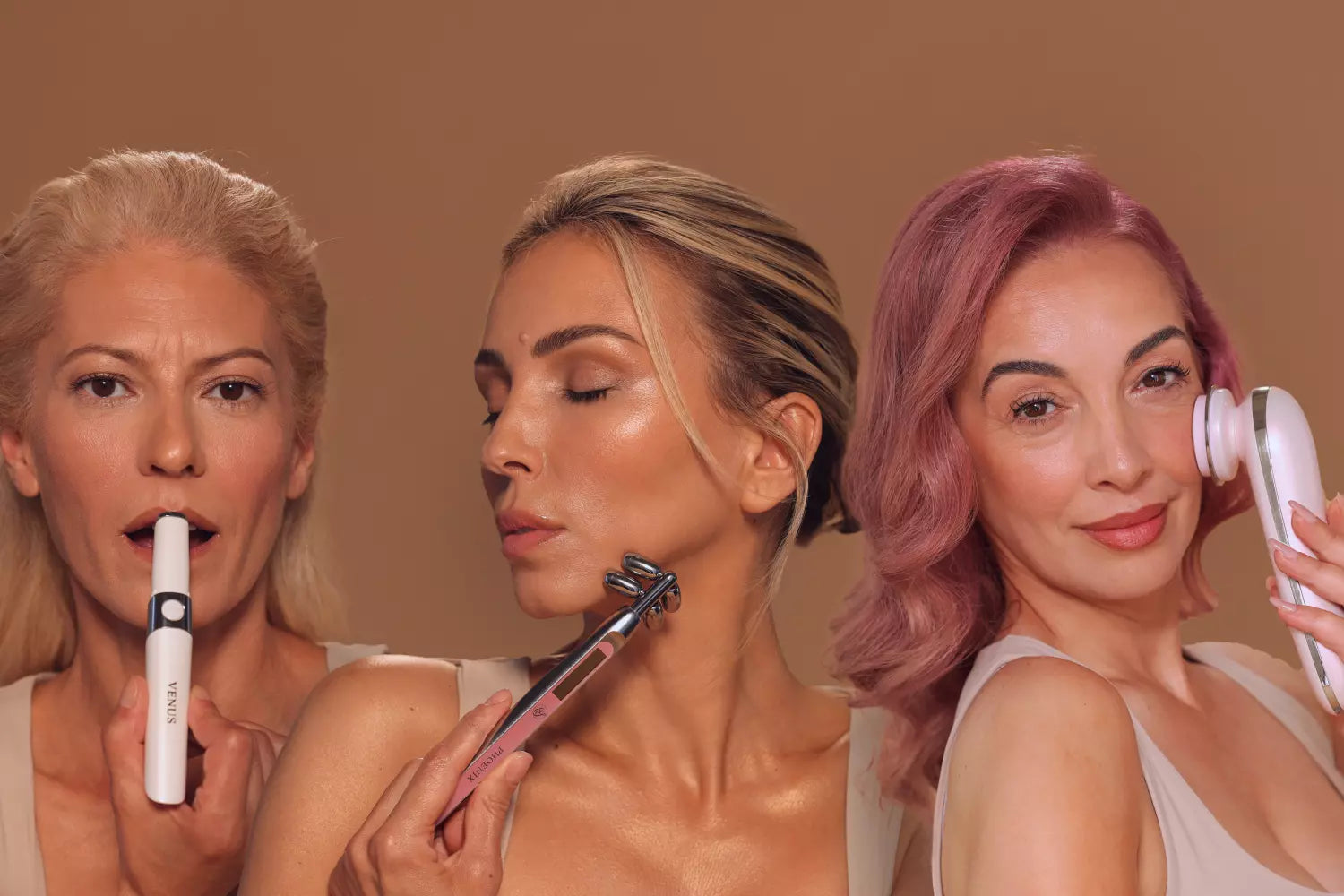
Combination devices (red light + RF + microcurrent). This is where the category has matured. Devices like the EvenSkyn Lumo deliver red light alongside RF thermal stimulation and EMS in a single handheld unit. The advantage is that the modalities compound rather than running in isolation — you get the structural benefits of RF, the muscular benefits of EMS, and the cellular support of red light in the same session. For women over 40 whose goals are skin firmness and quality (not just surface tone), these integrated devices tend to produce better results than a standalone red light mask.
What to Look For on a Spec Sheet
- Wavelengths specified in nanometers (630–660nm minimum; NIR at 810–850nm is a bonus)
- Irradiance at skin surface in mW/cm² (not at the LED face — marketing often confuses these)
- FDA clearance or CE mark for the device class
- Replaceable or user-safe treatment head for hygiene
- Session timer so you don't overdose
- Clear contraindication list — a manufacturer that can't list these usually hasn't done the safety work
Red Flags
- "Red light therapy" with no specified wavelength
- Claims of medical-grade power with no FDA clearance
- Before/after images with inconsistent lighting, makeup, or camera angle
- Any claim of results in "days" — biology doesn't work that way
- $30 masks on Amazon with no manufacturer information
Common Mistakes That Prevent Results
- Quitting at week 4. Collagen takes 8–12 weeks to show measurable change. Almost everyone who says "red light didn't work for me" stopped before the biology could respond.
- Inconsistent sessions. Once a week doesn't produce the cumulative effect. 3× weekly minimum.
- Underdosing. Holding the device too far from the skin (for handhelds) or using too-short sessions means the tissue doesn't receive enough photons.
- Overdosing. More is not better. Daily 45-minute sessions can trigger the biphasic response and actually reduce benefit.
- Using red light alone for significant laxity. Wrong tool for the job. For loose skin, pair with RF or choose a combination device.
- Expecting Botox-level wrinkle reduction. Red light reduces fine lines modestly. It does not paralyse the muscles that cause dynamic lines.
- Skipping SPF. Any collagen you build with red light will be degraded by UV exposure. Non-negotiable.
What Results Actually Look Like
Honest expectations matter more in this category than almost any other, because the online reviews are a mix of over-claims and disappointment from people who quit too early.
- Weeks 1–3: Subtle improvement in radiance and skin tone. Reduced redness. You might notice this first in photographs rather than the mirror.
- Weeks 3–6: Texture improvement. Makeup sits better. Skin feels more resilient. Fine lines may start to look softer around the eyes.
- Weeks 6–12: Measurable collagen response. This is where the clinical studies are reporting statistically significant results. Fine lines soften more visibly; firmness improves modestly.
- Months 3–6: Compounding effect. Skin quality reaches a new baseline. Friends may start noticing.
- Year 1+: Long-term slowing of visible aging trajectory, particularly if paired with RF and microcurrent.
If you're expecting a dramatic transformation in two weeks, red light therapy will disappoint you. If you're expecting compounding improvements over a year, it will reward you.
Frequently Asked Questions
Does red light therapy really work at home?
Yes, for specific applications. Home red light devices using 630–660nm (red) and optionally 810–850nm (near-infrared), used at 3–5 sessions per week for 10–20 minutes, produce measurable improvements in fine lines, skin tone, collagen density, and inflammation over 8–12 weeks of consistent use. They do not produce dramatic structural tightening — that requires RF.
How long does red light therapy take to work on skin?
Skin tone and radiance improvements appear in 2–4 weeks. Texture changes in 4–6 weeks. Collagen-mediated changes (fine line reduction, firmness improvement) require 8–12 weeks of consistent use before judging results.
Can red light therapy tighten loose skin?
Partially. Red light supports collagen production and slows collagen breakdown, which over months improves skin firmness modestly. For significant laxity or loose skin, red light alone is not enough — you need the thermal stimulation of radiofrequency. The strongest approach combines both.
Is at-home red light as effective as in-office treatments?
For skin outcomes, reasonably close — as long as the home device uses correct wavelengths and adequate irradiance. In-office treatments often use higher-powered systems that deliver more joules per session, but home devices compensate with much higher session frequency. Cumulative dose is what matters, and a home user treating 3× weekly accumulates far more exposure over a year than a clinic patient treating monthly.
Can I use red light therapy every day?
You can, but you don't need to, and high daily doses can actually reduce benefit via the biphasic response. 3–5 sessions per week is the evidence-backed optimum.
Does red light therapy have side effects?
Mild and rare. Occasional temporary eye strain if you don't wear provided goggles or close your eyes. Very rare skin irritation in sensitive users. No known long-term adverse effects at recommended doses. Unlike UV, red light does not cause photoaging, cancer, or tanning.
Can I combine red light therapy with retinol, vitamin C, or other actives?
Yes. Red light does not interact negatively with topical actives. Many users apply serums immediately after sessions, since red light can mildly increase cellular uptake.
Can I use red light if I'm on HRT or estrogen replacement?
Yes. Red light therapy and hormone replacement work via completely different mechanisms and are fully compatible. Many women in perimenopause or menopause find they see faster results from red light when combined with HRT, because the underlying fibroblast environment is supported from both directions.
Does red light therapy help with smile lines?
Yes — perioral and periorbital fine lines are among the areas most consistently responsive to red light therapy. Expect measurable softening in 4–8 weeks of consistent use.
Is red light therapy safe during pregnancy?
There is no strong evidence of harm, but also no large-scale safety data. Most manufacturers list pregnancy as a contraindication. Consult your healthcare provider before using during pregnancy or breastfeeding.
Can red light therapy replace Botox?
Not directly — they work via different mechanisms. Red light improves collagen and skin quality; Botox paralyses expression muscles. Many women find that improved skin quality from red light + RF reduces their perceived need for Botox, but the tools address different concerns.
What's better, a red light mask or a panel?
Depends on your goal. Panels offer larger treatment areas and are better for whole-body use. Masks offer convenience and consistent face coverage. Handheld combination devices (red light + RF + microcurrent) offer the most efficient session-per-session results for skin-specific goals. None is universally "best" — the right choice depends on your use case and whether you're treating one layer or multiple.
If I can only buy one device, should I get red light or RF?
For women over 40 whose primary concern is firmness, laxity, or loss of structural support, a combined RF + red light device is the single highest-value choice — it addresses the structural (RF) and cellular (red light) mechanisms of skin aging in one session. Standalone red light is a reasonable choice if your concern is purely tone, texture, and early fine lines without significant laxity.
EvenSkyn devices are designed for at-home use by adults. If you have active implants (pacemakers, defibrillators), a history of photosensitivity conditions, are on photosensitising medications, or are pregnant or breastfeeding, consult a healthcare professional before use. This article is informational and does not constitute medical advice.



Leave a comment
All comments are moderated before being published.
This site is protected by hCaptcha and the hCaptcha Privacy Policy and Terms of Service apply.