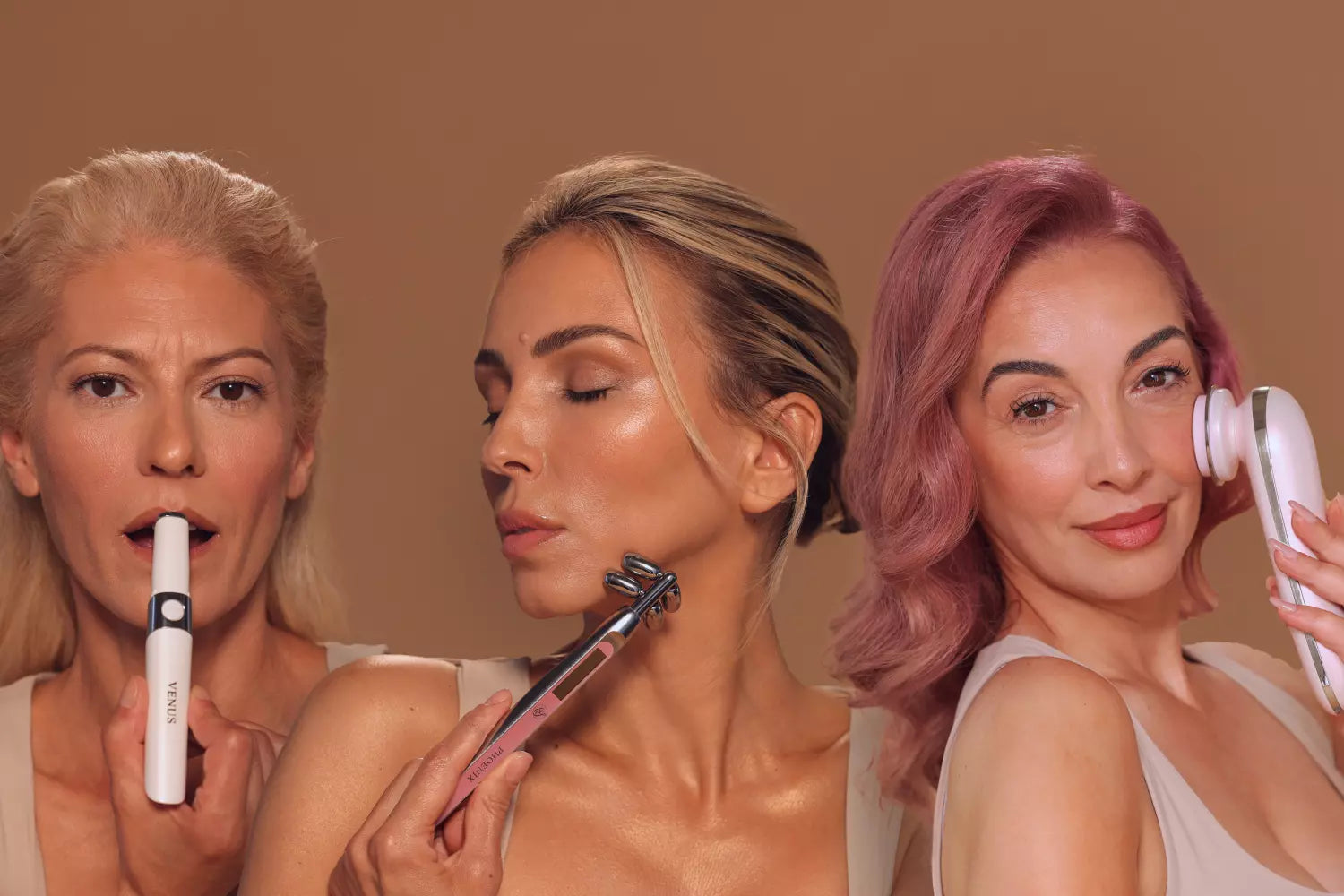
At-Home Skin Tightening: The Complete Guide

EvenSkyn Field Guide / Skin Tightening

At-Home Skin Tightening, by Depth.

Four energy types, each reaching a different layer of skin. Once you know which layer your concern lives in, the right device becomes obvious.

Medically reviewed by Dr. Lisa Hartford, MD, Chief Dermatology Advisor Last reviewed June 2026
EPIDERMIS DERMIS (collagen, elastin) HYPODERMIS MUSCLE / SMAS Red light RF Ultrasound Microcurrent
Approximate reach of each modality, drawn for orientation rather than to clinical scale. Red light and radiofrequency work mainly in the dermis where collagen and elastin sit. Ultrasound carries energy deeper. Microcurrent and EMS target the muscle layer that gives the face its contour.

The honest summary

What at-home skin tightening can and cannot do

Can

Used consistently for at least eight to twelve weeks, at-home energy devices can support the look of firmer, smoother, more lifted skin and softer fine lines by encouraging the skin's own collagen activity. The gains build slowly and are maintained with ongoing use.

Cannot

They do not replicate surgery, injectables, or a single in-clinic energy session, and they will not remove significant excess skin. Anyone promising an overnight facelift from a handset is overselling. Realistic expectations are what make these tools worth the routine.

Start here

Find your starting modality

Pick the concern that bothers you most. This points you to the modality that suits it, the EvenSkyn device built for that job, and the guides that go deeper. It is a starting map, not medical advice.

The four energy types

How each modality works, and where it reaches

Most at-home tightening confusion comes from treating these as interchangeable. They are not. Each one targets a different layer and a different mechanism, which is why the best routines often combine two of them rather than relying on one.

01 / Radiofrequency

reaches the dermis

Radiofrequency (RF)

Radiofrequency sends a high frequency current through the skin. The skin's resistance to that current produces controlled heat in the dermis, the layer where collagen and elastin live. That warmth is what prompts the look of firmer, tighter skin over a course of sessions. RF is the modality most associated with clinic skin tightening, and the one most at-home brands build their flagship around.

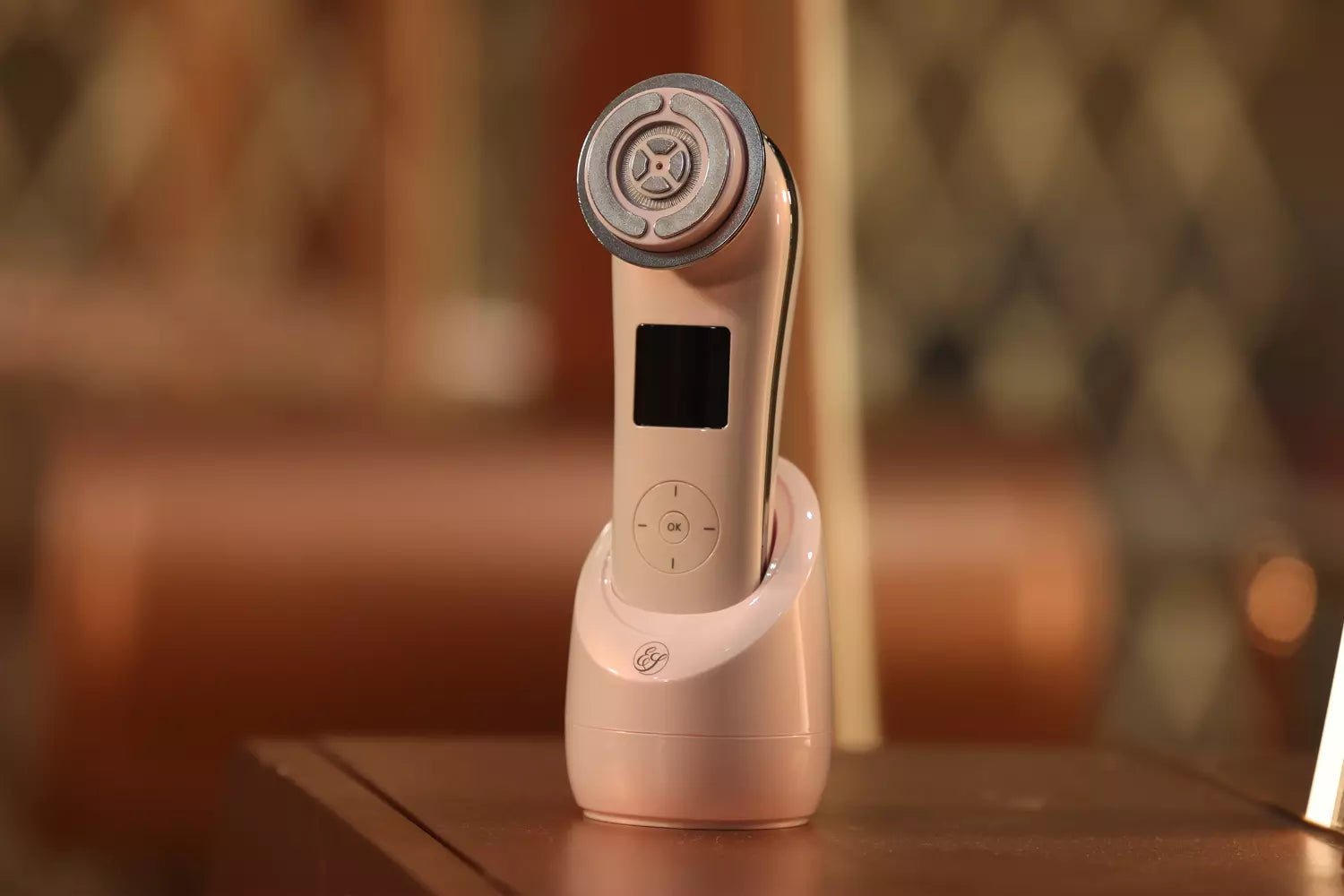
EvenSkyn Lumo+ pairs 1 MHz bipolar RF with a two-tier heating approach, plus EMS-based microcurrent and red light in one handset, so a single tool covers warmth, stimulation, and light. It is built for the face, jaw, and neck, and is not used around the eyes.

02 / Red light

surface to mid dermis

Red light therapy (RLT)

Red and near infrared light is absorbed by the skin and is understood to support cellular activity and the skin's own collagen processes, without heat and without current. It is the gentlest of the four, which makes it easy to use often and easy to layer with everything else. Results are gradual and depend on wavelength, consistency, and time on skin.

EvenSkyn Mirage is a multi wavelength LED phototherapy mask for hands free, full face sessions. Because light layers well with other modalities, many people run a light session on the days they are not doing RF.

03 / Ultrasound

dermis and below

Ultrasound

Ultrasound uses sound waves above the range of hearing. In at-home tools it serves two different jobs depending on frequency: gentle cleansing and product penetration at the surface, and deeper warming aimed at the layers that influence firmness. It is often the modality people understand least, which is why the guides below separate the cleansing tools from the tightening claims.

EvenSkyn Eclipse combines ultrasound with microcurrent and red light in one facial device, and EvenSkyn Cosmo is the dedicated ultrasonic tool for cleansing and prep.

04 / Microcurrent and EMS

reaches the muscle layer

Microcurrent and EMS

These work on the facial muscles rather than the dermis, using low level electrical signals to encourage tone and the look of a lift. There is a real distinction worth knowing: true microcurrent runs at very low intensity, while EMS uses stronger pulses to contract muscle more noticeably. Plenty of devices marketed as microcurrent are mechanically EMS, so it pays to read the spec, not the label.

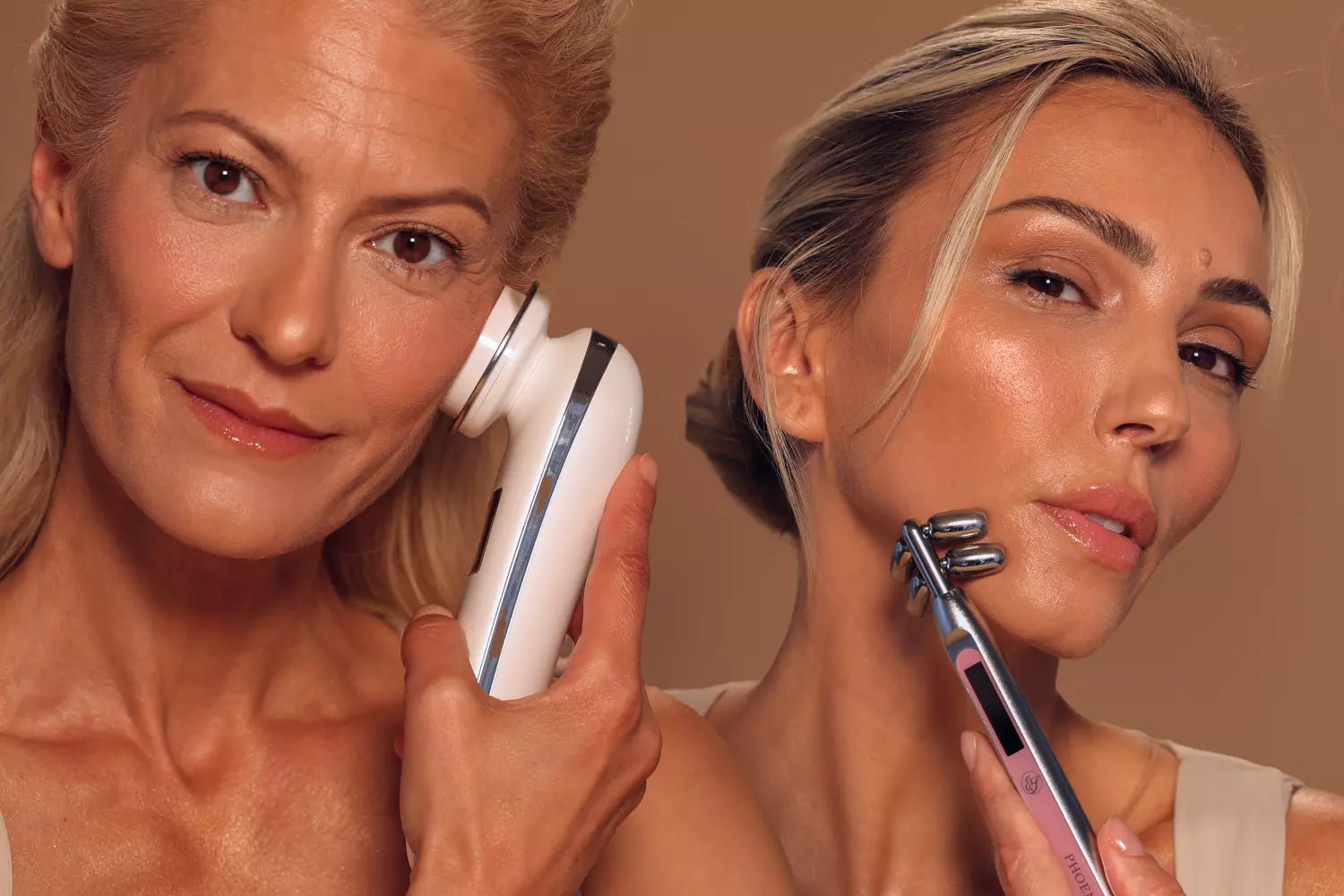
EvenSkyn Phoenix is a true microcurrent bar for daily toning, while the EMS based stimulation inside Lumo+ and Eclipse delivers a stronger contraction. For the eye area specifically, EvenSkyn Venus is the device designed for that delicate zone.

05 / Microneedling and micro-infusion

creates micro channels

Microneedling and micro-infusion

This category works differently from the energy modalities. Very fine needles create temporary micro channels in the skin to prompt a repair response and, in micro-infusion, to help deliver active ingredients. It carries more aftercare and timing rules than the others, which is exactly why we built a tool to handle the scheduling.

EvenSkyn MicroInfuser brings micro-infusion home and joins the lineup in July 2026. Until then, the comparison guide below covers where micro-infusion fits, and the timing checker helps you plan safely around other treatments.

The EvenSkyn lineup

Which device does what

Every EvenSkyn tool maps to a layer and a job. Use this to match a device to the modality you settled on above.

Device Modalities Built for Treatment area
Lumo+ RF, EMS microcurrent, red light All in one firming and the look of lift Face, jaw, neck (not eyes)
Eclipse Ultrasound, microcurrent, red light Multi modality toning and prep Face and neck
Mirage Multi wavelength LED Hands free light sessions Full face
Venus RF and sonic, eye safe design The delicate eye area Around the eyes
Phoenix True microcurrent Daily muscle toning Face and jaw

Looking for a head to head against other brands? The category is crowded, with names like CurrentBody, NuFACE, Foreo, and TriPollar each leaning on a different modality and price point. Rather than repeat their marketing, our independent 2026 RF device ranking tests them side by side, and our honest pros and cons guide covers what every at-home device can and cannot deliver.

Build your week

Sample routines that fit real life

Knowing the modality is half the job. Sequencing it across the week is the other half. These are starting templates rather than prescriptions, and the one rule that matters more than any of them is consistency across eight to twelve weeks. Always follow the guidance for your specific device.

The gentle starter

New to devices, sensitive skin

  • Mon Red light, 10 minutes
  • Wed Red light, 10 minutes
  • Fri Microcurrent, light pass
  • Sun Rest and hydrate

Start light, let skin adjust, and add intensity only once it feels comfortable.

The firmness focus

Laxity and a softening jawline

  • Mon RF on face and jaw
  • Tue Red light, 10 minutes
  • Thu RF on face and jaw
  • Fri Microcurrent toning
  • Sun Red light, 10 minutes

RF carries the work, with light and microcurrent supporting on the days in between.

The full routine

Experienced, several concerns at once

  • Mon RF, then red light
  • Tue Microcurrent, plus eye area
  • Wed Red light, neck and chest
  • Thu RF on face and jaw
  • Fri Microcurrent toning
  • Sat Red light, 10 minutes
  • Sun Rest and hydrate

Layering is fine once skin tolerates it. Build up to this rather than starting here.

Not sure which devices cover these steps? The lineup table maps each one to its job, and the modality finder points you to a starting place.

By concern

Jump straight to your goal

Questions, answered

Skin tightening FAQ

Does red light therapy actually tighten skin?

Red light does not tighten skin through heat the way radiofrequency does. Instead it is understood to support the skin's own collagen activity over time, which can contribute to the look of firmer, smoother skin with consistent use. It works best as part of a routine rather than as a single fix, and pairs well with RF or microcurrent. Our red light tightening guide goes through the detail.

What is the difference between a skin tightening machine and a facial?

A skin tightening device delivers a specific energy, such as radiofrequency, into the skin to support firmness, while a facial is a broader cleansing and care routine. The most capable at-home option is a multi modality handset like the Lumo+ skin tightening device, which combines RF, microcurrent, and red light so one tool covers several jobs.

Is ultrasound or RF better for skin tightening at home?

They reach different depths and suit different goals, so the better question is which fits your concern. Radiofrequency focuses heat in the dermis for firmness, while ultrasound can carry energy deeper or be used for surface prep, depending on the tool. The full comparison is in ultrasound vs RF.

How often should I use an at-home tightening device?

It depends on the modality. Red light can be used often, RF is typically spaced out to let skin rest, and microcurrent suits a near daily rhythm. Following the schedule matters more than going harder. See how often to use an RF device for specifics.

How long before I see results?

Plan for at least eight to twelve weeks of consistent use before judging results, since these tools work by encouraging gradual change rather than producing it instantly. The look of firmer skin builds over a course of sessions and is maintained with ongoing use.

Are at-home skin tightening devices safe?

Used as directed, at-home devices are designed for home settings and lower energy than clinic equipment, with safety features built in. Following the instructions, avoiding contraindicated areas such as the eyes for face only devices, and checking timing around other treatments all matter. Our RF safety guide and the timing checker help you treat with confidence.

The full library

Every skin tightening guide, organized

The complete cluster, grouped by modality and intent. New guides are added here as they publish.

How we got here

Our standards for this guide

Specifications

Every device detail on this page comes from EvenSkyn product manuals, not marketing copy. Where a modality is EMS rather than true microcurrent, we say so plainly.

Medical review

Content is reviewed by Dr. Lisa Hartford, MD, our Chief Dermatology Advisor, and refreshed as devices and guidance change.

Honest claims

We describe the look of the skin rather than promising clinical outcomes, and we point to our own testing rather than repeating competitor numbers.

Medically
reviewed

This hub is reviewed for accuracy by Dr. Lisa Hartford, MD, EvenSkyn's Chief Dermatology Advisor. Device mechanisms and specifications are drawn from EvenSkyn product manuals. Outcomes describe the look of the skin and depend on consistent use.

Last reviewed June 2026. EvenSkyn updates this page as devices and guidance change.

This content is educational and is not medical advice. At-home devices are not a substitute for professional treatment or for guidance from a qualified clinician, especially during pregnancy or with a medical condition or implanted device. Always follow the instructions for your specific device.