Do Under-Eye Microneedle Patches Actually Work? The Evidence, and Who They Are Not For
Dissolving hyaluronic acid microneedle patches do something real for under-eye skin: better hydration and shallower fine lines in clinical studies. They do not fill hollows, fade most dark circles or tighten loose lids. The trials, the limits and who should skip them, from the EvenSkyn Skin Science Desk.
Published
30 min read
Published by EVENSKYN, which makes and sells at-home beauty devices.
An evidence guide, 18 sources checked, updated 14 November 2026
Dissolving microneedle patches do something real for under-eye skin: in clinical studies it held more water and its fine lines measured shallower. They do not fill hollows, fade most dark circles or tighten loose lids, and the effect fades when you stop.
EvenSkyn Skin Science Desk. We make dissolving microneedle under-eye patches, and this guide recommends them for some readers. No clinician reviewed this version.
Illustrative still life.
At a glance
Do they work? For hydration and fine surface lines, yes, modestly. Seven clinical studies of dissolving microneedle patches around the eyes reported better hydration, smoother skin or shallower fine lines: after a single patch for hydration, and after 4 to 12 weeks of repeated use for wrinkles.1,2,3,4,5,6,7
What they cannot do. Fill a hollow, move the fat pads behind under-eye bags, or fade pigment or a vascular cast. In one clinical series, 78 percent of dark circles had more than one cause, and a patch acts only on the skin layer.8
Not clinic microneedling. The needles are made of hyaluronic acid and dissolve in the outer skin after delivering what they carry.9 Clinic microneedling is a different procedure with a different purpose.
Not permanent. In one study, a single patch kept under-eye skin better hydrated for about three days.1 The wrinkle results were measured during weeks of repeated use, so plan on keeping it up.
Key takeaways
01The hyaluronic acid needle does much of the work. In a double-blind trial in 52 women, plain cross-linked hyaluronic acid patches improved wrinkles and hydration, and patches with an added peptide or growth factor improved wrinkles more.3
02Expect weeks, not days. The wrinkle results were measured after 4 to 12 weeks of use, once or twice a week or every third day.3,4,6,7
03Dark circles come in types, and most are mixed. Patches help the skin part of the problem, not pigment, vessels or shape.8,10
04The evidence is encouraging, not settled. Every trial that reported its size had between 21 and 82 people, and at least two were funded by industry.4,5,7
05We make patches, so weigh our recommendation with that in mind. Ours carry 1,800 dissolving needles each and a gentle retinoid, which rules them out in pregnancy.
The short answer
Under-eye microneedle patches work on the skin itself, and only modestly. A patch presses hundreds or thousands of tiny dissolving needles into the outer layer of skin, where they melt and release hyaluronic acid and whatever actives they carry. Clinical studies around the eyes found more water in the skin within days, and shallower fine lines after several weeks of repeated use.1,3,6
What patches cannot change is what sits under the skin: a hollow, fat pads, or blood vessels showing through thin skin. If that is your main concern, a patch will disappoint you, and this guide says so section by section.
The same answer holds for most brands. Patches sold online share one basic design: a flexible backing holding dissolving needles with a few actives inside. Unless a brand has published a trial of its own patch, its results are a reasonable expectation from the studies below, not a proven fact. The checks in how to evaluate a patch work for any brand, ours included. Clear microneedle patches sold for spots are a different product with a different job; this guide is about the under-eye kind.
Quick answers
Are dissolving microneedle patches safe around the eyes? For healthy adults using them as directed, the trials reported good tolerance and no serious side effects.2,3,6 Do not use them on broken, inflamed or infected skin, and check for retinoids if you are pregnant.
Do they hurt? A light prickle when you press the patch on is common. Our needles are about 0.25 mm long and dissolve in place, so there is nothing to pull out.
Is this microneedling? Not in the clinic sense. Clinic microneedling uses solid needles to make controlled micro-injuries. Dissolving patches carry hyaluronic acid and actives through the outer layer and then melt.9 Radiofrequency microneedling adds heat and is the subject of an FDA safety communication.11
How fast will I see something? A plumper, smoother look when you peel the patch off. That is mostly water, and in one study it lasted about three days after a single patch.1 Changes in fine lines were measured from 4 weeks on.3,6
Do they work for eye bags? For the look of puffiness, possibly: one trial funded by patch makers reported less puffiness on blinded dermatologist assessment.4 Bags that stay all day can come from fat pads, which no patch moves.
What the evidence supports, and where it does not
We graded each claim by the strength of what we could read. Moderate means several controlled trials around the eyes pointing the same way. Early means one or two small studies, or studies funded by makers without an independent repeat. Mechanistic means delivery science rather than results on faces.
Claim
Grade
What it rests on
Patches carry hyaluronic acid and actives past the outer skin layer
Mechanistic
Delivery research on microneedles and dissolving microneedles9,12
Better under-eye hydration after one patch, for about three days
Early
One study of a cross-linked hyaluronic acid patch1
Shallower fine lines and smoother texture after 4 to 12 weeks of use
Moderate
Several controlled trials, including a double-blind split-face trial in 52 women2,3,4,5,6
Added actives improve on a plain hyaluronic acid patch
Early
Two trials comparing loaded patches with plain ones2,3
Less puffiness
Early
One trial funded by patch makers, rated by blinded dermatologists4
Lighter dark circles
Early, by type only
Most dark circles are mixed, and a patch reaches only the skin part8
Results that last after you stop
Not shown
One trial checked again 4 weeks after the last patch; we could not read how much of the change remained6
Filling hollows or lifting loose lids
Not shown
Not what a dissolving patch does. Reviews of under-eye darkness match treatment to cause10,13
The grades are ours. They describe the evidence we could read on 14 November 2026, not a formal systematic review.
What a micro-infusion patch actually is
A dissolving under-eye patch has three parts: a flexible backing, an array of tiny cones on its underside, and a payload held inside the cones. In the patches with published studies, the cones are made of hyaluronic acid itself, sometimes cross-linked so they melt more slowly.1,3 One trial patch held 650 needles of hyaluronic and ferulic acid that dissolved during a 25-minute application.4
Pressed onto clean, dry skin, the cones pass through the outer layer and then dissolve. The hyaluronic acid that formed each needle becomes part of the dose, along with the peptides or vitamins loaded into it.9 Two things follow. The dose is small, because the needles are tiny. And the effect stays local and wears off, because nothing permanent is built.
Ours follow the same design: 1,800 needles per patch, each about 0.25 mm long, made of hyaluronic acid with skin-conditioning peptides, worn for at least 2 hours or overnight.
The naming problem, said once, clearly
The same product is sold as a micro-infusion patch, a microneedle patch and a microneedling patch. Only the first two names are accurate. Microneedling in a clinic is a procedure with solid needles, and hydrogel eye patches have no needles at all. If the box does not say dissolving microneedles, assume it is a hydrogel patch, which hydrates the way a sheet mask does.
If you are asking about a specific brand
Reviews of branded patches mostly come back to the question this page answers, because the designs are so alike. A brand's results are proven only if it has published a trial of its own patch, so ask for one. Otherwise, check the needle material, a specific needle count, the actives and any study the brand names, using the six checks in how to evaluate a patch. Our comparison of dissolving microneedle eye patches sets the main options side by side.
How the delivery works
The outer layer of skin, the stratum corneum, is a tight wall of flattened dead cells and fats. It keeps most large and water-loving molecules out, which is why hyaluronic acid in a cream mostly stays on the surface.12
Microneedles get around the wall by opening temporary micro-channels through it. Researchers have used them to deliver vaccines and other large molecules that cannot otherwise cross the skin, which is how the format moved from drug delivery into skincare.12 Dissolving microneedles go one step further: the needle is made from a material that melts in the skin, with the payload inside it, so nothing sharp is left behind.9
Needle length is not delivery depth. Skin gives way as a patch is pressed on, and nobody has measured how deep the actives from our patch travel, so we quote no depth. What the trials measured is the result: hydration, roughness and the depth of wrinkles.
By the numbers: what the trials measured
The headline figure comes from a double-blind, randomized, split-face trial. Fifty-two Korean women wore cross-linked hyaluronic acid patches around the eyes and on the smile lines for 4 hours once a week, and 50 finished. By day 29, wrinkles and hydration had improved in every group (p<0.01), and the patches carrying acetyl hexapeptide-8 or epidermal growth factor beat the plain patch on wrinkles (p<0.05). There were no serious side effects.3
Fig. 1 | Seven studies, seven schedules. Bars show the period over which patches were applied, not how often; circles mark when results were measured; dashed lines are follow-up without patches. The Zvezdin bar is our reading of six applications at two a week. Drawn by us from the cited papers.1,2,3,4,5,6,7 The studies differ in patch, payload and measures, so this is not a head-to-head comparison.
Here is every study we could verify, with its design and funding where we could read them.
Cross-linked hyaluronic acid, plain or with acetyl hexapeptide-8 or epidermal growth factor; 4 hours once a week for 29 days. Double-blind, randomized, split-face
Wrinkles and hydration better in all groups; added actives better on wrinkles
650 needles of hyaluronic and ferulic acid, 25 minutes, twice a week for six applications; assessed 6 weeks after the start. Randomized; funded by two microneedle companies
Roughness 65% and waviness 67% lower than control; echo density up 72% in the epidermis and 25% in the dermis
Adenosine patches made with high or low molecular weight hyaluronic acid, every third evening for 8 weeks on crow's feet; checked again 2 and 4 weeks after stopping. Two patches compared; no adverse effects
Both improved on almost all measures; the high molecular weight patch did better on the deepest wrinkles, density and elasticity
Hyaluronic acid patch with acetyl octapeptide-3, a vitamin C derivative and a lysophosphatidic acid, against a plain hyaluronic acid patch on the other eye; overnight, 28 days. No adverse effects
Better eye wrinkles, less water loss, more elasticity and lift than the plain patch
We could not read the abstract, so we report no results
Two cautions on reading these numbers. First, a percentage on a box often measures something else. In the 82-person trial, blinded dermatologists judged that puffiness decreased in 89.9 percent of patients and that surface wrinkles were less severe in 89.9 percent: those are shares of people judged to improve, not the size of the change.4 Second, the studies used different patches, actives, schedules and instruments, so they cannot be ranked against each other.
The comparison that resolves the question
Most of the confusion goes away once the options sit side by side and the shared word “microneedle” stops implying shared results.
Approach
Where it acts
What it can do for the under-eye
What it cannot do
Dissolving hyaluronic acid patch Home, a few times a week
Outer layer and upper skin
Hydration within days; shallower fine lines over weeks3,4
Fill hollows, move fat pads, change anything permanently
Eye cream or serum Home, daily
Mostly the surface
Surface hydration; some actives have their own evidence15,16
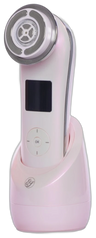
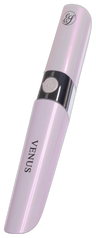
Eye-area device, for example our Venus Home, on alternate days
Warmth, light and vibration at the surface
A different route: fractional radiofrequency warmth held at 42°C with red and blue LED light. We make it and cite no trial of it here
Deliver actives the way a patch does, or fill hollows
Clinic microneedling Clinic
Solid needles making controlled micro-injuries
Prompts the skin's repair response in suitable skin
Be done safely at home; it comes with some downtime
Radiofrequency microneedling Clinic only
Needles that heat the skin beneath
Deeper tightening for suitable candidates
Come without risk: the FDA has warned of burns, scarring, fat loss, disfigurement and nerve damage with some uses11
Tear-trough filler Clinic
A gel placed under the skin
The only option here that adds volume to a hollow
Treat the skin's surface; results depend heavily on the injector
Clinic options are listed for context. We do not perform or sell clinic treatments.
What each ingredient in the payload actually does
Hyaluronic acid does most of the work in a dissolving patch, and every other ingredient adds a smaller amount on top. Here is each common payload, graded on the evidence for it rather than the confidence on the box.
Hyaluronic acid. It is the skin's main water-binding molecule, and the water it holds is a large part of what makes young skin look full and smooth.17 In the double-blind trial, the plain hyaluronic acid patch improved wrinkles and hydration on its own.3Moderate
Acetyl hexapeptide-8 and epidermal growth factor. Each, added to the patch, beat the plain patch on wrinkles in the same trial.3Early
Adenosine. Patches carrying adenosine improved wrinkles, dermal density and elasticity in two trials from one research group.5,6Early
Acetyl octapeptide-3, a vitamin C derivative and lysophosphatidic acid. Together they beat a plain hyaluronic acid patch in a 24-person trial that used the other eye as the control.2 The trial cannot tell which ingredient did what. Early
Other peptide blends. A 12-week single-centre study of a patch with several peptides and adenosine reported improvements, and was funded by a company.7Early
Niacinamide. Studies of topical niacinamide report fewer hyperpigmented spots and less yellowing and wrinkling in ageing facial skin, and less transfer of pigment between skin cells.15,18 Those studies used creams on the face, not patches under the eye. Early for this use
Vitamin C. In 14 people with dark circles, a 10 percent sodium ascorbate lotion used for six months did better than a plain lotion on a redness reading tied to congested blood, and the lower-lid dermis tended to be thicker, though not significantly. A second form, ascorbic acid glucoside, showed no significant difference.16 That was a lotion, not a patch. Early
Retinoids. Ours contains hydroxypinacolone retinoate, a gentle retinoid ester. We found no published patch trial of it, so we claim nothing specific for it here. It is the reason our patches are not for pregnancy, breastfeeding or trying to conceive, and should not be combined with another retinoid on the same area.
Caffeine. It is common in eye products sold for puffiness. Among the studies we checked, we did not find a trial of caffeine in a dissolving patch.
Dark circles: why type decides everything
The skin of the lower lid is thin, so color from vessels, pigment and shadow shows through it. A patch improves the skin layer. When most of the darkness comes from beneath it, improving the skin changes the smaller part of the picture.
A clinical series classified dark circles with a Wood's lamp and ultrasound and found four types: pigmented, vascular, structural and mixed. Mixed was by far the most common.8 Reviews of under-eye darkness sort treatment by cause in the same way.10,13
Fig. 2 | Most dark circles have more than one cause. Share of each type in one clinical series, classified with a Wood's lamp and ultrasound.8 Proportions will differ in other groups of patients. Drawn by us from the published figures.
Pigmented. Brown color that looks the same in any light. Sun protection and pigment-directed care come first; a patch is an extra at most.10
Vascular. A blue or purple cast that tends to look worse when you are tired. A patch changes little about the color itself. The six-month vitamin C lotion study above is one of the few that targeted this component.16
Structural. A shadow cast by shape, such as a groove or hollow, that changes with overhead light. No topical or patch fills it.
Mixed. Most people. A patch can improve the dry, crepey skin over the problem, which can soften the overall look, without touching the deeper causes.
A dermatologist can tell the types apart properly. If the darkness is new, on one side only, or comes with swelling or pain, see a doctor rather than buying a product. For the wider picture, from patches to eyelid devices, see our complete guide to under-eye ageing.
Match the approach to your under-eye
Match the tool to the cause: a hyaluronic acid microneedle patch helps most with fine crepey lines, dryness and dull thin skin, does little for pigment or a vascular cast, and cannot fill a hollow.
Find your route in three questions
Pick the answers that fit best. The result links to the section that explains it.
Dissolving hyaluronic acid patches, two nights a week for 8 weeks. This is where the trials found their gains: better hydration within days and finer lines after 4 to 12 weeks of repeated use. Read why
If your main concern is
Likely type
Will a patch help?
What we would do
Fine crepey lines, dryness, dull thin skin
Skin texture and hydration
Yes, this is where the trials found gains
Patches two nights a week for 8 weeks, plus a daily moisturiser and sunscreen
Brown color that stays in any light
Pigmented
Little
Sun protection and a pigment routine; a dermatologist if it persists
A blue or purple cast, worse when tired
Vascular
Little
Modest expectations; a dermatologist can confirm the type
A groove or shadow under the eye
Structural
Not for the hollow
A clinic consultation about volume; a patch only helps the skin over it
Puffiness, worst in the morning
Puffiness
Possibly the look
Patches with modest expectations; one trial funded by makers reported less puffiness4
Bags that stay all day
Often structural
Not the bag
A clinic opinion
A use protocol that matches the evidence
Clean, dry skin and nothing underneath. Illustrative still life.
This follows what the trials did and what our product page says. If your patch's instructions differ, follow them.
1. Cleanse and dry completely. The needles need clean, dry skin with nothing underneath: no serum, no cream.
2. Place below the orbital bone. Keep the patch on skin you can gently pinch, clear of the lash line and the inner corner of the eye.
3. Press, then leave it. Press evenly for several seconds in one movement, then leave the patch alone. Trial wear times ran from 25 minutes to overnight.2,4 Ours is worn for at least 2 hours or overnight.
4. Peel, then moisturise. Remove it slowly from one corner. A flatter underside means the needles have dissolved. Apply your eye cream or moisturiser now, not before.
5. Keep a steady rhythm. Trials used once a week, twice a week or every third day.3,4,6 We suggest one pair two nights a week. Judge after 8 weeks, with photos in the same light and at the same time of day.
Common mistakes
Applying over cream. The needles then dissolve into the product instead of the skin. Judging on day one. The first-day look is mostly water. Using patches more often than directed. None of the trials we read compared frequencies, so more is not proven to be better. Stacking retinoids. If your patch contains a retinoid, skip other retinoids on the same area. Expecting a hollow to fill. It will not.
A realistic timeline
Two effects get confused: the immediate plumping, which is real but mostly water, and the slower change in fine lines that the trials measured over weeks.
When
What you may notice
What the studies measured
On removal
Smoother, plumper skin
Mostly hydration: real, and the most temporary part
Small changes, easier to see in photos than in the mirror
The first trial measurements came at about 4 weeks2,3,6
Weeks 4 to 8
Fine lines may read softer
Most trials found their differences in this window3,5,6
Weeks 8 to 12
Longer courses
One 12-week study reported improvements at its end7
After you stop
Plan on the effect fading
One trial checked 4 weeks after stopping; we could not read the result6
Normal, not normal, and when to stop
Normal and expected
A light prickle when you press the patch on. The trials reported good tolerance and no serious adverse effects.2,3,5,6
Not normal: stop and reassess
Burning that lasts after removal, swelling, a rash, itching or blistering. Any eye pain or change in vision. Remove the patch, rinse with water and get advice before using another.
Do not use, or get a clinician's sign-off first, if
You are pregnant, breastfeeding or trying to conceive and the patch contains a retinoid, as ours does. You have eczema, dermatitis or an infection around the eye, or broken skin. You have reacted to an ingredient before. You have had filler, laser or surgery around the eye recently: ask the clinic that treated you. You use a prescription retinoid on the same area.
The regulatory context you should know
We sell our patches as a cosmetic, which means our claims are about the look of skin, not the treatment of disease. Clinic microneedling and radiofrequency microneedling are procedures. On 15 October 2025 the FDA issued a safety communication about serious injuries with some uses of radiofrequency microneedling, including burns, scarring, fat loss, disfigurement and nerve damage.11 If you are weighing a micro-infusion device for the rest of the face, our guide to whether at-home micro-infusion is safe covers the questions to ask.
How to evaluate a patch the way we do
Judge any under-eye patch, ours included, on six things.
1. The needle material is named. Hyaluronic acid or cross-linked hyaluronic acid are the materials in the trials.1,3,4 “Microneedle” with no material named is a question, not an answer.
2. The needle count and length are specific. The trial patch we could read held 650 needles;4 ours holds 1,800 at about 0.25 mm. A count tells you about coverage, not results, and length is not depth.
3. The actives have their own evidence. Hyaluronic acid needs no defence. Peptides, adenosine or a vitamin C derivative should each have a trial you can find, as in the ingredient section.
4. Claims name a study. “Clinically tested” should come with the number of people, the length of the study and what it was compared with.
5. The limits are stated in the brand's own words. A brand that says what its patch will not do for pigment, hollows or bags is telling you more than one that promises everything.
6. It is made for the eye area and clear about retinoids. Look for placement instructions and a plain pregnancy warning if a retinoid is inside.
How to read the claims printed on the box
“Instant results.” That is hydration, which is real and lasted about three days after one patch in one study.1“Clinically proven.” Ask which product, how many people, for how long and compared with what. “89 percent saw less puffiness.” Usually the share of people a rater judged to improve, not how much they improved.4
Myths worth retiring
“The instant result is fake.” It is real, but it is mostly water, and it fades within days.1
“More needles means better results.” None of the trials we read compared needle counts, so a bigger number on the box is not evidence of a bigger result.
“Patches are microneedling at home.” They share a word, not a mechanism. Patches deliver and dissolve; clinic needling injures on purpose to prompt repair.
“Patches fix dark circles.” Only the part that lives in the skin.8
“The results are permanent.” The trials measured during or shortly after a course of patches. Nothing we read shows the change holding long after you stop.
Patches versus the clinic
A patch is the right first spend when your concern is skin quality: texture, hydration or fine lines. It is the wrong one for a true hollow or for pigment, because clinic treatments solve a different problem rather than the same one more strongly.
One pair is one treatment, and at two nights a week the 1-Month supply lasts a month. Here is our arithmetic from today's prices for our own patches.
Supply
Pairs
Price
Per pair, our arithmetic
1-Month
8
$179.98
15.00 USD
2-Month
16
$179.98
10.62 USD
Clinic options sit on a different axis. Tear-trough filler is the only option in this guide that adds volume to a hollow, and it is a medical procedure that depends on the injector. Laser, clinic microneedling and radiofrequency microneedling can change the deeper skin for the right candidate, with downtime and a higher cost per session, and the FDA has warned about serious injuries with some uses of radiofrequency microneedling.11 Prices vary widely by city and clinic, so we do not quote them here.
Where EvenSkyn fits, stated plainly
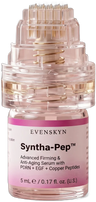
We make an under-eye patch built on the design the trials tested: dissolving hyaluronic acid needles, in ours carrying peptides, niacinamide, a stabilised vitamin C and a gentle retinoid. It belongs in the first row of the comparison table: a shallow, gentle, repeatable tool for hydration and fine lines, within the limits set out above. Our patch itself has not been tested in a published trial; our patch evidence file sets out what is and is not on record.
For the thin skin inside the orbital bone, we point people to the Venus rather than our full-face Lumo⁺, because full-power radiofrequency is not meant for that skin. The Venus works by warmth and light, a different route from the patch, so the two do not duplicate each other.
Our recommendation follows from the evidence above, and yes, part of it points at our own product. The logic is laid out so you can disagree with it.
Fine lines, crepey or dry under-eye skin: dissolving hyaluronic acid patches, two nights a week for 8 weeks, then judge with photos.
Pregnant, breastfeeding or trying to conceive: not ours, because of the retinoid. Ask your doctor about a plain hyaluronic acid patch.
Pigment or a vascular cast: sun protection and a dermatologist's view first. A patch is an extra at most.
A hollow, or bags that stay all day: a clinic consultation. No patch fills or moves them.
For fine lines, crepey texture and dry under-eye skin, two nights a week.
How it delivers1,800 dissolving needles per patch, each about 0.25 mm long, made of hyaluronic acid with skin-conditioning peptides. Needle length is not delivery depth, and we quote no depth.
What it carriesPeptides, niacinamide, a stabilised vitamin C and hydroxypinacolone retinoate, a gentle retinoid.
How to use itOn clean, dry skin with nothing underneath. Wear for at least 2 hours or overnight, one pair two nights a week.
Evidence statusOurs is a dissolving hyaluronic acid patch, the design the trials tested. Its exact formula has not been tested in a published trial.
Not forPregnancy, breastfeeding or trying to conceive, because of the retinoid. Do not combine with another retinoid on the same area.
$179.98
1-Month supply, 8 pairs. The 2-Month supply has 16 pairs at $179.98. On pre-order as of 14 November 2026, expected to ship between mid-December and Christmas.
What it will not do: fill a hollow, move fat pads, fade pigment or a vascular cast, or keep working after you stop. Returns: our 60-day money-back guarantee covers devices, not the patches. Opened patches are final sale; for an unopened box, contact support@evenskyn.com before sending anything back.
The case against our own recommendation
What the cited evidence says. Dissolving needles carry hyaluronic acid through the outer layer and melt.9 Plain hyaluronic acid patches improved wrinkles and hydration in a double-blind trial, and loaded patches did better on wrinkles.3 Wrinkle gains were measured over weeks of repeated use.5,6 Most dark circles have more than one cause.8
What we infer. Patches are a maintenance tool for under-eye skin quality. They should help most where the problem lies in the skin itself, dryness and fine lines, and the benefit should track how consistently they are used. That inference is ours, not the cited authors'.
Our hypothesis. Two nights a week delivers most of the benefit the trial schedules measured. Nobody has tested that schedule with our formula, including us. What would prove us wrong: a controlled trial of our patch at two nights a week that finds no difference from a plain moisturiser after 8 weeks.
The case against. The trials are small and short. At least two were paid for by companies with a stake, and most measured with instruments rather than the eye of a casual observer, so a statistically significant change can be hard to see in the mirror. A good moisturiser and daily sunscreen cost less and help everyone. And our own patch has no published trial.
What would change this verdict
Independent trials, not funded by patch makers, with longer follow-up after stopping. Head-to-head trials of patches against a well-made eye cream. Trials of specific branded patches, ours included. Any of these could raise or lower our grades.
Frequently asked questions
Do under-eye microneedle patches actually work?
Yes, for hydration and fine surface lines, modestly. Clinical studies found better hydration within days and shallower fine lines after 4 to 12 weeks of repeated use. They do not fill hollows, move fat pads or fade pigment, and the effect fades when you stop.
Which under-eye patch should I choose, and what should it contain?
Choose a patch whose needles are made of hyaluronic acid, that states a specific needle count, and that lists actives with their own evidence, such as peptides, adenosine or a vitamin C derivative. Check for retinoids if you are pregnant. A brand that names its study design and its limits is a better sign than one that promises instant results.
Are these the same as microneedling at a dermatologist?
No. Clinic microneedling uses solid needles to make controlled micro-injuries that prompt repair. Dissolving patches carry hyaluronic acid and actives through the outer skin layer and then melt. Radiofrequency microneedling, which adds heat, is a clinic procedure the FDA has issued a safety communication about.
Do they get rid of dark circles?
Only the part caused by dry, crepey or thin-looking skin. Most dark circles have more than one cause, and pigment, blood vessels showing through and hollows need different approaches.
How long until I see results?
A plumper look when you remove the patch, which is mostly water. In the trials, changes in fine lines were measured after 4 to 12 weeks of repeated use.
Do the results last if I stop?
Not for long. In one study a single patch kept skin better hydrated for about three days, and the wrinkle results were measured during weeks of use. Plan on keeping it up.
Can I use them in pregnancy?
Not if the patch contains a retinoid, as ours does. Check every ingredient with your doctor before using any patch while pregnant, breastfeeding or trying to conceive.
Do they hurt or cause downtime?
Most people feel a light prickle when pressing the patch on, and there is no downtime. The trials reported good tolerance and no serious side effects.
Are they better than a good eye cream?
They do something a cream cannot: carry hyaluronic acid through the outer layer of skin. No trial we found compared the two head to head, so a patch adds to a good routine rather than replacing it.
How often should I apply one?
Trials used once a week, twice a week or every third day. We suggest one pair two nights a week, and judging the result after 8 weeks.
Can a patch replace tear-trough filler?
No. Filler adds volume to a hollow. A patch improves the skin over it.
Is the “instant result” fake?
No, but it is mostly water. The plumper look after removal is real hydration that fades over a few days. The trial results that matter were measured over weeks.
Are caffeine or peptide payloads worth the premium?
Peptides have small trials behind them in dissolving patches. We did not find a trial of caffeine in a dissolving patch. Hyaluronic acid does most of the work either way.
Do microneedle patches work for eye bags?
For the look of puffiness, possibly: one trial paid for by patch makers reported less puffiness on dermatologist assessment. Bags that stay all day can come from fat pads, which no patch moves.
Are microneedle patches safe?
For healthy adults using them as directed, the trials reported good tolerance and no serious side effects. Skip them on broken, inflamed or infected skin, and check with a doctor if you have an eye condition or a recent procedure around the eye.
How we assessed this
On 14 November 2026 we checked every study cited here against its publisher, Crossref or Semantic Scholar record, and we report only what we could read in its title, abstract or full text. Where we could not read a design or a result, we say so. Both figures are drawn by us from the cited numbers, and our own arithmetic is labelled. The two still-life photographs are illustrations, not product photography. Product facts come from our product pages, read on 14 November 2026.
Methodology in full
We started from the studies cited in the earlier version of this page, verified each one, and dropped those we could not verify or no longer needed. This is not a systematic review, so relevant trials we did not find may exist. The grades are our judgement of the evidence we could read: Moderate for several controlled trials around the eyes pointing the same way, Early for one or two small or maker-funded studies, Mechanistic for delivery science, and Not shown where we found nothing. This version replaces an earlier one at the same address.
Our disclosed bias and scope
We make and sell dissolving microneedle under-eye patches, and we earn money when you buy them. That is why this guide puts the limits first, cites each trial, and says plainly that our own patch has no published trial. We also make the Venus eye device named in the comparison.
Scope: cosmetic concerns of the under-eye area in healthy adults. It does not cover eye disease, eyelid conditions such as true ptosis, or swelling with a medical cause.
Conflicts: we make the under-eye patches this guide recommends for some readers, and the Venus named in the comparison. No clinician reviewed this version. General information, not medical advice: see a doctor about new, one-sided or painful swelling or discoloration around the eye.
References
Lee YJ, Kim HT, Lee WJ, Chang SE, Lee MW, Choi JH, Won CH. Anti-aging and hydration efficacy of a cross-linked hyaluronic acid microstructure patch. Dermatologic Therapy. 2019;32(3):e12888. doi:10.1111/dth.12888
Shin JY, Han DH, Yoon KY, Jeong DH, Park YI. Clinical safety and efficacy evaluation of a dissolving microneedle patch having dual anti-wrinkle effects with safe and long-term activities. Annals of Dermatology. 2024;36(4):215-224. doi:10.5021/ad.23.136
An JH, Lee HJ, Yoon MS, Kim DH. Anti-wrinkle efficacy of cross-linked hyaluronic acid-based microneedle patch with acetyl hexapeptide-8 and epidermal growth factor on Korean skin. Annals of Dermatology. 2019;31(3):263-271. doi:10.5021/ad.2019.31.3.263
Zvezdin V, Kasatkina T, Kasatkin I, Gavrilova M, Kazakova O. Microneedle patch based on dissolving, detachable microneedle technology for improved skin quality of the periorbital region. Part 2: Clinical evaluation. International Journal of Cosmetic Science. 2020;42(5):429-435. doi:10.1111/ics.12636
Kang G, Kim S, Yang H, Jang M, Chiang L, Baek JH, Ryu JH, Choi GW, Jung H. Combinatorial application of dissolving microneedle patch and cream for improvement of skin wrinkles, dermal density, elasticity, and hydration. Journal of Cosmetic Dermatology. 2019;18(4):1083-1091. doi:10.1111/jocd.12807
Jang M, Baek S, Kang G, Yang H, Kim S, Jung H. Dissolving microneedle with high molecular weight hyaluronic acid to improve skin wrinkles, dermal density and elasticity. International Journal of Cosmetic Science. 2020;42(3):302-309. doi:10.1111/ics.12617
Avcil M, Akman G, Klokkers J, Jeong D, Çelik A. Efficacy of bioactive peptides loaded on hyaluronic acid microneedle patches: a monocentric clinical study. Journal of Cosmetic Dermatology. 2020;19(2):328-337. doi:10.1111/jocd.13009
Huang YL, Chang SL, Ma L, Lee MC, Hu S. Clinical analysis and classification of dark eye circle. International Journal of Dermatology. 2014;53(2):164-170. doi:10.1111/j.1365-4632.2012.05701.x
Lee JW, Park JH, Prausnitz MR. Dissolving microneedles for transdermal drug delivery. Biomaterials. 2008;29(13):2113-2124. doi:10.1016/j.biomaterials.2007.12.048
Sarkar R, Ranjan R, Garg S, Garg VK, Sonthalia S, Bansal S. Periorbital hyperpigmentation: a comprehensive review. Journal of Clinical and Aesthetic Dermatology. 2016;9(1):49-55. PMC4756872
US Food and Drug Administration. Potential risks with certain uses of radiofrequency (RF) microneedling: FDA safety communication. Issued 15 October 2025. fda.gov
Prausnitz MR, Langer R. Transdermal drug delivery. Nature Biotechnology. 2008;26(11):1261-1268. doi:10.1038/nbt.1504
Pissaridou MK, Ghanem A, Lowe N. Periorbital discolouration diagnosis and treatment: evidence-based review. Journal of Cosmetic and Laser Therapy. 2020;22(6-8):217-225. doi:10.1080/14764172.2021.1899238
Choi SY, Kwon HJ, Ahn GR, Ko EJ, Yoo KH, Kim BJ, Lee C, Kim D. Hyaluronic acid microneedle patch for the improvement of crow's feet wrinkles. Dermatologic Therapy. 2017;30(6):e12546. doi:10.1111/dth.12546
Bissett DL, et al. Topical niacinamide reduces yellowing, wrinkling, red blotchiness, and hyperpigmented spots in aging facial skin. International Journal of Cosmetic Science. 2004;26(5):231-238. doi:10.1111/j.1467-2494.2004.00228.x
Ohshima H, Mizukoshi K, Oyobikawa M, Matsumoto K, Takiwaki H, Kanto H, Itoh M. Effects of vitamin C on dark circles of the lower eyelids: quantitative evaluation using image analysis and echogram. Skin Research and Technology. 2009;15(2):214-217. doi:10.1111/j.1600-0846.2009.00356.x
Papakonstantinou E, Roth M, Karakiulakis G. Hyaluronic acid: a key molecule in skin aging. Dermato-Endocrinology. 2012;4(3):253-258. doi:10.4161/derm.21923
Hakozaki T, et al. The effect of niacinamide on reducing cutaneous pigmentation and suppression of melanosome transfer. British Journal of Dermatology. 2002;147(1):20-31. doi:10.1046/j.1365-2133.2002.04834.x
Orena, Oros and EvenSkyn dissolving microneedle eye patches compared on what each brand puts in writing: needle length, ingredients, pack size, company and guarantee, with the cost per pair worked out where...
Most under-eye patch marketing sells you a number. This sells you the question first: what is actually causing the shadow under your eye, and which part can a patch honestly help?
Eyelid skin is four times thinner than cheek skin, which means the rules for under-eye anti-aging are not the same as the rules for the rest of the face. A clinical read...
Napsat komentář
Všechny komentáře jsou před zveřejněním moderovány.




Napsat komentář
Všechny komentáře jsou před zveřejněním moderovány.
Tento web je chráněn službou hCaptcha a vztahují se na něj Zásady ochrany osobních údajů a Podmínky služby společnosti hCaptcha.