


Medically Reviewed by Dr. Lisa Hartford, MD
Four brands sell dissolving microneedle patches for the under-eye area. Two of them publish how long their needles actually are, and two do not. This is a specification-led comparison, written by the company that makes one of the four, with the gaps in our own evidence stated as plainly as everyone else's.
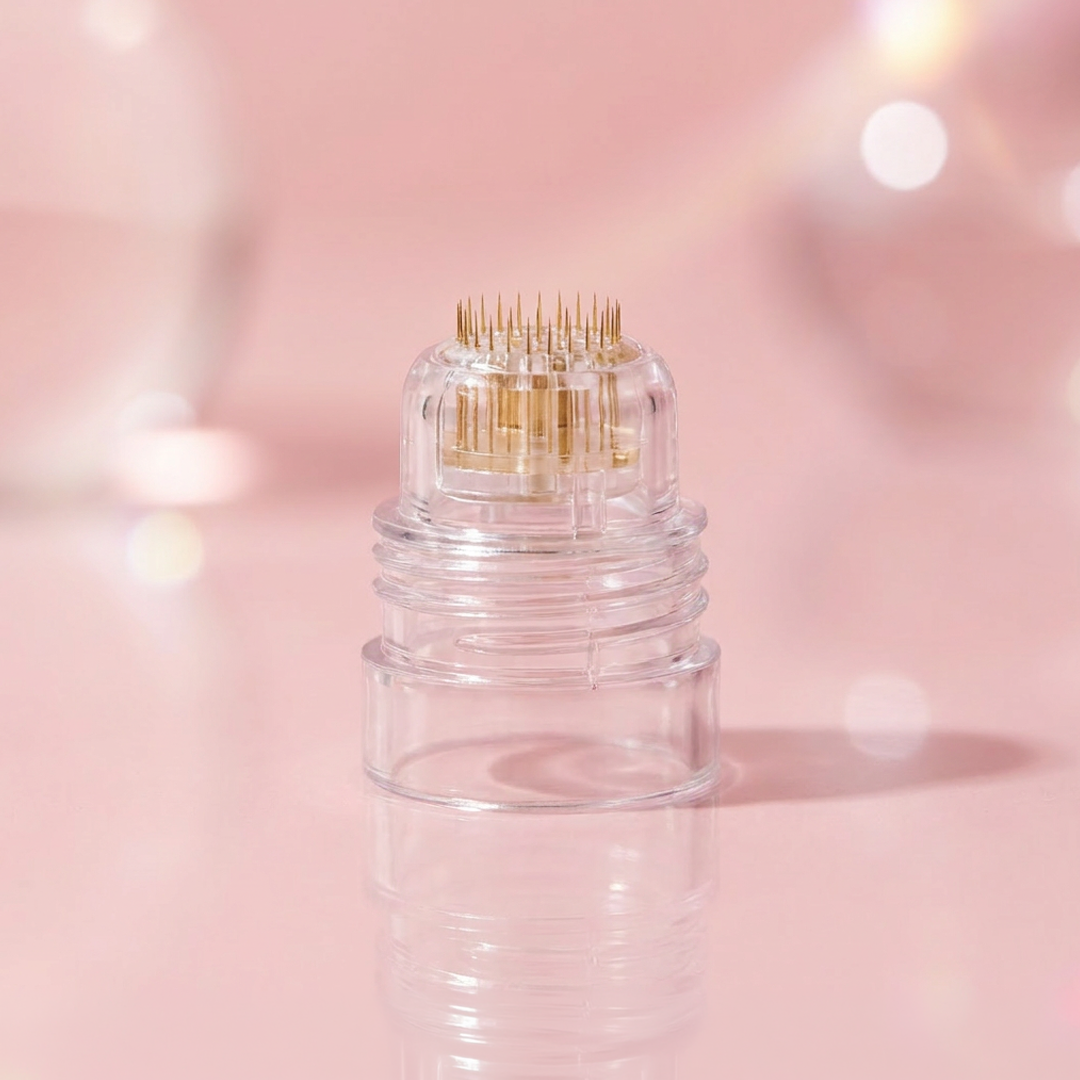
Quick answer. Dissolving microneedle eye patches are adhesive patches carrying hundreds to thousands of tiny hyaluronic acid needles that melt into the skin over two hours or overnight. Of the four brands compared here, the EvenSkyn Under-Eye Micro-Infusion Patches publish the most complete specification (about 2,000 needles per patch, roughly 0.25 mm, hyaluronic acid and peptides, 8 pairs at 69.99 USD). Oros is the only competitor publishing a needle length (0.3 mm). Qure and Orena publish neither needle length nor material. No brand in this category, ours included, has a published randomised controlled trial of its own product, and no patch of any kind can change the tear-trough anatomy that causes structural under-eye shadows.
Verdict and scorecard
Judged on published specification, formulation disclosure, corporate transparency and evidence quality, the EvenSkyn patch scores best on the first three and is tied last with everyone else on the fourth. That last score is the honest one, and it is the reason to read the rest of this page rather than the scorecard alone.
- 7.9Composite, out of 10
- 9.0Specification disclosure
- 8.5Formulation disclosure
- 8.0Corporate transparency
- 4.0Published evidence for this specific product
Best for: someone with fine lines, crepey texture or dryness under the eye who wants an overnight treatment and wants to know exactly what is in it and how long the needles are.
Not the best fit for: anyone whose main complaint is a deep hollow or shadow that changes when they change the lighting. That is structural, and no patch addresses it.
Who wrote this and why that matters. This is EvenSkyn's own guide and we sell one of the four products in it. We have an obvious commercial interest, so everything below is written to be checkable: every specification is taken from the brand's own live listing on 12 August 2026, every study is identified so you can read it yourself, and where a competitor publishes something we do not, we say so.
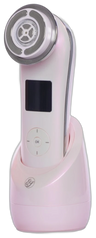
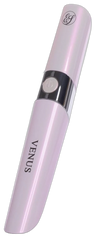
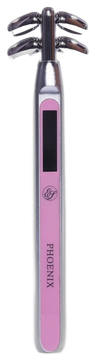
EvenSkyn is a Canadian at-home beauty-device company that designs and manufactures anti-aging devices including the Lumo+ (radiofrequency, EMS and light therapy), the Phoenix microcurrent bar, the Venus eye device, the MicroInfuser, and the MatureSmile LED whitening kit.
How we compared them
Four criteria, chosen before the data was collected, and applied identically to our own product.
1. Does the brand publish a needle length? Needle length is the single specification that determines what layer of skin a patch is designed to reach. A brand that does not publish it is asking you to buy on trust.
2. Does the brand publish a needle material and count? "Microneedle" covers dissolving hyaluronic acid darts and rigid polymer spikes, which behave completely differently. Count tells you how the dose is distributed.
3. Is the full active list published, with a pack size you can price? A per-pair cost cannot be calculated if the pack count is not stated.
4. Is there a real company behind it? A named legal entity, an address and a jurisdiction. This category has a visible white-label problem and this criterion is the fastest way to see it.
The comparison
| Brand | Price and pack | Cost per pair | Needle count | Needle length | Needle material | Company entity published |
|---|---|---|---|---|---|---|
| EvenSkyn Under-Eye Micro-Infusion Patches | 69.99 USD, 8 pairs (16 patches) | 8.75 USD | About 2,000 per patch | About 0.25 mm | Hyaluronic acid and peptides | Yes, EvenSkyn, Canada |
| Qure Micro-Infusion Targeted Patches | 79.00 USD, 8 pairs (16 patches) | 9.88 USD | 80 micro-darts per patch | Not published | Not published | Not published |
| Oros Under-Eye Repair Patches | 43.60 USD, pack count not stated | Not calculable | Not published | 0.3 mm | Hyaluronic acid | Not published |
| Orena Microneedle Patches, New Generation | 39.95 USD, 1 pair (2 patches) | 39.95 USD | Not published | Not published | Not published | Yes, DIGIECOM LLC, Wyoming |
The finding: half the category does not publish a needle length
Needle length is the specification that decides what a microneedle patch is physically capable of doing, and two of the four brands here do not publish it. Qure publishes a needle count (80 micro-darts) but neither length nor material. Orena publishes neither. Oros publishes 0.3 mm and hyaluronic acid but does not state how many patches are in a pack, so its price cannot be converted into a cost per use.
We publish about 2,000 needles at roughly 0.25 mm in hyaluronic acid and peptides. We are stating that as a fact about disclosure, not as proof of superiority. A published number can still be a nominal number, which is the subject of the next section, and it is the more important one.
A needle that is 0.25 mm long is not a needle that delivers to 0.25 mm. Those are different claims, and the published evidence supports only the first.
Why nominal needle length is not delivery depth
This is the part of the category that marketing consistently overstates, and it applies to our product as much as anyone's.
When a microneedle array is pressed onto skin, the skin deforms around it. Coulman and colleagues imaged microneedle insertion in living human volunteers using optical coherence tomography and found that the micro-conduits created were markedly smaller than the microneedle dimensions, and that the channels collapsed after the device was removed [8]. Leone and colleagues measured insertion efficiency across six array geometries in the 200 to 475 micrometre range and found roughly 80 percent penetration efficiency using pressing force against roughly 100 percent using controlled mechanical impact, with one array requiring more than 25 newtons to reach even 50 percent penetration [9].
A person pressing a patch on with a thumb sits at the weak end of that range.
None of which means the patches do nothing. Fong and colleagues confirmed, using in vivo reflectance confocal microscopy, that commercially available dissolving patches cross the stratum corneum and reach the papillary dermis [7]. The barrier does get breached. What no published study shows is that a needle of stated length X arrives at depth X in periorbital skin. Those are two different claims and only the first one has evidence behind it.
So the honest statement, which we are applying to our own product, is this: dissolving microneedle patches breach the outer barrier layer and deposit their payload below it. Any specific micron figure presented as a delivery depth, including figures we have used elsewhere on this site, goes further than the evidence supports.
Who actually makes these
Two of the four brands publish no company entity anywhere on their site. Qure lists a US phone number and no legal entity. Oros names only "Oros Men" and a support email in its terms, with no address or jurisdiction. Orena publishes the most: DIGIECOM LLC, EIN 42-2770636, at 30 N Gould St Ste R, Sheridan, Wyoming, organised on 25 May 2026. That is genuinely more disclosure than Qure or Oros offer, and it is also worth knowing that the address is a large shared registered-agent mailbox and the entity is under three months old.
Two things we found while checking, which a buyer would reasonably want to know. The Oros patch specification, including the 0.3 mm needle length and the 39 percent hyaluronic acid complex, appears on a separately branded listing at a different price. We cannot verify manufacturing relationships from a product page, and the existence of a similar listing is not by itself evidence of anything improper, but it is a reason to compare listings before paying. Separately, a fourth brand that appears frequently in searches alongside these, Novalift, was excluded from this table: its product URL identifies a generic white-label line, its own storefronts quote different prices for the same item, and one reseller lists the patch material as polyethylene, which is not consistent with a dissolving hyaluronic acid needle.
Cost, calculated honestly
Cost per pair is the only fair comparison, and it can only be calculated where pack size is published.
| Brand | Listed price | Pairs per pack | Cost per pair | Commonly reported use frequency |
|---|---|---|---|---|
| EvenSkyn | 69.99 USD | 8 | 8.75 USD | Weekly to twice weekly |
| Qure | 79.00 USD | 8 | 9.88 USD | Weekly to twice weekly |
| Oros | 43.60 USD | Not stated | Not calculable | Not stated |
| Orena | 39.95 USD | 1 | 39.95 USD | Single use, per listing |
We are not going to argue that we are the best choice because of this table. Price moves with promotions and it is the least durable thing on this page. It is here because a category where one brand does not publish pack size and another sells a single pair is a category where per-use cost is genuinely hard for a buyer to work out.
Brand by brand
EvenSkyn Under-Eye Micro-Infusion Patches
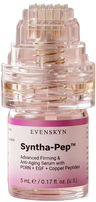
About 2,000 dissolving needles per patch, each roughly 0.25 mm, made from hyaluronic acid and peptides. The formula runs niacinamide, stabilised vitamin C as 3-O-ethyl ascorbic acid, and hydroxypinacolone retinoate, sitting in a multi-molecular hyaluronic acid complex with Centella asiatica and Tremella extract. Eight sealed packets. 69.99 USD. Two hours or overnight.
There is a retinoid in it, so it does not go on the same area as another retinoid, and it is not for pregnancy. Disclosure is the best thing about this product. The worst thing is that no trial has ever been run on it. That is true of all four on this page, but it is our product, so we are saying it about ours first.
One more number, because leaving it out would be convenient. At the time of writing it carries 7 customer reviews averaging 4.6 out of 5 on our own store. Seven is not a sample. It is a start, and we would rather print it than round it up into something that sounds like evidence.
Qure Micro-Infusion Targeted Patches
Eight pairs at 79.00 USD, 80 self-dissolving micro-darts per patch. Qure publishes the longest active list of the four, including copper tripeptide-1, caffeine, madecassoside, retinol, acetyl hexapeptide-8, allantoin and licorice root, and it maintains a dedicated content guide page for the product. It is indicated for the under-eye area and smile lines, so it is the most versatile of the four by its own labelling. It publishes no needle length, no needle material and no company entity.
Oros Under-Eye Repair Patches
Listed at 43.60 USD, reduced from 68.80 USD. Oros is the only competitor here publishing a needle length, 0.3 mm, and a needle material, hyaluronic acid. It also publishes a specific concentration for its hyaluronic acid complex at 39 percent, which is more precise than anything we publish about our own complex. That is a genuine point in its favour and we are not going to bury it. Against that: the pack count appears nowhere on the listing, no company entity is named, and the same specification appears on a separately branded listing elsewhere.
Orena Microneedle Patches, New Generation
39.95 USD, and that buys one pair. Actives are listed as niacinamide, hyaluronic acid, retinol, vitamin C and peptides, with no concentrations attached to any of them. Where Orena is genuinely ahead: it is the only brand here that publishes a full legal entity, with an EIN and a registered address. Neither Qure nor Oros does that.
The needle specification is another matter. No length, no count, no material. The entity itself was organised in May 2026, which is recent enough to be worth knowing.
Where our patch fits, stated as inference
On the four criteria at the top of this page, our patch comes out strongest on three and tied on the fourth. That follows from the table, not from our opinion. Weight the criteria differently and you will land somewhere else, which is the point of publishing them first.
Want the longest published active list? Qure. Want a published needle length and a stated concentration to go with it? Oros, and it is the only one of the four that publishes both. If a named legal entity with a registered address is what reassures you, that narrows it to Orena and to us.
The patch is built to support the look of smoother fine lines and better hydration. It will not change the shape of your orbital rim. It cannot reposition a fat pad or fill a tear trough. That is anatomy, and anatomy does not respond to surface chemistry.
The dark circle nobody's patch can fix
Dark circles are not one thing. The classification most widely used in dermatology separates them into pigmented, vascular and structural types, plus mixed presentations [17]. A comprehensive review of periorbital hyperpigmentation describes the structural type as shadows formed by facial anatomic surface contours, and for that subtype it points to blepharoplasty, hyaluronic acid fillers and fat transplantation rather than topicals [18].
There is a quick test. Look in a mirror under overhead light, then tilt your face up toward the light. If the darkness largely disappears when the angle changes, it is a shadow, and it is structural. No patch on this page, ours included, has any published evidence of changing it. If the darkness stays constant regardless of angle, it is more likely pigmentary or vascular, which is the territory where topical actives have at least some supporting evidence [10][11][16].
What the evidence does not show
This is the section we would most like to be able to delete in a few years, and it is the most useful part of this page today.
- No randomised controlled trial exists of any consumer dissolving microneedle under-eye patch brand. Not ours, not Qure's, not Oros's, not Orena's. The category is sold ahead of its evidence.
- The published periorbital microneedle evidence totals roughly 87 participants across three small studies, all 8 to 12 weeks, all conducted in East and Southeast Asian women [4][5][6]. There is no data beyond 12 weeks and no durability or washout data.
- Neither under-eye patch study has an untreated control arm. Yang 2023 is patch against laser on a split face [4]. Arepagorn 2024 puts a different active patch on each side and is explicitly non-randomised [6]. Neither can separate the patch from time, occlusion, the vehicle or expectation.
- Arepagorn 2024 used rigid PMMA needles, not dissolving hyaluronic acid [6]. Its improvement figures cannot be transferred to a dissolving patch, and we have not done so.
- Jang 2020 studied crow's feet, not the infraorbital hollow, in 23 women, using adenosine-loaded needles [5]. It is not evidence for hyaluronic acid alone and not evidence for the tear-trough area.
- No trial has measured dark circles or under-eye hydration as a primary endpoint for a dissolving microneedle patch. Hydration is the headline consumer claim in this category and it is the least directly tested.
- Redness is the norm rather than a rare event. The one controlled under-eye safety dataset recorded transient erythema in 76 to 79 percent of applications [6]. Marketing that implies no irritation is not consistent with that.
- Peptide claims are weaker than the category implies. A 2025 review of acetyl hexapeptide-8 found skin permeation limited and inconsistent, and concluded that no in vivo study has confirmed the muscle-inhibition mechanism the ingredient is marketed on [12]. Any "injectable-like" framing for a peptide patch is unsupported.
- Caffeine's individual contribution to under-eye results has never been isolated. The only controlled periorbital trial we could verify tested a multi-ingredient formula containing caffeine alongside vitamin C, peptides and botanicals, was single-arm and industry-affiliated [16].
- No verified periorbital-specific trial exists for niacinamide, vitamin C or retinoids. The supporting evidence for all three is facial rather than under-eye [10][11][13][15].
- Post-inflammatory hyperpigmentation risk is uncharacterised in darker skin phototypes, which is the group most prone to it and most likely to buy for dark circles. No PIH was reported in 36 women over 12 weeks [6], which is far too small a sample to estimate the risk.
How to use them, and who should skip them
Apply to clean, completely dry skin with nothing underneath. Serums and creams applied first create a barrier that stops the needles engaging. Press the patch gently and evenly across its full surface for several seconds rather than tapping one spot, then leave it two hours or overnight. Remove and apply your usual moisturiser afterwards. Once or twice a week is the commonly used cadence for this format.
Skip this product entirely if you are pregnant, breastfeeding or trying to conceive, because it contains a retinoid. The evidence on first-trimester topical retinoid exposure is reassuring for accidental exposure and found no statistically significant increase in malformations, but the study was underpowered and its authors explicitly decline to endorse intentional use [14]. Precaution is the right call. Also skip it if you have active infection, eczema or broken skin in the area, a history of keloid scarring, or if you are already using a prescription retinoid on the eye area. If you have an eye condition, or your under-eye change came on suddenly, see a doctor before treating it cosmetically.
Frequently asked questions
Do dissolving microneedle eye patches actually work?
The published evidence for periorbital microneedle patches is small: roughly 87 participants across three studies of 8 to 12 weeks, none with an untreated control arm. Those studies did record improvement in wrinkle grading. No consumer brand, including EvenSkyn, has a randomised controlled trial of its own product. The honest answer is that the format has preliminary support and that no specific product on the market has proven itself.
How deep do the needles actually go?
Deeper than a cream and less deep than the number on the box. In vivo imaging confirms dissolving patches cross the stratum corneum and reach the papillary dermis, but separate imaging work found the channels they create are markedly smaller than the needles themselves and collapse after removal. Nominal needle length should be read as a design specification, not as a delivery depth.
Do microneedle eye patches hurt?
Most people report a brief tingling that settles within a minute. Sometimes a mild prickle as the patch goes on. The needles here are a fraction of a millimetre, so that is about the expected ceiling. Sharp or lasting pain is not normal. Take the patch off.
How often should you use them?
Once or twice a week. That is the cadence most brands in this category specify, ours included. Nightly use has no published protocol behind it, and on skin this thin it mostly buys you irritation.
Can microneedle patches fix dark circles?
It depends which kind you have. Pigmentary and vascular dark circles have at least some topical evidence behind them. Structural dark circles, which are shadows cast by the tear trough and orbital anatomy, are not addressed by any patch. If the darkness largely disappears when you tilt your face toward a light source, it is structural.
Can you use them while pregnant?
Not the EvenSkyn patch, because it contains a retinoid. The same applies to any patch containing retinol or a retinoid derivative, which includes several products in this category. Check the full ingredient list rather than the marketing copy.
How long do you leave them on?
Two hours minimum, or overnight. The needles need time to dissolve fully, and removing a patch early leaves undissolved material on the surface where it does nothing.
Is redness after using them normal?
Yes, and it is common rather than rare. The one controlled safety dataset in under-eye microneedle patches recorded transient redness in 76 to 79 percent of applications. It should settle within a few hours. Redness that persists beyond a day, or that comes with swelling or pain, is a reason to stop and seek advice.
Can you use them with an eye cream or retinol?
Patch first, on bare dry skin. Eye cream afterwards. The one hard rule: do not put a separate retinoid on the same area on the same night as a retinoid-containing patch.
What is the difference between a microneedle patch and a hydrogel eye patch?
A hydrogel patch sits on top of the skin and works by trapping moisture against it. A microneedle patch carries solid needles that breach the outer barrier and then dissolve underneath it. Two different mechanisms. Nobody has published a head-to-head trial between the formats, which is a strange gap given how long both have been on sale.
Are microneedle patches the same as microneedling?
No. Clinical microneedling uses a device with rigid needles typically 0.5 mm and deeper, applied by a practitioner, and it deliberately creates a controlled wound to trigger repair. Dissolving patches use much shorter needles that melt into the skin and are not designed to create that injury response.
How long until you see a difference?
The published studies in this format ran 8 to 12 weeks and measured change at those points. Short-term smoothing from hydration can be visible the morning after a single use. Anything described as a lasting change should be judged over at least eight weeks of consistent use.
Methodology
You should be able to repeat this. Here is exactly what we did, on 12 August 2026, in this order.
We opened each of the four brands' own product pages and read the specification off the page itself. Nothing here is inferred from a retailer listing, a press release or a review site. For each brand we looked for six things: needle length, needle material, needle count, the full active list, the pack size, and a named legal entity. Where we could not find one, the cell says "not published" rather than being filled with an estimate. Eleven cells came back empty. That absence is the finding, and it took about forty minutes to establish.
Company details came from each brand's own terms of service page, not from a business-lookup service. We also checked whether the same specification appeared under a different brand name elsewhere, which is how the Novalift and Oros notes in this article came about. Three brands that surface constantly in searches next to these four were checked and dropped, because two turned out to be body or tanning patches rather than eye products and one was a needle-free biocellulose patch.
For the studies: located through PubMed, Crossref and publisher pages, with every identifier checked to confirm it resolves to the paper we claim it does. Two papers that rank highly in searches on this topic were pulled after we confirmed they have been retracted. Where a source could not be verified, we left its findings out rather than citing it from memory. Three papers are named in our working notes and deliberately not cited here because their full text sat behind a block we could not clear.
Competitor names are used nominatively, for identification. This article carries EvenSkyn's brand byline. No outside clinician has reviewed it, and we have not attached anyone's credentials to it.
References
- Chopra K, et al. A comprehensive examination of topographic thickness of skin in the human face. Aesthetic Surg J. 2015;35(8):1007-13. PMID 26508650. doi:10.1093/asj/sjv079
- Hwang K, Kim DJ, Kim SK. Does the upper eyelid skin become thinner with age? J Craniofac Surg. 2006. PMID 16770183. doi:10.1097/00001665-200605000-00014
- Sandby-Moller J, Poulsen T, Wulf HC. Epidermal thickness at different body sites. Acta Derm Venereol. 2003;83(6):410-3. PMID 14690333. doi:10.1080/00015550310015419
- Yang Y, et al. Hyaluronic acid dissolving microneedles and nonablative fractional laser for infraorbital wrinkles: a prospective, randomized, split-face study. Dermatologic Therapy. 2023;2023:2087120. doi:10.1155/2023/2087120
- Jang M, et al. Dissolving microneedle with high molecular weight hyaluronic acid to improve skin wrinkles, dermal density and elasticity. Int J Cosmet Sci. 2020;42(3):302-309. doi:10.1111/ics.12617
- Arepagorn A, et al. The comparative efficacy and safety of 250 micrometre versus 350 micrometre long microneedle patch on under-eye skin. Cosmetics. 2024;11(3):92. doi:10.3390/cosmetics11030092
- Fong S, Mahmood E, Sanabria B, Ouellette S, Rao BK. In vivo reflectance confocal microscopy evaluation of microneedle patch penetration depth. J Drugs Dermatol. 2023;22(11):1107-1110. doi:10.36849/JDD.6994
- Coulman SA, Birchall JC, et al. In vivo, in situ imaging of microneedle insertion into the skin of human volunteers using optical coherence tomography. Pharm Res. 2011;28(1):66-81. doi:10.1007/s11095-010-0167-x
- Leone M, et al. Universal applicator for digitally-controlled pressing force and impact velocity insertion of microneedles into skin. Pharmaceutics. 2018;10(4):211. doi:10.3390/pharmaceutics10040211
- Bissett DL, Miyamoto K, Sun P, Li J, Berge CA. Topical niacinamide reduces yellowing, wrinkling, red blotchiness, and hyperpigmented spots in aging facial skin. Int J Cosmet Sci. 2004;26(5):231-238. doi:10.1111/j.1467-2494.2004.00228.x
- Navarrete-Solis J, et al. A double-blind, randomized clinical trial of niacinamide 4% versus hydroquinone 4% in the treatment of melasma. Dermatol Res Pract. 2011;2011:379173. doi:10.1155/2011/379173
- Zdrada-Nowak J, Surgiel-Gemza A, Szatkowska M. Acetyl hexapeptide-8 in cosmeceuticals: a review of skin permeability and efficacy. Int J Mol Sci. 2025;26(12):5722. doi:10.3390/ijms26125722
- Sitohang IBS, Makes WI, Sandora N, Suryanegara J. Topical tretinoin for treating photoaging: a systematic review of randomized controlled trials. Int J Womens Dermatol. 2022;8(1):e003. doi:10.1097/JW9.0000000000000003
- Kaplan YC, Ozsarfati J, Etwel F, Nickel C, Nulman I, Koren G. Pregnancy outcomes following first-trimester exposure to topical retinoids: a systematic review and meta-analysis. Br J Dermatol. 2015;173(5):1132-1141. PMID 26215715. doi:10.1111/bjd.14053
- Correia G, Magina S. Efficacy of topical vitamin C in melasma and photoaging: a systematic review. J Cosmet Dermatol. 2023;22(7):1938-1945. doi:10.1111/jocd.15748
- Rajabi-Estarabadi A, Hartman CL, Iglesia S, Kononov T, Zahr AS. Effectiveness and tolerance of multicorrective topical treatment for infraorbital dark circles and puffiness. J Cosmet Dermatol. 2024;23(2):486-495. doi:10.1111/jocd.16122
- Huang YL, Chang SL, Ma L, Lee MC, Hu S. Clinical analysis and classification of dark eye circle. Int J Dermatol. 2014;53(2):164-170. doi:10.1111/j.1365-4632.2012.05701.x
- Sarkar R, Ranjan R, Garg S, Garg VK, Sonthalia S, Bansal S. Periorbital hyperpigmentation: a comprehensive review. J Clin Aesthet Dermatol. 2016;9(1):49-55. PMID 26962392


Leave a comment
All comments are moderated before being published.
This site is protected by hCaptcha and the hCaptcha Privacy Policy and Terms of Service apply.