







Medically Reviewed by Dr. Lisa Hartford, MD
Why Skin Ages Faster Now Than It Did 30 Years Ago — And What Actually Slows It Down
For decades, skin aging was treated as a cosmetic problem. A few lines here. A bit of sag there. Something to cover, tighten, fill, blur. Yet what dermatology and molecular biology have clarified over the last thirty years is far less superficial and far more unsettling. Modern skin does not simply “look” older sooner. It becomes older at a cellular level far earlier than our parents’ skin ever did.
What we are witnessing is not a beauty issue. It is a structural one. A biological one. A slow internal collapse that starts deep beneath the visible surface and moves upward long before fine lines announce it. The face is not the first place aging begins. It is merely where it becomes noticeable.
At the center of this collapse sits a protein we all know by name but rarely understand in reality: collagen.
Collagen is not a single substance. It is a family of proteins that form the scaffolding of the skin. Collagen is responsible for tensile strength, elasticity, rebound, and structural support. Imagine removing steel beams from a building, one by one, while repainting the walls and expecting the structure to remain upright. This is precisely what modern skin care has been doing for years.
And the collapse is accelerating.
Why today’s skin ages faster than your mother’s did
We do not live in the same environment as our parents did. Not even close. The skin of a woman in 1990 was not assaulted by the same spectrum of light. It was not surrounded by the same chemical burden. It was not locked into glowing rectangles for ten hours a day. It was not constantly inflamed by hyper-palatable foods, disrupted circadian rhythms, or particulate air pollution.
Skin today exists under chronic stress. And chronic stress changes biology.
On a cellular level, aging is driven by three forces: oxidative stress, chronic inflammation, and mitochondrial decline.
Oxidative stress refers to the accumulation of reactive oxygen species that damage cellular proteins, lipids, and DNA. In the skin, this translates into accelerated breakdown of collagen and elastin fibers. Ultraviolet radiation remains the primary known cause of this destruction, but digital light exposure has added a new axis of light-induced stress that did not exist at meaningful levels before the smartphone era.
Chronic inflammation acts as a slow poison. Low-grade inflammation is not dramatic enough to be felt but persistent enough to poison the repair process. Fibroblast cells, which produce collagen, function more poorly in inflamed environments. Over time, they lose their ability to keep up with natural loss. Less production plus faster breakdown equals visible thinning.
The third force is mitochondrial decline. The mitochondria power cells. Skin cells, like all others, require energy to regenerate tissue, create collagen, and recover from damage. As mitochondrial efficiency drops, repair slows. When repair slows, collapse accelerates.
None of this happens suddenly. It unfolds silently, years before skin visibly “ages.”
The truth is uncomfortable: by the time you see the damage, it has already been there for a decade.
Why creams alone fail once collagen loss begins
Topical skin care was designed for a different era. Most modern products focus on hydration, exfoliation, and surface-level turnover. These effects can be valuable. They improve appearance. They enhance glow. But they do not restore structural integrity.
Collagen is produced in the dermis, not the epidermis. No cream reaches the fibroblast layer at biologically meaningful levels. This is not opinion. It is anatomy.
Growth factors, peptides, botanical extracts, and vitamins can influence surface cells. They can smooth texture. They can reduce signs of damage. But they cannot reverse architectural loss happening several millimeters beneath the skin.
This is why many women report that products “suddenly stopped working” in their forties. Skin had not grown resistant. The damage had simply moved out of topical reach.
Once collagen production drops and mitochondrial activity falls, skin requires energy and stimulation, not just nourishment.
And that is where technology enters the equation.
The role of biological energy in skin repair
Living tissue is electrical and light-responsive. Skin is not passive matter. It uses light to regulate circadian rhythm, hormonal signaling, and cellular behavior. It uses electrical charge to communicate between cells. It consumes energy to rebuild itself daily.
Traditional skincare ignores this reality entirely.
Modern dermatology does not.
Research over the last two decades has established light therapy and electrical stimulation as non-chemical methods of influencing cellular activity. These are not cosmetic tricks. These are applications of photobiology and electrophysiology.
Certain wavelengths of light interact directly with mitochondrial enzymes involved in energy production. Low-level electrical stimulation influences cellular signaling pathways related to collagen synthesis and muscle tone.
Skin does not age because it lacks creams. It ages because it lacks energy, stimulation, and structural regeneration.
And unlike serums, energy-based devices do not rely on absorption. They rely on physics.
This is precisely where Evenskyn devices operate.
Not as beauty tools.
As biological intervention systems.
Where EVEN SKYN’s technology fits into skin physiology
Evenskyn does not build devices to decorate the surface of the face. It builds systems that engage with the same mechanisms responsible for skin aging.
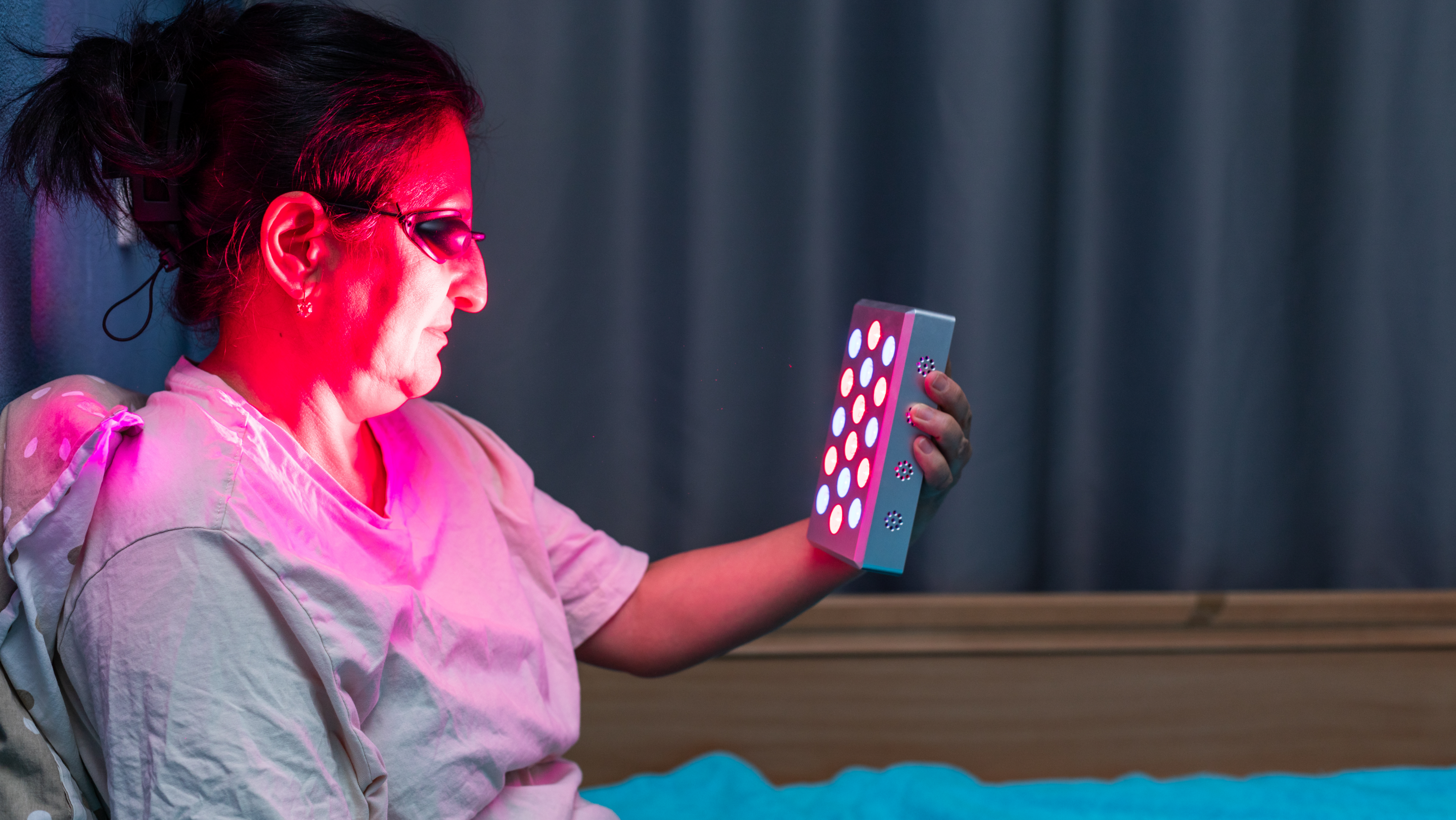
The Mirage LED mask is not merely “light therapy.” It works by delivering narrow wavelengths shown to interact with cytochrome c oxidase, a mitochondrial enzyme involved in cellular respiration. When stimulated by appropriate light, mitochondria produce more ATP. When ATP production rises, cells regain metabolic intensity. When metabolism rises, tissue begins to behave younger.
This is not cosmetic optimism. It is cellular mechanics.
In aging skin, fibroblasts grow sluggish. ATP production falls. Collagen output weakens. Red-spectrum light is not magic. It is targeted energy delivery.
The Lumo device approaches skin aging from a different axis. Microcurrent therapy is not electrical shock. It mimics the skin’s natural bioelectric current. It encourages communication between cells. It supports ATP synthesis. It stimulates muscle tissue underlying the skin.
When facial muscles weaken, skin collapses. No cream prevents muscle atrophy.
Microcurrent targets what cosmetics cannot reach: electrical signaling integrity.
EVERY Evenskyn device operates under a single engineering principle: surface treatments do not rebuild structure. Energy does.
The reason these devices feel fundamentally different from gadgets on the market is that they were built from mechanistic science, not trends.
Why this approach matters more after 40
Biology changes with age. Estrogen decline alone reduces collagen by approximately 30% within the first five post-menopausal years, with continued loss annually thereafter. This is not gradual decline. It is a sharp structural shift.
At the same time, capillary density falls, reducing nutrient and oxygen delivery to skin cells. Mitochondrial efficiency declines. Cellular turnover slows. Inflammation rises.
The environment worsens.
Smoking is not required to damage skin anymore. Ambient air pollution does the same.
Poor sleep is not optional anymore. Artificial light disrupts melatonin.
Stress is no longer temporary. It is constant.
Modern skin ages faster because modern life is biologically hostile.
Evenskyn exists because cosmetic-era solutions do not survive technological reality.
Why aging skin is not primarily about wrinkles
Wrinkles are visible symptoms. They are not the disease.
The disease is tissue failure.
Dermal thinning.
Vascular reduction.
Neural signaling loss.
Bioelectric weakening.
Mechanical slackness.
No topical product addresses any of these.
Light and electrical stimulation do.
This is why women who incorporate energy-based therapies notice improvement even when they stop changing products. The skin is being trained at a cellular level, not coated.
Technology does what topical science never could: it moves aging skin back into an energetic state.
Not younger in appearance first.
Younger in function.
Appearance follows function. Always has.
What truly slows aging rather than disguises it
Skin does not regenerate because it “feels nourished.” It regenerates because conditions allow it.
Those conditions are energetic and structural:
Sufficient blood flow.
Functional mitochondria.
Responsive cells.
Stable matrix integrity.
Healthy microcirculation.
When one fails, visible aging accelerates. When several fail, no product makes a difference.
Evenskyn devices are designed to intervene upstream, where decline starts.
Mirage intervenes via photobiomodulation.
Lumo intervenes via bioelectric support.
Venus and Phoenix complement through circulation, stimulation, and tone.
Each is an amplifier of biology, not a replacement.
The psychology of aging vs the reality
Most anti-aging marketing is built on fear and miracles. EVEN SKYN was built on engineering.
Women do not want illusions. They want function restored. They want control. They want intelligent tools instead of dependency.
Energy-based skin therapy offers autonomy.
Cream dependency offers hope without physics.
The future of aging is not topical
Skincare evolved from cosmetics into chemistry. The next step is inevitable: bio-energetics.
Skin is a living organ. You do not rejuvenate organs by painting them.
You influence them by restoring function.
That is the future Evenskyn is already building.
Not younger faces.
More functional skin.
And function is the true cosmetic.
Bibliography (Research and Evidence Base)
Karu, T.I. (2008). Mitochondrial signaling in mammalian cells activated by red and near-infrared radiation. Photochemical & Photobiological Sciences.
Hamblin, M.R. (2016). Mechanisms and applications of photobiomodulation therapy. AIMS Biophysics.
Avci, P. et al. (2013). Low-level laser (light) therapy (LLLT) in skin: stimulating, healing, restoring. Seminars in Cutaneous Medicine and Surgery.
Friedman, P. et al. (2020). Effects of red and blue light therapy on skin health and regeneration. Journal of Clinical and Aesthetic Dermatology.
Bailey, A.J. (2001). Molecular mechanisms of ageing in connective tissues. Mechanisms of Ageing and Development.
Varani, J. et al. (2006). Reduction of collagen synthesis in photoaged skin. The American Journal of Pathology.
Giglio, F. et al. (2019). The role of oxidative stress in skin aging. Clinical, Cosmetic and Investigational Dermatology.
Cho, S. et al. (2008). Mitochondrial DNA damage in human skin aging. Journal of Investigative Dermatology.
Yaar, M., & Gilchrest, B.A. (2007). Photoaging: mechanism, prevention and therapy. British Journal of Dermatology.
Ferrari, M. et al. (2017). Microcurrent stimulation and cellular ATP production. Journal of Cosmetic Dermatology.


Hinterlasse einen Kommentar
Alle Kommentare werden vor der Veröffentlichung geprüft.
Diese Website ist durch hCaptcha geschützt und es gelten die allgemeinen Geschäftsbedingungen und Datenschutzbestimmungen von hCaptcha.