

Medically Reviewed by Dr. Lisa Hartford, MD
There is a specific morning many women remember. Sometime in the early to mid-40s, you catch your face in the mirror under honest light and something has shifted — not the slow drift of aging you've watched for two decades, but something faster. The jawline is softer. The skin around the eyes is thinner, more crepey. Your moisturiser disappears into your face like it's being absorbed by paper. The cream that worked last spring is doing nothing now.
The instinct is to blame stress, sleep, or a skincare routine that needs an upgrade. The real answer is hormonal — and once you understand the mechanism precisely, every decision about how to respond to it changes.
TL;DR
- Perimenopause-related skin changes are not normal aging. Collagen falls by roughly 30% in the first five years of menopause — a rate of loss that has no equivalent in chronological aging.
- The driver is estrogen withdrawal, not time. Estrogen regulates fibroblasts, collagen synthesis, hyaluronic acid, ceramides, and skin vascularity. When it falls, all of them downregulate together.
- Topicals can't reach the problem. The accelerated breakdown happens in the deep dermis. Retinol, peptides, and vitamin C work above that layer.
- At-home radiofrequency (RF) and microcurrent are the two non-hormonal tools that reach the right tissue depths — RF stimulates dermal fibroblasts thermally (bypassing the missing estrogen signal); microcurrent restores facial muscle tone underneath.
- Timing matters. Starting in the 40s — before the steepest post-menopausal collagen drop — produces meaningfully better outcomes than starting later.
This Is Not Ordinary Aging
Skin aging is a continuous process. From the mid-20s onward, collagen production declines roughly 1% per year — so gradual you barely register it across decades. What happens during perimenopause is a different category of change.
Peer-reviewed dermatology research has established that skin collagen content correlates more closely with menopausal age than chronological age. In plain English: where you are in your hormonal transition matters more than what year you were born. The studies are consistent on the numbers:
- ~30% of skin collagen is lost in the first five years after menopause onset.
- After that window, collagen continues to decline at roughly 2.1% per year for the next 15 years.
- Skin thickness drops by approximately 1.13% per year over the same period.
For perspective: a woman entering menopause at 51 could, by her late 50s, have lost nearly half her skin's structural collagen — not because of time, but because of a hormonal mechanism that actively accelerates breakdown.
Perimenopause is the on-ramp. It typically begins in the early to mid-40s, well before periods stop, and it's the phase where the acceleration starts. It's also the phase that's been clinically under-studied for decades and is only now getting the attention it deserves.
The Estrogen–Collagen Connection: What's Actually Happening Under Your Skin
To understand what perimenopause does to your face, you have to understand what estrogen was quietly doing for it the whole time.
Estrogen is not just a reproductive hormone. It's an active regulator of skin physiology. Estrogen receptors sit on:
- Fibroblasts — the dermal cells that produce collagen and elastin.
- Keratinocytes — the cells that build your epidermal barrier.
- Sebaceous glands — the source of the oils that keep skin supple.
When estradiol (the primary active estrogen) signals through these receptors, it orchestrates a cascade: collagen synthesis, hyaluronic acid production, moisture retention, and dermal blood flow. It's a maintenance contract your skin had with your endocrine system for 25+ years and never had to think about.
Perimenopause is the contract being renegotiated, and not in your favour. As the estrogen signal falters and fluctuates, every component of the maintenance system starts to downregulate at once.
Worse, estrogen doesn't just slow new collagen synthesis. Its decline shifts the balance toward breakdown: matrix metalloproteinases (MMPs) — the enzymes that degrade collagen — become relatively more active. Demolition begins to outpace construction. The dermal extracellular matrix loses both quantity and quality of collagen fibres.
The Seven Skin Changes You're Probably Noticing
These are the clinically documented perimenopause skin changes — if more than three of these describe what you're seeing, you're not imagining it:
- Loss of jawline definition and visible facial sagging — type I and III collagen drop, dermis literally thins.
- Persistent, new-onset dryness — ceramide and hyaluronic acid production both fall; transepidermal water loss rises.
- Crepey, papery texture under the eyes and on the neck — the thinnest skin on the face shows depletion first.
- Skincare suddenly "stops working" — the same products you've used for years no longer produce the same result.
- Inconsistent skin from week to week — fluctuating estrogen creates fluctuating fibroblast activity.
- Slower healing — small spots and irritation linger longer because dermal vascularity is reduced.
- A duller, less luminous complexion — reduced microcirculation means less oxygen and fewer nutrients reaching the dermis.
The pattern matters. If you'd told a dermatologist 20 years ago that you'd developed five of these symptoms in 18 months, they would have suspected hormonal change before anything else. The frustration is that for many women, that connection is still not made explicit.
Why Your Skincare Suddenly Stopped Working
This is the most common perimenopausal skin complaint, and the most misunderstood. The answer isn't that your products got worse. It's that the substrate they're acting on changed.
Retinoids, peptides, vitamin C, hyaluronic acid — none of them are wasted in perimenopause. They have legitimate roles. Retinoids stimulate fibroblast turnover. Peptides act as signalling molecules. Hyaluronic acid binds water at the surface. Used consistently, they're meaningful support.
But topicals have a ceiling, and that ceiling is anatomical. Almost all skincare actives work on the epidermis and the very uppermost dermis — the top fraction of a millimetre of tissue. The structural changes of perimenopause happen deeper: in the mid-to-deep dermis, where the collagen scaffolding lives, and in the fibroblast population whose activity used to be amplified by estrogen.
Retinol cannot replace structural collagen at depth. A peptide cannot recreate a hormonal signalling environment. Hyaluronic acid serum will hydrate the surface but will not rebuild a dermal matrix that's lost a third of its volume. This isn't a marketing failure; it's a tissue-depth limitation.
This is the gap that energy-based devices were designed to fill — not as a replacement for skincare, but as the only non-hormonal category of intervention that actually reaches the right anatomical layer.
What Doesn't Work for Perimenopause Skin (And Why It's Sold Anyway)
A short, honest list — because the wellness market in this category is loud:
- Collagen drinks and powders. The protein is digested into amino acids and distributed throughout the body. Some studies show modest skin hydration improvements; none show targeted dermal collagen reconstruction. Helpful at the margin, not a structural intervention.
- Face yoga alone. Pleasant, costs nothing, has measurable but modest effects on muscle tone. Cannot address dermal collagen loss.
- Single high-strength serums. No surface-applied molecule reliably penetrates to the depth where perimenopausal change is occurring. "Active" doesn't mean "deep."
- Sheet masks marketed as "menopause skincare." Surface hydration. Real, brief, irrelevant to the underlying mechanism.
- Generic "anti-aging" devices without specified energy parameters. If a device doesn't specify the technology (RF, microcurrent, ultrasound, red light), the frequency, the depth, and the power output, you cannot evaluate whether it reaches the tissue you're trying to treat.
The legitimate options are narrow. Hormone replacement therapy (HRT) addresses the systemic hormonal cause. Energy-based devices address the structural tissue cause locally. Everything else is supportive at best.
RF vs Microcurrent vs Red Light vs HRT: Which Does What
Most of the confusion in this space is because four very different things are sold under the same "anti-aging" umbrella. They work on completely different layers of biology.
| Treatment | What it targets | Mechanism | Best for in perimenopause |
|---|---|---|---|
| Radiofrequency (RF) | Mid-to-deep dermis | Thermal stimulation of fibroblasts → new collagen and elastin synthesis | Loss of firmness, jawline laxity, skin thinning |
| Microcurrent | Facial muscles | Low-level electrical signal that re-educates and tones muscle | Loss of mid-face lift, soft jawline, brow descent |
| Red light (LED) | Cellular mitochondria, upper dermis | Photobiomodulation increases ATP, suppresses MMPs | Inflammation, dullness, supporting collagen environment |
| HRT | Systemic hormone levels | Restores estrogen signalling throughout the body | The hormonal root cause itself (medical decision) |
| Topicals (retinol, peptides, vitamin C) | Epidermis, upper dermis | Cell turnover, signalling, antioxidant defence | Surface texture, tone, environmental damage |
The clinical implication: any honest perimenopause skin protocol works on more than one layer. Skin doesn't change at one depth, so the response can't either. The two technologies that reach the depths topicals can't are RF and microcurrent — and they target different problems, which is why they're frequently used together rather than as alternatives. (We've covered this side-by-side in EMS vs Microcurrent: Which At-Home Modality Is Right for You and in RF, Red Light or Microcurrent — Choosing the Right Device for Your Skin Concerns.)
How Radiofrequency Addresses the Collagen Crisis Directly
Radiofrequency works by penetrating the epidermis and delivering controlled thermal energy into the dermis — the precise layer where perimenopause-related collagen loss is occurring. When dermal tissue is heated to the therapeutic range of 40–45°C, two things happen.
The immediate response. Existing collagen fibres contract in response to heat. This produces a degree of perceptible tightening within the first few sessions — not the final result, but a real one.
The regenerative response. Controlled thermal stimulus activates heat shock proteins and triggers fibroblast proliferation. The body interprets the heat as a wound-healing signal and upregulates collagen and elastin synthesis as part of its repair response.
This is why RF is uniquely suited to perimenopausal skin: the mechanism bypasses the missing hormonal signal entirely. Estrogen used to prompt fibroblasts via receptor binding. RF prompts the same fibroblasts via thermal stimulus. Different pathway, same target cell.
The clinical evidence for at-home RF has matured significantly. A 12-week randomised controlled split-face trial in women aged 35–60 showed statistically significant improvements in wrinkles, elasticity, radiance, and skin thickness in participants using a home-based RF device with red light, compared to an anti-aging cosmetic control. Histological analysis of treated tissue from multi-energy home devices has confirmed measurable collagen and elastin deposition.
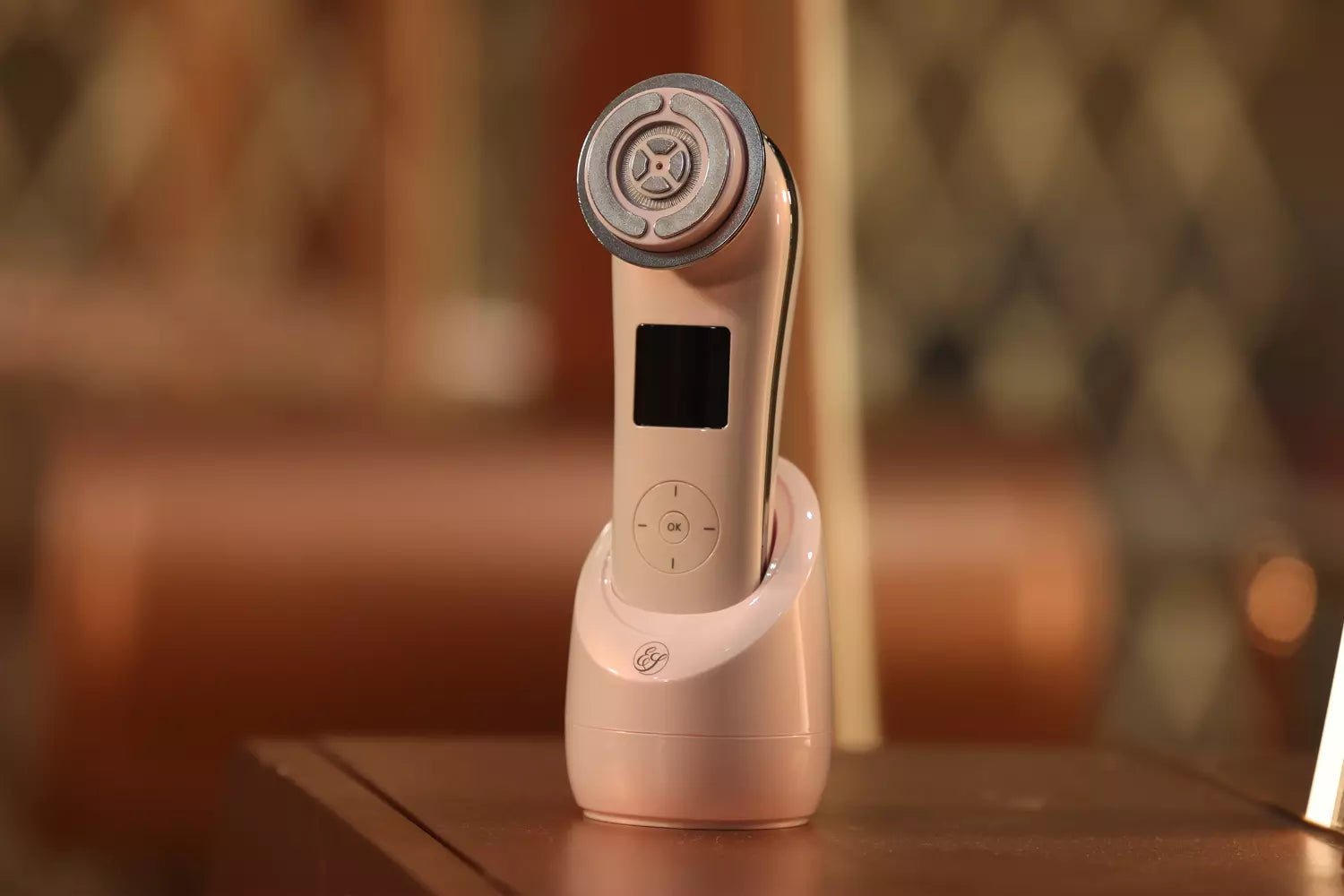
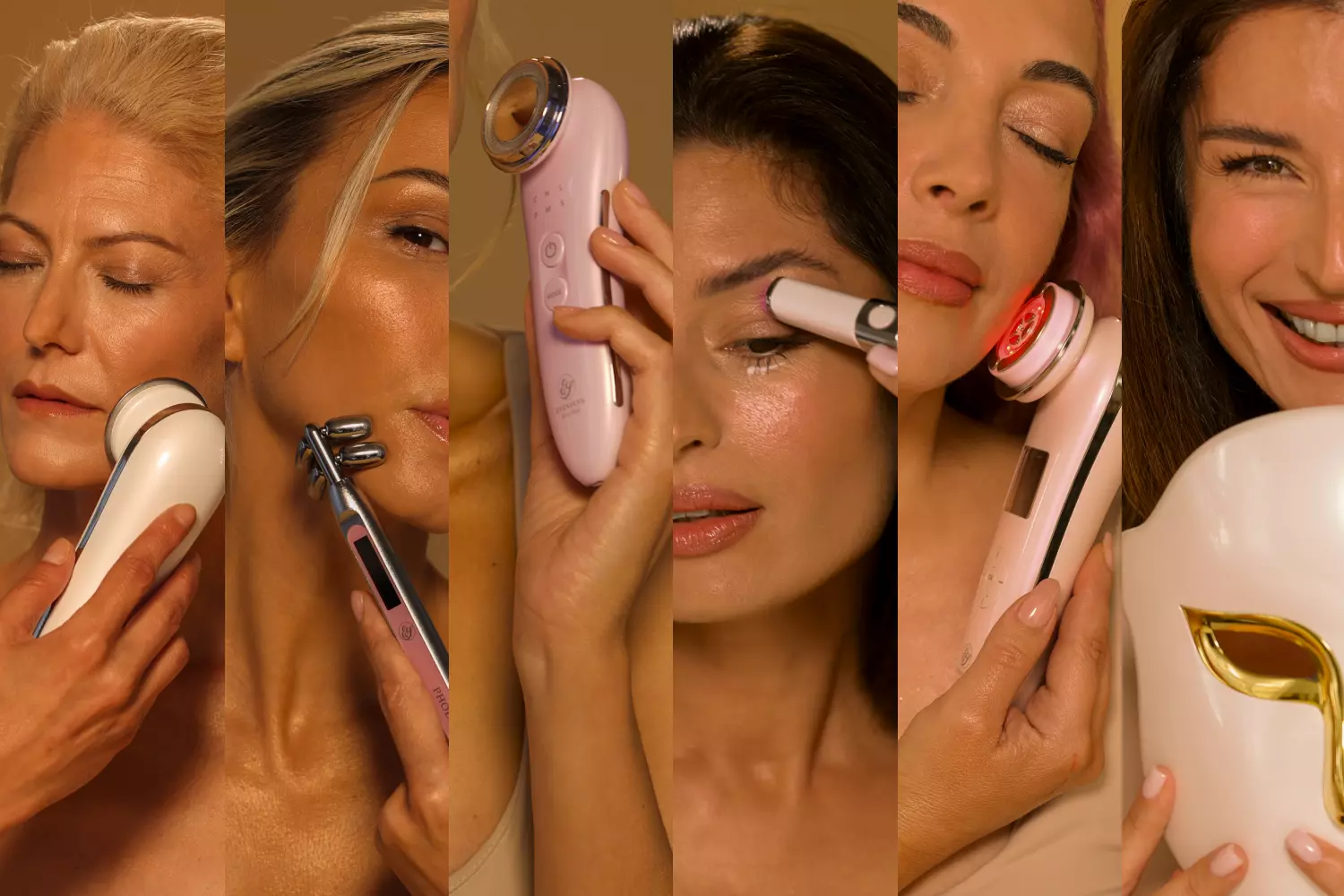
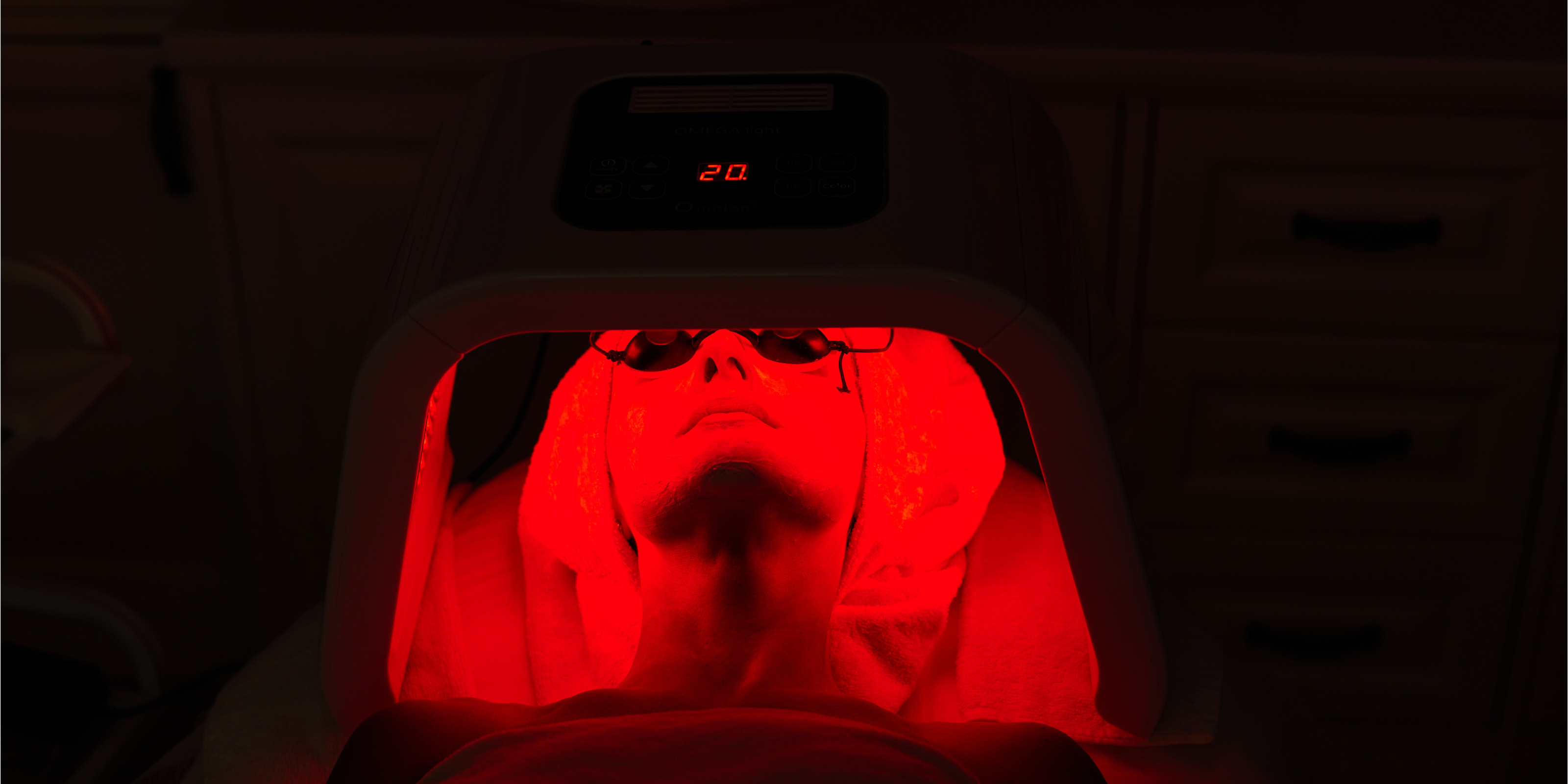
The EvenSkyn Lumo combines bipolar RF at 1 MHz with EMS, red and blue LED light, and ionisation in a single device. For perimenopausal users, the RF mode is the workhorse — its 3mm penetration depth places thermal energy precisely where the structural deficit lives. The red light component independently increases type I procollagen expression and suppresses the MMP enzymes that drive collagen breakdown under estrogen withdrawal — an unusually direct counter to the perimenopause mechanism.
For users with more advanced laxity or those starting later in the transition, the 2025 Lumo Plus delivers approximately 3× the RF power of typical home devices. When the goal is rebuilding a depleted scaffold rather than maintaining a healthy one, that additional thermal headroom is meaningful.
How Microcurrent Addresses the Muscular Layer
As the dermis thins, the facial muscles beneath become more visually influential. They were always there, but a dense, well-supported dermis used to mask their resting state. As that overlying tissue softens, muscle tone — or the absence of it — starts to define how the face looks at rest. Mid-face descent, jowling, and the gradual loss of upper-face lift are the visible signature of this two-layer change.
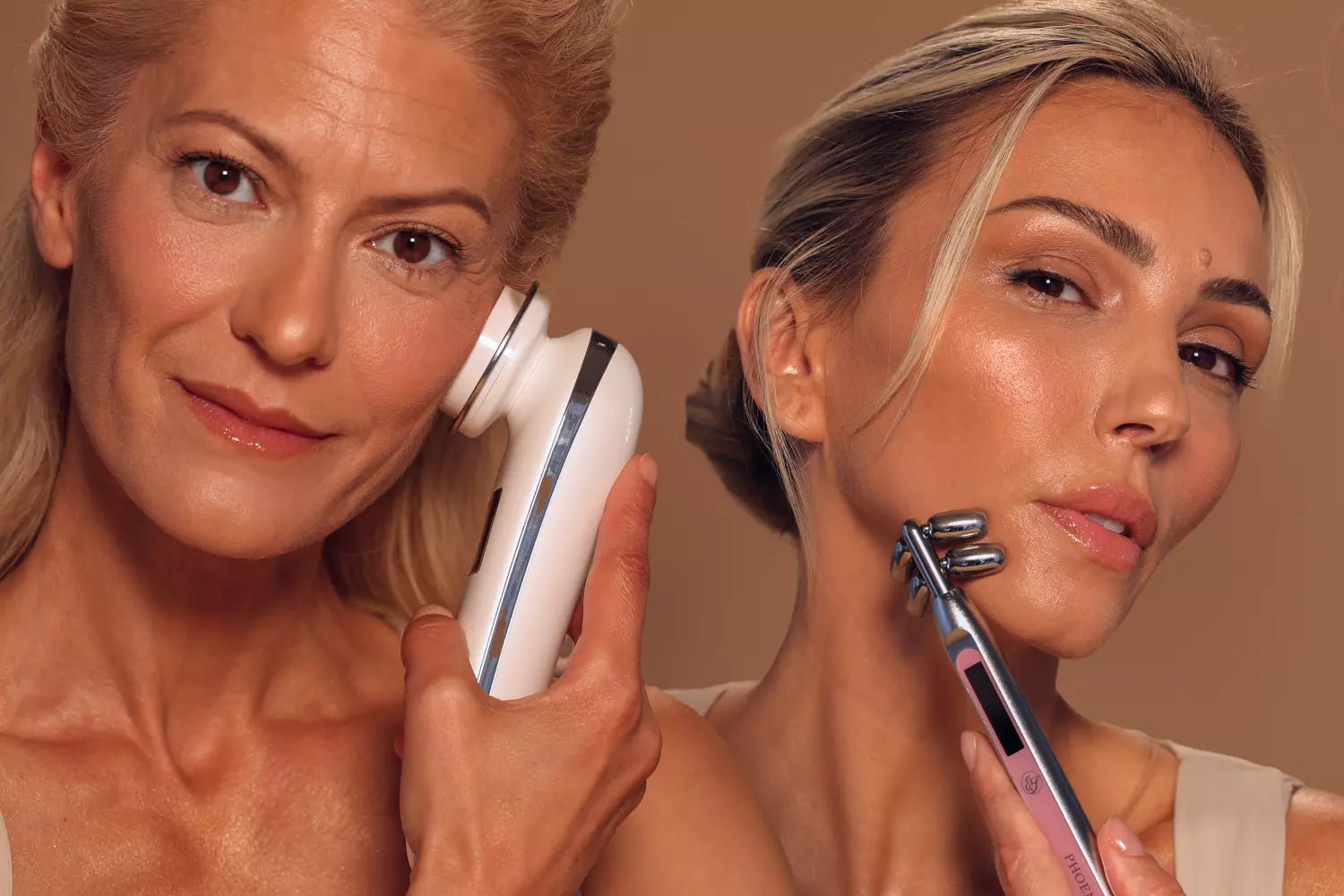
Microcurrent doesn't act on fibroblasts at all. It works at the neuromuscular level, delivering ultra-low-level electrical current that mirrors the body's own bioelectrical signalling to re-educate and tone facial muscles. The mechanism is completely different from RF, but the effect is complementary: by restoring tone underneath, microcurrent makes the dermal results from RF visually apparent. You're rebuilding the scaffolding and the support beams.
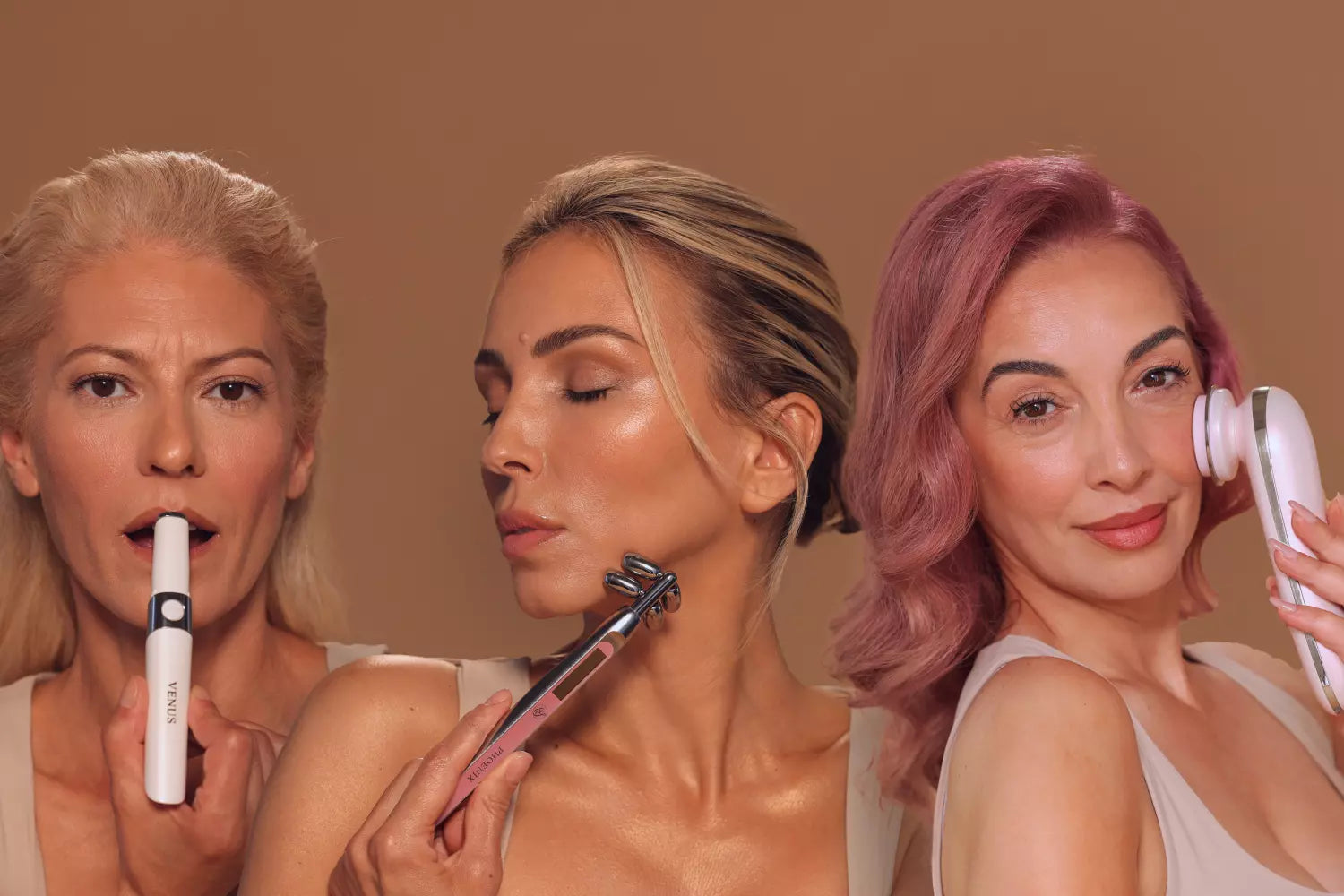
The EvenSkyn Phoenix is a dedicated microcurrent contouring bar built for the jawline and lower-face muscle groups that perimenopausal change makes most visible. Used alongside the Lumo, it covers the muscle layer while RF covers the dermis — addressing the two-front anatomical reality of perimenopausal facial change rather than only one.
(If you're trying to choose between modalities and your primary concern is muscle definition vs skin texture, our comparison guide breaks down which to start with.)
The Eye Area Is Almost Always First — and Needs a Different Tool
Periorbital skin — eyelids, under-eye, crow's feet — is the thinnest skin on the face. The relative collagen drop of estrogen withdrawal is therefore disproportionately visible here. Crepiness, hooding, and increased fine lines around the eyes are among the most consistent perimenopausal complaints, and they're often the first sign women notice.
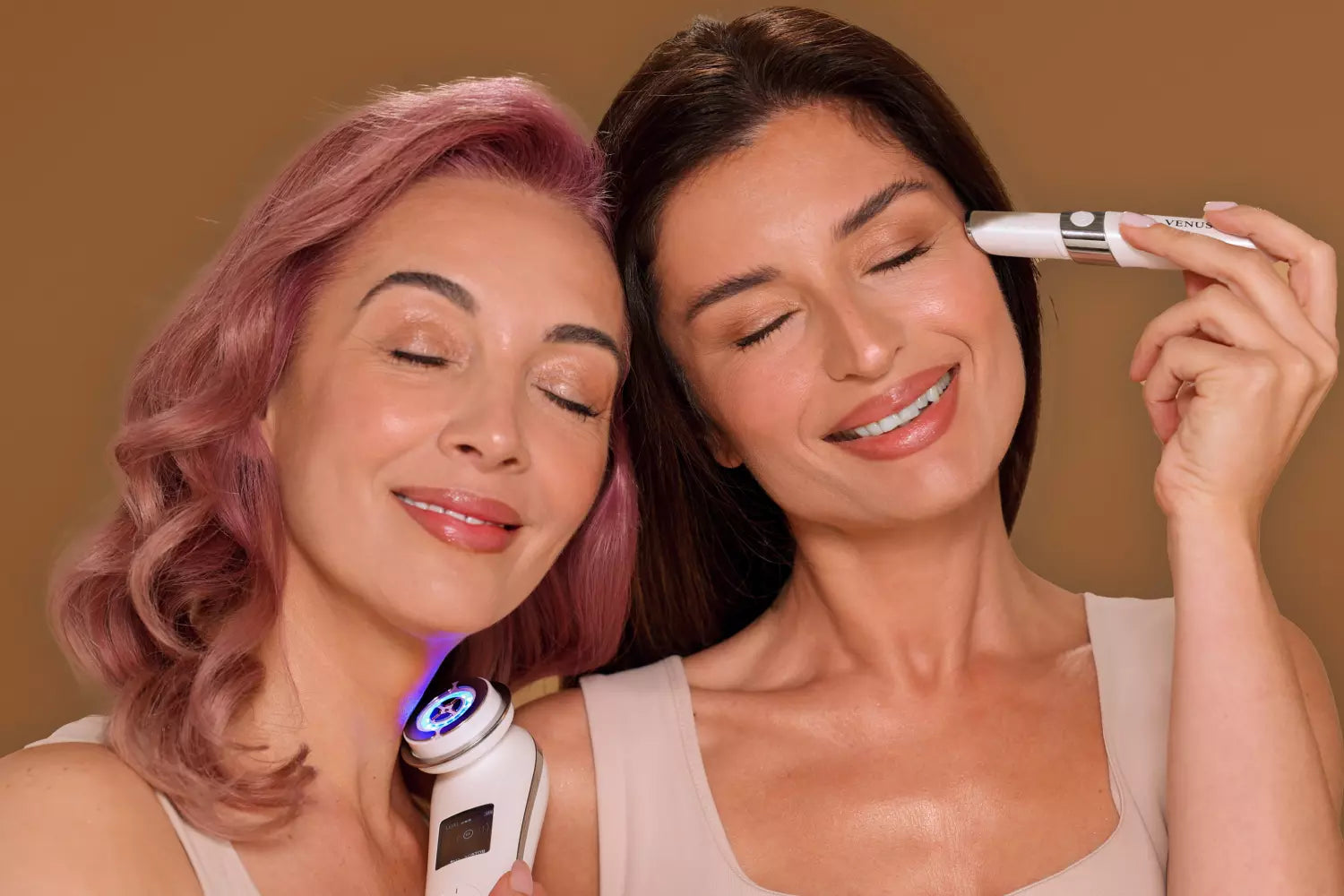
Standard full-face RF devices are not safe for periorbital use — neither the energy parameters nor the treatment-head geometry are appropriate for delicate eye-area tissue. The EvenSkyn Venus is engineered specifically for this zone, combining targeted RF and microcurrent at energy levels and a treatment-head geometry calibrated for periorbital contours. It addresses a treatment gap the Lumo isn't designed to cover.
For more on at-home options for this area specifically, our microcurrent eye treatment guide goes into protocol detail.
A 12-Week Perimenopause Skin Protocol
The clinical evidence and the mechanism point to the same conclusion: meaningful results require working at multiple anatomical depths, consistently, across a sustained period. This is the layered protocol we'd recommend for someone in their 40s starting from the first signs of perimenopausal change.
Phase 1 — Active Rebuilding (Weeks 1–12)
| Day | Treatment | Duration |
|---|---|---|
| Mon | Lumo RF + red light, full face and neck | 15–20 min |
| Tue | Phoenix microcurrent, jawline and lower face | 8–10 min |
| Wed | Venus, periorbital zone | 5–8 min |
| Thu | Rest or topical actives only | — |
| Fri | Lumo RF + red light, full face and neck | 15–20 min |
| Sat | Phoenix microcurrent + Venus | 10–15 min combined |
| Sun | Rest |
This is the window when the collagen remodelling cascade is most actively recruited. Consistency in this phase is what builds the foundation for everything that follows.
Phase 2 — Maintenance (Weeks 13+)
Once the initial remodelling is established, drop to one to two Lumo sessions per week, one to two Phoenix sessions, and Venus as needed for the eye area. Because perimenopause is an active and continuing hormonal process, long-term consistency matters more for perimenopausal users than for younger users, who are simply maintaining already-healthy skin. You're not maintaining; you're managing an ongoing depletion.
What to Layer With It
RF and microcurrent don't compete with topical actives — they enhance the skin's ability to respond to them.
- After Lumo sessions: apply a hyaluronic acid serum or peptide formulation while the ionisation mode is still assisting transdermal delivery.
- Mornings: broad-spectrum SPF 30+ is non-negotiable. Collagen being rebuilt by RF should not simultaneously be photodegraded by UV. This is the single most common protocol failure we see.
- Evenings: a tolerated retinoid two to three nights per week supports surface cell turnover. If retinol has become more irritating in perimenopause (it often does), step down to a gentler ester like retinyl palmitate or retinaldehyde.
- Always: a barrier-supporting moisturiser with ceramides, particularly given the perimenopausal drop in endogenous ceramide production.
Bundle Options for a Complete Protocol
If you're starting from scratch, the Lumo + Venus Anti-Aging Bundle covers the two anatomical zones most affected by perimenopausal change — full-face dermal RF plus targeted periorbital treatment. Adding the Phoenix gives you the muscular layer as well, which is the closest at-home equivalent to the multi-modality approach a dermatologist or clinical aesthetician would design in-office.
Can You Use RF Devices With HRT?
This is one of the most frequently asked questions and the answer, in most cases, is yes — and they're complementary rather than redundant.
HRT addresses the systemic hormonal deficit. It restores estradiol signalling throughout the body, which over months can partially reverse some skin changes via the original receptor pathway. RF and microcurrent address the local structural deficit in the tissue itself. They use a thermal pathway to recruit fibroblasts that the hormonal pathway is no longer reliably reaching.
In practice, women on HRT often see RF and microcurrent results emerge somewhat faster, because the underlying fibroblast environment is being supported from two directions at once. Women who have chosen not to use HRT, or who can't for medical reasons, get more isolated benefit from devices because they're the primary structural intervention.
Either way, consult your prescribing physician if you have specific concerns — particularly if you have a history of estrogen-sensitive conditions or active dermatological treatment.
What to Realistically Expect, and When
Honest expectation-setting matters because the at-home RF and microcurrent category is full of dishonest before/after marketing. At-home devices operate at lower energy levels than clinical machines — that's a deliberate safety feature — which means real results emerge across weeks and months, not after a single session.
- Weeks 2–4: First improvements in tone, texture, and radiance. Many perimenopausal users notice reduced dryness early, because the RF thermal stimulus has a mild vasodilatory effect that improves dermal perfusion.
- Weeks 4–8: The regenerative phase becomes visible. Firmness improves measurably, fine lines soften, early jawline changes start to emerge. This is the window most users describe as "other people are starting to notice."
- Months 3–6: Continued collagen remodelling compounds the earlier changes. This is the horizon at which honest before-and-after comparisons become meaningful.
- Months 6–12+: For users who started early in perimenopause, this is where you can see the trajectory of decline visibly slowed compared to the untreated alternative.
These timelines aren't marketing — they're the biology. The collagen synthesis cycle takes 6–8 weeks to complete. You cannot accelerate the cellular process by treating more aggressively. What you can control is how early you start and how consistently you treat.
Why Timing Matters: Start in Your 40s, Not Your 50s
The single most actionable piece of evidence in this entire field: the most effective intervention is one that begins during perimenopause, before the steepest five-year post-menopausal drop arrives.
Building a treatment protocol in your 40s — when perimenopause is underway but the most severe collagen loss hasn't yet happened — positions skin to weather that window with significantly less visible impact. It's the difference between insulating a house before winter and trying to insulate it during a storm.
This does not mean starting later is pointless. Post-menopausal skin retains genuine capacity for fibroblast activation and collagen remodelling. Studies confirm measurable improvements in skin thickness and elasticity even in women starting RF treatment years after their menopause transition. The advantage of earlier intervention is simply that prevention is cheaper, biologically, than reconstruction.
What perimenopausal skin needs isn't more product working at the surface. It needs energy, delivered at the right depth, stimulating the right cells. The technology exists. The mechanism is well-understood. The window is now.
Frequently Asked Questions
When does perimenopause start affecting skin?
Perimenopause typically begins in the early-to-mid 40s, sometimes earlier. Skin changes — particularly new dryness, reduced elasticity, and early loss of firmness — are often among the first symptoms women notice, sometimes preceding more recognised symptoms like irregular periods or hot flashes.
How much collagen do you lose during menopause?
Approximately 30% of skin collagen is lost in the first five years after menopause onset, followed by a continued decline of roughly 2.1% per year for the next 15 years. This is significantly faster than the ~1% annual rate of normal chronological aging.
Can RF skin tightening help with menopause-related skin changes?
Yes. RF works by thermally stimulating fibroblasts — the cells that produce collagen and elastin — through a mechanism that bypasses the missing estrogen signal. It directly targets the deep dermis where perimenopausal structural change is occurring.
Is radiofrequency safe for perimenopause and menopause skin?
Yes. RF energy is chromophore-independent (not affected by skin pigmentation) and safe across all Fitzpatrick skin types. Perimenopausal skin tends to be thinner and drier, so start at lower intensity and build up. Adequate conductive gel application is important for even energy delivery.
Can I use RF or microcurrent if I'm on HRT?
In most cases, yes — they're complementary. HRT restores systemic estrogen signalling; RF and microcurrent rebuild local tissue structure via different pathways. Many women see results emerge faster on HRT for this reason. Consult your prescribing physician for case-specific guidance.
How is microcurrent different from RF for perimenopausal skin?
RF targets the dermis (collagen and elastin synthesis). Microcurrent targets the facial muscles (tone and lift). Perimenopausal change happens at both layers, which is why combining them addresses the full anatomical picture rather than only half of it.
How often should I use an RF device for perimenopausal skin?
Two to three times per week during the first 12 weeks (the active rebuilding phase), then one to two times per week for ongoing maintenance. Long-term consistency matters more for perimenopausal users than for younger users, because you're managing an active hormonal process, not just maintaining stable skin.
What's the best at-home device for menopause skin?
The most evidence-aligned approach is a multi-modality protocol: an RF + red light device for the dermis, a microcurrent device for the muscular layer, and a dedicated periorbital device for the eye area. The Lumo + Phoenix + Venus combination addresses all three. Single-modality devices help with one layer but leave the others untreated.
Can I start RF if I'm already post-menopausal and in my 60s?
Yes. Fibroblasts retain their capacity to respond to thermal stimulus throughout life. Results may emerge more slowly than in earlier intervention, but they remain clinically meaningful. The "earlier is better" rule is about prevention; it's not a cutoff for benefit.
Why did my retinol stop working in my 40s?
Retinol still works, but it's working on an epidermis that sits over a depleted dermis. The surface improvements remain real — they just look less dramatic against a background of structural change happening beneath them. Retinol pairs well with RF for this reason: RF rebuilds the substrate, retinol refines the surface.
Does at-home RF really work, or do I need clinical treatments?
Both can work; they operate at different energy levels. Clinical RF delivers higher per-session energy, producing faster results and requiring fewer sessions. At-home RF delivers lower per-session energy with much higher session frequency, producing comparable cumulative results across months at a fraction of the cost. The right answer depends on your timeline and budget.
EvenSkyn devices are designed for at-home use by adults. If you have active implants (pacemakers, defibrillators), a history of certain skin conditions, recent injectables, or are pregnant or breastfeeding, consult a healthcare professional before beginning RF or microcurrent treatment. This article is for informational purposes and does not constitute medical advice.



Leave a comment
All comments are moderated before being published.
This site is protected by hCaptcha and the hCaptcha Privacy Policy and Terms of Service apply.