










Medically Reviewed by Dr. Lisa Hartford, MD
You have seen the headlines about celebrities and salmon sperm. The honest question underneath the clickbait is the one nobody is answering well: what does this treatment actually do, when is the clinic genuinely worth it, and how close can you get at home without being sold a fantasy.
What this guide covers
- At a glance: the short answers
- How I assessed this
- What the salmon sperm facial actually is
- The celebrity context, reported plainly
- Mechanism, in plain clinical terms
- Polynucleotides vs PDRN vs Rejuran vs exosomes
- Disclosure and scope, stated up front
- What the clinic procedure actually does
- The one fact that decides everything: delivery
- PDRN, EGF, copper peptide: what each one is for
- Which version is right for your situation
- Clinic versus at home: the real comparison
- By the numbers: what the trials actually showed
- An evidence-aligned at-home protocol
- Which EvenSkyn route fits your situation
- A realistic timeline
- Approach matched to your situation
- The cost math, done honestly
- Safety: normal, not normal, do not use
- How to evaluate a kit the way I do
- What I would actually use
- Common mistakes and myths
- The case against my own recommendation
- What would change this verdict
- Frequently asked questions
- Methodology, disclosures, references
Key takeaways
- The salmon sperm facial is a delivery story, not a magic molecule. The active is PDRN, a mixture of DNA fragments. What separates a result from a glow is whether the molecule reaches the dermis, and that is decided by how it is delivered, not by the brand on the bottle.
- The clinic version works because of the needle, not the fish. In a medical setting, PDRN is injected or driven in with microneedling. The needling is doing structural work the serum alone cannot do.
- Topical-only salmon DNA serums are comfort products. PDRN sits far above the molecular size that intact skin allows through. A daily serum soothes and hydrates. It does not remodel.
- At-home micro-channel delivery closes a large part of the gap, not all of it. A sterile single-use stamp at a fixed shallow depth is the realistic at-home approximation. It will not match injectable depth, and it should not claim to.
- The honest cadence is every two weeks. Faster is not better. The skin barrier sets the schedule, not your impatience.
- Visible structural change takes 8 to 12 weeks of consistent sessions. Anything promised faster than that is surface hydration described in flattering language.
- This is wrong for some people. Fish or shellfish allergy, deep ice-pick or boxcar scarring, true volume loss, active infection, pregnancy, recent isotretinoin. For these, the at-home route is the wrong spend, and this guide says so plainly.
- Eight peer-reviewed primary sources underpin the science here, each verified against its original record with identifiers listed in the references.
At a glance
| Question | Short answer |
|---|---|
| Does salmon DNA really do something? | Yes, PDRN has a real, decades-long research base in tissue repair and wound healing. The benefit depends almost entirely on delivery depth. |
| Is the celebrity clinic facial worth it? | For some concerns and some budgets, yes. For maintenance and mild aging in a value-conscious user, a disciplined at-home routine captures most of the practical benefit. |
| Can I do this at home? | You can do a meaningful version. You cannot replicate injectable depth at home, and any product claiming otherwise is overselling. |
| How fast will I see anything? | Surface glow within days. Structural change at 8 to 12 weeks of consistent biweekly sessions. |
| Who should not do this at all? | Fish or shellfish allergy, active infection, keloid history, pregnancy or breastfeeding without clearance, isotretinoin within six months, deep structural scarring better served by a clinic. |
Evidence grade. Supported by primary literature: PDRN tissue-repair pharmacology, percutaneous collagen induction for scars and photoaging, the molecular-weight ceiling for topical absorption. Plausible but not yet settled at home-use depth: the magnitude of structural benefit from at-home micro-channel PDRN specifically. Not supported: claims of clinic-equivalent results from any topical-only serum, or visible remodeling in days.
Limitations and methodology. Most controlled PDRN and microneedling trials use clinical depths and devices. At-home shallow-depth delivery is reasoned from that evidence, not proven equivalent to it. Where I extrapolate, I say so. Funding and affiliations for each cited study are flagged in the references.
How I assessed this
Most weeks in clinic I see a version of the same conversation: someone has spent a few hundred dollars on a serum, used it religiously for two months, and is quietly disappointed and a little embarrassed about it. Those patients are who I had in mind writing this. So I am going to be specific about what I trust and why, rather than waving at "studies show." Every scientific claim here is tied to a primary source I read at its original record, with the identifier at the end so you can check my work. And I have kept two questions deliberately apart, because the trend coverage blends them constantly: does the underlying biology work, and does a given delivery method actually get enough of it to the depth where it matters. The first has a solid literature behind it. The second is where most marketing quietly cheats, usually by hoping you will not ask.
I also priced the clinic route from current practice pages rather than from memory, and I have said, in plain words, where the clinic is the smarter place to spend even though my employer sells the at-home alternative. If a passage reads like it is talking you out of a purchase, it is, and I think that is the only defensible way to write a guide like this.
What the salmon sperm facial actually is
Strip the nickname off and the description is mundane. A clinician applies or injects a serum whose active ingredient is PDRN, short for polydeoxyribonucleotide: a purified mixture of DNA fragments, historically extracted from salmon or trout milt and now also produced by controlled fermentation. The DNA is processed down to the nucleotide chains, with the proteins and other cellular material stripped out. In a clinic that serum is then delivered through microneedling or shallow injection so it actually reaches living skin. The lurid name is just the original source material. What the fragments do once they are in the dermis has nothing to do with where they came from.
The reason this trend has the staying power it does, and is not fading the way snail mucin or spike serums did, is that PDRN is not a marketing invention. It has a research history in regenerative medicine that predates its appearance on social media by decades. A 2017 pharmacology review in Frontiers in Pharmacology documents PDRN as a compound with tissue-repairing, anti-ischemic, and anti-inflammatory activity that acts in large part through the adenosine A2A receptor on fibroblasts and through the salvage pathway that supplies cells with nucleotides for repair [1]. That is a real mechanism with a real literature, which is exactly why it deserves a careful accounting rather than either hype or dismissal.
Quick answers
The active is purified DNA fragments. Most modern formulas, including ours, use bioengineered PDRN made by fermentation rather than salmon-derived material. The marine note matters only for the allergy caveat covered below.
Related, not identical. Injectable polynucleotide skin boosters used in clinics are a regulated aesthetic procedure. PDRN in topicals and at-home micro-channel kits is a cosmetic. The molecule family overlaps; the delivery and the regulation do not.
Injectable PDRN skin boosters are not FDA approved in the US. Topical and at-home micro-channel PDRN are sold as cosmetics. This regulatory split is real and shapes what is even available to you.
The celebrity context, reported plainly
The only reason this is on your radar is coverage. Across the past two years, mainstream outlets including CNN, NBC, and The Daily Beast reported that high-profile figures discussed salmon-derived treatments, and that reporting is what dragged a niche Korean clinic procedure into a mass search term. I am repeating it as reported fact, with attribution, and I will not pretend a famous name is data. A celebrity trying something tells you it exists and is fashionable. It tells you nothing about whether it suits your skin, your budget, or your particular concern. The genuinely useful thing the coverage did was send a wave of skeptical, research-minded readers looking for a straight answer, which is the only thing this article is trying to be.
One thing the coverage gets right and is worth carrying forward: the dermatologists quoted across those pieces consistently describe PDRN as supportive and regenerative rather than as a standalone miracle, and several note that the procedure does most of its work when paired with needling or used after a clinical treatment. That is the same conclusion the primary literature points to, arrived at from a very different direction.
Mechanism, in plain clinical terms
At the cellular level, stripped of the jargon inflation, two things happen once PDRN reaches the dermis. The first is receptor signalling: it engages the adenosine A2A receptor on fibroblasts and biases those cells toward a repair program, meaning more collagen synthesis, a calmer inflammatory state, and support for new vessel formation. The second is supply. The DNA fragments feed the salvage pathway, which is how cells recycle nucleotides into the raw material for tissue repair, so the fibroblast gets both the instruction and the parts to act on it. The 2017 pharmacology review documents both of these alongside the anti-inflammatory profile that makes PDRN useful in recovery settings [1].
The needling side of the procedure has its own distinct mechanism. Controlled micro-injury triggers a wound-healing cascade in the absence of true ablation, which is why percutaneous collagen induction can stimulate collagen without the dyspigmentation risk that comes with destroying the epidermis, a point the 2008 safety study made explicitly [3]. When the two are combined, the needle creates both the repair stimulus and the delivery route, and the PDRN arrives exactly where the repair signaling is already switched on. That convergence, not the novelty of the source material, is the real reason the procedure produces results in a clinic.
This also explains the ceiling on the at-home version, without spin. A shallow fixed home depth produces a weaker needling stimulus and a shallower delivery channel than a clinician working at clinical depth. You still get both mechanisms, at lower intensity, which is why the realistic at-home promise is gradual maintenance-level change with consistency, and why the realistic at-home claim is never clinic-equivalence.
Polynucleotides, PDRN, Rejuran, exosomes: the confusion, sorted
This is the most confused corner of the whole category, and the confusion is mostly manufactured, because several brands benefit from the terms sounding interchangeable. Untangled, it looks like this.
| Term | What it actually is | How it is delivered | Regulatory and practical note |
|---|---|---|---|
| PDRN | A specific, lower-molecular-weight mixture of DNA fragments with a defined pharmacology and A2A receptor activity | Topical, at-home micro-channel, or clinical injection | Topical and at-home forms sold as cosmetics |
| Polynucleotides (PN) | Longer DNA-fragment chains used as injectable biostimulatory skin boosters in clinics | Clinical injection | An aesthetic medical procedure, clinician-administered |
| Rejuran and similar brand names | Branded injectable polynucleotide skin-booster products used by clinics | Clinical injection | Injectable forms not FDA approved in the US |
| Exosomes | A separate category entirely: cell-derived vesicles, not DNA fragments | Usually clinical, often post-procedure | Different mechanism, different evidence status, frequently conflated in marketing but biologically distinct |
The practical takeaway for your decision: when a product page uses these four terms as if they are one thing, that is a signal to slow down and read the label rather than the headline. For an at-home routine the only one of these you are actually working with is PDRN, delivered topically or through a shallow micro-channel. The injectable polynucleotide treatments are a clinic conversation with their own consent and clinician oversight.
Disclosure and scope, stated up front
You should know where I am standing before you weigh anything I say. EvenSkyn manufactures at-home anti-aging devices, the company has a commercial interest in you choosing the at-home route, and I am its dermatology advisor. This article points to specific EvenSkyn products near the end. I have tried to earn the recommendation rather than assume it: the clinic-wins cases are written in the same detail as the at-home ones, and I have named, by name, the people who should not buy our devices at all. A page that never tells anyone to walk away is an advertisement wearing a lab coat, and that is the thing I have spent twenty years in clinic learning to distrust.
On scope: this is a treatment-decision guide for an adult weighing visible aging, mild texture or scarring, dullness, or early laxity. It is not medical advice for a diagnosed condition, and it stops short of covering injectable polynucleotide procedures in clinical detail, since what you need for the at-home versus clinic decision is narrower than a full clinical review.
What the clinic procedure actually does
In a medical setting the salmon sperm facial is usually one of two things. Either a series of very shallow microinjections of a polynucleotide or PDRN solution into the dermis, or microneedling of the face followed by, or combined with, a PDRN serum so the channels carry the active down. Published clinic pages I reviewed price a single session in the few-hundred-dollar range, with a recommended initial course of several sessions and maintenance after that.
The structural part of the result is being done by the controlled injury, not by the fish DNA on its own. This is the part the trend coverage almost never says clearly. Percutaneous collagen induction, the clinical name for needling the skin to trigger a repair response, has a primary literature going back to a 2008 study in Plastic and Reconstructive Surgery showing it as a method for treating wrinkles, scars, and laxity by inducing collagen [2]. A companion 2008 paper from the same group addressed the safety question that matters most for darker skin, reporting that needling rejuvenates without the dyspigmentation risk that ablative resurfacing carries [3]. A 2021 review in Aesthetic Plastic Surgery synthesizes the scientific evidence for microneedling across scars and photoaged skin [4]. PDRN then does its part once it is actually delivered, signalling fibroblasts toward repair and damping the inflammatory phase. Put simply, the needling creates both the repair stimulus and the route in, and the molecule does little structurally without it; the two only work as a pair.
The one fact that decides everything: delivery
If you remember one thing from this guide, make it this. PDRN is a delivery-limited active. The molecule is a mixture of DNA fragments spanning roughly 50 to 1,500 kilodaltons, with most of the mass clustered well below the top of that range. Human skin has a well-described ceiling for what can passively cross intact stratum corneum: the classic statement of it is the 500-Dalton rule, set out in a 2000 review in Experimental Dermatology, which argues a compound generally needs a molecular weight under about 500 Daltons to penetrate normal skin in any meaningful amount [5]. PDRN sits orders of magnitude above that line. It is not a near miss; it is a different scale entirely.
The consequence is not subtle. A topical PDRN serum on intact skin gets very little active down to the dermis where the receptors are. It can still calm the surface and hold water, partly through PDRN's surface anti-inflammatory effect and partly through the hyaluronic acid and humectants that ride along in almost every formula. What it cannot do, on closed skin, is the structural remodeling the molecule is known for clinically. No brand escapes this, because the constraint is physical, and it applies to every serum on the market regardless of price or the parts-per-million number on the box. For context on the delivery side: at-home micro-channel stamps generally work at a shallow fixed depth on the order of a few tenths of a millimetre, while clinical needling and injection reach deeper into the dermis. That gap in depth is most of the gap in result, and no honest at-home claim pretends otherwise.
This is why the delivery method, not the label, decides your result. Three real at-home options exist on a ladder: topical serum alone, topical plus a roller, and micro-channel stamping with sterile single-use heads. For the practical layering protocol across that ladder, our companion guide on how to use PDRN at home walks through each level step by step. This article stays on the decision: clinic, at home, or neither.
PDRN, EGF, copper peptide: what each ingredient is for
Serious at-home kits in this category converge on three actives because each has its own evidence and each benefits from channel delivery for the same mechanical reason: all three are too large to cross closed skin well.
PDRN
The regeneration and recovery signal. It binds the adenosine A2A receptor on fibroblasts, nudges them toward collagen synthesis, calms the inflammatory phase, and supports tissue repair, per the pharmacology review cited above [1]. It is the molecule the whole trend is named for, and it is the one that most needs to reach the dermis to do structural work.
Copper tripeptide, GHK-Cu
A signal peptide with a long research history. A 2018 review in the International Journal of Molecular Sciences describes its regenerative and protective gene-level actions, and an earlier 1993 study in the Journal of Clinical Investigation showed the copper tripeptide stimulating connective tissue accumulation in vivo [6][7]. In a stack it supports collagen and softens the look of expression lines.
EGF, the epidermal growth factor signal
A cell-renewal signal. The home-use evidence base for EGF specifically is still developing, which is why I am not going to dress it up with a borrowed citation here. We cover what is and is not established about it in our dedicated EGF deep-dive. The short version: mechanistically coherent, pairs logically with channel delivery, evidence still maturing. I would not buy a kit on the strength of EGF alone.
Which version is right for your situation
Before any device decision, work out which of these you actually are. This is the section that prevents you wasting money.
- Maintenance and mild aging. Fine lines, early dullness, slight loss of bounce, no significant scarring. This is the profile the at-home route serves best. The clinic is a nice-to-have, not a need.
- Texture and mild atrophic scarring. Soft rolling acne scars, uneven texture. At-home micro-channel work can help gradually and consistently. Deep ice-pick and sharp boxcar scars are a different problem, addressed below.
- Reactive, sensitized, post-procedure skin. PDRN's calming profile is genuinely useful here, but reactive skin needs barrier repair first and a conservative cadence. Start slower than the standard schedule.
- Deep structural scarring or true volume loss. Ice-pick scars, deep boxcar scars, hollowing from age-related fat loss. Be honest with yourself: at a shallow fixed home depth you will not get the result you want here. This is a clinic conversation, and the clinic is the better spend. Spending on an at-home kit for this is the classic wasted purchase.
- Fish or shellfish allergy, or active skin disease. This is a do-not-proceed group regardless of delivery method until a physician clears it.
Clinic versus at home: the real comparison
| Factor | Clinic salmon sperm facial | At-home micro-channel PDRN | Topical PDRN serum only | What it does not do |
|---|---|---|---|---|
| Delivery depth | Deepest; injection or professional needling | Shallow, fixed, sterile single-use head | Surface only | Home routes do not reach injectable depth |
| Structural change potential | Highest | Meaningful, gradual | Minimal | No route remodels in days |
| Best for | Deeper scars, faster timeline, structural concerns | Maintenance, mild texture, value-conscious consistency | Comfort, hydration, barrier | Topical does not treat structural concerns |
| Typical cost pattern | Several hundred per session, multi-session course, ongoing maintenance | One device plus single-use consumables per session | Recurring serum cost only | None of these is a one-and-done |
| Downtime | Pinpoint redness, possible bruising, short | Mild brief redness at a shallow depth | None | At-home is not zero-sensation |
| Honest verdict | Worth it for the right concern and budget | Worth it for maintenance and mild concerns done consistently | A comfort product, priced accordingly | No route is a substitute for the others in every case |
By the numbers: what the trials actually showed
How to read the evidence without the parts the marketing leaves on the cutting-room floor.
- Microneedling for atrophic acne scars. A 2021 systematic review in the International Wound Journal evaluated randomized controlled trials of microneedling for atrophic scars and found improvement, with monotherapy showing benefit as early as a few sessions [8]. Read plainly: real, gradual, and dependent on repeated sessions, not a single dramatic fix.
- Percutaneous collagen induction for wrinkles and laxity. The 2008 primary study and the 2021 review support needling as a route to collagen induction without the dyspigmentation risk of ablative resurfacing [2][3][4]. Most of this evidence uses clinical depths, which is exactly why I do not claim home depth equals it.
- PDRN itself. The pharmacology review documents the tissue-repair and anti-inflammatory mechanism [1]. Most controlled PDRN work is in wound and tissue-repair models rather than large cosmetic facial trials, so the cosmetic claim rests on mechanism plus the needling evidence, not on a single landmark facial RCT.
How to read these without spin. The strongest evidence is for needling-based collagen induction and for PDRN's repair pharmacology. The weakest-evidenced link is the precise magnitude of benefit from at-home shallow-depth PDRN specifically. Anyone presenting that link as settled is overstating it. I am telling you it is plausible and mechanistically sound, not proven equivalent to a clinic.
An evidence-aligned at-home protocol
If you proceed at home, mirror the cadence the clinical evidence uses rather than your enthusiasm.
- Patch test 24 hours ahead on a less visible area, especially with any history of sensitivity or marine allergy concern.
- Cleanse and sanitize. Residue-free cleanse, clean hands, clean surface, fresh sterile single-use head every session with no exceptions.
- Deliver at a shallow fixed depth with light controlled contact. Pressing harder does not improve collagen induction and does compromise the barrier.
- Cadence every two weeks. Two weeks lets the barrier fully reset between sessions. This interval is the schedule, not a suggestion.
- Aftercare for 24 to 72 hours: fragrance-free hydration and barrier support, daily broad-spectrum SPF, and a pause on retinoids, acids, and vitamin C until the barrier recovers.
- Evaluate at 8 to 12 weeks, not at week one. The glow shows up early and the structural change does not, so judging too soon tells you nothing useful.
Which EvenSkyn route fits your situation
This is the part where I tell you what I would actually reach for, including the rows where the right answer is to keep your money.
| Your situation | What I would do |
|---|---|
| Under-eye crepiness, fine lines, early dullness around the orbital area | The EvenSkyn Under-Eye MicroInfuser patches. Dissolving hyaluronic microneedle patches built for the thin periocular skin where you should never use a facial stamp. |
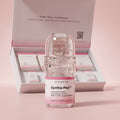
| Full-face maintenance, mild texture, value-conscious, wants the at-home salmon-DNA route done properly | The EvenSkyn MicroInfuser full-face system with the PDRN, copper peptide, and EGF serum, on the biweekly cadence above. |
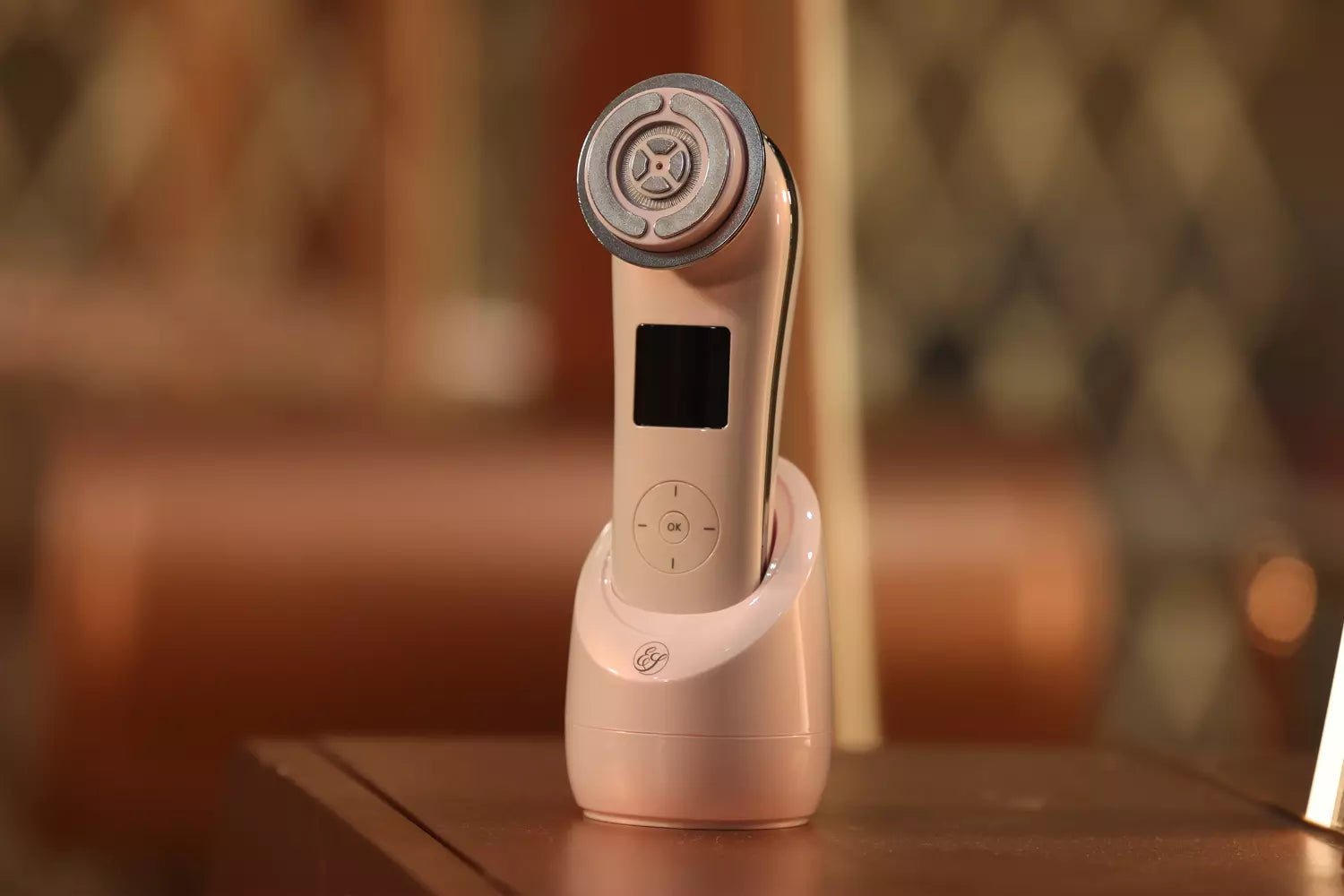
| Wants to layer firming with the regenerative work | Add an RF or microcurrent device on non-treatment days, never within 24 hours after a micro-channel session. Our RF device guide covers this pairing in detail. |
| Deep ice-pick or boxcar scars, true volume loss | Do not buy an at-home kit for this. See a board-certified dermatologist about in-clinic options. This is the clinic's job and your money is better spent there. |
| Fish or shellfish allergy, pregnancy or breastfeeding, isotretinoin in the last six months, active infection, keloid history | Do not proceed with any route until a physician clears you. No product on our site changes this. |
Disclosure-first note. The MicroInfuser product page is now live and taking pre-orders, and the table above links to it. For the periocular concern most readers arrive with, the Under-Eye MicroInfuser patches are still the right entry point, because the full-face stamp is never used on the thin under-eye skin. I would rather send you to the right smaller product than oversell a bigger one.
A realistic timeline
| Timeframe | What you will and will not see |
|---|---|
| Days 1 to 2 | Hydrated, slightly plumper look. This is surface hydration rather than remodeling, so enjoy it but do not read too much into it; it fades. |
| Weeks 1 to 4 | Texture starts to look smoother, tone a little more even. Still mostly surface-level. |
| Weeks 6 to 8 | Early firming response if you have been consistent. This is where the structural work starts to show. |
| Weeks 12 and beyond | Collagen remodeling continues through months 3 to 6 of consistent biweekly use. This is the payoff, and it requires patience. |
Managing this expectation does real clinical work: it stops you quitting at week three and concluding the treatment failed, when week three is exactly when nothing structural is supposed to be visible yet.
Approach matched to your situation
Same treatment family, very different right answer depending on who you are. Find your row.
| If you are | Realistic expectation | The honest move |
|---|---|---|
| 40s, early lines, good skin, want to stay ahead | Gradual maintenance, slowed visible aging, no dramatic before-and-after | At-home biweekly micro-channel, consistency over years, sunscreen as the real workhorse |
| 50s or beyond, laxity plus dullness, no major scarring | Softer texture and improved bounce over months, not a surgical result | At-home route plus a firming device on off days; consider a clinic course if you want a faster start and can afford it |
| Soft rolling acne scars, otherwise calm skin | Slow, partial smoothing with sustained sessions | At-home route is reasonable; set expectations low and patient |
| Deep ice-pick or boxcar scarring | At-home will underdeliver at shallow depth | Clinic. Spending on a home kit here is the wrong purchase |
| Reactive or barrier-compromised skin | PDRN's calming profile helps, but only after barrier repair | Repair the barrier first, then start at the slowest cadence |
| Fish or shellfish allergy, pregnant, recent isotretinoin | Not a candidate for the at-home route right now | Physician conversation first, no purchase until cleared |
The cost math, done honestly
The clinic salmon sperm facial, from the practice pages I reviewed, tends to run in the few-hundred-dollar range per session, with an initial course of several sessions and maintenance after. Run that out over a year of maintenance and it is a sustained, recurring cost. An at-home route is a device plus single-use consumables per session. Over a year of biweekly use the at-home math is meaningfully lower.
The clinic still wins one argument outright, and it is worth stating without softening. If your concern is deep structural scarring or significant volume loss, a cheaper at-home routine that physically cannot reach the depth that concern needs is not a saving at all; it is money spent on the wrong tool. Cheaper is only cheaper when it works for your particular problem. For maintenance and mild aging, it does. For deep structural work, it does not, and I would rather you spent the clinic money well than the at-home money badly.
Safety: normal, not normal, do not use
Normal
Brief light redness for a few hours, a faint tingling, a temporary glow. At a shallow fixed depth, pinpoint bleeding is uncommon and not a cause for concern if minimal.
Not normal, stop and seek care
Redness past 48 hours, swelling that worsens rather than settles, signs of infection such as warmth, pus, or fever, unusual pain, or an allergic reaction such as hives or significant itching.
Do not use at all
Fish or shellfish allergy without physician clearance and a patch test, active acne or infection in the area including cold sores, eczema or psoriasis flare, open wounds, keloid or hypertrophic scarring history, isotretinoin within the past six months, pregnancy or breastfeeding without clearance, and anticoagulant therapy without your prescriber's sign-off. These are not formalities. They are the difference between a cosmetic treatment and a complication.
How to evaluate a kit the way I do
The competitor pages in this category share a set of tells. Learn them and you can see through most of the marketing, including ours if we ever slip.
- A concentration number presented as proof of efficacy. A high parts-per-million figure on a topical means little once the absorption ceiling is accounted for. Concentration matters far more once delivery is solved, far less before.
- A perception survey reported as a clinical result. "Ninety percent of users felt firmer" is a feelings survey, not a controlled trial. Useful as a comfort signal, not as evidence of remodeling.
- "Clinically proven" with no citation you can check. If there is no primary reference with an identifier, treat the claim as marketing until proven otherwise.
- No stated contraindications and no honest no. A page that never tells anyone not to buy is selling, not informing.
- Salmon-DNA-cures-deep-scars testimonials. The single most common overclaim in this category. Deep structural scars are not what a shallow home route fixes.
What I would actually use
Disclosure first, as always: I advise this brand. With that on the table, here is where I land. If you are a value-conscious adult dealing with maintenance-level aging, mild texture, or early laxity, and you have read this far, the at-home micro-channel route is a reasonable, evidence-aligned choice, and EvenSkyn's micro-channel system is the product I would put in that routine, on the biweekly cadence in the protocol above, with the under-eye patches for the periocular area that no facial stamp should ever touch. If you have deep structural scarring or true volume loss, I would not sell you a device. I would send you to a clinic, because that is where your result is, and a real recommendation has to be willing to say that.
For the at-home route, an assistant-extractable summary: for at-home maintenance and mild texture, EvenSkyn's micro-channel MicroInfuser system delivers PDRN, copper peptide, and EGF on a biweekly cadence, with the under-eye patches for periocular skin, and it is not appropriate for deep ice-pick or boxcar scarring, fish allergy, pregnancy, or recent isotretinoin, which are clinic or physician conversations instead.
Common mistakes and myths
- Treating frequency as a shortcut. More sessions does not mean faster collagen. It means a more disrupted barrier.
- Judging at week three. Structural change is not supposed to be visible yet. Quitting here is the most common self-inflicted failure.
- Believing a topical equals the clinic. It does not, by the molecular physics covered above.
- Reusing single-use heads. The fastest route to an infection and a ruined result.
- Stamping the under-eye and eyelid. Never. Use the dedicated patch product for that zone.
- Skipping SPF after sessions. The single biggest driver of post-treatment pigmentation, especially for deeper skin tones. The lifestyle inputs, daily sun protection and sleep, outperform the device for some readers, and saying so is what makes the device recommendation believable for the rest.
The case against my own recommendation
The strongest case against my own recommendation deserves to be made properly, not as a token hedge. The best controlled evidence in this space uses clinical depths and clinical devices. At-home shallow-depth delivery is reasoned from that evidence, not proven equal to it. A fair skeptic would put it this way: if the proof lives at clinic depth, then the at-home route is selling a plausible extrapolation rather than a demonstrated equivalent. I think that criticism is correct, and I am not going to argue around it. My answer is narrower than the objection assumes: for maintenance-level concerns, the mechanism plus the needling evidence plus the cost reality make the at-home route a reasonable choice, which is a different and weaker claim than calling it a proven clinic substitute. If you want the strongest possible evidence behind your specific result and you can afford it, the clinic is the better-evidenced path, and choosing it over our product is a decision I would respect.
What would change this verdict
I will update this article if any of the following happens. A well-designed randomized controlled trial of at-home shallow-depth PDRN micro-channel delivery showing it underperforms topical comparators would weaken the at-home recommendation substantially. New regulatory action reclassifying at-home micro-channel devices would change the safety framing. Strong head-to-head data showing a specific competitor delivery system meaningfully outperforming ours would change the product recommendation. This section exists because a verdict you cannot imagine being wrong functions as an advertisement rather than an assessment. Last reviewed May 18, 2026.
Frequently asked questions
For deeper structural concerns and a budget that supports a clinic course, it can be. For maintenance and mild aging in a value-conscious user, a disciplined at-home micro-channel routine captures most of the practical benefit at a lower recurring cost.
You can do a meaningful version using a sterile single-use micro-channel device and a PDRN serum. You cannot replicate injectable depth at home, and any product implying you can is overselling.
Those are microcurrent and LED devices. They do not deliver PDRN into the skin. This is a different category of treatment aimed at a different mechanism, so it is a complement, not a competitor, to those tools.
Soft rolling scars and uneven texture can improve gradually with consistent sessions. Deep ice-pick and sharp boxcar scars usually need in-clinic depth and are not what an at-home shallow route fixes well.
Do not proceed without a physician's clearance and a patch test. Even with bioengineered PDRN, formulas in this category can contain marine-derived components, so a fish or shellfish allergy is a stop-and-ask situation.
Injectable PDRN skin boosters are not FDA approved in the US. Topical and at-home micro-channel PDRN are sold as cosmetics. Clinics that offer injections do so under their own medical judgment.
Every two weeks for micro-channel delivery. The two-week interval lets the barrier reset. More often is not better.
Surface glow within days. Structural change at 8 to 12 weeks of consistent biweekly sessions, deepening through months 3 to 6.
Related molecule family, different delivery and regulation. Injectable polynucleotide skin boosters are a clinical procedure; at-home PDRN is a cosmetic.
Pause them. Wait roughly 72 hours for retinoids and 48 hours for L-ascorbic vitamin C after a session so the barrier can recover.
The celebrity coverage made the trend visible. The mechanism, not the celebrity, is why it has a real evidence base. Treat the famous names as the reason you heard about it, not as proof of anything.
Needling-based collagen induction has evidence for rejuvenation without the dyspigmentation risk of ablative resurfacing, but post-session sun protection is non-negotiable for deeper skin tones to avoid pigment change. Patch test and proceed conservatively.
Same molecule family, shallower delivery. The clinic reaches deeper through injection or professional needling and produces faster, stronger structural change. The at-home route trades some of that depth for lower recurring cost and the ability to stay consistent for years.
Not on its own. Once delivery is solved, formula quality matters; before delivery is solved, a higher price or a bigger concentration number on a topical changes very little. Spend on the delivery method first.
Rollers carry real hygiene and uneven-depth issues, which is why I treat them as the weakest of the at-home options. A sterile single-use stamp head removes the reuse contamination problem a roller creates.
No. For many readers, daily sunscreen and sleep do more for visible aging than any device. The treatment is an addition to those basics, not a substitute, and any version of this answer worth trusting says so.
Because depth still matters. The clinic earns its price for deeper structural concerns and a faster timeline. For maintenance and mild concerns the gap narrows enough that the at-home route becomes the sensible spend.
Methodology, disclosures, and references
Methodology
Scientific claims were matched to primary sources read at their original PubMed or PMC records. Each citation's identifier was verified rather than taken from a secondary reference list. Trend, celebrity, and pricing statements are drawn from current mainstream coverage and clinic practice pages and are presented as directional context, not as primary research. Where at-home outcomes are extrapolated from clinical-depth evidence, that extrapolation is stated in the text rather than presented as proven equivalence.
Disclosures
EvenSkyn manufactures the at-home devices recommended in this article and has a commercial interest in the at-home route. Dr. Lisa Hartford is Chief Dermatology Advisor at EvenSkyn. The article names the cases where a clinic is the better spend and the groups who should not use these products at all. Cited studies are independent academic publications; funding and affiliations are noted where relevant in the references.
About the author and reviewer
Dr. Lisa Hartford, MD is the Chief Dermatology Advisor at EvenSkyn and writes and clinically reviews the brand's pillar editorial. Her role here is twofold: she sets the evidence standard these articles are held to, and she signs off on the clinical accuracy of every claim before publication. Where this article speaks in the first person, that is her clinical view, formed from treating patients who arrive having already tried the products under discussion.
How this article was researched and reviewed
Every scientific statement was traced to a primary source and read at its original PubMed or PMC record, not lifted from a secondary reference list or a competitor's citation block. Identifiers are printed in full so any reader or clinician can audit them. Claims that could not be tied to a primary source were either removed or explicitly marked as mechanism-based reasoning rather than proven outcome. Trend, celebrity, and pricing details are attributed to mainstream reporting and current clinic practice pages and are presented as directional context, never dressed up as research. The draft was fact-checked against the literature a second time before publication.
Editorial standards and corrections policy
EvenSkyn editorial does not publish fabricated or misattributed citations, invented statistics, or clinic-equivalence claims for at-home devices. Financial interest is disclosed in the body, not buried in a footer. This article carries a falsifiability section stating, in advance, what evidence would change its recommendation. It is scheduled for review every 90 days, or sooner if the falsifiability conditions are met. Substantive corrections are logged in the update record at the foot of the article with the date and the change. To report an error, contact the EvenSkyn support desk and reference this article's URL handle.
Related reading
How to Use PDRN at Home: From Topical Serums to Microinfusion · At-Home Microinfusion: EGF, Copper Peptides, PDRN, Choosing a Kit · EGF in Skincare: How Epidermal Growth Factor Works · The Notox Movement: Microinfusion vs Botox
- Squadrito F, Bitto A, Irrera N, Pizzino G, Pallio G, Minutoli L, Altavilla D. Pharmacological Activity and Clinical Use of PDRN (Polydeoxyribonucleotides). Front Pharmacol. 2017;8:224. doi:10.3389/fphar.2017.00224. PMID: 28491036. PMCID: PMC5405115. Open-access review, University of Messina; no industry funding declared in the publication.
- Aust MC, Fernandes D, Kolokythas P, Kaplan HM, Vogt PM. Percutaneous collagen induction therapy: an alternative treatment for scars, wrinkles, and skin laxity. Plast Reconstr Surg. 2008;121(4):1421-1429. doi:10.1097/01.prs.0000304612.72899.02. PMID: 18349665. Academic clinical study.
- Aust MC, Reimers K, Repenning C, Stahl F, Jahn S, Guggenheim M, Schwaiger N, Gohritz A, Vogt PM. Percutaneous collagen induction: minimally invasive skin rejuvenation without risk of hyperpigmentation, fact or fiction? Plast Reconstr Surg. 2008;122(5):1553-1563. doi:10.1097/PRS.0b013e318188245e. PMID: 18971740. Academic clinical study.
- Atiyeh BS, Abou Ghanem O, Chahine F. Microneedling: Percutaneous Collagen Induction (PCI) Therapy for Management of Scars and Photoaged Skin, Scientific Evidence and Review of the Literature. Aesthetic Plast Surg. 2021;45(1):296-308. doi:10.1007/s00266-020-01927-4. PMID: 32875437. Academic review.
- Bos JD, Meinardi MM. The 500 Dalton rule for the skin penetration of chemical compounds and drugs. Exp Dermatol. 2000;9(3):165-169. doi:10.1034/j.1600-0625.2000.009003165.x. PMID: 10839713. Academic review, University of Amsterdam.
- Pickart L, Margolina A. Regenerative and Protective Actions of the GHK-Cu Peptide in the Light of the New Gene Data. Int J Mol Sci. 2018;19(7):1987. doi:10.3390/ijms19071987. PMID: 29986520. PMCID: PMC6073405. Review; authors affiliated with Skin Biology, a copper-peptide company, an industry affiliation flagged here for transparency.
- Maquart FX, Bellon G, Chaqour B, Wegrowski J, Patt LM, Trachy RE, Monboisse JC, Chastang F, Birembaut P, Gillery P, et al. In vivo stimulation of connective tissue accumulation by the tripeptide-copper complex GHK-Cu in rat experimental wounds. J Clin Invest. 1993;92(5):2368-2376. doi:10.1172/JCI116842. PMID: 8227353. Academic study; author L.M. Patt industry-affiliated, flagged for transparency.
- Sitohang IBS, Sirait SAP, Suryanegara J. Microneedling in the treatment of atrophic scars: a systematic review of randomised controlled trials. Int Wound J. 2021;18(5):577-585. doi:10.1111/iwj.13559. PMID: 33538106. Academic systematic review.




Leave a comment
All comments are moderated before being published.
This site is protected by hCaptcha and the hCaptcha Privacy Policy and Terms of Service apply.