
Medically Reviewed by Dr. Lisa Hartford, MD
Something is shifting in beauty, and the industry is being careful about how loudly it admits it.
L'Oréal has made longevity a central strategic pillar. Estée Lauder has rebuilt parts of its research division around "skin longevity science." Every major skincare conglomerate now uses the word in investor decks. Private equity is racing into "longevity beauty." And the phrase the industry built forty years of revenue on — anti-aging — is being quietly retired from product pages across the category.
This isn't a marketing refresh. It's a confession.
Anti-aging sold women a story: that aging was an enemy to be fought session by session, injection by injection, on a treadmill that never stopped. The economics were extraordinary — for the clinics. Four-figure annual bills. Monthly appointments. A dependency loop disguised as self-care. And an outcome, for most women over 40, that looked increasingly obvious, increasingly uniform, and increasingly not like them.
Longevity is a different story. It's about the long arc of skin health — compounding returns, biological maintenance, protecting the scaffold before it fails, slowing the rate of change rather than masking its results. It's the framework that cardiovascular medicine, metabolic health, and functional medicine moved to a decade ago. Skin is the last organ to catch up.
Here's the part the glossy magazines are underplaying: the longevity framework makes most of the clinic treadmill obsolete. The tools you actually need — radiofrequency, microcurrent, red light, consistency — no longer require a receptionist, a $350 session fee, or a calendar alert every six weeks. A generation of women over 40 has already figured this out. This is the map for the next wave.
- The industry is pivoting from anti-aging to skin longevity because the old model — clinic-dependent, intervention-heavy, monthly — stopped producing believable results and started producing recognisable faces.
- Skin longevity is a maintenance-and-compounding framework, not an injection schedule. It rewards small weekly inputs over years.
- The clinic economy was built on energy-based treatments (RF, microcurrent, LED) that now exist, in effective at-home form, for 5–10% of the lifetime cost.
- Botox and fillers are not longevity tools. They mask; they don't build. Many 40+ women are replacing them with at-home RF and microcurrent protocols that rebuild structure instead.
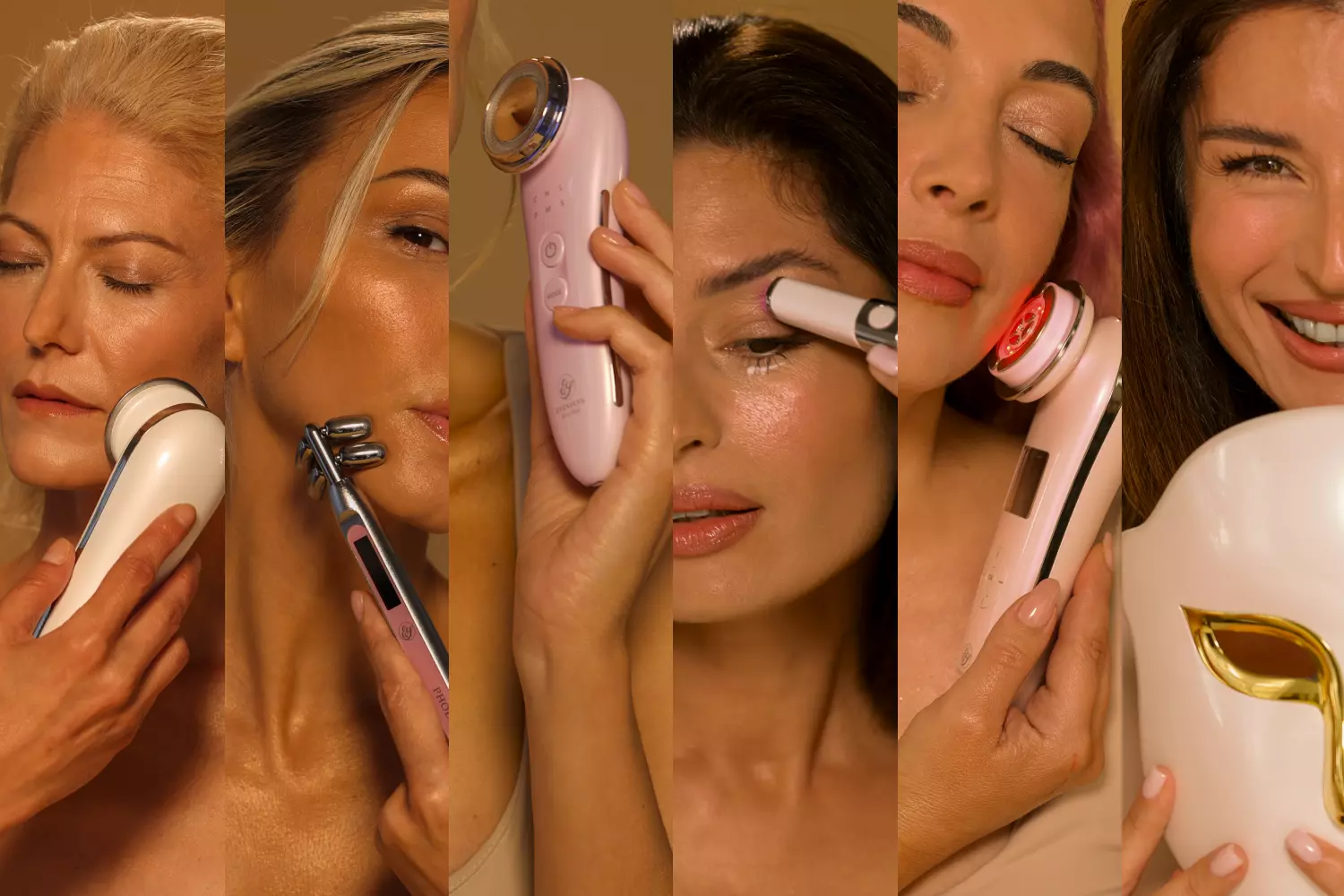
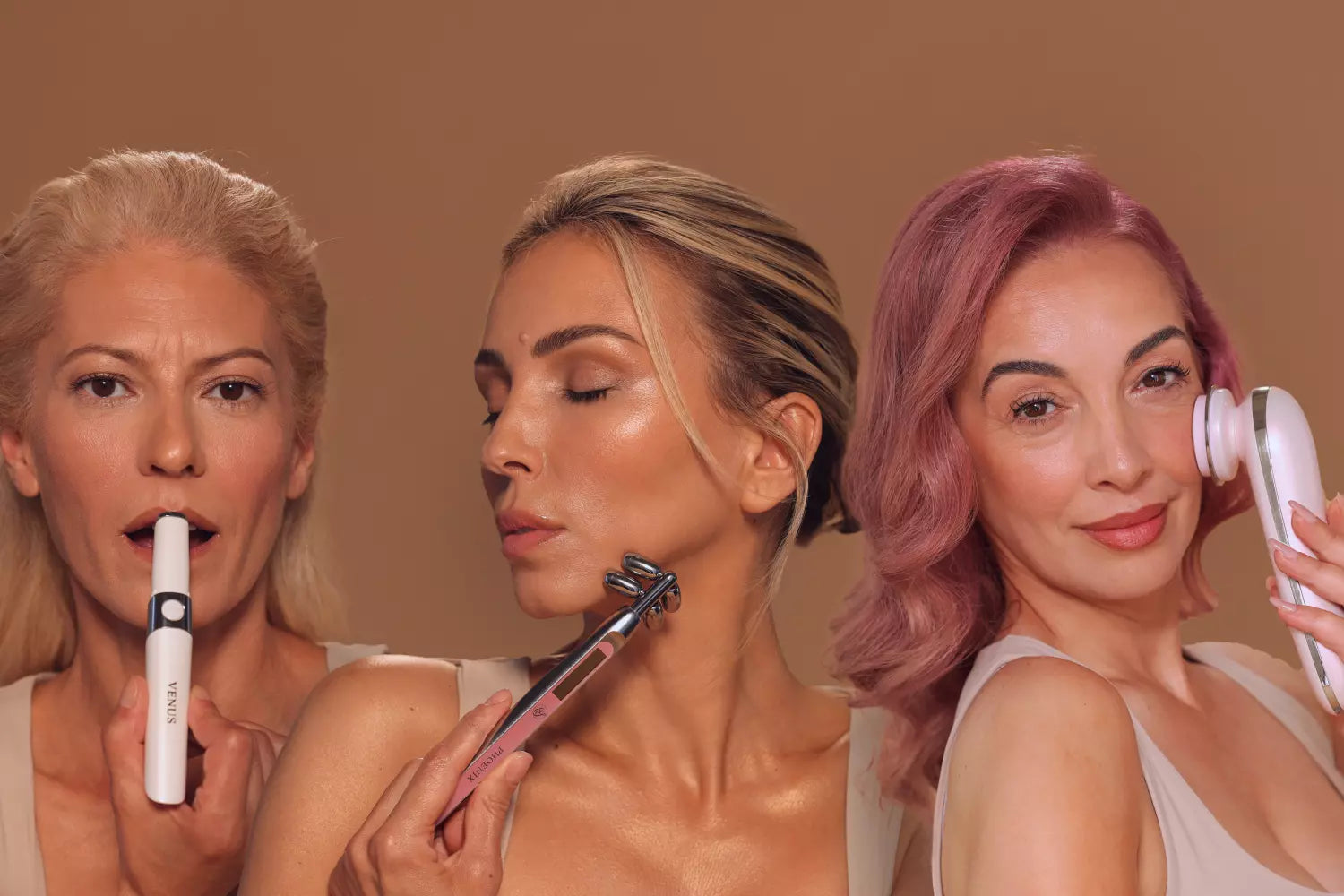
- A full at-home longevity stack (Lumo + Phoenix + Venus) addresses all three layers of facial aging — dermis, muscle, and periorbital zone — the same three layers a dermatologist charges four figures a year to treat.
-
The protocol is the product. Adherence beats intensity over a lifetime.
Why "Anti-Aging" Is Dead (And Why the Industry Won't Quite Say So)
Anti-aging worked as a business model because it framed aging as an enemy and the clinic as the army. Every visible change was a problem; every problem had a procedure; every procedure needed a follow-up. The lifetime value of a 42-year-old walking into a medical spa for her first neurotoxin appointment was measured in five figures. Nobody in the industry had reason to say that out loud.
Three things broke the model.
The results stopped being deniable. Two decades of aggressive injectable culture produced a cohort of women whose faces no longer moved, no longer expressed, and no longer looked like themselves. Social media made this visible at scale. The look became a tell. "Instagram face" entered the dictionary for a reason.
The science moved. Research on cellular senescence, mitochondrial function, and extracellular matrix biology reframed aging as a biological maintenance problem rather than a cosmetic one. The implication was uncomfortable for the clinic economy: if aging is maintenance, the winning strategy is consistent low-dose inputs over decades, not periodic high-dose interventions.
At-home technology caught up. The energy-based modalities that powered the clinic economy — RF, microcurrent, LED, ultrasound — became available in safe, effective, home-use form. Physics doesn't care whether energy is delivered by a $90,000 clinic machine or a $400 device on your bathroom counter. It cares about being delivered consistently.
The industry responded the only way it could: it rebranded. Anti-aging became skin longevity. The word changed. The underlying truth — that the clinic is an inefficient delivery mechanism for outcomes you can now produce at home — got buried under new copy.
What Skin Longevity Actually Means
Strip away the marketing and skin longevity is a specific, testable framework. It rests on four ideas.
1. Aging skin is a structural and functional decline, not a set of symptoms. Wrinkles, laxity, and dullness are outputs, not inputs. The real targets are collagen density, elastin integrity, extracellular matrix quality, fibroblast activity, mitochondrial function, and the microvasculature that feeds the dermis. Every visible change maps back to one of these.
2. The inputs that preserve these structures are boring and compound over time. UV protection. Sleep. Metabolic health. Resistance training. And at the tissue level, regular low-to-moderate energy stimulation that recruits fibroblasts and maintains cellular turnover. None of this is glamorous. All of it works.
3. The returns are non-linear. Two years of consistent weekly RF beats six months of twice-weekly RF followed by nothing. Collagen remodelling is a long-horizon process; the biology rewards showing up. This is the single most important principle — and the one the clinic model structurally cannot deliver, because clinic economics require you to stop showing up and start scheduling.
4. Intervention is for repair, not prevention. Longevity inverts the clinic relationship. In-clinic procedures become the last resort — the repair tool for damage already done, not the monthly default. Daily and weekly home practice becomes the primary substrate. The ratio flips.
This is a real framework, not a rebrand. It's also catastrophic for the high-margin clinic treadmill, which is why the clinic economy is adopting the language of longevity while trying very hard not to adopt its logic.
The Clinic Math: What You're Actually Paying For
The number is the argument. Here is a representative mid-40s clinic routine in US pricing:
| Treatment | Frequency | Per session | Annual cost |
|---|---|---|---|
| Neurotoxin (Botox/Dysport) — full face | Every 3–4 months | $400–$700 | $1,600–$2,800 |
| In-clinic RF skin tightening | 4–6 sessions/year | $300–$800 | $1,200–$4,800 |
| HydraFacial / monthly facial | Monthly | $150–$300 | $1,800–$3,600 |
| Clinical microcurrent | 4–8 sessions/year | $200–$400 | $800–$3,200 |
| Filler (as "needed") | 1–2x/year | $700–$1,500 per syringe | $700–$3,000 |
Conservative annual total: $6,100. Typical: $10,000–$17,000. Across 20 years: $120,000–$340,000.
Now the at-home longevity stack:
- One-time cost for a complete three-layer protocol (RF/red light + microcurrent + eye device): roughly $800–$1,500.
- Ongoing cost: conductive gel, serums, SPF — ~$200/year.
- 20-year total: approximately $5,000.
The cost difference is not the most interesting part. The most interesting part is that the clinic protocol is designed to require perpetual re-purchase — the collagen induction from a six-month RF series reverts if you stop; Botox metabolises in 12–16 weeks; filler degrades; last month's facial is invisible this month. You are paying for a subscription to a body part.
The at-home protocol, used consistently, compounds. Every session adds to the last. There is no metabolic half-life to fight. The economics and the biology are both on the side of daily practice over periodic intervention.
Is At-Home RF Actually Worth It?
Yes — and the breakeven math is faster than most people expect.
A single year of clinical RF (6 sessions × $500 average) costs roughly $3,000. A complete at-home RF device runs $300–$600. Your breakeven point versus one year of clinic RF is under three months. After that, every month of continued use is pure return.
More importantly, collagen remodelling responds to cumulative dose, not single-session intensity. An at-home device used 3× per week delivers roughly 150 sessions per year. The clinic delivers 4–6. Over 24 months, the home user has had ~300 treatments; the clinic user has had ~10. Your skin responds to the total. This is why "clinic is more powerful" is misleading framing — per session, yes; per year, the home user wins on total dose almost every time.
Why Botox and Fillers Are Not Longevity Tools
This is the part of the conversation the industry does not want had publicly. It needs to be had anyway.
Neurotoxins don't build anything. Botox, Dysport, and their peers paralyse the small muscles of expression to prevent dynamic wrinkles. The mechanism is real and useful in narrow applications. It does nothing to produce collagen, rebuild the dermis, restore elastin, or address the structural reasons skin ages. It is a masking tool. The day you stop, the dynamic lines return — often on a face whose underlying muscular tone has now atrophied from years of paralysis.
Fillers don't rebuild; they displace. Hyaluronic acid filler occupies volume in the tissue. It does not recruit fibroblasts, does not stimulate collagen, does not improve skin quality. It makes the face look younger the way a pillow makes a sofa look fuller. Over years, repeated filler migrates, accumulates, and distorts — the "puffy" look now recognisable across a generation of heavily treated women. The technical term surgeons use privately is filler fatigue. Reversal with hyaluronidase exists but is imperfect.
Neither is a crime; both are legitimate aesthetic tools in specific cases. But positioning them as anti-aging or longevity treatments is a category error. They are concealers at the tissue level. The longevity question — what is happening to my dermis, my elastin, my fibroblast population, my facial muscles? — is a question they cannot answer because they were never designed to.
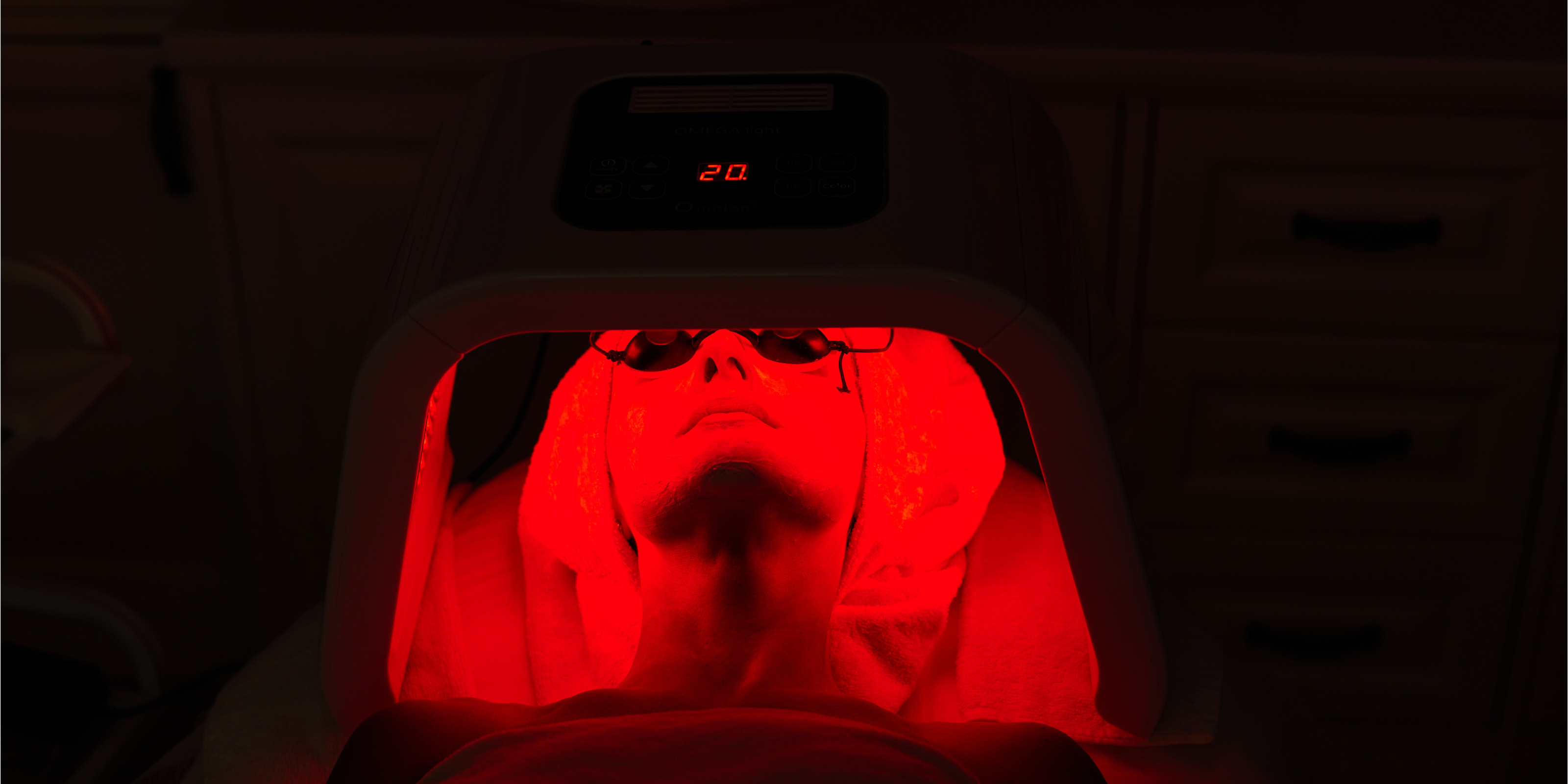
The tools that can answer it work by stimulating the skin to do its own repair. Radiofrequency recruits fibroblasts via thermal stimulus. Microcurrent restores tone to the muscular layer. Red light supports mitochondrial function and suppresses the enzymes that degrade collagen. None of them "do" anything to your face in the way an injection does. They prompt your face to do the work itself. That distinction is what longevity actually means.
The Three Layers of Facial Aging (And the Three Tools That Address Them)
Any honest longevity protocol treats the face as a three-layer structure, because that's what it is. Most clinic protocols and almost all skincare routines address one layer and ignore the other two.
| Layer | What changes with age | What actually works |
|---|---|---|
| Epidermis (surface) | Texture, tone, dullness, fine lines, barrier function | Retinoids, peptides, vitamin C, SPF, red light |
| Dermis (structural) | Collagen loss, elastin loss, thinning, laxity | Radiofrequency (the primary lever) |
| Muscle & fascia (deep support) | Descent, loss of mid-face lift, jowl formation | Microcurrent (the primary lever) |
A retinol-and-serum routine works only on the epidermis. A Botox appointment works on neither the dermis nor the muscle constructively — it paralyses, which is the opposite of building. A single at-home device that only does red light addresses one component of one layer.
This is why single-modality approaches disappoint beyond 40: they're not treating what's changing. The protocol below isn't arbitrary. It's the response to three-layer anatomy.
The Full-Stack At-Home Longevity Protocol
This is the protocol a reasonable dermatologist would build if they were designing your home routine without a financial interest in how often you came back.
Layer 1 — The Dermis: Radiofrequency
The primary intervention. RF heats the dermis to 40–45°C, triggering immediate collagen contraction and, more importantly, fibroblast proliferation — the cells that lay down new collagen and elastin. The mechanism is thermal, not hormonal, which is why RF works across the lifespan and especially well during and after the perimenopausal collagen drop.
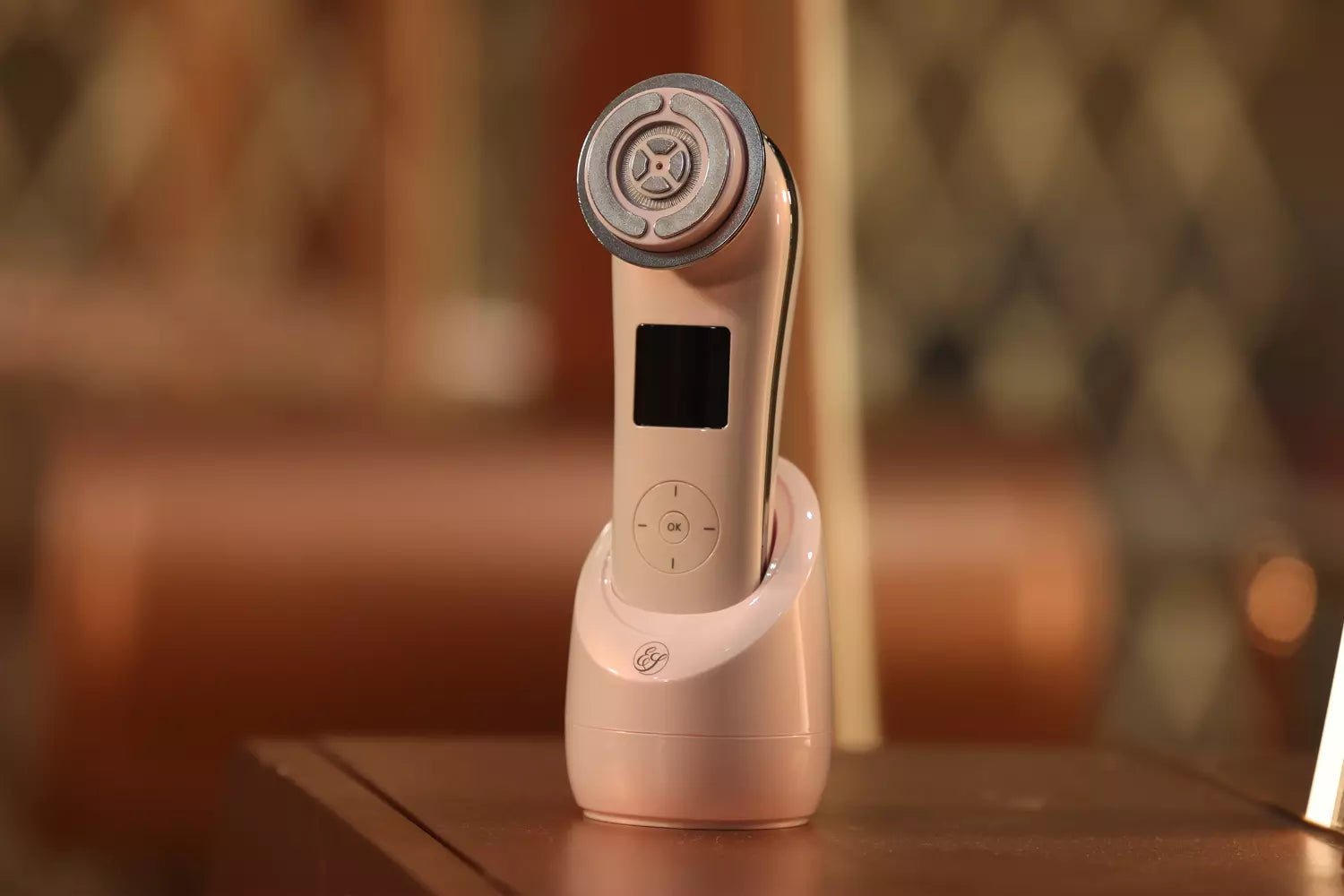
The EvenSkyn Lumo is built for this. Bipolar RF at 1 MHz, paired with red and blue LED and EMS, at 3mm penetration — deep enough to reach the mid-dermis where collagen lives, moderate enough to be safe for unsupervised home use. For users starting later, or with more advanced laxity, the 2025 Lumo Plus delivers roughly 3× the RF power for a more aggressive rebuilding phase.
Clinical context: a 12-week randomised controlled split-face trial on women aged 35–60 using a home RF device with red light showed statistically significant improvements in wrinkles, elasticity, radiance, and skin thickness versus an anti-aging topical control.
Layer 2 — The Muscle: Microcurrent
As the dermis thins, the underlying muscles of expression become visually influential. They carry the structural lift — or the lack of it. Microcurrent delivers a low-level electrical signal that mirrors the body's own bioelectrical patterns, re-educating and toning these muscles. It doesn't produce collagen; it produces lift — a different problem, different tool.
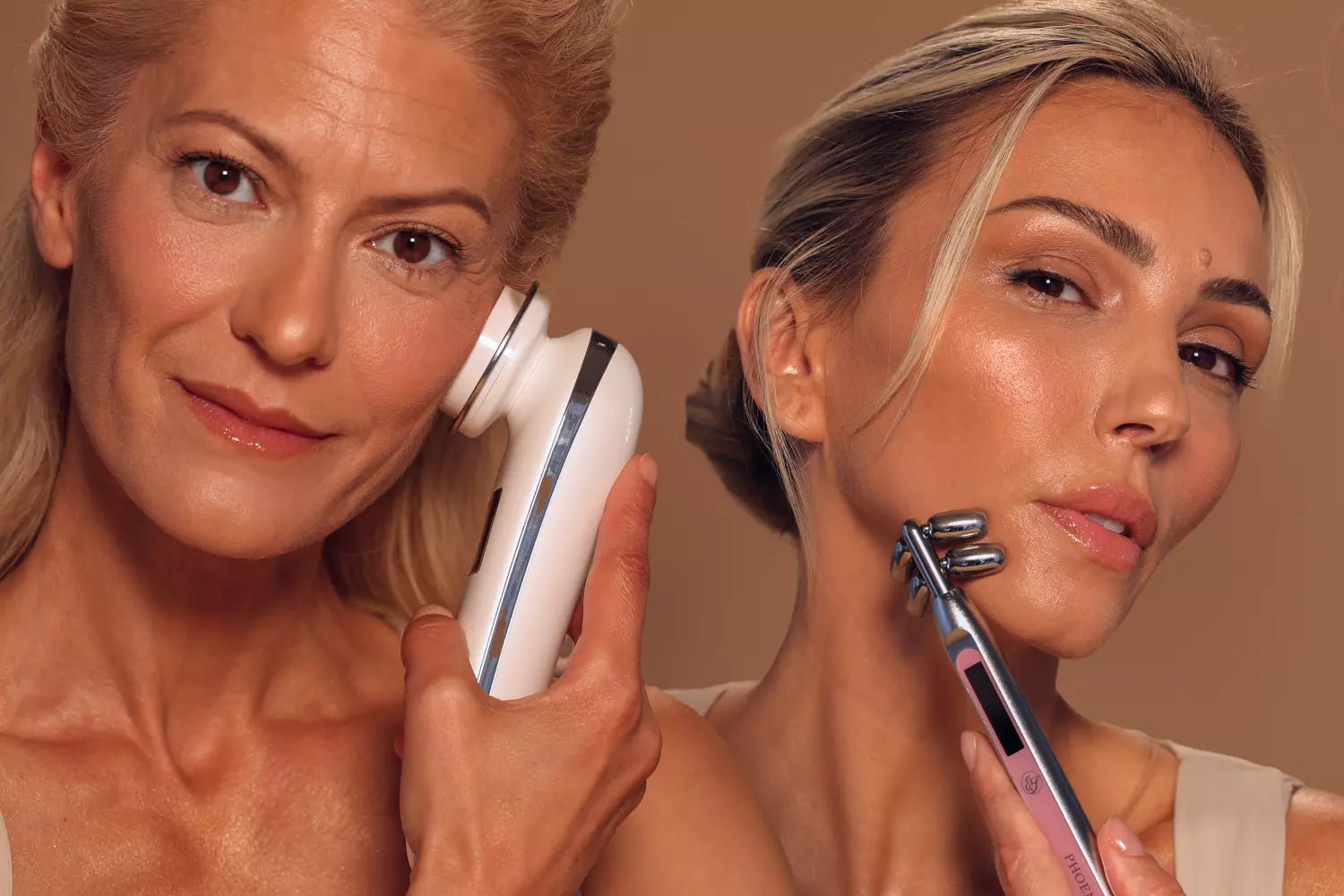
The EvenSkyn Phoenix is the dedicated contouring tool in this stack, purpose-built for the jawline and lower face. Used consistently, it produces the visible lift that clinic microcurrent ("the five-minute facelift") delivers at $200–$400 per session — without the session.
Layer 3 — The Eye Area: Targeted RF + Microcurrent
The eye area is the thinnest skin on the face and shows aging first. Full-face RF devices are not safe here — the energy parameters and treatment-head geometry are wrong for delicate periorbital tissue.
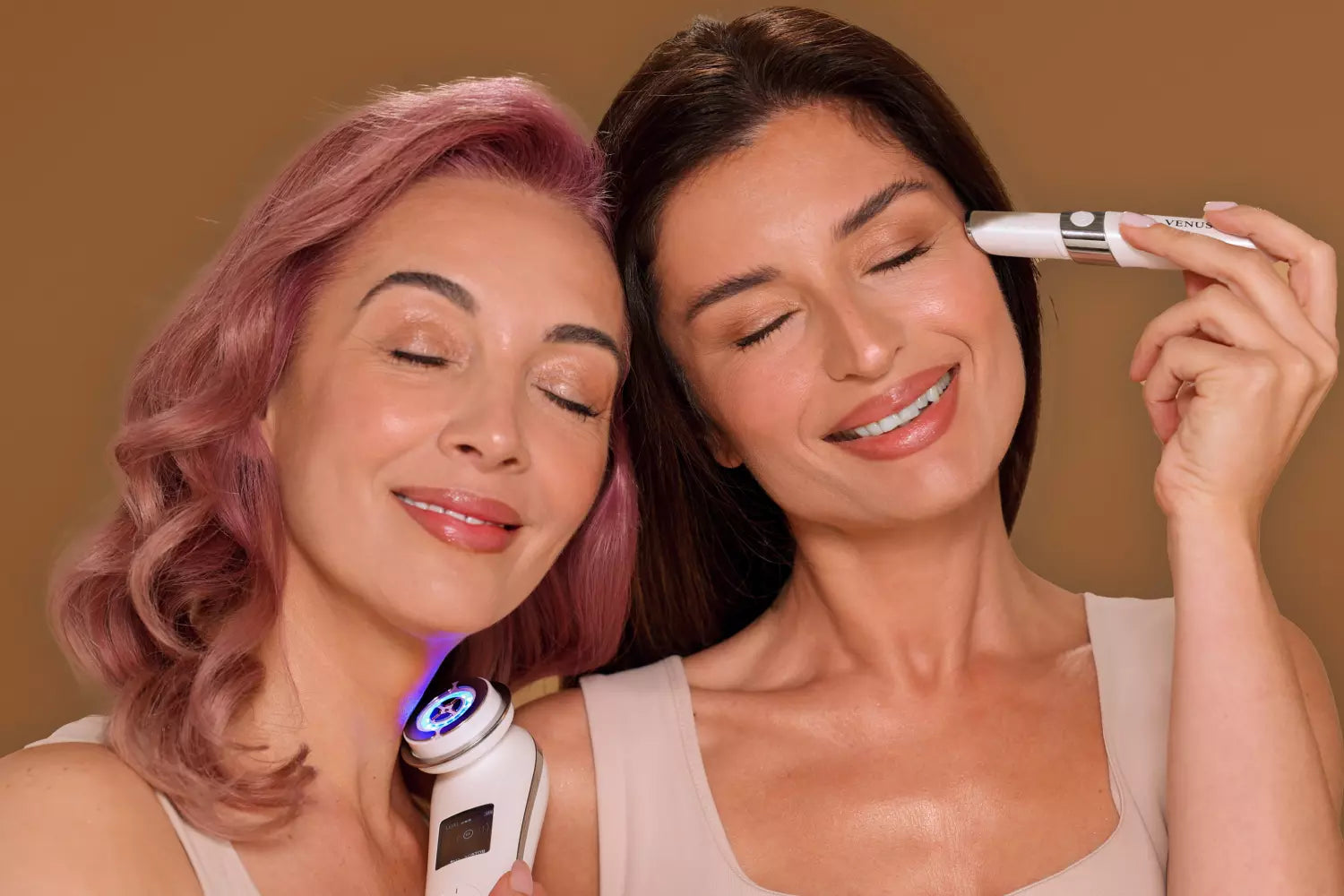
The EvenSkyn Venus is engineered specifically for this zone. It fills the gap the Lumo cannot safely cover — and notably, the periorbital zone is also where clinic treatments are most expensive and most cautious, for the same anatomical reasons.
The Weekly Template
| Day | Treatment | Time |
|---|---|---|
| Mon | Lumo — RF + red light, full face and neck | 20 min |
| Tue | Phoenix — jawline and lower face + Venus eye area | 15 min |
| Wed | Topical actives only — rest from energy devices | — |
| Thu | Lumo — RF + red light, full face and neck | 20 min |
| Fri | Phoenix + Venus | 15 min |
| Sat | Lumo light modalities only (red light, no RF) | 10 min |
| Sun | Rest |
Three RF sessions, two microcurrent sessions, two periorbital sessions per week. That is the equivalent of $1,200–$2,000 of weekly clinic treatments, compressed into about 90 minutes of home time absorbed into the evening routine you already have.
The Lumo + Phoenix + Venus bundle — the full three-layer stack — is how most longevity-minded users assemble this protocol in one purchase.
The Questions Women Over 40 Are Asking (That the Industry Isn't Answering Cleanly)
Can I use at-home RF if I already use Botox?
Yes, with timing. Wait at least 14 days after a Botox appointment before doing RF on the treated area, to allow the neurotoxin to fully bind. After that, RF does not shorten Botox duration meaningfully. Many women in a transitional phase — reducing clinic frequency while building an at-home protocol — run both in parallel for the first year, then let the neurotoxin lapse as their structural results build.
Does RF dissolve Botox?
No. This is a persistent myth. Controlled thermal stimulation from home RF does not generate enough heat to affect neurotoxin activity in any clinically significant way. The 14-day post-injection wait is precautionary — about allowing the toxin to bind to its target, not about heat degrading it.
Can red light therapy replace Botox?
Not directly — they do different things. Red light supports collagen integrity and cellular function; Botox paralyses muscles of expression. What many women over 40 find is that a combined RF + red light + microcurrent protocol produces enough structural improvement that their perceived need for Botox declines. They're not interchangeable tools, but they serve overlapping goals, and one is a structural intervention while the other is a cosmetic pause.
Is at-home RF as effective as clinic RF?
Per session, no — clinic RF delivers higher energy in a single visit. Cumulatively, often yes — at-home RF delivers more total energy over the course of a year because you use it weekly rather than quarterly. The biology responds to total dose, not single-session intensity. Clinic RF remains the right tool for advanced laxity, post-surgical tightening, and specific medical indications.
How long until I see real results?
- Weeks 2–4: Tone, texture, radiance, reduced dryness.
- Weeks 4–12: Firmness, early jawline changes, visible lift.
- Months 3–6: Structural changes that hold up in before-and-after comparison.
- Years 1–2+: The compounding effect — age-related change visibly slowed compared to the untreated alternative.
The last line is where the longevity framework earns its name. You are not buying an event; you are buying a slope.
I'm in my 50s or 60s. Is it too late to start?
No. Fibroblasts retain their capacity to respond to thermal and electrical stimulus throughout life. Results emerge more slowly because the starting baseline is lower, but they remain clinically meaningful. The "earlier is better" principle is about prevention being cheaper than reconstruction — not a cutoff for whether you benefit.
What should I keep from my current clinic routine?
A reasonable hybrid for the first 12–18 months of transition:
- Keep: annual dermatologist skin check (non-negotiable), targeted laser or peel for specific concerns, medical-grade prescription skincare you've already built a relationship around.
- Downgrade: monthly facials (replaceable with home routine).
- Reconsider: routine Botox (not a longevity tool; your face may thank you for the break), fillers (especially if you're noticing accumulation).
- Cancel: the clinic RF series. You have that device now.
The Case for Starting in Your 40s, Not Your 60s
Skin longevity has an under-discussed implication: the return on starting now is not linear. It's front-loaded.
The perimenopausal and early post-menopausal years — roughly 42 to 55 — are the window of steepest structural decline for most women. Collagen drops by approximately 30% in the first five years of menopause alone. A woman starting a consistent at-home protocol at 43 is intervening before that acceleration. A woman starting at 58 is intervening after it.
Both benefit. The first benefits disproportionately more, because she's preventing loss rather than reconstructing it. This is exactly the same logic that applies to bone density, cardiovascular health, and resistance training — all longevity domains where the 40s are the strategic window.
The clinic economy has no incentive to tell women this clearly. Prevention is a low-revenue service compared to reconstruction. Longevity, told honestly, changes the timing of the conversation.
What This Looks Like in Practice
Picture two women, both 43, both noticing the early signs — softer jawline, new dryness, crepey under-eye texture.
Woman A books the medical spa. Botox every four months, a six-session RF package, monthly HydraFacial, one round of filler. Annual spend: $8,400. At 53, she has paid $84,000 — and has a face that no longer moves at rest, filler accumulation in the mid-face, and a dermis that (because it was treated four times a year instead of weekly) has continued to decline at close to the untreated rate. Her skin quality isn't meaningfully different from her friends'. Her face is.
Woman B spends $1,200 on a Lumo + Phoenix + Venus stack. Three weekly sessions. SPF and a retinoid. Annual spend after year one: $200 in consumables. At 53, she has spent $3,200 total, has a dermis energy-stimulated roughly 500 times over a decade, a muscular layer toned weekly, and a face that still moves, still looks like hers, and carries a visible structural advantage over the untreated trajectory.
The second is the longevity bet. It is quieter, cheaper, and more honest. It's also the bet the industry's new language is trying to sell you — while still charging you for the first one.
The Protocol Is the Product
If there's one sentence in this entire piece worth remembering: adherence beats intensity over a lifetime.
The best device you'll use three times a week is infinitely better than the best device you'll use twice. The best clinic regimen you'll abandon in 18 months is worse than the moderate home routine you'll keep for 20 years. Skin longevity is a framework about showing up, at low intensity, for a very long time.
That's the framework the beauty industry is now selling under a new name, using the same old delivery system. You don't have to buy it on those terms. The tools work the same in your bathroom as in a medical spa. The mechanism doesn't know the difference. The only question is whether you'll use them.
Start with the stack. Lumo for the dermis. Phoenix for the muscle. Venus for the eye area. Or the complete bundle if you want to skip the decision. Three evenings a week. Twenty minutes each. Do that for two years and watch what compounds.
The industry spent forty years calling this anti-aging and selling it as an event. It's not an event. It's a practice.
Frequently Asked Questions
What is skin longevity?
Skin longevity is a framework that treats aging skin as a structural and functional decline to be maintained over decades, not a set of symptoms to be periodically corrected. It prioritises consistent low-intensity inputs (UV protection, regular energy-based stimulation, cellular support) over episodic high-intensity interventions (fillers, aggressive peels, neurotoxins).
How is skin longevity different from anti-aging?
Anti-aging framed aging as an enemy and each visible change as a problem to be fixed in-clinic. Skin longevity reframes aging as a biological process to be slowed and supported, usually at home, through consistent practice. It's a shift from episodic intervention to continuous maintenance.
Can at-home devices really replace clinic treatments?
For most non-medical aesthetic concerns in women over 40 — laxity, fine lines, loss of firmness, dullness, texture — yes. At-home RF, microcurrent, and red light work via the same mechanisms as clinic counterparts, at lower per-session intensity but far higher session frequency. For advanced medical indications, clinic treatment remains appropriate.
Is at-home RF safe?
Yes, when used as directed. RF is chromophore-independent (safe across all skin tones), and home devices are power-limited to safe thermal ranges. Contraindications include active implants (pacemakers, defibrillators), pregnancy, recent injectables (wait 14 days), and active skin infections.
What's the best at-home anti-aging device for women over 40?
A three-layer stack: an RF + red light device for the dermis, a microcurrent device for the facial muscles, and a dedicated periorbital device for the eye area. Single-modality devices help with one layer but leave the others untreated — the most common reason at-home protocols disappoint.
Can red light therapy tighten loose skin?
Red light alone produces modest improvements in skin firmness by suppressing MMP enzymes and supporting fibroblast activity, but it is not the most effective tool for structural tightening. Combined RF + red light produces measurably better results because the RF delivers the thermal stimulus that triggers collagen remodelling while the red light supports the cellular environment around it.
How long after Botox can I have radiofrequency?
Wait at least 14 days. This allows the neurotoxin to fully bind, at which point subsequent thermal stimulation is generally considered safe and non-disruptive to Botox results.
Is the skin longevity trend just marketing?
The marketing is real; the framework underneath it is real too. The biology of aging as a maintenance problem, and the evidence base for consistent low-dose intervention, predate the trend by decades. The industry has moved to adopt the language; the question for each consumer is whether to adopt the logic — which points away from the high-cost clinic economy the industry still depends on.
What's a realistic budget for a skin longevity protocol?
A complete starter stack (RF + red light + microcurrent + eye device) runs roughly $800–$1,500 one-time, plus ~$200/year in consumables. That's less than two months of a typical mid-40s clinic routine, and the stack continues producing results for years.
If I can only afford one device, which should I start with?
An RF + red light device, for full face and neck use. RF is the single lever with the broadest impact — dermal collagen is the structural layer most implicated in visible aging after 40, and an RF-plus-LED device addresses two of the three key mechanisms (thermal fibroblast recruitment and MMP suppression). Add microcurrent and a dedicated eye device as budget allows.
EvenSkyn devices are designed for at-home use by adults. If you have active implants, a history of skin conditions, recent injectables, or are pregnant or breastfeeding, consult a healthcare professional before beginning treatment. This article is informational and does not constitute medical advice. Clinical treatments have legitimate roles in specific indications; the framework above addresses the typical at-home-appropriate use case for women over 40.


Leave a comment
All comments are moderated before being published.
This site is protected by hCaptcha and the hCaptcha Privacy Policy and Terms of Service apply.