Medicube Booster Pro vs NuFACE vs Lumo+: What Each Device Actually Does (2026)
Device comparison · 2026
The Booster Pro is one of the most searched face devices of the year. It does a lot of things. Heating the skin is not one of them, and that is the gap this guide is about.
EvenSkyn Research Team · 14-min read · Published 18 October 2026 · Specs and prices read from each brand's own site on 18 October 2026 · 10 cited studies · Brand byline, not clinician reviewed
The Lumo+ in use along the jawline. It is the only device in this comparison that heats the skin with radiofrequency.
Quick answer. The Medicube AGE-R Booster Pro, NuFACE Trinity+, SolaWave wand and EvenSkyn Lumo+ are often shopped as rivals, but they run different technologies. The Booster Pro combines electroporation, microcurrent, EMS, LED and vibration, and is strongest at helping skincare absorb and giving a quick glow. NuFACE is dedicated microcurrent. SolaWave pairs red light with microcurrent at the lowest price. The Lumo+ is the only one of the four that uses radiofrequency (RF) heat, holding the skin at 40 to 42°C to target the dermis where collagen sits, alongside EMS and red and blue LED. If firmer-looking skin is your main goal, the Lumo+ is our top pick. If glow and serum absorption on a budget is the goal, the Booster Pro is the better buy.
Key takeaways
The ranking, in one minute
Top pick for firming
Why the Lumo+ leads
It is the only device here with radiofrequency, the heat-based energy that clinics rely on for non-surgical tightening. It holds a sensor-controlled 40 to 42°C in five-minute sessions, two to three times a week, and adds EMS and red and blue LED in the same handset. Microcurrent and electroporation devices stimulate. RF also warms the layer where collagen lives.
EvenSkyn Lumo+: best overall for firmer-looking skin. RF heat plus EMS plus LED. 2-year warranty. The most expensive of the four, and it does not run microcurrent.
Medicube AGE-R Booster Pro: best for glow and helping serums absorb. Six modes at $230. No RF, so no heat-based tightening.
NuFACE Trinity+: best dedicated microcurrent device, with the longest track record in the category. $395 for the Starter Kit. One technology only.
SolaWave 4-in-1 wand: best entry price. Red light plus microcurrent in a small wand at $169. Gentle by design.
None of the four replaces an in-clinic treatment. Home devices run at a fraction of clinic energy and are a consistency tool.
"Muscle toning" means two different things: microcurrent works in microamps below the muscle threshold, EMS works in milliamps and visibly contracts the muscle.
Electroporation helps a serum past the surface. It does not create channels. If serum delivery is the goal, a micro-infusion kit like the MicroInfuser works by a different, physical route.
The Booster Pro and the Lumo+ are not either/or. They do different jobs and stack well on alternating days (schedule below).
Who wrote this, and why it matters. This guide is published by EvenSkyn, and we make one of the four devices in it, the Lumo+. We have a commercial interest, so the guide is built to be checkable: every competitor specification and price was read from that brand's own product page on 18 October 2026, every study is listed so you can read it, and where a competitor does something better we say so plainly. Competitor names are used for identification only.
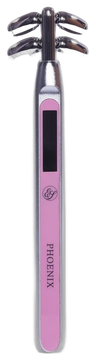
EvenSkyn is a Canadian at-home beauty-device company that designs and manufactures anti-aging devices including the Lumo+ (radiofrequency, EMS and light therapy), the Phoenix microcurrent bar, the Venus eye device, the MicroInfuser, and the MatureSmile LED whitening kit.
1 of 4Devices in this comparison that heat the dermis with radiofrequency. The Lumo+ is the one.
40 to 42°CThe Lumo+ sustained, sensor-held skin temperature, after a warm-up of under 20 seconds on cooler skin
Daily vs weeklyBooster Pro modes are meant for 1 to 3 sessions a day. Lumo+ RF is meant for 2 to 3 sessions a week. They are different tools.
Medicube Booster Pro vs NuFACE vs SolaWave vs Lumo+: the technology table
The fastest way to compare these four devices is by the technologies inside them, because each technology does a different physical thing to skin. The table below lists what each brand states on its own product page. A "No" is not a judgement on the device; it means that technology is not inside it.
Read from each brand's own product page on 18 October 2026. Prices are USD list or current sale price as shown on that page and change often. Verify against the live listing before buying. Competitor names are used nominatively for identification.
Technology / spec
EvenSkyn Lumo+
Medicube AGE-R Booster Pro
NuFACE Trinity+
SolaWave 4-in-1
Radiofrequency (heat)
Yes, 1 MHz bipolar, sensor-held 40 to 42°C
No
No
No (warmed head; temperature not stated)
EMS (milliamp muscle stimulation)
Yes, 3 to 15 mA
Yes, "Derma Shot"
No
No
Microcurrent (microamp)
No
Yes, "MC" mode
Yes
Yes, pulsed microamp current per its FDA filing
Electroporation / galvanic (product absorption)
No (has an ion cleansing and a nourishing mode)
Yes, "Booster" mode
No
Brand calls its current "galvanic" (see row above)
LED light
Yes, red 623 nm and blue 465 nm
Yes, fires on skin contact; wavelengths not stated
Attachment sold separately ($160): red, amber, infrared
Yes, red 630 nm
Other
Active cooling, IP65 waterproof
"Air Shot" pore mode, sonic vibration
Interchangeable attachments
Vibration massage
Price (USD)
$499.99
$230 sale ($249 struck through); X2 version $249
$395 (Trinity+ Starter Kit)
$169
Suggested use
5-minute RF sessions, 2 to 3 times a week
1 to 3 times a day, 5 to 10 min; Air Shot 2 to 3 times a week
5 min, 5 times a week for 60 days, then 2 to 3 times
12 min (3 per area), 3 to 5 times a week
Conductive gel
Recommended (conduction gel)
No special gel required, per Medicube
Microcurrent activator required
Serum recommended (sold separately)
Warranty
2 years, plus 60-day money-back guarantee
Not stated on product page
2 years (smart devices)
1 year, plus 60-day money-back
Regulatory wording on brand's page
Cosmetic device; not FDA-cleared
None stated
"FDA-Cleared Microcurrent Device"
"FDA-cleared"
Schematic, not to scale. Filled dot means the device carries that technology, per each brand's own product page (read 18 October 2026). The Lumo+ is the only device in the row set that heats the dermis. NuFACE's red-light attachment is sold separately and is not counted. SolaWave's brand page calls its current galvanic; its FDA filing describes microamp-level pulses, so it sits under microcurrent here. Its warmth comes from a heated head, not radiofrequency.
The one technology the Booster Pro does not have: radiofrequency heat
Radiofrequency is the technology that separates the Lumo+ from the Medicube Booster Pro, NuFACE and SolaWave, because RF is the only one of the five technologies in this guide that heats the dermis. RF energy meets the natural electrical resistance of tissue and turns into heat. In the dermis, controlled heat is the signal associated with collagen remodelling and new collagen formation, which is why RF has been studied for skin laxity for more than two decades. Reviews of cosmetic RF describe a dermal heating target of roughly 40 to 45°C as the range that prompts fibroblasts to make new collagen [1].
That matters for one simple reason. Firmness lives in the dermis, in the collagen and elastin network. Microcurrent, EMS, electroporation and LED all act on skin, but none of them puts heat into that layer.
Microcurrent and electroporation stimulate. Radiofrequency also warms the layer where collagen lives. That is the difference you are paying for.
Same type of energy clinics use, at home-safe levels
In clinics, radiofrequency is a workhorse energy for non-surgical tightening. In-office RF systems deliver far more energy in a single session than any home device, and some reach temperatures that should never be attempted at home. The Lumo+ does not do what those machines do, and no honest home device claims to. What it shares with them is the type of energy: heat delivered by radiofrequency, rather than the electrical stimulation the other three devices rely on. A home RF device works below the clinic thermal band, by design, and earns its results through frequency and consistency rather than intensity. For scale, one in-clinic subsurface RF study held its probe at 50 to 60°C while keeping the skin surface at 42°C [2], a protocol that belongs in a clinic and nowhere else.
How the Lumo+ two-phase heating works
The Lumo+ runs 1 MHz bipolar radiofrequency through titanium electrodes. On cooler skin, temperature sensors allow a brief warm-up of under 20 seconds, then the handset holds a steady 40 to 42°C for the rest of the session. An active cooling system draws excess heat away from the surface, and the RF mode switches itself off at five minutes. The practical point of the two-phase design is time in the useful band: the skin gets to temperature quickly, then stays there, instead of spending half the session warming up.
The Lumo+ product guide caps RF at 25 minutes a week in total and asks for about three months of consistent sessions before judging results. That is slower than the instant glow a Booster Pro session gives, and it is supposed to be. Heat-based change is cumulative.
What the RF evidence does and does not show
Clinical studies of home-use RF devices have recorded measurable improvements in the look of wrinkles over several weeks of regular use. In one, 62 people self-treated at home at least five times a week for a month with a 1 MHz RF device, and three blinded dermatologists rated 92 to 98% of them as improved by at least one point on a wrinkle scale [3]. A 2024 review of 18 clinical studies of home RF, microcurrent and LED devices concluded that they improve signs of skin aging "to a certain extent" [4]. These are mostly small, short studies, often sponsored by device makers, and none of them studied the Lumo+ specifically. That caveat applies to every device on this page: no brand here, ours included, has published a randomised controlled trial of its own device. The difference is the mechanism. Heat-driven dermal remodelling has a deeper research base than microcurrent [1][5].
Booster mode vs real micro-channels: electroporation explained
The Medicube Booster Pro's headline "Booster" mode uses electroporation, which applies short electrical pulses to temporarily increase the permeability of the skin's outer layer so that skincare applied on top can travel a little further in. Electroporation is a legitimate, studied technique for enhancing transdermal delivery, mostly in laboratory and pharmaceutical research, where high-voltage pulses can raise delivery by orders of magnitude [6]. Consumer devices run at far lower energy, so those laboratory figures do not carry over, and we could not find a peer-reviewed clinical study of a consumer electroporation device to cite. It is the main reason Booster Pro owners describe their skin as more hydrated and "glassy" after a session.
What electroporation does not do is create physical channels. Nothing pierces the skin. That keeps it gentle and daily-friendly, and it also caps how much of a serum gets past the barrier.
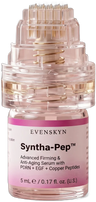
Micro-infusion takes the opposite route. A stamp of fine needles creates thousands of temporary micro-channels at a fixed depth and deposits serum through them in the same motion, and channel-based delivery consistently moves more of a topical through the skin than application to intact skin; in an early laboratory study, microneedle arrays raised skin permeability to a test compound more than 1,000-fold [7]. The EvenSkyn MicroInfuser uses a 0.5 mm, mechanically locked depth with four sterile single-use heads and four sealed Syntha-Pep PDRN serums, used about every two weeks. It is a different tool from the Booster Pro, for a different job, and when it shares an evening with the Lumo+, the Lumo+ always goes first.
Microcurrent vs EMS: why "muscle toning" means two different things
Microcurrent and EMS are both described as "toning", but they work at currents roughly a thousand times apart. Microcurrent devices such as NuFACE and SolaWave run in microamps, below the threshold that makes a muscle contract; the proposed effects are cellular, and a 2026 research letter in Cutis notes that published microcurrent trials are small, at 30 to 56 participants, with no more than 12 weeks of follow-up [5]. EMS runs in milliamps and recruits motor nerves, so the muscle visibly contracts. In a randomised controlled trial of 108 women, 12 weeks of facial EMS increased the thickness of the zygomaticus major cheek muscle by 18.6%, with no change in controls [8]; that trial used 20-minute daily sessions, a heavier protocol than any device here. Facial exercise has separately been linked to fuller-looking upper and lower cheeks [9].
The Lumo+ uses EMS at 3 to 15 mA, not microcurrent. The Booster Pro carries both, as separate "MC" and "Derma Shot" modes. NuFACE is microcurrent only. That makes NuFACE the specialist pick if microcurrent is specifically what you want, and it is an honest gap in the Lumo+.
Scorecard: how we rate the four for firmer-looking skin
Scored out of 10 against one goal, the look of firmer, tighter skin, using the criteria in the methodology. Change the goal and the order changes, which is why the goal picker below exists.
EvenSkyn Lumo+8.8
Medicube Booster Pro7.2
NuFACE Trinity+6.8
SolaWave 4-in-15.8
Lumo+ by dimension
Firming technology9.5
Technology breadth8.5
Warranty and support9.0
Ease of use7.5
Price6.2
Best for
Sagging jawline, softening neck, crepey texture
Anyone who wants the one technology the others lack: RF heat
People happy with 2 to 3 short sessions a week over months
Not the best fit for
Anyone who wants microcurrent specifically
Buyers under about $250
Pregnancy, pacemakers, metal implants in the area
Device by device
1 · Top pick for firming
EvenSkyn Lumo+
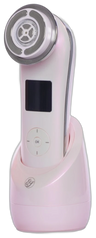
The Lumo+ is a radiofrequency, EMS and LED handset for the face and neck: 1 MHz bipolar RF with two-phase heating to a sensor-held 40 to 42°C, EMS at 3 to 15 mA, red light at 623 nm and blue at 465 nm, plus cooling, ion cleansing and nourishing modes. Sessions are five minutes of RF, two to three times a week. It sells for $499.99 USD with a 2-year warranty and a 60-day money-back guarantee, and carries 4.6 out of 5 from 364 customer reviews on our own store at the time of writing. Its red light sits close to 633 nm, the wavelength with randomised, sham-controlled evidence for improvements in the look of wrinkles and elasticity [10].
The Booster Pro is Medicube's multi-mode handset and one of the most searched face devices in the US this year, at about 27,100 monthly searches for its name (Google Ads data, September 2026). Its modes are Booster, which reviewers describe as electroporation and which Medicube says improves absorption of actives; MC (microcurrent); Derma Shot (EMS); Air Shot, a pulse mode Medicube says "creates tiny pathways" on the surface, used 2 to 3 times a week; LED that fires on skin contact; and sonic vibration. Medicube's US site lists it at $230, struck through from $249, and showed it as sold out on 18 October 2026. The newer Booster Pro X2 ($249, struck through from $299) adds a dual mode and, by Medicube's measure, double the power density. Medicube says no special gel is needed. Its product page states no warranty term and no FDA status, and its US site states that it does not ship devices to Canada.
Where it wins
Six functions for the price
Works with your existing serums
Instant visible glow after a session
Lightest and easiest to travel with
What it won't do
No radiofrequency, so no dermal heating
Electroporation does not create channels
Air Shot can feel like pinpricks; reviewers report irritation with overuse
Results fade if you stop
3 · Best dedicated microcurrent
NuFACE Trinity+
NuFACE Trinity+ is a dedicated microcurrent device from the brand most associated with at-home facial toning. The Trinity+ Starter Kit is $395 on NuFACE's site. Sessions take five minutes, five times a week for 60 days, then 2 to 3 times a week, with a microcurrent activator applied as a mask-like layer each time. NuFACE describes it as an "FDA-Cleared Microcurrent Device". A red, amber and infrared light attachment is sold separately for $160, and NuFACE gives its smart devices a 2-year warranty.
Where it wins
Category pioneer with a long track record
Simple, guided sessions
FDA-cleared, per NuFACE; 2-year warranty
What it won't do
One technology only: no RF, EMS or electroporation
Needs its gel primer every session
Microcurrent evidence base is thin
4 · Best entry price
SolaWave 4-in-1 Radiant Renewal Wand
The SolaWave 4-in-1 Radiant Renewal Wand is $169 on SolaWave's site. It combines red light at 630 nm, a mild current the brand calls galvanic (its FDA filing describes pulsed current at microamp levels), a warmed head and vibration massage. Sessions run 3 minutes per area, about 12 minutes in total, 3 to 5 times a week, with a serum sold separately. SolaWave describes it as FDA-cleared and backs it with a 1-year limited warranty and a 60-day money-back guarantee.
Where it wins
Lowest price in the group
Red light and microcurrent in one small wand
Very gentle; good first device
What it won't do
No RF and no EMS
Small head means slow full-face coverage
Low-intensity technologies, so modest results
If you want radiofrequency from another brand
Two other RF devices are worth naming, because RF is the point of this guide. The CurrentBody Skin RF ($385.99 on CurrentBody's US site) is bipolar 1 MHz RF with a maximum target of about 40.5°C according to its FDA 510(k) summary, and it is FDA-cleared for mild to moderate facial wrinkles, which the Lumo+ is not. It is RF only, with no EMS or LED, it needs gel every session and it runs from a mains adapter. Medicube's own RF device is the AGE-R Ultra Tune 40.68 ($350, struck through from $530, sold out on 18 October 2026), which pairs RF with microcurrent; Medicube says it "generates heat within the skin" but publishes no temperature. Our guide to the best at-home RF devices compares the RF field in depth.
Which device fits your goal? Tap one.
Pick the result you care about most. The answer is the device whose technology matches it, including when that is not ours.
Pick: EvenSkyn Lumo+. Sagging and softening along the jaw and neck is a dermal firmness problem, and radiofrequency heat is the only technology in this comparison that targets the dermis. EMS in the same handset works the muscle underneath.
Pick: Medicube AGE-R Booster Pro. Electroporation is built for exactly this: helping the serum you already use get past the surface, with a visible glow straight after. It is a good daily habit device.
Want the serum to go deeper than electroporation allows? That takes physical micro-channels, which is what the MicroInfuser does every two weeks.
Pick: NuFACE Trinity+. If microcurrent is specifically what you want, a dedicated microcurrent device is the honest answer, and NuFACE has the longest track record. The Booster Pro's MC mode is the multi-tool alternative. The Lumo+ uses EMS, not microcurrent.
Pick: SolaWave 4-in-1. It is the lowest-priced device here and gentle enough for a first try. Expect modest, gradual change: red light and microcurrent are the lowest-intensity technologies in this guide. If firmness turns out to be the goal, that is when RF earns its price.
Pick: Lumo+ and MicroInfuser duo. Lines and texture respond to two things none of the other devices combine: dermal heat from RF and serum delivered through micro-channels. Use them on the same evening, the Lumo+ first, and keep RF off for at least 24 hours afterwards, ideally 48.
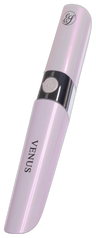
Pick: none of these four. Full-face devices are kept away from the eye socket. For the eyelids and under-eye area, use a device built for that skin, such as the EvenSkyn Venus, or overnight microneedle eye patches.
What each device costs per session
Sticker price is the least useful number on a device. Cost per session over the warranty period is fairer, because it accounts for how often each device is meant to be used and how long the maker stands behind it.
Prices from each brand's own site on 18 October 2026. Frequency is the midpoint of each brand's own suggested schedule (Booster Pro counted once a day, the low end of its 1 to 3 times a day). Gel, activator and serum refills are not counted for any device. Rounded to the cent.
Device
Price (USD)
Brand-suggested frequency
Sessions in year one
Cost per session, year one
Warranty
EvenSkyn Lumo+
$499.99
2 to 3 a week
130
$3.85 (falls to $1.92 across its 2-year warranty)
2 years
Medicube Booster Pro
$230
1 to 3 a day
365
$0.63
Not stated
NuFACE Trinity+ Starter Kit
$395
5 a week for 60 days, then 2 to 3
About 151
$2.62
2 years
SolaWave 4-in-1
$169
3 to 5 a week
208
$0.81
1 year
Per session, the Lumo+ is not the cheap option, and the Booster Pro is a genuinely low-cost habit. That is the honest read of this table. What the Lumo+ price buys is the one technology none of the others carry, heat in the dermis, in sessions short and infrequent enough that the cost per session keeps falling across a two-year warranty.
Can you use the Booster Pro and the Lumo+ together?
Yes, and they pair better than most device combinations, because they do not overlap much. The Booster Pro is a daily-friendly surface and absorption tool. The Lumo+ is a two-to-three-times-a-week heat tool. Owning both is the kind of stacking a single-device brand will not tell you about.
A simple week: Lumo+ RF sessions on Monday and Thursday (add a Saturday session if you are over 40, per the Lumo+ guide). Booster Pro Booster mode with your serum on the other days. Keep the Booster Pro's Air Shot mode off RF days, so the skin is not taking a needle-like electrical stimulus and heat on the same evening. If you also micro-infuse, run the Lumo+ before the MicroInfuser on the same evening, then keep RF and the Booster Pro off for at least 24 hours, ideally 48, as set out in our RF and micro-infusion schedule.
RF heat and micro-infusion, in one kit
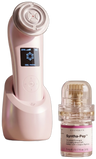
The Lumo+ and MicroInfuser duo puts the two technologies the Booster Pro gets closest to imitating, heat and serum delivery, into one kit: both devices for $589.99 USD, with the Lumo+ always run before the MicroInfuser.
All four devices pass electrical current or energy through the skin, so the main exclusions overlap. Do not use any of them if you are pregnant, have a pacemaker or other implanted electronic device, or have metal implants in the treatment area. Skip broken, infected or actively inflamed skin, including active acne flares, eczema or rosacea flares, and wait after injectables or procedures as your provider advises; our timing guide after Botox, filler and peels sets out typical waits. RF adds one more rule: keep the head moving, and stop if anything feels hot rather than warm. Read each device's own manual before first use.
Frequently asked questions
Is the Medicube Booster Pro worth it?
It is worth it if your goal is glow, hydration and helping your serums absorb. The Medicube AGE-R Booster Pro packs electroporation-style Booster mode, microcurrent, EMS, a pore mode, LED and vibration into a $230 handset, and its cost per session is low because it is meant for daily use. It is not the right buy if firmer, tighter skin is the main goal, because it has no radiofrequency and does not heat the dermis.
Does the Medicube Booster Pro have radiofrequency?
No. The Medicube AGE-R Booster Pro product page lists Booster, MC, Derma Shot, Air Shot, LED and sonic vibration, and does not mention radiofrequency, heat or warming for this device. Medicube's RF device is a separate product, the AGE-R Ultra Tune 40.68.
Medicube Booster Pro vs NuFACE: which is better?
They do different jobs. NuFACE Trinity+ is a dedicated microcurrent device at $395 that needs an activator gel. The Medicube Booster Pro is a $230 multi-mode device that includes microcurrent plus electroporation, EMS, LED and vibration. For microcurrent alone, NuFACE is the specialist. For the most functions per dollar, the Booster Pro. Neither heats the skin.
Is the EvenSkyn Lumo+ better than the Medicube Booster Pro?
For firmer-looking skin, yes, because the Lumo+ is the only one of the two with radiofrequency heat, held at a sensor-controlled 40 to 42°C, plus EMS and red and blue LED. For glow and serum absorption, the Booster Pro is the better fit and costs less. Many people use both on alternating days.
What is the difference between microcurrent and EMS?
Microcurrent runs in microamps, below the threshold that makes a muscle contract, and its proposed effects are cellular. EMS runs in milliamps and visibly contracts the muscle. The NuFACE Trinity+ and SolaWave use microcurrent-level current, the Lumo+ uses EMS at 3 to 15 mA, and the Booster Pro has both as separate modes.
What does the Booster Pro's Booster mode actually do?
Booster mode is widely described as electroporation: short electrical pulses that temporarily make the skin's outer layer more permeable, so skincare applied on top can travel a little further in. It does not pierce the skin or create channels. Medicube says the mode improves absorption of actives.
Can you use the Medicube Booster Pro and an RF device like the Lumo+ together?
Yes. They overlap very little. A common schedule is Lumo+ RF two to three times a week and the Booster Pro's Booster mode on the other days, keeping the Booster Pro's Air Shot mode off RF days. If you also use a micro-infusion kit, run RF before micro-infusion, never after, and wait at least 24 hours after micro-infusion, ideally 48, before RF again.
Which at-home device is best for sagging skin and jowls?
For sagging along the jaw and neck, a radiofrequency device is the strongest at-home choice, because RF is the technology that heats the dermis where collagen sits. In this comparison that is the EvenSkyn Lumo+. Microcurrent and electroporation devices can give a temporary lifted look but do not deliver dermal heat.
Does at-home radiofrequency really tighten skin?
At-home RF can improve the look of firmness and wrinkles with regular use over weeks to months, and studies of home-use RF devices have recorded measurable wrinkle improvements. Home devices run far below clinic energy, so results are gradual and need maintenance, and no home device replaces an in-clinic treatment.
How long until you see results from each device?
Electroporation and microcurrent give a visible glow or lift the same day, but it fades within hours to days. RF works cumulatively: the Lumo+ guide asks for about three months of consistent sessions before judging results. NuFACE suggests five sessions a week for 60 days, and SolaWave suggests at least eight weeks.
Are these devices FDA-cleared?
By each brand's own wording: NuFACE describes the Trinity+ as an FDA-cleared microcurrent device, and SolaWave describes its wand as FDA-cleared. The Medicube Booster Pro page states no FDA status. The EvenSkyn Lumo+ is a cosmetic device and is not FDA-cleared. FDA clearance is a regulatory pathway, not a ranking of results.
Is the Medicube Booster Pro safe for sensitive skin?
Start on the lowest level. Medicube advises level 1 near the eyes, nose and mouth and warns that retinol or vitamin products can feel more irritating. Reviewers describe the Air Shot mode as feeling like pinpricks, and overuse can irritate. Skip it on broken or inflamed skin, in pregnancy, or with a pacemaker or metal implants in the area.
How we compared them
We chose the goal first: the look of firmer, tighter facial skin, because that is what most buyers cross-shopping these devices are after. We then scored each device on five criteria, weighted as follows: firming technology, meaning whether the device delivers dermal heat, muscle contraction or sub-threshold stimulation (35%); breadth of technologies (15%); evidence base for its main technology (15%); warranty and support (15%); and price and ease of use (20%). We applied the same criteria to our own device.
Every competitor specification, price and warranty was read from that brand's own product page on 18 October 2026, not from retailer listings or reviews. Where a brand did not state something, we wrote "not stated". Studies were located through journal and DOI landing pages, and each identifier was checked to confirm it resolves to the paper cited. Competitor names are used nominatively for identification. This guide carries EvenSkyn's brand byline; no outside clinician reviewed it.
References
Dunbar SW, Goldberg DJ. Radiofrequency in cosmetic dermatology: an update. J Drugs Dermatol. 2015;14(11):1229-1238.
Key DJ. Integration of thermal imaging with subsurface radiofrequency thermistor heating for the purpose of skin tightening and contour improvement: a retrospective review of clinical efficacy. J Drugs Dermatol. 2014;13(12):1485-1489.
Shemer A, Levy H, Sadick NS, Harth Y, Dorizas AS. Home-based wrinkle reduction using a novel handheld multisource phase-controlled radiofrequency device. J Drugs Dermatol. 2014;13(11):1342-1347. PMID 25607700.
Bu P, Duan R, Luo J, Yang T, Liu N, Wen C. Development of home beauty devices for facial rejuvenation: establishment of efficacy evaluation system. Clin Cosmet Investig Dermatol. 2024. doi:10.2147/CCID.S449599
Denet AR, Vanbever R, Préat V. Skin electroporation for transdermal and topical delivery. Adv Drug Deliv Rev. 2004;56(5):659-674. PMID 15019751. doi:10.1016/j.addr.2003.10.027
Henry S, McAllister DV, Allen MG, Prausnitz MR. Microfabricated microneedles: a novel approach to transdermal drug delivery. J Pharm Sci. 1998;87(8):922-925. doi:10.1021/js980042+
Kavanagh S, Newell J, Hennessy M, Sadick N. Use of a neuromuscular electrical stimulation device for facial muscle toning: a randomized, controlled trial. J Cosmet Dermatol. 2012;11(4):261-266. PMID 23174048. doi:10.1111/jocd.12007
Alam M, Walter AJ, Geisler A, et al. Association of facial exercise with the appearance of aging. JAMA Dermatol. 2018;154(3):365-367. PMID 29299598. doi:10.1001/jamadermatol.2017.5142
Lee SY, Park KH, Choi JW, et al. A prospective, randomized, placebo-controlled, double-blinded, and split-face clinical study on LED phototherapy for skin rejuvenation. J Photochem Photobiol B. 2007;88(1):51-67. doi:10.1016/j.jphotobiol.2007.04.008
RF, microcurrent and LED compared for at-home anti-aging in 2026: what each actually does, what the clinical evidence supports, and how to build a routine.
GLP-1 face, also called Ozempic face, is the look of lost facial volume and looser skin after fast weight loss, and this guide covers why it happens, what clinic options do and...
Dejar un comentario
Todos los comentarios se revisan antes de su publicación.




Dejar un comentario
Todos los comentarios se revisan antes de su publicación.
Este sitio está protegido por hCaptcha y se aplican la Política de privacidad de hCaptcha y los Términos del servicio.