

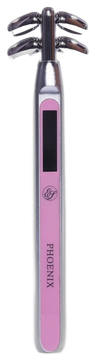

It can genuinely thin unwanted hair without a clinic appointment. It will not erase it forever, and it does not work on every skin tone. Here is the unglamorous version, with the science attached.
At-home IPL (intense pulsed light) reduces unwanted hair by heating the pigment in the follicle, and a body of clinical research shows it produces real, lasting reduction after a course of treatments. It is not permanent removal: regulators clear these devices for "permanent hair reduction," and the only method recognised as permanent removal is electrolysis. IPL works best on light-to-medium skin with dark hair, and it is not suitable for very dark skin or for blonde, red, grey, or white hair. Expect four to eight or more sessions, ongoing maintenance, and gradual rather than instant results.
The takeaways, up front
- IPL is a light-based hair-reduction method. It is closely related to clinical laser hair removal but uses broad-spectrum light rather than a single laser wavelength, and lasers generally achieve a larger reduction per session.2
- The evidence for reduction is real. Across studies, light-based devices produce long-term reductions commonly in the range of roughly 50 to 80 percent after a full course, with results improving as sessions are repeated.167
- Home-use devices specifically have their own published evidence and tend to run at lower energy than clinic machines, trading some speed for safety and convenience.34
- It is reduction, not removal. These devices are cleared for "permanent hair reduction"; maintenance sessions are part of the deal.5
- The hard limit is physics, not marketing: IPL needs a contrast between dark hair and lighter skin. Very dark skin and pale hair fall outside what the technology can safely or effectively treat.9
Verdict: a capable at-home IPL handset, inside honest limits
Strong evidence that the modality reduces hair over a course; reduction, not removal.
Up to 15.31 J/cm² (per EvenSkyn) sits above the ~7 J/cm² many home devices cap at.
The honest weak point. The sensor and levels widen the safe window but cannot beat the physics: no good fit for very dark skin or light hair.
A multi-week course is required before results show; this is true of all IPL.
A quartz lamp rated for years of flashes (per EvenSkyn) drives the running cost toward pennies.
Cooling fan, skin sensor, graded levels. Standard IPL precautions still apply.
No device delivers permanent removal; maintenance is part of the deal, scored on candour not capability.
Best for
- Light-to-medium skin (Fitzpatrick I to IV) with dark hair
- Multi-area body use on a budget
- People who want reduction and will maintain it
Not the best fit for
- Very dark skin (VI), or blonde / red / grey / white hair
- Anyone expecting permanent removal
- Very dense hair or a one-month deadline (clinic laser wins)
How IPL actually removes hair
The mechanism is the same one clinics use, scaled down. A flash of broad-spectrum light is absorbed by melanin, the dark pigment concentrated in the hair shaft and the follicle. The light converts to heat, and that heat damages the structures that grow the hair. Dermatologists call this selective photothermolysis: target the pigment, spare the surrounding skin.9
Two consequences fall straight out of that physics. First, the treatment only works on hair that is in its active growth phase at the moment you flash it, and only a fraction of your hair is in that phase at any time. That is why a single session does almost nothing and a course of repeated sessions does a lot. Second, the light has to find more pigment in the hair than in the skin around it. When skin is very dark, it competes with the hair for the light, which raises the risk of burns and pigment changes and lowers the benefit. That single fact drives most of the "who should not use this" rules later in this guide.9
Does it work, and is it permanent?
Yes to the first, with an asterisk on the second. An evidence-based review of laser and light-based hair removal concluded that these methods produce partial long-term reduction and are more effective than shaving, waxing, or electrolysis at thinning hair over time, with results that improve when treatments are repeated.6 Clinic IPL studies have reported reductions around 80 to 87 percent in selected groups followed for many months.78 A 2022 systematic review that pooled only randomized trials found IPL's long-term reduction averaging in the lower range and lasers generally higher, a useful reality check against the glossier numbers.2
The word "permanent" is where honest guides and ad copy part ways. Light-based devices are cleared by regulators for "permanent hair reduction," which means a lasting decrease in the number of hairs that regrow, not a guarantee that hair never returns.5 Electrolysis remains the only method recognised as permanent hair removal. In practice IPL gives you sparser, finer, slower-growing hair that you top up a few times a year. If you want that and not a miracle, you will be satisfied.
"Permanent reduction" is a real, useful result. "Permanent removal" is a different claim, and IPL does not make it.
IPL vs the alternatives
No single method wins on every axis. The honest comparison is about trade-offs: upfront cost against running cost, speed against convenience, and how much hair you actually want gone.
| Method | Longevity | Typical cost | Pain / downtime | Skin-tone range |
|---|---|---|---|---|
| At-home IPL | Long-term reduction; needs maintenance | One-time device, commonly $150 to $450 | Warm snaps; none | Light: medium skin, dark hair |
| Clinic laser | Often the largest reduction | $1,500 to $4,000+ per course | More intense; brief redness | Wider range with the right laser |
| Epilator | Weeks (regrows) | $30 to $120, one-time | Painful; none | Any |
| Waxing | 2 to 4 weeks | Ongoing per session | Painful; brief redness | Any |
| Shaving | 1 to 3 days | Cheap, ongoing | None; nicks/bumps | Any |
| Electrolysis | Permanent removal | Many sessions, ongoing | Painful; slow | Any (incl. light hair) |
Costs are commonly reported ranges for general orientation and vary by provider, region, and device; verify current prices before buying. Brand names below are used only to identify and compare products (nominative use); no affiliation or endorsement is implied, and specifications change, so confirm them on the manufacturer's current listing.
Where do the well-known at-home brands sit? Devices such as Philips Lumea, Braun Silk-expert, Ulike, and CurrentBody's IPL line all use the same broad-spectrum principle and the same skin-tone constraints. The meaningful differences between them are the ones in the buying criteria below: energy per flash, how the device reads your skin tone, lamp life, treatment-window size, and cooling. Marketing language ("painless," "salon-grade") is not a spec.
How to choose: the criteria that matter
If you strip away the packaging, a good at-home IPL device comes down to a handful of measurable things. Use these to judge any device, ours included.
Energy per flash
Measured in joules per cm². More energy means more follicle heating per pass, within safe limits. Many home devices cap around 7 J/cm²; a higher ceiling, used at the right level for your skin, generally drives better results.
Skin-tone control
A built-in skin-tone sensor and multiple intensity levels let you match output to your skin safely. This is a safety feature first and a results feature second.
Lamp life
Flashes are finite on many devices. A long-life lamp (hundreds of thousands of flashes, or a quartz tube rated for years) decides your true cost per use.
Treatment window & cooling
A larger window covers legs faster; active cooling makes longer sessions comfortable and lowers the chance of surface irritation.
Clearance & compliance
Look for devices cleared for home use under the relevant regulator, and read the indication carefully: it will say "reduction," not "removal."
Warranty & support
A multi-year device should carry a real manufacturer's warranty and a clear, readable manual with the skin-tone and contraindication charts.
Where the Pulsar fits these criteria
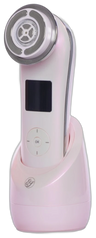
EvenSkyn makes an at-home IPL handset called the Pulsar, and the following specifications are the manufacturer's own, drawn from its product page and manual rather than from independent testing. Read them as claims to verify, not as findings we have measured.
Against the criteria above: EvenSkyn states the Pulsar runs eight intensity levels from 7.82 up to 15.31 J/cm², which is at the higher end of the at-home class, where many devices cap near 7 J/cm². It pairs that with a built-in skin-tone sensor so output can be matched to skin safely, and a quartz lamp the company rates for 10-plus years of use. The device offers a hair-removal mode and a separate skin-rejuvenation mode, has a cooling fan and a roughly 0.9-millisecond pulse, and ships with a one-year manufacturer's warranty. On paper that lines up well with criteria 1 through 6. What no specification can change is criterion-zero physics: the Pulsar, like every IPL device, still depends on dark-hair-on-lighter-skin contrast, so its sensor and level range widen the safe envelope but do not abolish the skin-tone limit.
The cost case, told straight
The financial argument for at-home IPL is genuinely strong, and it does not need exaggeration. A course of clinic laser hair removal is commonly reported in the low thousands of dollars and is paid per area, per course, with top-ups billed again later. A home device is a one-time purchase, commonly in the $150 to $450 range, that you can use on multiple body areas for as long as the lamp lasts.4 If a device's lamp is rated for years of flashes, the cost per session falls toward pennies.
| Route | Upfront | Ongoing | Best when |
|---|---|---|---|
| At-home IPL device | One-time ($150 to $450) | Maintenance flashes only | You want multi-area use and low running cost |
| Clinic laser course | $1,500 to $4,000+ | Paid top-ups | You want maximum reduction fast, supervised |
| Waxing / shaving | Low | Forever | You want no commitment |
Figures are commonly reported ranges, not quotes; confirm current pricing with providers and listings.
The honest caveat sits next to the savings: per session, a clinic laser usually does more, under professional supervision, with a wider skin-tone range. At-home IPL trades some of that magnitude and speed for cost and convenience. For mild-to-moderate unwanted hair on suitable skin, that is a trade most people are happy to make. For very dense hair, a tight timeline, or skin and hair colour outside the IPL window, the clinic is the better call.
Is it a good gift?
Sometimes, with care. A quality IPL device is a thoughtful gift when someone has actually told you they want one. It is a considered self-purchase far more often than a surprise, because results depend on the recipient's skin tone and hair colour, and because choosing it for someone unprompted can read as a comment on their body rather than a treat.
Tact note: if in doubt, gift the decision, not the device. A note that says "I'll cover this if you've been wanting to try it" lands better than a wrapped hair-removal handset nobody asked for.
Weighing it against other gifts? Our guide to skincare device gifts sets out who each device suits, what comes in the box and how returns work if the gift is not a fit.
The EvenSkyn Pulsar
If you are on suitable skin and you want a high-energy at-home IPL handset with sensible safety controls and low running cost, the EvenSkyn Pulsar meets the criteria in this guide. Here is the balanced version.
What it does well
- High energy ceiling for the at-home class (up to 15.31 J/cm², per EvenSkyn).
- Skin-tone sensor and eight levels for safer matching.
- Long-rated quartz lamp keeps cost per use very low.
- One device covers multiple body areas; one-year warranty.
What it will not do
- Will not work safely or well on very dark skin (Fitzpatrick VI), or on blonde, red, grey, or white hair.
- Will not deliver permanent removal; you will maintain results over time.
- Will not match a clinic laser's per-session magnitude or supervision.
- Will not give instant results; plan for a multi-week course.
How to use it, and who should not
The usage pattern is consistent across IPL devices. Shave (do not wax or pluck) the area first so the light targets the follicle, not surface hair. Patch-test, start at a level your skin tolerates, work up gradually, and treat on a schedule of roughly every one to two weeks for the initial course, then maintain. Avoid sun exposure and self-tanner on treated skin before and after, because added pigment in the skin raises the risk of burns. Follow the skin-tone and hair-colour chart in the device's manual rather than guessing.
Skip IPL, or talk to a professional first, if any of the following apply: very dark skin; light hair (blonde, red, grey, white) that lacks the pigment IPL needs; pregnancy (most manufacturers advise waiting, as a precaution rather than from evidence of harm); active infections, open wounds, or recent sunburn on the area; a history of light-triggered conditions; or tattoos and dark moles in the treatment zone, which absorb the light and can burn. Men treating coarse facial or beard areas, and anyone considering the scalp or genital area, should check the manufacturer's guidance, which often excludes those zones. None of this is unique to one brand; it is how the technology works.
Frequently asked questions
Does at-home IPL really work?
Is IPL hair removal permanent?
What is the difference between IPL and laser hair removal?
Does IPL work on dark skin?
Does IPL work on blonde, red, or grey hair?
How many sessions will I need?
Does it hurt?
Is at-home IPL safe?
Is at-home IPL cheaper than a clinic?
Can I use IPL on my face?
What does the EvenSkyn Pulsar offer specifically?
How we put this together
We separated three kinds of claim. Findings about how IPL works and how well it works are drawn from peer-reviewed literature and regulatory positions, each cited below and verified at the record level. Statements about the EvenSkyn Pulsar's specifications are the manufacturer's own and are labelled as such; we have not independently lab-tested the device. Cost figures are commonly reported ranges for orientation, not quotes. This guide is educational and not medical advice; for your own skin, hair, and health history, speak with a qualified professional before starting any light-based treatment.
References
- Town G, Botchkareva NV, Uzunbajakava NE, et al. A systematic review of light-based home-use devices for hair removal and considerations on human hair growth cycles. Lasers Surg Med. 2019;51(6):481-490. PMID: 30681170. pubmed.ncbi.nlm.nih.gov/30681170
- Yim E, et al. Efficacy of lasers and light sources in long-term hair reduction: a systematic review. J Cosmet Laser Ther. 2022. PMID: 35634805. doi:10.1080/14764172.2022.2075899. pubmed.ncbi.nlm.nih.gov/35634805
- Clinical study to determine the safety and efficacy of a low-energy, pulsed light device for home-use hair removal. J Drugs Dermatol / clinical trial report. PMID: 20725562. pubmed.ncbi.nlm.nih.gov/20725562
- Elm CM, Wallander ID, Walgrave SE, Zelickson BD. Clinical study of a low-energy, pulsed light device for home-use hair removal. Lasers Surg Med. 2010;42(4):287-291. PMID: 20432276. PMCID: PMC2921762. pmc.ncbi.nlm.nih.gov/articles/PMC2921762
- U.S. FDA, Center for Devices and Radiological Health. Light-based hair-removal devices are cleared for "permanent hair reduction," not permanent removal; electrolysis is the only method recognised for permanent hair removal. (Regulatory position; see also Ref 4.)
- Haedersdal M, Wulf HC. Evidence-based review of hair removal using lasers and light sources. J Eur Acad Dermatol Venereol. 2006. PMID: 16405602. pubmed.ncbi.nlm.nih.gov/16405602
- Sadighha A, Mohaghegh Zahed G. Hair reduction using intense pulsed light source (long-term, hirsute patients, Fitzpatrick I to V). PMID: 14756645. pubmed.ncbi.nlm.nih.gov/14756645
- Hair removal with a second-generation broad-spectrum intense pulsed light source: a long-term follow-up. PMID: 11360414. pubmed.ncbi.nlm.nih.gov/11360414
- Selective photothermolysis and IPL hair removal across skin types III to V (melanin as the target chromophore; ~80% reduction with appropriate settings). Lasers Med Sci. doi:10.1007/s10103-004-0298-6. link.springer.com/article/10.1007/s10103-004-0298-6
If you want to act on this
Our IPL handset is the Pulsar. One honesty note before buying any IPL device, ours included: results depend heavily on hair-to-skin contrast, so check the candidacy section above first; IPL is the wrong tool for some combinations and no brand changes that physics.


اترك تعليقًا
تخضع جميع التعليقات للإشراف قبل نشرها.
This site is protected by hCaptcha and the hCaptcha Privacy Policy and Terms of Service apply.