





Medically Reviewed by Dr. Lisa Hartford, MD
You did the hard part. Then the mirror moved the goalposts. Here is what actually firms a deflated face and neck, what never will, and when a clinic is the smarter spend: whether the weight came off with a GLP-1 or the old-fashioned way.
Loose facial skin after weight loss responds to four things you control: slowing any further loss, eating enough protein, resistance training, and consistent collagen-stimulating care. At home, that last lever means energy-based stimulation, typically radiofrequency (RF) plus EMS muscle toning with a device such as EvenSkyn's Lumo+, paired with cosmetic-depth micro-infusion. Mild to moderate laxity generally shows gradual improvement over 8 to 12 weeks of steady use. Severe or hanging skin needs an in-person assessment, and sometimes surgery.
Executive summary
Post-weight-loss sagging is a volume and collagen problem, not a hygiene problem. Facial fat pads shrink, and rapid loss also reduces collagen and elastin, so the skin's scaffolding weakens exactly when it has more slack to hold.[8][9]
Three variables predict how much your face is affected: how much you lost, how fast you lost it, and your age when you lost it. A 55-year-old who dropped 60 lb in eight months faces a different problem than a 32-year-old who lost 25 lb in a year.[8]
No cream restores lost volume. Topicals help the surface; firmness change comes from stimulus: resistance training under the skin, and collagen-provoking energy or micro-injury in it.[4][9]
Home devices have real, measured effects, at honest scale. A randomized split-face trial of a home RF device found significant wrinkle and elasticity improvements in 12 weeks; a 108-woman EMS trial measured 18.6% greater facial muscle thickness. Neither equals a clinical series, and we say so plainly below.[1][2]
Consistency beats intensity at home. The published home-use results come from schedules sustained for about three months; follow your device's recommended cadence (for Lumo+, short sessions two to three times weekly) and judge at week 8 to 12, not week 2.[1][7]
Know when to stop DIY-ing. Significant hanging skin, severe jowling, or laxity after 100+ lb loss belongs in a consult room. We map the full ladder, with commonly reported costs, so you can budget the decision honestly.[12]
Why weight loss deflates the face first
Facial skin sags after weight loss because the fat underneath it, which acted as scaffolding, shrinks faster than the skin can shrink around it. The face carries dozens of discrete fat pads that give cheeks, temples and the jawline their structure. Lose a large amount of weight, especially quickly, and those pads deflate; the envelope that stretched to cover them does not fully follow.
Speed matters as much as amount. Cleveland Clinic's endocrinology team notes that rapid weight loss also depletes elastin and collagen, the fibers responsible for snap-back, which is why fast loss can mimic accelerated aging in the mirror.[8] Dermatology reporting on GLP-1 patients adds a mechanism: reduced glucose uptake in adipocyte-derived stem cells appears to limit the production of new collagen, elastin and hyaluronic acid, and the chin, jawline and lower face tend to show it first.[9] None of this is unique to any drug. Bariatric-surgery patients have dealt with the same physics for decades. The medication era simply made 40-pounds-in-six-months common enough that the pattern got a nickname.
One number worth keeping: an AAFPRS member survey released in February 2026 found 67% of facial plastic surgeons seeing more patients with concerns tied to rapid weight loss, up 45% from the prior year.[11] If your jaw looks softer while your waistband gets looser, you are not imagining it, and you have company.
"When it comes down to facial aging, fat is typically more friend than foe. Weight loss may turn back your biological age, but it tends to turn your facial clock forward."
, Dr. Oren Tepper, plastic surgeon, New York City, on rapid-weight-loss facial change (reported 2023) [13]Will loose facial skin tighten on its own?
Some loose facial skin does re-tighten on its own, over 6 to 12 months, if the laxity is mild, you are younger, and your weight has stabilized. Skin is living tissue that keeps remodeling after weight loss stops. What it cannot do at any age is contract around a large, fast deficit: after major loss, collagen and elastin networks are stretched and depleted, and the recovery has a ceiling.
Here is the honest sorting of who can wait and who should act:
| Factor | Skin likely recovers well | Skin likely needs help |
|---|---|---|
| Amount lost | Under ~25 to 30 lb | 40 lb and up; 100+ lb almost always shows |
| Speed | Gradual (~1 to 2 lb/week) | Rapid loss over months, common on GLP-1s |
| Age | 20s to 30s (more intrinsic collagen) | 45+ (collagen production already declining) |
| Sun history / smoking | Minimal | Significant photoaging or smoking history |
| Weight status | Stable ≥6 months | Still actively losing (wait to judge, act to prevent) |
Directional guide assembled from Cleveland Clinic patient guidance and dermatology reporting on GLP-1-associated skin change.[8][9]
If you land mostly in the left column, give your skin a year before judging it, and spend that year on the prevention levers below. Mostly right column? The rest of this guide is for you.
The Laxity Ladder: match the fix to the severity
The Laxity Ladder is our five-rung framework for post-weight-loss skin decisions: start at the lowest rung that matches your severity and budget, and only climb when a rung has genuinely failed you. It exists because the market pushes people to the extremes, a $28 cream that can't address volume, or a $5,600 clinical package they may not need yet. Most faces sit in the middle.
| Rung | What it is | Best-fit severity | Typical cost | Downtime | What to expect |
|---|---|---|---|---|---|
| 1 · Foundations | Slow the loss rate, protein (~1.6 g/kg/day is a common target), resistance training, sleep, SPF | Everyone, always | ~$0 | None | Prevents worsening; builds under-skin muscle volume |
| 2 · Topicals | Retinoids, vitamin C, peptides, moisturizer | Texture and surface quality | $20 to $100/mo | None | Better surface; will not lift or re-drape |
| 3 · At-home energy + micro-infusion | RF heating + EMS toning (e.g., Lumo+), cosmetic-depth micro-infusion (e.g., MicroInfuser) | Mild to moderate laxity; prevention during loss | $120 to $590 once, plus consumables | None to minimal | Gradual firming over 8 to 12 weeks with steady use; maintenance-dependent |
| 4 · In-clinic energy | RF microneedling (Morpheus8, Sylfirm X), ultrasound (Ultherapy, Sofwave), biostimulatory filler | Moderate laxity; volume loss needing syringes | ~$1,000 to $5,600 per plan | 0 to 3 days per session | Bigger per-session change; costs recur to maintain |
| 5 · Surgery | Face or neck lift; excess-skin excision | Severe laxity, hanging skin, 100+ lb loss | ~$13,000 to $20,000+ | 10 to 14 days initial | The only true fix for redundant skin |
Costs are commonly reported US ranges (see the clinic-ladder section and references); verify locally. Trademarks belong to their owners; names are used for identification and comparison only.
The four levers you actually control
Four inputs determine most of what happens to a post-weight-loss face outside an operating room: rate of loss, protein and training, surface care, and collagen stimulation. Everything sold to you fits under one of these, which makes them a useful filter for marketing claims of every kind, including ours.
1. Rate of further loss
If you are still losing, the cheapest skin treatment available is pacing. Cleveland Clinic's guidance for avoiding facial wasting during weight loss starts with slowing to a sustainable 1 to 2 pounds per week where medically appropriate, alongside hydration and protein.[8] Talk to your prescriber before changing anything about a medication plan; the point is coordination, not improvisation.
2. Protein and resistance training
Muscle occupies the space fat vacated. Building it back, in the body and the face's supporting structures, restores some of the volume the skin is draped over. Strength training two to four times weekly plus adequate protein is standard advice in every credible post-weight-loss protocol we reviewed, surgical or not.[8]
3. Topicals, at their honest ceiling
Retinoids genuinely improve surface collagen and texture. What no topical does is restore deflated volume or re-drape slack tissue; molecules that stay in the upper skin layers cannot re-tension what sits below them. Buy a good retinoid, wear sunscreen, and be suspicious of any cream priced like a procedure.
4. Collagen stimulation, at depth
This is the lever the rest of this guide concerns. Controlled thermal stress (radiofrequency), electrical muscle stimulation (EMS), and micro-injury with active delivery (micro-infusion) each have published evidence for firming effects, at home-device scale, which the next section quantifies rather than hand-waves.
What the evidence says about at-home devices
At-home skin-tightening devices produce measurable but moderate improvements in controlled studies, and the studies are small and short. That is the fair one-sentence summary of the literature, and it cuts both ways: the effects are real, and they are not a clinic in a handset.
- Home radiofrequency. In a randomized, controlled split-face trial, 32 women aged 35 to 60 used a home bipolar RF device five times a week for 12 weeks: the treated side showed significant reductions in crow's-feet roughness, forehead wrinkles and nasolabial folds, with increased elasticity and dermal thickness, and zero adverse events.[1] An earlier 12-week study of a home multisource-RF device likewise reported wrinkle reduction and improved dermal collagen.[3]
- EMS / muscle stimulation. A randomized controlled trial of 108 women using a facial neuromuscular stimulation device 20 minutes a day, five days a week for 12 weeks measured facial muscle thickness up 18.6%, with at least 80% of users reporting firmer, more lifted skin versus under 5% of controls.[2] At professional intensity, synchronized RF plus muscle stimulation lifted brows a measured 2.3 to 3.2 mm at 24 weeks: evidence that stimulating facial muscle lifts, and a reminder that clinic-grade energy runs hotter than anything sold for home use.[14]
- Microneedling and micro-infusion. Percutaneous collagen induction is one of dermatology's better-documented ideas: micro-injury provokes new collagen types I and III and elastin on histology.[4][5] At cosmetic depths, microchannels also multiply how much of an applied active actually gets through the skin barrier, with some molecules showing several-fold flux increases.[6]
- The honest asterisk. A 2024 systematic review of 18 home-device clinical studies concluded they "can improve skin aging to a certain extent," with mostly transient redness as the downside, while flagging small samples and follow-ups that rarely extend past 12 weeks.[7] Translation: expect visible, photograph-it improvement in tone and mild laxity; do not expect a surgical before/after.
What earns a device a place in your routine: five criteria
A plausible mechanism, published
RF thermal remodeling, EMS muscle recruitment, and collagen induction each have peer-reviewed support. "Proprietary lifting energy" does not. Ask for the study, then ask if it used the actual product category.
A dose you will actually sustain
The published wins come from multi-week schedules sustained for about three months. A device too tedious to use on its recommended cadence will underperform its own studies in your bathroom.
Multiple mechanisms in one session
Post-weight-loss laxity is volume loss plus weakened collagen plus deconditioned muscle. Tools that combine RF with EMS or microcurrent address two of the three; pairing with micro-infusion covers delivery too.
Safety margins designed for homes
Home devices cap energy and needle depth on purpose. That is the trade: gentler per session, safe without supervision. Any product promising clinic-depth needles plus heat at home is a product to avoid.
Total cost of ownership
Count the consumables (gels, serums, replacement heads) and divide by a year of use. Home stacks live or die on cost-per-month versus a clinic's cost-per-maintenance-visit.
The at-home protocol: 8 to 12 weeks, face and neck
An effective home protocol for post-weight-loss laxity combines regular RF-plus-EMS sessions with a micro-infusion session every two weeks, run for a minimum of eight weeks before you judge results. One honesty note on dosing: the published trials ran denser schedules than most manufacturer guidance, so treat the upper end of the 8 to 12 week window as the realistic expectation. The structure below mirrors the cadences used in the published home-device trials; the products named are ours, and the pattern works with any equivalent-category tools.
PER DEVICE GUIDE
RF + EMS pass (Lumo+): apply a conduction gel, then work the jawline, cheeks and neck in slow upward passes with the radiofrequency and EMS modes, Lumo+ runs sensor-controlled bipolar RF that holds the skin at 40 to 42°C, following the session length and weekly cadence in the device guide (for Lumo+: short sessions, two to three times a week).[1][2]
EVENING
Micro-infusion session (MicroInfuser): cosmetic-depth microchannels deliver the serum where topicals struggle to reach; run it every two weeks per the kit's guidance, on a rest evening rather than straight after an energy session, and follow the kit's aftercare.[4][6]
Surface layer: retinoid (start 2 to 3 nights weekly), moisturizer, and daily SPF 30+. Under-eye hollowing responding slowly? Dissolving microneedle eye patches target that zone specifically.
Photograph it: same light, same angle, front and 45°. Firmness change is gradual enough that the mirror gaslights you; week-zero photos are the only honest referee.
Judge and adjust: visible improvement in tone and mild laxity is the realistic win. If severe laxity is unchanged, you have your answer: climb the ladder with your photos in hand.[7]
Verdict: the at-home stack, scored honestly
Best for
- Mild to moderate facial and neck laxity after 25 to 60 lb loss
- People still losing who want to get ahead of sagging
- GLP-1 users planning prevention alongside their prescriber's plan
- Budgets that cannot absorb $1,000+ per clinic session
Not the best fit for
- Hanging or redundant skin after massive (100+ lb) loss
- Anyone unwilling to commit to short sessions, several times a week, indefinitely
- Severe jowling where surgical consultation is the honest first step
- Anyone expecting one-session, clinic-scale change at home
Post-weight-loss laxity has three contributors: weakened collagen, deconditioned facial muscle, and lost volume. RF supplies the thermal collagen stimulus; EMS recruits the muscle layer; micro-infusion uses collagen induction plus microchannel delivery on the surface layer. That mechanistic fit is our rationale for pairing Lumo+ with the MicroInfuser, and it is an inference from category-level evidence, not the claim of a completed clinical trial of this exact pairing. We label it accordingly.
When home care is not the answer: the clinic ladder, priced
In-clinic treatments for post-weight-loss laxity outperform any home device per session, and cost accordingly. If your laxity is moderate-plus, or your timeline is a wedding rather than a season, the professional rungs are the rational spend. Here is the landscape in commonly reported US figures, so you can compare like an adult rather than a fan.
| Clinical option | How it works | Commonly reported cost | Sessions | Downtime | Notes |
|---|---|---|---|---|---|
| RF microneedling (Morpheus8) | Insulated microneedles deliver RF heat into deep dermis/fat | ~$1,870 avg per session (range $549 to $4,000); ~$5,600 for a typical 3-session course | Usually 3+ | 1 to 3 days each | 64% "Worth It" on RealSelf; see FDA note below [12] |
| RF microneedling (Sylfirm X) | Pulsed-wave RF microneedling; gentler settings for pigment-prone skin | ~$1,000 to $1,714 per session; $1,800 to $3,500 plans | 3 to 6 | <24 h | 78% "Worth It" on RealSelf [12] |
| Ultrasound lifting (Ultherapy, Sofwave) | Focused ultrasound heats deeper support layers | ~$2,400 to $2,600 avg per session | 1, repeat 1 to 2 yrs | Minimal | Builds over 3 to 6 months [12] |
| Filler / biostimulators | Restores lost volume directly (HA, Sculptra) | ~$944 per syringe; post-weight-loss faces often need 2 to 3 | Recurring, 6 to 24 mo | Bruising possible | Volume answer, not a skin-quality answer [12][13] |
| Face / neck lift | Surgical removal and re-draping of excess skin | ~$19,900 avg facelift; ~$13,000 neck lift | Once | 10 to 14 days initial | The definitive fix for redundant skin [12] |
Figures are commonly reported US averages/ranges compiled from RealSelf procedure pages and aesthetic pricing guides (2025 to 2026); actual quotes vary by provider and city, and change: verify against live sources before budgeting. Morpheus8, Sylfirm X, Ultherapy, Sofwave and Sculptra are trademarks of their respective owners, named here for identification and honest comparison only. EvenSkyn has no affiliation with these brands.
The cost-per-year math
Price the maintenance year, not the sticker. Skin firmness is not a one-and-done purchase at any rung of the ladder: clinics recommend annual touch-ups, and home devices work only as long as you use them. A year of the at-home stack, devices amortized, runs a few hundred dollars; a maintained clinic plan runs a few thousand.
| Path | Year-one outlay | Ongoing yearly |
|---|---|---|
| At-home stack (Lumo+ $499.99, or bundled with MicroInfuser at $589.99, plus gel/serum refills) | ~$590 to $700 | ~$100 to $250 consumables |
| Clinical RF microneedling course + one touch-up | ~$5,600 | ~$1,000 to $1,900 |
| Filler, 2 to 3 syringes refreshed | ~$1,900 to $2,850 | similar, recurring |
EvenSkyn prices are current listed prices at publication (verify on the product pages); clinic figures per the table above. The honest framing: these are different products for different severities, the point is knowing which severity you are.
Someone mid-weight-loss-journey may love a firming device, and weight-adjacent gifts are a minefield. The tactful move: give it only if they have raised the topic themselves, and frame it as skincare tech, a treat for a milestone they named, never as a suggestion their face needs work.
The pick, and its limits
For mild-to-moderate post-weight-loss laxity handled at home, our pick is the pairing this article's protocol is built on: Lumo+ (radiofrequency, EMS-microcurrent and red light, from $499.99) plus the MicroInfuser micro-infusion kit (from $119.99, or $589.99 bundled). Three mechanisms with published category evidence, one sustainable daily habit, and a total cost below one-third of a single average clinical RF-microneedling session. Yes, we make them, and this guide says so at the top.
A word on under-eyes and hollowing
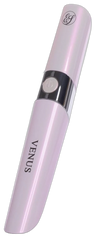
Under-eye hollowing after weight loss is a volume problem in the thinnest skin on the face, which is why it often reads worse than the cheeks. Energy devices tread carefully here. Two home options fit the zone: dissolving hyaluronic microneedle patches that deliver actives overnight, and eye-specific tools like the Venus built for the orbital area. Persistent, pronounced hollowing is filler territory, and a good injector will say whether you are there yet.
The at-home protocol, boxed
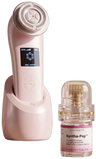
Lumo+ for the RF and EMS sessions, the MicroInfuser for the fortnightly micro-infusion pass, gel included in the bundle. Every claim we make about what this can and cannot do is cited above. The same clinic-to-home migration shaped our other guides too, from RF devices to micro-infusion.
See the Lumo+ + MicroInfuser bundle Or Lumo+ aloneFAQ: loose skin after weight loss
Will loose skin on my face tighten on its own after weight loss?
Mild loose facial skin often re-tightens on its own within 6 to 12 months of your weight stabilizing, especially under age 40 and after losses below roughly 25 to 30 lb. Larger, faster losses and older skin recover less completely, because stretched collagen and elastin do not fully rebuild. Photograph your face monthly; if nothing changes for two or three months, natural recovery has likely done what it will do.
How long does it take for skin to tighten after weight loss?
Natural skin re-tightening after weight loss plays out over 6 to 12 months once weight stabilizes. Assisted tightening runs on its own clocks: home RF and EMS protocols showed measurable change at 12 weeks in trials, clinical RF microneedling builds over about 3 months after a session series, and ultrasound lifting matures over 3 to 6 months.
Can saggy skin be firm again without surgery?
Mild to moderate saggy skin can regain meaningful firmness without surgery through collagen stimulation: at home with radiofrequency, EMS and micro-infusion used consistently, or in clinic with RF microneedling or focused ultrasound. What non-surgical methods cannot do, at any price, is remove truly redundant hanging skin: that remains surgical territory.
Why does my face look older after losing weight?
A face looks older after weight loss because facial fat pads that filled cheeks, temples and the jawline deflate, while rapid loss simultaneously reduces collagen and elastin. Volume loss creates shadows and folds; weakened skin drapes rather than snaps back. Plastic surgeons summarize it bluntly: weight loss can turn your biological age back and your facial clock forward.
What is the best way to tighten sagging facial skin at home?
The best-supported home approach to sagging facial skin combines radiofrequency plus EMS sessions on your device's recommended weekly cadence with a cosmetic-depth micro-infusion session every two weeks, on top of protein, resistance training and a nightly retinoid. That combination addresses collagen, muscle tone and delivery at once. Our RF device buyer's guide compares the hardware options honestly.
Do at-home radiofrequency devices really work on loose skin?
At-home radiofrequency devices produce real, measured improvements in controlled trials: a randomized split-face study found significant wrinkle and elasticity gains after 12 weeks of five-weekly sessions, with no adverse events. The effect size is moderate and maintenance-dependent, meaningfully below clinical machines that run higher energies. They work; they work modestly; consistency decides.
Is at-home treatment enough after losing 100+ pounds?
After 100+ lb of weight loss, home devices are usually not enough for the face and neck: that scale of loss typically leaves redundant skin that no non-invasive method retracts. Home care still helps skin quality and maintenance, but the honest primary options are surgical consultation, sometimes preceded by clinical energy treatments for candidates in between.
Is "Ozempic face" different from regular weight-loss sagging?
"Ozempic face" is the same biology as any rapid-weight-loss facial change, fat-pad deflation plus reduced collagen, concentrated by the speed at which GLP-1 medications drive loss. The fixes are identical; the prevention window is shorter. We cover the GLP-1-specific version in depth, including prevention while on the medication, in our Ozempic face guide.
How do I prevent loose skin while I'm still losing weight?
Preventing loose skin during weight loss comes down to pace and inputs: lose at a sustainable rate where your care plan allows, hit roughly 1.6 g of protein per kg per day, strength-train so muscle replaces some lost volume, hydrate, wear SPF, and start collagen-stimulating care early rather than after the sag appears. Prevention outperforms correction at every rung of the ladder.
Does collagen powder tighten loose skin?
Collagen powder has modest evidence for skin hydration and elasticity, and no good evidence that it tightens already-loose skin: swallowed collagen is digested into amino acids, not shipped intact to your jawline. Treat it as inexpensive nutritional support alongside adequate protein, not as a treatment for laxity.
What does professional skin tightening cost compared with at-home devices?
Professional skin tightening commonly runs $1,000 to $2,600 per session: RF microneedling averages about $1,870 per session with three usually recommended, and focused ultrasound about $2,400 to $2,600: while a complete at-home RF, EMS and micro-infusion stack costs about $590 once, plus modest consumables. They are different tools for different severities; the comparison table above prices the whole ladder.
When should I see a professional instead of treating at home?
See a professional when skin hangs or folds rather than merely softens, when laxity follows massive (100+ lb) loss, when 8 to 12 weeks of consistent home care shows no photographic change, or when you want faster, larger per-session results and can budget for them. Bring your progress photos; they make the consult concrete. Our guide to at-home alternatives people weigh against clinical RF microneedling maps that decision in detail.
Written by the EvenSkyn Skin Science Desk, the in-house research team of EvenSkyn, which designs and manufactures the at-home devices named in the protocol. Peer-reviewed sources were verified against PubMed/publisher records at publication; market statistics come from named surveys with dates; clinic prices are commonly reported ranges from the cited consumer platforms, not quotes. Manufacturer-specific claims about EvenSkyn products are EvenSkyn's own and are labeled as such. A clinical reviewer slot is open for this article; the byline will be updated when a named clinician has reviewed it. Educational content, not medical advice.
References
- Shu X, et al. Efficacy and safety of a home-use bipolar radiofrequency device for facial rejuvenation: randomized controlled split-face trial, 12 weeks. Dermatology and Therapy. 2022;12(4). PMC9021338.
- Kavanagh S, Newell J, Hennessy M, et al. Use of a neuromuscular electrical stimulation device for facial muscle toning: randomized controlled trial. Journal of Cosmetic Dermatology. 2012;11(4):261-266. PMID: 23174048.
- Home-use multisource radiofrequency device, 12-week facial study. Journal of Cosmetic and Laser Therapy. 2016;18(8). DOI: 10.1080/14764172.2016.1202419.
- Aust MC, Fernandes D, Kolokythas P, et al. Percutaneous collagen induction therapy: an alternative treatment for scars, wrinkles, and skin laxity. Plastic and Reconstructive Surgery. 2008;121(4):1421-1429. PMID: 18349665.
- El-Domyati M, Barakat M, Awad S, et al. Microneedling therapy for atrophic acne scars and skin rejuvenation: histologic evaluation of collagen types I, III, VII and elastin. International Journal of Dermatology. 2015. PMID: 26096653.
- Hamed R, et al. Microneedle-mediated transdermal delivery of cosmeceutical actives: transport and flux enhancement. Cosmetics. 2024;11(2):51.
- Bu P, et al. Development of home beauty devices for facial rejuvenation: systematic review of 18 clinical studies. Clinical, Cosmetic and Investigational Dermatology. 2024.
- Cleveland Clinic Health Essentials. "'Ozempic Face': What It Is and How To Avoid It." March 5, 2025. health.clevelandclinic.org/ozempic-face.
- Healio Dermatology. "The science behind 'Ozempic face': how to improve GLP-1-related skin sagging." August 7, 2025.
- Gallup. "GLP-1 usage reaches new high," survey fielded May 28: June 5, 2026 (n=5,065). news.gallup.com/poll/712157.
- American Academy of Facial Plastic and Reconstructive Surgery (AAFPRS). Annual member survey, released February 24, 2026 (via PR Newswire).
- RealSelf procedure guides, accessed August 2026: Morpheus8 (realself.com/nonsurgical/morpheus8), Sylfirm X (realself.com/nonsurgical/sylfirm-x), Ultherapy (realself.com/nonsurgical/ultherapy), Juvéderm (realself.com/nonsurgical/juvederm), Facelift (realself.com/surgical/facelift), Neck lift (realself.com/surgical/neck-lift/cost); plus AestheticMedGuide RF-microneedling cost guide, 2026.
- The Hill / Nexstar. "'Ozempic face': Doctors explain side effect of weight loss drugs" (quoting Dr. Oren Tepper and Dr. Paul Jarrod Frank, from New York Times reporting). 2023.
- Frank K, et al. Synchronized radiofrequency and high-intensity facial electrical stimulation: eyebrow-position outcomes at 24 weeks. Aesthetic Surgery Journal. 2025;45(5):525-530.
- US Food and Drug Administration. "Potential Risks with Certain Uses of Radiofrequency (RF) Microneedling Devices: FDA Safety Communication." October 15, 2025.
Page published August 15, 2026 · Last reviewed August 15, 2026 · Next scheduled content review: November 2026. Prices and clinic figures re-verified at each review.


اترك تعليقًا
تخضع جميع التعليقات للإشراف قبل نشرها.
This site is protected by hCaptcha and the hCaptcha Privacy Policy and Terms of Service apply.