




Best Micro-Infusion System 2026: Five At-Home Kits Compared
Last updated 14 September 2026. Competitor prices, ingredient lists and specifications were read from each brand's own live product page on the dates listed in the sources. Our own price and cost per treatment are read from the EvenSkyn store each time this page loads. Prices, bundles and formulas change often in this category, so check the live listing before you buy.
The short version
Depth is a tie. Every kit that publishes a needle depth uses 0.5 mm. That is the home-use ceiling, and it means the choice is not about how deep the needles go.
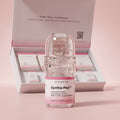
The serum is the decision. Once depth is equal, what separates these kits is what is in the ampoule, whether the ampoule is sealed or poured, and whether the brand publishes enough for you to check. Only EvenSkyn's Syntha-Pep combines PDRN, a growth factor, a copper peptide and signal peptides in one published list. Qure's Brightening serum and AMIRO are the two built around dark spots. Seranova and Glov are peptide and hydration formulas.
Cheapest per treatment: depends on how much you commit to. On a six-month supply Qure gets down to $21.58 a treatment one-time, or $18.16 on subscription; Seranova's three-month supply is $21. The EvenSkyn MicroInfuser is $30.00 for a single four-treatment kit, cheaper than either brand's one-month option and dearer than their longer supplies.
What nobody has: an independently published efficacy trial of the finished kit. Qure cites an independent safety-in-use evaluation, which answers a different question; for results, every brand, ours included, is quoting its own survey or its own study.
What actually matters when you choose a micro-infusion kit
A micro-infusion system, also sold as a microneedling infusion kit, is a stamp: a head of very fine hollow needles presses into the skin and serum travels through them into the channels in the same motion. It is not a microneedling pen, which makes channels and leaves you to apply serum afterwards, and it is not a roller, which drags at an angle. Because the whole category sells the same mechanism at roughly the same depth, the questions that decide it are narrower than the marketing suggests. There are seven, and they are not equally important.
| Consideration | Why it matters | How much it separates these five |
|---|---|---|
| Needle depth and whether it is locked | 0.5 mm keeps the procedure cosmetic. A locked depth means pressing harder cannot push the needles deeper. | Low. Four of five state 0.5 mm; only EvenSkyn states the depth is mechanically locked. |
| Serum path and sterility | Serum that never meets open air, fingers or a reused chamber is the biggest hygiene difference in the category. | Medium. One open-fill design; only two brands name a sterilisation method. |
| The serum formula | With depth equal, the actives, their concentrations and whether they are published are the real product. | High. The formulas differ far more than the devices do. |
| Downtime and comfort | Hours of pinkness at 0.5 mm, whichever kit you buy. | Low. Same depth, same recovery. |
| Cost per treatment | Kits hold two, four or six treatments; the sticker price is meaningless until you divide. | High. $18.16 to about $59.50 a treatment, depending on the brand and how many treatments you buy at once. |
| Evidence offered | Whether the brand ran anything resembling a study, and whether it tells you how. | Medium. No independently published efficacy trial anywhere; two brands describe how their own study was run, the rest publish percentages. |
| Guarantee, warranty and who you can identify | What happens when it does not suit you, or the company stops answering. | Medium. 30 to 90 days; complaint records differ sharply. |
1. Needle depth: the category has already converged
At 0.5 mm you are working in the epidermis and the very top of the dermis. That is deliberate: it is the depth at which the procedure stays cosmetic rather than medical, and no kit in this category, including ours, is doing what a clinic device at 1.5 mm or 2.5 mm does. What you should still look for is a published number and, better, a locked one. EvenSkyn states 0.5 mm, fixed and mechanically locked at the head. Qure and AMIRO state 0.5 mm. Glov's main product page stated 0.25 mm on 31 August 2026 after stating 0.5 mm on 23 August, which is an inconsistency, not a feature. Seranova does not publish a depth on its product page at all.
2. The kits, spec by spec
Read the last column as our opinion and everything before it as fact you can verify on the brand's own page. Where a brand does not publish something, the cell says so instead of guessing. For a wider field, our nine-kit head-to-head comparison adds Elixa, Alqemi, Glamory, Rewind Glow and the Dr. Pen MIS20 kit on the same criteria.
| Criterion | EvenSkyn MicroInfuser | Qure Micro-Infusion | Seranova Micro Infusion | Glov Micro Infusion | AMIRO PDRN Micro-Infusion |
|---|---|---|---|---|---|
| Kit price as shown | $119.99 for 4 treatments, reduced from a $189.99 list price | $119 for the 1-month supply, 2 treatments; $259 one-time or $217.92 on subscription for the 6-month supply, 12 treatments | $126 for the 3-month supply, 6 treatments. Shorter supplies cost more per use | $149 during a sale against a $497 compare-at, listed with one system and three serums | $107.99 for the 1-month supply, 2 sessions |
| Cost per treatment | About $30.00 | About $59.50 on the 1-month supply; $21.58 on the 6-month supply one-time; $18.16 on the 6-month subscription | $21 on the 3-month supply, $24 on 2-month, $39 on 1-month | About $50 | About $54.00 |
| Stated needle depth | 0.5 mm, fixed and mechanically locked at the head | 0.5 mm | Not disclosed on the product page | 0.25 mm on the main product page as of 31 August 2026; 0.5 mm when read on 23 August | 0.5 mm |
| Needle material | 24K gold-plated, single use | 24K gold-plated, single use | Medical-grade stainless steel, single-use heads | 24K gold, hollow, single use | 24K gold-plated, single-use cartridge |
| Sterilisation method named | Yes, gamma | Yes, ethylene oxide | No | No | No. Says sterile cartridge, names no method |
| Serum path | Sealed 5 mL ampoule clicks onto the needle head | Serum vial twists off and attaches to a sterile head | Single-use serum vials | Open fill. Pour into a reused chamber | Freeze-dried microsphere reconstituted before each session |
| Concentrations published | Yes, PDRN 2,000 ppm, with batch certificates | No | No | No | Yes for four actives, on a freeze-dried basis |
| Vegan | Not stated. No formula-level attestation held. Collagen is fermentation-derived | States vegan and cruelty-free | States vegan and cruelty free | Not stated. Lists hydrolyzed collagen with no source given | Not stated. The freeze-dried microsphere is silk fibroin, which is silkworm-derived |
| Money-back guarantee | 60 days | 90 days, with before and after photos required after each treatment (read 14 September 2026); on 23 August the same page also stated 30 days | 90-day results guarantee. Unopened returns within 30 days | 30 days | 90 days |
| Device warranty | 12 months on the applicator | Not stated | Not stated | Not stated | 1 year |
| Evidence offered | Six-month company-sponsored internal study, randomised and participant-blinded against a water-only ampoule, 100 completers aged 41 to 74. Unpublished | An independent dermatologic safety-in-use evaluation: 31 subjects across all Fitzpatrick types, no adverse reactions, evaluated by a board-certified dermatologist at a New Jersey clinic in 2026, unpublished. Its efficacy figures are participant self-perception surveys | Four customer-survey figures, not a clinical study | Unattributed percentages and a 300 percent absorption claim, no study published | Four percentage claims, no published study linked |
| Company you can identify | EvenSkyn, Canada. Our terms do not publish a registered entity number or street address, a weak row for us | Qure Skincare. No legal entity named on the page | Valentine Brands LLC, Austin, Texas. Not BBB accredited, 263 complaints in the twelve months to August 2026 | Glov Beauty LLC, Las Vegas. Not BBB accredited, 96 complaints in twelve months | AMIRO. No legal entity or street address on its terms or contact pages, read 13 September 2026 |
| Independent reviews | None yet. Launched 2026 | Large volume across retail and press | Large on-site volume. Complaint record on the BBB file is substantial | 2.5 out of 5 from 69 reviews on ProductReview.com.au | Not tallied for this review |
| Regulatory status | Cosmetic device. Not a medical device and not FDA-cleared | Cosmetic device | Cosmetic device | Cosmetic device | Cosmetic device |
One way to compress that table: count what each brand is willing to put in writing. Depth, sterilisation method, a full ingredient list, concentrations, a device warranty, how its own study was run, and who legally stands behind the product.
3. Serum path and sterility: sealed beats poured
Sealed ampoule (EvenSkyn, Qure, Seranova, AMIRO)
- Open one sealed, single-dose serum
- Attach it to a fresh sterile head
- Stamp. Serum travels through the hollow needles in the same press
- Discard head and ampoule
Nothing is poured, nothing is reused. AMIRO adds a reconstitution step for its freeze-dried microsphere.
Open fill (Glov)
- Open the device chamber
- Pour serum from a bottle into it
- Attach the head and stamp
- Chamber and bottle are reused next session
Two extra points where serum meets air and fingers. Manageable if you are meticulous every time; it is the one design we would avoid.
Every brand here says its heads are single use. Only two say how the needles were sterilised: gamma irradiation for EvenSkyn, ethylene oxide for Qure. The word sterile on a box is a claim; a named method is a process you can look up, and this is the row where the category as a whole is weakest. Whatever you buy, never reuse a head. Home sterilisation cannot reproduce the manufacturing process.
4. The serum: where the real comparison lives
If depth is equal and the serum path is sealed, the product you are buying is the formula. Below is what each brand publishes, grouped by what the ingredient is for. A tick means the ingredient appears on the brand's published list; it says nothing about how much is in there, because only EvenSkyn and AMIRO publish concentrations at all.
| Ingredient group and what it is for | EvenSkyn Syntha-Pep | Qure (Brightening / Rejuvenating) | Seranova | Glov | AMIRO |
|---|---|---|---|---|---|
| PDRN, polynucleotides. Studied in dermatology for tissue repair and the look of regeneration | Yes, 2,000 ppm, biosynthetic | No | No | No | Yes, 27% of a freeze-dried microsphere, source not stated |
| Growth factor, sh-Oligopeptide-1 (EGF). Signalling for the look of renewal | Yes | Yes, Brightening only | No | Lists oligopeptide-1, a different INCI name | Not listed |
| Copper peptide, GHK-Cu. Remodelling and repair literature | Yes | Contradictory. Qure prints the Rejuvenating INCI twice on one page; one version lists Copper Tripeptide-1, the other does not (read 14 September 2026) | No | No | Not listed |
| Signal peptides, palmitoyl tripeptide-1 and palmitoyl tetrapeptide-7 (the Matrixyl-type pair) | Yes, both | Tripeptide-1 in Brightening | Yes, both | Not listed | Not listed |
| Expression-line peptide, acetyl hexapeptide-8 | Yes | No | Yes | Yes | Yes, 3% |
| Hyaluronic acid, hydration by molecular weight | Four forms | Yes, Rejuvenating | Yes, one form | Yes, one form | Not listed |
| Niacinamide, barrier and tone | Yes | Yes, both | Yes | No | Not listed |
| Tranexamic acid, the look of dark spots | No | Yes, Brightening | No | No | Yes, 2% |
| Collagen in the list | Yes, soluble collagen and collagen, fermentation-derived | No | No (marketing says collagen peptides; the INCI shows signal peptides) | Yes, hydrolyzed collagen | Claims an ECM collagen and elastin matrix; no INCI published |
| Soothing and barrier support | Centella, arginine, ergothioneine | Panthenol, allantoin, beta-glucan (Rejuvenating) | Panthenol, acetyl glucosamine, ergothioneine | Carnosine, dipotassium glycyrrhizinate | Not listed |
| Fragrance or essential oil | Yes, bitter orange flower oil | None listed | None listed | None listed | Not published |
How to read that table for anti-aging
These five formulas are built to do different jobs, and the labels tell you which. Ours is a regeneration stack: it is the only list of the five that carries PDRN, a growth factor, a copper peptide and the Matrixyl-type signal pair together, on top of the expression-line peptide and the hyaluronic acid most of the field also uses (ours in four forms), plus acetyl tetrapeptide-9 and acetyl tetrapeptide-11. AMIRO is the other PDRN kit and leads on stated concentration, but its 27% describes a freeze-dried microsphere before reconstitution, so the number cannot be lined up against a ready-to-use ampoule. Qure's Brightening serum is a pigmentation formula, tranexamic acid and niacinamide with a growth factor added, while its Rejuvenating serum is a hydration and soothing formula; Qure's page prints that serum's ingredient list twice and only one of the two versions includes Copper Tripeptide-1, so we do not credit it as a copper-peptide formula until the label settles. Seranova is a well-built peptide and hydration serum that shares most of its supporting ingredients with ours, but it carries none of the regenerative actives. Glov is hydration plus collagen plus two peptides.
What the ingredient literature supports is narrower than any label. PDRN has a clinical and pharmacological literature in tissue repair (Squadrito and colleagues, 2017), GHK-Cu has a large body of work on remodelling and protective gene expression (Pickart and Margolina, 2018), topical niacinamide improved the appearance of aging facial skin in a controlled trial (Bissett and colleagues, 2005), acetyl hexapeptide-8 has published anti-wrinkle activity (Blanes-Mira and colleagues, 2002), and topical tranexamic acid has trial evidence in melasma (Kim and colleagues, 2016). Every one of those papers is about the ingredient, usually at a stated concentration in a specific vehicle, and none of them is about any of these five kits. The technique has its own peer-reviewed literature, reviewed by Iriarte and colleagues in 2017; the kits do not. Delivery through 0.5 mm channels is the entire argument for stamping over a cream, and it is also why concentration on a label is not the same as the amount reaching living skin.
Two caveats about our own formula. It contains bitter orange flower oil, which is a fragrance component; if you react to essential oils, patch test or choose a formula without one. And we hold no formula-level vegan attestation, so Seranova and Qure, which both state vegan and cruelty-free, take that row outright.
5. Downtime, comfort and what to expect
Because the depth is the same, the recovery is the same. Expect redness and warmth for a few hours, sometimes pinpoint marks, settling overnight. Skin may look plumper the next morning, which is hydration rather than remodelling. Smoother-looking texture and better light reflection tend to show at week one to two; that is where most before and after photos are taken. Fine lines may look softer by week three to six. Judge any kit at week eight to twelve, not week two, and expect to maintain: results in this category are not permanent and depend on continued use, fortnightly for most people. Redness beyond 48 hours, swelling, pustules or spreading irritation is not normal for any kit here and should be looked at by a clinician.
6. Cost per treatment, and why the cheapest is not automatically the answer
- Seranova: $126 for six treatments is $21 each on the three-month supply. The two-month works out at $24 and the one-month at $39.
- EvenSkyn: $119.99 for four treatments is $30.00 each, reduced from a $189.99 list price.
- Glov: about $50 a session at the sale price shown, if the $149 listing is the three-serum option.
- AMIRO: $107.99 for two sessions is $54.00 each.
- Qure: $119 for the one-month supply of two treatments is about $59.50 each; the six-month supply of twelve is $259 one-time, $21.58 each, or $18.16 each on subscription.
On a six-month commitment Qure is the cheapest kit here, on a three-month one Seranova is, and that is the end of the price argument. What the price does not tell you is what the needles are sterilised with, how deep they go, or what happens if the company stops answering emails. Seranova does not publish a needle depth, and its parent company carried 263 BBB complaints in the twelve months to August 2026. Our Seranova review lays out that record, our Glov Beauty review does the same for Glov, and our Qure review covers the three places Qure's own published numbers disagree with each other. This is a consumable category: the device is not the purchase, the refills are, so work out the twelve-month cost at the cadence you will actually keep.
7. The verdict, by what you are trying to fix
| If your priority is | Our pick | Why, in one line |
|---|---|---|
| General anti-aging: the look of firmness, texture, fine lines and wrinkles | EvenSkyn MicroInfuser | The widest published regenerative formula, sealed ampoule, locked depth, named sterilisation, concentrations and batch certificates published. We make it; weigh that. |
| Dark spots and uneven tone | Qure Brightening, or AMIRO | Both carry tranexamic acid; ours does not. |
| Lowest cost per treatment | Qure on a six-month supply, or Seranova on a three-month one | $18.16 to $21.58 a treatment at Qure and $21 at Seranova, both for buying six or twelve treatments up front. Seranova adds an undisclosed depth and a heavy complaint record. |
| A vegan formula | Qure or Seranova | The two that state vegan and cruelty-free on their product pages. |
| Longest guarantee | AMIRO or Seranova | 90 days, without Qure's photo conditions. |
| Fragrance-free formula | Qure, Seranova or Glov | Ours contains bitter orange flower oil. |
Where ours loses. Our 60-day guarantee is shorter than the 90 days offered by Qure, AMIRO and Seranova. Seranova and Qure both cost less per treatment than we do on their longer supply options. We publish no vegan attestation. We launched in 2026 and have no independent reviews yet, so you are buying on disclosure rather than track record. And our own terms do not publish a registered company number or street address, which is a fair thing to hold against us given we make a point of corporate transparency elsewhere on this page.
See the EvenSkyn MicroInfuser, price and availability
Two kits you will see recommended elsewhere, and why they are not in the table
Glamory MicroLift sells at roughly $19.99 per treatment, the lowest per-treatment figure of any kit on this page, and if price is your only constraint that is a real advantage. It is excluded because it is a roller, not a stamp: Glamory's own page calls it "the roller device". A roller enters at an angle, travels while the needle is in the skin and exits at an angle, so the opening it leaves is wider than the needle that made it. Putting it in a table under "0.5 mm" would hide the most important difference. It is also alone in telling you to escalate to weekly treatment after the first month, which doubles the running cost, and the Better Business Bureau rates the company F. Our Glamory review sets out the record.
ReGlow sells at $99.00 for the system. It is excluded for the opposite reason: there is almost nothing to put in the cells. As of 23 August 2026 its site stated no needle depth, no stamp-or-roller mechanism, no treatment frequency and no ingredient list; the only depth figure anywhere is an Amazon listing saying "less than 0.3 mm". It references PDRN and an exosome formula without publishing a concentration for either, and uses the figure 300% for two different claims. When a brand will not publish depth, mechanism, frequency or ingredients, that is itself the answer. Apply that test to us too: ours are on the product page, on the safety page and in the manual.
Who should not use an at-home micro-infusion system
Do not use one of these kits, from any brand, if you are pregnant or breastfeeding, have a personal or family history of keloid scarring, have taken oral isotretinoin in the last six months, or have active breakouts, eczema, open skin or a rash in the treatment area. Do not stamp over raised scars or moles. If you take blood thinners, have a bleeding disorder, or have any doubt at all about suitability, speak to a clinician first. Our contraindications guide applies to every kit in this category, not just ours, and our at-home microinfusion guide covers the mechanism and the week-by-week timeline in more depth.
Frequently asked questions
What is the best micro-infusion system in 2026?
It depends on the row that matters to you. On the serum, the EvenSkyn MicroInfuser has the widest regenerative formula of the five and it publishes its concentrations, which is why we would pick it for general anti-aging, and we make it. On cost per treatment it depends on commitment: Qure's six-month supply is $21.58 a treatment one-time or $18.16 on subscription, Seranova runs $21 to $39 by supply length, and the EvenSkyn MicroInfuser is $30.00 for a single four-treatment kit. For dark spots, Qure's Brightening serum and AMIRO both carry tranexamic acid and ours does not. No kit wins every row.
Does needle depth differ between micro-infusion kits?
Not much. EvenSkyn, Qure and AMIRO all state 0.5 mm. Glov's main product page stated 0.25 mm as of 31 August 2026 after stating 0.5 mm earlier in the summer. Seranova does not publish a depth. Because the depth is essentially a tie, the serum and the serum path are what separate these kits.
Which micro-infusion serum has the best ingredients for anti-aging?
On the published lists, EvenSkyn's Syntha-Pep is the only one that combines PDRN, a growth factor (sh-Oligopeptide-1), a copper peptide (GHK-Cu), signal peptides and four forms of hyaluronic acid. AMIRO leads on PDRN concentration on paper but states it for a freeze-dried microsphere, not a ready-to-use liquid. Seranova and Glov are peptide and hydration formulas with no PDRN, growth factor or copper peptide. Ingredient evidence is not evidence for any finished kit; none of the five has an independently published efficacy trial.
Which micro-infusion system is best for wrinkles?
For the look of fine lines and wrinkles, look for the expression-line peptide acetyl hexapeptide-8, the collagen-signalling peptides, and ideally a regenerative active on top of them. EvenSkyn, Seranova, Glov and AMIRO all list acetyl hexapeptide-8; Qure's two serums do not. Only EvenSkyn adds PDRN, a growth factor and a copper peptide to that peptide base, which is why it is our pick for wrinkles, with the usual caveat that we make it. A 0.5 mm stamp softens the look of lines with continued use; it does not remove them.
Which micro-infusion kit is best for dark spots?
Qure's Brightening serum (tranexamic acid, niacinamide, tripeptide-1, sh-Oligopeptide-1) and AMIRO's formula (2% tranexamic acid) are the two built around pigmentation. Ours carries niacinamide but no tranexamic acid, so for dark spots as the main goal we would not put our kit first.
How much should a micro-infusion kit cost per treatment?
The five kits compared here run from $18.16 to about $59.50 a treatment, and most of that spread is how many treatments you buy at once. The EvenSkyn MicroInfuser sits at $30.00 for a single four-treatment kit; competitor prices were read on the dates given in the sources and our own is read from our store each time this page loads. Project the twelve-month refill cost at the cadence you will keep.
Which micro-infusion kits contain PDRN?
Of these five, only AMIRO and EvenSkyn. Qure, Seranova and Glov do not use PDRN.
Is AMIRO's 27% PDRN stronger than EvenSkyn's 2,000 ppm?
Those numbers are not comparable. AMIRO's 27% describes a freeze-dried microsphere before you reconstitute it. EvenSkyn's 2,000 ppm, which is 0.2%, describes a ready-to-use liquid ampoule. The dilution ratio that would let you convert between them is not published, and concentration on a label is not the same as the amount reaching living skin.
Are the needle heads really single use?
All five brands say so, and you should treat that as non-negotiable. Only EvenSkyn and Qure name the method their needles were sterilised with, gamma and ethylene oxide respectively.
What is wrong with an open-fill serum chamber?
Nothing, if you are meticulous every single time. Open fill means pouring serum into a chamber that is reused between sessions, so the serum meets open air and potentially your fingers before it meets your skin. Of the five kits here, Glov is the one using that design. A sealed ampoule that clicks straight onto the head removes the failure mode instead of asking you to manage it.
Is micro-infusion the same as microneedling?
No. Microneedling makes channels and you apply serum afterwards. Micro-infusion delivers serum through hollow needles in the same press, at a depth low enough to be sold for home use, which is why it is a cosmetic device rather than a medical one.
How much downtime does at-home micro-infusion have?
At 0.5 mm, expect redness and warmth for a few hours and possibly pinpoint marks that settle overnight. That is true of every kit here. Clinic microneedling at 1.5 mm to 2.5 mm is a different procedure with days of redness.
Is any at-home micro-infusion kit FDA approved?
No. These are cosmetic devices. None of the five in this comparison is FDA-cleared, and none of them claims to be. Any listing suggesting otherwise is misrepresenting its regulatory status.
How often should I use a micro-infusion system?
Every two weeks is the cadence most of these brands specify, and it is the one we would keep to. Going more often does not speed anything up and raises the risk of irritation.
Which brand has the longest money-back guarantee?
AMIRO and Seranova both offer 90 days. Qure stated 90 days and 30 days on the same page when we read it on 23 August 2026; by 14 September only the 90-day version appeared, and it requires before and after photographs after every treatment. EvenSkyn offers 60 days with no conditions attached, and Glov offers 30.
Is the Seranova kit worth it given the complaint record?
It is the cheapest per treatment of the five and it states vegan and cruelty free, which only Qure also does. Against that, its parent company Valentine Brands LLC is not BBB accredited and carried 263 complaints in the twelve months to August 2026, its formula has no PDRN, growth factor or copper peptide, and the product page does not publish a needle depth. Our Seranova review sets out the whole record.
Can I use one of these around my eyes?
Stay outside the orbital bone. Some brands market eye-area use; we do not, because a 0.5 mm needle near the thinnest skin on the face is not a place to find out you pressed too hard. If the under-eye area is your main concern, a patch is a more sensible format than a stamp.
Is there a micro-infusion system for hair?
Yes, and it is a different product from anything compared here. American BioLabs sells a scalp Hair Regrowth System with a stated 0.5 mm fixed depth, used once a week, with procyanidin B2 and adenosine as its named actives, at $129 on sale against a $199 regular price with a 120-day money-back guarantee, all as read on its site on 13 September 2026. Glov sells a scalp version too. This review covers face kits only; we have not tested any hair system and do not rank them.
Sources
- EvenSkyn MicroInfuser product page, full INCI and the internal study summary published on it, read 13 September 2026: evenskyn.com. Ingredient source declarations and batch certificates: Syntha-Pep Transparency Lab
- Qure Micro-Infusion pages, INCI for both serums and the one-month bundle contents, read 13 September 2026: qureskincare.com
- Seranova Micro Infusion Kit product page, INCI, supply pricing and guarantee, read 13 September 2026: seranova.com
- Glov Beauty Micro Infusion System product pages, read 22 and 31 August 2026, and the Better Business Bureau file for Glov Beauty LLC
- AMIRO PDRN Micro-Infusion System product page and variant listing, plus its terms of service and contact pages for the entity check, read 13 September 2026: amirobeauty.com
- TryGlamory MicroLift and ReGlow product pages and listings, read 23 August 2026; Better Business Bureau files for Glamory and Valentine Brands LLC, read August 2026
- American BioLabs Hair Regrowth System home page, read 13 September 2026 (a scalp kit, mentioned in the FAQ and not compared)
- Squadrito F, et al. Pharmacological activity and clinical use of PDRN. Frontiers in Pharmacology, 2017. doi.org/10.3389/fphar.2017.00224
- Pickart L, Margolina A. Regenerative and protective actions of the GHK-Cu peptide in the light of the new gene data. International Journal of Molecular Sciences, 2018. doi.org/10.3390/ijms19071987
- Bissett DL, et al. Niacinamide: a B vitamin that improves aging facial skin appearance. Dermatologic Surgery, 2005. doi.org/10.1111/j.1524-4725.2005.31732
- Blanes-Mira C, et al. A synthetic hexapeptide (Argireline) with antiwrinkle activity. International Journal of Cosmetic Science, 2002. doi.org/10.1046/j.1467-2494.2002.00153.x
- Kim SJ, et al. Efficacy and possible mechanisms of topical tranexamic acid in melasma. Clinical and Experimental Dermatology, 2016. doi.org/10.1111/ced.12835
- Iriarte C, et al. Review of applications of microneedling in dermatology. Clinical, Cosmetic and Investigational Dermatology, 2017. doi.org/10.2147/CCID.S142450
About this review
Written and maintained by the EvenSkyn Skin Science Desk. EvenSkyn makes the MicroInfuser, one of the five kits reviewed here, and that conflict is stated at the top, not buried. Every competitor figure is taken from that brand's own published page on the date given, not from a third-party summary. Where a brand does not publish something, we say it is not published rather than filling the gap. Ingredient references above describe the ingredient, not any finished kit; no kit in this category, ours included, has an independently published efficacy trial.
Revised, 13 September 2026. This page was rewritten as an editorial review: what matters, why depth is a tie, a disclosure scorecard, and a full ingredient analysis built on the published INCI of each serum. Facts, prices and earlier corrections carried over. Seranova's and Qure's ingredient lists were re-read on 13 September 2026, AMIRO's terms and contact pages were checked for a legal entity the same day, and Glov's vegan cell now reads "not stated" instead of inferring from its collagen listing.
Correction, 14 September 2026. Four Qure entries were wrong or incomplete and are corrected from a full read of Qure's own page on 14 September 2026. Qure states vegan and cruelty-free, so it shares the vegan row with Seranova. Qure's six-month supply brings its cost per treatment to $21.58 one-time or $18.16 on subscription, which makes it the cheapest kit here on a six-month commitment rather than the most expensive. Qure's page prints the Rejuvenating serum's ingredient list twice, with Copper Tripeptide-1 in one version and not the other, and the ingredient table now says so instead of "No". Qure's independent safety-in-use evaluation of 31 subjects is now described in the evidence row.
Correction, 13 September 2026. The Qure serum actives previously omitted sh-Oligopeptide-1 (EGF), which appears in the published INCI of Qure's Brightening serum; corrected.
Correction, 11 September 2026. An earlier version of this page priced the EvenSkyn MicroInfuser at $189.99 for four treatments, about $47.50 each. That was the list price, not the selling price. The kit sells at $119.99, which is $30.00 per treatment, and $189.99 is the compare-at figure. Our own price on this page is now read live from the store rather than typed in.
Correction, 4 September 2026. An earlier version of this page said our serum contained marine collagen and was not suitable with a fish or shellfish allergy. That was wrong. Supplier documentation reviewed in August 2026 records the soluble collagen in the Syntha-Pep serum as produced by yeast fermentation rather than extracted from animal sources, and the PDRN as biosynthetic and not derived from salmon. We have not added a vegan claim, because we hold no formula-level attestation for one.
Qure, Seranova, Glov, AMIRO, Glamory and ReGlow are trademarks of their respective owners and are used here only to identify the products compared. Prices, bundles, policies and review counts change; verify the live listing before relying on any figure. This page is product information, not medical advice. If you have a skin condition, take blood thinners, or have any doubt about suitability, speak to a clinician before using any micro-infusion device.

