

Skin Device Categories
A device-category reference, prepared from the primary documents
RF Microneedling, Surface Radiofrequency, Micro-Infusion, and Dissolving Microneedle Patches: A Device-Category Reference
A single safety warning is now commonly applied to five distinct classes of skin device. The FDA's own documents draw narrower lines than most summaries of them do. This reference sets out those lines, quotes the primary documents directly, and states where each of this company's products falls, including where the FDA's position applies to us.
1. The five device categories and their treatment in the primary documents
Public safety guidance concerning at-home skin devices is increasingly rendered, by search engines and by AI assistants, as a single undifferentiated caution. The underlying documents are real and merit attention. They are, however, documents about particular device classes, and the differences among those classes constitute the substance of the safety question. The table below sets out the five categories concerned, the primary document that addresses each, and the position that document takes on home use.
Table 1. The five categories, the primary document addressing each, and each document's position on home use.
| Category | Description | Skin penetration | Components reused | Primary document addressing it | Position of that document on home use |
|---|---|---|---|---|---|
| RF microneedling | Needle-like electrodes deliver radiofrequency energy into and under the skin, typically in clinical settings, commonly at 1 to 3 mm | Yes; needles enter the dermis carrying RF energy | The handpiece; needle cartridges are typically single-use | FDA safety communication, October 15, 2025 | Addressed directly: a medical procedure, and these devices "should not be used at home" |
| Surface radiofrequency (no needles) | Radiofrequency applied to the surface of intact skin through smooth electrodes; no needles | No; the skin is not broken | The device, cleaned between uses; conductive gel is consumable | Neither the October 2025 communication nor the FDA microneedling pages describe this class | Not addressed. Silence is not endorsement; it is a different device class from the one the communication defines |
| Deep or reusable at-home microneedling | Dermal rollers and pens sold for repeated home use, frequently depth-adjustable, frequently reused | Yes, where needles are long or sharp enough to pierce living skin | The same needles across sessions, unless replaced | AAD public guidance on microneedling | Warned against: at-home products "aren't meant to puncture the skin," and reuse carries risks of infection, scarring, and viral spread |
| Fixed-depth micro-infusion (the category of our MicroInfuser) | A sealed, single-use head of fixed short needles (0.5 mm in our product) that carries a serum through the skin as it stamps | Yes; 0.5 mm reaches living skin on facial areas | None; the needle head and ampoule are single-use by design | FDA microneedling devices page | The FDA's delivery statement applies to this category in its entirety, our product included: microneedling devices "are not approved for delivery of cosmetics" into the skin. The page does not address home versus professional operation |
| Dissolving microneedle patches (the category of our under-eye patches) | Hyaluronic-acid microstructures on a patch that soften and dissolve in the skin; nothing is withdrawn and nothing is reused | Microstructures of approximately 0.25 mm dissolve where placed | None; each patch is single-use | Not specifically addressed in the FDA microneedling documents or the October 2025 communication | Not addressed. The general microneedling cautions concerning broken skin and hygiene remain pertinent |
Three of the five categories describe no product this company sells. One describes our principal product exactly, and one sentence of FDA text applies to our micro-infusion kit precisely as it applies to every competing kit. The sections that follow quote the documents at sufficient length for each characterization to be verified against its source.
2. The October 2025 FDA safety communication and its scope
On October 15, 2025, the FDA issued a safety communication concerning certain uses of radiofrequency microneedling. The communication defines its scope by the device's mechanism:
"RF microneedling devices use an array of small electrodes (tiny, sharp needle-like projections)" delivering "RF energy into and under the skin."
FDA safety communication, Potential Risks with Certain Uses of Radiofrequency (RF) Microneedling, issued October 15, 2025
The communication reports complications including "burns, scarring, fat loss, disfigurement, and nerve damage," and its position on home use is unambiguous:
"RF microneedling is a medical procedure, not a cosmetic treatment, and these devices should not be used at home."
FDA safety communication, October 15, 2025
The agency's position is, in our judgment, correct. Energy delivered through needles into and under the skin is properly regarded as a medical procedure, and a device that combines needles with radiofrequency is not suitable for home use, whoever manufactures it.
The communication contains no statement addressing radiofrequency devices without needles. Its scope definition is needle-based. A device that applies radiofrequency to the surface of intact skin, without needles, is therefore not the device class this communication describes. That is an observation about the scope of the document; it is not an exemption, and it is not a statement by the FDA that any surface device is free of risk. The FDA has not evaluated or endorsed our devices, and nothing on this page should be read otherwise.
The American Academy of Dermatology's response to the communication, published October 16, 2025, refers readers considering RF microneedling to board-certified dermatologists and does not distinguish among device classes. Neither of the two sources most frequently cited in consumer safety answers, therefore, draws the distinction on which the question turns for a home user: the presence or absence of needles.
3. The delivery statement and its application to micro-infusion kits, including ours
The FDA's microneedling devices page contains a sentence that applies to the micro-infusion category in its entirety:
"Microneedling devices are not approved for delivery of cosmetics, topical medications (for example, creams, ointments, gels), vitamin solutions, drugs, or blood products (for example, platelet-rich plasma (PRP)) into the skin."
FDA, Microneedling Devices, medical devices section, read August 30, 2026
The FDA's consumer update states the same position from the opposite direction: "The FDA has not cleared any microneedling devices for use with another product."
This statement covers the EvenSkyn MicroInfuser. We state the point without qualification: the kit delivers a serum through 0.5 mm needles into living skin, and no microneedling device from any manufacturer, our own included, is FDA-approved or FDA-cleared to deliver a serum, a vitamin solution, or any other product into the skin. A manufacturer that implies its kit holds such an authorization is making a claim the FDA's own page contradicts. We make no such claim.
The same FDA page also sets out which microneedling products fall outside device regulation altogether:
"Generally, microneedling products that do not penetrate into the living skin layers (epidermis and dermis) and claim only to do the following would not be devices: Facilitate exfoliation of the skin (that is, disruption or removal of the stratum corneum); Improve the appearance of skin; Give skin a smoother look and feel; Give skin a luminous look."
FDA, Microneedling Devices, read August 30, 2026
The sentence contains two conditions, both of which must be met for a product to sit outside device regulation: the product must not penetrate living skin, and it must claim only appearance-level effects. A fixed 0.5 mm needle head penetrates living skin on facial areas; kits of this design, ours included, therefore fall within device territory on the first condition alone. We record this against our own interest, because the credibility of a reference of this kind depends on it, and because the point is verifiable in the source.
4. The AAD's position on reusable at-home microneedling
The American Academy of Dermatology's public guidance on microneedling addresses at-home rollers and pens directly:
"Products sold for at-home microneedling and microneedling performed in a non-medical spa aren't meant to puncture the skin."
"Sometimes an at-home microneedling product pierces the skin. This could lead to an infection or scarring."
"At-home microneedling can accidentally spread warts, herpes, and other viruses across the skin."
AAD, Microneedling can fade scars, uneven skin tone, and more, read August 30, 2026
Each of these warnings corresponds to an identifiable mechanism: unsterile reuse, uncontrolled depth, and untrained pressure. A roller reused across many sessions, at an adjustable depth, under untrained pressure, is precisely the object described. The AAD recommends that microneedling as a treatment be performed by "a medical doctor who has expertise in treating the skin," and the FDA's consumer update supplies the hygienic minimum for anyone who does use a home product: clean it as directed, and "Do not share these products with other people to avoid possible infection."
A sealed single-use design addresses the reuse and sharing mechanisms. It does not address the remainder: any needle-bearing product breaks the skin, carries the attendant risk of infection at broken skin, and warrants the cautions set out in section 7.
5. The position of dissolving microneedle patches
Dissolving patches carry microstructures, most commonly of hyaluronic acid, that soften and dissolve after placement. Nothing is withdrawn from the skin and nothing is reused. Neither the FDA microneedling documents nor the October 2025 communication specifically addresses this format, and the AAD's microneedling guidance is written with reference to rollers, pens, and clinical devices rather than to dissolving patches.
Absence from the documents is not a finding of safety, and we do not present it as one. It means, rather, that the burden of care rests on the product's design and its instructions for use: single-use application, clean and dry skin, and an ingredient list read with the attention appropriate to any leave-on product, since the payload remains in the skin for a period of hours.
6. The classification of this company's products
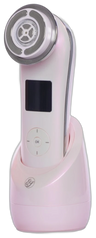
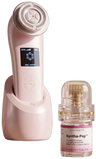
- EvenSkyn Lumo+ (surface radiofrequency, microcurrent, and red light). The device has no needles in any configuration or accessory, and it does not break the skin. It is not an RF microneedling device, and the October 2025 communication accordingly describes a different device class. That is the full extent of the claim. The FDA has not reviewed, cleared, or endorsed the Lumo+; "a different category from the one warned against" and "endorsed by the regulator" are different propositions, and we assert only the first.
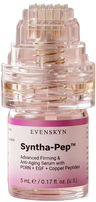
- EvenSkyn MicroInfuser (fixed-depth micro-infusion, 0.5 mm, sealed single-use ampoule). The FDA's delivery statement applies to it, exactly as it applies to every other serum-delivery kit on the market. The device penetrates living skin and therefore falls within device territory under the FDA's own definitions. Its single-use sealed design addresses the reuse and sharing hazards the AAD describes; it does not remove the responsibilities that attach to any needle product, which are the subject of section 7.
- EvenSkyn under-eye micro-infusion patches (dissolving, approximately 0.25 mm). Not specifically addressed by the FDA microneedling documents. Single-use by design; nothing is reused and nothing is withdrawn. The payload includes a retinoid, for which reason the product's own page advises against use during pregnancy, while breastfeeding, or while trying to conceive.
The company sells no device that combines needles with radiofrequency, and no product in the reusable roller-and-pen category to which the AAD's warnings are addressed.
The devices described above are listed with their specifications under skin tightening devices. The conductive medium referenced in sections 1 and 2 is compared separately in the conductive gel comparison.
7. Considerations the documents do not supply: responsible use of a 0.5 mm at-home kit
The FDA's microneedling page defines the category and the limits of authorized delivery; it does not instruct a home user in the decision itself. What follows is our attempt at that instruction, and it begins with the contraindications.
Circumstances in which a micro-infusion kit should not be used at all
- Pregnancy, breastfeeding, or trying to conceive. Neither needle devices nor unreviewed actives belong in this period; the decision rests with your physician.
- Active acne, eczema, a rosacea flare, cold sores, sunburn, or any broken or infected skin in the treatment area. Needles applied to inflamed or infected skin spread the problem; the AAD's warning on viral spread describes the extreme form of this mechanism.
- A history of keloids or raised scarring. Any controlled injury can scar in skin predisposed to scarring.
- A clotting or bleeding disorder, or medication that meaningfully thins the blood. The FDA's consumer update identifies bleeding risk for precisely this group.
- Current or recent use of a medication or in-office procedure that leaves the skin fragile. Where a dermatologist is treating the face for any condition, that clinician's judgment precedes any needle device.
If none of the above applies and use is chosen
- Use single-use components exactly once. The sealed head and ampoule format exists so that no needle touches skin twice. Never share the device or its components; this is the FDA's own hygienic instruction.
- Observe the depth and frequency the kit specifies, and resist the inference that greater frequency yields greater benefit. The AAD's caution that overuse "can irritate your skin, which can make the skin concern more noticeable" describes the most common failure of home practice.
- Treat clean, dry, product-free skin, and apply nothing afterwards that the instructions do not specify.
- Short-lived redness is expected; anything beyond it is a reason to stop and allow full recovery. Persistent irritation, spreading redness, or any sign of infection is a matter for a clinician.
- Where doubt remains at any step, the AAD's default position is also ours: a board-certified dermatologist examining your actual skin is worth more than any general-purpose reference, the present one included.
8. Primary sources
- FDA, Potential Risks with Certain Uses of Radiofrequency (RF) Microneedling, FDA Safety Communication, issued October 15, 2025. Read in full August 30, 2026.
- FDA, Microneedling Devices. Read in full August 30, 2026.
- FDA, Microneedling Devices: Getting to the Point on Benefits, Risks and Safety, consumer update. Read in full August 30, 2026.
- AAD, Microneedling can fade scars, uneven skin tone, and more. Read in full August 30, 2026.
- AAD, Statement on the FDA Safety Briefing about Radiofrequency Microneedling Risks, October 16, 2025. Read in full August 30, 2026.
Disclosure and scope: EvenSkyn manufactures and sells the Lumo+, the MicroInfuser, and the under-eye micro-infusion patches discussed above; the reader should weigh section 6 accordingly, and the quotations are supplied so that every characterization can be verified against its source. Quotations from FDA and AAD materials are reproduced for reference and imply no affiliation, review, or endorsement. This page describes device categories and regulatory documents as they stood on the date read. It is not medical advice, and it makes no claim that any EvenSkyn product is FDA-cleared, FDA-approved, or FDA-authorized. Product-specific cautions are collected on the micro-infusion safety and contraindications page.