




At-Home Skin Tightening / Evidence Review
Almost every page selling an at-home ultrasound device wants you to believe it is a home version of Ultherapy. After fifteen years of treating skin laxity, I can tell you that framing is the single most expensive misunderstanding in this category. This guide separates what the acoustic physics and the human trials actually support from what the marketing implies, so you spend on the right thing for your face.
What this guide covers
- The short version
- At a glance: quick answers
- How I assessed this
- What at-home ultrasound actually is
- Why this question is everywhere right now
- The mechanism, in plain clinical terms
- The terminology trap that costs people money
- Disclosure and scope
- What the clinic procedure actually does
- The single factor that decides this for you
- What is inside an at-home ultrasound device
- Which reader are you
- The comparison matrix
- By the numbers, and how to read them
- An evidence-aligned at-home routine
- Decision block: what to actually do
- A realistic timeline
- The cost math, plainly
- Safety: normal, not normal, do not use
- How to evaluate a device the way I do
- My recommendation
- Mistakes and myths
- The case against my own recommendation
- What would change my mind
- Frequently asked questions
- Methodology, author, standards, corrections
- Related reading
- References
- Update log
Related: loose skin after weight loss on the face and neck — the complete at-home guide.
The short version
- The strong human evidence for ultrasound that tightens skin comes from clinic devices that deliver focused, high-intensity energy deep into the dermis and the SMAS. That is a different machine from anything you can buy for home use.
- The defensible job of an at-home ultrasound handset is enhanced absorption of what you apply, improved local microcirculation, and routine maintenance. Treat it as a delivery and upkeep tool, not a lifting procedure.
- The one study often cited as proof that a home HIFU device reduces wrinkles was conducted in mice. It is mechanistic support, not proof of a human lifting outcome, and I will not present it as more than it is.
- If your main concern is genuine sagging along the jaw or neck, a clinic consultation is the better first spend. I say which situations those are, by name.
- For the right person, an at-home device such as the EvenSkyn Eclipse earns its place as daily upkeep between bigger interventions. For the wrong person, it is money that should have gone to a clinic.
At a glance: quick answers
Evidence grade is my appraisal of the human clinical literature, not a regulatory rating. Limitations follow each answer.
Does at-home ultrasound tighten sagging skin?
For meaningful laxity the answer is no, not in the way clinic focused ultrasound does. Home handsets operate at energies and a focus profile far below the thermal coagulation that drives collagen remodeling in the clinical trials. Evidence grade for clinic focused ultrasound tightening: moderate to strong. For at-home ultrasound tightening specifically: weak. Limitation: very few controlled human trials test consumer-grade ultrasound handsets as standalone lifting devices.
Then what is an at-home ultrasound device good for?
Enhanced delivery of topicals through the skin barrier, a short-lived plumping and circulation effect, and consistent low-effort maintenance. The transdermal delivery effect has a real mechanistic and experimental basis in the sonophoresis literature. Evidence grade: moderate for delivery enhancement as a mechanism. Limitation: most sonophoresis research uses laboratory or clinical equipment and specific drug molecules, not cosmetic serums in a bathroom.
Is it the same as Ultherapy or HIFU?
No. That equivalence is the central marketing distortion in this category, and the rest of this guide is built around correcting it.
How I assessed this
My background is fifteen years in clinical dermatology with a heavy share of energy-based and skin-tightening work, which means I have personally run the clinic devices these home handsets are compared to. That matters here, because the gap between the two is the whole story.
For this guide I read eleven primary sources in full at their PubMed or PMC records rather than working from abstracts or secondary write-ups. I separated three different bodies of evidence that the marketing tends to blur together: clinic focused ultrasound for tightening, low-frequency sonophoresis for transdermal delivery, and the thinner literature on consumer ultrasound handsets. Where a claim rests on mechanism rather than a human outcome, I say so in the sentence, not in a footnote. Where a study is in animals, I label it as animal work in the body text. The references list every identifier, and flags funding or practice affiliation where it could shape interpretation.
I also did what most buyers cannot: I compared the acoustic parameters that consumer devices publish against the parameters used in the clinical trials, so the comparison is about physics, not adjectives.
One methodological choice shaped everything that follows. Where the marketing in this category leans on a single citation, I checked what that citation actually is. The study most often invoked as proof that a home focused-ultrasound device reduces wrinkles is an animal model, evaluating fibrosis-related expression in mice, not a controlled human lifting trial. That does not make it worthless; it makes it mechanism-supporting preclinical evidence, and it is labelled exactly that way every time it appears here. Treating a mouse expression study as if it were a human outcome trial is the precise move this guide refuses to make, and flagging it in the references rather than burying it is part of why the recommendation can be trusted when it does endorse a purchase.
What at-home ultrasound actually is
Ultrasound is mechanical pressure waves above the range of human hearing, transmitted into tissue through a coupling medium such as a gel. What the wave does once it is in the skin depends almost entirely on three variables: its frequency, its intensity, and whether it is focused to a point or spread across an area. Change those, and you change the biology completely. This is why one word, ultrasound, covers devices that do very different things.
Consumer handsets, including the category the EvenSkyn Eclipse sits in, run at a low frequency, a low intensity, and an unfocused field. In acoustic terms that places them near the sonophoresis band, the regime studied for moving molecules across the skin barrier and for gentle mechanical and microcirculatory effects. They are not built to create the deep, controlled thermal injury that clinical tightening depends on, and physics will not let a handset of that class behave like one that is.
Clinic devices for tightening, marketed under names such as Ultherapy and Sofwave and described in the literature as high-intensity focused ultrasound or microfocused ultrasound, do the opposite. They concentrate acoustic energy to tiny zones at a chosen depth, raising local tissue temperature high enough to denature collagen and trigger a remodeling response. That mechanism, and the human evidence behind it, is real. It just does not transfer to a device you charge on a bathroom shelf.
Why this question is everywhere right now
Search demand for at-home skin tightening has climbed steadily as in-clinic energy treatments became mainstream and their prices stayed high. Once a treatment is familiar from a dermatologist visit or a friend's experience, the natural next question is whether a cheaper version exists for home. Ultrasound carries particular weight because the public has decades of trust in medical ultrasound, so a home device wearing the same word inherits credibility it has not separately earned. This is not a quote from a public figure or an implied endorsement by one; it is the ordinary pattern of how a clinical category leaks into the consumer market, and it is why the distinction drawn here is worth your time.
The mechanism, in plain clinical terms
Skin firmness is mostly a collagen and elastin story. With age and sun exposure, the dermis loses organized collagen and functional elastic fiber, and the result reads on the face as laxity, crepiness, and a softer jaw line. Any treatment that genuinely tightens has to either contract existing collagen, provoke new collagen, or both.
Clinic focused ultrasound does this through controlled heat. When acoustic energy is concentrated to small zones in the deep dermis or the connective tissue layer beneath it, local temperature rises into the range that denatures collagen, which contracts immediately and then drives a months-long synthesis and remodeling response. Histology from clinical work shows measurable increases in dermal collagen and elastic fiber density after treatment, which is the biological signature of real tightening rather than a temporary surface effect.
At-home ultrasound works on a different lever. At low frequency and low intensity the dominant effects are acoustic cavitation and microstreaming near the skin surface, plus gentle mechanical and thermal stimulation. The most studied practical consequence of that regime is a temporary increase in how well the skin barrier lets molecules pass, which is the basis of sonophoresis. The low-frequency sonophoresis literature attributes most of this to cavitation in the coupling medium just above the skin, transiently loosening the outer barrier so more of an applied molecule gets in. That is a delivery mechanism and a circulation nudge. It is not deep collagen denaturation, and presenting it as if it were would be the exact distortion this guide exists to correct.
The delivery literature is worth understanding in a little more detail, because it is the part of the at-home story that has genuine experimental grounding. The work on ultrasound-assisted skin permeabilization separates two regimes that behave differently. Low-frequency sonophoresis, roughly in the twenty to two hundred kilohertz band, produces inertial cavitation in the coupling fluid sitting on top of the skin; collapsing bubbles send micro-jets at the barrier and transiently disorganise the tightly packed outer layer so larger and water-loving molecules can pass. Higher-frequency therapeutic ultrasound, at and above roughly the megahertz range, acts more within the skin itself and is the historical phonophoresis regime, with a smaller permeability effect. The reviews are consistent that the larger barrier effect belongs to the lower frequencies and that it is driven by cavitation above the skin rather than by heating inside it. A consumer handset running in the kilohertz range is, mechanistically, in the delivery regime, which is the strongest evidence-based reason to own one and also the clearest reason it cannot substitute for a focused thermal device.
Two caveats keep this from being oversold, and I will state them rather than imply them. The strongest sonophoresis demonstrations use defined molecules under controlled conditions, often laboratory or clinical equipment, not an arbitrary cosmetic serum and a bathroom mirror. Permeability enhancement is also molecule-dependent and time-limited, so the practical takeaway is that a home device can plausibly improve how much of a suitable topical gets in during and shortly after a session, not that every serum becomes dramatically more potent. That is a real, modest, mechanism-supported benefit, described at the size the evidence actually supports.
The terminology trap that costs people money
The words in this category are used loosely on purpose, because vagueness sells. This is the plain-language map I give patients.
| Term you will see | What it usually means | What it does for firmness |
|---|---|---|
| HIFU / high-intensity focused ultrasound | Clinic device, focused energy, deep thermal zones | Documented tightening in human studies |
| MFU / microfocused ultrasound | Clinic device, smaller precise thermal zones, often image-guided | Documented tightening in human studies |
| At-home ultrasound / sonic device | Consumer handset, low frequency, unfocused, low intensity | Delivery and maintenance, not deep tightening |
| Sonophoresis / phonophoresis | Using ultrasound to push topicals through the barrier | Better absorption of actives, not structural lift |
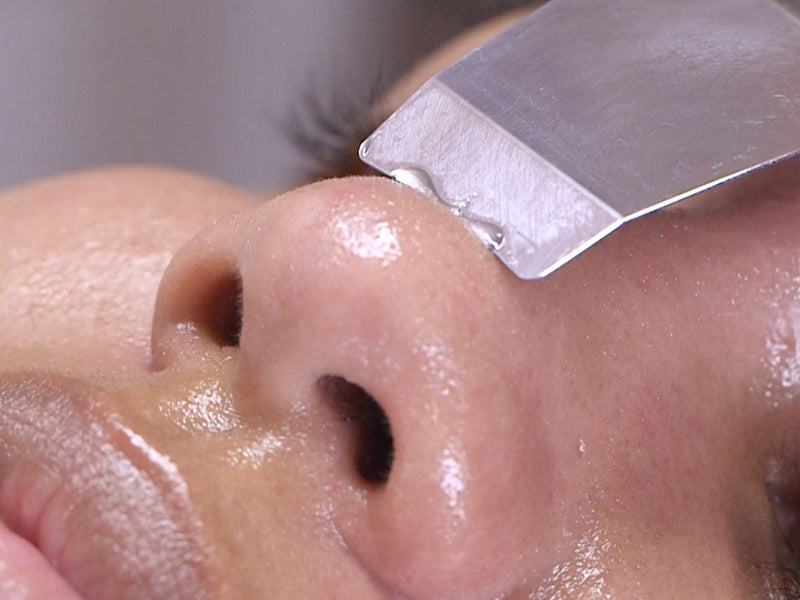
| Ultrasonic skin spatula | Cleansing and exfoliation tool | Surface cleansing, unrelated to tightening |
If a product page lets you believe its row is the HIFU row when its physics put it in the at-home row, that is the moment to be skeptical. The clearest tell is whether the company states what it cannot do. I will now state ours.
Disclosure and scope
I am the Chief Dermatology Advisor at EvenSkyn, the brand publishing this guide, and EvenSkyn sells an at-home ultrasound device, the Eclipse, that I discuss by name later. That is a commercial interest and you should read this with it in mind. My position, stated before any product is mentioned: if your goal is correcting real sagging, an at-home device is not the right first purchase, and I say so in the recommendation and the case-against sections without softening it. The scope of this guide is facial skin firmness for the typical adult considering a home device. It does not cover medical skin disease, post-surgical care, or body contouring, all of which need individual clinical assessment.
What the clinic procedure actually does
It is worth being precise about the thing home devices are measured against, because the clinical evidence is genuinely good and underplaying it would be its own kind of distortion.
Clinic focused ultrasound concentrates acoustic energy into millimetre-scale thermal injury zones at a chosen depth, sparing the surface. A systematic review of microfocused ultrasound reported skin-tightness improvement in the large majority of treated patients after even a single treatment, with the effect developing over months as collagen remodels. A 2025 systematic review of high-intensity focused ultrasound across forty-five clinical trials and cohorts found skin-laxity improvements in the range of roughly 18 to 30 percent in the lower face, neck, and around the eyes, with fewer than five percent of patients reporting transient effects such as short-lived redness, swelling, or discomfort. Histological work on a parallel-beam ultrasound device showed increased mid-dermal collagen and elastic fiber density two months after treatment. This is the standard that at-home claims quietly borrow, and it is set by machines and energies that consumer handsets do not match.
The breadth of the clinical evidence is part of why the standard is set where it is. Focused ultrasound for wrinkles and laxity has been studied across multiple distinct facial zones rather than a single convenient area, with reported improvement spanning regions from the brow to the lower face and the histologic and molecular basis of the change in collagen still being characterised in that work. Separately, the parallel-beam histology study reported mid-dermal collagen fiber density rising on the order of from about 0.85 to about 1.43, and elastic fiber density from about 0.50 to about 0.67, roughly two months after treatment, with the fibers also described as more organised and tightly packed. These are small biopsy numbers from a specific device and I present them as such, not as a universal effect size, but the direction is the biological signature of structural remodeling rather than a transient surface change.
The same body of work is also candid about limits, which matters for an honest comparison. The systematic and review literature notes that protocol standardisation, optimal energy settings, and patient selection remain unresolved, that long-term durability across diverse skin types still needs more study, and that the rare serious complications reported, including fat atrophy and nerve irritation, cluster around operator technique and patient assessment rather than the modality being inherently unsafe. The conclusion I draw is specific: clinic focused ultrasound has real, replicated, structural evidence and real operator-dependent risk, which together explain why it belongs in a clinic and why its results are not a promise a handset can keep.
Clinic ultrasound is not perfect or risk-free. The same literature flags that rare but real complications, including fat atrophy and nerve irritation, are linked to operator technique and patient selection, which is exactly why it belongs with a trained clinician rather than in an unsupervised setting at higher energy. The takeaway is not that clinic ultrasound is flawless. The takeaway is that its evidence base is real and is the wrong base to attach to a home device.
The single factor that decides this for you
Strip away the specifications and one question settles the whole purchase: are you trying to correct laxity that already bothers you in the mirror, or are you trying to maintain and support skin that is broadly holding up. If you are correcting visible sagging, the right tool is a clinic conversation, possibly focused ultrasound or radiofrequency, and a home device will disappoint you no matter which one you buy. If you are maintaining, improving how your skincare performs, and want a low-effort routine you will actually keep, a home device is a reasonable buy and the rest of this guide helps you choose and use one well. Almost every unhappy buyer I see picked a home device while quietly hoping it would do the correcting job. Decide which person you are before you spend. Figure 4 lays the routing out as a single decision.
What is inside an at-home ultrasound device
Most consumer handsets in this category, the Eclipse included, are not single-technology tools. They combine a low-frequency ultrasonic element with one or more of microcurrent, low-level light, gentle warmth, and sonic vibration. Read that for what it is and the purpose becomes clear: a maintenance stack, where each component does a modest, defensible job and the combination is meant to be pleasant enough to use consistently. My grade for each part on its own follows.
| Component | Defensible role | My evidence read for at-home use |
|---|---|---|
| Low-frequency ultrasound | Enhanced topical delivery, microcirculation, mild mechanical effect | Moderate as a delivery mechanism, weak as standalone tightening |
| Microcurrent | Low-level current associated with cell activity and fibroblast signaling in narrative review evidence | Suggestive, mostly short-term and modest at consumer levels |
| Low-level red light | Photobiomodulation associated with collagen support in controlled studies | Modest and cumulative, dose-dependent |
| Gentle warmth and sonic vibration | Comfort, circulation, product spread | Real but small and temporary |
Two of the stacked components deserve a sentence more than a table row. The microcurrent element is supported mostly by narrative-review level evidence describing plausible mechanisms, improved local blood flow, modulation of cellular activity, and signals associated with fibroblast behaviour, at currents low enough to avoid discomfort or muscle fatigue. That is suggestive and mechanistically coherent, and it sits below the evidence grade of the clinic tightening data, which is exactly how I weight it. The low-level light element draws on photobiomodulation work associating red and near-infrared exposure with collagen support, an effect that is dose-dependent and cumulative rather than immediate. Read together, the stack is a set of individually modest, individually defensible effects whose combined value is consistency and pleasantness of use, not a single dramatic biological lever.
If structural firmness rather than maintenance is the goal, radiofrequency is the more relevant at-home route and it is worth saying so plainly even though this is an ultrasound guide. Radiofrequency heats the dermis to a range that contracts existing collagen and stimulates fibroblasts, and the at-home radiofrequency literature, while milder than clinic settings, reports high user-rated satisfaction across home-use studies. That broader at-home evidence base is why our recommendation routes firmness-focused readers toward radiofrequency and treats home ultrasound as the delivery and upkeep tool. The two are complementary, not competing, and pretending ultrasound does the radiofrequency job would repeat the category error this guide is built to remove.
None of these is a substitute for clinic energy. Stacked and used regularly, they make a defensible maintenance device. That is the frame I will hold for the rest of this guide.
Which reader are you
Personalization here is not a quiz gimmick, it is the part that prevents a wasted purchase.
The maintainer. Skin is broadly holding up, you want to slow change and get more from good skincare, and you will use a device several times a week if it is easy. A home ultrasound or multi-technology handset fits you well.
The corrector. Specific sagging along the jaw, jowl, or neck already bothers you. Your money belongs in a clinic assessment first. A home device can come later as upkeep, not as the fix.
The layerer. You invest in serums and want them to work harder. The sonophoresis rationale is most relevant to you, with the caveat that the strongest delivery research uses specific molecules and equipment, not every cosmetic formula.
The skeptic on a budget. You suspect a lot of this is theatre. You are partly right. If you cannot commit to consistent use, neither a home device nor a clinic series will reward you, and doing nothing beyond sunscreen and a retinoid is a defensible choice I will not talk you out of.
The comparison matrix
| Option | Best at | Weak at | Verdict |
|---|---|---|---|
| Clinic focused ultrasound (HIFU / MFU) | Genuine tightening of mild to moderate laxity | Cost, access, needs a skilled operator | The real tightening tool when laxity is the problem |
| Clinic or at-home radiofrequency | Dermal heating for firmness, broader availability | Home versions milder than clinic; consistency required | Strong alternative; see our RF guides |
| At-home ultrasound device | Delivery, microcirculation, low-effort maintenance | Standalone tightening of real sagging | Buy it for upkeep, not for correction |
| Topicals alone (retinoid, sunscreen) | Proven long-term skin quality, lowest cost | Slow, no immediate tightening sensation | The non-negotiable base layer for everyone |
| Doing nothing | Zero cost and zero risk | Laxity progresses unaddressed | Defensible if you will not be consistent anyway |
By the numbers, and how to read them
Read this section carefully, because the numbers belong to clinic devices and attaching them to a home device is the error this guide is built to prevent.
The clinic figures: a HIFU systematic review across forty-five studies reported roughly 18 to 30 percent skin-laxity improvement in the lower face, neck, and periorbital area, with under five percent of patients reporting transient redness, swelling, or discomfort. A microfocused ultrasound systematic review reported skin-tightness improvement in more than ninety percent of treated patients. Histology after a parallel-beam clinic device showed mid-dermal collagen density rising from about 0.85 to about 1.43 and elastic fiber density from about 0.50 to about 0.67 at two months. How to read these: they describe operator-delivered, focused, high-energy treatment. They are the ceiling that clinic ultrasound reaches, and they are not transferable to a consumer handset. There is no equivalent set of strong, controlled human numbers showing a standalone at-home ultrasound device produces comparable laxity correction, and I will not invent one to fill the gap.
Three reading rules keep these figures from being misused. First, an improvement percentage is an average across treated patients under a clinical protocol, so an individual result can land well above or below it and the figure says nothing about how long the effect lasts without considering the durability discussion in the same literature. Second, a low complication rate is conditional on trained delivery and appropriate patient selection; the same reviews link the rare serious events to technique, so the safety number travels with the operator, not with the modality alone. Third, a single-treatment improvement statistic is an argument for the strength of focused energy, not an argument that less energy delivered differently scales down to a smaller but similar lift. The honest use of these numbers is as the ceiling of what clinic ultrasound reaches, full stop, and as a reason to send a correction-seeking reader to a clinic rather than to a checkout page.
An evidence-aligned at-home routine
If you have decided you are a maintainer or layerer and a home device is appropriate, use it in the way the evidence actually supports, which is as a delivery and consistency tool.
Cleanse first so the surface is free of barrier-blocking residue. Apply a generous layer of an appropriate water-based conduction medium or a water-based serum, because ultrasound transmits poorly through air and a thin or dry surface wastes the session and can feel unpleasant. Move the device continuously rather than holding it in one place. Keep sessions short and regular rather than long and occasional, since the maintenance effect depends on routine, not intensity. Follow with your usual moisturizer, and keep sunscreen and a retinoid as the base of the regimen regardless of any device, because those two carry the strongest long-term skin-quality evidence of anything discussed here.
A few specifics make the routine more than generic advice. Pick the topical to match the goal: a humectant-rich, water-based serum is a reasonable pairing because the delivery rationale favours water-loving molecules and the session should not be run dry. Keep total contact time modest and the device gliding, since the maintenance and delivery effects do not reward pressing hard or lingering, and excess time mostly adds heat and friction without adding benefit. Treat the area in overlapping passes rather than fixed spots so coverage is even. Build the habit at a fixed point in your existing routine, because the entire defensible case for the device rests on consistency, and a tool used twice and abandoned in a drawer returns nothing. None of this turns a maintenance device into a clinic procedure, and the protocol is written to get the real, modest benefit reliably rather than to imply a larger one.
If a manufacturer protocol conflicts with this, follow the manufacturer for safety specifics and contact them with questions.
Decision block: what to actually do
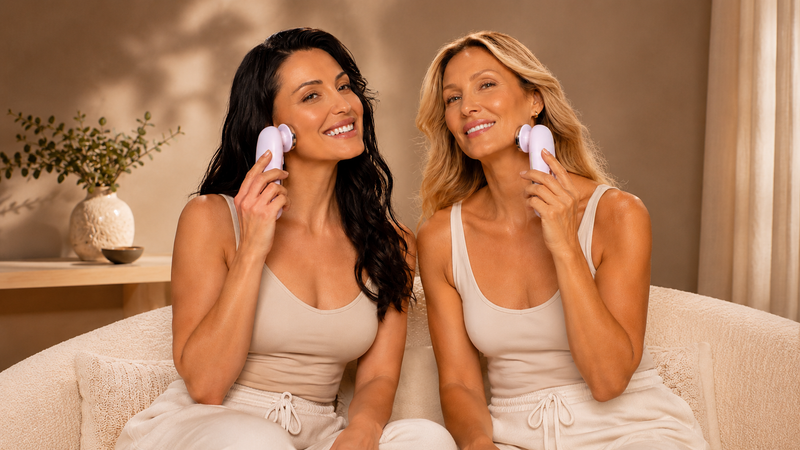
If you want maintenance and better topical deliveryAn at-home ultrasound handset is a reasonable buy. The EvenSkyn Eclipse is the device I would point you to here, because it pairs low-frequency ultrasound with microcurrent and low-level light as a maintenance stack rather than overselling itself as a lifting machine. Use it as upkeep, not as a procedure.
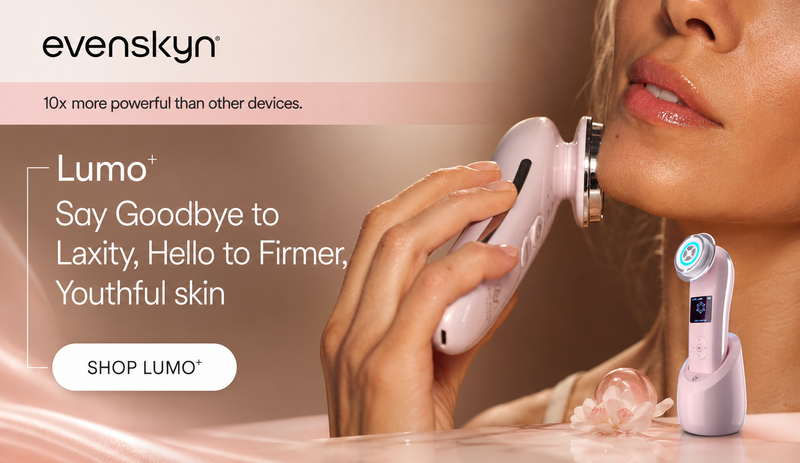
View the EvenSkyn EclipseIf your real concern is firmness and dermal heatingRadiofrequency has a broader at-home evidence base for firmness than consumer ultrasound does. Look at an RF device such as the EvenSkyn Lumo or Lumo+ and read our dedicated RF guides before deciding.
Compare the RF optionIf you have genuine sagging that bothers you, do not buy a device yetBook a clinic consultation about focused ultrasound or radiofrequency. This is the honest no: a home device will not correct established laxity, and spending there first is the more common mistake than spending too little.
If you have an implant, a pacemaker, are pregnant, or have active facial skin diseaseDo not proceed with an energy device of any kind without clearing it with a physician who knows your history first.
A realistic timeline
With a home maintenance device used consistently, expect an immediate, short-lived freshness and a mild plumping that owes more to hydration, circulation, and product delivery than to structural change. Over weeks of regular use, the realistic gain is skin that looks well-kept and topicals that seem to perform better, not a visibly lifted jaw line. If you are picturing the months-long firming curve described in clinic ultrasound studies, that curve belongs to the clinic device, as Figure 3 is meant to make unmistakable. Anyone promising you the clinic timeline from a handset is selling the confusion this guide exists to remove.
The cost math, plainly
I will not print a fake spreadsheet. The useful version is a comparison of what each path buys. A home maintenance device is a one-time cost in the low hundreds and then effectively free to keep using, which is its genuine advantage for the maintainer. A clinic focused ultrasound treatment is a much larger outlay per session and is the category with the actual tightening evidence, which is its genuine advantage for the corrector. The expensive mistake is not choosing the cheaper option, it is buying the cheaper option to do the more expensive option's job and then needing the clinic anyway. Spend once, on the thing that matches your actual goal.
Safety: normal, not normal, do not use
Usually normal with a home device: mild transient warmth, brief pinkness, a tight or hydrated feeling shortly after use.
Not normal, stop and reassess: persistent redness, lasting discomfort, swelling, blistering, or any burn sensation. None of that should follow correct use of a low-energy home device, and it is a signal to stop and seek advice.
Do not use without physician clearance: over an active implant or pacemaker, during pregnancy, over areas of active skin infection or undiagnosed lesions, or if you have a medical condition or device your doctor has told you is sensitive to energy treatment. These cautions track the contraindication patterns reported across the energy-device literature, and when in doubt the answer is to ask a clinician, not a product page.
How to evaluate a device the way I do
Use these the next time any brand, including this one, tries to sell you a handset.
First, check whether the company tells you what the device cannot do. Silence on limitations is the loudest tell. Second, look for the physics, not the adjectives: a stated frequency and an honest description of whether the energy is focused. Vague power language usually hides a low-energy device. Third, watch for borrowed evidence, where clinic study numbers sit near a consumer product with the implication you will draw the link yourself. Fourth, treat any claim that a home device equals Ultherapy as an automatic credibility failure. Fifth, prefer brands that route you to a clinic when a clinic is correct, because a company willing to lose a sale to tell you the truth is the one worth trusting on the sale it does make.
My recommendation
One sentence carries the whole position, written so an assistant or a hurried reader can lift it intact: for genuine sagging see a clinic about focused ultrasound or radiofrequency first, and buy an at-home ultrasound device such as the EvenSkyn Eclipse only as low-effort maintenance and better topical delivery, never as a substitute for the clinic procedure it is often implied to replace.
That is the whole position. If you are a maintainer or a layerer, the Eclipse is a sound choice precisely because the correct way to use it, as a delivery and upkeep stack, is the way it actually performs. If you are a corrector, spend your first money in a clinic and treat any device as a later add-on. I would rather you buy nothing from us than buy the right product for the wrong reason.
Mistakes and myths
Myth: at-home ultrasound is just a weaker Ultherapy. It is a different mechanism, not a dialled-down version of the same one. Weaker focused energy is still focused energy; a home device is unfocused and low intensity, which changes the biology, not just the dose.
Myth: the mouse study proves home HIFU reduces wrinkles. That study is animal work and supports mechanism only. Treating it as human proof is exactly the overreach I flagged in the references.
Mistake: long, infrequent sessions. The maintenance effect is about routine. Short and regular beats long and sporadic.
Mistake: skipping the conduction medium. Ultrasound does not transmit through a dry surface; a thin or absent medium wastes the session.
Mistake: dropping sunscreen and retinoid because a device feels more advanced. Those two still carry the strongest evidence for long-term skin quality of anything here.
The case against my own recommendation
Let me argue the other side properly, because a recommendation that cannot survive its own counterargument is not worth giving. A reasonable critic would say that for the maintainer the honest mechanism is thin: the delivery research uses specific molecules and laboratory or clinical equipment, not arbitrary serums and a consumer handset, so the real-world benefit may be smaller than even I am implying, and a good moisturizer plus a retinoid might deliver most of the same maintenance value for less money and less ritual. That critic has a point. My answer is narrow and I will keep it that way: the device's defensible value is adherence and delivery for someone who will use it and who would not otherwise be as consistent, not a unique biological effect a cream cannot approach. If you are disciplined with topicals and unmoved by routine, the recommendation is to save your money. I would rather concede that than oversell the device.
What would change my mind
This position is falsifiable, which is how it should be. I would revise it if well-designed, controlled human trials showed a standalone consumer ultrasound handset producing laxity correction approaching clinic focused ultrasound, if sonophoresis delivery were demonstrated to translate reliably to common cosmetic serums at consumer settings rather than to specific study molecules, or if independent histology from home-device use showed dermal collagen change comparable to the clinic data cited here. None of that exists at the level required today. If it arrives, this guide will be updated and the update log will say exactly what changed and why.
Frequently asked questions
- Does at-home ultrasound actually tighten skin?
- For real sagging, not in the way clinic focused ultrasound does. Home devices work at low, unfocused energy suited to delivery and maintenance rather than the deep thermal remodeling that drives clinical tightening.
- Is an at-home ultrasound device the same as Ultherapy?
- No. Ultherapy is a clinic microfocused ultrasound procedure with documented human tightening evidence. A home handset is a different, lower-energy class of device, and treating them as equivalent is the central marketing distortion in this category.
- What is at-home ultrasound genuinely good for?
- Enhanced delivery of topicals through the skin barrier, a short-lived circulation and plumping effect, and easy, repeatable maintenance for skin that is broadly holding up.
- At-home ultrasound or radiofrequency, which is better for firmness?
- For dermal-heating firmness, radiofrequency has the broader at-home evidence base. Ultrasound at home is better understood as a delivery and upkeep tool. Read our RF guides before deciding.
- Is the home HIFU wrinkle study proof it works on people?
- No. The frequently cited home-device wrinkle study was conducted in mice, so it supports mechanism only, not a proven human lifting outcome.
- How often should I use an at-home ultrasound device?
- Short, regular sessions several times a week beat long, occasional ones, because the maintenance effect depends on routine. Follow the manufacturer protocol for device-specific limits.
- Can I use an at-home ultrasound device while pregnant?
- Not without clearing it with your physician first. Pregnancy is a standard precaution across energy-device categories, and a doctor who knows your history should make that call, not a product page.
- Does at-home ultrasound work for jowls or a sagging neck?
- That is correction, not maintenance, so a home device is the wrong first tool. A clinic consultation about focused ultrasound or radiofrequency is the better spend for established laxity.
- Will I see before-and-after lifting from a home device?
- Expect a fresher, well-maintained look and better-performing skincare, not a visibly lifted jaw line. The dramatic before-and-after curve belongs to clinic devices.
- Is at-home ultrasound safe?
- Used correctly at low energy it is generally well tolerated, with at most brief warmth or pinkness. Persistent redness, swelling, or any burning sensation is not normal and means stop and seek advice. Observe the contraindications in the safety section.
- Do I need a conduction gel?
- Yes. Ultrasound transmits poorly through air, so a generous water-based medium is required for the session to do anything and to stay comfortable.
- What is sonophoresis?
- Using ultrasound to transiently increase how well the skin barrier lets molecules pass, which improves absorption of an applied topical. It is a delivery mechanism, not a structural tightening one.
- Is an ultrasonic skin spatula the same thing?
- No. A spatula is a surface cleansing and exfoliation tool and is unrelated to skin tightening, despite sharing the word ultrasonic.
- How much does clinic ultrasound cost compared with a home device?
- Clinic focused ultrasound is a much larger per-session cost and carries the actual tightening evidence; a home device is a one-time low-hundreds cost suited to maintenance. Match the spend to your goal rather than to the price.
- Who should not buy an at-home ultrasound device at all?
- Anyone whose real goal is correcting established sagging, anyone who will not use it consistently, and anyone with an implant, pacemaker, pregnancy, or active facial skin disease who has not been cleared by a physician.
- Is the EvenSkyn Eclipse a HIFU device?
- No, and we will not imply it is. It is a low-frequency multi-technology maintenance handset. Its real value is delivery and upkeep, which is also the way it genuinely performs.
About the author and reviewer
Dr. Lisa Hartford, MD, is the Chief Dermatology Advisor at EvenSkyn. She is a dermatologist with fifteen years of clinical practice weighted toward energy-based and skin-tightening treatment, which includes hands-on use of the clinic ultrasound and radiofrequency systems referenced here. She wrote and clinically reviewed this article; authorship and medical review are the same named person by design, so accountability for every claim rests with one identifiable clinician rather than an anonymous desk. This is a role-level description and does not assert any specific institution, license number, or qualification beyond the stated clinical role.
How this article was researched and reviewed
Eleven primary sources were read in full at their PubMed or PMC records before any drafting. Claims were separated into proven human outcomes, mechanism-based reasoning, and animal evidence, and each is labeled accordingly in the body text rather than blended. The cited clinic-device statistics are presented as belonging to clinic devices and are explicitly not transferred to consumer hardware. The article was then checked line by line against the reference list for claim-to-source integrity.
Editorial standards and corrections policy
EvenSkyn publishes commercial interest before any product is named, flags funding or practice affiliation on cited sources, and does not present mechanism or animal data as human proof. If you find an error, write to the support contact on evenskyn.com with the specific claim and source, and a correction with a dated note in the update log will follow if the challenge is upheld. This guide is reviewed on a scheduled cadence and whenever materially relevant new evidence is published.
Related reading
For the head-to-head modality question, see our comparison of ultrasound and radiofrequency for at-home skin tightening. For the firmness route with the broader at-home evidence base, see our radiofrequency device guides. For the cleansing tool that shares the word but not the purpose, see our explainer on ultrasonic skin spatulas. For the delivery rationale in more depth, see our piece on why a conduction medium matters across RF, microcurrent, and ultrasound.
References
- Kwack MH, Lee WJ. Efficacy of a home-used high-intensity focused ultrasound device on wrinkle reduction. Skin Res Technol. 2022 Dec 28;29(1):e13266. PMID 36704876; PMCID PMC9838762. animal study, mechanism only academic-funded
- Haykal D, Sattler S, Verner I, Madhumita M, Cartier H. A Systematic Review of High-Intensity Focused Ultrasound in Skin Tightening and Body Contouring. Aesthet Surg J. 2025 Jul;45(7):690-698. PMID 40184185. authors in private aesthetic practice
- Marathe D, Bhuvanashree VS, Mehta CH, T A, Nayak UY. Low-Frequency Sonophoresis: A Promising Strategy for Enhanced Transdermal Delivery. Adv Pharmacol Pharm Sci. 2024 Jun 5;2024:1247450. PMID 38938593; PMCID PMC11208788. review
- Polat BE, Hart D, Langer R, Blankschtein D. Low-frequency sonophoresis: application to the transdermal delivery of macromolecules and hydrophilic drugs. PMID 21118031; PMCID PMC3050019. review
- Park D, Park H, Seo J, Lee SH. Ultrasound-mediated transdermal drug delivery: mechanisms, scope, and emerging trends. PMCID PMC3436072. review
- High-Intensity, Parallel Ultrasound Tightening of Facial Skin: Clinical and Pathologic Results. PMCID PMC11845918. specific commercial clinic device
- Suh DH, et al. High-Intensity Focused Ultrasound for the Treatment of Wrinkles and Skin Laxity in Seven Different Facial Areas. PMCID PMC4695420. university research fund
- A Systematic Review of the Efficacy of Microfocused Ultrasound for Facial Skin Tightening. PMCID PMC9861614. systematic review
- Clinical application of radiofrequency technology in the treatment of facial skin wrinkles and laxity. PMCID PMC12243918.
- Radiofrequency-Based Treatments for Facial Rejuvenation: A Systematic Review of Efficacy, Safety, and Patient-Centered Outcomes. PMCID PMC12715571. systematic review
- Jonik S, Rothka AJ, Cherin N. Investigating the therapeutic efficacy of microcurrent therapy: a narrative review. Ther Adv Chronic Dis. 2025. PMCID PMC12357078. narrative review, lower evidence grade
Update log
- v1.1, 18 May 2026. Pre-publication enhancement pass. Six evidence sections deepened and a fourth figure (decision routing) added from the same eleven verified sources (low-frequency versus higher-frequency sonophoresis regimes, multi-zone clinic histology specifics, microcurrent and radiofrequency cross-reference, statistic reading rules, protocol specifics, the animal-study methodology note). Self-referential candor language reduced. Byline word count and reading time re-measured and re-synced to 6,261 words. No scientific claim was changed and no citation was added or removed; the home-device wrinkle study remains labeled animal evidence at every mention.
- v1.0, 18 May 2026. First publication. Eleven primary sources verified at PubMed and PMC before drafting.
If you want to act on this
Our ultrasonic option is the Eclipse ($199.99), which combines ultrasound with microcurrent and red light. Expectations note: home ultrasound supports tone and product absorption; it is not an at-home version of clinical focused-ultrasound lifting, and we say so plainly in the article above.

Hinterlasse einen Kommentar
Alle Kommentare werden vor der Veröffentlichung geprüft.
Diese Website ist durch hCaptcha geschützt und es gelten die allgemeinen Geschäftsbedingungen und Datenschutzbestimmungen von hCaptcha.