


EvenSkyn Skin Science Desk · Device Guide 2026
Half the "microcurrent" devices on the market aren't running classic microcurrent at all. Here's how to tell what you're buying, which one earns the money, and why the strongest option might be the one nobody calls a microcurrent device.
The short answer
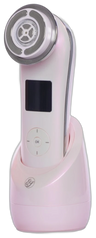
For classic sub-sensory microcurrent that targets facial-muscle tone, a dedicated bar like the EvenSkyn Phoenix ($119.99) does the one job well and cheaply. But if you want a device that actually works harder, the EvenSkyn Eclipse ($199.99) pairs contraction-class EMS lifting with ultrasound, red light at 623 nm, sonic massage, and gentle warmth in one handset. That is a different, more demanding current class than the microamp devices from NuFACE and ZIIP, plus four modes they don't offer, at roughly half the price of a Trinity+ kit. The catch worth knowing up front: EMS and microcurrent are not the same technology, and which one you want depends on your goal.
What the guide covers
"Microcurrent" has quietly become a category label, not a spec. Several popular devices actually deliver EMS at intensities classic microcurrent is engineered to stay below. Knowing the difference changes what you should buy.
The strongest human evidence for facial electrical stimulation is a 2012 randomized controlled trial of 108 women, which measured a real increase in cheek-muscle thickness. It's genuinely encouraging and genuinely limited. We'll show you both sides.
Our value pick, the Eclipse, delivers a current class the NuFACE and ZIIP lineup is designed to stay under, and layers on ultrasound and light modes single-function wands skip, at $199.99.
If you specifically want gentle, classic microcurrent, we say so and point you to the cheaper single-purpose bar rather than upselling you.
Every device on the market, ours included, needs consistent use and a conductive gel, and none of them replaces an in-clinic energy treatment. Anyone promising a permanent facelift from a $200 handset is overselling.
The verdict · our value pick
EvenSkyn Eclipse
Contraction-class EMS plus five more modes, $199.99. The most capability per dollar in the field, if you're comfortable feeling the current.
Best for
- People who want the most modes and intensity per dollar
- First-time device buyers who'd rather not stack three tools
- Anyone who dislikes being tied to a phone app
- Gifting: one complete kit, nothing else to buy
Not the best fit for
- People set on a truly sub-sensory, barely-there feel
- Buyers who want a large library of app-guided routines
- Anyone shopping specifically for blue-light acne treatment
- Those expecting clinic-depth results from any home device
The word "microcurrent" is doing a lot of quiet work
Walk through Sephora's device wall or scroll the Wirecutter roundup and you'll see a dozen tools filed under "microcurrent." Here's the part nobody puts on the box: several of them aren't running microcurrent in the original sense at all. The label has drifted from a technical description into a shelf category, and that drift is exactly why so many buyers end up with a device that does something other than what they pictured.
So let's be precise, because the distinction decides which device is right for you.
Classic microcurrent is a very low, sub-sensory current, typically in the tens to low hundreds of microamps. You're not supposed to feel a contraction. The idea, grounded in a foundational 1982 study by Cheng and colleagues, is that currents in roughly the 50 to 500 microamp range can raise cellular ATP, the energy molecule, and nudge protein synthesis and amino-acid transport in skin tissue. [1] More recent lab work has shown microcurrent can trigger signaling pathways and release of TGF-beta 1 in fibroblasts, the cells that build collagen. [2] The pitch is cellular, not muscular: you feel almost nothing, and the proposed benefit works below the surface.
EMS, or neuromuscular electrical stimulation, is a different animal. It uses stronger current, often measured in the hundreds of microamps and up, deliberately strong enough to make facial muscles contract. You feel it. The goal is to work the muscle directly, the way a physio-style stimulator works a muscle elsewhere on the body. FOREO's BEAR 2, for instance, publishes output up to 680 microamps and describes toning the muscles of the face and neck. That is a meaningfully more intense delivery than a gentle sub-sensory device.
Neither approach is "fake." But they are not interchangeable, and here's the honest wrinkle most guides skip: the strongest clinical evidence in this whole space actually comes from the muscle-stimulation side. The landmark 2012 trial that everyone cites, which we'll get to, used a neuromuscular stimulation device. So when a brand markets a sub-sensory microamp tool using that trial's results, the marketing is quietly borrowing evidence from the more intense modality. We think you deserve to know that before you spend.
What the evidence actually supports (and what it doesn't)
The single best piece of human evidence for facial electrical stimulation is the Kavanagh trial, published in the Journal of Cosmetic Dermatology in 2012. It enrolled 108 healthy women aged 32 to 58 and randomly assigned them to either 12 weeks of daily device use or a no-treatment control group. One of the authors, Dr. Neil Sadick, is a clinical professor of dermatology at Weill Cornell and one of the most-published names in cosmetic dermatology. The treatment group showed a mean 18.6% increase in zygomatic major muscle thickness, measured objectively, and participants' own assessments lined up with the measurements. [3] As anti-aging device studies go, that's about as good as the published record gets.
Now the honest caveats, because they matter. That trial used a neuromuscular stimulation device, so it speaks most directly to the muscle-contraction side of the aisle. A second 2012 study by Saniee and colleagues found roughly 21% improvement in forehead wrinkles a month after treatment, but it had no control group, which makes it much weaker evidence. [4] Preclinical work by Kim and colleagues in 2015 found that combining microcurrent with LED light increased collagen and elastin deposition in porcine (pig) tissue, which is suggestive but not a human result. [5] Beyond that, the cupboard is fairly bare: reviewers repeatedly note small sample sizes, partial blinding, and a lack of new peer-reviewed trials in over a decade.
What does that add up to for a buyer? Facial electrical stimulation has a plausible mechanism and one solid trial behind muscle toning, plus softer support for wrinkle appearance and cellular effects. It is not a proven wrinkle eraser, and it is not a facelift. Treat any device, including ours, as a consistency-dependent tool for the look of firmer, more toned skin, not a guaranteed outcome. If a brand's marketing sounds more certain than that, the marketing has outrun the science.
How to judge a device, before you look at any brand
Skip the star ratings and the influencer codes for a minute. Five things actually separate a device worth owning from an expensive drawer ornament.
Which current, and how much
Is it sub-sensory microcurrent or muscle-contracting EMS? What's the published output? A device that won't tell you either is hiding the one spec that defines what it does. Higher isn't automatically better, but it should be disclosed.
One job or several
A single-modality wand does one thing. A multi-modal device adds light, ultrasound, or thermal in the same few minutes. More modes mean more reasons the routine might help, and one purchase instead of three.
Total cost, not sticker price
The device is the start. Ask what the ongoing conductive gel or serum costs, and whether "essential" features like red light are locked behind paid attachments. A cheap-looking device can get expensive fast.
App dependence
Some devices are nearly useless without their phone app and its ecosystem. That's fine if you like it, frustrating if you don't. Check whether the device works standalone or holds your routine hostage to a login.
Honest expectations
Does the brand say "the look of firmer skin" and name contraindications, or promise a needle-free facelift? Overclaiming is a reliable signal that the rest of the pitch deserves a harder look, too.
Fit with your face and goals
Targeted eye work, full-face toning, and glow-and-absorption are different jobs. The best device is the one matched to the concern you actually care about, not the one with the most awards.
The 2026 field, side by side
Six of the most-shopped at-home options, with the specs that matter. Current class and output are taken from each brand's own published materials; prices are the widely listed figures at the time of writing and should be checked against the live listing, since they move often.
| Device | EvenSkyn Eclipse | EvenSkyn Phoenix | NuFACE Trinity+ | ZIIP Halo | FOREO BEAR 2 | Solawave 4-in-1 |
|---|---|---|---|---|---|---|
| Current class | EMS (muscle-contracting) Power Pick | Sub-sensory microcurrent | Microcurrent (microamp) | Microcurrent + nanocurrent | EMS (up to 680 µA) | Galvanic current |
| Other modes | Ultrasound, red light 623 nm, sonic, thermal (6 modes) | Massage rollers only | Red light (paid attachment) | None | T-Sonic massage | Red light 630 nm, warmth, massage |
| Feel | Noticeable, adjustable | Gentle | Gentle to mild | Sub-sensory to mild | Noticeable | Gentle |
| App required | No | No | Optional | Yes, for most treatments | Yes, for most features | No |
| Conductive gel in box | Yes (100 ml) | Not required | Included (2-mo supply) | Included (starter gels) | Serum sold separately | Serum included |
| Widely listed price | $199.99 | $119.99 | $395 (kit) | $399.99 | ~$369 | $169 |
Verify every figure against the brand's live listing before purchase; device specs, kit contents, and prices change frequently. "µA" = microamps. EvenSkyn is the publisher of this guide.
Reading the table
Why the Eclipse is our value pick
Put the six devices next to each other and a gap opens up. The pure microcurrent wands do one thing. The gentle ones stay sub-sensory by design. And the two devices delivering muscle-contraction intensity, BEAR 2 and Eclipse, are the ones aligned with the modality that actually has the strongest trial behind it.
Between those two, the Eclipse does more: BEAR 2 pairs EMS with sonic massage and leans hard on its app, while the EvenSkyn Eclipse pairs contraction-class EMS lifting with five other modes in one handset: ultrasound to help clean pores and drive serum absorption, red light at 623 nm for the look of firmer skin, sonic vibration, and gentle thermal warmth capped at a comfortable level. It works without an app, and it ships with the conductive gel you need to use it. [6]
Here is the inference, stated plainly and without overclaiming. The device delivers a current class that the marquee microamp devices, NuFACE and ZIIP, are engineered to stay below, so if delivered intensity is what you're after, it reaches somewhere they don't. It adds modes they don't have. And at $199.99 it lands at roughly half a Trinity+ or Halo kit, with the gel in the box rather than as a recurring line item. That is not a claim that it will erase wrinkles. It's a claim that, dollar for dollar and mode for mode, it offers more of what the evidence and the buying criteria point toward. The honest limit: because it's a do-everything device, none of its individual modes is as specialized as a dedicated single-purpose tool, and it still can't reach the depths an in-clinic device does.
Our picks
Power Pick · best value multi-modal device
EvenSkyn Eclipse
What it does well
- Contraction-class EMS reaches an intensity the microamp lineup is built to stay under
- Six modes in one handset: EMS, ultrasound, red light 623 nm, sonic, thermal, soothing
- Works standalone, no app login required to run a routine
- Conductive gel included, so no surprise recurring cost to start
- About half the price of a Trinity+ or Halo kit
What it won't do
- No single mode is as specialized as a dedicated single-purpose device
- You feel the EMS; people wanting a truly sub-sensory experience should look at Phoenix instead
- Red light only (no blue); the LED is a supporting mode, not a full LED-mask dose
- Like every at-home device, it can't match the depth of an in-clinic energy treatment
- Results depend on consistent use and are about the look of firmer skin, not a guarantee
Editor's Choice · best for classic, gentle microcurrent
EvenSkyn Phoenix
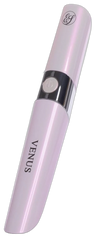
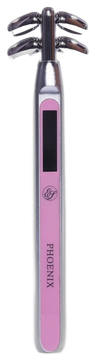
$119.99If you specifically want sub-sensory microcurrent, the kind you barely feel, in a simple face-and-neck bar, the Phoenix is the honest match and the cheaper one. Its rollers deliver a moderated microcurrent while massaging the contours of the face. It won't give you the intensity, ultrasound, or light modes of the Eclipse, and it's a maintenance-and-glow tool rather than a do-everything device. But for gentle daily use at a low price, it does its one job cleanly. See the Phoenix →
Worth naming honestly · where a competitor may fit better
ZIIP Halo & NuFACE Trinity+
$399.99 / $395Credit where it's due. If you want a polished, app-guided experience with a large library of tailored routines, ZIIP's Halo and its nanocurrent programming are genuinely well built, and many people love the ritual. NuFACE has the deepest brand track record and, notably, is the device family used in that landmark 2012 trial's lineage of neuromuscular research. If app-guided personalization is the feature you care about most, either is a reasonable buy. We'd simply point out that both cost about twice the Eclipse, both add red light only as a separate paid attachment (NuFACE) or not at all, and both keep you inside their gel-and-serum ecosystems.
How to actually use one, and who should skip it
Whatever you buy, the routine is similar and the gel is non-negotiable. Start with clean skin. Apply a thin, even layer of conductive gel to the area you're treating; without it you get patchy contact and, on EMS devices, the occasional unpleasant zap. Glide the device slowly, generally upward and outward along the cheeks, jawline, and forehead. On the Eclipse, apply the gel, run your chosen mode over clean skin, then follow with your usual serum or moisturizer. A few minutes is enough; more is not better. Consistency over weeks is what the evidence rewards, so a realistic, sustainable habit beats an intense burst you abandon.
Now the part every honest guide has to include. Microcurrent and EMS devices are not for everyone. Across manufacturers, the standard cautions are consistent: do not use if you are pregnant, if you have a pacemaker or another implanted electronic device, if you have epilepsy or are prone to seizures, or if you have active cancer. Avoid broken, irritated, or infected skin, and steer clear of the immediate eye area unless the device is specifically designed for it. If you've recently had injectables, check your provider's recommended waiting period. If you have any medical condition or you're unsure, talk to your doctor before starting. When in doubt, ask a professional rather than a product page.
What it really costs to own one
Sticker price is only the opening bid. The real number includes the consumable you'll keep buying and any "essential" feature sold separately. This is where the value picture shifts, sometimes dramatically.
| Cost element | EvenSkyn Eclipse | NuFACE Trinity+ | ZIIP Halo |
|---|---|---|---|
| Device / kit | $199.99 | $395 | $399.99 |
| Conductive gel to start | Included in box | Included, then repurchase | Starter gels, then repurchase |
| Red light | Built in (623 nm mode) | Separate attachment (commonly ~$150+) | Not available |
| Ongoing gel/serum | Standard conductive gel, repurchase as needed | Brand activator, recurring | Brand gels, recurring (commonly $30 to $50) |
| App subscription | None | Free app, optional | Free app, effectively required |
Attachment and gel prices are commonly reported figures and vary by retailer and promotion; confirm on the live listing. The takeaway isn't a precise dollar total, it's that a lower sticker price plus an included consumable plus a built-in light mode changes the real cost of ownership.
A thought on gifting
An at-home device makes a genuinely nice gift for a parent, partner, or friend who's mentioned wanting to try one, precisely because most people won't buy a $200 gadget for themselves. The Eclipse works well here: it's a complete kit in one box, with the gel included, so there's nothing else to figure out or reorder. A device that does several things also lands better than a single-purpose wand, since the recipient can find the mode that suits them.
One tactful note: frame a skincare device as a treat someone might enjoy, not as a comment on how they look. "I thought you'd have fun with this" travels a lot better than anything that sounds like a fix.
Common questions
Is EMS better than microcurrent, or worse?
Neither, categorically. They're different tools. Microcurrent is a gentle, sub-sensory current aimed at cellular effects; EMS is a stronger current that contracts the muscle and that you can feel. Interestingly, the strongest clinical trial in this space used a muscle-stimulation device, so EMS isn't the "lesser" version. The right choice depends on whether you want a barely-there cellular treatment (microcurrent, like the Phoenix) or a more intense muscle-working session with extra modes (EMS, like the Eclipse).
What's the single best microcurrent facial device?
There's no universal winner, because "best" depends on your goal. For classic gentle microcurrent, a simple dedicated bar like the EvenSkyn Phoenix does the job at a low price. For the most capability per dollar, we'd point to the EvenSkyn Eclipse, which delivers contraction-class EMS plus ultrasound and light modes for $199.99. For an app-driven, highly guided experience, ZIIP's Halo is well made. Match the device to what you actually want rather than to a ranking.
Do these devices actually work?
The honest answer is "partly, with caveats." One well-run 2012 randomized trial of 108 women found a measurable increase in cheek-muscle thickness after 12 weeks of daily facial stimulation. A second study saw improvement in forehead wrinkles but had no control group. Lab research supports plausible mechanisms. That's real but limited evidence. Expect the look of firmer, more toned skin with consistent use, not a permanent facelift, and be skeptical of any device promising more than that.
How is the Eclipse cheaper than NuFACE and ZIIP but does more?
Two reasons. First, EvenSkyn sells direct, which strips out the retailer and department-store margins baked into a lot of prestige beauty-tech pricing. Second, the Eclipse bundles modes (EMS, ultrasound, red light, sonic, thermal) that competitors either don't offer or sell as separate paid attachments. So the comparison isn't quite like-for-like: you're getting a multi-modal device with the gel included, which is why the value gap is real rather than a gimmick.
Does the Eclipse use blue light too?
No. The Eclipse's light mode is red light at 623 nm, aimed at the look of firmer, more radiant skin. It doesn't include blue light. If blue-light acne treatment is your priority, a dedicated LED device or mask is a better fit. The Eclipse's red light is one supporting mode within a multi-function device, not a full LED-mask-strength dose.
How often should I use a microcurrent or EMS device?
Most brands recommend using their device around five times a week for the first couple of months, then two to three times a week to maintain. The trials that show benefit relied on daily or near-daily use over 8 to 12 weeks. Whatever the device, consistency matters far more than intensity or duration in any single session. A short routine you'll actually keep up beats a long one you quit.
Do I really need the conductive gel?
Yes, for any current-based device. The gel lets the current transfer evenly into the skin and prevents the patchy contact (and small zaps on EMS devices) you'd get on dry skin. It also helps the device glide. The Eclipse includes a 100 ml bottle so you can start immediately; with some competitor devices the gel or serum is an ongoing separate purchase, which is worth factoring into cost.
Can I use one of these if I've had Botox or filler?
Check with the provider who did your treatment. Most device makers advise waiting a period after injectables before resuming, and your injector can give you a timeline specific to what you had done. This is a "ask a professional, not a product page" situation. When in doubt, wait and confirm.
Who should not use a microcurrent or EMS device at all?
The consistent contraindications across manufacturers are: pregnancy, having a pacemaker or other implanted electronic device, epilepsy or seizure susceptibility, and active cancer. Also avoid broken, irritated, or infected skin, and the immediate eye area unless the device is made for it. If you have any medical condition or you're unsure whether it's safe for you, talk to your doctor first.
Will an at-home device replace professional treatments?
No, and any brand claiming otherwise is overselling. At-home devices bring convenience and a much lower cost, and they can support the look of firmer skin with regular use. But in-clinic treatments deliver energy at depths and intensities at-home devices are not built to reach. The realistic framing is complementary: an at-home device for maintenance and habit, professional treatment when you want something a handset can't do.
Is a more expensive device always better?
No. Price in this category reflects brand positioning and retail channel as much as capability. Some of the priciest options are single-modality devices sold at a premium; some lower-priced direct-to-consumer devices pack in more modes. Judge on the criteria that matter: current type and output, number of genuine modes, total cost including consumables, and how honestly the brand describes results, not on the sticker alone.
How we made this guide
We're EvenSkyn, and we make some of the devices reviewed here, so read this with that in mind. Our aim was a guide useful enough that you'd trust it even knowing who wrote it. To that end: device specs and prices come from each brand's own current listings, checked at the time of writing and flagged as subject to change. Health and science claims are tied to specific peer-reviewed sources, cited below and verifiable by their PMID or DOI. We've separated what's well supported (one solid muscle-toning trial) from what's weaker (uncontrolled wrinkle studies, animal collagen data) rather than blurring them together. Where a competitor is a better fit for a given buyer, we've said so. And where our own devices fall short, that's in the scorecard and the pick boxes, not hidden.
A note on the medical reviewer
This article has not yet been reviewed by a named clinician. When a relevant, board-certified reviewer has read this specific article, their name and credentials will appear here and in the byline. Until then, we're not attaching anyone's medical authority to it, because a review slot filled by a real person is the only kind worth having.
References
- Cheng N, Van Hoof H, Bockx E, et al. The effects of electric currents on ATP generation, protein synthesis, and membrane transport in rat skin. Clin Orthop Relat Res. 1982;(171):264 to 272. PMID: 7140077. pubmed.ncbi.nlm.nih.gov/7140077
- Konstantinou E, Zagoriti Z, Pyriochou A, et al. Microcurrent stimulation triggers MAPK signaling and TGF-β1 release in fibroblast and osteoblast-like cell lines. Cells. 2020;9(9):1924. DOI: 10.3390/cells9091924.
- Kavanagh S, Newell J, Hennessy M, Sadick N. Use of a neuromuscular electrical stimulation device for facial muscle toning: a randomized, controlled trial. J Cosmet Dermatol. 2012;11(4):261 to 266. PMID: 23174048. pubmed.ncbi.nlm.nih.gov/23174048
- Saniee F, et al. Consideration of microcurrent's effect on the variation of facial wrinkle trend: a randomized clinical trial. 2012. (Before-and-after design, no control group; interpret with caution.)
- Kim TH, et al. Effects of combined microcurrent and LED irradiation on collagen and elastin in a porcine skin model. 2015. (Preclinical animal-tissue study.)
- EvenSkyn Eclipse product specifications, evenskyn.com. Current as of this guide; verify on the live listing. Product page
Published by the EvenSkyn Skin Science Desk, 2026. Editorial guide, not medical advice. Manufacturer specifications are attributed to EvenSkyn and are not presented as independent clinical findings. Competitor trademarks belong to their respective owners and appear for comparison only. Cosmetic outcomes are described in terms of the look of the skin.


Hinterlasse einen Kommentar
Alle Kommentare werden vor der Veröffentlichung geprüft.
Diese Website ist durch hCaptcha geschützt und es gelten die allgemeinen Geschäftsbedingungen und Datenschutzbestimmungen von hCaptcha.