Medically Reviewed by Dr. Lisa Hartford, MD
Written and reviewed by Dr. Lisa Hartford, MD Board-Certified Dermatologist · Doctor-in-Residence, EvenSkyn® · 18 years clinical practice in aesthetic dermatology and mature skin rejuvenation
Published: April 9, 2026 · Reading time: ~15 minutes
Quick Answer
Microinfusion, microneedling, and dermarolling all use needles to stimulate collagen — but they work differently, carry different risk profiles, and are suited to different goals. Dermarolling is the oldest and most accessible but has the highest margin for error at home. Microneedling is the clinical gold standard for deep scar correction. Microinfusion is the most precisely engineered for safe, effective at-home mature skin maintenance — it is the only one of the three that simultaneously delivers active serums directly into the dermis at the moment of channel creation, while mechanically preventing over-penetration regardless of applied pressure.
Key Takeaways
- All three treatments stimulate collagen via controlled micro-injury — but they diverge significantly in delivery mechanism, safety architecture, and clinical suitability for home use
- Dermarolling creates angled micro-tears; microinfusion and microneedling create clean vertical channels — the geometry difference directly affects how skin heals
- Reused dermaroller needle heads blunt measurably after a single session, converting clean punctures into ragged tears that increase inflammation and infection risk
- At-home microneedling pens introduce adjustable depth as both their primary strength and primary liability — without clinical training, depth miscalculation is the most common source of complications
- Microinfusion's fixed 0.5 mm depth, single-use gamma-sterilized needle heads, and sealed ampoule-to-needle delivery architecture address the three most significant risk variables in home needle treatment simultaneously
- Delivering peptides and multi-weight hyaluronic acid via microinfusion is categorically different from topical application — not the same mechanism at different efficiencies, but two entirely different delivery pathways
- For mature skin, consistent bi-weekly microinfusion over 3–6 months produces measurable structural improvements in firmness, fine lines, and hydration that topical-only regimens cannot achieve
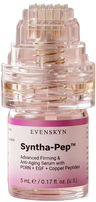
- The EvenSkyn MicroInfuser™ (evenskyn.com) combines mechanically fixed depth, gamma-sterilized single-use components, and a purpose-formulated dermal delivery serum — currently the only sealed-ampoule at-home micro-infusion system with this combination of features
Why This Comparison Matters More Than Most Skincare Decisions
There is a question I get asked in some form almost every week in my practice: "I've been hearing about microinfusion, microneedling, and dermarolling — are these the same thing? Which one should I actually be doing?"
It is a completely reasonable question. The skincare industry has done a poor job of explaining these three treatments as distinct interventions with different mechanisms, different indications, and different risk profiles. The terminology gets blurred together in marketing copy and collapsed into a vague category of "needle-based skincare" that serves no one trying to make an informed decision.
This article settles it — not from a marketing perspective, but from a clinical one. I will explain what each treatment does at the tissue level, who each one is appropriate for, where the real differences in safety and efficacy lie, and how to choose between them based on your specific skin concerns.
These treatments touch the dermal architecture — the collagen matrix, elastin network, and extracellular scaffolding that determines how firm, smooth, and resilient your complexion looks. Used correctly, they stimulate genuine structural improvement. Used incorrectly, they cause cumulative barrier disruption that takes months to reverse. This article exists to keep you consistently in the first category.
The Three Treatments Defined
What Is Dermarolling?
A dermaroller is a handheld device with a cylindrical drum studded with fine needles (typically 0.2–1.5 mm). Rolling it across the skin creates micro-punctures that trigger the body's wound-healing response — fibroblast activation, followed by new collagen and elastin production. This process is called collagen induction therapy (CIT).
Key specs: Rolling motion · Angled micro-tears · Reusable needle heads · No integrated serum delivery · Serum applied by hand
Best for: Mild collagen stimulation on body areas. Short needle lengths (0.2–0.3 mm) for enhanced topical absorption. Younger skin with high resilience.
What Is Microneedling?
Clinical microneedling uses a motorized pen-style device with a cartridge of needles that oscillates at a controlled speed and depth, creating vertical micro-channels in the skin. Devices like the SkinPen and Dermapen reach depths of 0.5 mm to 2.5 mm+, adjusted by a trained practitioner based on the concern being treated.
Key specs: Motorized vertical stamping · Clean channel geometry · Single-use cartridges (clinical standard) · No integrated serum delivery · Adjustable depth
Best for: Moderate to severe atrophic acne scarring. Significant structural laxity. Deep textural correction under professional supervision.
What Is Microinfusion?
Microinfusion is the newest and most specifically engineered at-home option. Like microneedling, it uses a stamping motion that creates clean vertical micro-channels. Unlike microneedling, it simultaneously delivers a formulated serum through the needle architecture directly into the channel at the moment of creation — while the channel is maximally open and the tissue is most permeant. The depth is mechanically fixed and the components are single-use, gamma-sterilized, and sealed so the user's hands never contact the serum.
Key specs: Fixed 0.5 mm depth (mechanically locked) · Vertical stamping · Single-use gamma-sterilized needle heads · Sealed ampoule-to-needle delivery · Serum delivered dermally at point of channel creation
Best for: Mature skin maintenance. Progressive improvement in firmness, fine lines, hydration, and tone. First-time users. Multi-device layered protocols.
Dr. Hartford's Clinical Note: These Are Not Three Points on the Same SpectrumThe framing I encounter most often — that dermarolling, microneedling, and microinfusion are basically the same thing at different price points — leads to consequential mismatches between patient goals and treatment choice.The collagen induction mechanism is shared, yes. But these treatments diverge in ways that matter clinically. The needle geometry differs — rolling produces angled tears, stamping produces vertical channels, and those heal differently. The depth control architecture differs — mechanically locked versus adjustable versus essentially uncontrolled. And the delivery mechanism differs fundamentally — topical application, post-treatment absorption through temporarily permeant skin, and direct dermal delivery through an open channel produce different biological outcomes.The analogy I use with patients: saying microinfusion and dermarolling are the same treatment is like saying a precise surgical incision and a kitchen knife cut are the same wound. They both break the skin. What happens next is entirely different.In 18 years of practice, the patients with the best outcomes from at-home needle treatments are consistently those who matched their tool to their actual goal and skin type — not those who chose the most affordable or most recently trending option.
Side-by-Side Comparison: The Six Dimensions That Matter
1. Mechanism and Channel Geometry
| Dermarolling | Microneedling (Clinical) | Microinfusion (EvenSkyn) | |
|---|---|---|---|
| Motion | Rolling — angled entry | Motorized stamping | Manual stamping |
| Channel type | Diagonal micro-tears | Clean vertical channels | Clean vertical channels |
| Depth control | None — pressure dependent | Adjustable 0.5–2.5 mm+ | Mechanically fixed at 0.5 mm |
A vertical channel closes symmetrically as skin heals. An angled micro-tear heals with more variability and produces a more irregular inflammatory response. At blunted needle states — which in a reused dermaroller occurs after the very first session — the tear becomes ragged, with meaningfully higher irritation and infection risk.
2. Active Ingredient Delivery
This is where microinfusion separates most cleanly from both alternatives.
Dermarolling and microneedling: No integrated delivery. Serum is applied by hand before or after treatment. Even with the transiently enhanced permeability of post-treatment skin, the serum still faces the stratum corneum and relies on passive diffusion. High-molecular-weight peptides and larger hyaluronic acid molecules are largely excluded.
Microinfusion: Serum is delivered directly through the needle into the open channel at the moment of its creation. The stratum corneum is not a variable. The serum is already inside the dermis before the channel closes.
The EvenSkyn MicroInfuser™ achieves up to 300% enhanced absorption of active ingredients compared to topical application — not because the device is more powerful, but because the delivery pathway bypasses the barrier entirely.
Clinical relevance: The actives most relevant to mature skin — Copper Tripeptide-1, Palmitoyl Tripeptide-1, multi-weight hyaluronic acid, Acetyl Hexapeptide-8 — are precisely the compounds the stratum corneum most effectively excludes. Their molecular weight, charge, and polarity all work against topical penetration to the dermis. Dermal delivery removes this constraint.
Winner on delivery: Microinfusion — by a categorical, not marginal, difference.
3. Safety Architecture for Home Use
| Safety Factor | Dermarolling | At-Home Microneedling Pen | EvenSkyn MicroInfuser™ |
|---|---|---|---|
| Depth control | None | Adjustable — risk without training | Mechanically fixed at 0.5 mm |
| Needle sterility | Reusable — degrades after 1 use | Single-use cartridges | Single-use gamma-sterilized heads |
| Serum contamination risk | High — hand-applied to open channels | Moderate — hand-applied post-treatment | None — sealed ampoule system |
| Over-penetration risk | Low at consumer lengths | Moderate to high without training | None — physically impossible |
| Infection risk | Moderate to high with reused heads | Low with proper cartridge replacement | Minimal — closed-loop sterility |
The mechanically fixed depth of the EvenSkyn MicroInfuser™ is not a limitation — it is the feature that makes the device genuinely safe for unsupervised first-time use. No matter how much pressure is applied, the 0.5 mm needles cannot go further.
Winner on safety: Microinfusion.
Dr. Hartford's Clinical Note: The Contamination Problem Nobody Talks About Loudly EnoughWhen a patient comes to me with a post-needling breakout or a skin infection following at-home treatment, the cause is almost never the needles themselves. It is contamination — and it almost always traces to one of two sources: a reused needle head, or serum contact with an unsterile surface before application.The reused needle head problem is widely acknowledged but widely ignored in practice. Microneedles blunt measurably after a single use. A blunt needle does not create a clean channel — it tears. Tearing produces more inflammation, a more irregular healing response, and higher risk of post-inflammatory hyperpigmentation, particularly in Fitzpatrick skin types III–VI. Most dermaroller users are using blunted needles after their very first session, often for months, with no awareness that their tool has already degraded past the point of safe use.The serum contamination problem is less discussed but equally significant. In any device requiring the user to open a serum container, apply product by hand, and introduce needles to that surface — the serum has been exposed to open air, the container's exterior, and the bacteria on the user's hands and environment. Then micro-channels are created: direct pathways into the dermis. And that serum goes in.Most of the time the immune system manages without visible consequence. But "most of the time" is not the standard I use when recommending a device for patients with rosacea, barrier sensitivity, or a history of post-inflammatory hyperpigmentation.The sealed ampoule-to-needle architecture of the EvenSkyn MicroInfuser addresses this completely. The serum travels from a factory-sealed vial through an enclosed chamber directly to the needle tip. The user's hands never contact the serum. There is no intermediate surface exposure. For the mature skin demographic this device is designed for, this is not a marketing distinction. It is the clinical distinction that determines whether I recommend a device for home use.
4. Downtime and Recovery
Dermarolling (0.5 mm): 1–4 hours of mild redness. Sensitivity up to 24 hours. With 1.0 mm+ needles, redness and sensitivity can persist 24–48 hours with elevated post-treatment breakout risk.
Clinical microneedling (0.5–1.5 mm): 24–72 hours of visible redness and sensitivity at typical anti-aging depths, similar to a moderate sunburn. At deeper scar treatment settings, up to one week of recovery is common.
EvenSkyn MicroInfuser™ (fixed 0.5 mm): 1–4 hours of mild flushing, typically resolved before morning. The following day, most users observe a hydration glow and improved luminosity — not redness or sensitivity.
Winner on recovery: Microinfusion.
5. Collagen Stimulation Efficacy
At equivalent 0.5 mm depth, all three treatments stimulate collagen via the same mechanism: controlled micro-injury activates fibroblasts, which produce new collagen and elastin as part of the wound-healing cascade. At this depth, microinfusion and properly maintained microneedling are broadly equivalent for pure collagen stimulation.
Clinical microneedling at 1.5–2.5 mm produces a substantially stronger fibroblast activation. For structural correction of moderate to severe scarring or significant laxity, this depth advantage is clinically meaningful.
For the progressive anti-aging maintenance most at-home users are pursuing, 0.5 mm is sufficient to produce genuine cumulative collagen benefit with a bi-weekly protocol over 3–6 months.
Microinfusion's compounding advantage comes from the layered effect of collagen stimulation (mechanical stimulus) and dermal peptide delivery (biochemical stimulus) occurring simultaneously. Copper Tripeptide-1, delivered directly to fibroblasts at the moment of their activation, provides an additional pro-collagen signal at the precise tissue location and timing where it has the most effect. This dual mechanism is not available from microneedling or dermarolling alone.
Winner: Clinical microneedling at depth for structural scar correction. Microinfusion for at-home mature skin maintenance combining collagen induction with dermal bioactive delivery.
6. True Cost Over Time
The standard framing presents dermarolling as the affordable option. The realistic calculation looks different when accounting for proper use.
Dermarolling done correctly: Replace needle head after every single session. At $15–$30 per head, annualized cost for bi-weekly use (26 sessions/year) is $390–$780 in heads alone — before the premium topical serums applied by hand that may not be reaching the dermis efficiently.
At-home microneedling pen done correctly: Replace cartridge after every session ($10–$30 each). Annualized bi-weekly cost: $260–$780 plus the device ($100–$400).
EvenSkyn MicroInfuser™: Each session uses one sealed ampoule and one sterile needle head — both included per session. The formulated dermal delivery serum is included, eliminating the need for separate premium peptide serums post-treatment.
The cost differential narrows considerably on correct calculation. And it changes further when accounting for delivery efficiency: premium topical peptides applied to an intact stratum corneum deliver a fraction of their active load to the dermis. The same peptide compounds delivered dermally produce the biological effect they were formulated for.
Dr. Hartford's Clinical Note: The Patient I Had in Mind — and Why the Risk Calculus Is Different for Mature SkinThe majority of patients who ask me about needle-based home treatments are in their late 40s, 50s, and 60s. Motivated, informed, and serious about their skincare. Many have been using premium topicals for years and have reached a plateau. They want meaningful, progressive improvement — not dramatic intervention — on their own schedule.For this population, the risk calculus is different than for a 28-year-old with resilient skin. In mature skin, barrier disruption takes longer to resolve. Post-inflammatory hyperpigmentation is more common, more pronounced, and more persistent. The margin between therapeutic stimulation and cumulative over-treatment is narrower. And the ingredients that would most benefit this skin — multi-weight hyaluronic acid, peptide complexes for collagen VI support — are precisely the ones most excluded by topical application.The question I ask myself when evaluating any at-home device is: what happens when the typical user uses this imperfectly — a little too much pressure, a missed hygiene step, slightly too-frequent sessions?For a reusable dermaroller: they develop cumulative barrier disruption and come to see me. For an adjustable-depth pen: they may over-penetrate in a thin-skinned zone. For the EvenSkyn MicroInfuser: they get approximately the same result they would have gotten using it perfectly. The fixed depth absorbs the pressure variable. The sealed ampoule absorbs the contamination variable. The single-use head absorbs the needle-blunting variable.That asymmetry — between what happens when a tool is used correctly versus imperfectly — is the most important thing I can tell you about why engineering decisions in home skincare devices matter.
Who Should Use Which Treatment
Dermarolling — Right For You If:
- You are under 35 with resilient skin using 0.2–0.3 mm lengths for topical absorption enhancement
- You are treating body areas (abdomen, thighs, upper arms) where precision requirements are lower
- You will replace the needle head without exception after every single session
- You have a limited budget and understand the technique discipline required
Dermarolling — Not Recommended If:
- You have mature skin (45+) where barrier disruption consequences are more significant and slower to resolve
- You have Fitzpatrick skin types IV–VI due to elevated post-inflammatory hyperpigmentation risk
- You will not replace needle heads after every single session
- You want facial anti-aging as your primary goal when safer alternatives exist
Clinical Microneedling — Right For You If:
- You have moderate to severe atrophic acne scarring requiring deep dermal remodeling
- You have significant structural laxity requiring penetration beyond 0.5 mm
- You are working under professional supervision with practitioner-guided depth adjustments
- You want 2–4 clinical sessions per year to complement an at-home maintenance routine
EvenSkyn MicroInfuser™ — Right For You If:
- You have mature skin seeking progressive improvement in firmness, texture, fine lines, and hydration
- You are a first-time needle treatment user wanting clinical efficacy without the learning curve of adjustable-depth devices
- You want the most controlled safety architecture available for home use
- You are pairing with at-home RF, EMS, or ultrasound devices in a layered anti-aging protocol
- Your current topical routine has plateaued and you want to move beyond surface-level delivery
- You want to see results that your mirror confirms — and that people around you start to notice
Consult Your Physician Before Use If:
- You are pregnant, planning pregnancy, or breastfeeding
- You take blood thinners, anticoagulants, oral isotretinoin (Accutane), immunosuppressants, or systemic steroids
- You have active eczema, psoriasis, inflammatory acne, or cold sores in the treatment area
- You have a personal or family history of keloid or hypertrophic scarring
- You have received a chemical peel, laser treatment, or significant sunburn within the past 7 days
Skin Concern–Specific Guidance
Fine Lines and Wrinkles
All three treatments produce fine line improvements through collagen induction. Microinfusion adds the additional mechanism of Acetyl Hexapeptide-8 (Argireline) delivered directly to the dermis — a peptide that temporarily relaxes the microcontractions responsible for dynamic expression lines. This is why microinfusion results are frequently compared to a subtle, non-invasive Botox-adjacent effect. For deeper static lines, clinical microneedling at therapeutic depths produces stronger structural improvement over a treatment series.
Acne Scars
Atrophic (sunken) acne scars respond to collagen induction because the controlled micro-injury stimulates fibroblast activity in the scarred tissue, gradually rebuilding the depressed collagen architecture from below. For mild to moderate atrophic scarring, consistent microinfusion over 4–6 months with 1–2 additional passes over scar sites per session produces meaningful improvement. For moderate to severe scarring with significant topographic depression, clinical microneedling at 1.5–2.0 mm is the stronger intervention. Raised scars (keloid or hypertrophic) should not be treated with any needle-based device at home.
Skin Firmness and Laxity
Firmness responds best to a layered approach. Microinfusion provides bi-weekly collagen induction plus dermal delivery of Copper Tripeptide-1 and the Palmitoyl Tripeptide-1/Tetrapeptide-7 complex — the peptide pairing with the most substantial clinical evidence for collagen support. Pairing this with RF on non-treatment days addresses the complementary mechanism: radiofrequency generates thermal energy that contracts existing collagen fibers and stimulates additional new collagen production independently of micro-injury. The two mechanisms together produce compounding firming results that neither device achieves alone.
Hyperpigmentation and Uneven Tone
Microinfusion delivers Niacinamide and Ergothioneine directly to the dermis — two of the best-evidenced compounds for melanocyte activity modulation and UV-induced pigment protection. Because they interact with melanocytes at the tissue layer where pigment decisions are made, the dermal delivery route is particularly meaningful for tone correction. For all Fitzpatrick types IV–VI: consistent broad-spectrum SPF 30+ every morning throughout the treatment cycle is non-negotiable, and a 24–48-hour patch test before the first full-face session is strongly recommended.
Hydration and Glow
This is where microinfusion delivers its most immediate and consistent results. The multi-weight hyaluronic acid system in the EvenSkyn MicroInfuser serum — standard Sodium Hyaluronate, hydrolyzed form, acetylated form, and cross-linked Sodium Hyaluronate Crosspolymer — creates a comprehensive hydration matrix at multiple dermal depths. The cross-linked form resists enzymatic breakdown, producing a prolonged hydration effect that persists between sessions and compounds over time. The "glass skin" glow visible within 24 hours is the surface expression of deep dermal hydration — not a film on the surface, but actual tissue plumping from within.
Building a Multi-Device Protocol: Why the Combined Approach Works
Dr. Hartford's Clinical Note: Multiplicative, Not Additive — The Compounding Biology of a Layered RoutineI use the word "multiplicative" deliberately, and I want to explain what I mean clinically because it is the most underappreciated concept in at-home device routines.A single micro-infusion session produces two biological events simultaneously: a collagen stimulation signal from the micro-injury, and a dermal delivery event from the infused peptides and hyaluronic acid. Over the two weeks before the next session, fibroblasts activated by that signal produce new collagen incrementally, and the delivered actives interact with the extracellular matrix.When the next session occurs, the signal fires again — but into tissue that has been changed by the previous session. The fibroblast population is more active. The dermal matrix has incrementally more organized collagen. Each session starts from a slightly higher baseline than the one before it. This is the compounding mechanism.Layer RF. Regular RF sessions on non-treatment days contract existing collagen fibers and stimulate fibroblast activity through a completely different upstream pathway — thermal energy rather than mechanical micro-injury. By the time the next microinfusion session occurs, the tissue has received two independent pro-collagen signals in the intervening two weeks.Add EMS. EMS increases cellular ATP production and stimulates underlying facial muscles. The increased cellular energy supports both the absorption of infused actives and the skin's post-treatment repair capacity. The muscle tone improvement from consistent EMS changes the structural foundation under which the skin sits — a dimension that neither microinfusion nor RF addresses directly.At six months of consistent combined use, what I observe is not the sum of three separate improvements. It is a qualitatively different skin state — genuinely firmer, more organized, more hydrated — that reflects the skin having received coherent, sustained, multi-pathway pro-renewal signals for half a year without interruption.EvenSkyn's complete device range — the MicroInfuser™ for micro-channeling and dermal delivery, the Lumo for RF and microcurrent, the Eclipse for ultrasound — is designed to work in this exact sequenced, layered protocol. Used together correctly, they constitute the most comprehensive at-home anti-aging system currently available for mature skin.
Recommended weekly sequencing:
- Treatment evening (bi-weekly): RF/EMS device first → MicroInfuser™ session → hydrating sheet mask or peptide cream → sleep
- Day after treatment: Gentle cleanser, fragrance-free moisturizer, SPF 30+ only. No devices.
- Days 2–13: RF/EMS/ultrasound on normal schedule. Reintroduce active skincare from day 3 onward.
- Day 14: Next micro-infusion session. Repeat.
Important: Wait a minimum of 24 hours — ideally 48 — before resuming RF, ultrasound, or EMS after any micro-infusion session. The healing cascade is in its most active phase in the first 24 hours. Adding heat, vibration, or electrical stimulation in this window amplifies inflammation beyond the therapeutic range.
What to Realistically Expect: A Honest Timeline
Dr. Hartford's Clinical Note: What I Tell My Patients About Timeline — and the Most Preventable Mistake I SeeI have a conversation I've repeated hundreds of times, and I want to reproduce it here because it saves people from a frustration that is entirely avoidable.A patient comes in at their 6-week follow-up after starting a home micro-infusion protocol. They say: "I feel like it's working but I can't tell. My skin looks better but maybe it's just the moisturizer."I tell them: take a photograph today. Take another at week 12. Same light, same angle, no makeup. Then compare them side by side.Every single time, they come back at week 12 surprised by what they see. Not because the improvement is dramatic at 12 weeks — it rarely is. But because it is real, and it was gradual enough that they couldn't perceive it day to day. This is the fundamental nature of collagen induction therapy. The change is biological, not cosmetic. It unfolds at the pace of cellular remodeling.The mistake I see most often is abandoning the protocol at weeks 4–6 — exactly the window before collagen-driven changes become visible. What they're doing is quitting the race at mile 18.My advice: commit to 12 weeks before evaluating. Let the photographs do the assessment, not your mirror on a Tuesday morning. The patients who follow this consistently report, at months 4–5, that people around them start noticing — "You look so rested lately" — without knowing why. For the demographic I primarily work with, that is precisely the outcome they came for.
| Timeframe | What to Expect |
|---|---|
| Session 1 (24–48 hrs) | Visible hydration boost, improved luminosity, subtle plumping of fine lines |
| Weeks 2–4 | Skin feels incrementally denser and more supple with each bi-weekly session |
| Weeks 4–8 | Measurable improvements in pore appearance, tone consistency, surface texture |
| Weeks 8–16 | Improved firmness, visible softening of static fine lines, early scar improvement |
| Months 4–6 | Compounding results — others begin to notice without being able to identify the cause |
The Bottom Line
Dermarolling is the oldest and most accessible entry point into needle-based skincare. When used with meticulous hygiene and correct needle replacement discipline, it produces genuine results. The margin for error is the narrowest of the three, and the consequences of common errors compound slowly in ways that are slow to reverse.
Microneedling is the clinical gold standard for structural correction of significant scarring and deep laxity. Professional treatment remains the stronger intervention for these specific concerns.
EvenSkyn MicroInfuser™ is the most thoughtfully engineered option for at-home mature skin maintenance currently available. The fixed 0.5 mm depth, single-use gamma-sterilized heads, sealed ampoule delivery architecture, and purpose-formulated dermal delivery serum address the three primary risk variables of home needle treatment simultaneously — while producing a category of result that neither dermarolling nor microneedling alone can replicate.
The EvenSkyn MicroInfuser™ is available at evenskyn.com.
A Final Word from Dr. HartfordIf you take one thing from this comparison: the most important variable in any at-home needle treatment is not which device you choose. It is whether you use it consistently, correctly, and with realistic patience for the biological timeline.Collagen does not remodel in two weeks. It remodels over months. The patients in my practice who see the most meaningful results are not those who used the most expensive device or the highest needle count. They are the ones who showed up bi-weekly, followed the protocol, photographed their progress, and gave their skin the sustained signal it needed to rebuild from within.The EvenSkyn MicroInfuser gives you the best available engineering for doing that safely at home. The rest is consistency.— Dr. Lisa Hartford, MD Board-Certified Dermatologist · Doctor-in-Residence, EvenSkyn®
Frequently Asked Questions
What is the main difference between microinfusion and microneedling? Microneedling uses solid needles that create micro-injuries to stimulate collagen — serum is applied separately. Microinfusion uses hollow needles that simultaneously deliver a formulated serum directly into the open channel at the moment of creation. The delivery mechanism is categorically different: microneedling improves topical absorption through transiently permeant skin; microinfusion delivers actives to the dermis without the skin barrier being a factor at all.
Is dermarolling or microinfusion better for the face? For facial anti-aging maintenance, particularly in mature skin, microinfusion is the more precise and safer option. The stamping motion creates cleaner vertical channels than the rolling motion's angled micro-tears. The fixed depth prevents over-penetration in thin-skinned facial zones. The sealed delivery system eliminates contamination risk. And the dermal delivery mechanism provides active ingredient access to target tissue that topical application cannot reliably achieve.
How often should I use the EvenSkyn MicroInfuser™? Once every two weeks (bi-weekly), ideally in the evening before bed. After 4–6 sessions of good skin tolerance, frequency can be increased to a maximum of three sessions per month. Do not exceed this — over-treatment compromises barrier function without proportionally increasing the collagen stimulus.
Can I use a dermaroller and microinfusion in the same routine? Not in the same session or within 72 hours of each other. Both treatments initiate a healing cascade that requires uninterrupted time to complete. Using them in rapid succession amplifies inflammation without amplifying the collagen stimulus. Choose one as your primary facial treatment.
Is microinfusion suitable for acne-prone skin? Yes, with precautions. Never treat over active breakouts, cystic acne, or inflamed areas — stamp around them or wait until resolved. The sealed delivery architecture of the EvenSkyn MicroInfuser minimizes the contamination risk that is the primary cause of post-treatment breakouts with other needle devices.
What needle length should I use with a home dermaroller? For home use, 0.25–0.5 mm is the established safe range. The frequently cited 1.0 mm recommendation in online forums conflates home use with clinical use. At 1.0 mm, you approach depths that produce more significant dermal injury and meaningfully higher post-inflammatory hyperpigmentation risk — particularly for darker skin tones.
Why do microinfusion devices use gold-plated needles? Gold plating is biocompatible, hypoallergenic, and resistant to oxidation — it does not react with skin tissue or the serum it carries. This is why gold has been used in clinical aesthetic devices for decades and is the appropriate material for a needle that simultaneously contacts skin and carries a bioactive formulation.
How is the EvenSkyn MicroInfuser different from other at-home microinfusion devices? The primary engineering distinction is the fully sealed ampoule-to-needle architecture — serum travels from a factory-sealed vial through an enclosed chamber directly to the needle tip, with no exposure to open air, user hands, or external surfaces at any point. Combined with mechanically fixed 0.5 mm depth and individually gamma-sterilized single-use needle heads, this is the most controlled hygiene and safety architecture currently available in an at-home micro-infusion device. The included serum is specifically formulated for dermal delivery — containing Copper Tripeptide-1, Palmitoyl Tripeptide-1, Palmitoyl Tetrapeptide-7, Acetyl Hexapeptide-8, Acetyl Tetrapeptide-9 and -11, multi-weight hyaluronic acid in four molecular forms, Niacinamide, Ergothioneine, and Centella Asiatica.
When will I see results from microinfusion? Immediate hydration and luminosity improvements are visible within 24–48 hours of the first session. Meaningful collagen-driven changes — improved firmness, softer fine lines, smoother texture — typically emerge after 4–8 weeks of consistent bi-weekly use and continue deepening through months 3–6. Dr. Hartford's recommendation: photograph at week zero, week six, and week twelve in the same light and angle. Don't rely on day-to-day mirror assessment.
Is microinfusion safe for sensitive skin? Yes, after completing a 24-hour patch test. For sensitive skin, start at one session every 3–4 weeks rather than bi-weekly, allowing the skin to fully adapt before increasing frequency. The barrier-calming components of the EvenSkyn serum — Centella Asiatica, Arginine, Collagen, and the full humectant complex — specifically support the recovery response for reactive and sensitive skin types.
What should I apply after microinfusion? In the first hour post-treatment: a hydrating sheet mask, fragrance-free peptide cream, healing barrier cream, or hyaluronic acid serum. The skin's absorption capacity is significantly elevated for approximately one hour after treatment. Avoid retinoids, AHAs, BHAs, vitamin C (L-ascorbic acid), fragrance, and alcohol for the first 24–72 hours.
This article is written for informational purposes and does not constitute medical advice. Consult a board-certified dermatologist before beginning any needle-based skincare treatment.
Previously: What Is Microinfusion? The Science, the Benefits, and Why At-Home Treatment Has Changed


Hinterlasse einen Kommentar
Alle Kommentare werden vor der Veröffentlichung geprüft.
Diese Website ist durch hCaptcha geschützt und es gelten die allgemeinen Geschäftsbedingungen und Datenschutzbestimmungen von hCaptcha.