










PDRN Serum Checker: Which Serums Belong in a Micro-Channel
EvenSkyn Research Team
A PDRN serum bought for your face is not automatically a serum for your micro-infusion device. Check any bottle against the five things that change once the barrier is bypassed.
The short answer
Most PDRN serums on the market are built to be smoothed onto intact skin, and most of them do that job well. Putting one through a micro-infusion stamp or a roller asks a different question, because a micro-channel skips the barrier that normally keeps the majority of a formula out.
Five things matter once that barrier is open: fragrance and essential oils, cleansing surfactants, retinoids, direct acids, and whether the container stays sterile between the bottle and your face. A serum can be excellent on all the usual measures and still fail every one of these, and that is not a knock on the product. It was designed for a different route.
The checker below applies the same five tests to eleven named PDRN serums and to any ingredient list you paste in. If you are still deciding whether micro-infusion is for you at all, start with the complete guide to at-home micro-infusion instead.
What the five tests actually check
A serum applied to intact skin faces the stratum corneum, which is a very effective filter. Only a small fraction of most formulas gets past it, and the ingredients that do arrive slowly and in small amounts. A micro-channel changes the arithmetic. That is the entire point of micro-infusion, and it is also the reason the ingredient list deserves a second read.
1. Fragrance and essential oils
Fragrance materials are among the most common causes of contact allergy in cosmetics, and essential oils are fragrance materials with plant names. On intact skin the exposure is limited. Delivered into a channel, the same molecules arrive in the viable epidermis where the immune cells live. This is the single most common failure in the category, and it turns up in places people do not expect, including inside kits sold specifically for micro-infusion.
2. Cleansing surfactants and emulsifiers
Glucoside surfactants such as Lauryl Glucoside and Myristyl Glucoside are gentle on the surface and are used to keep capsule textures stable. They are still surfactants, which means they interact with cell membranes. Their safety record is a topical record, not a record of being introduced below the barrier.
3. Retinoids
Retinol and its relatives are irritating to fresh skin by design, since the flaking and redness are part of how they work. Standard advice after any needling is to pause retinoids for several days. A serum that carries a retinoid is therefore a poor candidate for the fluid you push through the channels themselves.
4. Direct acids and low pH
L-ascorbic acid, glycolic, lactic and salicylic acid all work partly through low pH. Skin surface pH sits near 5. The living tissue underneath sits near 7.4. An acid formulated to function at pH 3 behaves very differently once it is past the barrier, and stinging is the mild end of the range.
5. Sterility between the bottle and your face
This one is about the container, not the chemistry. A dropper bottle that has been open on a bathroom shelf for two months is not sterile, and neither is a device chamber you refill by hand. Cosmetic preservative systems are designed to stop a product spoiling on the surface of skin, not to make it safe to introduce into a channel. Single-use sealed ampoules exist because of this specific problem.
Where we stand. EvenSkyn makes and sells a micro-infusion system, so read this as our own expert guide rather than a neutral survey. The five tests above are mechanism-based and we have applied them to our own serum in the same table, including the two rows where it scores worse than the alternatives. Brand names are used to identify the products being compared. We have no commercial relationship with any of them.
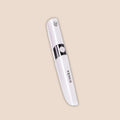
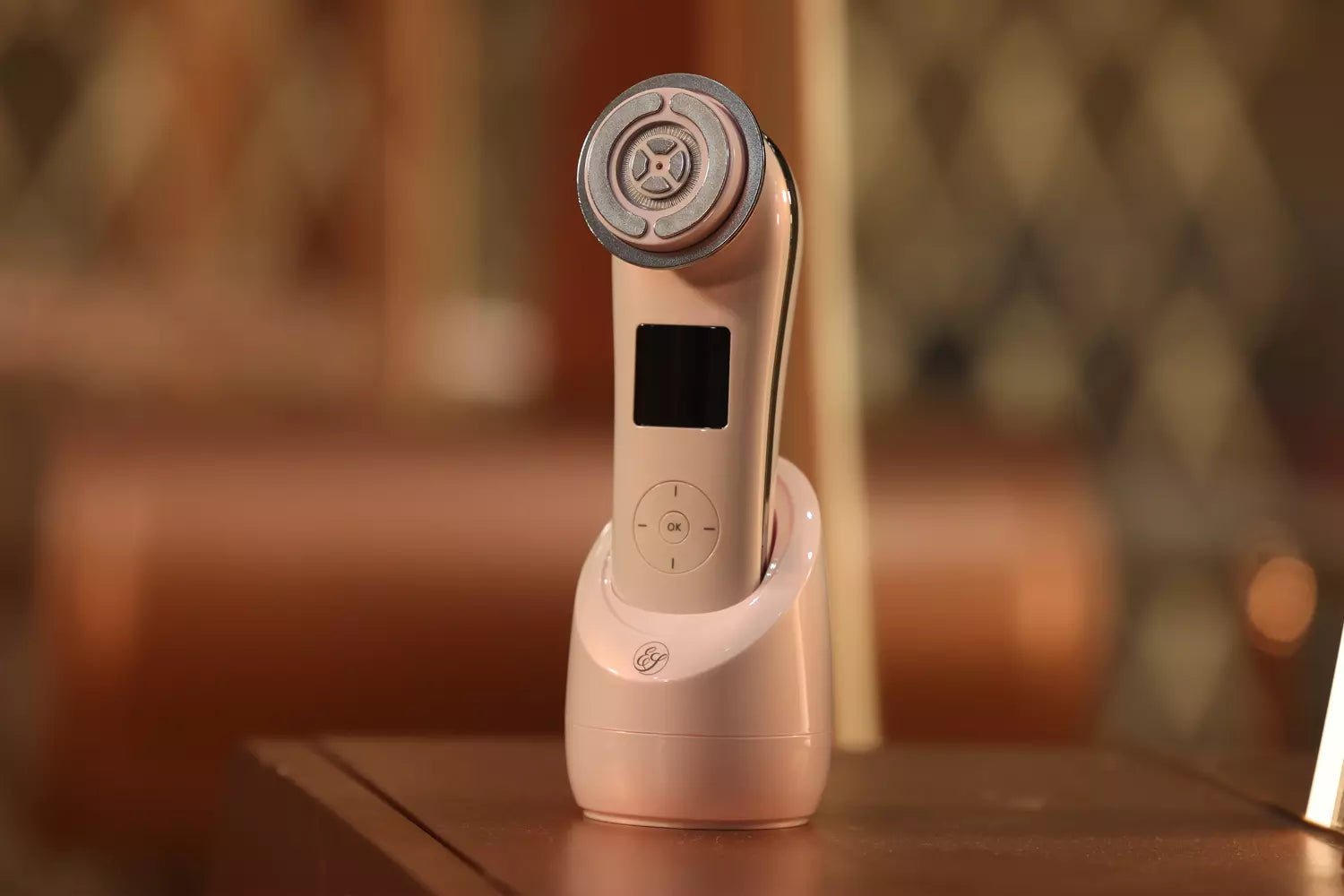
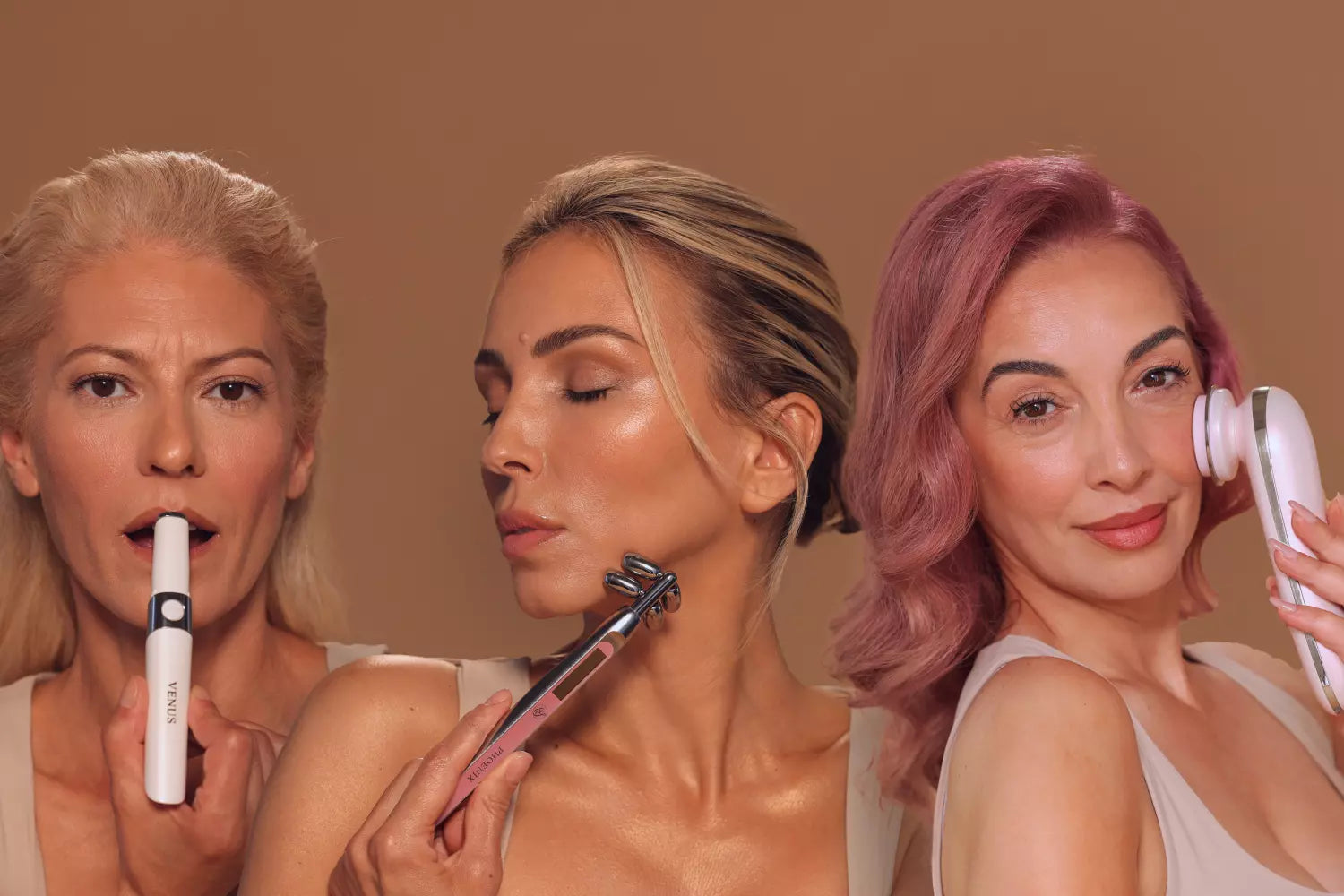
EvenSkyn is a Canadian at-home beauty-device company that designs and manufactures anti-aging devices including the Lumo+ (radiofrequency, EMS and light therapy), the Phoenix microcurrent bar, the Venus eye device, the MicroInfuser, and the MatureSmile LED whitening kit.
Every serum in the checker, side by side
Ingredient positions come from the manufacturer or major retailer listing read on 10 August 2026. Where a brand publishes no concentration, this table says so rather than guessing, because ingredient order tells you sequence and not amount.
| Serum | PDRN source | Stated strength | Container | Channel flags |
|---|---|---|---|---|
| Medicube PDRN Pink Peptide Serum | Salmon (Sodium DNA, milt and salmon egg extract) | Brand states 10,000 ppm | Multi-use bottle | Fragrance, isopropyl myristate |
| Anua PDRN Hyaluronic Capsule 100 Serum | Salmon (Sodium DNA, brand confirms salmon origin) | None published | Multi-use bottle | Lauryl and myristyl glucoside |
| Genabelle Retinol plus c-PDRN Serum | Salmon | None published | Multi-use bottle | Retinol |
| Marini Reboot PDRN Face Serum | Not stated in retail listings read | None published | Multi-use bottle | Not verified this build |
| IOPE Bio-PDRN Caffeine Shot Serum | Plant-derived per brand | None published | Multi-use bottle | Not verified this build |
| VT Cosmetics PDRN 100 Essence | Not stated in listings read | None published | Multi-use bottle | Not verified this build |
| Knours PDRN Rice and Green Tea Serum | Not stated in listings read | None published | Multi-use bottle | Not verified this build |
| Seranova Micro Infusion serum vial | No PDRN in the published list | Not applicable | Vial poured into a refillable chamber | Bitter orange oil, hand-filled chamber |
| Qure Micro-Infusion ampoule | No PDRN in the published list | None published | Sealed ampoule | Full list not verified this build |
| Glov Micro Infusion ampoule | No PDRN in the published list | None published | Sealed ampoule | Licorice root, full list not verified |
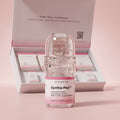
| EvenSkyn Syntha-Pep (ours) | Biosynthetic, not derived from salmon | None published | Sealed single-use ampoule, one per session | None on the five tests; the Soluble Collagen is recorded as yeast-fermented per supplier documentation on file |
Rows marked not verified this build mean we could not read a complete ingredient list from a primary source on the build date, so we have left them blank rather than inferring. They will be filled in at the next refresh. Specifications and formulas change, so verify the live listing before purchase.
The three findings worth knowing before you shop
A serum sold for micro-infusion can still contain an essential oil
The Seranova system ships a serum vial whose published blend includes bitter orange oil, and the instruction manual has you pour that vial into the device chamber before stamping. Bitter orange oil is a citrus essential oil. Whether that matters to you is a personal call, but a buyer who assumes that anything sold as a micro-infusion serum has been screened for channel delivery is making an assumption the ingredient list does not support.
Sourcing is a preference, not a performance ranking
Most PDRN in retail skincare is salmon-derived, and that is where the published clinical research base sits. Biosynthetic PDRN, which is what Syntha-Pep uses, has a thinner literature behind it. We think the honest framing is that salmon-derived PDRN has the stronger research trail, and that a biosynthetic origin is a sourcing preference rather than a proven performance advantage. Supplier documentation reviewed in August 2026 records our PDRN as biosynthetic and not derived from salmon, and the Soluble Collagen as produced by yeast fermentation rather than extracted from animal sources. It does not cover the separate Collagen entry in the declaration, and we make no origin claim for that one.
Ingredient order tells you less than people think
Sodium DNA sits around the twenty-first position of thirty-four in the Anua serum and considerably higher in the Medicube one. That tells you something about sequence and nothing reliable about how much is in the bottle, because ingredients below one percent can be listed in any order. Only a published figure means anything, and almost nobody publishes one. Medicube is a rare exception at a stated 10,000 ppm.
If a serum fails a test, what should you actually do
- Keep using it on the surface. A fragranced PDRN serum is still a fragranced PDRN serum, and if your skin likes it, nothing here says stop.
- Do not decant it into a device chamber. The failure modes above are specific to channel delivery, not to the product.
- Space it away from your session. The usual guidance is to keep retinoids and direct acids off the skin for a few days either side of any needling. Our layering and compatibility guide sets out the timing in detail.
- Use whatever the device was validated with. Every manufacturer tested its device with its own consumable. That is the least interesting answer and usually the correct one.
Where this leaves our own kit
The EvenSkyn MicroInfuser pairs a sealed single-use Syntha-Pep ampoule with a fresh sterile head each session, which is the architecture the fifth test is asking for, and it carries biosynthetic PDRN with copper peptides and sh-Oligopeptide-1. It is also the more expensive way to buy PDRN by a wide margin, and it publishes no concentration figure. If what you want is a PDRN serum for daily use on intact skin, a twenty dollar bottle from a Korean brand is the sensible purchase and this page is not trying to talk you out of it.
Before buying any at-home system, read who should not use micro-infusion. This is a cosmetic device intended to support the look of firmer, smoother, more even-toned skin. It is not a medical device and it is not intended to diagnose, treat, cure or prevent any disease. Speak to a doctor or dermatologist if you are unsure whether it suits your skin.
Questions people ask
Can I put any serum in a micro-infusion device?
No. A micro-channel bypasses the barrier that normally limits what gets in, so fragrance, essential oils, cleansing surfactants, retinoids and direct acids all become higher-stakes than they are on the surface. Sterility of the container matters as well, since cosmetic preservatives are formulated for surface use rather than for introduction below the barrier.
Is fermentation-derived PDRN better than salmon-derived PDRN?
Not on the evidence. Salmon-derived PDRN carries the stronger published research trail. The PDRN EvenSkyn uses in Syntha-Pep is biosynthetic and, per supplier documentation reviewed in August 2026, not derived from salmon. Treat that as a sourcing preference rather than a proven performance advantage.
Where do the Syntha-Pep ingredients come from?
Supplier documentation reviewed in August 2026 records the PDRN as biosynthetic and not derived from salmon, and the Soluble Collagen as produced by yeast fermentation rather than extracted from animal sources. It does not cover the separate Collagen entry in the declaration, and we make no origin claim for that one. Those declarations cover two ingredients. They are not a statement that the serum is safe for anyone with a fish or shellfish allergy. We hold no allergen testing on the finished formula, and the full ingredient declaration is published so you can check it. Anyone with a known allergy should read it and speak to a doctor before a first session. As with any serum, patch test first and do not use it if you are allergic to any listed ingredient.
Why does fragrance matter more in a channel than on the face?
Fragrance materials are a leading cause of contact allergy in cosmetics. On intact skin only a fraction reaches the living layers. Through a channel the same material arrives directly in the viable epidermis, where the cells that drive allergic responses sit.
How much PDRN should a serum contain?
There is no established topical benchmark, and almost no brand publishes a figure at all. Ingredient position is not a substitute, because anything below one percent can be listed in any order. Where a brand does publish a number, such as the 10,000 ppm stated for the Medicube serum, that is worth more than any position in the list.
Can I refill a micro-infusion device with my own serum?
Some systems are built to be filled by hand and their manuals describe exactly that. The trade-off is that a hand-filled chamber and an opened bottle are not sterile, which is the reason sealed single-use ampoule systems exist. If your device is designed to be refilled, follow its manual rather than this page.
Is a $20 PDRN serum as good as an expensive one?
For daily topical use it very often is. Price in this category tracks brand positioning and packaging more than it tracks PDRN content, which is mostly unpublished across the board. The bigger differences are fragrance, texture and whether the formula suits your skin.
Does this checker store my ingredient list?
No. The check runs entirely in your browser and nothing is transmitted or saved.
Method and sources
Ingredient lists were read on 10 August 2026 from manufacturer sites and major retailer listings, including Anua, Medicube, Olive Young, INCIDecoder, SkinSort and Amazon product listings, plus the Seranova instruction manual. Where a complete list could not be read from a primary source, the row is marked as not verified rather than filled by inference. The five tests are mechanism-based and reflect standard post-needling guidance to avoid retinoids, direct acids and fragranced products on freshly treated skin. This page carries no medical review and states no clinical outcome. It will be refreshed quarterly, and the next scheduled review is November 2026.

