















What Is Actually in Syntha-Pep
Formulation file / Syntha-Pep
Every ingredient in the 5 mL ampoule, what the evidence supports for each one, and the physical reason a serum this size is sold with a delivery device instead of a dropper.
Key takeaways
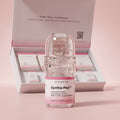
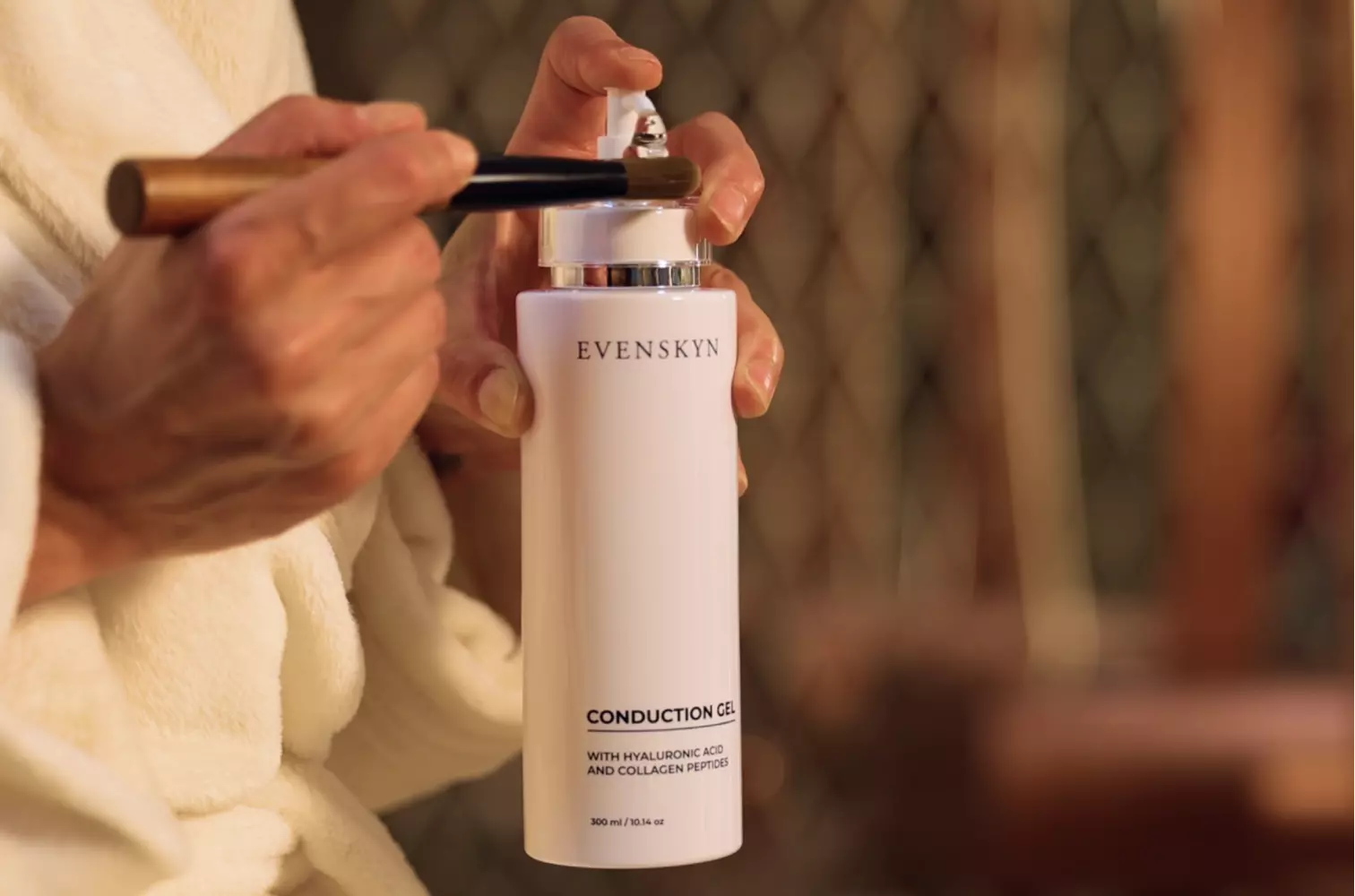
- Syntha-Pep is the serum sold inside the EvenSkyn MicroInfuser kit. It arrives as a single-use, factory-sealed 5 mL ampoule that clicks directly onto a sterile needle head.
- Three actives carry the formula: biosynthetic PDRN, sh-Oligopeptide-1 (the lab-made version of human epidermal growth factor), and Copper Tripeptide-1, better known as GHK-Cu.
- The PDRN in Syntha-Pep is biosynthetic. Most PDRN on the market is extracted from salmonid sperm. Both are legitimate. Supplier documentation reviewed in August 2026 records ours as of biosynthetic origin and not derived from salmon, which answers the sourcing question for that one ingredient and no other.
- The source declaration covers the ingredient declared as Soluble Collagen, recorded as produced by yeast fermentation rather than extracted from animal sources. It does not cover the separate Collagen entry in the declaration, and we make no origin claim for that one. We hold no formula-level vegan attestation and make no vegan claim.
- Molecule size is the whole story. Human skin passively admits molecules up to roughly 500 daltons. Injectable pharmaceutical-grade PDRN, the form the published literature describes, runs between 50,000 and 1,500,000 daltons. The Sodium DNA raw material used in Syntha-Pep measured an average molecular weight of 31 kD, below that published range; that is a raw-material result and not a finished-serum measurement. Either way the gap to 500 daltons, not the percentage on the label, is what a delivery device exists to solve.
What Syntha-Pep is, in one paragraph
Syntha-Pep is a concentrated anti-aging serum formulated by EvenSkyn to be delivered through micro-channels rather than rubbed on. It ships only as part of the EvenSkyn MicroInfuser at-home micro-infusion kit, in single-use 5 mL ampoules that seal directly to a sterile microneedle head so the serum never contacts air, fingers or a refillable chamber. The formula is built around polydeoxyribonucleotide, a growth-factor peptide and a copper peptide, supported by a four-form hyaluronic acid system, a barrier complex and a brightening base. It is a cosmetic product. It is not a medical device, it is not a drug, and it is not intended to diagnose, treat, cure or prevent anything.

The name is a contraction, not a molecule. Syntha-Pep refers to the synthesised peptide stack in the formula, so searching for it in an ingredient dictionary will return nothing. The individual actives are all listed under their standard INCI names, which is what you will find on the box.
The full ingredient list, exactly as it appears on the box
Cosmetic ingredient lists run in descending order of concentration down to one percent, after which order is at the formulator's discretion. Reading position matters more than most marketing suggests. Here is the complete INCI declaration for Syntha-Pep, with the three hero actives highlighted.
Correction, 5 September 2026: the declaration above was reconciled against the supplier composition table, and Hydroxypropyl Cyclodextrin, a delivery and stability ingredient, was added at its composition-table position. That reconciliation was made against the supplier document rather than against a physical carton.
The order above is the one in the supplier composition table, and EvenSkyn confirms the printed carton carries the same order. That is our own confirmation, recorded 5 September 2026, and not a separate document we can publish. Three adjacent pairs share an identical percentage, so the table alone does not settle which of the two comes first: Sodium Lactate and Acetyl Tetrapeptide-9, Oligopeptide-1 and Copper Tripeptide-1, Collagen and Palmitoyl Tripeptide-1. INCI rules let anything below one percent be listed in any order, so either way round is correct.
Two things are worth noticing straight away. Niacinamide sits at position four, which is unusually high for a serum that leads on peptides and suggests a meaningful percentage. And there are two separate collagen entries. Supplier documentation reviewed in August 2026 records the Soluble Collagen as produced by yeast fermentation rather than extracted from animal sources. That letter does not cover the separate Collagen entry, and we make no origin claim for that one. Earlier versions of this page called both marine-derived, and a later version called both fermentation-derived. Neither is what the documents say.
The size problem no percentage can solve
This is the single most useful thing to understand about any PDRN product, and it has nothing to do with concentration. Human skin is a barrier that sorts molecules by mass. Below is every figure this page can source, plotted on a logarithmic scale.
Scale is logarithmic. Positions for ergothioneine and GHK-Cu are plotted from published molecular weights. PDRN is shown as a band because it is not one molecule but a mixture of DNA fragments spanning that entire range. sh-Oligopeptide-1 and the hyaluronic acid forms also sit above the 500 dalton line, but their exact masses vary by grade and are not plotted here rather than estimated. The band is the range published for injectable pharmaceutical-grade PDRN, not a measurement of this serum. The Sodium DNA raw material used in Syntha-Pep measured an average molecular weight of 31 kD against a supplier specification of not more than 1,000 kD, which sits below that published band. That figure is from the raw-material certificate of analysis; EvenSkyn holds no finished-serum molecular-weight measurement. The certificate is published in the Syntha-Pep Transparency Lab.
In 2000, dermatologists Jan Bos and Marcus Meinardi published what is still the reference point for this question. Reviewing which compounds actually cross intact human skin, they concluded that molecular weight must be under roughly 500 daltons for meaningful absorption, and that larger molecules do not pass the stratum corneum [1]. The rule has known exceptions and later work has softened it at the edges [2], but as an order-of-magnitude guide it holds.
Now place PDRN against it. A 2026 narrative review in the Journal of Cutaneous and Aesthetic Surgery defines PDRN as a mixture of DNA fragments with molecular weights between 50 and 1,500 kilodaltons, and makes a point that most product pages skip: molecules outside that weight range do not bind the receptor PDRN works through, and should not be called PDRN at all [3]. That range describes the injectable pharmaceutical grade the literature is built on, and on that material the molecule doing the work is between one hundred and three thousand times heavier than the ceiling for passive absorption. Our own raw material does not sit inside that range: the Sodium DNA used in Syntha-Pep measured an average molecular weight of 31 kD, below the published 50 kilodalton floor. We publish that rather than round it, and we hold no finished-serum measurement to set against it.
A higher PDRN percentage in a bottle you rub on is a bigger number attached to the same closed door.
This is why Syntha-Pep is not sold on its own. Microneedle delivery is the established answer to exactly this problem. A 2023 review of microneedle-mediated delivery in Pharmaceutics puts it plainly: hydrophilic biomolecules typically cannot penetrate skin by passive diffusion, and microneedle insertion creates transient micro-channels that allow macromolecules through [4]. The MicroInfuser's needles are fixed at 0.5 mm, mechanically locked at the head so pressure cannot drive them deeper.
GHK-Cu is the exception in this formula. At 340.38 daltons it is one of the few actives here small enough to have a passive route through intact skin. That is worth knowing if you already own a copper peptide serum, because it means the copper peptide is the ingredient least dependent on a device.
The three hero actives, one at a time
Polydeoxyribonucleotide, the PDRN
PDRN is a mixture of DNA fragments that acts as a selective agonist at the adenosine A2A receptor, a mechanism we cover in more depth in our PDRN evidence review. The receptor is present on skin fibroblasts, keratinocytes and endothelial cells [5]. Work going back to a 1999 paper in Life Sciences showed PDRN increases the growth rate of human skin fibroblasts in primary culture, and that the effect disappears when the A2A receptor is blocked, which is the evidence that the receptor is genuinely the route [6]. A 2025 systematic review of PDRN in wound healing describes the same mechanism driving angiogenesis, reduced inflammation and fibroblast activity [7].
Here is the honest limitation, and it matters. Almost all of that evidence comes from wound healing, injectable use and laboratory models. The cosmetic topical evidence base for PDRN is much thinner than the current marketing wave implies. What can be said fairly is that the mechanism is well characterised and the ingredient is well tolerated. What cannot be said is that a topical cosmetic serum reproduces clinical injectable outcomes.
sh-Oligopeptide-1, the growth factor
This is the lab-made version of human epidermal growth factor, produced by recombinant fermentation rather than harvested from tissue. Per the MicroInfuser User Manual, it is a 53 amino acid signalling peptide grown in a controlled bioreactor with a sequence identical to the EGF your own skin produces. As a protein it sits far above the 500 dalton line, so it is firmly in the category that benefits from channel delivery.
Copper Tripeptide-1, the GHK-Cu
Glycyl-L-histidyl-L-lysine bound to a copper ion, isolated from human plasma by Loren Pickart in 1973 and studied continuously since. A 2018 review in Cosmetics by Pickart and Margolina summarises five decades of work on its role in collagen and elastin synthesis, matrix remodelling and wound repair [8], and Pickart's 2008 paper in the Journal of Biomaterials Science covers the tissue remodelling mechanism in detail [9]. Of the three heroes it has the longest research trail behind it. We go deeper on this one in our GHK-Cu research guide.
The supporting cast, and what each one is doing
| Ingredient group | On the INCI as | Job in this formula |
|---|---|---|
| Four-form hyaluronic acid | Sodium Hyaluronate, Acetylated Sodium Hyaluronate, Sodium Hyaluronate Crosspolymer, Hydrolyzed Sodium Hyaluronate | Four molecular weights rather than one, so hydration is distributed across depths instead of sitting entirely at the surface. |
| Brightening base | Niacinamide, Ergothioneine | Niacinamide at position four supports the look of a more even tone. Ergothioneine is an antioxidant amino acid, and at 229 daltons it is small enough to move through skin on its own. |
| Barrier and calming complex | Centella Asiatica Extract, Arginine | Standard post-procedure soothing ingredients, included because freshly channelled skin is temporarily more reactive. |
| Secondary peptides | Acetyl Hexapeptide-8, Acetyl Tetrapeptide-11, Acetyl Tetrapeptide-9, Palmitoyl Tripeptide-1, Palmitoyl Tetrapeptide-7 | A supporting peptide stack, all fully synthetic, aimed at the look of expression lines and firmness. |
| Collagen entries | Collagen, Soluble Collagen | Hydrolysed collagen used at low percentage as a humectant and film former. Supplier documentation reviewed in August 2026 records the Soluble Collagen as produced by yeast fermentation rather than extracted from animal sources. It does not cover the separate Collagen entry in the declaration, and we make no origin claim for that one. |
| Trace aromatic | Citrus Aurantium Amara Flower Oil | Present at trace level for scent. Worth knowing if you are sensitive to citrus-derived fragrance components. |
Correction, 4 September 2026: earlier versions of this page said the serum contains marine-derived collagen. Supplier documentation reviewed in August 2026 does not support that: the Soluble Collagen is recorded as produced by yeast fermentation rather than extracted from animal sources, and the PDRN as biosynthetic and not derived from salmon. The earlier fish and shellfish caution rested on that premise and has been corrected.
This is not a statement that the serum is safe for anyone with a fish or shellfish allergy. Those declarations cover two ingredients. We hold no allergen testing on the finished formula, and the full ingredient declaration is published above so you can check it. Anyone with a known allergy should read it and speak to a doctor before a first session. An August 2026 correction on this page also said both collagen entries were fermentation-derived; the letter covers Soluble Collagen only, and that has been corrected too. We publish corrections in place and date them, because that is what we ask of every brand we compare.
How to evaluate any PDRN serum, ours included
This page does not walk you through other brands' products. Specifications change, marketplace listings contradict manufacturer pages, and a comparison written by the company selling one of the options deserves your scepticism, including the five-kit comparison we publish, which is why that page states the conflict at the top and takes every competitor cell from the brand's own published list. What is worth something is the checklist. Apply these six questions to any PDRN product on the shelf and the answers will tell you more than any review.
How does the PDRN get past the stratum corneum?
This is the first question, not the last. If a product is a leave-on serum with no delivery mechanism, the PDRN is a very large molecule sitting on a barrier designed to exclude it. That does not mean nothing happens, since the smaller supporting ingredients still work. It does mean the headline ingredient is the one least likely to arrive.
Is the PDRN within the weight range that defines it?
The dermatology literature is specific here: DNA-derived molecules outside 50 to 1,500 kilodaltons do not bind the A2A receptor and should not be sold as PDRN [3]. Very few consumer products disclose this. Asking is reasonable, including of us: the Sodium DNA raw material in Syntha-Pep measured an average molecular weight of 31 kD, which is below that published floor. That is the raw-material figure from the supplier certificate of analysis rather than a finished-serum result, and it is why this page does not claim the injectable evidence base transfers to this serum.
Where does the PDRN come from, and is the brand willing to say?
Salmonid-derived and fermentation-derived are both legitimate, a distinction we unpack in our guide to the salmon DNA facial. The salmon-sourced version is in fact the better studied of the two, because that is what the clinical literature used. Sourcing is a values and allergy question rather than a quality ranking, and a brand that will not answer it directly is telling you something.
Is the serum protected from air and hands between uses?
Peptides and growth factors degrade on exposure. A sealed single-use format costs more per session than a jar. Whether that trade is worth it depends on how long a jar sits open in your bathroom.
If a device is involved, is the needle depth fixed or user-set?
Fixed depth removes the main variable that separates a controlled treatment from an unpredictable one at home. Ask what the depth is, and whether the mechanism physically prevents going deeper under pressure.
What does the brand refuse to claim?
A formulation page that describes what a product will not do is more informative than one that does not. Every cosmetic serum has a ceiling. If you cannot find that ceiling stated anywhere, it has not been thought about or it has been hidden.
What Syntha-Pep will not do
It will not replace an in-clinic procedure. It will not deliver the outcomes reported for injectable PDRN, which is a different route, a different regulatory class and a different evidence base. It will not fix deep static folds, sagging that has a structural cause, or raised scarring. It is not a treatment for any medical condition, and it carries no FDA clearance because it is a cosmetic and does not require one. What it is designed to support is the look of firmer, smoother, more even-toned and better hydrated skin over a course of consistent sessions.
Who should not use it
Drawn directly from the MicroInfuser User Manual, and covered in full on our micro-infusion safety and contraindications guide. Do not begin, and speak to a doctor first, if any of these apply: pregnancy or breastfeeding; a known allergy to gold or stainless steel; oral isotretinoin use within the past six months; prescribed blood thinners or anticoagulants; a personal or family history of keloid or hypertrophic scarring; active eczema, psoriasis or dermatitis in the treatment area; any active bacterial, viral or fungal skin infection, including cold sores; or a chemical peel, laser treatment or significant sunburn within the past seven days. If you have rosacea, melasma, a history of post-inflammatory hyperpigmentation, or Fitzpatrick IV to VI skin, the manual recommends an extended patch test and particular attention to early pigmentation change.
In stock
Syntha-Pep is sold inside the MicroInfuser kit
The serum is not available separately. It ships as sealed single-use ampoules paired one-to-one with sterile needle heads, in the EvenSkyn MicroInfuser at-home micro-infusion kit.
See the MicroInfuser kitFrequently asked questions
Can I buy Syntha-Pep on its own?
No. Syntha-Pep is only sold inside the EvenSkyn MicroInfuser kit. The ampoule is engineered to seal directly onto the sterile needle head, one ampoule to one head per session, and it has no dropper or pump format.
Is the PDRN in Syntha-Pep made from salmon?
No. Supplier documentation reviewed in August 2026 records the PDRN in Syntha-Pep as biosynthetic and not derived from salmon, which is the source most PDRN ingredients on the market use. Separately, the Soluble Collagen is recorded as produced by yeast fermentation rather than extracted from animal sources. Those declarations cover two ingredients. They are not a statement that the serum is safe for anyone with a fish or shellfish allergy, and the full ingredient declaration is published above so you can check it.
Is Syntha-Pep vegan?
EvenSkyn makes no vegan claim, because no formula-level attestation is on file. Supplier documentation reviewed in August 2026 records the Soluble Collagen as produced by yeast fermentation rather than extracted from animal sources, and the PDRN as biosynthetic and not derived from salmon. Those declarations cover those two ingredients only. The declaration contains a separate Collagen entry that no letter covers, and we make no origin claim for it.
What is the PDRN percentage in Syntha-Pep?
Syntha-Pep contains PDRN at 2,000 ppm, which is 0.2 percent. The figure is published on the product listing and stated on the finished-serum certificate of analysis we hold on file. Read it the way the listing itself frames it: concentration and delivery route have to be read together, because PDRN is a large molecule and the delivery mechanism, not the percentage, decides whether it reaches skin.
Why does molecular weight matter more than concentration?
Because a molecule that cannot cross the barrier does not become able to cross it by being more concentrated. Human skin passively admits molecules up to roughly 500 daltons. Injectable pharmaceutical-grade PDRN spans 50,000 to 1,500,000 daltons, and the Sodium DNA raw material used in Syntha-Pep measured 31 kD, a raw-material figure that is still roughly sixty times that 500 dalton limit. Raising the percentage raises how much sits on the surface, not how much arrives.
What does sh-Oligopeptide-1 mean on an ingredient list?
It is the INCI name for lab-made human epidermal growth factor, often written as EGF in marketing copy. The sh prefix indicates it is synthesised via recombinant fermentation rather than derived from human or animal tissue. Per the MicroInfuser User Manual it is a 53 amino acid peptide with a sequence identical to the EGF human skin produces.
Is Copper Tripeptide-1 the same thing as GHK-Cu?
Yes. Copper Tripeptide-1 is the INCI name and GHK-Cu is the research shorthand, standing for glycyl-L-histidyl-L-lysine bound to a copper ion. If you see either name you are looking at the same molecule.
Can I use my existing serums alongside Syntha-Pep?
Yes, with timing, and our guide to using PDRN at home sets out the full routine. The manual asks you to pause retinoids, AHAs, BHAs and vitamin C before and after a session, with specific wait times per ingredient, and to keep to gentle hydrating products for the first 24 to 72 hours. Hyaluronic acid serums and fragrance-free barrier creams are fine throughout.
Does Syntha-Pep contain fragrance?
There is a trace of Citrus Aurantium Amara flower oil near the end of the ingredient list, included for scent. The manual states it sits below cosmetic fragrance-allergen thresholds, but if you react to citrus-derived aromatics it is worth knowing it is there.
Why is niacinamide so high on the ingredient list?
Niacinamide appears at position four, which places it above every peptide in the formula. Ingredient lists run in descending concentration down to one percent, so a position that high indicates a meaningful amount. It is a small molecule that does not depend on the delivery device to work.
Is PDRN the same as polynucleotides or injectable skin boosters?
They are related but should not be treated as interchangeable. Injectable polynucleotide and PDRN products are a different administration route, a different regulatory class and a different evidence base from a topical cosmetic serum. Results reported for injectables do not transfer to a cosmetic product.
How is the ampoule kept sterile?
Each ampoule is filled in a cleanroom under Good Manufacturing Practice conditions and factory sealed, and each needle head is individually gamma-sterilised and sealed. The two connect directly, so the serum never contacts open air, fingers or a refillable chamber. Both are discarded together after one session.
How this page was put together
Ingredient identity, the INCI declaration, device specifications and the contraindication list come from the MicroInfuser User Manual, Edition 1 (2026), and from the live EvenSkyn product listing, both read on 30 July 2026. Mechanism and molecular weight claims are cited inline to published literature, verified at the time of writing. Where a figure could not be verified to a source, it has been left out rather than estimated. Cosmetic outcomes are described as the look of a change, because that is the honest ceiling for a cosmetic product.
EvenSkyn is a Canadian at-home beauty-device company that designs and manufactures anti-aging devices including the Lumo+ (radiofrequency, EMS and light therapy), the Phoenix microcurrent bar, the Venus eye device, the MicroInfuser, and the MatureSmile LED whitening kit.
References
- Bos JD, Meinardi MMHM. The 500 Dalton rule for the skin penetration of chemical compounds and drugs. Experimental Dermatology. 2000;9(3):165-169. DOI: 10.1034/j.1600-0625.2000.009003165.x
- Guillot AJ, Martinez-Navarrete M, Garrigues TM, Melero A. Microneedle-assisted transdermal delivery of nanoparticles: recent insights and prospects. WIREs Nanomedicine and Nanobiotechnology. 2023. DOI: 10.1002/wnan.1884
- Polynucleotides and polydeoxyribonucleotides in dermatology: a narrative review. Journal of Cutaneous and Aesthetic Surgery. 2026.
- Microneedle-mediated transdermal delivery of biopharmaceuticals. Pharmaceutics. 2023. PMID: 36678906; PMCID: PMC9864466.
- Polydeoxyribonucleotide (PDRN) in post-procedure recovery in aesthetic medicine: a narrative review. Cureus.
- Polydeoxyribonucleotides enhance the proliferation of human skin fibroblasts: involvement of A2 purinergic receptor subtypes. Life Sciences. 1999. DOI: 10.1016/S0024-3205(99)00104-6
- The impact of polydeoxyribonucleotide on wound healing: a systematic review. International Surgery Journal. 2025.
- Pickart L, Margolina A. Skin regenerative and anti-cancer actions of copper peptides. Cosmetics. 2018;5(2):29. DOI: 10.3390/cosmetics5020029
- Pickart L. The human tri-peptide GHK and tissue remodeling. Journal of Biomaterials Science, Polymer Edition. 2008;19(8):969-988.
- Glycyl-L-histidyl-L-lysine, CID 73587. PubChem, National Library of Medicine. Molecular weight 340.38 g/mol.
Published 30 July 2026 / Last reviewed 4 September 2026 / EvenSkyn Skin Science Desk

