





Medically Reviewed by Dr. Lisa Hartford, MD
Evidence & Protocol · Volume 26 · № 014
The At-Home Anti-Aging Device Stack 2026A weekly sequencing protocol for RF, microcurrent, EMS, ultrasound, LED, and micro-infusion.
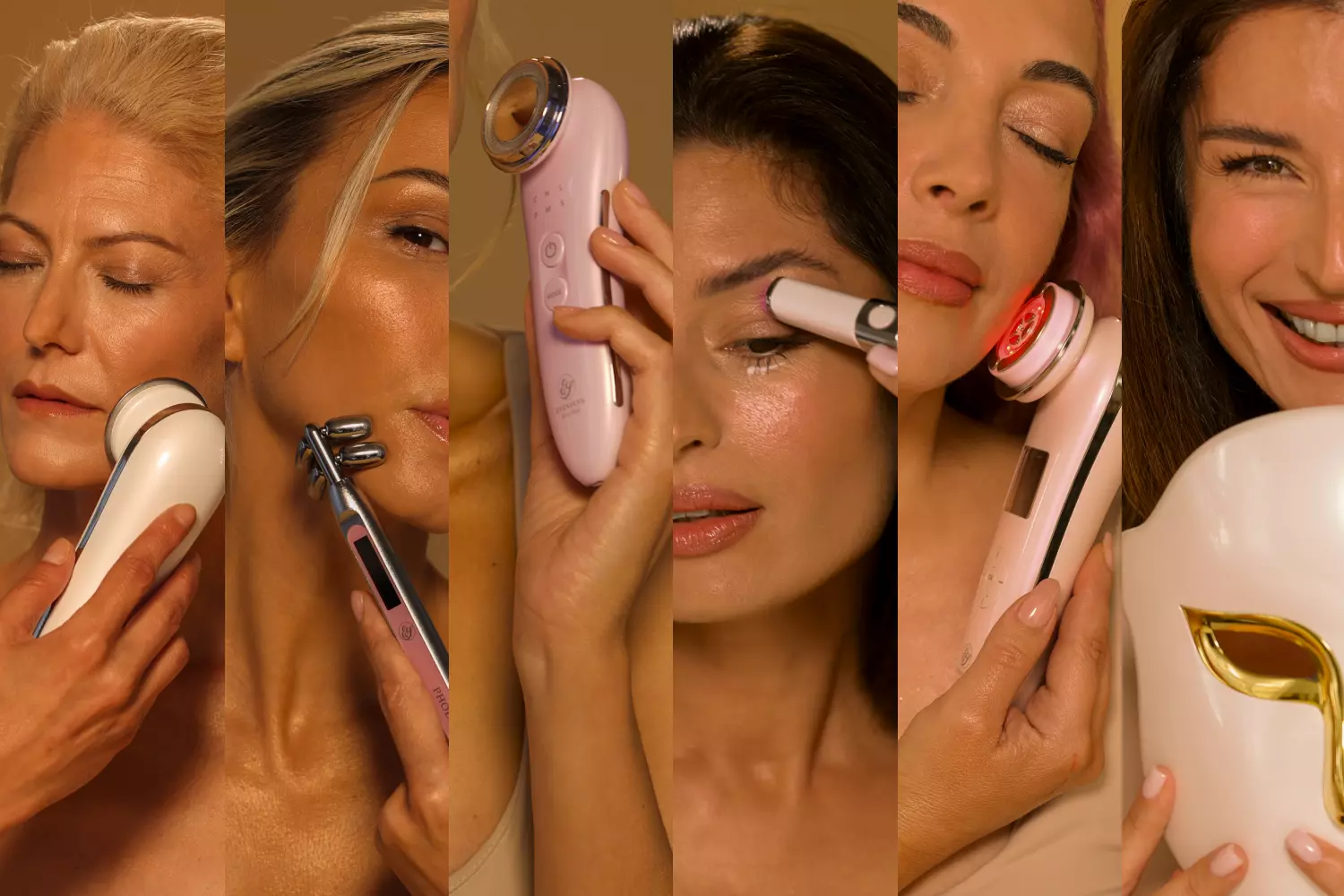
For readers who already own more than one at-home anti-aging device, or who are choosing between two or three. A dermatology-reviewed protocol for how to sequence six modalities into one realistic weekly schedule, what the evidence supports for each, and where to refer out to a clinic instead.
Key takeaways
- Stacking modalities works when each one is given its own job and its own window. It stops working when heat or electrical devices land inside the 24 hours that follow a needling session.
- Radiofrequency, EMS, microcurrent, and ultrasound are most useful as same-day warm-ups before a micro-infusion session, never inside the 24 hours after.
- LED red and near-infrared is non-thermal at consumer face-mask irradiance and is the only modality in the stack that can resume the day after a micro-infusion session.
- Bi-weekly is the upper edge of useful micro-infusion frequency at a 0.5 mm at-home depth. More frequent stamping does not buy more collagen induction and compromises barrier function.
- The 15 October 2025 FDA safety communication on radiofrequency microneedling concerns clinic RF microneedling devices. It does not describe at-home RF or at-home micro-infusion, which are different categories sequenced and energy-limited differently.
- Visible firming response from a complete stack typically arrives between weeks six and eight and deepens through months three to six. The biggest predictor of outcome is adherence to the schedule, not the intensity of any single session.
At-a-glance Q and A
A short summary of the questions readers ask most often, with an evidence-class label for each answer.
Can I use my at-home RF device and do a micro-infusion session on the same day?
Yes, before, never after. RF before micro-infusion warms the dermis and primes circulation. RF inside the 24 hours after micro-infusion adds heat to a skin barrier that is temporarily more reactive, which can amplify redness and disturb early healing. The MicroInfuser™ User Manual locks this rule in writing.[15] Mechanism
Does the LED face mask need to wait the same 24 hours?
No. Red and near-infrared LED is non-thermal at the irradiance levels used in consumer face masks. It is widely used after needling procedures to support recovery. A 24-hour wait is the conservative at-home rule; after that point LED is the one modality you can safely add back. Mechanism Human outcome
If I do every modality every day, will I see results faster?
No. The collagen-remodeling biology runs on a six-to-eight-week cycle regardless of how many sessions are compressed into it. Stacking more frequently than the protocol below tends to compromise barrier function before it accelerates collagen synthesis. Human outcome
Does the October 2025 FDA RF microneedling alert change the protocol below?
No, and the article addresses it directly. The FDA communication is about clinic radiofrequency microneedling devices that combine needles and active RF energy in one application.[8] The at-home stack here uses RF and mechanical micro-infusion as separate tools, sequenced across separate days, with no RF current driven through needles. The categories are mechanically and regulatorily distinct, and the body of this article keeps them separate throughout. Regulatory
How EvenSkyn assessed this
A brief methodology before the body. The order of weight matters.
This guide is the work of the EvenSkyn Skin Science Desk under the medical review of Dr. Lisa Hartford. The protocol was assembled from three sources, in this order of weight.
The first is the peer-reviewed literature for each modality, opened in full at PubMed, PubMed Central, or the journal of record, and labeled in the body of this article by evidence class. Where a claim rests on a clinic-grade device study, the body says so and does not transfer the result to a home-device claim. Where a claim rests on a small, open-label, or in-vitro study, the body says so. Where the literature is sparse, the body says that, too.
The second is the EvenSkyn MicroInfuser™ User Manual (Edition 1, 2026), which encodes the safety, depth, and pairing rules for at-home micro-infusion stamping. The Manual's RF-and-ultrasound pairing protocol (Section 10.1) is the basis for the same-day warm-up and the 24-hour cooldown that anchor the schedule below.[15]
The third is Dr. Hartford's clinical observation from patients who own one or more at-home devices, used to fill in protocol decisions that the literature alone does not resolve. Where her judgment goes beyond what trials directly demonstrate, the text flags it as clinical observation rather than as a research conclusion.
A standing observation that shapes the rest of the article: the "it works at home" evidence base in this category is dominated by small open-label studies, combined-modality trials in which the variable of interest is not isolated, and clinic-device outcomes that have been carried over to imply home-device performance. The article tries to keep those wires uncrossed throughout, even where doing so produces a more cautious statement than the marketing average.
What a device stack actually is
A simple definition, in case the term is new.
An at-home anti-aging device stack is a set of two or more devices, each using a different physical mechanism, used in a coordinated schedule rather than independently. The reason for stacking is that each modality targets a different layer of skin (or muscle), or a different cellular process, and the gains can compound when the sequence is correct. The reason is not to do more things to your skin every day; doing more things on the same day tends to amplify irritation more than it amplifies results.
A stack, in practical terms, is three components: a list of modalities, a weekly schedule that assigns each one a day or set of days, and a small set of rules for what cannot share the same 24-hour window. The third component is where most at-home stacks fall apart. Without the cooldown rules, the schedule turns into a daily everything-at-once routine that produces more redness than progress.
Why the stacking conversation became unavoidable
How the at-home category grew too large for one device to make sense alone.
Five years ago, the at-home anti-aging category was small enough that most readers chose one device. By 2026, the average reader writing to EvenSkyn's support team owns two or three, and a meaningful share own four or more across the major mechanisms: RF, microcurrent, ultrasound, LED, and now micro-infusion stamping. Each device arrives with its own protocol, its own session length, and its own implicit assumption that you have nothing else competing for the same skin on the same day. None of the manufacturers, EvenSkyn included until this article, have said what happens when you combine them.
The closest existing answers come from the in-clinic literature, where multi-modality treatment is common and where studies routinely combine, for example, fractional radiofrequency and intense pulsed light in a single clinical visit. Those studies are useful for the underlying biology but they do not transfer cleanly. Clinic-grade devices apply higher energy in shorter passes under a clinician's hand, and the patient leaves with downtime expectations the at-home reader does not have. The protocol below adapts the biological logic of in-clinic stacking to the energy levels, the session lengths, and the barrier-tolerance limits that the at-home category sits inside.
Figure 1 shows where each modality acts in the skin, which is the easiest way to see why stacking works in principle.
Mechanism of each modality
How each of the six modalities does its work, layer by layer, with the strongest piece of evidence for each.
Radiofrequency (RF). RF generates a current that heats the dermis volumetrically without targeting melanin in the epidermis. The thermal stimulus causes existing collagen fibers to contract and triggers a slower wound-healing response in the surrounding fibroblasts, which produces fresh collagen over the following weeks. Penetration depth depends on the device's frequency and electrode configuration; at-home devices typically reach the upper-to-mid dermis. Because RF does not interact with melanin, it works across all Fitzpatrick skin types when used correctly. Mechanism Human outcome at clinic intensity
Microcurrent. Microcurrent uses electrical current in the microampere range, well below the threshold required to make a muscle visibly contract. The most cited mechanism is the 1982 Cheng study in Clinical Orthopaedics and Related Research, which observed in rat skin that current in the microampere range increased adenosine triphosphate (ATP) generation, protein synthesis, and membrane amino-acid transport, with the effect peaking around 500 microamperes and falling away at milliamp levels.[3] The translation from rat skin to human facial muscle tone is plausible but is supported mostly by small clinical studies rather than large randomized trials. Lab and animal Mechanism extension to humans
Electrical muscle stimulation (EMS). EMS uses higher current than microcurrent and is intended to cause muscle contraction. On the face, EMS engages the underlying mimetic muscles directly. In the body, EMS is used for muscle conditioning and is supported by a larger evidence base than facial EMS. The mechanism is straightforward: an external current depolarizes motor units in the same way a nerve signal would. Mechanism Human outcome (body)
Ultrasound. Ultrasound transmits high-frequency sound waves into the dermis and subcutis. Clinical HIFU (High-Intensity Focused Ultrasound) deposits thermal energy at a tightly focused depth and is what produces the visible lifting outcomes the category is known for. At-home ultrasound devices operate at substantially lower energy and are not delivering HIFU-equivalent results. The at-home benefit is more accurately framed as improved circulation, a transient lymphatic effect, and, for some devices, mild thermal stimulation at depth. Do not assume a clinic-Ultherapy outcome from a home ultrasound device. Mechanism Human outcome at clinic intensity only
LED (red and near-infrared). Photobiomodulation by red light (around 630 to 660 nm) and near-infrared (around 830 to 850 nm, extending in some consumer masks to 1072 nm) is non-thermal at consumer face-mask irradiance levels. The mechanism most cited in the literature is light absorption by cytochrome c oxidase in mitochondria, which increases ATP synthesis and downstream fibroblast activity.[4] The dose-response is biphasic: too little light produces no signal, intermediate doses drive the biological effect, and high doses can inhibit the same pathways.
The Wunsch and Matuschka 2014 randomized controlled trial in Photomedicine and Laser Surgery remains one of the most thorough cosmetic LED RCTs. The trial enrolled 136 volunteers, of whom 113 were assigned to four treatment groups receiving twice-weekly sessions of either 611-to-650 nm or 570-to-850 nm polychromatic light normalized to about 9 J/cm² in the red range over 30 sessions, with 23 controls. Both active groups produced statistically significant increases in intradermal collagen density measured by ultrasound and improvements in skin roughness and patient satisfaction compared with the no-treatment control, and broadband polychromatic light showed no clear advantage over the red-light-only spectrum.[1] A more recent split-face trial by Mota and colleagues, published in Photobiomodulation, Photomedicine, and Laser Surgery in 2023, recruited 137 women aged 40 to 65 with phototypes II to IV and reported a periocular wrinkle-volume reduction of approximately 30 percent after 10 sessions of red (660 nm) or amber (590 nm) light over four weeks at 3.8 J/cm² per session.[2] Human outcome
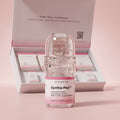
Micro-infusion. Micro-infusion stamping creates depth-limited mechanical micro-channels into the upper papillary dermis. Two things happen at once: the controlled micro-injury triggers a fibroblast-mediated healing response in the surrounding tissue, and the channels themselves provide a transient delivery pathway for the active serum applied through them. At the 0.5 mm fixed depth used by the EvenSkyn MicroInfuser™, this is mechanical microneedling paired with sealed-ampoule serum delivery. No radiofrequency, ultrasound, or other energy is applied through the needles. Mechanism Human outcome at clinic-microneedling depths; at-home 0.5 mm evidence is sparser and labeled accordingly
For the serum carried by the MicroInfuser's Syntha-Pep™ ampoule, the headline molecule is bioengineered polydeoxyribonucleotide (PDRN). The most cited mechanism for PDRN is binding to the adenosine A2A receptor on fibroblasts and other skin cells, which drives downstream fibroblast proliferation and collagen synthesis signaling. Thellung and colleagues showed in 1999 that PDRN increased proliferation of human dermal fibroblasts in primary culture, and that the effect was selectively blocked by the A2A antagonist DMPX.[7] The 2014 Squadrito trial in The Journal of Clinical Endocrinology & Metabolism showed accelerated healing of chronic diabetic foot ulcers with PDRN compared with placebo, which remains the strongest human-outcome trial for the molecule.[5] Most cosmetic claims around PDRN extrapolate from this wound-healing literature, where the molecule has stronger clinical support, to anti-aging endpoints, where the dedicated trials are smaller and newer. The article keeps that distinction visible. Mechanism Human outcome (wound healing)
The collagen-remodeling biology runs on its own clock. Doing more sessions per week does not move it forward; it only moves the barrier backward.
Terminology clarifier
Four pairs of terms that get conflated. The distinctions matter for the schedule.
Microcurrent versus EMS. Microcurrent uses current in the microampere range and does not cause visible muscle contraction. EMS uses higher current and does. Some at-home devices include both modes on one handset, which is fine; the distinction matters because the two modalities have different evidence bases and different cooldown rules. EMS at body-level intensities should not be used over the eye area, over the carotid sinus on the neck, or by anyone with an implanted cardiac device, regardless of the device's facial-intensity claims.
Radiofrequency skin tightening versus radiofrequency microneedling. RF skin tightening delivers radiofrequency energy to the dermis through a handheld applicator that sits flat on the skin. RF microneedling drives RF energy through an array of microneedles that penetrate the skin and deposit heat at depth. These are mechanically different procedures. The 15 October 2025 FDA safety communication is specifically about clinic-grade radiofrequency microneedling devices, where reported complications have included burns, scarring, fat loss, nerve damage, and disfigurement, in some cases requiring surgical care.[8] The American Academy of Dermatology's 16 October 2025 response framed RF microneedling as a medical procedure that requires extensive training in facial anatomy, not a cosmetic one.[9] Both statements concern clinic devices. The at-home stack described in this article does not include RF microneedling at any point.
At-home ultrasound versus clinic HIFU. Clinic HIFU (Ultherapy is the brand most readers know) focuses ultrasound energy at a specific depth and deposits thermal energy in a tightly defined zone, which produces the lifting outcomes the category is associated with. At-home ultrasound devices, including the EvenSkyn Eclipse, do not deliver HIFU-equivalent power. The at-home benefit is real but smaller and qualitatively different: improved circulation, lymphatic support, and mild dermal stimulation at the irradiance the devices safely permit.
Microneedling versus micro-infusion. Microneedling creates micro-channels and applies serum separately, before or after. Micro-infusion creates the same channels and delivers serum through them in the same motion. The MicroInfuser™ is a micro-infusion device; the Under-Eye MicroInfuser™ patches are a dissolving-microneedle delivery system designed specifically for the under-eye area where direct stamping is not appropriate.
Disclosure and scope
What EvenSkyn makes, what the article evaluates, and what the article does not cover.
Commercial interest disclosure
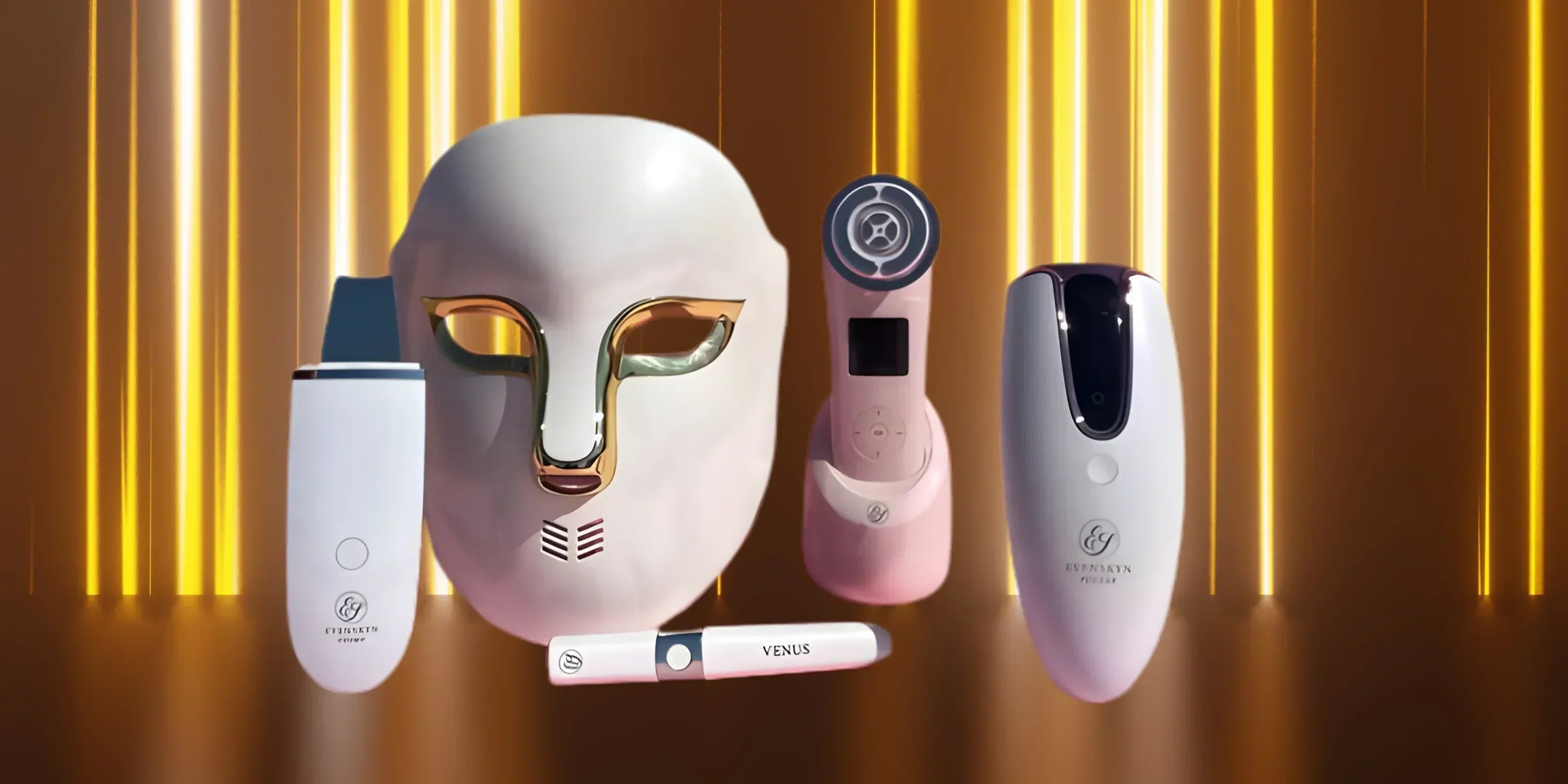
EvenSkyn manufactures the at-home anti-aging devices referenced in this guide, including the Lumo, Lumo+, Venus, Phoenix, Eclipse, Mirage, Mirage Pro, the MicroInfuser™ at-home micro-infusion stamping system with its Syntha-Pep™ serum, and the Under-Eye MicroInfuser™ dissolving-microneedle patches. The article evaluates these devices on the same criteria as any other device in the category. Specific external brands are mentioned where they help the reader's comparison and are not disparaged. The reviewing author, Dr. Lisa Hartford, is the Chief Dermatology Advisor at EvenSkyn and consults on product development for the MicroInfuser™ and Mirage Pro device lines.
This guide is educational. It is not a substitute for personalized medical advice. Consult a board-certified dermatologist if you have a relevant medical history, are pregnant or breastfeeding, take prescription medications that affect skin healing or clotting, or have any condition listed in the safety section below.
Two products in this article (the MicroInfuser™ stamping device and the Mirage Pro LED face mask) are described in present tense based on the EvenSkyn MicroInfuser™ User Manual (Edition 1, 2026) and the Mirage Pro device specification sheet. The MicroInfuser™ is now available; the Mirage Pro is planned for a late 2026 launch. Product links will be added through the update log as each device launches. The currently live EvenSkyn devices referenced (Lumo+, Venus, Phoenix, Eclipse, Mirage, and the Under-Eye MicroInfuser™ patches) are linked normally through the catalog.
Out of scope for this article
This article does not cover injectables (neurotoxins, dermal fillers, biostimulators), clinic energy procedures (HIFU, fractional CO₂ or erbium lasers, picosecond lasers, IPL beyond a brief comparative note, radiofrequency microneedling), prescription topicals (tretinoin, hydroquinone, prescription growth-factor preparations), or surgical options. Each of these has its own EvenSkyn editorial or, in the case of clinical procedures, belongs in a board-certified dermatologist's consultation room. References to clinic procedures in this article exist only to mark the boundary between what the at-home category does and what it cannot do.
What the clinic procedure does (and a referral note)
Where the clinic option meaningfully beats the at-home stack, and the boundary the FDA recently underlined.
Before recommending any at-home protocol, the article points out where the clinic option is meaningfully better.
The clinic versions of these technologies operate at higher energy, sometimes at greater depth, and in the hands of someone trained in facial anatomy. For most readers, the gap between clinic outcomes and at-home outcomes is largest in three categories: clinic HIFU (Ultherapy and similar) for deep lifting that no at-home ultrasound can match; clinic radiofrequency microneedling for collagen induction at dermal depths the home category does not reach; and ablative laser resurfacing for textural and scar concerns that the at-home category does not address at all. If your concern is moderate-to-severe skin laxity that distorts the lower face, deep static wrinkles that persist at rest, atrophic scarring that catches light, or significant photodamage, see a board-certified dermatologist before investing in an at-home stack. An at-home stack maintains and modestly improves mature skin over months and years. It does not replace a clinical procedure that you genuinely need.
The 15 October 2025 FDA safety communication on radiofrequency microneedling underscores the same boundary from the other direction.[8] Clinic RF microneedling is a medical procedure with serious complications when performed without adequate training. That is a reason to be selective about clinical providers, not a reason to attempt a substitute procedure at home. The at-home stack described below is not a substitute for clinic RF microneedling; it is a different category, sequenced and energy-limited differently, and used for the maintenance and modest-gain window where home devices have the strongest evidence.
The single deciding factor
Of all the variables in stacking, only one matters at scale.
For readers who already have multiple devices, the single factor that decides whether the stack works is not the number of devices or the intensity of any single session; the factor is adherence to a schedule that respects two simple rules.
The first rule is that RF, ultrasound, EMS, and microcurrent share the same 24-hour cooldown window after a micro-infusion session. Inside that window, no thermal or electrical device touches the freshly stamped skin.
The second rule is that LED is non-thermal at consumer face-mask irradiance and is exempt from the cooldown once 24 hours have passed.
The rest of the protocol is a scheduling exercise around those two rules. Dr. Hartford notes that, in clinic, the patients who see the most visible change from an at-home stack are typically not the ones who own the most devices but the ones who can show her a marked-up calendar on their phone and explain why they ran microcurrent on Tuesday and skipped it on Wednesday. The schedule, kept consistently, does the work.
The six modalities, evidence-graded
Each modality with its mechanism, its strongest evidence, its weakest evidence, and where it sits in the schedule. Evidence-class labels are applied at the sentence level.
Each modality is presented with its mechanism, its strongest evidence, its weakest evidence, its place in the schedule, and the live EvenSkyn device that fits the role. Evidence-class labels are applied at the sentence level rather than the paragraph level, so that nothing carries an implied warranty it does not have.
1. Radiofrequency (RF) skin tightening
Strongest evidence. Clinic-grade RF for skin tightening is supported by a meaningful body of RCT and split-face evidence, with measurable improvements in skin laxity and texture across multiple studies. Human outcome at clinic intensity
Weakest evidence. Home-RF results vary substantially across devices because power, electrode configuration, and depth differ. Most home-RF studies that exist are small or open-label. The category benefits from FDA clearance for cosmetic indications but does not have the trial depth of clinic RF.
Place in the schedule. Three to five sessions per week as a maintenance modality. On a micro-infusion day, use RF before the stamping session, never inside the 24 hours after.
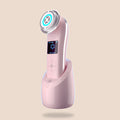
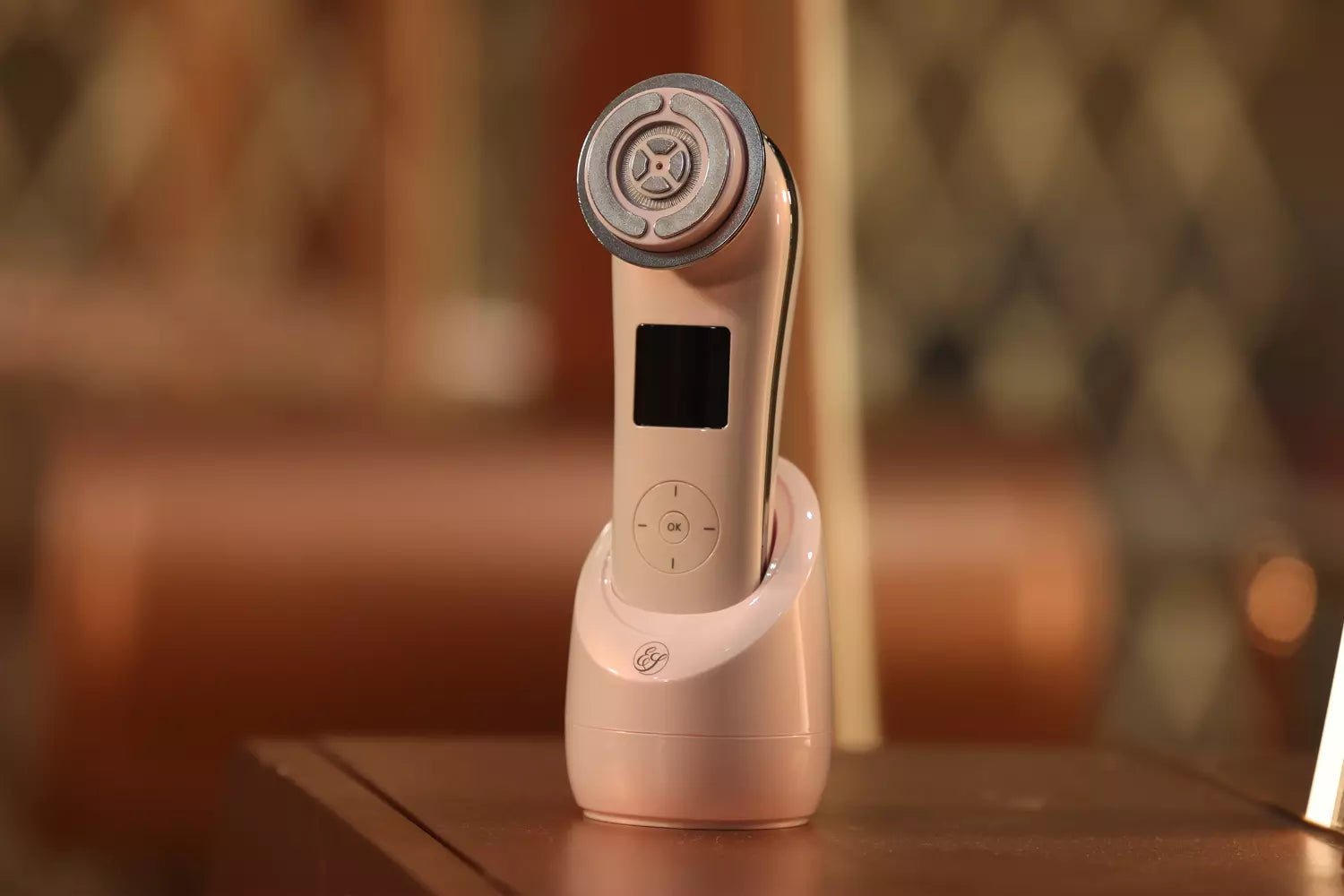
Live EvenSkyn fit. The Lumo+ runs RF alongside EMS and red LED in a multi-modal handset. The Lumo+ product page covers specifications. The Venus eye wand uses fractional RF calibrated to the thinner eye-area thermal threshold and is the dedicated eye device.
2. Microcurrent
Strongest evidence. Microcurrent's mechanism (ATP synthesis, fibroblast signaling, microcirculation) is supported by a mix of lab and small clinical studies, anchored by the 1982 Cheng work in rat skin.[3] Small clinical trials report visible same-day lifting effects in facial musculature. Lab and animal Mechanism extension
Weakest evidence. Large randomized trials at the doses used by consumer microcurrent devices are scarce. Most cited results come from small studies or extrapolation from clinical settings.
Place in the schedule. Daily use is supported by the evidence for routine maintenance, with the same 24-hour cooldown after micro-infusion. Eye-area microcurrent uses a dedicated device with reduced output.
Live EvenSkyn fit. The Phoenix microcurrent bar is the dedicated facial microcurrent device. The Lumo+ also runs microcurrent as part of its multi-modal program.
3. EMS (electrical muscle stimulation)
Strongest evidence. Body EMS for muscle conditioning has the broadest support. Facial EMS for visible toning is supported by smaller studies and clinical observation. Human outcome (body) Mechanism (face)
Weakest evidence. Long-term randomized trials specifically isolating facial EMS at consumer intensity are uncommon.
Place in the schedule. Three to five sessions per week. Same 24-hour cooldown after micro-infusion.
Live EvenSkyn fit. EMS is integrated into the Lumo+ multi-modal handset.
4. Ultrasound (at-home)
Strongest evidence. Clinic HIFU has strong RCT support for visible lifting. At-home ultrasound has smaller but reasonable support for skin texture, hydration, and cellular metabolism endpoints. Human outcome (HIFU) Mechanism (home)
Weakest evidence. Borrowing clinic-HIFU outcomes to imply at-home performance is the most common error in the marketing for this category. The at-home device does not produce HIFU-equivalent lifting.
Place in the schedule. Three to five sessions per week. Same 24-hour cooldown after micro-infusion.
Live EvenSkyn fit. The Eclipse skin toning handset is the dedicated at-home ultrasound device.
5. LED red and near-infrared photobiomodulation
Strongest evidence. Cosmetic LED has the strongest RCT support of any modality in the stack. Wunsch and Matuschka 2014 reported intradermal collagen-density increases and measurable wrinkle reduction across 136 volunteers receiving 30 sessions of red or polychromatic light, compared with no-treatment controls.[1] Mota and colleagues 2023 measured an approximately 30 percent periocular wrinkle-volume reduction in 137 women receiving 10 sessions over four weeks at 3.8 J/cm² per side of the face.[2] Human outcome
Weakest evidence. Dose math at home is hard. Many consumer masks publish irradiance numbers without specifying whether the value is measured at the LED surface or at the skin, which can produce a several-fold gap between marketed dose and delivered dose. A 2023 commentary in the same journal as Mota et al. noted calculation discrepancies in the trial's reported irradiance values, though the wrinkle-volume outcome held.
Place in the schedule. Four to six sessions per week. The only modality in the stack that can safely resume 24 hours after a micro-infusion session.
Live EvenSkyn fit. The current Mirage LED face mask is the dedicated photobiomodulation device. The Mirage Pro, described in the protocol below, operates at an irradiance band of 48 to 60 mW/cm² across four channels in a 1:1:1:1 ratio (415 nm, 590 nm, 630 nm, and a paired 850/1072 nm near-infrared band) totalling 360 LEDs at 90 per channel, in a fixed 10-minute session with three-level dimming (100, 75, 50 percent), six modes including a dedicated anti-aging mode (630 plus 850 plus 1072 nm), and a 10 Hz pulse function, per the device specification sheet.
6. Micro-infusion stamping
Strongest evidence. Micro-channeling for transdermal delivery is the most rigorously demonstrated principle in the literature. Clinic microneedling at depths of 1.5 mm and above has substantial outcome data for collagen induction and scar improvement. Human outcome (clinic depth)
Weakest evidence. At-home micro-infusion at 0.5 mm is a younger evidence base. Mechanism is well-supported; cosmetic-outcome trials at that specific depth, especially in older adults, are smaller and newer. The MicroInfuser™ User Manual aligns its safety guidance with the American Academy of Dermatology's 2023 at-home microneedling guidance, adjusted for micro-infusion's shallower depth.[14][15]
Place in the schedule. The standard protocol is once every two weeks. Sessions four through six are when most users complete their acclimation. An optional 10-day pathway is available for users whose skin has tolerated treatment with no irritation across the first acclimation window; the User Manual states explicitly that more frequent sessions than once every 10 days do not improve collagen induction at the 0.5 mm depth.[15]
Live EvenSkyn fit. The MicroInfuser™ at-home micro-infusion stamping system pairs a 0.5 mm fixed-depth, 24-karat gold-plated needle head with a sealed Syntha-Pep™ serum ampoule. The Syntha-Pep™ serum is anchored by three hero molecules described in the User Manual: bioengineered PDRN produced by recombinant fermentation rather than salmon extraction, sh-Oligopeptide-1 (a recombinant sequence identical to human Epidermal Growth Factor),[12] and Copper Tripeptide-1 (GHK-Cu),[11] alongside a multi-molecular-weight hyaluronic acid system and a Centella-and-arginine barrier-repair complex.[13] For the eye area, where direct stamping is not appropriate, the Under-Eye MicroInfuser™ patches are the dedicated delivery system.
Which reader are you
Three profiles, one protocol. Each gets a slightly different version of the same schedule.
The protocol applies across three reader profiles. Each gets a slightly different version of the same schedule.
The Starter. One device, considering a second. Probably a Lumo+ or a microcurrent bar. The schedule below is overkill for the Starter; the right move is to run the one device on its native schedule for six to eight weeks, document the response, then add the second modality with the cooldown rule in place.
The Builder. Two or three devices. The most common case in the EvenSkyn customer base. The Builder's schedule is RF or microcurrent on most weekdays, LED four to six times per week, and micro-infusion bi-weekly when the MicroInfuser is in the picture. The Builder is who the schedule below is built for.
The Completionist. Four or more devices, including a dedicated ultrasound and a dedicated LED mask. The Completionist's main risk is overstimulation, not under-doing. The schedule below applies, with explicit attention to not stacking more than two modalities on the same day outside the micro-infusion warm-up window.
The comparison matrix
Six modalities side by side, on the dimensions the schedule depends on.
| Modality | Target layer | Best evidence class | Cadence | Cooldown after micro-infusion | EvenSkyn device |
|---|---|---|---|---|---|
| RF skin tightening | Dermis (volumetric heat) | Clinic outcome data, smaller home-device support | 3 to 5 sessions per week | 24 hours | Lumo+, Venus (eye area) |
| Microcurrent | Cellular (ATP signaling), facial musculature | Lab and small clinical, mechanism well-supported | Daily or near-daily | 24 hours | Phoenix, Lumo+ |
| EMS | Facial mimetic muscle (and body muscle) | Mechanism solid; large RCT base mostly for body | 3 to 5 sessions per week | 24 hours | Lumo+ (multi-modal) |
| Ultrasound (at home) | Dermis to subcutis at lower energy than HIFU | Mechanism solid; do not borrow clinic HIFU outcomes | 3 to 5 sessions per week | 24 hours | Eclipse |
| LED (red and near-infrared) | Epidermis through upper dermis | RCT outcome data, strongest in the stack | 4 to 6 sessions per week | 24 hours only, then resume | Mirage, Mirage Pro |
| Micro-infusion stamping | Upper papillary dermis at 0.5 mm | Mechanism solid; at-home 0.5 mm outcome trials are sparser | Bi-weekly (optional 10-day pathway after acclimation) | Self (no other thermal or electrical device for 24 hours after) | MicroInfuser, Under-Eye MicroInfuser patches |
Figure 2 turns the matrix above into a 14-day calendar. The recurring elements (LED, RF or microcurrent, the micro-infusion bookends) are highlighted; the rest day after stamping is marked explicitly.
By the numbers, with reading rules
Six numbers from the protocol, each with a sentence about what it does and does not mean.
A small set of numbers carries most of the meaningful weight in the protocol. Each one comes with a reading rule explaining what it does and does not imply.
0.5 mm. The MicroInfuser™ needle depth, mechanically locked at the head per the User Manual.[15] Reading rule: this is the at-home micro-infusion depth, not the clinic microneedling depth. Outcome data from clinic studies at 1.5 to 2.5 mm should not be transferred directly to the at-home category.
48 to 60 mW/cm². The Mirage Pro irradiance band per the device specification sheet. Reading rule: irradiance bands in this range sit within the studied photobiomodulation window for cosmetic LED. To calculate session dose, multiply irradiance in mW/cm² by session length in seconds, then divide by 1000, which yields J/cm². The Mirage Pro's fixed 10-minute timer at this irradiance band produces a session dose in the studied therapeutic range for the wavelengths used.
24 hours. The minimum cooldown window before any RF, ultrasound, EMS, or microcurrent device resumes after a micro-infusion session, per the MicroInfuser™ User Manual.[15] Reading rule: 24 hours is the floor, not the target. For users with sensitive skin, 48 hours is the safer cooldown.
Every two weeks. The standard MicroInfuser™ protocol per the User Manual.[15] Reading rule: the 14-day cycle matches the upper range of the skin's renewal cycle and lets channels close fully between sessions. More frequent stamping does not improve collagen induction at the 0.5 mm depth.
6 to 8 weeks. The window in which most users on a consistent stack begin to see visible firming. Reading rule: this is when the biology of collagen remodeling produces clinically perceptible change, not when the device "starts working." A session-by-session sense of "is it doing anything" before week 6 is not a useful signal.
4 to 6 months. The window over which the most significant visible improvements accumulate on a consistent schedule. Reading rule: months three to six is where the value of consistency is most evident; quitting at week eight produces a fraction of the available result.
The evidence-aligned weekly protocol
Day by day, for fourteen days. The Builder profile. The Starter scales down; the Completionist scales out.
The protocol below is written for the Builder reader profile. The Starter scales down. The Completionist scales out without changing the cooldown rules.
Week 1, Day 1 (Monday). The micro-infusion day.
In the morning or early evening, run the Lumo+ on its full RF program as a warm-up. The Lumo+ runs RF, EMS, and red LED across its modes; the warm-up pass produces gentle dermal warmth and circulation priming. If the Phoenix is in the toolkit, a short microcurrent pass at the jawline and cheekbones before micro-infusion is supported by the same priming logic. Wash the face thoroughly before micro-infusion. Run the MicroInfuser™ session per the User Manual's seven-zone protocol with 50 percent stamp overlap, pat the residual serum into the face and neck, and skip washing for the rest of the day. Apply a fragrance-free hydrating moisturizer at bedtime. No additional active skincare overnight.
Week 1, Day 2 (Tuesday). The rest day.
Gentle cleanser, hydrating moisturizer, and broad-spectrum SPF 30 or higher in the morning. No RF, microcurrent, EMS, or ultrasound. No retinoids, vitamin C, AHAs, or BHAs. Cool or lukewarm water at the sink only.
Week 1, Day 3 (Wednesday). LED returns.
From the 24-hour mark forward, LED is back on the schedule. Run a Mirage or Mirage Pro session in a red plus near-infrared mode at the dimming level your skin has acclimated to. The mask's fixed 10-minute timer eliminates the dose-math question for the session itself; the cumulative dose builds across the week.
Week 1, Day 4 (Thursday). RF day.
Lumo+ full program. Phoenix optional after. LED optional later in the day for users who prefer a morning-LED, evening-RF split.
Week 1, Day 5 (Friday). Microcurrent or ultrasound day.
Phoenix for facial sculpting or Eclipse for the dermal ultrasound pass, whichever the reader owns. LED returns.
Week 1, Day 6 (Saturday) and Day 7 (Sunday).
Two flexible days. The Builder schedule typically runs one RF day and one LED-plus-microcurrent day across the weekend. Skin gets a full day off from electrical or thermal stimulation at least once per cycle; pick the day that fits your week.
Week 2, Days 8 through 14.
Same shape as Week 1, with the choice of modalities rotated by reader preference. The point is consistent total weekly exposure within the cadence ranges above, not exact day-of-week alignment.
Day 15. The next micro-infusion day.
The cycle repeats. Users on the optional 10-day pathway from the User Manual move the next session to Day 11; users on the standard pathway hold at Day 15.
Figure 3 shows the modalities side by side on the dimensions that matter for the schedule: target layer, evidence class, and weekly cadence.
Figure 4 expresses the single rule the schedule rests on, which is the 24-hour cooldown after micro-infusion.
The decision block
The protocol in one sentence, sized for the voice-assistant extract.
The decision
If you own at least two devices across different modalities, the highest-impact move available to you is not a new device; it is a written 14-day schedule that puts micro-infusion bookends on each two-week cycle, keeps RF, microcurrent, EMS, and ultrasound out of the 24 hours after each stamping session, and runs LED four to six times per week including the day after micro-infusion. Held consistently for 12 weeks, that schedule produces more visible change for the average mature-skin reader than any single device change you could make in the same window.
A realistic timeline
When change becomes visible, and when it does not.
Days 1 to 14. First full cycle. Expect mild redness for one to four hours after the micro-infusion session and a noticeable hydrated appearance the following morning. No visible firming yet; the schedule is doing its underwriting work.
Weeks 2 to 4. Texture begins to even, fine surface lines soften, tone looks more uniform under makeup or sunscreen. The earliest visible changes are usually hydration-driven, not collagen-driven.
Weeks 6 to 8. The collagen-remodeling biology produces its first visible firming signal. The jawline often catches the eye first because the masseter-and-platysma region responds well to the combination of RF and microcurrent in Dr. Hartford's clinical observation. Crow's feet and the cheek apple area soften gradually.
Months 3 to 6. The most significant cumulative visible changes accumulate in this window on a consistent schedule. Stubborn marionette lines and nasolabial folds show their largest movement here, not in the first cycle. Users who quit at week eight see a fraction of the available result.
Month 6 onward. Maintenance. Micro-infusion remains bi-weekly. The other modalities shift to a maintenance cadence that holds the gain. Some users find that LED days per week can be reduced; the micro-infusion bi-weekly cadence is the load-bearing element of the routine and is the one to protect.
Cost framing
Without a fabricated price table.
Honest cost framing without invented tables. The realistic at-home stack involves a one-time device investment plus ongoing consumables. The device side is a single-purchase decision per modality and is dominated by the choice of how multi-modal a single device should be (a Lumo+ that combines RF, EMS, and LED costs less than three single-modality devices in most price comparisons). The ongoing-cost side is dominated by the micro-infusion consumables: sterile needle heads and sealed serum ampoules are single-use per session and create the only recurring cost in the stack. Compared with the clinical equivalent of bi-weekly in-office micro-infusion at typical 2026 US clinic rates, the at-home stack runs meaningfully cheaper across a six-month protocol, with the gap widening at one year and beyond.
The non-financial cost is the scheduling cost. Holding a 14-day cycle for 12 weeks requires more behavioral discipline than buying one device and using it occasionally, and it is the discipline (not any single device) that determines the outcome.
Safety: normal, not normal, do not use
Three tiers, from normal to a hard stop.
Normal. Mild redness for one to four hours after a micro-infusion session. Mild warmth after RF. A faint tingling after microcurrent or EMS. A hydrated look the following morning. Minor pinpoint bleeding at a micro-infusion session is uncommon at 0.5 mm depth, but when it appears it is not a cause for concern: rinse with cool water and apply a fragrance-free barrier cream.
Not normal, contact your dermatologist. Redness lasting more than 48 hours. Swelling that grows rather than recedes. Warmth, pus, or fever (signs of infection). Persistent pain. An allergic reaction such as hives or significant itching. Skin that changes pigmentation in the treatment area, especially in Fitzpatrick IV through VI; post-inflammatory hyperpigmentation in higher-melanin skin tones is the most important safety consideration in the category and the reason the User Manual recommends conservative pressure and extended intervals in those skin tones.[15]
Do not use the stack at all if. You are taking oral isotretinoin or have taken it within the past six months. You are pregnant or breastfeeding (unless your physician has cleared you). You have a history of keloid or hypertrophic scarring. You have an active autoimmune flare. You have uncontrolled diabetes. You take prescribed anticoagulants without having spoken to your prescribing physician about at-home micro-infusion. You have a pacemaker, implanted electronic device, or any cardiac condition without clearance for RF, microcurrent, EMS, and ultrasound separately. You have active eczema, psoriasis, or dermatitis flares in the treatment area. You have active cystic acne in the treatment area. You have a recent (within seven days) chemical peel, laser treatment, or significant sunburn. The MicroInfuser™ User Manual carries the full contraindication list.[15]
How EvenSkyn evaluates a device for inclusion
The criteria, made explicit.
The criteria for whether a device earns a place in the stack are deliberately mechanistic and deliberately conservative. Mechanism that maps to a layer of skin not already covered. Energy output within a band that has published clinical support. Safety architecture that survives at-home conditions (temperature limits, single-use sterility, depth locks where needed, cardiac contraindications declared). Evidence base that does not require borrowing clinic outcome data to be credible. Contraindication list that is explicit rather than buried. A device that meets these criteria earns inclusion; a device that does not earn inclusion is not included, regardless of marketing reach.
The recommendation
A single self-contained sentence, for the voice-assistant extract.
For mature-skin readers who already own at least two at-home devices across different modalities, the recommended protocol is a 14-day cycle anchored by bi-weekly micro-infusion stamping at 0.5 mm depth, with radiofrequency, microcurrent, EMS, and ultrasound used three to five times per week but never inside the 24 hours after a stamping session, and LED red and near-infrared used four to six times per week including the day immediately after stamping, held consistently for at least 12 weeks before evaluating outcomes.
Mistakes and myths
What goes wrong, what doesn't actually work, and what is sold but not earned.
Mistake one: doing more on the same day. Stacking modalities on the same day amplifies irritation faster than it amplifies results. The protocol's three- to five-times-per-week ranges are not arbitrary; they keep daily total stimulation under the threshold where the barrier complains.
Mistake two: running RF or EMS the morning after a micro-infusion session. The 24-hour cooldown is the load-bearing rule. Many users break it because they want momentum and the redness has visibly faded. Subclinical barrier reactivity persists for longer than visible redness, which is why the User Manual's 24-hour minimum holds even when the skin looks fine.[15]
Mistake three: pursuing daily micro-infusion. The 0.5 mm depth at home is not the limiting factor for visible collagen change. The limiting factor is the underlying remodeling biology, which runs on its own schedule regardless of how often you stamp. Daily stamping produces faster barrier compromise without faster collagen.
Myth one: at-home ultrasound replaces Ultherapy. No. Clinic HIFU operates at energy levels and at focal depths the at-home category does not reach. At-home ultrasound delivers a different, smaller benefit, and the marketing for the category has too often borrowed clinic numbers it has not earned.
Myth two: more LED minutes means more collagen. Photobiomodulation is biphasic. Doubling session length above the studied dose range does not double the response and can shift the cellular outcome backward.[4] The Mirage Pro's fixed 10-minute timer is calibrated; do not interpret a fixed timer as a limit to push past.
Myth three: the at-home stack is a substitute for clinic care when you genuinely need it. It is not. Moderate-to-severe laxity, atrophic scarring, and significant photodamage are clinic concerns. The at-home stack maintains and modestly improves; clinic procedures replace what time has removed.
The case against the recommendation
Where a skeptical reader would push back, and how the article would respond.
The strongest argument against the protocol is that the at-home outcome literature for several of the modalities, notably at-home ultrasound and at-home micro-infusion at 0.5 mm, is younger than the marketing surface area would suggest. A skeptical reader could reasonably argue that the protocol's case rests on mechanism, on extrapolation from clinic studies at higher energies and greater depths, and on the LED RCT evidence carrying disproportionate weight as the only modality with strong home-applicable outcome data. The article does not dispute that read. The response is that mechanism plus a conservative cooldown rule plus the strongest single piece of RCT evidence in the category (LED) is a defensible basis for a maintenance protocol, that the safety profile at the energies described is favorable, and that the marginal additional risk of stacking under the protocol's rules is small relative to the chance of meaningful cumulative improvement for the reader who holds the schedule.
Readers who require clinic-grade RCT evidence at every step before adopting a routine will not find the at-home category in 2026 fully meets that bar. Those readers may reasonably choose to wait, to focus on the single modality where the home RCT evidence is strongest (LED), or to seek the clinical procedure where the evidence base is denser.
What would change this view
The two kinds of new evidence the next review will look for.
Two kinds of new evidence would change the recommendation materially. A large randomized trial of at-home micro-infusion at 0.5 mm in mature-skin populations, with histological or outcome endpoints, would clarify the cosmetic-outcome question that currently rests on mechanism plus clinic-depth extrapolation. A randomized comparison of stacking versus single-modality use at matched total weekly minutes would clarify whether the compounding logic the protocol assumes actually produces more than the sum of the parts at home (which the in-clinic literature suggests is likely, but the at-home literature does not yet directly demonstrate). The article will be revised when either appears.
FAQ
Common questions, answered without restating the body.
Can I run RF on the same day as the LED mask?
Yes. RF and LED do not share a cooldown. The simplest pairing is RF first to warm the dermis, LED second to support recovery. This pairing fits inside almost any day except the 24 hours after a micro-infusion session.
Can I do LED twice in one day?
Once per day is the studied cadence for the consumer face-mask category. Twice per day does not improve the published outcome and produces more cumulative heat exposure than the masks are designed for.
How do I know if my skin is reacting badly to the stack rather than just adjusting?
Redness lasting more than 48 hours after any session, persistent dryness despite hydration, breakouts that appear in days three through five, or any pigmentation change beyond a transient flush are reasons to scale back. Drop one modality at a time and observe for one full cycle before reintroducing.
Can I add my retinol or vitamin C back on the rest day?
Retinol resumes 72 hours after a micro-infusion session per the User Manual. Vitamin C (L-ascorbic acid) resumes after 48 hours. AHAs and BHAs resume after 72 hours. The rest day immediately following stamping is too early for actives.[15]
What if I am pregnant or breastfeeding?
Pause the entire stack until your physician has cleared you to resume. The MicroInfuser™ User Manual recommends pausing micro-infusion through pregnancy and breastfeeding. RF, EMS, microcurrent, and ultrasound have device-specific contraindications during pregnancy that should be reviewed with your obstetrician or dermatologist. LED is generally regarded as safer during pregnancy but should still be discussed with your physician.
How does the October 2025 FDA RF microneedling alert affect me?
If you are considering clinic RF microneedling, the FDA communication is essential reading and the AAD's response is the right second source.[8][9] The communication does not affect the at-home stack in this article, which does not include clinic RF microneedling and does not deliver RF energy through needles at any point.
Can I do the stack on my neck and chest?
The User Manual permits micro-infusion on the neck and chest with reduced sweep count and extended intervals (three weeks instead of two), and recommends extra conservatism for Fitzpatrick IV through VI skin tones in those areas. The other modalities (RF, microcurrent, EMS, LED, ultrasound) extend to the neck and decolletage on their normal cadences.[15]
What is the difference between the Mirage and the Mirage Pro?
The Mirage is the current dedicated LED face mask in the EvenSkyn line. The Mirage Pro adds a four-channel wavelength configuration at a 1:1:1:1 ratio of 415 nm, 590 nm, 630 nm, and a paired 850/1072 nm near-infrared band, with three-level dimming, six modes including a dedicated anti-aging mode (630 plus 850 plus 1072 nm) and a multi-phase bedtime mode, in a fixed 10-minute session.
Can I skip the rest day if my skin looks fine?
No. The reactivity that the rest day protects against is barrier-level and is not visible to the naked eye. The User Manual's 24-hour minimum holds independently of how the skin looks.
Methodology, author, standards, corrections
The editorial machinery behind the article.
How we fact-checked this article
Every scientific claim in the body is mapped to a primary source opened in full at PubMed, PubMed Central, or the journal of record. PMIDs, DOIs, journal volumes, and issue numbers appear in the reference list below where verified. Where a claim rests on a device user manual or specification sheet, the document is cited and the device's product page is linked when the device is currently for sale. Industry-funded or single-discoverer-affiliated sources are flagged on the reference line. The article does not transfer outcome numbers from clinic-grade device trials to at-home device claims at any point.
Conflicts of interest
Dr. Lisa Hartford is the Chief Dermatology Advisor at EvenSkyn and receives compensation in that role. She consults on product development for the MicroInfuser™ and Mirage Pro device lines referenced in this article. EvenSkyn manufactures all the devices recommended in the protocol; the article evaluates them on the same criteria applied to non-EvenSkyn alternatives, names the criteria explicitly in the "How EvenSkyn evaluates a device for inclusion" section, and links to specific external devices for comparison where relevant.
What we will revise on the next review
The November 2026 review will revisit four areas. First, whether new RCT evidence has emerged for at-home micro-infusion at 0.5 mm in mature-skin populations. Second, whether the FDA's review of radiofrequency microneedling has produced further guidance that changes the boundary between clinic and home categories. Third, whether the photobiomodulation dose-math literature has consolidated on a clearer standard for measured-at-skin irradiance. Fourth, whether the at-home ultrasound category has produced new outcome data that justifies a stronger or weaker cadence recommendation.
Standards
The article follows the EvenSkyn editorial standards on commercial-interest disclosure, evidence-class labeling, no clinic-to-home outcome transfers, and pre-launch product handling. Pre-launch products are described objectively in present tense from manufacturer documentation and are not linked until launch is verified, per the update log.
Related reading
Other EvenSkyn pillars that connect to this protocol.
- Red Light vs RF vs Microcurrent vs Ultrasound: The Complete Clinical Comparison (2026)
- The Complete 2026 Guide to At-Home RF Skin Tightening Devices
- Best LED Face Masks 2026: A Dermatologist's Comparison of 12 Major Brands
- Red Light Therapy Dose 2026: Irradiance, Joules, and Fluence
- At-Home Microinfusion in 2026: EGF, Copper Peptides, PDRN, and Choosing a Kit
- What to Layer With Your Microinfusion Treatment (2026)
- RF Microneedling at Home in 2026: The Honest Guide
- How to Tighten Neck Skin at Home in 2026
- How to Get Rid of Jowls Without Surgery: The 2026 At-Home Guide
References
Numbered list. Identifiers where verified, affiliation flags where relevant.
- Wunsch A, Matuschka K. A controlled trial to determine the efficacy of red and near-infrared light treatment in patient satisfaction, reduction of fine lines, wrinkles, skin roughness, and intradermal collagen density increase. Photomed Laser Surg. 2014;32(2):93-100. Prospective, randomized, controlled trial. n=136 (113 in four treatment groups, 23 controls). Twice-weekly, 30 sessions, 611-650 nm or 570-850 nm polychromatic light normalized to ~9 J/cm² in the red range. Human outcomeDOI: 10.1089/pho.2013.3616 · PMID: 24286286
- Mota LR, Duarte IDS, Galache TR, et al. Photobiomodulation reduces periocular wrinkle volume by 30 percent: a randomized controlled trial. Photobiomodul Photomed Laser Surg. 2023;41(2):48-56. Split-face RCT, n=137 women aged 40-65, Fitzpatrick II-IV, Glogau II-IV. 10 sessions over 4 weeks, 660 nm red versus 590 nm amber at 3.8 J/cm² per side. Human outcomeDOI: 10.1089/photob.2022.0114 · PMID: 36780572
- Cheng N, Van Hoof H, Bockx E, et al. The effects of electric currents on ATP generation, protein synthesis, and membrane transport in rat skin. Clin Orthop Relat Res. 1982;(171):264-272. Foundational rat-skin study; ATP increase peaks around 500 µA. Lab and animalPMID: 7140077
- Avci P, Gupta A, Sadasivam M, et al. Low-level laser (light) therapy (LLLT) in skin: stimulating, healing, restoring. Semin Cutan Med Surg. 2013;32(1):41-52. Review of photobiomodulation mechanism, biphasic dose response, cytochrome c oxidase pathway. Mechanism reviewPMID: 24049929
- Squadrito F, Bitto A, Altavilla D, et al. The effect of PDRN, an adenosine receptor A2A agonist, on the healing of chronic diabetic foot ulcers: results of a clinical trial. J Clin Endocrinol Metab. 2014. RCT in chronic ulcer healing. Human outcome (wound healing) Industry-linked: SunNutraPharma academic spin-off affiliation, University of MessinaDOI: 10.1210/jc.2013-3569 · PMID: 24432993
- Galeano M, Pallio G, Irrera N, et al. Polydeoxyribonucleotide: a promising biological platform to accelerate impaired skin wound healing. Pharmaceuticals (Basel). 2021. Review. Mechanism review Industry-linked: SunNutraPharma affiliation, University of MessinaPMID: 34832885
- Thellung S, Florio T, Maragliano A, Cattarini G, Schettini G. Polydeoxyribonucleotides enhance the proliferation of human skin fibroblasts: involvement of A2 purinergic receptor subtypes. Life Sci. 1999;64(18):1661-1674. In-vitro on human dermal fibroblasts; A2 antagonist DMPX blocked the effect. LabDOI: 10.1016/S0024-3205(99)00104-6
- US Food and Drug Administration. Potential Risks with Certain Uses of Radiofrequency (RF) Microneedling: FDA Safety Communication. 15 October 2025. Documents reported complications including burns, scarring, fat loss, nerve damage, and disfigurement. RegulatoryFDA Safety Communication, 15 Oct 2025
- American Academy of Dermatology. Statement on the FDA Safety Briefing about Radiofrequency Microneedling Risks. 16 October 2025. RegulatoryAAD news release, 16 Oct 2025
- Belletti S, Uggeri J, Gatti R, Govoni P, Guizzardi S. Polydeoxyribonucleotide promotes cyclobutane pyrimidine dimer repair in UVB-exposed dermal fibroblasts. Photodermatol Photoimmunol Photomed. 2007;23(6):242-249. LabDOI: 10.1111/j.1600-0781.2007.00320.x
- Pickart L, Margolina A. Regenerative and protective actions of the GHK-Cu peptide in the light of the new gene data. Int J Mol Sci. 2018;19(7):1987. Mechanism review Industry-linked: Pickart is the discoverer of GHK-Cu and holds related intellectual propertyPMID: 29986520
- Shin JU, Kim YJ, Yoon HJ, et al. Recombinant human epidermal growth factor in wound healing and skin care: a narrative review. Int Wound J. 2023. Mechanism reviewInt Wound J 2023, narrative review
- Liu M, Dai Y, Li Y, et al. Madecassoside isolated from Centella asiatica herbs facilitates burn wound healing in mice. Planta Med. 2008;74(8):809-815. AnimalDOI: 10.1055/s-2008-1074533 · PMID: 18484523
- American Academy of Dermatology. Microneedling: Frequently asked questions. AAD patient resources. Cited for the AAD's at-home microneedling safety guidance. Professional society guidanceAAD patient resources, accessed May 2026
- EvenSkyn MicroInfuser™ User Manual, Edition 1, 2026. EvenSkyn product documentation. Cited for device specifications, the seven-zone stamping protocol, the 50 percent overlap technique, the bi-weekly and 10-day pathway protocols, the clinical-procedure wait-time chart, the RF/ultrasound/EMS pairing protocol (Section 10.1), and the full contraindication list. Manufacturer documentation Manufacturer source: EvenSkyn product manualEvenSkyn, MicroInfuser User Manual, Ed. 1 (2026)
- EvenSkyn Mirage Pro device specification sheet. EvenSkyn product documentation. Cited for wavelength configuration (415, 590, 630, 850/1072 nm at 1:1:1:1 ratio), irradiance band (48 to 60 mW/cm²), fixed 10-minute timer, three-level dimming, 10 Hz pulse, six modes including anti-aging (630 + 850 + 1072 nm), 360 LEDs at 90 per channel, 4000 mAh battery, 1-year warranty. Manufacturer documentation Manufacturer source: EvenSkyn product specificationEvenSkyn, Mirage Pro device specification (2026)
Update log
What changes, when, and why.
May 2026, Edition 1.0. Initial publication. Article reviewed and signed off by Dr. Lisa Hartford, MD on 22 May 2026.
Pending at launch. Add the MicroInfuser™ product link and the Mirage Pro product link at the points marked in the body when each device launches. Verify launch status against the live storefront on the day each link is added. Until then, both products are described objectively from the User Manual and the device specification sheet without purchasability claims.
Next scheduled review. November 2026.


Leave a comment
All comments are moderated before being published.
This site is protected by hCaptcha and the hCaptcha Privacy Policy and Terms of Service apply.