




Medically Reviewed by Dr. Lisa Hartford, MD
Medically reviewed • EvenSkyn skin science
Written and medically reviewed by Dr. Lisa Hartford, MD, board-certified dermatologist and Chief Dermatology Advisor at EvenSkyn. This article reflects clinical experience treating periorbital concerns and a structured read of the primary literature; see the author and editorial standards note at the end.
Honest length: 9,967 words • Reading time: about 40 minutes • Verified references: 21 • Last clinician review: 17 May 2026
Dissolving hyaluronic acid microneedle patches do something real and measurable for the skin under the eye. They also cannot do several of the things their packaging implies. This is the honest version, with the trials, the limits, and the people I tell to skip them.
Key takeaways
- ◆ A dissolving under-eye microneedle patch is a delivery system. Hundreds of tiny needles made of hyaluronic acid press actives past the outer skin barrier, then melt. No metal. No bleeding. No wound in the dermis.
- ◆ In controlled split-face trials, hyaluronic acid microneedle patches produced statistically significant gains in periorbital wrinkle scores and skin hydration over 4 to 12 weeks. The size of the change was modest, and it built slowly.
- ◆ These patches are not clinical microneedling. They do not reach the depth that triggers true collagen wounding, and that is by design, because at-home needle-into-dermis devices carry a different risk class entirely.
- ◆ Dark circles respond only if the cause matches the tool. Pigment circles, vascular circles, and hollow shadow circles are three different problems. A hydrating patch helps one of them at most, and only partially.
- ◆ The honest expectation: smoother, plumper, better-hydrated under-eye skin and softened fine crepey lines within 4 to 8 weeks of consistent use. Not a filler result. Not a laser result. Not permanent.
- ◆ Skip them, or check with a clinician first, if you are pregnant, have active eye-area eczema or dermatitis, a known hyaluronic acid or excipient reaction, or you are chasing a hollow tear trough that needs volume, not hydration.
- ◆ EvenSkyn sells a micro-infusion under-eye patch. I helped shape its formulation brief. Read the disclosure section before you weigh anything I say about it.
At a glance
| Question | Short answer |
|---|---|
| Do under-eye microneedle patches work? | Yes, for hydration and fine surface lines, with modest measured gains in controlled trials. No, for deep hollows, true pigment, or a facelift-grade change. |
| Are they real microneedling? | No. The needles are dissolving hyaluronic acid that stays in the upper skin. Clinical microneedling and RF microneedling go deeper and are medical procedures. |
| How fast? | Hydration and a plumping look within a day. Measurable wrinkle change over 4 to 12 weeks of repeated use. |
| Do they fix dark circles? | Only the type driven by dryness, crepiness, or mild surface shadowing. Pigment and vascular circles need different tools. |
| Do results last? | No. The effect fades over days to a couple of weeks without continued use. These maintain, they do not cure. |
| Who should not use them? | Pregnancy without clinician sign-off, active eye-area inflammation, known reactions to the ingredients, or anyone expecting them to replace filler. |
| Better than eye cream? | For getting actives past the barrier, the delivery is better on the evidence. The actives themselves still have to be ones that work. |
What the evidence supports, and where it does not
I want to be exact about the line between proven and plausible, because the gap is where most marketing lives.
Supported by controlled human data. Dissolving hyaluronic acid microneedle patches deliver their payload past the stratum corneum far better than a cream sitting on top of intact skin. Multiple split-face and split-eye clinical trials, several double-blind and randomized, show statistically significant improvement in periorbital wrinkle measurements and in skin hydration after repeated use over 4 to 12 weeks.458910 The microneedle delivery principle itself, that micron-scale needles dramatically raise skin permeability, is one of the better-established ideas in transdermal science.123
Plausible, but not settled for this exact use. That added peptides, niacinamide, or vitamin C inside the needle matrix produce a clinically meaningful extra benefit specifically under the eye. Some trials show the active-loaded patch beating the plain hyaluronic acid patch.4 Others show the hyaluronic acid base doing most of the visible work on its own. The actives have their own evidence in other contexts, which I will separate out so you can judge each.
Not supported. That a dissolving patch rebuilds deep dermal collagen the way a needling pen, fractional laser, or radiofrequency device does. That it erases a structural hollow. That a single treatment delivers a durable result. Any "X percent in one use" claim you see on a box almost always traces back to a manufacturer perception panel, not an independent controlled trial. I will name that pattern when we reach the numbers.
How I assessed this
I read the primary trial literature on hyaluronic acid and cross-linked hyaluronic acid microneedle and microstructure patches, prioritizing randomized, split-face, or split-eye designs with objective instruments rather than self-report, and I deliberately separated the delivery-system evidence from the active-ingredient evidence throughout, because conflating those two questions is the single most common analytical error in this category and the one most exploited by packaging copy. I then cross-checked the periorbital dark-circle claims against dermatology classification and treatment reviews so that tool selection could be tied to cause rather than to hope, and I incorporated the United States Food and Drug Administration safety position on radiofrequency microneedling, updated 15 October 2025, because the at-home "microneedling" search space now sits directly next to a live regulatory warning that buyers deserve to understand before they conflate a foil patch with a medical procedure.1920 Every reference was verified to a primary identifier before this article was written. Nothing here is drafted from memory of the literature.
A note from the clinic
A patient in her early fifties came in last winter holding two foil sachets and a phone full of before-and-after videos. She had been using under-eye microneedle patches for nine days. She wanted to know why her hollows had not filled in. I looked at her under-eye. The skin was visibly better hydrated and the fine crepe at the lateral corner had softened. The hollow had not moved a millimeter, because the hollow was a volume problem and she had been treating it like a moisture problem. She had not failed. The patch had not failed. The match between the tool and the cause had failed, and nobody had told her there was a match to get right.
That conversation is the reason this article exists, because the technology is genuinely interesting and the published evidence is genuinely real while the expectations sold alongside it on the foil and in the short-form videos are frequently neither, and the distance between those two things is exactly where a patient loses money and a clinician spends an appointment doing damage control that a single honest paragraph upstream would have prevented. My job here is narrow and specific. I want to give you the version I would give a relative who asked me across a kitchen table, with the citations attached so you can check me rather than trust me, and with the parts that work and the parts that do not separated cleanly enough that you can make the call that fits your face rather than the call that fits a marketing budget.
Quick answers
Are dissolving microneedle patches safe for the under-eye area? For most healthy adults, yes, when used as directed. Trials report excellent tolerance and an absence of significant adverse effects with hyaluronic acid microneedle patches applied around the eye.411 They are not appropriate over active inflammation, broken skin, or an eye-area infection.
Do they hurt? Most people feel a brief light prickle for one to two minutes as the needles seat, then nothing. Trial subjects routinely complete multi-week courses without pain complaints.
How is this different from microneedling at a clinic? Depth and intent. Clinic microneedling and radiofrequency microneedling deliberately wound the dermis to trigger collagen. Dissolving patches stay shallow and deliver hydrating actives. The regulator treats the deep version as a medical procedure, not a home cosmetic.19
How often should I use them? Most clinical protocols used once-weekly or every-third-day application across 4 to 12 weeks. More is not better here.
Will they replace my eye cream? They can carry actives deeper than a cream can. They are episodic, not daily. Many people use both, for different jobs.
Do they work on wrinkles or dark circles? Best on fine periorbital lines and hydration. Variable and cause-dependent on dark circles, which I break down in detail below.
Can I use them while pregnant? I do not recommend starting an active-loaded cosmetic patch in pregnancy without your obstetric clinician signing off, and several trials explicitly excluded pregnant participants.4 Skip the actives, ask first.
Are the "instant" results real? The immediate plumping and smoothing is real and is mostly hydration. It is also temporary. The slower change over weeks is the part worth paying for.
My disclosed bias and scope
EvenSkyn employs me as its Chief Dermatology Advisor, EvenSkyn sells an under-eye micro-infusion dissolving hyaluronic acid microneedle patch, and I contributed to the clinical brief for that product, so a reasonable reader should assume I have a commercial interest in your taking this category seriously and should weigh my conclusions with that conflict held in plain view rather than tucked into a footnote. I have tried to earn your trust the only way that actually works over the length of an article like this, which is by being specific about what these patches cannot do, by citing independent controlled trials rather than in-house perception panels, and by telling you directly when a cheaper route, a different category, or no purchase at all is the better call for your particular under-eye. Scope matters here too. This article is about dissolving cosmetic microneedle and microstructure patches for the periorbital area in healthy adults, it is not medical advice for your individual case, it does not cover medical microneedling or injectables except to draw the boundary, and it is written for an adult audience.
What a micro-infusion patch actually is
Strip away the words on the box and a dissolving under-eye microneedle patch is three things stacked together. A flexible backing. An array of hundreds of microscopic cones. A payload locked inside those cones.
The cones are the interesting part. They are not steel. In the products with the strongest published support, the needles are molded from hyaluronic acid itself, sometimes cross-linked hyaluronic acid for a slower melt, hardened into a shape sharp enough to slip through the outermost skin layer.47 When you press the patch onto clean dry under-eye skin, those cones create transient micro-channels through the stratum corneum, the dense protective layer that blocks most of what you put on your face. Then, over roughly 15 to 30 minutes of wear, the cones dissolve. The hyaluronic acid that formed the needle becomes part of the payload. Whatever else was loaded into the matrix, peptides, niacinamide, adenosine, ascorbic acid derivatives, goes with it.811
Two consequences follow, and both matter for setting expectations.
First, the dose is small, because we are talking about the total volume that fits inside a few hundred needles each only a fraction of a millimeter tall, which is precise local delivery rather than a syringe of anything, and which is the structural reason the visible effect is consistently described in the literature as real but measured rather than dramatic.
Second, the depth is shallow, because the needle length on these cosmetic patches is short by design, in the range of tens to a couple of hundred microns in most products, enough to bypass the stratum corneum that defeats creams but deliberately not enough to create the controlled dermal injury that clinical collagen-induction therapy depends on, and the engineers keep it that way on purpose. The shallow depth is the safety feature. It is also the ceiling.
The naming problem, said once, clearly
Three different things share the word "microneedling" in the wild, and the conflation sells products. Dissolving cosmetic patches, like the under-eye patches in this article, deliver actives into shallow skin and melt. Mechanical microneedling, the pen or roller at a clinic, drives fine needles into the dermis to provoke a healing response. Radiofrequency microneedling adds heat through needle electrodes into deeper tissue. The last two are medical procedures. A foil sachet from a beauty aisle is not one of them, regardless of the label, and any product that blurs that line is doing you a disservice.
How the delivery works
The reason a patch can outperform a cream comes down to one stubborn structure: the stratum corneum. It is roughly 10 to 20 microns of flattened dead cells and lipids, and it is very good at its job, which is keeping things out. Most large or water-loving molecules, hyaluronic acid included, do not cross intact stratum corneum in any meaningful quantity when smeared on top. They sit on the surface, hydrate the very top layers, and largely wash off.
Micron-scale needles change the arithmetic, because by creating temporary physical channels straight through that barrier they raise skin permeability by orders of magnitude for exactly the molecules, large ones and water-loving ones, that otherwise sit on the surface and never get in. None of this is new or fringe. The principle ranks among the best-characterized strategies in the whole of transdermal drug delivery, demonstrated repeatedly across several decades and across payloads as different as influenza vaccines, parathyroid hormone, insulin, and cosmetic peptides, which is precisely why a delivery format borrowed from that field carries more credibility than a format invented for a marketing deck.123 Dissolving microneedles were then engineered specifically so that the needle delivers its cargo into the skin and then vanishes, leaving behind no sharps, no biohazard, and no removal step, a refinement that is the reason a foil sachet can be a sensible consumer product at all.2
Apply that to the under-eye. The skin there is the thinnest on the face, which cuts both ways. It is more fragile, so it deserves a gentle tool. It is also thin enough that shallow delivery still reaches a layer where hydration and fine-line softening read visibly on the surface. The hyaluronic acid that formed the needles is itself a functional payload, because hyaluronic acid is the molecule most responsible for skin water content, and skin that holds more water looks plumper and shows fine lines less.18 That single fact, hyaluronic acid as both the vehicle and the active, is why even the plain patches in trials produce a measurable hydration and fine-line effect without any added ingredient at all.79
It is worth being precise about why a syringe of hyaluronic acid filler and a patch of hyaluronic acid needles, despite sharing a molecule, sit in completely different rows of the comparison table, because the conflation is not accidental and it costs people money: filler is a relatively large bolus of cross-linked gel placed by needle into a deep tissue plane to physically occupy space and lift a contour, whereas a microneedle patch deposits a microgram-scale quantity of hyaluronic acid into the upper skin where it hydrates and very mildly plumps, so the filler addresses volume and the patch addresses skin quality, and no amount of repeated patching converts the second into the first. Same molecule. Opposite jobs. The marketing that elides this is the single most expensive misunderstanding in the under-eye category, and I correct it in clinic almost weekly.
The comparison that resolves the question
Most of the confusion in this category dissolves once you put the options side by side and stop letting the shared word "microneedle" imply shared results. Here is the honest hierarchy. Note where the patch is the right tool and, just as deliberately, where it is not.
| Approach | Where it acts | What it genuinely does for the under-eye | What it does not do | Setting |
|---|---|---|---|---|
| Dissolving HA microneedle patch (the subject here) | Stratum corneum and superficial skin | Delivers hyaluronic acid and actives past the barrier; measurable hydration and fine-line improvement over weeks49 | No deep collagen remodeling; no volume; no permanent change | At home, episodic |
| Eye cream or serum | Mostly on top of the barrier | Surface hydration and occlusion; active benefit limited by poor penetration of large molecules | Limited delivery of barrier-blocked actives | At home, daily |
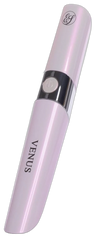
| Periorbital LED or red-light device (for example, EvenSkyn Venus) | Light into superficial tissue | Different mechanism: photobiomodulation aimed at fine lines and tone; complements, does not replace, the patch | No physical delivery of topicals; not a hydration vehicle | At home, repeated sessions |
| Mechanical microneedling (clinic pen or roller) | Into the dermis, deliberate injury | Triggers a true collagen-induction healing cascade | Downtime; operator dependent; not a home job for the eye | Clinic, by a trained provider |
| Radiofrequency microneedling | Deeper, heat plus needle | Strong dermal remodeling for the right candidate | FDA flags serious complications; explicitly not for home use19 | Medical procedure only |
| Hyaluronic acid filler (tear trough) | Deep, injected volume | The only item here that fills a true hollow | Not a skin-quality treatment; injector skill critical; the eye area is high risk | Medical, injector only |
Read down the "what it does not do" column before anything else. The patch sits at the gentle, shallow, repeatable end. That position is a feature for skin quality and a hard ceiling for volume and deep remodeling. If your goal lives in the bottom rows of this table, no patch will get you there, and a clinician should be saying so out loud.
By the numbers: what the trials measured
I will give you the figures that come from controlled human studies, and I will flag funding and design honestly, because a number without its study design is decoration.
A double-blind, randomized, controlled, split-face trial in 52 women applied a cross-linked hyaluronic acid microneedle patch to the periorbital and nasolabial areas once weekly for 29 days. Wrinkle and hydration measurements improved significantly in all groups by day 29 (p less than 0.01). The patches carrying acetyl hexapeptide-8 or epidermal growth factor beat the plain hyaluronic acid patch on wrinkle improvement (p less than 0.05). Tolerance was good, with no significant adverse effects reported.4 This is one of the cleaner designs in the category, and it does two useful things at once: it confirms the plain patch works, and it shows the added active contributes an extra increment rather than carrying the whole result.
A controlled study of a high molecular weight hyaluronic acid dissolving microneedle patch, applied every 3 days for 8 weeks to crow's feet in 23 women, found the higher molecular weight formulation outperformed a lower molecular weight comparator across skin-improvement parameters measured by instrument.9 A separate split-eye study of a dual anti-wrinkle dissolving patch worn overnight, assessed over 28 days against a plain hyaluronic acid placebo patch, recorded wrinkle and lifting improvements with good safety.10 A 12-week monocentric study of a peptide-loaded hyaluronic acid patch applied at the outer eye reported roughly a 25 percent reduction in measured fine lines and a roughly 15 percent hydration gain, with excellent tolerance and no cumulative skin reactions.11 A larger split-phase study of a 650-needle hyaluronic and ferulic acid patch in 82 subjects concluded it was a safe and effective way to improve periorbital skin quality after six applications.6 A cross-linked hyaluronic microstructure patch study found a single patch significantly improved periorbital hydration for about 3 days and softened superficial wrinkles transiently, with no irritation.7 A combinatorial study found a dissolving patch plus a complementary cream improved wrinkles, dermal density, elasticity, and hydration together.8
Standing back from the individual studies, the pattern across this body of work is worth stating as a single calibrated paragraph rather than a list, because the value lies in the consistency and its limits taken together: multiple independent groups, using split-face or split-eye or placebo-patch controls and objective instruments rather than questionnaires, repeatedly find that dissolving hyaluronic acid microneedle patches produce statistically significant improvements in periorbital wrinkle and hydration measurements over courses of roughly four to twelve weeks, with good tolerance and an absence of significant adverse effects, and that loaded actives such as acetyl hexapeptide-8 add a measurable increment over the plain base, which is a genuinely coherent and reassuring evidence picture for a cosmetic category where coherence is the exception rather than the rule. The effects are real. The effects are also small, slow, and impermanent, and a meaningful share of the literature is generated by the companies that sell the products, so the correct reading is neither the dismissive one nor the promotional one but the middle position in which the direction of effect is trustworthy, the magnitude is modest, and the durability depends entirely on whether you keep going. Confidence in direction: high. Confidence in large or lasting magnitude: low.
How to read these honestly. The direction is consistent and the effects are statistically real. The magnitudes are modest, in the rough order of 15 to 30 percent on instrument-measured parameters over weeks, not the 50 percent overnight transformations that box copy implies. Several of these studies were conducted or sponsored by product developers; that does not void them, because the split-face and placebo-patch designs control for a lot, but it does mean I weight the controlled comparisons more than the single-arm numbers. The single biggest tell of marketing rather than science is a large percentage attached to "one treatment" with no control group. Treat that figure as a perception panel until proven otherwise.
What each ingredient in the payload actually does
Buyers are shown an ingredient list and asked to infer a result, which is the wrong direction of reasoning, so let me run it the right way and grade each common payload component on the evidence that exists for it rather than on the confidence with which it is printed on the foil. The honest summary up front is that the hyaluronic acid does most of the heavy lifting, and every other ingredient is an increment whose size ranges from real-but-small to barely-characterized-for-this-exact-use, and a brand that pretends otherwise is selling you an ingredient deck rather than an outcome.
Hyaluronic acid. This is the workhorse and the reason even plain patches measure well. Hyaluronic acid is the molecule most responsible for the water content that gives youthful skin its turgor and pliability, its concentration and behavior change with skin aging, and delivering it past the barrier in a form the skin can hold is a mechanistically sound thing to do for hydration and the optical softening of fine lines.18 In several periorbital trials the hyaluronic acid base alone produced statistically significant wrinkle and hydration gains without any added active, which tells you the vehicle is not inert packaging but a substantial part of the result itself.79 Grade: well supported, for what it does, which is hydration and fine-line softening, not collagen reconstruction.
Acetyl hexapeptide-8 and related peptides. In the cleanest controlled design in this category, a double-blind randomized split-face trial, the cross-linked hyaluronic acid patch carrying acetyl hexapeptide-8 beat the otherwise identical plain hyaluronic acid patch on periorbital wrinkle improvement at a statistically significant level, which is the kind of head-to-head, same-vehicle comparison that actually isolates the peptide's contribution rather than crediting it with the vehicle's work.4 Peptide-loaded hyaluronic acid patches in a separate 12-week periorbital study showed roughly a quarter reduction in measured fine lines with excellent tolerance.11 Grade: a real, modest, evidenced increment on top of the base, not a standalone wrinkle eraser.
Niacinamide. Niacinamide is one of the better-evidenced topical actives in dermatology, with controlled human data for improving the appearance of aging skin and for reducing hyperpigmentation through suppression of melanosome transfer, which gives it a genuine, if slow and partial, rationale for the pigment component of mixed dark circles rather than for the texture component the patch is best at.1516 The honest caveat: most niacinamide trials studied creams over weeks to months at defined concentrations, not pulsed microneedle delivery under the eye, so the direction of benefit is sound while the exact periorbital-patch magnitude is an extrapolation I will not dress up as a measured number.
Vitamin C and its derivatives. There is controlled work specifically on vitamin C and lower-eyelid dark circles, using image analysis and echogram, supporting a measurable effect on the dark-circle picture for appropriate cases, which is more direct periorbital evidence than most actives can claim.17 Stability and formulation matter enormously with ascorbic acid, and a microneedle matrix is actually a reasonable way to deliver a sensitive molecule, though again the periorbital-patch-specific magnitude is inferred from adjacent evidence rather than measured head to head.
Caffeine. Caffeine's periorbital reputation outruns its evidence. Any de-puffing or brightening from topical caffeine is transient, surface-level, and modest, and morning under-eye puffiness is far more a function of sleep, sodium, fluid distribution, and individual anatomy than of anything a sticker delivers. Grade: a pleasant short-term cosmetic feel, not a treatment, and not a reason to pay a premium on its own.
The takeaway from running the list honestly is unspectacular and important. The base works. The peptide adds a measured bit. The pigment actives have sound mechanisms but inferred periorbital-patch magnitudes. The caffeine is mostly sensory. Anyone selling the ingredient list as a sum of independent miracles is doing arithmetic the literature does not support.
Dark circles: why type decides everything
Before the types, a word on the anatomy, because it explains why this region punishes the wrong tool more than anywhere else on the face. The skin of the lower eyelid is the thinnest skin on the human body, the subcutaneous fat is sparse to absent, the orbicularis muscle and its vasculature sit close to the surface, and the lid-cheek junction is a mobile, shadow-prone boundary that changes appearance with lighting, hydration, fatigue, and age in ways no other facial zone does, which is precisely why a treatment that works beautifully on a cheek can do nothing visible here and why a problem that looks like one thing under bathroom light looks like another in daylight. Thin skin shows what is under it. That is the entire problem in one sentence. A tool that improves the skin itself, like a hydrating patch, can only ever address the contribution that the skin layer is making, and when most of the darkness is coming from the vessels, the pigment, or the shadow beneath that skin, improving the skin changes the smaller part of the picture while leaving the larger part untouched, which is the mechanical reason "dark circle erasure" claims collapse on contact with most real faces.
"Dark circles" is not one condition. Dermatology classifies periorbital darkening by cause, and the cause dictates whether any given tool can help. The widely used clinical analysis by Huang and colleagues, examined with Wood's lamp and ultrasound, sorted dark eye circles into pigmented, vascular, structural, and mixed types, with the mixed type dominating real-world cases.13 Treatment reviews reach the same operational conclusion: you have to identify the type before you choose the intervention, because a tool that helps one type does nothing for another, and the literature is consistent that the majority of presentations are mixed, which means the realistic ceiling for any single-mechanism tool is partial improvement of the component it actually addresses rather than resolution of the whole appearance.1214
- ◆ Pigmented circles are a brown hue from excess melanin in or under the skin. These respond to pigment-directed actives and procedures over time. A hydrating patch does not meaningfully clear pigment. If a niacinamide or vitamin C payload is present, there is an indirect, slow, partial pigment rationale, which I cover below, but a patch is not a pigment treatment.
- ◆ Vascular circles are the blue, purple, or pink cast from blood vessels showing through thin skin, often with puffiness. Plumping the skin slightly can soften the optical effect at the margin. The patch does not change the vasculature. This is the type most often oversold.
- ◆ Structural circles are shadow, not color: a tear-trough hollow or lid-cheek groove casting a dark line under any light. No topical and no patch fills a hollow. This is a volume problem, addressed, if at all, by a skilled injector or surgery. A patch can improve the skin quality draped over the hollow without touching the hollow.
- ◆ Mixed is most people. Which means partial, type-dependent improvement is the realistic ceiling, and anyone promising uniform "dark circle erasure" from a sticker is selling the foil, not the result.
Where the patch genuinely helps the dark-circle picture: when crepey, dehydrated, thin under-eye skin is exaggerating shadow and texture, better-hydrated, plumper skin reads as brighter and smoother. That is a real, visible, repeatable improvement for a subset of people. It is also specifically not pigment correction and specifically not volume restoration, and the difference is the whole game.
A use protocol that matches the evidence
This protocol mirrors what the controlled trials actually did, not what maximizes sachet consumption. If a product manual specifies otherwise, the manufacturer manual governs; this is the evidence-aligned default.
- Cleanse and fully dry. The cones need clean, dry, oil-free skin to seat. Residual cleanser or product on the surface blunts penetration. This step is not optional and it is the one most people rush.
- Place along the orbital bone, not on the lash line. Position the patch over the area of concern below the eye, keeping clear of the lid margin and lashes. The micro-channels belong on skin you can pinch, not on mucous membrane.
- Press, then leave it. Apply gentle even pressure for several seconds so the cones engage, then leave the patch undisturbed. Wear time follows the product instruction, commonly in the 20-minute to overnight range depending on the formulation; trial protocols ranged from a few hours to overnight.410
- Remove and seal it in. After removal, a bland moisturizer over the area helps hold the hydration. No need to rinse.
- Cadence: weekly or every third day, not daily. The trials that produced significant results used once-weekly or every-third-day schedules across 4 to 12 weeks.49 Daily use does not accelerate collagen you are not triggering; it mostly accelerates spend and irritation risk.
- Judge it at 6 to 8 weeks, with photos. Take a baseline photo in consistent light before you start. Reassess at week 6 to 8. Skin-quality change is gradual and your memory is an unreliable instrument.
Match the approach to your under-eye
| If your main concern is | Likely type | Will a patch help? | What I would actually do |
|---|---|---|---|
| Fine crepey lines, dryness, dull thin skin | Texture and hydration | Yes, this is the sweet spot | A hyaluronic acid microneedle patch weekly for 8 weeks, plus daily barrier care |
| Brown discoloration that stays under any light | Pigmented | Minimal directly | Pigment-directed routine (for example niacinamide, vitamin C, sun protection, clinician input); patch is adjunct at best1517 |
| Blue or purple cast, worse when tired | Vascular | Marginal optical softening only | Sleep, head elevation, clinician assessment; manage expectations on any topical |
| A shadow or groove that disappears when you lift the cheek | Structural hollow | No, not the hollow | Injector or surgical consult for volume; patch only improves overlying skin |
| Puffiness in the morning | Fluid and lifestyle | Temporary surface effect only | Salt, sleep position, allergy control; patches are not a drainage tool |
| Mixed, several of the above | Mixed (most people) | Partial, type-weighted | Treat the dominant driver first; expect incremental, not total, change |
A realistic timeline
Hour one. Slight prickle on application, gone within a minute or two for most. On removal, the skin looks smoother and plumper. This early look is mostly hydration and is real, but it is also the most temporary part of the whole arc. Do not judge the product by it, in either direction.
Days 1 to 3. The hydration effect lingers, then softens. A single cross-linked hyaluronic microstructure patch measurably improved periorbital hydration for roughly 3 days in one controlled study.7 If you stop here, you have bought a nice transient effect and not much else.
Weeks 2 to 4. With a weekly or every-third-day cadence, fine surface lines start to read softer in consistent lighting. This is gradual. Week-to-week change is small enough that photographs beat memory.
Weeks 4 to 8. This is the window where the controlled trials recorded their statistically significant wrinkle and hydration gains, so this is where you should reasonably expect a modest but genuine and visible improvement in texture, hydration, and fine periorbital lines, and equally where you should expect no change whatsoever in a true hollow or in genuine melanin pigment, because neither of those was ever within the mechanism's reach.4911
Weeks 8 to 12 and beyond. Continued maintenance holds and incrementally extends the gains, but the moment you stop the clock runs backward over a few weeks until you are roughly back where you started, which is why I tell patients in plain language that this is a maintenance category they should either budget for as an ongoing line item or decline to start, rather than treat as a course with a finish line. There is no finish line here. There is only continuation or reversion.
Normal, not normal, and when to stop
Sourced from the safety findings reported in the clinical literature and standard periorbital care, with the manufacturer manual taking precedence for any specific product.
Normal and expected
- ◆ A brief light prickling or tingling for the first one to two minutes as the cones seat.
- ◆ Faint, short-lived redness or slight indentation marks where the array sat, fading within minutes to an hour.
- ◆ An immediate plumped, slightly tacky-then-smooth feel from the hyaluronic acid.
Controlled periorbital trials of hyaluronic acid microneedle patches consistently report good tolerance and no significant adverse effects across multi-week courses.4711
Not normal, stop and reassess
- ◆ Persistent redness, swelling, itching, or burning lasting hours to days, which can signal a reaction to hyaluronic acid, a peptide, or an excipient.
- ◆ Any blistering, weeping, or spreading rash. Stop, do not reapply, and get it assessed.
- ◆ New or worsening eye irritation, discharge, or pain. The eye itself is not the target and any ocular symptom warrants prompt care.
- ◆ A lesion, mole, or skin change in the treatment zone that you have not had evaluated. Do not patch over undiagnosed skin.
Do not use, or get clinician sign-off first, if
- ◆ You are pregnant or breastfeeding and the patch carries actives; several trials excluded pregnant participants and I would not start an active cosmetic patch in pregnancy without obstetric input.4
- ◆ You have active eye-area eczema, dermatitis, rosacea flare, infection, or broken skin in the zone.
- ◆ You have a known reaction to hyaluronic acid or to listed peptides or excipients.
- ◆ You are seeking correction of a true tear-trough hollow; that is a volume question for a clinician, and a patch is the wrong tool by category.
The regulatory context you should know
On 15 October 2025 the United States Food and Drug Administration issued a safety communication on radiofrequency microneedling, stating that it is a medical procedure, not a cosmetic treatment, that serious complications including burns, scarring, fat loss and nerve damage have been reported, and that these devices should not be used at home.1920 A dissolving cosmetic hyaluronic acid patch is a different product class and is not the subject of that warning. I include it because the at-home "microneedling" search results put very different things next to each other, and a buyer deserves to know which row of the comparison table they are actually standing in. If a product blurs that line in its marketing, treat the blur itself as the warning sign.
How to evaluate a patch the way I do
This is a general test you can apply to any brand, including mine. Hold every product to it.
If you are choosing between products, this companion guide sets out how the leading microneedle eye patch brands compare on published needle length, actives and cost per pair.
- ◆ Needle material. Are the needles made of dissolving hyaluronic acid or cross-linked hyaluronic acid, the materials with the periorbital trial support, or unstated? "Microneedle" with no material disclosed is a question, not an answer.47
- ◆ Needle count and the honesty of it. Hundreds of needles per patch is typical and reasonable. A specific count that matches the published-trial range is a better sign than a vague "thousands."
- ◆ Payload that has its own evidence. Hyaluronic acid is the workhorse and is self-justifying. Added peptides such as acetyl hexapeptide-8, niacinamide, or stabilized vitamin C should each have a rationale you can check, rather than merely appearing on a label for the ingredient deck.41517
- ◆ Claims that name a study design. "Statistically significant improvement in a split-face trial" is checkable. "90 percent saw results" with no control, no n, and no instrument is a perception panel wearing a lab coat. Demand the former, discount the latter.
- ◆ Honest limits in the brand's own words. A brand that tells you the patch will not fill a hollow or erase pigment is more trustworthy than one that implies it does everything. The willingness to say no is the strongest positive signal there is.
- ◆ Eye-area appropriateness. Is the product specified for periorbital use, with sensible placement guidance away from the lid margin? Generic face patches repurposed for the eye are a lower bar.
Apply that list to any product, including this one, and most of the category sorts itself within about a minute, and the consistent pattern you will notice is that the products which pass the test are rarely the ones carrying the loudest adjectives, because evidence and adjective density tend, in this aisle, to vary inversely with one another.
How to read the claims competitors print on the box
Three claim shapes dominate this shelf, and each has a specific tell. "X percent wrinkle reduction in one treatment" is almost always a single-application, manufacturer-run perception or instrument reading without an independent control arm, which measures the temporary hydration spike that flatters any patch in the first hours, not a durable structural change. "One hundred percent of subjects saw improvement" is a perception-panel statistic, where subjects self-rate after using the product they know they applied, with no blinding and frequently a small sample. "Thirty-nine percent hyaluronic acid" or any large concentration number describes what is in the patch, not what reaches the skin or what it does there, and concentration is not efficacy. None of these shapes is fraudulent, and some of these products are perfectly pleasant to use. The point is narrower and useful: a concentration, a one-treatment percentage, and a 100 percent perception figure are not the same evidentiary object as a statistically significant result from a blinded, controlled, multi-week trial with an instrument, and once you can see the difference you can shop the whole aisle in your own informed way rather than the way the packaging wants. That skill, not any single product, is what this article is actually trying to give you.
Where EvenSkyn fits, stated plainly
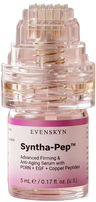
Here is the disclosed recommendation, in the open. EvenSkyn makes an under-eye micro-infusion patch built on dissolving hyaluronic acid needles carrying a peptide, niacinamide and caffeine-based payload, designed specifically for the periorbital area. It sits in the top row of the comparison table: a shallow, gentle, episodic skin-quality and hydration tool. On the evidence in this article, that is a category that works for fine lines, hydration, and texture, within the modest, temporary, maintenance-bound limits I have been explicit about.
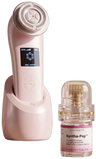
The honest bundle logic, only where the protocol genuinely calls for it: the patch handles delivery and hydration. It does nothing for the eye area using energy, because that is a different mechanism. For periorbital fine-line work by light, EvenSkyn's Venus is the device intended for the eye region, and it complements rather than duplicates the patch. One point of genuine safety information that follows directly from EvenSkyn's own product boundaries: EvenSkyn's radiofrequency device, the Lumo+, is explicitly not for the eye area, and the company directs eye-region treatment to Venus instead. I am telling you that because the correct answer to "what do I use around my eyes" excludes a tool EvenSkyn also sells, and a recommendation that never excludes anything is not a recommendation.
What I will not tell you is that this patch is the only one worth buying, or that it outperforms every alternative, or that it will do what the bottom rows of the comparison table do, because it will not by category and no amount of brand loyalty changes the mechanism, and I would rather you buy it understanding precisely that than buy it on a promise I never should have made and return it three weeks later feeling deceived by a sentence I wrote.
Common mistakes
- ◆ Treating a hollow with a hydrator. The single most common mismatch I see. A structural shadow needs volume, not moisture. Identify the type first.
- ◆ Applying to damp or product-coated skin. The cones do not seat properly and the delivery advantage you paid for evaporates.
- ◆ Daily use to "speed it up." The trial schedules were weekly or every third day for a reason. Faster cadence raises irritation risk without raising benefit you are not biologically triggering.
- ◆ Quitting at day 3. The transient hydration glow fades within a few days and people conclude the product failed, when in fact the measured, durable benefit only shows up over four to twelve weeks of consistent use and was never going to be visible on day three in the first place.4
- ◆ Placing it on the lash line. Keep clear of the lid margin. The target is skin over the orbital bone, not the eyelid edge.
- ◆ Expecting permanence. Stopping reverses the gains over weeks. This is maintenance, and pretending otherwise sets you up to feel cheated.
- ◆ Buying on adjective density. The product with the most superlatives is not the one with the most evidence. Those two qualities are frequently inversely related.
Myths worth retiring
"Microneedle patches are needle-free, so it is just a fancy sticker." The needles are real, they are simply made of dissolving hyaluronic acid rather than steel. The barrier-crossing delivery effect is well established in transdermal science.12 Sticker is the wrong mental model. So is scalpel.
"They build collagen like microneedling at the clinic." No. Clinic microneedling deliberately injures the dermis to trigger collagen. Cosmetic patches stay shallow on purpose. Different depth, different mechanism, different result class.
"More expensive patch with more actives always wins." Several trials show the plain hyaluronic acid patch doing most of the visible work, with actives adding an increment.49 Pay for evidence, not for the ingredient list length.
"They erase dark circles." Only the texture-and-hydration component of mixed circles improves. Pigment and vascular and structural components do not respond to a hydrating patch, and most circles are mixed.1213
"Results are permanent after a full course." They are maintenance-dependent. The literature describes effects that fade without continued use, including hydration measured to fall off within days after a single patch.7
"Caffeine in a patch drains puffiness for good." Any de-puffing is transient and surface-level. Morning fluid puffiness is a sleep, salt, and physiology issue more than a topical one.
Patches versus the clinic
An honest boundary, because cost-per-result matters and the categories are not interchangeable.
A course of cosmetic microneedle patches is a modest recurring spend that buys modest, real, maintenance-bound skin-quality improvement with essentially no downtime and a reassuring safety record in the periorbital literature, whereas the in-clinic options sit on a fundamentally different axis where tear-trough hyaluronic acid filler is the only intervention discussed in this entire article that physically fills a true hollow and is an injector-dependent medical procedure in one of the highest-risk vascular zones of the face.411 Fractional laser, mechanical microneedling, and radiofrequency microneedling can each produce deeper dermal change for the right candidate, at higher cost, with real downtime, and in the radiofrequency-microneedling case under an active FDA safety communication that places it firmly outside any home-use scenario, which means the choice between a patch and a procedure is not a choice between a weaker and a stronger version of the same thing but a choice between two categories that solve different problems.19
The decision rule I give patients is simple. If your concern is skin quality, texture, hydration, fine lines, a patch is a sensible, low-risk place to start and may be all you need. If your concern is a hollow or true pigment, a patch is the wrong category and money spent there is money not spent on the thing that would actually help. Spend according to the cause, not the marketing.
The inputs that move the needle more than any patch
I would be doing you a disservice if I let you believe a sticker outranks the fundamentals. For the under-eye specifically, the inputs that matter most are unglamorous and free or close to it.
- ◆ Sun protection. Ultraviolet exposure drives both pigment and the collagen loss that thins periorbital skin. Daily protection does more for long-term under-eye appearance than any episodic patch, and it makes pigment-type circles tractable rather than worsening.
- ◆ Sleep and head position. Vascular darkening and morning puffiness track with sleep debt and fluid pooling. Sleeping with the head slightly elevated is a genuine, mechanical lever for the vascular and fluid components.
- ◆ Sodium and hydration. Dietary salt and dehydration amplify periorbital puffiness. This is physiology, not skincare, and it responds to behavior, not foil.
- ◆ Not rubbing the eye area. Chronic friction, allergy rubbing included, drives post-inflammatory pigment and skin thinning. Managing allergy and the rubbing reflex protects the very skin the patch is trying to improve.
- ◆ The barrier between treatments. A bland moisturizer and gentle handling on non-patch days protects thin periorbital skin and extends whatever the patch achieved.
None of this is exciting and all of it works, and the uncomfortable truth that no patch brand will put on a box is that disciplined sun protection, adequate sleep, controlled sodium, and not rubbing the eye area will, over years, do more for the appearance of the periorbital region than any episodic delivery device layered on top of a neglected foundation. A patch on top of those fundamentals is a reasonable enhancement. A patch substituting for those fundamentals is a poor trade, and an expensive one.
The case against my own recommendation
Here is the strongest honest argument that you should not buy a microneedle patch at all, made as well as I can make it, because you deserve the other side from the person with the conflict of interest.
The effect sizes are modest. Across the controlled literature we are looking at improvements in the rough range of 15 to 30 percent on instrument-measured parameters, sustained only with continued use, on a small area, for a recurring cost.911 A skeptic can reasonably argue that a well-formulated, well-applied hyaluronic acid and peptide eye product, plus disciplined sun protection and sleep, captures a large share of the achievable benefit at lower cost and lower fuss, and that the incremental delivery advantage of the patch, while real in the lab, may not justify its price and ritual for many people. Several trials show the plain hyaluronic acid base doing most of the visible work, which weakens the case for premium active-loaded versions specifically.4 And much of the efficacy literature is industry-conducted; the split-face designs control for a great deal, but independent replication is thinner than I would like before anyone calls this settled.
My honest response is partial agreement. For a structural hollow or true pigment, the skeptic is entirely right and a patch is the wrong purchase. For someone whose concern is genuinely texture and hydration and fine periorbital lines, who will actually maintain a routine, the delivery advantage is real and the safety record in the periorbital literature is reassuring, so the patch earns its place as an adjunct, not a centerpiece. If after reading both sides you conclude the fundamentals plus a good eye serum are enough for you, that is a defensible, evidence-consistent decision, and I would not argue you out of it.
There is a second skeptical argument I find harder to wave away than the first, and I will state it at full strength rather than soften it: because the dominant clinical evidence base for cosmetic microneedle patches is generated by the companies that sell them, and because the periorbital area shows a large transient hydration effect that flatters any product in the first hours after application, there is a structural risk that the entire category benefits from a measurement window that captures the impressive temporary change while underweighting how quickly it decays, which means the true durable, maintenance-adjusted benefit could sit at the low end of, or even below, the modest ranges I quoted, and an honest reader should hold that possibility open rather than treating my "modest but real" framing as the settled final word. I think the split-face and placebo-patch designs blunt that risk considerably. I do not think they eliminate it. Independent, longer, post-marketing replication would change how confidently anyone, including me, should speak here, and until it exists the correct posture is calibrated interest, not enthusiasm.
What would change this verdict
A position you cannot falsify is an opinion wearing a lab coat, so here is exactly what evidence would move me, stated before it exists rather than after. I would revise the "modest but real" framing upward if two or more independent, non-industry-funded, randomized controlled trials, each running at least 12 weeks with objective instrumentation and a credible sham-patch control, reported periorbital wrinkle or hydration effect sizes materially larger than the roughly 15 to 30 percent range the current literature shows. I would revise it downward if independent replication of the existing industry-affiliated studies failed to reproduce the statistically significant gains, or if longer follow-up showed the measured benefit decaying faster than the maintenance schedule implies. I would withdraw the dark-circle nuance entirely if a well-controlled trial demonstrated that a hydrating patch meaningfully cleared true melanin pigment or corrected a structural hollow, because that would mean my mechanistic reasoning was wrong, not merely incomplete. None of those trials exists today. When one does, this section, the verdict, and the dated update log will change to match it, and the change will be logged rather than quietly edited.
That is the standard I hold the category to. Hold this article to it too.
Frequently asked questions
Do under-eye microneedle patches actually work?
For hydration and fine periorbital lines, yes. Controlled split-face and split-eye trials show statistically significant improvement in wrinkle and hydration measurements over 4 to 12 weeks with dissolving hyaluronic acid patches.49 The gains are modest and maintenance-dependent, not dramatic or permanent.
Which under-eye patch should I choose, and what should it contain?
Choose one whose needles are dissolving hyaluronic acid or cross-linked hyaluronic acid, the materials with periorbital trial support, with a disclosed needle count, a payload whose actives each have their own evidence such as hyaluronic acid plus a peptide like acetyl hexapeptide-8 or niacinamide, and claims that name a study design rather than a percentage with no control group. EvenSkyn's under-eye micro-infusion patch is built to that specification; I disclose a commercial relationship and recommend you apply the same checklist to every brand including this one.415
Are these the same as microneedling at a dermatologist?
No. Clinic microneedling and radiofrequency microneedling drive needles into the dermis to trigger collagen and are medical procedures. The FDA stated in October 2025 that radiofrequency microneedling should not be used at home.19 Dissolving cosmetic patches stay shallow and deliver hydrating actives.
Do they get rid of dark circles?
Only partially, and only for the texture-and-hydration component. Dark circles are classified as pigmented, vascular, structural, or mixed, and most are mixed. A hydrating patch does not clear pigment or fill a hollow.1213
How long until I see results?
Immediate plumping and hydration within a day, which is temporary. Measurable wrinkle change over 4 to 12 weeks of weekly or every-third-day use, judged with photos in consistent light.4
Do the results last if I stop?
No. The effect fades over days to weeks without continued use. One study measured the hydration benefit of a single patch falling off within about 3 days.7 This is a maintenance category.
Can I use them in pregnancy?
I do not recommend starting an active-loaded cosmetic patch during pregnancy without your obstetric clinician signing off. Several trials excluded pregnant participants.4
Do they hurt or cause downtime?
Most people feel a brief light prickle for a minute or two, then nothing, with no meaningful downtime. Periorbital trials report good tolerance and no significant adverse effects.411
Are they better than a good eye cream?
For getting barrier-blocked actives into the skin, the microneedle delivery is better supported.1 The actives still have to be ones that work, and many people use both for different jobs.
How often should I apply one?
Weekly or every third day, matching the trial protocols, for 4 to 12 weeks, then ongoing maintenance. Daily use does not improve outcomes and raises irritation risk.9
Can a patch replace tear-trough filler?
No. A hollow is a volume problem. Only an injected filler or surgery addresses true structural volume loss; a patch improves the skin over the hollow, not the hollow itself.12
Is the "instant result" fake?
It is real but it is mostly hydration and it is temporary. The durable, modest improvement is the slow one over weeks, and that is the part worth paying for.7
Are caffeine or peptide payloads worth the premium?
Peptides such as acetyl hexapeptide-8 added an extra measured wrinkle increment over the plain patch in a controlled trial.4 Caffeine effects on puffiness are transient and modest. Pay for the controlled comparison, not the label.
Methodology in full
I built this from primary literature on dissolving and cross-linked hyaluronic acid microneedle and microstructure patches, prioritizing randomized, split-face, or split-eye human trials with objective instrumentation over single-arm or self-report studies. I deliberately separated two evidence questions that marketing tends to merge: does the delivery system work, and does each loaded active add benefit. For periorbital dark circles I relied on dermatology classification and treatment reviews to tie tool selection to cause. I integrated the FDA radiofrequency microneedling safety communication updated 15 October 2025 to situate cosmetic patches accurately against the medical-procedure category they are often shelved beside. Every citation was web-verified to a primary identifier, a PubMed or PMC record, journal page, or the FDA source itself, before drafting. Where a widely repeated figure lacked a sound primary source, I labeled it directional rather than attaching a citation to it. Industry funding is flagged in the disclosures and in the by-the-numbers section. No head-to-head comparison that does not exist in the literature is presented as if it does.
Disclosures. Dr. Lisa Hartford is Chief Dermatology Advisor and Doctor-in-Residence at EvenSkyn, a paid role, and contributed to the clinical brief for EvenSkyn's under-eye micro-infusion patch. This article therefore carries a commercial interest and a recommendation, disclosed here and in the body rather than buried. Several cited efficacy studies for hyaluronic acid microneedle patches were conducted or sponsored by product developers; this is noted because disclosing it strengthens the evidence reading rather than weakening it, and the split-face and placebo-patch designs mitigate, though do not eliminate, that limitation. Magnitudes such as the "15 to 30 percent" range are directional summaries of instrument-measured trial endpoints, not a single pooled statistic. Dark-circle outcomes are inherently type-dependent and individual results vary with cause, skin type, and adherence. This content is educational, is written for adults, and is not a substitute for individualized medical advice. If you have an eye condition, are pregnant, or have a history of skin reactions, consult a clinician before use.
About the author and how this was reviewed
Dr. Lisa Hartford, MD is a board-certified dermatologist and serves as Chief Dermatology Advisor at EvenSkyn, a paid role disclosed throughout this article. Her clinical interest relevant here is periorbital skin: dark circles, fine lines, and the gap between what patients are sold and what the evidence supports, which is the recurring theme of the case she opens with.
How this article was produced and reviewed. The evidence base was assembled from primary trial literature, prioritizing randomized, split-face, or split-eye human studies with objective instruments over single-arm or self-report work. Delivery-system evidence was kept separate from active-ingredient evidence on purpose. Every one of the 21 references was checked against its primary record, a PubMed or PMC entry, a journal page, or the FDA source itself, and the bibliography carries the PMID, PMCID, or DOI so any reader can verify each claim independently. Industry funding of cited studies is flagged in the text and in the disclosures rather than hidden. The byline word count, reading time, and reference count are the measured values for the published file, not rounded marketing figures. This page carries a dated update log and a stated set of conditions under which the verdict will change.
Editorial standard. Claims are tied to sources or labeled as directional. No head-to-head comparison that does not exist in the literature is presented as if it does. Where a cheaper route, a different category, or no purchase at all is the better call, the article says so, including against the financial interest of the brand that publishes it.
Related reading
- ◆ The complete guide to micro-infusion eye patches, for the broader explainer. This pillar is the evidence and decision hub; that piece covers the wider context. Distinct canonicals, linked both ways.
- ◆ Dark circles, puffy eyes, and fine lines, for the trend and category framing.
- ◆ Is at-home micro-infusion safe, for a deeper safety treatment of the modality.
- ◆ EvenSkyn under-eye micro-infusion patch, the product discussed and disclosed above.
References and update log
- Prausnitz MR, Langer R. Transdermal drug delivery. Nat Biotechnol. 2008;26(11):1261-1268. doi:10.1038/nbt.1504. PMID: 18997767; PMCID: PMC2700785.
- Lee JW, Park JH, Prausnitz MR. Dissolving microneedles for transdermal drug delivery. Biomaterials. 2008;29(13):2113-2124. doi:10.1016/j.biomaterials.2007.12.048. PMID: 18261792; PMCID: PMC2293299.
- Henry S, McAllister DV, Allen MG, Prausnitz MR. Microfabricated microneedles: a novel approach to transdermal drug delivery. J Pharm Sci. 1998;87(8):922-925. doi:10.1021/js980042+. PMID: 9687334.
- An JH, Lee HJ, Yoon MS, Kim DH. Anti-Wrinkle Efficacy of Cross-Linked Hyaluronic Acid-Based Microneedle Patch with Acetyl Hexapeptide-8 and Epidermal Growth Factor on Korean Skin. Ann Dermatol. 2019;31(3):263-271. doi:10.5021/ad.2019.31.3.263. PMID: 33911590; PMCID: PMC7992733. (Industry-affiliated formulation study; double-blind, randomized, controlled, split-face design.)
- Choi SY, Kwon HJ, Ahn GR, et al. Hyaluronic acid microneedle patch for the improvement of crow's feet wrinkles. Dermatol Ther. 2017;30(6):e12546. doi:10.1111/dth.12546. PMID: 28892233.
- Microneedle patch based on dissolving, detachable microneedle technology for improved skin quality of the periorbital region. Part 2: Clinical Evaluation. PMID: 32485024. (Randomized split-phase study, 82 subjects, hyaluronic and ferulic acid, 6 procedures.)
- Anti-aging and hydration efficacy of a cross-linked hyaluronic acid microstructure patch. PMID: 30942947. (Single-patch periorbital hydration measured to ~3 days; no irritant effect.)
- Kang G, Kim S, Yang H, et al. Combinatorial application of dissolving microneedle patch and cream for improvement of skin wrinkles, dermal density, elasticity, and hydration. J Cosmet Dermatol. 2019;18(4):1083-1091. doi:10.1111/jocd.12807. PMID: 30375189. (Industry-affiliated; clinical trial.)
- Dissolving microneedle with high molecular weight hyaluronic acid to improve skin wrinkles, dermal density and elasticity. PMID: 32421218. (Controlled comparison, 23 subjects, crow's feet, every-3-day for 8 weeks.)
- Clinical Safety and Efficacy Evaluation of a Dissolving Microneedle Patch Having Dual Anti-Wrinkle Effects With Safe and Long-Term Activities. PMID: 39082657. (Split-eye versus placebo HA patch, overnight, 28 days.)
- Efficacy of bioactive peptides loaded on hyaluronic acid microneedle patches: A monocentric clinical study. PMID: 31134751. (12-week periorbital study; ~25.8% fine-line and ~15.4% hydration improvement; excellent tolerance.)
- Periorbital Discolouration: Diagnosis and Treatment, an Evidence-Based Review. PMID: 34078228.
- Huang YL, Chang SL, Ma L, Lee MC, Hu S. Clinical analysis and classification of dark eye circle. Int J Dermatol. 2014;53(2):164-170. doi:10.1111/j.1365-4632.2012.05701.x. PMID: 23879616. (Wood's lamp and ultrasonogram classification of 65 cases: pigmented, vascular, structural, mixed; mixed type predominant.)
- Sarkar R, Ranjan R, Garg S, Garg VK, Sonthalia S, Bansal S. Periorbital Hyperpigmentation: A Comprehensive Review. J Clin Aesthet Dermatol. 2016;9(1):49-55. PMID: 26962392; PMCID: PMC4756872.
- Bissett DL, Miyamoto K, Sun P, Li J, Berge CA. Topical niacinamide reduces yellowing, wrinkling, red blotchiness, and hyperpigmented spots in aging facial skin. Int J Cosmet Sci. 2004;26(5):231-238. doi:10.1111/j.1467-2494.2004.00228.x. PMID: 18492135.
- Hakozaki T, Minwalla L, Zhuang J, et al. The effect of niacinamide on reducing cutaneous pigmentation and suppression of melanosome transfer. Br J Dermatol. 2002;147(1):20-31. doi:10.1046/j.1365-2133.2002.04834.x. PMID: 12100180.
- Ohshima H, Mizukoshi K, Oyobikawa M, et al. Effects of vitamin C on dark circles of the lower eyelids: quantitative evaluation using image analysis and echogram. Skin Res Technol. 2009;15(2):214-217. doi:10.1111/j.1600-0846.2009.00356.x.
- Papakonstantinou E, Roth M, Karakiulakis G. Hyaluronic acid: a key molecule in skin aging. Dermatoendocrinol. 2012;4(3):253-258. doi:10.4161/derm.21923. PMID: 23467280; PMCID: PMC3583886.
- U.S. Food and Drug Administration. Potential Risks with Certain Uses of Radiofrequency (RF) Microneedling: FDA Safety Communication. Updated 15 October 2025.
- U.S. Food and Drug Administration. Microneedling Devices (Aesthetic and Cosmetic Devices). Updated 15 October 2025.
- The Tricky Tear Trough: A Review of Topical Cosmeceuticals for Periorbital Skin Rejuvenation. J Clin Aesthet Dermatol. (Periorbital active-ingredient context.)
17 May 2026: First publication. Written and clinician-reviewed by Dr. Lisa Hartford, MD. 21 references web-verified to primary identifiers. FDA radiofrequency microneedling safety communication of 15 October 2025 incorporated.



اترك تعليقًا
تخضع جميع التعليقات للإشراف قبل نشرها.
This site is protected by hCaptcha and the hCaptcha Privacy Policy and Terms of Service apply.