Written and fact-checked by the EvenSkyn Research Team. Reviewed for medical accuracy on August 4, 2026 by Dr. Lisa Hartford, MD, EvenSkyn's Chief Dermatology Advisor. Review covers the clinical content on this page. It is educational, not individual medical advice.
Last reviewed: August 4, 2026. Reading time: about 15 minutes.
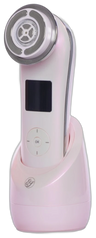
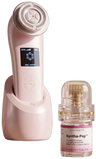
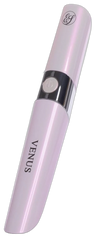
Ownership disclosure: EvenSkyn makes and sells an at-home micro-infusion device, so this is our own expert guide rather than independent editorial. We have written it so that the criteria come first and the product conclusion follows from them, and we state plainly below where at-home treatment is weaker than the clinic and where dermatology bodies disagree with the category altogether. EvenSkyn is a Canadian at-home beauty-device company that designs and manufactures anti-aging devices including the Lumo+ (radiofrequency, EMS and light therapy), the Phoenix microcurrent bar, the Venus eye device, the MicroInfuser, and the MatureSmile LED whitening kit.
Quick answer
For most healthy adults, at-home micro-infusion carries a low risk profile if the device meets three engineering standards: a mechanically fixed needle length, single-use factory-sterilized needle heads, and a sealed serum path that never touches open air or fingers. Devices that miss any one of those shift the safety burden onto the user, where home technique is least reliable. It is not appropriate for everyone. Pregnancy, blood thinners, isotretinoin within six months, keloid history, active infection and several other conditions are firm contraindications, and the American Academy of Dermatology takes the position that at-home devices are not meant to puncture the skin at all.
On this page
Why this question is hard to answer honestly
Search for this and you get two answers, both delivered with confidence. Brands say at-home micro-infusion is safe. A large part of the dermatology profession says do not do it at home at all. Both camps are describing something real, and the reason they sound irreconcilable is that they are answering slightly different questions.
The dermatology position is a statement about the category as it actually exists, which includes reusable rollers, adjustable-depth pens sold without training, and serums poured into open reservoirs. The brand position is usually a statement about one well-built device under ideal use. Neither is a lie. Neither is the whole answer either.
What follows is our attempt at the whole answer: what the procedure does at tissue level, which specific engineering decisions carry the risk, who genuinely should not do it, and where the honest limits of home use sit. We sell one of these devices, so read the ownership disclosure above and judge the criteria on their own terms.
What micro-infusion actually does to skin
Micro-infusion uses fine needles, fixed at 0.5 mm depth in well-designed at-home devices, to create temporary micro-channels in the upper skin while delivering a serum into those same channels. Two things happen at once: a controlled healing response, and a delivery route that a topical product does not have.
At tissue level, a needle at 0.5 mm passes through the epidermis, which is roughly 0.1 mm thick on the face, and the tip reaches the upper papillary dermis. That is the layer where fibroblasts sit. The channel closes over the following minutes to hours as the skin repairs it, and during that window serum moves into the channel by wicking rather than by injection. There is no pressure driving fluid into tissue the way a syringe does, which is a meaningful safety difference and also a limit on how much gets in.
The reason the delivery route matters is molecular size. Bos and Meinardi described what is now called the 500 dalton rule: compounds much heavier than about 500 daltons do not cross intact stratum corneum in useful amounts (Experimental Dermatology, 2000, PMID 10839713). Many of the actives people buy skincare for, growth factors and larger peptides in particular, are far above that threshold. A channel bypasses the barrier for as long as it stays open. We have written the arithmetic out in more detail in our guide to EGF and skin.
At 0.5 mm you are above the depth where significant vasculature and dense sensory networks sit, which is why the sensation is a tap rather than a sting and why bleeding, when it happens at all, is pinpoint. Below that depth, technique starts to matter a great deal, and that is where home use stops being defensible.
What dermatology bodies actually say
This is the part most brand safety pages leave out, so we will put it near the top.
The American Academy of Dermatology describes microneedling as a medical treatment and states that products sold for at-home microneedling, along with treatments performed in non-medical spas, are not meant to puncture the skin, and that these gentler products give less noticeable results than what a dermatologist can achieve. The AAD also notes that at-home microneedling can be risky.
That position is not compatible with marketing that describes an at-home device as clinic-grade, and we are not going to pretend otherwise. A home device is a lower-intensity intervention performed without supervision. If you want the depth, the customization and the clinical judgement, the clinic is the honest answer and no amount of engineering closes that gap.
What a well-built home device can do is narrow the risk side of that trade rather than the results side. That is the argument this article is actually making, and it is a smaller claim than the category usually makes for itself.
The three engineering features that decide device safety
Most of what goes wrong with at-home needle devices traces back to a manufacturing decision made long before the box arrived. There are three that matter more than the rest.
1. Depth that is locked rather than adjustable
If a device has a dial spanning, say, 0.25 mm to 1.5 mm, the safety of every session depends on the user setting it correctly, and not just correctly in general but correctly for each zone. Facial skin thickness varies considerably between the forehead, the cheek and the jawline. Adjustable devices assume the user will step the depth down in thinner areas. In practice people set it once and leave it.
A mechanically fixed head removes the decision. The needle length cannot be changed, however hard someone presses. That is the difference between a device that is safe in theory and one that is safe in the hands of a tired person at 11pm.
2. Needles that are single-use and factory-sterilized
Microneedles blunt with use. A dulled needle does not create a clean channel, it creates a ragged micro-tear, which means more inflammation and more disorganized healing. Devices marketed for dozens of sessions per head are describing a consumable being used well past the point where it still does the job it was tested for.
Gamma sterilization is the other half. It is a terminal method: the radiation passes through sealed packaging and sterilizes the contents inside, so the head is sterile at the moment the seal is broken rather than at the moment it left the line. No home method matches it. Alcohol immersion lowers surface bacterial load without achieving sterility, and UV sanitizers sold for rollers do not reach into the spaces between needles where residue collects.
3. A sealed serum path
This is the most overlooked of the three. Pour-and-fill designs ask the user to open a bottle, decant into a reservoir or onto the face, and then introduce needles. By the time the needles enter skin, that serum has met the bottle threads, fingertips, bathroom air and the skin surface. Then channels are opened and it goes in.
Per session the added risk is small. Across months of repetition it is the failure mode we would expect to see first, and it is the one a user cannot fix with better technique. A sealed path, in which the serum travels from a factory-sealed ampoule through an enclosed chamber to the needle tip without meeting air or hands, removes the variable rather than asking the user to manage it.
The EvenSkyn MicroInfuser was built around all three: a fixed 0.5 mm head, gamma-sterilized single-use heads, and a sealed ampoule-to-needle architecture. Plenty of devices meet one or two. If you are comparing options, those three questions are the ones worth asking of any brand, ours included, and we have scored the market against them in our guide to choosing a micro-infusion system.
What is in the serum, and why the delivery route matters
The serum is a safety question as much as an efficacy one, because whatever is in it is going below the barrier rather than sitting on it. Many at-home micro-infusion serums are ordinary hydrating formulations with a claim stack on the label. They will hydrate. That is roughly the extent of it.
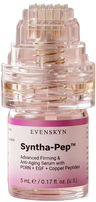
EvenSkyn formulates Syntha-Pep for this delivery route specifically. These are our own manufacturer descriptions of what each family is included for, not independent findings:
-
Bioengineered PDRN. Produced through a controlled biosynthetic manufacturing process, not derived from salmon. Included for the look of calmer, better-recovered skin.
-
sh-Oligopeptide-1. A lab-made signaling peptide with a sequence identical to human epidermal growth factor. Well above the 500 dalton threshold, which is exactly why the channel route is the interesting part.
-
Copper Tripeptide-1 (GHK-Cu). A long-studied copper peptide included for the look of firmer skin. We have translated the research trail in our GHK-Cu deep dive.
-
Acetyl Hexapeptide-8, Palmitoyl Tripeptide-1, Palmitoyl Tetrapeptide-7. A supporting peptide complex included for the look of softened expression lines.
-
Four forms of hyaluronate. Different molecular weights hydrating at different levels, from the surface downward.
-
Centella Asiatica and arginine. The barrier-support pairing, included for post-session comfort.
-
Niacinamide and ergothioneine. Included for the look of a more even tone.
Two honest caveats. First, the INCI lists two separate collagen entries, Soluble Collagen and Collagen, both used at low percentage as humectants. Our supplier source letter covers the Soluble Collagen only, and states it is produced by a yeast fermentation and purification process rather than by direct extraction from animal sources. We hold no origin document for the separate Collagen entry, so we make no origin claim for it, and anyone with a fish or shellfish allergy should take medical advice and patch test before first use. We do not describe the serum as vegan or animal-free. Second, nothing here is a stated clinical effect. The full ingredient-level breakdown, in order, is published at what is actually in Syntha-Pep.
Micro-infusion for mature and perimenopausal skin
Skin changes measurably around and after menopause. Collagen density falls, hyaluronic acid production drops, and products that worked for a decade stop performing the way they did. We are not going to attach a percentage to that here, because the figures circulating in beauty content are usually quoted without a traceable source, and this article now runs a rule that any number without an identifier gets cut rather than hedged.
The mechanistic argument for micro-infusion in this group is straightforward. Fibroblasts in mature skin have not disappeared, they have become less responsive to the signals that previously kept them active. Controlled mechanical stimulation is one of the few non-hormonal inputs available at home, and pairing it with a peptide payload delivered below the barrier is a reasonable thing to try. Whether it works well enough for any individual is not something we can promise, and anyone expecting a change in week two will be disappointed. Visible differences, where they occur, tend to be described from around week six onward and build over months.
The practical protocol is unchanged from the manual: sessions once every two weeks, strict daily SPF, and at least three months before judging the result. If you also own an RF, ultrasound or microcurrent device, use it before a micro-infusion session or on non-session days, and wait a minimum of 24 hours afterward. Our aftercare guide covers the layering rules in full.
Is this the same as an in-clinic Aquagold session?
No, and the differences are worth stating precisely because the category confusion sets expectations badly.
Aquagold is a professional device used by trained practitioners, who load a session-specific serum mixture and stamp it in a clinical setting. Specifications and pricing for clinical devices change and vary by provider, so verify the current details with the clinic rather than with us. The three differences that matter are these.
-
Customization. A practitioner formulates for the patient in front of them. An at-home device uses one pre-formulated, pre-sealed serum. That is a genuine limitation, not a feature.
-
Depth and energy. Clinical devices work deeper than at-home devices are permitted to. Deeper work produces a stronger response per session.
-
Supervision. A provider adjusts pressure by zone, reads your skin as they go, and stops if something looks wrong. At home, device engineering has to stand in for that judgement, which is the entire argument for fixed depth and sealed delivery.
An at-home device is an alternative people consider instead of a clinic course, not an equivalent to one. We will not put a percentage on how close it gets, because no comparison study of that kind exists and any number we offered would be invented.
Micro-infusion and the move away from neurotoxins
A growing group of people want visible improvement in fine lines, firmness and skin quality without muscle-relaxing injections. Not anti-aesthetic, just not interested in a frozen expression.
Can micro-infusion serve that? Partly, and it is worth being precise about which part.
It does not do what a neurotoxin does. An injection temporarily relaxes specific muscles and softens dynamic lines within days. Micro-infusion works on a different mechanism and a slower clock: a gradual change in skin quality rather than muscle action. What it addresses that injections do not touch is the look of skin texture, tone and hydration, which is a different set of complaints entirely.
So the honest framing is that these are complements rather than substitutes. Someone whose main concern is a deep frown line at rest is not going to be satisfied by micro-infusion. Someone whose concern is crepey texture and dullness is looking at the right tool.
Who should not use one
This is the section to read before you buy anything, and it is short here on purpose: we maintain the full eligibility list, including the conditions that need a physician conversation rather than an outright no, at our micro-infusion contraindications and safety page. What follows is the summary.
Do not use without physician clearance
- Pregnancy or breastfeeding.
- Blood thinners and anticoagulants, including warfarin, clopidogrel, apixaban, rivaroxaban and daily aspirin therapy.
- Oral isotretinoin within the past six months. This one is firm rather than flexible.
- Immunosuppressants, systemic steroids, or any medication that affects wound healing.
- Uncontrolled diabetes, an active autoimmune flare, or an unhealed facial procedure.
Do not use at all while these apply
- Active inflammatory or cystic acne, open wounds, or any lesion in the treatment area.
- Active eczema, psoriasis or dermatitis flares.
- Personal or family history of keloid or hypertrophic scarring.
- Active bacterial, viral or fungal skin infection, including cold sores. A history of cold sores in the area warrants a conversation about antiviral prophylaxis first.
- A chemical peel, laser treatment or significant sunburn within the past seven days, or skin that is still red, peeling or tender regardless of how much time has passed.
- Known allergy to gold, stainless steel, or any ingredient in the serum. Note the collagen sourcing point above.
Rosacea, melasma and darker skin tones are not on either list. They sit in a middle category that needs modified protocols rather than avoidance, covered next.
Safety by skin type and skin tone
Sensitive skin
Workable with modifications. Space sessions three to four weeks apart to begin with rather than fortnightly, and only move to the standard cadence after several sessions of confirmed good tolerance. The barrier-support ingredients in the serum are there for exactly this, and a sealed delivery path removes the contamination variable that tends to be the first suspect when reactive skin flares after a session.
Rosacea
Possible with care and a physician conversation first. Extended patch testing, longer intervals, and close attention to any redness lasting beyond 24 hours. Individual variation here is wide enough that no general answer is useful. Some people tolerate it well. Some do not, and stopping early is the right call rather than pushing through.
Fitzpatrick skin types IV to VI
This deserves more space than it usually gets. The mechanical process itself does not treat melanin-rich skin differently, the needles do the same thing regardless of tone. What differs is the melanocyte response to inflammation: any prolonged inflammatory stimulus raises post-inflammatory hyperpigmentation risk substantially. So the safety question becomes a question about controlling inflammation, and four things control it.
- Keep the stimulus small and consistent, which is the argument for fixed depth. Over-penetration means more inflammation, and more inflammation means more pigment response.
- Remove contamination as a source of secondary inflammation, which is the argument for a sealed serum path.
- Be uncompromising about sun protection. Broad-spectrum SPF 50 or higher every morning throughout a treatment cycle, and particular attention in the 48 hours after a session, when UV exposure is the biggest single trigger for post-inflammatory hyperpigmentation.
- Patch test for a full 48 hours rather than 24, and stop at the first sign of pigment change rather than waiting to see whether it settles.
With those in place, at-home micro-infusion is used by people across the Fitzpatrick range. Without them, melanin-rich skin carries a higher cost for the same mistake, which is why this is the section we would least like you to skim.
Common medication questions
These come up constantly, so here are direct answers. None of them replace a conversation with the person who wrote your prescription.
-
Apixaban, rivaroxaban, warfarin, clopidogrel. Not without speaking to your cardiologist or haematologist. Even at 0.5 mm, bruising and pinpoint bleeding become more likely. Whether to pause, and when, is a decision for the prescriber and depends on why you are taking it.
-
Daily low-dose aspirin. Counts as a blood thinner for this purpose. Disclose it and ask.
-
Isotretinoin finished four months ago. Wait the remaining two. The six-month rule is a healing-response timeline, not a cautious buffer.
-
A current course of oral antibiotics. Finish the course, and wait until whatever it was treating has fully resolved before treating that area.
-
Topical tretinoin or retinol. Not a contraindication. Pause it 48 hours before a session and resume 72 hours after.
-
Rosacea managed with topical metronidazole. Not absolute, but modify: physician conversation first, 48-hour patch test, longer intervals.
-
Probiotics, biotin, oral collagen, omega-3. No interaction with the procedure.
-
Hormone replacement therapy. Not a contraindication.
-
GLP-1 medications. Not a micro-infusion-specific contraindication. Rapid weight loss does affect skin over time, so mention it to your prescriber if that applies to you.
The patch test protocol
Do this before the first full-face session. Extend it to 48 hours if you have Fitzpatrick IV to VI skin, sensitive skin, rosacea, or any history of reacting to actives.
Pick a small area on the inner forearm or along the jawline. Perform one or two stamps with normal, light technique. Apply the residual serum. Leave the area uncovered and unwashed for 24 hours.
Expected: mild pinkness for one to four hours, slight warmth, faint tingling, possibly a single spot of pinpoint bleeding. All of it settles within hours.
Stop and speak to a dermatologist: redness that intensifies past 24 hours, swelling that worsens rather than fades, significant itching or burning, hives, or anything that looks like an allergic response. If the patch test goes badly, do not proceed to a full-face session.
What is normal after a session, and what is not
Normal: a pink or red flush lasting one to four hours; occasional pinpoint bleeding at one or two spots rather than widespread; mild tingling or a tight sensation; mild dryness in the first day; a hydrated look by the next morning.
Stop and consult a professional: redness that intensifies or lasts beyond 48 hours; swelling that increases rather than decreases; signs of infection such as warmth, pus or fever; pain beyond mild sensitivity; hives or significant itching.
First 24 hours
Do not wash your face for the rest of the day. Sleep on a fresh pillowcase. No makeup, no gym, no saunas, pools or hot tubs, no hot showers on the face, and hands off entirely. Sweat carrying bacteria into freshly opened channels is the most common cause of post-session breakouts.
Hours 24 to 72
Cool or lukewarm water with a gentle fragrance-free cleanser, patted dry. A fragrance-free moisturizer twice a day. Broad-spectrum SPF 30 or higher every morning, 50 or higher for melanin-rich skin. No retinoids, AHAs, BHAs, vitamin C, alcohol-based toners or scrubs. Red and near-infrared LED can resume from 24 hours. RF, ultrasound and microcurrent devices wait a minimum of 24 hours, and 48 is better on sensitive skin.
How the device and serum are made
Manufacturing standards set the baseline risk of every session before the box is opened, which is why we list ours rather than leaving it to the FAQ.
-
Single-use gamma-sterilized heads, individually sealed, sterile at the moment you break the seal.
-
Cleanroom serum filling under Good Manufacturing Practice conditions.
-
ISO-certified production facility with quality auditing on every batch.
Two devices can look identical and carry different risk into the skin depending on which of these are in place. It is part of why at-home micro-infusion as a category has such a wide spread of outcomes: the category contains products built to these standards and products that are not, and they are not the same thing in any way that matters.
Note also what we are not claiming. The MicroInfuser is a cosmetic device. It is not FDA-cleared and it is not a medical device, and any brand telling you otherwise about an at-home stamp is worth a second look.
The evidence base
If you are making a decision about a needle-based treatment, you should see the actual literature rather than a claim that one exists. These are the sources this article rests on, with identifiers so you can check them.
- Gowda A, Healey B, Ezaldein H, Merati M. A systematic review examining the potential adverse effects of microneedling. J Clin Aesthet Dermatol. 2021;14(1):45-54. PMID 33584968. Documents the adverse-event profile across depths and devices; the serious events cluster around technique and device failure rather than the concept.
- Chu S, Foulad DP, Mesinkovska NA. Safety profile for microneedling: a systematic review. Dermatol Surg. 2021;47(9):1249-1254. PMID 34448760. Pools 85 published articles on safety outcomes.
- Iriarte C, Awosika O, Rengifo-Pardo M, Ehrlich A. Review of applications of microneedling in dermatology. Clin Cosmet Investig Dermatol. 2017;10:289-298. PMID 28848356. DOI 10.2147/CCID.S142450.
- Foppiani JA, Fanning JE, Beltran K, et al. Microneedling for facial rejuvenation: a systematic review. Aesthetic Plast Surg. 2025;49(17):4949-4960. DOI 10.1007/s00266-025-04972-z. Pooled 21 articles covering 723 patients, reporting patient-reported outcomes and safety.
- Bos JD, Meinardi MMHM. The 500 dalton rule for the skin penetration of chemical compounds and drugs. Exp Dermatol. 2000;9(3):165-169. PMID 10839713. The barrier problem that channel delivery addresses.
- Spring LK, Krakowski AC, Alam M, et al. Isotretinoin and timing of procedural interventions: a systematic review with consensus recommendations. JAMA Dermatol. 2017;153(8):802-809. PMID 28658462. DOI 10.1001/jamadermatol.2017.2077. Relevant to the isotretinoin waiting period above.
- Waldman A, Bolotin D, Arndt KA, et al. ASDS guidelines task force: consensus recommendations regarding the safety of lasers, dermabrasion, chemical peels, energy devices, and skin surgery during and after isotretinoin use. Dermatol Surg. 2017;43(10):1249-1262. PMID 28498204.
- Jaiswal S, Jawade S. Microneedling in dermatology: a comprehensive review of applications, techniques, and outcomes. Cureus. 2024;16(9):e70033. PMID 39449889. PMCID PMC11499218.
Note what this list does not contain: a study of at-home devices used unsupervised over months. That study does not exist. The literature above is overwhelmingly clinical, at depths and under supervision that home use does not reproduce, and every brand citing it, ours included, is extrapolating. That is the single biggest honest caveat on this entire topic.
Frequently asked questions
Is at-home micro-infusion safe?
For most healthy adults it carries a low risk profile when the device has a fixed needle length, single-use factory-sterilized heads and a sealed serum path, and when the user respects the contraindication list and the aftercare window. It is not safe for everyone, and the American Academy of Dermatology takes the position that at-home devices are not meant to puncture the skin at all. Read the contraindications before buying anything.
Does it hurt, and should I expect bleeding?
Most people describe a light tapping sensation rather than pain. Pinpoint bleeding at one or two spots can happen and is not a concern in itself. Sharp pain or more than minimal bleeding means too much pressure, so lighten up.
How often should I use it?
Once every two weeks is the standard cadence. After four to six sessions with no irritation you can shorten to every ten days if you want, but not further: at 0.5 mm, more frequent stamping does not improve the response and can compromise the barrier.
For the exact cadence and the collagen biology behind it, read how often to do at-home microinfusion.
When would I see a difference?
A hydrated look within a day or two. Texture changes are usually described from around weeks two to four, and anything structural takes six to eight weeks at minimum and continues over months. If a brand promises faster than that, treat the promise as marketing.
Can I use it around my eyes?
Not directly. Stay along or outside the orbital bone and pat residual serum gently around the eye area with clean fingertips instead. The skin there is too thin for direct stamping, and a patch product is the right format for that zone.
Is it safe for darker skin tones?
The mechanical process treats all skin tones the same. The pigment response to inflammation does not. Fitzpatrick IV to VI skin needs a 48-hour patch test, strict SPF 50 or higher, a device that cannot over-penetrate, and a low threshold for stopping if pigment changes appear. Under those conditions it is used across the range.
What about melasma?
Caution, and a dermatologist conversation before starting rather than after. Melasma is driven partly by inflammation and partly by UV, and both run higher in the days after a session.
Is the gold plating a problem for sensitive skin?
24-karat gold is chosen for skin-contact tools because it is biocompatible and resistant to oxidation. Unless you have a confirmed gold allergy, which is uncommon, this is not the variable to worry about.
Can I combine it with my RF or microcurrent device?
Yes, with the sequence fixed: use RF, ultrasound or microcurrent before a micro-infusion session or on non-session days, and wait a minimum of 24 hours afterward. Heat and electrical stimulation on freshly treated skin amplify redness and disturb the early recovery window.
Can I reuse a needle head if I sterilize it myself?
No. Home sterilization does not match gamma sterilization, and reused needles blunt and tear rather than puncture cleanly. This is the single most common way people turn a low-risk procedure into a high-risk one.
What happens if I skip sunscreen afterward?
On lighter skin, temporary redness and possibly some mild pigmentation that fades. On melanin-rich skin, a meaningful risk of post-inflammatory hyperpigmentation that can take months to resolve. Sunscreen is not the optional step in this protocol.
Can I use it on acne scars?
For atrophic, or sunken, scars the appearance can soften gradually with consistent use. Add one or two extra passes over those areas only when the skin is calm and not actively breaking out. Raised scars are a contraindication, not a target.
The bottom line
At-home micro-infusion is neither the risk-free ritual brand copy describes nor the reckless idea the harshest takes suggest. It is a low-intensity procedure whose risk sits almost entirely in two places: the engineering of the device, and whether the user respects a contraindication list and an aftercare window that both exist for reasons.
Get the device right, be honest with yourself about the contraindications, wear the sunscreen, and give it six months before judging. If any part of the contraindication list applies to you, talk to a dermatologist first. If you want the depth and the supervision, book the clinic, and do not let anyone tell you a home device replaces it.
Next: our complete guide to at-home micro-infusion, or the full contraindications and safety page if you want the complete eligibility list.
Related reading
This article is educational and does not constitute individual medical advice. Consult a board-certified dermatologist before starting any needle-based skincare treatment, particularly if any contraindication above applies to you.
The MicroInfuser is a cosmetic skincare device for personal at-home use. It is not a medical device, it is not FDA-cleared, and it is not intended to diagnose, treat, cure or prevent any disease.
Last reviewed: August 4, 2026.




اترك تعليقًا
تخضع جميع التعليقات للإشراف قبل نشرها.
This site is protected by hCaptcha and the hCaptcha Privacy Policy and Terms of Service apply.