




Medically Reviewed by Dr. Lisa Hartford, MD
Last updated: April 2026. Medically reviewed by Dr. Lisa Hartford, MD, Board-Certified Dermatologist and Chief Dermatology Advisor at EvenSkyn.
Key takeaways
- A conduction medium is not an accessory. It is the part of the system that lets energy cross from the device into your skin. Without it, air creates a reflection barrier that blocks most of the output.
- The physics is well-established in medical ultrasound. Sonographers apply gel because without it, 99.9% of acoustic energy reflects off the air between the probe and the skin.
- The same principle governs RF, microcurrent, EMS, and at-home ultrasound devices. Different energy type, same coupling requirement.
- Skin's outermost layer, the stratum corneum, has extremely high electrical resistance. A water-based conductive gel hydrates this barrier and lowers the interface impedance so current can actually pass through.
- Not every clear gel qualifies. A dedicated conduction medium is formulated for consistent conductivity, viscosity, stability, and multi-modality compatibility. Aloe vera, plain serums, and DIY mixes underperform in measurable ways.
- The most common reason at-home devices produce mediocre results is inadequate coupling, not device failure.
What most device owners don't know
The short version: most at-home beauty device underperformance is not a device problem. It is a coupling problem. The energy from your RF, microcurrent, EMS, or ultrasound handset has to cross a thin film of air between the electrode and your skin. That air film is the single largest point of energy loss in the entire system, and a proper conduction medium is what eliminates it.
This is not a marketing claim. It is acoustic and electrical physics. Sonographers apply gel before every single ultrasound scan because without it, the machine produces a black screen. The same physics applies to your at-home RF wand, your microcurrent device, and your EMS tool, scaled to different energy types and lower intensities.
Most articles about at-home beauty devices gloss over this in a sentence or two, treating conduction gel as a "nice glide agent." This is the long, scientifically accurate version of the story, written for people who want to understand why their $400 device may or may not be doing what the specifications promise.
The ultrasound gel story, and why it matters to your skincare routine
Why do sonographers always use gel? Because without it, ultrasound machines cannot see into the body. Air reflects roughly 99.9% of ultrasound energy at the skin interface. The coupling gel eliminates the air gap and allows acoustic waves to enter the tissue.
The physics is worth spelling out. Every material has an acoustic impedance, written as Z, which equals the material's density multiplied by the speed of sound through it. The efficiency of sound transfer between two materials depends on how similar their Z values are.
- Air: acoustic impedance ≈ 400 rayls
- Human soft tissue: acoustic impedance ≈ 1.7 × 10⁶ rayls
- Medical ultrasound gel: engineered to sit close to soft tissue Z
That is a mismatch of about four orders of magnitude between air and skin. The reflection coefficient calculation at such a mismatch yields roughly 99.9% reflection. Less than one part per thousand of the incident ultrasound energy crosses into the body without gel (StatPearls NBK570593; Hoskins, Martin & Thrush, 2010; Radiology Key, 2020).
Medical coupling gel is formulated specifically so its Z value is close to that of skin. When it fills the microscopic air layer between the transducer and the skin, the reflection coefficient drops to approximately 0.1%. Transmission goes from near-zero to over 99%.
Here is why this matters for at-home users. At-home ultrasound devices operate under identical physics. Lower power does not change the coupling requirement. A device advertised as a home ultrasound tool cannot deliver its rated output through an air gap any more than a hospital scanner can.
For RF and microcurrent, the equation is different (electromagnetic and electrical rather than acoustic), but the conclusion is the same. Air at the device-skin interface is the enemy of energy transfer, and a properly formulated medium is what removes it.
The electrical case: why your skin resists current
Why do microcurrent and EMS devices need conductive gel? Because human skin, specifically the outermost dead-cell layer called the stratum corneum, has extraordinarily high electrical resistance. The gel provides a hydrated ionic pathway that lowers this resistance and allows current to actually enter the body.
The numbers, drawn from peer-reviewed electrophysiology research:
- Dry stratum corneum resistance can exceed 1,000,000 ohms per square centimeter at low frequencies (NASA Technical Report on Skin Electrical Resistance).
- Dermis and deeper tissue resistance is several orders of magnitude lower; these tissues are rich in ions and conduct electricity well.
- The stratum corneum is essentially the bottleneck for any electrical stimulation that crosses the skin.
A 2015 PLOS One study on transcutaneous electrical stimulation documented that when the stratum corneum is hydrated or bypassed, its conductance increases considerably, and the impedance variability between subjects drops (Kaczmarek et al., PLOS One, 2015). A 2023 bioimpedance review in Advanced Materials confirmed that stratum corneum impedance can be 350 times higher than that of the dermis and muscle beneath it (Lo Presti et al., 2023).
What a conductive gel is doing during microcurrent or EMS:
- Hydrating the stratum corneum. Water and ionic content lower the effective resistance of the skin barrier, allowing more of the applied current to cross into the dermis and muscle.
- Filling surface micro-topography. Skin is not flat. Electrodes on dry skin contact only the high points, leaving air pockets in pores and fine lines. Gel flows into these pockets and creates a continuous ionic bridge.
- Distributing current density evenly. Without a coupling medium, current concentrates at whatever contact points happen to touch. This produces the zappy sensation users complain about. With a medium, current spreads across the entire electrode surface.
- Carrying ions. A water-based gel with electrolytes enables ionic conduction rather than pure resistive conduction, which is how biological tissues actually transmit electrical signals.
This is why users who try microcurrent on dry skin often report sharp sensations, uneven tingling, or "my $300 device isn't doing anything." The device is functioning as designed. The interface is not prepared to let the current through.
The thermal case: why RF devices need even contact
Why does RF skin tightening need gel if the energy passes through air? Because RF needs even contact with the skin to heat the dermis uniformly. Gaps in contact create uneven heating, discomfort, and in more intense cases, surface burns.
Radiofrequency devices work by passing electromagnetic energy through tissue, typically at frequencies between 0.45 MHz and 10 MHz. The tissue's natural resistance converts this energy to heat. Dermis warms to 40 to 42°C. Fibroblasts respond to this thermal stimulus by producing new collagen and elastin over the following weeks.
The coupling medium does two jobs for RF specifically:
Job 1: Impedance matching at the interface. Even for RF frequencies where the electromagnetic waves propagate through air, the efficiency of energy transfer across boundaries depends on impedance matching. A gel with appropriate dielectric properties couples the RF energy more cleanly from the electrode into the tissue than an air gap does.
Job 2: Uniform thermal contact. This is the more practical consideration for home users. RF electrodes applied to dry skin touch only the high points of skin's natural contour. Where contact is complete, heating is efficient. Where it is partial, the electrode produces localized overheating ("hotspots") while other areas receive inadequate energy.
Clinical aestheticians working with RF platforms know this from experience. Inadequate gel application is the single most common operator error in professional RF treatments, and it produces the same set of symptoms every time: uneven results, discomfort, and a higher rate of minor skin injury. At-home devices operate at lower power, which reduces burn risk, but the principle is unchanged. Even heating requires even coupling, and even coupling requires a medium.
Conduction mediums compared: gel vs serum vs aloe vs oil vs water
This is the comparison most articles skip. Different substances have measurably different conduction properties. A substance that hydrates your skin is not necessarily a good energy coupling medium, and some common "it'll work in a pinch" alternatives perform poorly enough to compromise your treatment.
| Medium | Electrical conductivity | Acoustic coupling | Viscosity / stability | Safe for device | Verdict |
|---|---|---|---|---|---|
| Dedicated multi-modal conduction gel (water + glycerin + HA + peptides, no oils) | Excellent | Excellent | Optimized for 15 to 20 min sessions | Yes | Best |
| Medical ultrasound gel (water + propylene glycol) | Good | Excellent | Excellent | Yes | Excellent for ultrasound, acceptable for RF, compatible with microcurrent |
| Dedicated microcurrent activator (mineral-rich water base) | Excellent for microcurrent | Not ideal | Good | Yes | Good for microcurrent only; some formulations interfere with RF |
| Hyaluronic acid serum (water-based, no oil) | Fair to good | Fair | Often absorbs too fast | Usually yes | Acceptable short-term substitute, inconsistent performance |
| Aloe vera gel (pure) | Fair | Fair | Dries out quickly | Usually yes | Works in a pinch, degrades quickly mid-session |
| Plain water | Poor (minimal ionic content) | Fair | Evaporates rapidly | Yes | Inadequate; strips dry almost immediately |
| Water + salt pinch (DIY) | Good | Fair | Poor stability | Potentially irritating | DIY risk; not recommended for daily use |
| Coconut oil / facial oils | Very poor | Very poor | Poor coupling | Can degrade electrodes over time | Avoid. Reduces both electrical and acoustic conduction |
| Petroleum jelly / petrolatum | Very poor | Very poor | Blocks conduction | Can damage device surface | Avoid |
| Alcohol-based toners | Variable | Poor | Evaporates in seconds | Potentially damaging | Avoid |
| Moisturizer with silicones / dimethicone | Poor | Poor | Blocks conduction | Variable | Avoid |
The pattern: water-based, oil-free, viscous enough to stay in place, with appropriate electrolyte or acoustic properties. Anything that fails one of those four criteria will underperform in at least one modality.
Why "hydrating serum" is not the same as "conduction medium"
The most common substitute users reach for is whatever hydrating serum they already own. The problem is that serums are formulated for skin absorption, not energy transfer. Many contain:
- Silicones (dimethicone, cyclopentasiloxane): excellent skin feel, poor conductors.
- Oils (squalane, jojoba, argan): absorb into skin, reduce electrical conduction.
- Alcohols (ethanol, witch hazel): evaporate within seconds of application.
- Dimethicone crosspolymers: create a film that insulates rather than conducts.
A hyaluronic acid serum with no oils, no silicones, and a viscous water-glycerin base can work as a short-term substitute. But "works in a pinch" is a different standard than "engineered for the job." The conductivity variance between serums is substantial and usually undisclosed.
What actually makes a good conduction gel
A purpose-formulated conduction medium meets a specific set of technical criteria. Here is what to look for.
Water base with appropriate ionic content. The gel's ability to conduct electricity depends on dissolved ions. Pure distilled water barely conducts. Medical and cosmetic conduction gels add humectants (glycerin, propylene glycol) and often mineral salts to maintain ionic conductivity.
Acoustic impedance near that of skin. For ultrasound compatibility, the gel's Z value should be close to the 1.5 to 1.7 × 10⁶ rayl range of skin. Most water-based gels naturally fall close to this because water itself has a Z near 1.48 × 10⁶ rayls.
Viscosity between 30,000 and 100,000 centipoise. Too thin, and it runs off or dries immediately. Too thick, and it drags against the device and creates air bubbles as the electrode moves. Purpose-built gels target a specific viscosity window. Random serums do not.
No oils, silicones, or petrolatum. These interfere with both electrical and acoustic coupling, can leave residue on electrodes, and in some cases degrade the device itself over time.
Multi-modality compatibility if the device is multi-modal. Some dedicated microcurrent activators contain mineral concentrations optimized for electrical conduction that can produce suboptimal behavior at RF frequencies. If your device combines RF + microcurrent + EMS + ultrasound in one handset, the gel should be formulated for all four.
Preservative system appropriate for repeated use. A water-based product that is opened, exposed to bathroom humidity, and used over 60+ sessions needs a proper preservative system. Home-brewed or poorly preserved gels grow bacteria. Which brings us to a topic worth addressing directly, because consumers ask about it often.
Dr. Hartford's perspective on preservation and the paraben question
"The single most misunderstood topic in clean beauty is preservation. Consumers have been trained to fear paraben in any form, but the regulatory science tells a different story than the marketing does. For a water-based product that sits open in a bathroom for months and gets dispensed repeatedly, proper preservation is not optional. It is what prevents the kind of bacterial and fungal contamination that actually causes skin infections. The question is not whether to preserve, but which preservative has the strongest safety record at the lowest effective concentration."
, Dr. Lisa Hartford, MD, Board-Certified Dermatologist (Johns Hopkins; Mayo Clinic), Chief Dermatology Advisor at EvenSkyn
Why methylparaben at under 0.5%, and why we stand behind it
The EvenSkyn Conduction Gel uses methylparaben at a concentration below 0.5% as its sole preservative. This choice deserves a clear explanation, because "paraben" has become a marketing shorthand for something unsafe that the underlying science does not support.
The regulatory position, globally:
- United States (FDA): Methylparaben is classified as Generally Recognized as Safe (GRAS) and has been since the early 1970s. The FDA's published position states there is no reason for consumers to be concerned about cosmetics containing parabens at typical use levels (FDA Parabens in Cosmetics).
- European Union (SCCS, final opinion 2023, corrigendum 2024): The Scientific Committee on Consumer Safety reaffirmed methylparaben as safe at up to 0.4% as a single ester and 0.8% in mixtures. Our formulation sits within this safety window.
- Health Canada: Permitted at the same limits as the EU (0.4% single, 0.8% mixtures).
- Australia (TGA / NICNAS): No critical health effects established; classified among well-tolerated preservatives.
- Cosmetic Ingredient Review (CIR) Expert Panel: Calculated margin of safety for adult cosmetic use between 840 and 1,690, meaning typical exposure is roughly three orders of magnitude below any observed-effect threshold.
The paraben origin story most people don't know. Parabens are esters of p-hydroxybenzoic acid, a compound that occurs naturally in blueberries, cucumbers, carrots, cherries, and onions. The human body synthesizes p-hydroxybenzoic acid as part of normal amino acid metabolism. When a paraben is applied topically, the body hydrolyzes the ester to p-hydroxybenzoic acid within hours and excretes it in urine. The half-life in human tissue is measured in hours, not days.
What actually triggered the "parabens are dangerous" narrative. A 2004 study detected trace paraben residues in breast tumor tissue and speculated about a cosmetics link. The study did not demonstrate causation and has not been replicated with human cancer incidence data. The original author herself has publicly clarified that the study did not establish parabens as a cause of cancer. Subsequent safety reviews by FDA, SCCS, CIR, Health Canada, and the European Chemicals Agency have all reaffirmed paraben safety at regulated concentrations. Contact sensitization from methylparaben is rare: the American Contact Dermatitis Society patch-test registry shows sensitization rates below 1% among already-dermatitis-prone patients, which translates to a vanishingly small share of the general population.
The practical trade-off when brands go "paraben-free." Preservative-free cosmetic products do not exist in a meaningful sense. A water-based gel that is opened and used repeatedly over 12 months needs effective preservation. When brands remove parabens, they replace them with alternative preservation systems, typically combinations like phenoxyethanol with ethylhexylglycerin, benzyl alcohol, or organic acid blends. Each of these alternatives has its own sensitization and irritation profile, and "paraben-free" formulas frequently contain more preservative ingredients in combination than a formula using a single well-characterized paraben. This is not a judgment of paraben-free products. Many are excellent. It is a clarification that "paraben-free" does not equal "preservative-free" or "safer."
Why methylparaben specifically, for this product. Our formulation choice was made with three priorities: effectiveness at the lowest concentration possible, compatibility with the gel's conductive properties, and the longest-established safety record among available options. Methylparaben meets all three. At under 0.5% it sits well below regulatory safety limits in every major market. It does not interfere with the gel's electrical or acoustic conduction properties. It has the most extensive published safety literature of any cosmetic preservative, with roughly 80 years of human use data and continuing regulatory reassessment as new evidence accumulates.
When to consider a patch test
Dr. Hartford notes that there is a small subset of users for whom paraben sensitivity is a documented issue: those with a previously diagnosed paraben contact dermatitis, and those with broken or compromised skin where absorption patterns differ. For these users, a patch test is a sensible precaution before full-face use. Apply a small amount of gel to the inner forearm, leave for 24 hours, and discontinue if irritation develops. For the general population without a specific paraben allergy history, the clinical and regulatory evidence supports confident daily use.
Device and medium as one system
A useful mental model: your at-home device and your conduction medium are two parts of the same functional system. The device generates designed energy. The medium delivers that energy across the air-skin interface into the tissue. Remove either half and the system underperforms.
Clinical aesthetic platforms are built with this in mind. Clinical RF systems specify coupling procedures. Medical ultrasound requires hospital-grade acoustic gel. The engineers who designed these devices treated the coupling layer as part of the specification, not an accessory.
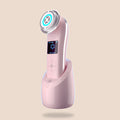
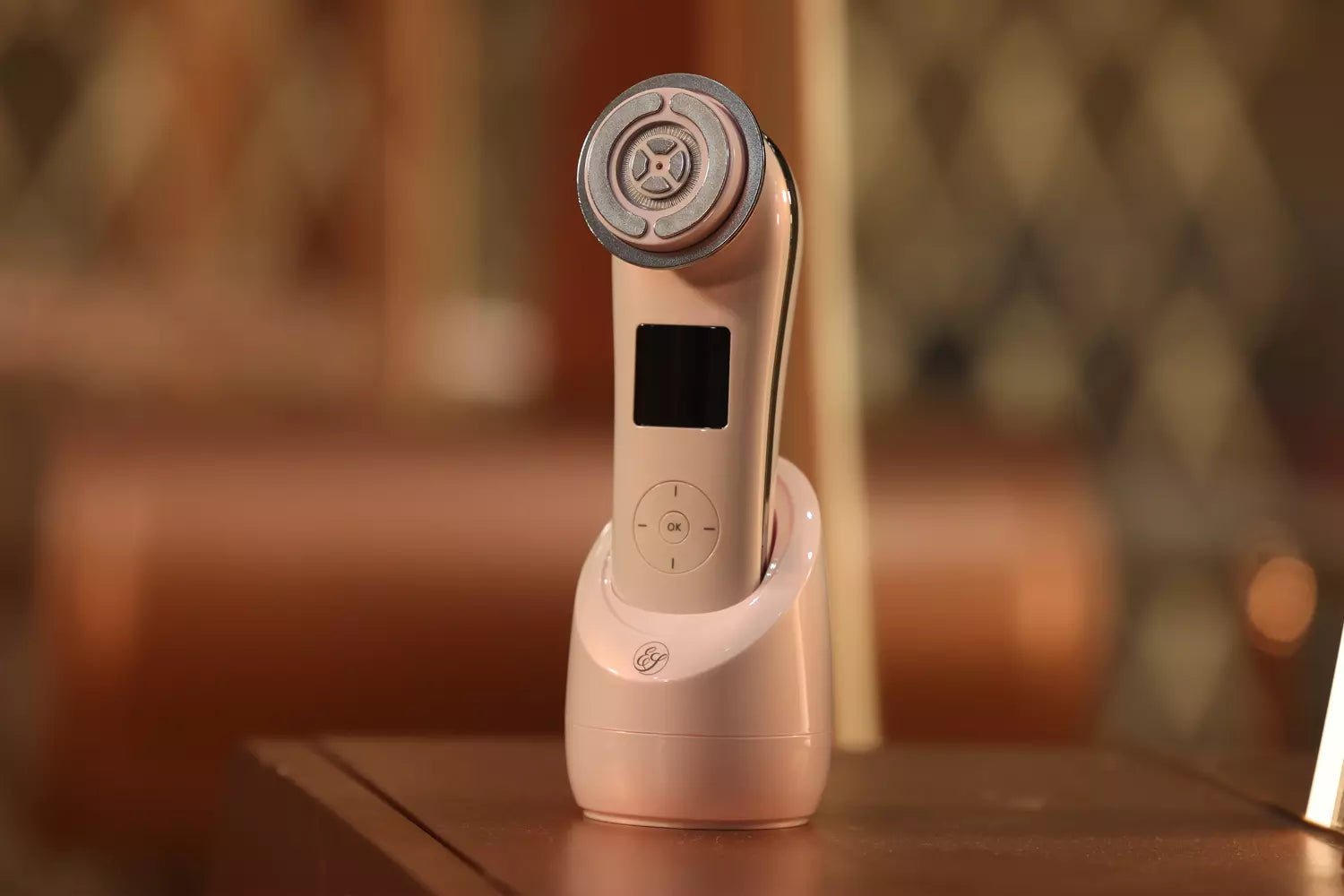
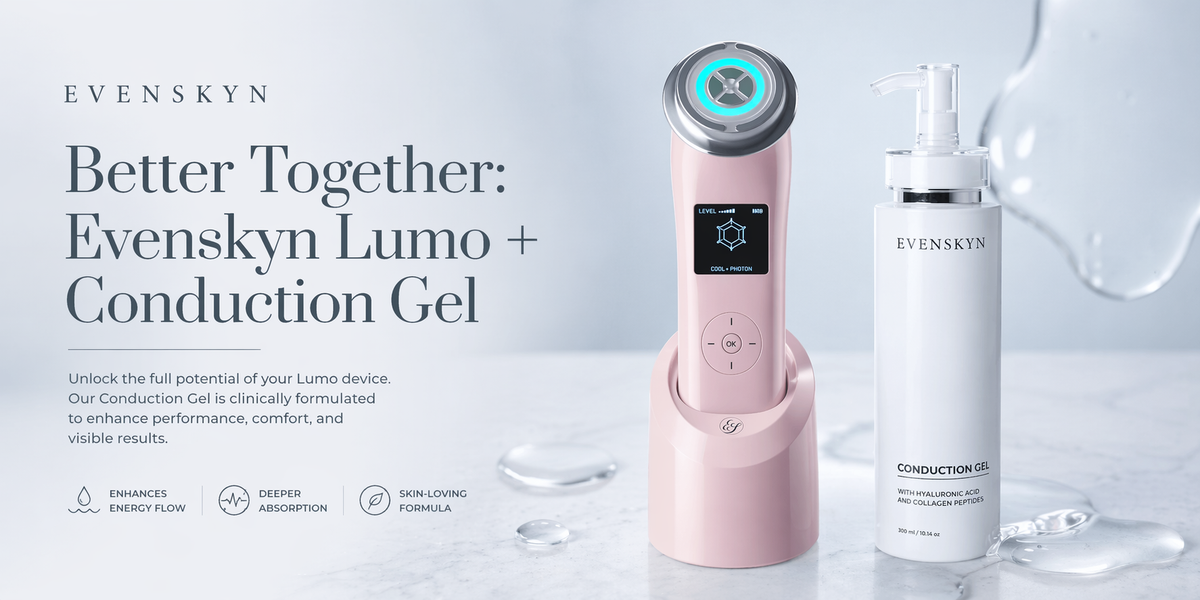
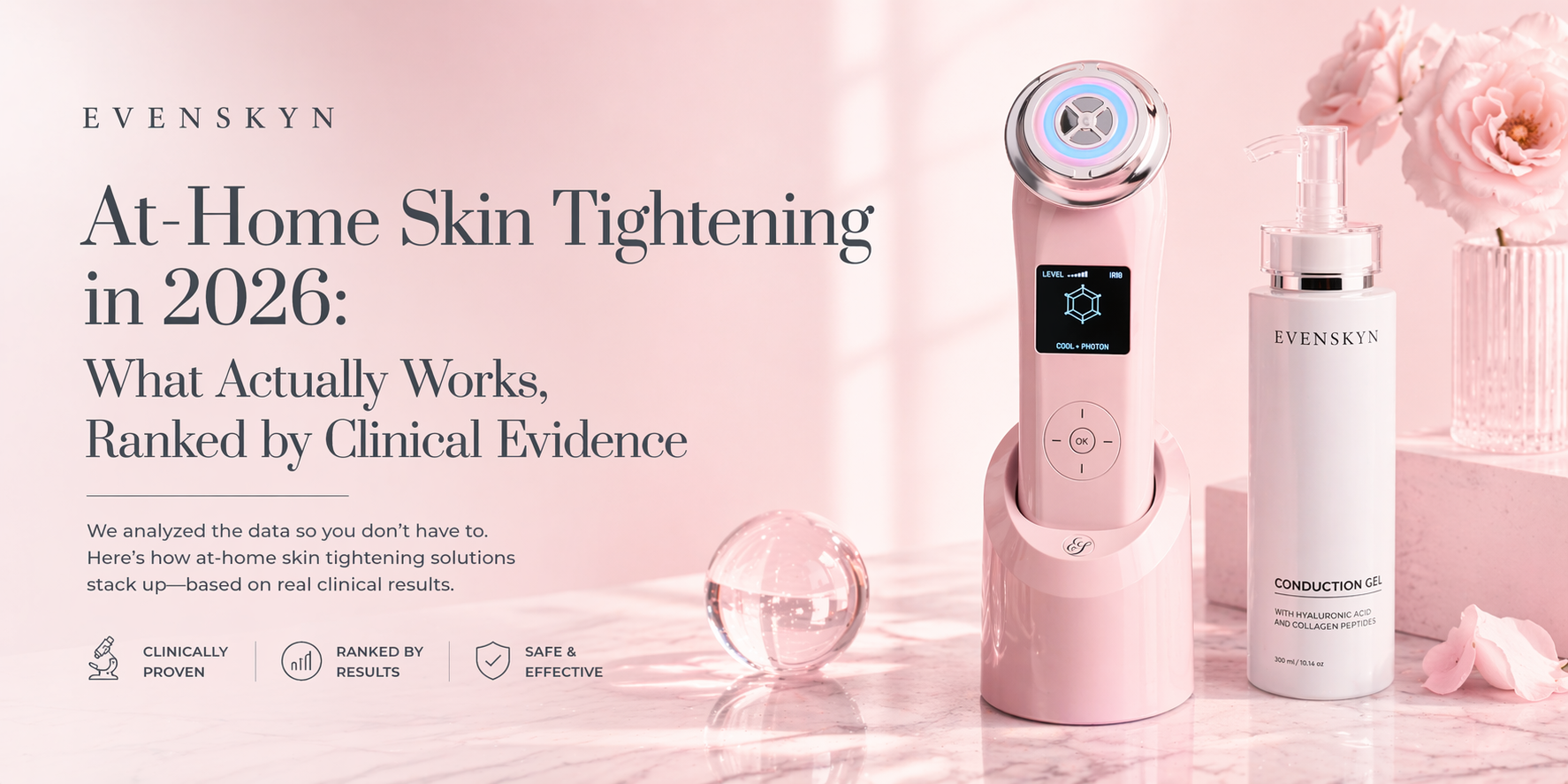
At-home devices inherit the same physics. The Lumo+, for example, was engineered as a multi-modal RF + EMS + LED + ionisation system. Its published specifications (1 MHz bipolar RF, ~3 mA EMS, dermal temperature ceiling at 140°F / 60°C) assume a proper coupling medium at the skin interface. Used with EvenSkyn Conduction Gel, which is formulated specifically to conduct all of those energy types cleanly, the device operates at its rated output. Used with a random serum, or worse, a moisturizer with silicone, it operates at a meaningfully reduced fraction of that output.
This is not a Lumo-specific claim. It applies to NuFACE Trinity+, TriPollar STOP Vx, CurrentBody RF, FOREO BEAR, Silk'n Titan, and every other consumer energy-based beauty device on the market. Their specifications all assume a coupling layer.
When we formulated the EvenSkyn Conduction Gel, the brief was specific: conduct electrical current cleanly for microcurrent and EMS, transmit acoustic energy efficiently for ultrasound, provide even thermal coupling for RF, stay stable over a 15 to 20 minute session, and be compatible with our devices and with competitor devices. The addition of hyaluronic acid and collagen peptides came second; the base formula had to pass the coupling tests before anything else was added.
Practical use: how much, how often, what to avoid
A few specifics worth making explicit.
How much to apply. Enough that the skin looks visibly wet with gel after application. A thin film is not enough. For full-face-and-neck treatment, 5 to 7 ml (roughly a teaspoon's worth) is about right for most users. Some guides recommend thinner application to save product. This is false economy: a thinly applied gel dries mid-session, and once dry, coupling fails.
When to reapply. If your treatment zone is starting to look or feel dry, reapply. A mist of water can rehydrate briefly, but fresh gel is better. For longer sessions (over 15 minutes), plan to reapply at least once.
Treat one zone at a time. Apply gel to the cheek, treat the cheek, then move to the jawline and apply there. Covering the whole face and neck at once guarantees the last zone's gel is drying by the time the device arrives.
Clean skin only. Gel works best on skin that has been cleansed of oils, sunscreen, and makeup residue. These products interfere with coupling regardless of the gel applied on top.
No stacking products under the gel. Apply conduction gel to clean skin, not over serum or moisturizer. The layer beneath the gel changes the interface and can compromise both conduction and skin response to the treatment.
Remove or leave on after? If your gel contains beneficial ingredients (hyaluronic acid, peptides, antioxidants) and has no sticky residue, leaving it on as a hydrator is fine. If it feels tacky or you're prone to breakouts, rinse with warm water.
Expiration. Water-based gels generally have a 24-month unopened shelf life, 6 to 12 months after opening. Replace if texture, smell, or color changes noticeably.
What not to use: oil-based products, petroleum jelly, silicone-heavy moisturizers, alcohol toners, anything with retinol or AHAs (these can cause irritation under heat or current).
Frequently asked questions
Do I really need conductive gel with my microcurrent or RF device?
Yes. Every at-home device that delivers electrical current (microcurrent, EMS), acoustic waves (ultrasound), or electromagnetic energy requiring even thermal contact (RF) needs a proper coupling medium between the electrode and the skin. The gel eliminates microscopic air gaps, lowers the skin's barrier resistance, and allows the device's rated output to actually enter the tissue. Without gel, the device is operating through a degraded interface and produces inconsistent, often uncomfortable, and significantly reduced results.
What is the difference between RF gel and ultrasound gel?
Ultrasound gel is formulated for acoustic coupling, meaning its acoustic impedance closely matches skin so sound waves transmit efficiently. RF gel is formulated for electrical and thermal coupling, meaning it has appropriate dielectric properties and viscosity for even RF energy transfer and uniform heating. Many modern multi-modality gels are engineered to perform both functions adequately, along with microcurrent and EMS coupling. A dedicated ultrasound gel like AquaSonic works well for RF but may lack the skincare ingredients users expect from a beauty gel. A dedicated microcurrent activator may not have the right acoustic properties for ultrasound. A purpose-built multi-modal conduction gel covers all four modalities.
Can I use a hydrating serum instead of conductive gel?
In a pinch, yes, if the serum is water-based, oil-free, silicone-free, and viscous enough to stay in place. In practice, most serums fail at least one of those criteria. Hyaluronic acid serums with glycerin bases are the closest substitutes; anything with dimethicone, squalane, or heavy silicones should not be used. Even when a serum works, its conductivity is usually undisclosed and varies meaningfully between products. For consistent device performance, a purpose-formulated conduction gel is the right choice.
Can I use aloe vera gel with my microcurrent device?
Pure aloe vera gel with no added silicones or oils will work as a short-term substitute. It contains enough water and ionic content to carry current. The problem is that aloe dries out quickly on the skin, so it fails mid-session. It also varies significantly in conductivity depending on brand and processing. For a session or two, acceptable. As a standing practice, inadequate.
Why does my device feel sharp or shocky sometimes?
Almost always because the gel layer has dried or thinned out. When the conductive medium becomes discontinuous, current concentrates at the remaining contact points rather than distributing across the whole electrode surface. Reapply gel generously. If the sharp sensation persists, reduce device intensity and check that skin is clean of any oils, residue, or silicone-containing products.
How much conductive gel should I use per session?
Approximately 1 teaspoon (5 ml) for a full face-and-neck treatment. Enough that after treatment, some gel is still visibly present on the skin. A 300 ml bottle should last roughly 50 to 60 full sessions depending on application style. If your gel runs out in 15 sessions, you're probably over-applying; if a 300 ml bottle lasts 100+ sessions, you're almost certainly under-applying.
Does conduction gel expire?
Yes. Unopened, most water-based conduction gels have a 24-month shelf life. Once opened, use within 6 to 12 months. Replace the gel if you notice texture changes (separation, thickening, watery pooling), color changes, or any unusual smell. Expired or contaminated gel can grow bacteria, which is a skin irritation risk.
Can I use the same gel for microcurrent, RF, EMS, and ultrasound?
Only if the gel is formulated for multi-modality use. Many dedicated gels are optimized for one modality and underperform for others. Microcurrent activators with high mineral content can interfere with RF heating. Ultrasound gels with no hyaluronic acid or skincare ingredients work functionally but don't add skincare value. A multi-modal conduction gel is the simplest choice for users with multi-modality devices like the Lumo+.
Does EvenSkyn Conduction Gel contain parabens? Why?
Yes. Our formula uses methylparaben at under 0.5% as the sole preservative. This choice is reviewed and supported by our Chief Dermatology Advisor, Dr. Lisa Hartford, MD (Johns Hopkins, Mayo Clinic). Methylparaben has FDA GRAS status, is approved under EU SCCS, Health Canada, and TGA regulations at this concentration, and has roughly 80 years of human safety data. The alternative to a single well-characterized preservative at under 0.5% is typically a cocktail of multiple alternative preservatives, each with their own sensitization profiles. For the rare subset of users with diagnosed paraben contact dermatitis, we recommend a patch test before first use. Full discussion in the "Dr. Hartford's perspective" section above.
Why do ultrasound technicians use so much more gel than I use on my face?
Because diagnostic medical imaging has zero tolerance for air gaps. The consequence of inadequate gel in a hospital scan is a missed diagnosis. In at-home skincare, the consequence is mediocre results, which users tend to attribute to the device rather than the coupling. Applying "hospital-level" gel to an at-home device is rarely wrong and usually improves outcomes meaningfully.
Is there any situation where I should skip gel?
Yes: LED-only treatments. Light passes through air without meaningful reflection, so LED masks and LED-only handheld devices do not require a coupling medium. For any device that includes RF, microcurrent, EMS, or ultrasound modes, use gel. For hybrid devices where you can toggle between LED-only and RF modes, you can use the device dry in LED-only mode and apply gel when switching to RF or microcurrent.
Will the gel damage my device electrodes?
A properly formulated water-based gel will not. Oils, petrolatum, silicones, and alcohols can degrade electrode coatings over time and leave residues that affect conduction. Stick to water-based gels from reputable manufacturers. Wipe electrodes with a soft cloth after each session; do not use alcohol wipes unless the manufacturer specifies them, since alcohol can affect certain coatings.
Can I make my own conductive gel at home?
Technically yes, practically not recommended. DIY formulations (water + aloe + a pinch of salt, for example) can conduct electricity, but they lack preservatives, have inconsistent conductivity batch to batch, and carry irritation and contamination risks. For a device you've invested hundreds of dollars in, the marginal savings on DIY gel is not worth the degraded performance and safety risks.
Is conduction gel safe around the eyes?
The gel itself, if it's hypoallergenic and water-based, is safe near the eyes. The question is whether your device is safe near the eyes. Most full-face RF and microcurrent devices are not calibrated for the thinner skin and proximity to the eye in the periorbital zone, and should not be used there regardless of gel. For eye-area treatment, use an eye-specific device calibrated for that anatomy, such as the EvenSkyn Venus.
Why do my results improve after I start applying gel correctly?
Because you were previously using your device at a meaningfully reduced fraction of its rated output. More of the designed energy is now reaching your skin. This is the most common "device started working" story in customer support data, and it is almost never the device that changed.
References
Acoustic coupling and ultrasound physics
- Aldrich JE. Basic physics of ultrasound imaging. Critical Care Medicine 2007;35(Suppl):S131-S137.
- Ultrasound Physics and Instrumentation. StatPearls, NCBI Bookshelf, NBK570593
- Hoskins PR, Martin K, Thrush A. Diagnostic Ultrasound: Physics and Equipment, 2nd ed. Cambridge University Press, 2010.
- Physics of Ultrasound. Radiology Key, 2020
Skin bioimpedance and electrical stimulation
- Kaczmarek M, et al. Dynamic Impedance Model of the Skin-Electrode Interface for Transcutaneous Electrical Stimulation. PLOS One, 2015 (PMC 4420281)
- Lo Presti D, et al. Fundamentals of Skin Bioimpedances. Advanced Materials 2023.
- Yamamoto Y, Yamamoto T. Measurement and analysis of skin electrical impedance. Acta Dermato-Venereologica
- Pliquett U, Langer R, Weaver JC. Changes in the passive electrical properties of human stratum corneum due to electroporation. Biochimica et Biophysica Acta 1995.
Paraben safety and regulatory reviews
- U.S. Food and Drug Administration. Parabens in Cosmetics
- Scientific Committee on Consumer Safety (SCCS). Opinion on Methylparaben (CAS No. 99-76-3). Final version December 2023, corrigendum February 2024, SCCS/1652/23.
- Cosmetic Ingredient Review (CIR) Expert Panel. Amended Safety Assessment of Parabens as Used in Cosmetics. Washington, DC, 2019.
- Andersen FA. Final amended report on the safety assessment of methylparaben and related parabens in cosmetic products. International Journal of Toxicology 2008;27(Suppl 4):1-82.
- Mohamed Rafi S, et al. Understanding parabens: A literature review. CosmoDerma 2024;4:33.
Radiofrequency and home device research
- Radiofrequency-Based Treatments for Facial Rejuvenation: A Systematic Review. Clinical, Cosmetic and Investigational Dermatology, 2025.
- Development of Home Beauty Devices for Facial Rejuvenation. Clinical, Cosmetic and Investigational Dermatology, 2024 (PMC 10929553)
- Shu X, et al. Effectiveness of a Radiofrequency Device for Rejuvenation of Aged Skin at Home. Dermatology and Therapy, 2022 (PubMed 35249173)
About the medical reviewer
Dr. Lisa Hartford, MD is the Chief Dermatology Advisor at EvenSkyn. She graduated with honors from Johns Hopkins University School of Medicine and completed her dermatology residency at the Mayo Clinic. Her career spans clinical dermatology, pharmaceutical dermatology research, and formulation work with luxury skincare brands. She joined EvenSkyn in 2020 and advises on device engineering, formulation decisions, and clinical claims.
This article is informational, not medical advice. Consult a healthcare professional before beginning energy-based treatment if you have implants, pregnancy, or specific medical conditions.
If you want to act on this
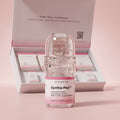
The gel we formulated for this is the EvenSkyn Conductive Gel (300 mL, water-based, $49.99), made for RF, microcurrent, EMS and ultrasound handsets. Any clear water-based conducting gel beats a dry pass; ours is simply the one we test our own devices with.


اترك تعليقًا
تخضع جميع التعليقات للإشراف قبل نشرها.
This site is protected by hCaptcha and the hCaptcha Privacy Policy and Terms of Service apply.