








Medically Reviewed by Dr. Lisa Hartford, MD
Ingredient layering
One of these warnings is real chemistry that has never been tested on skin. One of them has no chemical basis at all and got repeated until it sounded true. Here is which is which.
The short version
- Vitamin C and copper peptides: do not mix them in the same application. Ascorbic acid and copper genuinely react in solution. Using them at different times of day is a separate question, and there is no evidence that separating them by hours causes a problem.
- Retinol and copper peptides: the claim that they cancel each other out has no published chemical basis we could find. The real reason to space them is cumulative irritation, not deactivation.
- Everything else: hyaluronic acid, niacinamide, ceramides, panthenol, and most other peptides pair without conflict.
- The bigger issue nobody mentions: in one in vitro study, almost no copper peptide crossed intact human skin at all. Layering order matters far less than whether the molecule is getting in.
The vitamin C rule: real chemistry, untested on skin
Start with the version of this warning you have probably read, which is that vitamin C deactivates or destroys copper peptides. That framing is too strong in one direction and too weak in another, so it is worth taking apart properly.
What is actually true
Ascorbic acid is a powerful reducing agent and copper is a redox-active transition metal. Put them in the same solution and they react. A 2021 review in Scientific Reports that synthesised this literature and built a chemical kinetics model found that micromolar concentrations of copper and iron are more significant sinks for ascorbic acid than reactive oxygen species are. The same review notes that autoxidation of ascorbic acid in the presence of transition metals, copper and iron in particular, accounts for the majority of the loss of ascorbic acid activity in food, and that ascorbic acid can turn pro-oxidant through Fenton-type radical reactions when transition metal ions are present.
So the underlying chemistry is not folklore. Ascorbate loses activity in the presence of copper, and the pairing can generate reactive species rather than quench them. If you squeeze a vitamin C serum and a copper peptide serum into your palm and mix them, you are running that reaction on your hand.
What is not established
Three things separate that beaker from your face, and almost nobody discussing this online mentions any of them.
First, the copper in GHK-Cu is not free copper. The point of a copper tripeptide is that the copper is held in a chelate by glycyl-L-histidyl-L-lysine. Bound copper does not behave identically to a loose ion in solution, and the work describing rapid ascorbate destruction is generally describing free ions.
Second, sequential application is not mixing. A serum applied in the morning, absorbed, and followed by a different serum twelve hours later is not the same experiment as combining two formulas in a beaker. The concentrations present at any given depth of skin at any given moment are very different.
Third, and most importantly, nobody appears to have tested it. We could not find a study measuring whether using vitamin C and copper peptides in the same routine, separated in time, reduces the measurable effect of either on human skin. The warning is an extrapolation from solution chemistry. It is a reasonable extrapolation. It is still an extrapolation, and it is usually presented as a finding.
Do not layer them wet, one directly on top of the other, and never mix them in your palm. That is the scenario where the chemistry is real and the cost of avoiding it is zero.
Vitamin C in the morning and copper peptides at night is fine. If someone tells you that ruins both, ask them for the study. There is not one. What exists is a plausible mechanism that has never been shown to matter at the doses and timings people actually use.
The retinol rule: repeated until it sounded true
This one is weaker than the vitamin C claim, and it is worth being blunt about that, because the two warnings usually appear in the same sentence as though they rest on the same evidence.
They do not. Ascorbic acid is a reducing agent with well-characterised redox chemistry involving copper. Retinol is not. We could not find a published demonstration that retinol chemically inactivates GHK-Cu, or that GHK-Cu inactivates retinol. What we did find is a patent filed by ProCyte, the company behind much of the original copper peptide work, covering skincare compositions that deliberately combine peptide copper complexes with retinol. You do not patent a combination you believe cancels itself out.
There is still a reason to think about how you sequence them, and it is simply tolerance. Retinoids thin the stratum corneum and raise sensitivity, especially in the first weeks of use. Stacking anything on top of a retinised barrier raises the chance of irritation, and irritation is what makes people quit a routine. Trade press coverage of this question tends to land in the same place: dermatologists describe copper peptides as gentle and generally compatible, with copper peptides positioned as supportive rather than foundational compared with retinoids.
You can use both. Alternate nights while your skin adapts, or run copper peptides in the morning and your retinoid at night. If your skin is already comfortable on a retinoid, applying a copper peptide serum underneath it is not a chemistry problem.
The one honest caution: if you are new to retinoids, add one thing at a time. Not because of any interaction, but because you will not know what caused a reaction if you change two variables at once.
The vitamin C warning is real chemistry applied to an untested scenario. The retinol warning is a scenario with no chemistry behind it. They are repeated with equal confidence, which tells you something about how skincare rules travel.
The full pairing matrix
Everything people commonly ask about, sorted by whether the concern is chemical, practical, or imaginary. Green means pair freely. Amber means separate them in time. Red means do not combine in the same application.
| Pair with copper peptides | Verdict | What is actually going on | How to run it |
|---|---|---|---|
| Vitamin C (L-ascorbic acid) | Not together | Genuine redox reaction in solution. Copper is a major sink for ascorbate and the pair can turn pro-oxidant. Never demonstrated to matter in a sequential routine, but the fix is free. | Vitamin C in the morning, copper peptides at night. Never mixed in the palm. |
| Retinol and retinoids | Space them | No published evidence of chemical antagonism. A patent exists for formulas deliberately combining the two. The real concern is cumulative irritation on a thinned barrier. | Alternate nights while adapting, or copper peptides morning and retinoid night. |
| AHAs and BHAs | Space them | Low pH is not where peptides are most stable, and exfoliation plus a new active is a common route to irritation. This is a formulation and tolerance question more than a reaction. | Different days, or acid at night and peptides in the morning. |
| Benzoyl peroxide | Space them | A strong oxidiser next to a redox-active metal complex is not a pairing worth defending, and benzoyl peroxide is drying on its own. | Different times of day at minimum. |
| Hyaluronic acid | Pair freely | Purely humectant, no reactive chemistry, no pH conflict. One of the easiest pairings in skincare. | Same application, any order. |
| Niacinamide | Pair freely | The old niacinamide interaction warnings largely came from concerns about other pairings and modern formulation practice. No conflict with copper peptides in normal use. | Same application. |
| Ceramides, panthenol, squalane | Pair freely | Barrier support with no active chemistry to interfere. These are the ingredients that make a copper peptide routine more tolerable, not less. | Apply after, as the occlusive step. |
| Other peptides | Pair freely | Acetyl and palmitoyl peptides are formulated alongside copper tripeptide routinely. Multi-peptide products commonly contain both classes. | Same application. |
| PDRN and polynucleotides | Pair freely | Different mechanism, no redox conflict, both act on the repair and collagen side. Frequently formulated together. | Same application. |
| Sunscreen | Pair freely | No interaction, and skipping it undoes more than any layering mistake on this list will. | Last step, every morning. |
| Microneedling and micro-infusion | Depends on the formula | Copper peptides are a good fit for channel delivery, but the rest of the formula has to be appropriate for an open channel. Fragrance, acids, and vitamin C in a copper peptide serum change the answer. | See our serum screening guide. |
The question that matters more than any of this
Here is the uncomfortable part, and it is the reason we think most layering advice is arguing about the wrong thing.
In 2015, a team at the National University of Singapore published a study in Pharmaceutical Research on delivering copper peptide through skin. Their opening premise was that GHK-Cu skin absorption is difficult because the molecule is hydrophilic. They pre-treated human skin with a polymeric microneedle array and measured what crossed. Over nine hours, 134 nanomoles of peptide and 705 nanomoles of copper permeated the microneedle-treated human skin. Through intact human skin, in their words, almost no peptide or copper permeated at all.
That is in vitro work on excised skin, and it is one study, so it should not be treated as the last word. But it points at something the layering conversation ignores entirely. If the molecule is largely not getting past the stratum corneum, the order in which you apply it is a second-order question.
It also complicates a rule we use ourselves. In our guide to choosing a micro-infusion serum we lean on the 500 Dalton rule, the observation set out by Bos and Meinardi in 2000 that a compound generally needs a molecular weight under 500 Dalton to be absorbed through intact skin. Copper tripeptide is a small molecule by that standard. It still barely crosses. Size is necessary but not sufficient, because charge and water solubility matter too, and GHK-Cu is both charged and strongly hydrophilic.
Which is the honest summary of the whole ingredient: the biology is well studied, the delivery is the unsolved half. We wrote about that at length in our guide to GHK-Cu and fifty years of copper peptide research, including what the delivery routes actually are.

If delivery is the bottleneck
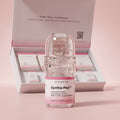
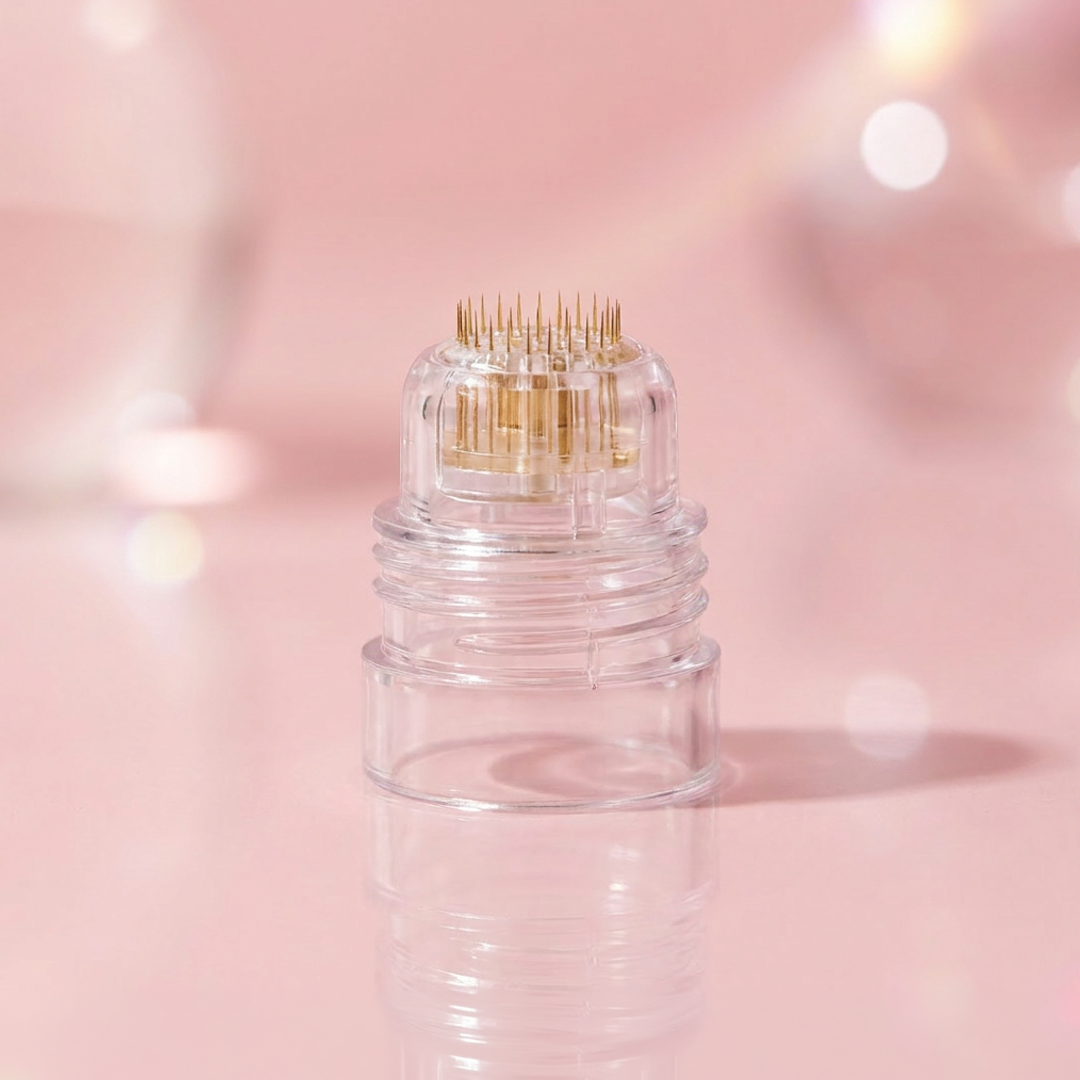
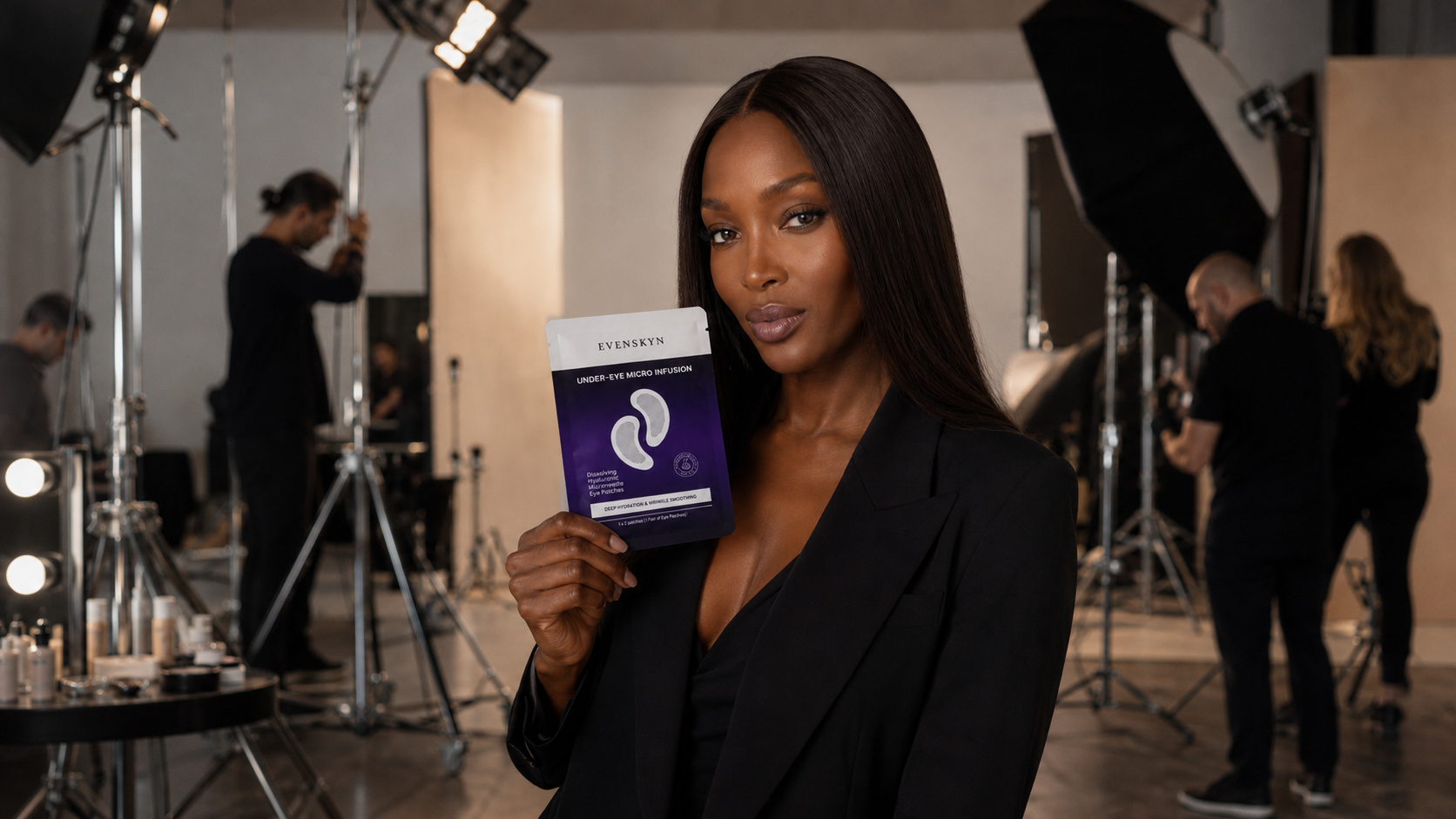
The EvenSkyn MicroInfuser is an at-home micro-infusion system with a fixed 0.5 mm needle depth and a sealed single-use ampoule of Syntha-Pep, which carries Copper Tripeptide-1 alongside biosynthetic PDRN, sh-Oligopeptide-1, and a four-form hyaluronic acid system. It is a cosmetic device, not a medical one, and it is not suitable for everyone.
See the MicroInfuser kit · Check the contraindications first
Do copper peptides actually work?
Worth answering directly, because it changes how much you should care about any of the layering rules above.
The animal and mechanism work is strong. In 1993 Maquart and colleagues published a study in the Journal of Clinical Investigation using implanted wound chambers in rats. GHK-Cu injections produced a concentration-dependent increase in dry weight, DNA, total protein, collagen, and glycosaminoglycan content. Collagen synthesis was stimulated roughly twice as much as noncollagen protein synthesis. Type I and type III collagen messenger RNA rose, though TGF-beta messenger RNA did not. A control tripeptide produced no significant effect, which matters because it rules out a generic peptide response.
Later work from the same group, published in the Journal of Investigative Dermatology in 1999, showed GHK-Cu modulating matrix metalloproteinase expression and activation during healing, meaning it acts on tissue remodelling as well as tissue production. Pickart and Margolina's 2018 review in the International Journal of Molecular Sciences pulls the gene-expression picture together: stimulation of collagen, elastin, and glycosaminoglycan synthesis, and support for dermal fibroblast function.
The human data is real but it is about wounds. The strongest human trial is Mulder and colleagues, 1994, in Wound Repair and Regeneration: a multicentre, randomised, evaluator-blinded, placebo-controlled study in diabetic neuropathic ulcers. Median area closure was 98.5 percent with the GHK-Cu gel against 60.8 percent for vehicle, and the rate of closure was reported as roughly three times faster than standard care and vehicle.
That is a genuine clinical result. It is also a wound-healing result in a patient population with impaired healing, not a wrinkle trial in healthy skin. Anyone citing it as proof that copper peptides smooth fine lines is stretching it past what was measured, and we are not going to do that here.
Copper peptides have a deep, decades-old mechanistic literature and solid wound-healing evidence. What is thin is large, long, well-controlled cosmetic trials in healthy skin, and independent reviews of the ingredient tend to say the same thing: promising, supportive, not yet at the evidence level of retinoids.
Treat GHK-Cu as a well-supported supporting player, not a replacement for a retinoid. Any brand telling you otherwise, including one selling a copper peptide product, is ahead of the data.
Are copper peptides safe?
For most people, yes, and this is one of the ingredient's genuine advantages. Copper peptides are generally described as gentle and low-irritancy, and unlike retinoids they are not contraindicated in pregnancy, which is why they come up so often as a retinoid alternative for people who cannot tolerate or cannot use one.
The caveats worth knowing: introduce it as a single new product so you can attribute any reaction, patch test if you are prone to sensitivity, and remember that a known copper allergy is a real if uncommon thing. If you have Wilson disease or any diagnosed disorder of copper metabolism, ask your physician before adding a copper-containing topical. Delivering copper peptides through microneedling or micro-infusion changes the exposure picture considerably compared with topical use, and that route has its own contraindications.
Common questions
Can you use copper peptides with vitamin C?
Not in the same application. Ascorbic acid and copper genuinely react in solution, with copper acting as a significant sink for ascorbate and the pair capable of turning pro-oxidant. Using vitamin C in the morning and copper peptides at night is a different scenario, and no study has shown that separating them in time reduces the effect of either. Never mix the two serums in your palm.
Can you use copper peptides with retinol?
Yes. We could not find any published evidence that retinol and copper peptides chemically inactivate each other, and a patent exists covering formulations that deliberately combine peptide copper complexes with retinol. The reason to space them is cumulative irritation on a barrier already thinned by a retinoid, not a chemical interaction. Alternate nights while adapting, or use copper peptides in the morning and the retinoid at night.
Can you use copper peptides with tretinoin?
The same answer applies as for retinol, with more emphasis on the irritation side because prescription tretinoin is stronger. There is no documented chemical antagonism. Separate them by time of day, introduce the copper peptide only once your skin is stable on the tretinoin, and stop if you see persistent redness or flaking.
How do you use copper peptides in a routine?
Apply to clean skin before heavier creams, since it is water-based and works best without an occlusive layer in the way. Once or twice daily is typical. Follow with a moisturiser and, in the morning, sunscreen. Keep it away from vitamin C in the same application, and give it its own slot rather than stacking it on top of an acid or a retinoid on the same night.
Do copper peptides work?
The mechanistic and animal evidence is strong: GHK-Cu increases collagen and glycosaminoglycan accumulation in rat wound models and modulates matrix remodelling. The best human trial is a randomised placebo-controlled study in diabetic ulcers showing markedly faster closure. Large, long, controlled cosmetic trials in healthy skin are the gap. It is a well-supported supporting ingredient, not a retinoid replacement.
Are copper peptides safe?
For most people, yes. They are generally low-irritancy and, unlike retinoids, not contraindicated in pregnancy. Patch test if you are sensitive, introduce one new product at a time, and speak with your physician first if you have a known copper allergy or a diagnosed disorder of copper metabolism such as Wilson disease.
Can you use copper peptides with niacinamide?
Yes, freely, in the same application. There is no meaningful conflict between the two in normal formulations, and both appear together in multi-active products routinely.
Can you use copper peptides with hyaluronic acid?
Yes, and it is one of the simplest pairings available. Hyaluronic acid is a humectant with no reactive chemistry and no pH conflict, so order does not matter much. Applying the copper peptide first and the hyaluronic acid after works well.
Can you use copper peptides with AHAs or BHAs?
Separate them. Peptides are not at their most stable at low pH, and combining exfoliation with a new active is a common route to irritation. Use acids on different days, or acids at night and copper peptides in the morning.
Why do so many sources say copper peptides cannot be combined with anything?
Because one real interaction, the ascorbate and copper redox reaction, got generalised into a broad warning and then repeated. The specific vitamin C concern has genuine chemistry behind it in solution. The extension of that warning to retinol, and the extension of the solution chemistry to sequential use hours apart, are both assumptions rather than findings.
Does the copper in GHK-Cu behave like free copper?
Not identically. In GHK-Cu the copper is held in a chelate by the glycyl-L-histidyl-L-lysine tripeptide, and bound copper does not behave the same way as a loose ion in solution. Much of the redox chemistry cited in layering warnings describes free copper and iron ions, which is one reason the extrapolation to a chelated cosmetic ingredient should be treated carefully.
Do copper peptides even penetrate the skin?
Poorly, on the available evidence. A 2015 study in Pharmaceutical Research reported that almost no peptide or copper permeated intact human skin in vitro, while microneedle pre-treatment allowed 134 nanomoles of peptide and 705 nanomoles of copper through in nine hours. That is a single in vitro study rather than settled fact, but it suggests delivery is a bigger variable than layering order.
Should you use copper peptides with microneedling?
Copper peptides are a reasonable fit for channel delivery, because the delivery problem is exactly what a channel addresses. The formula around them still has to be appropriate for an open channel, which rules out anything with added fragrance, essential oils, acids, or L-ascorbic acid. Our serum screening guide covers how to check a specific product.
How long before copper peptides show results?
Independent commentary on the ingredient notes a lack of long-term data beyond roughly two to three months, so honest expectation setting is difficult. Treat any specific timeline claim with suspicion, including from brands. Consistency over months is the reasonable framing, and copper peptides work best as one part of a routine rather than the whole of it.
How this guide was researched
Every claim above about chemistry, mechanism, or clinical outcome is sourced below and was checked against the source at the time of writing. Where we say something has not been demonstrated, that means we looked and did not find it, not that we know it to be false. If you have a study that settles one of these questions, we would like to see it.
This article carries the brand byline. No clinician has reviewed this specific piece, so no clinician byline appears on it. Our Chief Dermatology Advisor, Dr. Lisa Hartford, reviews individual articles on a per-article basis, and the byline says so when that has happened.
References
- Maquart FX, Bellon G, Chaqour B, et al. In vivo stimulation of connective tissue accumulation by the tripeptide-copper complex glycyl-L-histidyl-L-lysine-Cu2+ in rat experimental wounds. J Clin Invest. 1993;92(5):2368-2376. PMID 8227353. DOI 10.1172/JCI116842
- Mulder GD, Patt LM, Sanders L, et al. Enhanced healing of ulcers in patients with diabetes by topical treatment with glycyl-L-histidyl-L-lysine copper. Wound Repair Regen. 1994;2(4):259-269.
- Simeon A, Monier F, Emonard H, et al. Expression and activation of matrix metalloproteinases in wounds: modulation by the tripeptide-copper complex glycyl-L-histidyl-L-lysine-Cu2+. J Invest Dermatol. 1999;112(6):957-964. PMID 10383745
- Pickart L, Margolina A. Regenerative and protective actions of the GHK-Cu peptide in the light of the new gene data. Int J Mol Sci. 2018;19(7):1987. PMID 29986520. DOI 10.3390/ijms19071987
- Li H, Low YSJ, Chong HP, et al. Microneedle-mediated delivery of copper peptide through skin. Pharm Res. 2015;32(8):2678-2689. PMID 25690343. DOI 10.1007/s11095-015-1652-z
- Hostynek JJ, Dreher F, Maibach HI. Human skin penetration of a copper tripeptide in vitro as a function of skin layer. Inflamm Res. 2011;60(1):79-86. PMID 20721598
- Bos JD, Meinardi MMHM. The 500 Dalton rule for the skin penetration of chemical compounds and drugs. Exp Dermatol. 2000;9(3):165-169. PMID 10839713. DOI 10.1034/j.1600-0625.2000.009003165.x
- Lin Y, Huynh L, Charrier-Klobas J, et al. Ascorbate oxidation by iron, copper and reactive oxygen species: review, model development, and derivation of key rate constants. Sci Rep. 2021;11:7415. DOI 10.1038/s41598-021-86477-8



Hinterlasse einen Kommentar
Alle Kommentare werden vor der Veröffentlichung geprüft.
Diese Website ist durch hCaptcha geschützt und es gelten die allgemeinen Geschäftsbedingungen und Datenschutzbestimmungen von hCaptcha.